

(first posted at TTAC in 2009 and on 2/21/2011 here)
Was a car ever born with the odds so stacked against it? Its name is defined as “a small gnome held to be responsible for malfunction of equipment”. Its design was penned on an air-sickness bag during a (bumpy?) flight. It carries almost 60% of its weight over the front wheels despite being RWD. Its steering has six turns lock to lock. And it looks exactly like what it is: a perfectly normal-looking sedan that had its rear end amputated by a cleaver. The Gremlin would have had to create a pretty major malfunction in my PC (and C/D’s typewriters) for it not to end dead last.

The little gnome was born out of desperate expediency. AMC knew that GM and Ford had all-new small cars (Vega and Pinto) due in 1971. There was no way they could afford one themselves.

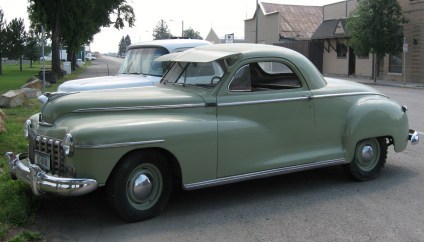
But their new Hornet (top, in photo above) compact sedan was due to arrive in 1970. Necessity being the mother of malfunction, AMC chief designer Dick Teague penned a solution in the oxygen-thin air of an airliner. Shorten the Hornet’s wheelbase from 108” to 96”, and cut everything off behind the rear wheels in a dramatic Kammback. The result looks so nose heavy, that you are advised not to casually plop yourself on the front half of the hood, lest the whole car tip up.

At least AMC’s sense of humor was intact: the Gremlin was introduced on April Fool’s Day 1970, six months ahead of the upcoming Pinto and Vega. AMC explained the name with a vain attempt to re-write Webster’s: “a pal to its friends and an ogre to its enemies”.

An ogre to anyone other than the front seat passengers too. In a bow to reality (and cost cutting), the back seat is optional; seriously. The base Gremlin comes with a front bench seat only, and not a comfortable one at that. And that optional back seat is strictly for children.

It does fold down to increase the otherwise tiny cargo space, which is accessible from the outside only if you order the optional fold-up hatch window. The desire to have a base list price ($1879) competitive with the VW involved some serious compromises: the Gremlin effectively was a two-seater station wagon (with the optional hatch). Or an update on the “business coupe”, without the business.

Well, the Gremlin certainly offset its cramped back end with the front end. Under that long nose sits AMC’s 232 cubic inch (3.8 liter) inline six. It’s a solid and reliable performer, and brings torque and power levels unheard of to the small car arena. As per C/D: “compared to the others, the Gremlin feels like a fuel-burning Hemi on the dragstrip, almost a full second and 4 mph faster then…the second quickest car”. Well, everything is highly relative, if a 0-60 time of 10.5 seconds and the quarter mile in 17.8 sec. @78 mph feels like a Hemi. But then we’re comparing it to some cars with less than one-third the engine size. C/D’s observed consumption of 19.3 mpg results in the pregnant question “what kind of economy car is this?”

At least with all that torque, shifting is as optional as the back seat. Good thing, what with the Gremlin’s three-speed stick being unsynchronized in low gear, and balky in the other two. The bigger problem is putting all that power to the road, with that lightly loaded rear end. Not recommended for snow-country folks. But it comes highly recommended for lovers of burning rubber, especially with the V8 that became optional in 1972.
One of my favorite car movie scenes from that era is from Robert Altman’s 1971 release “Brewster McCloud”. Sally Kellerman drives a candy-apple red Gremlin shod with Cragar S/S’s that just can’t seem to stop its rear wheels from going up in smoke, while successfully eluding, and eventually contributing to the demise of a beautiful new 1970.5 LT-1 powered Camaro Z-28. Gremlin strike!

With its “incredibly heavy clutch” and super-slow unassisted steering (6.25 turns lock-to-lock), the Gremlin is utterly devoid of the typical small car nimble feeling. “Its handling is ponderous, and in braking, the weight transfers to the front wheels to such a degree that the rears lock up and the car yaws sideways”.
The Gremlin does have one virtue: it will cruise effortlessly at 70 mph on the freeway with good directional stability. Just don’t try to change direction or stop suddenly. But as we well know, Americans like to cruise their freeways at seventy. And as we’ll find out too, a number of the competing small cars of 1971 don’t.

That probably explains why the Gremlin sold reasonably well enough, in AMC’s scale of things anyway. 671k of the little gnomes/pals went out the door at Kenosha until 1978, and in 1979 it reappeared with some new sheet metal and a new name: the AMC Spirit. But it was still an ogre to anyone trying to sit in the back, or enjoy driving from the front.
(these links below will not be active until the other articles have posted)


Neighbors down the state hwy had one (they were vauguely related to my father’s side of the family. Never actually saw it run (being born in 1977) but it was aways under a tarp sitting in their concrete driveway. It was a V8 model and my father claimed the patriach of the family had managed to make the little bugger do a 360 spin during a NW Ohio ice storm because he got a little too agressive on the throttle from a stop sign. (No limited slip + V8 torque + ice = spin city.)
I almost choked when I saw this! We owned a 1976 model, same color, but our interior was all (torn) vinyl. Boy, this brings back memories! Another solid CC, Paul. I remember wanting one of these for the sheer uniqueness of it back in 1970, when in the USAF. My buddies thought I was crazy, and a month or so later, I bought the 1964 Impala SS convertible I used to use as an avatar. The one we had was bought in November 1977, a couple of months after I married, and at the time I owned a tank of a ¾-ton Chevy truck purchased new two years before, and it was killing me on gas. I sold it exactly two years to the day I bought it and found the Gremlin we bought in the neighborhood. We had our fun with that, some of which I shared in an earlier post, but we really did enjoy that car, FWIW.
Exactly this comparison series is what originally hooked me up to CCs. This one transported me to a time before I was born when these ludicrous oddballs were actually possible and someone actually bought them.
I would love to see similar comparisons if at all possible. Competition in various eras in various market segments, mid, full size …
I’ve been wanting to do so too for some time, and I will. I just need to put the article and cars together, and am almost there.
I had never really realized just how weird-looking these things are. In their time, they were just hatchbacks, and the disproportionate nose didn’t stand out the way it does now. I’ve not seen one in real life for years.
(both the “business coupe” and the “AMC Spirit” links come back as a 403, and the AMC page seems to be completely abandoned and non-functional)
That’s the problem with linking to other sites; they disappear or go stale. I will upload all future link pictures into the media library, and will fix these. Thanks for the heads up. And I will put in a picture of the Hornet in this piece, to show the Gremlin’s donor car.
Hmm, in my time these were regarded as completely weird. Full stop. I really only had two encounters with Gremlins. One friend had one which had ben rear-ended, damaging but not really further truncating the rear end. He patched it up with some fiberglass and Bondo and rattle-canned green paint … the resulting color,shape and texture looking just like a pickle. Quite a few years later, when I was racing my Showrooms Stock Ford Fiesta, a fellow racer had one of the few SSC Gremlins on the west coast. 258 six and 4 speed as I recall, and huge (for the class) 205/70-14 tires. It couldn’t stop or corner, but was pretty quick in a straight line compared to the 1.5 and 1.6 litre cars that typically populated the class. We had some good near-fender-bending contests.
I’d like to have a Gremlin X with the 304 V-8.
Marc: your avatar – are you kidding me? “Bob” Dobbs? Ask Paul about that! Too funny! Congratulations on having the second best avatar after Educator Dan’s on TTAC! I’d like to have another Gremlin, too.
A long dead friend told me about the Church of the Subgenius.
I’d rather have it with a 401!
I wonder how a Gremlin would take to a 4.0 liter injected six out of a XJ Cherokee or a TJ Wrangler.
That motor is essentially an evolution of the old AMC 258 ci unit that made its home in the Gremlin. Would be interesting (and probably entertaining with a 5-speed manual gearbox out of a Cherokee/Wrangler – 190 horsepower in such a short wheelbase could be madness).
That’s a popular swap. Saw an 1960s Rambler convertible that had the engine and trans from a 2wd Cherokee swapped in. Fit like a 350V8 under the hood of an old Jaguar.
A father-daughter project was on the Hot Rod Power Tour a while back-a Pacer with an EFI stroker 274ci six and a TH700 transmission. They were from Ruston Louisiana, and finished it 2 hours before they had to hit the road.
It went from Louisiana, to Cleveland, the 1200+ miles of the tour ending in Little Rock, and back to Louisiana-2600+ miles-without missing a beat.
http://www.hotrod.com/articles/hrdp-0711-1976-amc-pacer-x/
Sorta fell in love with the look of the Gremlin back when I was a video game freak. The game Vigilante 8 had a ’76 Leprechaun in brown with bright yellow stripes and because it was small and relatively quick, it was hard for the heat-seeking missiles to hit.
Great Curbside Classic, Paul. See any Corvairs in those parts? Would make an excellent feature!
What I wonder is, who in their right minds bought this back then as an economy car? I mean, it’s got a 3.8 litre straight six, and 19 mpg. Isn’t the whole raidon d’être with economy cars their ability to be, you know, economic? I really don’t get this, and I don’t understand the demographic. As a second car I understand, grocery commuter, but as an economy alternative?
I’ll give a shot at it: Gas was at an almost historic (inflation adjusted) low in 1971-1972. For Americans,”economy” was really much more about being cheap to buy, and hopefully cheap to maintain The Gremlin actually scored fairly well in that regard. It cost the same as a VW Beetle, and was made of the most common components. For Americans adverse to imports, of which many still were, this was a somehow strangely pragmatic decision.
Most likely, it was for a single person, or as a second car, to provide the necessary minimum personal transportation so necessary in the US.
It’s not the choice I would have made, but I hope this helps a bit. I know from a European perspective the Gremlin is about as bizarre a car as it gets. But…
At the time, a typical big car got about 12-14 mpg.
Spot on, Paul. The vast majority of the people I knew that had Gremmys were single women. Or as a second car. Even though I knew they could be pretty hairy to drive, I’d still like to have one of the 72’s with the 304. It could only have been slightly more twitchy than my 5.0L Mercury Capri…
The large barges were much worse for mpg. My 1964 Chevy Impala SS convertible with a 283 2bbl powerglide, PS, BB got 16 mpg to and from base and around town. That included 35-40 mile runs to and from Sacramento and running around in the country on Sundays. A friend borrowed it for the weekend for a trip to the Bay Area with his wife and he reported 19.5 mpg. So, yeah, 19-20 mpg was an improvement. Gas out there was 24 – 25.9 for regular. It jumped to 31.9 in March, 1973 and never looked back. SIGH…Did I say that I loved the ’76 Gremlin I owned? Yeah, I did!
Oh crap, no edit function. I forgot, when my German cousins came to the US for an extended honeymoon in the late 1970’s, he bought an early Gremlin to tour the country in. He claimed that the AMC’s were the best handling cars in the US. (He drove a Volvo 144 back home in Germany at that time.) Long story short, he drove the thing all over the US, never a problem with the car. Sold it for about what he bought it for.
The comment editor was there the other day, but it seems to have slipped out again. Let me lift the hood…
BMW must have had the Gremlin’s afterbirth like emergence from the Hornet in mind when they made the 1-series out of the E46. They kept all the mass(and then some) and mechanicals while they sucked out the interior space and ruined the looks. Fortunately, I see about as many 135i and 128i BMWs on the road as I do Gremlins.
The 1-series is the last ‘real’ BMW.
In-line six (no turbo four), and hydraulically assisted steering.
Closest thing to a 2002 since the 2nd/3rd gen 3-series.
Gremmies had a face only a mother could love!
And myself of course, it’s required to be an AMC fan!
I always liked the Eagle Kammback version personally. Unusual looks and 4WD. Too bad they’re so dang rare..
I owned an orange ’76 Gremlin and that first paragraph made me laugh out loud. What a bizarre vehicle…
Amazing article about an amazing car, Mr. Neidermeyer. Makes wonder about so many things about the car, though.
Why the long overhang? The car is RWD. Did they intentionally put the engine ahead of the front axle? For what reason? Plus the heavy clutch, awful 3 speed tranny, super slow steering, and the styling… Almost like they were trying (hard) to win a worst possible car ever competition. Who designed/engineered these things? Who approved it for production? Were they sane? If so, what kind of drugs did they take? What kind of world did they live in? How did they get into their respective position? Truly a car that boggles the mind.
I know it’s been over half a decade since you asked this and I’m sure you’ve figured it out by now, but I’ll answer your question piece-by-piece:
Why the long overhang? – This was an increasingly popular trend in the late 60’s/70’s. It’s probably exacerbated by the weird proportions. Other than that there is really no practical reason, I suppose to offers you even more room to work on that little inline 6.
Why the awful driving dynamics? – The Gremlin, as mentioned in the article, is a chopped Hornet, a car based on early 60’s mechanicals. Even when it was new it was a product of a different time.
Who designed/engineering these things? – An incompetent butcher
Who approved it for production? – A failing company and an air-sickness bag
Were they sane? – As sane as you can get on LSD
What kind of drugs did they take? – See above.
What kind of world did they live in? – One where everyone was blind, including the butcher.
How did they get into their respective position? – AMC asked, “Do you have a degree in Theoretical Engineering?” The Butcher said, “I theoretically have a degree in Engineering.” They said, “Welcome aboard.”
It’s hard to appreciate things out of context. These made more sense at the time than they appear to with 40 years of hindsight.
This car, and the later Pacer which was basically the same idea, were a good choice for a certain kind of buyer. Yes, they were economy cars. 19.5 is better than my 2006 Suburban gets now, and it was much better than the 8-12 that was typical for a full-sized American car in the late 60s.
Why this, instead of say a Pinto or Vega? Because those were genuinely small cars, no just short cars. Gremlins are much roomier in the front because they’re a compact-class (using the definitions from back then) instead of a subcompact. If you’re a large person, especially in girth, these are easier to deal with. They get better mileage than the equivalent compact because they shed a fair amount of weight. If you don’t need a trunk why pay to haul one around?
Why were they “designed” this way? They weren’t. As our host pointed out, they were a cheapo re-use of the compact (and very unappreciated) Hornet platform. AMC could afford to do this. They couldn’t afford to do a Vega or Pinto. Fundamentally, these are stronger cars than either of those, as underneath they are pretty standard Detroit fare, rather than a take on the euro way of doing things.
I’d rather have a Hornet, but I always sort of wanted one of these with a 401, for hooning.
The coolest part of the Gremlin was the little gremlin picture on the back… what year did they remove it?
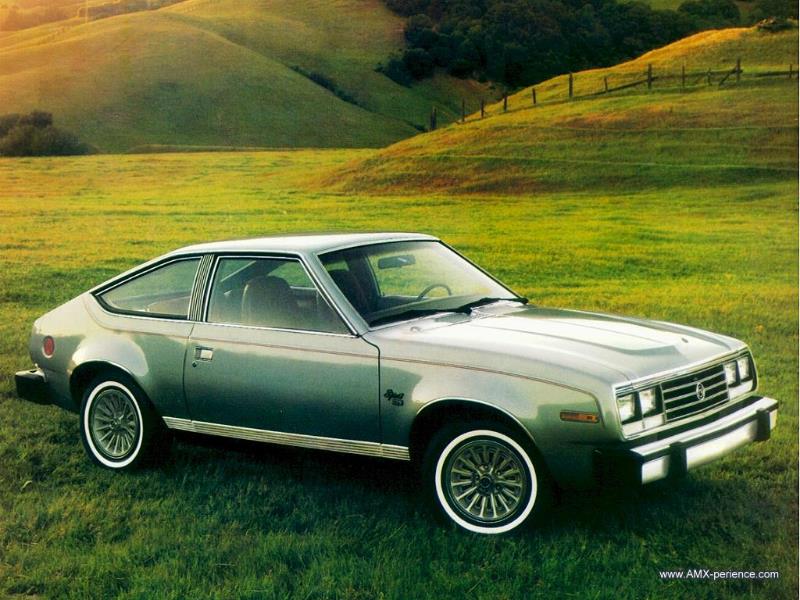
The Gremlin in the picture is not a 1974 its a 1976. Hope this info helps!
My uncles “75 Hornet” had an interior that looked almost like this one. Cloth part of the seats was a bit more “sedate”.
Colors are basically the same in/out.
The “Hornet” had a white top. “A/C” was awesome, 258 cid “6” was quite peppy.
I concur, it’s later model. Gremlins were huge sellers in ’74, but by 1976 people “got used to” 50-60 cent gas, [yeah i know], and GM/Ford came back swinging. Not to mention a new Honda called Accord.
And to youngins, ‘economy car’ back when gas was ‘affordable’ meant low purchase price, insurance, and maintenance costs.
We bought the comelier but no more comfortable version of this, a 1981 AMC Spirit, in 1984 when I was 8. The Spirit at least looked much better than the Gremlin, but . . . there wasn’t a whole lot of room to take out of a Hornet, and all the useful space had been taken out. My parents must have thought because it was small, it would be economical, right? That’s how small cars are! Nope, it was heavy, and cramped, and generally a miserable car. Nicely put together but not a nice car from what I distantly remember.
WHOA! Memories abounding here. . .
I had a 1974 when I was in the Air Force, and that car took me all over the western United States. That in-line six cylinder and three-speed manual transmission lasted and lasted and lasted.
I remember putting some “baby moons” sans the hub covers on the car along with some blackwall Michelins, a conservative strip package and the precursor to what is known today as “window tinting” and the little car actually looked pretty cool. It was a tan/beige same as the one in the pictures featured in this article.
The backseat was useless except as a light storage area. Most of the time, I left the seat folded down.
I remember really liking the car at the time. Had no idea what I was missing, if anything. Of course now, with today’s cars and luxuries, I’m sure the car seems primitive and a mistake in design.
But back then. . . great little car.
–AOA
I’ve owned maybe a hundred cars or more and my 75 Gremlin was the best. Paid 50 bucks in 1995 for it and 50 bucks for the teenaged mother of 3 who owned it to drive it over to my friend’s house. 232 and 3 on the floor. Actually there was no floor. But that sumgun ran like a top till I had to move and I can never pay off the karmic debt of driving that poor beautiful running soldier to the crusher. And it was purple. Mostly. Truly a thing of beauty.
As a little boy, years away from getting my driver’s license, these were the only cars at an AMC store that I lusted after. Make mine either that glorious purple or a Levi’s Edition!
I had a 74 Gremlin, drove it for years, people would comment that I was still driving “that thing.” It was rock solid reliable, and as you said, a decent freeway cruiser. The 3 on the floor always had me wishing for a 4 speed. Living in Colorado, it was a choice between over revving 2nd, or dogging it in third. That car was licensed in 5 different states, survived a good hard hit, an Earl Scheib paint job, and still had the the original clutch when I sold it some ten years later. Also, didn’t need a key to start it, the lock would turn without the key, I never once worried about it being stolen. Sold it to a co- worker, and still saw that car around town many years after he bought it from me. It did what it was supposed to do, point A to point B.
My now-deceased grandfather bought a 1974 Gremlin, purple, cop car hubcaps, 3 sp manual with floorshift that rubbed the bench seat in 3rd gear and kept popping out of gear, until the dealer heated the shifter and bent it to a more vertical position. He liked it so much that he talked my dad into buying a new 1975. That thing was HORRIBLE. Orange, 6 cylinder auto, no a/c, AM radio. He traded it in on a new 76 Olds Cutlass S sedan when the radiator support basically fell out of the car (welds broke) and impaled the radiator on the fan…that Gremlin lasted less than a year. The Cutlass came without a spare tire, due to a shortage of tires…was there a tire strike in 1976??? The spare tire finally arrived toward the end of the year, but that’s another story altogether.
As stated, the Gremlin looked that way out of necessity. However, AMC also knew that if they made a conventional sub-compact, they would be swamped by the competition. That is why the Gremlin HAD to be different. We take for granted “bumper-to-bumper” warranties today, but Gremlins (and all AMC’s) had this kind of warranty in 1972. It was called the Buyer Protection Plan and included a loaner car and Trip Interruption Protection. It wasn’t just a gimmick either. AMC made over 100 quality improvements to the cars to insure that they really were better. The most significant change was the move to Chrysler’s excellent Torqueflite, which AMC called Torque-Command. As I have often said, the Gremlin was reliable, rugged and safe, unlike the Vega and Pinto…
Never liked the looks of the Gremlin. They should have started out with the Spirit design in the first place.. If I had been AMC designer, trying to do a subcompact on a budget, I would have done a shortened AMC Sportabout wagon. Take out the rear side doors, and you’d have something that looks a little more like the Spirit. A hatchback that looks more in tune with the competition, Pinto and Vega. There was also a Hornet 2 door hatchback, if shortened a little bit more, could have been a subcompact.
In reference to your article on the Gremlin, the photo’s are of a 1976 model. ’74 & ’75 had rectangular turn signals in front, and in ’77 the sheet-metal took on the look of the Spirit (in everything but name). I remember that interior well; man that front bench was so uncomfortable. When I found a pair of buckets from a wrecker I just couldn’t wait to change them. The un-assisted steering was so heavy, it could only be turned if the car was in motion. And I wish I had that car now.
I remember riding home one time with a friend from church. I do not remember what year it was. I am disable, and use a manual wheelchair for going places with friends their cars. Well it was in the early 80’s. The back seat was folded to fit my wheelchair. We where going to my home after church, and I was looking at the temperature gauge, and it was over heating. I jokingly ask if we going to make it to my home lol. Fortunately we made to my place. I do not know what happen or what he did with he car. That was the only time I rode in a Gremlin.
My first car was a Green 1972 Gremlin X with the 4.2L (258CID) straight six, the Jeep engine. My grandparents were the first owners so I got it in excellent condition with low miles. I put 100,000 miles on that car in 5 years without one single problem. But it was so ugly that I would leave it in the lot all day with the windows down and nobody would ever give it a second look. Still I loved that car. It was relatively fast in a straight line, and fun to drive. But it’s true about the brakes and the handling being horrible. The car was far more reliable than the 1965 and 1967 Mustang 6-cylinder cars that I owned afterward. Sold that Gremlin for a profit LOL! I stopped missing that Gremlin only when I got a cherry 1992 Thunderbird. Fond memories of my younger years.
Like to see one with a full size continental spare mounted on a swing out. Would have helped some of the shortcomings. Still far better than Vega, in my opinion. My Dad’s Vega engine blew up at 46K despite TLC as did many others. In many ways better than other cars priced similar as well. The steering was the big reason I stayed away. Not only slow and heavy, the ball joints needed to be replaced frequently. AMC had this problem for many years and never fixed it. My boss would shudder every time an AMC car came in to our shop for NYS inspection knowing that the ball joints would probably test bad. We could rebuild the front end, however, the results never seemed to be satisfying. My Dad had a 1970 Hornet – good car except for that front end.
Actually, the continental spare wouldn’t even have to swing out. I never realized that the Gremlin didn’t actually have a rear hatch and just the glass opened – and that was optional too?!? It must have been pretty inconvenient to load and unload cargo only through the side doors, or did almost all Gremlins come with the lift glass? And where was the spare tire normally mounted?
The spare was in the cargo area, far as I know. I have seen some 2-seat models with the spare behind the front seats (a la GT350 Mustangs), but have no idea if that was stock.
While I have seen a few with no rear seat, I have never seen a Gremlin without the swing-up rear glass.
These must have been tough little cars. The county government where I grew up used Gremlins well into the late 80’s for home health, inspections, permitting, etc. Just lots of local stop and go grind. They had navy blue paint and as you can imagine, they looked like crap after years of no wax and few baths.
A little car that was so ugly it was cute, with an iconic ’70s shape, with a decently roomy front seat and pretty good reliability compared to the competition (hey everything is relative!).
But oh so many deficiencies! Many of these issues were solved in the years to come and it’s a shame AMC wasn’t selling in 1971 what it was selling in 1982. For one thing the too-long front end look was improved vastly with the new shorter 1977 front clip which also migrated to Concord the next year. And in ’78 it got Concord’s instrument panel – a 1000% improvement! Then in ’79 it got upgraded to the Spirit with a much better interior with better seats and in ’81 went on a slimming program when the engineers found a way to pare about 90lbs from the 258 straight six, thus making it less of a lump. But of course, it was all too late by then.
A friend of mine in Los Angeles in the late ’70s had a Gremlin as his daily driver so as not to risk his Saab Sonett III on the commute. He had no illusions that it was a good car. By the same token, I’m sure that if it had been totaled, he would have shed no tears.
I just watched the video. Was that Shelly Duval in the orange Plymouth?
And with her passenger it looks like they are playing where’s Waldo in real life.
My only experience with a Gremlin was pulling off the carb and alternator for a friend’s Jeep.
My one experience with a Gremlin was when a buddy and I rented one to drive to Windsor for the weekend (to catch some ballgames at Tiger Stadium). We rented one from Rent a Wreck, and off we went. The speedo needle bounced like a yo yo the whole way, so measuring speed was a best guess. The seats were uncomfortable, and the ride was terrible. The steering wheel was positioned high and would not adjust (not expected for an econo car back in the day). No matter what we did about trying to get fresh air inside, it was hot hot hot. It did seem very roomy in the front seat however, so there is a plus.
I get the styling, and I never disliked these cars. Another friend later had one in a Navy blue and white combo and it looked very nice. I just would never have wanted one for myself.
I don’t think I’ve ever driven a Gremlin, though I drove a Hornet or two. In the early 1980s when I lived in Gainesville, Florida, I knew a vet student who used to bomb around in a somewhat rough brown automatic early Gremlin. I once went to her rescue when something electrical went wrong on her car and I hotwired it to get it started.
I wonder if any AMC execs recalled the Twilight Zone episode “Nightmare at 20,000 Feet,” starring none other than William Shatner.
Main thing I remember about the AMC Gremlin was its breaking all records in PopSci’s stopping-distance test. Perhaps it retained the Hornet’s system.
My mother’s ’69 318 Satellite, said to be a secondhand fleet model, supposedly had oversized, police-grade brakes. Looking back, I didn’t think the Satellite trim level could be had in fleet deals, but maybe that was negotiable.
Regarding the original ” b&w Twilight Zone” I am big fan of it I have complete collection on dvd and regularly watch it. There only be one Twilight Zone & one Rod Serling.
As a 10-yr old, I thought the Gremlin was a complete POS.
As a 50-yr old, if I was 50 in 1972 and needed cheap, reliable transportation, and money was tight, I might do it.
I am based in Beirut LEBANON. I have small collection of american & other vintage cars. I was Never an AMC fan but my latest purchase is 1981 AMC Concord DL coupe blue ext and blue cloth int. 50K original miles. asking price was 7K I got it for 6.5K. its being shipped soon. here is link to my 81 Concord
http://www.jimbabishauto.com/detail-1981-american_motors-concord-coupe-used-16897956
If Cant open page plz go to inventory & recently sold
Not sure how I missed this last time around. The Gremlin really had a split personality. A car like in the picture and like was in the road test was an awful little crap pile that was uncomfortable and not very economical to go along with its terrible road manners.
But then there was the Gremlin X with the 304 V8 that was a really hot little car if spec’d out right. It was a miserable economy car but it was a really good pocket rocket in the early 70s.
I have never forgotten a series of stop light drags in which a 304 Gremlin stick fought my 390 Ford Galaxie convertible to a draw before I got to my turn. For the early 70s the V8 Gremlin earned some respect.
Towards the end of its run the Gremlin was also available with a 2.0 liter OHC 4-cylinder engine sourced from VW/Audi. I’ve never driven one so equipped, but road tests from the time said it really helped the car’s balance and handling to remove so much weight from the front, and gas mileage improved quite a bit. Of course this was at the expense of slower acceleration.
When I was five or so, my folks started talking about adding a second car to their ’78 Caprice so mom wouldn’t be stranded at home in the transport-free suburbs while dad was off at work. We were on a walk around the neighborhood one evening and they were talking about it as we approached a parked Gremlin. I pointed and piped up, “Please don’t get that kind of car”. Mother said “That’s not the kind of car we’re thinking of getting, but why do you think we shouldn’t?”
I said “Because that kind of car hurts my eyes.”
(They wound up getting a ’77 Cutlass)
I had a Gremlin…a 74, though if other commenters here are correct,it had a 76 grille. It was a factory 304/3-speed car, with burnt orange paint, manual steering, manual drum brakes, and rear seat. When I got it, it had a bad motor, had been hit in the right front, and the front seats were missing.
It got a front clip from a junkyard, a T-10 from a Javelin, a pair of seats from Carlisle…and a 401 from a police cruiser. (Sadly, the former NY State Police Matador was way too rusty to save.) It also got the shredded rear seat pitched, a giant bus battery mounted in the back, a full suspension rebuild, disc brakes from a Concord, a roll cage, a set of Cragars, headers, sidepipes, and a repaint in Big Bad Green.
I drove it like that for a while, then decided the “6 by 6″ steering (6 turns lock to lock, with a 6” dead spot on center) had to go, so it got a fast-ratio manual box from (I think) Flaming River. WOW! What a difference! Then, I blew it up. Yep-spun a bearing (on the unrebuilt 170,000+ mile engine) shifting at 5800RPM. So, then, things got nuts…the 401 got a rebuild…and a blower.
Best 1/4 mile was a 10.81 at 134MPH, on Hoosier slicks with the 4-speed and suspension set up for handling. It would have been faster with a drag Powerglide, but not nearly as much fun.
I sold it when I moved…the guy that bought it (who had been wanting it for years) switched to a drag suspension setup (soft springs, no front swaybar, 90/10 shocks, skinny front runners), replaced the 3.55 limited slip with 4.11’s and a locker, and ran a 10-flat 1/4 mile, still with the 4-speed.
Gremlin should have been rated higher on this list (esp. w/power steering).
Air-cooled Beetle ill-suited for some climates, dangerously slow & outdated.
Some foreign cars on this list always had very limited parts availability.
Vega engine a total disaster (psst…dirty little secret was that Subaru (73-75) engines had major engine problems to such an extant I overheard a Subaru dealer, the actual owner, encourage a customer to wait & buy a 76 model).
Pinto had automatics that all-too-often rolled out of park, exploding gas tanks, rusted easily & quickly & some engines lacking mechanical stamina for continuous highway speeds regularly.
Gremlin was better & if u needed a bigger backseat, just buy a Hornet.
I learned to drive in my Mom’s Gremlin X. It looked very similar to the one in the video clip further up the page except the racing stripes were a little different. When I was about 14 I used to badger her to let me drive it behind the house to wash it. I would carefully back down the drive way until I was out of sight and then literally boil the rear tires and come screaming into the back yard. Funny, I still have a lead foot today!
Okay – now I need to watch Brewster McCloud. In addition to that great chase scene, there’s *that cast*.
Remember?
More memories of SWA’s Gremlins.
https://community.southwest.com/t5/Blog/Flashback-Fridays-Keeping-up-with-the-CARdashians/ba-p/42101
Pacers! I goofed on this one.
Southwest had a fleet of Gremlins, just in case.
The one Gremlin I ever rode in – a cold, winterly nighttime trip from South Bend, Indiana to Chicago – was in a Gremlin whose floorboards had rusted to thoroughly you could see the road underneath you.
How dare you take a vacation? (That’s my employer’s attitude…). Enjoy & well deserved Paul!
I had a ’73 Hornet hatchback with the 232. I loved that car, the perfect vehicle for college. The Gremlin always looked funky to me. A chopped Hornet if you will (which it mostly was). Didn’t make sense in light of AMC having a relatively decent history of creating compact cars when they were desired by the market. The Gremlin just seemed like a “meh” effort, but I do recognize they had budget constraints. Don’t think I would have picked a Gremlin over a Maverick or base Nova….
“If you had to compete with GM, Ford, and Chrysler, what would you do?”
Not this…
The Gremlin rear seat was only for children – but wasn’t that essentially also true for the Pinto and the Vega?
The big “sin” in the Gremlin was basically the lack of a 4-cylinder engine – this caused all the problems with weight distribution and economy. I don’t know why the steering was so slow – was there an engineering limitation there, or was it just something AMC didn’t bother with?
Later on, IIRC, AMC developed a relatively nice straight-4, sharing some (but not many) parts with the 6. I guess they could only afford to do that after the infusion of cash from Renaut?
The Vega’s back seat was pretty decent, and the Pinto’s almost as good. They could seat adults properly.
Not so the Gemlin. Essentially unusable except for little kids.
In 1977 the Gremlin got the VW 2.0 four:
https://www.curbsideclassic.com/curbside-classics-american/curbside-classic-1977-amc-gremlin-pay-8-more-and-get-13-less-hp-and-33-fewer-cylinders/
That was a bust, so in 1980, the Spirit got the 2.5 L Iron Duke, bought from Pontiac. IN 1984, AMC’s 2.5 four finally appeared.
The steering was the same as on the Hornet. The front end was pretty heavy with those sixes, but still…
Thanks! Never sat in a Pinto or a Vega (or a Gremlin) thank goodness.
Thanks for all the good(hard) work!
The closest I ever got to a Gremlin was one of the two brothers who owned the consulting firm I worked for in Upland, CA had one. I don’t remember the year his was, but I do remember he ALWAYS carried 2 or 3 HEAVY sandbags stuffed into its vey (stubby) rear to help offset the horrible front/rear weight distribution it had!
He bought the car for basic, inexpensive transportation, and he did get that with good reliability. However, beyond that…….uhhh? They were both PROFESSIONAL (a stiff test must be passed to earn that title) Engineers so I never could quite figure out why John bought his Gremlin versus other choices then available in the car market.
As a Industrial Designer I admired AMC’s lo budget, unique looking solution for a sub-compact “economy” car. OTOH, its reported driving dynamics, uhh….I think my then daily driver ’56 Chevy was better! Certainly my wife’s ’73 VW Super Bug was in most ways superior despite being a 1930s design. DFO
I’ve done a quick’n’dirty shortening the front and putting the lost inches into the wheel base.
It’s still not ‘right’ though
Image didn’t load.
Having grown up in Kenosha at the time, I had the privilege of driving a few Gremlins and Hornets with manual steering from time to time. Even as slow as the steering was, it was still very heavy. These cars had the same front end parts as the bigger Matador & Ambassador.