

(first posted 1/13/2014) Your 2050 Honda i600 solar-electric personal transportation pod automatically glides into the Biodynamic-Vegan Taco Loco lot and parks itself. On the way inside, you pass the static display of a dusty 2010 Honda Pilot with a flat tire sitting by the front door. Your seventeen year-old son stops in his tracks, looks at it with bewilderment, and asks if you really drove around in one these big, ugly, two-ton carbon-spewing behemoths forty years ago. Will you mumble something incoherently about times being very different then and tell him to hurry along, or will you stop, gaze admiringly and wax eloquently about your distant but ever-so-vibrant Pilot memories?

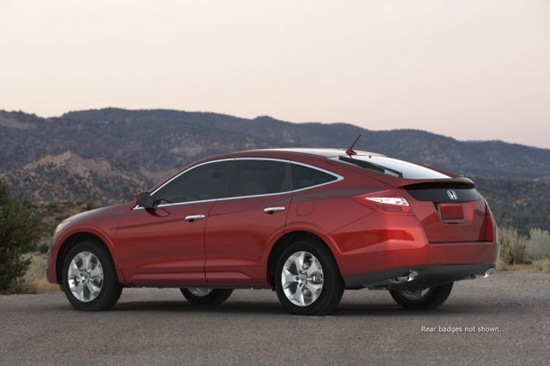
This scenario is for you younger readers; you still have the freedom to make your future memories. Us oldsters are stuck with our Honda memories forever. Although with today’s mega-Hondas like the bloated Moby Dick-mobile Accord Crosstour, it’s hard to believe that our memories aren’t playing tricks on us. But it’s true: a little over forty years ago, Honda established its beachhead in the US with a 1200lb, 600cc hot rod kei-car.
It’s equally hard for me to believe that it was almost that long ago since I drove one. But not only is the memory intensely vivid, it obviously left a lasting impression: I drive the smallest-engined bento box available on these shores. But even it looks huge next to a 600. Enough preambling; let’s fire up the synapses for a virtual drive:

If you’ve ever ridden a vintage Honda two-cylinder bike, the sound and palpable vibrations of the 600′s air-cooled OHC vertical twin-pot will be intimately familiar. At speed, the arrhythmic palpitations courtesy of Honda’s 180-degree crank become deafening. On a bike, that kind of gets blown away by the air speed. In a 600, it’s trapped inside a tea canister-sized tin box with no loose tea inside to absorb the sound. Car and Driver measured 90dB—with the defroster fan on—an all time record high.
The one I drove (a friend’s) probably exceeded 100dB: the stock exhaust sacrificed to a pot hole was replaced with a clamped-on glass-pack and short piece of pipe found lying in the street; recycling at its best. The pipe exited in the vicinity of the driver’s inevitably-open window, but most of the frantic exhalations never made it past the crude joint, because the glass pack’s diameter was twice the 600′s drinking straw-sized exhaust.

The un-muffled staccato reverberating off the high rises in Westwood made sure we were “seen” in traffic, a good thing when driving something smaller than an original Mini. And a permanent testament to Soichiro Honda’s ability to make small engines rev rings on in my tinnitus.
The N600 was a big-engined version of the Honda N360; in other words, the kei car version of a 427 Nova. It first appeared in 1969, about the same time as the legendary Honda 750 four superbike (why didn’t Honda put that engine in the 600?). Among other things, the N600 and CB750 shared the same downward trajectory in horsepower over their production lifespan, a sacrifice to the altar of tractability for a less-peaky torque curve. The early 600s packed 45 horses; highly impressive for the times and engine size. That herd of Kisos came thundering at 7,000 rpm; maximum revs were 9,000 rpm. Very motorcycle like indeed, right down to the dog-clutch un-synchronized transmission.
It was good for a fifteen second 0-60. Don’t laugh; that was better than most small cars of the time with engines two to four times larger. And it would top out at eighty. But that was a dangerous speed because you’d be scanning the floor for the integer that must have fallen off the speedo in front of the numeral 80 based on the sound, fury and other sensations generated. Things happen quickly when there’s only 78 inches between the front and rear wheels, even if the lane seems twice as wide as it needs to be.

As it’s been said oft before: few things beat driving a low-power small car flat out all the time. No wonder we’re desperate for electronic toys to stave off terminal boredom behind the wheel of our 350 hp isolation cocoons idling along at two-tenths of their potential.
Later versions had a more civilized 36 hp @ 6000 rpm, and a genuine automotive-style transmission. Even an automatic was available. Honda was trying to remake the 600 into a friendly city car instead of a sports-car fix on the cheap ($1295; $7K adjusted).

But even the 36 hp version would still leave a stock Mini in the dust. That is if you could find one since they were never all that common in the US back in the day. But Honda sold enough 600s to become the twelfth largest import brand within three years. And the 600s held up to the beating they inevitably got. Even English car magazines gave the nod to the 600 over the Mini.

One of the myths commonly perpetuated on the internet is that the N360/N600 engine was from from the CB450 motorcycle. As these two shots make quite apparent, that obviously wasn’t the case (literally). The 450 was a DOHC engine, the 360/600s were SOHC. And just about everything else on them looks different, although it is possible that some aspects of the 450 engine were adopted for the car engines. A bolt or two?

Honda’s first foray into the training-wheeled world started in 1962 with the S360, their Lilliputian sports car prototype. That led to the production S500, S600 andS800 (above). The latter is a cult classic that packed 70 horses—enough to move it over a hundred miles per hour.

In 1968, Honda unveiled a bombshell: the brilliant but complex 1300 sedan. With an air cooled DOHC 1300cc engine whose 116 horses inhaled through 4 Keihin carbs, it blew away any existing conceptions of what a small sedan could aspire to. And it literally blew away BMW’s much-more expensive 1600/2 ti, the highly celebrated top dog in that field back then.

The coupe versions of the 1300 have achieved near-mythical status.

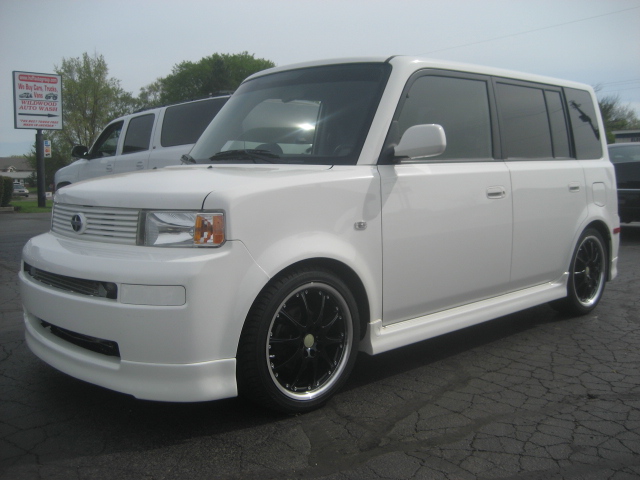
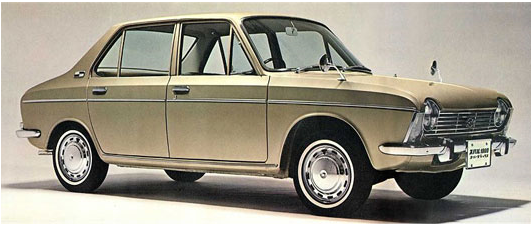
But neither the S series sports cars nor the 1300 were officially imported to the US. Honda was still building production expertise and capacity and wasn’t going to be rushed until it was good and ready. That also explains the 600′s detuning; Honda built its US motorcycle dynasty on the basis of its “You meet the nicest people on a Honda” ad campaign. So the product had to be people-friendly, too, inasmuch as a kei-car could be. Well, the 600 succeeded in that regard way beyond the Subaru 360, which was completely insufficient for US standards. Did the only two kei cars ever imported predict the future for their respective makers?
 Z600 Coupe
Well, Subaru’s next act, the boxer-engined FWD 1000 was a highly advanced and slick little number, which set the pattern for all future Subies to come. But while Subaru had to rely on Malcom Bricklin to cobble together a very iffy dealer network, Honda had friendly and clean motorcycle dealerships in every town across the land to sell the 600 and its coupe variant, the Z600 (above). But that was all just the springboard for the Civic invasion to come, along with car-only Honda dealerships/licenses to print money. (1973 Civic CC here)
That’s the N600’s story I have to tell. But if you want to spend day immersing yourself in period reviews and ads of the 600, spend it at this site. It’ll help you refresh all those memories when you encounter a Honda 600 on the way to dinner tonight at Taco Loco. You wouldn’t want your seventeen-year-old to think you missed out on something like the 600. And it’ll give you both something to think about, and possibly remember, on the drive home in your 2010 Pilot.


This is the print ad I’ll always remember…
http://www.honda600coupe.com/the_less_you_spend.pdf
I remember my first sighting of both the Honda 600 and Subie 360. I was visiting my aunt in San Diego over winter break in 1986(13 years old). They were both parked in lot at her condo complex.
I was amazed, mesmerized, and perplexed all at once. Back here in the midwest those just didn’t exist. I was into cars at the time but knew nothing of the foreign cars other than common ones that I grew up with, and those were easily 3 times the size of a 600.
The Honda looked cool, I kinda wanted one for a while. The Subie not so much, it seemed like a cheap Beetle copy to me at the time.
Honda tried selling the 600 in the UK , but it was really too small for England. Although it was quicker than a Mini , it couldn’t corner like a Mini.
I’m intimately familiar with the Honda 600. My father-in-law had four 600’s sitting in his driveway from the late 70’s to the late 80’s. Of the four, he barely had one running at any given time. He used the other cars for parts–or possibly making another running vehicle. Reliable they were not. Although they displayed the typical Japanese high build quality, the drivetrain was very problematic. Finding parts and someone to work on these vehicles was another problem. The engine was noisy and felt like it would vibrate apart–which it frequently did. The 600 was able to hold four adults and several bags of groceries. Even in the late 70’s, these were becoming a rare sight. Other motorists would laugh and point like we were driving a clown car. The tiny 10″ tires would have to be special ordered. Speaking of dealers–the first Honda dealer in Eugene was Parmenter Pontiac. They seemed a little embarassed to be selling these alongside their Firebirds and Bonnevilles. Little did they know that in a few years, Accords would be selling for 10% above sticker price. Like Subaru with their 360, Honda survived their feeble first attempt in the American market.
I owned 2 at the time and that was how I kept one going. in 85, they were rare enough to never see one and really never see one at a pick-a-part, where I spotted one and immediately took the 4 tires off it. I also went back for the front fender a week later as it was the same color as mine to boot. It got crushed a week later. There was al all Honda wrecking yard just 10 miles away and they only had 2 int eh whole yard. I sold them both of mine when my dad got sick of me fixing them and bought me a 65 Barracuda (Thanks Dad!). 9K redline, that is BS, the tach said 6K and I respected that shy of one occasion when I was racing a AMC Hornet wagon full of my friends and looked down to see 6200 on the tach while still in 3rd. It was buzzin for sure! The AZ600 coupe was the strange looking one but had more legroom in the front as the back seat was downsized. The electric fuel pump was in a well under the floormat. Mine had a bad CV joint so it made a wump wump noise driving but I got used to it. Parts from Honda? forget it, they told me twice to take it to the Honda motorcycle shop down the street for engine work! I broke a oil pump piston and jumped time twice but that was it mechanically as well as the starter going out once. I push started it for a week while it was getting rebuilt. I didnt find it all that loud inside with the windows rolled up as I always had my stereo loud anyway. We drove it with 4 guys down to Tijuana twice and Vegas once from Orange county. Blew a tire on the way back from Vegas and rode the original bias ply spare 180 miles from Baker back to Huntington Beach. That was scary as that 1 bias ply tire tracked wild the whole way home.
“In 1968, Honda unveiled a bombshell: the brilliant but complex 1300 sedan. With an air cooled DOHC 1300cc engine whose 116 horses inhaled through 4 Keihin carbs, it blew away any existing conceptions of what a small sedan could aspire to. And it literally blew away BMW’s much-more expensive 1602ti, the highly celebrated top dog in that field back then. The coupe versions of the 1300 have achieved near-mythical status.”
The 1602ti was officially called 1600ti, with only some 8000 units built from 1967 to 1968. In 1968, it was replaced by the 2002ti with 120 hp (DIN). Neither was officially imported into the US.
Another interesting car in that category is the Triumph 1300/1500, which evolved into the Dolomite. The front clip of the latter is very similar to the Honda coupe’s:
Oops, wrong picture, here it is:
So true. The 1600 is commonly referred to as a the 1602 to distinguish it from its bigger four-door 1500/1600/1800/2000 brethren. And you’re so right about the Dolomite; that can’t have been an accident.
The Dolomite: The only car ever named after magnesium ore.
Dolomite was a name used by Triumph in the 30s they revived it for this model.
Dolomite was the name of a brand of bowling balls.
What car is that in the wrong picture?
As gas prices escalate again to 2008 levels, these micro-cars become relevant.
I have some PAMS jingles in my radio/audio collection where, in 1970, KYA 1260 in San Francisco had a “Pied Piper” giveaway of one of these new Honda 600s.
I remember seeing these in the flesh – new – at Bianco Pontiac/GMC/Cadillac/AMC (and Honda) on Fourth Street in San Rafael. Had my yellow Schwinn Varisity ten-speed (do a Curbside Classic on a Varsity!) as the Record King was about two blocks away from Bianco’s. I’d spend my allowance money on records and would check out the new cars while ‘in the neighborhood’.
I also remember in my childhood watching these cars brave the cross-winds on the Golden Gate Bridge (hang on Sloopy . . . Sloopy hang on).
We pay in excess of $10.00 per gallon kei cars have arrived in abundance not these however the more modern versions, the kind of cars you have to exit to change your mind.
Fast forward to 1980 – the year my Dad became a Honda man (still is: he’s got a 2006 Odyssey). Had to ‘wait’ for delivery- two months for his Civic DX. Belted Bridgestone 13″ donuts (noisy on the freeway) – five speed, no A/C. That car was passed to my brother who used it as a commuter who gave it to his step-daughter as a college car who sold it someone else. Had about 300K on the original engine. Belts, fluids, one heater core and one clutch. It is probably a Chinese Brillance quarter panel now.
Boy, do I remember the Z600! Back in Erie, PA in 1973 a local rich-doctor’s-son-eco-freak who was a good friend of mine in the Presque Isle Bicycle Club had one. I’d borrow it every so often. On Sunday’s I’d use it to run D-Sedan in SCCA autocross (when I wasn’t competing in B-sedan with my Vega GT), although I wasn’t good enough to outrun the guy with a Datsun 1200 complete with the suspension setup that had won class in Road Atlanta the previous year.
Amazingly, at that time I was still three years shy of my first motorcycle – so that was my first Honda I ever drove. The CB350 followed in 1976.
The SSS Datsun 1200 sold here you would have loved unfortunately it was a NZ only model. Datsun shipped engines to a local tuner who then onward shipped them for assembly into cars and with an extra 25bhp over stock they went really well.
Honda 600 came up in hallway chat this morning, showing this to friends I just noticed the plate on this car: NSU. Another builder of bikes and little cars back then. How cool is that?
http://en.wikipedia.org/wiki/NSU_Motorenwerke_AG#NSU_cars
One of the guys I work with I think has inherited an NSU Prinz I…his father somehow got it up in their farm in North Dakota, he originally intended to use it in a tractor project (that never got done…don’t know why you’d use such an obscure engine since getting parts for it are bound to be darned near impossible in the US). If it got stuck in the snow, the guys would just get out and pick it up and move it to some place where it got better traction (it was very small light car).
I don’t know how it compares in size to the Honda 600, but it is a very small light vehicle
The NSU Prinz is probably close to a 600 in size, and in the reverse of the Honda 600 myth, the NSU Prinz engine was actually used in motorcycles. The Munch Mammut used anything from a near stock Prinz all the way up to full custom monsters with Kugelfischer fuel injection
The subject of motorcycles powered by car engines is worth an article. Besides the ridiculous Chevy V8 powered things and the aforementioned Munch, offhand I can think of 3; the Brazilian Amazonas powered by a VW Beetle engine, an obscure French bike whose name I forgot that was powered by a Citroen GS flat 4, and some Indian 4 replicas built i Scotland that used a Volvo B18 as the basis for their engines.
He’s lucky. Today, an NSU restoration is much easier, thanks to the global availability of parts on the internet. I’ve located replacements for virtually every part for my namesake car. Too bad I sold it 15 years ago, for want of a master cylinder.
I remember when these where a common site here in Hawaii, Me & 3 other guys, being “young N dumb” picked up one of these in a hotel parking lot. We turned it sideways in the parking stall between 2 Fullsize american cars.It was hilarious to see the look of the owner when he returned.
My friend’s mum had a first series Civic, and I was always on the lookout for the one with the chunky rubber window ring. Used to see a few Z600s, but can’t remember seeing the others except the 1300 coupe around Melbourne.
A movie made here a while back called ‘Malcolm’ had a Z600 sliced in two.
I honestly don’t think I’ve ever seen one of these in person. Interesting car though. That 1300 coupe is pure sexy though. Honda should look to it for inspiration for contemporary Civic coupes.
You mentioned “few things beat driving a low-power small car flat out all the time. No wonder we’re desperate for electronic toys to stave off terminal boredom behind the wheel of our 350 hp isolation cocoons idling along at two-tenths of their potential”. – This is how I feel about my car’s engine (which coincidentally is made by Honda). 280 horsepower to the front wheels, with less than ideal weight distribution makes all that power feel underutilized and restricted at times. It’s great going from 30 to 80 on the highway, but from 0 to 40 on regular roads it’d probably be better off with the 100 less horsepower or all-wheel drive.
I think you hail from New England, and I’m not sure American Honda Motors had much of a automotive dealer presence there until the Civic came out in 1973(I think Weymouth Honda and Bernardi might have been the first, but I don’t remember when they got cars to add to their cycle shop franchises.
That reminds me of when I was a little punk along with a pack of friends in our 12 to 14 year old range in 1984.
Someone we knew used to drive one of these and was parallel parked on the street. These things were so light that 6 kids were able to lift it up and bump it out. One eveninge moved it to the middle of the painted median in a large but not so busy street.
Now being older I think. Not cool man, Not cool!
The shape of the N600 is a lot like the Chevy Spark – perhaps we’re on the cusp on another glorious age of small cars? And is it possible to put a 1000cc Honda motorcycle motor in one of them? That Z though – it’s sexy! I saw a restored Z running about frequently when I lived in Helena, Montana.
That second pic is beautiful. Sitting behind that bike and fence, it reminds me of the “heritage” sketches I see often on honda.co.jp, despite its Taco Loco “regalia.”
I really wish I could have a chance to own and drive one of those 1300 sedans. That’s my definition of the perfect car.
I have seen maybe 4 or 5 of these over my lifetime, and none of them for a long, long time. Truth is, I’m not even sure I knew about them before the Civic hit my area in 73-74. I recall seeing the first one of these some years later, answering my question about where the Civic came from. A fun find.
What got interesting was around 1980 (memory is a little dim here) when the local Johnstown, PA Honda dealer (Alvin’s Honda – motorcycles and cars) was given the choice that they could keep either the motorcycle franchise, or the car. At that point, Honda was doing away with the dual dealerships.
Of course, they kept the car side. Until finally selling the place out in 2011. The motorcycle side bounced from owner to owner. Which is what you’d expect in a hard-core Harley town.
And Honda was big on Honda franchises – Honda everything. My employer Honda House of Richmond carries motorcycles, ATV’s, scooters, lawn mowers, weed wackers, garden tillers, personal watercraft (until Honda dropped out of that market two years ago), dune buggies (back in the 80’s) . . . . and will occasionally order a Honda snow blower for a customer. Not much of a market for those in our area. Don’t forget the industrial engines. No (as I repeatedly and patiently explained), Honda doesn’t make a power washer. We can fix the engine. The water pump is your problem.
Actually we sell everything Honda except cars (that’s the blue labeled dealerships, as I have fun explaining to the occasional confused customer, our signs are red), and aircraft (thank ghod, I don’t want to think of the parts catalog).
It causes some occasional parts department phone call fun, say, when a customer is looking for parts for an Odyssey. First job is to ascertain whether they’ve got a mini van or a dune buggy.
No doubt if they ever start marketing Asimo’s, we’ll get that, too.
local Johnstown, PA Honda dealer (Alvin’s Honda – motorcycles and cars) was given the choice that they could keep either the motorcycle franchise, or the car. At that point, Honda was doing away with the dual dealerships.
Kalamazoo, MI had a dial Honda car and bike dealership, M&M until just 3 or 4 years ago. M&M still has the bikes, and carried Suzuki cars for a couple years, along with their existing Suzuki bike dealership. Saw a lot of 600s, both sedans and the Z coupes, when I was in college in Kalamazoo in the 70s.
Friend of mine worked in the service department of a Honda bike dealer in Albion, MI in the 70s. Albion had a seperate Honda car dealership, and he said the car dealership guy came to the bike dealer for engine parts a lot. Apparently, the car engine shared a lot of parts with the CB350 bike.
Beaverton Honda just split into two shops. There is a large car dealership at one end of town and an equally large multi-line (Honda, Yamaha, Suzuki, Kawasaki, and the occasional Euro 2-stroke) motorcycle shop at the other end of town.
A little late to the party here, but Van’s Honda in Green Bay, Wisconsin did the same thing. And I believe the same 2 dealerships still exist.
There used to be a Z parked at the McGraths hill pub in Sydney not a dead one it appeared there every day, never saw it driving though quite rare cars at any time, faster than a Mini well that really doesn’t take much they were quite gutless their only claim to any sporting fame was cornering something Hondas have yet to master.
The Honda dealer in West Chester, PA where I bought my Civic has one of these on their showroom floor along with a 1980 Accord.
The Triumph Dolomite is named after the Dolomite mountains in northern Italy; I think the moniker had been used before by Triumph, however Triumphs partnership with Italian styling guru Giovanni Michelotti no doubt strengthened it.
I saw an N600 at close quarters in London recently, it is smaller than a Mini, small enough I think two brawny men could lift it; I was told of a chap who brought one into his lounge through the patio doors! Perhaps it was the one I saw, they are made from tin foil thickness steel so it’s survival was quite remarkable.
First time I saw a Honda 600 was around 1969. A friend of the family just bought it, I remember shoehorning myself into the back seat. At the time we had a 1966 bug, it seemed like a limousine in comparison. That car seemed like a joke. Then around 1972 I saw a Honda Civic and thought, hmm maybe Honda’s on to something after all. I just linked to the CB450 Honda article, had a 1970 disc brake model around 1980 I got for 400.00. It had a new paint job (Metallic Brown), and under 15,000 miles. Thing never broke. Did get a ticket for too loud exhaust, the previous owner had drilled extra holes in the stock mufflers. I remember even the new Honda ones were well over 100.00 each. Got a parts bike for 75.00 and was good for years. I was reading those ad’s that said around 45 HP and mid 13 1/4 mile runs with 110 top speed. No way was mine faster than 90-95 mph and could not have been that quick in the 1/4 mile. Thanks, Syke, for the info of what these bikes were really capable of, that sounds more in line with what mine would do. The thing I did not like was after about 45 minutes the vibration would numb my hands and feet. It really buzzed. Great bike. And great article on this car, Paul. Your research and writing style are tops!
There’s at least 2 Honda dealers around here that have coupes on display, both of them orange
This was fun to reread. I owned a 1972 Z600 for a year in the early ’80’s. It too was orange. The previous owner had a black vinyl top installed. It was noisy, I remember going 60 mph in that car, the engine was running at 6000 rpm! Being a Honda engine it didn’t seem to mind but it was alarming.
The ride was actually pretty good for such a small car, it was surprisingly smooth. I’m amazed of the comments about poor cornering. Among my paperwork was a copy of a Motor Trend magazine with an article testing the Z600. It pulled 1g on the skidpad! Among the highest they ever recorded on a street legal production car. Motor Trend attributed that to the light weight of the car.
The back seat was worse than worthless. I’m 5’8″ and I had to put the front seat all the way back to fit comfortably. The back of the front seat was right up to the back seat bottom. Even with the front seat forward I didn’t fit well back there.
It had rack and pinion steering, very quick with no power assist (didn’t need it). And power front disc brakes. It also had a 4 speed manual transmission, no overdrive. I was not aware they had automatics until I browsed through a shop manual I got with the car. In some markets you could get it with a 5 speed too. The shift lever was something like a Citroen 2CV, the linkage came through the firewall and the lever was mounted on a hinged mount below the dash board. So you twisted it and moved it up or down to select the next gear. Reverse was to the left and down. It also had a hand choke.
My time with the car was coming to an end soon. It needed brake rotors and pads. I lived in Northeast Wisconsin and to my knowledge Honda never sold any cars in the midwest when this car was new. I went to an independent auto parts store specializing in foreign cars, a Honda car dealer and out a desperation a Honda Motorcycle dealer. None of them had parts available and none of them had ever heard of a Honda car before the Civic. Obviously being the ’80’s we had no internet, so I sold the car to someone who thought they could repair and maintain it. That Honda really was a fun car to drive!
Now with the internet I would be far less hesitant to own a car like this, but like Paul I too have tinnitus. I’m not sure I could handle the noise anymore.
I was car shopping in a Honda Dealer probably fifteen years or so ago, off in one corner of the showroom floor all by itself was a Honda 600. It was in perfect condition and if I remember correctly it was painted an olive green color with a tan vinyl interior. I was amazed how tiny it was, especially the back seat. It brought back memories in the early 1970’s when I used to see the occasional 600 along with the Z600(it seemed all the 600 coupes I saw were painted orange.) I worked with a guy in the late 70’s who had owned a Z600 one time, he said it was a blast to drive and easy to park-if he got blocked in by another car, two or three people could pick it up and move it.
If anyone had told me back then what Honda’s automotive offerings would become I would have assumed they were on some kind of drugs. Might oaks from tiny acorns do indeed grow.
I remember seeing several of these little Honda coupes around Oakland when I was in high school in the early 1970’s. I was already riding Honda twin motorcycle but thought that the cars were too small, and not something to take seriously. I forgot about them and concentrated on big American cars like Lincolns, Caddys and Buick Rivieras. In 1985 I bought my first used Civic, a 2 dr. CVCC sedan with a four speed. I really admired the engineering that allowed it to meet emissions standards without a catalytic converter. This had been a pretty beat up looking example and I later sold it to a brother in law looking for a cheap car. I started looking for a first gen Prelude when I stumbled across a clean ’75 Civic wagon. I was amazed, it had four doors,and with folding rear seats, it could carry a lot of cargo. Mine had the two speed Hondamatic trans. It was quite slow in acceleration but would cruise at 70 mph. Entering the freeway was quite a challenge! I really liked that wagon, even swapping in a brand new motor when it developed problems. I decided that I wanted a new Honda and got my ’90 Civic SI coupe, probably my favorite car of all time.
I’d kind of forgotten how much I liked small cars. I later had a few early Datsun Z cars and an Acura 2.2 CL coupe. I also had a Dodge mini van because I had three kids. I wanted a convertible and that took me away from most Japanese cars except the Miata, which I’ve never really warmed up to.
This one looks very cute .
One of y high school buds’ girlfriends bought a blue Z600 coupe, it was cute and reliable until my idiot buddy began touching it….
When I went back to Guatemala i the early 1990’s I was surprised to see a very clean 1960’s S600 rag top drive by .
In North Hollywood, Ca. for decades there was an indie Honda shop that specialized in these and always had 20 ~ 40 of them lined up out side .
Driving slow cars fast is still fun 60 years on .
-Nate
I put together a college car show, and had to pick up a loaned N600 from the local dealer. Even as a brand new car, I felt these were inadequate for commuting on the freeways-overly noisy, a motorcycle with a little more sound-proofing. Three years later when the Civic 1200 came out, I said to myself, “finally, Honda is serious about building cars for America”. When Road&Track quizzed Civic-owning readers later, I loved reading their worst complaint from a few respondents-“keeping my significant other from borrowing it”.
The irony of the N600 is that, today, there are a bunch of manufacturers trying to recreate the same kind of small, enclosed, motorcycle-sized engine, urban runabout, only they do it via ‘three’ wheels so they can classify them as motorcycles and don’t have to meet current auto regs. So far, they’ve only gotten prototypes built and all are still far from actual production.
IOW, if they could build a small, low-power, four-wheel car that didn’t have to meet all of today’s safety regs (essentially what the N600 was), and be able to build and sell if for the same adjusted $7000 price, they might be able to make a go of it.
Until then, the bottom-feeder, almost kei-sized car like the Mitsubishi Mirage or Chevy Spark are a much better buy and closer in spirit to the N600.