

(first posted 1/2/2012)
Ah, the noble Range Rover.
In the mid-1960s, Rover looked West, and saw that usable 4x4s were beginning to gain traction (groan) in the United States. Wheels began turning (alright I’ll stop) in Britain, and 1970 saw the birth of what would become the archetypal luxury SUV. The Range Rover could accomplish anything a contemporary road car could, combined with an ability to tackle the roughest terrain. Short overhangs, long-travel coil springs, and the torquey Rover 3.5 L aluminum V8 (neé Buick 215) made it hugely capable both on the road and off, in a way that no vehicle of its time could match.
 How it started its long life in 1970
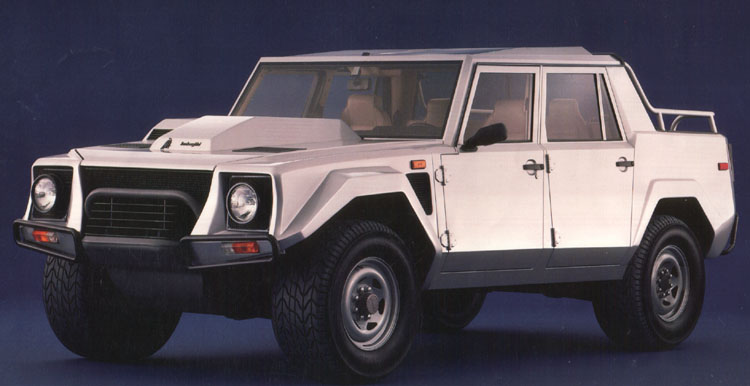
The press and public loved it immediately, and over its long life it spawned many imitators; none ever achieved the same combination of class and versatility the Range Rover could offer, although the Lamborghini LM002 at least took things in a slightly different (read: totally awesome) direction. By the time the original Range Rover finished its long production run in 1996, the SUV market had been booming for some time. The Gold Rush was on, and the Range Rover quickly shed its early seventies’ utilitarian starkness and became plush, like everything else in its genre else during the eighties and nineties.

I love these cars. Every time I see one I’m consumed with longing. I yearn to have one.

This one remains on daily driver duty, probably with a family. I’m sure the children love the comfort and the view from the large windows. Sorry I couldn’t get better photos of the interior. If I ever need to capture window reflections, I know which camera to use.

Teddy bears were an optional extra.

Door handles, like the controls in the cabin, can be easily operated while wearing gloves.
Understated detailing on a timeless frame, the Range Rover’s body was mostly designed by its engineers rather than stylists. The body was fashioned to enable the car to be driven on the road legally for testing, but the design was so good it stuck essentially unchanged for 25 years. In 1970 it was put on display in the Louvre as an example of modern sculpture.
The body was constructed out of aluminium panels hung on a steel frame. This and the lightweight Rover V8 helped to keep the weight down from the absurd to the merely ridiculous. On the road the Range Rover is no ballerina, tipping the scales at roughly 2000kg (that’s some 4,400lbs for those of you trapped in the 19th Century) and exhibiting alarming body roll in turns unless fitted with sway bars. The compromise of a silky ride and off-road height.

None of the Range Rover’s disadvantages stop me from wanting, no, needing one. I know that mileage, even with the later diesel engines, is poor. I know that they were indifferently built. Panel gaps, mismatched plastic and adventurous trim abound. Later models are complex and expensive to repair.
And yet it’s so universal. It’s too handsome to be hated, too understated to be ostentatious, too classy to be trashy and too accessible to be snobbish. It wouldn’t look out of place at a shoot, a London carpark, or in the Bolivian jungle.
 Pictured: the most reliable car in the world.
The driver could be anyone from Prince Charles to a drug dealer. It was turned into a police car and even a Popemobile.

Welcome to the Layer Cake, son.


Always did like these I learned to drive in an Austin Gypsy then a LandRover so it could be just prejudice but the Range Rover was very capable more so than anything else out there.
While I DO understand the appeal of these trucks, this is another vehicle I worked on too often, saw too much, and now I could never own one.
These and even the Disco are easily the worst-built vehicles I ever laid hands on. They make a Countach (I worked for a time in an exotic car dealership) look like a Camry in this regard. TWO of the Discos I worked on (which were several model years apart) almost lost their tailgates when the hinge bolts began backing out for no discernable reason besides lack of adequate torque at assembly and/or nothing to keep them in later. In an effort to protect itself, my mind has blocked out most of the alarmingly-awful things I saw from these monsters….
Still, they do have a certain charm. The V8 makes a nice noise if not enough power to go anywhere…ever. They’re easy to work on, and you WILL be working on it. Materials are not as bad as other cars I’ve seen, and instead it is assembly that is so atrocious as mentioned above. They aren’t bad to drive if you aren’t in a hurry, and with the seating height, the low cowl, and lotsa glass, you do typically feel rather important in one. Popish, even.
I think most owners must harbor much shame, though, as the outside world thinks it is a wonderful car and the owner knows it is a moderately-charming, flaming piece of shit. Oh, and they tell me they can go off-road as well, not that many do…
You’re right, of course. Never meet your heroes!
Dunno about not being a hurry these were used as motorway police pursuit cars for a while
I must disagree with you thoroughly whilst exclaiming your rightness.
Yep… there is a reason you can buy a used Range Rover for a ridiculously low price: namely, its total lack of reliability… our neighbor’s son bought one last year… what is a British word for “money pit”?
“I love these cars. Every time I see one I’m consumed with longing. I yearn to have one.”
I’m right there with you, but knowing owners who say they’re higher maintenance than the average E-True Hollywood Story always brings me crashing back to reality.
But still…
Same here!!
At the turn of the last century I dipped my toe into the Land Rover pool and purchased a lease return Disco, a 99 I believe– that is a 2nd. gen. It was the least damaging way to get the LR experience–but my true SUV love is one of these beautiful pieces of work.
Well, suffice to say that 40 months in that Disco (w/ an under warranty engine rebuild) was enough to satisfactorily scratch that itch. Diminshed work prospects, marriage, downturned economy in the wake of 911 exacerbated the inherent negatives of the Disco: very poor economy & exorbitant maintenance costs. I wasn’t blind to these things as any moron could determine the vehicle’s downnotes during the pre-purchase research—- but I’m glad I was able to sample the Land Rover experience….. just a shame that I couldn’t keep it or at least have for a while during my daughter’s life as I’m certain she would love the wonderous views from the fishbowl.
Seems like everyone who owns an LR/RR either turns into a llfelong fan or has a one-and-done horror story. A friend’s mom purchased a 2nd-gen Range Rover, I think a ’98 or ’99, used sometime around 2003-04. Good for a little while, but man did that thing turn into a giant money pit. I don’t know how much she spent in repairs, but it got to the point that she ended up keeping it as long as she did because the repair costs were keeping her from being able to buy a replacement. She finally gave up on it in 2013 when it needed a new engine, and replaced it with a used Nissan Murano. A step down? Sure. But she’s happier not to have to deal with the constant issues.
If she hadn’t had a second car during the RR’s long periods out of service, I don’t know what she’d have done…
I understand the “need” to own one of these. That’s part of the reason for my buying a Grand Wagoneer of FSJ Cherokee every few years..
I’ve never been much on the RR but the LR Disco has always been a serious want in my book. Right up there with the near unobtainium Defenders. With the Disco I’d even take the dreaded 2001 model year knowing full well that that engine is going to melt down on me and empty my wallet like a huge aluminum Mosquito.
Follow the path well worn by many a vintage Jag owner and give it a Ford or GM small block.
Boy, looking at that Range Rover . . . . . . . then look at the Victoria Beckham edition Range Rover Evoque . . . . . . . how times have changed.
And not for the better.
The worst looking Land Rover imo is the current LR3; it tries to be radically utilitartian, exquisitely detailed and big all at the same time and that just doesn’t work. Like a Scion blown up to breadvan proportions, a secondgen xB at that.
A gorgeous design. I have always loved the look. Unfortunately, I have also heard enough horror stories that I am sure I will never own one. However, these have performed a valuable service for me – they make me feel less masochistic in my Mopar fetish.
Get one! I loved my Disco, and they are dirt cheap. No, they aren’t the most reliable cases, but they aren’t as bad as people make them out to be. Most horror stories are from people who take them to the dealer for service. Just like any other Euro car, you can’t go to the dealer after the warranty is up! Learn to work on them yourself, and plan to spend money on good quality replacement parts when they are available. The internet is your friend. A last year Disco was the best one I’ve heard.
Yup, it is a given that the replacement parts have to be better than OEM. I understand J C Whitney sells an aftermarket Seat of Nails to remind you of what is inevitably going to happen very soon.
I do love Discos. Sure they have problems, but who doesn’t? I got problems, why should I expect my car to be perfect? That’s a bit hypocritical don’t you think? But in all reality I would own another Disco if I could get one with the 300TDI and a manual transmission.
I had forgotten until now, but the level of excuse-making for these trucks is second only to that of the apologists for modern Volkswagens.
Why can’t either group just admit they are terrible but likeable anyway? My Lincoln is relatively godawful, but I like it. See, that wasn’t so hard!
As mnm4ever says, do your own work on them. My Disco has gone over 100K relatively trouble-free miles. I did the inevitable headgasket repair myself along with a few other minor things. If you want to see a real horror show, try to manage a fleet of Ford “Superduty” trucks with the 6 liter diesel. These Ford/Navistar engines make the Rover V8 reliability seem more in line with Toyota.
This reminds me of my university roommate who dated a model: she cheated on him, treated him like crap, and was a total beach… but he refused to say anything negative about her… some guys are masochists, and will put up with high maintenance women… and cars…
For cult vehicles, reliability is irrelevant. Consumer Report’s owner satisfaction survey noted that Jeeps rated very high despite poor reliability stats, as did Harley motorcycles.
Does “Disco” = “Discovery”? It eliminates two syllables that way.
Sure you like that slang? I thought Disco Sucked, that’s what I heard from old-school rockers in the ’70s & ’80s. To me, it just sounded like sour grapes for being upstaged. As if there was a serious aesthetic issue at stake.
Leaving comments about driving dynamics and build quality to others, I have always liked the look and concept of these vehicles. Your paragraph “And yet it’s so universal…” is a perfect description.
One little thing somewhat spoiled the car for me, though. The outside door handles, which obviously came out of the British Leyland parts bin, bring up images of the hated Austin Marina and its brethren.
And yes, Mr. Tenneson, perhaps the U.S. will sometime join the 21st century when it comes to weights and measures, but having missed the 20th altogether, I’m not holding my breath.
It’s funny that almost every AMC car from the ’70s has the same type of door handles, but they never crossed over to the Jeep line.
This is a car that I love in its concept and design, but wouldn’t own for all the reasons stated. But I suspect many of those problems go back to the fact the the RR started out as something very different than what it became.
In its early versions, it was a very simple but technically superbly competent machine. It had no automatic, and was really rather spartan. Rover did not see how the RR was going to become the darling of the “Sloane Ranger” crowd, and undoubtedly its development from a rural gentleman farmer’s car to a posh city-mobile was not something that BL was well equipped to handle.
If another company had done that further development and built, it might have come out quite differently. But its fundamental design was a timeless gem.
Good points, Paul. Anything you add to a British cars is just more stuff to fall-off, unfasten, break and otherwise malfunction.
Absolutely. They were designed with the same Land Rover field-maintainability in mind, a minimum of different bolt sizes, provision for a second battery etc. Before the coil-sprung 80-series Land Cruisers & GQ Patrol came along there wasn’t anything that could really match a RR offroad due to the wheel travel available. Note the early 2 door RR’s specs are ‘only’ 1724kg/3800lb kerb weight.
I have thought about buying one in the past, there are quite a few ‘set up’ 2 doors around here with the bugs worked out that are tempting, but have always realised I don’t do enough off-roading to justify it. A friend of mine owns one (mid-70’s) with an LPG conversion and has taken it through the Simpson Desert etc.
One of my favourite RR memories was seeing one at Calder Park raceway at the end of a rally, the final stage was some slaloms set up on the race track. Despite it not being strictly necessary the 2 door Range Rover sweep car ran the slaloms hard and fast, sliding around the cones with the body almost bouncing around so much it hardly seemed connected to the wheels and looked like it might fly off at any minute! It was an amazing, physics-defying sight. Clearly a long term owner who had done extensive upgrades and was intimately familiar with his machine’s behaviour.
“This is a car that I love in its concept and design, but wouldn’t own for all the reasons stated.”
Like many British vehicles of the era, the design was brilliant and ahead of its time, but the execution was poor. Imagine what something like a Range Rover, XJ sedan, or original Mini would have been like after a few years of production if the British auto industry had concentrated on kaizen rather than labour troubles and inept management.
“Rover did not see how the RR was going to become the darling of the “Sloane Ranger” crowd”
I’m not sure I agree – it sounds like the original intent of the vehicle was to allow the Sloane Rangers “to leave London on a Friday night for a 100-mile-an-hour sprint to a country estate, and rev up Saturday morning for a pheasant hunt across the rocky English countryside.”*
On the other hand, I doubt Rover expected the Range Rover to be bought by Sloane Rangers that never left Chelsea, and it sounds like the designer regretted the fact that “the 4×4 has become an acceptable alternative to Mercedes or BMW for the pompous, self-important driver”*
___________________________________
*from the obituary of Charles S. King, Range Rover Designer: http://www.nytimes.com/2010/07/04/business/04king.html
There is a good article on aronline about the Range Rover’s extended gestation – Rover simply couldn’t afford a lot of R&D, and like a lot of British cars (among others) still had a bit of development and refining to do when it was launched.
I agree with the aims of the vehicle, but the vision was for useability including catering for muddy boots when offroading etc, the plushness that came later was where it diverged from the original intent. The climb upmarket meant it was a lot of vehicle (& money tied up) to subject to the rigors & wear/damage of offroading.
Interesting to hear the various comments about unreliability and quality I recall roadtesters complaining that paint wasnt matched properly and various other assembly flaws but few if any complaints of the vehicle itself. My BIL worked at a JLR agency in the 90s and RRs had less faults than new Falcons despite having several computerised systems on board. If it breaks down in the middle of nowhere you probably cant fix it yourself but my BIL and sister have had a total electrical failure in a new Landcruiser 300km from a road so what do you buy to be safe
I will always have a soft spot for Land Rovers, I learned to drive in an early 60s Defender on my grandparents acreage. I will always remember the odd shift pattern & throttle control on the dash for PTO use.
Interesting to know that it was the 1st 4×4 to have coils all around. It took Jeep until 1993 with the 1st Gen (ZJ) Grand Cherokee to reach that milestone.
Those door handles, first used on the Morris (Austin) Marina, are legendary in UK car enthusiast circles, they have appeared on so many low volume sports cars and kit built vehicles!
I think their most ‘glamorous’ use was on the first generation Lotus Esprit.
Original Range Rovers were designed as two doors only, and these had a elegant long handle sited on the leading edge of the door, as in the picture of the yellow one.
4 doors were a response to customer demand in the late 1970s. They were never as good looking as the two doors, as there were never any plans to lengthen the frame/body to accommodate the extra doors. So the four doors sit in the same space as the original two!
In the early 1970s before the energy crisis, there was a long waiting list for Range Rovers, both in the UK and in export markets, and expectant owners had to wait more than a year in some cases. There were also capacity constraints on the number of Rover V8s (the Buick derived engine) the plant could make, and they were used in the popular Rover 3500 cars as well, as well as other vehicles, including a short lived MGB GT V8 model.
One of the reasons (maybe the major reason) GM abandoned the Buick 215 was high scrap rates because of aluminum casting variability. Did Rover solve this, or could this have been its production bottleneck?
Actually, in fine British tradition, they made it worse. I have a friend who is co-owner of the largest engine rebuilding shop here in Portland OR. Here’s the deal. When Buick was making this engine, the block was die cast, and the iron cylinder sleeve had grooves to lock it in place. When Rover started building this engine, they chose to sand cast the block, and just press iron sleeves in. With no way of locking it in. So, if you overheat one, the sleeves can drop down and get whacked by the connecting rod or crank. My friend has custom made sleeves with a lip on top, and machines a groove on the head deck to lock it in. His shop is the official block repair shop for Land Rover of Portland.
That there needs to be an official block repair shop for a dealer is telling.
The Buick/Oldsmobile aluminum V-8 was not die-cast; it used semi-permanent steel molds (although it did indeed have cast-in iron sleeves as you describe). The reason Rover switched to sand casting was that there weren’t any English suppliers who could replicate the original manufacturing processes.
Absolutely love these, and they are even more appealing to me than a proper straight six Land Cruiser or the Grand Wagoneer. Plus RR has a much cheaper entry point, money to be used on electrical and drive train upgrades- a GM Vortec and modern tranny would be compelling.
Looks like a great truck to own had it been made by Toyota. Times have not changed as a recently study I read about brand reliability put this one dead last.
My next door neighbor traded her Nissan Pathfinder in for a new 2012 Range Rover Sport. It was nice looking, white with saddle leather interior, but I know she had issues with it, and loaner Land Rovers were frequently seen in her driveway. She owned it less than a year and a half before she traded it in for a new Jeep Grand Cherokee Overland. Having to go to Chrysler for better quality really says something.
Call me old school, but I’ve always liked this generation Range Rover. I’d prefer this over what’s being offered today by Land Rover and Range Rover. Today’s Land Rovers are just the ugliest SUVs the company has offered.
I’ve always liked the looks of the original RR, though I wouldn’t want to have to pay for its maintenance. When I was in college one of my classmates had a County LWB version (probably Dad’s old vehicle) and it was a fixture around campus–but my guess is that Dad wanted something that spent less time in the shop, so this is why the kid took it to school.
Tim Robbins’ character in “The Player” (1992) had a Range Rover, maybe the first indication of how it had become a DB-mobile in this country, especially LA. Don’t see as many around here now (those guys drive Teslas).
Maintenance is just a part of owning a car. If you can’t afford the maintenance, don’t drive it. Don’t drive any car if you’re not going to pay for the upkeep.
Spare a thought for the many poor people who have to drive in order to make a living, and who must choose between car upkeep and food.
Have to disagree here – I have never ever understood what people find so charming about the RR (past or present). Too boxy, upright and angular. I guess that´s one less temptation for me, then.
My guess is that people like the boxier styling of the first gen RR. Why that is, I don’t know. I’ve always liked its boxy styling.
From the days that the police drove Range Rovers and Porsches.
(Photo courtesy of R. v.d. Ende)
I do like these. Always kinda have. But at the end of the day, would rather have a mid ’80s XJ Jeep Cherokee or XJ Wagoneer with a swapped in real Buick 215 V8. Same type of rig. Much more reliable. Or an early Isuzu Trooper with said Buick 215 swap. I always wanted to swap a Buick 215 into my Chevy LUV. Had the truck. Had the engine. Never happened.
And while we are on the subject, would like to start a new topic if you will. In the Buick days of this engine, most were connected to that miserable waste of metal known as the Dual-Path transmission. It’s only real claim to fame was it could still drive in low gear while completely out of fluid. And it usually was, due to the brilliant single bolt securing the pan. And I have read here tales of these 215’s being “over heaters” My question is were they really? Or was the Dual-Path simply out of fluid and was the engine turning 6000 rpm in low gear all day? They were such sweet, well balanced engines most consumers would not have noticed. Ours never overheated, but drank, and leaked ATF like a drunken sailor. 1962 Buick Special Deluxe Wagon
The one I had experience with was in a ’62 Cutlass coupe, with the four-barrel. It was a friend’s car (had been his grandpa’s) and was about 5-6 years old. In the Maryland summer, it ran hot constantly; the engine compartment was an oven. And one cool late night heading out to the ocean, I goosed it and went for my first century…it blew steam just as I hit about 95-98. Let’s just say it was not autobahnfest , as the Germans called it.
They were popular for stockcar racing here as the alloy motor allows for more steel reinforcing of the chassis and still remain under the weight limit stockcars are full contact motor sport here not nascar parades and the Buick rover engine is under max cube size and very light and can develop good power with the right provocation. Also they are plentiful and cheap. Nissan and Toyota V8s have filled this role in recent years being more powerfull and easy and cheap to buy.
A popular engine for kt cars,(there was a class for drag racers once in the UK) and a replacement for the Triumph Stag and many other troublesome engines.
Layer Cake was a pretty good film,Jamie Foreman (Duke) is the son of real life gangster Freddie Foreman
Reading some of this thread, I was reminded of a turn of the century article about a poll of German car owners. Most desirable brand: Mercedes Benz. Worst ownership experience: Mercedes Benz.
I could be wrong of course, since I’ve never owned a Mercedes-Benz. But I think it depends on which vehicle, what year of the vehicle, and how well it was driven and maintained by the previous owner(s).