

(Please welcome author and historian Vladimir Vershinin to CC. He will be contributing a series of posts chronicling the earliest eras of the automotive age. PN) If you were asked which country made the greatest contribution to the international automobile industry at the turn of the 19th and 20th centuries, you might be surprised to discover that it was neither the United States, Japan, Germany, nor England, but France! France was the country where the automotive industry was born, and it became the pacesetter for every other country in the late 19th and early 20th century.
According to statistics published by automotive historian James Laux in The European Automobile Industry, in 1903, 14,100 automobiles were produced in France, 11,325 in the United States, 2,000 in England, 1,450 in Germany, and 225 in Italy [1]. So, at the time, France produced more automobiles than any other country. Impressive!
How do we explain this remarkable achievement? Here are some of the reasons.
The German engineers Nikolaus Otto, Gottlieb Daimler, and Carl Benz made enormous contributions to the development of the automobile industry. Nikolaus Otto pioneered the industrial production of internal combustion engines running on illuminating gas. The term “Otto cycle” subsequently became associated with the four-stroke operating principle. Ironically, however, Otto was not particularly interested in developing engines for transportation.
Gottlieb Daimler, working with Wilhelm Maybach, developed an internal combustion engine that he fitted to a two-wheeled vehicle in 1885. This pioneering motorcycle was known as the Petroleum Reitwagen (Riding Car). The following year, Daimler installed his engine in a horse-drawn carriage. However, Daimler was not interested solely in the automobile. His vision was to provide motorized transportation for a wide variety of applications — on land, at sea, and in the air.
At approximately the same time, Carl Benz, initially unable to resolve the steering problem presented by a four-wheeled vehicle, built his first motorized tricycle. However, the German public did not immediately show much enthusiasm for his invention. Daimler and Benz also developed their inventions in an atmosphere of hostility and mistrust. According to Mario Matteucci, the newspaper Cannstatter Zeitung reportedly made bitter complaints against the horseless carriage that Gottlieb Daimler was experimenting with in Cannstatt, describing it as “…a repugnant, diabolical device, dangerous to the life and well-being of the citizens.”[2] According to the same account, even the local police became involved, and Daimler was forced to continue some of his experiments with a motorboat. To avoid further problems with the hostile public, he reportedly disguised the boat with wires and insulators, claiming that it was electrically powered. Carl Benz was reportedly the subject of an equally bitter attack by the newspaper Mannheimer Zeitung: “A useless, ridiculous and indecent invention. Who is interested in such a contrivance so long as there are horses for sale?”[3]
In 19th-century England, the major obstacle to the development of the automobile industry was the Locomotive Act of 1865. The act, also known as the Red Flag Act, imposed draconian restrictions and speed limits on motorized road vehicles, limiting their speed to 4 mph (6.4 km/h) in the countryside and 2 mph (3.2 km/h) in towns. It also required a man carrying a red flag to walk ahead of road locomotives. English engineer Edward Butler built his three-wheeled, petroleum-powered vehicle in 1888. It was a remarkably advanced design, incorporating Ackermann steering geometry, electric ignition, and a spray carburetor.
Butler improved his tricycle over the years but was prevented from adequately testing it on public roads because of the restrictive legislation. He wrote in The English Mechanic in 1890:
“The authorities do not countenance its use on the roads, and I have abandoned in consequence any further development of it.”
Finally, Butler had to give up and broke up his machine for scrap in 1896.
Now let us look at France in the second half of the 19th century and examine why the country took the lead in the development of the automobile industry.
The number one reason was that the roads were good.
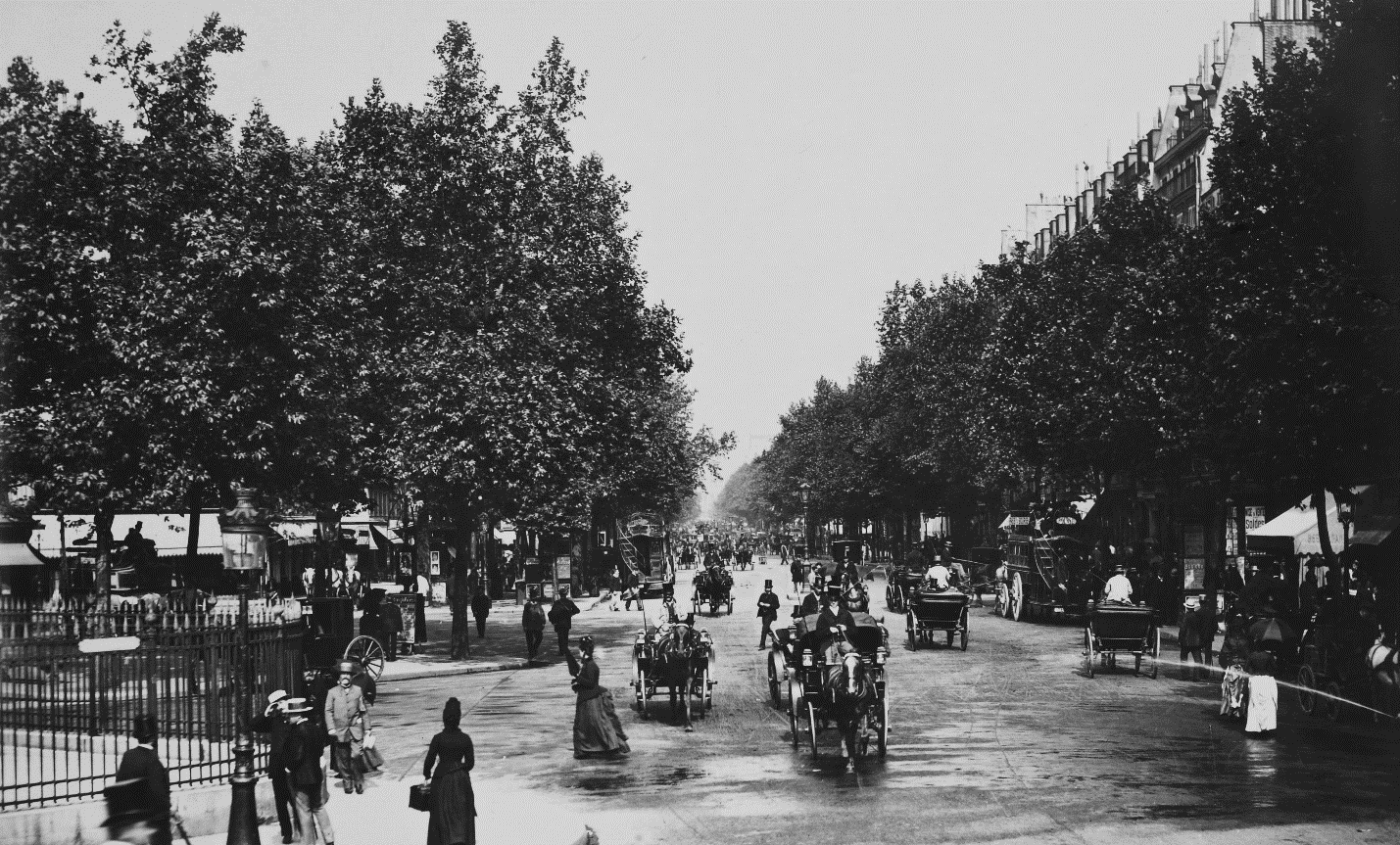
In his 1869 book The Innocents Abroad, the great American author Mark Twain wrote: “We have come five hundred miles by rail through the heart of France. What a bewitching land it is! Surely the straight, smooth, pure white turnpikes are jack-planed and sandpapered every day. How else are these marvels of symmetry, cleanliness, and order attained? It is wonderful…” While in Paris, Mark Twain also observed: “Louis Napoleon is annihilating the crooked streets, and building in their stead noble boulevards as straight as an arrow – avenues which a cannon ball could traverse from end to end without meeting an obstruction. And this ingenious Napoleon paves the streets of his great cities with a smooth, compact composition of asphaltum and sand.”
As historian James Laux observed: “France owed its good roads to the fine leadership supplied by the government’s corps of civil engineers out of the École des Ponts et Chaussées since the eighteenth century, and to the highway law of 1836, which required local governments to maintain local roads and authorized local taxes to finance this.” [4]
The American magazine Horseless Age noted in 1901: “One must bear in mind that most automobiles in France make outings in the country and are not confined to towns. The fine roads of France make automobile touring a pleasure, while in America this pleasure can only be indulged in the cities and parks, as the average American out-of-town road will not permit any long excursions.” The British magazine Automotor Journal remarked in 1903: “Everybody knows that the best French roads are the best roads in the world so far as surface is concerned.” At the same time, in the United States, roads both outside most towns and in many cities were in poor condition.
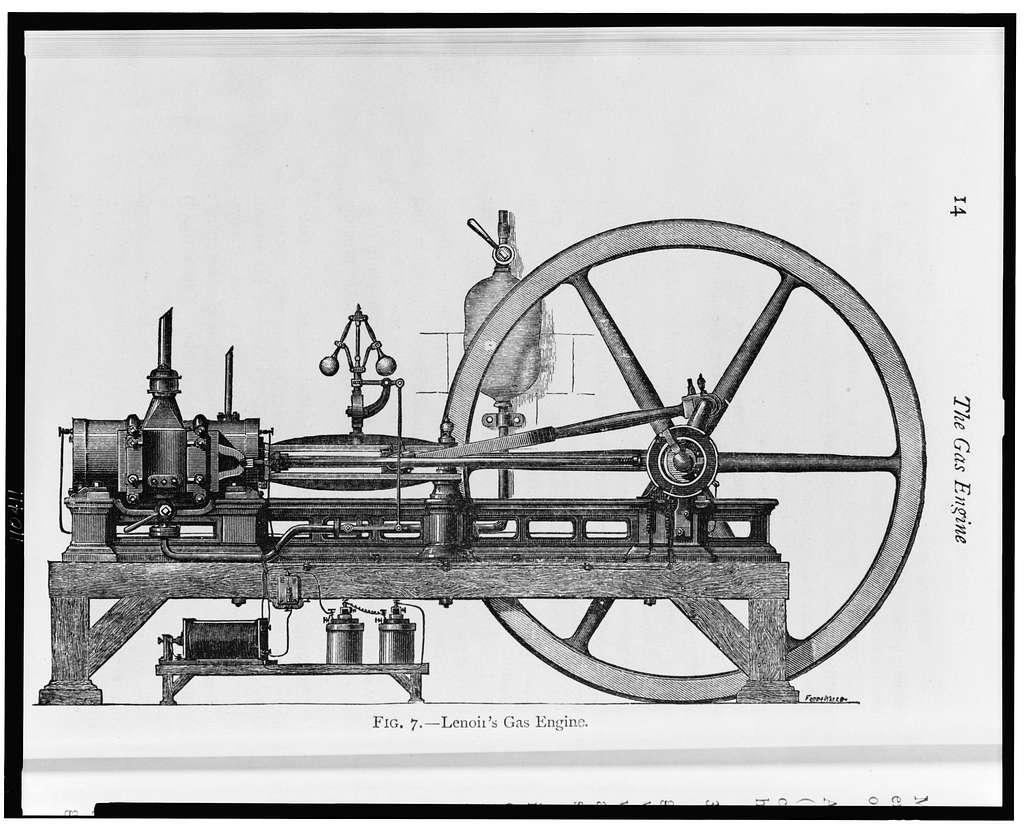
The number two reason was that French science and technology were experiencing remarkable progress during the second half of the 19th century. For example, in 1860, Étienne Lenoir developed his first commercially successful internal combustion engine running on illuminating gas, while in 1862, Alphonse Eugène Beau de Rochas formulated the theoretical principles of the four-stroke internal combustion engine, fourteen years before Nikolaus Otto built his famous four-stroke engine in 1876.
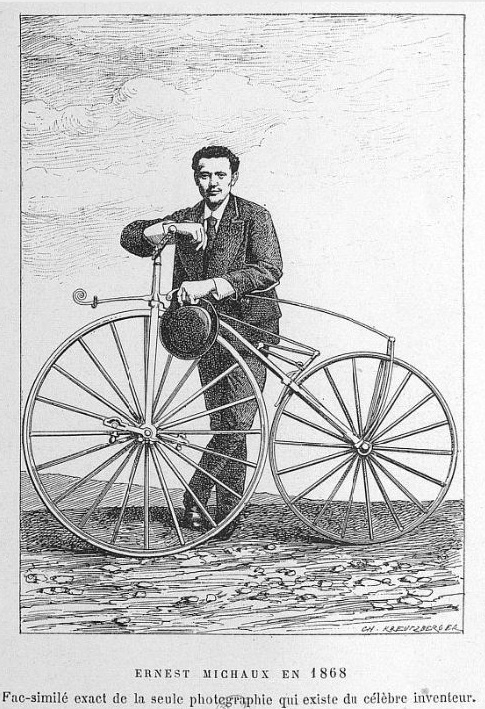 Ernest Michaux with a velocipede, 1868. Source: Louis Baudry de Saunier, Le Cyclisme théorique et pratique (1893)
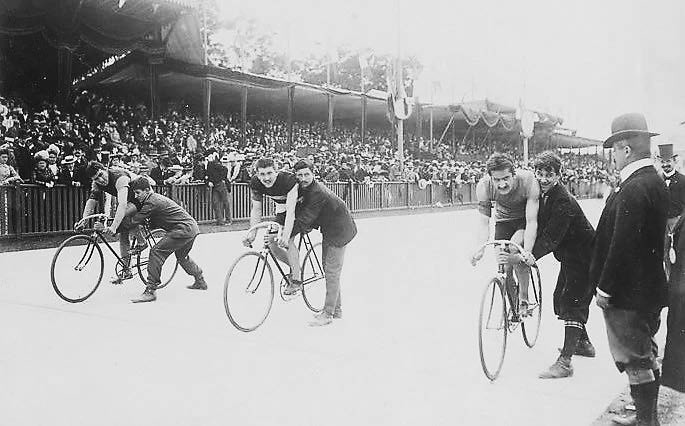
Cycling race in France, 1896–1897. Jules Beau Collection, Gallica / Bibliothèque nationale de France
Reason number three was the development of the bicycle. Ernest Michaux, son of Pierre Michaux, is often credited with adding pedals to the draisine in 1861. While he did not invent components such as ball bearings, chain drives, or drive shafts, these mechanical elements were subsequently used in bicycle construction and later adopted in early automobiles, along with various gearing systems, freewheel and braking mechanisms, wire wheels, and pneumatic tires. The bicycle gave people the freedom to travel. For thousands of people, cycling developed a taste for fast mechanical road vehicles entirely under the control of their riders. The enthusiasm for cycling, strongly supported by the excellent French road network, created a particularly favorable environment for the development of the automobile.
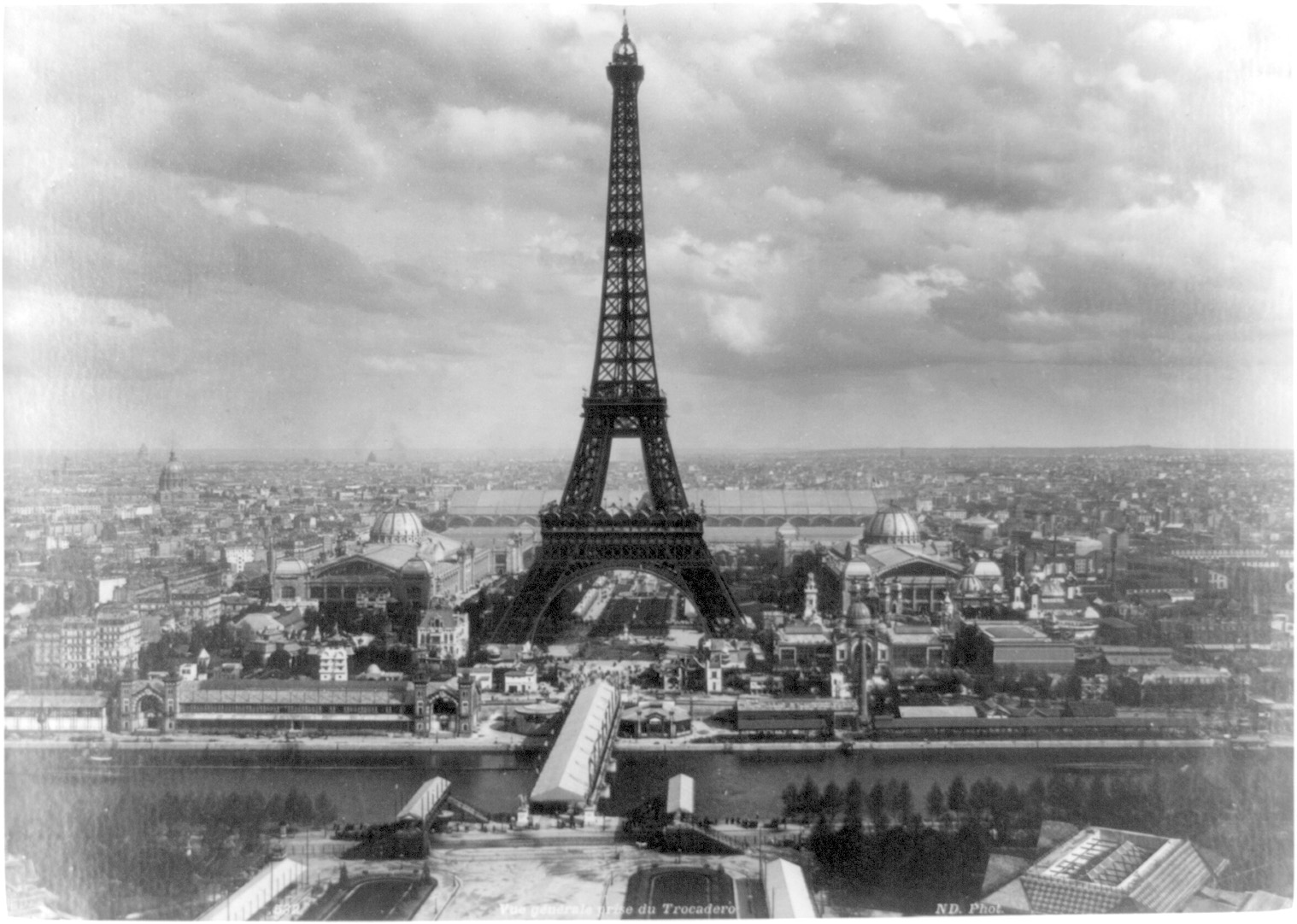
Eiffel Tower during the Paris Universal Exhibition of 1889
Lastly, there was enormous enthusiasm among the French public for everything new, advanced, and sometimes even extravagant. France became an important international trendsetter. It is no coincidence that the country developed a strong tradition of exhibitions showcasing technological achievements, including national industrial exhibitions such as the one held in 1844, followed by international exhibitions. At the Paris Universal Exhibition in 1889, Gustave Eiffel built his famous tower. Can you imagine London or Berlin allowing the construction of such an enormous iron structure at that time? Yet the French decided to build it, and it still stands today.
The romantic spirit was particularly strong among the French of the 19th century. There was a thirst for knowledge, travel, and new discoveries. Moreover, there were French writers such as Jules Verne and Louis Boussenard. Their books stimulated the imagination and awakened a desire for adventure and exploration. The French organized numerous exhibitions, sporting competitions, and bicycle tours. One notable example was Pierre de Frédy, Baron de Coubertin, who founded the International Olympic Committee (IOC) in 1894, leading to the first modern Olympic Games in Athens, Greece, in 1896. Another was Pierre Giffard, who organized the pioneering Paris–Rouen automobile competition in 1894.
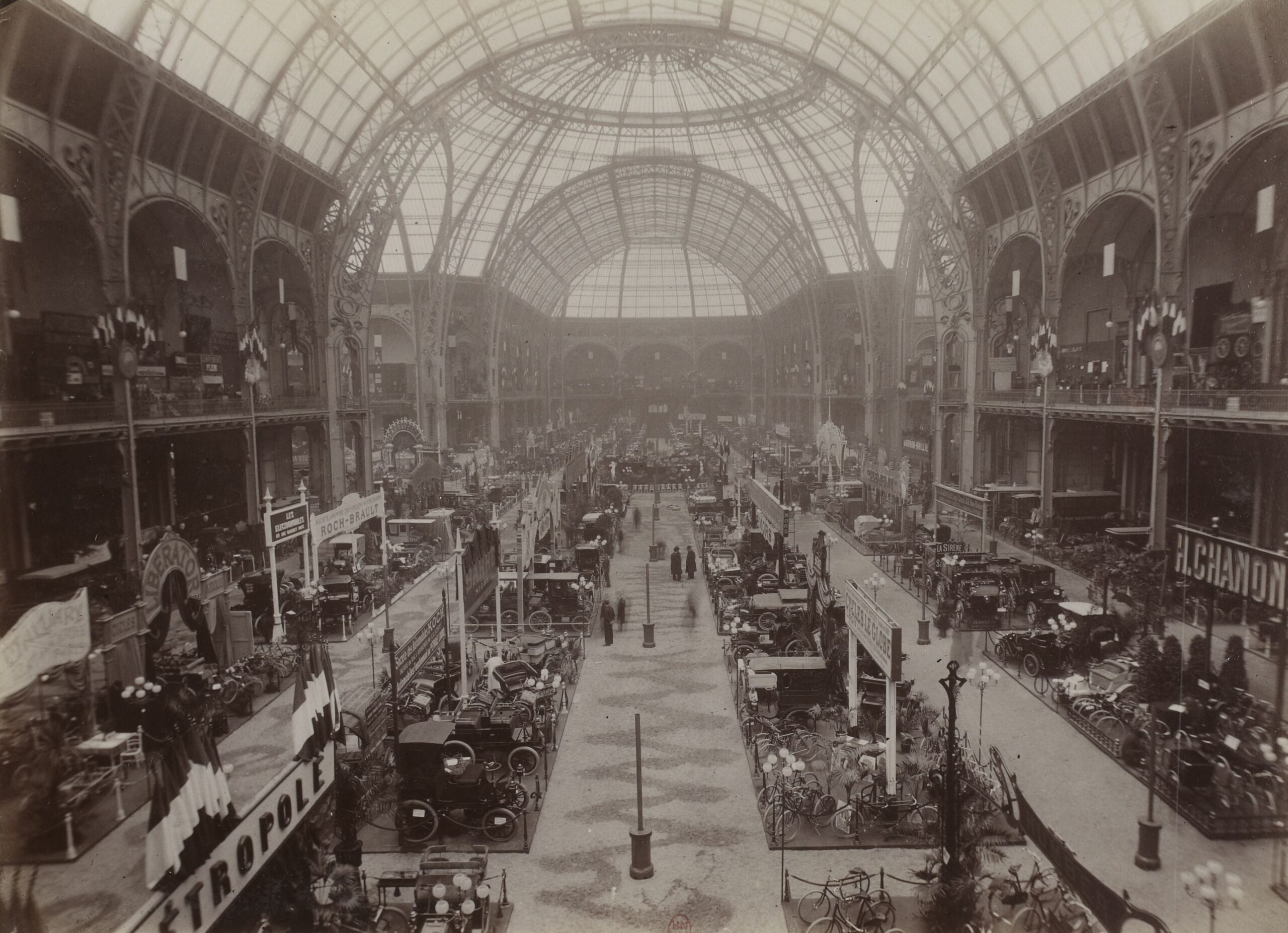
To sum up, we can clearly see that because all the right conditions were in place, France was uniquely positioned to be at the forefront of the development of the automobile industry.
References
[1] James M. Laux, The European Automobile Industry, Twayne Publishers, 1992.
[2] Mario Matteucci, History of the Motor Car, Crown Publishers, 1970.
[3] Ibid.
[4] James M. Laux, in First Gear: The French Automobile Industry to 1914, McGill-Queen’s University Press, 1976.
About the Author
Vladimir Vershinin is an independent automotive historian, an engineer by education, and the author of Panhard & Levassor Brass Era. He is also the founder of BrassCarEra.com, a website dedicated to the history and engineering of early automobiles.




















A simply outstanding article in every respect and one I will re-read more than a few times. Although I had a basic understanding of this history, this article has increased my understanding considerably. Thank you sincerely for taking the time to write it.
The French have a proud automotive and aviation history thats very much the foundation of these industries today.
Great article!!
This is an outstanding story. I am looking forward to the follow-ups!