
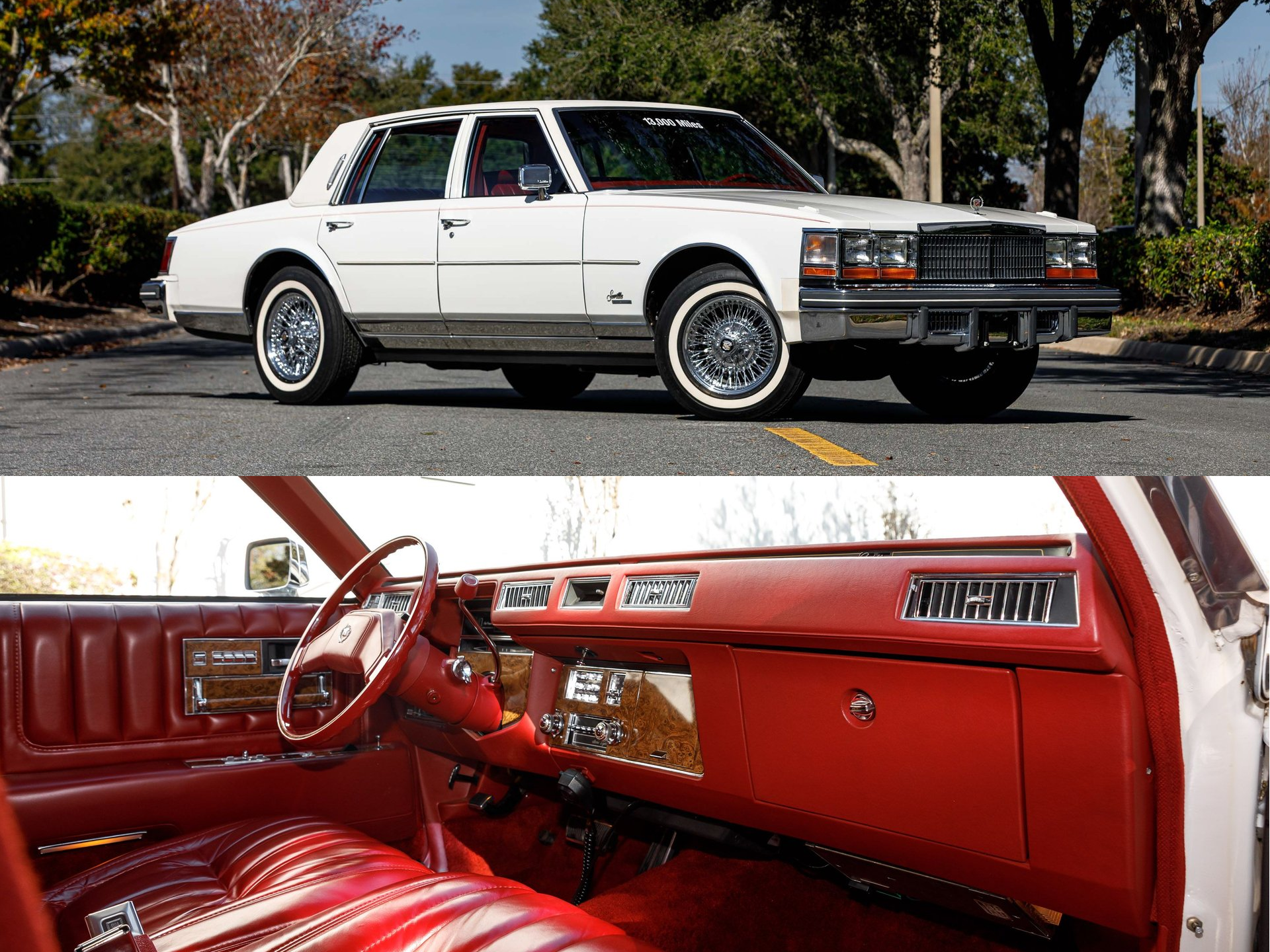
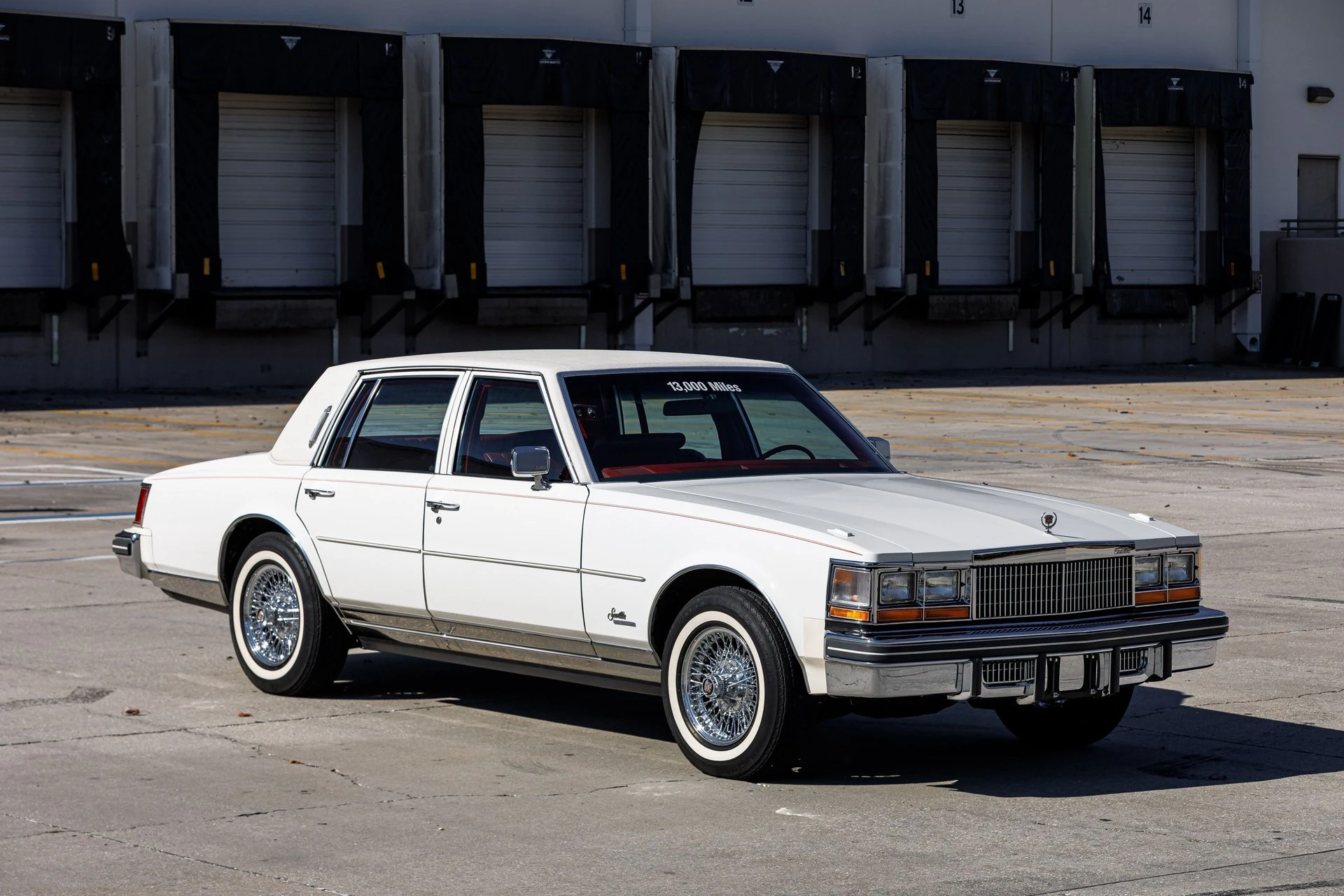
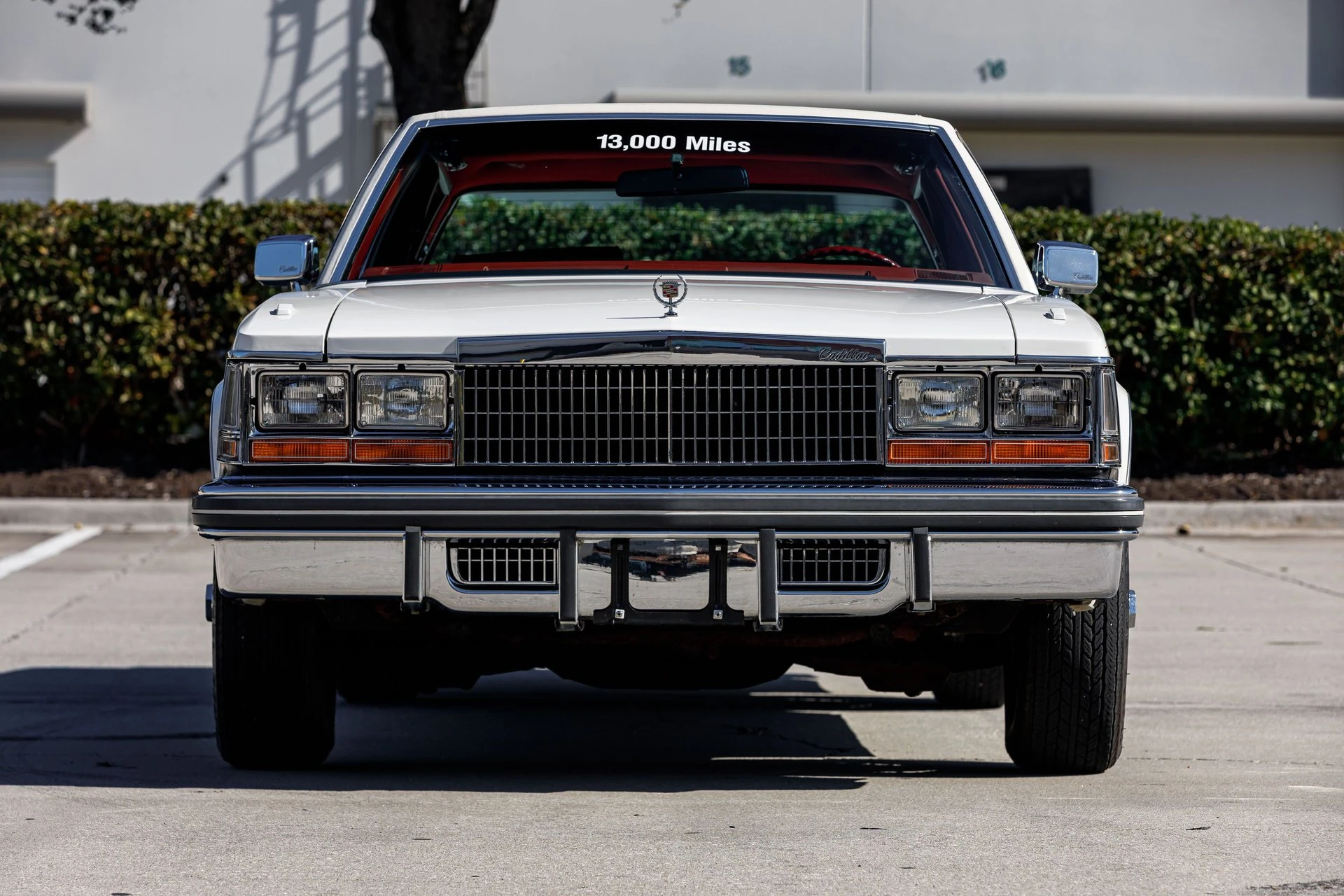
When the 1979 model year began, Cadillac was on top of the world, commercially speaking, with its popular downsized De Ville line, the handsome new Eldorado, and the aging but still very successful Seville. Little did anyone realize that the bottom was about to fall out. This low-mileage original Cotillion White car, which has only about 13,000 miles, might be the nicest surviving example of the first-generation Seville, before Cadillac dragged its own reputation through the mud.
The 1976–1979 Seville will probably always have a somewhat controversial place in the Cadillac lexicon. Its structural kinship with the X-body Chevrolet Nova; its initially troublesome fuel-injected Oldsmobile engine; the even more troublesome Oldsmobile diesel; and the ongoing question of whether it was or could have ever been an effective “import fighter” all continue to provoke debate, 50 years later.
Nonetheless, the Seville was a solid commercial success, selling 215,659 cars in four and a half years. (Yes, I’m aware that the initial Seville was technically a 1976 model.) Given its high prices, which started at $12,479 in May 1975 and had risen to $16,249 by the end of the 1979 model year, the Seville was lavishly profitable for Cadillac. If Cadillac managers really believed it was luring buyers away from luxury imports, they were fooling themselves, but the Seville had been successful in translating Cadillac luxury into a somewhat smaller package with no loss of prestige.
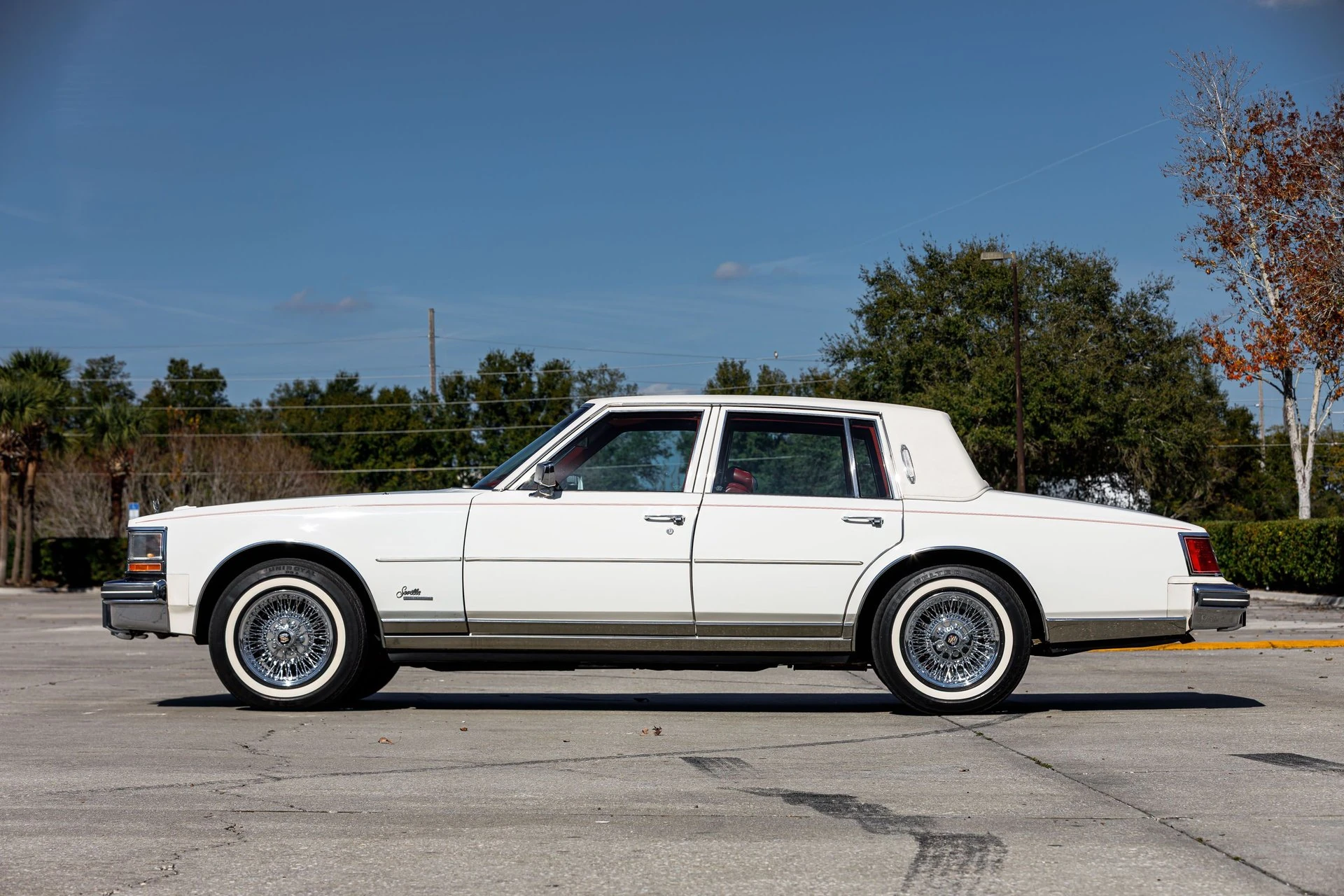
Above all, the Seville was a handsome car. Its stylistic impact was considerable — downsized GM cars launched off the Seville’s “Sheer Look” more than a decade — and while the designers could point to ways it was influenced by English and Italian design, the Seville looked and felt completely American. It won at least grudging respect from the UK’s snarky CAR and from Germany’s auto motor und sport, which found it a competent and mostly satisfactory example of the American luxury idiom.
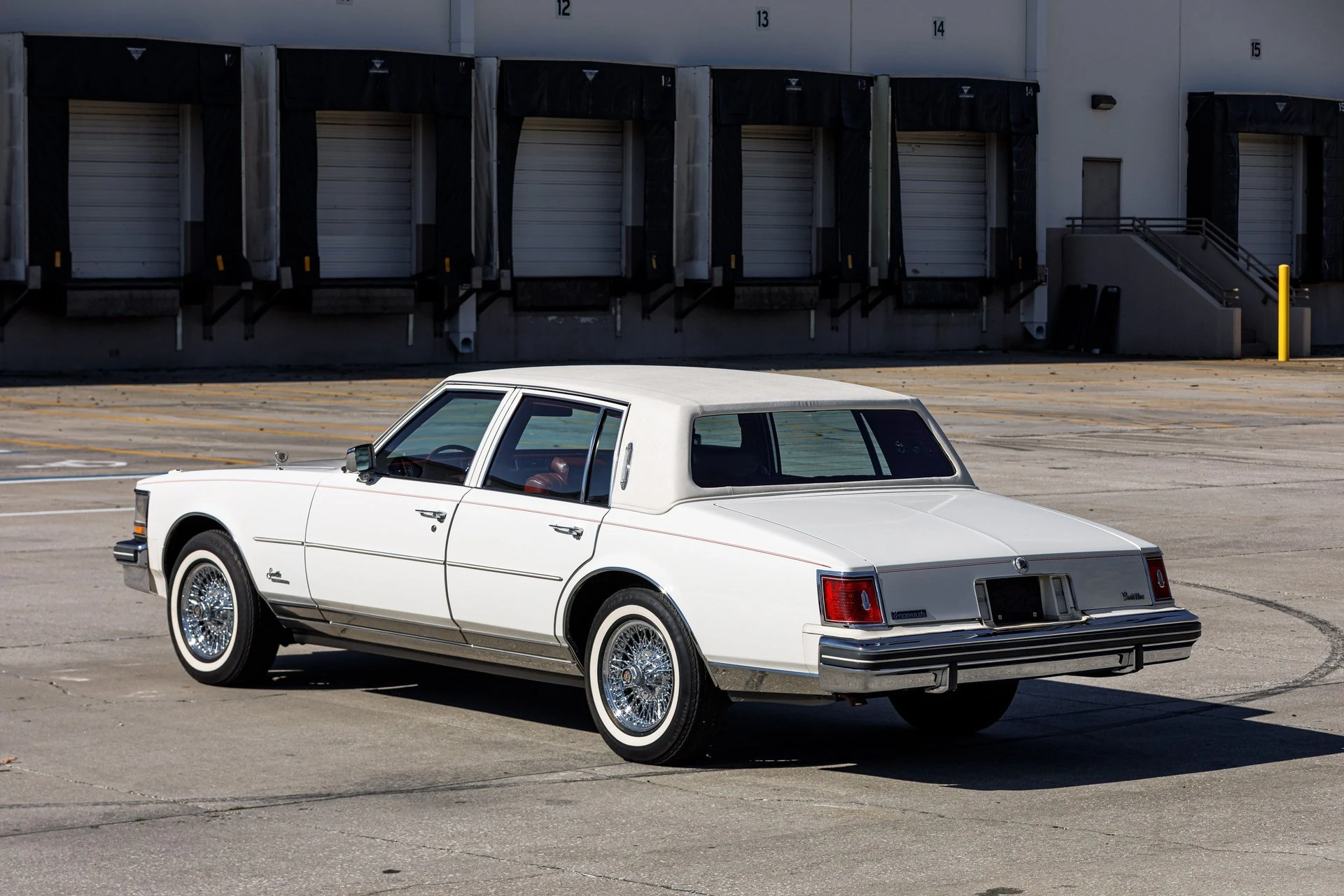
This particular example has the obligatory “tuxedo grain” padded vinyl roof, which was a no-cost option on the Seville. Although this was the peak of what we might call the Vinyl Age, 21.1 percent of 1979 Seville buyers opted for the painted steel roof — more than I would have expected in that period.
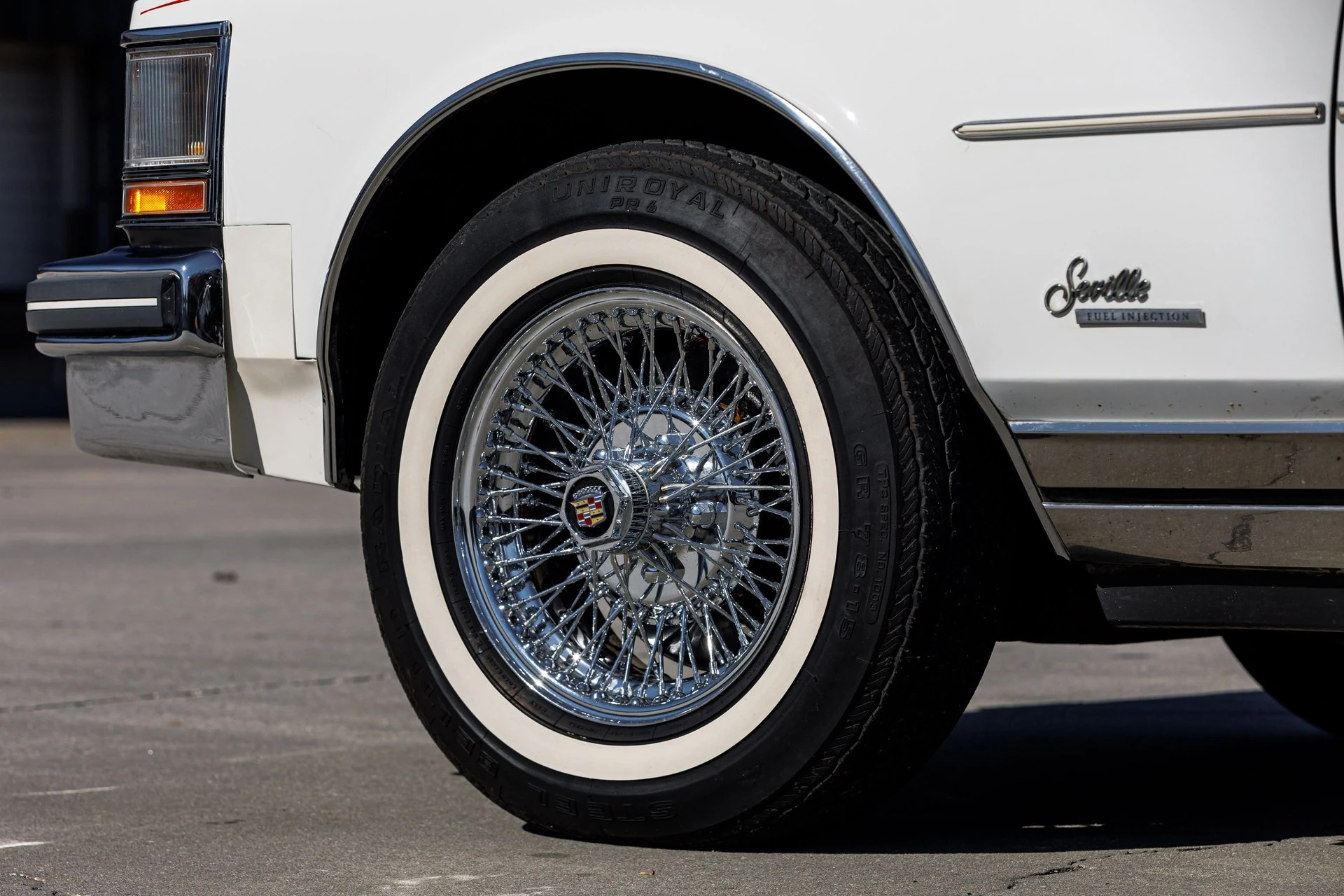
I’ve never been a fan of wire wheels, although these are the genuine article, not the dreadful simulated wire wheel covers so often found on domestic luxury cars of this era. Wide-stripe whitewall tires were standard on the Seville, size GR78-15.
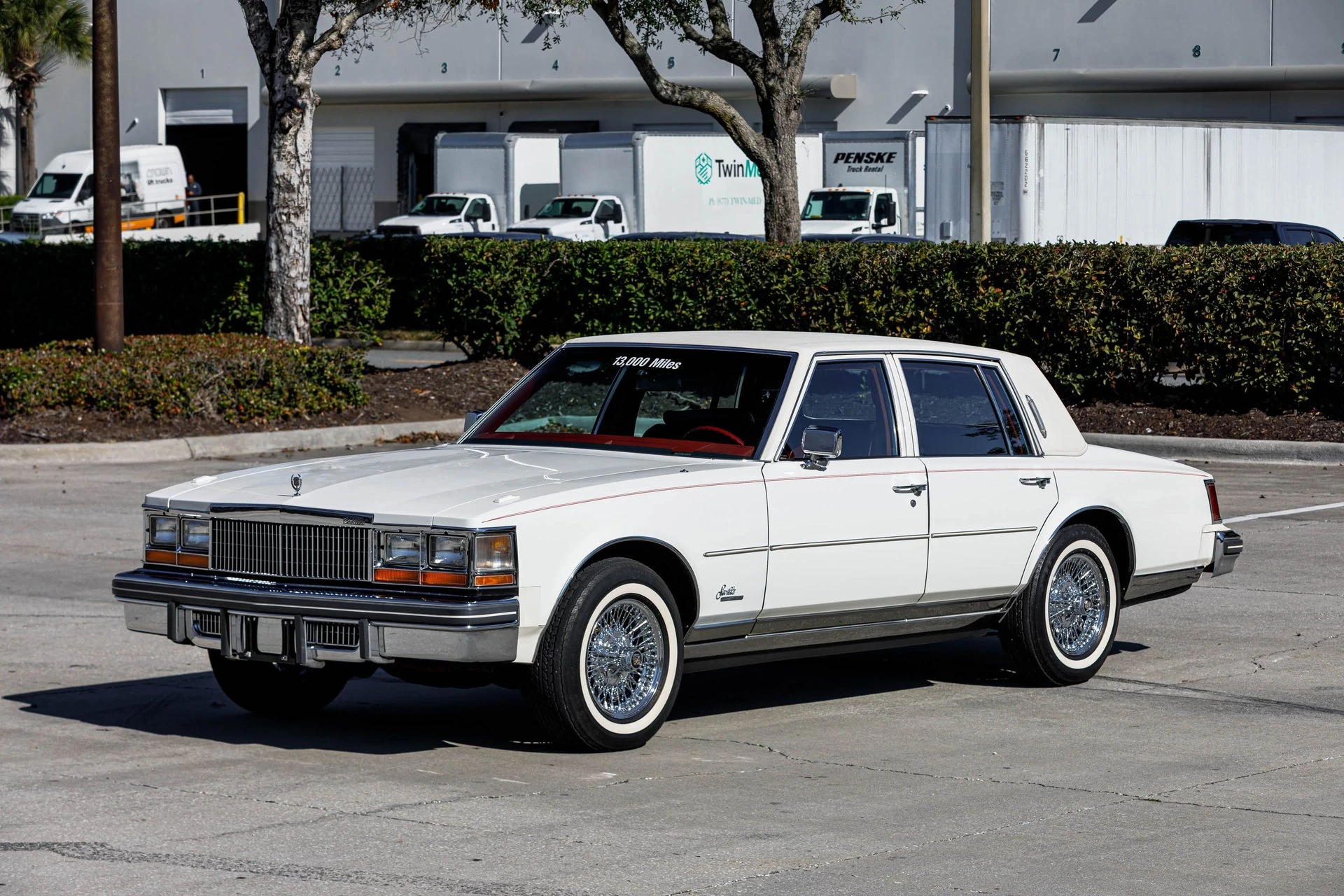
The Seville was the oldest design in the Cadillac lineup in 1979, and while its styling still looked fresh, the platform was feeling its age. In addition to the various structural and suspension tweaks the Seville had received to distinguish it from the Nova, it now had electronic level control and four-wheel disc brakes, but it didn’t ride or handle as well as the newer De Ville and Eldorado, and its weight was becoming a tad embarrassing. A 1979 Seville was about the same exterior dimensions as the new Eldorado, but weighed almost 400 lb more, and wasn’t much lighter than the substantially larger Sedan de Ville.
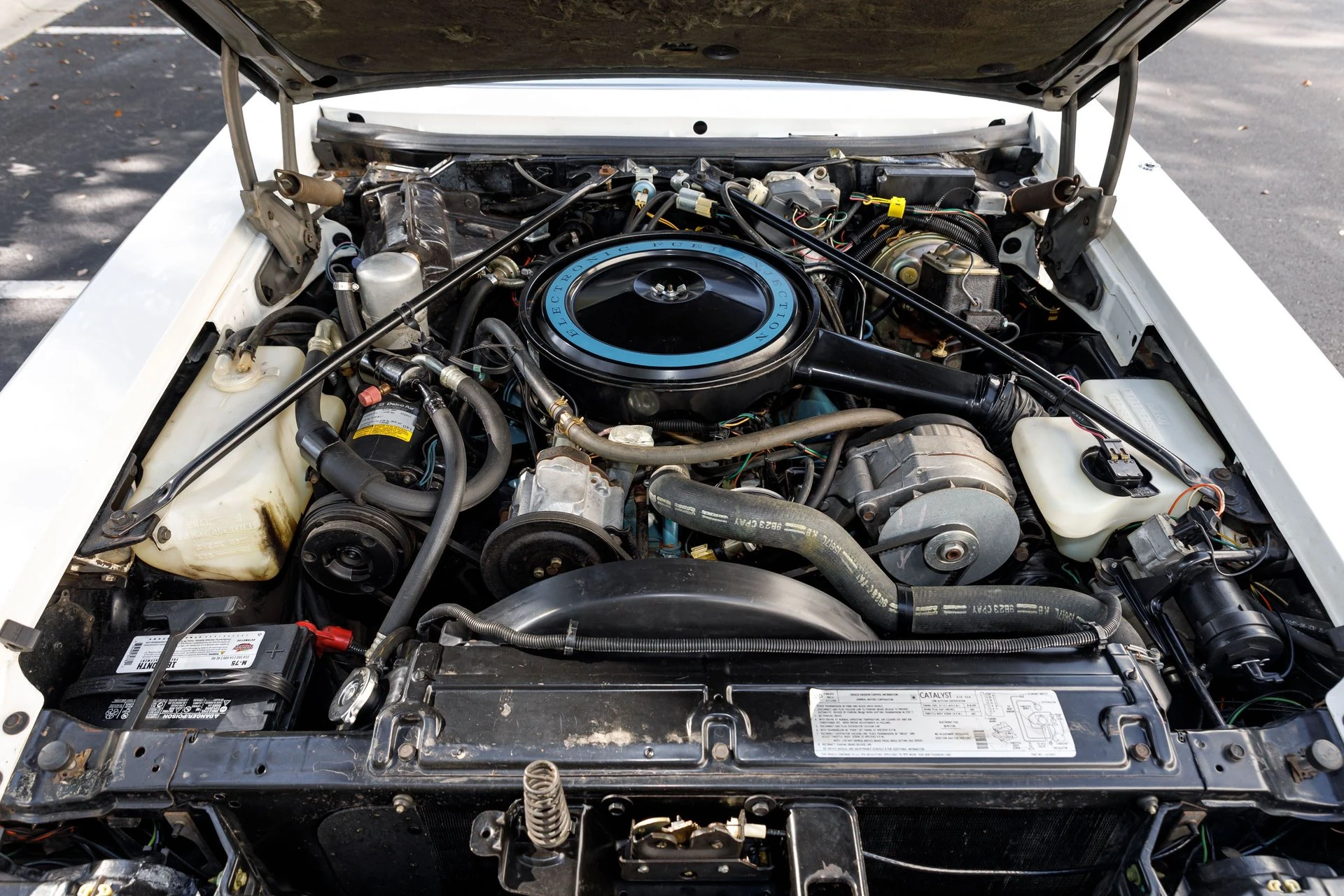
Some 10,731 Seville buyers chose the infamous Oldsmobile 5.7-liter diesel V-8, which had adequate performance, surprisingly decent fuel economy, and a dreadful reliability record, but about 80 percent of 1979 production had the gasoline Olds 350. This was down 10 hp from its 1976 debut, but most of the bugs had been worked out of its Bendix electronic fuel injection. The gasoline engine had better performance than the diesel, but the Seville’s weight made it less spry than an Eldorado with the same engine — 0 to 60 mph was in the 12-second realm — and the gas V-8 was much thirstier despite a 2.24 axle ratio (down numerically from 2.56 in 1978 except in California).
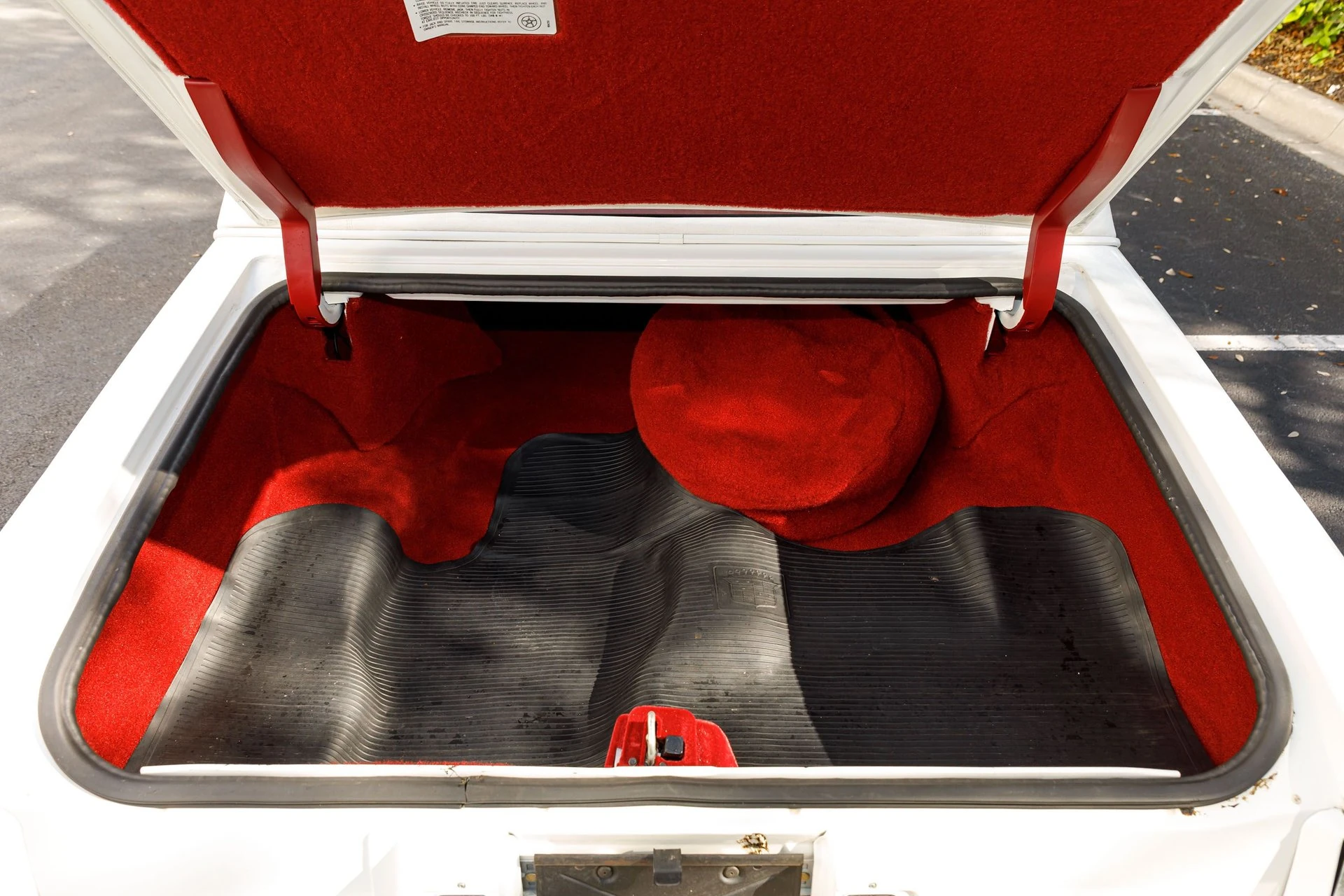
Typically of domestic luxury cars, the existing Seville platform didn’t acquit itself very well on rough roads and broken pavement, and its packaging efficiency wasn’t great. The first issue didn’t bother most buyers, but trunk space was not so hot. Cadillac rated usable luggage capacity at 12.8 cu. ft.
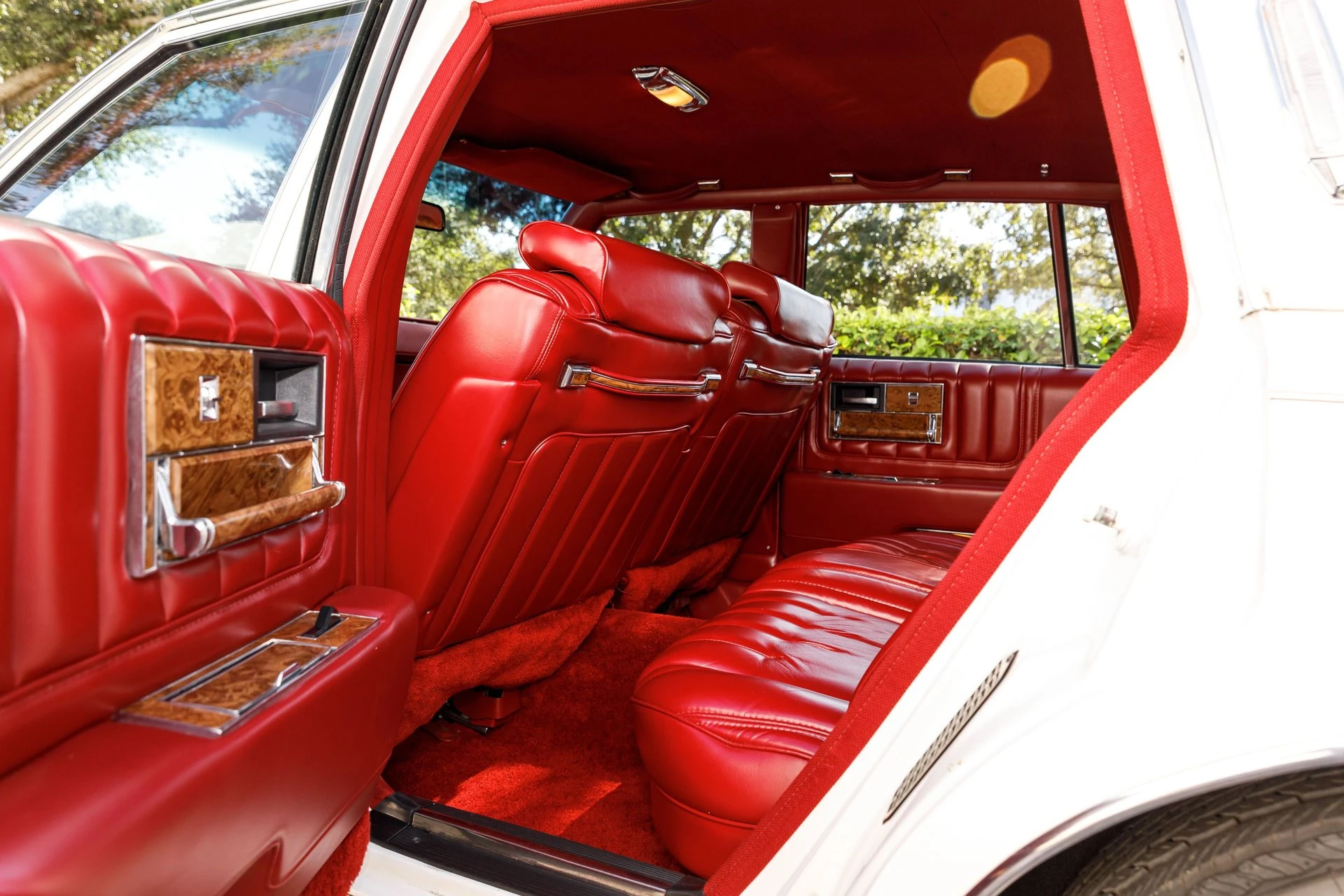
Back seat room was also a disappointment. I think Seville customers were fine with this being basically a four-passenger car, but the Eldorado was actually more comfortable in back, a bonus of its compact independent rear suspension.
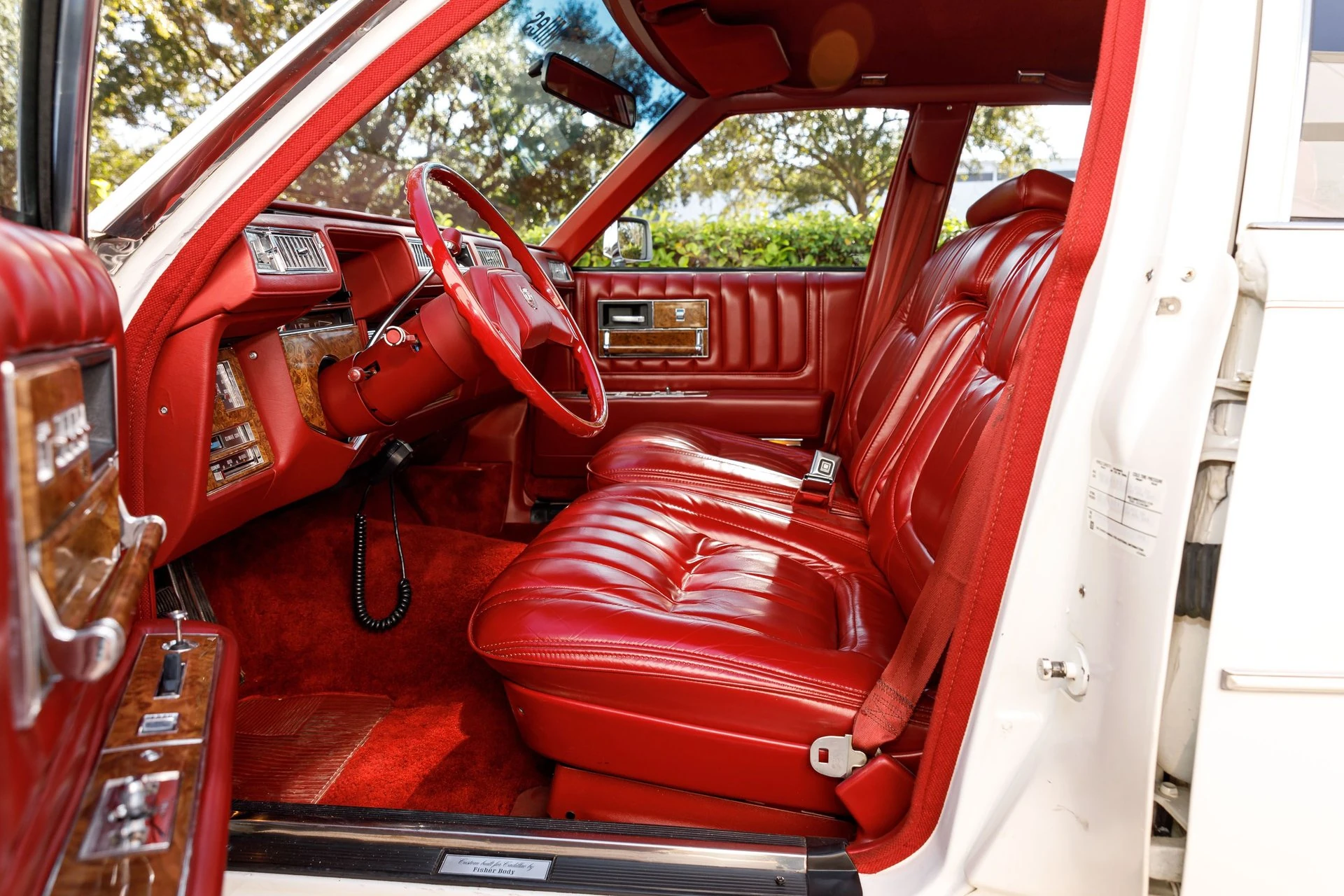
Even people who love these cars, or at least love the looks, generally concede that by this time, Cadillac materials quality was just not what it once was. It wasn’t just that the wood was now plastic, it was that there was a lot of it, and Cadillac kept insisting on molding it into very un-wood-like shapes. The woodgrain trim in an Oldsmobile Ninety-Eight wasn’t any more genuine, but it was often more tastefully arranged.
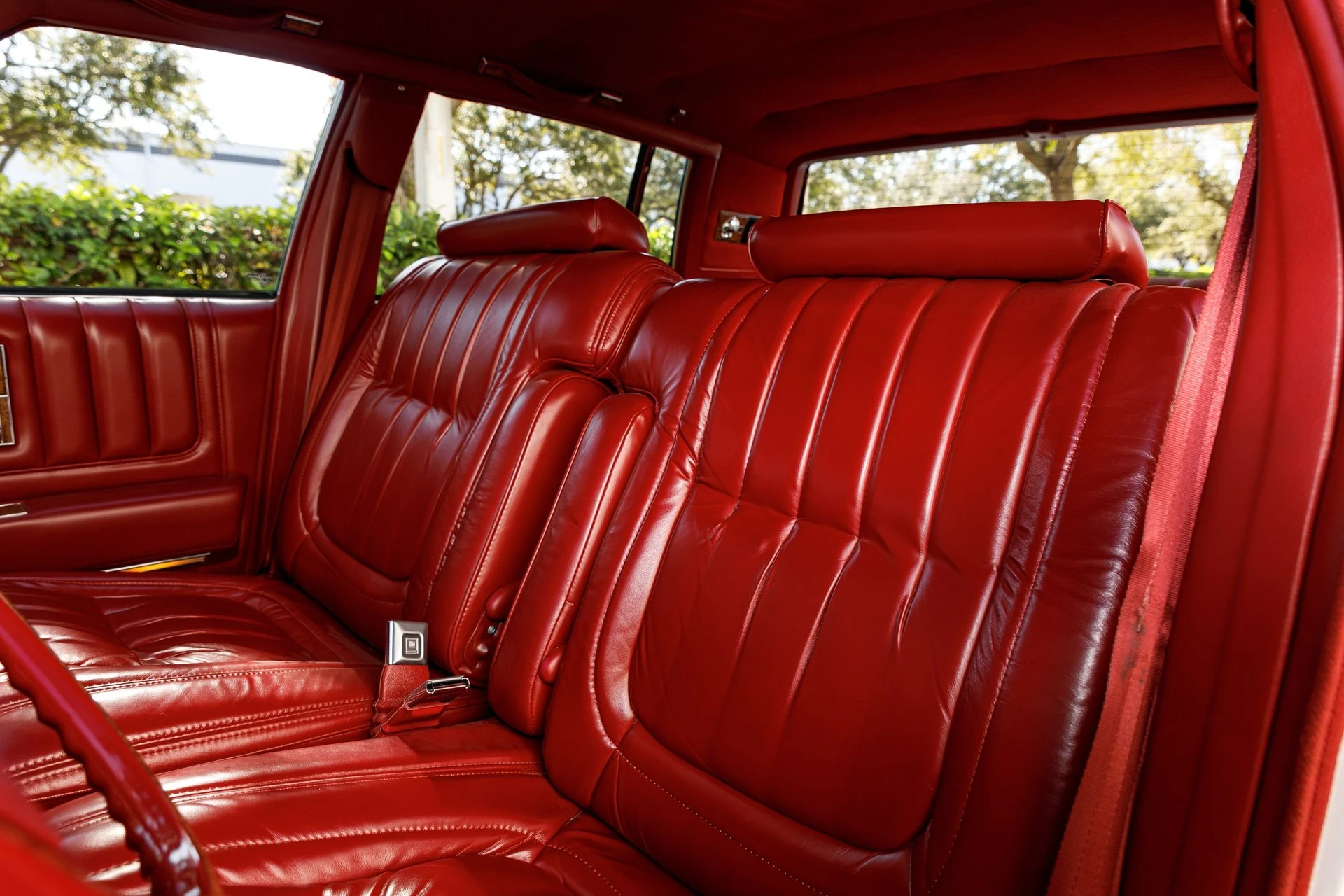
The “Arterial Spray Crimson” hue of the leather and vinyl trim is an acquired taste, but the Seville came with what Cadillac called Dual Comfort seats, a 50/50 split bench with separate fold-down armrests. The driver got 6-way power adjustment as standard equipment; the passenger got 2-way power adjustment and a manual recliner, although you could upgrade to 6-way power for both sides at extra cost.
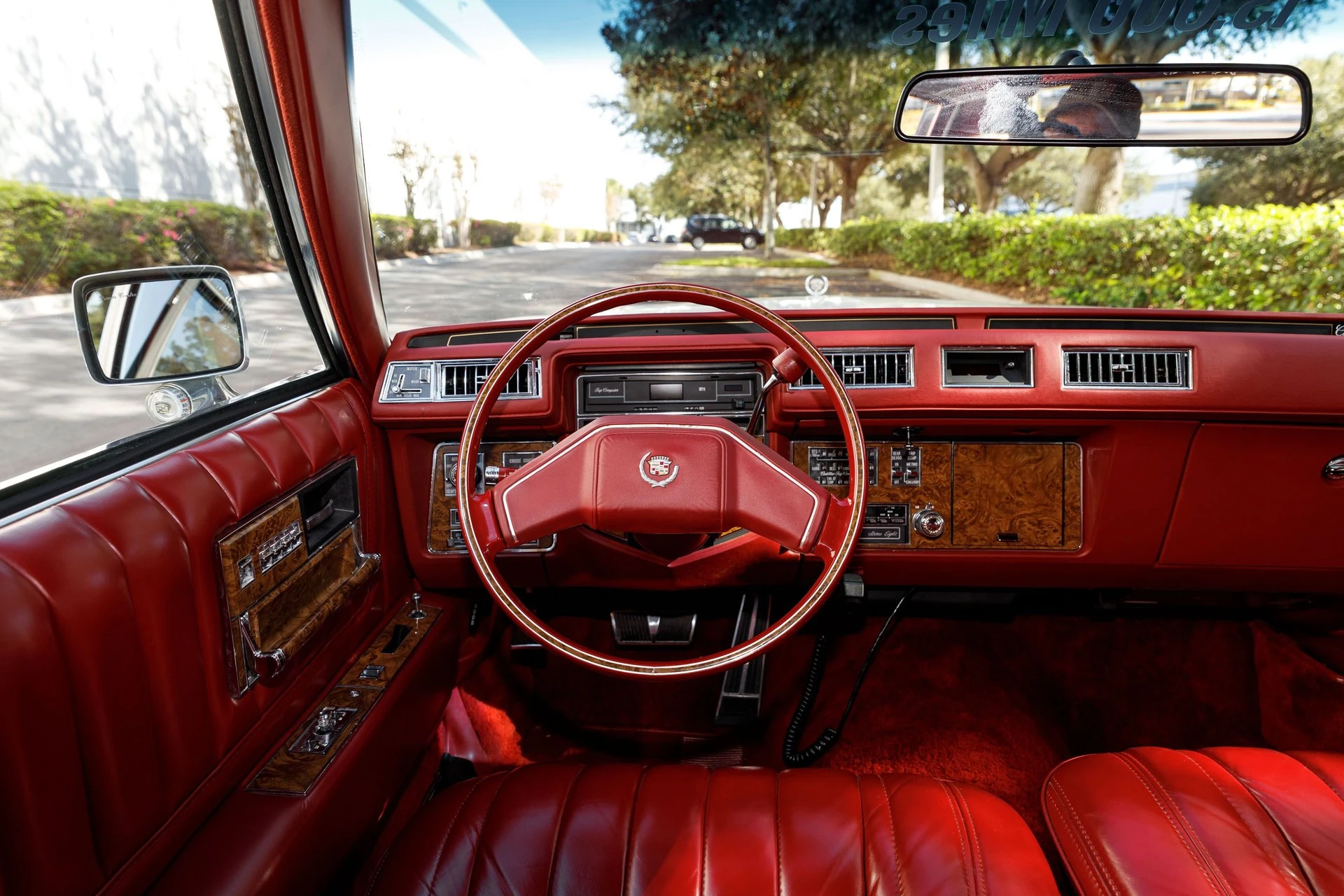
Seville standard equipment was extensive, including a tilt/telescoping steering wheel, an AM/FM radio, power windows and locks, tinted glass, and a power trunk release. However, whatever the brochure said about the Seville being “a car complete,” Cadillac wasn’t about to deprive its dealers of options to sell. Available extras included automatic door locks, a power sunroof or Astroroof, and this car’s CB radio (fitted to 20.4 percent of production).
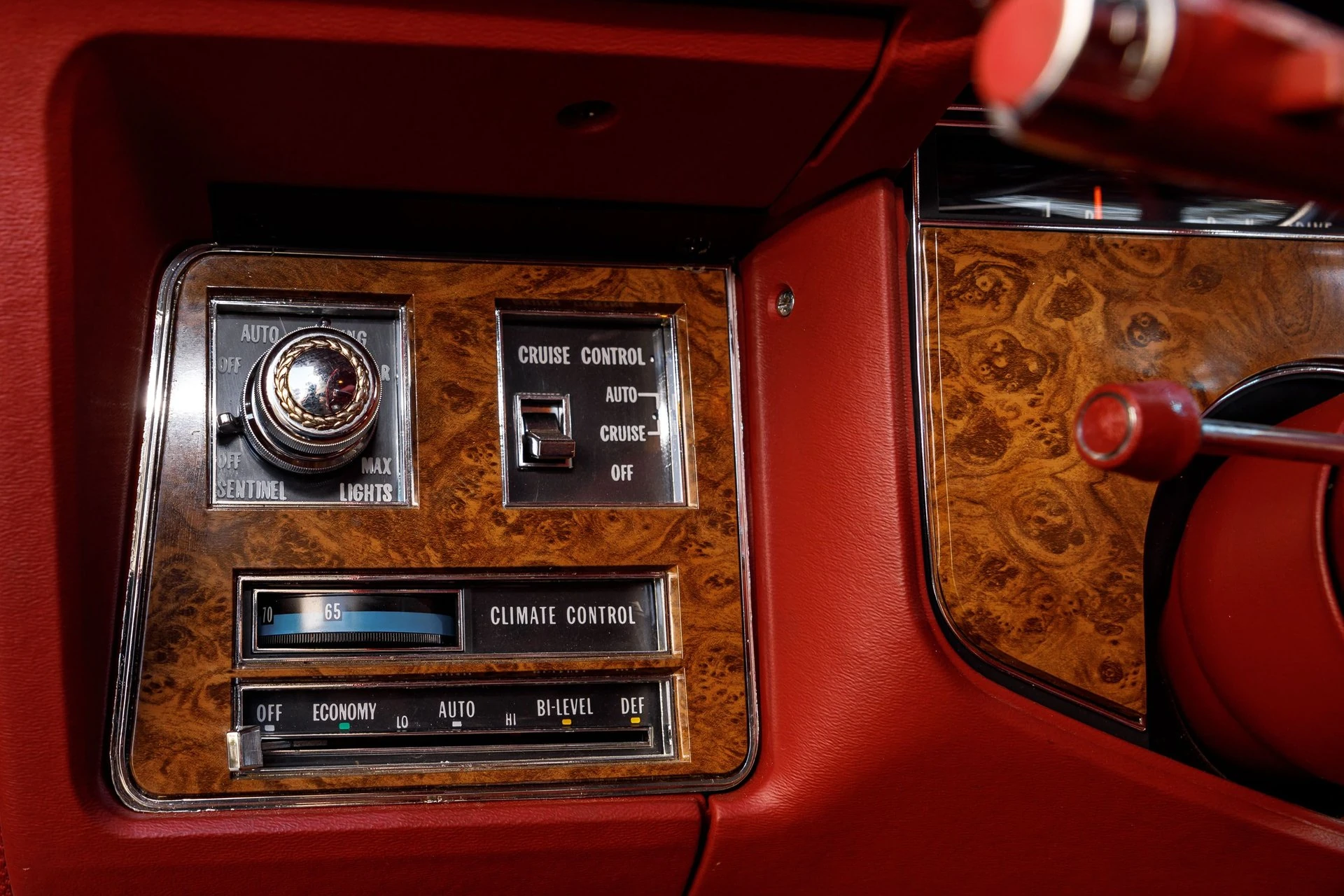
Cadillac had standardized automatic climate control across the line for 1975, and it was always standard on the Seville. Twilight Sentinel was also standard, but this car’s Guide-Matic auto-dimming headlights were extra, as was cruise control (although only 6.6 percent of these cars did without it).
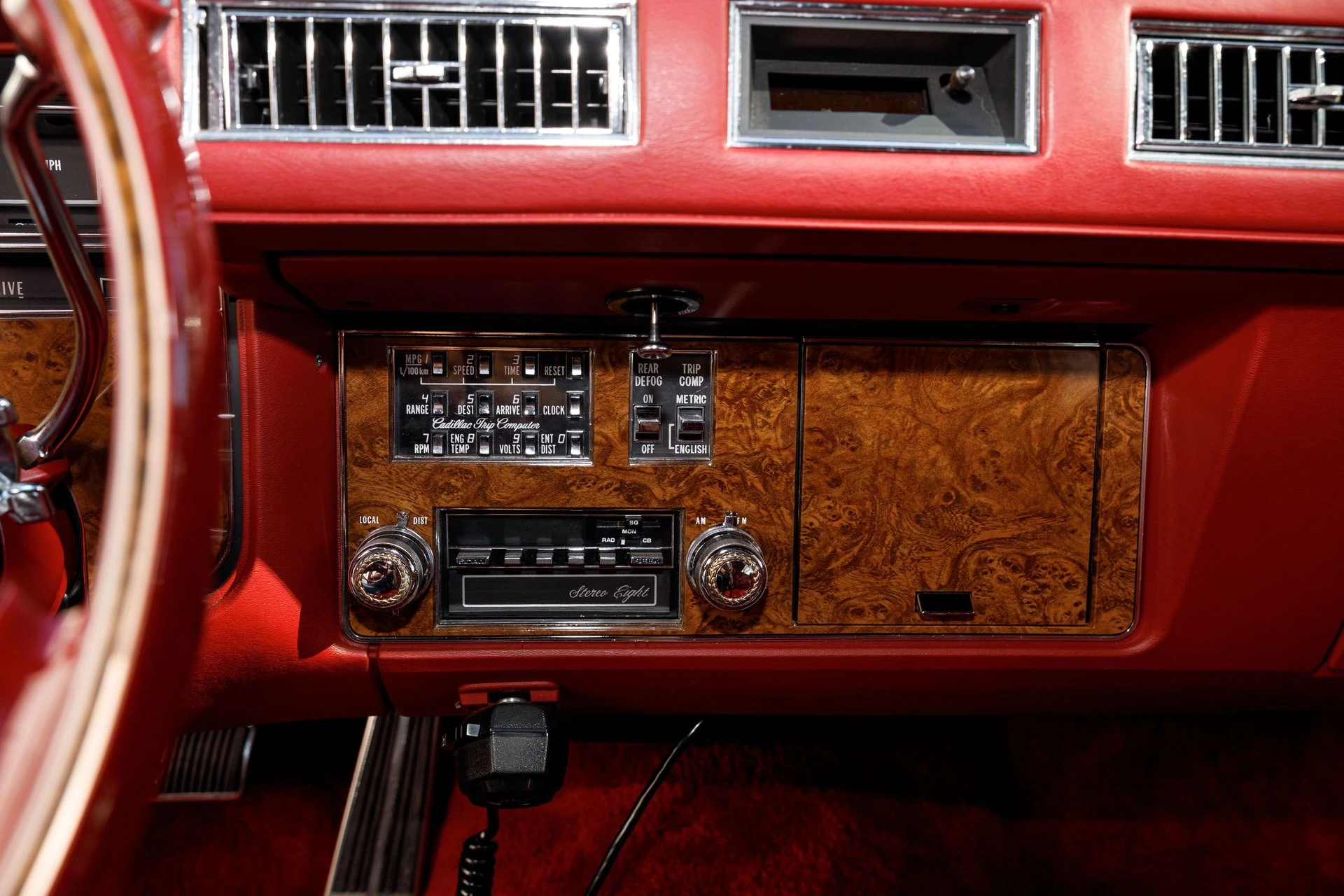
This car has the second most expensive stand-alone option: the new-for-1979 trip computer. It had some useful features (including the ability to view coolant temperature, voltage, and engine speed), but it cost a hefty $920 (a relative worth of about $4,700 in 2025), so it wasn’t very common.
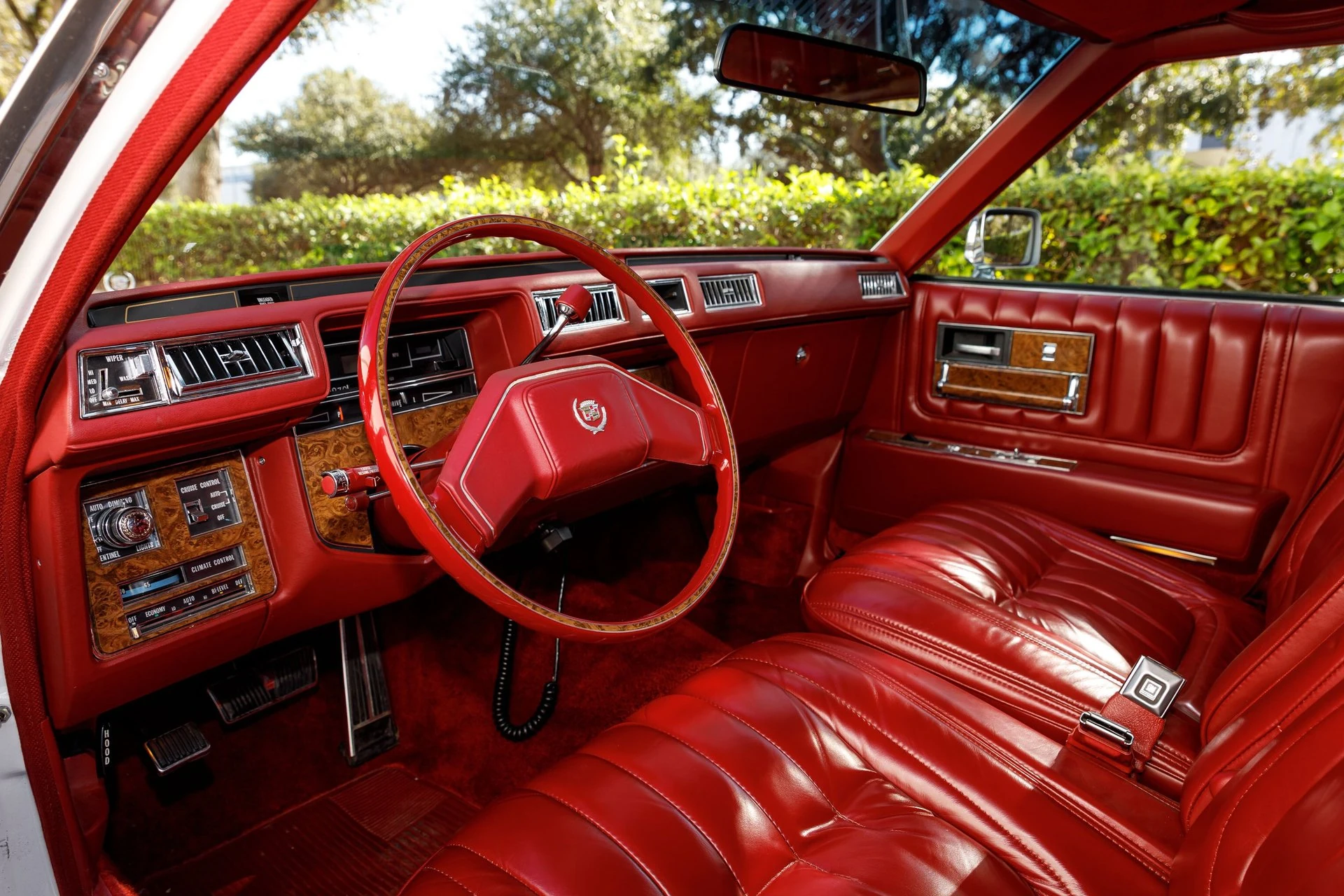
For better or worse, this is what Cadillac was selling in the late ’70s. Even in photos, stored and polished to something close to showroom finish, the interior looks cheaply made, dressed up with lots of toys and bright colors. It doesn’t lack for comfort or convenience, but to be perfectly frank, I’m not sure I could stand to look at this interior day in and day out, and unlike the 1979 Eldorado, I’m not so wowed by the exterior that I would make exceptions.
However, this was a winning formula for Cadillac. They had sacrificed exclusivity, quality, and arguably taste, and sales had soared. For the 1979 model year, Cadillac sold 381,113 cars (their second-best volume of all time), 53,487 of them Sevilles. Cadillac market share hit a record-setting and unprecedented 4.0 percent, twice as much as Lincoln and almost as much as Plymouth. No luxury brand had ever reached that kind of ubiquity, and it seemed like the party could go on forever.
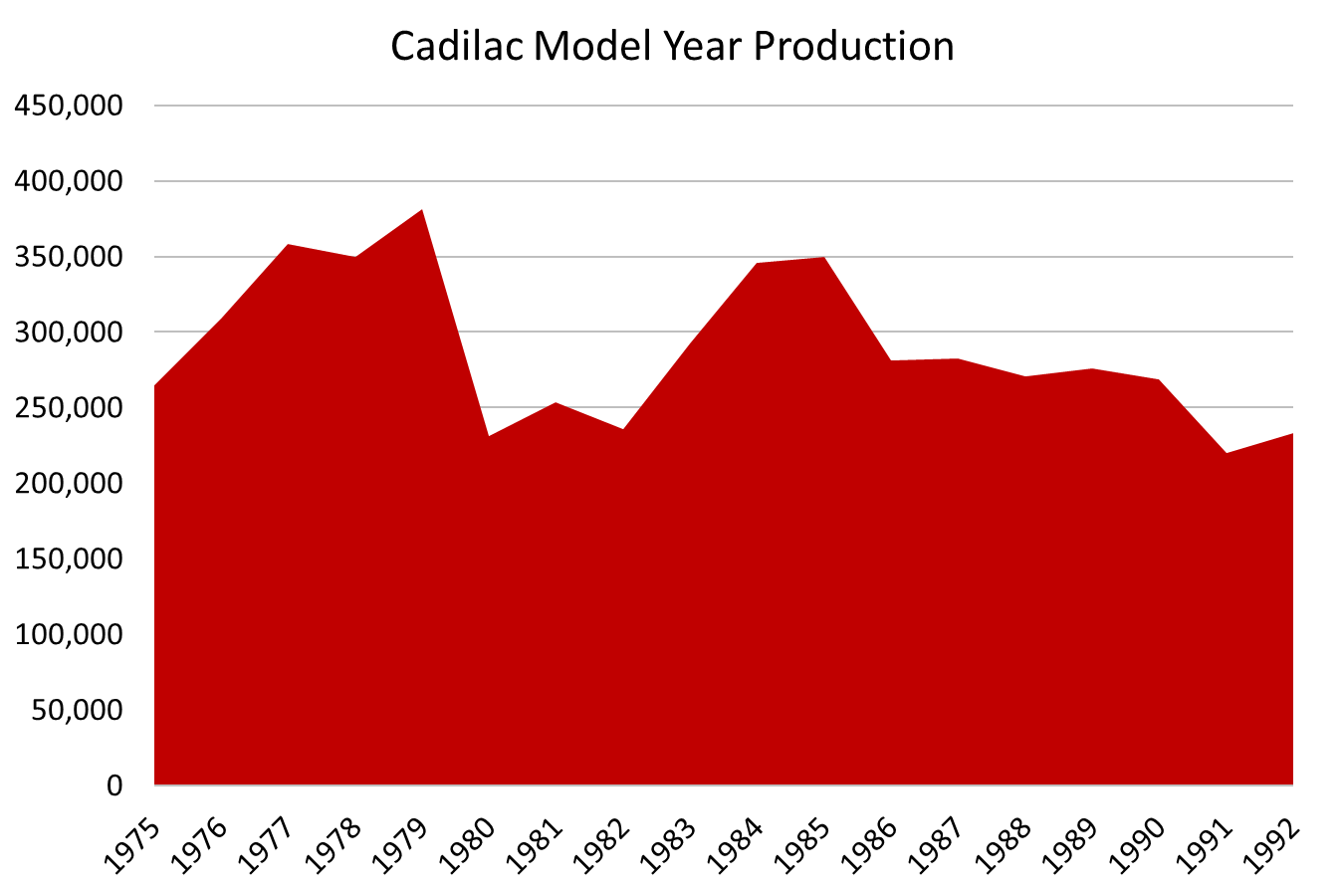
It didn’t. Sales were starting to slip by April 1979 in the face of a second oil crisis. Cadillac sales fell by almost 40 percent for 1980 and didn’t really begin to improve again until 1983. There would be one last bounce for 1984 and 1985; Cadillac market share for the 1985 model year was actually even better than 1979, although that was partly because of an early start for the 1985 FWD C-body models. However, from there, it would be a steady, disturbing decline. By the late ’80s, Cadillac’s future was in doubt.
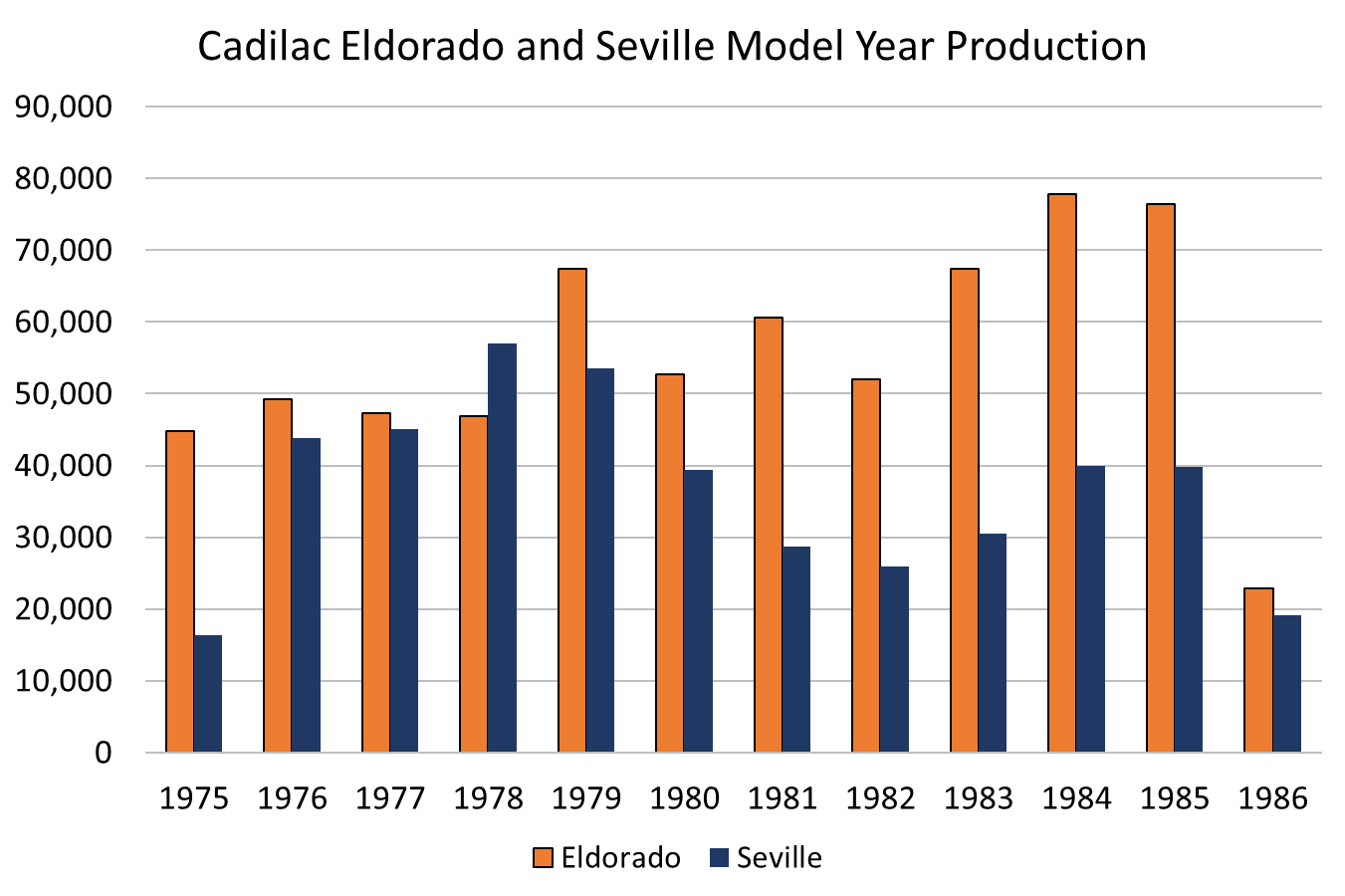
The oil crisis and the early ’80s recession were not Cadillac’s doing, nor can the diminished ’80s sales be blamed entirely on Wayne Kady’s hideous bustleback 1980 Seville. However, beyond this point, almost every choice Cadillac made for at least a decade seemed to be the wrong ones, at the worst possible time. To sustain its previous success, Cadillac needed to court affluent Baby Boomers, and they mostly preferred to avert their eyes.
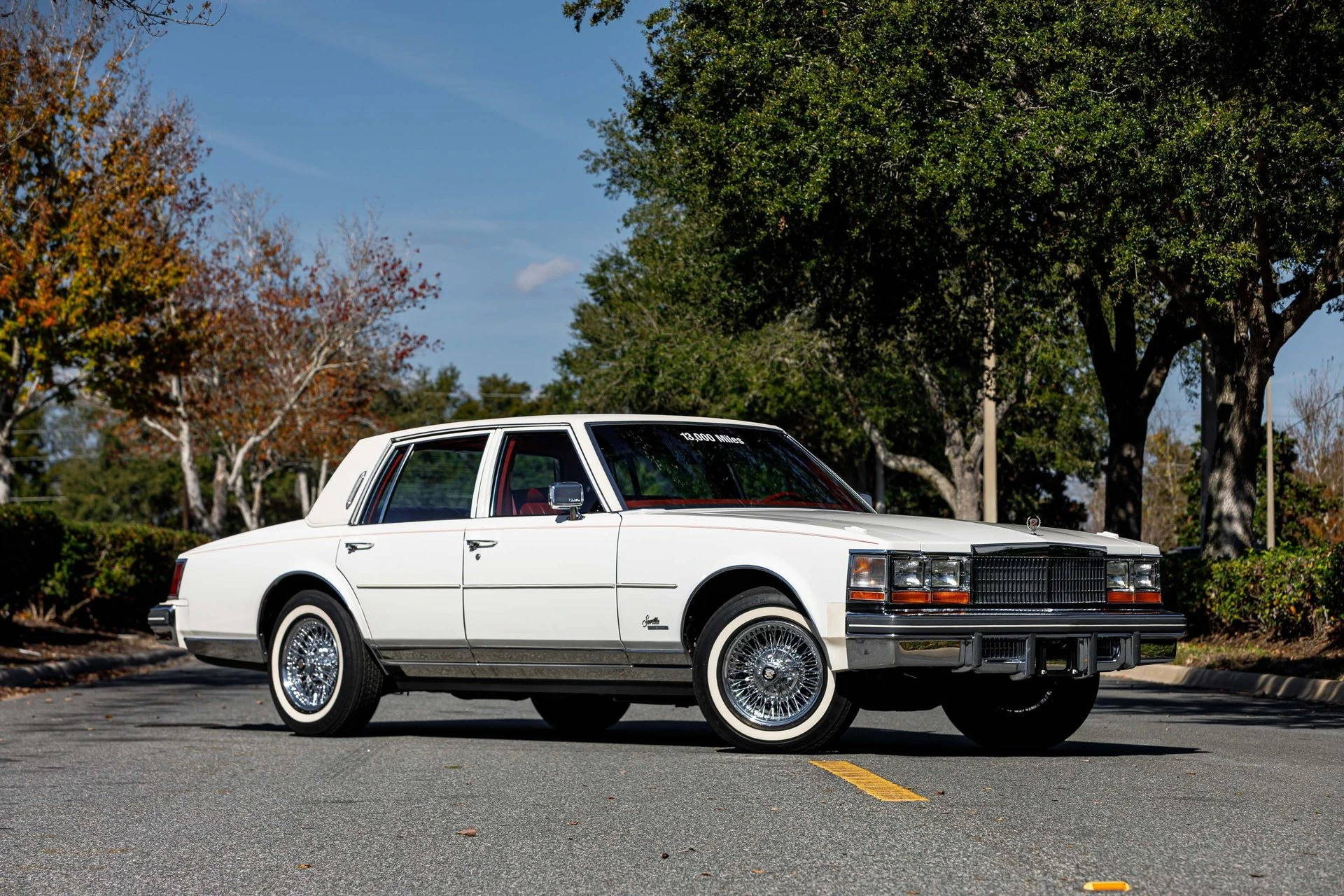
So, the 1979 Seville was the last hurrah, at least until 1992. This one, which came out of the Ray Fauber estate collection, sold for $27,500 at Mecum Kissimmee in January 2025, and then was apparently flipped again soon after for $36,900 — still with fewer than 13,100 miles on the odometer.
Related Reading
Vintage R&T: 1976 Cadillac Seville Preview, Technical Analysis and First Driving Impressions (by Paul N)
Curbside Classic: 1976-1979 Cadillac Seville – GM’s Deadly Sin #11 – The Sin of Underachieving (by Paul N)
Vintage AMS Review: 1976 Cadillac Seville – “A Typical American — But One Of The Best” (by me)
Curbside Classic: 1977 Cadillac Seville – European Sizes Run Smaller (by Brendan Saur)
Magazine Rewind: CAR, September 1977 – Which Is The Best Car In The World? (by Roger Carr)
Vintage Review: 1978 Cadillac Seville Diesel – Puffing And Chugging To Deadly Sin Status (by GN)
Curbside Classic: 1978 Cadillac Seville – Nope, Nothing Wrong Here (by Tom Klockau)
Curbside Classic: 1980-1985 Cadillac Seville – GM’s Deadly Sin No. 17 – From Halo To Devil’s Pitchfork (by Paul N)








I like the real wire wheels. They look great this and the fullsize Cadillacs, but I also can’t stand the fake wire wheel covers.
“Arterial Spray Crimson” is one of the reasons I keep coming back to your articles. Please don’t stop.
As for the car itself, I dont have much of an option on it other than they were great donors for rear disc brakes.