
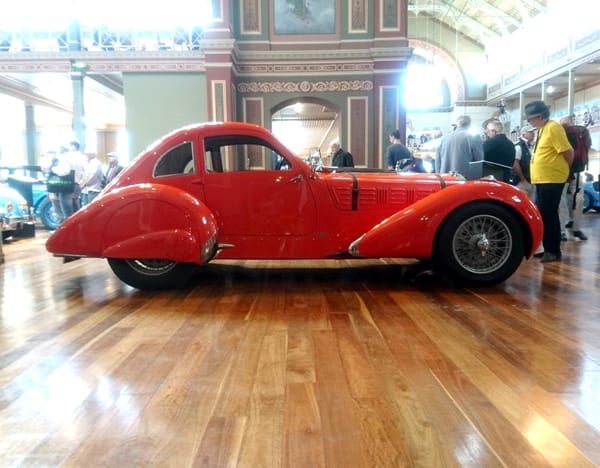
One of the most intriguing special classes at this year’s Motorclassica show was the Art Deco cars. We’ve already seen some from Cadillac in an earlier post, but let’s check out some more from other marques, starting with this Delage.
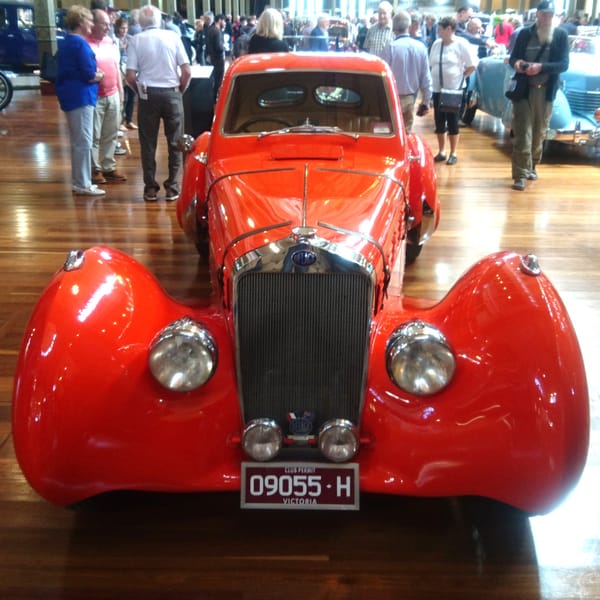
The famous Parisian coachbuilder Figoni and Falaschi has built many amazing cars, including this 1936 Delage D6.70 competition coupe. Frenchman Louis Gerard bought the car (reputedly with bags of 20-centime coins from his slot machines) and ran it in the 1937 24 Hours of Le Mans, finishing fourth.
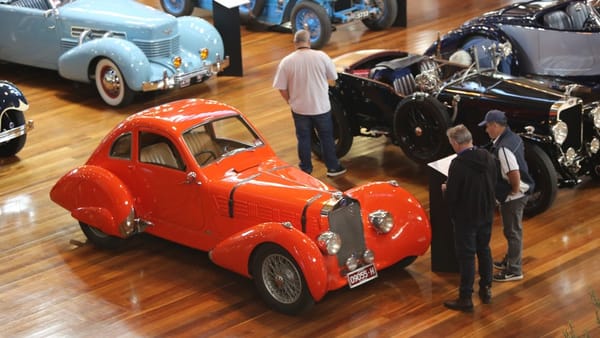
The car was lost in WW2, and in 2002 an Australian imported the correct model D6.70 base car to modify as per the original and have a coachbuilding firm in Melbourne build a recreation of the F&F body. It has since had a few changes for improved authenticity, including the original orange paint colour. (note I didn’t get enough photos to fully illustrate this post, so have used some found on the shows website or elsewhere)
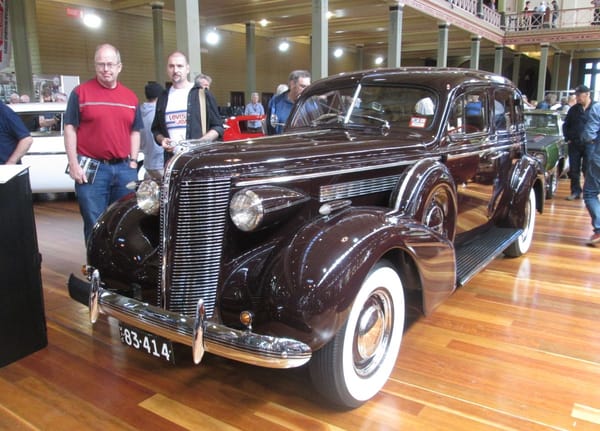
This 1937 Buick Special has been registered continuously since new, has had its third owner for more than 40 years, and was fully restored 20 years ago. The styling exemplifies the later Art Deco style also known as Streamline Moderne with the fine chromed grille slats and side vents emphasising the sleek horizontal lines of the hood, and a strong rounded front end. The long teardrop headlight pods either side of the grille and torpedo side markers also have chrome trim to emphasise their length. This car was built by GM-Holden, and so might vary from US cars. The straight-eight engine can’t be forgotten either, giving the Special strong performance.
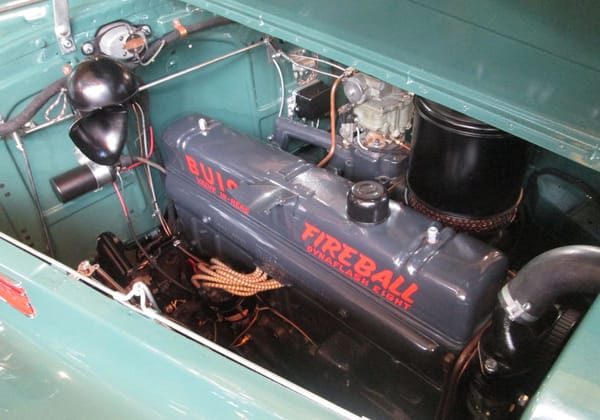
Here is a 1940 ‘Fireball Dynaflash Eight’ engine which has overhead valves and made a strong hp and torque. This car had covered 253,000 miles by 1973. While I’m not sure that a 248ci straight eight has much real benefit over a six of the same size, some of these late thirties cars are not that different mechanically to those from the sixties.
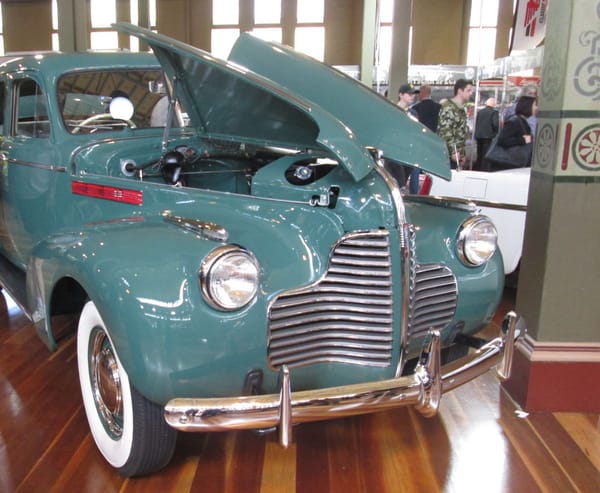
The grille of the 1940 Buick echoes that of the 1938 Y-Job show car, and while I don’t know enough to say definitively it must have been one of the early pioneers in the move from a vertical to horizontal format of vehicle styling.
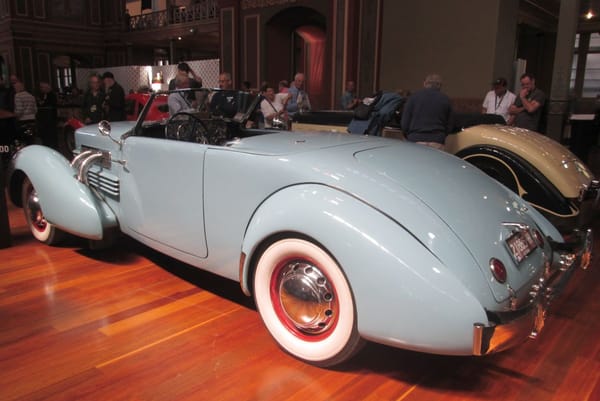
The 1936 Cord 810 Sportsman has to be one of the highlights of the show, both as an example of the famous ‘coffin-nose’ Cord that introduced so many new features from the concealed headlights, variable windscreen wipers and hidden door hinges, to the history of this individual car. It was bought by George Putnam, husband of Amelia Earhart. The colour is ‘Eleanor blue’, after the colour of the dress Mrs Roosevelt wore to the 1933 inauguration.
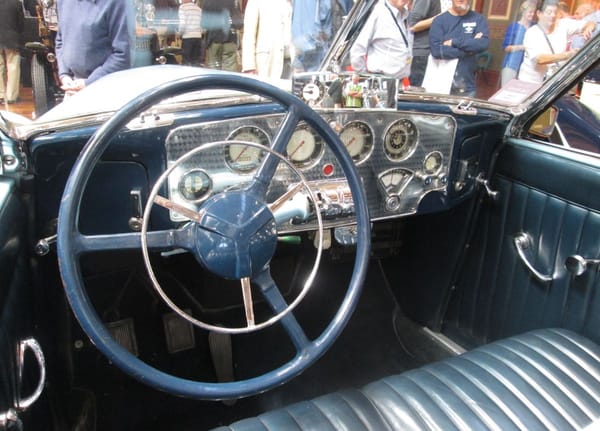
The interior is just as notable, with the steering wheel featuring the first example of the horn ring so many of you will be familiar with. Behind that is a very comprehensively-stocked dashboard which included the first standard car radio in addition to gauges for everything you can think of plus some you wouldn’t expect, such as engine oil level. Note the rear view mirror features another clock – perhaps the equivalent for today’s reversing camera screen?
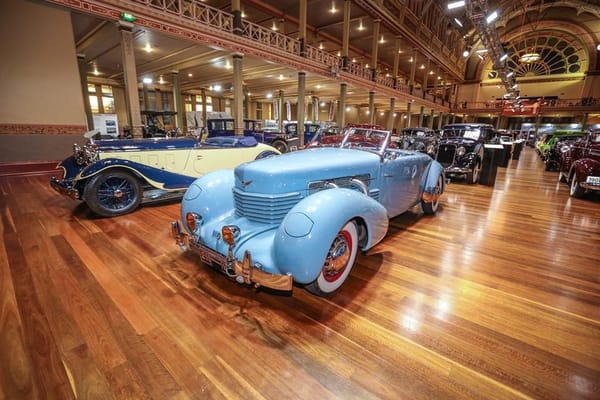
Courtesy of the Motorclassica Facebook photo feed, here is a shot from the front. To get a sense of how radical this car was when it debuted for 1936, just compare it to the 1931 car beside it, the 1934 Plymouth behind or the 1936 coach-built Delage at the start of this post. It is like a concept car that went straight into production.
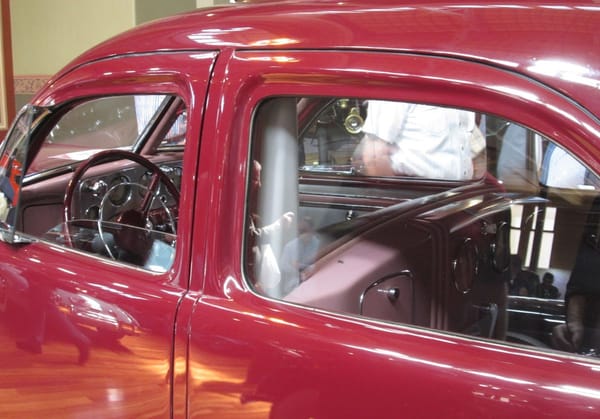
Like the Jaguar Mark 10 we saw outside, this 1937 Cord 812 also has a partition for the back seat because it is a Custom Berline model. This means it has a 7” longer wheelbase to make room for the partition and some more stretching room.
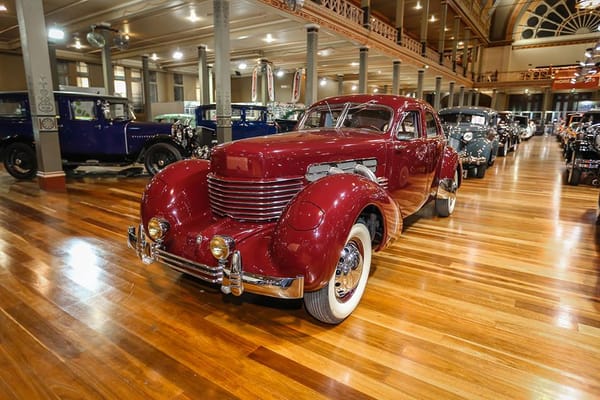
This car won best-in-class. The 812 model designation indicates the Lycoming 4.7L V8 has the supercharger that boosted power by a handy 50%. This car was originally owned by Bing Crosby, and came to Australia in 1974.
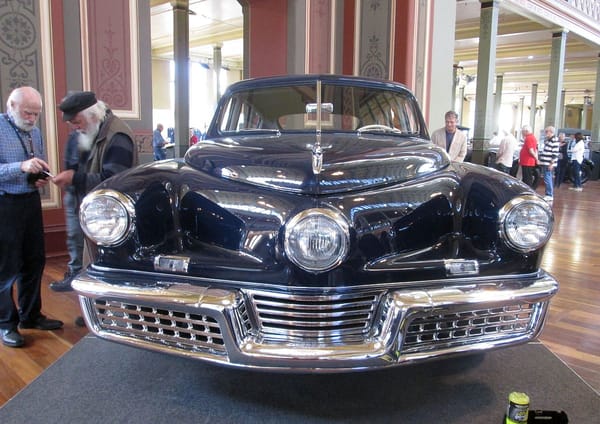
Is there anyone reading this who doesn’t recognise a Tucker 48? Even though it dates from 1948 I think it still has a heavy dose of Art Deco style, and it is the style rather than a particular period that is most important.
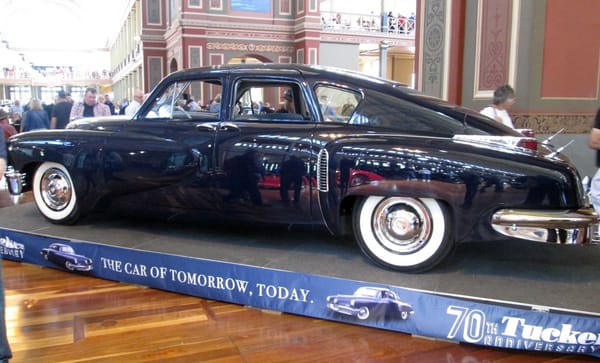
This car was purchased at auction in 1950 by Leroy Phifer, and tracked down years later by his daughter Lynn. It was brought to Australia in 2010 after being bought at a Pebble Beach car week auction; it also appeared at Motorclassica that year just days after it had arrived in the country.
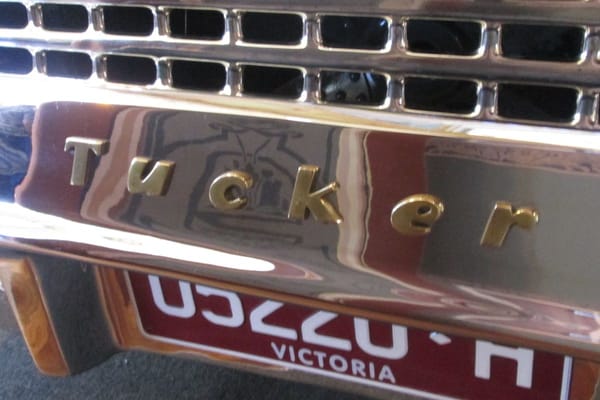
The details of the Tucker are great in themselves, such as the nameplate on the rear bumper.
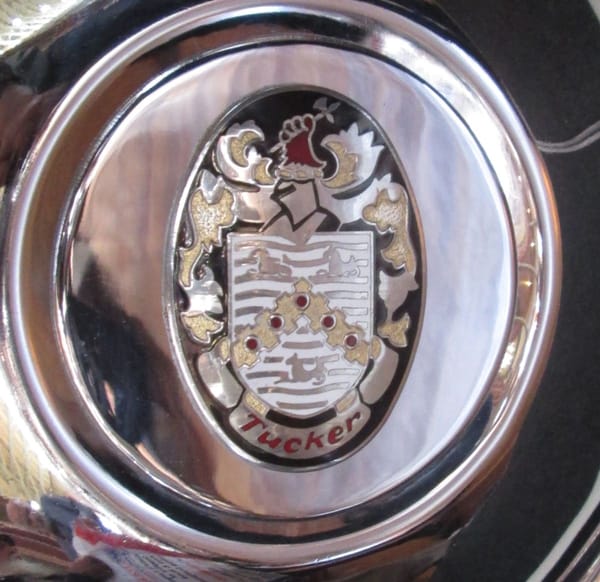
One of the contentious aspects of the Tucker Corporation was that it was just a scam, and not serious about producing automobiles; surely this elaborate badge on the hub cap indicates that wasn’t true? Conspiracy theorists could say it was produced to help conceal the scam, but if I was running a scam I wouldn’t be spending money on something so intricate and unnecessary.
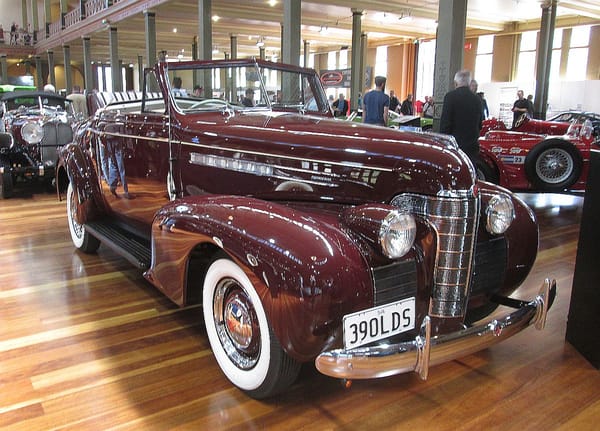
When I saw this 1939 Oldsmobile Sports Roadster, I had a case of déjà vu because there was an almost-identical car at the show last year. The information board says that just 5 of these were built, although I have also read that it was 10; regardless, having 2 of them on show is quite impressive. The main difference is this car doesn’t have the widened wheel rims that last year’s car did. This car was assembled in GM-H’s Newstead, Brisbane plant, with a body built in Pagewood, Adelaide; I’m not sure if this was the case for all of the Sports Roadsters. The car was sold to Bundaberg in northern Queensland, and was in use until 1985; it has only recently been restored.
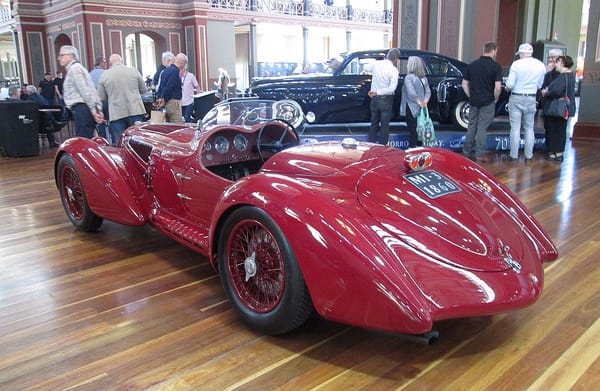
This 1939 Alfa Romeo 6C 2300 MM Spider may not be the first thing that comes to mind when thinking of Art Deco cars, but it does have characteristic swept-back lines, flowing fenders and horizontal chrome accents along the sides.
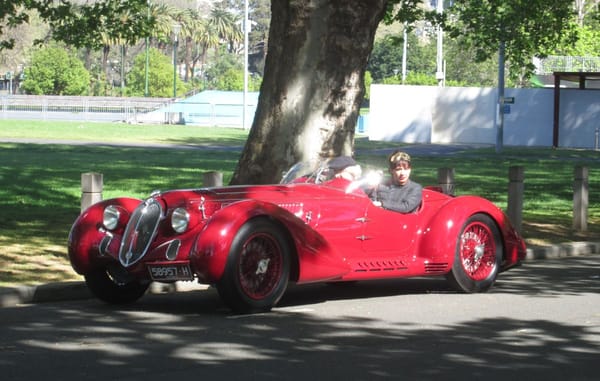
This car is an original 1935 Alfa Romeo 6C 2300 chassis with a new body based on a 1939 Touring sports-roadster body, built with the design assistance of Mike Simcoe, now VP of Design at General Motors.
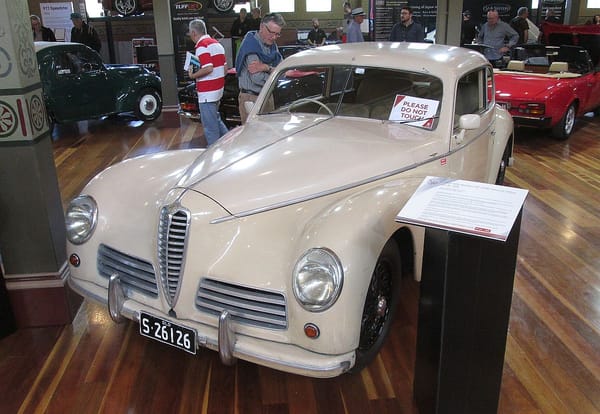
I’d even include this 1949 Alfa Romeo 6C 2500 Freccia d’Oro (Golden Arrow) saloon, even if it is a post-war interpretation with what I would call an envelope body. Is that the right term? The Golden Arrow has the distinction of being the first Alfa produced after WW2, starting in 1946 and running until 1951.
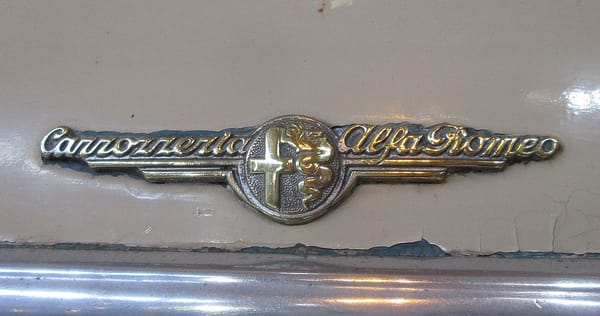
As this badge indicates, this was an in-house body by Alfa Romeo, although the 6C 2500 wore a wide range of different bodies from the most famous coachbuilders from its initial debut in 1939. 680 Golden Arrows were built, representing about half of all 6C2500 production.
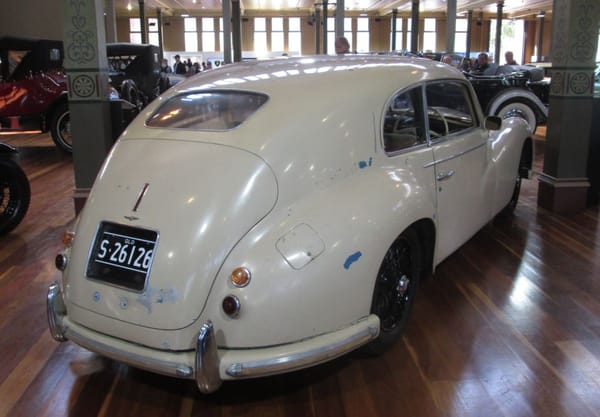
The rear view is less flattering, as the roofline benefits rear headroom more than style. This car is one of two known in Australia, but its history is not known before it was purchased at a Mazda dealership in the country town of Albury, NSW in 1974.
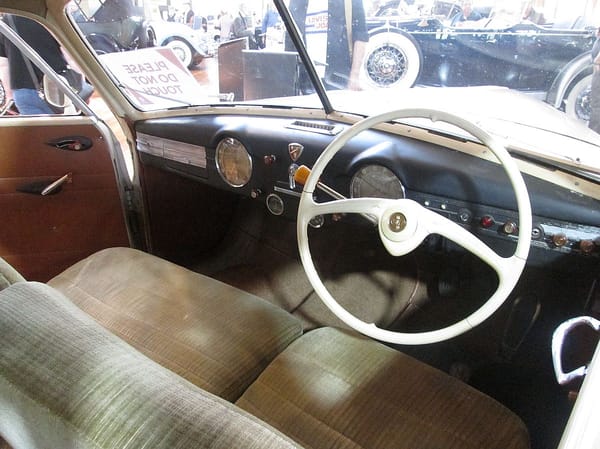
The car has only been sold once since that time and has not been touched cosmetically, although it has had mechanical reconditioning. The interior is in sound shape, but the exterior is a little too dilapidated for my tastes, and the beige paint is not flattering.
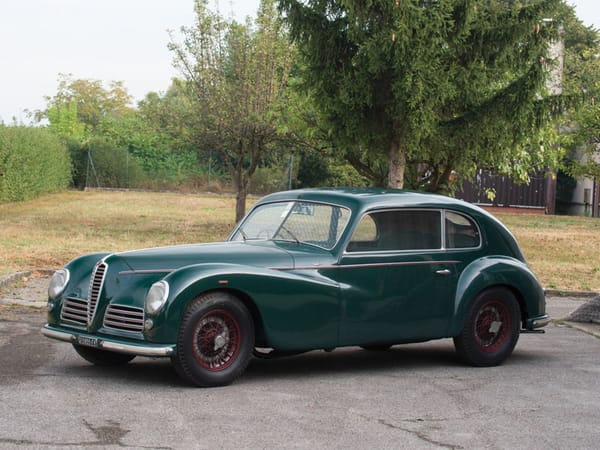
As a contrast this one was auctioned by RM Sothebys in Italy a couple of years ago.
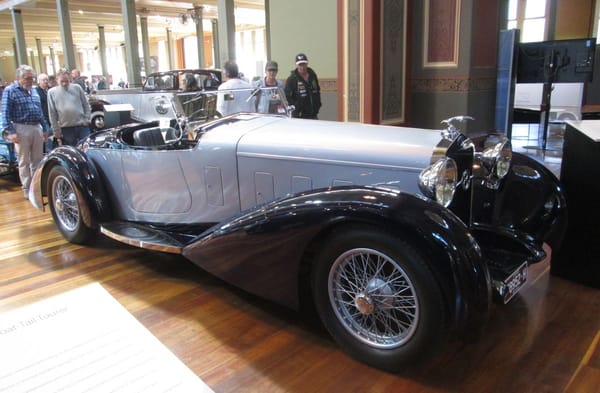
This 1931 Delage D8S has a conventional radiator, and pre-dates the ‘streamline’ movement, but the body is pretty incredible. It was built in 2014 by Melbourne coachbuilder Mills & Bilotta in the style of Carrossrie de Villars of Paris. The short wheelbase ‘S’ chassis was originally sold in Australia, and bodied in Melbourne although that was removed a long time ago. It has a 4,061 cc straight-eight engine that made 145 bhp in the ‘S’ form.
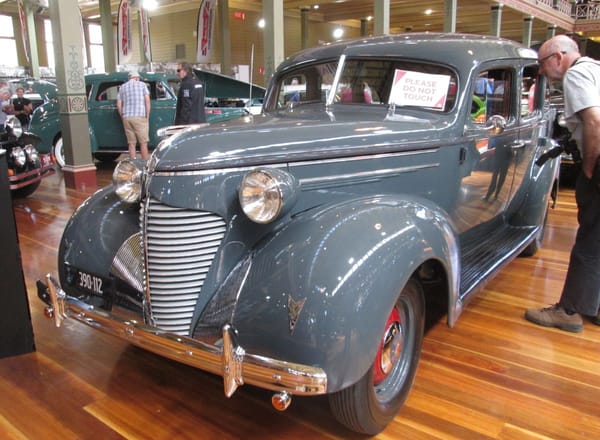
This 1939 Hudson has an unusual grille shape, on what is otherwise a fairly conventional sedan for the era. Note the chromed vertical slats on either side; something typical when the elegant style-driven but narrow main grilles proved to be inadequate in practice. These were built in Australia by GM-Holden with local bodies on an imported base.
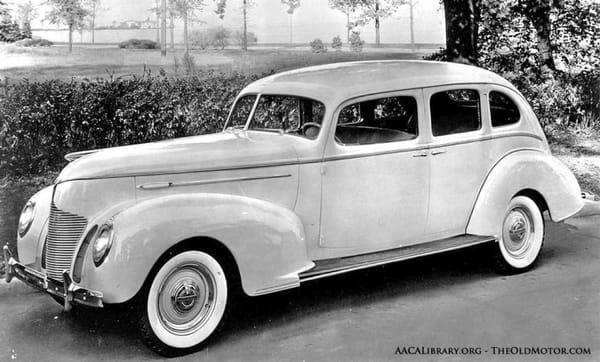
The separate headlights are quite different to images of US cars such as the one above, however it may just be a matter of different trim levels or models.
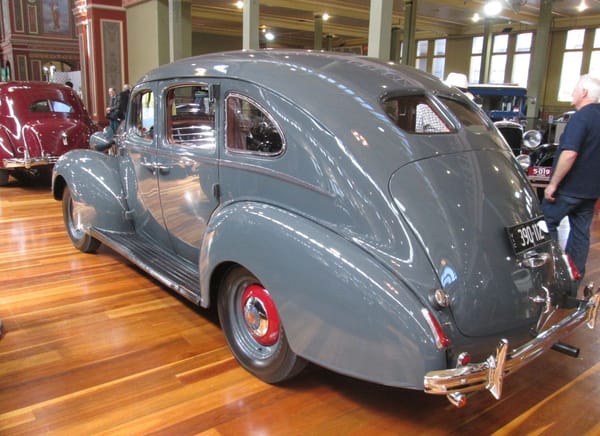
Compared to other similar cars, the Hudson struck me as slightly awkward in appearance, perhaps because of its height compared to relatively small tyres; I’m not really sure. This car is wearing its original registration number, and had been restored extremely well.
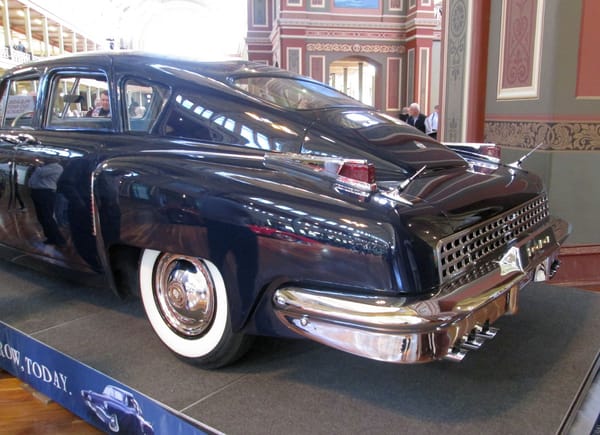
I’ll finish with another shot of the Tucker, and a reminder to have a look at the Cadillac feature if you haven’t yet, because several of those cars fall into the Art Deco camp too. I haven’t finished with Motorclassica yet, as there are a lot of cars that just have to be shared!
Further Reading:
Car Show Classics: Some Major Microcars At Motorclassica
Car Show Classics: Motorclassica Outdoor Display
Car Show Classics: Motorclassica’s Cadillac Collection
Car Show Classic: 2018 Tourclassica – Quick Observations























The Hudson with separate headlights is the 112 model, Hudson’s “compact” for that year. Per common practice in the ’30s, the deluxe model got the new style and the cheapo continued amortizing last year’s parts.
Thanks I thought it would be the case.
Wow, what eye candy. Stunning photos (and subjects) John. I don’t think I’ve seen a Cord in powder blue before. What a great venue for these classics. Thank you!
Australian bodied cars always fascinated my father when he found them on holiday, he was working at a Chevrolet dealership that also sold a few Oldsmobiles and Buicks in the late 30s but NZ cars were pure US models here locally assembled from imported kits, he loved pointing out all the differences,
Eddie Ford of Custom Rodder did the same in articles on American cars when he toured NZ with a camera for his magazines,
Cool cars, those Tuckers are interesting cars, scam or not.
Yes, GM-Holden’s success was built on designing bodies that could be adapted to as many chassis and cowls with as little variation as possible, so I can only imagine how many differences there would be across the dozen or more brands they dealt with in the twenties and thirties.
Of all the Art Deco/Art Moderne cars in the period, the ’39 Hudson 112 has to be one of the dorkiest. It looks more like a commercial/truck/tractor frontal design. The body was wider than many other makes, note the unusual windshield width. But the high-arched, slope backed sedan bodies were anything but graceful. When they turn up for sale, its most frequently in the Midwest U.S. where their basic, no-nonsense utilitarian goodness was most appreciated.
Loved the ’37 Special(?). Drop it down to two doors, fastback rear (no hump trunk), and remove the side mounts and you’re looking at my first car.
I put the question mark in because this is the first Special I’ve seen with side mounts. In the US, they were normally reserved for the Roadmaster and Limited, maybe a Century. I didn’t think the Special, with its smaller engine had enough room ahead of the A pillar to do side mounts.
Don’t remember the specs for the 1940 model, but the ’37 had a 248 cu in straight eight in the Special, 320 cu in in the Century, Roadmaster and Limited.
Cheers Spike, there might have been a slightly different model line-up over here, with less differentiation between the series 40-60-80-90? I’m not entirely sure. The Buick Club has a heap of photos of different cars, and there are a few Specials with dual side mounts and a couple without, so perhaps it was an option.
On the engine size the 1940 was quoted at 4.1L which would be right for 248ci/4061cc – I’d done the conversion in my head with a rounded-off factor.
I was going to say the same thing – this looks awfully big and grand for a Special. But perhaps the local market used the name differently.
The Cord convertible is actually a 812 with a supercharged engine as denoted by external exhaust pipes. The 810 did not have either feature and was one-year (1936) only. For 1937, the remaining 1936 810 bodies and components were slightly modified to accept the supercharged engine and external exhaust pipes: they were renumbered as 812.
Here’s the photo of 1936 810 without external exhaust pipes.
The hood was shut but I assume the owner is aware if it has a supercharger and what model it is. It must be possible that the external pipes were fitted to an 810.
I did some more research into this Cord 810. It was brought to Australia in 1991.
Yes, it was owned by George Putnam, but it did not have the supercharger and external exhaust pipes in the first place. See the photo of Amelie Earhart and her husband’s Cord below.
The supercharger and external exhaust pipes along with yellow driving lamps attached to the bumper made available in 1937 were retrofitted to his car. Thus, initial confusion about 810 and 812…
Disappearing top AND driver.
Too soon?
Thanks Oliver, the amount of information on some of these cars is incredible, but I suppose they have been studied by clubs and enthusiasts for decades.
JP – noticing the absence of something you are not thinking about can take a bit of doing hey?
What great stuff. Before today I had never noticed the lack of exposed door hinges on the Cord, which is saying something considering how many of these I have seen over the decades.
Of all the 1937-39 US cars I have seen, thar Hudson has to be one of the few that are not beautiful (the Willys is another).
I love this era for its cars.
Agreed that that Hudson’s among very few from that era that aren’t beautiful, particularly American cars, but can’t agree about the Willys. They have a wonderful Meccano-esque appeal to me, and I’m probably biased – my dad and grandfather each had one (well before my memory, I hasten). There must be something about the proportions that appeals to hotrodders too, as they’ve long been a favourite of theirs. (Not that I much like hotrods, so go figure!)
The orange Delage is a bit ill-proportioned, but I’ve always thought that about a number of the teardrops (not all). Too much B-pillar and cabin a wee too far back on this one. It isn’t assisted by the colour, which looks a bit like a pre-sucked Jaffa.
The ’31 D8S inadvertently reinforces my thoughts, as the proportions and paint scheme could not be more perfect. They make art from otherwise common early-’30’s features.
The patination on the ’49 Alfa 6C is acceptable to me (at least as photographed) but the Hunchback of Milan body is a rare candidate for removal and replacement by a special-maker. I doubt it’d be missed.
So, with the Alfa MM rep, that’s three quite high-end exotics recently bodied in Melbourne (and a fourth in need!). Who is doing all this finery, I wonder?
The Alfa was started at the Automotive Centre of Excellence (Kangan TAFE at the Docklands) but mostly done at Historic & Vintage Restorations in Blackburn. I did read who did the orange Delage but don’t have it to hand.
The main demerit with that car for me was the height of the roof. From a visual standpoint more wheelbase would allow the cabin to look (and be) less cramped, but it was a race car after all.
The information board says the orange Delage was built by Black Art coachbuilders from Melbourne, about 15 years ago, and that it has been modified for closer accuracy since.
The 1940 Buick grille was not a pioneer in the move to more horizontal grilles; that was pioneered by the 1938 Lincoln Zephyr and then everyone in the industry scrambled to copy it.
http://www.curbsideclassic.com/automotive-histories/automotive-history-how-the-1938-lincoln-zephyr-ushered-in-a-design-revolution-thanks-to-a-hot-radiator/
The 1939 Hudson grille shows that desperate effort to copy it too. Those side grilles weren’t “added” for extra cooling. Hudson couldn’t afford to significantly redesign their front end, so the faired over the upper portion of the center vertical grille and added those lower grilles on each side to create a more horizontal look. Of course they were functional too, but it was all about imitating that new low Zephyr grille.
Boiling down the issue of the Tucker as to whether it was a “scam” or not based on the wheel cover is rather grossly oversimplifying the whole story. Tucker obviously didn’t set out to create a “scam”, and it never was, in the meaning of that word. Undoubtedly he set out to make a new car that would make him rich.
But it’s quite clear that he was in way over his head, made many very poor decisions, and created misleading advertising and promotional materials for a second IPO after he burned through the $17 million from his first one, trying to build an absurd 589 CID monster of an engine with oil-activated valve train (!), as well as its direct drive transmission.
Tucker clearly was much more captivated by the ideas of radical solutions because of their potential impact on a PR level than the ability to realize how difficult it would be to make them work. He was a promoter, and very much not an experienced executive who had a clue as to what it actually took to build a car that could be built on some degree of scale. And folks think Elon Musk doesn’t understand how to build cars. 🙂
Out of desperation to keep the company alive he resorted to selling accessories and dealerships for the car even though it wasn’t in production. That’s what led to the SEC action. He was ultimately acquitted, but this wasn’t the first time that the whiff of oversell was in the air.
There’s no doubt in my mind that Tucker was not the right person to make something like this happen. He wasted massive resources on radical ideas, when you should have just focused on making the car production-ready. And it wasn’t; the Tucker “factory” was basically a prototype facility, and the 51 cars built were all hand made, and varied from one another.
So no, it wasn’t a scam, but it wasn’t a viable business proposition either. As in most things in life, there’s a big gap between “scam” and “viable business”. Tucker clearly fell in that gap, which has also trapped so many overly-ambitious start-ups.
As to that wheel cover, it was small change compared to what was wasted on so many impractical dead-end ideas like the original engine ad then converting the Frankiln engine from air-cooling to water cooling. Why??
I’m sure it didn’t cost much to create a quickie die and have a few of those wheel covers stamped and hand-painted.
Good points Paul, especially about Tucker being over enamored with innovative ideas that were just not practical. I didn’t mean to imply that the badge was anything definitive, just that it was a mark of doing things thoroughly.
The Vintage.es tumblr has a new set of pix of a ’49 Delahaye roadster by Saoutchik…
https://www.vintag.es/2018/11/1949-delahaye-175-s-saoutchik-roadster.html
Thanks polistra. I wonder if that car was one of the reasons the Docker Daimlers were built?
Nice coverage, John, I look forward to “rest of show.” It’s always refreshing to see a familiar car in a new color, and the Cord looks good in Eleanor Blue, I agree.
More Cord tidbits, gleaned from the earliest Cord-o-phile publication, Dan R Post’s “The Classic Cord” (1952, Dan R Post Publications, Arcadia, CA): 810 was the 1936 model line, 812 the 1937. (One wonders if they would have continued adding 2 digits a year to the model number; this year’s model would be the Cord 964 by my reckoning.)
The supercharger was an option for the 812, adding $415 to the price. For 1937 the steering wheel was painted body color.
It’s interesting to see two modern re-bodied classic chassis. Are we seeing a welcome trend, here ?
Thanks Stephen, I’ve seen a few of these Cords but never really delved into them.
Having classic chassis still being re-bodied is definitely welcome, but nothing new – a great example is all the ‘WO’ Bentley sedans that have been turned into replicas of the Le Mans race cars. It seems that in more recent times there is a trend of re-creating cars that have disappeared, or sometimes were never built in the first place, rather than ‘just’ the ‘obvious’.