
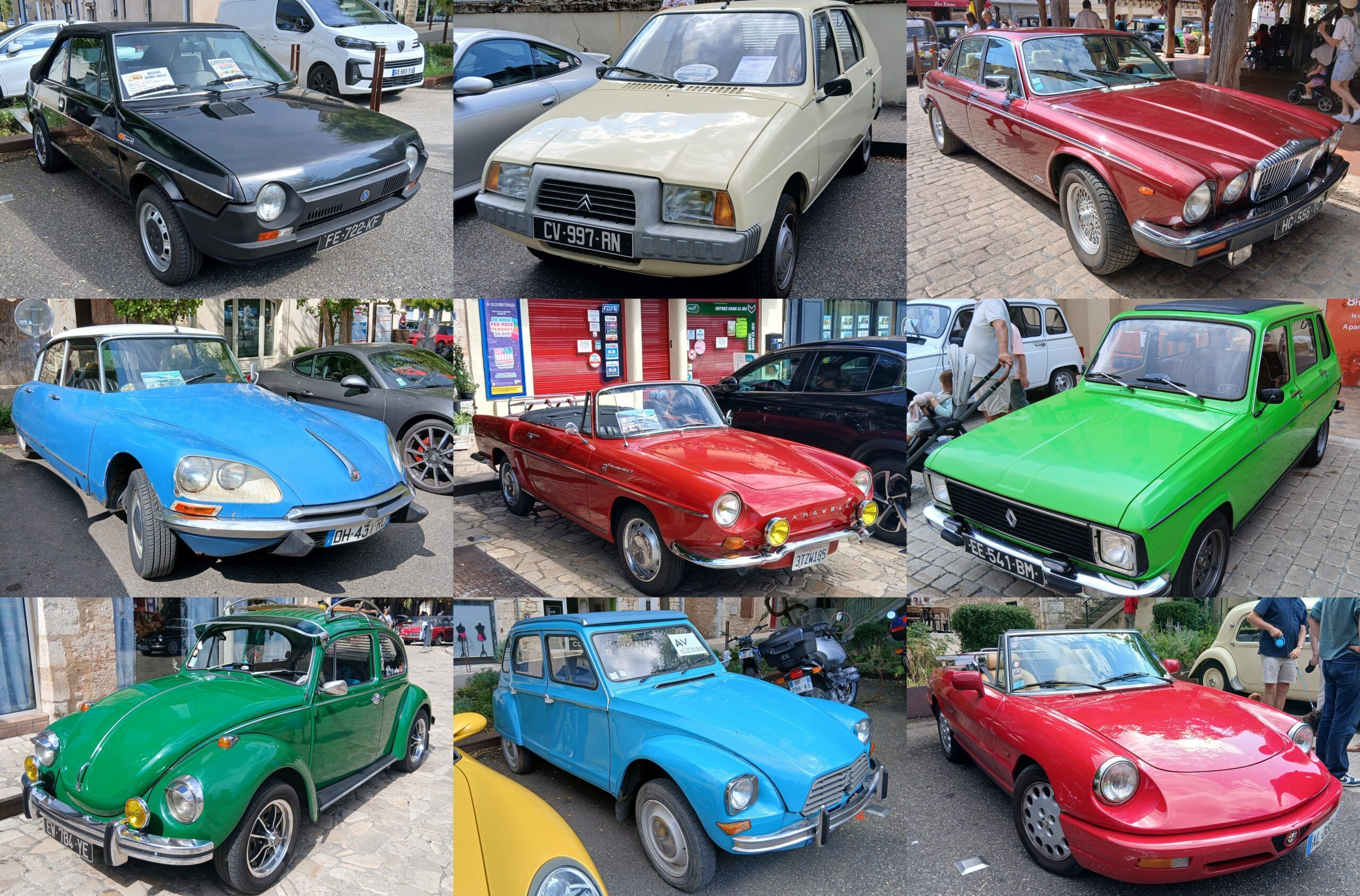
Every month, the small town of Villeréal in Lot-et-Garonne, southwestern France, welcomes locals and visitors to a classic car gathering (Rassemblement de Véhicules de Collection) around its 16th-century market hall. The town itself was laid out in a grid, or bastide, format back in 1265. The August gathering is probably the largest of the year, coinciding with the holiday season and the annual Auto Rétro Villeréal, a much wider event.
This year, we just happened to be there on holiday with our Alfa Romeo Spider, and were welcomed to join in. Just like that: no paperwork, no pre-booking, no entry fees, just smiles and, “Je pense en acheter un – puis-je essayer le siège conducteur, s’il vous plaît?”
“D’accord!”
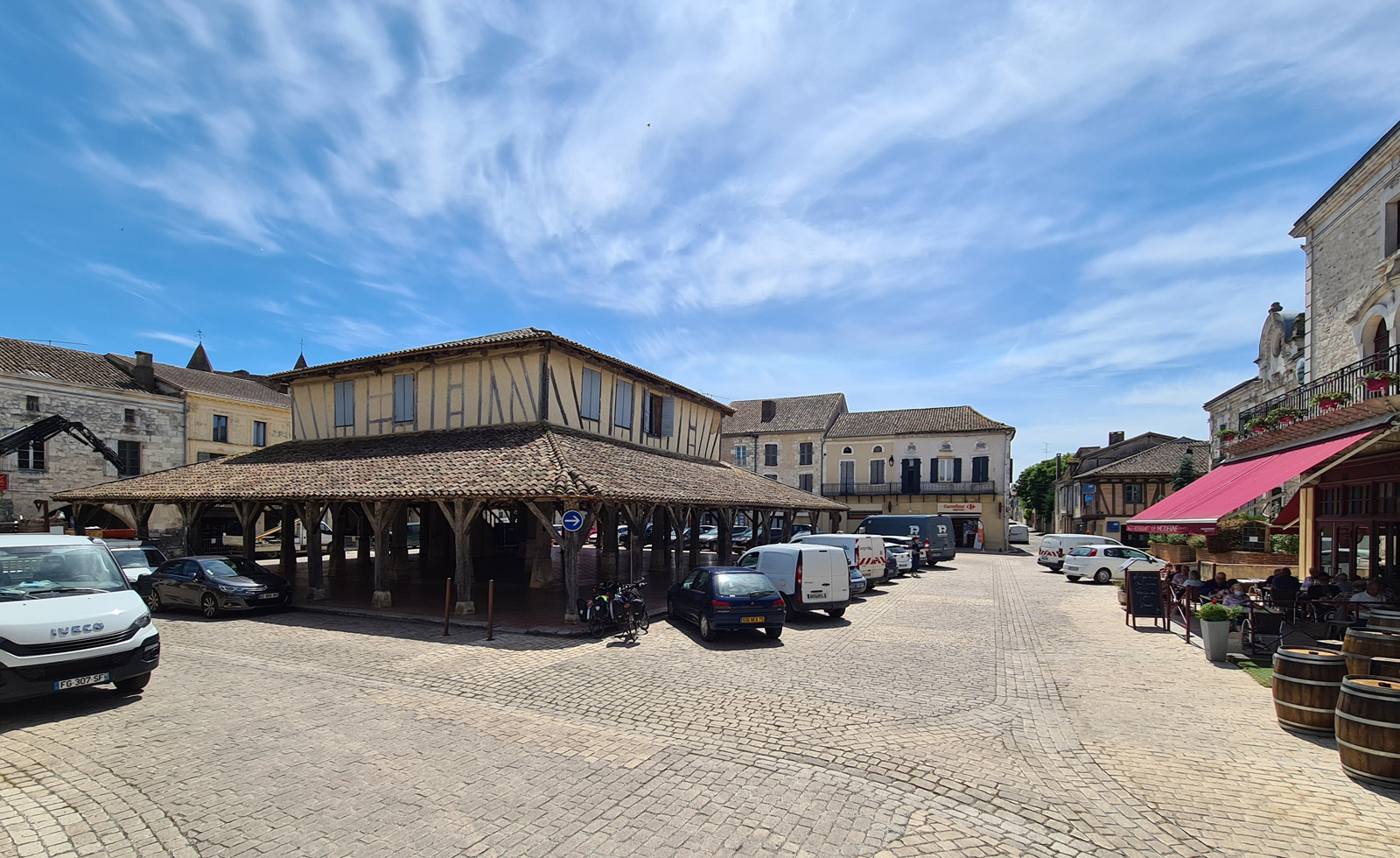
This is the marketplace on a regular day, but let’s take a gentle wander round on the day of the event.
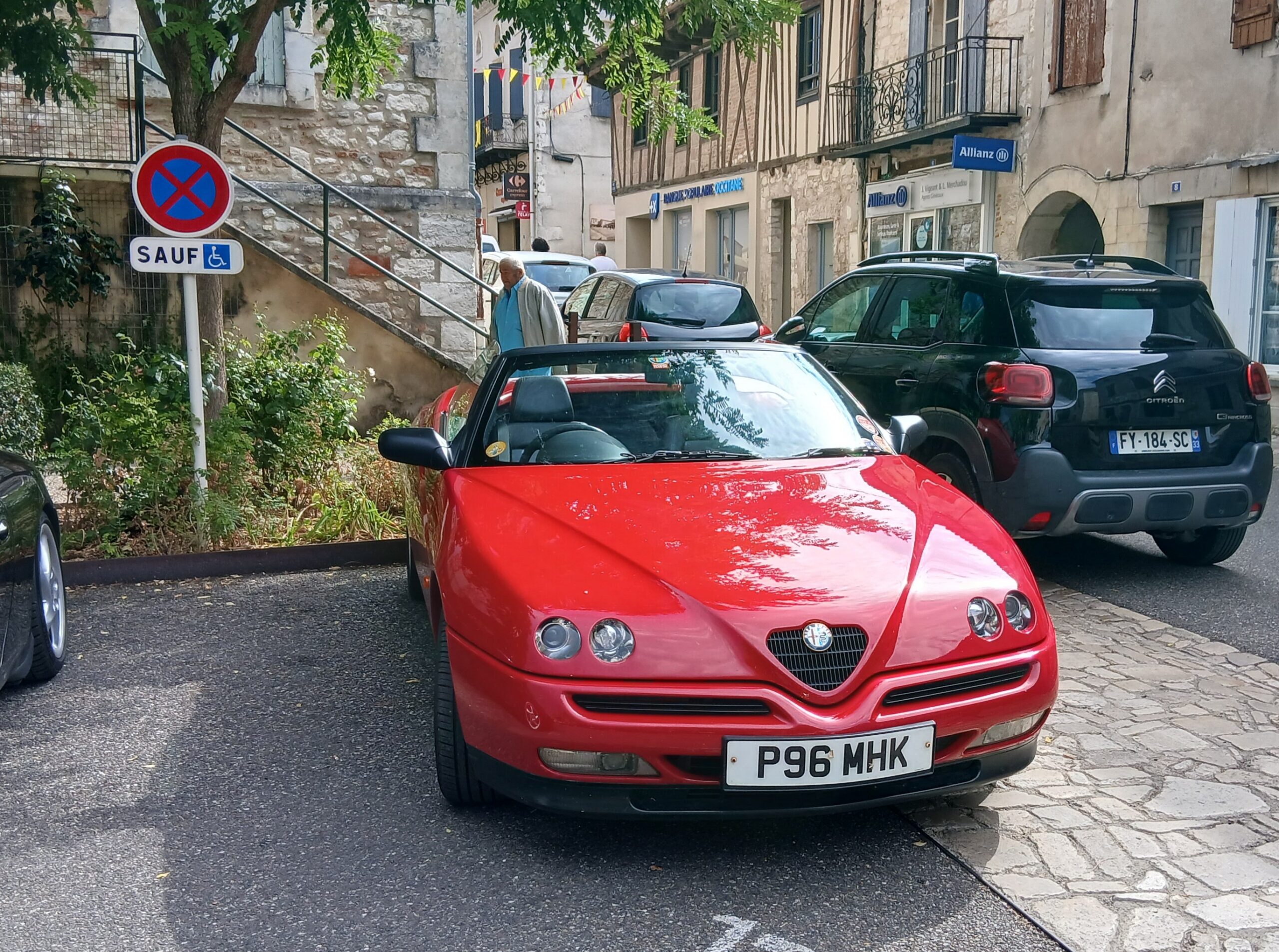
For avoidance of doubt, I did have permission to park in the accessible space for the display. It was that type of event.
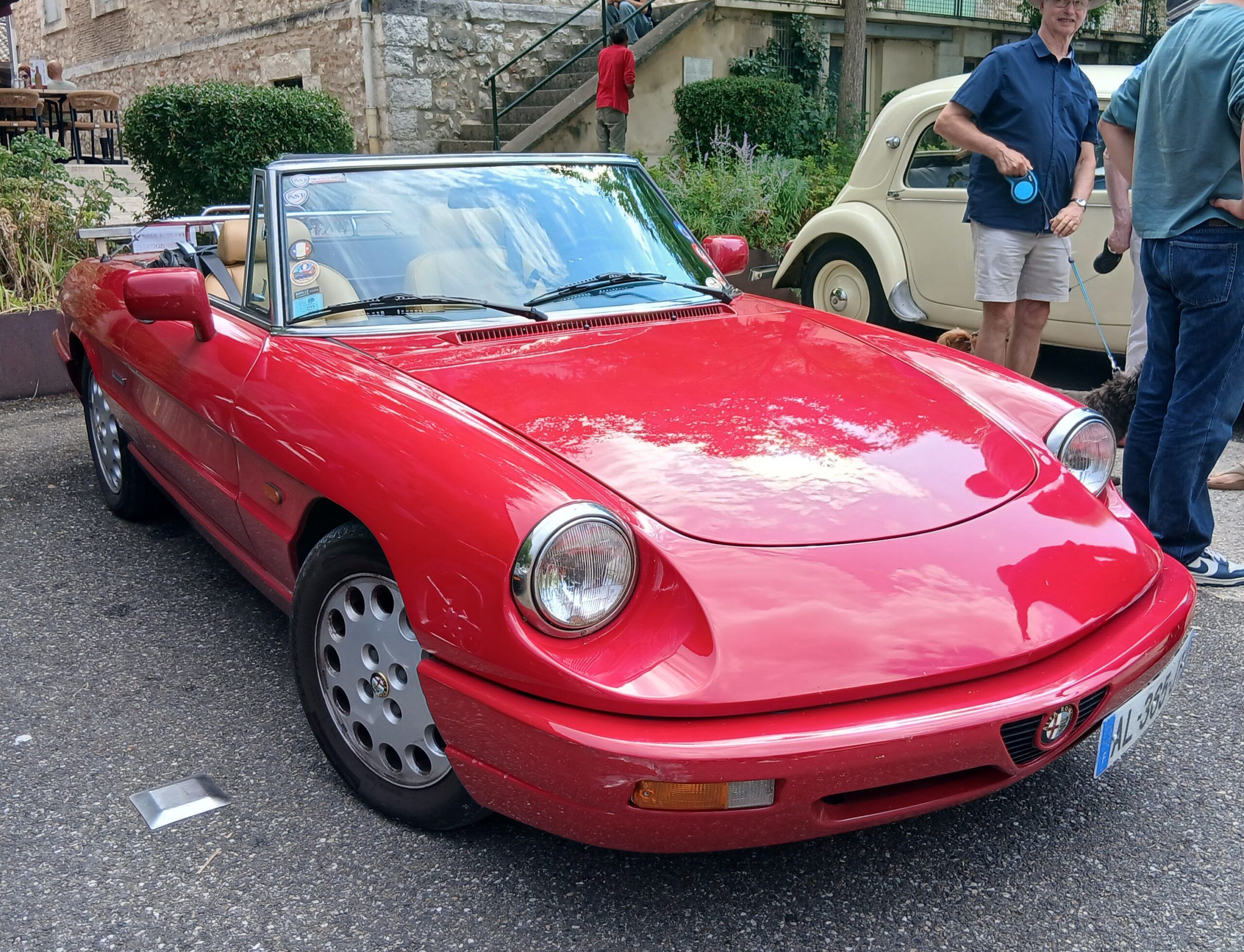
And we were among friends….a Tipo 105 Spider (Graduate) series 4, with the big body colour bumpers.
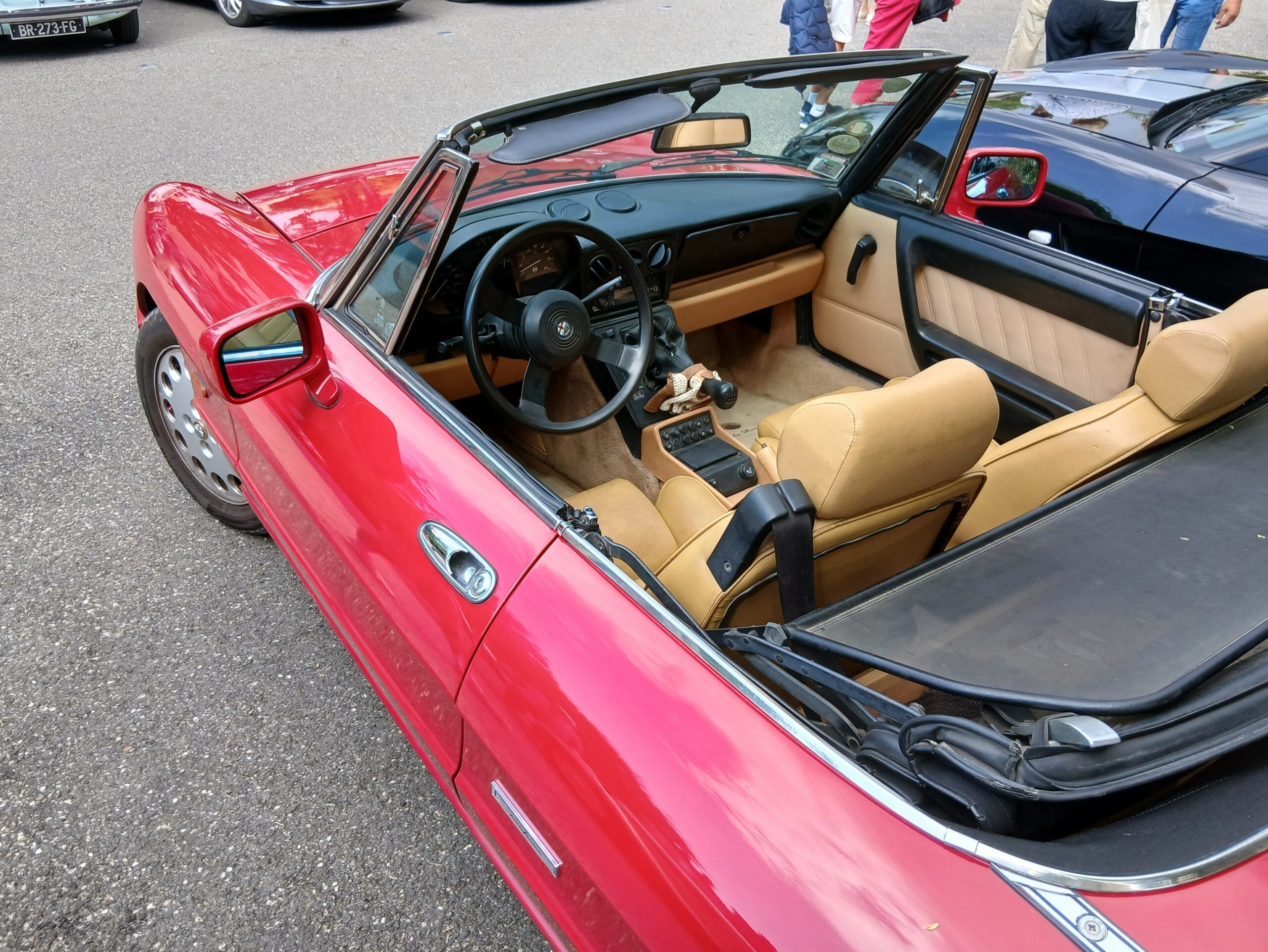
Arguably, the series 4 was not Alfa’s most elegant moment, to be honest. But with that tan interior…..
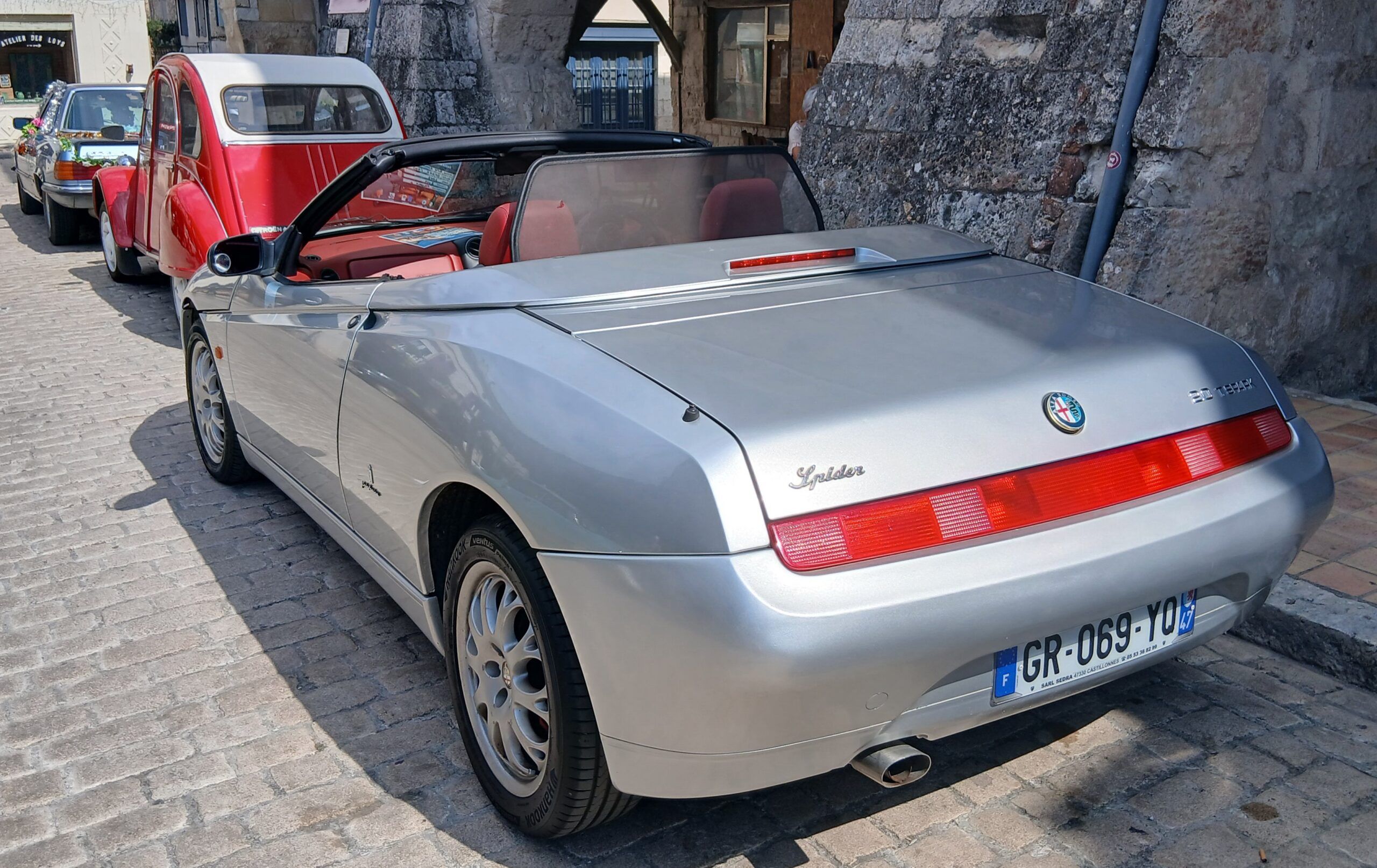
And another slightly later 916 Spider, also right hand drive but now locally registered.
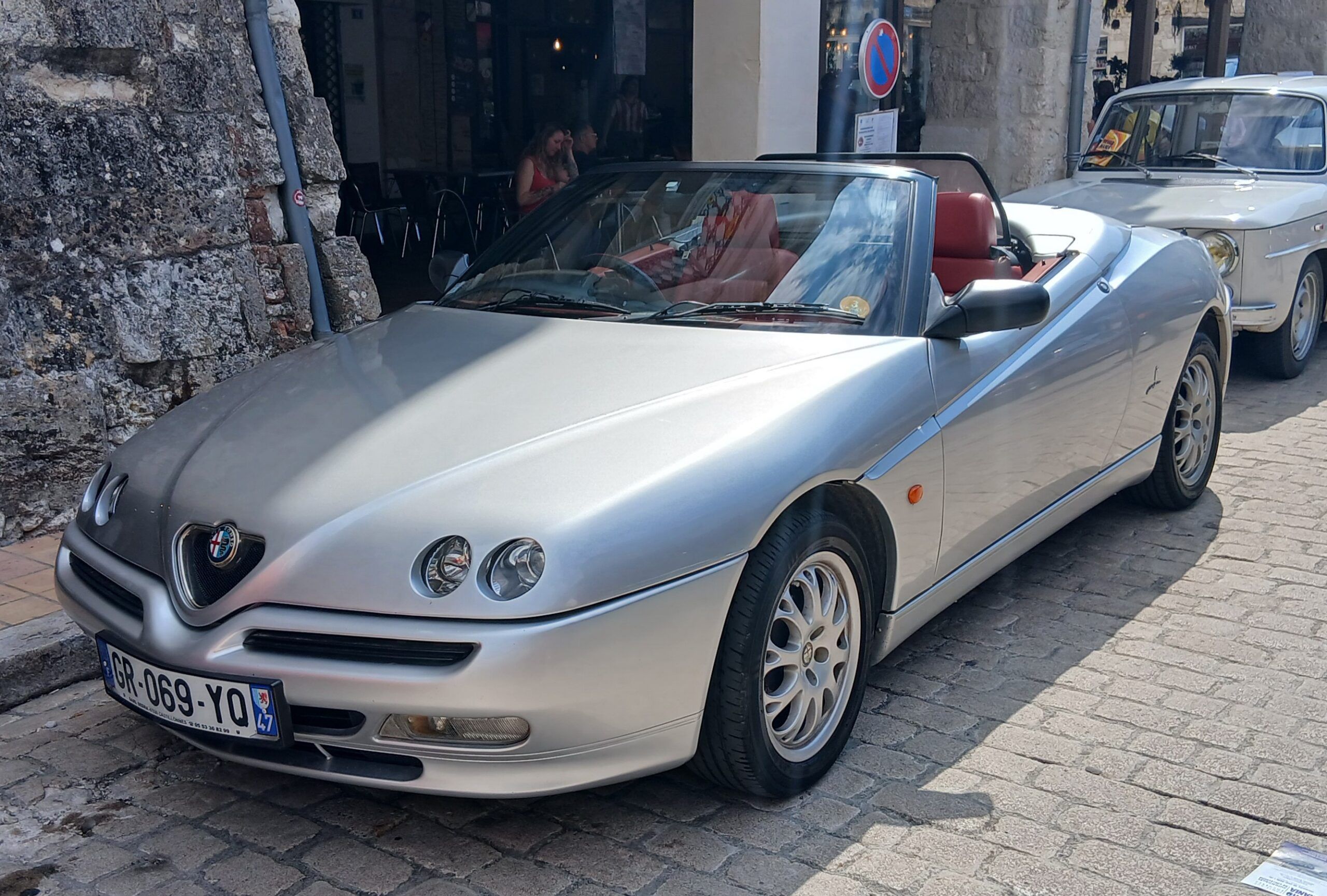
The car may be silver, but the red interior definitely works and it is clearly well looked after.
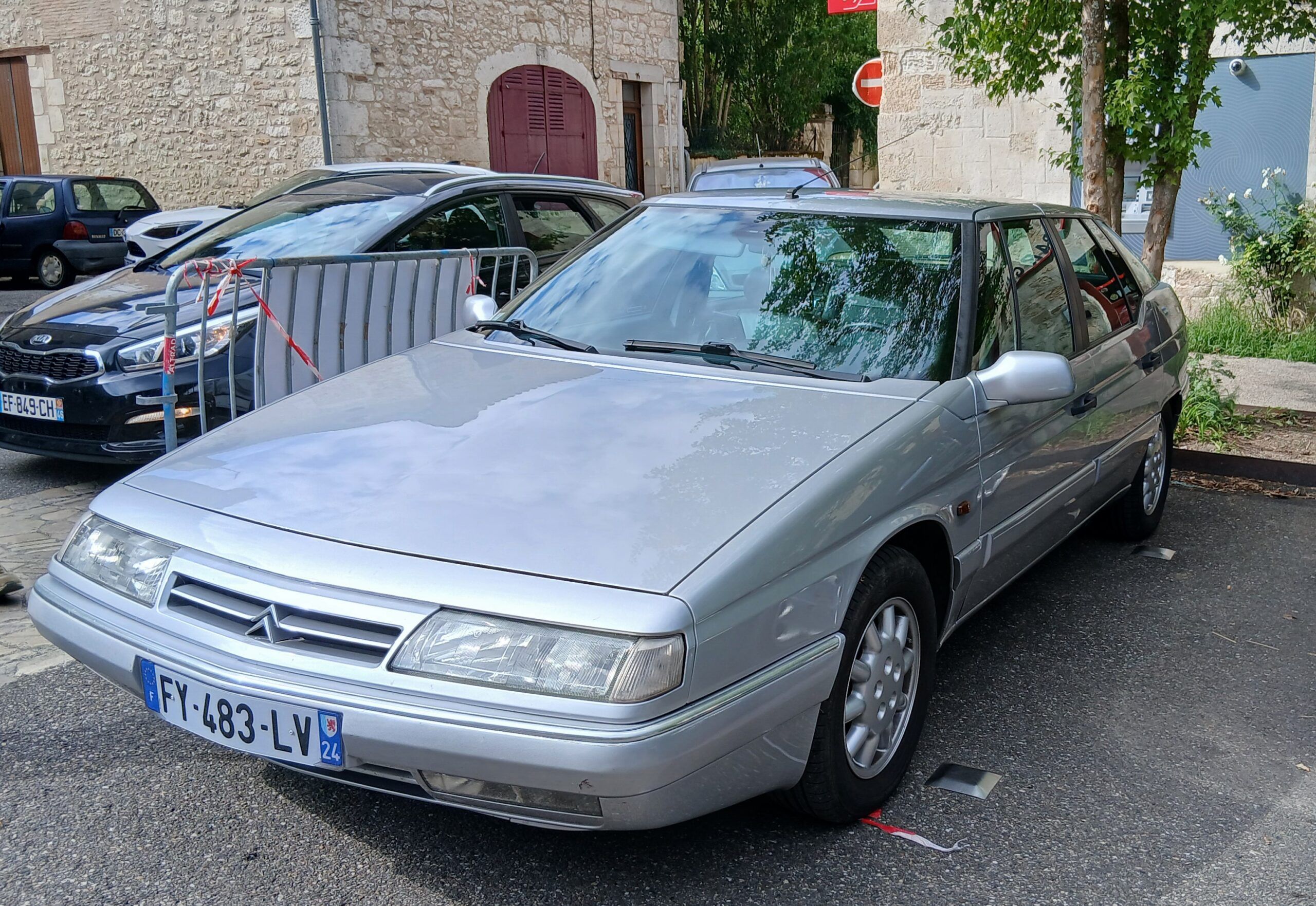
This is France, so Citroen was a very evident brand. The big Citroen evolved from the DS to the CX to less well recorded XM, from 1989 to 2000. It was never a great sales success, selling around a third of the volume of its predecessor, the CX.
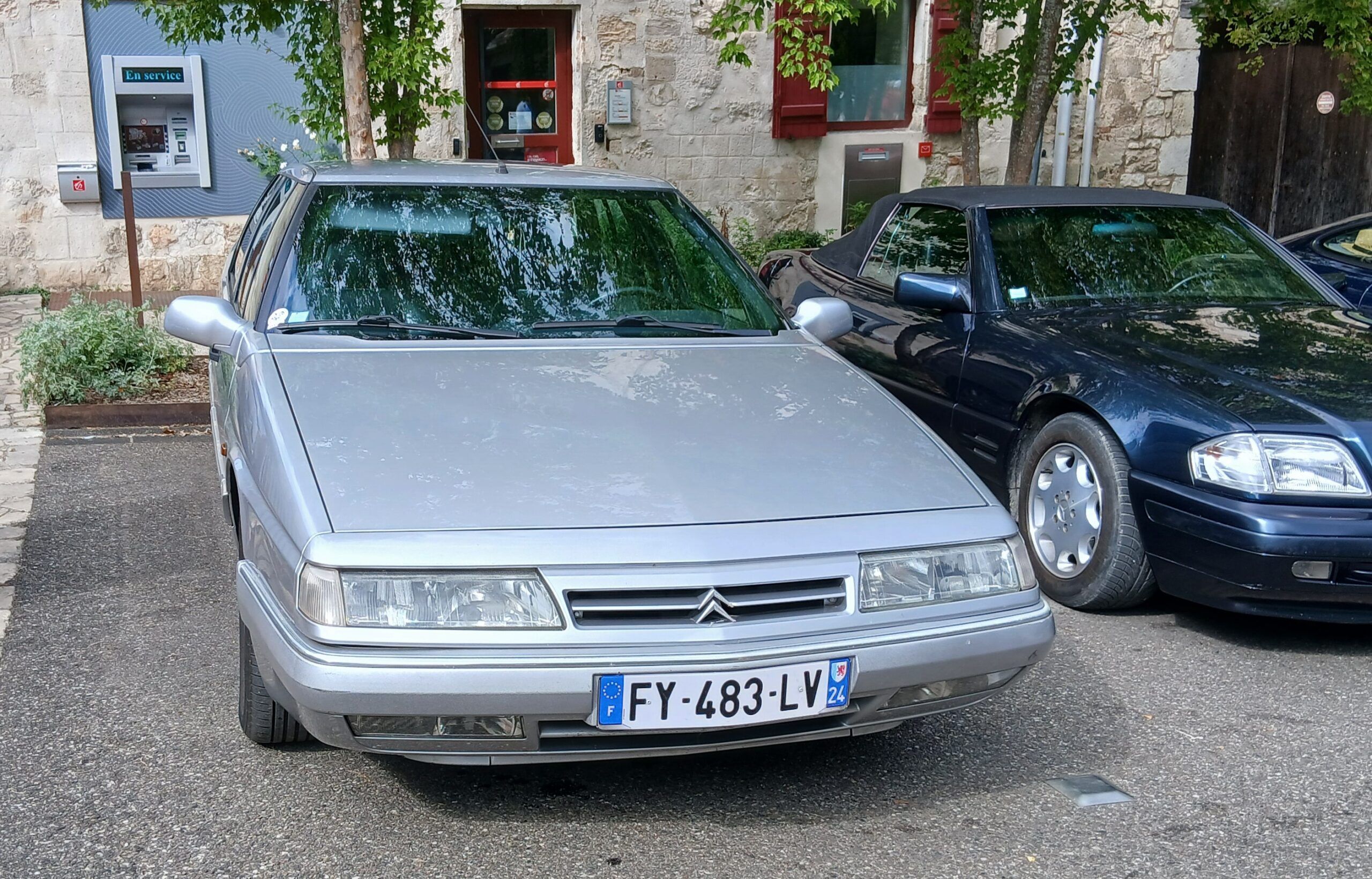
The XM retained many of the CX’s technical aspects, including the hydropneumatic suspension and a uniquely convoluted twin hatchback, with a separate inner rear window behind the rear passengers’ heads when the tailgate lifted. The engine range was wider, as the XM was engineered to accept V6 power as well as in line four cylinders. One of the more interesting executive class cars of 1990s.
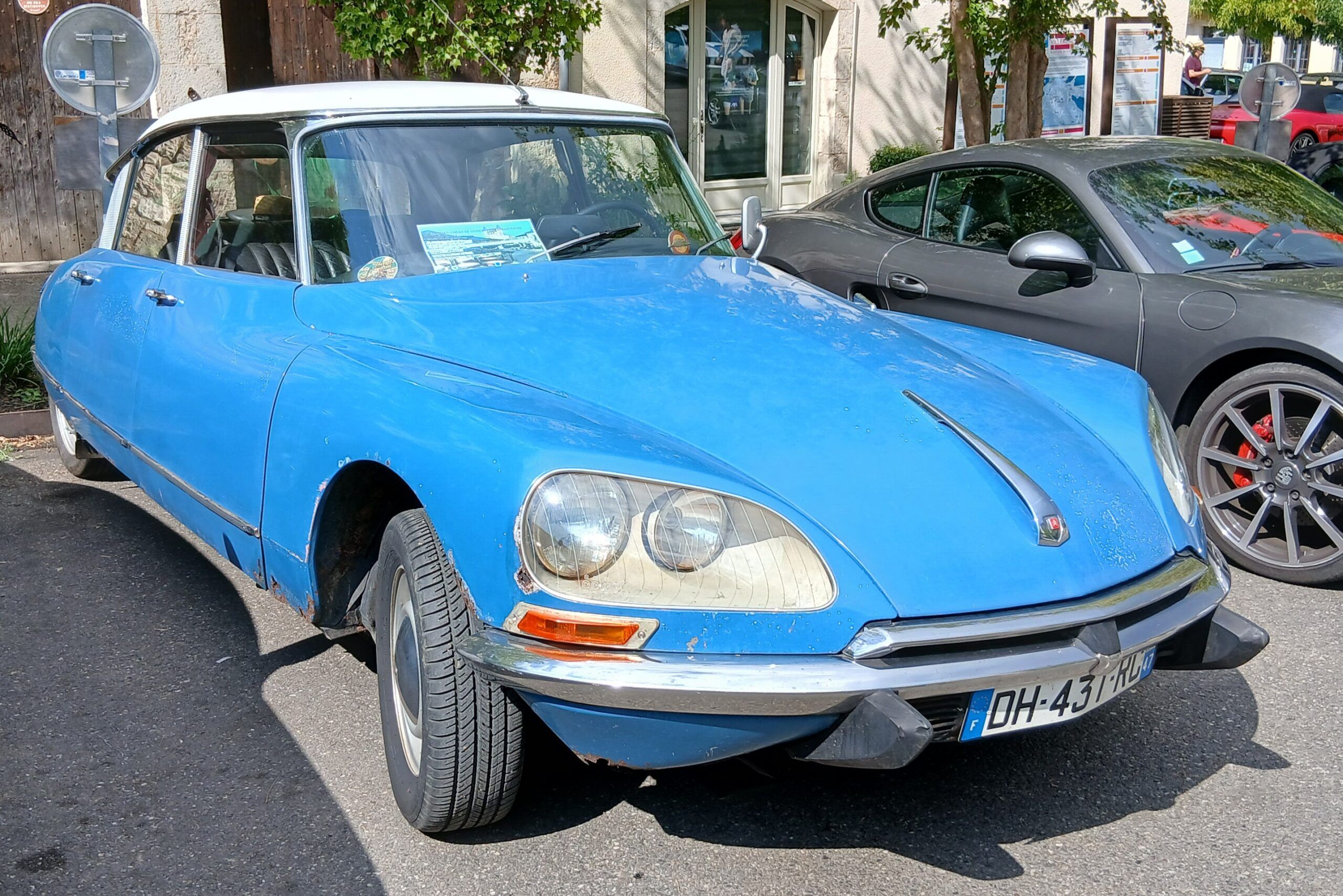
Of course, the Citroen DS family was well represented.
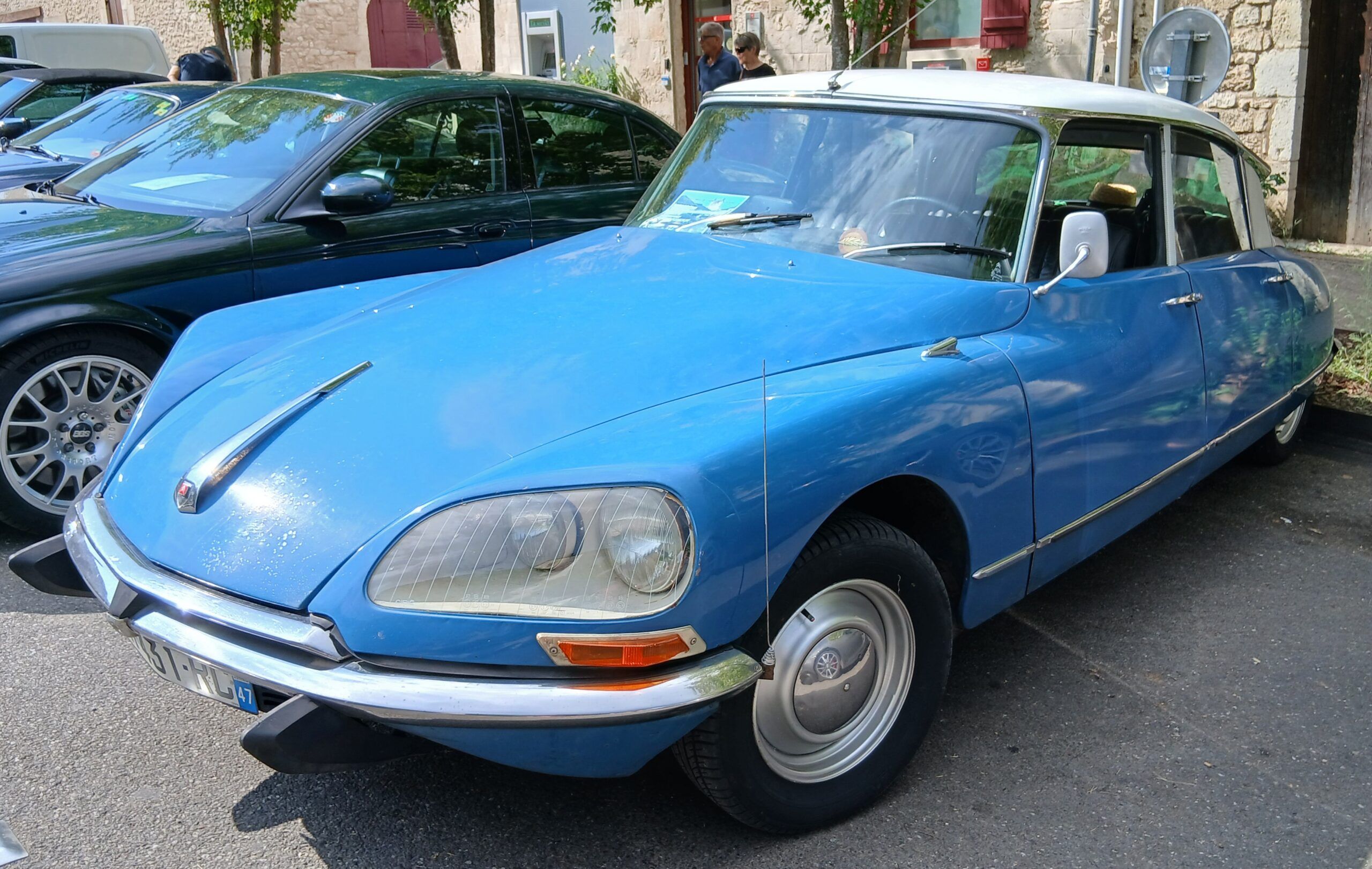
This D Super shows some patina, with some corrosion and tired paint, some evidence of faded stripes and the corner marker. I’m not clear what the chrome block on the left hand front wing is – any ideas?
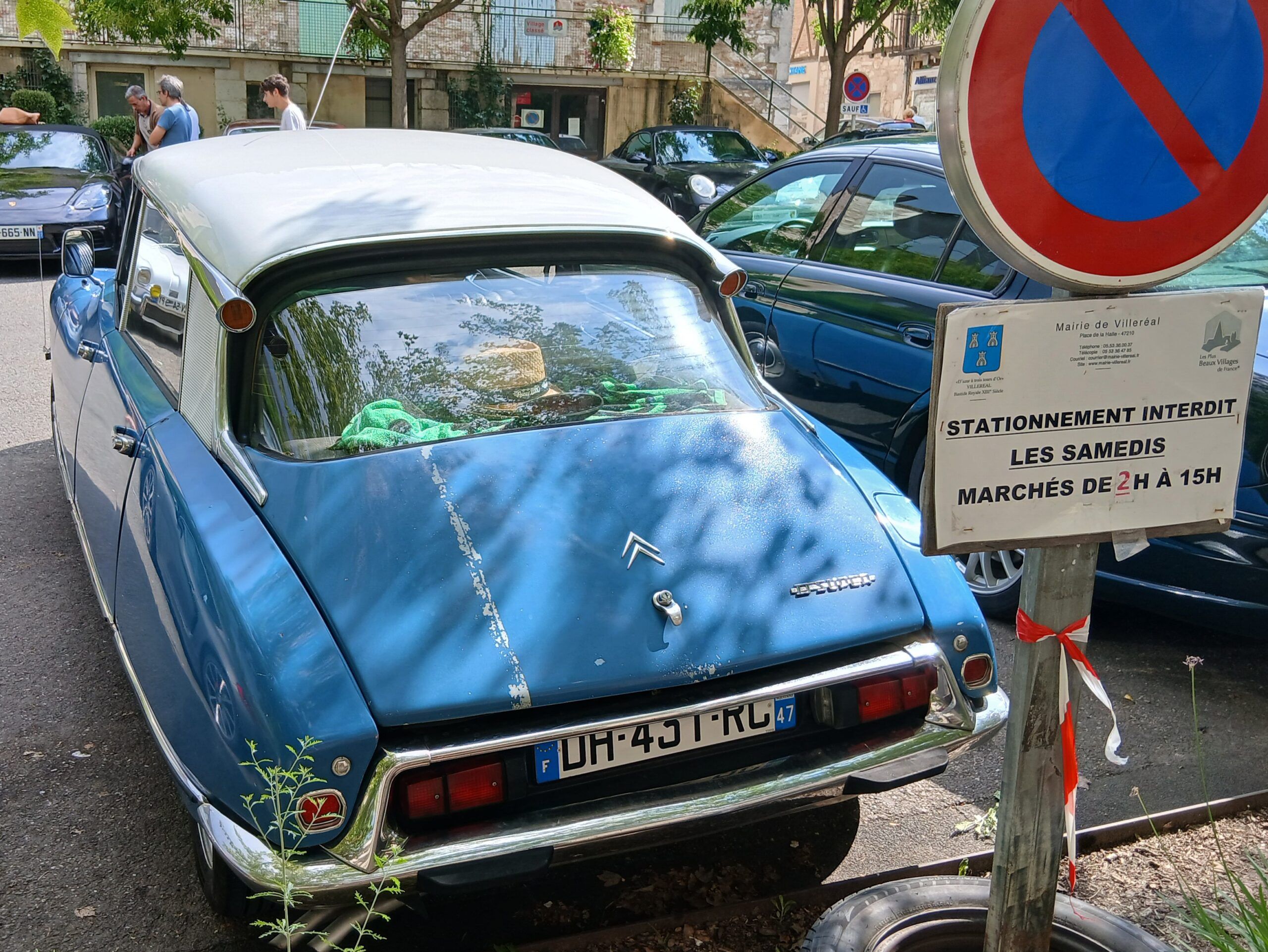
The D Super replaced the ID, which was itself a decontented DS, so a manual not semi-automatic, transmission. The D Super came in 1970, so this is a relatively late part of the DS/ID story.
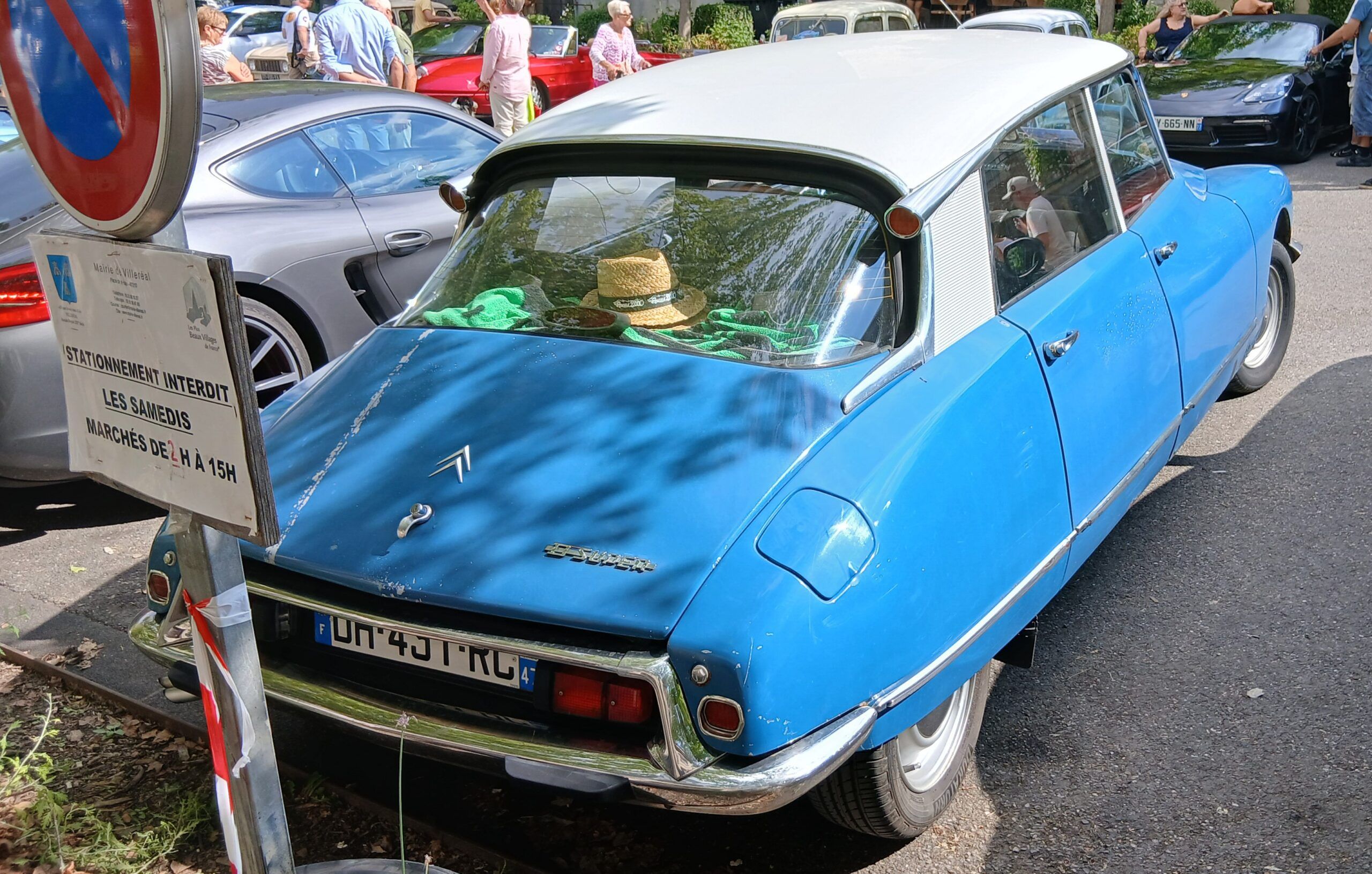
The temporary sign is saying no parking from 2 am to 3 pm on Saturdays, as this is the town’s marketplace.
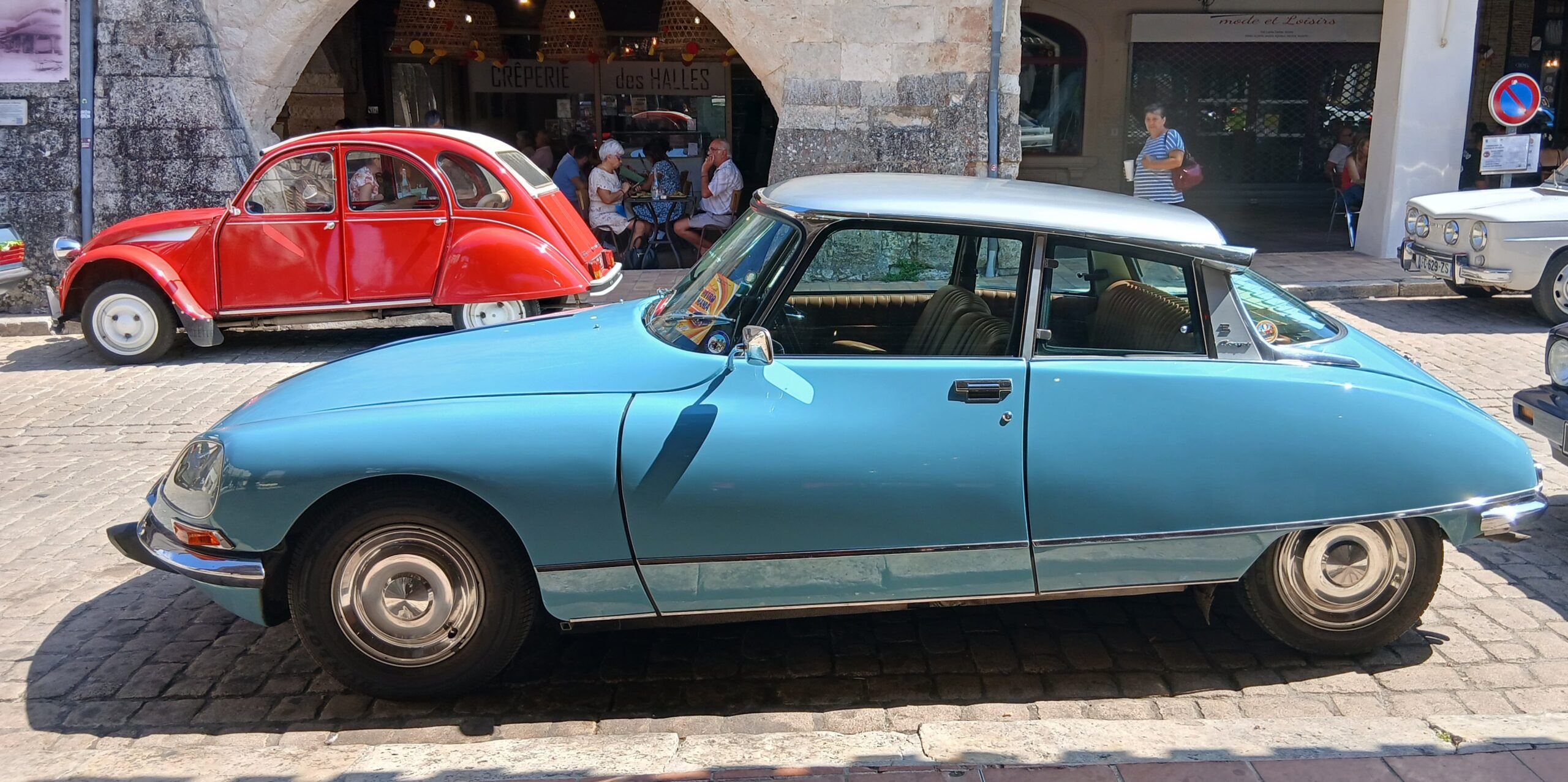
And something from a different strand of the DS story – this is a DS Coupe. I’m not clear which variant of DS Coupe it is, possibly a Ricou. I’m more than happy for that to be confirmed or corrected.
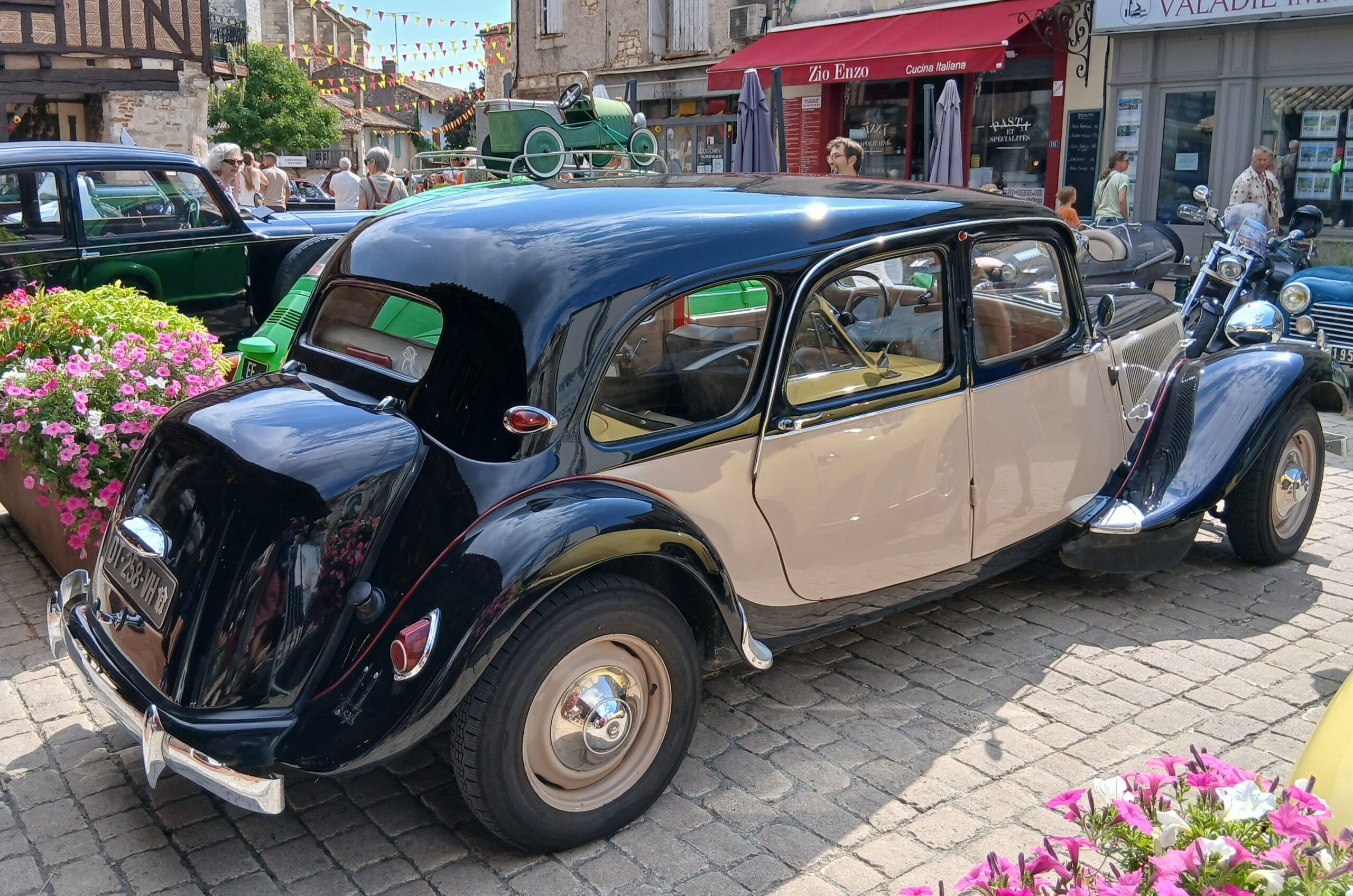
Of course, there was a good attendance from Citroen Tractions Avant. I’m not going to tell CC anything new about the Traction Avant (T87 has done that to a much higher standard than I could already) but I will try to identify them.
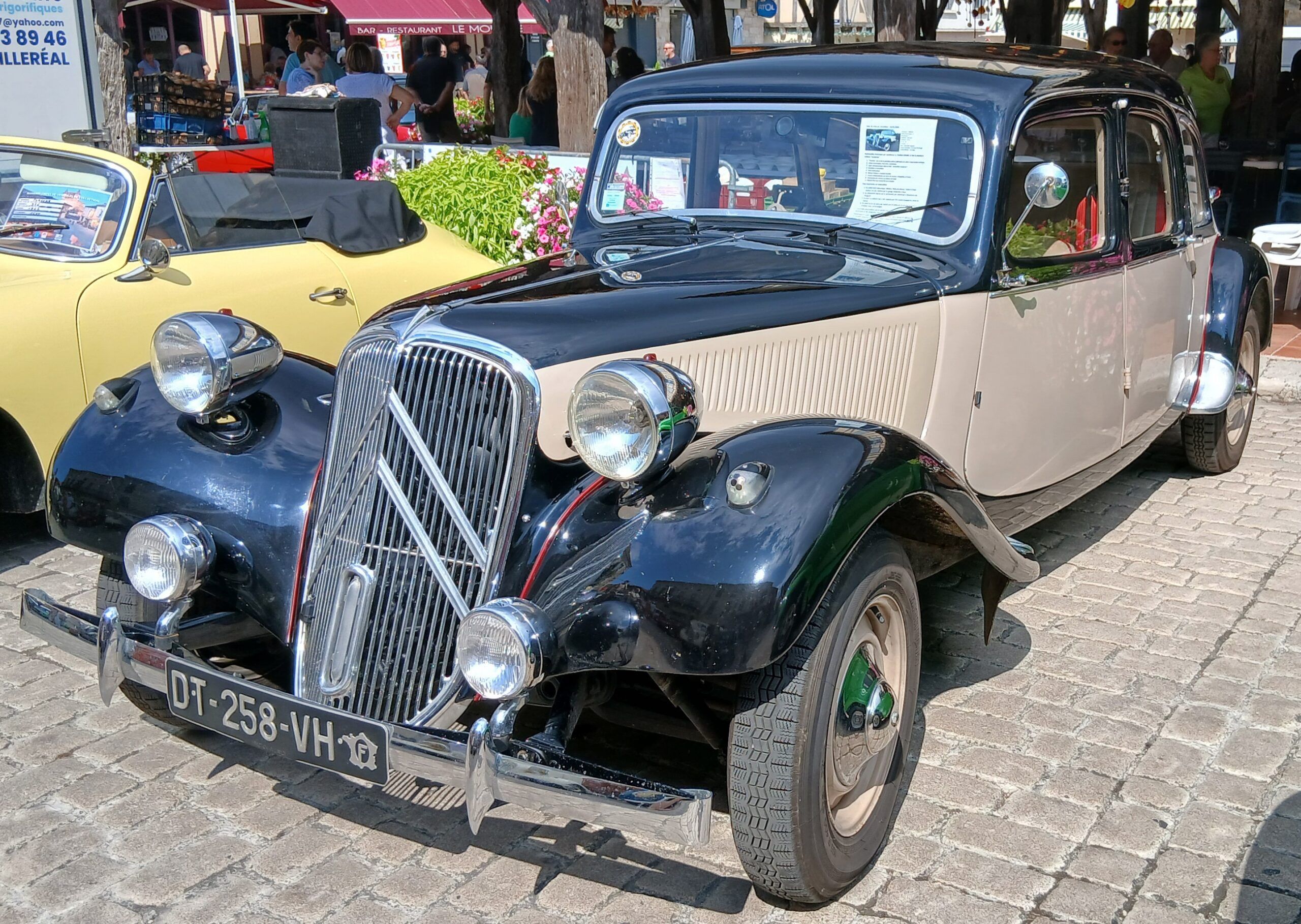
A 1952-56 Traction Avant Familiale variant, with an attractive two tone finish.
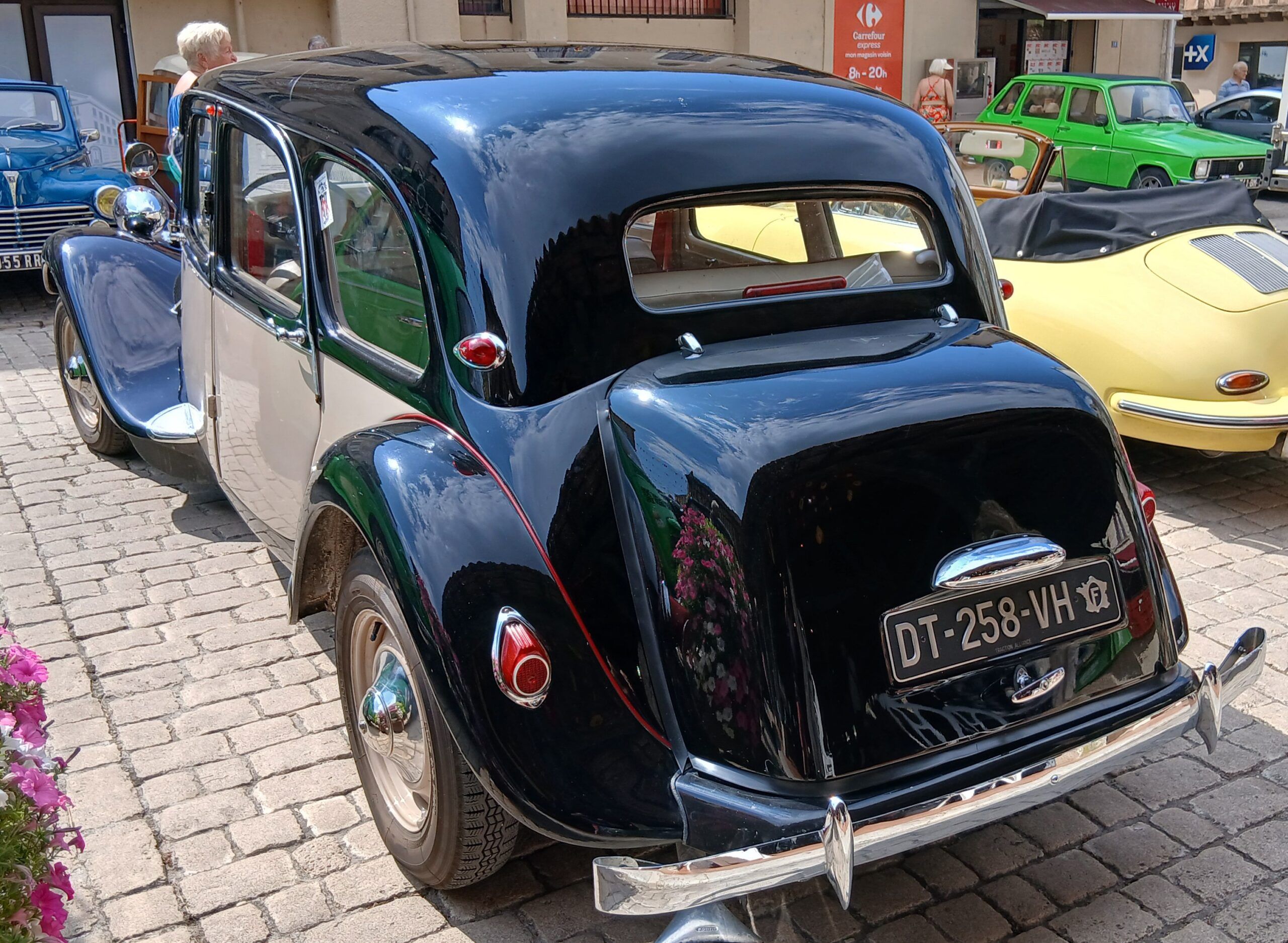
Nice example I suggest.
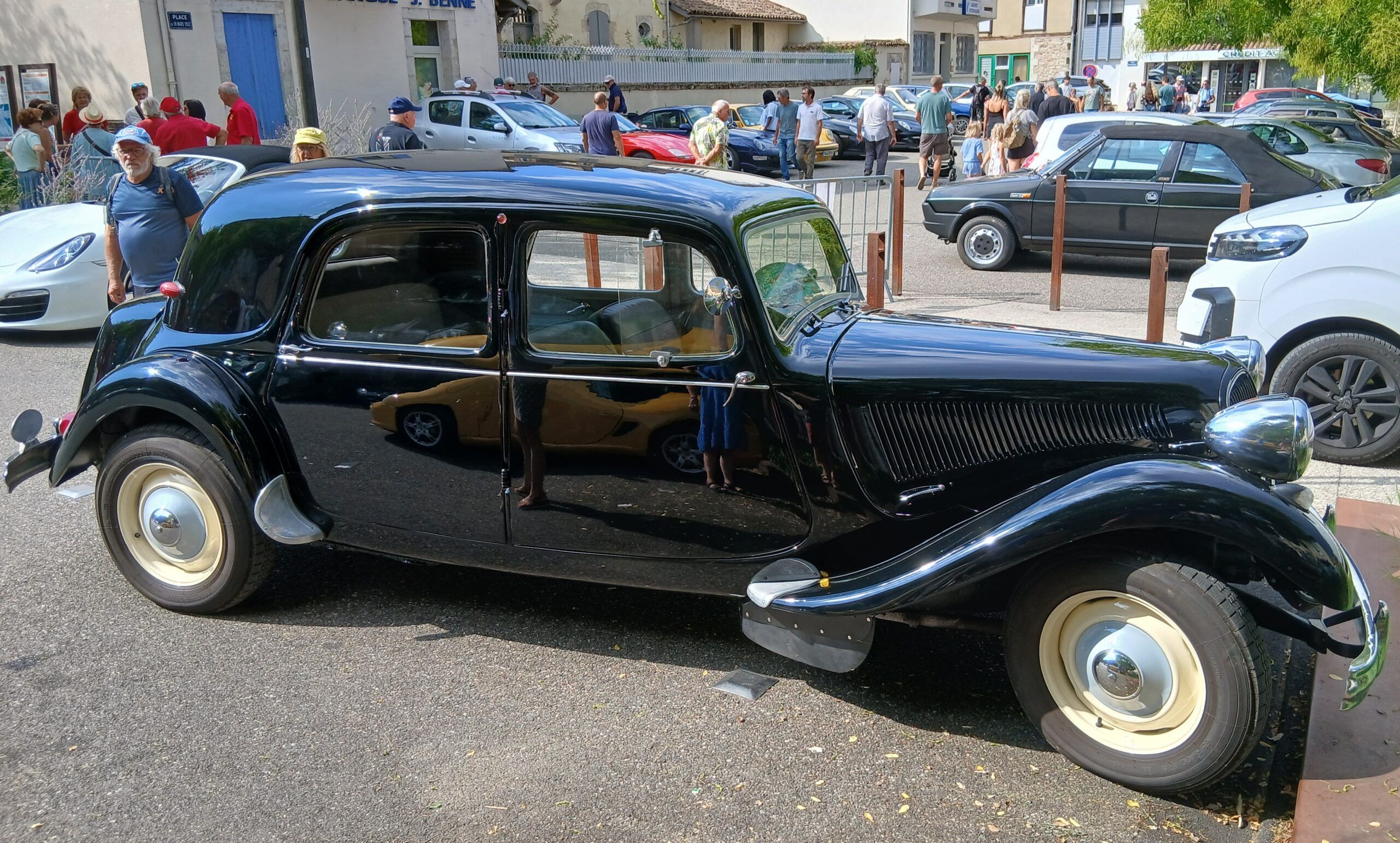
A 1952 on Normale 11, again in tidy condition.
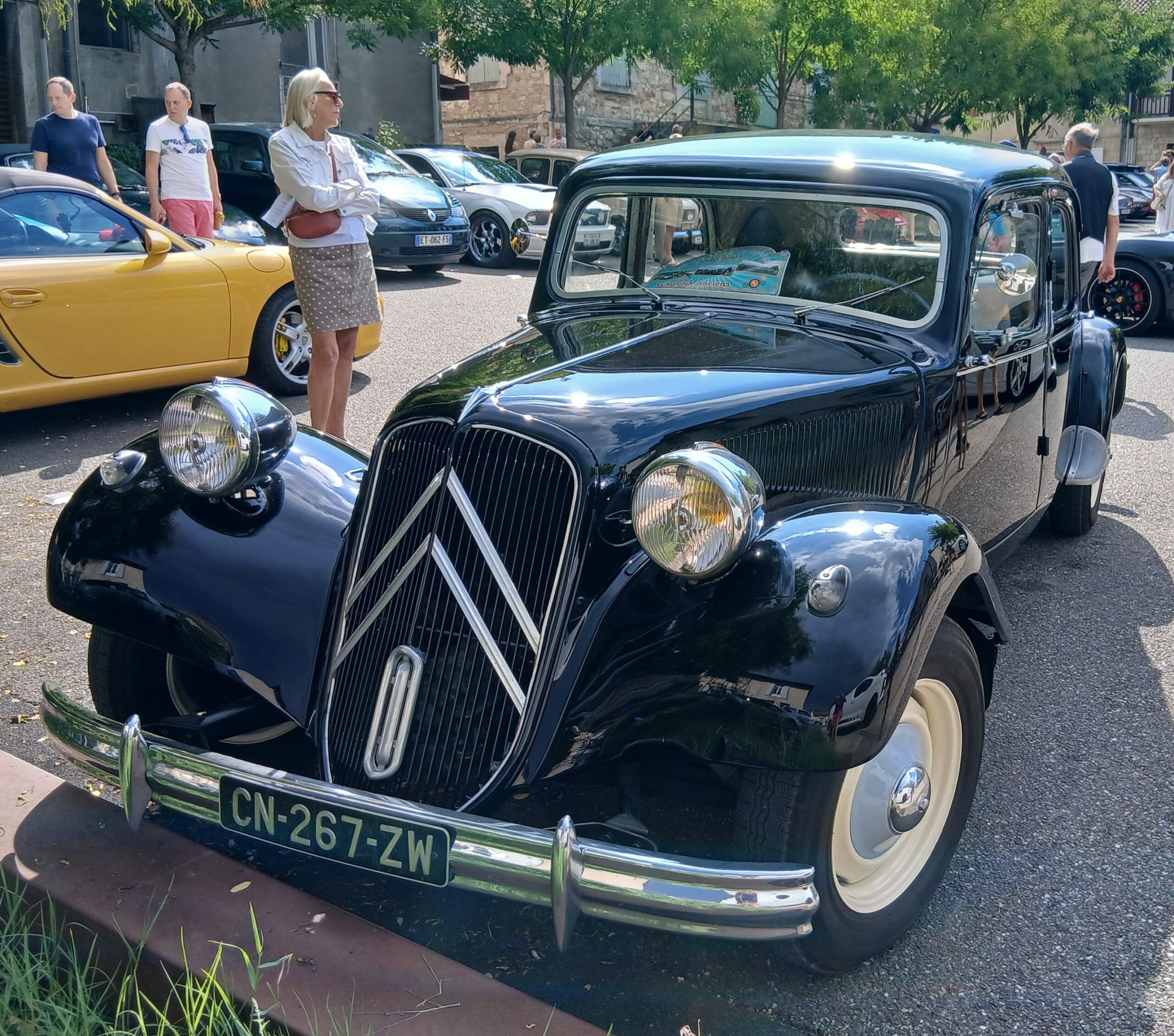
I don’t normally do black cars, but the Traction Avant is the only car I can think I’d prefer in black.
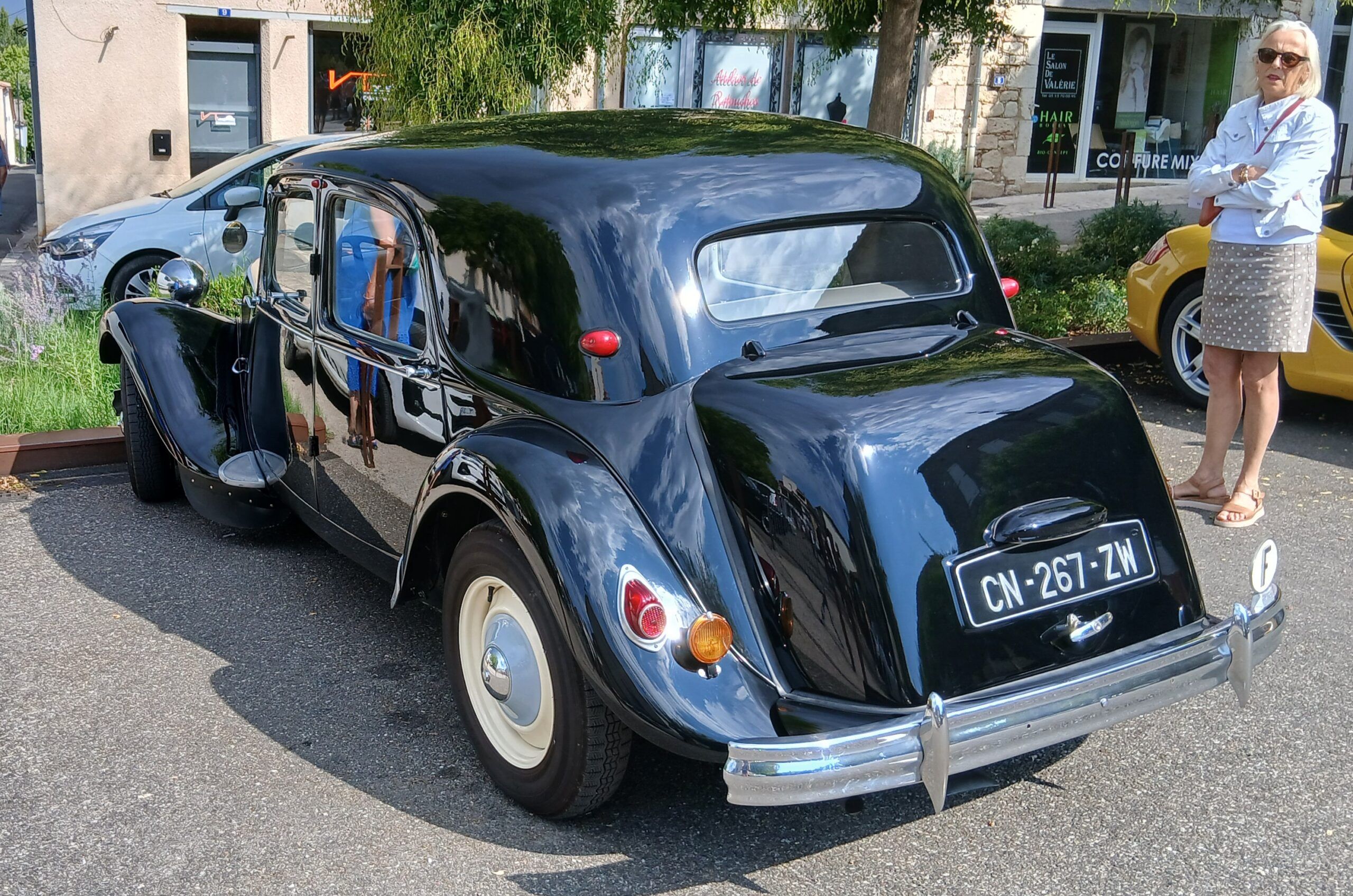
For that, I blame Inspector Maigret.
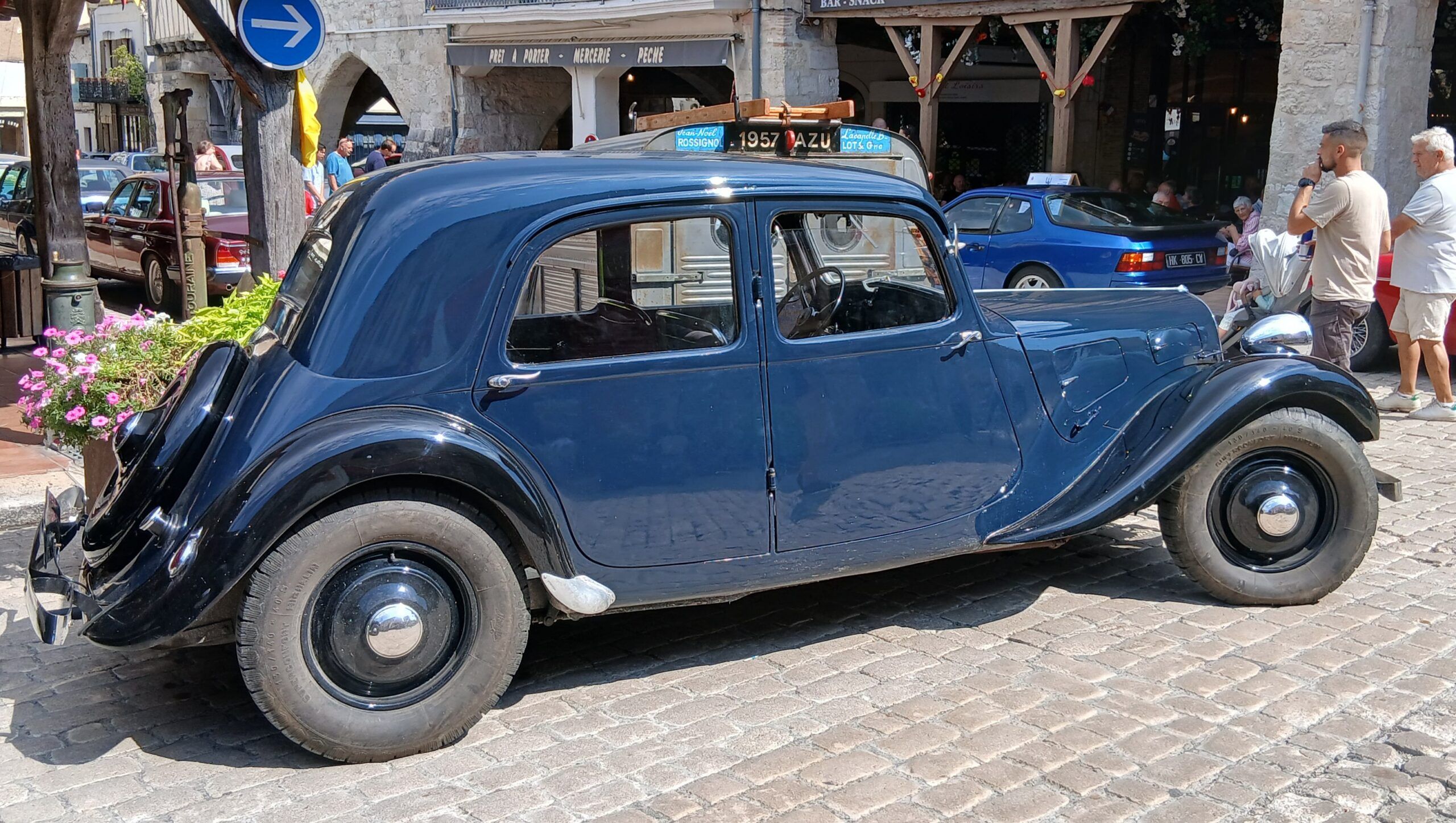
This is a much earlier, maybe a Michelin era, Legere saloon. But what’s behind it?
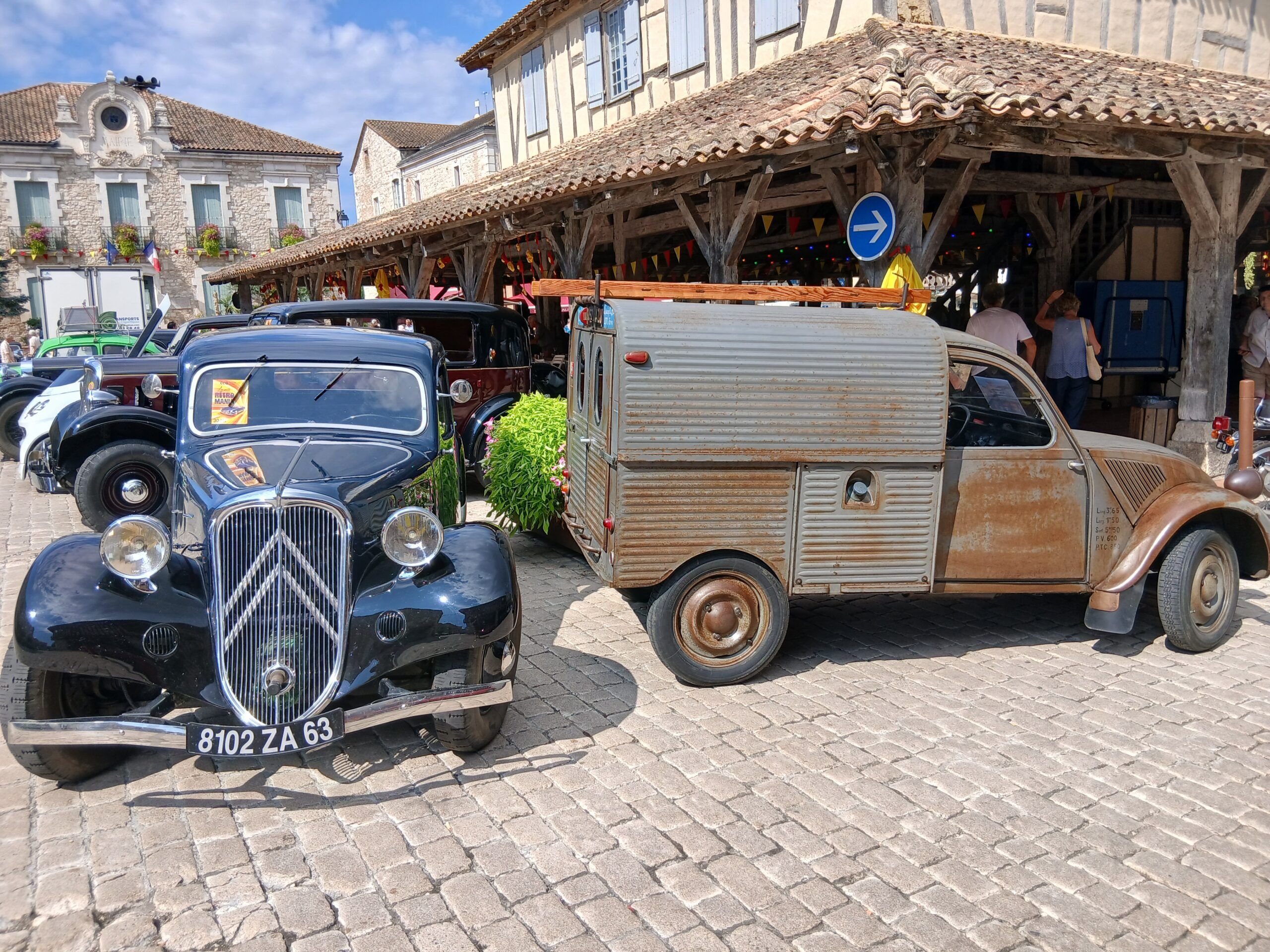
A 2CV Fourgonnette, the most common light commercial derivative 2CV.
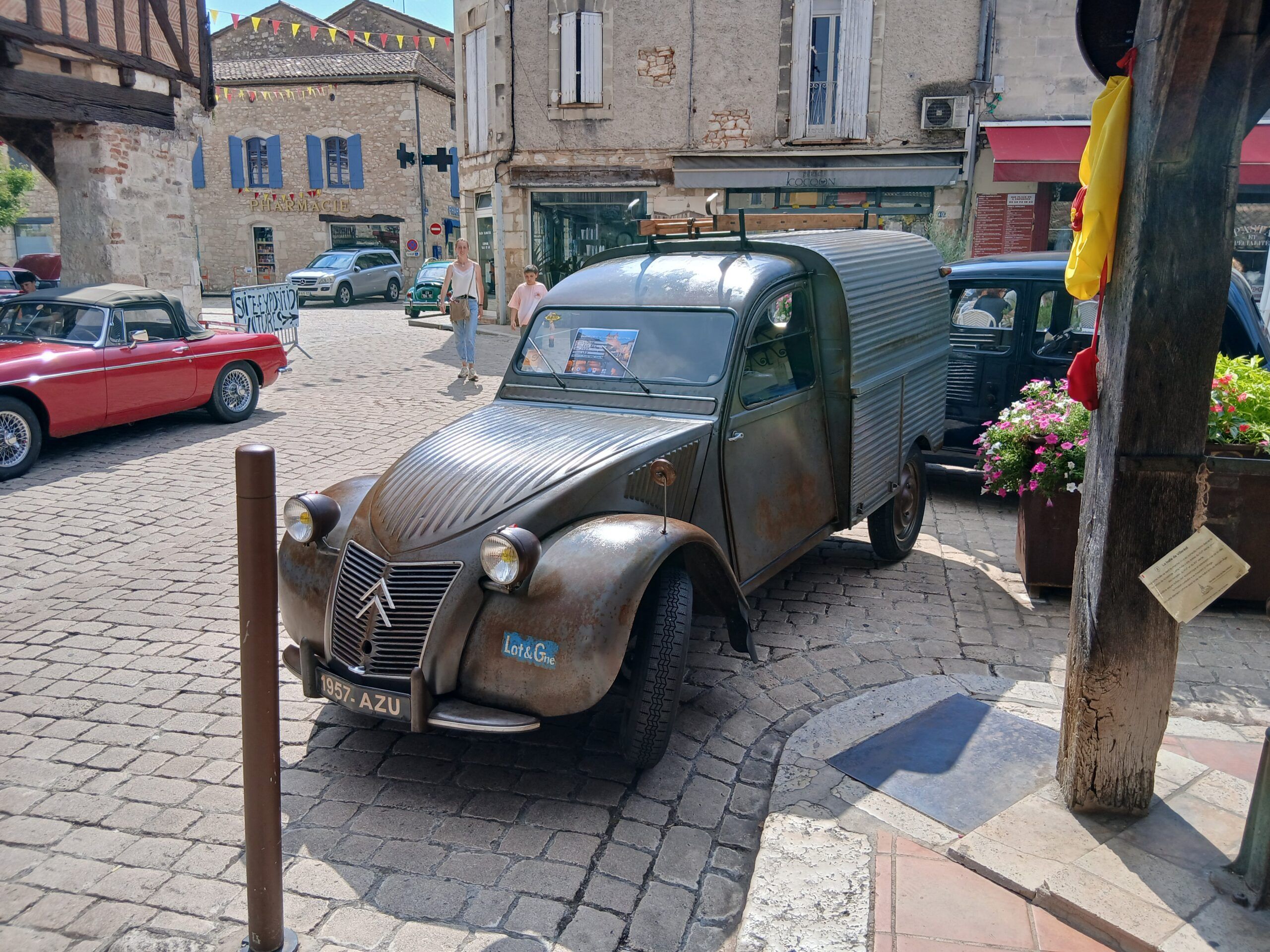
Nice MGB photobombing the Fourgonnette. Do you want to see the Beetle close up?
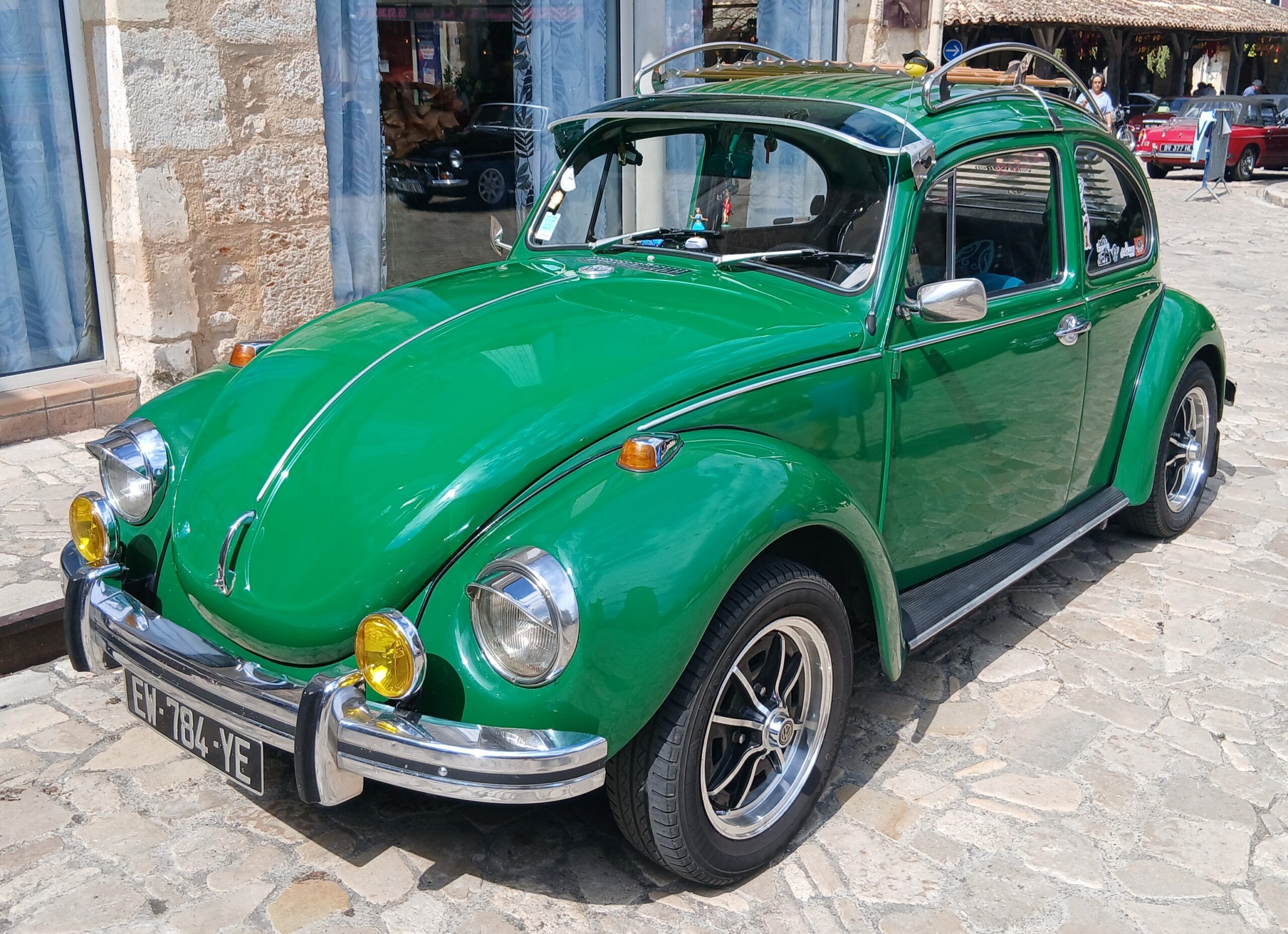
A 1972 1302S, or 1600 Super Beetle in some markets.
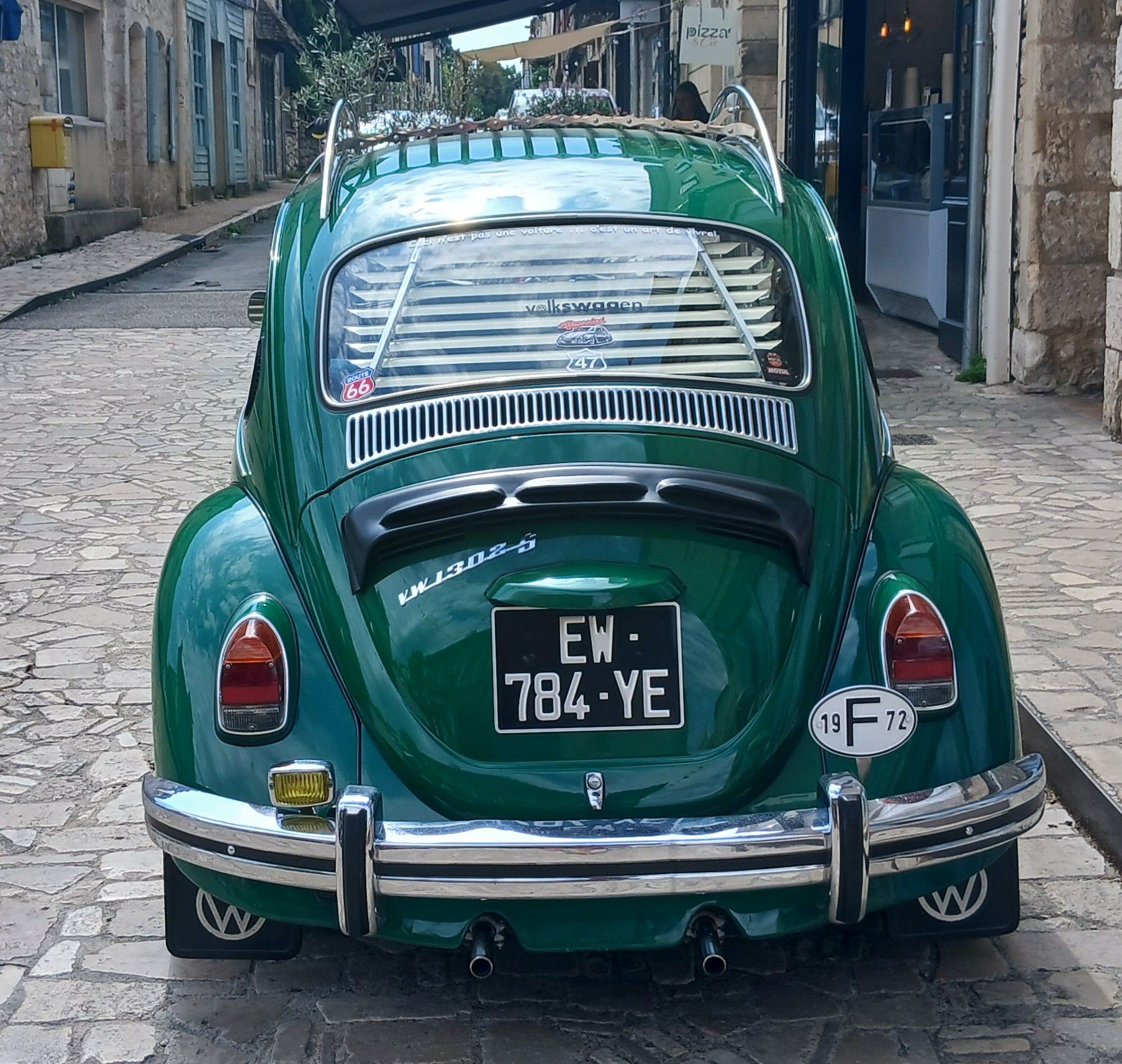
Ceci n’est pas une voiture…il c’est un art de vivre!
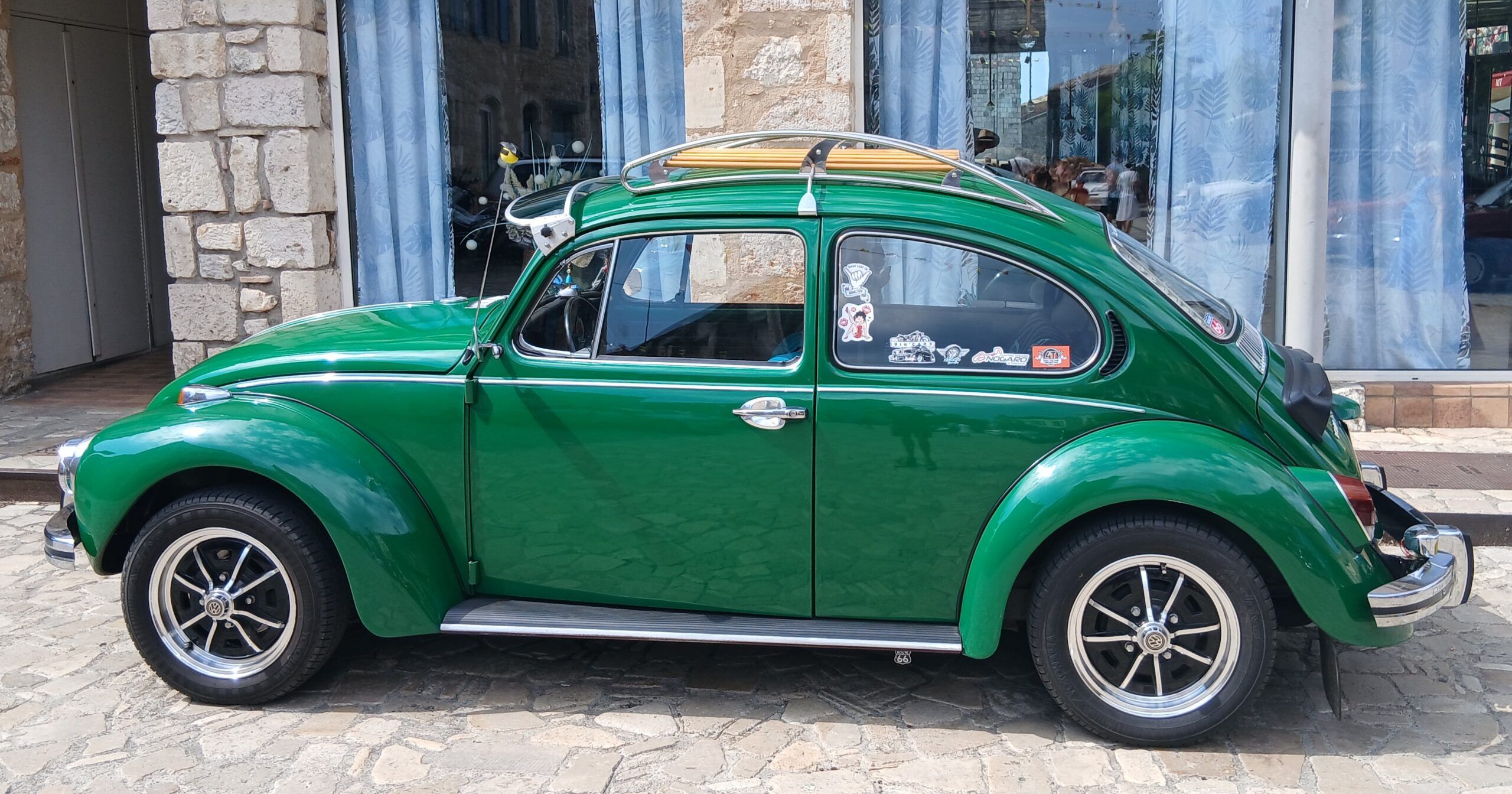
This is not a car, it’s a way of life! Few Curbivores would argue.
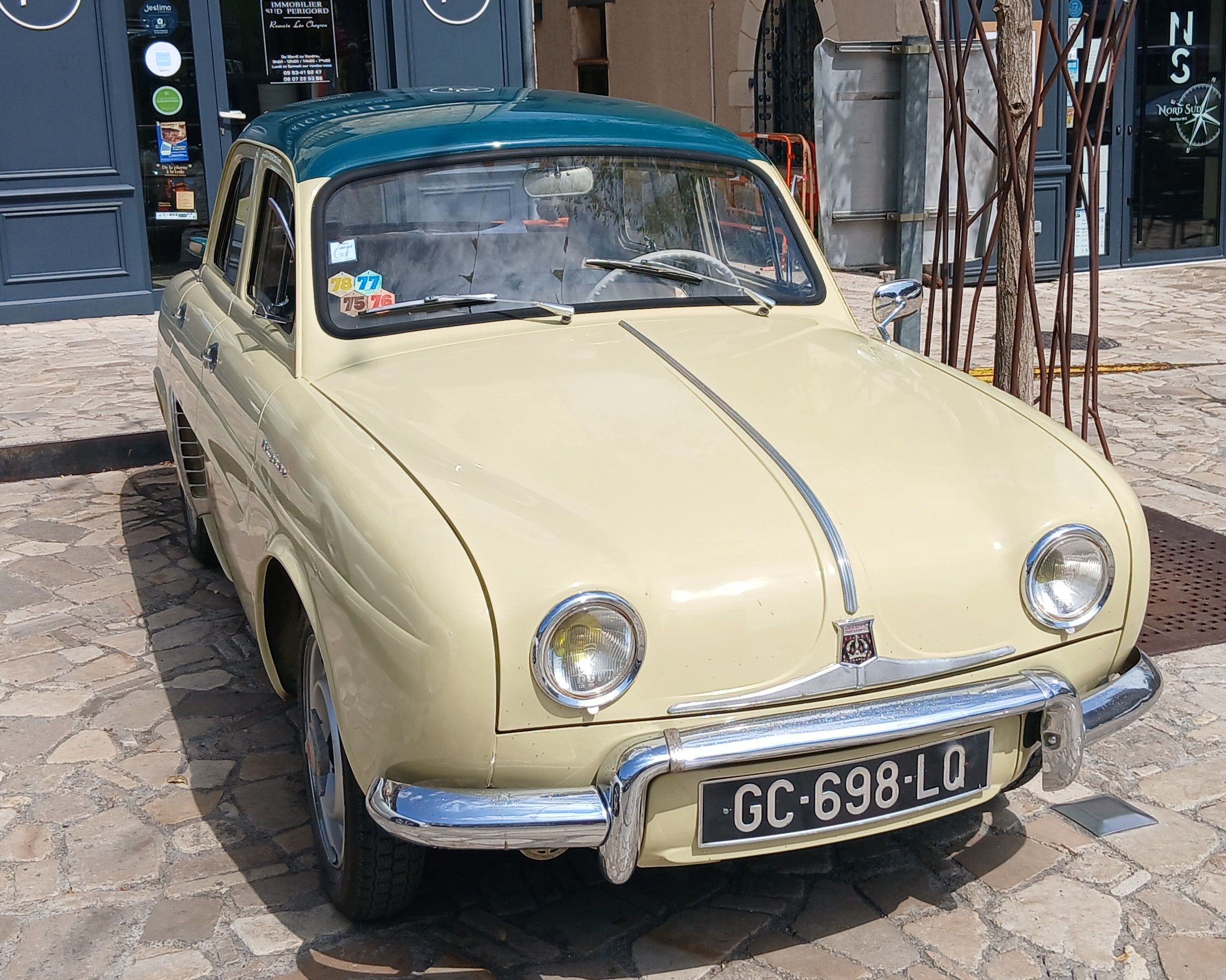
The closest Europe got to a Beetle competitor was probably the Renault 4CV and later (1956-67) Dauphine.
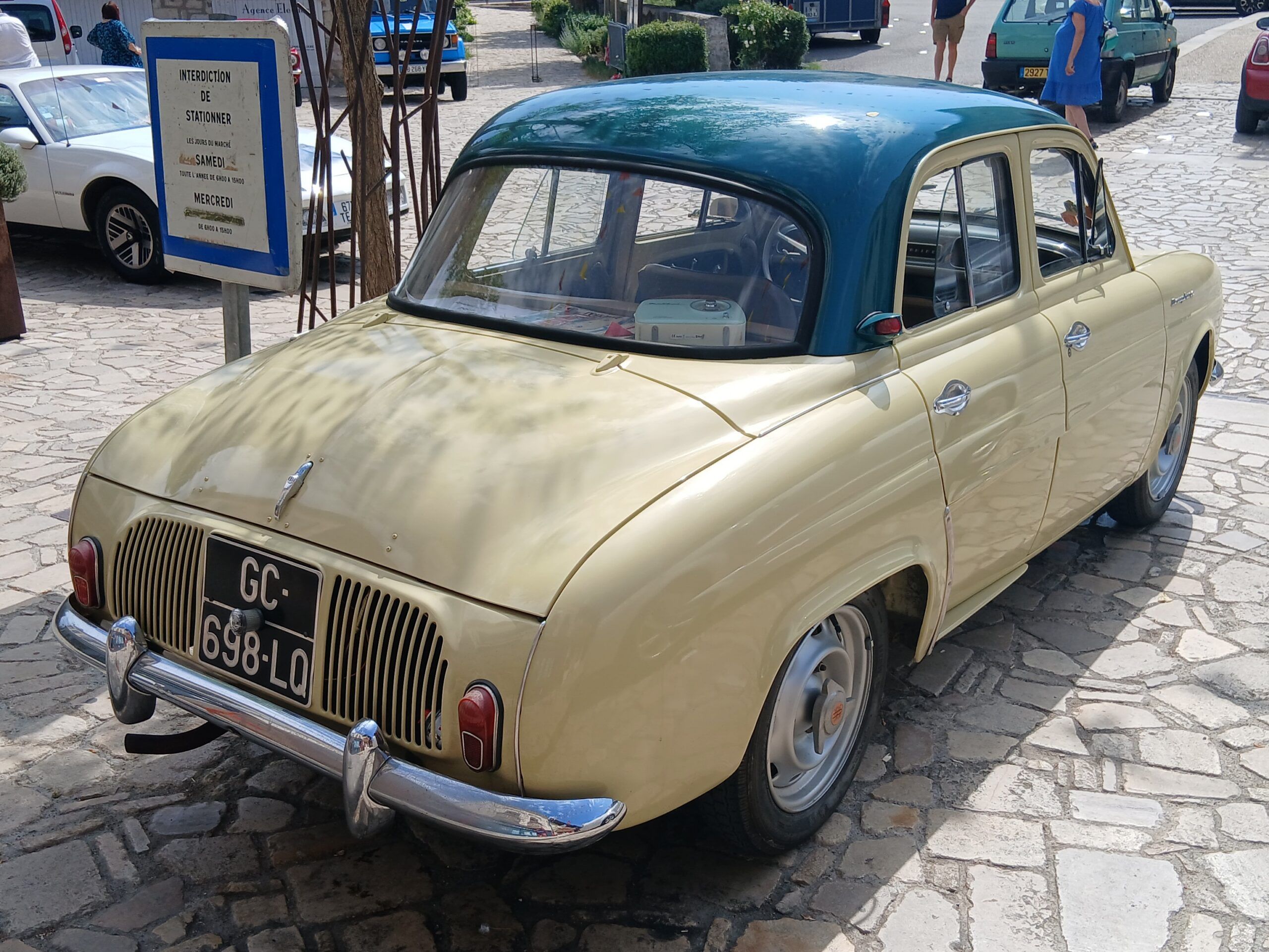
Maybe it was only 845cc but the impact and history cannot be argued with. This was France’s best seller from 1957 until 1961, with over 2 million built in 9 years.
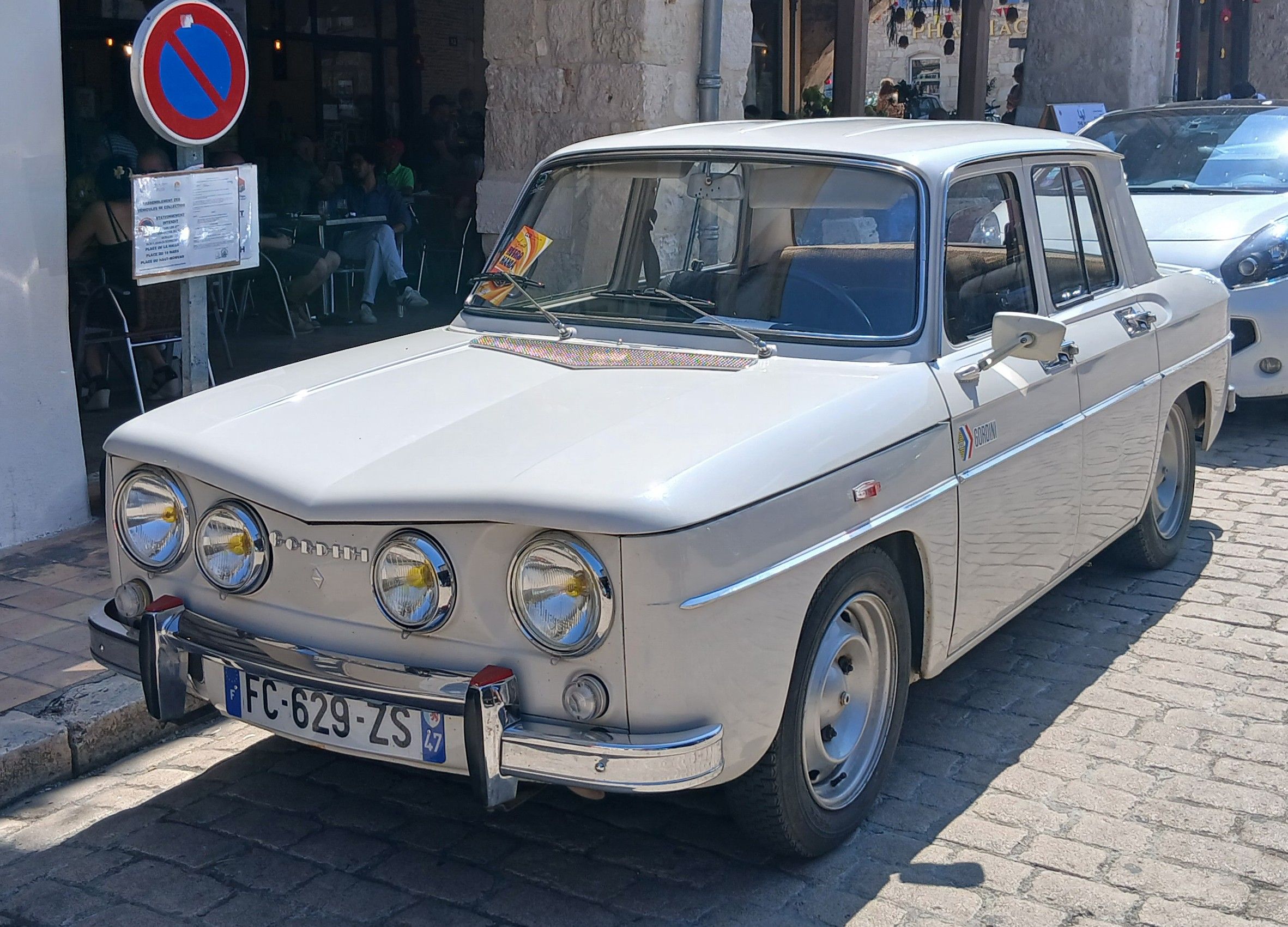
The Dauphine was succeeded, effectively, by the Renault 8, first launched in 1962 and which was closely derived from the Dauphine.
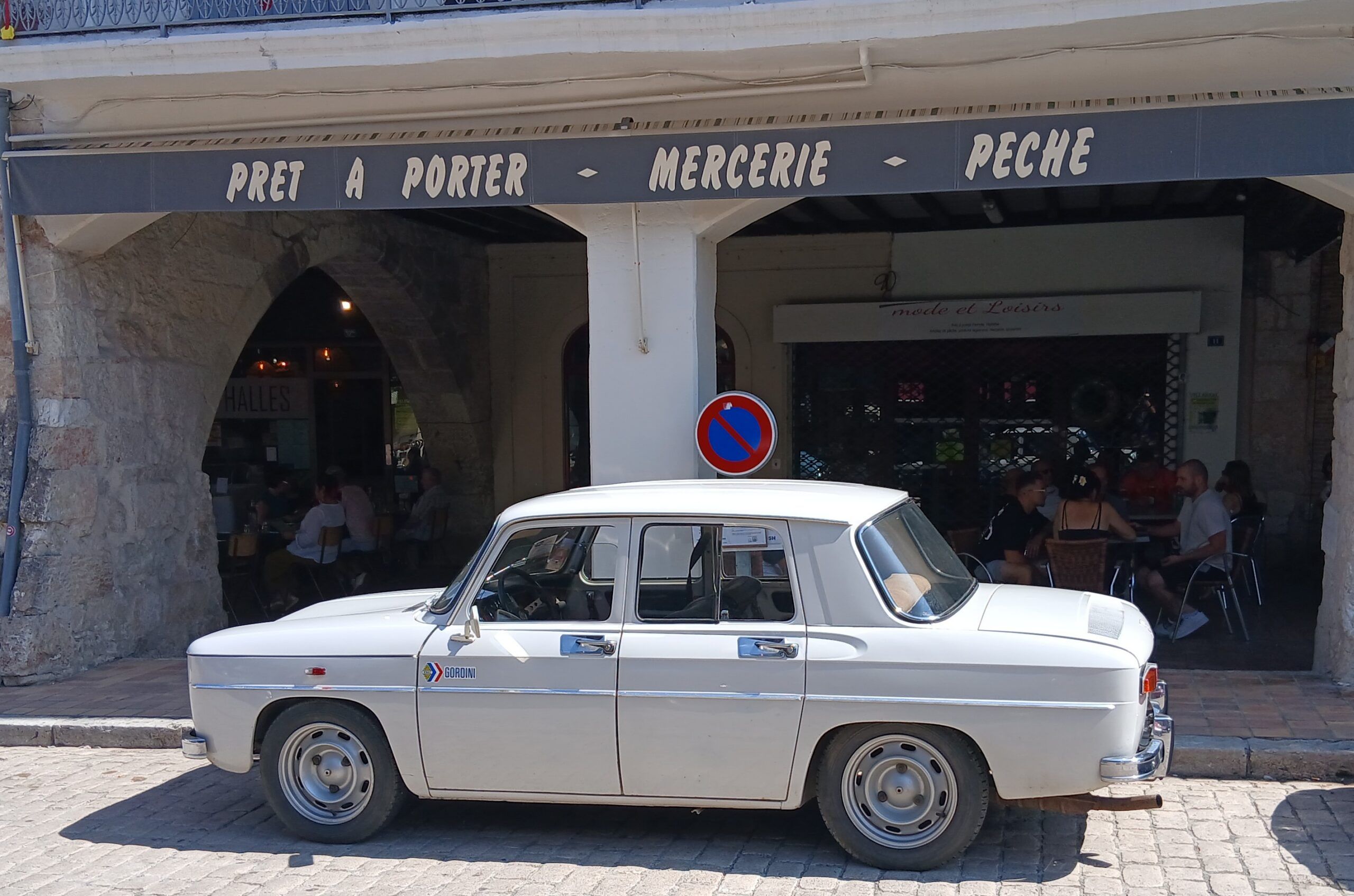
This example is an 8 Gordini, post 1967 facelift, with a 1255cc engine and 99 bhp. Although the 8 and Dauphine were rear engined, they were watercooled, and the 8 had four wheel disc brakes.
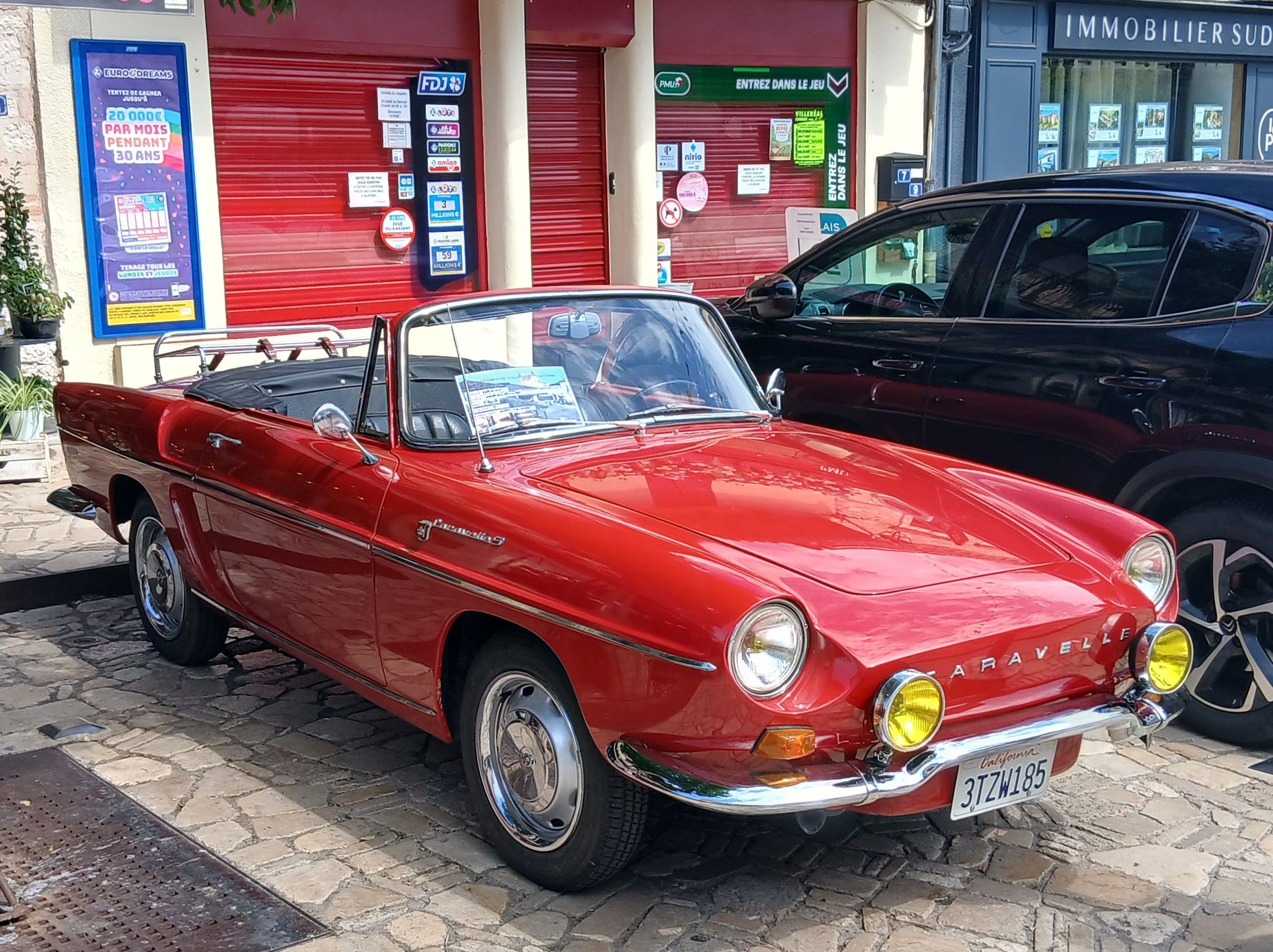
The Renault 8 begat the Caravelle (or Floride, depending where and when you bought yours), a classic saloon to convertible conversion.
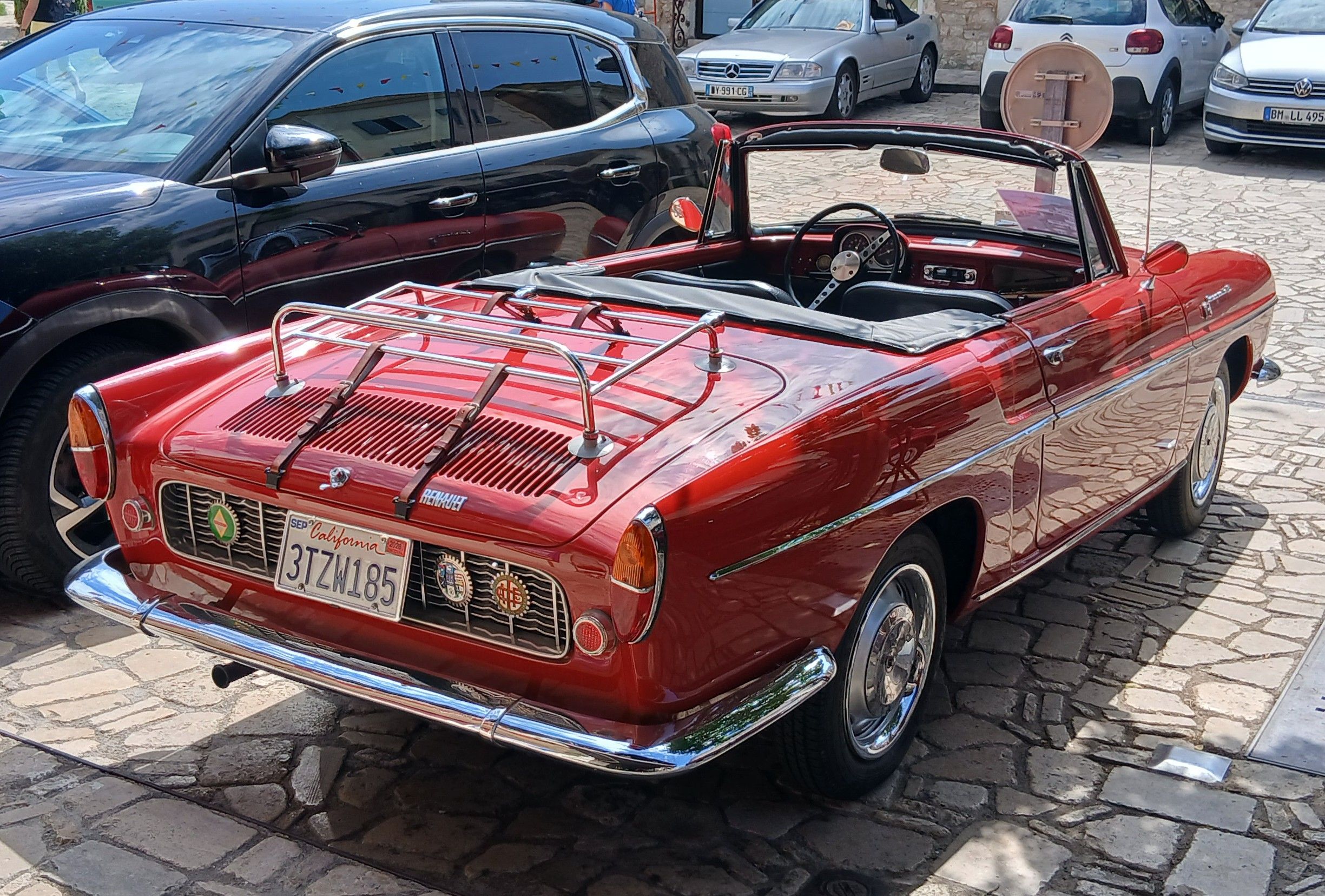
An appealing collation of Alfa Romeo, Fiat, MG and may be even Thunderbird design clues. Not sure about the Californian registration, unless it added for the event.
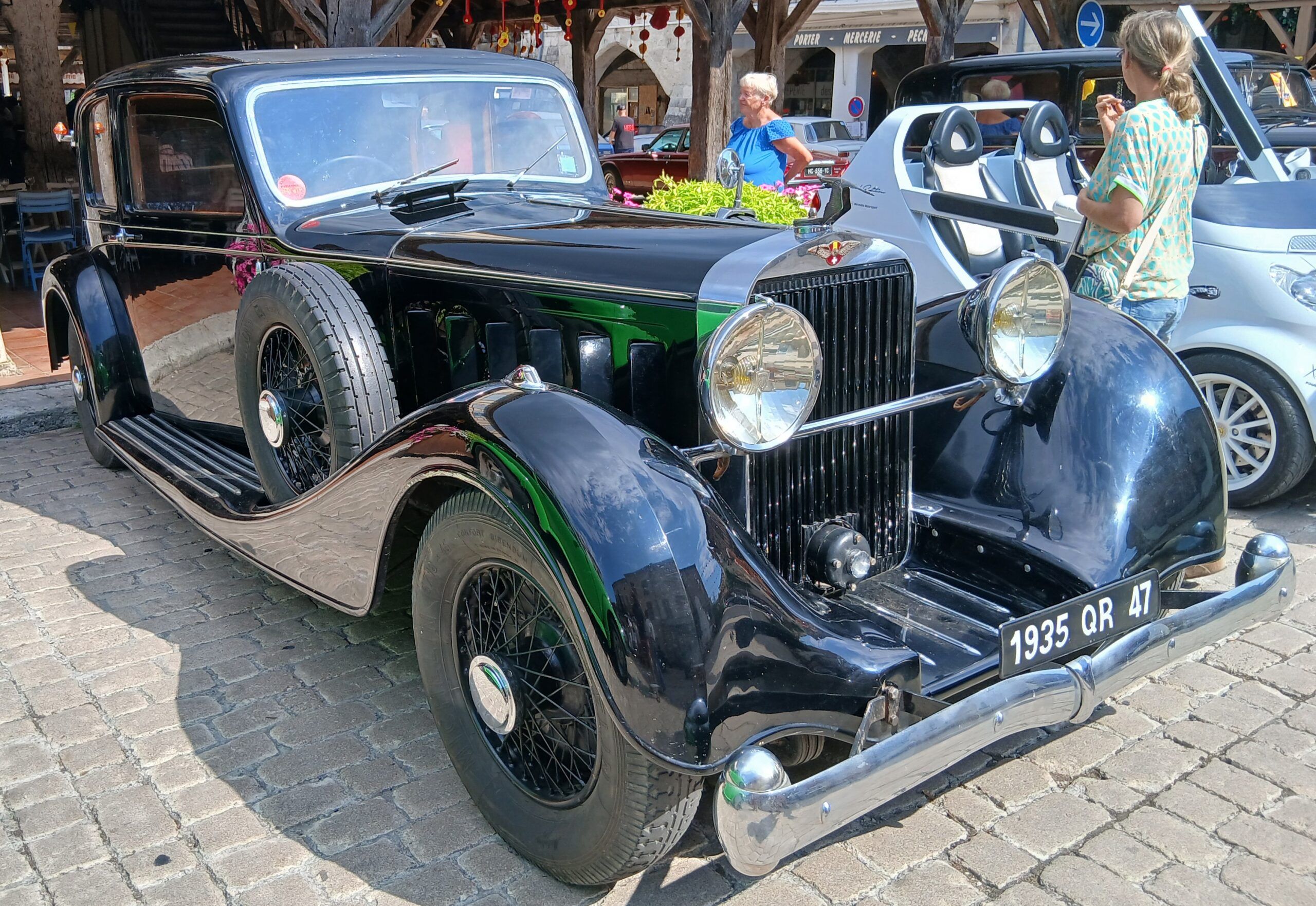
Something seen much less frequently on CC and not something I would have predicted to see at the event, an Hispano-Suiza.
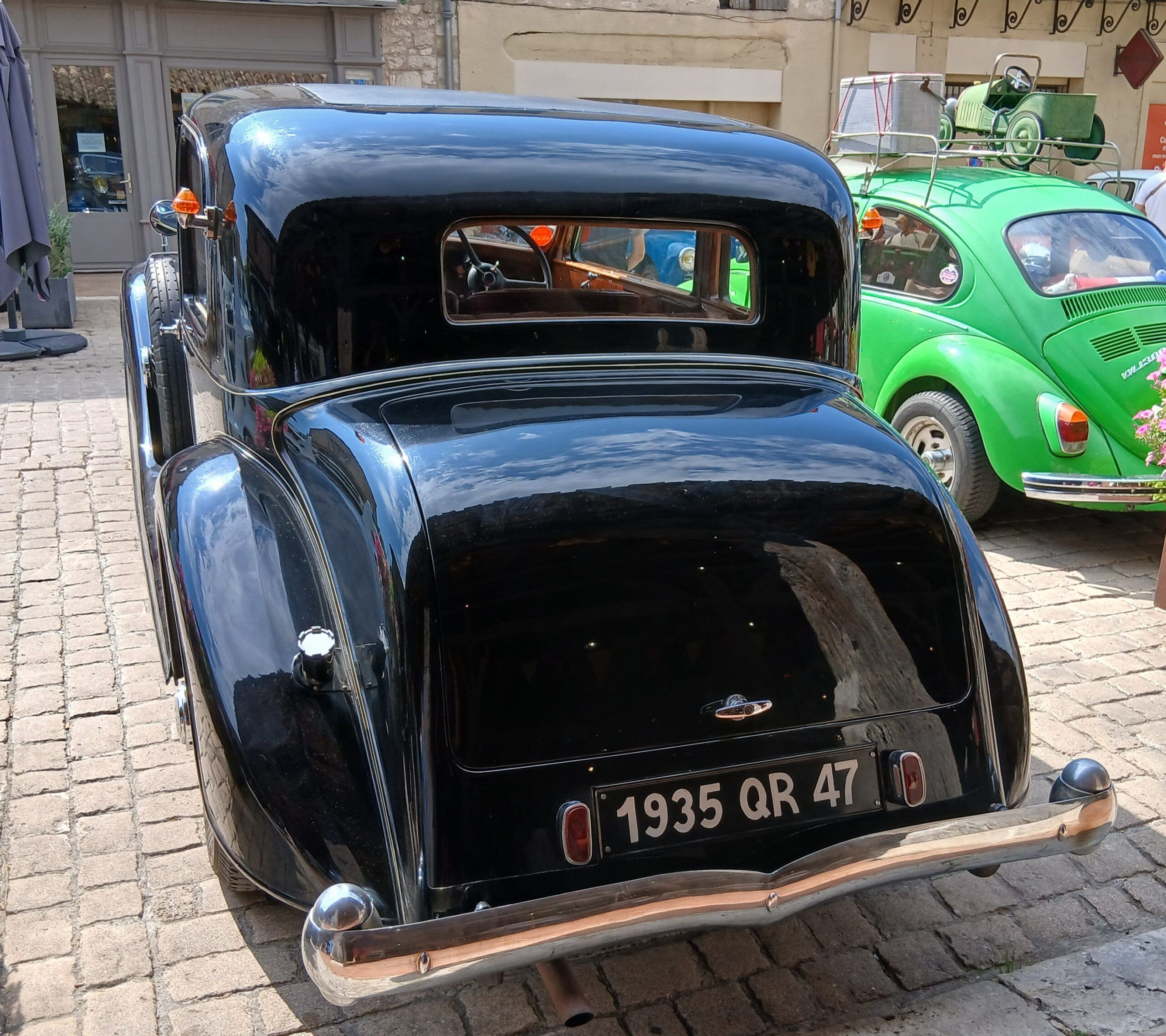
My best guess is a 1935 Hispano Suiza K6. By all means, correct me BTL.
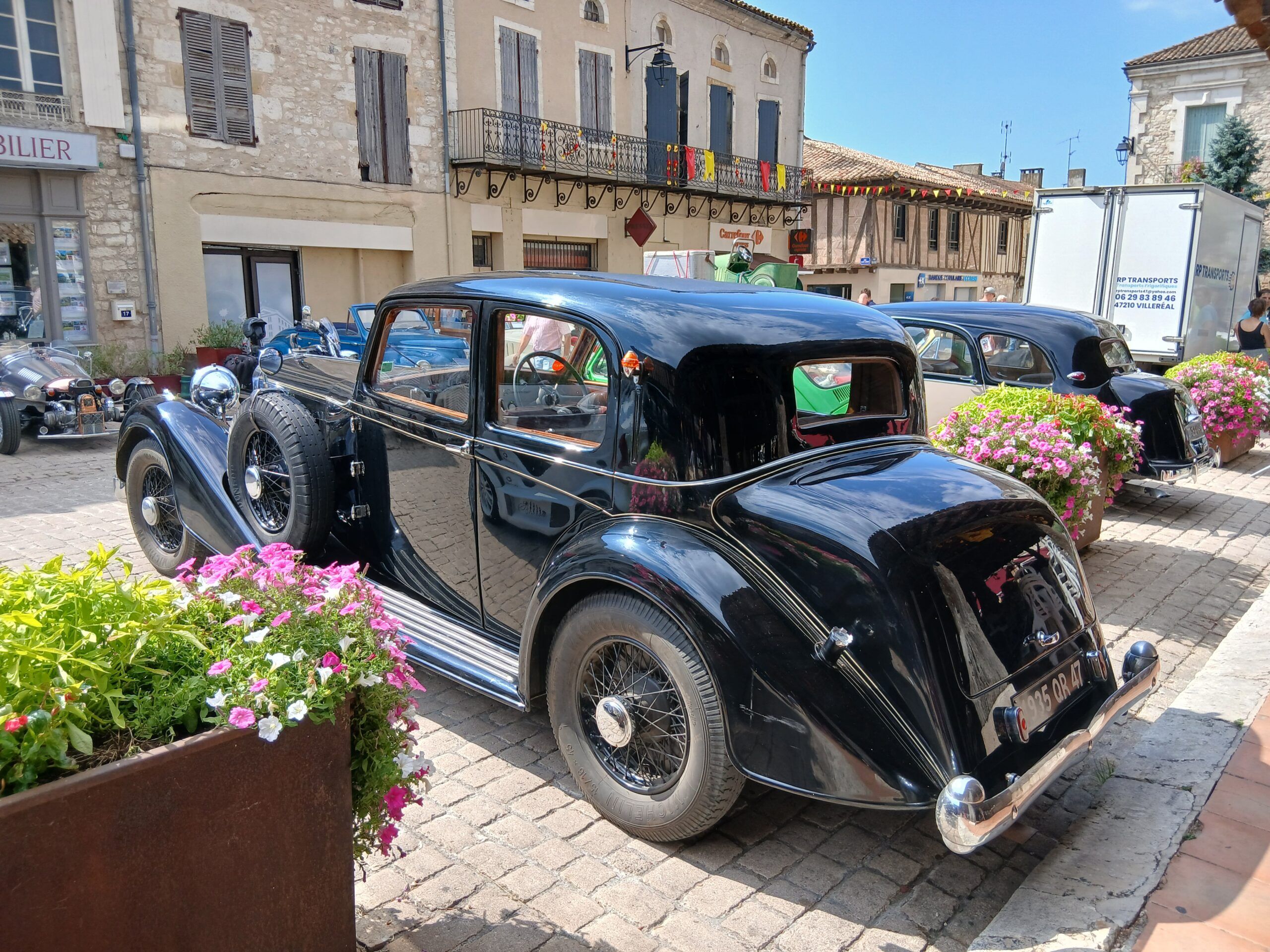
Quite a sight for a small market town display, and a marque with a complex and interesting history. France’s take on Rolls-Royce and Maybach, using top end automotive products to add a distinction to aviation engines.
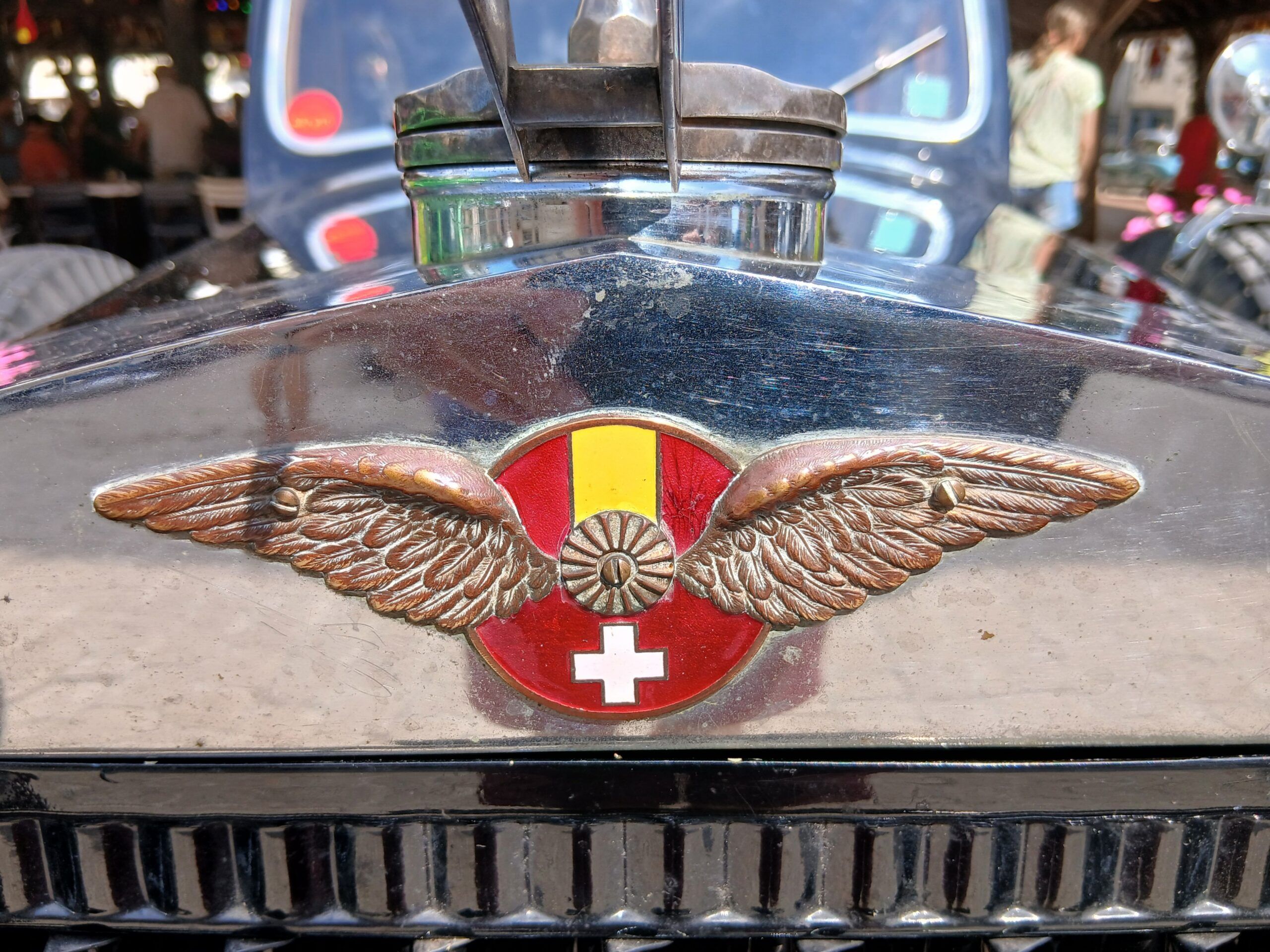
The cars were produced near Paris but under the ultimate control of a Spanish business, until the French business was nationalised for its aviation activities in 1938. Its aviation arm can still be traced in the current French aerospace industry.
And now back to reality as most of us remember it.
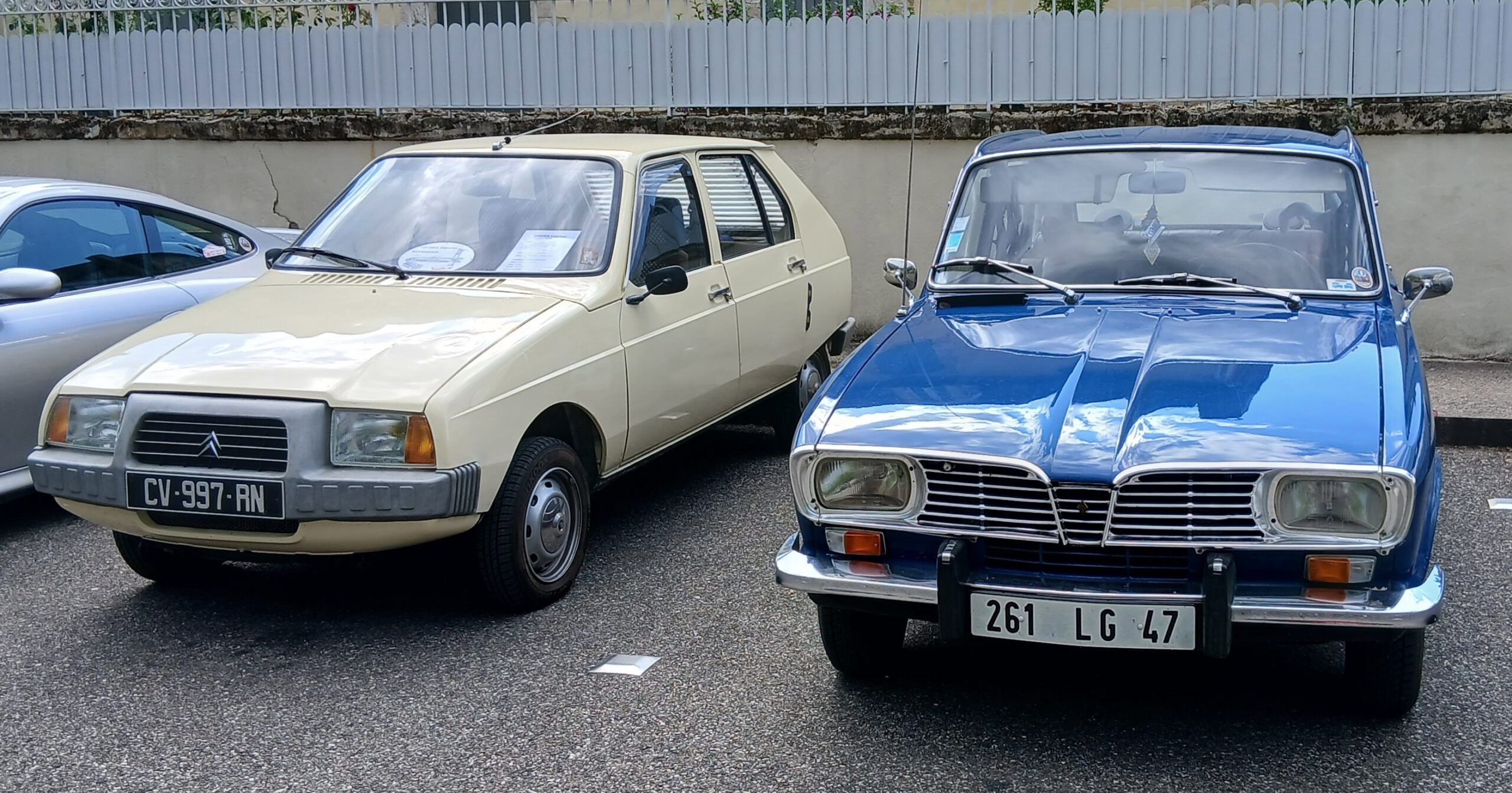
A Citroen Visa with the original 1978 front and undisputed all time great a Renault 16
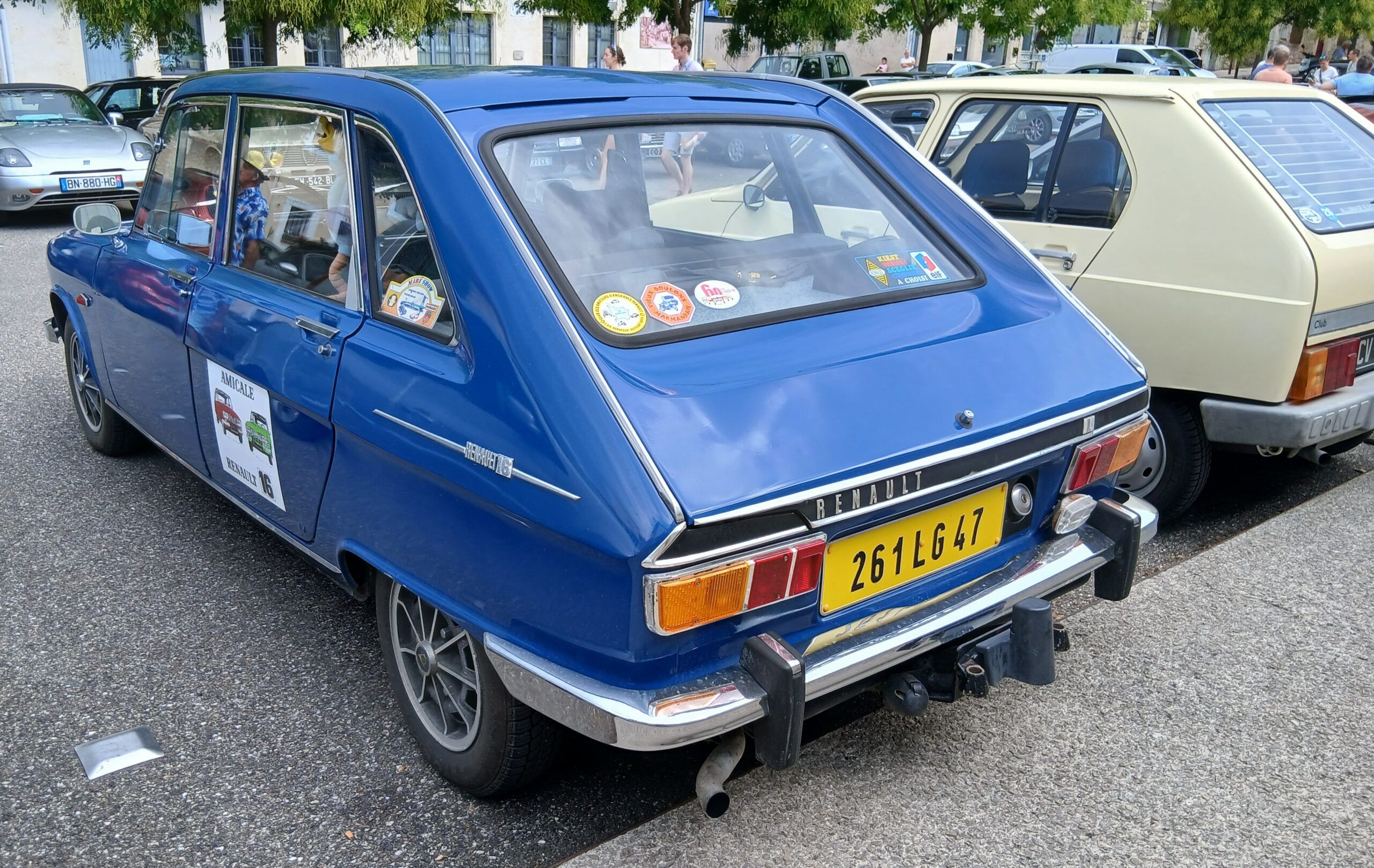
Despite its status, the Renault 16 is now a very rare sight in France. This example is a 1971-74 16L, with the 1565cc engine and around 85bhp. As with so many French cars, don’t get hung up on the seemingly modest power output – these cars could keep up an impressive cross country average in great comfort.
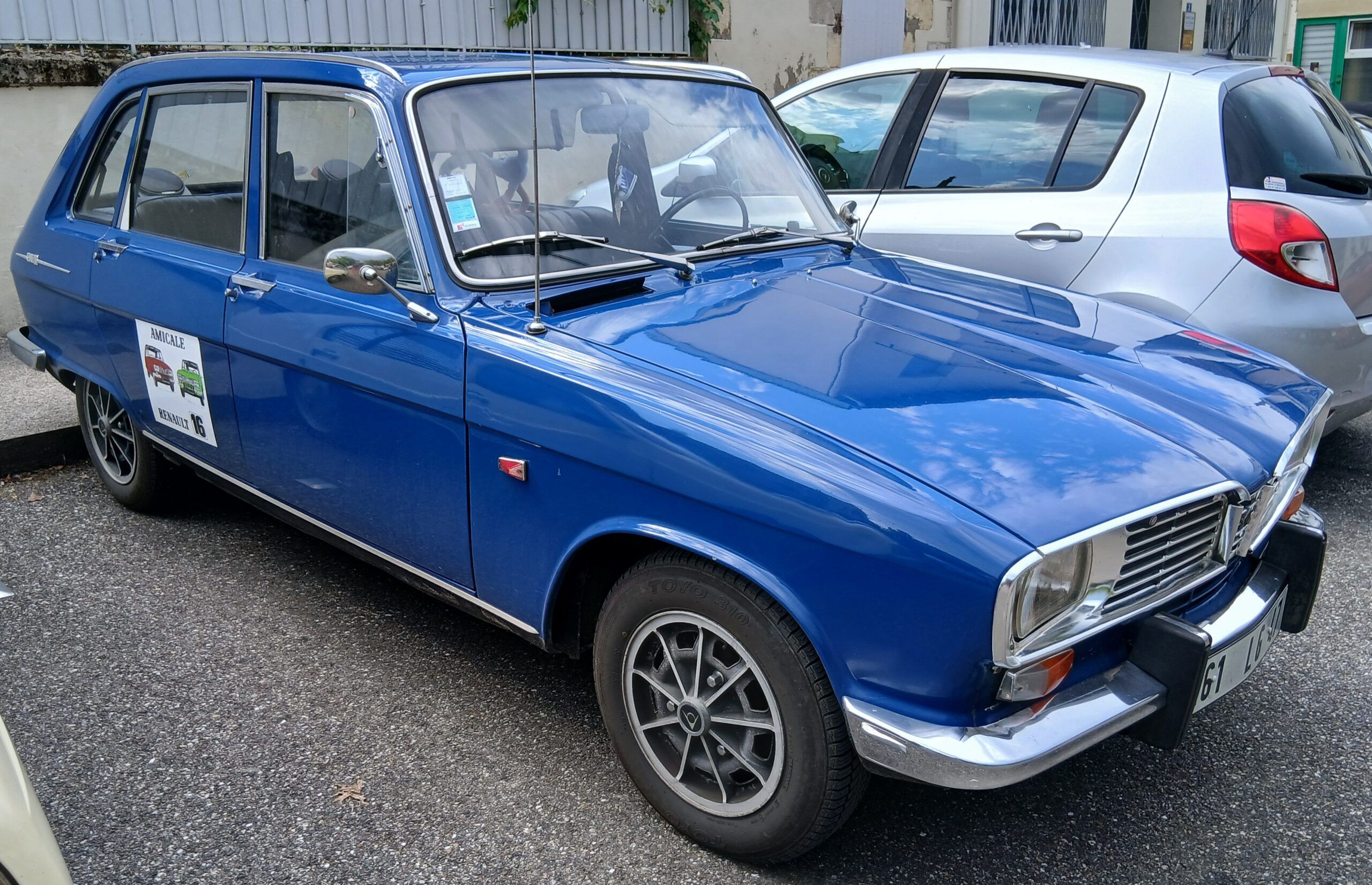
After market (but still 3 lug obviously) wheels aside, this looks pretty much stock. Genuinely, one of the best European cars of the 1960s and the car that put a hatchback into many peoples’ real lifes.
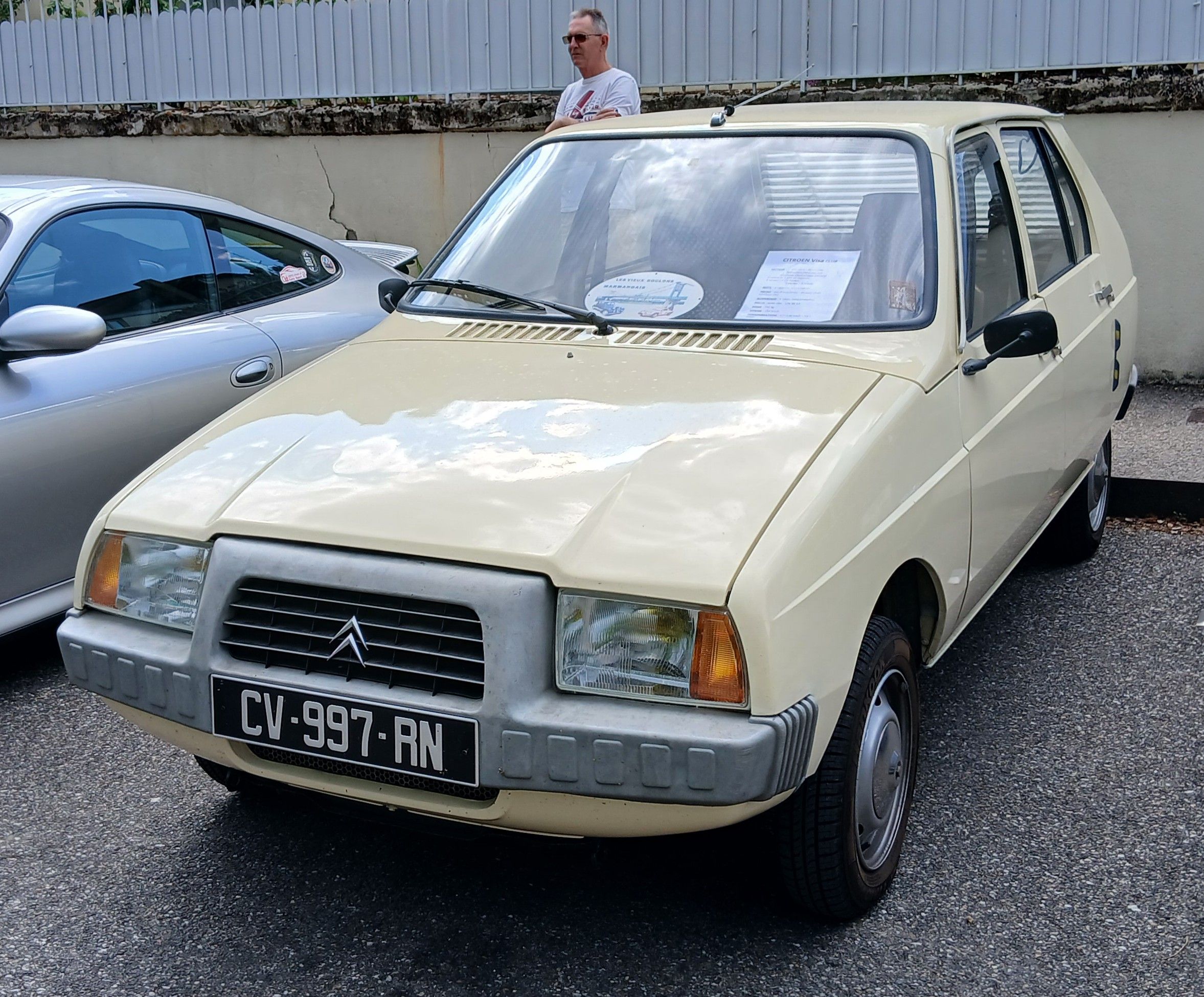
The Vis is a 1978-81 Club, so the 652cc flat twin air cooled engine from the 2CV. Again low power but don’t underestimate these on a curved road, assuming the hills are modest. Awkward styling details (the front bumper and grille arrangement was heavily panned, and the scuttle shutlines are a bit off) aside, there was little to dislike and the larger engined models were well worth it.
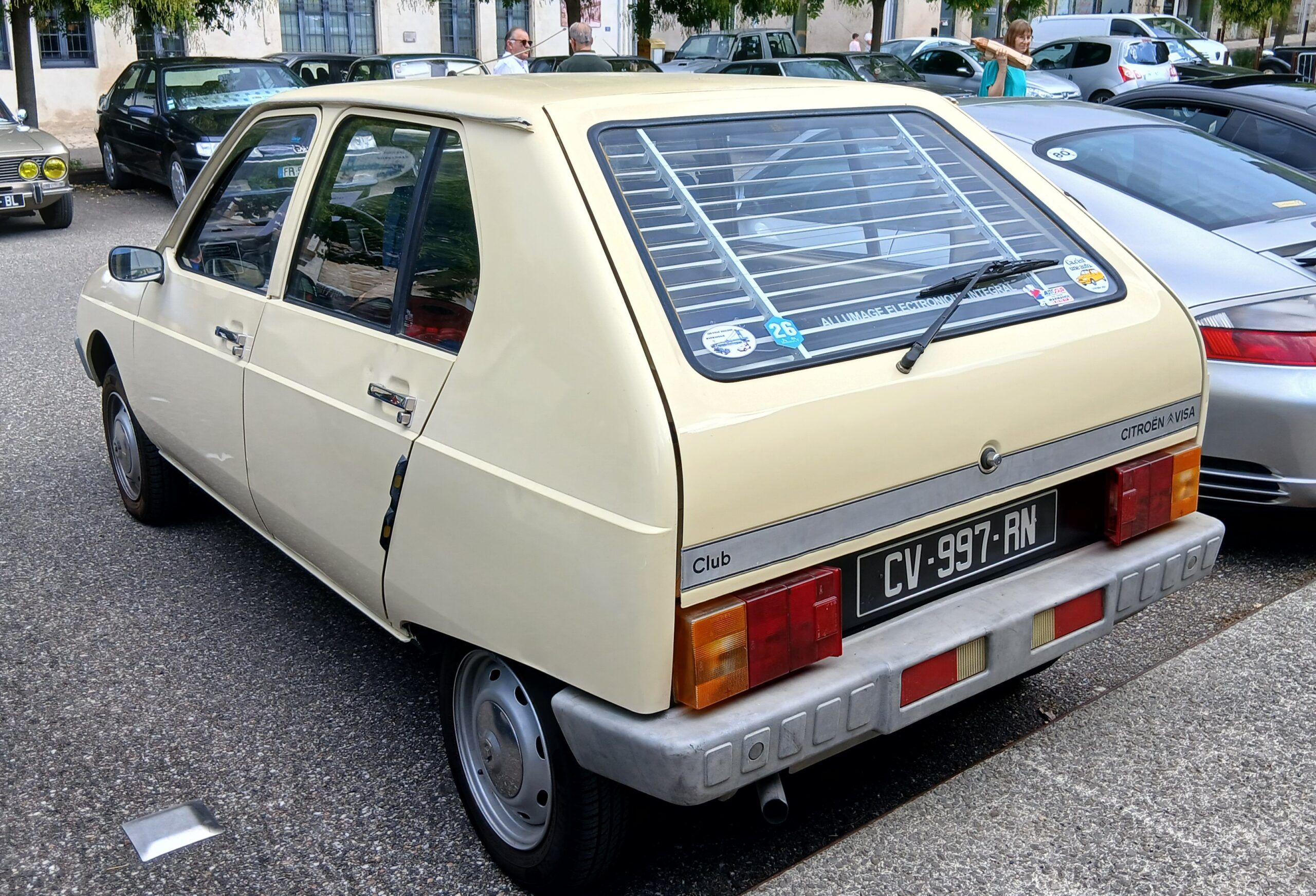
“Allumage Electronique Integral” – integrated electronic ignition, not a feature shared with the early 2CV.
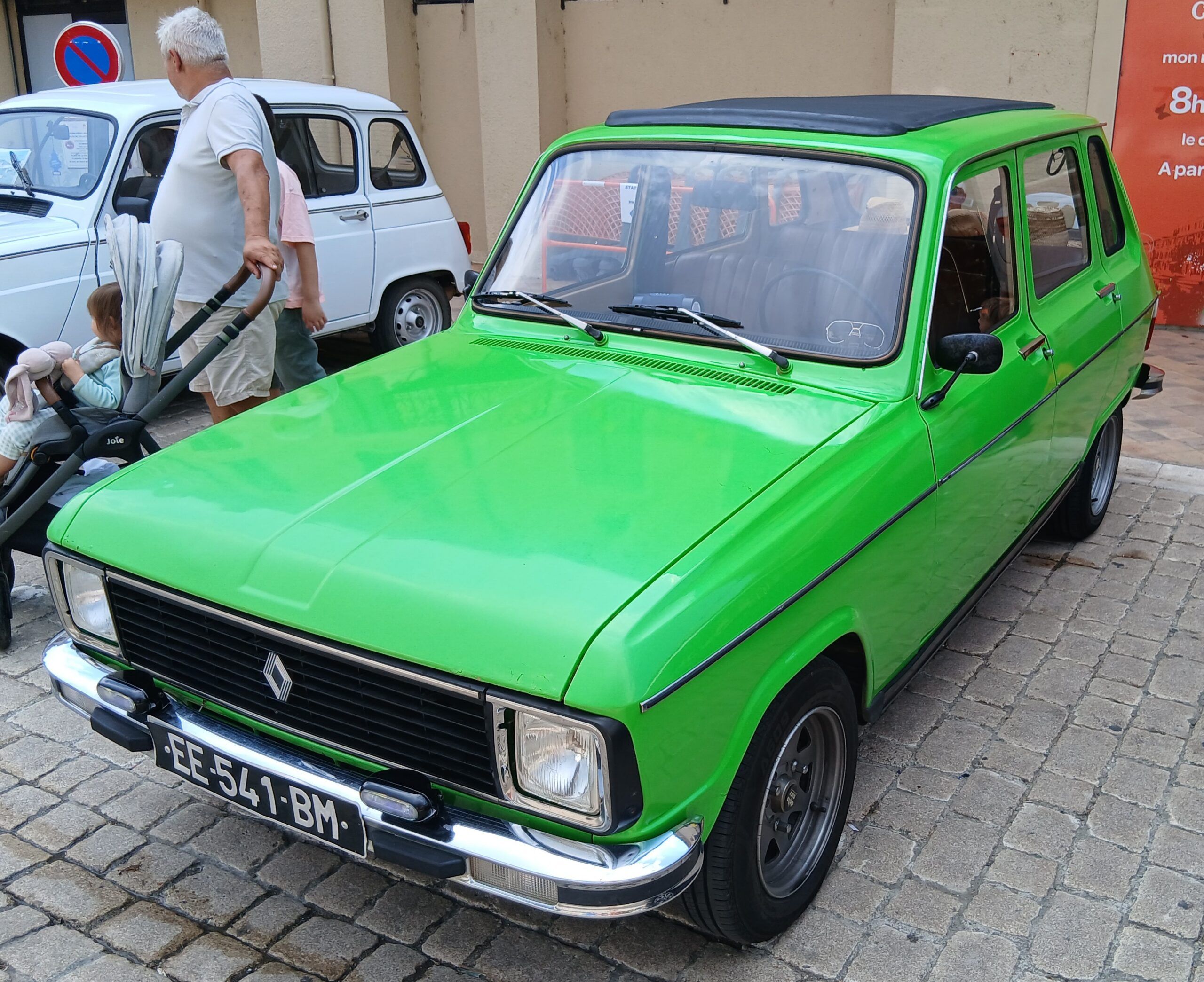
The Renault 6 was the car the Renault 4 wanted to be when it grew up. Same recipe, but a bigger engine, more modern styling and a more modern interior. This is a 1978-80 facelifted version, with the black plastic grille and bright colours doing their best to keep it going.
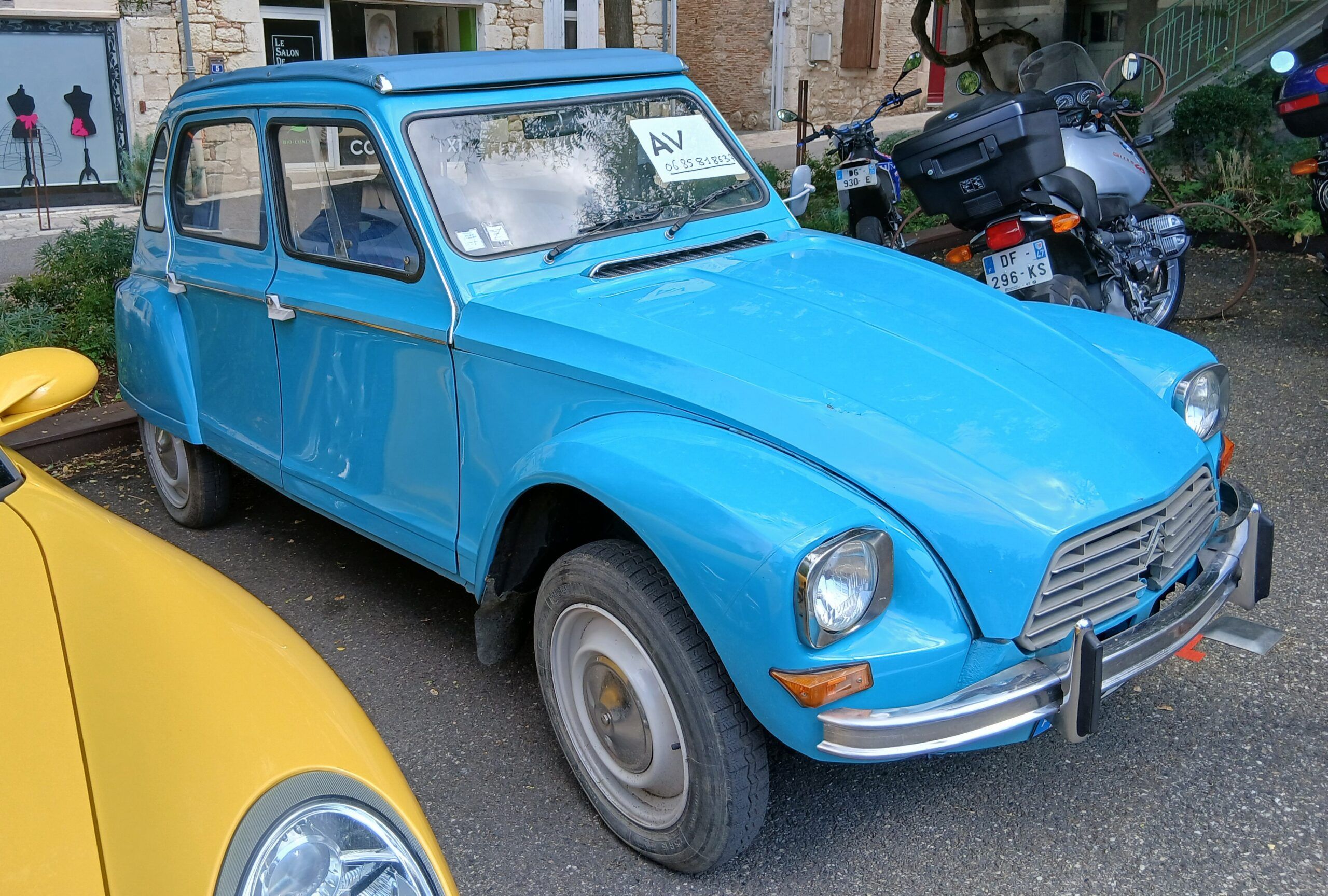
The Renault 6 was targeted at Renault 4 customers wanting to upgrade but also at the Citroen Dyane, the 2CV’s longer, more powerful and upmarket brother. This one’s for sale…….
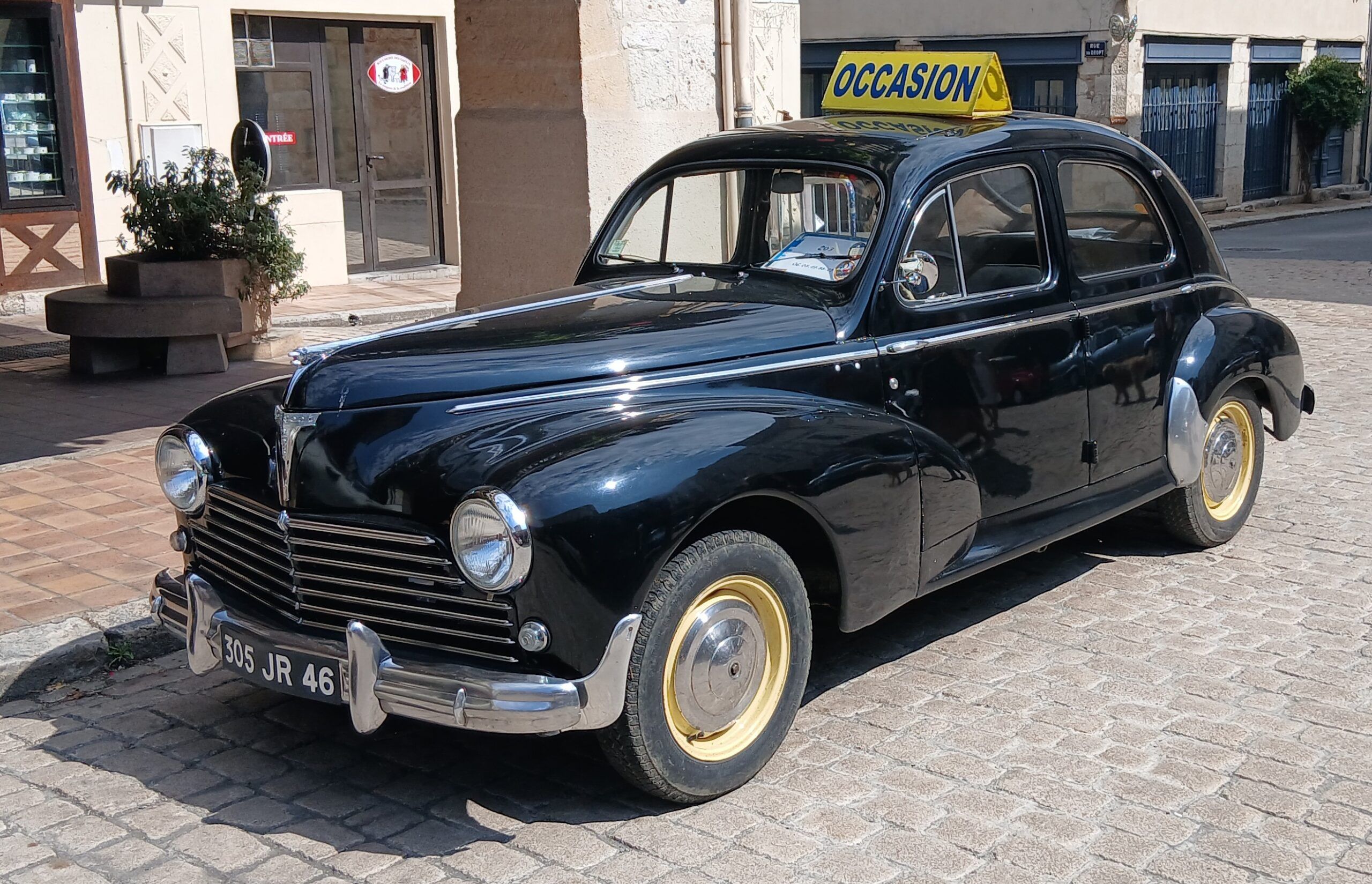
No French car show would be quite complete without a Peugeot 203 and this show did not disappoint. A great looking example, seemingly for sale (OCCASION is the term for an available used car).
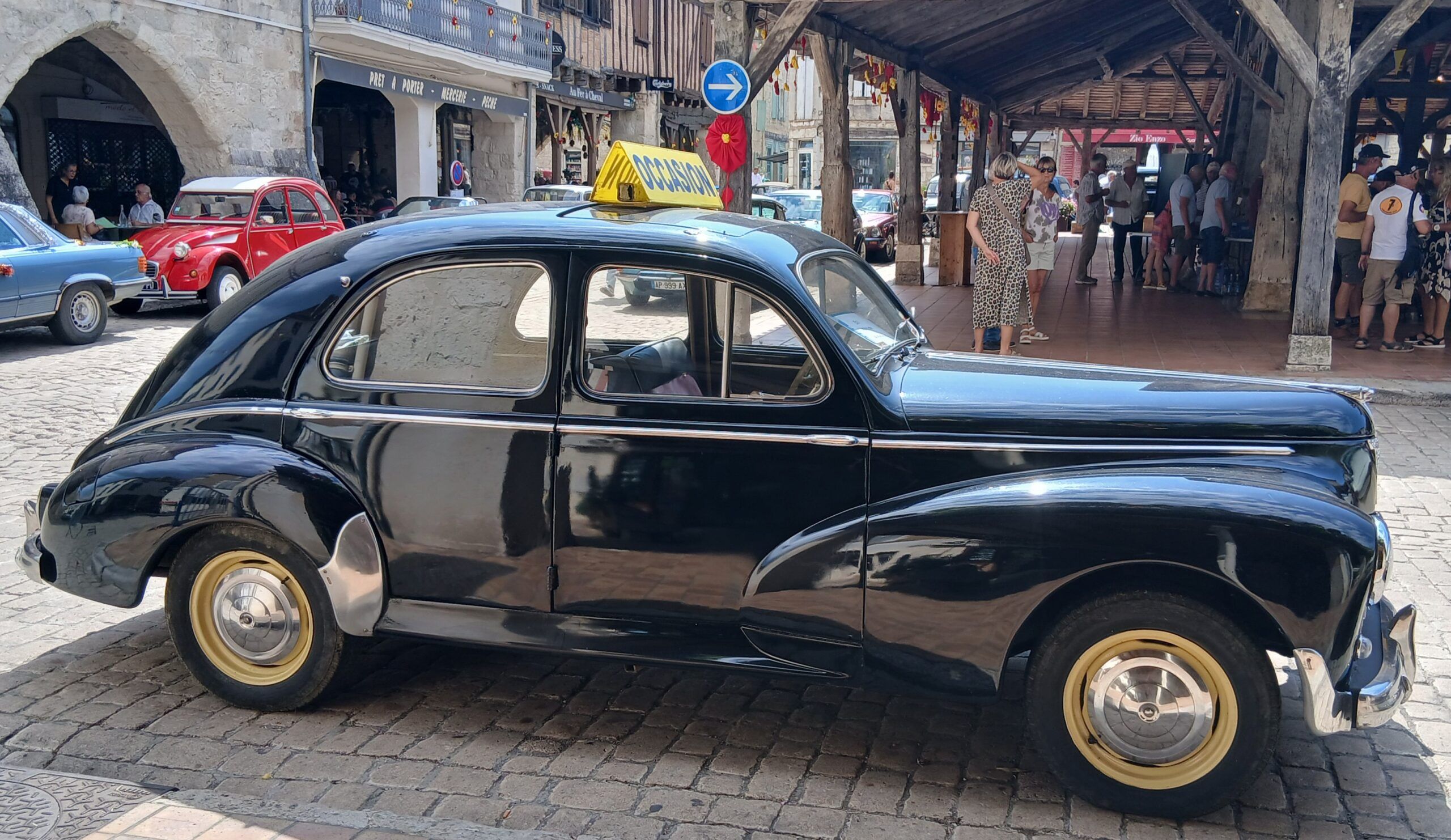
This is a 1958 car with the recessed filler cap under a covering flap on the right rear quarter – previously it was prominently and inelegantly exposed.
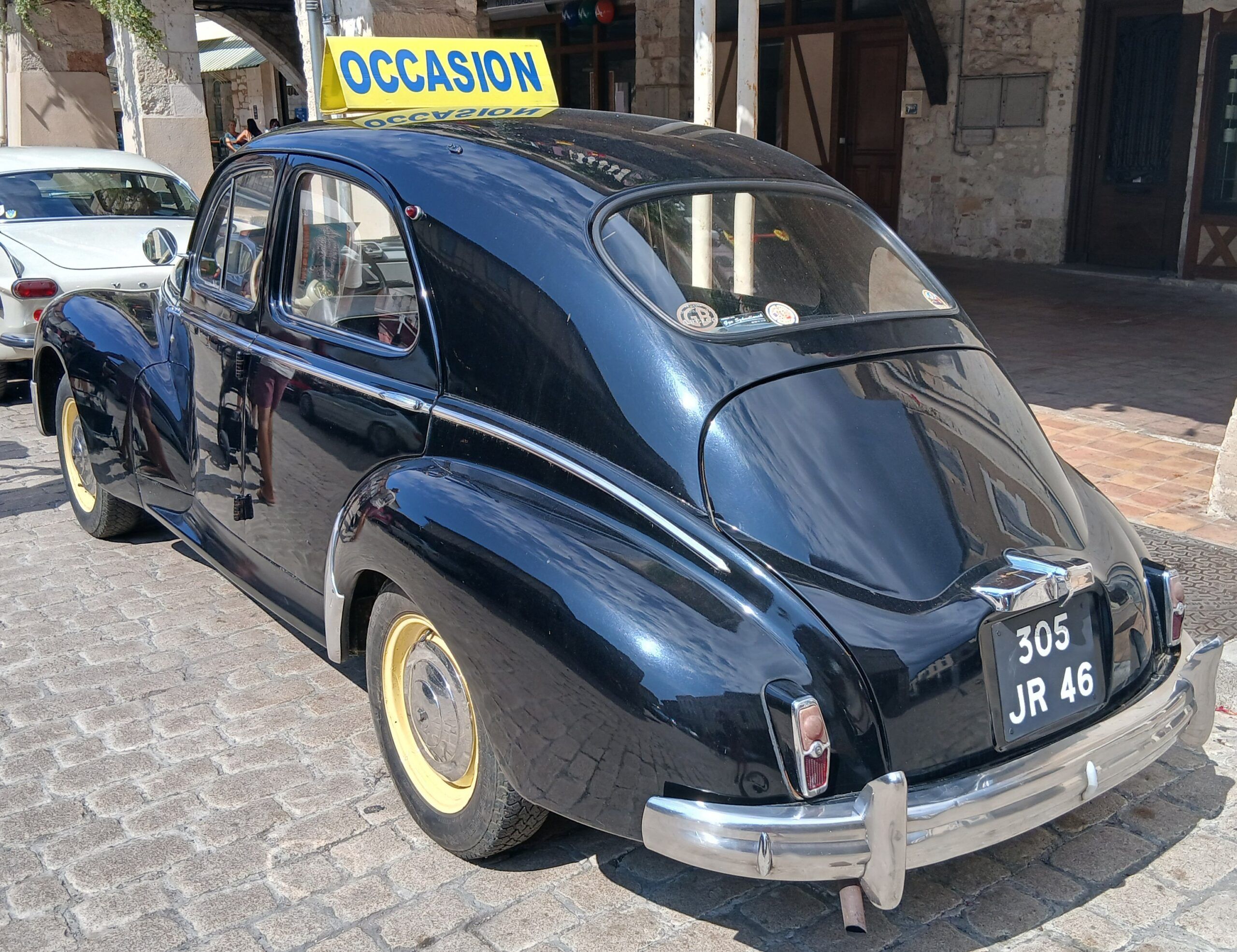
This is the angle Peugeot always preferred for rear quarter shots.
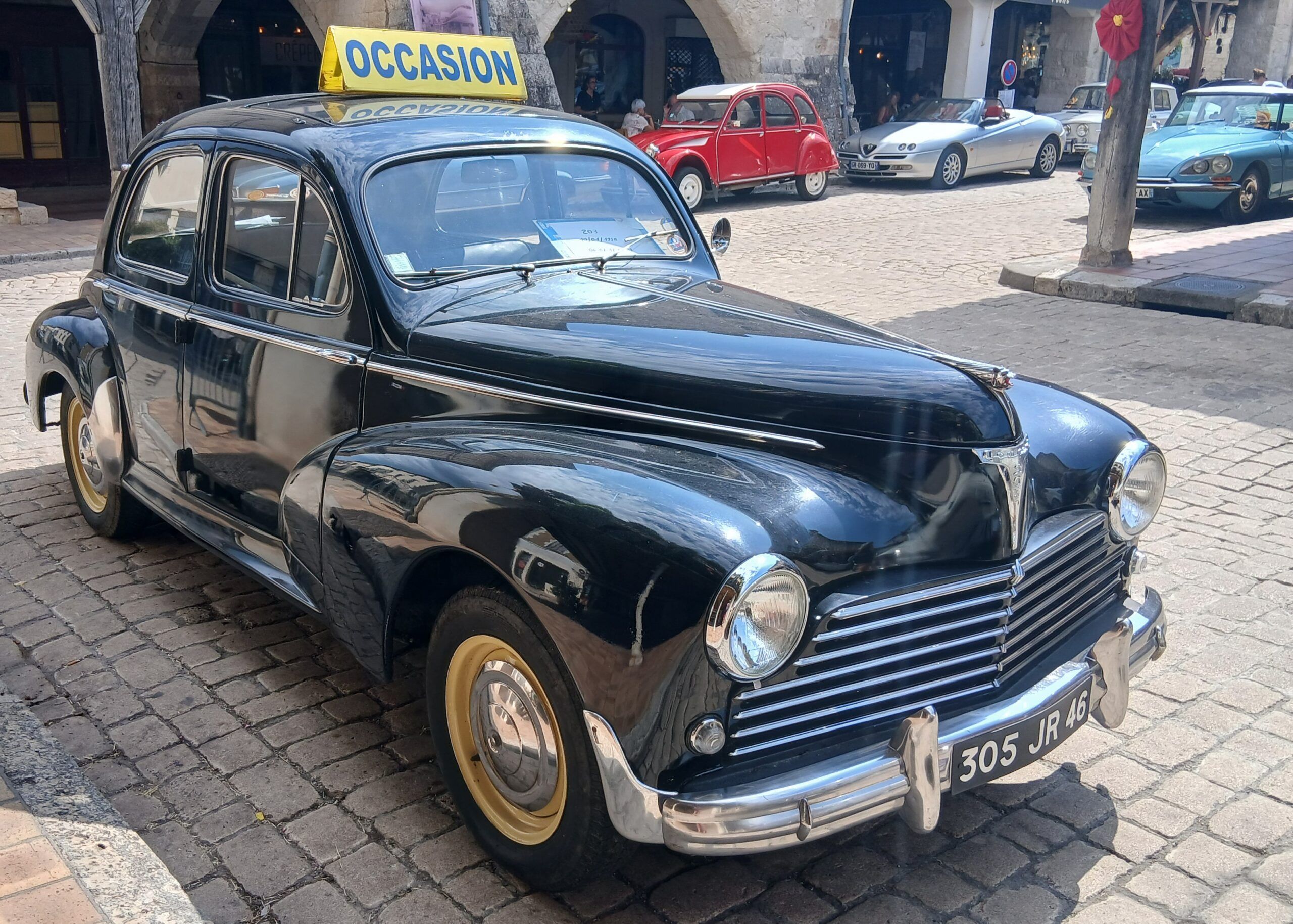
Well deserving of the four photographs that might seem excessive here but I’ll defend it.
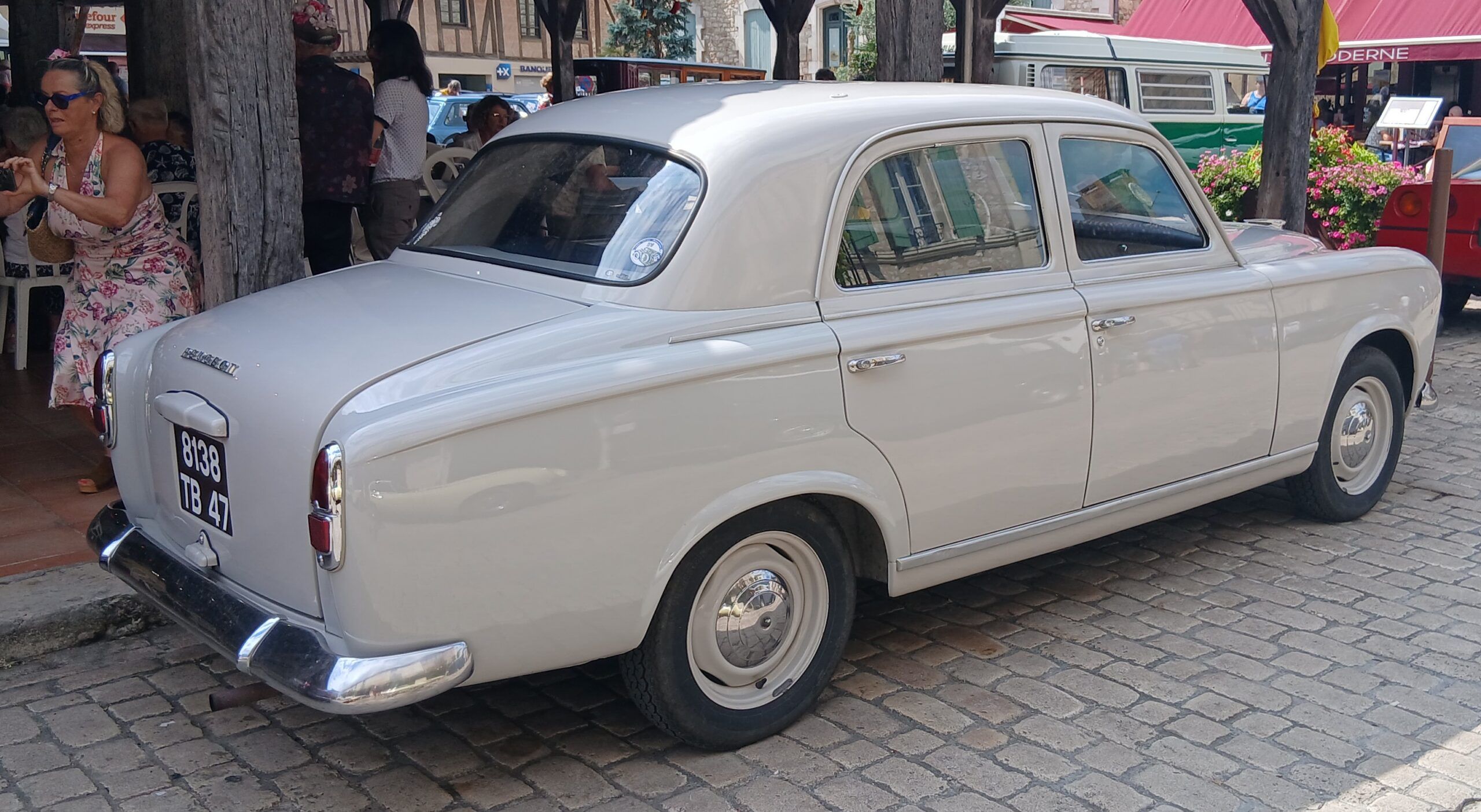
The 203 was succeeded by the 403, which in turn became another French milestone cars. CC has covered this previously in various ways, so there’s need to repeat that here.
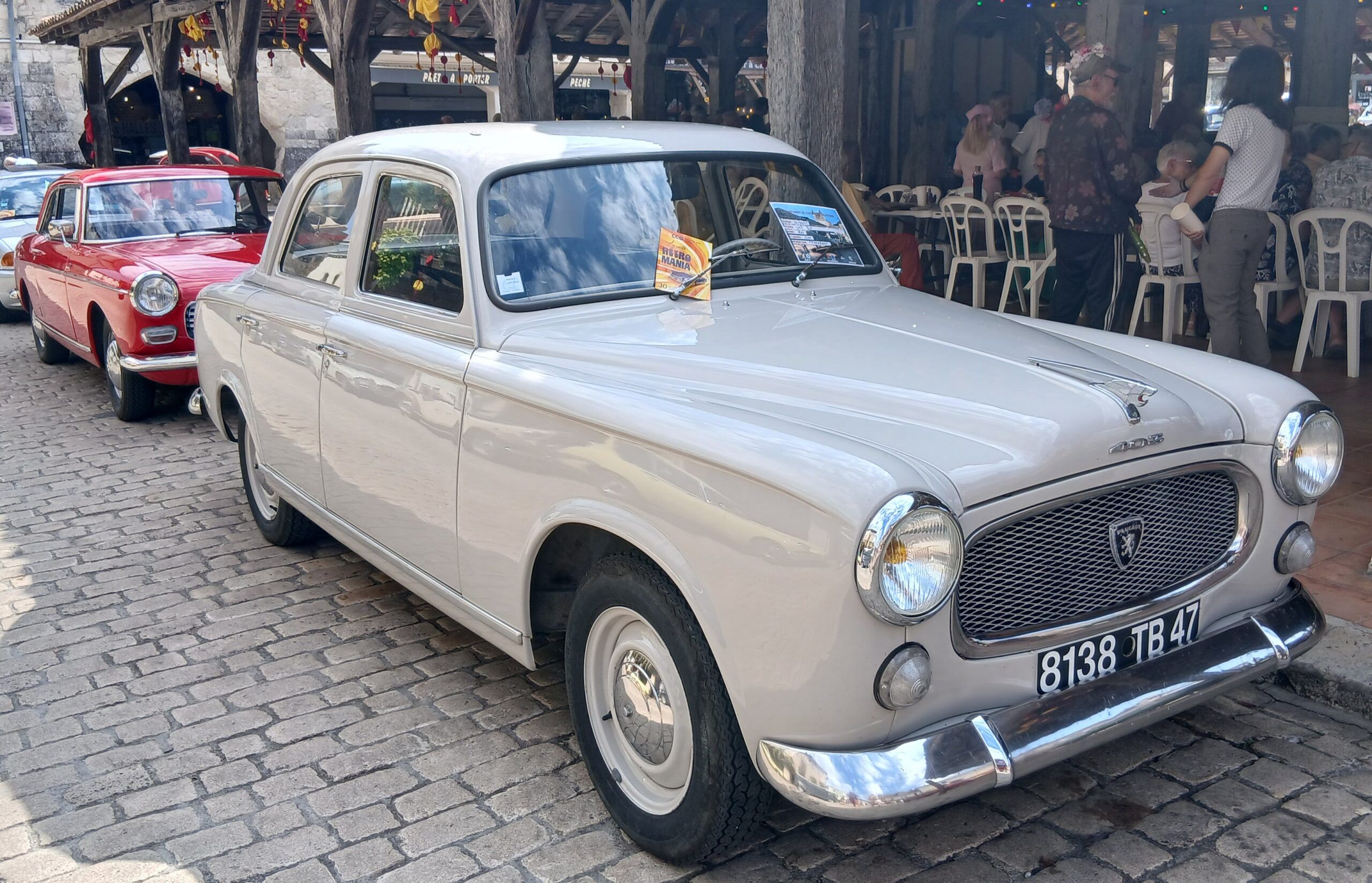
This is a post 1958 car, after the hood ornament and semaphore indicators were eliminated.
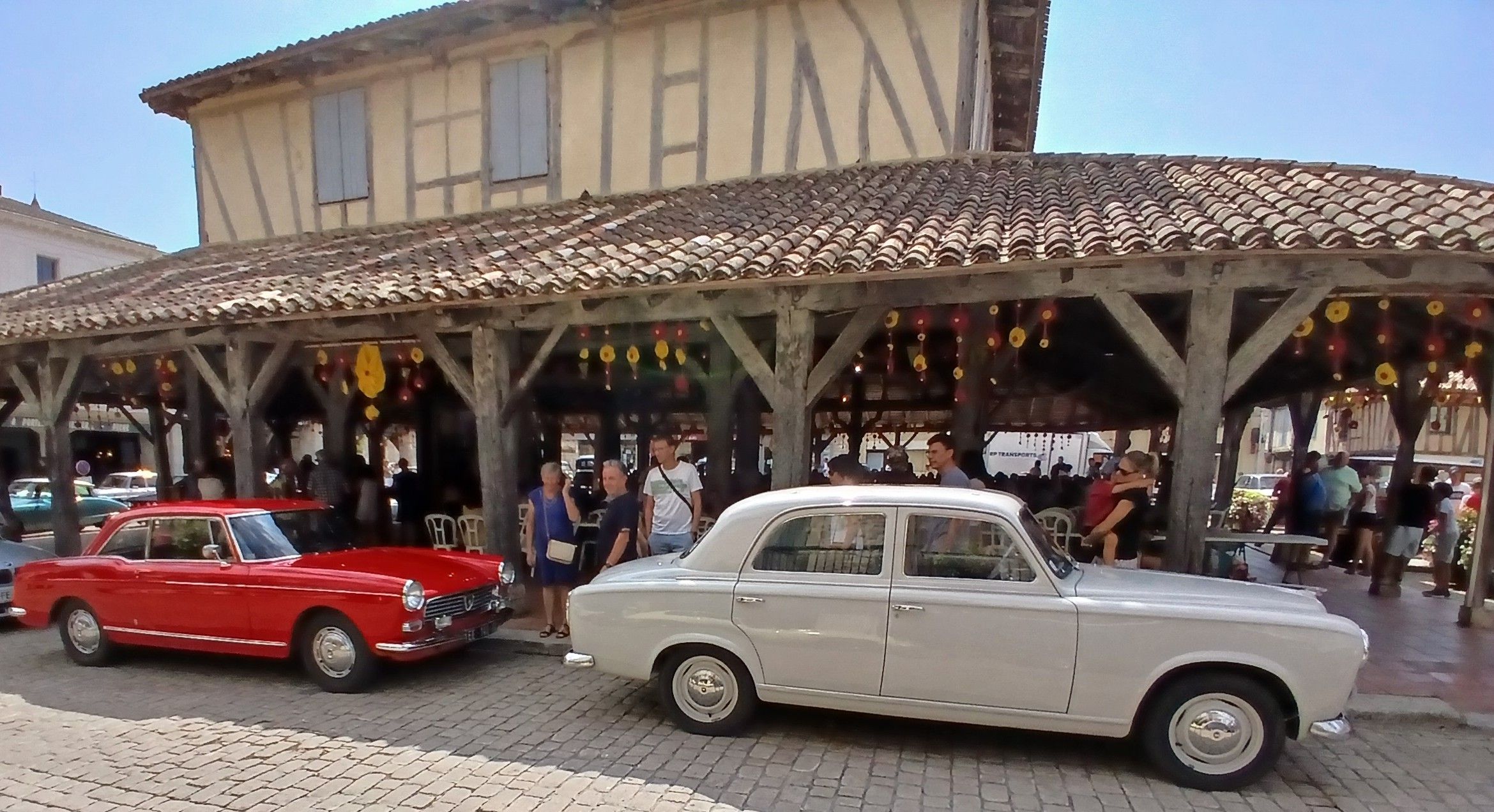
And behind it – a Peugeot 404 Coupe.
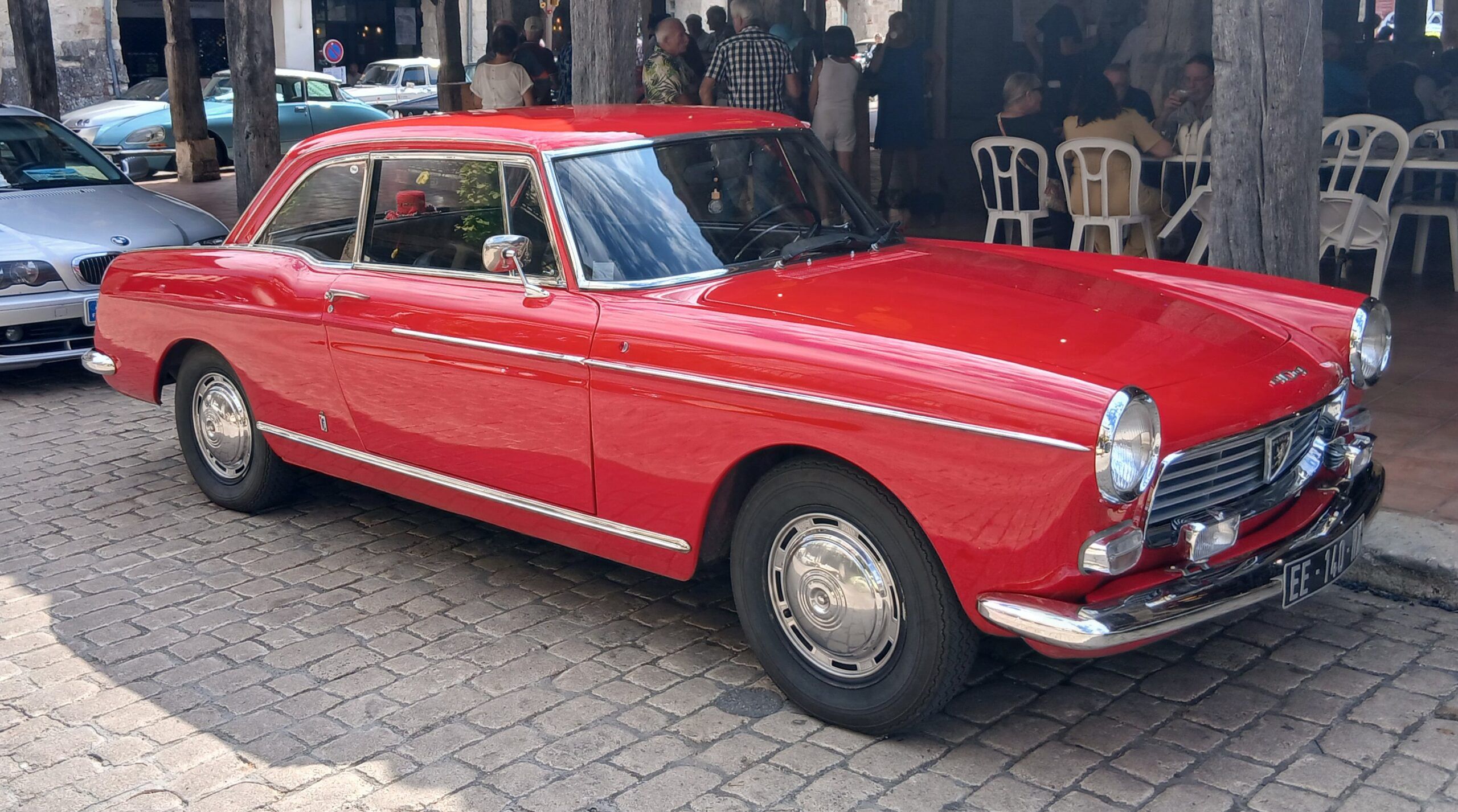
Better looking than an MGB and a Ferrari 250GT? Not a crazy thought to be honest.
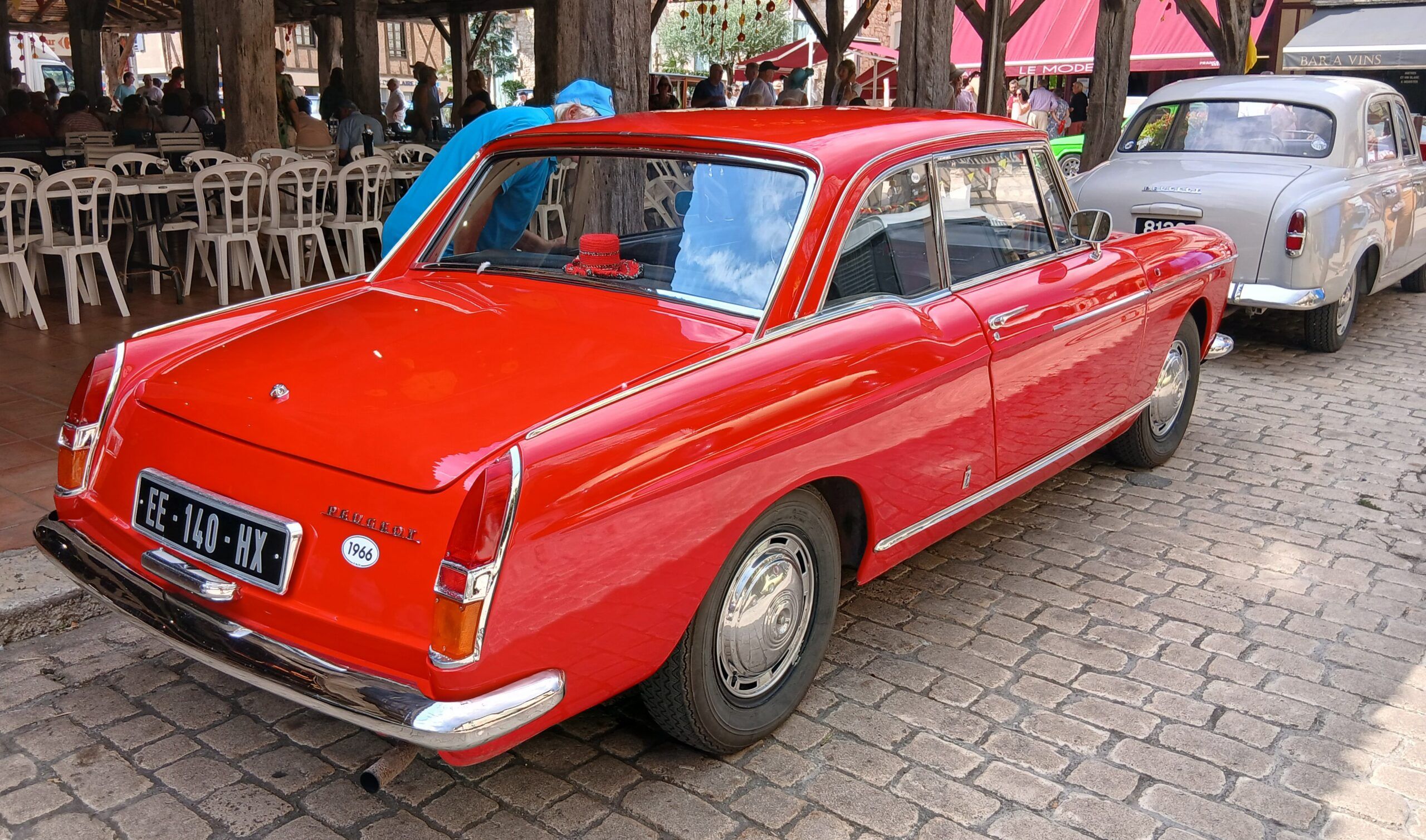
To help the debate, here’s another view…..
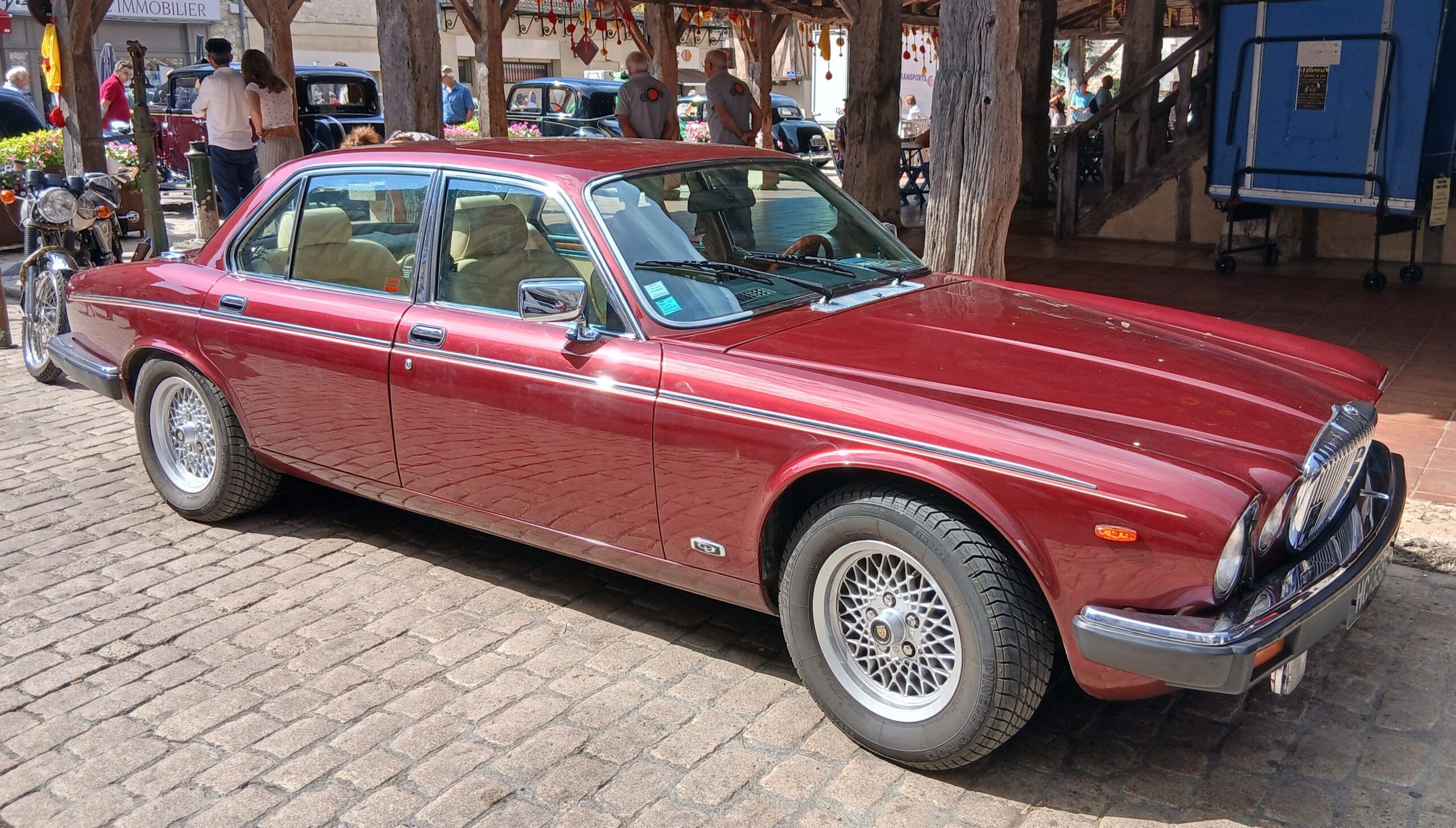
Talking about good looking, a Daimler Double Six V12 in series 3 form, perhaps the best looking Jaguar saloon, ever.
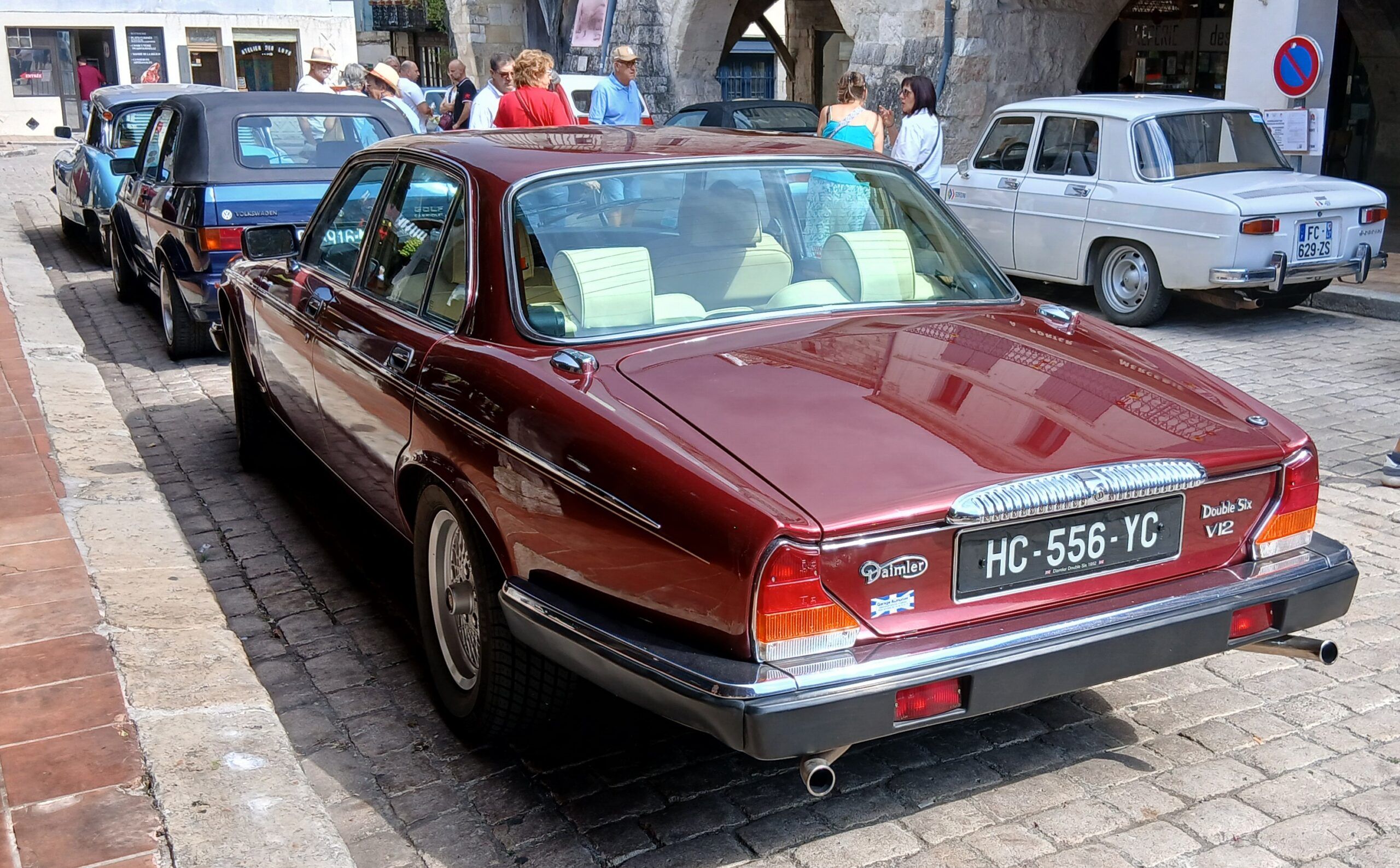
Running a car like this in France, with a 5.3 litre engine with the associated tax implications, is not a cheap option.
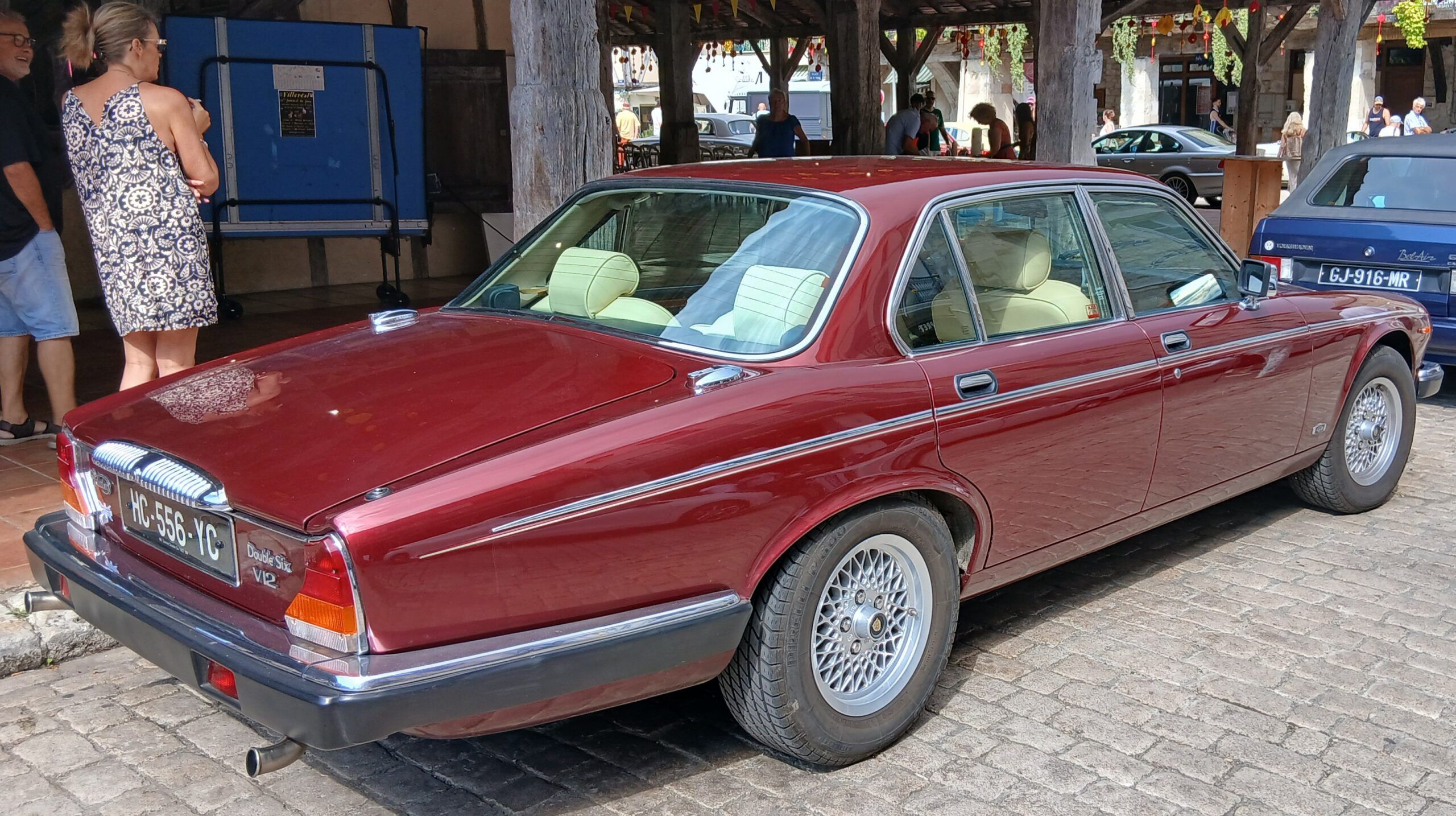
I’ve said my piece about these cars before, and I’m sticking to the view that it was as good as it got in the late 1970s.
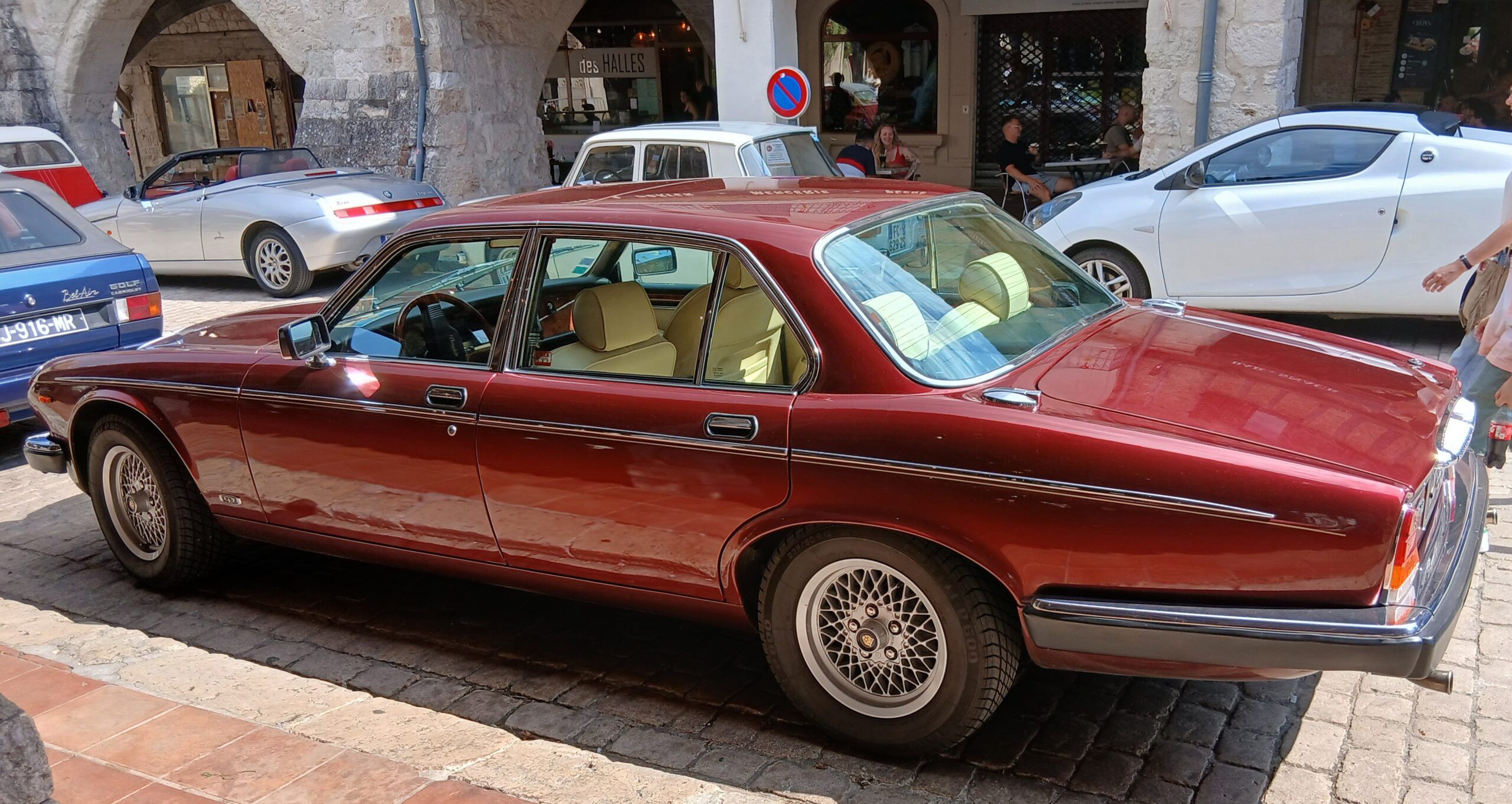
By the early 1980s, it was arguably no longer the sharpest in its class, but can you deny the attraction or resist the pull? I’m not sure I could.
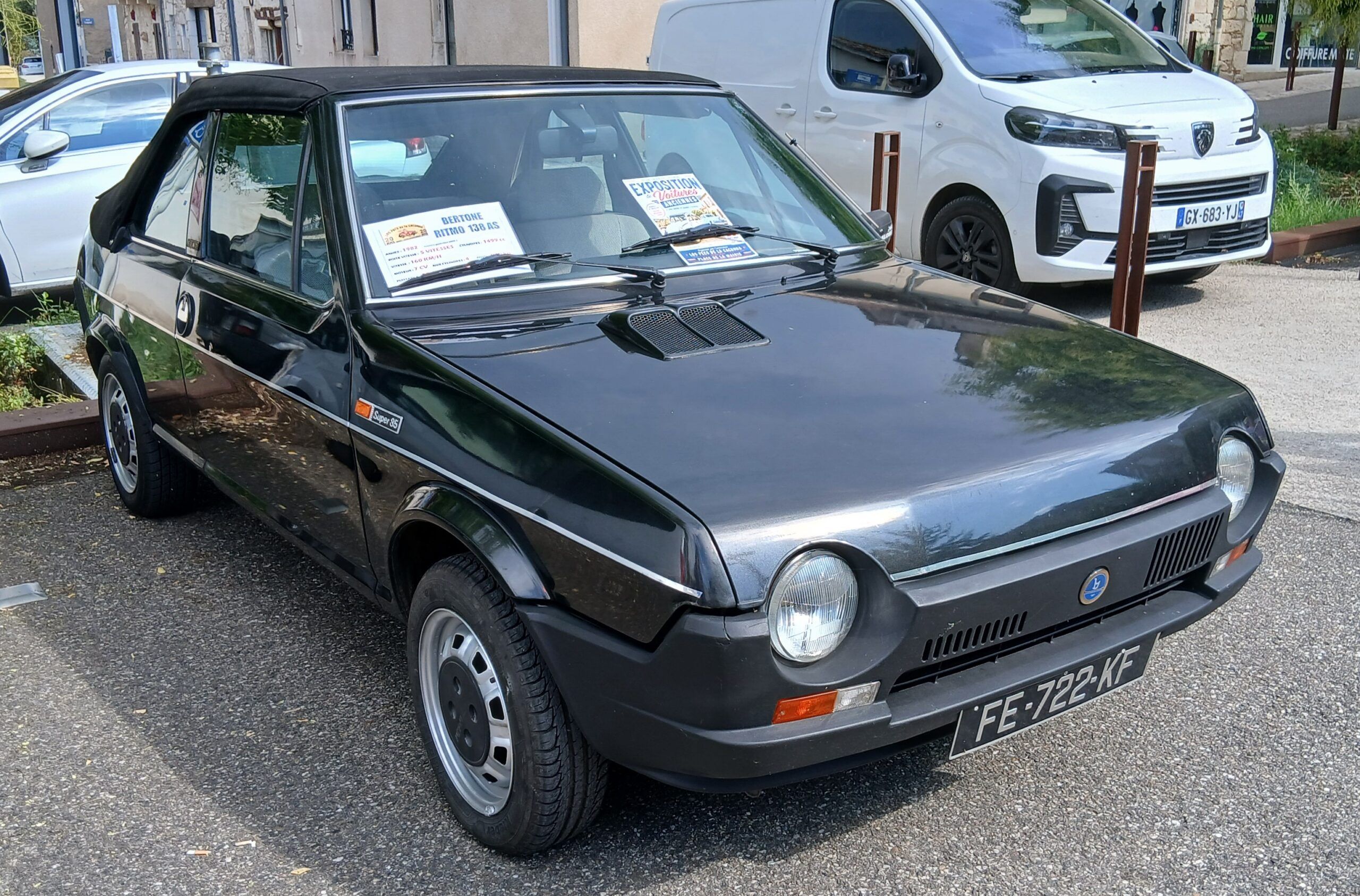
A 1982 Fiat Ritmo (Strada in Anglophone markets) cabrio, in this instance with a 85 bhp 1.6 litre engine. A rare sight across Europe now, and not just because of the Cabrio’s awkward roof profile.
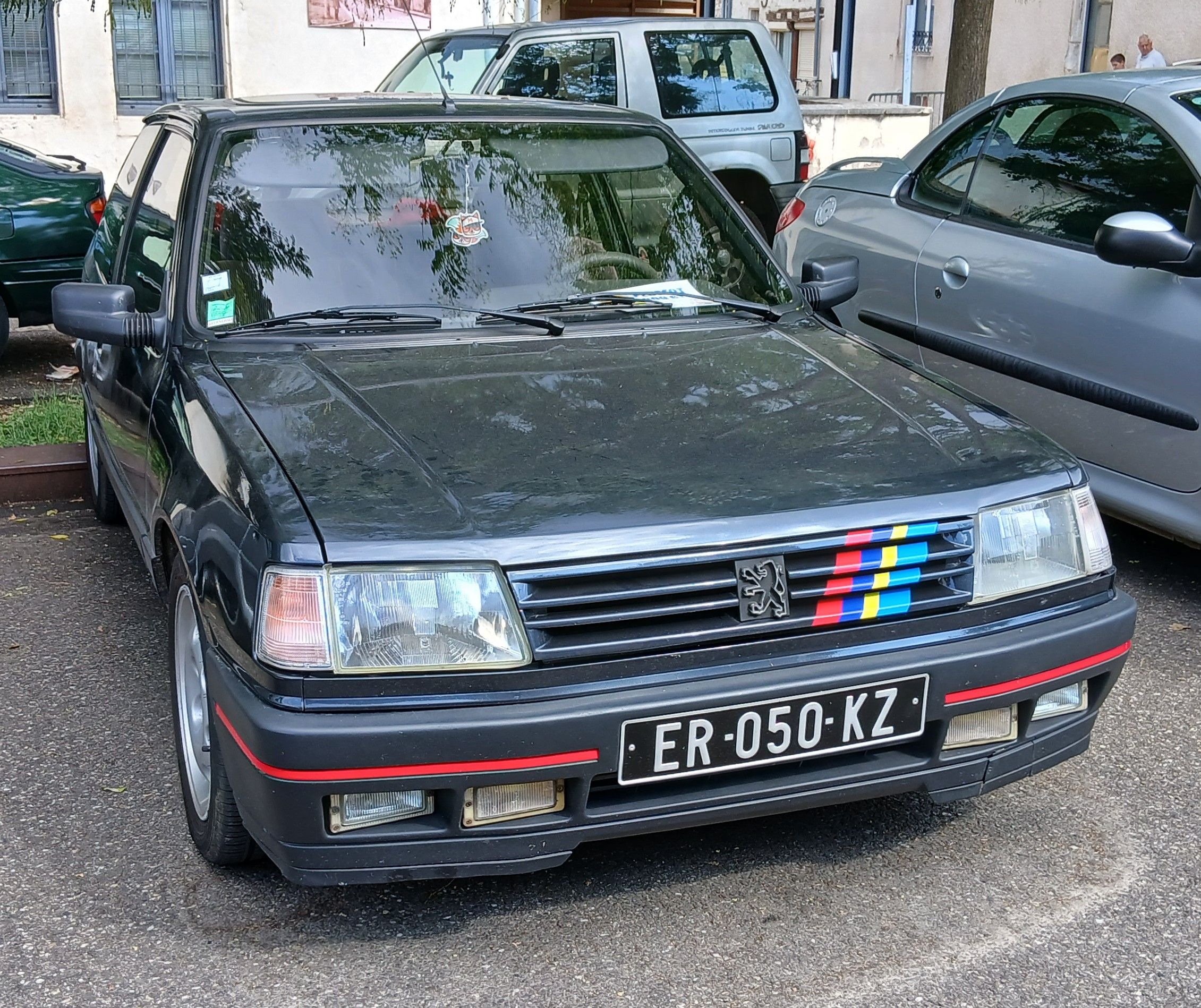
A Peugeot 309GTi – looks aside this was top of its class entrant in the mid size hot hatch market. It lost out on image and build quality to the Golf GTi but to many was objectively as good or better to drive and use. The grille stripes are Peugeot Sport colours.
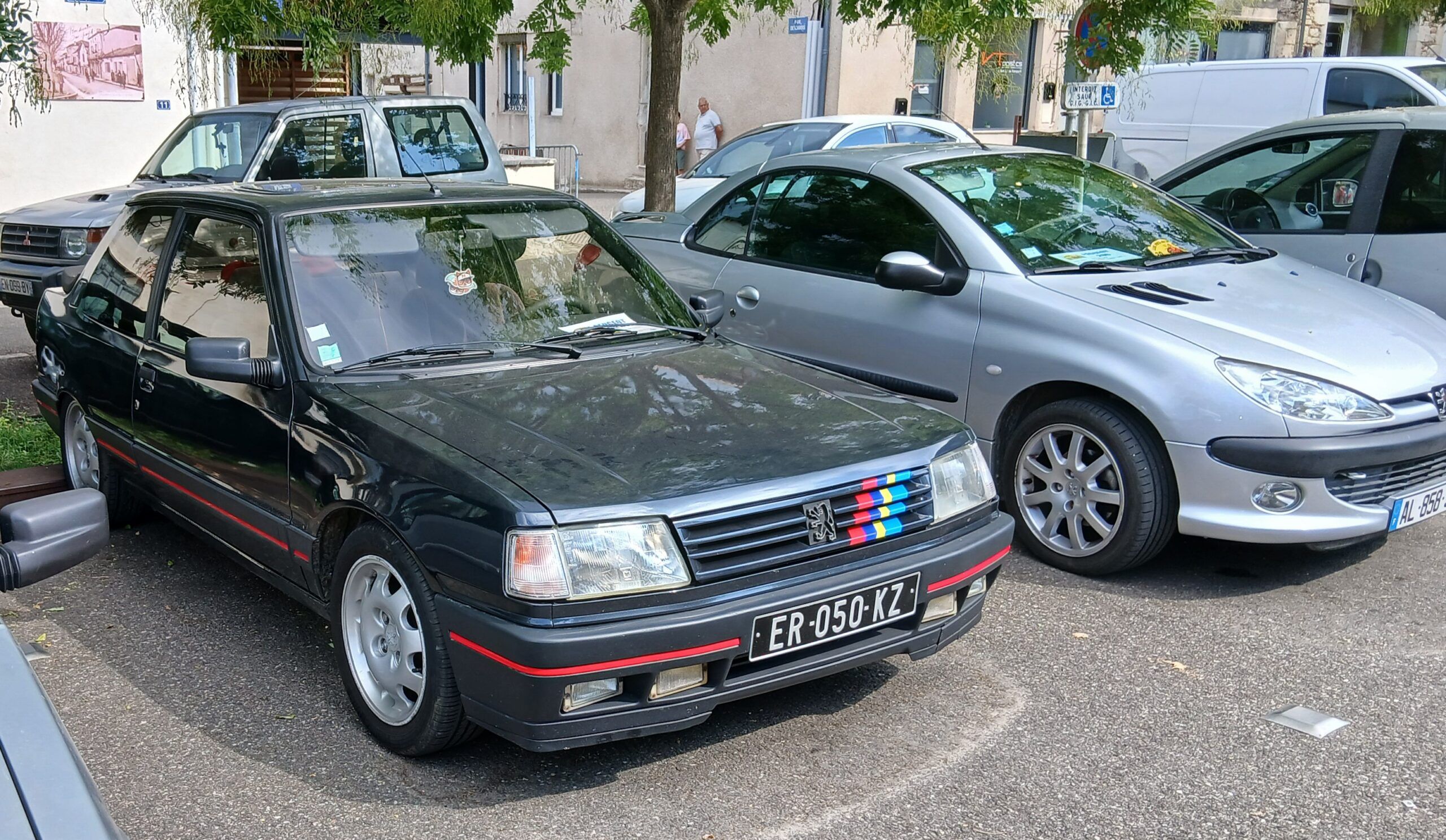
The 309 was based partly on a stretched Peugeot 205 floor pan and some body design, including the doors and bulkhead, and partly used Chrysler/SIMCA engines carried over from the European Horizon. Mainstream 309s were perfectly capable if slightly ungainly and awkwardly slotted into the Peugeot range (hence the model number being out of sync) but were also better than the recipe might have suggested. Alongside is a 2001- 2008 Peugeot 206CC, with the folding metal hardtop.
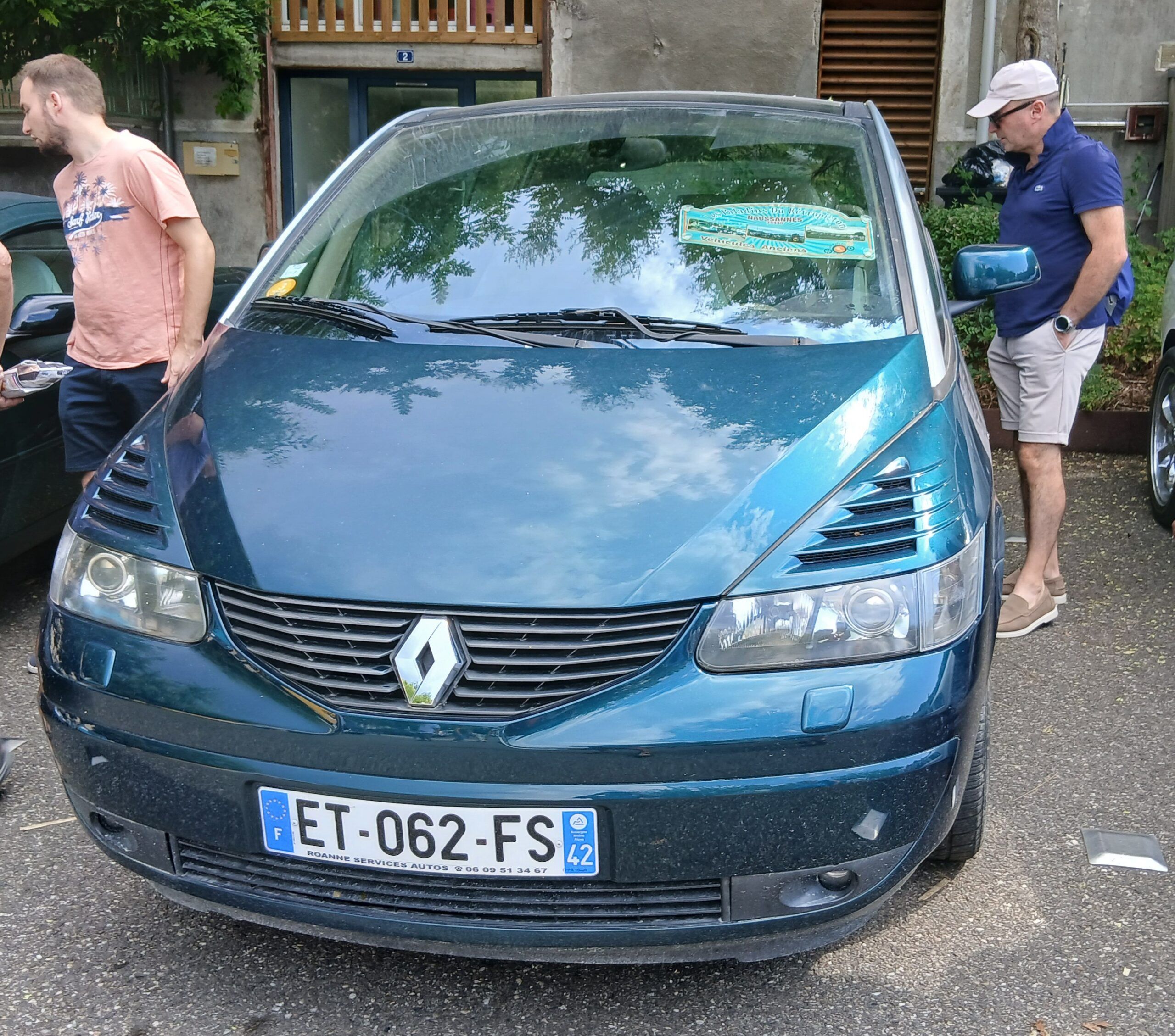
To conclude, a pair of less likely entrants – first a Renault Avantime, the coupe take on the fourth generation Renault Espace. Still gets attention, in a good way.
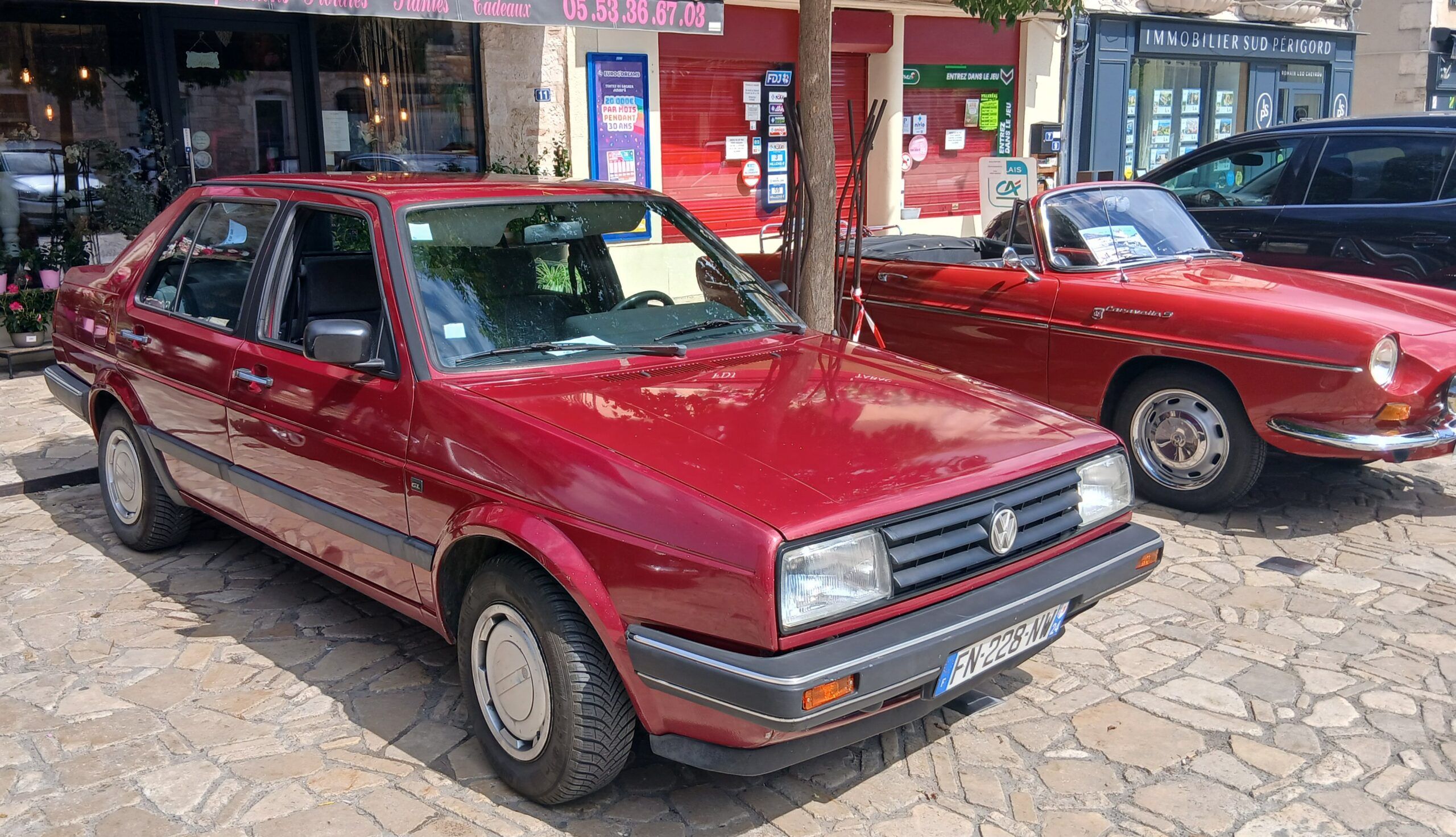
And last, but not least, a 1984-88 VW Jetta mark 2, included here purely because my Dad had 3 of these in the 1980s and early 1990s. And the VW Vento (aka Jetta A3) that replaced the third one was this colour as well.
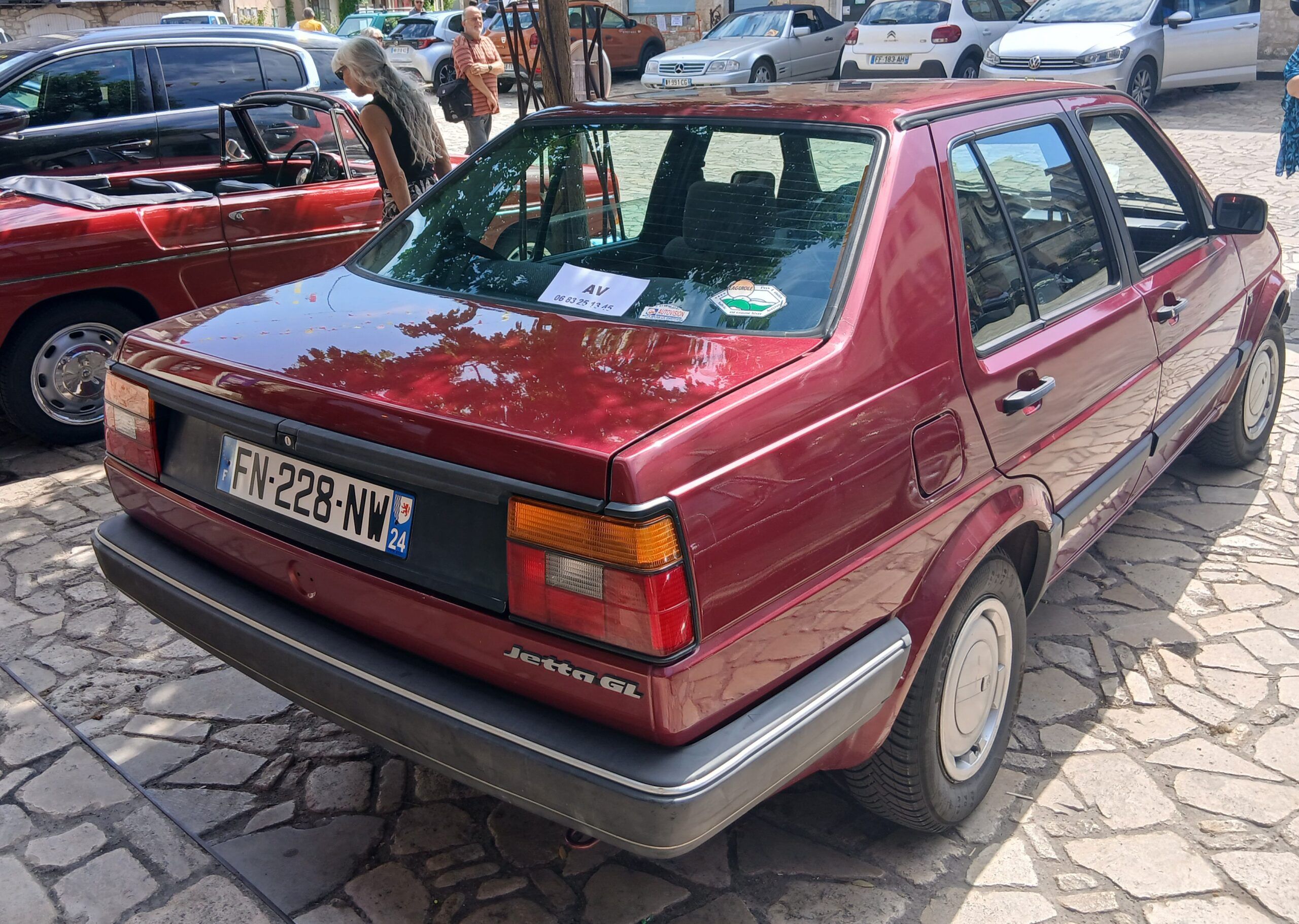
He’d be amazed to see a car he owned, other than a Morris Minor convertible, at a classic car show.
But it was French car show, and an informal one at that.






I don’t think I’ve ever seen a DS Coupe before.
Stubby, but unique enough that I like it!
Learn something new everyday.
Quite the collection; thanks for sharing them. That DS coupe is an eye catcher. I’m still trying to decide whether it works for me. I find that changing the length of most cars throws of their intended proportions in a way that would never have been imagined or intended by their original designer. This one clearly would not have been designed that way from scratch, but it is a good attempt at a shorter coupe.
I’m going to say that the cute 2CV Fourgonette’s patina is not quite natural; it’s just too good to be true. But I’d take it in a heartbeat.
Not really sure I like the DS coupe too used to seeing sedans probably there is a 309 GTI circulating in the area Ive been staying in dont see many of those and because Ive driven Citroens for the last 15 years I notice French cars, the XMs are nice and quite a few still exist here, it just missed out on getting Citroens new suspension upgrade which went into some Xantias but should have been show cased in the similarly styled range topping XM,
Splendid collection Roger, and the great town sceneries in the pictures top it off. That bright red Peugeot 404 Coupé beats all others, IMO.
Oh boy…I think I’ll take the 404 Coupe first, the Renault 8 Gordini second, and the Peugeot 203 third. Then, probably the black Traction Avant.
Looks like you had fun!
The Hisso has what looks like bumper “cocktail shakers”, ala ’30s Packards for vibration control?