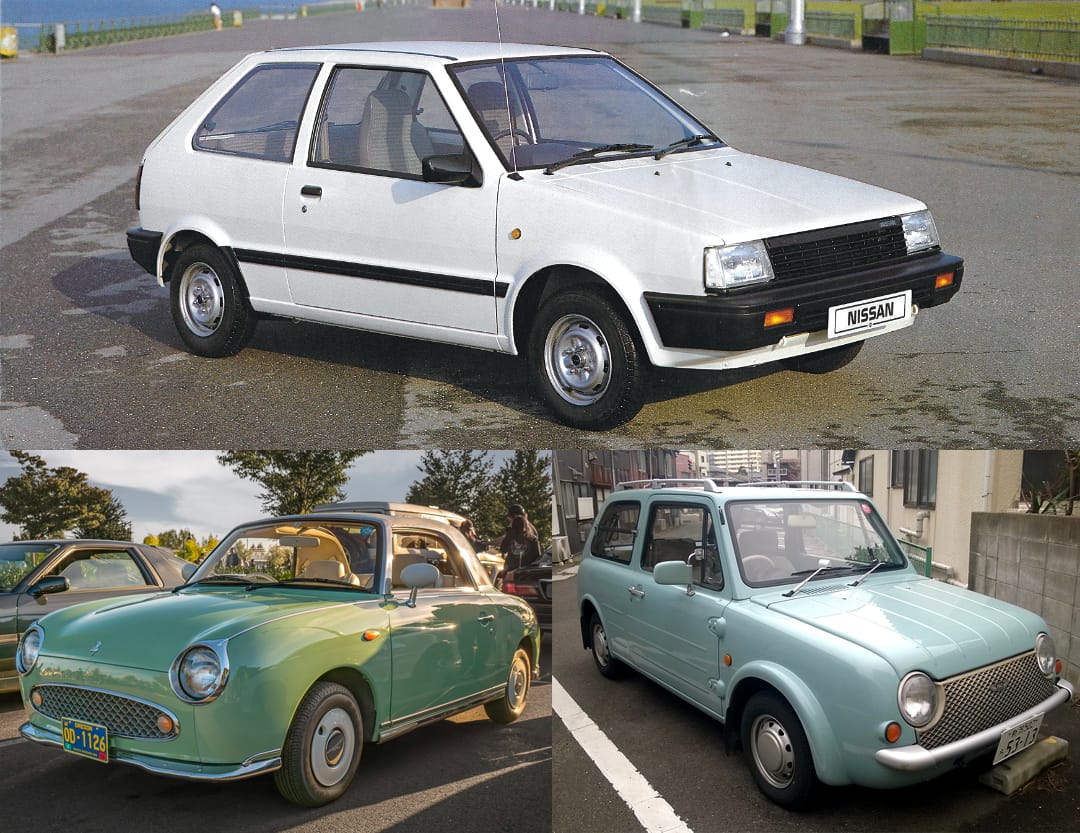
In the last year, I’ve come across several early Nissan Micras on my daily runs around San Salvador. I’m well aware that, unlike me, most people don’t pay attention to these humble subcompacts, which is understandable; in a world that loves the flashy and fast, the practical Micra is easily overlooked. Yet, as modest as they appear, there’s more to the model than it seems at first. After all, the Micra quietly marked a turning point, becoming Nissan’s first successful subcompact sales-wise after some false starts in that segment. And way before the whimsical Micra-based Pike cars (Figaro, Pao and Be-1) captured hearts with their retro flair, it was the original that laid the groundwork with its efficient simplicity. A case that shows that small ideas can grow into something far more emotionally meaningful.
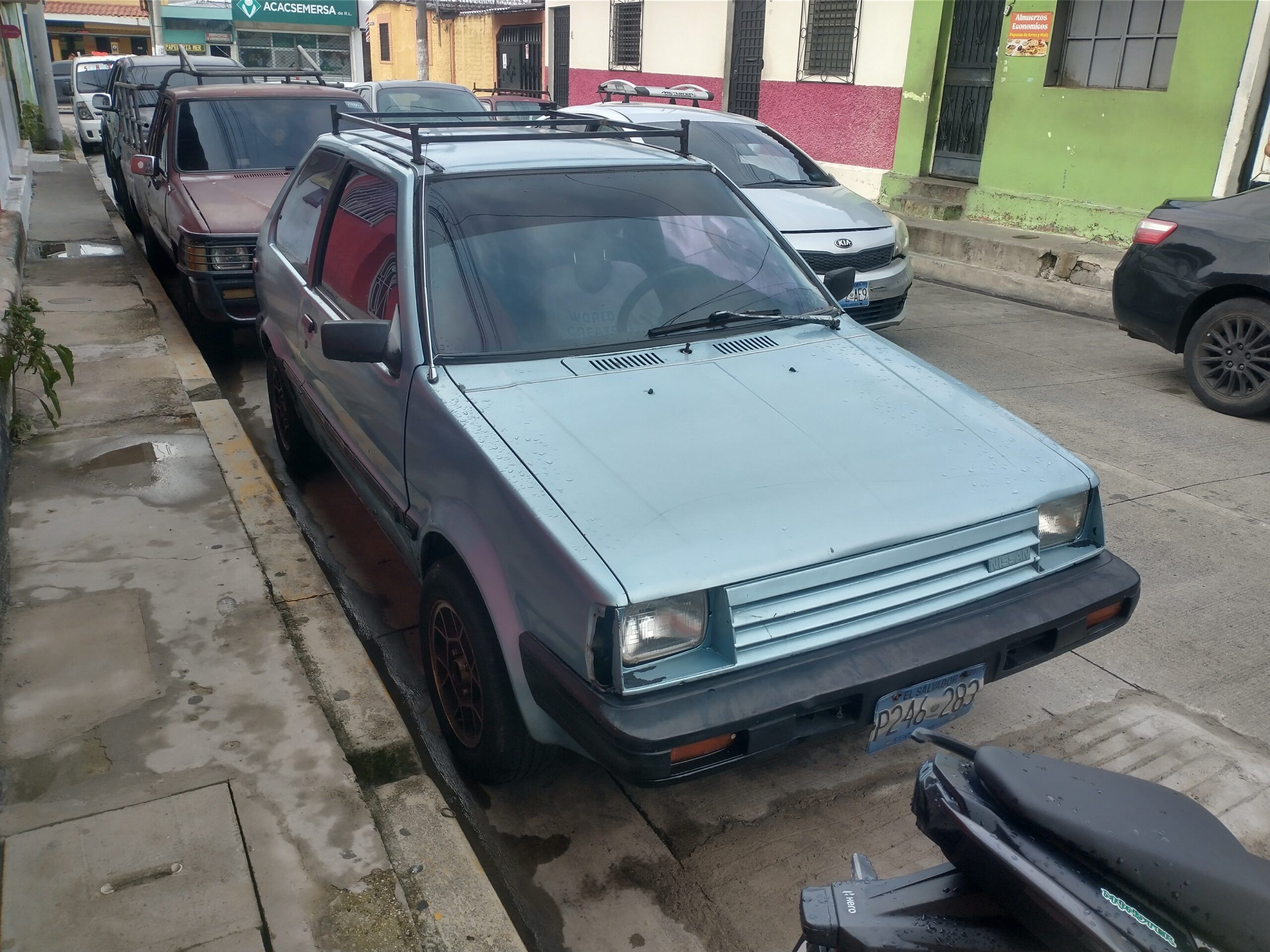
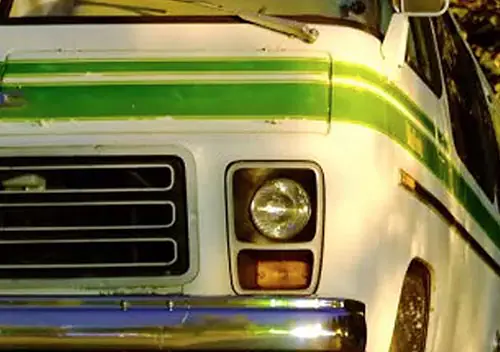
Before we jump to the Pike Cars, this image shows how I usually come across old Micras. Used and worn, but still putting up a good fight and generally in good shape; a feat, considering they’re over four decades old. Most of the ones I come across tend to be the 3-door hatchback variety, but 5-doors are found as well. They also tend to be from the 1983-1988 run, before a mild facelift arrived for the 1986-1992 run.

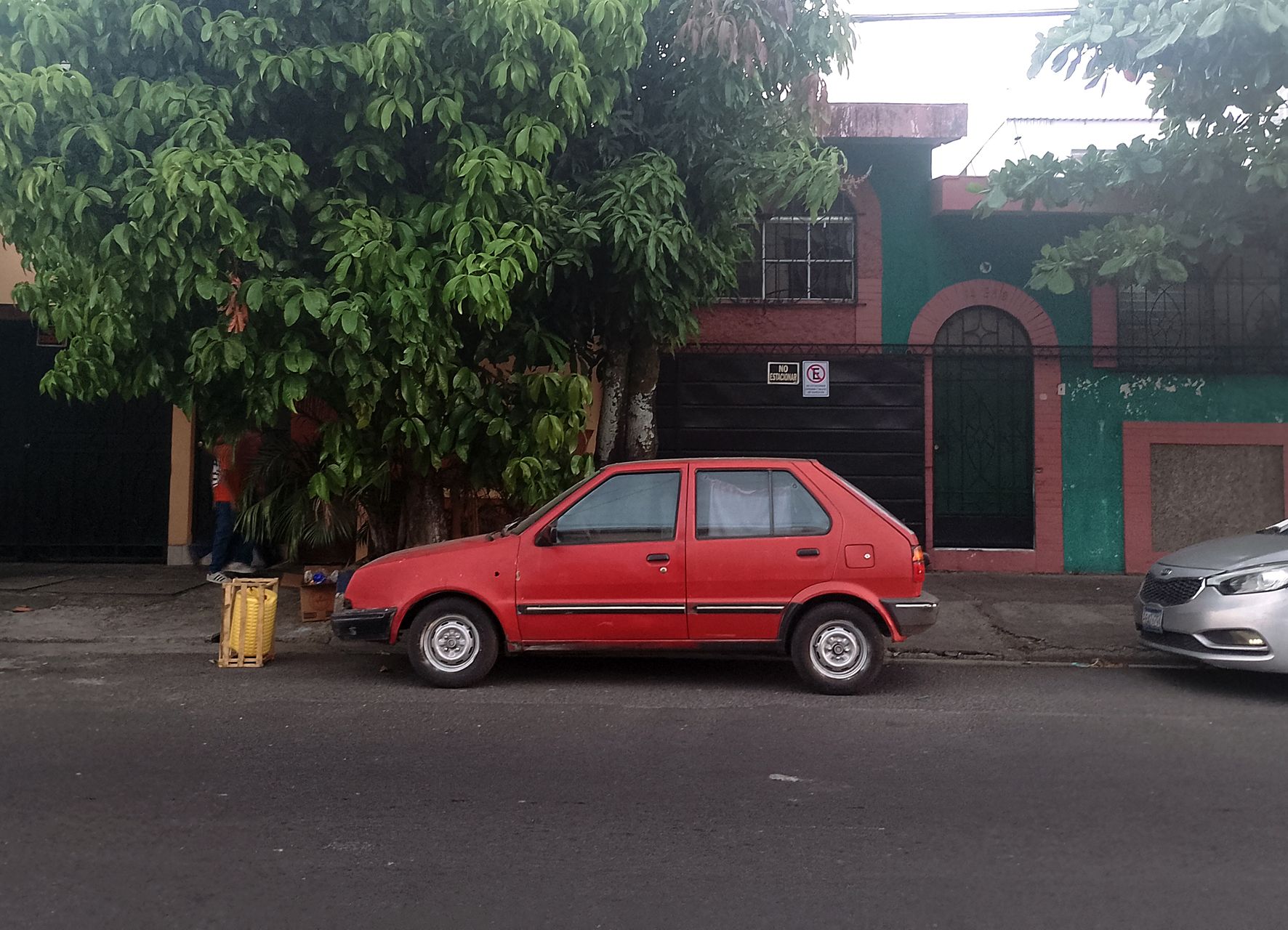
Here’s a 5-door, parked in my wife’s family’s neighborhood. As the badge shows, these arrived either as Micras or the car’s original Japanese name: March.
(Yes, I had been waiting to do a post on the “Micras of March”. Har… Har…)

The Micra has been covered a few times at CC in detail (links below), but let’s do an overview of the rocky background that led to its creation. Let’s start in the postwar years, a period when, unlike the rest of Japanese carmakers, Nissan had shown little interest in the subcompact and Kei markets, sticking to higher content offerings that were favored by corporate fleets.

All that began to change when Nissan purchased Prince Motors in 1966, turning Prince’s ongoing subcompact FWD proposal into their own. Still mostly developed by former Prince staff, Nissan’s new subcompact would launch in 1970 as the Cherry. Mechanically, Nissan’s first FWD offering used a transversely oriented engine mounted over the tranny, á la Mini, though with separate oil castings, and independent suspension all around. Under use, the car proved a technical success, suffering little teething pains and being a nice performer.
However, with Nissan’s higher assembly costs, the Cherry showed up as an “upscale” subcompact with lots of pricey content for the class. The model gained a foothold in Europe thanks to its packaging, reliability, and efficiency, though overall, it sold far below expectations. The Cherry’s F10 second generation would arrive in 1974, aesthetically challenged, with sales proving even worse. It had also grown in size.

While the Cherry would stick around, growing and moving further up, by the mid 1970s a rethinking was needed for Nissan’s smallest offering. Coincidentally, the 1L class market was booming in Japan at the time, so Nissan plunked a good chunk of cash on its new supermini car project, labeled K10.

Picking up where they had left off, former Prince engineers were in charge of the K10 project, with Ito Shurei as general manager and Naganori Ito as chief engineer (later, of Skyline R320 fame). The car’s styling came via a rejected-Fiat Italdesign proposal, though with enough tweaks by Nissan that I don’t see Giugiaro claiming ownership.
The Micra’s straight-edge, no French curves, rational styling, was to become Nissan’s new design ethos and would soon spread throughout all its range. Launched in 1982, the Micra’s styling shared much with the Sunny B11 (aka Sentra) of 1982, and the Prairie (Stanza) wagon of 1981.

The model stuck to space-efficient transverse FWD, though now with Giacosa-style tranny by the engine’s side. Meanwhile, the suspension was orthodox compact car of the time; struts upfront, with a 4-link coil with stabilizer bar at the rear. Technology that was soon adopted across much of Nissan’s range, from the Sunny B11/Sentra to the Cherry/Pulsar (though with different engines and the mechanical tweaks needed for each) and the Nissan Prairie (Stanza) wagon.
Also, with its clean shape, the car’s 0.39 Cd was quite good for the class.

By the early 1980s, the claim of Japanese cars being unsophisticated was finally being put to rest, with the Micra/March proving to be as competent as the established Europeans in all relevant categories. From the modern 1980s boxy packaging, to its acceptable handling, lightweight, and higher-content interior materials. Fuel efficiency was particularly good thanks to high gearing and Nissan’s newly developed SOHC MA engine, which offered the company’s first aluminum block, and came in 987cc and 1.3L displacements.

That said, nothing is ever perfect, and all the Micra’s efficiency came at the cost of a somewhat flimsy feel and rather loud interiors. But fuel economy was a big factor in the segment, and I assume Micra buyers were more than willing to live with those shortcomings.

After all, the car sold like hotcakes. After the Cherry’s travails, the Micra/March became a common sight in Europe and across many markets.
The Micra/March would go on to a long life, and it’s still with us. The foundation of it all being that humble first generation, which was to add a few more chapters to its saga before the second generation arrived in 1993.

First, the obvious; a hotter Super Turbo version became available in Japan in 1989, with a twincharged 930cc version of the MA engine providing 116HP per liter. The hot pocket choice of the Micras.

Now, let’s move to the more interesting Pike Factory cars. Japanese carmakers had a well established tradition of creating limited and custom editions by the time the retro-styled Pike Factory cars were conceived in the heat of Japan’s bubble economy of the 1980s. What’s perhaps most notable about these Micra-based spin offs is how much notoriety some gained outside Japan.
The better known of them all, the Figaro from 1991, with 20,073 units built, well above the 8,000 originally intended. An awfully cute postmodernist take on retro cues, originally a Japan-only offering, nowadays with samples found way beyond its intended market.

The Figaro rides on a Micra/March platform, with a turbocharged 1L MA engine and a 3-speed automatic. The styling is memorable and well detailed, with some exterior resin panels that aid in creating the limited edition model.

Being a specialty model, it’s got curiosities and novelties to stand out from the crowd; most notable, a removable top to create a fixed-profile convertible. Add Bakelite switches on the instruments, CD player, other niceties, and purportedly, a very tight 2+2 arrangement if used as intended. Useful? Not likely, but such are grown up toys.

Now on to the Pao, another Micra-based Pike Car with fans around the globe, like the one above (next to a Goggomobil) with Washington license plates. Another memorable piece of retro styling, built from 1989 to 1991. Over 50K folks applied to purchase one; only 31,352 got lucky, due to limited production capacities.

The hardware on the Pao is less tweaked than in the Figaro, carrying a more standard 1L Micra powerplant and overall, offering supermini seating accommodations for four.

Unlike the Figaro’s more jewel-like details, the Pao echoes the “industrial” look of cars like the 2CV, as well as the Fiat 500 and other European products from the “bubble car” years.

Last of the group is the first and lesser known of the retro-styled Micra spinoffs, the 1987-1988 Be-1. As early as 1984, with Japan’s bubble economy bubbling hot, Nissan started work on creating a Micra/March based specialty vehicle, under the concept of “Nostalgic Modern” (and predating the retro fever that would take over the auto industry in the 1990s). Styling proposals came from various sources, with the design from independent Japanese industrial designer Naoki Sakai being the chosen one.

The Be-1 set the tone for all the retro models that would follow, evoking cues from the past that felt like they belonged in the before and today, in a whole that felt cohesive and characterful. A styling job that echoed several classic cars at once, and still felt very much its own. The Be-1 would launch in 1987 using Micra/March hardware.
10,000 units of the unique proposal sold by the time production came to a halt, proving the “Nostalgic Modern” concept’s viability. Thus, design work on further retro-models would keep on going from then on, with Sakai also being the hand behind the Pao and Figaro. The cars were promoted under the Pike’s Factory name; a term that was both a code for the whole project, and a marketing ploy by Nissan.

While not related directly to the Micra/March, and not a Sakai design, let’s mention the last of the Pike Factory cars, the S-Cargo. Built from 1989 to 1991, the S-Cargo clearly evoked the 2CV and made a playful use of the 2CV’s escargot nickname (S-Cargo = escargot). The S-Cargo used a 1.5 E engine (found in cars like the Sunny) and rode on a VN10 Pulsar Van (wagon) platform, a FWD vehicle known for its low and accessible cargo area thanks to its trailing arm with torsion bar springs in the rear suspension.

Those four made up the whole Pike Factory cars, which added a good shot in the arm to Nissan’s styling of the period. But before those stylish, memorable retro cars came to be, the orignal foundation was the far more humble Micra/March.
I place little doubt that the preservation of Pike Cars is all but assured; not quite so sure about the plainer first-generation Micra/March. Then again, the well-being of their offspring is always reassuring to a parent, and in that respect, the Micra/March has little to worry about.
Related CC reading:
1991 Nissan Micra (K10) – Beating The Europeans At Their Own Game
COAL: 1989 Nissan Micra – Pint-Sized Personality






Man, I so want a Pao
Quite ironic that there’s a Renault 4 in the background of the blue Pao.
The Micra is so forgettable that I had completely forgotten about it. There were lots of them on the road in Canada back in the day. They weren’t especially robust and in a decade or so, they were all gone.
I had one as a rental one time. It felt cheap and tinny, but it got me where I was going.
Was so sad when the “Figaro” didn’t come to “U S”, shores.
Great artlicle about the most imaginative Nissans. Two questions.
1 – Why “Pike” factory? (I take it that’s not named after the fish.) I’ve never seen an explanation for the name. The ancient spear? The diving/gymnastic routine?
2 – No mention of the brilliant S-cargo? Okay, it’s not exactly a car, but you see them being used as cars.
I’d love to know the history behind the “Pike Factory” naming.
btw
https://petrolblog.com/articles/bubble-cars-brief-history-nissan-pike-factory
https://eduardobenzdesign.com/en/leffet-pike-pourquoi-le-look-de-la-r5-force-nissan-a-ressortir-ses-designs-les-plus-fous-des-annees-80/
Pike Factory was a term coined by Nissan for the design team formed that was to be responsible for the eventual quartet of vehicles they were involved; the name was representative of the spear, as the driving force and principle behind the Pike Factory was to ‘spearhead’ a different design direction to than what was current (Nissan was being actively criticized in Japan for overtly conservative design language at the time) and the specific ethos Pike Factory was instructed to curate was “Nostalgic Modern”.
Thank you! I should have guessed you’d know.
Nissan styling really needed a shot in the arm after all those poxy boxy designs of the eighties.
I used to think it was a shame they couldn’t take over styling development of all new Nissans. As it turned out, the Pike Factory outfit seemed to give Nissan the courage to break out of the dreaded Box.
Hi Pete,
Actually, I meant to only include the Micra/March related Pike Factory cars, and the S-Cargo rides on a Pulsar N10 platform. Still, I see that could be a bit confusing and that I should have made a brief mention of the model. I’ll be adding that.
Good to see the full tale of a model that had more significance that may be first apparent. The styling was reportedly a remix of a proposal Fiat rejected for the Uno and has several contemporary Giugiaro clues, notably the front doors and A pillars and the glass house profile.
The Figaro in particular is popular in the UK as an easy to use classic (or classic-a-like) and will often get attention from those who are not outright enthusiasts.
And don’t forget the S-Cargo van, picking up elements of the 2CV Fourgonette. And a great 2CV linked name….
Sort of a Fourgon conclusion. 🙂
I’m gonna have to nick that, Pete. Too good to pass up.
I absolutely loved my first generation Micra. It was light, tossable and had a very willing (but not powerful) engine. I rather imagined it was like driving a classic Mini with less characterful styling. Crucially mine had a manual as I would imagine the automatic would be no fun.
There was also the Rasheen (Japanese attempt at an Irish girl’s name?) on the Pulsar plank. The Wartoburgo gets forgotten…
There are still a few K10 and K11s around. Rare, but they still work.
I do think Nissan might be well advised to do a retro Figaro Figaro.
Given their dire image and the success of the Renault electroretros, it might just save them.
One of the best cars that Nissan ever built. Nothing special, but pretty sturdy (given the time when the Micra/March K10 hitted the markets).
I was working at a Nissan dealership at that time and oh, how the German dealers begged Nissan to build at least the Figaro and Pao with LHD for the German market but no luck. Us Germans were spared of all the more interesting iterations of the whole Nissan range anyway…no K10 with turbo for example.