
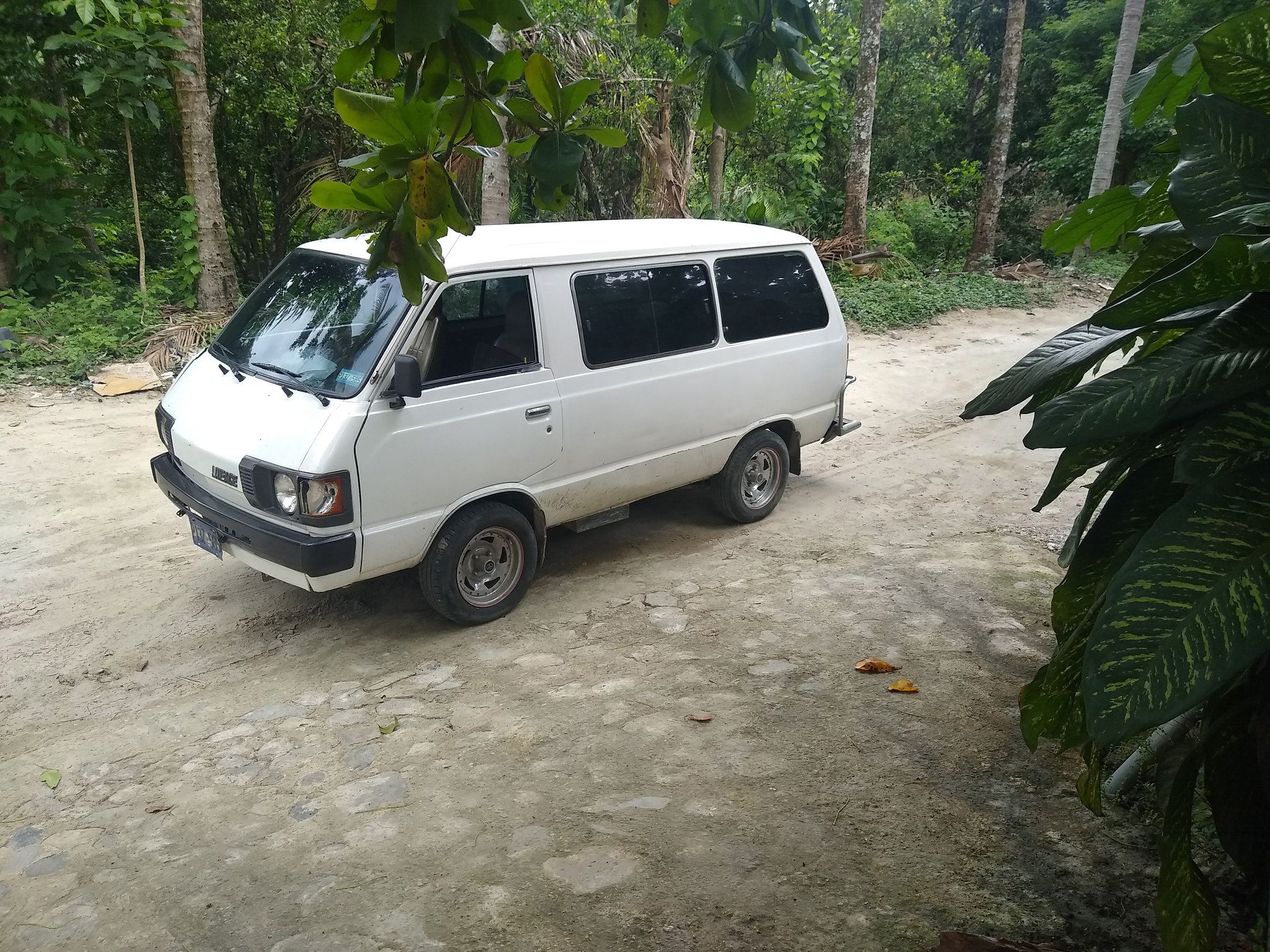
Let’s add another entry to our CC Global files, this time in the form of a 1980s Toyota LiteAce van that I came across during one of my tropical countryside trips. It’s part of Toyota’s Ace van models, related to the TownAce and below the larger, and better known, HiAce. This is the LiteAce’s second-generation, which ran from 1979 to 1984 in van form and to 1986 in truck form. Another Toyota workhorse, fairly well known across the globe in its roles as delivery vehicle and family hauler.

If the LiteAce’s shape found in Central America looks vaguely familiar to you, that’s because the M20s shared much stylistically with the slightly larger R20/30 TownAces that arrived in the US as the Toyota Van, a model that found many fans stateside (particularly around Eugene).

The good thing about seeing this away from the city is that I got to shoot it without too much clutter around it. I’m particularly fond of the boxy and clean styling of these Toyotas from the early 1980s, though I always found the relationship of the wheelbase to the body a bit funny; something more obvious in this slightly raised sample. Still, lots of cars had funny proportions and overhangs in the 1980s and despite that, I always found this one fairly charming.
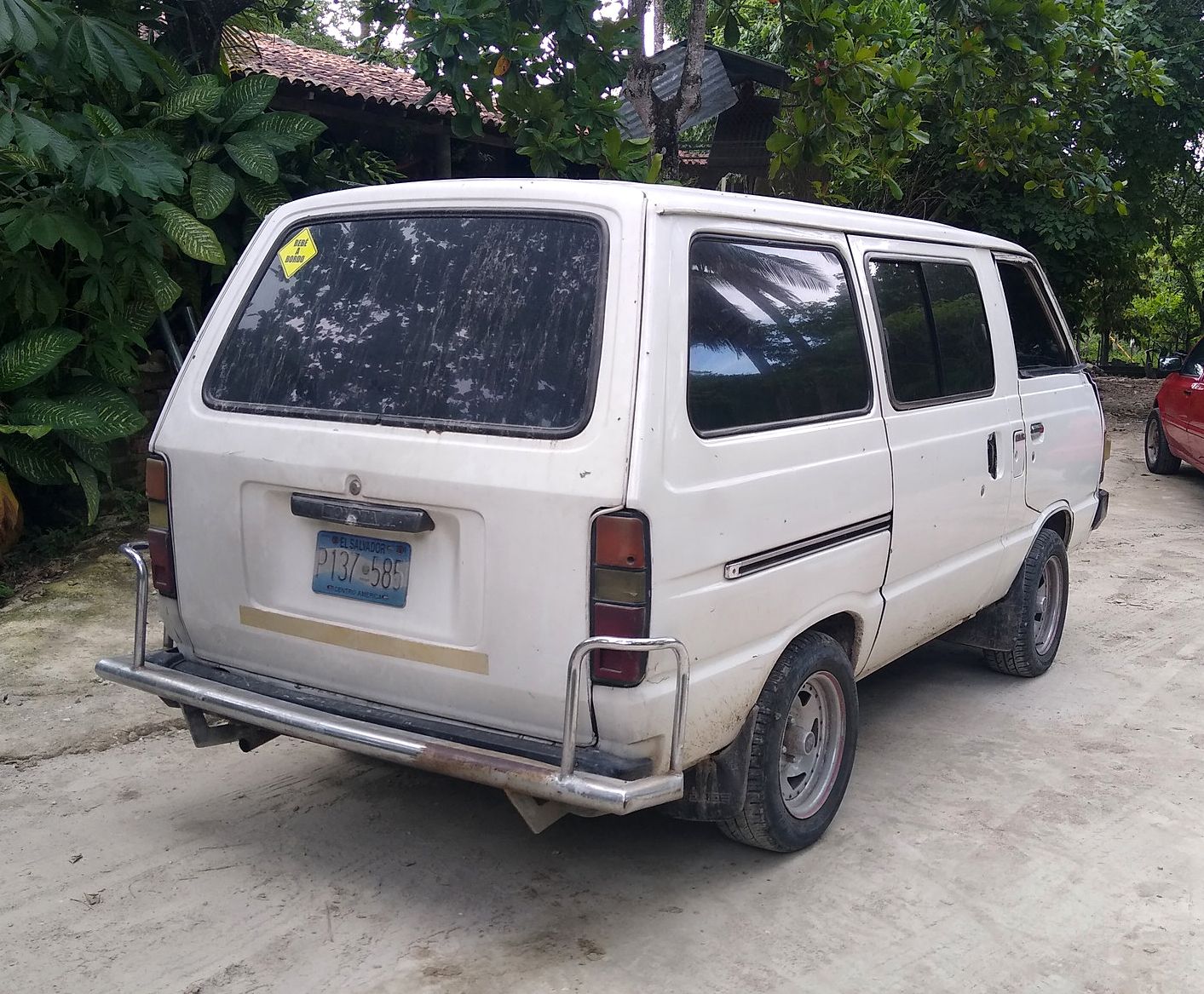
As with most of these Japanese vans, the LiteAce served commerce and families. It made use of the well-tried engine cabover format powering the rear wheels, with a number of evolutionary upgrades over its previous generation. Engines were varied, with a whole menu of Toyota powerplants available in diesel and gasoline form, with displacements that went from 1.3L to 1.8L in gasoline and an additional 1.8L diesel.

Although this one is slightly raised, it’s standard 2WD; 4WD would arrive with the M30 generation of 1985. Depending on the setup, this one could be a working van, or if carrying seats, be a 5 to 8 people vehicle.
A minor styling update arrived in 1982, along with newly available power steering and additional engine choices. Talking about other differences, a 3 speed automatic was also offered, but users over here generally stuck to 4 and 5 speed manuals.
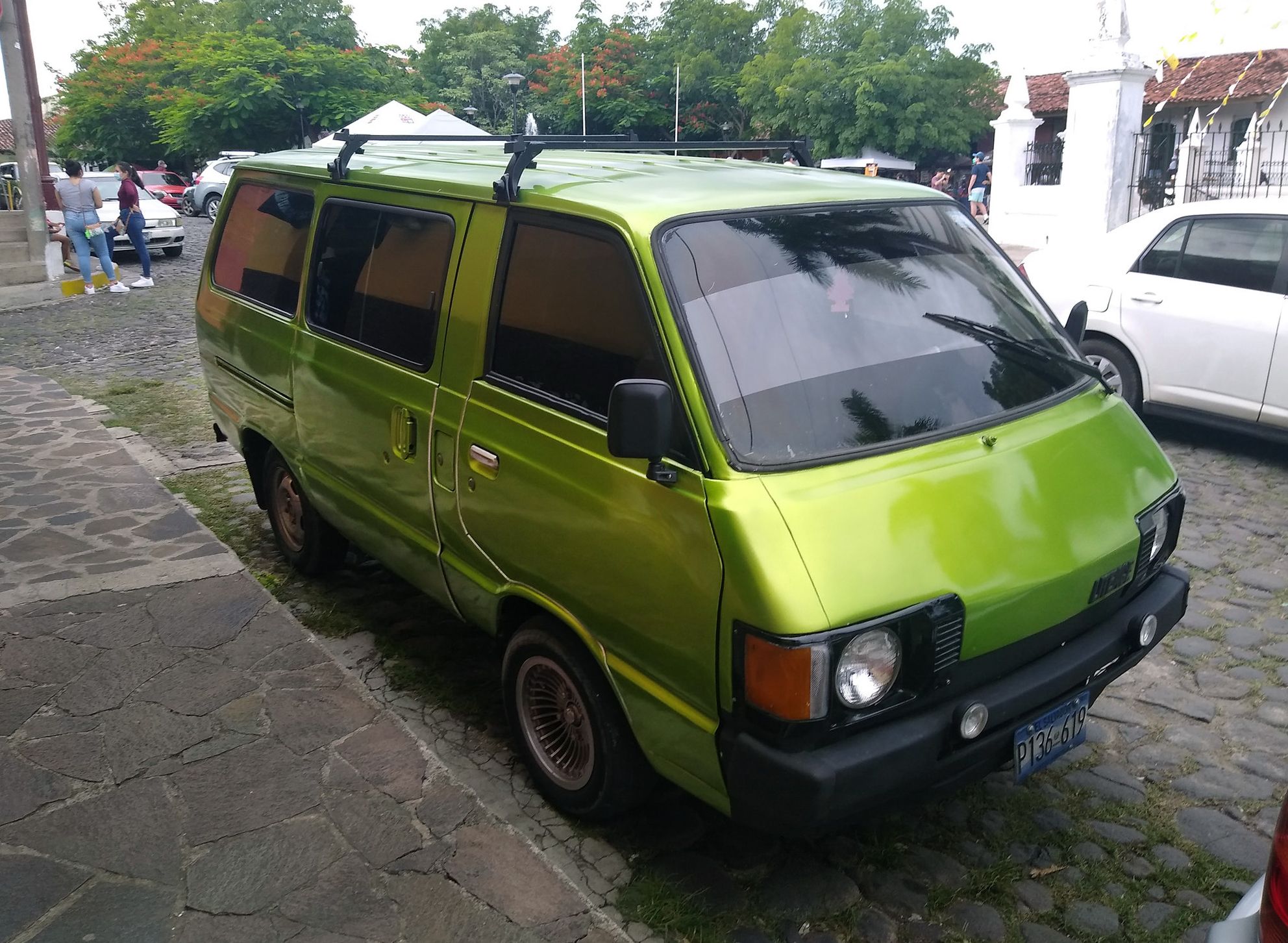
LiteAces and HiAces generally perform the people hauler role in this region, with smaller Kei vans being the ones generally used for commerce. From today’s perspective, the accommodations on these are quite spartan, but for the most part, local users are quite happy with them and their numbers are quite healthy, with Nissan’s Cherry Van (the Vanette) playing a close second.
Plain looking and somewhat basic, quite a departure from today’s plusher and more sophisticated offerings available today. Still, it’s just the way many over here prefer them.























I was hoping one day for the return of the Hiace in NA, the only thing close that is coming soon is the new ”Peugeot” PromasterCity, 1.6T : can’t say that a turbo excites me.
Right, one and the same mid-size van, offered as a Peugeot, Citroën, Opel, Vauxhall, Fiat, Toyota, and Ram.
The HiAce can be seen here on occasion in Border States, bearing Mexican state plates, along with the HiLux and others “unfit” for the US market. Mexican nationals, many well-heeled it seems, like to graze at our shopping malls. Helps the Balance of Trade, you know.
Of all the Japanese vans, I think these and the contemporary Nissan Vanettes look the most similar – I keep getting them mixed up!
I wonder whether it’s just the larger alloys that make it look raised? It doesn’t seem much higher then normal. Neighbours had a passenger version until it got hit in the right rear corner above the bumper; it seems the bodyshell isn’t particularly strong there.
I wonder why the Alphard , Vellfire and Voxy isn’t offered in Europe or even here, and why Toyota rebadges a van common to other manufacturers which are not known for their reliability. https://toyota.jp/voxy/?padid=from_carlineup_car_alphabetical_voxy
Baffling, isn’t it?
Something about the strict economics of commercial van life mean that variety has totally disappeared. Ludicrous emissions standards and wet timing belts seem to have rendered most of them crap.
We used to get many of the Japanese vans, but only Isuzu (and the Cabstar) seem to have made it in the light truck sector. No Big Thumbs…
There is a good secondhand market for Highway Stars and Gods of Vellfire, being RHD and all that.
But most poseurs want a faux by faux and not a clever, luxury van as a private (or business) car.
The scenery is indeed very tropical. It looks the same here in Malaysia
The van pictured is an M20, which was the second generation of Liteaces. Your title and a lot of your information are about the M30/40, which was the generation following the one pictured.
Yes, I somehow got that mixed up. The post has been updated.
I recall way back when China just opened up in late 1970s, this type of Japanese van was very popular in southern province Canton. Actually people preferred to have Toyota HiAce, but didn’t mind with Lite Ace just like the feature vehicle. But I believe there was a model with two rear doors could slide open, a convenient way to passengers. About the two sliding doors, Chrysler in 1990s often proudly displayed its van with two slide doors. In China back then very few came with air conditioning, if they did, the ones equipped with A/C, the unit, size of portable generator, was placed above its engine between front seats and rear passenger/cargo area. Nissan and Mitsubishi offered the similar model but their reliability not as good as Toyota.
A wet timing belt ?! .
Why not use a chain if it’s going to be oil soaked .
-Nate