

Some of the best automotive discoveries happen when you’re not looking for them. After helping my brother photograph a vehicle he had appraised near Bellingham, we took the scenic route home toward the ferry on Whidbey Island, in Washington. A detour down the back roads on that trip led us to a restaurant parking lot where five Brass Era classics had stopped during the Keystone Hill Climb and Endurance Run. Closest to us in this shot is a ca. 1905-08 Maxwell; of the rest, one was so rare that it left my brother—a classic car appraiser of more than four decades—genuinely surprised.

Hosted by the Horseless Carriage Club of America, the Keystone Hill Climb and Endurance Run celebrates the earliest days of motoring. The event is limited to rare pre-1916 automobiles and motorcycles, many of which are driven hundreds of miles over public roads, proving that these century-old machines are far more than static museum pieces. Needless to say, they’re a treat to see up close.
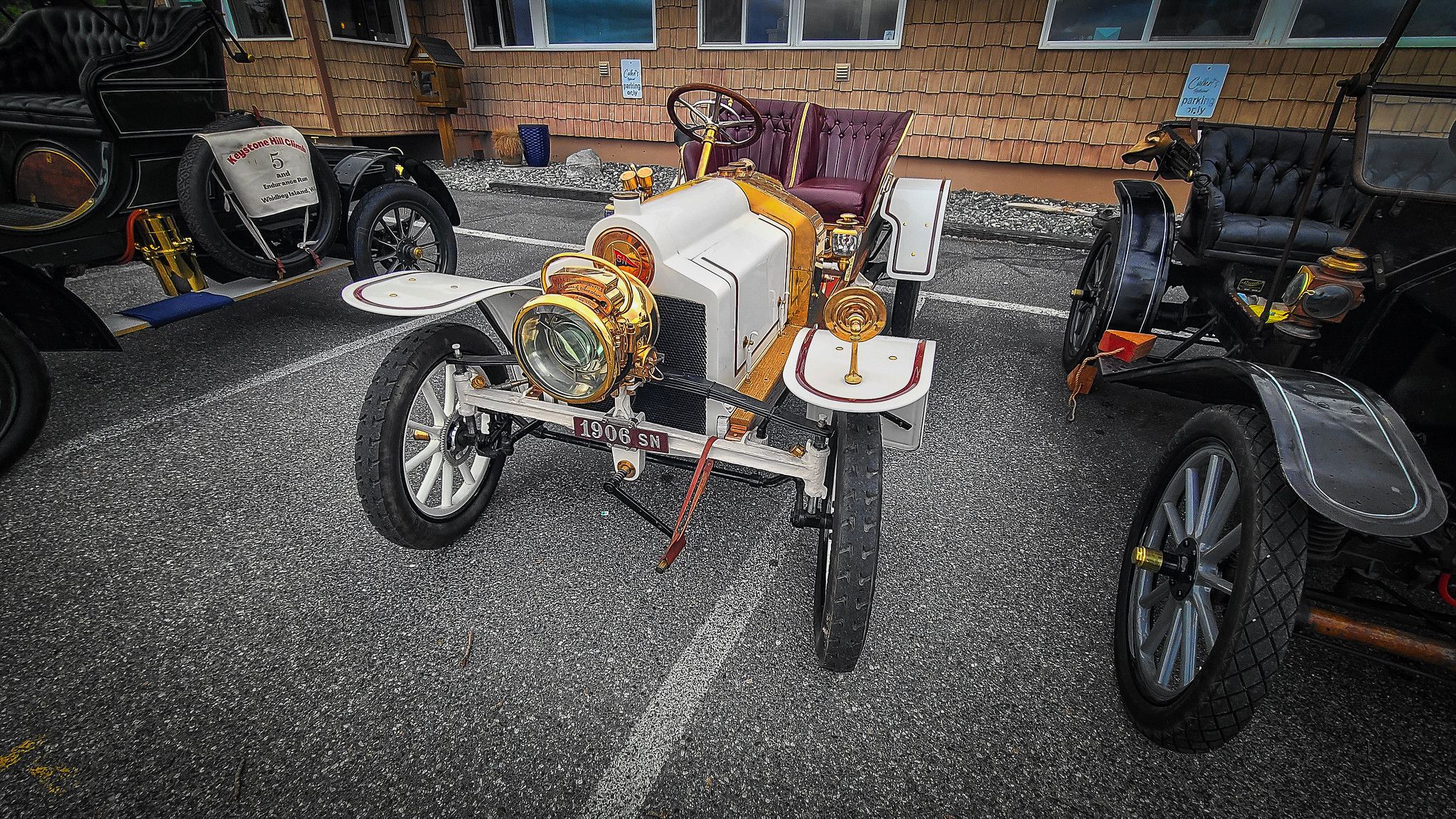
We talked to some of the drivers as they were just getting ready to leave when we arrived. My brother, who has been appraising cars for more than 40 years, was thoroughly impressed with the impromptu collection. He was already familiar with most of the cars present, but the 1906 Sizaire-Naudin was a revelation to him—like a lifelong birder suddenly spotting a species not even listed in the field guide.
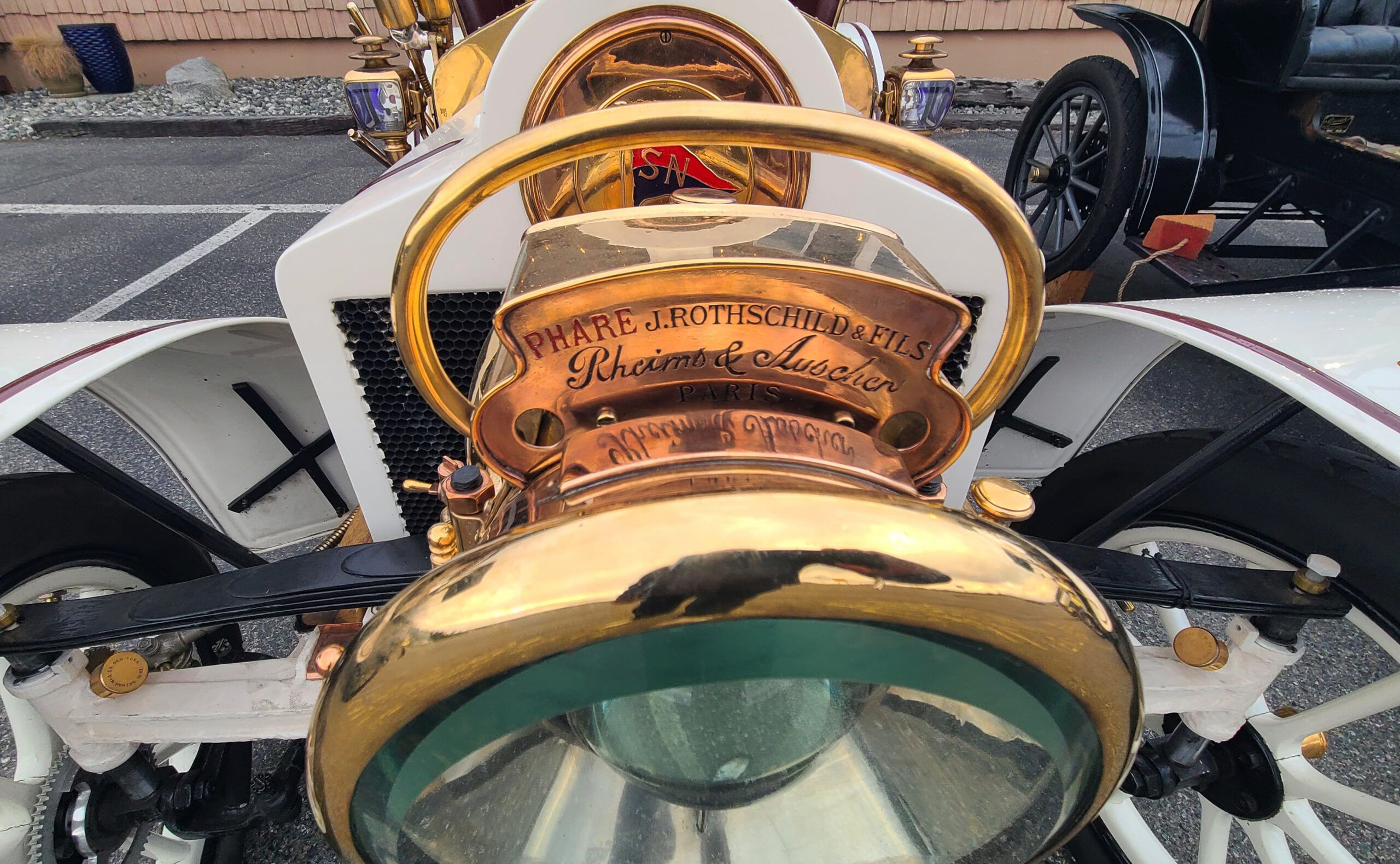
The single-cylinder is a light “voiturette-style” automobile by French carmaker Sizaire-Naudin (the SN logo, above the radiator behind the phare), which existed from 1903 to 1921.

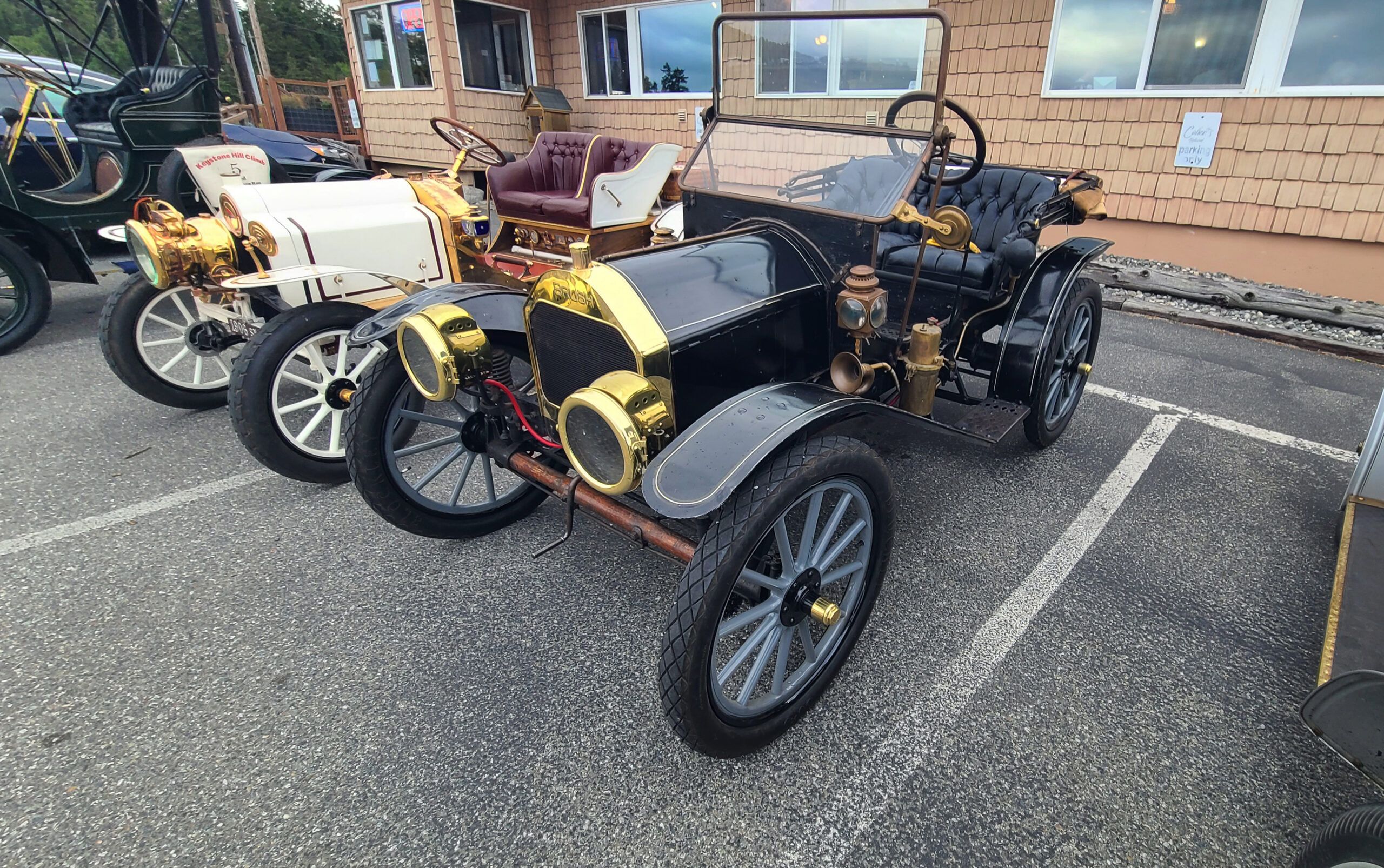
Here, a 1907-1913 Brush runabout; a quintessential brass-era automobile, promoted as an “Everyman’s Car,” and known for its simple, rugged design, which used hickory wood for both its frame and axles.

A close up of the Maxwell automobile.
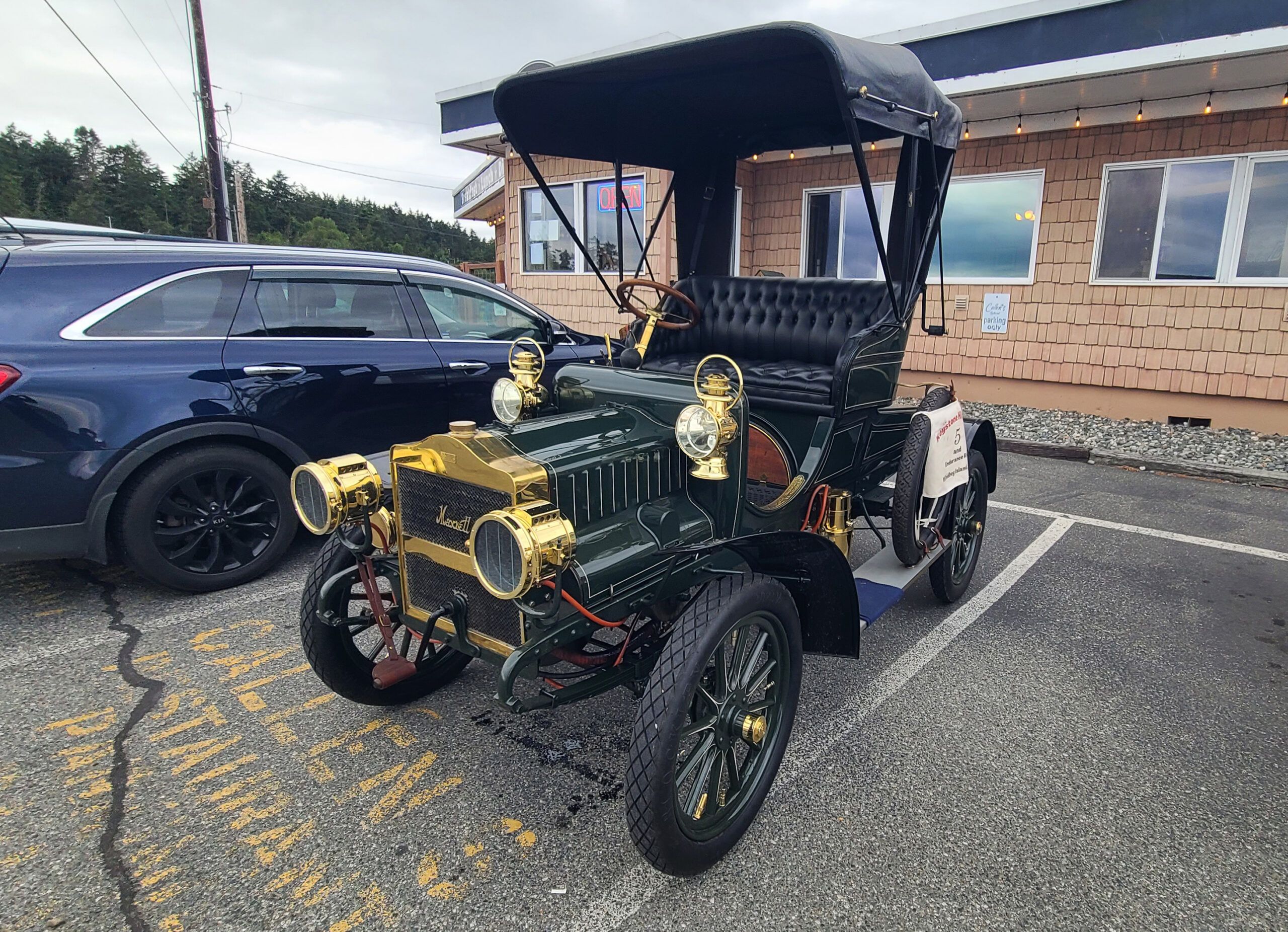
Walter Chrysler would arrive to Maxwell in the early 1920s to overhaul its troubled operations, and the company would fully morph/merge into Chrysler Corp. by 1926.

The last two will be the most familiar, if only by name, not shape; a ca. 1906 Cadillac Model K runabout on the right, and a ca. 1907 Buick Model G on the left.
Encounters like this don’t happen often. Five Brass Era automobiles, gathered mid-tour in an ordinary parking lot, offered a brief but unforgettable glimpse into the earliest years of motoring.























Wow, what a find! Very cool! As a side note a customer came into work with his 1950 Chevrolet 4 door sedan yesterday, bone stock from the stovebolt 6 and cast iron powerglide. Sweet ride in itself.
These brass-era autos are art when you get close and look and all the fine details.
A month or so ago I wanted to replace the red medallions on my 1966 T-Bird deluxe hubcaps. Getting the red medallions aftermarket easy, but once the hubcaps are removed not so easy for me to put back on now that I am in my mid-70s. So I contacted my local of AACA chapiter and in short order received messages from four members willing to help. I contacted one member within a 15 min. drive from my home, scheduled to meet in a few days. He fixed and installed my now perfectly restored hubcaps in less than and hour.
He had a home workshop with all the tools you could wish for, but I was impressed with his collection of beautifully restored Brass-era cars, five. The details on metal parts, paint and hand pin-stripping, all beautiful. I have seen many cars of this era at car shows, but taking the time for him to explain the details made a lasting impression. He does most of the mechanical restorations in his large home garage but he would take cars and parts from here in central Virginia to Pennsylvania where he knew some Amish to do all the painting and detailing restorations. Museum quality.
A wonderful find and great grouping. I love to see brass era cats, trucks, bikes and tractors running and at work. I need to get to this event next year.
I am familiar with the Sizaire-Naudin, from books and such and I think I’ve seen one in a museum. It has independent front suspension using sliding pillars, like Morgan used for decades.
The Brush also has a fairly unusual coil spring front suspension as well as a wood front axle; Brush really was into using wood extensively! Very sustainable. 🙂
Lovely, thank you for sharing ! .
-Nate
WOOF WOOF and WOOF! What a collection! Indeed, you remark that these vehicles traveled hundreds of miles attesting to their durability. The Maxwell car was made across the Hudson River from me in Tarrytown, NY. Eventually, the factory became the property of GM. They built vehicles there until about 1996. If I am correct, the original factory was built in 1898. Today, the lighthouse at the end of the promontory remains and the property is a park with housing. Thanks for a great show!
What an amazing sight to come across and a treat to see these old-timers in action, A tip of the hat to all the folks who preserve and use these early cars.
Oh, what gorgeous old brassed-up spindlys, as alien-looking 120 years-on as any 2026 AngryGT would be if transported back to be seen then.
I too had heard of the Sizaire-Naudin. Freakily, there are (or were) at least three of them in this far-flung island, and I think – in truth, I guess – that I’ve seen one moving at a show somewhere once. Either that or I spied one as a kid in one of those old cheapy “Veteran and Vintage Cars Of Australia” sort-of books, which, back in the ’70’s/early ’80’s, seemed to present every example of the most obscure automobilia ever made as if said oddity was commonplace.
What excellent photos. Makes me want to hop onboard, and cough and patoonk-patoonk off into the gentle distance.
I have four and love each. Now getting my granddaughter to drive them also, she did take one out on a private track last year at the ripe age of 13, a 1914 peugeot. Check out the celebration of brass this July at the Gilmore museum in hickory corners michigan
I had forgotten the name, but the Sizaire-Naudin looked familiar. The same example was at the Old Car Festival at Greenfield Village in Michigan last Fall.