
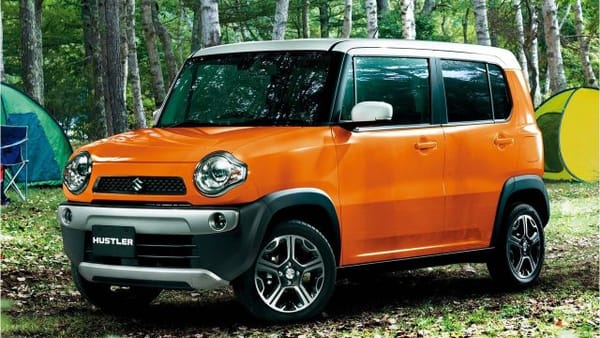
Over the past several years CC has reviewed a number of “kei jidosha” – the small minicar segment here in Japan. For new readers, this class of car sets below sub-compacts, and is limited by government regulation in both exterior dimensions and engine size/horsepower. Currently, the maximum body dimensions are 3.4 m (11.2 ft) in length, 1.48 m (4.9 ft) in width, and 2.0 m (6.6 ft) in height. Engine size is restricted to 660 cc, with max output 63 hp.
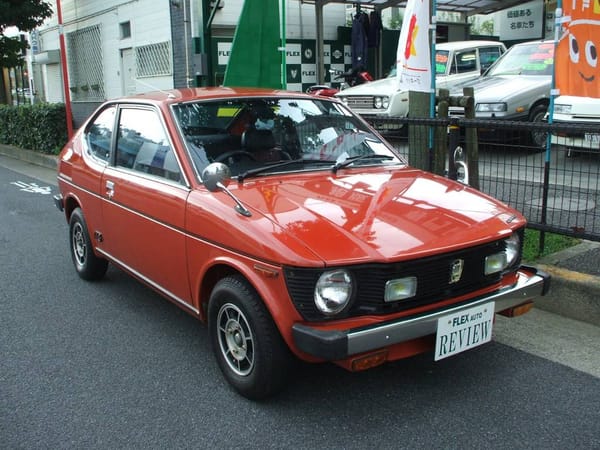
1982 Suzuki Cervo
Prior to the mid-90’s, these kei cars were real penalty boxes; while thrifty with gas, they were small, tinny, slow, and did I mention small? Your author can remember trying to contort his 6’6″ frame into a Suzuki Cervo in the mid-1980’s – and still having back spasms today as a result. As such, the Japanese government offered incentives to increase sales by reducing the cost of mandatory insurance, taxes and fees – which were typically less than half that for a regular size model. In turn, despite their shortcomings, kei cars commanded a respectful share of the market.
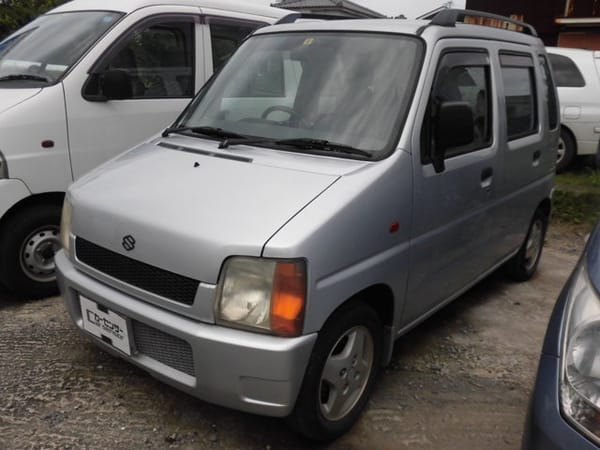
1993 Suzuki Wagon R
The first “tall wagon” version of these cars, the Suzuki Wagon R, was introduced in 1993 – Suzuki used new production techniques to maximize interior space within the allotted dimensions. With this model, the class began to leave their penalty box reputation behind, and started surging in the sales charts.
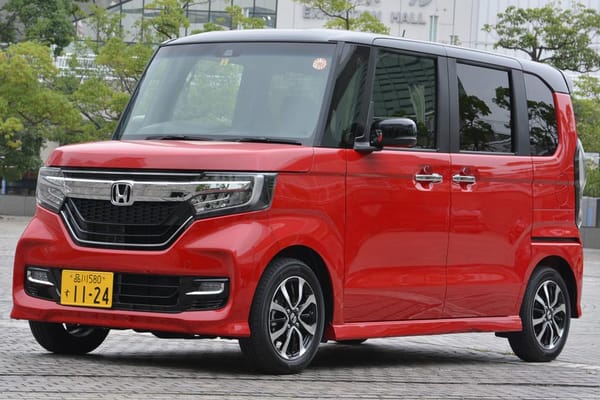
2018 Honda N-Box
Throughout the oughts and teens, kei car manufacturers continued to carve out more space inside with the use of high strength steel and modern production techniques. Engines became more refined and responsive, with turbocharging now the norm. As their popularity grew, in 2014, the government scaled back the financial incentives – rather than fifty percent, it’s now about twenty-five percent cheaper to own a kei car versus a standard model. But even with these increased fees, the Top 4 slots on Japan’s most popular car list for 2018 were held by minicars;
Rank Model Units Sold
1. Honda N-BOX 241,870
2. Suzuki Spacia 152,104
3. Nissan Dayz 141,495
4. Daihatsu Tanto 136,558
5. Nissan Note (Compact) 136,324
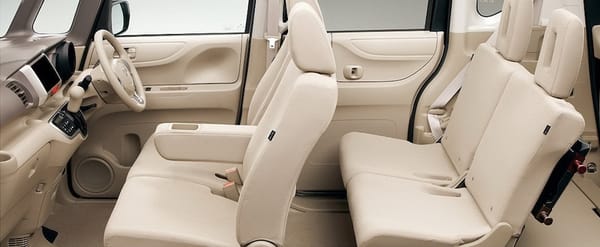
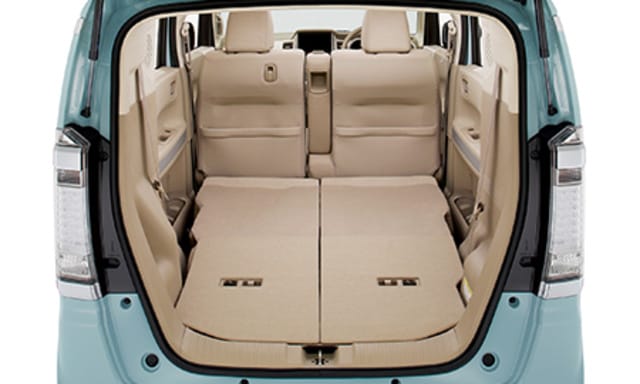
And I can see why – several weeks ago Honda had a display at a nearby shopping mall and I had the chance to poke around a new N-Box. The space inside was amazing – sitting in the driver’s seat, I had plenty of legroom and headroom. You certainly notice the narrowness, but other than that, it was like sitting in a regular small van.
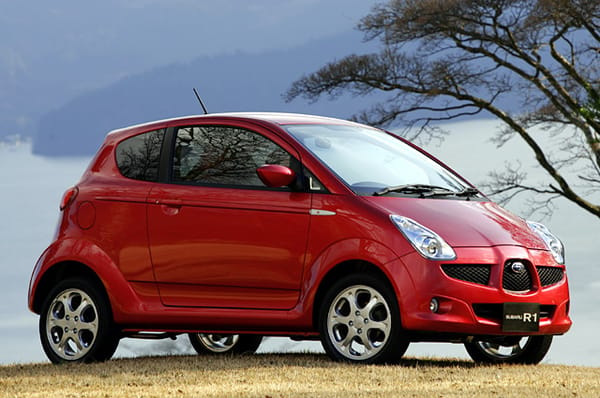
2005-10 Subaru R1
What I’ve also found interesting over the past several years is the consolidation of kei car manufacturers – twenty years ago most all auto companies built their own kei model; usually several models. But now there are only four – Daihatsu, Honda, Mitsubishi and Suzuki. The other manufacturers have found it more profitable to purchase OEM units from these four and do a little badge engineering. That can make things a little confusing – let’s see of we can bring some clarity. We’ll limit our look to just the most popular kei models…
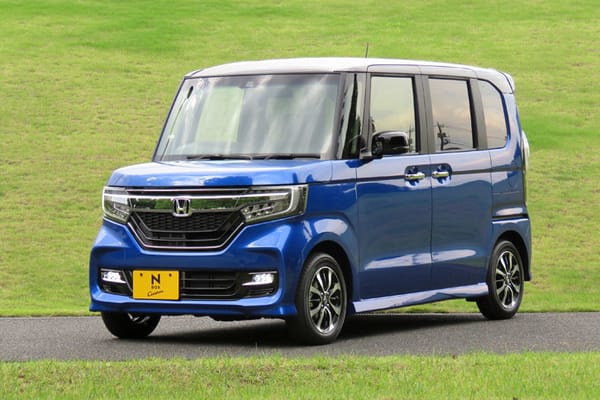
N-Box
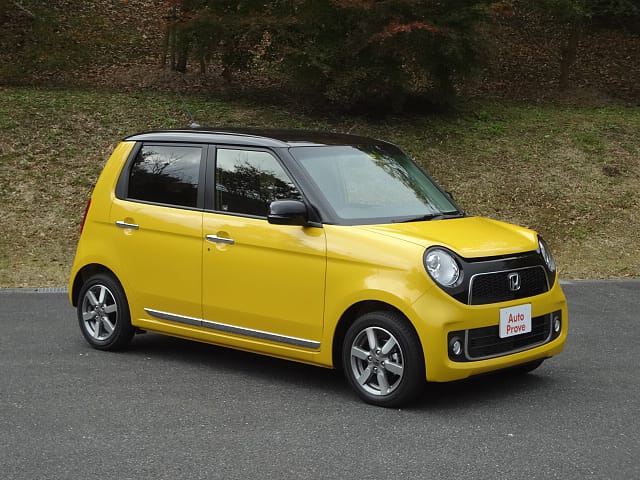
N-One
Let’s start with Honda as it’s the easiest. Honda manufactures the N-Box and N-One, plus several other models to include the S660 roadster. Both the N-Box and N-One are extremely popular. Honda keeps these models for themselves and does not build versions for any other manufacturers.
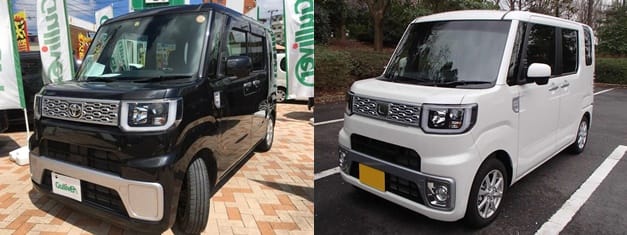
Toyota Pixis Mega Daihatsu Wake
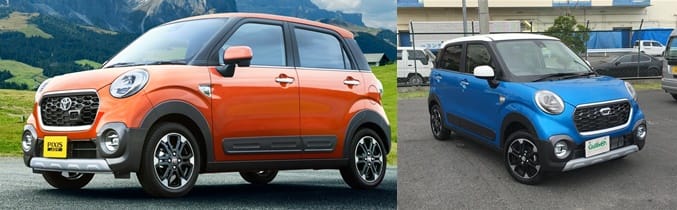
Toyota Pixis Joy Daihatsu Cast
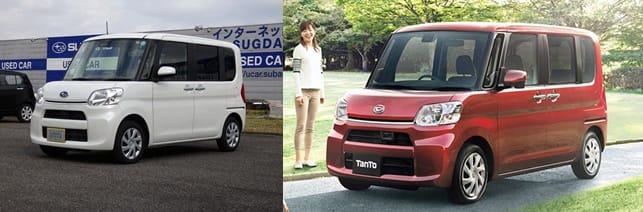
Subaru Chiffon Daihatsu Tanto
Next there’s Toyota – prior to 2011, Toyota didn’t market a kei car, allowing its subsidiary Daihatsu to carry that flag. But their popularity forced even conservative Toyota to bend to the winds, and now you can buy a Toyota Pixus Mega which is really a Daihatsu Wake or a Pixus Joy which is really a Daihatsu Cast. With Subaru’s recent alliance with Toyota, you can also buy a Subaru Chiffon which is a Daihatsu Tanto.
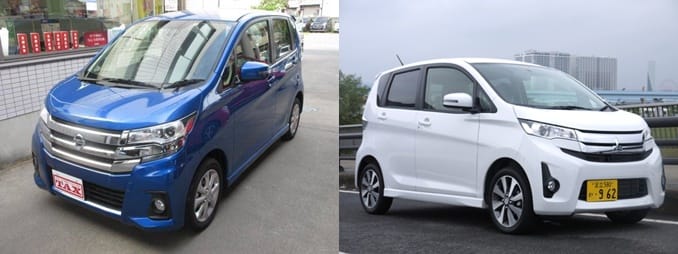
Nissan Dayz Mitsubishi eK
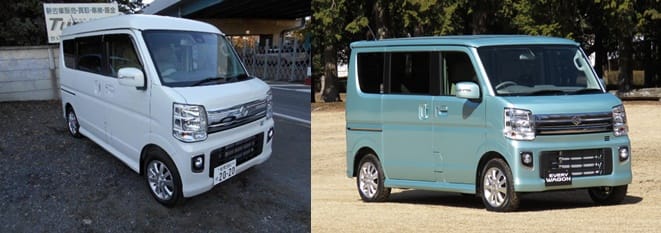
Nissan NV Clipper Suzuki Every Wagon
Then there’s Nissan which no longer manufactures a kei model – but you can buy a Nissan Dayz which is a Mitsubishi eK or a NV 100 Clipper which is a Suzuki Every Wagon.
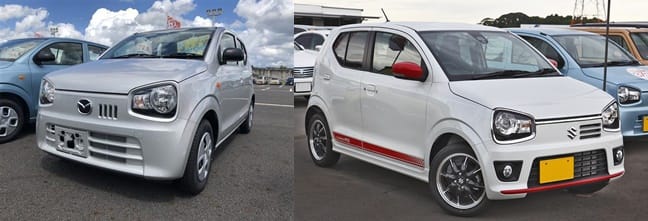
Mazda Carol Suzuki Alto
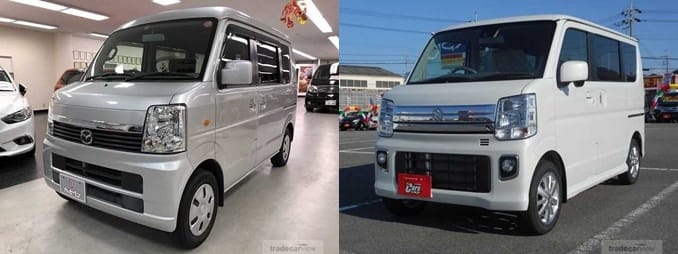
Mazda Scrum Suzuki Every Wagon
Mazda is up next with the Mazda Carol which is a Suzuki Alto, and the Scrum Van (love that name) which is a Suzuki Every Wagon (also sold by Nissan).
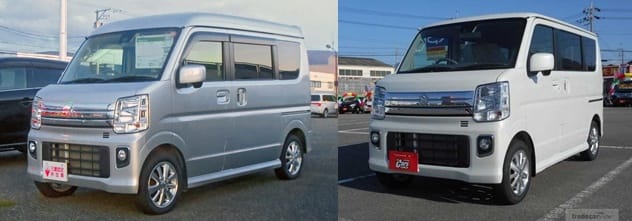
Mitsubishi Town Box Suzuki Every Wagon
And just to make things more confusing, Mitsubishi, which builds several of its own keis, also sells the Town Box which is a Suzuki Every Wagon (also sold by Nissan and Mazda).
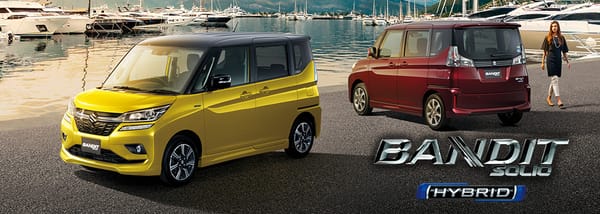
Suzuki Bandit Solio
Suzuki, Daihatsu, and Mitsubishi all sell their own unique models in addition to those built for OEM sale by the other brands.
For almost every one of these badge engineered models, the only change is the grille insert. I have to believe Japanese consumers are knowledgeable enough to know what they’re buying – so I wonder why they choose a Nissan Dayz when the same Mitsubishi eK is $600 cheaper across the street at the Mitsubishi dealer. I assume brand loyalty still plays a factor.
Badge engineering – the bane of Detroit in the 60’s and 70’s is still alive and well, at least in this segment, here in Japan.
Additional Info:























I live in Japan. When I got married my wife had a Subaru R2. It was amazingly roomy inside. My 6’1″ self had plenty of legroom and headroom. It was reasonably fun to drive, too, as it was lighter than most and actually handled well. We got rid of it after having a child, and now drive a Honda Fit. I still miss the R2 sometimes, although the Fit is far more comfortable and safe.
I drove my mother-in-law’s Nissan Moco (yes, Spanish-speakers, it was green) for a year or so while she recovered from a minor stroke. It was much less fun, and handled like a phone booth balanced on top of a roller-skate. But compared to not having a car, it’s awesome, and just sipped gas. The seats were awful, but I had plenty of room.
As to why people will buy the same car with a different emblem for more money, yes, it’s dealer loyalty. There are very few independent mechanics in Japan, and the government-mandated “sha-ken” inspection and registration ripoff provides dealers with huge built-in profit every couple of years of years on every car they sell. Generally dealers are competent and honest, so buying a car is downright pleasant and they don’t try to squeeze every yen out of you. When we told our Subaru sales guy we were looking for a car, and Subaru wasn’t making what we wanted, he sent us to a friend of his at Honda, (who will send him some business when someone wants an interesting car). The Honda guy sold us our Fit at just under list price with a few options thrown in. Took a pleasant 2 hours, nearly all of it looking at options lists and test driving. Everybody was happy, and every year he drops by to bring us a new calendar and some Honda swag. So yeah, when we need a new car, we’ll go there first.
I’m about to turn 58, and will have heart surgery this summer, so we are actually thinking about a kei for my commute (cycling may not be in the cards for a few months)…I’ll bet Dealer-san can get us a decent deal on a used Honda One. I’m actually looking forward to it!
I’m curious if there are Kei standards for EV. It seems like with the size and (from what I understand) use case of Kei cars, this would be the perfect case for volts instead of dino juice.
I don’t have a good detailed answer, but Japan has been very slow to incentivize battery-EVs, as they’re determined to go down the hydrogen fuel cell route instead. That explains why both Toyota (Mirai) and Honda (Clarity) make fuel cell cars, and not BEVs. But fuel cells are still too expensive for these kei cars.
It will be interesting to see how that pans out. But yes, a BEV kei car box like these would make absolutely idea city cars. I do think that the Japanese might be making a mistake here. I can see how hydrogen can be an important part of the mix in the future, but that seems to be down the road a decade or more. In the meantime, they’re missing an opportunity.
Does Japan favor hydrogen fuel cells over battery EVs because of a lack of places to charge the batteries? Most Americans live in single-family detached houses, usually with a driveway and a garage, with enough electric service to support 220V charging.
Japanese housing is usually denser, isn’t it? No place to put a charging station? It’s easier (though still hard) for me to imagine Japan building out a hydrogen fueling infrastructure.
There are 100 hydrogen fueling stations and 2,600 fuel cell vehicles in Japan as of June, 2018 (link).
In comparison, there are 20,000 220V and 7,000 DC fast public charging stations in Japan, and about 120,000 battery EVs have been sold in the last 10 years (link), mostly Nissan Leafs. That’s 50X more battery EVs than fuel cells, in spite of the lack of EVs from Toyota and Honda.
I have never seen a hydrogen station or fuel-cell car, but then I do not live in a big city. Loads of Leafs and PHEV Priuses though. I have started to see hybrid kei cars thought. Could battery costs be the problem? Although some keis are inching up in price, I think it would be a hard sell to ask another 20-25% for a BEV.
As to why the J gov is sticking with fuel-cell even though there is no demand, once the gov here starts something, bureaucratic inertia means it can’t be stopped. They may simply decide to tax BEVs out of existence, regardless of the consequences to the public or the economy, if it keeps the fuel cell alive.
But put into context, Americans put 15.5 metric tons of CO2 into the air per person in 2015, while Japanese emitted 9.0 and the French just 4.4. (Link to chart)
See also the joint venture between Toyota & PACCAR (Kenworth) for fuel cell trucks in CA.
Mike: Interesting to see how all the nuclear power cuts the CO2 footprint of France. I think from Japans perspective they will have to import the CNG to make electricity anyhow vs. banking off peak renewable production into hydrogen.
The market is not so hard to understand. Buyers seem to know which is the ‘original’, and those who offer OEM rebadges spend less on marketing anyway since they have less of a stake in the model’s success – as such Honda, Daihatsu and Suzuki dominate the sales charts while Nissan’s offerings are thoroughly beating Mitsubishi now that they co-develop, as Mitsubishi has a poor reputation after years of recall, finance and emissions scandals. There is also a focus from buyers on who offers the best technology and packaging, and who has the best reputation for good small cars. Subaru, Mazda and Toyota sell only in small numbers, pretty much solely now so they have some class representation at dealerships.
It’s also worth noting that the sales figures listed above are misleading. While the Tanto figure contains just Tanto and Spacia just the Spacia, the N-Box figure also includes the very different but slow-selling N-Box Slash and the Dayz figure is basically Nissan’s entire kei car lineup of Dayz and Dayz Roox, two very different models competing at different ends of the kei market.
Daihatsu produces for Toyota and Subaru (Mira e:S/Pleo+/Pixis Epoch, Cast/Pixis Joy, Move/Stella, Wake/Pixis Mega, Tanto/Chiffon, Atrai/Dias, Hijet/Sambar/Pixis Van/Truck). Daihatsu exclusively offers Copen, Mira Tocot and Move Canbus.
Honda stays separate, offering the N-Box, N-Box Slash, N-One, N-Wgn, N-Van, S660 and Acty.
Nissan and Mitsubishi co-produce the Dayz/eK and Dayz Roox/eK Space lines under the NMKV JV.
Suzuki produces all other Nissan and Mitsubishi kei models: (Every/Carry/Clipper/Minicab/Town Box), plus all for Mazda (Alto/Carol, Wagon R/Flair, Hustler/Flair Crossover, Spacia/Flair Wagon, Every/Carry/Scrum) and exclusively has Alto Lapin, Alto Works, Jimny and Wagon R Stingray.
Mitsubishi’s only remaining ‘exclusive’ kei line is the electric Minicab MiEV, based on the old platform/body that was introduced on the old Minicab in 1999. The i-MiEV is no longer classified as a kei car due to larger bumpers from the international model added in its most recent update.
The Suzuki Solio Bandit pictured is not a kei car, although it is proportionally similar but on a larger scale. It has a 1.2 litre engine in mild or full hybrid forms, and rivals the Daihatsu Thor. The Solio line is offered also by Mitsubishi as the Delica D:2.
In the larger classes there are co-operations that have Toyota produce models for Mazda (Probox/Succeed/Familia Van), Suzuki for Mitsubishi (Solio/Delica D:2), Nissan for Suzuki (Serena/Landy), Nissan for Mitsubishi (NV150 Ad/Lancer Cargo, NV200 Vanette/Delica D:3/Cargo), Daihatsu for Toyota and Subaru (Boon/Passo, Thor/Justy/Roomy/Tank), Toyota for Daihatsu (Prius Alpha/Mebius, Camry/Altis), Subaru for Toyota (BRZ/86), as well as some Toyotas wholly being produced at Daihatsu factories without a Daihatsu badged model. Beyond this there are other cooperations such as the sharing of hybrid/EV technology, which entangle pretty much all the companies even more so.
When I was a little kid, every Western on TV seemed to spend the first few minutes in what I now know to be the wrong aspect ratio, which meant every silhouetted Alan Ladd or John Wayne appeared to spend those same minutes as a string bean wearing a Bishop’s mitre and a saunterin’ inter town ridn’ on a giraffe. Now, I much disliked Westerns and my compulsory attendance. Luckily, the sheer silliness of those moments would send me into paroxysms which resulted an order to “cut it out”, a squeaking promise to do which was betrayed by a blurt and snort within seconds and thus an order to go to bed early, (which was only a problem if chocolate was also present).
These machines cannot help remind me of those images. They ARE inherently comical, like motoring in a bento box on it’s side. With the sushi, seaweed and ginger stuck on the face in a number of, er, aesthetically challenging cases here.
That said, they’re very suitable to much of any driving I currently do, in squeezy traffic. Vision, lots of room (although some rounder types would surely all have to sit in a line), mini-fuel use and I’m sure decent pop from a modern turbo tiddler engine. After all, traffic is traffic: there are just 5 million in this city and 37 million in a Tokyo, but when all squeezed up by inadequate planning (here), the needs are the same.
Must admit I had no idea 800,000 a year were sold in Japan, though. Fascinating.
Very funny comment!
Do you think the “Town Box” would do well in Australia justy ?
While the N-Box reflects current Honda styling, though scaled down and more square, the N-One really reminds me of the original N-600 and Z-600
I’ve seen tractor lawn mowers with tires that size!
I had a Honda Z-600. It was a blast to drive but really not for USA roads. 60 mph was 6000 rpm!
Bob
When I was about 13 or 14, this was made owning one seem fun.
That is quite intentional! It was designed with the N600 in mind. Japanese cars are full of cool callbacks to historical cars.
That Honda N-Box interior sure looks a lot like my Fit, but slightly narrower. The Fit with rear seating for “three” is a bit of a joke anyway and the center console between the front seats does not add much comfort either. I would prefer the boxy, over the egg shape for better forward visibility as well.
63hp would be a non-starter in the Americas, however. I could do it, but not with the horrid CVT that is probably the only transmission.
I’m a confirmed kei-car lover, as I have a thing for maximum space utilization and dislike for wasted space and weight. Which explains why I drove a gen1 xB, which is very much in the mold of these kei car boxes, but a bit wider. I’m going to have to keep driving it for a long time, unless Honda sees fit to import their N Box, which would be a prefect replacement.
Thanks Jim for this look at the kei market. I suspect a lot of Americans do not realize that these dominate the best seller list in Japan.
I doubt they can ever meet the safety and power standards to be useful in most parts of the US. They are very well suited to their environment: narrow roads, low speeds, and high taxes and fuel prices, and not way smaller than everything else. They would be terrifying to drive surrounded by aggressive drivers in giant pickups and SUVs, even if they could go fast enough to keep up with traffic. I like keis, but can’t imagine driving one in the US.
And sadly, except for sport models, CVTs are increasingly the only choice. Also, stop/start is universal. It was part of my daily automatic start routine….seatbelt, foot on brake, start button, Stop/start off, parking brake off…….
The most recent attempt at a small, urban, kei-class sized car in the US is the smart fortwo, and that hasn’t exactly set any sales records. IIRC, it’s now available only as an EV. Any thought a Japanese manufacturer might have of going to the trouble of importing a kei-car into the US would be quickly dispelled by how the fortwo has done, although stuff like the larger Chevy Spark and Mitsubishi Mirage seem to be doing well enough to keep them coming.
I’m a bit surprised the Japanese don’t try for the three-wheel, enclosed car route to circumvent the stricter car standards, sort of like that Polaris Slingshot thing. Of course, that walks a fine line between motorcycle and car, particularly if it’s completely enclosed with doors (which does not apply to the Slingshot). Not to mention that some states don’t seem to want to classify some of those side-by-side three-wheelers as motorcycles.
The Smart is a two-seater. These kei micro-vans’ interior space is vast compared to a Smart. The rear seat is roomier than most much bigger sedans, except for width. There’s no comparison.
My point is this: these kei boxes could be used very well for urban delivery as well as many other uses. Most folks in the US really don’t want to be restricted to two seats, unless it’s a roadster. And even those are selling fewer and fewer every year.
I really like that N-box. That interior makes me wonder if the modern black interior trend is just a US or Western thing. I am a light interior guy and really like the inside the N-Box shows off. (Disclosure – I no longer have kids at home and have no dog, so I can keep a light colored interior reasonably clean).
Really, I could be coaxed into a test drive of about any of these. With a manual transmission they could be a nice local driver.
I’ve been fascinated with kei cars since I first fired up Gran Turismo as a junior high schooler.
Riding in one for the first time, my mother in law’s comment was simply ‘ugh. No power.’ It was a loaner while her Fit Hybrid was in the shop. But the refinement and space were borderline unbelievable.
I’ve since driven my sister-in-law’s Suzuki Alto Lapin around the hilly suburbs surrounding Nagasaki. What a delight that car was to drive. The steering was a little rubbery and the ratio is slower than you might expect, but the way that tiny car points from corner to corner is just delightful. The engine is weak, but it makes do, and makes great thrummy noises in the process. The brakes keep things under control downhill and the ride keeps you gleefully in touch with the road surface.
I’ve driven cars that will hit 60 in the time this one took to hit 15. Do I have to tell you which one was more fun?
Like Paul, I’m a big fan of the kei cars, really wishing they’d be imported into the US as an urban commuter. Having seen what can be done with the first generation xB (oh, for a sixth gear on that transmission!), I’m a lover of small, boxy automobiles, and am in a situation where it would really work for me.
As of yesterday, I finally retired after fifteen years at the local Honda/Yamaha/Can-Am/Sea-Doo dealership. While I’ll be using my motorcycles for most commuting, there is this matter of winter/rainy days/etc. that makes a motorcycle less than practical. Maggie’s Dart is her car and fine for long trips, the Sedona is a gas hog around town but wonderful for long trips hauling lots of stuff, but I’m still looking for something as my daily driver when I don’t use the bike.
Small, quirky and using very little (or no) gas is mandatory. Manual transmission (if ICE) is almost mandatory. Which means I’m looking for another xB (assuming I can find one with a manual, good luck) although that’s as big as I’d want to go, another Fiat 500, but not an Abarth, possibly a Smart (love the concept, haven’t driven one yet), or a used Nissan Leaf (which I really like the idea).
Having a selection of kei cars would at least double my choices, pique my personal interest, and be fascinating at the bi-weekly Cars & Coffee. And yes, I know about brodozers, suburban moms in Escalades and Suburbans and American traffic. I’ve been dealing with those people for 43 years now on motorcycles (and an additional 10 on bicycles). If anything, a kei car would be sending me into battle fully armored by comparison.
“I’m still looking for something as my daily driver when I don’t use the bike.”
The answer is always Miata. 🙂
Kei cars are a fascinating class of vehicle and quite popular as used imports I see several each day on my travels, I daily drive the polar opposite Japanese vehicle a 400hp Isuzu 8 wheeler towing 8 wheel trailer one of these kei would nearly fit in the cab.
While not cute/stylish as kei cars, Neighborhood Electric Vehicles have been catching on here by the beach for shopping and very short commutes.
The little Suzuki Every wagon kei type car also came in Chevrolet flavour, I saw one today gold bowtie on the front I coudnt catch it to read the badges on the back 44 tonnes of Isuzu and apples has glacial acceleration even compared to an underpowered puddle jumper she went around the roundabout and just drove away from me. It definitely wasnt the Suzuki/Chevrolet Cruz model it was smaller.