

Some car collections are impressive. Others are unforgettable. When I finally saw the Blackhawk Museum collection after missing it on an earlier visit, I quickly realized it belonged in the second category. From breathtaking luxury automobiles to one-of-a-kind coachbuilt creations, the museum showcases a world where cars like this 10th Series Packard Super Eight 7-passenger sedan were designed as much for beauty as transportation.
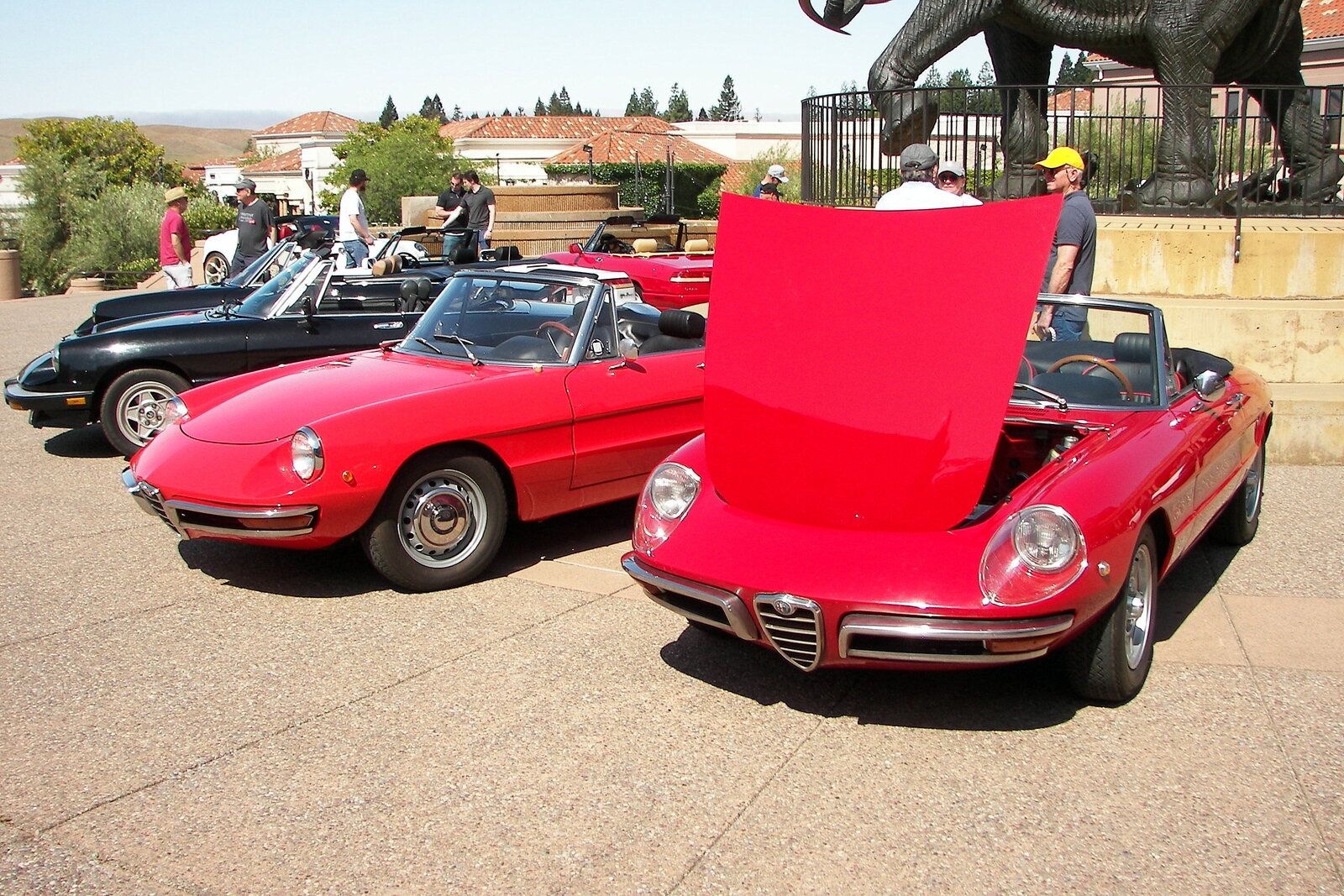
Some may remember that last summer, I attended an Alfa Romeo car show held in front of the Blackhawk Auto Museum. On that occasion, I thought I would see the museum’s collection after the show, but ultimately I was unable. So I made my visit later in the year and drove my 1972 Ambassador wagon down. Lots to see, so I will break it down into a couple of posts. That the cars are spectacular is an understatement, as you need to see for yourself.

First, about the museum. It was founded in 1982 by Ken Behring and Don Williams. Located in Danville, California, it moved in 1988 to a new facility designed by Doug Dahlin. It’s now part of the larger Blackhawk shopping center (more on that later). The collection includes several vehicles that once belonged to Behring, and in later years has expanded to include other non-car-related exhibits.
Ken Behring is the type of rags to riches tale that feeds the American psyche; born in poverty, he developed a lifelong affair with the automobile early on, working as a salesman for Chevrolet and Chrysler in his youth. His fortune was made in real estate however, and by the time the museum was opening in ’88, his business interests had multiplied, and he was about to become co-owner of the Seattle Seahawks.

This being CC, we’ll solely deal with the auto exhibits, which are breathtaking. A good deal of the Blackhawk collection is made up of luxury vehicles and bespoke coachbuilder models. A type of craftsmanship that isn’t seen anymore, and that blurs the line between art and industry. Don’t touch is the rule, but you can get up close and personal nonetheless.

There are also some examples from the early automotive era, like this 1902 Stanley Steamer Stick Seat Runabout, from a time when steam power still felt like the norm. This steam-powered vehicle had all of 6.5HP and a 35MPH top speed. Notice the location of the stick-style steering and seating arrangement; glimpses of the transition between carriages and cars.

Things had moved greatly forward by the time this 1910 Model 70 5-passenger Stanley Steamer was introduced. As the accompanying label said, this Model 70 Touring is “an elegant testament to the golden age of steam-powered automobiles”.

Craftmanship is meticulous on this, and it’s powered by a 2-cylinder steam engine, with 20HP. About 250 of these were built back in the day. The Stanley brothers never embraced the internal combustion engine and closed shop in 1924, ending the Stanley Steamers era.

For something far more familiar, a 1915 Ford Model T roadster.

This one was used in The Professionals, the 1966 film with Lee Marvin and Burt Lancaster. That’s probably why it’s not black, like all factory-built Model Ts from 1914 to 1925.

Moving on to luxury vehicles, a 1916 Model 48-B Series 4 Pierce-Arrow. The Series 4 cars were built from 1914 to 1918 and were, perhaps, the most prestigious US-built cars of their day. Pierce-Arrow, Packard, and Peerless were known as the “Three Ps of Motoring”.

Not sure if it comes across in the photos, but these are truly massive. Taken from the museum’s label, “with its distinctive fender headlamps, the Pierce-Arrow was one of the first automakers to make extensive use of aluminum.”

This example uses and enclosed body and carriage lights similar to those used by President Woodrow Wilson.

Again, a type of craftsmanship one doesn’t see anymore.

Wondrous bespoke work on this 1926 Daimler, Star of India. Another massive vehicle that was a moving work of art; notice the snake (?) shaped horns on the fenders. Also, the removable servant seats on the running boards.

The Star of India was built for the Maharajah of Rewa, with a hand-crafted body with metal containing German Silver.

Now this car was set on a platform above the floor. I have seen the Mona Lisa; so small. I have seen the Sistine Chapel, which needed a cleaning. I have seen Rembrandt’s The Night Watch, spectacular. Well, this 1929 Duesenberg J, can’t call it Dusie, is spectacular.

The Duesenberg was legendary in its own time, and as the label indicated, “a beacon of automotive engineering brilliance.”

Powered by a mighty 420CID DOHC inline-eight, which at the time delivered unmatched performance and refinement.

And the rumble seat. This won’t be the last Duesenberg on this post.

Moving on to the 1930s, a very tasteful looking 1931 Chrysler Imperial CG Roadster.

Long hood, sweeping fenders, and a gracefully tapered rear end.

It’s powered by a 385CID side-valve eight cylinder engine,

with 125HP and that could go up to 80MPH.

And one of the first American cars to feature hydraulic brakes.

Another Duesenberg, a 1930 SJ Rollston Convertible Victoria.

A wonder of the interwar period, with a supercharged 420CID straight eight with 320HP and that could go up to 130MPH. Unreal numbers in 1930.

Luxury, now in British style with a 1932 Rolls-Royce Phantom II. The Phantom II ran from 1929 to 1935 and used an improved 7.7L OHV inline six. This is another movie related vehicle that was featured in the 1964 film The Yellow Rolls-Royce.

This one is claimed to have gone through a nine year restoration. That renowned RR radiator shape glistens accordingly.

So does the Spirit of Ecstasy on top of it.

A tasteful and elegant 1932 Auburn Twelve Boattail Speedster, from Auburn, another American carmaker that didn’t survive the economic downturn of those years. 1932 would be the last year… for a while, before making a last appearance in 1936-1937.

The Twelve in the name alludes to the car’s V-12, and was offered from 1932-1933.

Since we’re talking luxury, Packard is bound to make an appearance. This is the 1933 Packard we opened this post with, which is a Super Eight Model 1004 7-passenger sedan

Under the hood is Packard’s rather well known 385CID side-valve straight-eight, known for its smooth delivery and ample torque.

The distinctive Packard radiator.

Optional side-mount spares with outside mirrors.

And Packard’s famous cormorant hood ornament.

A 1935 Hispano-Suiza K6 Cabriolet, one of the last automobiles built by the prestigious Spanish-French manufacturer.

Under the hood is a 5.1L inline-six, with 125HP and that made for a formidable grand tourer for the standards of the day.

Since the French were mentioned, let’s move to Molsheim, the home of Bugatti. Here are two Bugattis: a 1928 Type 37A Grand Prix Supercharged in the well-known Bugatti blue, and, facing us, a red 1936 Bugatti Type 57S roadster.

The “S” in Type 57S stands for “surbaissé,” which means “lowered” in French, referring to the low-slung chassis. The heart of this roadster is a sophisticated DOHC 3.3L inline-eight engine with 135HP. There was also a supercharged Type 57SC with 200HP. Both had impressive speed and handling for the time.

Designer Jean Bugatti, son of founder Ettore Bugatti, knew proportions and detailing well, and it shows on this cabriolet. The rear is a collection of expressive curves.

The supercharged Type 37A has a racing history, finishing 3rd in the 1928 Targa Florio, and has been in the US since 1950.

Another Hispano-Suiza, a 1935 K6 Sedanca de Ville.

The car has a “smooth and refined power delivery that was characteristic of Hispano-Suiza automobiles” and was a “favorite among aristocrats, dignitaries and celebrities of the time.”

Another expressive looking French vehicle, but of the racing kind. A 1939 Delage D6-3L Grand Prix.

Advanced aerodynamics, purposefulness and lightweight are the reasons for being of this Delage.

Under the hood, a 3.0L inline-six with triple Solex carburetors and 150HP, plus all the technology available at the time to perform and handle at extreme speeds.

Another elegant and elaborate Bugatti, a 1936 Type 57 Atalante “Bureau Top”. It’s a rare survivor in this body style, and there’s a lot of rather wild history supposedly associated with it; from being ordered by jeweler Charles Olivero in Marseille, to it perhaps being involved in the French resistance and an escape through the Congo civil war.

The FWD Cord 810/812 was built only from 1936 to 1937, but that didn’t keep them from making a lasting impression.

This 1937 Cord B12 Supercharged Phaeton is pure streamlined art.

Another attractive Bugatti, a 1938 Type 57 Ventoux. Still dramatically styled, though slightly less flamboyant than some of the others already shown. This one rode to a then breathtaking 110mph with its 3.25L straight-eight.

Back to British models; a 1937 Bentley drophead coupé with bodywork by Windover.

Bentley had been part of Rolls-Royce since 1931, and the 4.25L Bentleys that came out in 1936 were the “last of the purely Coachbuilt Bentleys.”

Back to Packard, with a 1939 Twelve Model 1707 Convertible Victoria. Under the hood, the carmaker’s “legendary 473 cubic-inch 67 degree V12 engine, renowned for its smoothness and refined performance.”

A streamlined version of Packard’s cormorant ornament.
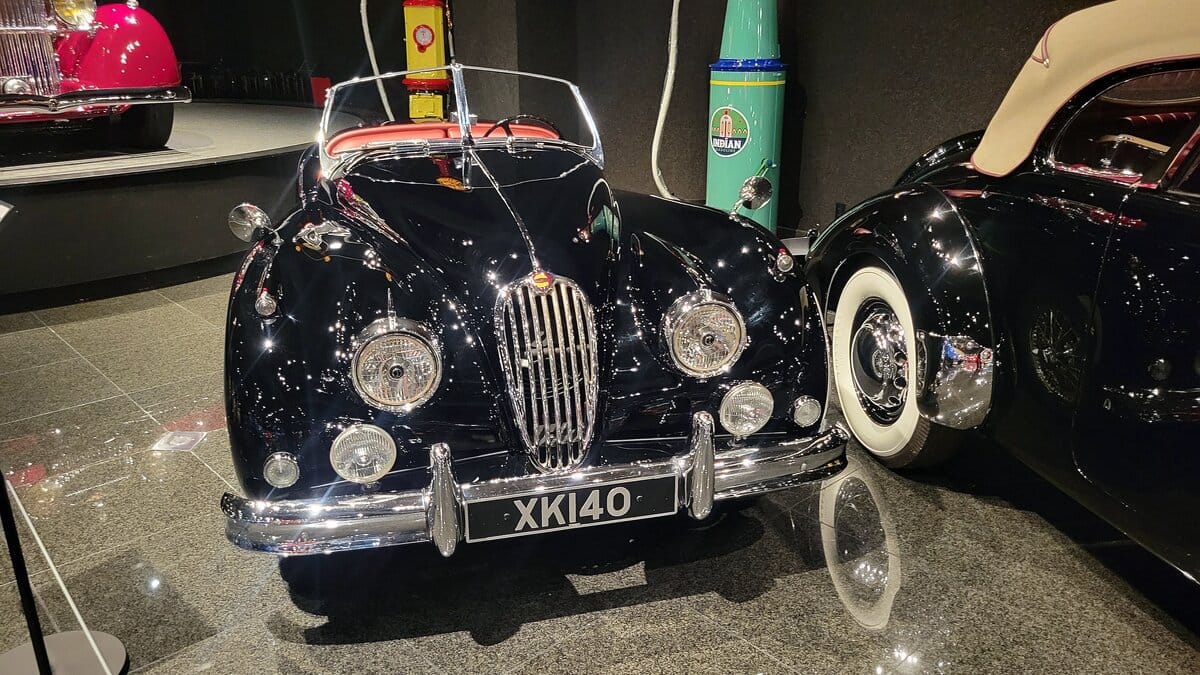
So there you have the interwar and prewar models that are currently in the Blackhawk Museum’s first floor (I’ll cover the postwar models in a separate post). The second floor has a large display of American Indian artifacts and African Art.
I understand that attendance is one third of what it was before Covid. I have had my office in Danville since 1982, and I recall when the Blackhawk Plaza opened, where the museum is an anchor tenant (both being built by Ken Behring). Today, 37 years after the center’s opening, there are many vacancies as businesses leave. How long the plaza stays viable, off the beaten path, is anybody’s guess. In the meantime, the museum is a nice getaway to see classics in a quiet, well sorted space.






A mighty impressive collection! I was unfamiliar with this museum, so thanks for this tour.
I wonder how much longer museums of this kind will remain viable, no matter what their location. People our age can still work up enthusiasm for these majestic old cars, but we are aging out of numbers that will keep museums like this functioning. I hope I am wrong, because cars like these deserve to be savored and appreciated.
That red Bugatti is wild. Almost everything you’ve pictured is a work of art, but for some reason, the French really had it down in the 1930s and 1940s: Delahaye, Delage, Talbot-Lago, Bugatti…almost all of them masterpieces.
We visited in 2017 during a road trip. These cars are spectacular. The highlight of my visit was a guest appearance of the Harley Earl concept cars, the Le Sabre and the Y Job. I never thought I would see those cars in person.
We live near the Petersen, so the Blackhawk seemed small. Exquisite though. We mourn the loss of the Mullin Museum, which focused on French cars (Bugatti, Delahaye, Delage, some Citroen) as well as race cars. The Automotive Driving Museum in El Segundo closed too (they gave short rides in classic cars on the weekends.). You are right in hoping the Blackhawk stays open.
As far as I can recall, it must now be close to 30 years since I was last at the Blackhawk and I absolutely remember many (most?) of the cars you featured here. The place is one of the most impressive car museums I’ve seen, marked by the outstanding quality of the exhibits as well as the space itself. Thank you for putting this post together, looking forward to the second part.
We lived in the Bay Area so we were able to visit Blackhawk a couple of times. Another great one is LeMay in Tacoma!
Thanks for the great pictures. This is a famous collection but I didn’t even know where it was! Hope the owner can keep it open.
Just a note: Auburns were available every model year through 1936. The Cord car had a hiatus from 1932 before coming back for 1936 and 1937, which might be the source of the confusion.
The Auburn V-12 was a pretty interesting 45-degree layout with horizontal valves like the Oakland/Pontiac V-8.
I have heard of this collection but never had the chance to visit. What a wonderful selection of automotive royalty. Being connected with a shopping center is unfortunate as they are definitely in decline both as a place to shop and a cultural right of passage / experience with youths.
Even with the movie history that Ford Model T looks a bit ordinary and small compared to the rest of those big and grand cars.
The fenders on the 1939 Delage D6-3L Grand Prix look like sails to modern eyes – I wonder how much drag they created. Interesting looking regardless.
I’ve lived close enough to Blackhawk to be able to make an easy day visit since it opened. But I’ve only been once, more than 25 years ago. An impressive collection, but too perfect for my tastes. I feel the cars are displayed as celebrities, not as functioning creations of steel and rubber and gasoline. Although the photos of the Bugatti Type 57S did stir my heart. Thanks for including it, especially as a pairing with the archetypal blue Type 37. Still, Blackhawk is definitely worth seeing. If only once 🙂.
When in North Hampton, New Hampshire, I recommend a visit to the Bayberry Collection, on the Exeter Road.
I had the pleasure of visiting the Blackhawk Museum about a month ago. Seeing these cars in person was a whole other level! It is very high caliber and the large room dedicated to Native American history and the Old West is splendid as well. The vacancies in the surrounding mall were kind of surprising to me since the area is surrounded by very nice neighborhoods.
Actually all the homes there will start around $1.5 million and up. I’ve been in the area since 1982 and recall when it went in and all the ranches out there disappeared. Busy for awhile with high end shops but I feel most go into downtown Walnut Creek instead for high end. The big draw in the area, and I mean big, is the Costco. I kid you not as every single patient, I know, goes there. Oh, and new management at Blackhawk, doesn’t help.
That mint green Auburn Boattail is stunning, just the right amount of everything and not overdone with extras.
Great pictures, thanks.
That red 1915 Model T appears to have coil suspension on the front, or at least the leaves are augmented with coils? Never seen that before, anyone know whats going on with that?
If that 1936 Type 57 Atalante “Bureau Top” Bugatti actually survived escaping civil war in the Congo intact, thats nothing short of miraculous. Even in non-civil war conditions Congo is not exactly conducive to the preservation of any vehicle
I wondered about those springs, too.
IIRC, some of the hot rod kits I built in the 1970s had weird coil-spring layouts too. I’d imagine it was a contemporary mod, as the centrally-located leaf spring has almost no roll resistance and poor location. Stout double-leading arms were also a common feature. Originality would not have been such a fetish way back when.
Still, the museum has some breathtaking stuff – beyond stunning.
I don’t fully know why such pre-bust 1930s excess can look so damned tasteful, whereas I’ll raise you a ’59 Cadillac and anything modern as the definition of crass vulgarity.
Those odd looking coil springs on the ‘T’ Model Ford are aftermarket “HASSLER” anti – shimmy springs .
-Nate
The red Bugatti roadster will do nicely, thank you. Plus it’s RHD, perfect for Japanese traffic. And if there’s room on the ship for one more, I’ll have that black Packard Twelve, just to have something completely different, but equally outstanding.
Wow. The 1926 Daimler, Star of India, is as I remember it. I saw it at a Kruse auction in Scottsdale in 1975. Thank you for sharing the photos here.
The Blackhawk Museum is rated the #1 attractiion in the East Bay. Besides autos the Museum features “Spirit of the Old West,” which is rated as the #1 Western exhibit in the Western States, including a 140′ wide diorama on the Old West.. There is also an exhibit on “Art of Africa” and “Into China,” featuring the only scale model of The Forbnidden City in the world and includes Terracotta Warriors. In conclusion, you wil be visiting about 200 taxidermy animals of all sorts, including a Great White Shark hovering overhead and a “lively” Rhino who likes to “charge” at visitors on a regular basis!
The Museum opened in 1988 to exhibit the personal car collection of real estate developer Kenneth Behring. In recent years he added the additional exhibits that resulted in attracting a broader base of visitors. It’s a well worth visit for the whole family.
It’s interesting to see the Rolls has each “R” in red signifying both Rolls and Royce were alive when the car was built. I’ve seen one with the first “R” in black, the second in red signifying Rolls was dead.
Those automobiles were works of art! I’d love to own one of the chrome laden beauties, but I don’t think I could afford the necessary amount of chrome polish!.
I wonder how some of the cars would look sporting Woodlite Headlights? I was impressed when I saw a photo of Ruxton sporting a pair, yet was blown away when I saw this Ruxton.
Click to Edit –
I remember going to see the movie “The Yellow Rolls Royce” in 1964 with my father .
-Nate