
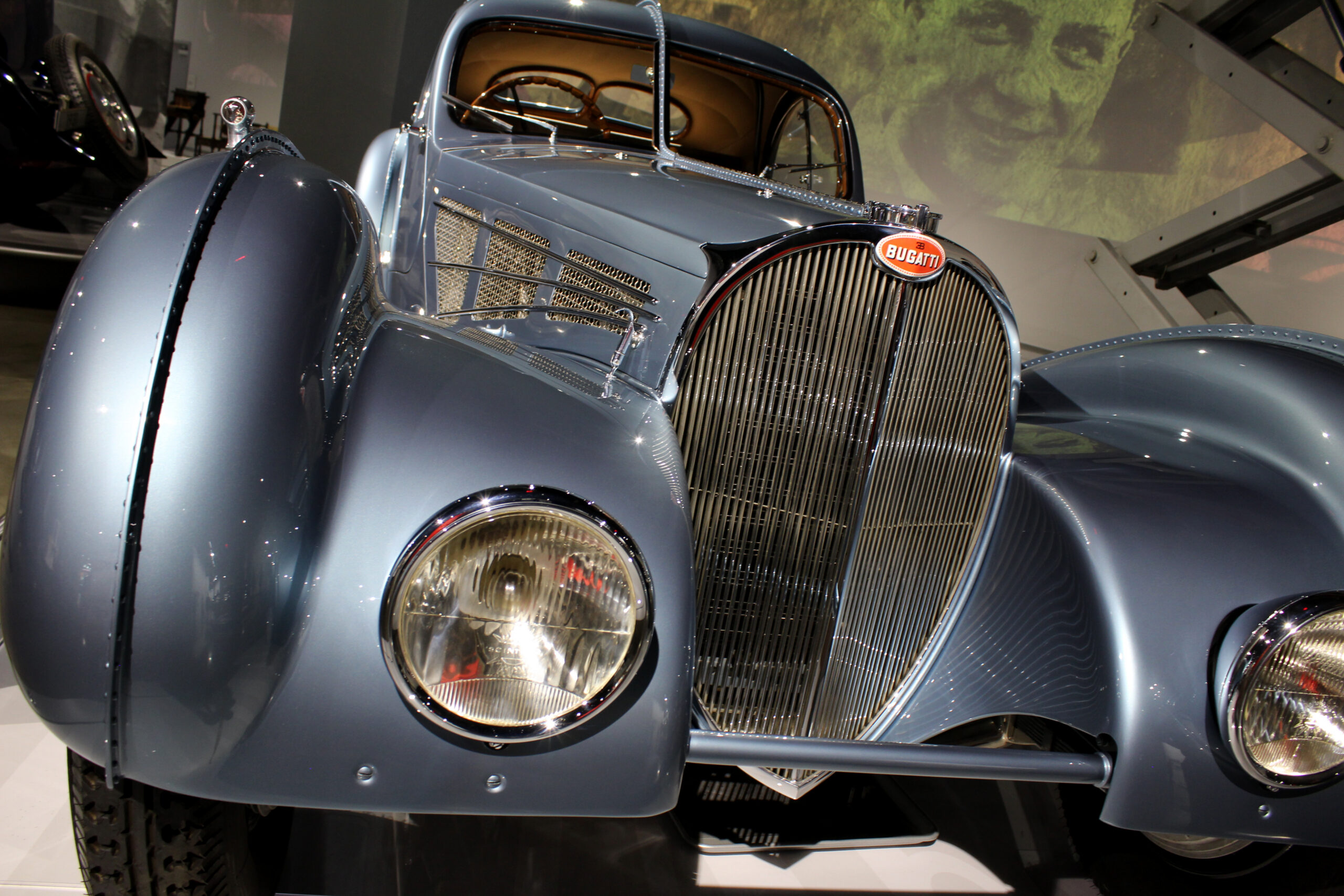
In recent days, a milestone rather suddenly hit me over the head: this past month marked the 10th anniversary of The Art of Bugatti, the landmark exhibit held at the Petersen Museum in Los Angeles back in 2016. It seems like a good occasion to revisit that memorable event, which I managed to squeeze into yet another rushed and busy visit to LA. Even if pressed for time, a stop at the Petersen to see the exhibit was an absolute must. One doesn’t get many chances to meet automotive royalty, and with several of Bugatti’s memorable legends gathered under one roof, I wasn’t about to miss the opportunity, busy schedule or not. A retrospective of such a scale is something you don’t come across every day.

First things first. Some may recall that I’ve already written about this visit to the Petersen Museum, when I covered the GM Motorama exhibit that was also on display that day. Needless to say, the Petersen is practically an obligatory stop for any car enthusiast visiting LA. At the time, the museum had just completed an extensive overhaul of its facilities, finished in 2015. Its collection is large enough to keep the exhibits changing regularly, with about 100 vehicles typically on display and a similar number tucked away in the vault.
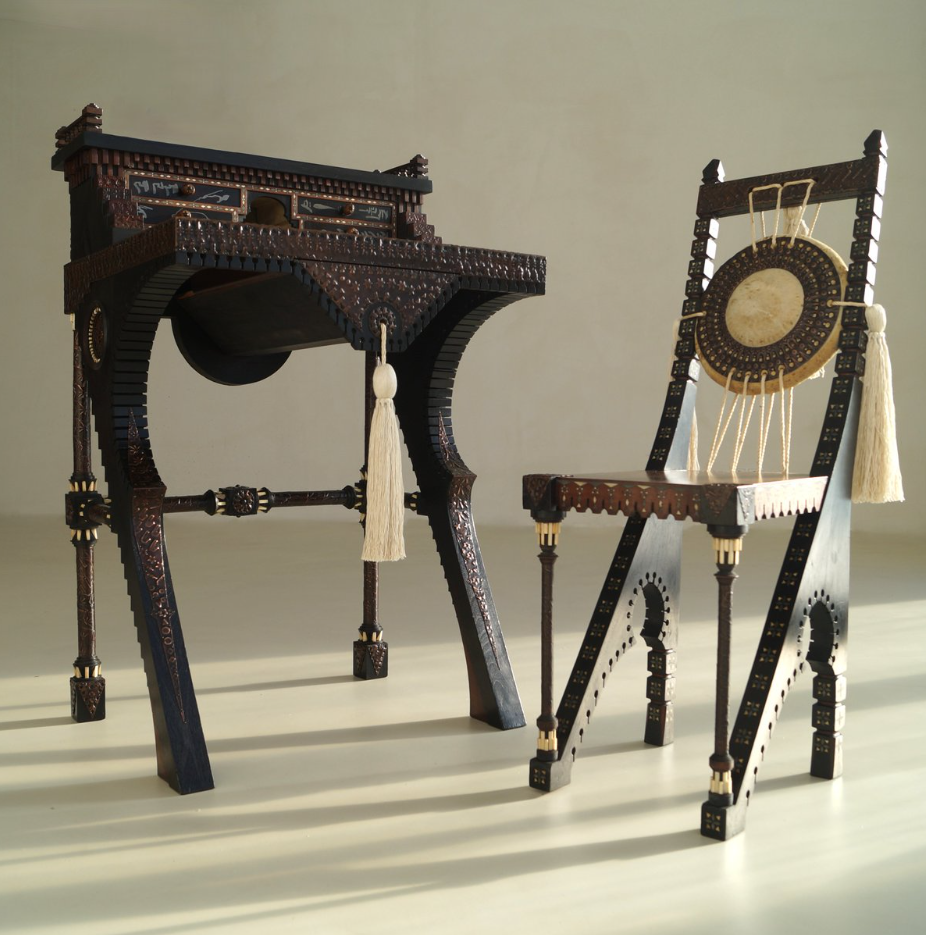
A little explanation of the exhibit’s title, The Art of Bugatti. The 2016 retrospective celebrated not only the marque’s automotive legacy, but also the artistic achievements of the Bugatti family, which were just as remarkable. The founder of the automotive marque, Ettore Bugatti (known as “Le Patron” to his employees), was born in Milan, Italy, into a family steeped in the arts. He was the elder son of Carlo Bugatti, a prominent furniture and jewelry designer associated with the Art Nouveau movement. Artistic talent was present throughout the family: younger brother Rembrandt was a renowned animal sculptor, while his aunt Luigia was married to a painter, and his grandfather, Giovanni Luigi, was an architect and sculptor.
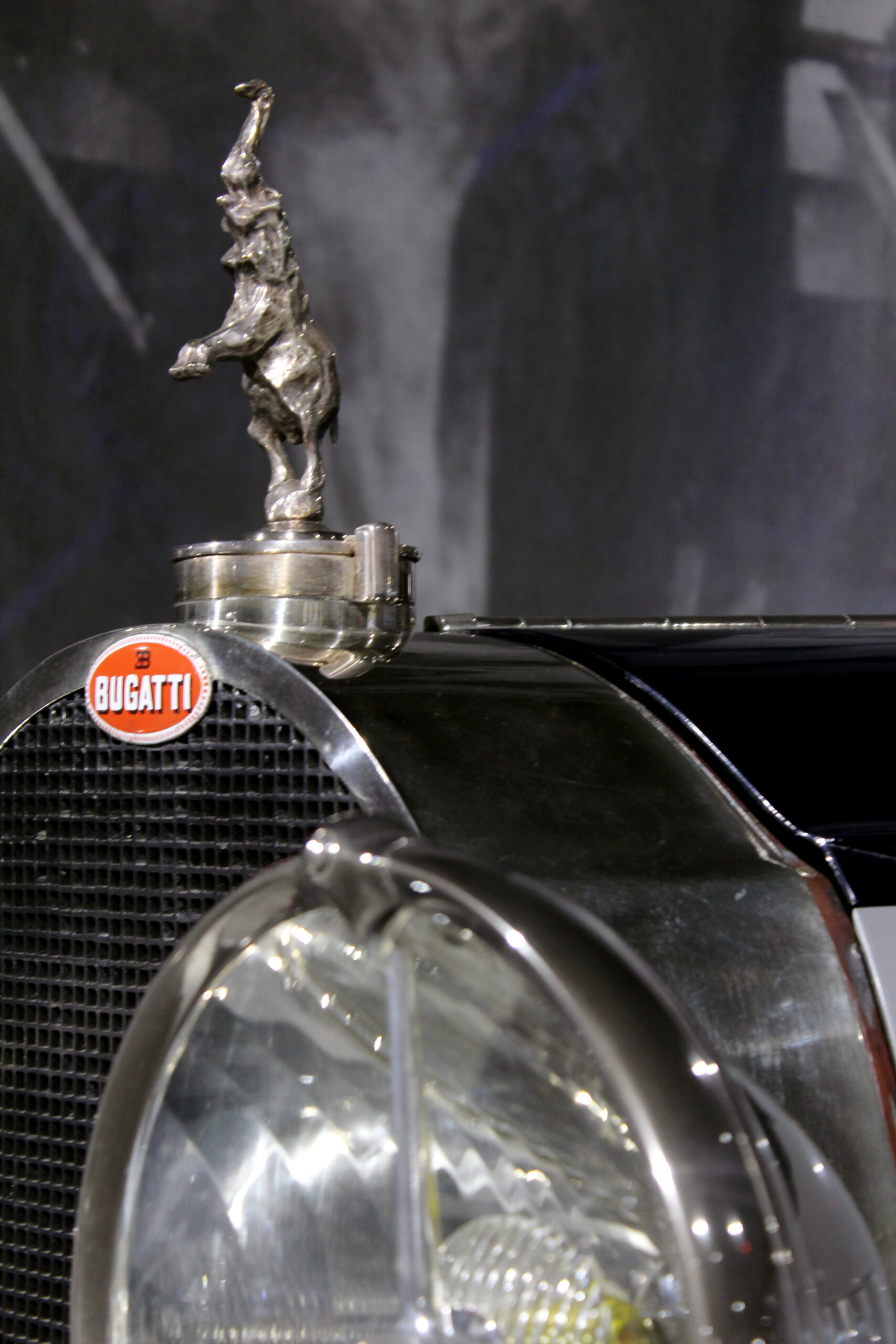
Those artistic tendencies are clearly reflected in Bugatti’s automotive creations. The marriage of art and industry might sound like an unusual combination today, but the automobile was still a relatively recent invention at the time. And one of the central ideas behind the Art Nouveau movement was indeed to bring artistic expression into the industrial age: creating objects of beatury that could be produced in series, even if not quite mass production as we understand it. We know that cost-efficient mass production eventually won the battle for the industrial age’s soul, but in the meantime, though, the work of builders like Bugatti enriched the industrial landscape in ways we’re still enjoying to this day.
But let’s get on with the exhibit. I’ll concentrate mostly on the eye candy and a few general observations here, since just about every surviving Bugatti has been extensively documented elsewhere on the web. Besides, any one of the models featured in the exhibit has enough technical details, engineering innovations, and builder’s quirks to warrant an article of its own.
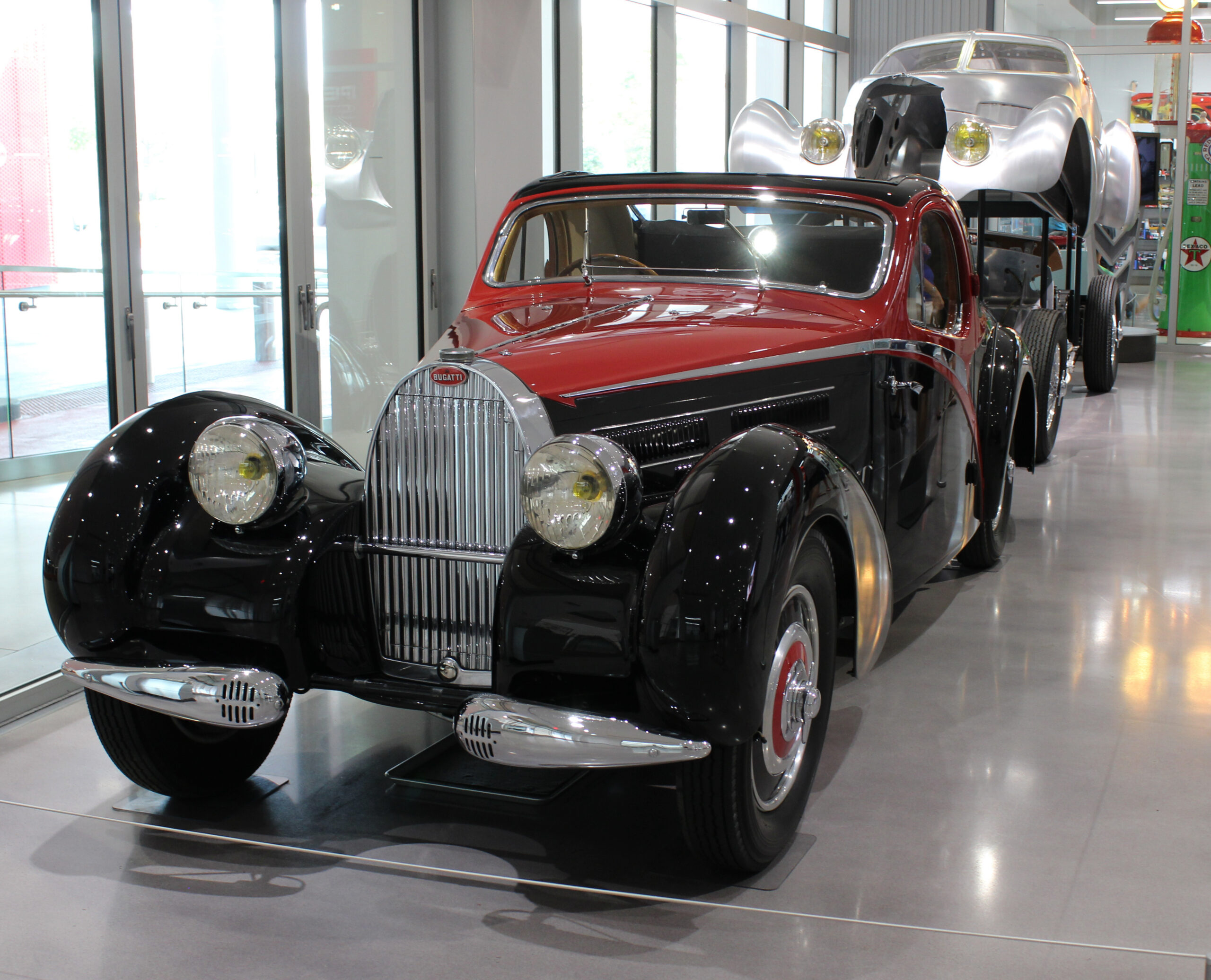
Upon arrival, the art-meets-automotive theme didn’t take long to reveal itself. Near the entrance was a 1939 Bugatti Type 57C Atalante, a lovely example of the marque’s coachwork, which was designed primarily by Ettore’s son Jean. The bodywork of these cars is something to behold, all the more so after the lavish restorations many have received over the years. This particular Type 57C was a stunning combination of chrome, lustrous red-and-black two-tone lacquer, and artfully sculpted forms.
Behind it sat a glimpse of what might have been: a Type 64 chassis, later fitted with an aluminum body under the ownership of collector Peter Mullin. Originally, the bare chassis was one of just three Type 64s completed in 1939. That same year, Jean Bugatti died in a road accident in August, while driving a Type 57C “Tank” test car and attempting to avoid a cyclist.
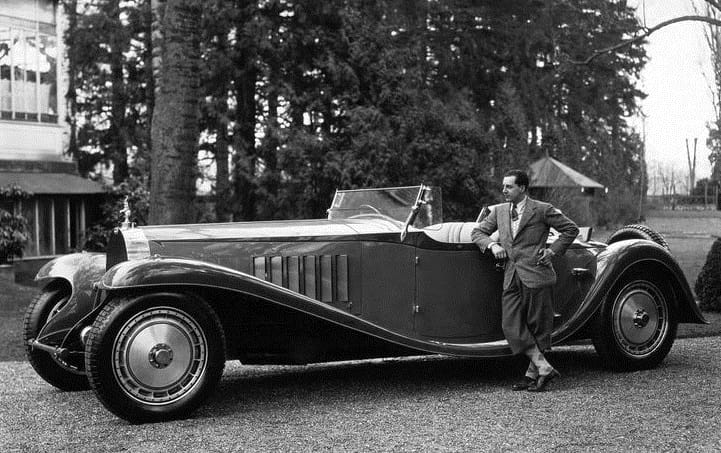
Brief digression: Jean was Ettore’s eldest son and had followed in his father’s footsteps. His untimely death at the age of just 30 was an unexpected tragedy and a turning point for the company, and it’s all better covered in our previous Deadly Sin Bugatti post. Still, during his relatively short life, Jean had already proven himself a remarkably talented designer, combining engineering ability with an artist’s intuition. His death was a huge blow for Bugatti and the Bugatti family.
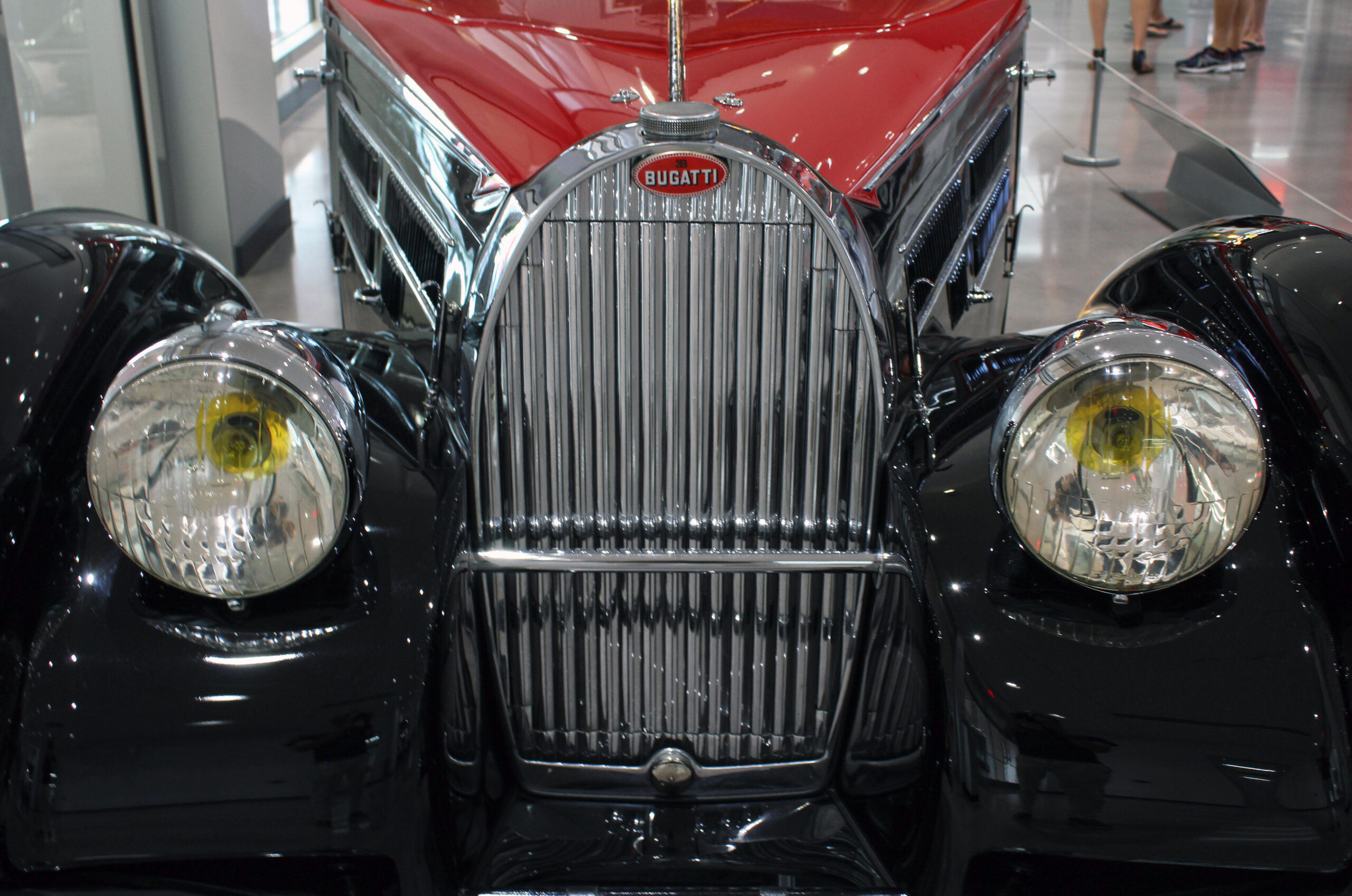
Bugatti’s Type 57 series was an entirely new design conceived by Jean, and it went on to become one of the marque’s most successful models. A total of 710 were built between 1934 and 1940, across several variations. The two principal versions were the original Type 57 and the lowered Type 57S, with the latter also available in supercharged SC form. Power came from a 3.3-liter twin-cam straight-eight, related to the engine used in the Type 59 Grand Prix cars. The Type 57C added a factory-installed Roots-type supercharger.
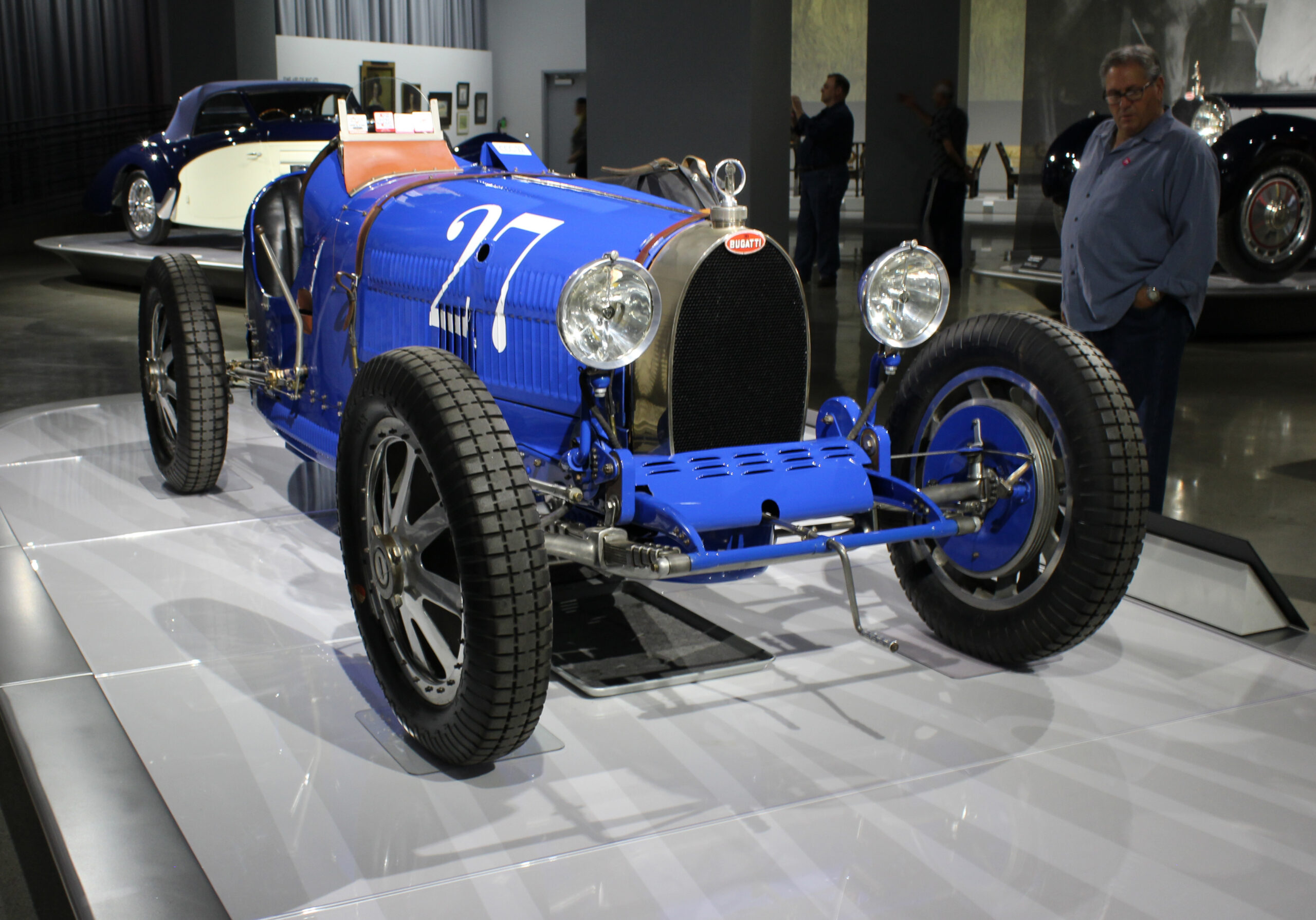
Now, entering the exhibit proper, let’s take things more or less in chronological order. This 1925 Type 35C Grand Prix was presented under the heading “Ettore’s Tour de Force.” Hard to argue with that assessment. The Type 35 was the kind of car on which Bugatti built its reputation, and the model became one of the most successful racing machines of its era. Produced from 1926 to 1930, the various Type 35 versions went on to score more than 2,000 victories over the course of their racing careers, in the hands of both factory drivers and privateers. Its distinctive French Blue finish and iconic horseshoe grille remain defining elements of the Bugatti identity to this day.
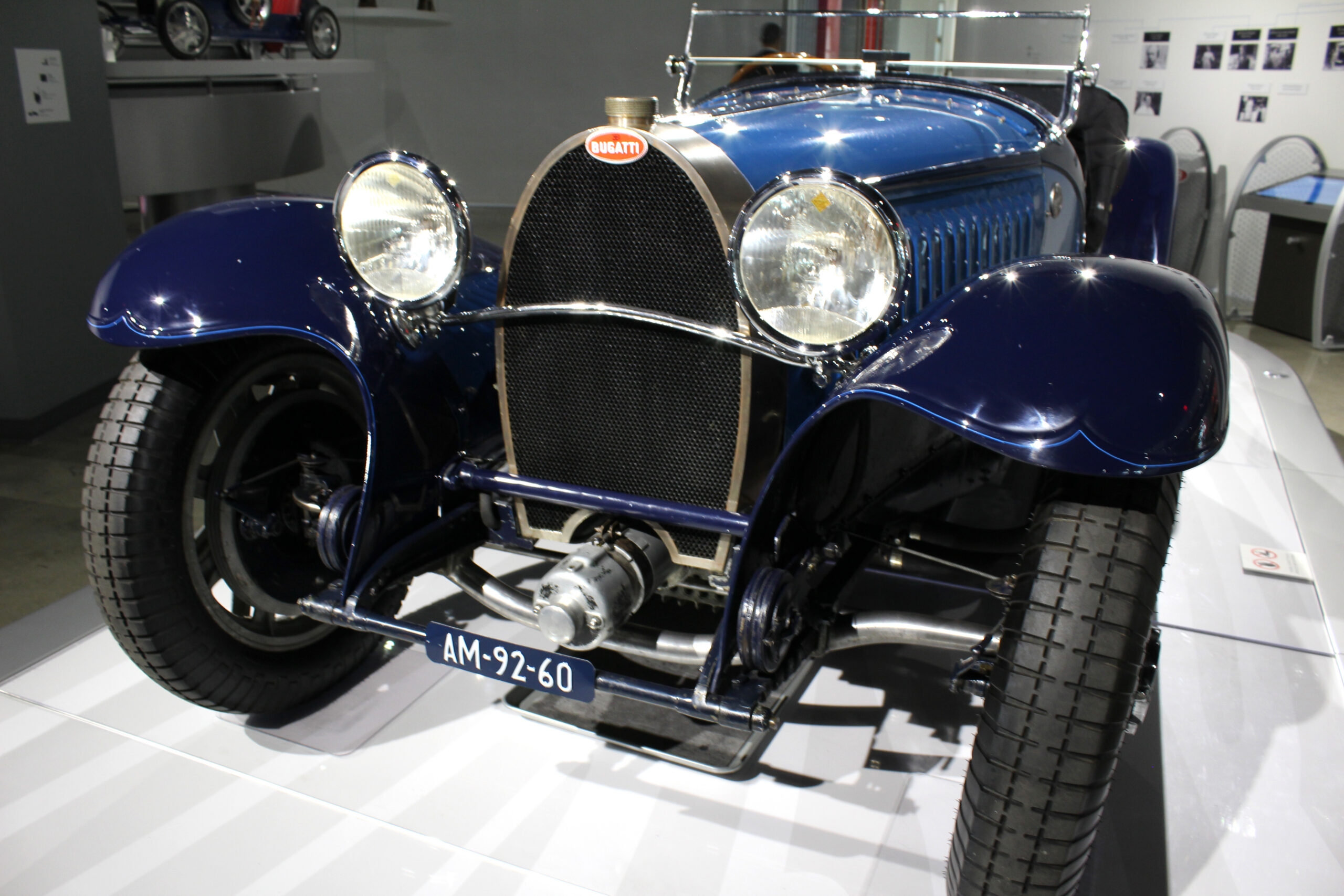
The Type 35’s successor was the Type 51, and its road-going counterpart is represented here by the Type 55 Super Sport Roadster. Another Jean Bugatti design, the Type 55 was built between 1932 and 1935. This lovely 1932 example, finished in two shades of blue, makes quite an impression.
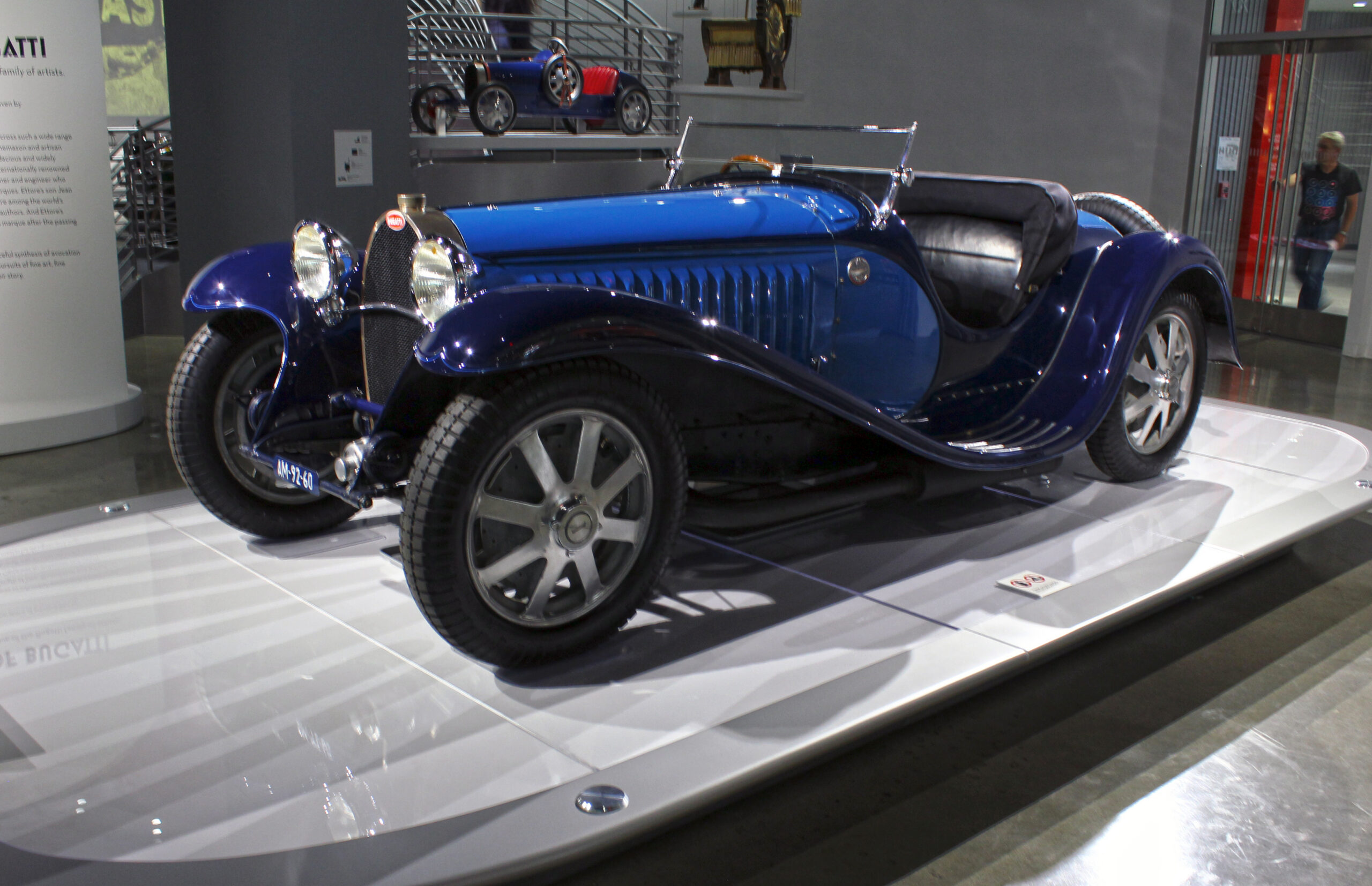
The Type 55 used a supercharged straight-eight engine paired with a four-speed gearbox. Lovely to look at, as just about any Bugatti is, though back then criticized in its day for being impractical and deafening to ride in. Then again, isn’t that exactly what supercars continued to be criticized for well into later decades?
If you look behind it, on the staircase, you’ll spot a rather different Bugatti: the Type 52 “Baby,” a half-scale electric replica of the Type 35 Grand Prix car, built for children.
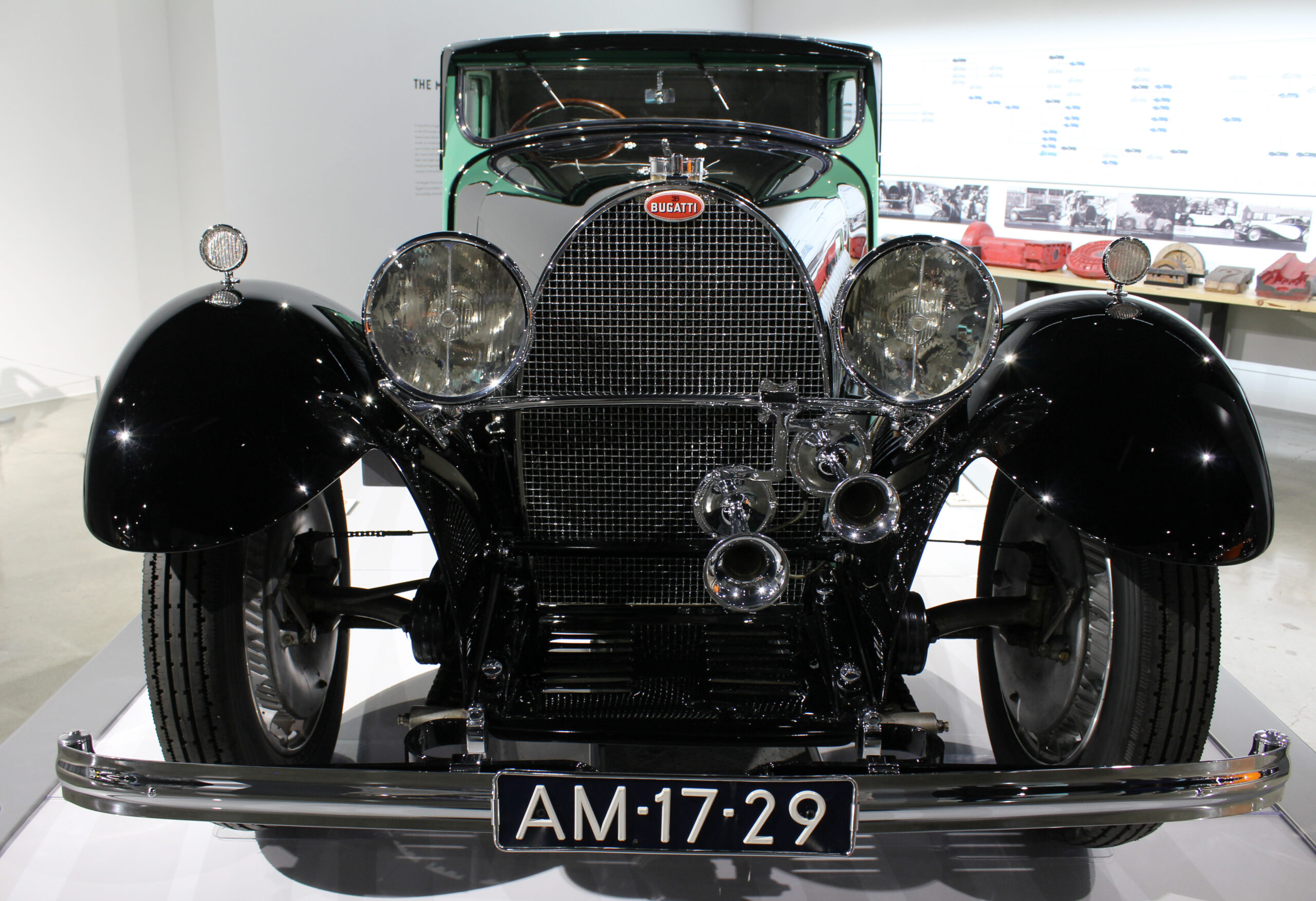
Moving on to a 1931 Type 50 Grand Touring Coupé, itself an evolution of Bugatti’s Type 46.
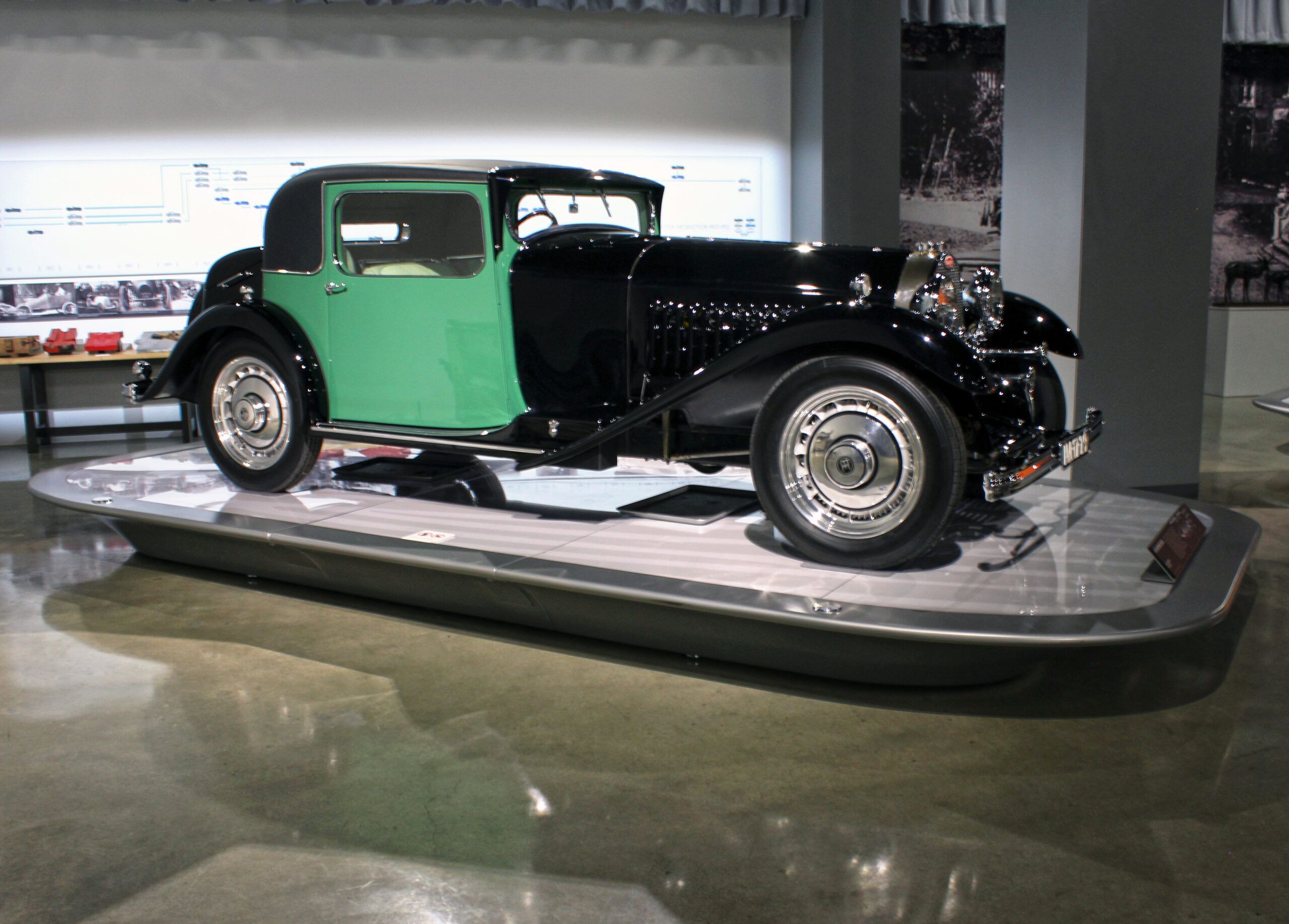
This particular example wears a striking two-tone finish and exquisite, yet forceful, coachwork by the Parisian firm Million-Guiet.
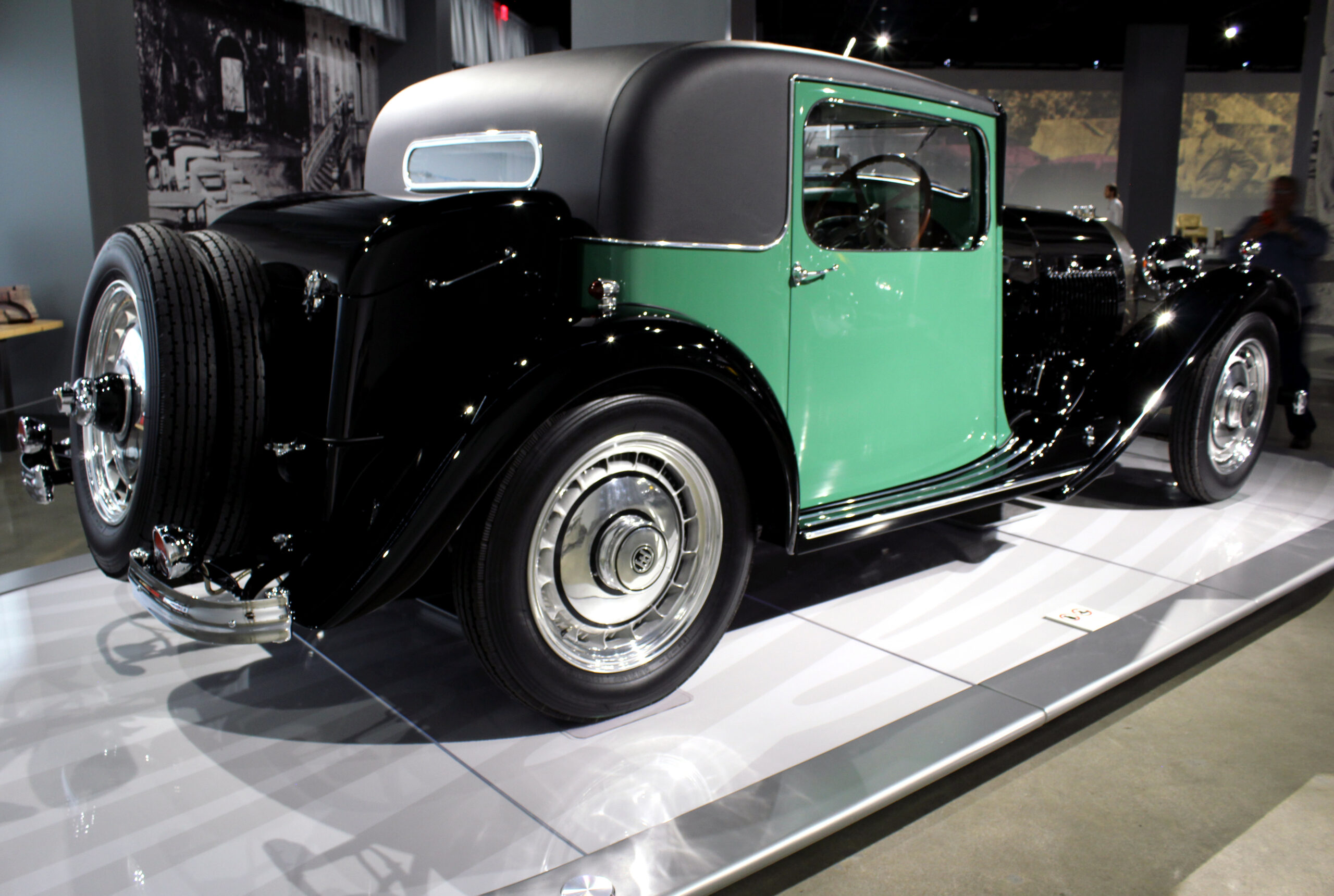
A one-off creation, it was powered by Bugatti’s supercharged straight-eight, here displacing a substantial 5.0 liters. Another example of how the marque combined serious engineering with some of the most distinctive automotive styling of its time.
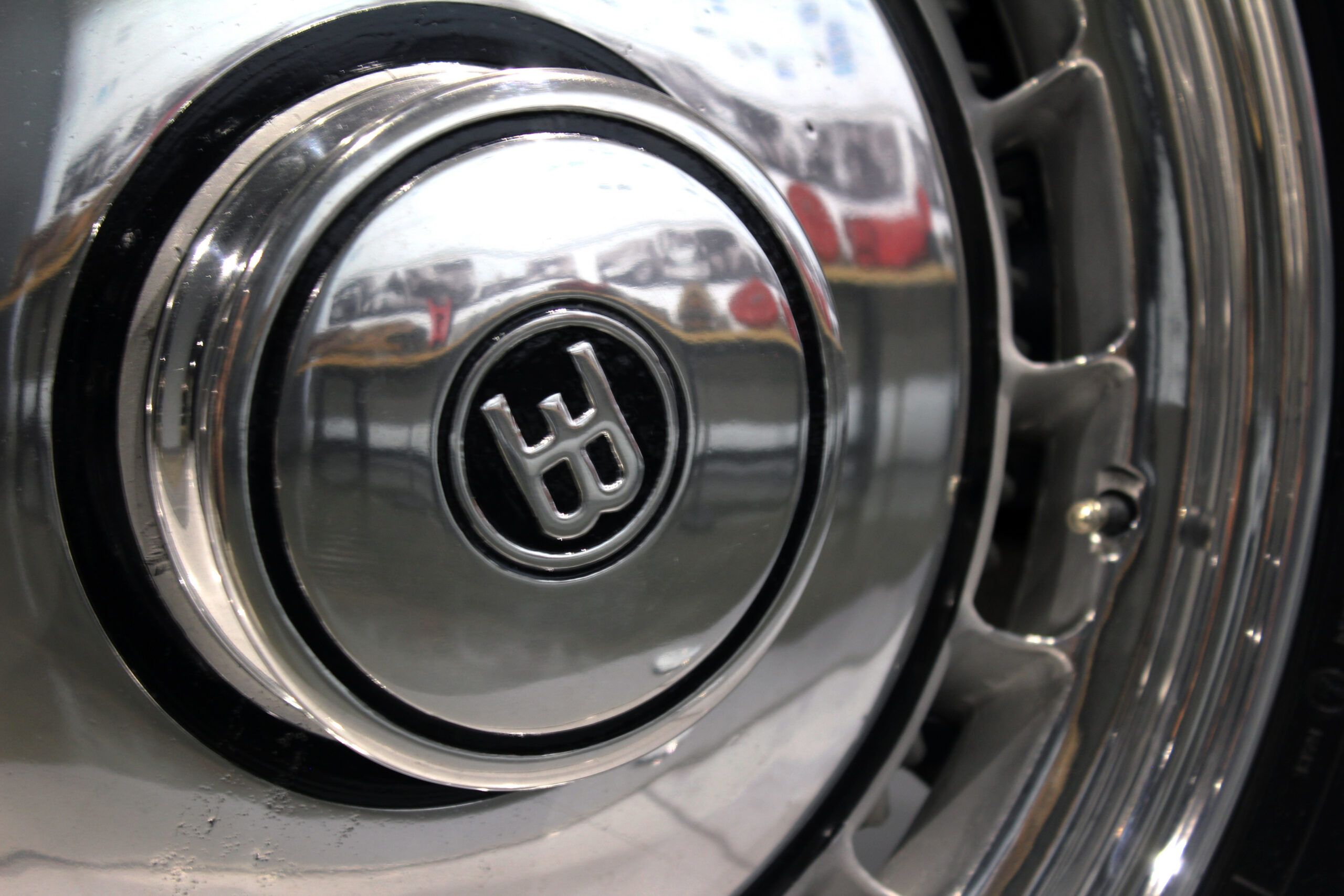
Again, there’s hardly any part or surface in these creations that doesn’t merit a closer look.
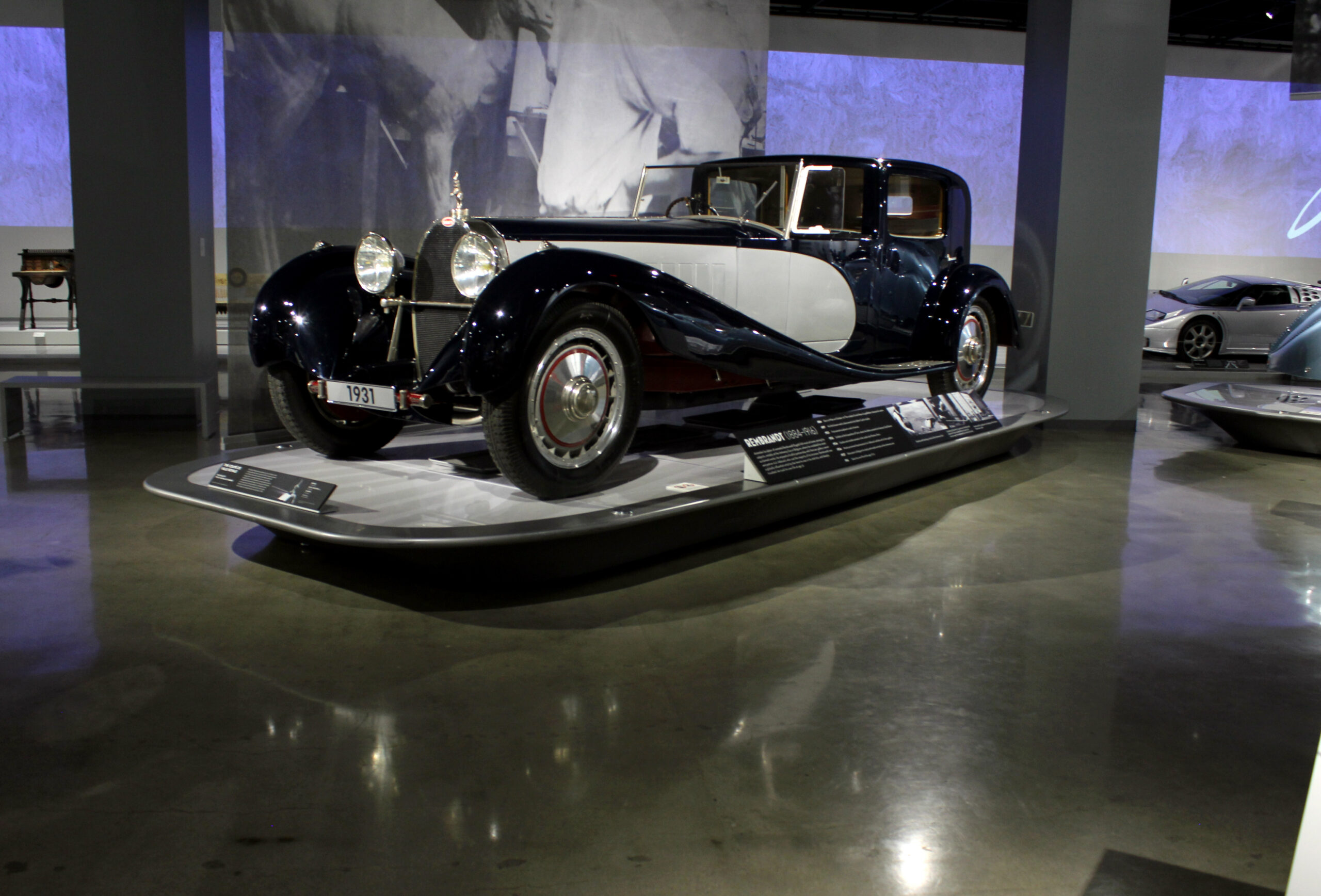
We’re now entering the realm of the truly massive and exclusive, quite literally, with a Type 41 Royale. This particular example is a 1931 Coupé de Ville, wearing coachwork by Henri Binder. Roughly 20% larger and 25% heavier than a Rolls-Royce Phantom VII, it’s among the largest passenger cars ever built. Seeing it in person really drives the point home: it’s an absolutely massive, imposing, and yet gorgeous-looking machine.
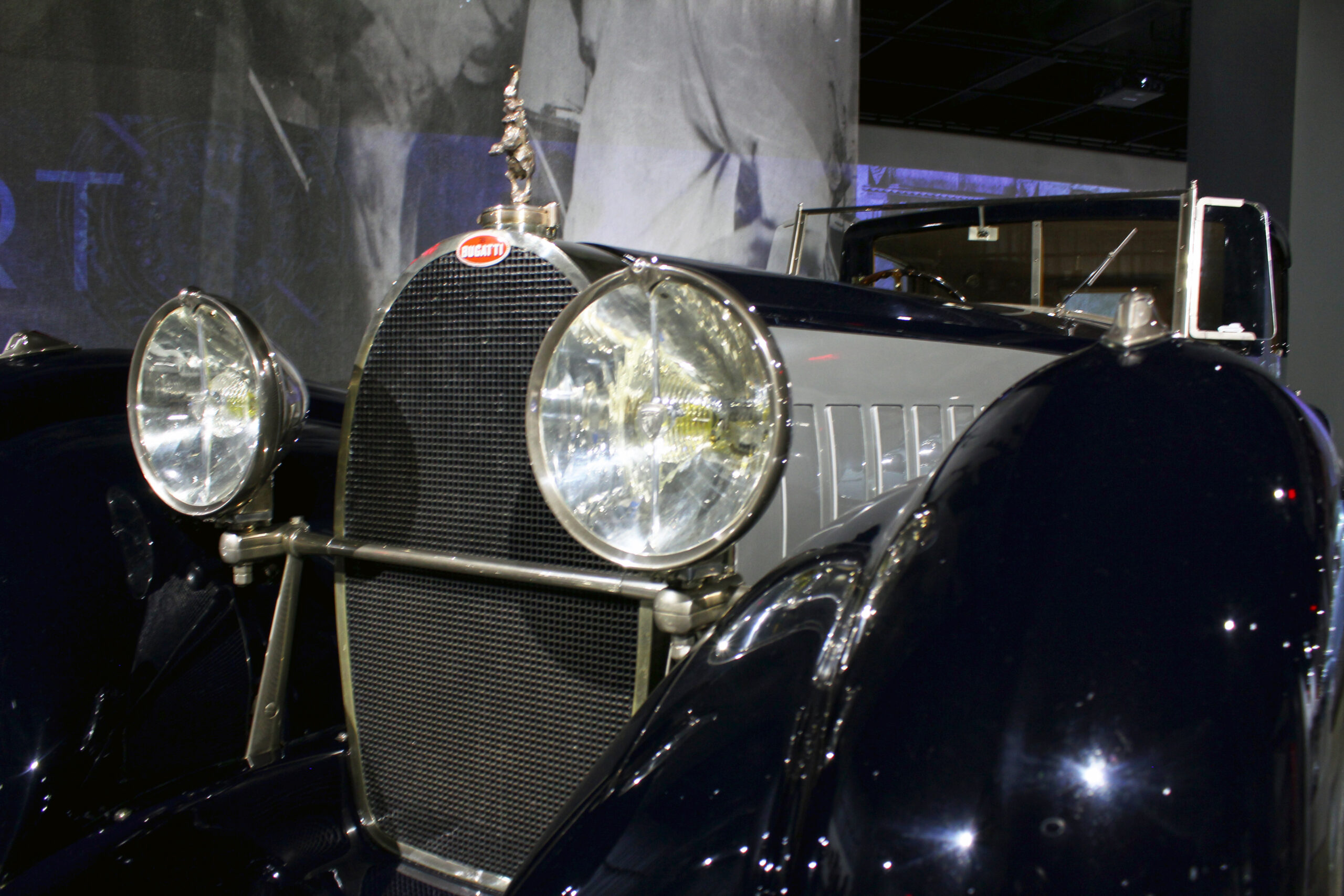
The Type 41 Royale was also one of Bugatti’s more star-crossed creations. Conceived at the height of the Roaring Twenties, it was intended to be the marque’s ultimate luxury offering, aimed, in Ettore’s own vision, at royalty and the world’s wealthiest buyers. How well that ambition might have worked under more favorable circumstances is anyone’s guess. The market for ultra-exclusive automobiles has always been a difficult one to crack, and the Great Depression certainly didn’t help. Of the 25 Royales originally planned, only seven were completed between 1927 and 1933, all with unique coachwork.
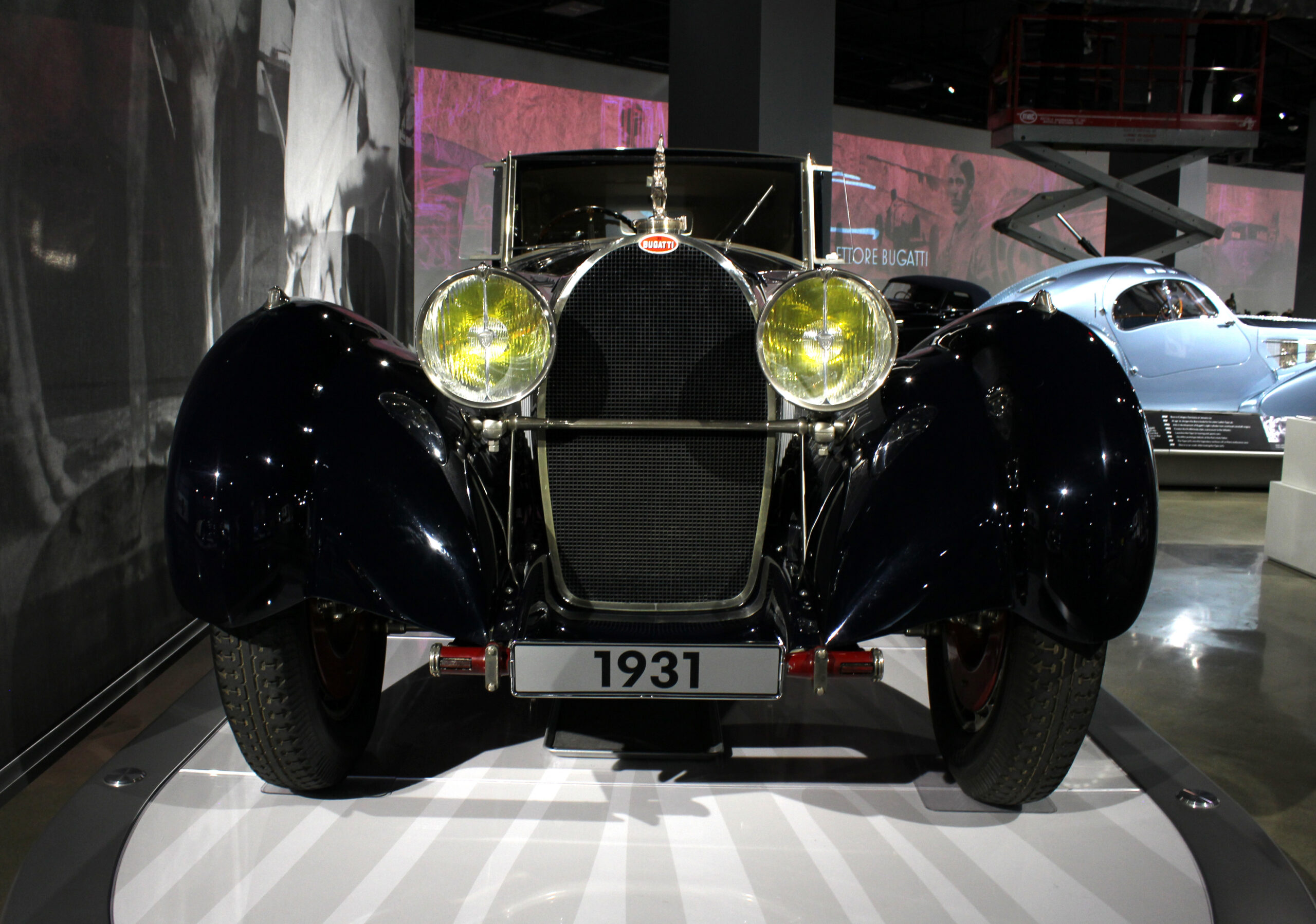
The Coupé de Ville was the second Type 41 Royale built, but the first to find a customer. It originally left the factory as an open two-seater, with roadster bodywork and dramatic full-length fenders. Its second owner later had it rebodied in the Coupé de Ville style we see today. Cars like this are exceptionally well documented and come with plenty of fascinating anecdotes. One of its best-known tales concerns its wartime survival: to keep it away from the Nazis during World War II, the car was reportedly hidden in the sewers beneath Paris.
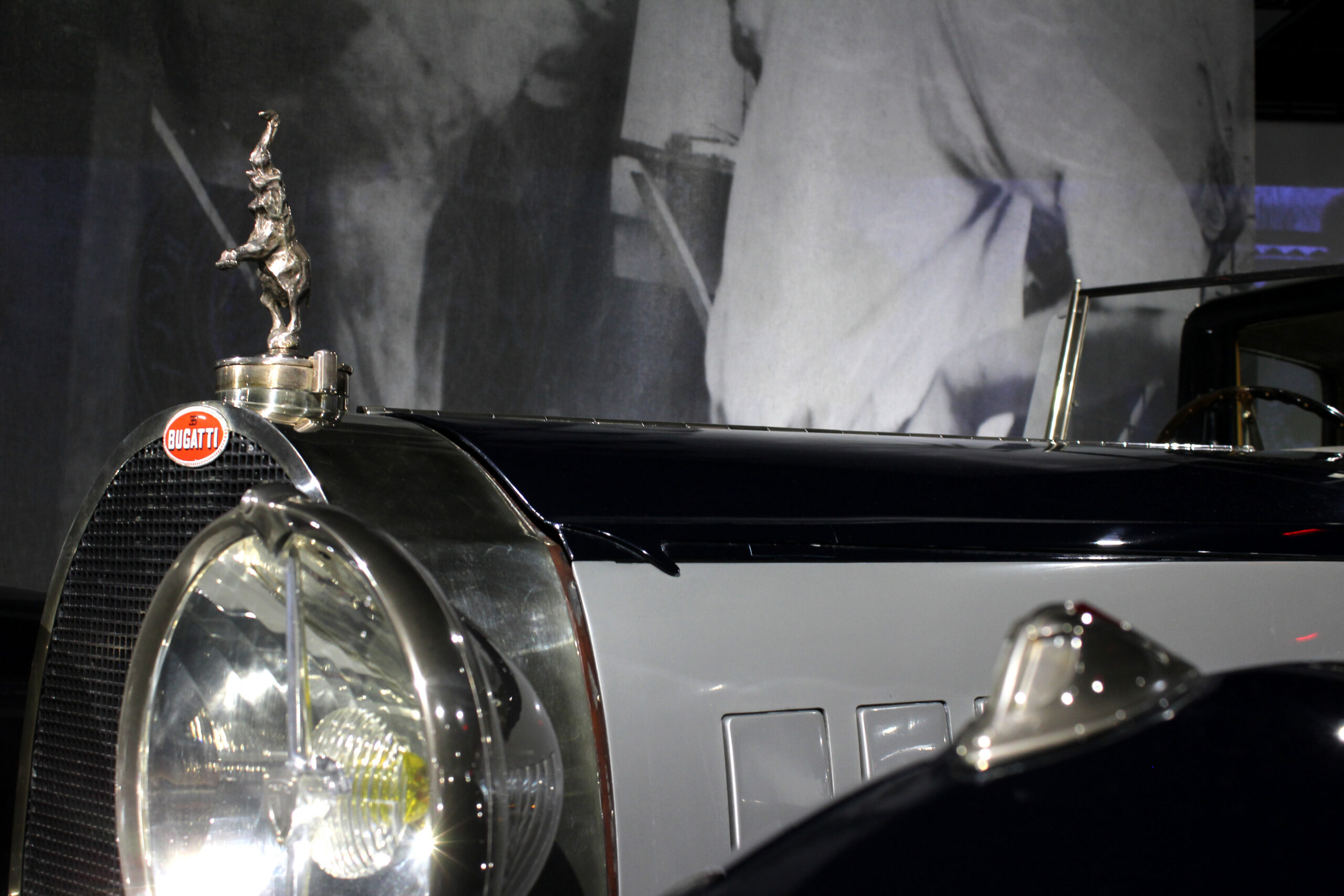
Less dramatic, perhaps, but certainly relevant to its preservation: the Binder Coupé de Ville has been owned by Volkswagen AG since 1999. As the current owner of the Bugatti marque, Volkswagen has kept the car in circulation, taking it to museums and automotive events around the world as part of the brand’s heritage and promotional activities.
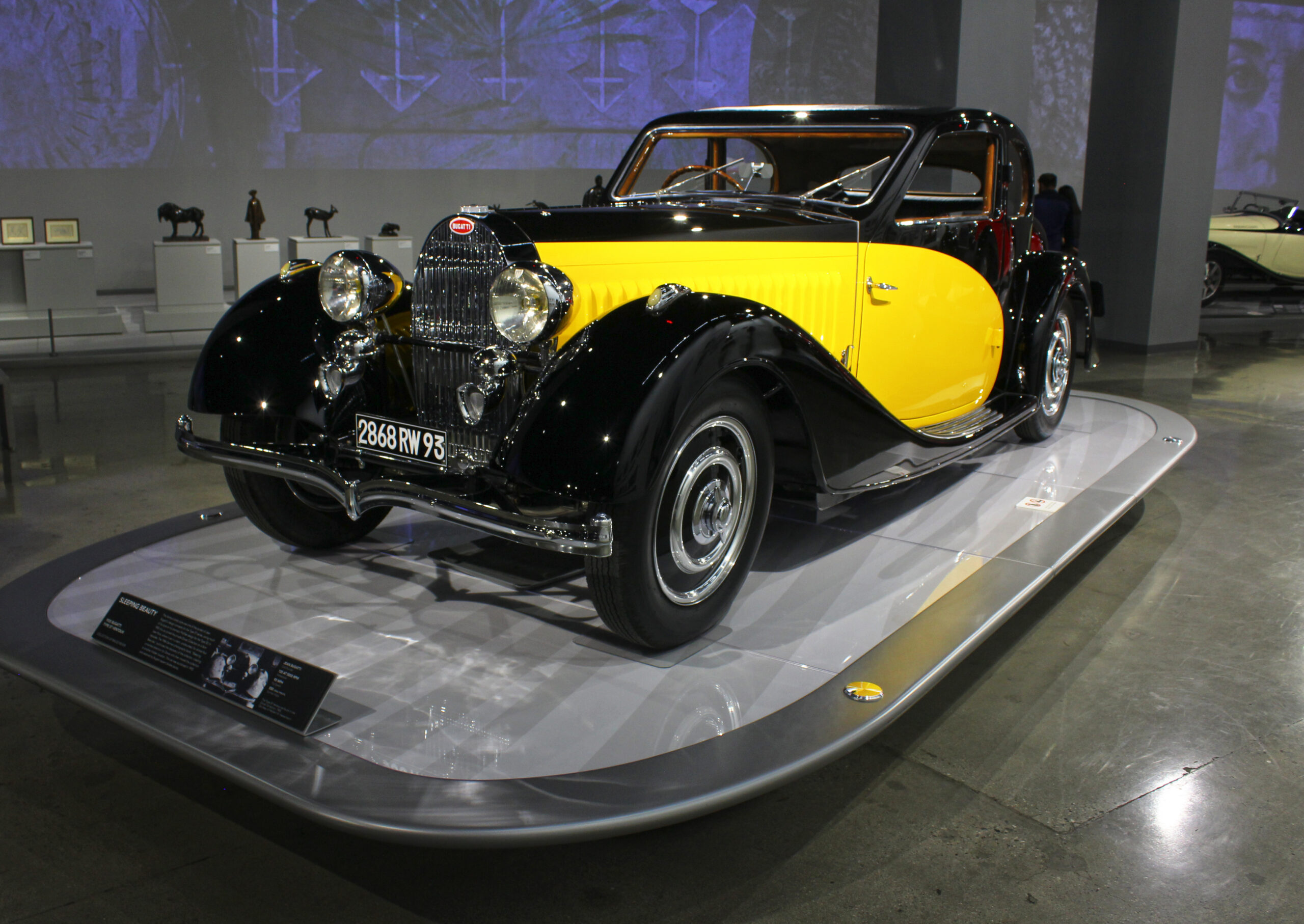
The Type 57s were the most numerous models on display, but their varied styling and coachwork made each one a joy to experience. This 1935 Type 57 Ventoux Coupé, finished in an arresting yellow-over-black two-tone combination, was another standout of the exhibit.
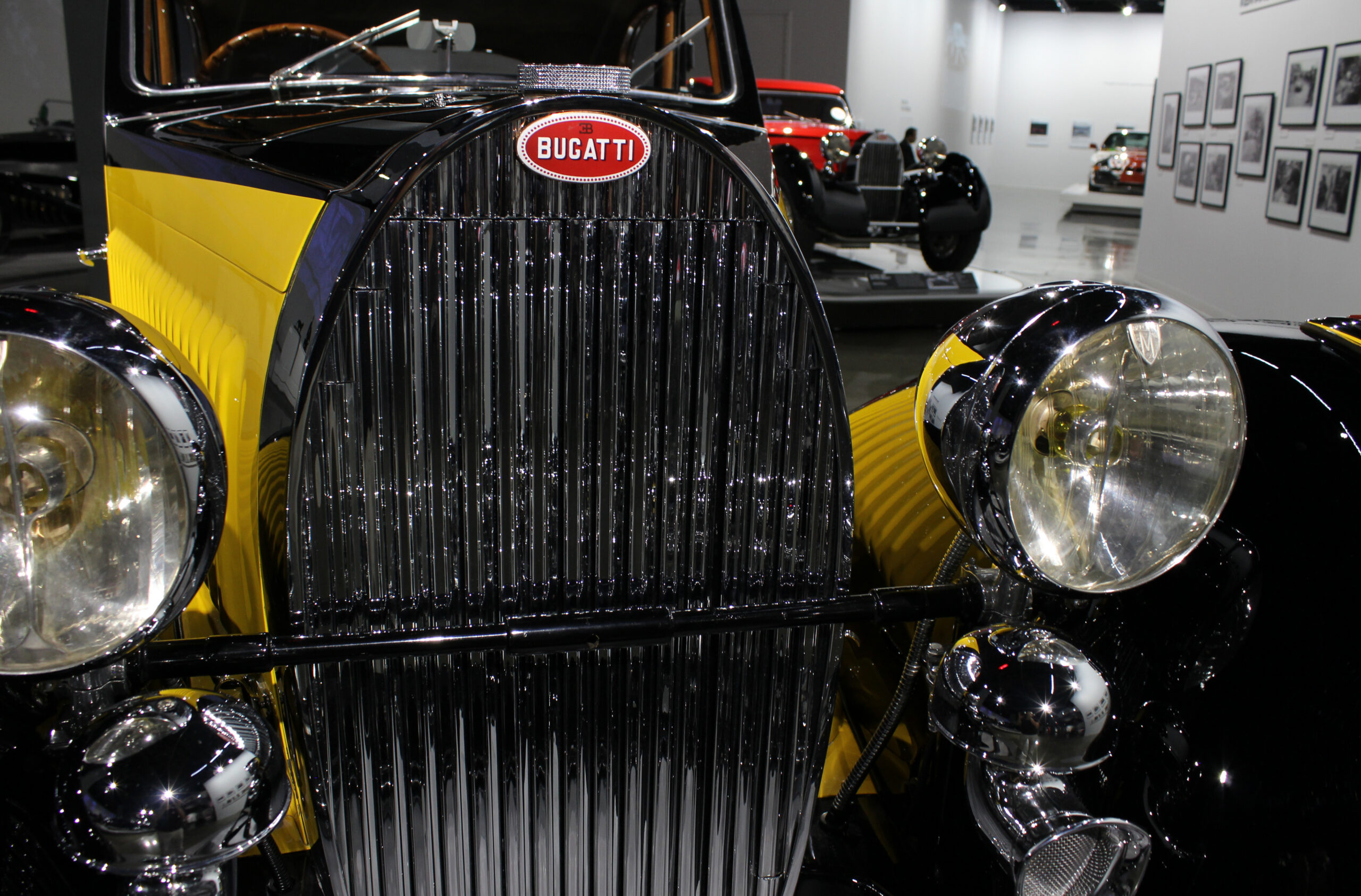
Several of the polished chrome pieces on this Type 57, from the horns to the radiator and its cap, are almost jewel-like in their detailing.
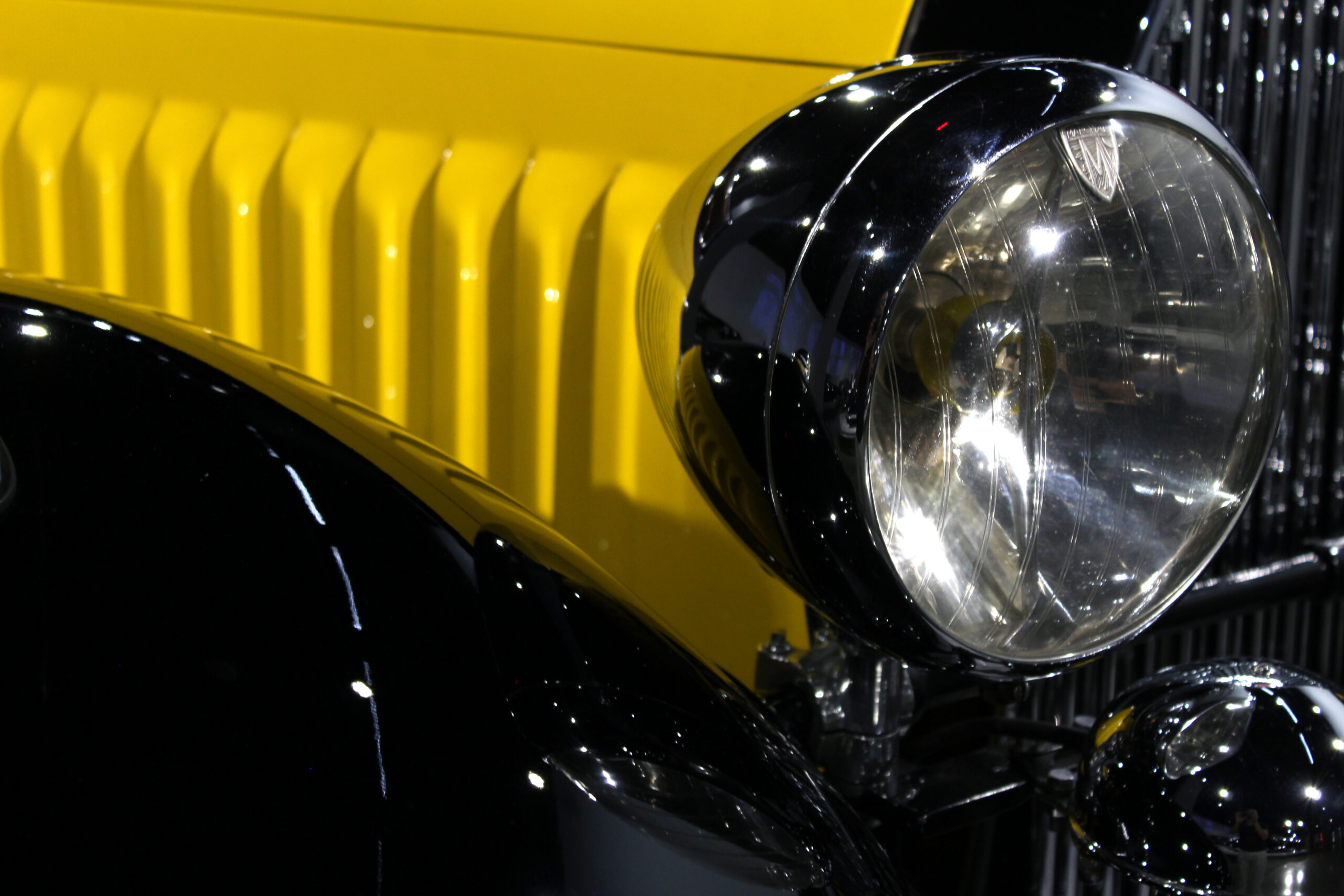
Then, there are details like the Marchal headlight emblems, lovely to look at up close.
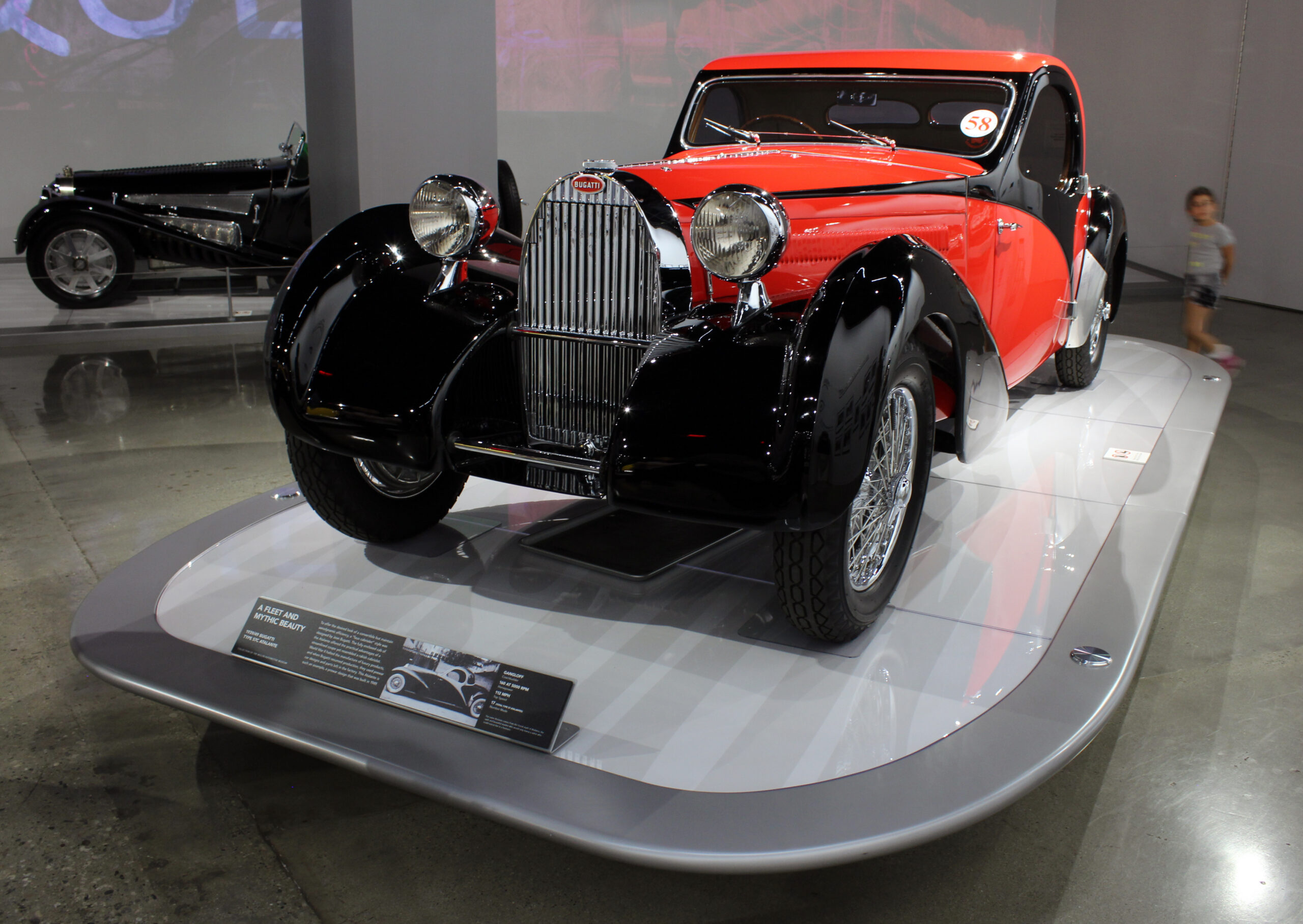
Another supercharged Type 57C Atalante, a 1939 model with an eye-catching two-tone red and black combination.
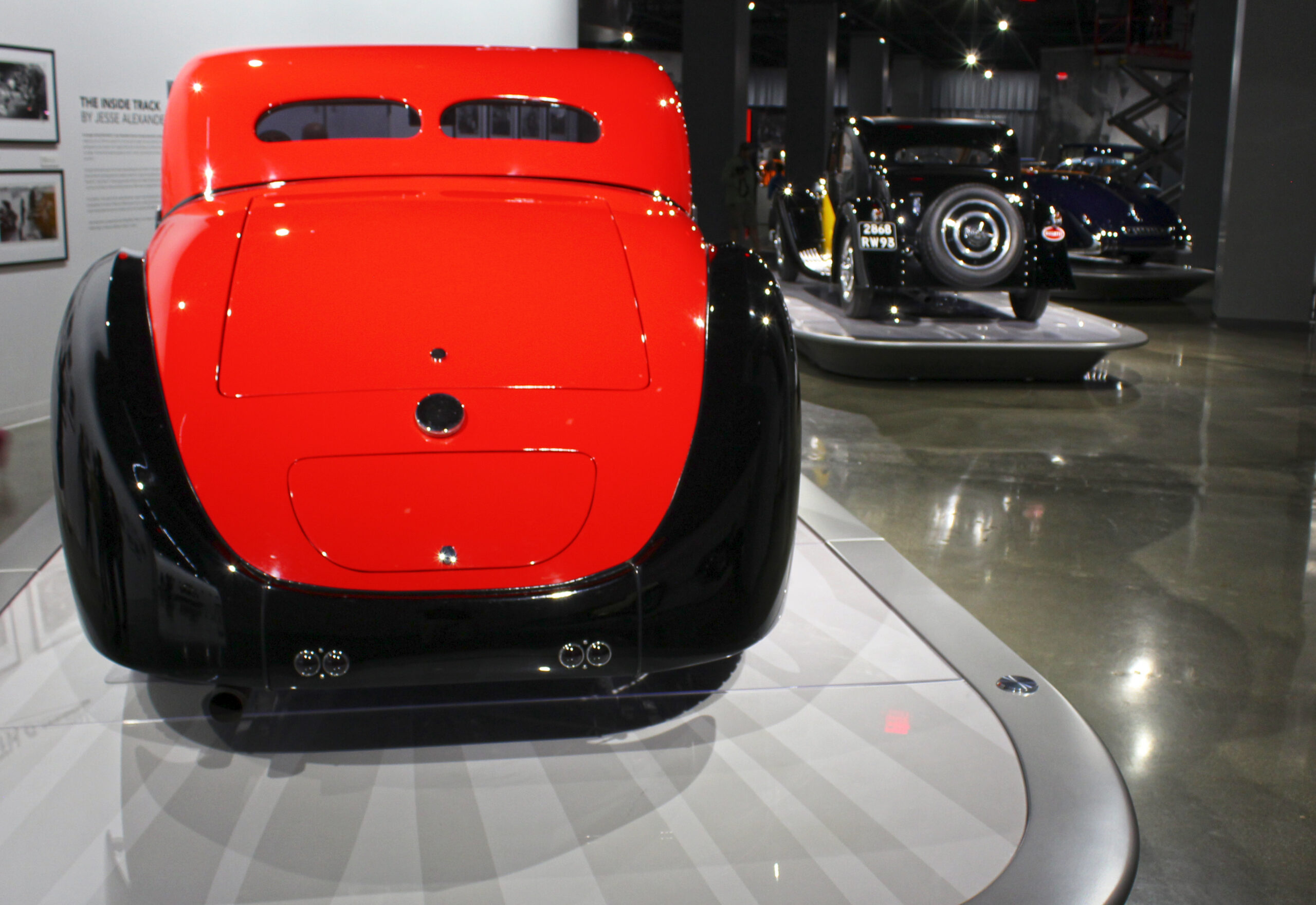
And the rear; pure French Art Deco artfulness.
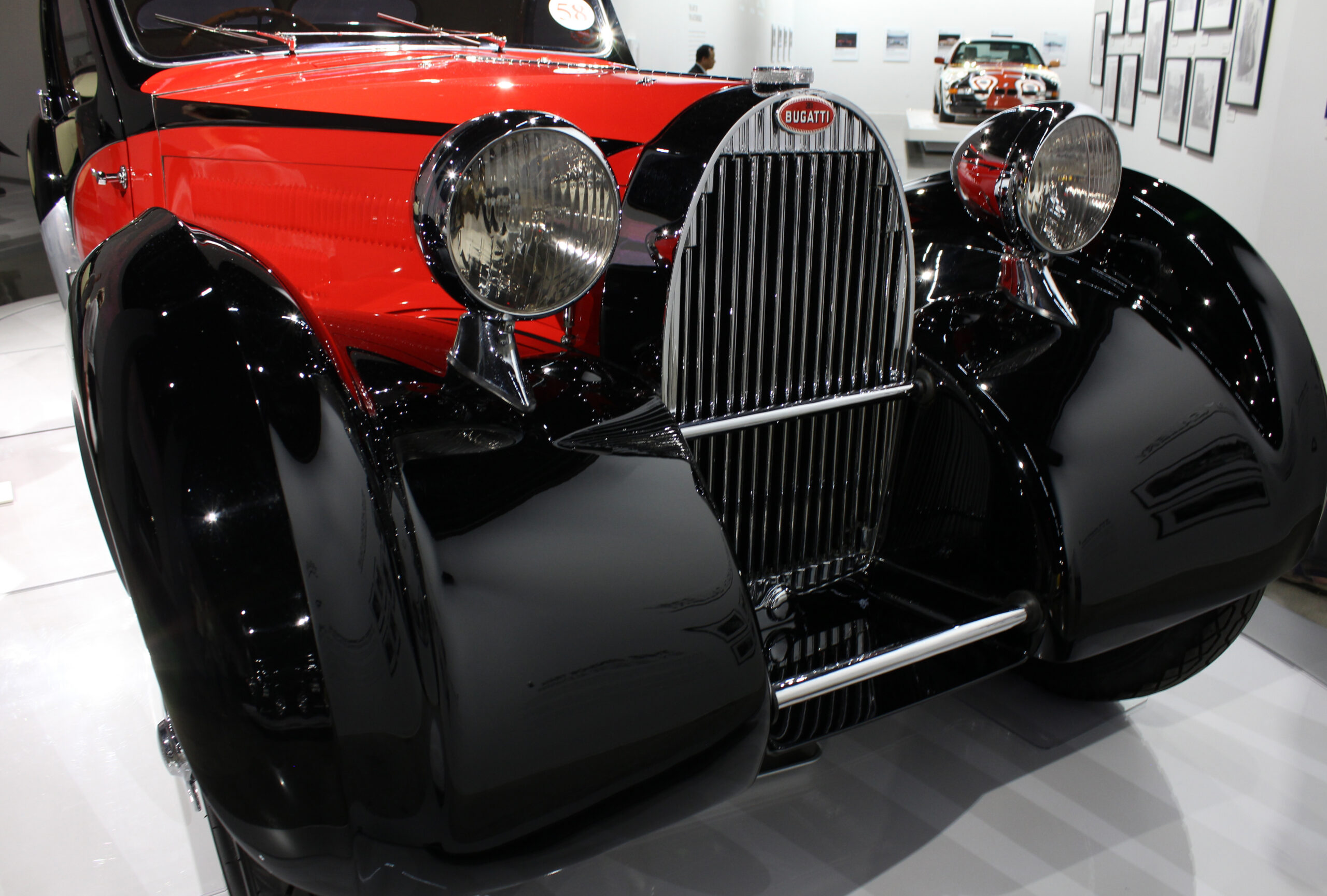
No way to mistake that horseshoe Bugatti radiator.
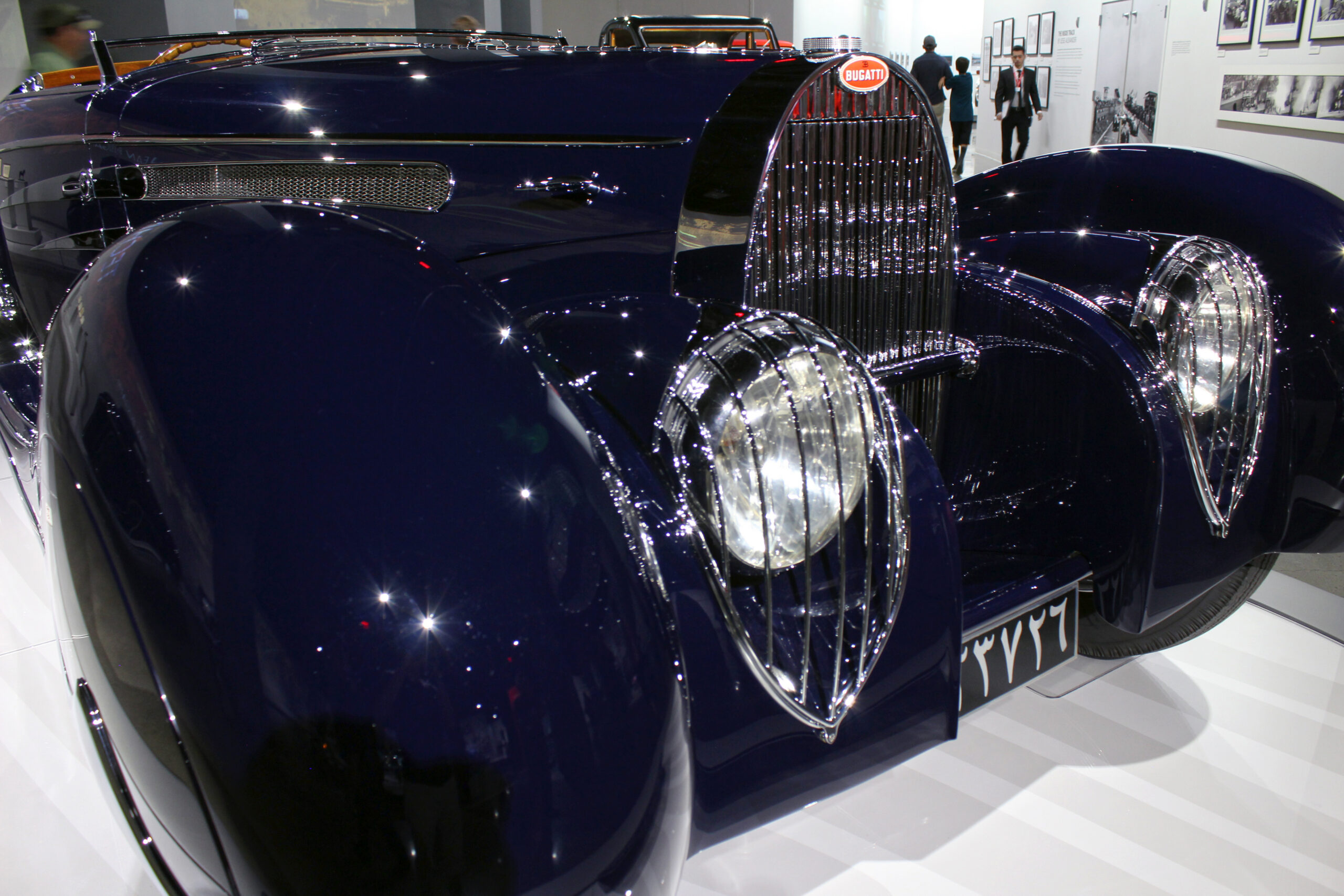
As many of you will know, French coachbuilders were embracing increasingly expressive designs during the Art Deco and Streamline era of the 1930s. This is another Type 57C, a 1939 example wearing particularly voluptuous and artistic coachwork by Vanvooren of Paris. A wonderful illustration of just how far these coachbuilders were willing to push the boundaries of automotive styling.
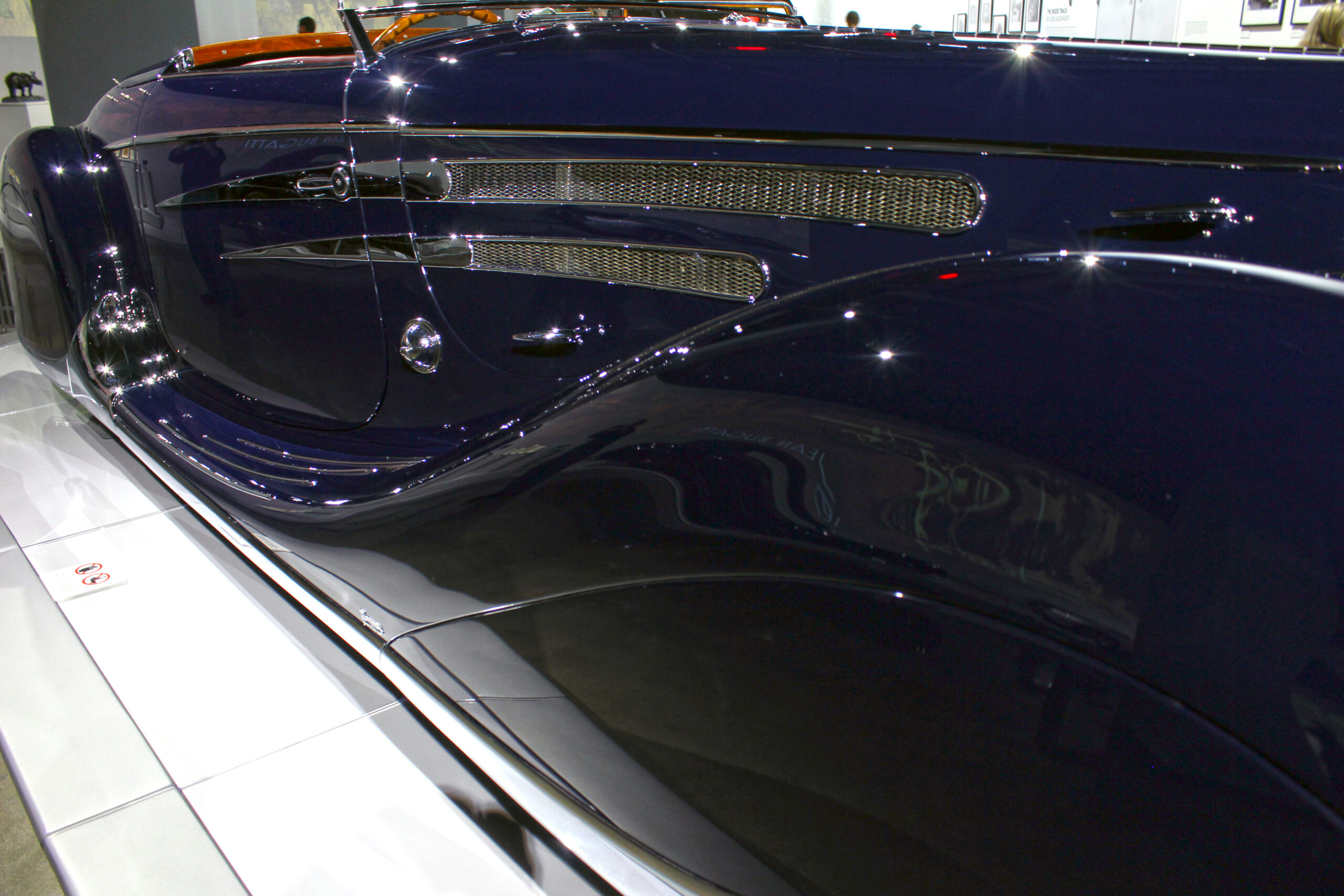
Dramatic, expressive, and vivid, from a distance and up close.
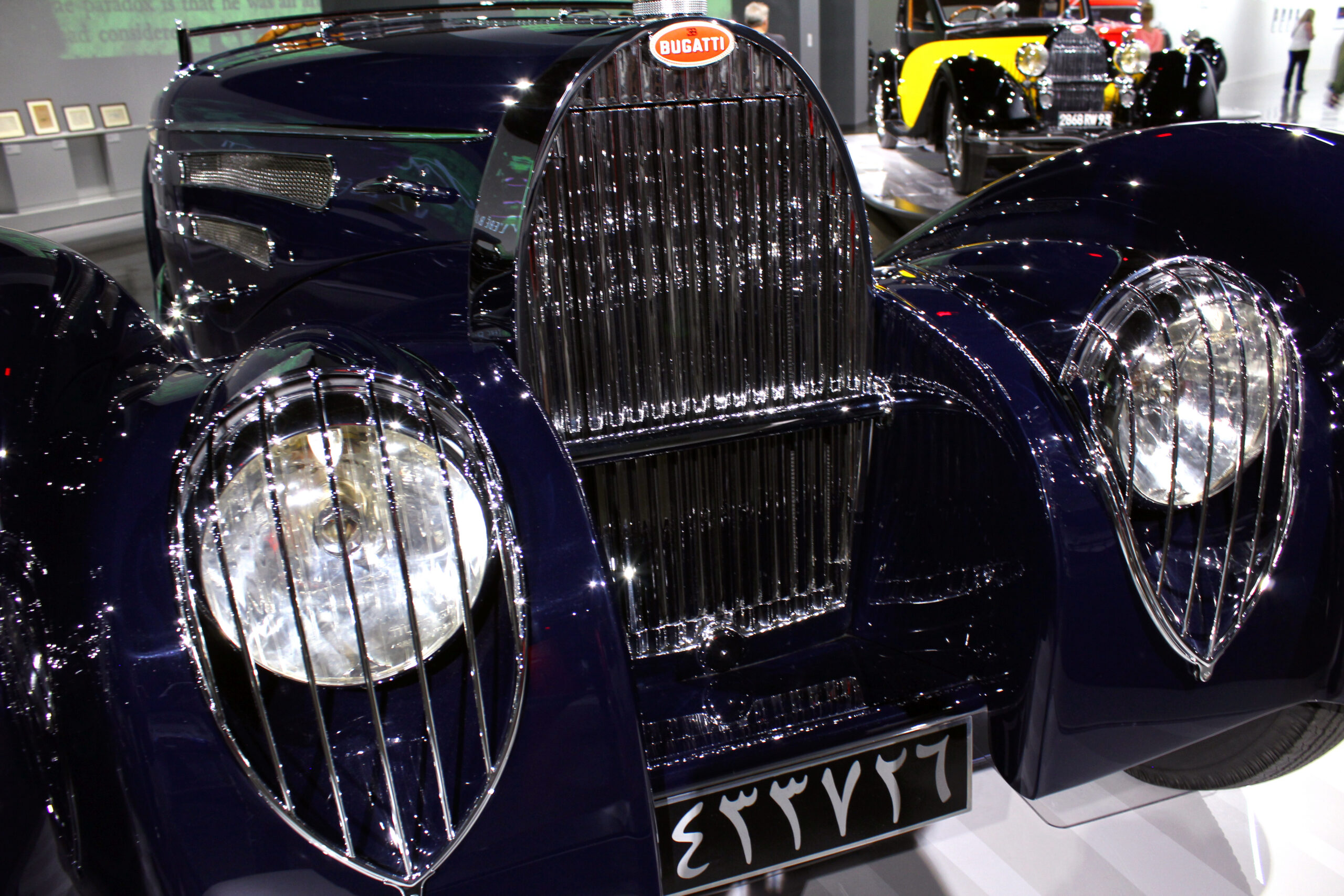
Subtlety is not part of this Bugatti’s equation.
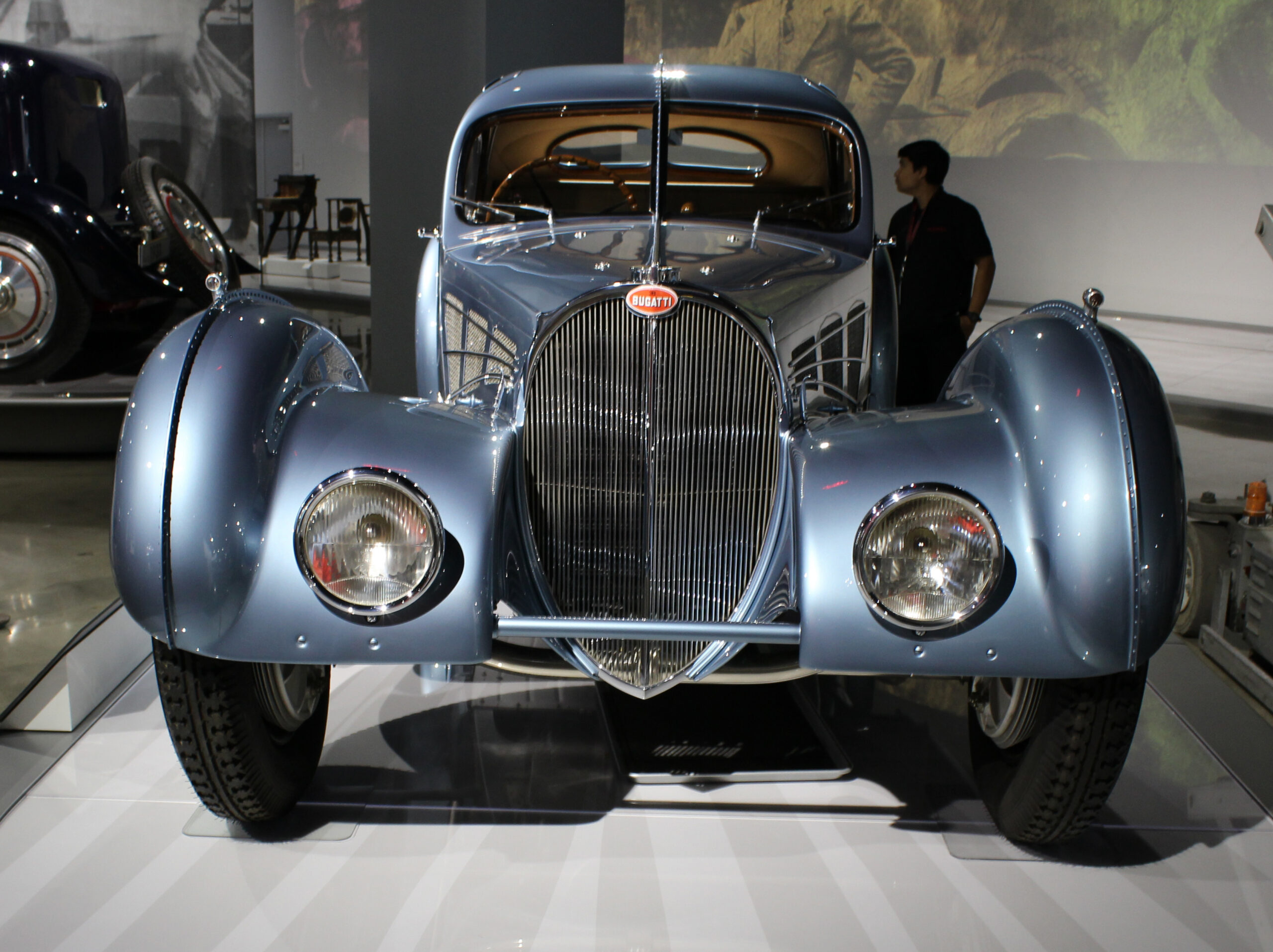
Taking center stage in the exhibit was this 1936 Type 57SC Atlantic, presented under the heading “Jean Bugatti’s Masterpiece.” Another statement I’m certainly not about to argue with.
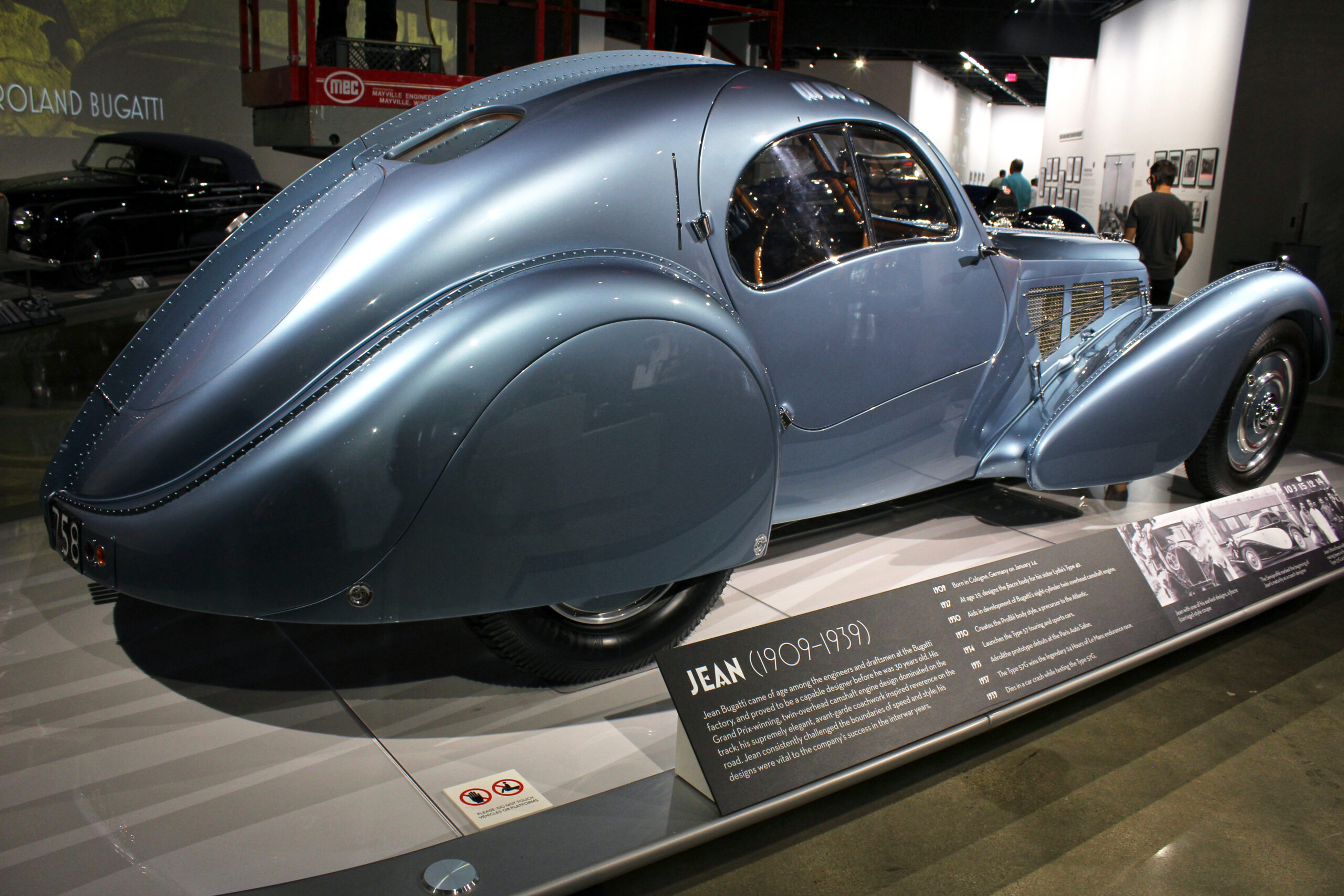
The Type 57S and 57SC variants were lowered versions of the standard Type 57, but achieving that lower stance required considerable reengineering. Among the changes were a redesigned rear axle that passed through the bodywork and dry-sump lubrication, which allowed the engine to sit lower beneath the new, more streamlined hood.
Completed in September 1936, this Atlantic is said to incorporate several components and design elements from Jean’s Art Deco-inspired Superprofile coupé prototype, displayed at the 1935 Paris Motor Show. The result is a remarkable blend of engineering and artistic expression. Before “form follows function” became a design mantra, Jean seemed more interested in treating form and function as equal partners, creating something in which neither had to compromise for the sake of the other.
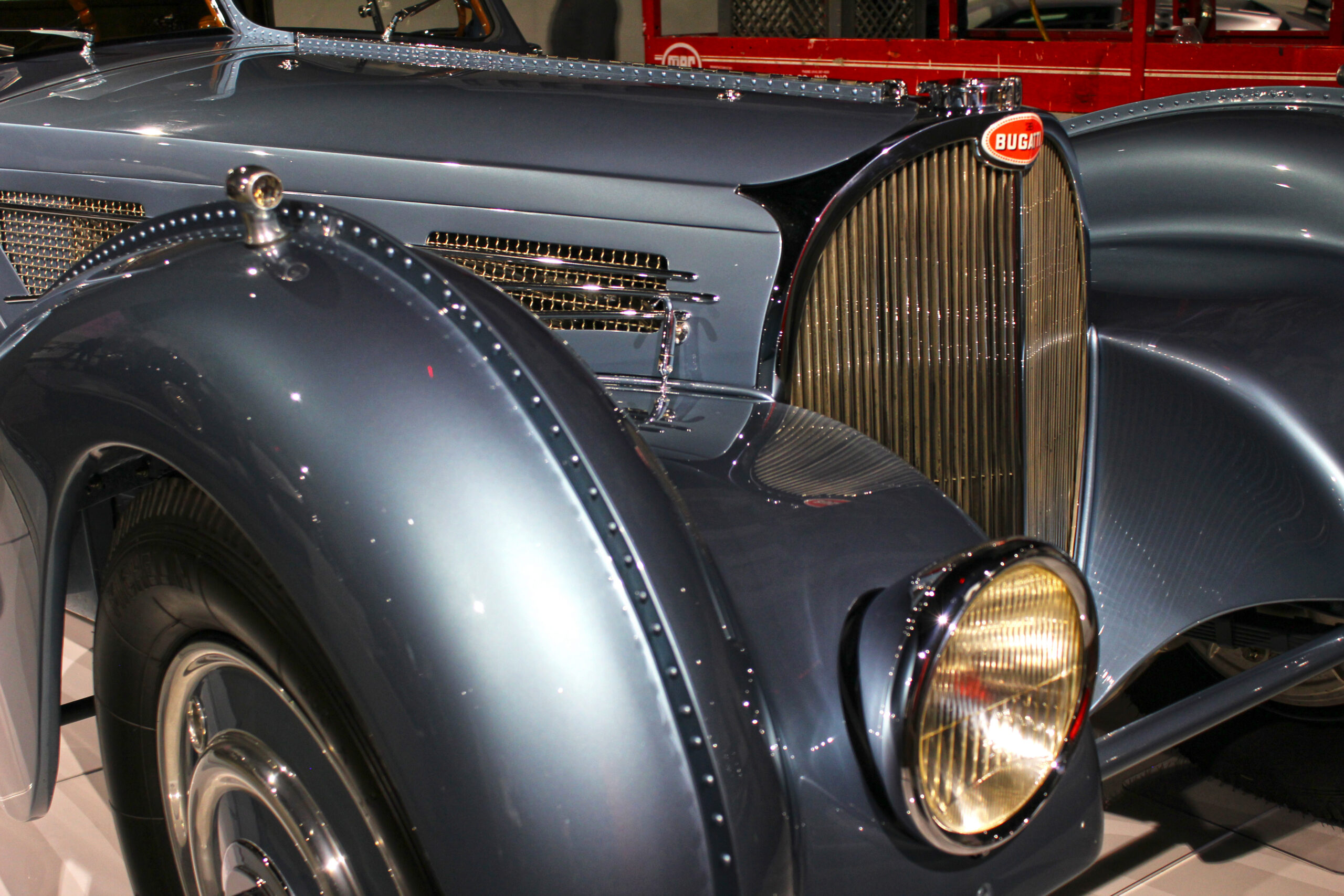
Like the exhibit’s curators, I was quite taken by the Aérolithe Coupé. It’s an incredibly striking car to see in the metal, from its overall shape to the way it blends artful forms with exposed industrial details and practical touches.
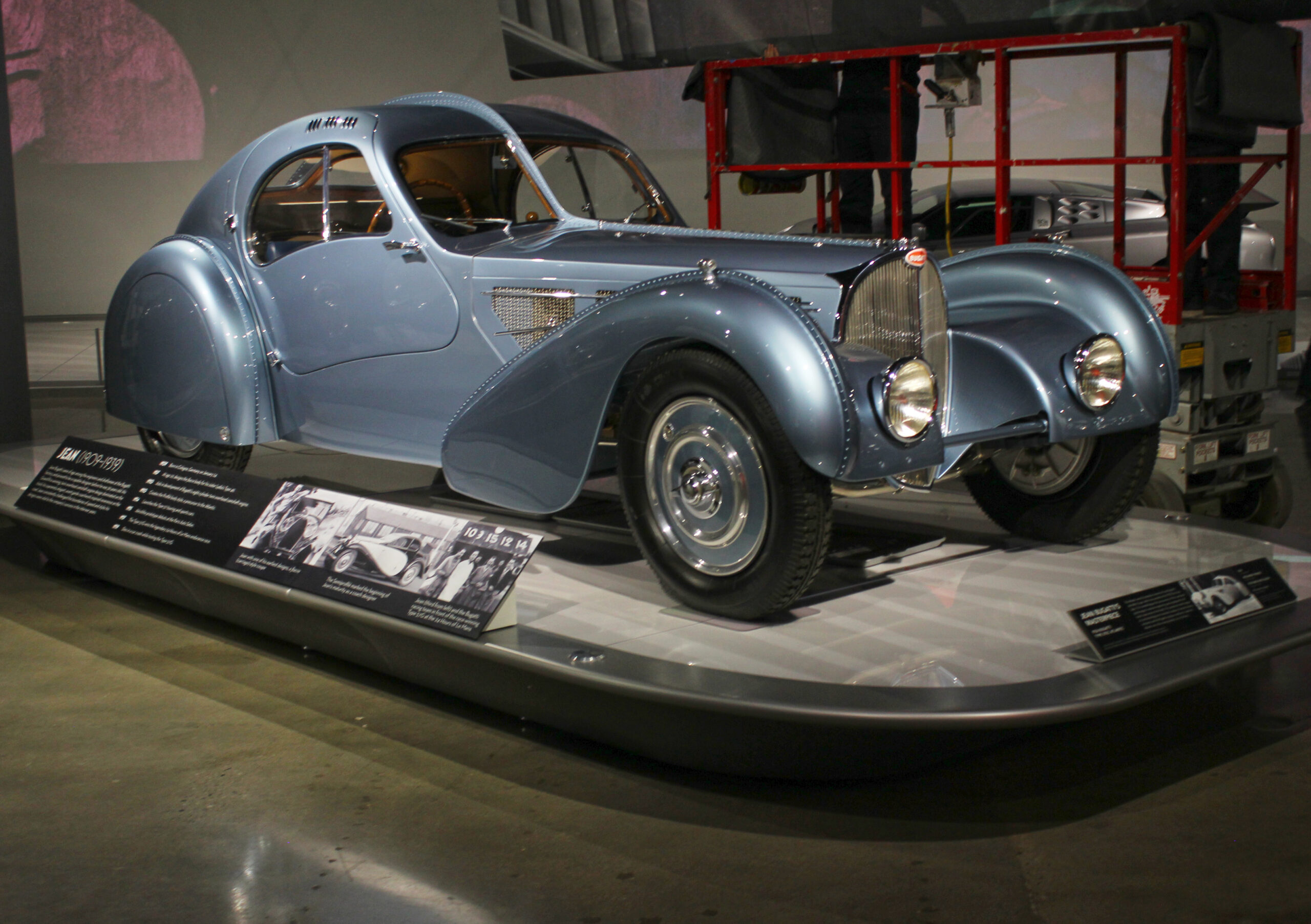
Its first owner, in 1936, was Victor Rothschild, 3rd Baron Rothschild. At his request, the car was later upgraded to Type 57SC specification with the addition of a supercharger. Legend has it that the supercharger eventually malfunctioned and blew the engine in 1941. Well, such is the life of the super-exclusive…
Later, the car was acquired by an American in 1945, and the supercharger was subsequently refitted by the Bugatti factory in 1953. Later owners included Briggs Cunningham, while collector Peter Williamson eventually undertook a 32-year ownership during which the car was returned to its original configuration.
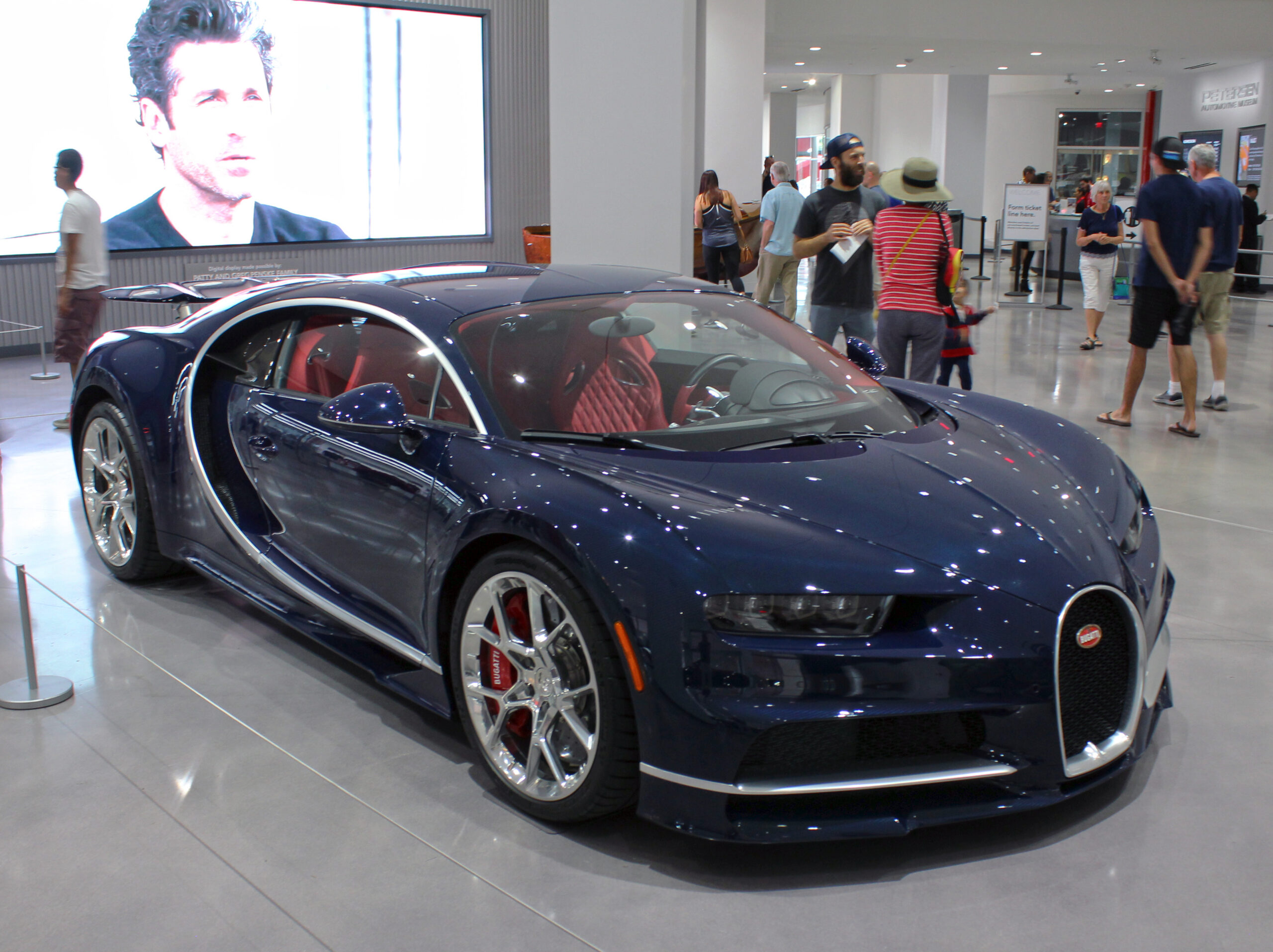
Exiting the exhibit, and passing once more by the museum’s entrance, a modern interpretation of the Bugatti name appeared: a 2016 Chiron. Its specs? All absurdly superlative: a 16-cylinder, quad-turbocharged W16 engine producing 1,500 horsepower, a top speed of over 260 mph, and a price tag of roughly $3 million. Quite a contrast in looks and technology to the cars we have just seen, but still committed to the world of the super exclusive and superlatives.
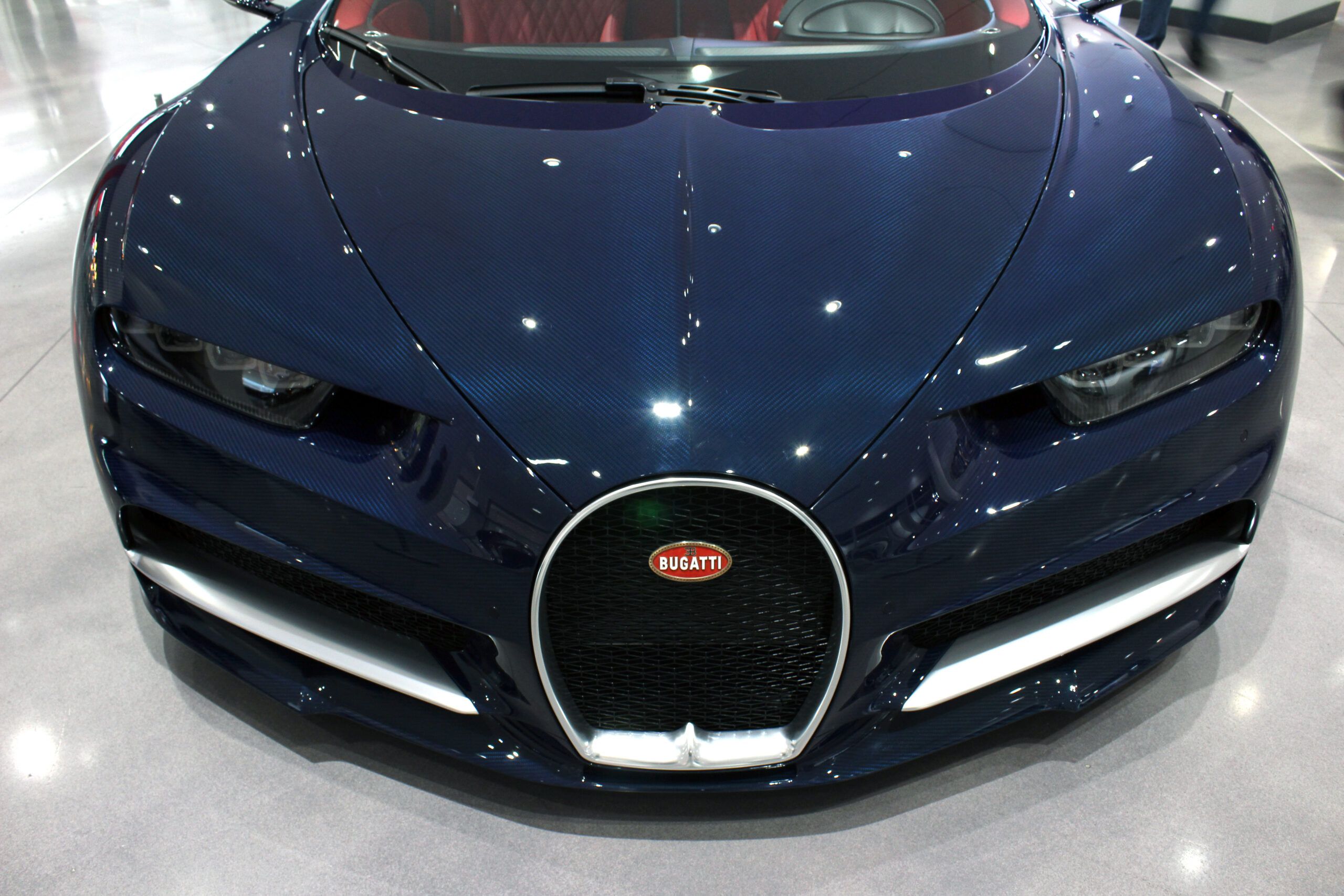
The Chiron’s $3 million price tag is certainly eye-watering, but it was still far below the $30 million paid for the 1936 Aérolithe Coupé when it sold to a private collector at auction in 2010.
Volkswagen’s chest-thumping over its acquisitions of Bugatti, Lamborghini and Bentley in the late 1990s is a well-known tale, as is the rather humiliating Rolls-Royce episode. And, well, if you’re a multinational corporation with the resources to acquire a little automotive lore and legacy, I can’t blame you for wanting to add some of that magic to your corporate roster.
Still, despite all their impressive superlatives, modern Bugattis may be objects of admiration and desire, but they’re a far cry from the artistic creations of the marque’s earlier years. Admittedly, that marriage of art and industry is basically impossible to recreate in our modern world. Perhaps that’s what makes the classic Bugattis so special: they are artifacts of a lost world of artistic industry.











These cars are simply stunning, and are the kind of car that could merit 50 close-in detail shots each, if not more. What a great opportunity to have seen them all in person!
I saw the Atlantic on my honeymoon in 2005 at the Saratoga Automobile Museum in New York; what a beauty!
An extraordinary array, and beautifully photographed. My fave is the Vanvooren speedboat. That modern thingummy is a joke compared with the precision gravitas of the originals.