

In 2001, I started commuting daily between Bethlehem, PA and Parsippany, New Jersey, a round trip of about 140 miles. While the Jetta was generally serving me well, it had developed a few issues that eroded my confidence and pride in the vehicle. To justify moving on from a two-year-old car, I had deftly convinced myself that I needed something more substantial to keep me safe as I navigated the heavily-trucked New Jersey corridor. I also found that the VW had a high market demand, and that I was surprisingly ‘right-side-up’ on the loan after just two years, confirming that I did get a great deal on the Jetta. I targeted an SUV, and went to look at the then-new Chevy Trailblazer. While at the Chevy dealer, I found an attractive 2001 Tahoe LS that had been lingering on the lot while the 2002 models started to roll in. Combine a desirable trade-in and a motivated dealer, and you have a quick sale.
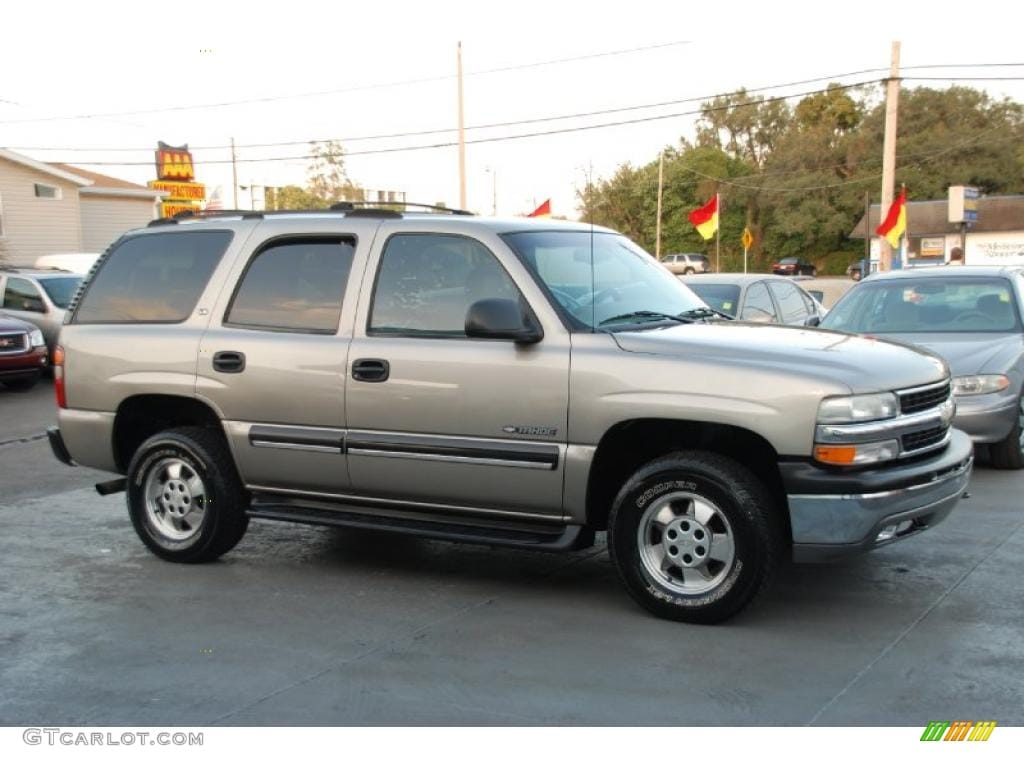
The Tahoe was a good vehicle. The LS represented the first rung up from the base model, so it was relatively spartan with a cloth interior and bench seat. The LS did get the upgrade to the 5.3L V8, which was good for 285 HP and about 14mpg mixed driving with 4WD. I took delivery the week after 9/11, effects of which drove gas prices down to just over $1/gal for several months, and pump prices hovered around $1.50 throughout my ownership. The big Chevy drove well for its size, and I did feel more secure on that commute. I did, however, tire of its sheer bulk and sizeable payment, and started to consider another trade at the one-year mark. Before I could start the process in earnest, I lost my job.
My six months of unemployment ended up being a blessing. Luckily, my then-girlfriend and I had moved in with her single mom and brother the prior year, allowing us to live rent-free in return for me renovating two of her bathrooms (another skill I picked up from Dad). This was key, as my Tahoe payment and tuition expenses consumed most of my unemployment benefit. We were each pursuing degrees at nearby Lehigh University – she a BA in and me an MBA – and the season away from work allowed me the opportunity to double up classes and graduate in the spring of 2003. Shortly before graduation, I landed a job with a leading global medical equipment manufacturer in the Philadelphia market. This was a bit closer than north Jersey, but it was still a healthy commute. Additionally, my girlfriend and I became fiancés during that time, and were starting to consider our prospects for buying a home while also planning a wedding. So, as soon as I had a few paychecks under my belt, I traded in the semi-monster truck (and its semi-monstrous payment) on a purely rational vehicle, again making out OK on the trade due to skyrocketing demand for SUVs.
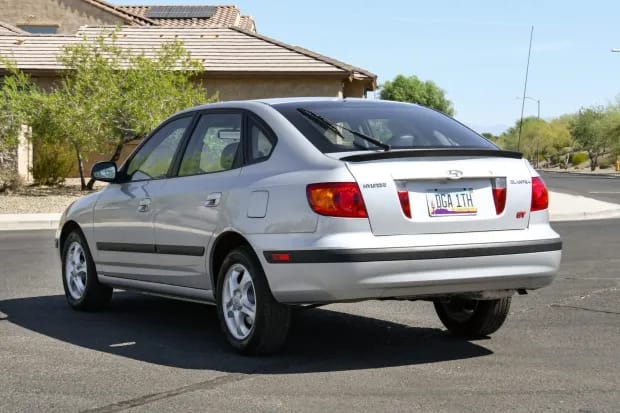
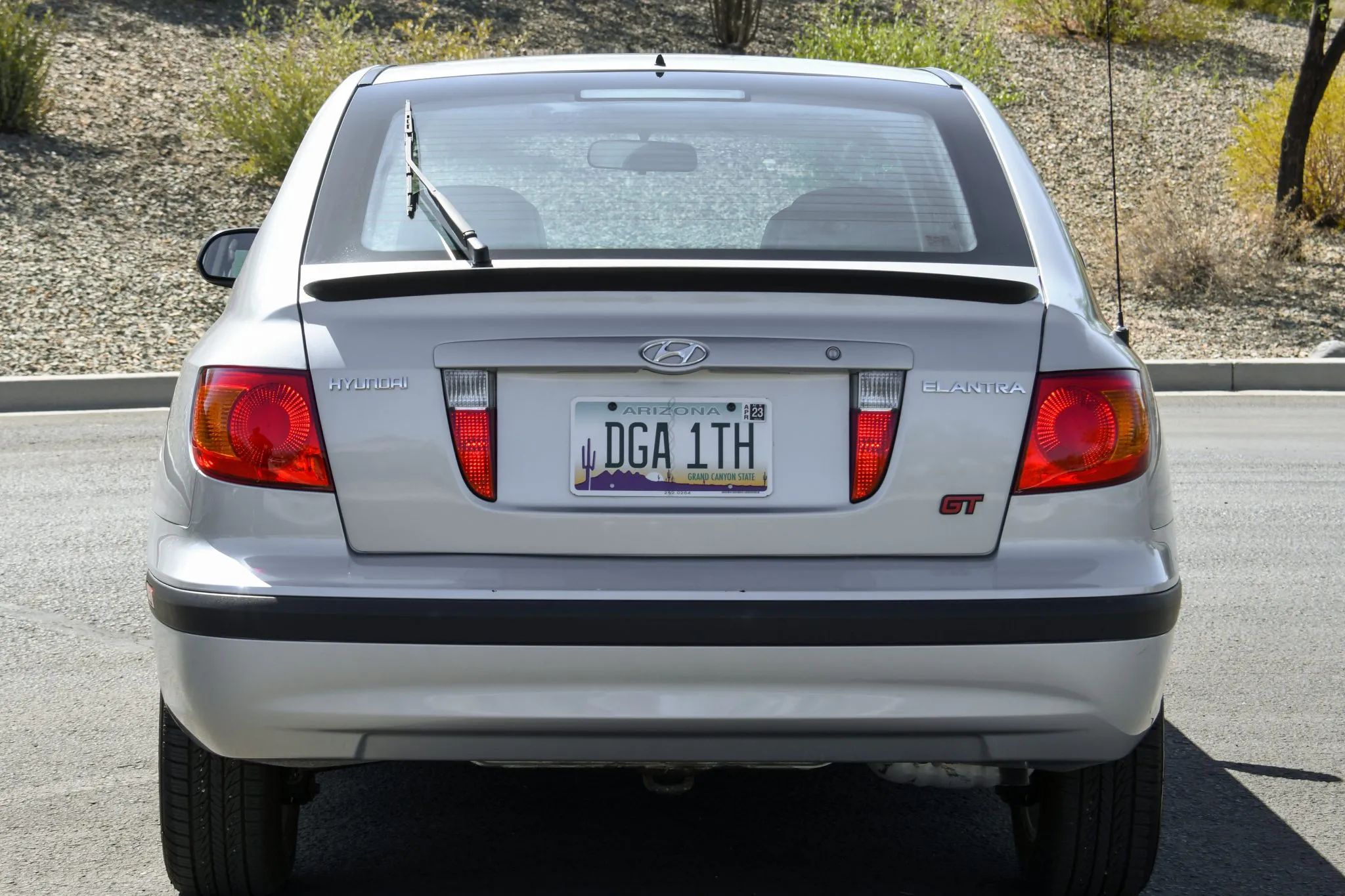
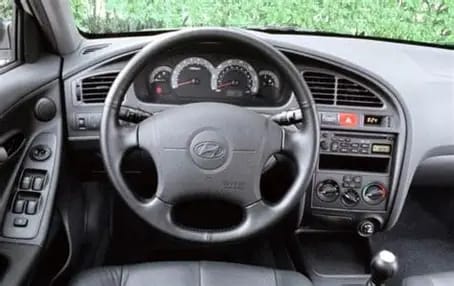
I chose the Elantra after a short search. Civics, Corollas, Proteges, and Sentras were all good options, but were not inexpensive if you started adding a few key features. Hyundai, meanwhile, was still in its “cheap car” phase, and its newer offerings were gaining a reputation for quality and reliability in the low-cost realm. The GT version of the Elantra was released in 2002, and received a national ad campaign touting its feature content. For a KBB price of $13,500 out the door, my silver GT arrived looking like a 7/8 Saab 900, with a subtle deck spoiler, fog lights, blackout trim, red GT badging, and quirky Euro-look reverse/driving lights bordering the rear license plate nacelle. The GT trim was available only as a 5-door hatchback in 2002, while a sedan was added in 2003. The hatchback body style remained exclusive to the GT for the first three years it was offered, making encountering these a relatively rare occurrence. In 2005, along with a minor facelift, the five-door body was extended to all Elantra trims, diminishing its quirky individualism. Inside was a decently-styled cockpit and dash with full analog gauges, trendy blue backlighting, a fair sound system, standard power moonroof, and slick shifting five speed. Interior plastics were of the Little Tykes variety, but were durable and inoffensive. It also sported standard leather seats that did a fair job of impersonating vinyl in appearance and texture, but proved to be durable over the long haul. One quirk I always found amusing was the inclusion of a small, inset digital clock, high up on the dash. It gave the appearance that someone stuffed the LCD screen from an old Casio watch into an empty bin on the dash, its old-school, green-screen display clashing endearingly with the nouveau riche blue of the dash and betraying the car’s true pedigree.
Driving dynamics of the GT were not overtly sporting, but the revvy 2.0 was relatively powerful at 135 hp, and when mated with the slick 5-speed, it was engaging. It did not produce much torque down low, so driving meant giving it a little clutch slip on launch. 0-60 times in contemporary magazine tests averaged 8 seconds, which was not bad at all in 2003. Once underway, it was quick to rev and the short-throw 5 speed allowed the driver to keep it in its power band smoothly and effortlessly while returning over 30mpg on highway sprints. The suspension of the GT was “Euro-tuned” with gas shocks, roll bar. MotorWeek called its ride quality “second to none in the subcompact class”. Handling was competent as long as it wasn’t pushed to the limits, exhibiting typical and predictable FWD understeer, and the 15in wheels put enough rubber on the ground to keep it feeling secure. If you subscribe to the old adage that “it’s more fun to drive a slow car fast, than a fast car slow”, then this was a fun car. In many ways, the little Korean was the spiritual successor to the cheap and cheeky European and Japanese hatches of the ‘80s.
Also key in my selection of the Elantra was that I was keenly aware that this car was going to take a beating, making the 100,000 mile warranty a fabulous selling point. At this stage, I was steadily driving about 35,000 miles each year, and my new commute consisted of 50 miles of interstate 476, a stretch of the Pennsylvania Turnpike system known to locals as the Northeast Extension. At that time, it consisted of two rather narrow lanes in each direction, with only by a sheer concrete ‘cattle chute’ barrier separating Northbound from Southbound lanes, each of which heavily populated with tractor-trailers. PA being firmly in the snow belt, the roads were liberally dowsed with salt brine and ‘cinders’ throughout the winter months. Cinders, for the uninitiated, are fine pebbles and flakes of coke, coal ash, and charred anthracite scraps, all biproducts of the local coal and steel industries. PennDot spread this abrasive mix over snow and ice to increase traction and accelerate melting. Unlike salt, cinders don’t wash down to the Chesapeake watershed along with the melting snow. Rather, they hang around well into the warm months, sifted outward toward the shoulder or the center divider, continually kicked up by the wheels of passing trucks and sucked into their turbulent wake. This had the effect of making the Northeast extension a sandblasting booth loaded with anthracite media. While a single trip down that roadway to the King of Prussia Mall could pepper a new car with countless small chips in the paint and glass, daily commuting could reduce the pristine face of a new car to a pockmarked mess of chewed plastic and exposed primer in mere months.
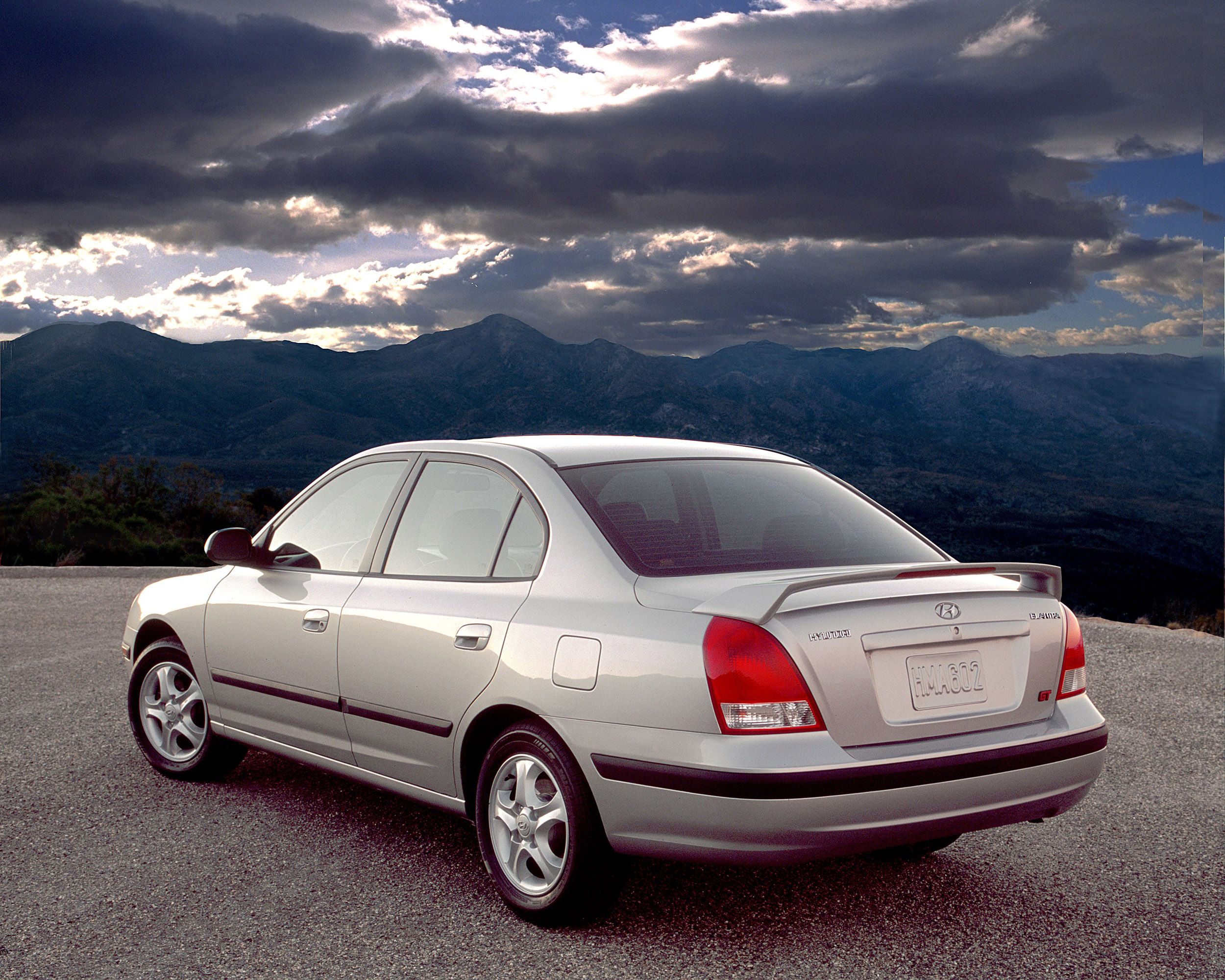
I drove the GT for a little over three years. In that time, I bought my first house, adopted my first two dogs, got married, and progressed from my role at a med device company to a larger role at a Big Pharma entity. I put just over 100K miles on the car with no unplanned expenses – just basic maintenance, tires, and brakes. Not only was it stone reliable, it was also imminently practical in that, with the rear seat folded, the hauling capacity was on par with small SUVs. As a bonus, it was entertaining to drive if you treated it like you stole it. It was, however, pretty used up by the time the warranty expired. The paint had gone dull and was largely stripped from the nose and hood, most of the blackout trim had begun fading to gray, and the spoiler and some exterior trim were threatening to become highway detritus. Of greater concern, it had also started to mark its territory with small amounts of a variety of fluids. It started to feel tired in that way that a car’s owner can sense that it is nearing expensive repairs. After I traded it in, my salesperson told me that they had to replace the clutch, the main engine and transmission seals, and much of the front end componentry before they could put it out to auction.
The Elantra was one of my longer-term ownership experiences, in terms of both years and miles, and it was bookended by short-term relationships with boring and forgettable SUVs. It served me faultlessly at a time when I was establishing both my career and my marriage. It was also charming, a bit quirky, and inherently cheap and disposable. It was precisely what I needed, though admittedly not nearly what I wanted. I remember it the same way I recall that specific time in my life – infinitely fondly, but with no burning desire to do it over again.























You left out what it got traded in on!
Did it literally start leaking fluids at 100,001 miles, perfectly timed by Hyundai? If it was leaking at 99,000 miles that would be covered by the warranty and the 3 years was WELL under the 10 year coverage….
Around the year 2000 my sister had destroyed a few used cars and I told her to buy a new Hyundai for the warranty. She bought a new (stick!) Accent and ran it past 100k without ever needing the warranty.
As for your GT, the hatch and those extra rear lights (did they light up??) somewhat captured my interest at the time. I had no need for another vehicle because at that time I had an 02 Maxima SE, 02 GMC Sierra stepside and 03 MINI Cooper S. I was intrigued enough that I did test drive an Elantra GT.
I like small hatches and wagons, so I was curious about these when they came out. Thanks for sharing your ownership experience!
As for the digital clock, I appreciate those because you can see the time and the radio station at the same time VS a shared display. Of course it’s nice when they match LOL
Nice write up. I had shared my story around the 2006 Elantra sedan that I owned by several years, although as a very used car at the end rather than the beginning of its life.
I would definitely agree that it is a surprisingly fun car to drive with the 5spd. I took mine to the autox track a few times where the large amount of body roll definitely became a factor and the car rolled onto the side of its tires at the limit. Mine was super reliable. I do like your hatchback body style a bit more than the sedan.
Mine had a quirk where the revs tended to hang higher after shifting out of first. I suspect it was not good for clutch life.
This is exactly what we are missing out on today. Smaller, yet comfortable, yet reliable, yet affordable and kind of sporty cars. Replaced with the likes (and to me, disgust) of Rav4’s, CRV’s, Equinox’s, CX5’s, Range Rovers, Bronco’s and the list goes on. Nothing but ugly and boring SUV’s.
Sadly, today’s Kia and Hyundai’s seem to have lost any direction of style. This car in the article is such a nice looking and fun car. Today? Nothing even close.
It’s getting thin, but for now we still have 5-door Civics, Corollas, the Prius, Mazda3s, Imprezas, and the Trax.
Manuals are just about gone though.
All very true. Yet it just doesn’t seem the same. We don’t have anything under 20 grand or even close. I think the base Trax (more SUV than hatch) is the closest at around $22,000 to start. On top of that, it’s covered in that nasty black plastic I just hate and it turns a chalkish color after a few years no matter which brand.
Just imagine what a high quality, low content smaller vehicle in the $16,000 to $19,995 price point could do.
The ’25 Versa is the last of such a car. The 5 speed stick is gone on the ’26 and the car is gone in ’27. I had a ’22 and this past April bought a leftover ’24. I searched last night and there are no new 25’s with a stick left in the country.
The 5 speed turned what would be a boring little commuter car into one I actually enjoy driving. I will run the wheels off of the ’24.
Good write up. you managed to get to get an interesting story out of a relatively dull car, but…
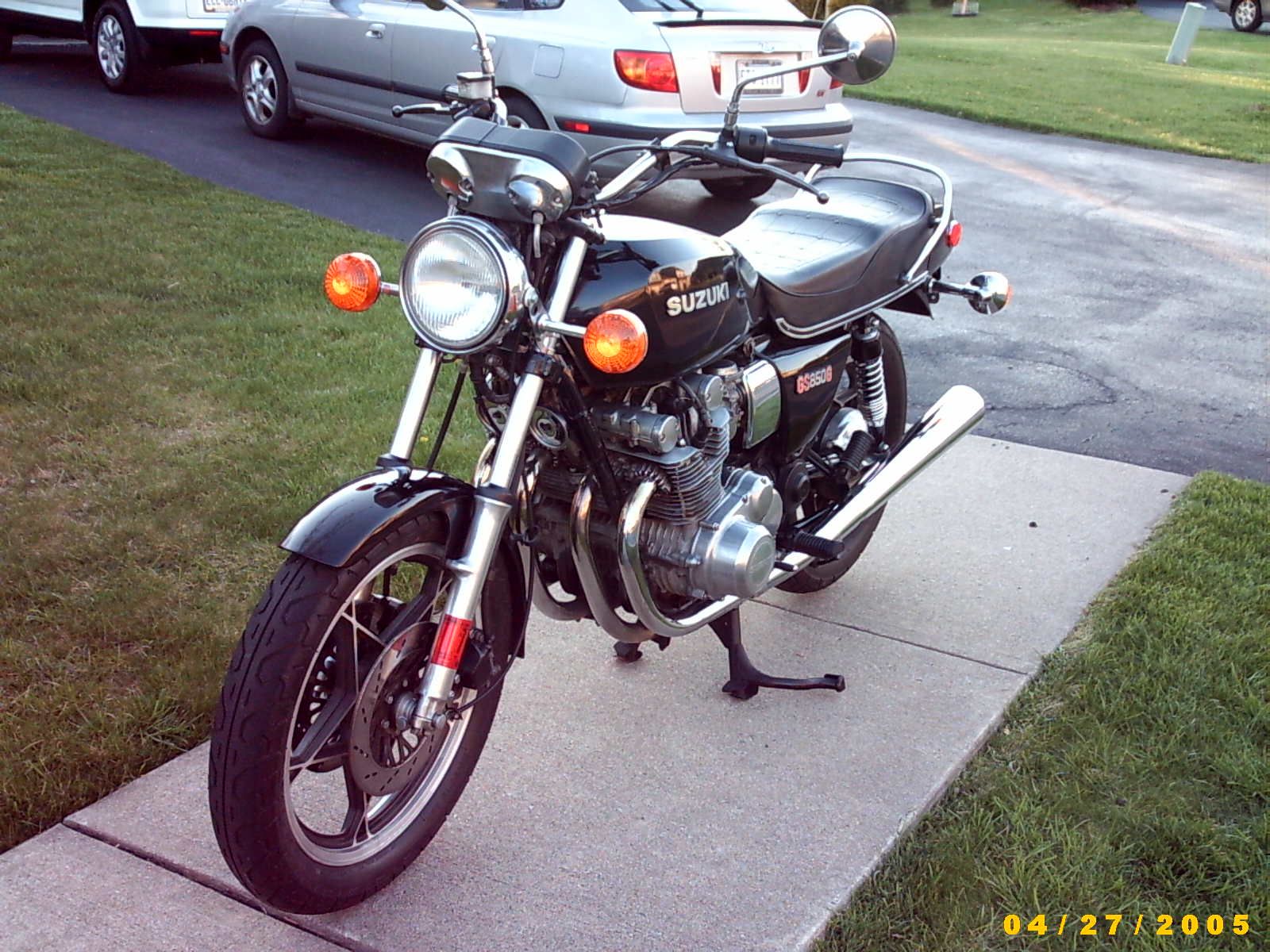
…please tell me you’re also going to do a story on the GS850G?!?! I have one in the garage, and I love the big fat lardy thing. You’re clearly someone who doesn’t mind doing a few miles, so hopefully you’ve got some tales of doing distance on that lovely big comfy seat. As a 1980 (with kickstart I presume!) it would have already been a classic by the time you took this photo, and it looks mint – it even has its original exhaust.
Not the fastest bike in the world, but a lovely bike to own and ride.
I remember those rear lights! I used to call them “Dracula fangs”. White at the top, red at the bottom, they reminded me of human “canine” teeth dripping blood.
I’m having a hard time imagining how a 3 year old car could be “used up” but the advanced cosmetic degradation is definitely a factor. Thanks for the story. I always liked the GT hatches.
I seem to recall these from rental car fleets in the early ‘aughts. Of course, not with 5 speeds. In their automatic transmission versions, these seemed to take over from the ubiquitous Cavaliers and Escorts that composed the most common class of rentals in the late 1990s. Your experience sounds rather rental car like…the car could take a beating and run reliably until it got used up and quickly exited with most major systems pretty much used up.
I’ve always been curious about these Elantra GTs, so I was glad to see this entry. This time period for Hyundai seems to be the tipping point at which the make’s reputation went from not-good to good in terms of actual quality and content and not just a low price.
I like the digital clock for looking like something from the Casio section of the Service Merchandise catalog. And how is cinder even legal? Just reading that part would make me look for the ugliest most reliable beater in which to commute while I kept my “nice” car as far away from that awful-sounding stretch of road as possible.
I remember the GT hatch as I had one for a week thanks to Hyundai Canada for my radio feature.
The car impressed me on many fronts and my positive experience had my oldest daughter considering one upon graduation from University. in the end, she got a good lease on an Accent sedan which served her well during the length of the lease.
I still see a well maintained GT hatch now and then in my city. That says something about the engineering of these Hyundai’s back then.
Goodness – I forgot how miserable the Northeast Extension was back then. For a long time, the highway didn’t even have shoulders, so it didn’t get an Interstate highway designation until the 1990s since it didn’t meet federal safety standards. Lots of fun in bad weather – driving a highway with narrow lanes, an insufficient center barrier, and no shoulders.
I’ve never been in the position of having a long commute like that, but this seems like a good car for the task. Too bad it couldn’t last a bit longer, though.
Cinders — we had them in Pittsburgh in the 1960s, as would be expected in that steelmaking city. I doubt ours had anthracite coal in the mix though, since all the local coal was bituminous.
The county would place open bins of the cinders during the winter in strategic spots on the roadside. There was one at the sharp hillside curve near the house in which I grew up — shovel it yourself on the road if you happened to get stuck.
These seemed to hold up pretty well in general and the 5-door min-Saab body style was a cool addition. The following generation had a genuine wagon that was also an appealing car.
The Intermountain West is comparatively kind to vehicles. It would be so hard to buy a new car in your environment given your description of how they disintegrated. I’d be tempted to get the soundest 3800-equipped GM I could find and coat the entire forward-facing sheet metal with marine deck paint. If the car is going to turn ugly during ownership, may as well start it out ugly.
Proof that modern cars will easily go the high mileage if cared for .
That it was also comfy and fun to drive is a pleasant extra .
-Nate
Love these. Mom bought one in 2002 in red with the automatic and sunroof. She loved it and it outlived her, heading to Mass to my sister-in-law for the last 18 years. Held together with sheets of pop riveted steel sheets and zip ties, it passed on to their mechanic. My MIL purchased one a year later in 2003, still driving it.