

By July of 2016, Courtney and I had settled comfortably into married life. We loved our newer house in Netarts, being within walking distance of the beach still felt surreal sometimes, and between my school district job, growing computer business, and Courtney’s teaching salary, life felt stable. We took a couple of nice vacations a year, spent weekends working around the house or exploring the coast, and genuinely enjoyed simply doing life together. Transportation needs were covered too—or so I thought. My Spark EV was perfect around town, and the Acura TL remained our trusted highway cruiser, but neither filled the role of a practical family vehicle. The answer arrived in an unexpected form: a Mercury Mariner Hybrid. What began as a casual search quickly turned into an infatuation.
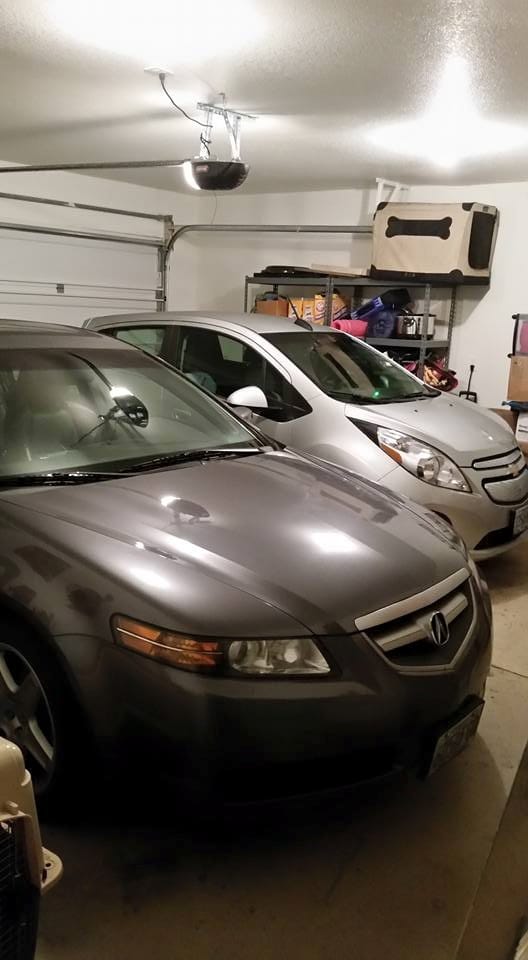
Vehicle-wise, I was absolutely smitten with my 2015 Chevrolet Spark EV. The little thing was the perfect around-town runabout and worked wonderfully for my computer business. Cheap to operate, hilariously quick off the line, and easy to park, it fit my life perfectly. Meanwhile, the 2005 Acura TL continued faithfully serving as our only realistic out-of-town vehicle.
And that was the problem.
The TL was smooth, quiet, comfortable, reliable, and honestly a fantastic car. But as our only gas-powered vehicle, we slowly realized a midsize sedan wasn’t ideal for our lives. Every Costco trip, furniture pickup, Portland run, and snowy mountain pass crossing fell squarely on the Acura’s shoulders. The trunk wasn’t always big enough, and while the TL actually handled snow surprisingly well, every winter trip reinforced the idea that maybe something with more cargo room, a higher seating position, and all-wheel drive would fit our lives better.
So, we went shopping.
Initially, it looked like we were simply going to buy my sister Amy’s 2009 Saturn Vue Hybrid, but ultimately decided she didn’t like how much value the Saturn had lost in only a couple of years. They kept it as Josh’s commuter vehicle instead. I was disappointed, because I genuinely liked that Saturn. It was gray with gray leather, and I thought it looked fantastic.
So naturally, I started hunting for one of our own.

The problem was that finding the exact Vue I wanted proved surprisingly difficult, and the Vue Hybrid had another drawback: it was only available with front-wheel drive. Around that same time, my mother-in-law had recently purchased a 2008 Ford Escape, and we borrowed it for a test drive.
We both immediately liked the packaging and ride height. It felt roomy without feeling huge and seemed much more practical than the Acura for the kind of life we were living. It was also the first time Courtney had really driven an SUV, and at one point I had to gently remind her that SUVs were a little more top-heavy than the Acura after she attacked a corner with considerably more enthusiasm than the Escape appreciated.
That drive got my gears turning.
I already knew Ford offered a hybrid version of the Escape, and once I started researching it, I became fascinated. Unlike the Saturn’s mild hybrid setup (which mainly functioned as a fancy start-stop system with electric assist), the Escape Hybrid used a far more advanced full hybrid system derived from Toyota. It could run on gasoline power, electric power, or a combination of both depending on conditions. The tech nerd in me absolutely loved that.
Even better, the Escape Hybrid was available with all-wheel drive.
At that point, I was fully invested in the idea.
We found a privately owned Escape Hybrid up in Astoria and drove north to test drive it. Mechanically, the thing was fantastic. I was endlessly entertained watching the hybrid system shuffle power around on the navigation screen, and I quickly discovered it was surprisingly easy to coax into EV mode around town. It had plenty of power, rode nicely, and seemed like exactly the kind of practical-but-interesting vehicle I was looking for.
Unfortunately, that particular example had lived a pretty hard life. Still, by the end of the drive, I turned to Courtney and told her this absolutely confirmed that this was the type of vehicle we should buy… just not this specific one. So the hunt continued.
During my searching, I stumbled across a Mercury Mariner Hybrid. I had vaguely known about the Mariner—a rebadged Escape with supposedly nicer trim—but once I really looked at one, I completely fell for the styling.

I’m sure it isn’t everyone’s cup of tea, but I thought the Mariner looked fantastic compared to the Escape. I loved the cleaner front and rear styling and especially the waterfall grille. There was something oddly classy about it. From that point on, while I would still consider an Escape if the right one came along, a Mariner was really what I wanted.
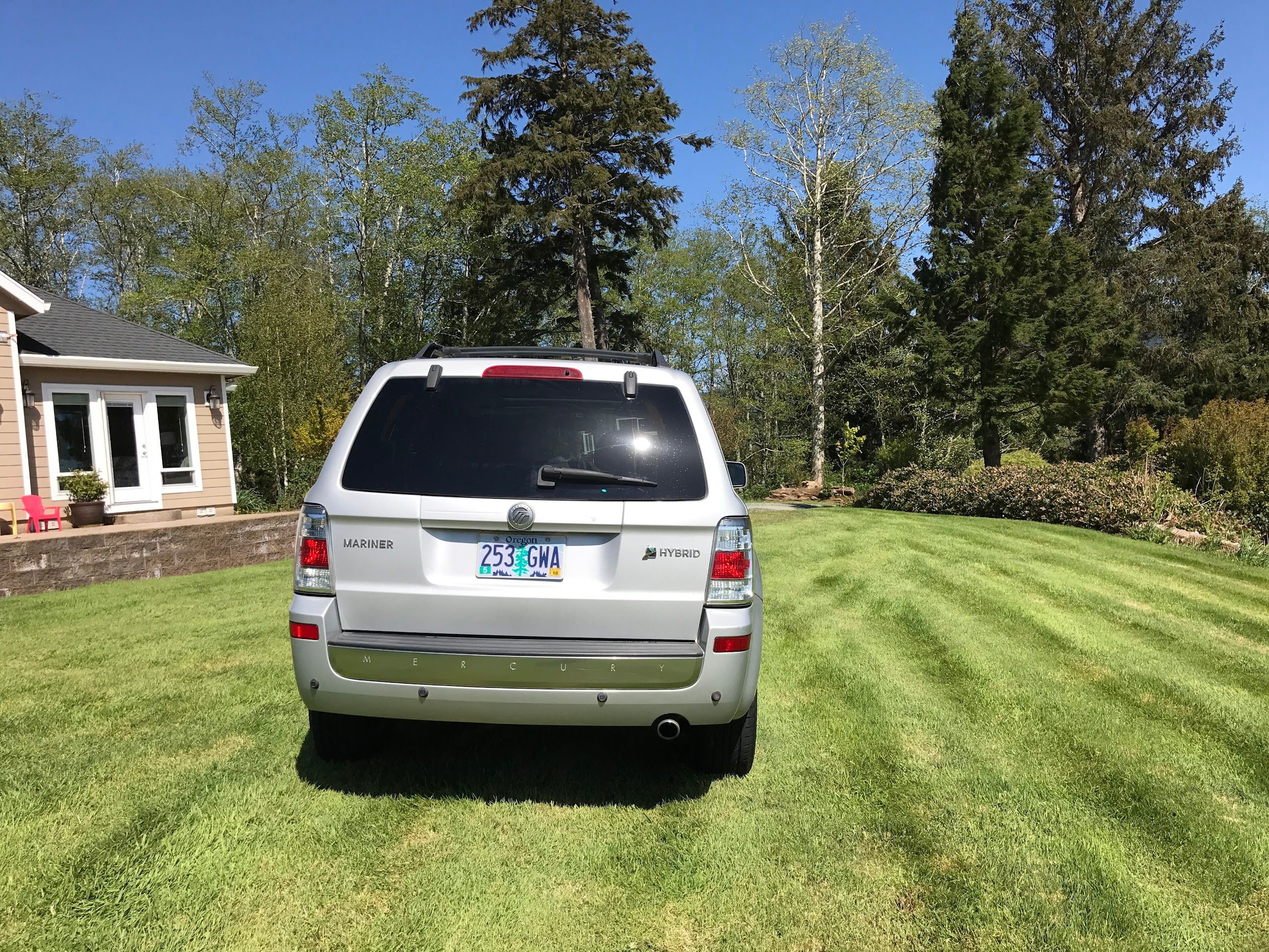
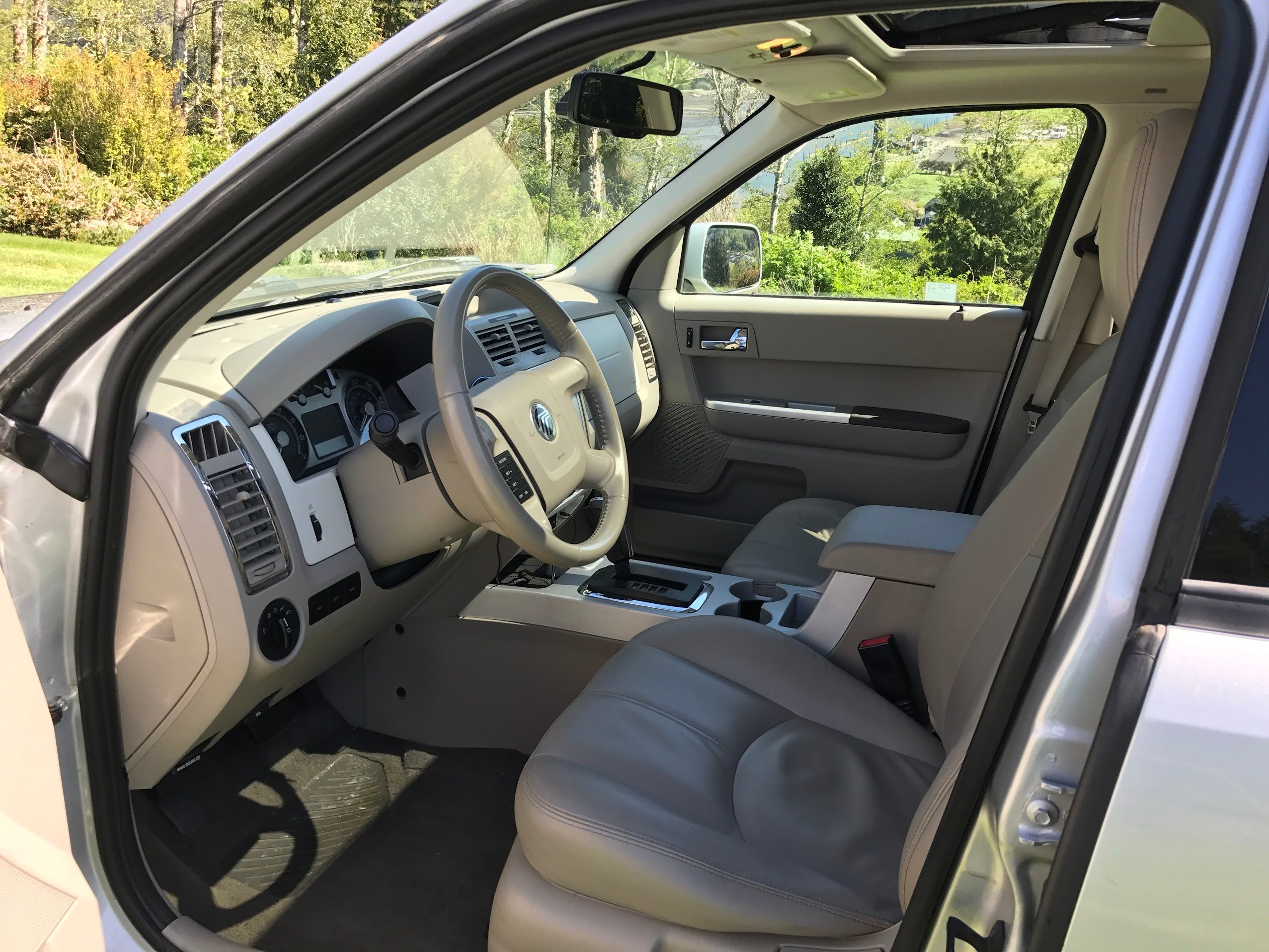
Eventually, I found a beautiful silver 2008 Mercury Mariner Hybrid at a dealer in downtown Portland. We drove up to look at it, and I was genuinely shocked by how spotless it was. The interior looked practically new. One common problem on Escapes and Mariners was worn leather steering wheels, but this one was flawless. I suspect it had probably been rewrapped at some point, but whatever the reason, the whole interior was immaculate.
So, we bought it.
If I remember correctly, it was right around $11,000.
We immediately took it on a trip over to Central Oregon, and the Mariner was fantastic. It was smooth, quiet, comfortable, had plenty of passing power, and still managed around 28 MPG—roughly four MPG better than the Acura. I was absolutely on cloud nine with this thing.
On the way home, we stopped in Portland and had lunch with Courtney’s parents. My father-in-law Kent has an incredible eye for detail, and almost immediately, he spotted something I had completely missed in my excitement over how clean the interior was:
The rear wheel arches.
The second-generation Escape and Mariner had a pretty common rust issue around the rear arches. If I remember correctly, Ford used some sort of foam insulation inside the quarter panels that trapped moisture and road salt in colder climates, causing the vehicles to essentially rust from the inside out. I had vaguely known about the issue while shopping and had briefly looked at the arches during the inspection, but the dealer had touched up the area with paint and the lighting inside the building hadn’t been great.
Kent spotted it immediately.

Once you knew what you were looking at, it became obvious the dealer had tried to hide it long enough to sell the vehicle. I felt sick to my stomach. I had been so caught up in how immaculate the interior was and how much I loved the hybrid system that I had completely missed one of the biggest problem areas on the platform.
Once we got back to Tillamook, I took the Mariner to a small local body shop owned by a guy from my church named Peter. He had a reputation for being extremely honest and charging very reasonable prices. Once he got the vehicle on the lift, he confirmed the rust issue but explained that while he could repair it, the rust would probably eventually come back in our coastal climate.
Our house in Netarts was practically next to the ocean. You could see the bay from our deck. Between the moisture, salt air, and coastal weather, the Mariner was never going to have an easy life there.
Still, I loved the car.
So I authorized the repair and decided I would simply enjoy it and deal with the rust later if necessary. Peter charged an incredibly reasonable $600 for the repair, and when I picked the Mariner up a few days later, the arches looked flawless. I could finally breathe easy again, at least for the moment.
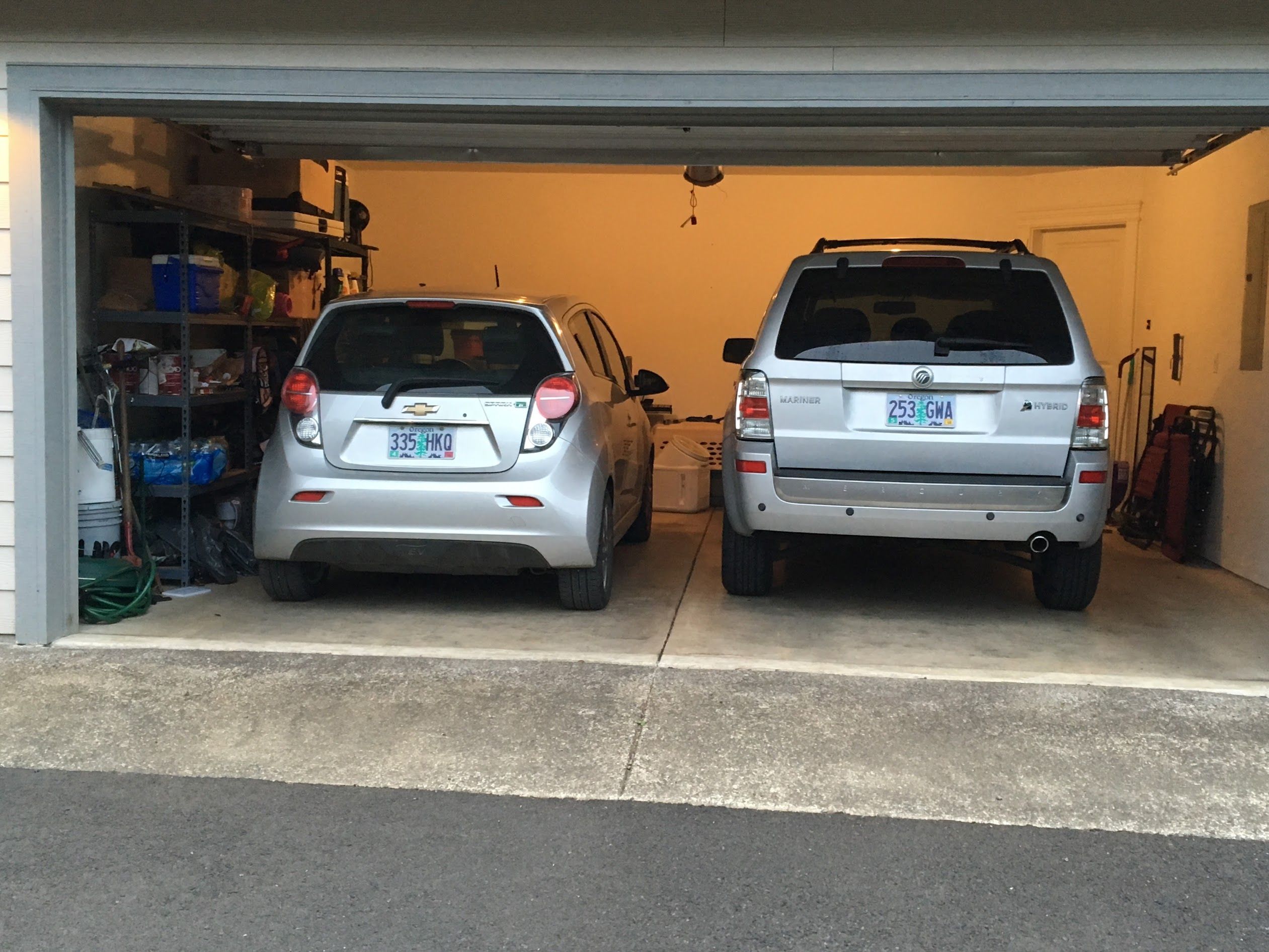
Honestly, I was pretty proud of our little “green fleet.” A hybrid SUV and a fully electric car was still a pretty unusual combination in rural Oregon in 2016, and I definitely felt a little ahead of the curve. The pairing worked fantastically for our lives too. The Spark handled around-town driving and my computer business perfectly, while the Mariner gave us something comfortable and efficient for longer trips and winter weather.
The fuel economy was genuinely impressive too.
I don’t think I ever saw lower than about 25 MPG in the Mariner, and on several trips I remember seeing over 30 MPG. Ford really had done a great job with the Toyota-derived hybrid system. Between the Escape Hybrid, the Mariner Hybrid, and the Fusion Hybrid that came later, Ford was honestly ahead of where I think most people realized they were with hybrid technology at the time.
I even briefly became convinced I should try repairing things on the Mariner myself.
At one point, the windshield washer pump stopped working, and I decided this was absolutely something I could handle. So I jacked the vehicle up, pulled the wheel off, replaced the pump, filled the reservoir, and proudly tested my handiwork.
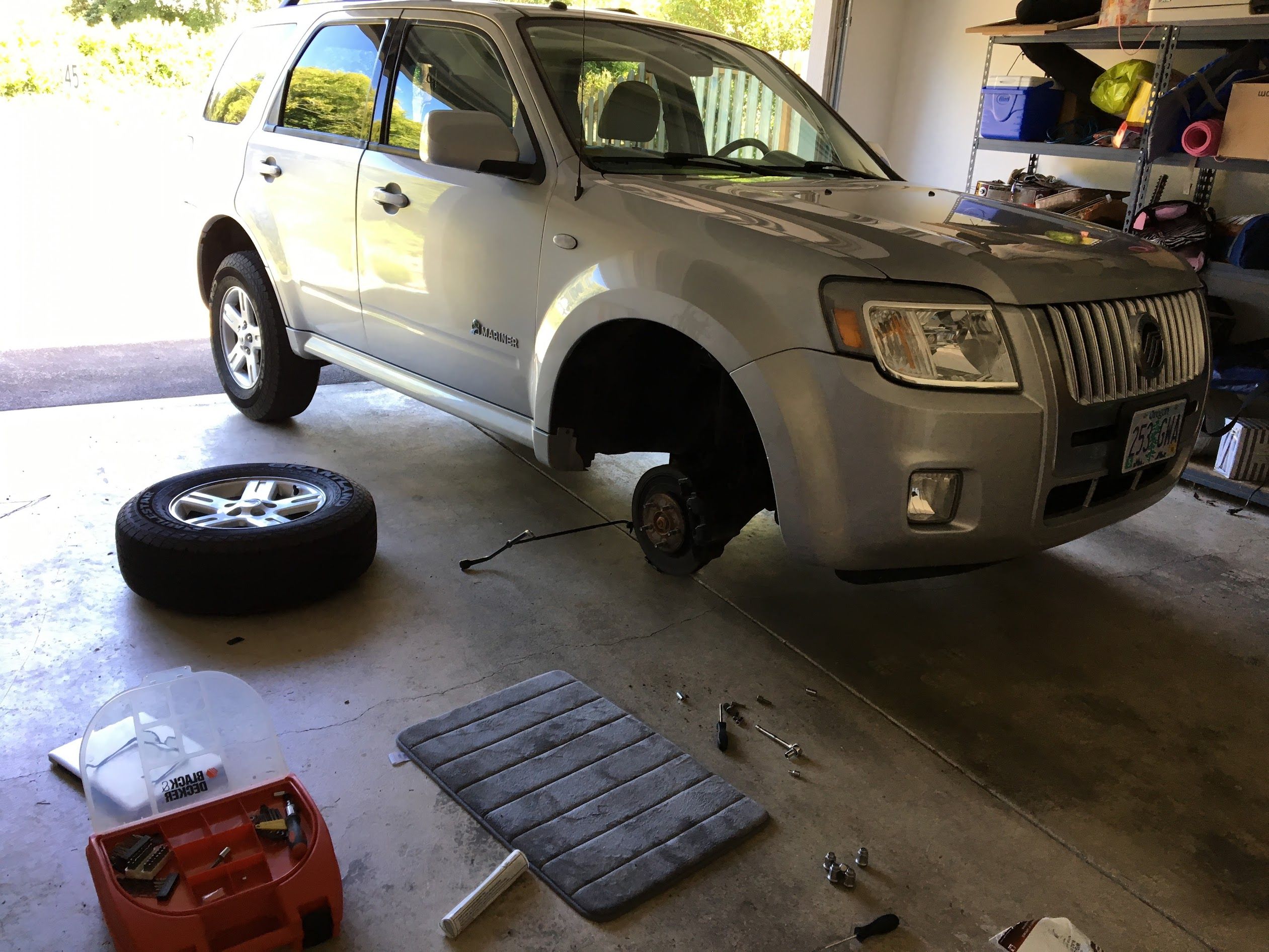
Immediately, washer fluid sprayed everywhere from somewhere farther up the line. At that point, I decided it was time to involve professionals.
One of the reasons I had intentionally purchased a Ford/Mercury product was that Ford was the only dealership we had in Tillamook. That meant I could actually get the vehicle serviced locally instead of constantly driving over the hill to Portland. So I took the Mariner into the Ford dealer, explained my failed repair attempt, and they fixed the problem for something like sixty bucks. Lesson learned. Sometimes it’s better to just take the car to the dealer.
We ended up owning the Mariner for about a year, and we genuinely loved it. Courtney especially loved the higher seating position and absolutely adored the Ford keypad entry system. She loved being able to lock her keys in the vehicle and go on walks or runs without carrying anything with her. To this day, I still think Ford’s keypad system is one of the most underrated convenience features ever put on a car.

Meanwhile, I loved the styling, practicality, and hybrid system. The Mariner felt like this perfect blend of normal SUV usefulness and nerdy hybrid technology. Honestly, it was probably one of my favorite overall daily drivers we had owned up to that point.
Then one day, a warning message appeared on the dashboard.
I don’t remember the exact wording, but it was something related to the hybrid braking system. Knowing enough about hybrids to understand that this probably wasn’t going to be cheap, I immediately took the Mariner down to the Tillamook Ford. They gave me the bad news. A control module for the hybrid braking system was likely failing. Apparently it was a fairly common issue on 2005–2008 Escape and Mariner Hybrids, and replacement was neither simple nor cheap.
The estimate?
About $4,500.
No thank you.
At that point, the math on the Mariner stopped making sense very quickly. It was already an older vehicle, we had the looming rust concerns in the back of my mind, and now there was potentially a several-thousand-dollar hybrid repair staring us in the face.
So, reluctantly, I decided it was time to escape the Mariner.























I always liked that generation of the Ford Escape and Mercury Mariner. We had never considered one, but I had the opportunity to drive a regular gas engine Mariner as a rental. It did great on the highway; perfectly composed and quite comfortable. Ford really was ahead with their hybrids at that time, and they were a good alternative to Toyota’s hybrids if you didn’t care for Toyota’s styling.
Oh, and I totally agree about the keypad.
The Escape Hybrid did jillions of miles in NYC taxicab service. It had to be really robust to do that.
I saw an Escape Hybrid taxi still in service in San Francisco just last month. It really stuck out amidst all the Waymo’s.
+2 on the pushbutton keypad. I get irked when I hear people call remote-entry key fobs “keyless entry”. No, those are not keyless. If you don’t have that (often heavy) electronic key fob with you, you can’t get in, because you don’t have the *key*. I’ve hidden the real key inside a Ford at the beach so I could go in the water to swim/surf/wade and not worry about keeping an eye on the unattended beach bag on the shore with my key in it. For me, this is the best reason to buy a Ford or Lincoln.
The rest of the car is a mixed bag, depending on model. If Ford brings back an affordable but well-equipped hatchback to the US market, I may well buy one.
+3 on the keypad. Our salesperson convinced us to get it when we ordered our Transit and it’s incredibly handy, especially on a camping/recreational vehicle. First one back at the van after a long hike or mountain bike ride can get in and get a cold one out of the fridge.
+4. I had a first gen Mariner with the V6, and as an avid runner the keyless pad was my favorite feature. Why this is not an industry-wide accessory is beyond me.
I enjoyed the enthusiasm–and candor–in your writeup. Our 2009 Escape from that generation goes on and on, and I’m now a convert to riding higher than in a sedan. Plus there’s the load capacity; with later generations it got a little more rounded and car-like; our newer Escape doesn’t hold quite as much stuff when it’s chore time.
Here in Great Lakes winter-salt country, it’s easy to tell how much the Escape/Mariner owners washed their cars in the winter: some really rusty rear wheel arches, but then some in admirable shape.
I’m hoping to get my non-Hybrid to 20 years owner ship—and to write a COAL sooner rather than later.
Thanks again!
My dad bought a brand new 2010 Mariner Hybrid 4WD and I always thought it was a very nice, classy machine. It was very reliable up until this later year. After dad passed in 2022 my mom continued to drive it up until early this year, and honestly it was the mice chewing up the wiring due to lack of use that did it in.
We borrowed it for several trips, and it had plenty of power while getting great mileage. The only negative was that one could really feel the extra weight – several hundred pounds over the non hybrid. It must have been placed high too, as even with good tires properly inflated it was uncomfortable trying to cruise at 75mph on eastern interstates with curves – something that was no issue on other small SUVs we owned.
Still, overall it was a very good machine for my parents.
I’ve always liked these boxy Escapes and Mariners, and thought it was a mistake to abandon that styling theme so abruptly.
I minor technical details: Ford’s hybrid system wasn’t exactly “derived” from Toyota’s system. Ford had been working on their own system, and patented many aspects of it. But to facilitate its final refinement and completion, Ford found it advantageous to license certain patents from Toyota rather than work around them. And strictly speaking, Toyota licensed some of Ford’s patents, but I doubt many were actually ever used. At this time Toyota was eager to see its hybrid system used more widely, and cooperated with Ford, Nissan and others to make that happen. But Ford really did do a lot of development of their system on their own.
https://www.wardsauto.com/news/archive-wards-toyota-technology-kick-started-ford-s-hybrid-escape/766776/
We bought a used 2010 Ford Escape front wheel drive in 12. It wasn’t the hybrid model, but was a very competent vehicle overall. The only issue we ever had happened two times-the fuel injection system would shut down putting the vehicle into limp mode, good for about a mile.
The vehicle was still under the 5/60,000 power train warranty so it was fixed. One year to the date (per the dealer) a second failure. Ford fixed it but said they would not fix it again, warranty or not. Why? They knew it was an issue and there was supposedly a class action lawsuit being formed.
We were intrigued by the thought of a hybrid car though, so we walked over to the sales side and test drove a new C-Max. Ford stepped up with trade assistance so we had no negative equity and gave us 0% financing!
The C-Max was the perfect in town car for us, getting an average of 40mpg. That’ll be its own COAL.
I had a 2011 escape. Liked the car, but 8 months of ownership and I also escaped that things. So. Many. Problems.
My workplace had a fleet of these. Super useful and economical and good enough for light off road. Droned miserably on cloud scraping passes. Once they got to 10 years old they aged very rapidly
Paul is correct. Ford actually developed their hybrid system on their own, and chose to verify there was no conflict with Toyota’s patent rights. Once they identified areas of concern, Ford approached Toyota, and the two companies reached a patent-sharing agreement: Ford would be allowed to continue with its hybrid system, and Toyota would be allowed to freely use certain diesel engine technologies covered by Ford’s patents. It was a rare and mutually beneficial arrangement. Ford’s very competent and enthusiastic engineers (e.g., Ming Kuang) continued to fully develop their hybrid system with the subsequent first / second gen Fusion/Milan/MKZs, the later Escape HEVs and PHEVs, as well as the wildly successful Maverick — all using a 2.5 four cylinder Atkinson Cycle engine, the eCVT transmission and NIMH high voltage batteries (at first) and then Lithium HVBs.
Awesome. Great info. I was a little fuzzy on that.
Another great post! I greatly admired this generation Escape. However, I was just to wary of Ford quality, which definitely wasn’t then or ever Job One.
Your hybrid SUV gas mileage around 30 mpg is not that impressive . At work we used to have the same vintage Ford Escape Hybrid, we often managed to have upper 30 mpg in NYC traffic. My real long term experience on hybrid was three years ago on my sister 2022 Toyota Venza for a trip from LA to Silicon Valley and back. With the whole trip AC, 4 passengers, often driving above 80 mph and climbing the hills in and out of LA, I was able to get mid 30 mpg, that is quite good.
However, these days, Toyota is no longer the leader of hybrid technology, Chinese Geely has developed a new hybrid system with gasoline engines as EV battery extender, and in certain conditions both EV motors and gasoline engine offerings power and normally car running on EV mode for extended periods, what amazing is the setup achieves thermal efficiency up to 48.1% in comparison Toyota could only achieve 41% thermal efficiency. And real world, BYD hybrid cars, probably less than 48% efficiency, can do 2.9 liter gasoline per 100 kilometers, equivalent to 81 mpg. Other Chinese vehicle manufacturers offer the similar models on its domestic and export markets.
It was pretty impressive at the time.
Another vote here for the Ford keypad. I had at least 3 cars with it, and found it really handy. One of my biggest initial disappointments with my highly optioned 4 Club Wagon is that Ford, for some reason, didn’t offer it on big vans.