
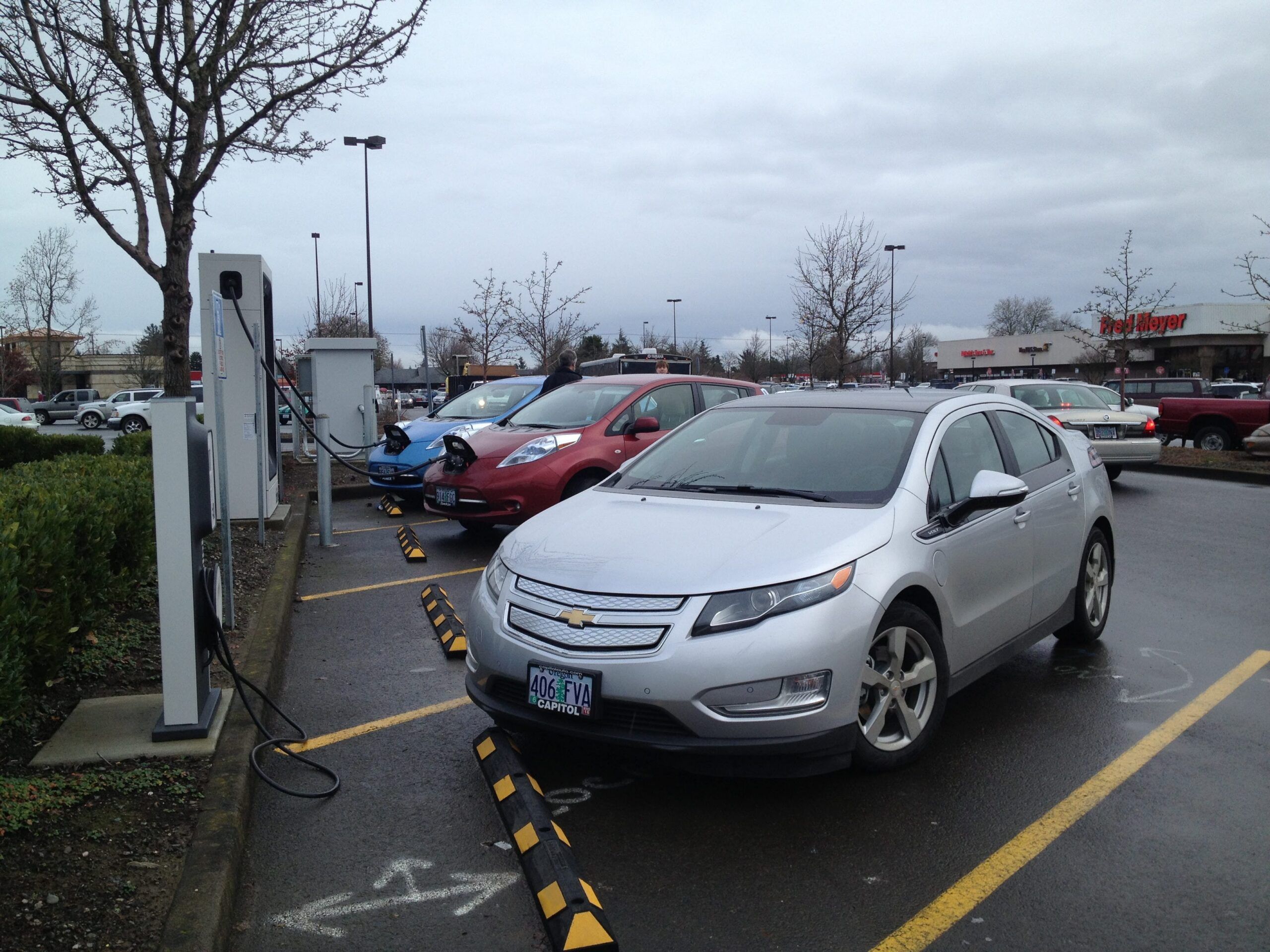
In the summer of 2012, I made a decision I hadn’t made before—I leased my first brand-new car. It would be a Chevrolet Volt, a model I’d been following since its concept days. From the moment I drove it, it felt different: quiet, smooth, and surprisingly normal, yet unlike anything I’d owned before. It wasn’t fast in the traditional sense, but the instant torque gave it a lively, effortless feel around town. Inside, everything felt a step ahead of what I was used to. More than anything, it felt like a glimpse of where everyday driving was headed –I was charging into the future.
Up to that point, I had never owned a brand-new car. Everything I had driven up to that point had been used—cars that already had a story before I got them. Leasing felt like a different approach entirely. Instead of having money tied up in a car, it was just a payment. Predictable. Under warranty. No surprises. It also felt like a way to lock myself into something for a set period of time. I thought I would do better knowing that in three years I could turn it in and start fresh with something new.
At first, I thought I would stick with what I knew. I had gone online and configured a Mini Cooper S Roadster exactly how I wanted it—the short-lived two-seat version, not the four-seat convertible. I was convinced that pairing a fun, open-top Mini with the Silverado would be the perfect combination. Something fun for daily driving, something practical for everything else. It made complete sense to me.

Around that same time, I had also watched Who Killed the Electric Car? and Revenge of the Electric Car, and they stuck with me more than I expected. I started looking into alternatives. I even test drove a Nissan Leaf, but the lack of charging infrastructure on the Oregon coast made me nervous. It felt like a step too far at the time.
The Volt, though, had been on my radar for a while. I had followed it since the concept was first announced, and I had even driven one around the block at the Portland Auto Show in 2011. It felt like something different. Quiet, smooth, and surprisingly normal to drive. It was also practical in a way other electric cars weren’t, thanks to the gas engine backup.
The problem was the price. New, they were way out of reach.
Then one day I saw a lease deal advertised at Capitol Chevrolet in Salem. $1,000 down, $399 a month for 36 months on a model with leather, Bose sound, and pretty much every option. It caught my attention immediately.
I remember finding out I qualified for the deal while I was working out at the Y. They had one in stock. That was enough for me. I left mid-workout, got in the Silverado, and drove to Salem.
I didn’t even drive that particular car before signing.
About an hour and a half later, I had leased my first brand-new car.
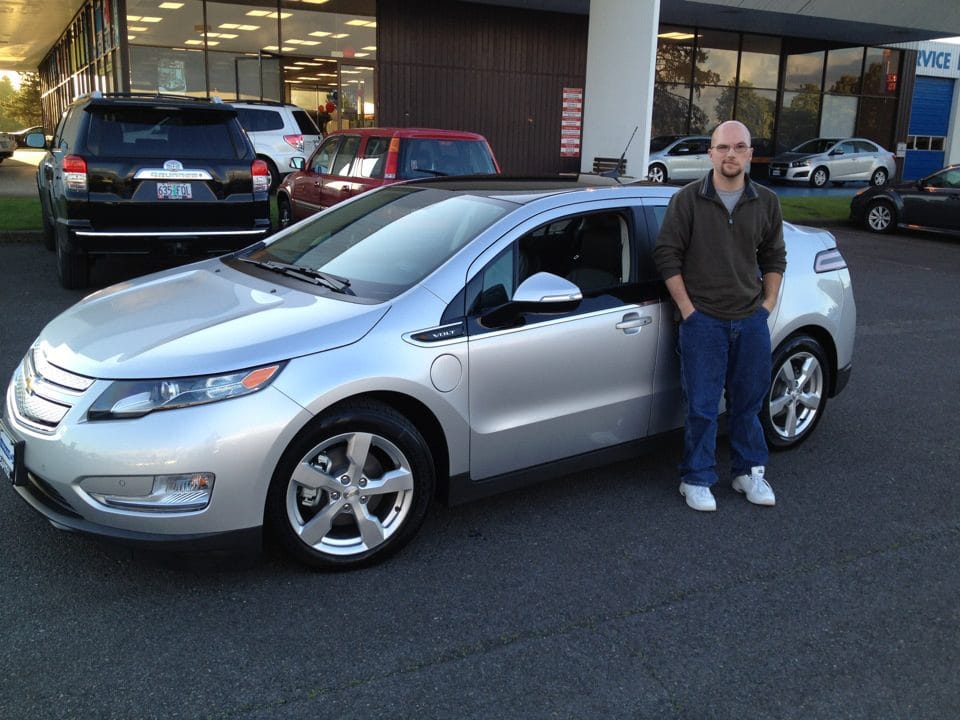
It was June of 2012.
I left the Silverado there that night and came back with my dad the next day to pick it up. It was the first car I had bought without his negotiating help, other than the Silverado. He was impressed with it, which felt like a good sign.
Driving it off the lot was a different kind of feeling.
Up to that point, every car I had owned had been used. This one was mine from the start. No previous owner, no history, no wondering how it had been treated. I remember feeling a real sense of pride pulling out of the dealership in a brand-new car that I had just signed for myself. I think it had something like 9 miles on the odometer.
And then there was the technology.
For an IT guy in 2012, the Volt was basically a dream. Touchscreens, energy usage displays, configurable gauges—it felt like something out of the future compared to anything I had owned before. None of my previous cars had even had Bluetooth. The closest thing I had owned to a “techy” car was the Patriot, and its navigation system had been… not great. This was on a completely different level. It had proximity locks and push-button start, which at the time felt incredibly advanced. I spent the first few drives just exploring menus and watching how everything worked.
Then I got it home.
I pulled into the garage, grabbed the charging cable, and plugged it into a standard 110v outlet. This was going to be easy, I thought. Just plug it in and wake up to a full “tank.”
Instead, I got a fault light.
That was not part of the plan.
I remember standing there in my 1940s garage, staring at that light and thinking I had just leased an electric car that I couldn’t even charge at home. For a few minutes, that was a pretty sinking feeling.
Thankfully, I tried another outlet.
 One false start, but here we go—charging in the garage.
That one worked.
It turned out the first outlet wasn’t properly grounded, which the Volt was smart enough to detect and refuse. At the time, though, it felt like a very real introduction to owning something a little more advanced.
The car itself was amazing. I loved just about everything about it. The new car smell alone was something I hadn’t experienced before, but beyond that, it felt like a huge step forward in every way. The infotainment system, the seats, the quietness—it all felt refined and well thought out. Even the way it drove stood out. It wasn’t fast in the traditional sense, but the instant torque made it feel quick around town in a way I hadn’t experienced before.
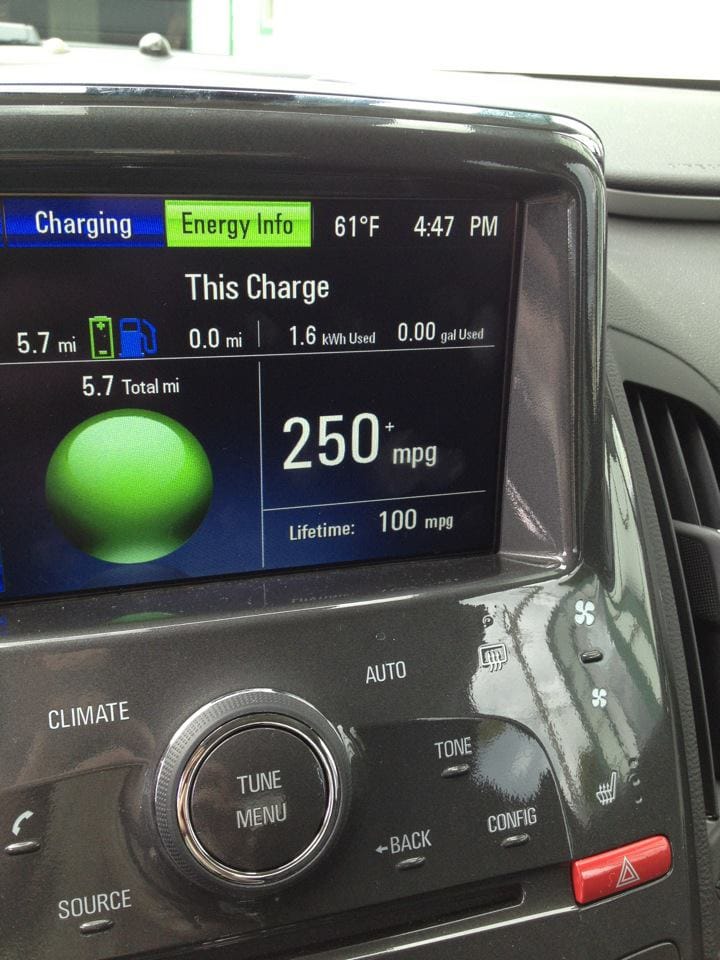
What really surprised me was how little I was using gas. Most of my driving was within the Volt’s electric range of about 40 miles, and I found myself going close to 1,000 miles between fill-ups. On the Oregon coast, electricity is relatively cheap, so charging at home only added about $15 a month to my electric bill. Compared to what I had been spending on fuel in the Silverado, it felt almost negligible.
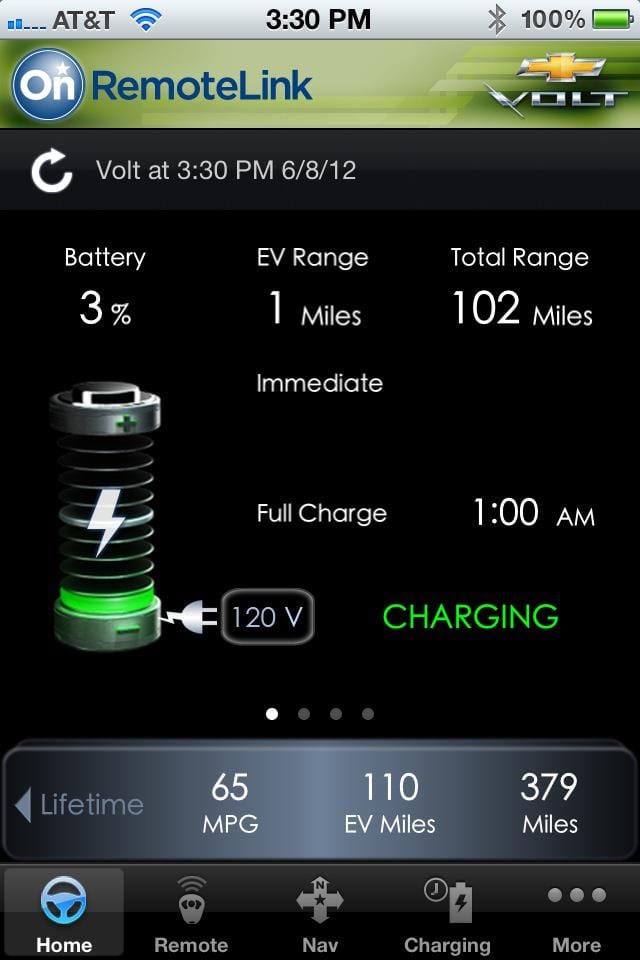
The smartphone app was another thing that completely sold me. Being able to check the charge status or turn on the climate control from my iPhone felt like something out of the future. In 2012, that kind of integration just wasn’t common, and I found myself using it all the time. It was one of those features that didn’t seem essential until you had it, and then it quickly became part of the routine.
2012 was also a special time to be an EV driver. The technology was still new enough that people were genuinely curious, and I found myself talking to a lot of people about the car. It wasn’t as wild-looking as the original concept, but I thought it looked great, and it stood out just enough to get attention without being over the top.
It was also the golden age of free Level 2 charging. Charging stations were starting to pop up in more places, and most of the time they were free—and usually right up front in the best parking spots. I took full advantage of that.
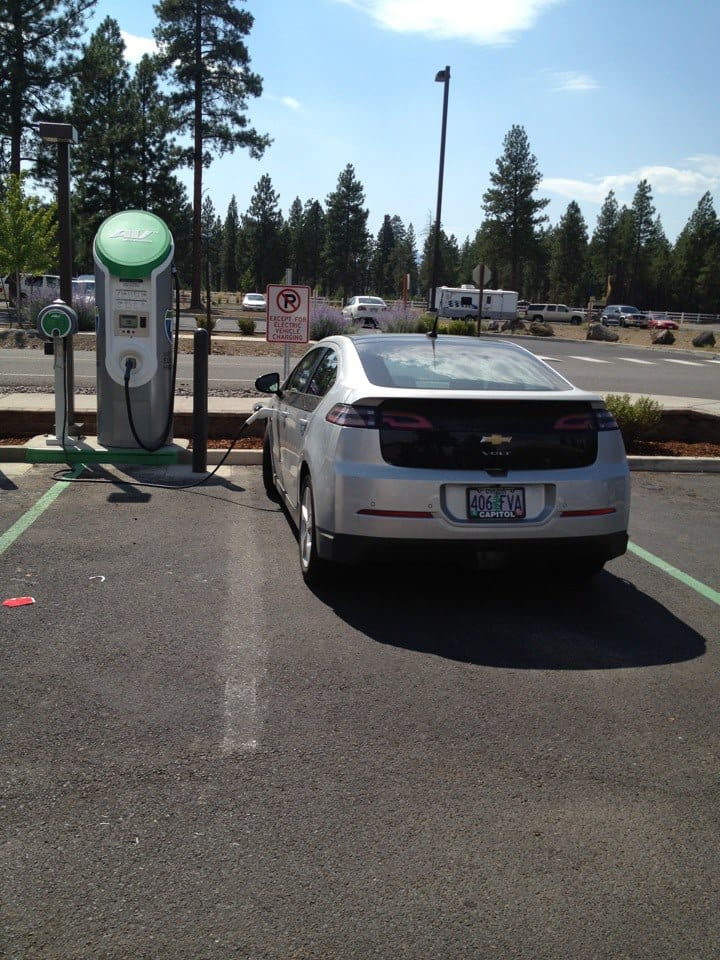
I would frequently drive the Volt to other TLC branches up and down the coast. There was a charging station about a mile away from the Astoria branch, so I would park the car there, walk to the branch, do my work, and then walk back to a fully charged car. Around that same time, I had gotten serious about my health and ended up losing about 60 pounds, so I actually enjoyed the walk. On a roughly 120-mile round trip, I would typically use less than a gallon of gas—and I was getting reimbursed for mileage. It really did start to feel like the car was paying for itself.
It was also surprisingly practical. Between the hatchback and the flat load floor, it handled Dakota and computer equipment without any trouble. For something that felt futuristic, it fit into my day-to-day life better than I expected.
It fit my daily life so well that the Silverado would sometimes sit in the driveway for weeks at a time. I’d still take it out occasionally—some light off-roading, the occasional chore—but the reality was I didn’t really need it. If I had something big to haul, I could borrow my dad’s truck or my grandpa’s S10.
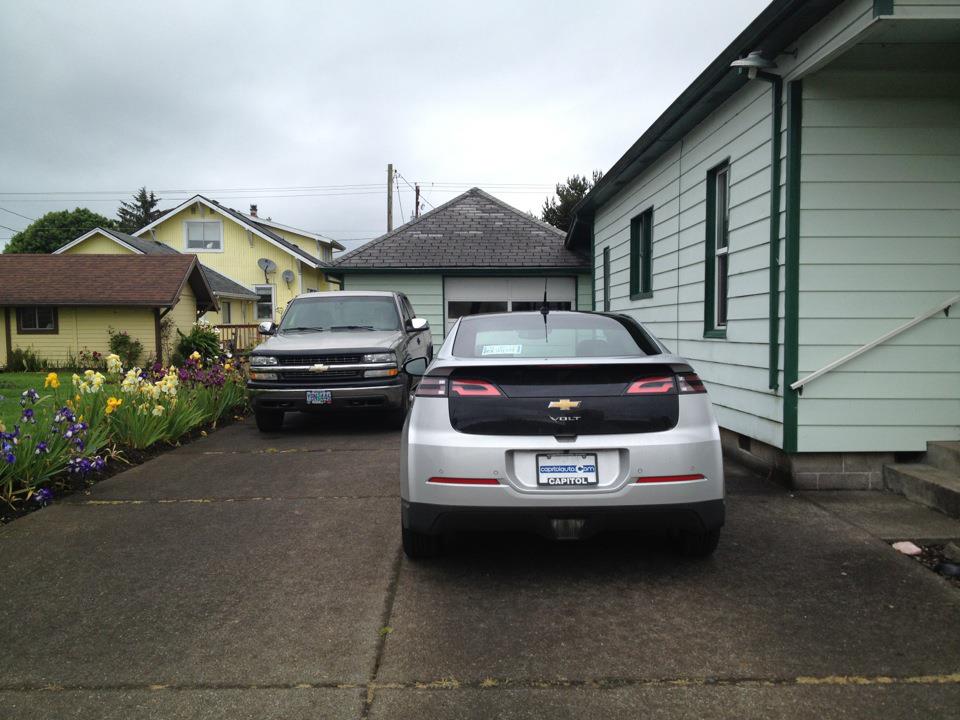
I liked the idea of having a second vehicle, and in my head, I still felt like I needed one. The Volt had a 10,000-mile-per-year limit on the lease, and I would have blown past that pretty easily if I didn’t spread the miles around. On top of that, I had really enjoyed having a convertible, and all that Mini Roadster shopping had gotten that idea back in my head.
So I put the Silverado up for sale.
It took about a month to sell. In the end, I realized I hadn’t negotiated particularly well with my sister when I bought it, and I let it go for about $1,500 less than I had paid. That said, it was almost exactly what I had paid the loan down, so I called it a wash and moved on.
At that point, I had already purchased—and in one case already moved on from—two vehicles that year and was somehow lining up a third.
I ended up with something with a bit more… star power.























The Volt made a lot of sense. It’s too bad the second generation became so anonymous and less practical.
We will have to talk more about that later. The second gen had a lot going right with it.
I covered the Volt very extensively during my time at ttac.com. I thought that the bait-and-switch game Lutz did by showing such an absurdly low and “cool” and unrealistic Volt concept was really dumb, as I knew that GM was not going to be able to build that. Lutz was so stuck in his flashy Motorama concepts mode to build interests when the kind of people that were actually going to buy a Volt were not looking for a small-scale version of his V16 concept.
And when the production version arrived, it was of course obviously based on the Cruze, and those blacked out panels below the side windows were a pretty sad attempt to mimic the low side windows of the concept. Whatever…but yes, it was actually a good effort in terms of its functionality and such.
Yeah, when I first saw the production Volt, it was a bit of a letdown. But I liked the front end styling of it. It always looked kind of frumpy to me in the rear though.
The blacked-out windowsills on the real thing are almost comically awful, in my not-really-humble opinion.
Tyler, looks like this gen Volt was a good fit for you. As a fleet manager in 2012 I was anxious to experience one. I loved my 2000 Pirus and thought a Volt would be a vast improvement. It wasn’t for me. The so called 40 miles on full electric was only a dream, more likely 30ish at best. The layout of the button touch points on the center stack was horrible. Small icons, fussy placement and cheap feeling. Mine was a low mileage dealership loaner and the seats were already showing wear.
My dealer was all in at the start with a brand-new on-site charging station and good lease rates. That faded quickly.
For overall cost a used Prius or Honda Civic was a much better buy.
My was pretty much flawless the three years I had it. I do agree, the capacitive touch controls weren’t great, but they felt fun and futuristic at the time. There were way too many of them. I was happy mine had the grey touch panel and not the bright white one. The seats on mine held up really well, and I pretty consistently got around 35 miles on a charge. It didn’t degrade at all in the three years I had it.
By now I imagine the battery in that 2012 Volt has been replaced? My critique is that in the used car market, (most of American buyers), the electrics are towards the end since they’ll need new batteries.
I think in general the Volt battery pack is pretty reliable. It was liquid cooled, unlike the Leaf, and GM protected the battery pretty well. I’m sure some have failed, but I know there are many still on the road.
At $400 per month for 3 years, and you don’t even own the vehicle doesn’t sound like saving any money to me.
You’re not wrong! I wouldn’t do that again, but don’t regret that I did it.
Also sold in Australia by the former General Motors Holden (GMH), in Right Hand Drive form badged as a Holden Volt. To Australians it was a unique if not expensive luxury small electric Chevrolet wearing working class ‘Holden’ badges.
Some Australian owners removed the Holden badging and replaced them with Chevrolet Badges soon after buying the car. GMH only sold around 400 or so! It’s a rare car down under!
I do like to look of the Holden one! There is a Chevy SS here in town with Holden badges on it that I think is pretty cool.
My positive 2012 Volt experiences are eerily similar to the author’s so i will endeavor not to be too repetitive. Like the author, I had breifly test driven a Volt at fair in 2011 and was immediately won over. At the time I was spending in excess of $500.00 per month on gasoline so switching to EV was a very appealing considerarion. Back then my choices were limited to the Volt, the Nissan Leaf and the Mitsubishi MIEV. The Volt was the only one that met my needs but, like many people back then, my previous negative experiences with GM vehicles made me reluctant to purchase another one. I decided to hold my nose and take the chance. Furthermore, my wife told me “this is new, unproven technology, your’re a guinea pig and if something craps out on this it will cost a fortune to fix” so I shelled out the extra $2,000.00 for the extended warranty. At the time, however, the Ontario government was paying an $8,500.00 rebate with an additional $2,000.00 off from GM. My monthly payment were under $500.00 so my fuel savings covered the cost. I was able to get by simply by using a level one 115v charger; charging overnight at home and using the same charger to plug into a 115v outlet on the side of my office building all day. I used to joke that I spent more money on gasoline for my lawnmower than my car. However, the gasoline generator eliminated range anxiety and allowed more flexibility. Fast forward to 2024, I had enjoyed my Volt for 12 years and 260,000 Kms. (161,000 Mi) and in spite of my initial hesitation and my wife’s warning, the Volt proved to be bulletproof. Not only did I not have a claim on the extended warranty, I also had no claims on the standard warranty either. At that point, however, my wife had inherited a two-year-old Lexus crossover with only 8,000 Kms so when it came time to divest ourselves of a surplus vehicle it made sense to let the twelve-year-old, high mileage Volt go. Besides, I was retired by then and not commuting. My Volt went to a young man who’s father owned a 2012 Volt and he had always wanted one. He’s still enjoying it a his daily driver!
Contrary to the previous comments relative to battery range and life, my experience with my 2012 Volt were very positive. For several years I volunteered as an “EV ambassador” at the Electric Vehicle Discovery Centre in Toronto, a non-profit entity in Toronto whose mission it was to promote the benefits of EVs to the public, many of whom were skeptics or simply could not otherwise obtain the information they sought. We conducted EV test drives and answered a gamut of questions based on our experiences as EV owners. The first question posed by most of our visitors was a two part one; “How long does the battery last and how much does it cost to replace?”. My answer was “the life of the vehicle and I don’t even think about it.” When I sold my twelve-year-old Volt with 161,000 miles on it the battery range was at 85% of when it was new and that was driving in a cold climate. I expect that many people transfer their unfavorable experiences with batteries in cell phones, tablets, laptops and other devices onto EVs. Most EVs, on the other hand, use sophisticated battery management technologies to protect battery life and range.
My Volt experience also mirrors that of the author. My first brand new car. During the smooth, quiet, responsive drive home from the dealer, I recall being side to side with a 3 series BMW at a red light and thinking how ‘yesterday’ the Bimmer was.
At the end of my 3 year lease, I added up all the pluses and minuses I had about the not quite gasoline free experience with my Volt. I loved so much about it, but…the main thing I did not like was my constant awareness and attempts to minimize my usage of gasoline. Long trips tended to be ‘shrug my shoulders’ experiences.
What the Volt did do was sell me on the EV experience. I decided to go total EV with my next car to see if I could live with 90 miles of range, and found a Spark EV with a lease I took over (I also own a Ford Transit van for my long trips). I fell in love with that little pocket rocket and became sold on the idea of going full EV. So – I bought a brand new 2017 Chevrolet Bolt with real-time range of 250+ miles. At 77k trouble-free miles I still have it.
And FWIW why the Volt started out as a Chevrolet instead of a Cadillac is something I have always wondered about.
I experienced the same kind of “range anxiety” as you, never wanting to slip into range extending mode. It bugged the heck out of me. For one thing, the vibration from the engine when you are so used to the car being silent and smooth is unpleasant.
The rest of your car history is interesting. Stay tuned to the rest of mine.
They did have the Cadillac ELR.
I had a coworker who loved his Volt. He ended up replacing it with a Tesla. I think he has to talk his landlord into improving the home charging situation.
I leased a 2013 Leaf. We always joked that I should drive an electric car because my commute was around a block long. My husband surprised me on my birthday and he said doing the deal was the easiest ever. I think it was $350 a month for 36 months with not much down. We had an unused dryer plug to use for a level 2 charger. Other than replacing a tire it was trouble free. I did explore the limits of the range, but we also had another car. There was free charging in Pasadena where I drove my son to music lessons and in Newport Beach where I got my hair cut. The seating position was excellent and I liked the heated steering wheel. I lojed the quirky styling. Like you, I got a lot of questions about the car. I liked the car so much that I leased a 2016 when the lease was up. That car was rear ended badly (while parked on the street) so I was not going to buy it at the end of the lease. The more anonymous styling of the 2nd gen didn’t appeal to me.
Presenting the Chevy Volt dancers. June Taylor dancers they are not.
https://youtu.be/yUPmqN6KAwM?si=SXlgLUDjnpRdLLY8
Oh my goodness! It’s a wonder the volt didn’t jump to the top of the sales charts with advertising like that!
A teacher friend of mine decided to buy a Chevy Volt in May of 2026.
When she first mentioned it, I wondered how it would do in Tucson.
Then she ALSO announced that in JUNE, she and her boyfriend were taking a trip to Texas to go to a music festival. This meant she was going to cross 3 STATES WITH TEMPS ABOVE 100 DEGREES DURING THE DAY. Arizona, New Mexico, and then Texas.
I want to see how this trip turned out.
It turns out it was a COMPLETE SUCCESS. They ran the air conditioning from Tucson to Austin Texas all the time during the trip. They recharged at a LOT OF FREE chargers along the way, where if you stop to eat, you can plug in your car for free while you are dining. They had to pay for charging only TWICE during the trip, with a total cost of $40.00 for the round trip. Even some gas stations and rest stops have chargers available, usually free while you are there making a potty stop, or getting fresh cold drinks and ice. A LOT of these stations have solar powered chargers, so the cost is minimal.
They did not have a SINGLE PROBLEM WITH THE CAR ON THE ENTIRE TRIP.
I am a confirmed gas car owner, but their report after they returned really gave me a reality check. All of the complaints, dismissals, and bad press about electric cars, is now simply irrelevant, because none of it is even true or valid any longer. It MIGHT have been true 2-3 years ago, but advances since have wiped most of these arguments right off the board.
For the first time, I am seriously thinking of getting an electric car.
She has now had the car coming up on ONE YEAR. It has been back at the Chevy dealer JUST ONE TIME, FOR 10 MINUTES, FOR A SOFTWARE UPGRADE. She pulled into the local dealer, checked in, got a free donut, and by the time she finished the donut, the tech came in gave her her keys back, and told her the car was ready to go.
Engine oil changes = 0
Transmission liquid level checks = 0
Rear axle servicing = 0
Emissions checks = 0
The last problems with electric cars have now been FULLY OVERCOME, and I predict that things will just get better over the next few years, as they further improve batteries, control systems, and electronics.
Although they have temporarily held up electric vehicles, (Primarily Trump and his minions) this cannot last. Electric cars are SO SUPERIOR to internal combustion vehicles, that it is now obvious fossil fuel vehicles are doomed. Not right away, but there will be a total reversal when Trump and the MAGATS are out of power, and then electric cars will roar back to primacy again, and in another 20 years, internal combustion cars will be virtually extinct at dealers.
I have 3 late-model gas cars, and 8 antique cars as well. All are powered by fossil fuels. But it is clear to me which way history is going.
Still remember reading articles calling it the most advanced car ever made and detailing why.
My older son has a second-generation (2018) Volt that he bought new. It now has about 50,000 miles and he’s been happy with it overall, despite a few problems that needed to be addressed by the dealer. The chief benefit is that in normal commuting, the car runs only on electric power. He has a level 2 charger mounted on the house next to his driveway.
I must begrudgingly concede that the generally incompetent GM deserves full marks for these cars. One simply does not hear of failures, and to have made a dead reliable, perfectly adequate family sedan that does 80mpg (or whatever) is a real achievement.
Well, except for the styling, which I consider to be pretty inept.
I’m encouraged by the remarks about EVs as I’m about to step out into retirement. I want to comment about a topic thought, not about the EV itself, but having a second car, particularly a truck.
My dad was a believer in having as second vehicle, and he had a ’75 Toyota HiLux short bed paired to a ’78 Datsun 810 (a car so worthy of a COAL); his primary use was hauling wood as he was building a small sailboat. My step mom was an interior designer and would hijack it to go antiquing either for herself or her clients. Her cars were also prone to being in the shop (MGB, Audis mostly) so the little red truck was a handy back up vehicle. Dad later gave it away and got a series of used minivans (they’re just trucks with a permanent cap, he groused as he was impervious to the shame many feel when driving a minivan), and that was mainly as his show dog hauler. Because of my experience with the HiLux (it was a fun vehicle to drive) I chose to get a my own truck, a ’82 Toyota SE-5 longbed I4/5 speed manual with a camper top, as a primary vehicle because I anticipated moving a few times in my next decade in graduate school and post-graduate living.
I had a truck for 14 years and it was my DD, but living in the northern climes the road salt ate away at it. At year 12, I got a new DD with a 2 year lease (done because I couldn’t negotiate a better price): 1997 Honda Accord I4 with a 5 speed manual. It was a good car, but I also had a cap of 12,000 miles/yr so the excess miles management was on my truck as I limited myself to 1000/mo on the Accord, and still managed to drive from Albany to Boston, down to NJ, one weekend drive to western NC, and the trip from/to Atlanta at the beginning and end of the lease. In the end, I gave away my truck in 1998 to a destitude friend as it would not stay in 5th gear (shifter would pop out of gear) when any torque was applied. After returning to Atlanta I turned it in to the original dealership with 23 miles to spare. Dad let me use the Datsun, which was in year 21 (dad bought it new). I was fine with that until the next phase of my life, moving and homeownership.
I bought my first house in August 2000. Prior to that I had rented and most everything was taken care of by the landlords, but now I had to relearn some DIY, so a month later I got a second vehicle, a Nissan Frontier XE I4/5 speed manual truck with a short bed and regular cab–about as analog as one can get, with roll up windows and not even intermittent wipers or cruise control. And my first stop was Home Despot to get a lawn mower and a 32 gallon barrel. The car was my day car, the truck was my messy work /bike /stuff hauler. It was small and the bed was easy to access without needing to step up on something. When I took the Datsun back to my dad in 2001 it was 24 years in the family and he gave it away for the tax break. The truck became my DD for the next 13 years, and that included innumerable between NC and Atlanta mainly for family matters. But those bench seats took a toll and in 2014 got the certified used 2010 Toyota Venza, which is still my DD to this day. And I still have the Nissan truck at year 26 and 292K miles, does not blow smoke or leak oil, and starts on the first turn of the key. One reason I keep it is they just don’t make small trucks like the 20-30 years ago, and I can still take it to NC (800 miles round trip) twice a year, because I bring things like propane tanks, power washers and bales of straw that I would rather not put in my enclosed car. The single most expensive line item about that truck is how outrageous car insurance has gotten, and I don’t carry comp and collision on it, and the insurance on my Venza is maybe 20% higher but no more.
As Forrest Gump mused after a narration: And that’s all I got to say.
I have the same Frontier as you (XE regular cab, short bed, I4/5-speed), except mine is a 1998 (first year of the model) with only 110,000+ miles. Like yours, it runs like a top and I plan to keep it as long as possible.