

In October of 2020, Courtney and I found out we were expecting our first child after years of trying. Everything changed. Suddenly, I wasn’t thinking about horsepower, infotainment systems, or fuel economy anymore. I was thinking about safety. More specifically, I wanted the safest vehicle I could reasonably put my family in.
To be fair, the 2013 Ford Escape was already a very safe vehicle. It had excellent crash-test ratings, all-wheel drive, modern technology, and plenty of room for a family of three. Rationally speaking, there was no reason to replace it. But by this point, the Escape was closing in on 130,000 miles, and while it had never left us stranded, it still seemed to need another small repair every few months. Nothing catastrophic—a sensor here, a wheel bearing there—but enough to become annoying.
The final straw came when the local Ford dealer told me that a good portion of the rear brakes already needed to be replaced only about 20,000 miles after I had replaced virtually the entire braking system. I remember thinking, “Seriously?” The Escape had been a good vehicle, but with our first baby on the way, I found myself looking at it through a completely different lens. Good wasn’t good enough anymore.
While Courtney was reading pregnancy books, I found myself reading IIHS crash-test reports, watching crash videos on YouTube, and researching which vehicles consistently protected their occupants the best in real-world accidents. One name kept appearing over and over again: Mercedes-Benz.
My initial plan was actually to buy the Bluetec diesel. My dad and his wife owned a 2013 GL350 Bluetec, and it had been fantastic. It routinely returned 28 to 30 MPG, which was incredibly impressive for a three-row luxury SUV, and by that point theirs had accumulated roughly 150,000 miles with very few issues. It seemed like the obvious choice.
Then I started reading owner forums.
Story after story described expensive emissions-system failures and eye-watering repair bills once the warranty expired. Whether those problems were actually as common as the internet made them seem almost didn’t matter. The possibility alone was enough to scare me away.
Fortunately, the forums also pointed me toward what many owners considered the sweet spot of the W166 lineup: the naturally aspirated gasoline V6 paired with the conventional steel suspension. Again and again, owners described it as one of the most reliable modern Mercedes-Benz platforms. That became my target.
I briefly looked outside the Mercedes family as well. The newly redesigned 2016 Volvo XC90 was incredibly tempting. I thought—and still think—it is one of the best-looking SUVs ever built. Unfortunately, after spending a few evenings reading XC90 forums, I came away with the same uneasy feeling I had gotten from the Bluetec discussions. The stories of early reliability problems were enough to convince me to keep looking.
So my search narrowed to one very specific vehicle: a W166 Mercedes-Benz ML350 4MATIC with the gasoline V6 and standard suspension.
It took a few weeks, but I finally found “the one,” oddly enough, sitting on the lot at Kuni BMW. It was a 2015 ML350 in Dakota Brown Metallic with about 60,000 miles on it. I immediately loved the color, partly because it was beautiful and partly because “Dakota” happened to be the name of my fifteen-year-old Corgi, who was somehow still happily plugging along at the time.
The options list was fairly modest, but it did include one feature I knew Courtney would appreciate every winter morning: a heated steering wheel. Kuni BMW was also a wonderful place to buy a car. Up to that point, it was probably the nicest dealership experience I had ever had. We test drove the Mercedes, fell in love with it, and brought it home two days before Courtney’s 30th birthday for right around $20,000—the most expensive vehicle we had ever purchased. Writing one check for that much money was a little unnerving, but I also knew we were buying exactly the vehicle we wanted.

I joked that for Courtney’s 30th birthday she got a Mercedes-Benz and a brand-new iPhone, while for my birthday that same year she got me a giant kitchen trash can. Ironically, both the Mercedes and the iPhone have long since moved on. We still use that trash can every single day, and it has probably saved me thousands of trips taking out the garbage.

The Mercedes immediately delivered exactly what I had hoped it would. Closing the door produced that unmistakable vault-like thunk, and the entire vehicle felt carved from a single block of steel. Everything about it felt substantial. It was quieter than anything we had owned before, incredibly comfortable, and somehow managed to feel both luxurious and reassuringly overbuilt at the same time.

The Escape sold almost immediately on Craigslist for about $9,000, which I was very happy with considering we had paid around $12,000 for it four years and roughly 50,000 miles earlier. I suspect the factory-looking Sync 3 upgrade didn’t hurt its appeal either.
Ironically, that Sync 3 system also highlighted the Mercedes’ biggest weakness. Compared to Ford’s surprisingly excellent Sync 3 interface, Mercedes’ COMAND infotainment system felt dated and unnecessarily complicated. The W166 didn’t receive Apple CarPlay until the 2016 facelift, when the ML became the GLE, and after only a couple of days of ownership I knew something had to change.
Fortunately, the internet came to the rescue once again. I found an aftermarket module on eBay that integrated wireless Apple CarPlay into the factory COMAND system while retaining all of the original Mercedes functionality. The installation was involved. Taking apart the dashboard of a $20,000 Mercedes-Benz was considerably more nerve-racking than modifying a Chevrolet Volt, but after several hours of careful work everything went back together exactly as it should.

The transformation was remarkable. Suddenly the infotainment system felt modern. Apple Maps, Spotify, Podcasts, Messages—everything I actually wanted to use was right there on the factory screen. Best of all, it still looked completely original. A few months later, my dad decided he wanted the same upgrade in his GL350 Bluetec. The second installation went much faster. There were two of us this time, and unlike the first attempt, at least one of us had some idea what we were doing.
As we prepared for the arrival of our son, another long chapter of my life quietly came to a close. A couple of weeks before the due date, I finally completed my bachelor’s degree in Computer Information Systems with an emphasis in Network Administration. It had taken me about eight years of slowly plugging away at classes while working full time, getting married, and building a career. There wasn’t some huge graduation celebration. Mostly, there was just a deep sense of satisfaction. It was finally done.
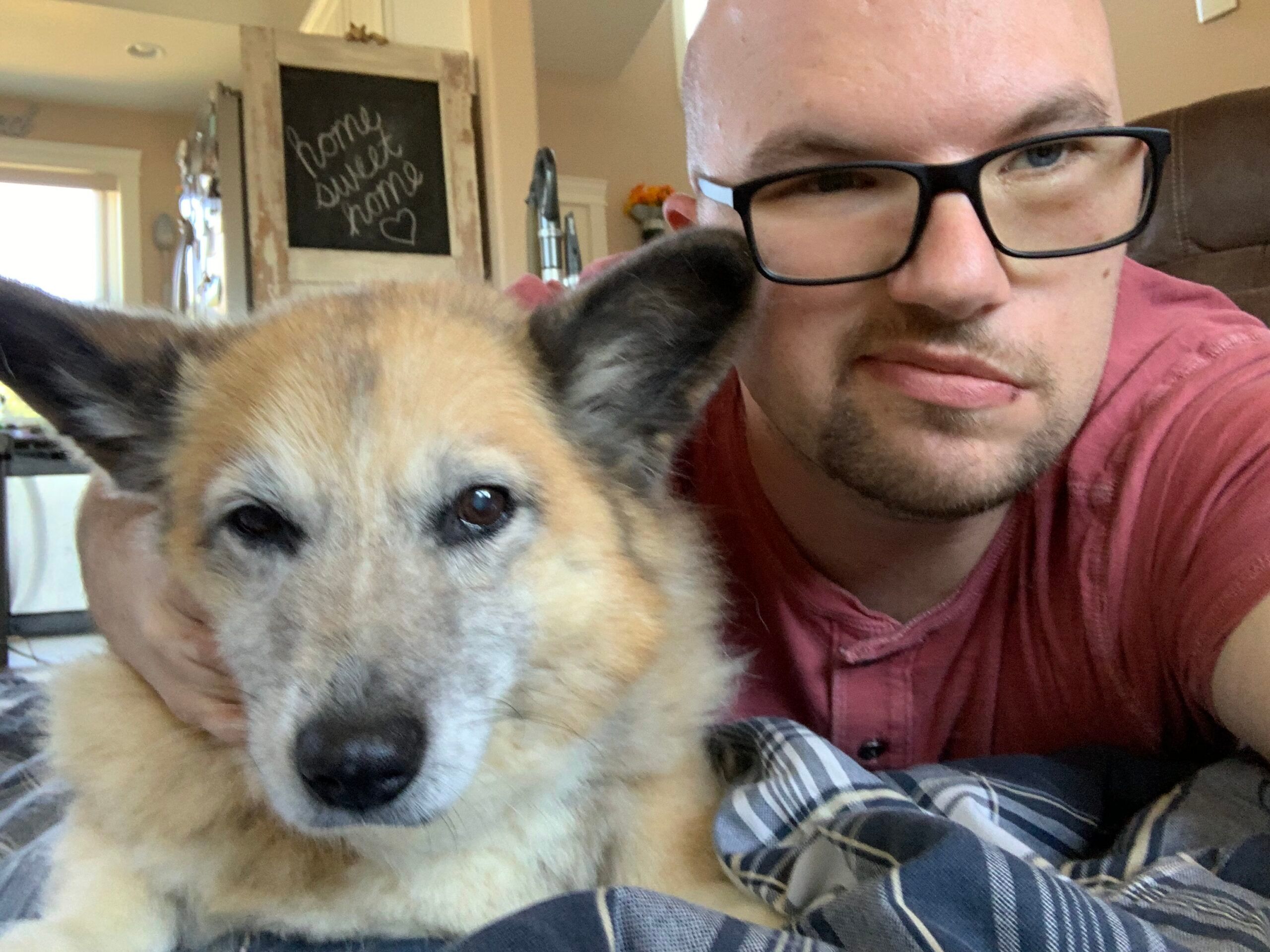
Not long afterward, the Mercedes was pressed into service for one task I had been dreading. About a month before Courtney’s due date, it took Dakota to the veterinarian for the last time. I still remember sitting in the driver’s seat afterward, absolutely bawling my eyes out. Dakota had been with me since I was eighteen years old. He had seen me through college, my first jobs, buying my first house, meeting Courtney, getting married, and so many of the cars in this series. He passed away just one month shy of his sixteenth birthday, which is a wonderfully long life for a Corgi. It was time, but that didn’t make it hurt any less.
About three weeks before our baby’s due date, Courtney and I went in for what we thought would be a routine ultrasound. It wasn’t. Before long, our doctor explained that the baby wasn’t growing as he should and diagnosed Courtney with intrauterine growth restriction. She recommended inducing labor rather than waiting for the due date.
We were shocked. Our doctor at Tillamook Regional Medical Center explained that, under normal circumstances, there was about a one percent chance a newborn would need a NICU. Because of the growth restriction, she estimated our baby’s chances were closer to five percent. Five percent still meant there was a ninety-five percent chance everything would be fine, but when it’s your child, five percent suddenly feels like a very big number.
We decided to get a second opinion at Providence St. Vincent Medical Center in Portland. The specialists agreed with the diagnosis, and we elected to stay there for the delivery. I remember feeling strangely reassured knowing the NICU was literally visible from our hospital room if we needed it. Thankfully, we never did.
Almost exactly twenty-four hours after checking into the hospital, Wesley Tyler Schild entered the world. He weighed just 5 pounds, 1 ounce, making him a pretty tiny little guy, but he came into the world healthy and screaming. His Apgar scores were excellent, and from the moment I held him, I was completely in love.
After a couple of days in the hospital, it was finally time to drive home. We carefully loaded Wesley, his car seat, and what felt like an impossible amount of baby gear into the back of the Mercedes. Then I climbed into the driver’s seat for what was, without question, the most nerve-racking drive of my life.

It wasn’t the destination that worried me. It was Highway 6. Locals affectionately—or perhaps not so affectionately—refer to it as “Danger Mountain.” I’d driven that road hundreds of times over the years without giving it much thought. But this time was different. For the first time in my life, I felt responsible for something far more important than myself.
The ML was everything I had hoped it would be. It felt quiet, solid, planted, and reassuringly substantial. Every time a logging truck went by or we rounded another corner, I found myself appreciating exactly why I had bought it. I, on the other hand, was a nervous wreck.
Thankfully, the drive was uneventful. We made it home safe and sound, carried Wesley through the front door, and settled into life as a family of three.
The ML turned out to be everything we had hoped it would be. As a family vehicle, it was outstanding. The cargo area swallowed everything a young family could throw at it, from strollers to pack-and-plays, and it was one of those vehicles that always made you feel safe and secure. It drove with a confidence that none of our previous vehicles had. Heavy in the best possible way, it simply shrugged off rough roads, bad weather, and long trips.
It was also generally reliable. Unlike the Escape, it didn’t seem to need another little repair every few months. That isn’t to say it was inexpensive to own, though. Maintenance on a Mercedes-Benz is never cheap, and we probably averaged somewhere around $2,000 a year between routine maintenance and repairs. Fortunately, we found an outstanding independent shop—Lakeside Mercedes Repair in Lake Oswego—and they took excellent care of it. The biggest repair during our ownership was replacing several ignition coil packs, which wasn’t cheap, but overall the ML proved to be a very solid vehicle.
I was also pleasantly surprised by the fuel economy. Despite weighing roughly 5,000 pounds and carrying a naturally aspirated V6 under the hood, it routinely returned around 21 MPG. Considering its size, capability, and all-wheel-drive system, I thought that was remarkably respectable.
Where the Mercedes really separated itself, though, was in the snow. When we sold the Escape, I had its studded snow tires mounted onto a set of Mercedes-compatible wheels. That combination transformed the ML into an absolute snow beast. One winter, Tillamook received an unprecedented fourteen inches of snow, essentially bringing the town to a standstill. The Mercedes simply didn’t care. It clawed through the snow like it wasn’t even there. Between the four-wheel drive, the snow tires, and all that German engineering, it inspired an incredible amount of confidence.

Looking back, that was exactly what I had hoped to buy. The ML gave us exactly what I had hoped it would: the feeling that our little family was as safe as I could reasonably make it. We kept it for a little over three years and added roughly 40,000 miles. It became woven into the story of our young family, and for the most part, we absolutely loved it.
Eventually, though, life changed again. By 2024 we had welcomed baby number two, and suddenly a third row sounded a lot more appealing. At the same time, I found myself wondering if there might be a way to lower our maintenance costs without giving up the feeling of safety that had drawn me to the Mercedes in the first place.
But before we get to that story, we need to jump back to my side of the garage for a moment. While Courtney was happily driving the Mercedes, I had already traded the Volt thanks to what can only be described as a once-in-a-lifetime deal.
Tune in next week for that story.




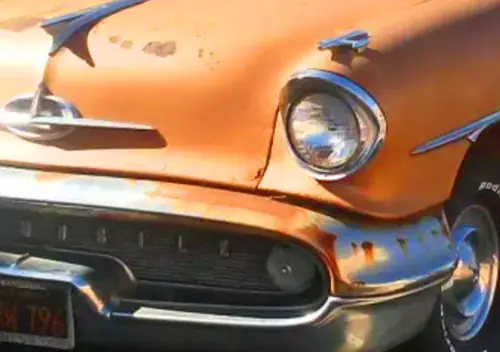
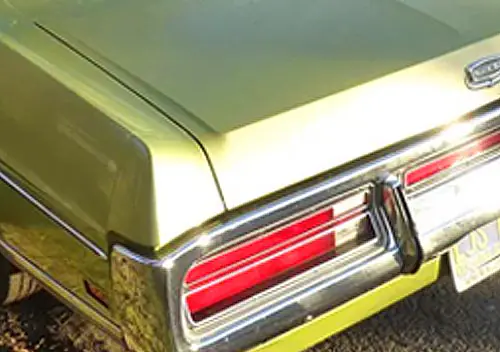
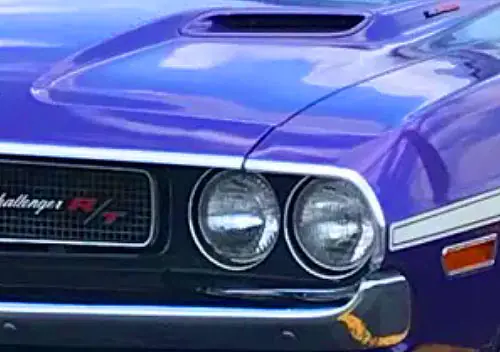





Once you drive a Mercedes and shut that driver’s door, other cars just feel like they’re made out of a recycled aluminum can. Older or newer, it’s in the Mercedes DNA. We’ve had 1971 & 1989 sl roadsters and 2016 and 2020 sedans. They all feel solid in the same way.
I had to laugh at the “14 inches of snow”. Where I live that is a dusting.
Ha! Yep. It was a lot for us coasties though!
I have a hard time relating to these repeated every-several-months repairs on both your Escape and Mercedes. My ’05 xB needed exactly one “repair” in its first 20 years: a water pump (ate age 17). Stephanie’s 2013 TSX has never been in the shop except for a minor recall very early on. And even my ‘017 Promaster van has needed nada in its first 9 years, except tires and oil changes. Obviously the xB and TSX needed those too, as well as DIY brake pad replacements.
I remember those times, with our Jeep Cherokee and Dodge Caravan, but I’ve long ago forgotten what it’s like to take a car to the dealer (or independent shop).
That’s the difference between Japanese thoroughness and Germanic over-complicated engineering. A feeling of solidity is one thing but true dependability is another. Having owned both an M-B and BMW, the last 25 years have led to almost trouble free thanks to the application of the former more pragmatic philosophy. Toyota’s engineering conservatism has served them well over time.
I don’t really recall the Mercedes needing much in the way of repairs other than the coil packs, which I’d put more in the “normal age/mileage failure” category than a major repair. Annoying, yes, but not exactly transmission-out stuff. The Escape was definitely needier, though. The worst part about the Mercedes was the maintenance was really expensive.
Even Honda’s are not perfect. I have owned Honda’s with two, three, and four wheels. All had their quirks. And replace a Ford with a machine that’s going to be even more problematic down the road?
The Mercedes was exponentially more reliable than the Ford. It was probably about a wash cost wise though. But not having to take it in every few months was very refreshing.
We have had little trouble with the MB other than maintenance- brakes, batteries, etc. We did fuel injectors on the 560 sl and refresh the AC but it’s 37 years old. It helps to have an independent mechanic who takes photos and can separate the “fix now” vs. “wait and watch” wear items.
We just don’t put the hard miles on our cars. In general I am entertained by how many cars the COAL writers have owned. We rarely buy new but we buy lightly used, usually CPO with a little extra warranty, and we keep for 10 years or so.
Your philosophy is sound. Ours was pretty reliable. The only issues were really just age and normal wear and tear.
I have never really understood the need to get a massive car when you have a kid. I raised three kids with a 2008 Honda Fit and we never had any problem with space. Yes, we had to pack wisely, but the little car swallowed everything we needed.
I’ll admit, both my wife and I are compulsive over packers. 😂
But you’re completely right. Golfs and other little hatchbacks are very common family vehicles in Europe.
In a family of five my parents made the cross country trip from Catonsville MD to Los Angeles in a 1964 Ford Galaxie. Three in the back, trunk packed, and a styrofoam container between my legs holding my goldfish I refused to give up. Those two fish lived from 1964-72 with the last five in a backyard pond I drew up and a contractor built.
Very sorry about the loss of Dakota. The loss is always hardest for people who consider their pets a member of the family.
I definitely understand about the want of a third row as well. Even though we only had two children, they both HATED being rear facing. With our Grand Caravan, my wife was able to go back to the third row and soothe my daughter until we arrived at our destination. By the time we got rid of the GC three years later, both were forward facing and the need for the third row had long since gone.
Thank you. It was time, but it was very hard. I still miss the little dude!
The third row was definitely for that purpose. So Courtney could sit in the third row and monitor the baby. It worked well, and now that Wesley is older, we moved his car seat to the third row on long trips, because he fits better back there than Courtney, and she can have easier access to the baby next to her.
Reading this makes me feel so technology dated and yet I have no problem with it. I don’t want a screen in a car of mine. I don’t want to be connected through my car. Same extends to a cell phone which is good for a text, a phone call, or a traffic update. I just spent 2 hours on the phone dealing with AT&T to transfer service from old office to new office. So sorry sir we can’t transfer copper wire service as we don’t service copper wire anymore for new accounts. I am not new I am transferring. Sorry sir, but we can do this over the internet. I am going to send you an email to verify your identity. Over the phone? I don’t know how to do two things on the phone unless my 17 year old is around. Stunned silence. He walked me through it and two hours later we were done. So I am officially a Troglodyte. Now get out of my cave!
I totally get it, kids change everything. Get whatever the best thing is that you can afford, should the unthinkable happen you don’t want to live the rest of your life wondering if maybe that Toyota Yaris wasn’t the best choice after all to cart your family of five around in if you have the means to protect the little guy (or gal) in something a step or two up.
What people seem to not realize is that a 5-star safety rating for whatever earned it is in relation to EQUIVALENT sized vehicles. You can have the safest Honda Fit, but if a normal F-150 comes across the centerline in the snow or rain, it’s probably lights out for someone in the Fit or Yaris or whatever. And of course you might as well be comfortable if it’s in the budget for long trips etc and you can afford the gas and maintenance. If a Yaris is highly rated in crash safety, it’s against a Fit or Mini or Versa. Of course there’s always a bigger fish on the road no matter what you end up with, you just do what you’re comfortable with and hope the other guy is paying attention too and not distracted by his own screaming kid…
We’ve done the Mercedes thing twice, overall I was probably happier with how the W124 400E comported itself vs the GL450 but if I was going to impact something nowadays I’d rather be in the GL. At this point, anything built in the last decade is probably VERY safe. But physics still matter.
I simply loathe taking any of the cars in to the dealer. Or a mechanic. It seems to be getting harder and harder to find anyone willing to do a good job without trying to upsell all kinds of junk or “recommended serives” or charging an arm and a leg. Of course that’s their prerogative, they have a skill too and if i can’t do it, well, then time to pay up…but probably why there isn’t a late-model European car in the driveway.
Anyway, confidence is great, and comfort is nice, awd is great in the rain or winter (and yes FWD or RWD with snow tires and some electronic helpers is good too but nobody seems to imagine that you can also put snow tires on an AWD vehicle which generally makes it unstoppable…), glad you enjoyed the car (lovely color) and enjoying anticipating what comes next!
The local Oil Can Henry’s won’t even do an oil change on a late model Mercedes, so I had to take it over to Portland even for that. Thankfully it only called for an oil change about once a year, so it wasn’t terrible.
And you’re right. While we could have gotten along in a Fit, we had the means to buy a bigger, safer vehicle outright, maintain it well, and fuel it. And I don’t regret it. Peace of mind is worth something.
“We carefully loaded Wesley, his car seat, and what felt like an impossible amount of baby gear into the back of the Mercedes. Then I climbed into the driver’s seat for what was, without question, the most nerve-racking drive of my life.”
Man I’m a car guy, don’t get me choked up, that’s not what I do!!!
But yeah, I bet it was. And with good reason. Thumbs up to you! Of course 15 years later and you’ll be screaming at him to shut up and behave, but that’s just life.
In 1991 we brought our first-born home in our VW Vanagon. Lots of room but not much in the way of active or passive safety. Though the commanding driving position and its visibility was a plus. Within a few months I decided we needed a safer family car and began a two year experience with an older E12 BMW. After tow truck rides with both the VW and the BMW, the latter with two kids, my wife said firmly: “We’re buying a NEW car, and it’s going to be Japanese”. We bought a Corolla. And thus began our Toyota period which has been mostly continuous for 33 years now. One water pump (warranty), one radiator, a few brake pads and spark plugs, lots of fluids and filters. Most DIY.
We had a 2003 ML350 for 12 years, we constantly worried about its repair cost and its reliability and dependability because that vehicle didn’t have a very good reputation. However, I have to say it was not that bad despite there were few problems, but they were repaired with reasonable costs in the independent shops. However, those shops all told us to keep up the maintenance schedule, and repair the small problems such as oil leaks before they became a big problem. Nevertheless that vehicle served us well, everything worked at 160k miles except the radio (probably the broken antenna amplifier, which was too expensive to replace, my other car, a 2004 Toyota Matrix had the same problem I used that car for three years in yr2023-25). The guy who bought the car in 2021, surprised how well the engine and transmission running. My guess is yours are probably even better. As for snow, mine has a true low range setting, I only used this feature during a heavy snow evening (over 10 inches at 20 F weather),
Mine worked well in snow driving, and stopping and sliding are another story. I slide the vehicle into the curb on a icy rain day. It was partly is my fault because I never learn how to handle slipping and sliding, rather I always drive slow to avoid the problems. In that incident, I was getting into the turn too fast for the weather conditions.
Like you, I also picked up my daughter, our second child, in Cornell Medical Center in Manhattan with our Mercedes. So I always told her that her first car ride was a Mercedes since in Chinese culture, Benz is always a prestigious and mysterious symbol
My family soured on Mercedes when our 1966 250S never had all 4 power windows operational, and threw a rod in 1973 with the nursery school carpool inside. We still bought a Volvo and some VAG products but that was it for M-B.
On the German versus Japanese reliability front, we bought a Mazda CX-5 at almost the same time as my in-laws bought an Audi Q3. In 8 years their Audi was in the shop for a warranty repair at least twice a year plus a $1500 walnut blasting job to remove intake valve carbon buildup. In those same 8 years our Mazda got routine maintenance, tires and a new battery at 6 years, which resolved some flaky infotainment.
As for children and safety, after a high risk pregnancy and some previous difficulties our 5lb 8oz daughter came home from Emmanuel Hospital in a Ford Escort. I was never that concerned, although it was a good thing that the only car we’ve had totaled was a Mazda5, and I was coming back from school drop off.
Yup, going from 1 kid to two changes a family’s car needs a lot. And as those kids get older they get friends. Suddenly, a 4/5 seat vehicle seems awfully small.