
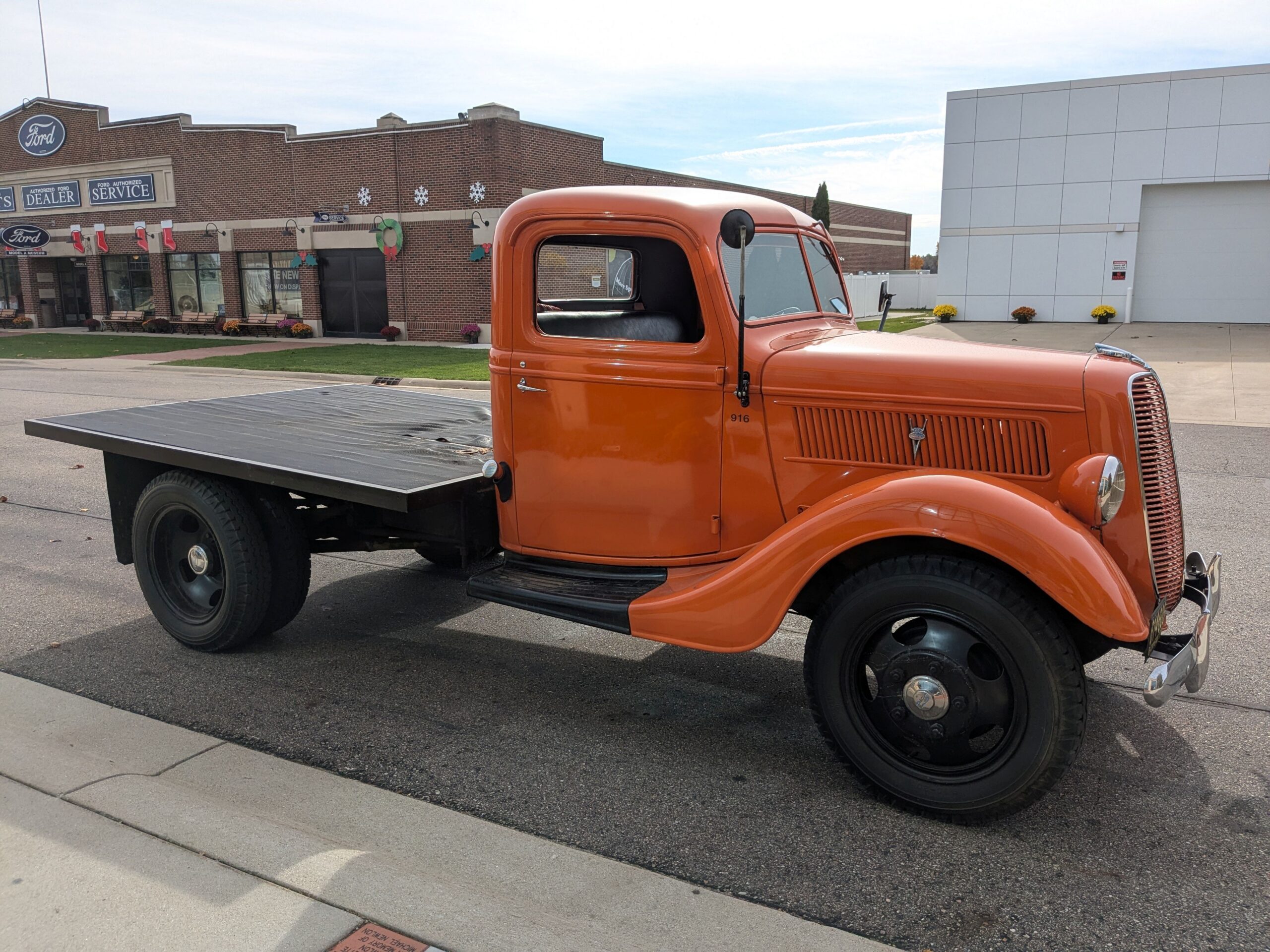
Let’s say you’re working at one of America’s foremost car museums, and you have to empty out one of your display spaces to install a new floor. What kind of truck would you use to move everything? Well, if you’re Gilmore Car Museum in Hickory Corners, Michigan, you use this charismatic 1937 Ford 1-1/2 ton flatbed with an 85-horsepower flathead, of course. It’s the kind of truck that makes you want to work at a museum.
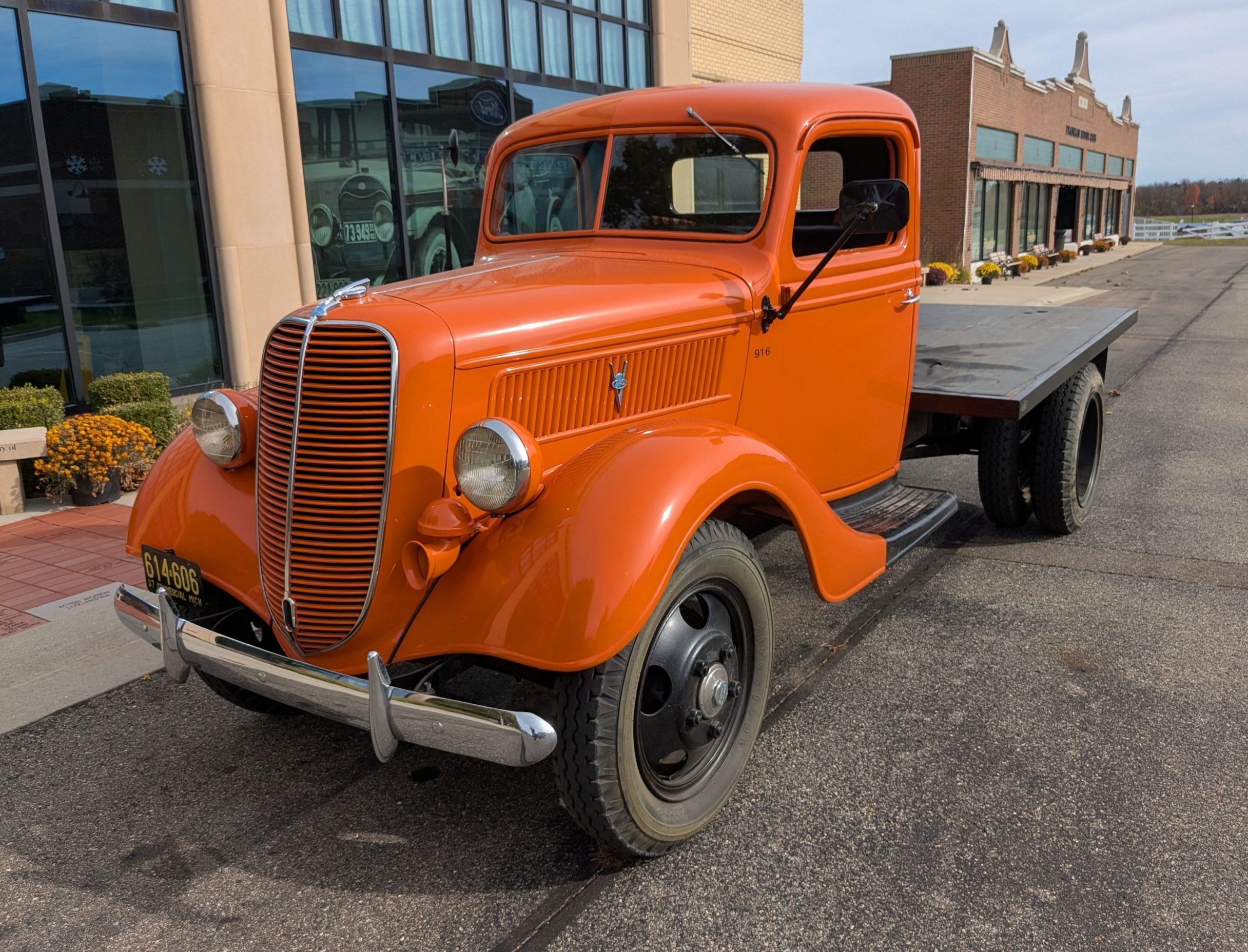
I spotted the truck sitting outside the Lincoln Motor Car Heritage Museum on my visit to the Gilmore campus in October 2026, and it looks like a 9-foot Platform truck with a 131-inch wheelbase (in which case it would be a Model 79-900). The building was getting a new floor; therefore, all the cars and furniture needed to be moved to temporary storage, and as it happens, the museum determined that it was the perfect truck for the job. I struck up a conversation with the staffer who was driving it, and he said that it was donated to the museum by the city of Grand Rapids, Michigan, which had restored it to use in parades.
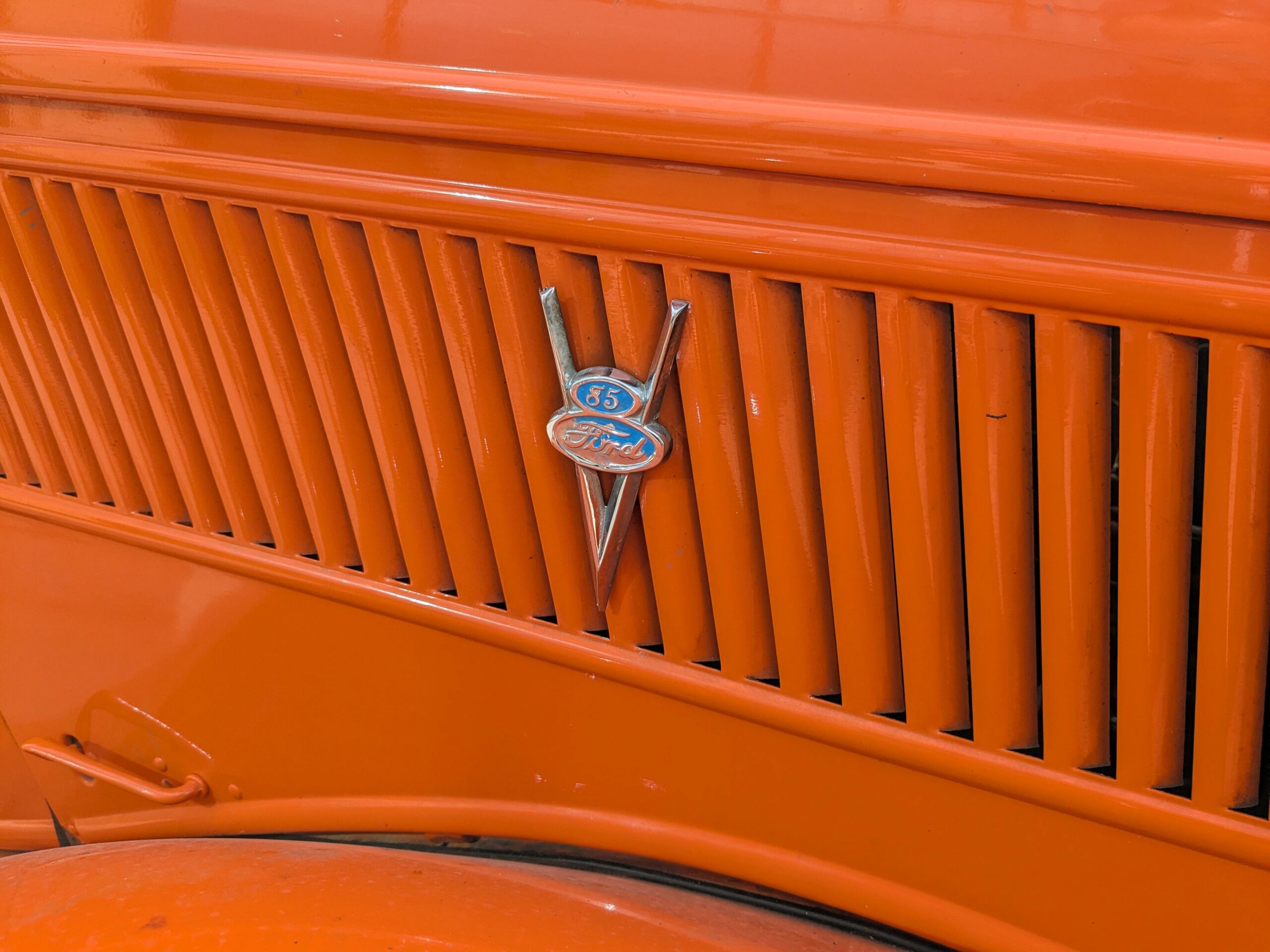
After getting over my initial boyhood crush stage of observing the truck in action, I soon noticed how well it ran, almost perfectly in fact. There was virtually no valve noise, and its idle was as smooth and even as your modern commuter; I commented on its state of tune, and the driver concurred that it was indeed a sweet-running flathead. The 85-horsepower 221, however, was not the only flathead available in one-and-a-half tonners in 1937.
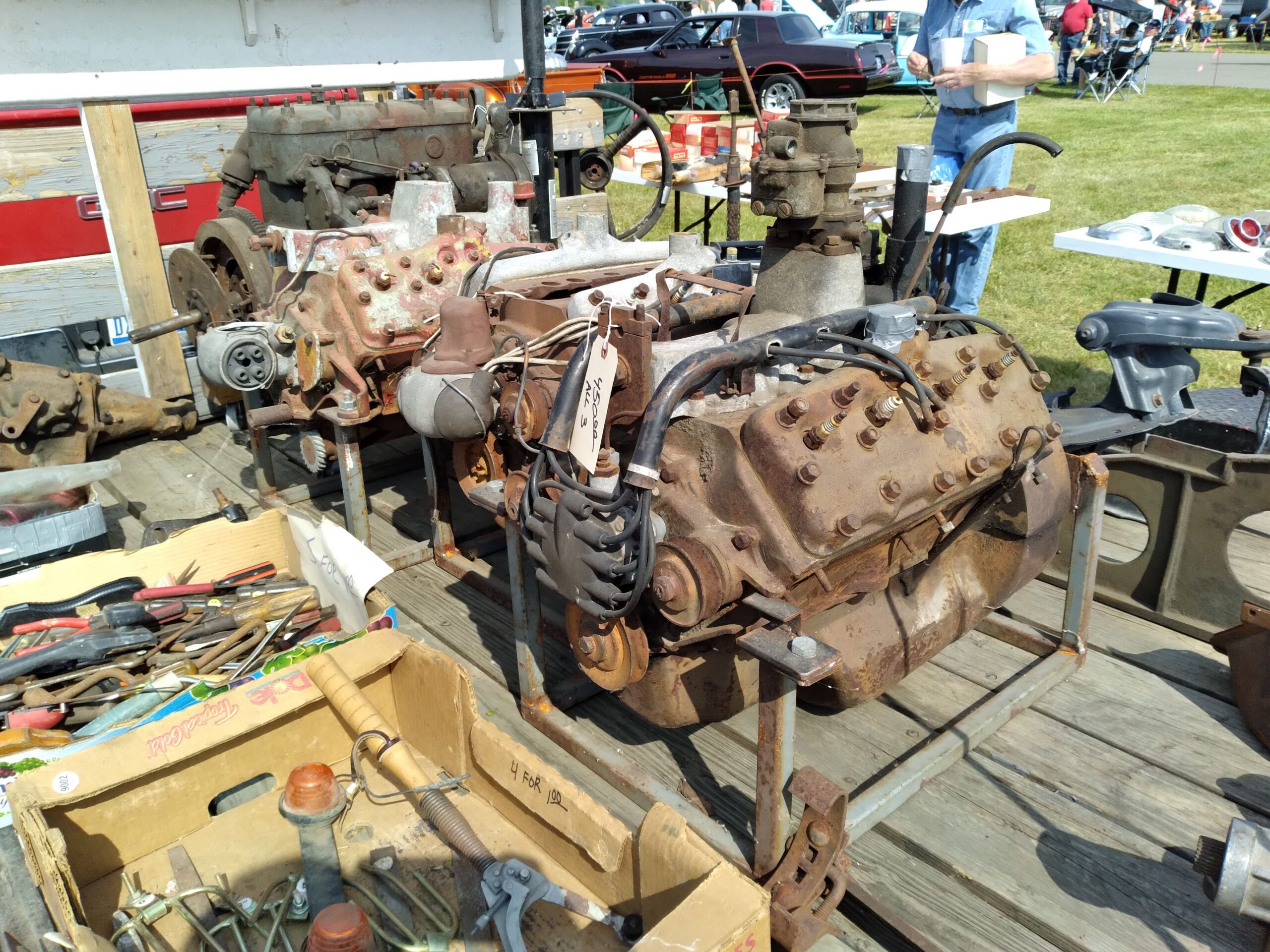
The new standard engine in Ford cars and Ford trucks in 1937 was the 60-horsepower flathead that produced a measly 94 lb-ft of torque (144 lb-ft is the most common number bandied about for the 221). Here are three V8-60s that I found at a swap meet a few years ago: These tiny 136-cubic-inch engines are easily distinguished from their larger counterparts not only by their size but also by their 17-stud cylinder heads. The intention was that the V8-60 would fill the gap vacated by the old 200.5-cubic-inch four-cylinder that was canceled after 1934, but the 60 never really caught on, and Ford replaced it with a new six-cylinder engine in 1941.
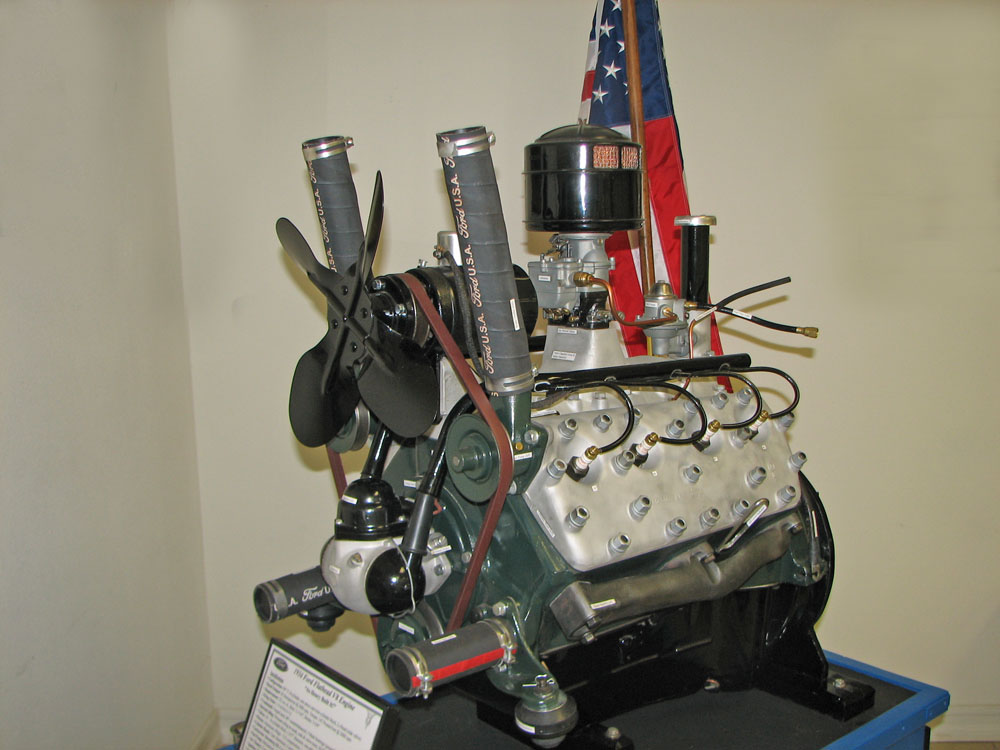
The V8-85 (a 1934 engine is seen here) was much more popular. It’s not only bigger than the 60, but it also has 21-stud cylinder heads, which were upgraded to 24 studs in 1938. For me, the easy tell between a 21-stud and a 24-stud engine is the center row of vertical head studs; on a 21-stud engine, there are three of them in a row.
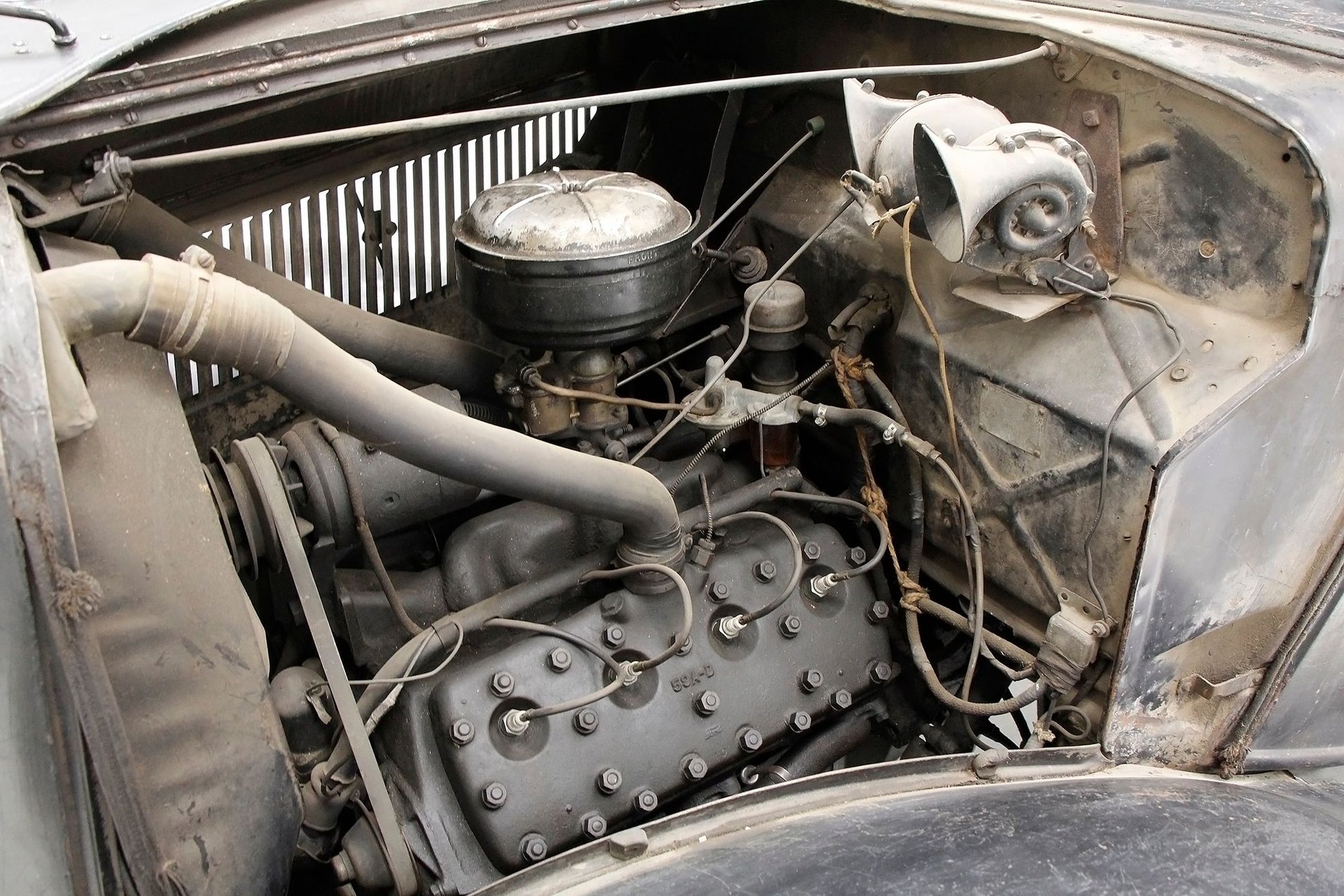
This engine, which is powering a different 1937 Ford Platform truck, is a 24-stud “59 A-B” flathead, originally used in 1946-48 Fords; notice that the center row of head studs resembles an inverted “Y.” The 59 A-B also had an improved cooling system with water pumps mounted on the block and a center outlet for the upper radiator hoses. Postwar flatheads were a little bigger at 239 cubic inches, but the 221-cubic-inch-and-up flatties are the ones that people know and love, although the V8-60 went on to a successful career in Midget racing.
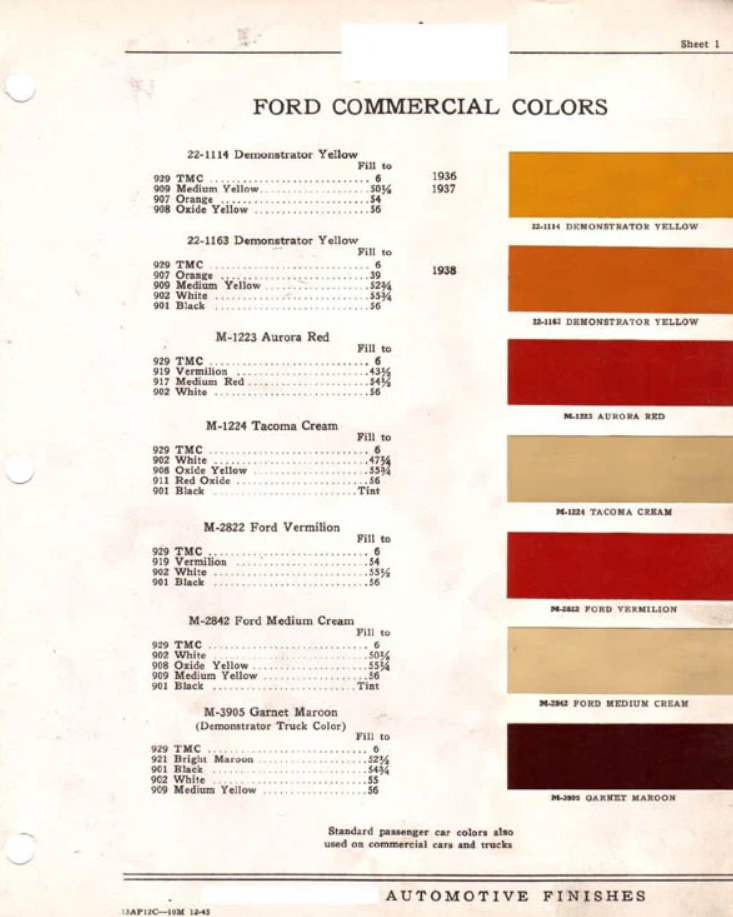
Although our featured Ford’s color looks appropriate for a modern highway department vehicle, there’s a chance it’s original; this is a color chart for 1936-38 Ford commercial vehicles, and there were two versions of “Demonstrator Yellow”: 1936-37 at the top, 1938 just below it. Our truck looks like it matches the top color fairly closely, although I’d certainly call it orange rather than yellow. Of course, it could be (and probably is) a modern orange.
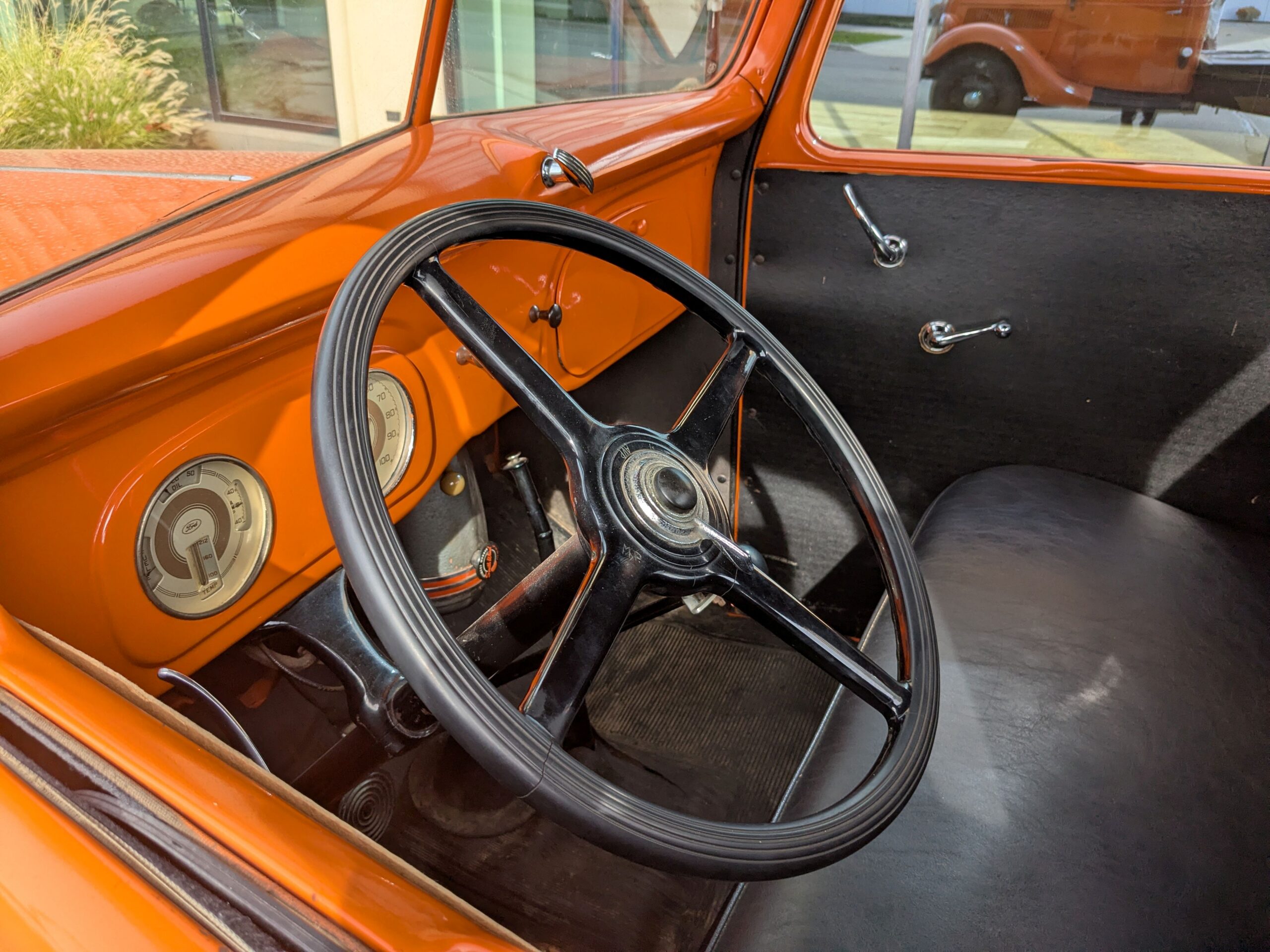
The interior is spartan, as you’d expect from a 1-1/2 ton truck from the 1930s, but it looks like it at least has a heater for those cold mornings moving furniture. The transmission is a four-speed with a floor shifter, and the rear axle ratios offered on the big Fords will keep this truck on museum grounds rather than the open highway. They ranged from 5.14:1 to 6.60:1, and even with the tall tires of the day, that will greatly limit top speed, not that you want to go too fast with one of these old solid-axle brutes and its mechanical brakes.
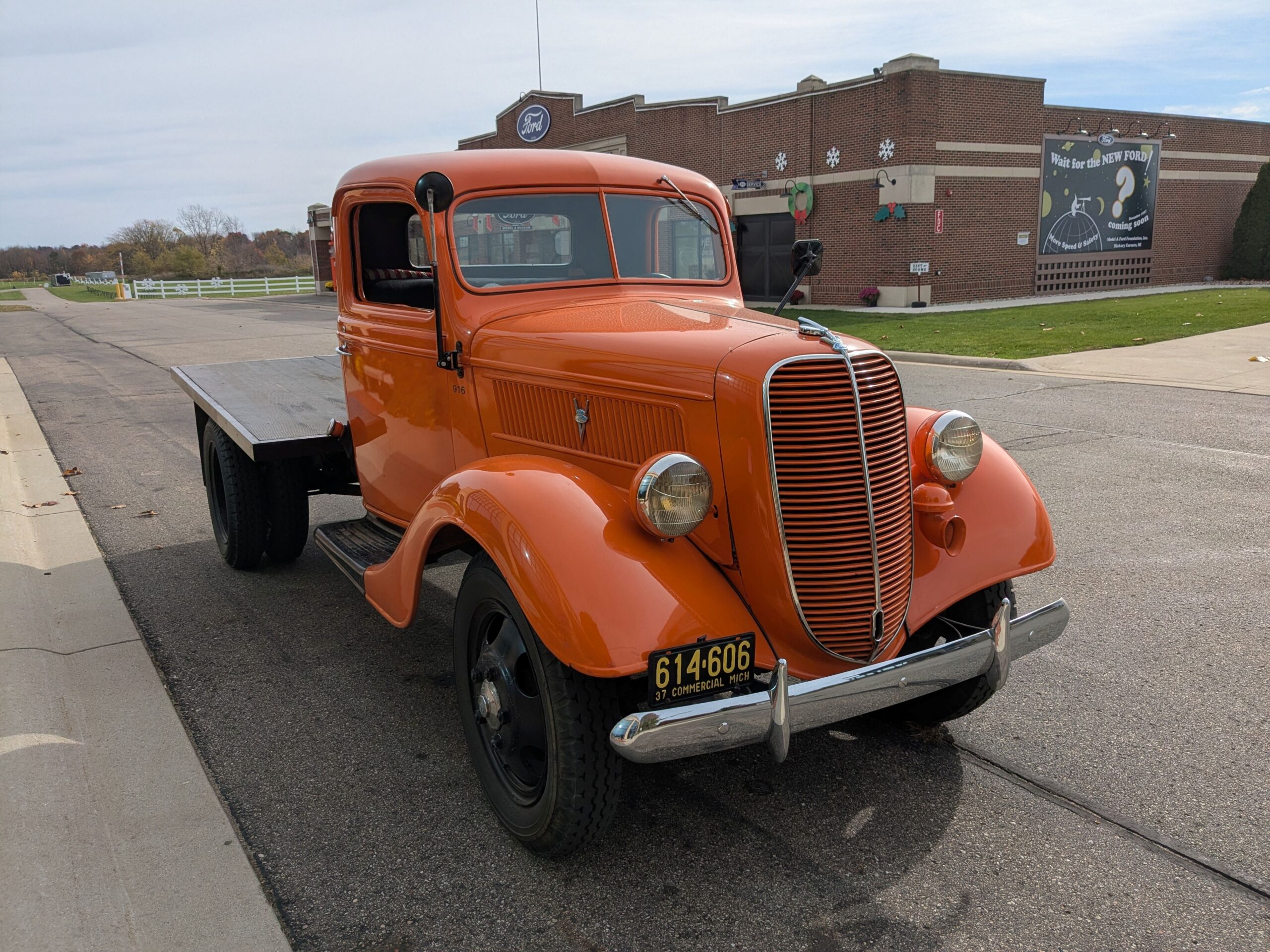
But isn’t it cool? Technology has passed the flathead by, but it’s still one of the best sounding engines in internal-combustion history, and the truck it powers is still out earning its keep 89 years later. Well done, Ford Motor Company.
Related Reading
Back 40 Classic: 1935/6 Ford 1.5 ton School Bus (by me)
CC Capsule: 1935 Ford Model 50 Half-Ton Pickup – Going Stag? (by Tatra87)














Great to see old classics still in use rather than just being garage queens.
The V8-60’s specs are interesting compared with the Model A. The A’s 200 cubic inches put out only 40 horsepower but 128 ft lbs of torque (at a tractor-like 1000 rpm). The V8-60 was significantly smaller and beat the A in horsepower, but fell well behind in torque. I can see why it was not a success here.
What a great experience! And I agree, one should never miss a chance to listen to a flathead in motion!