
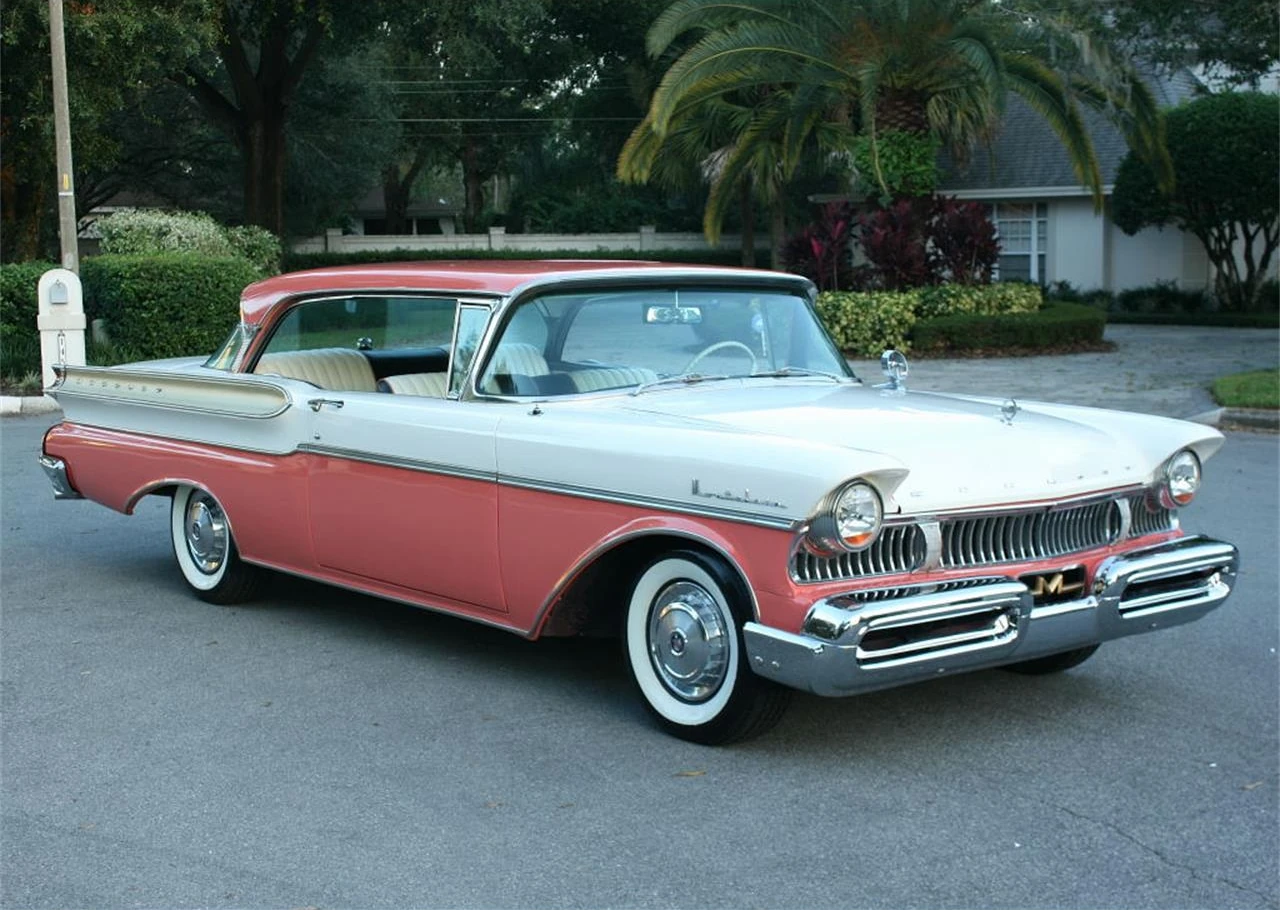
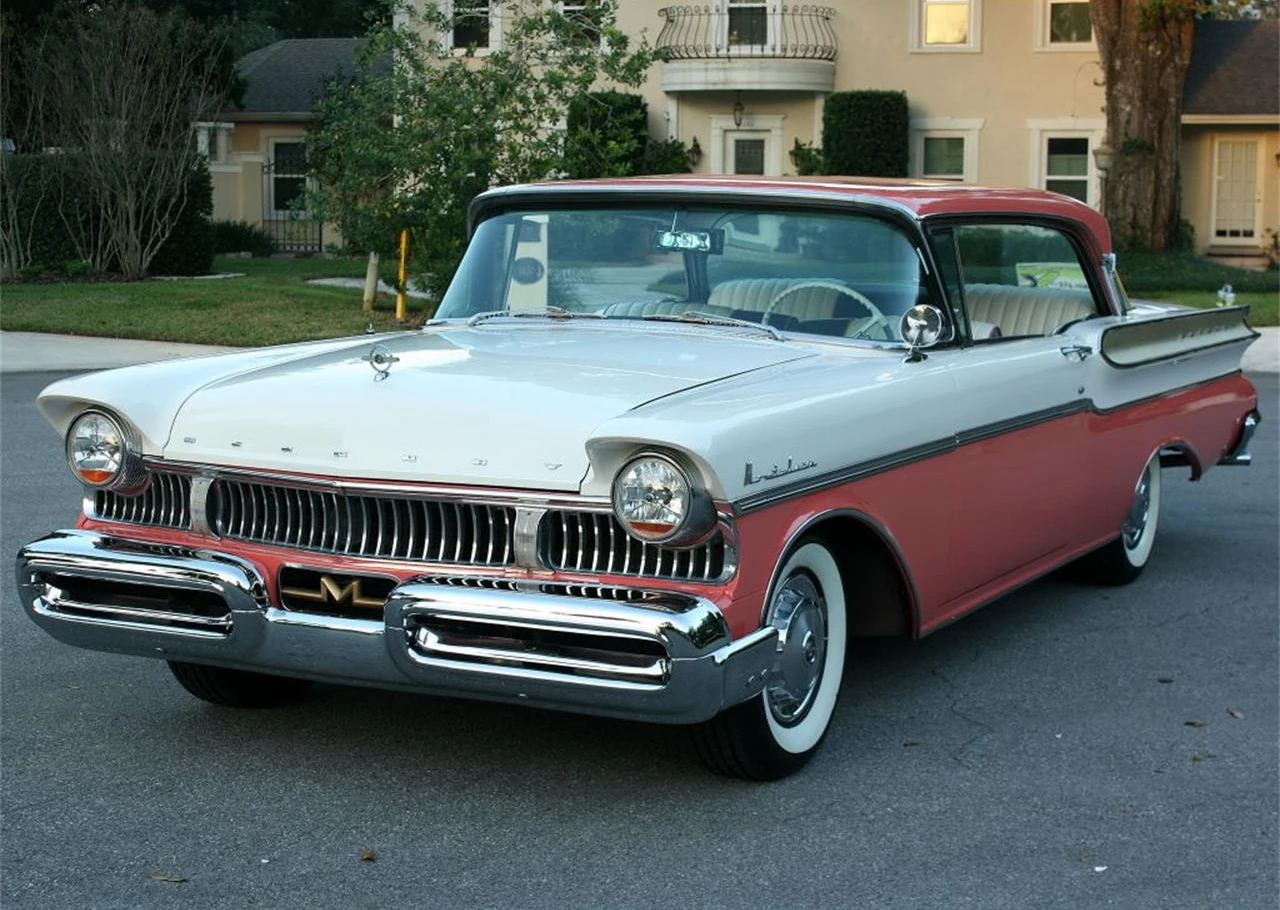
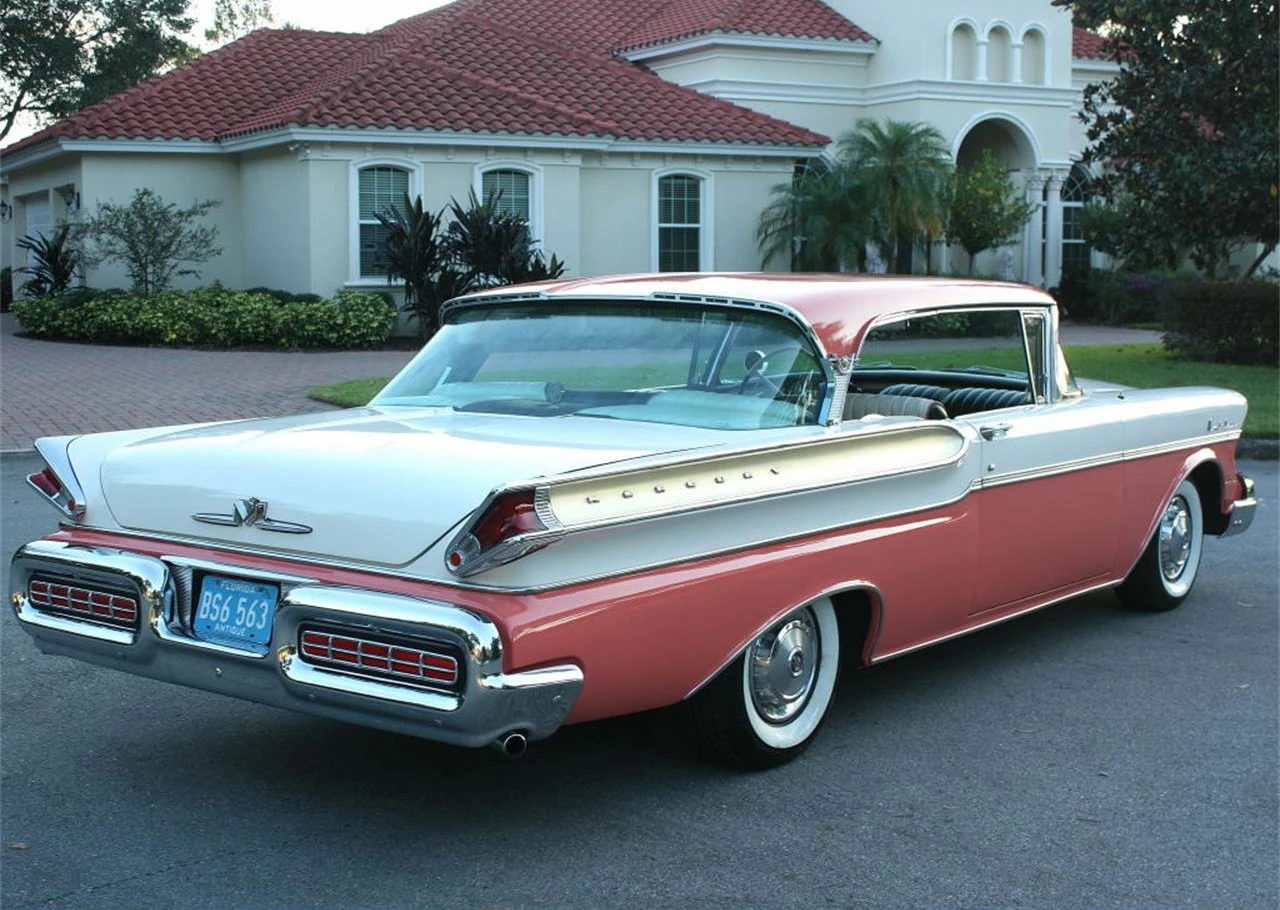
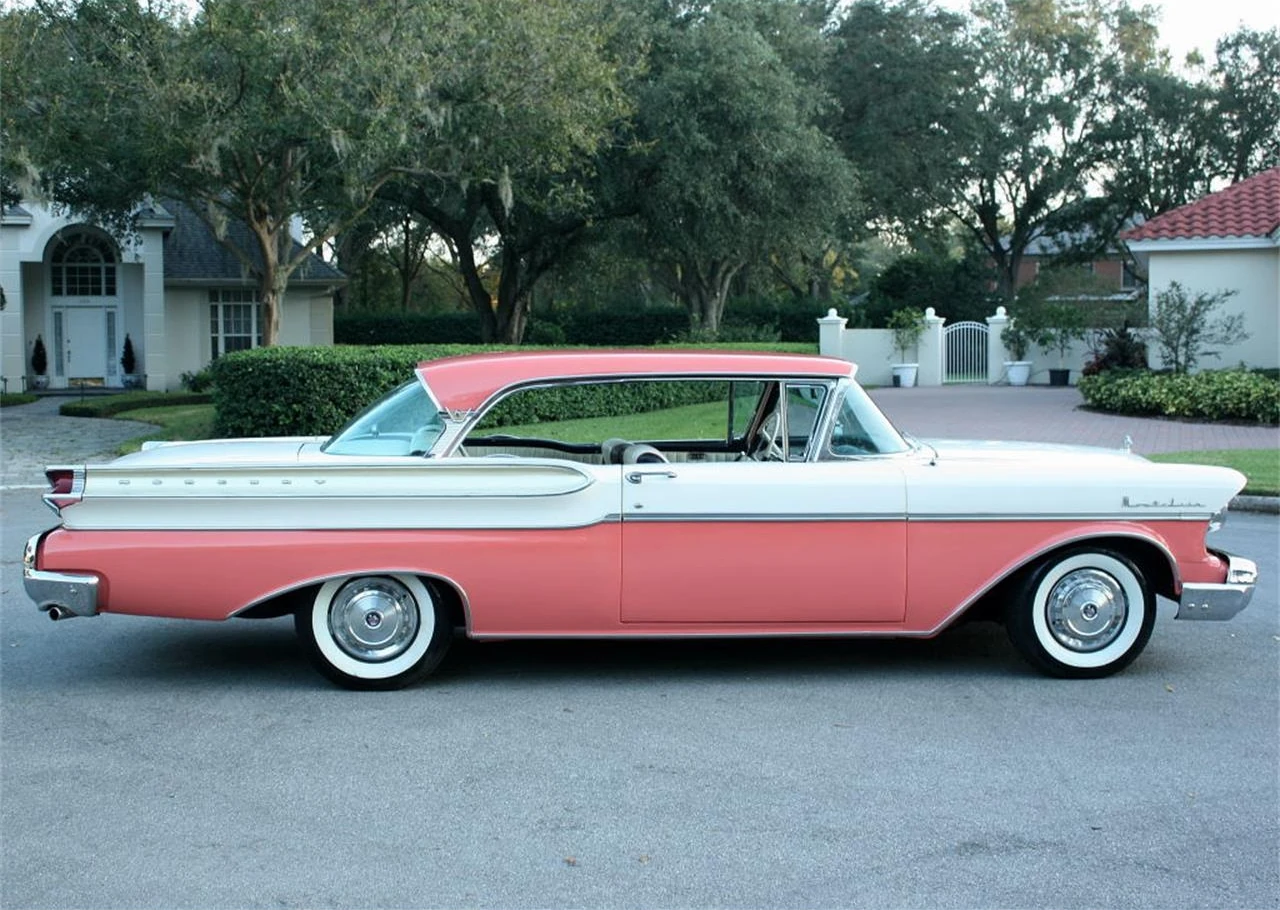
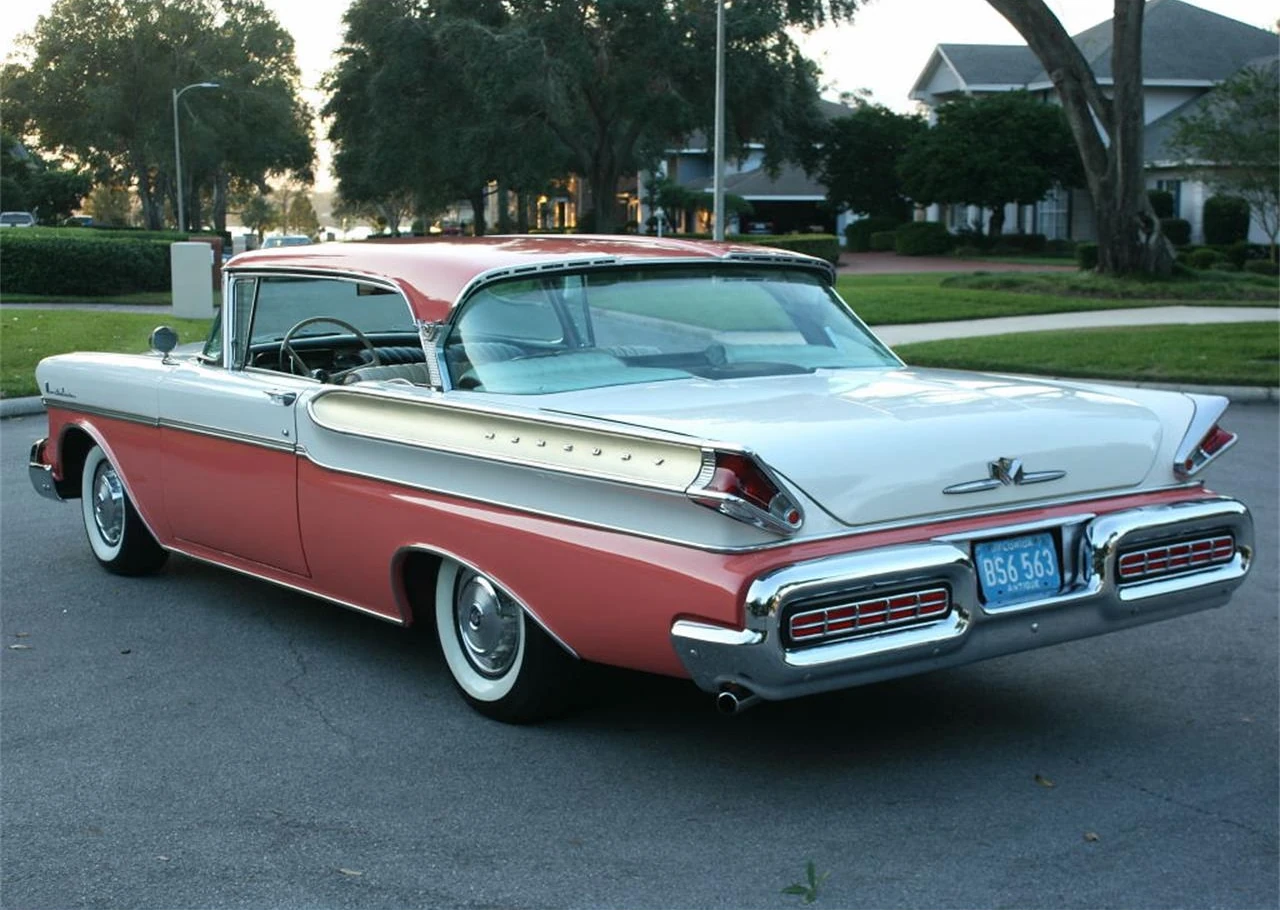
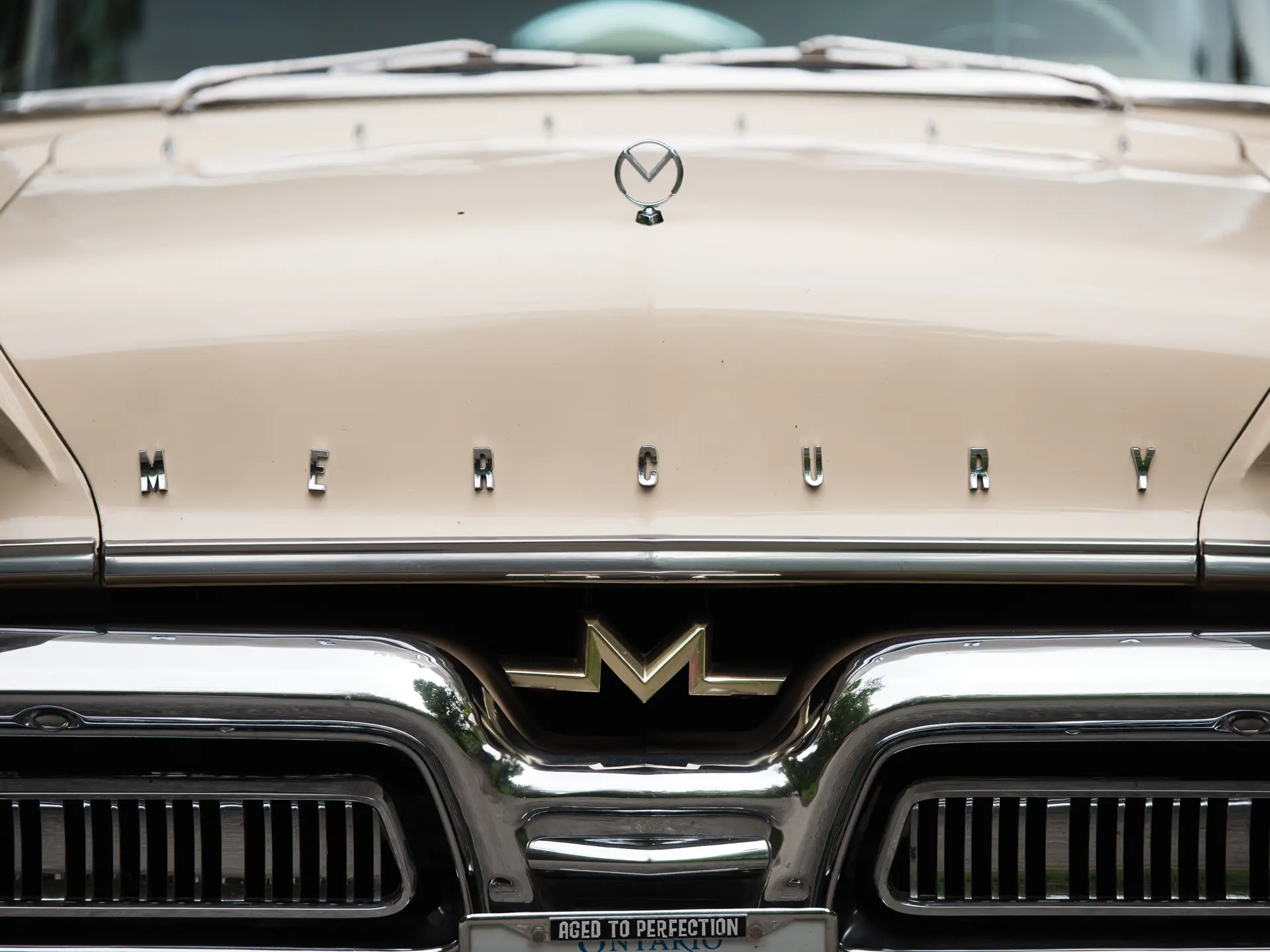
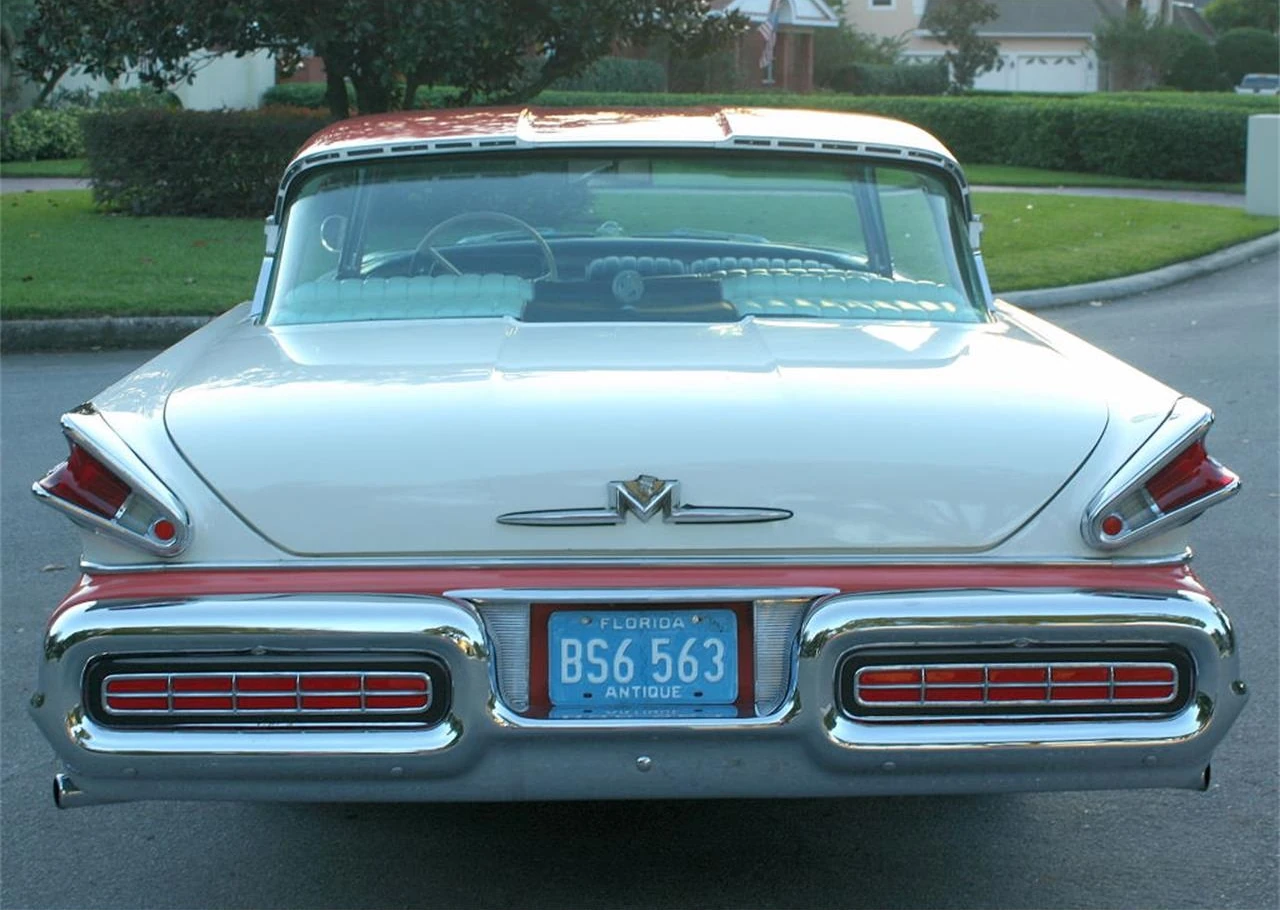
If you bring up Ford’s departed Mercury marque, armchair strategists will inevitably tell you Ford erred in not making Mercury a true mid-price brand rather than just a slightly fancier Ford. This “Flo-Toned” 1957 Mercury Montclair hardtop is a survivor of the time in the late 1950s that Ford Motor Company tried to move Mercury upmarket, with disastrous results.
In the late 1930s, Ford Motor Company president Edsel Ford recognized that there was an enormous price gap between the most expensive Ford and the cheapest Lincoln-Zephyr, which meant that Ford Motor Company wasn’t competing at all in the profitable mid-price realm. Edsel eventually convinced his father that they needed to do something, but old Henry, obstreperous as ever, insisted that the new car couldn’t look too different from the existing Ford line. In fact, the new line was originally supposed to be called the Ford-Mercury, and even Edsel was resistant to taking the Ford name off of it.
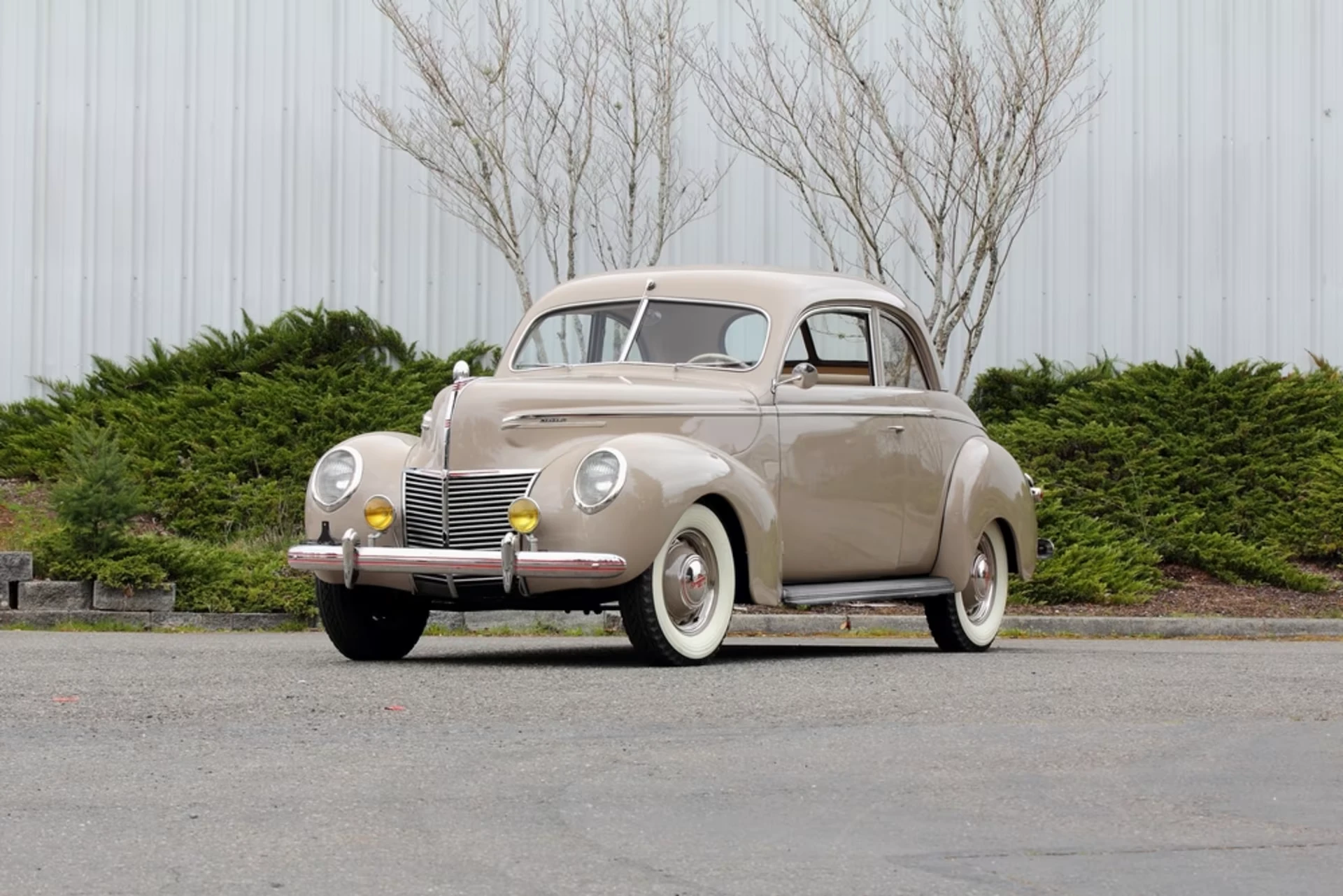
The first 1939 Mercury started at $894, $174 more than a Ford De Luxe 85 tudor sedan. Junior designer Tucker Madawick later called it “a real advanced car against the basic Ford,” but it still looked very Ford-like, and it still had a Ford chassis and a bored-out Ford V-8 engine. For the most part, that was fine; the Mercury offered enough extra to justify its higher price. However, it inhabited the lower portion of the mid-price field — comparable to a Pontiac De Luxe Eight, and roughly between Dodge and DeSoto — rather than going head-to-head with senior Oldsmobiles and Buicks.
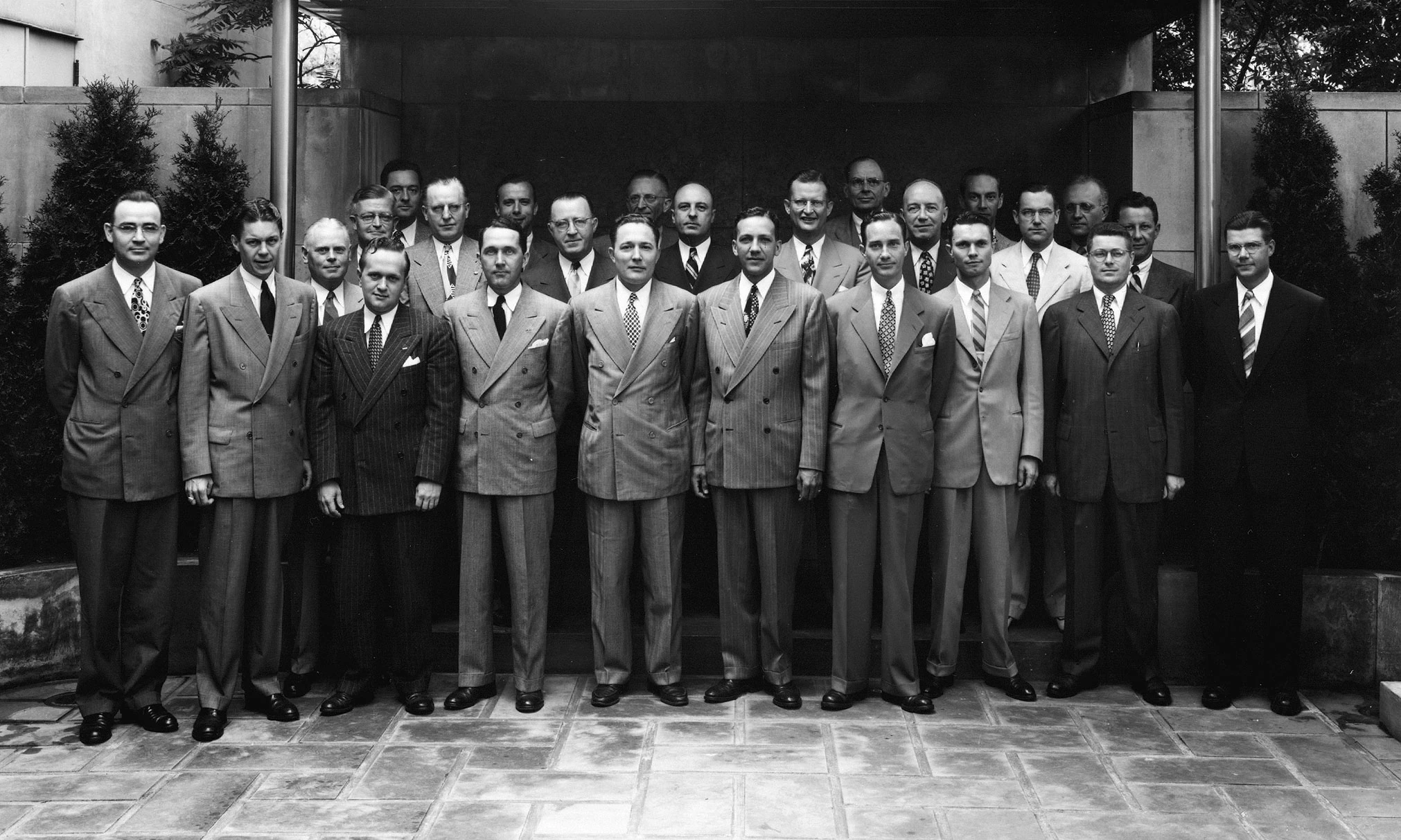
In 1946, Ford created an autonomous Lincoln-Mercury Division, with the idea of eventually letting Mercury stand on its own. For roughly the next decade, Mercury did rather well. However, doing “rather well” wasn’t enough to satisfy the roiling cauldrons of corporate pride and individual egos at work behind the scenes of the Ford Motor Company. In the postwar period, Ford had hired various industry veterans from GM, as well as the 10 “Whiz Kids,” hotshot veterans of the U.S. Army Air Forces Office of Statistical Control. The company’s existing divisional structure wasn’t big or elaborate enough to challenge GM on a one-to-one basis, as many thought Ford needed to do, or to satisfy the ambitions of the Whiz Kids. By the mid-1950s, Ford Motor Company was beset with what the late Tom Bonsall called “empire building.”
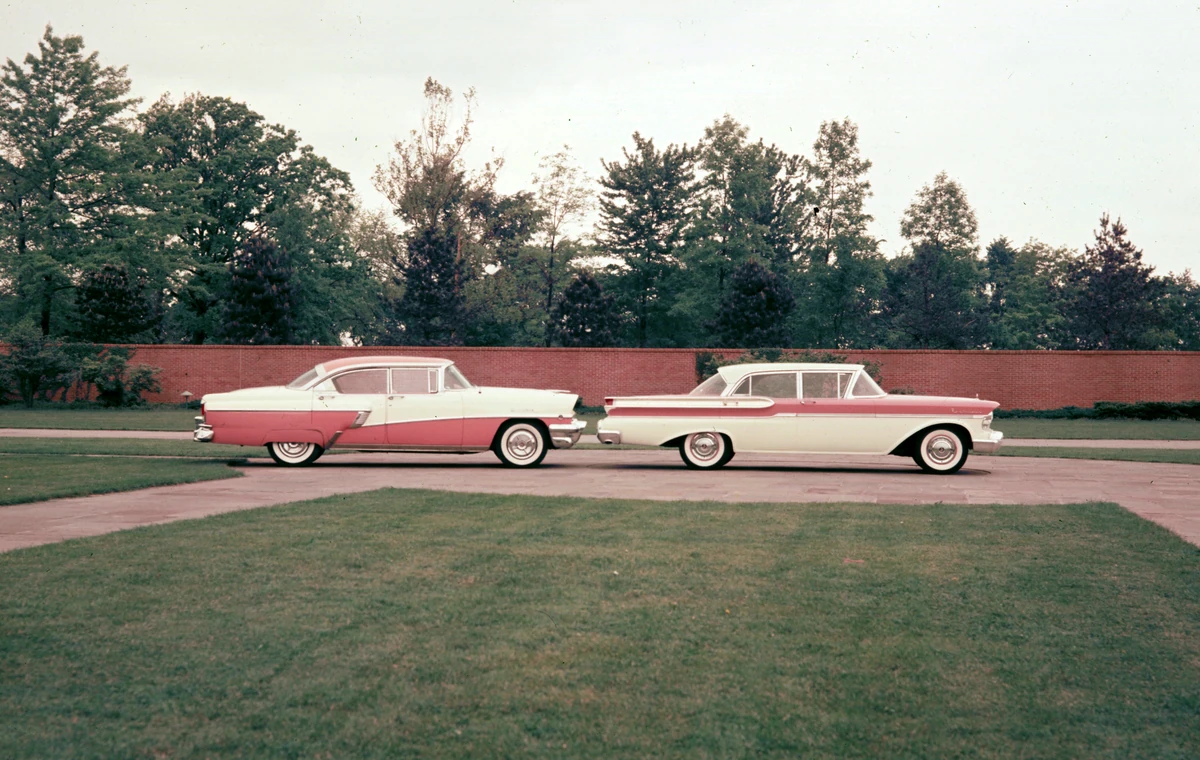
The biggest and most obvious result was the ill-fated Edsel, but another facet was a new direction for Mercury. In February 1955, existing plans for the 1957 Mercury line were dumped in favor of an all-new program with an all-new, significantly bigger body shell. Organizationally, Mercury was separated from Lincoln as a standalone division with its own general manager, Francis C. (Jack) Reith, a Whiz Kid who had recently scored a victory by reorganizing Ford’s failing French subsidiary enough for it to be profitably sold to Simca.
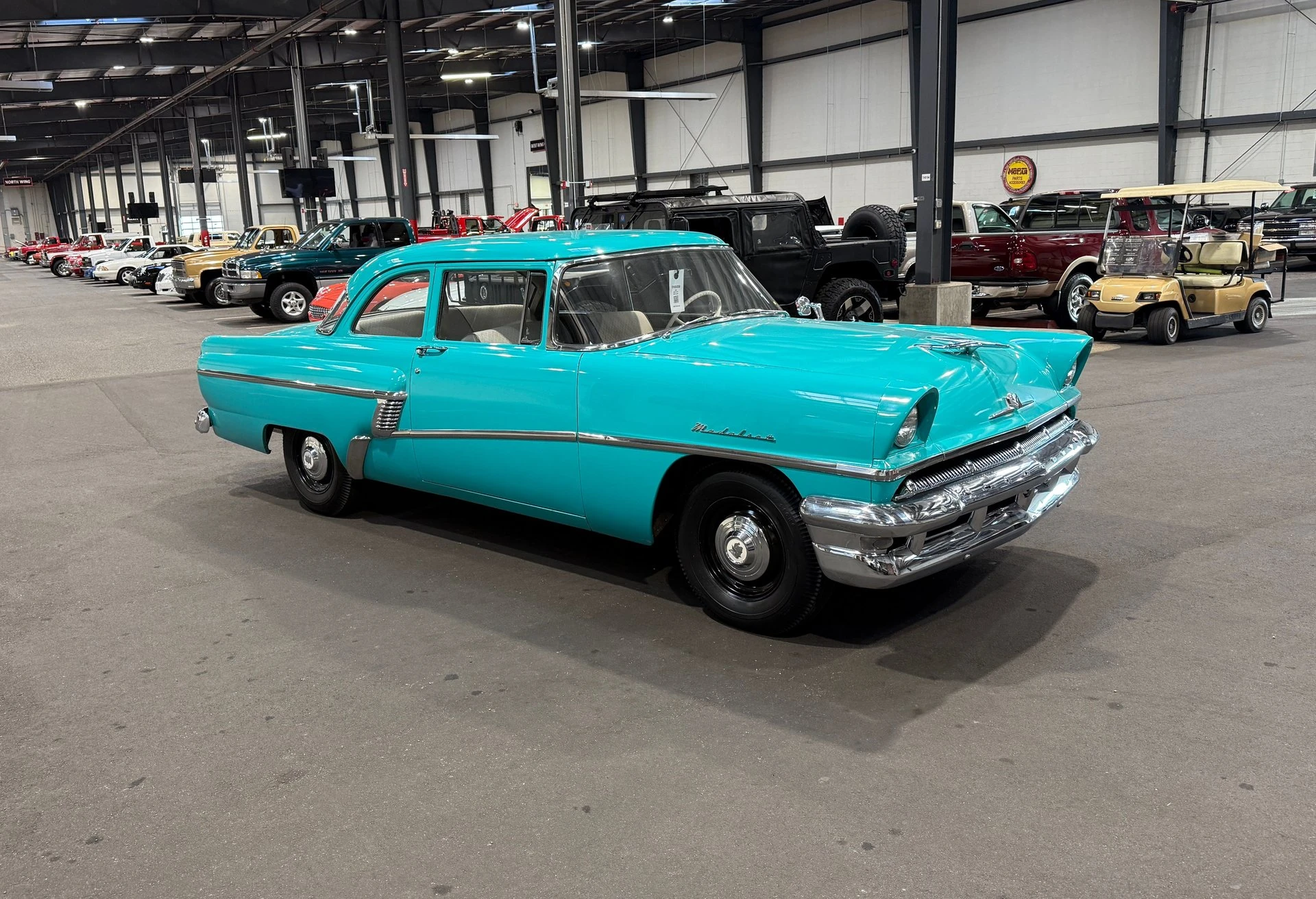
In 1956, Mercury offered four series: The new entry-level Medalist series held up the low end, with the existing Custom, Monterey, and Montclair series above it. The 1956 models were longer than the 1956 Ford, with fancier trim, but they still shared the Ford body shell. Buyers didn’t seem to hold that against them, and the Mercury line sold respectably well, with 1956 model year production totaling 327,943 cars.
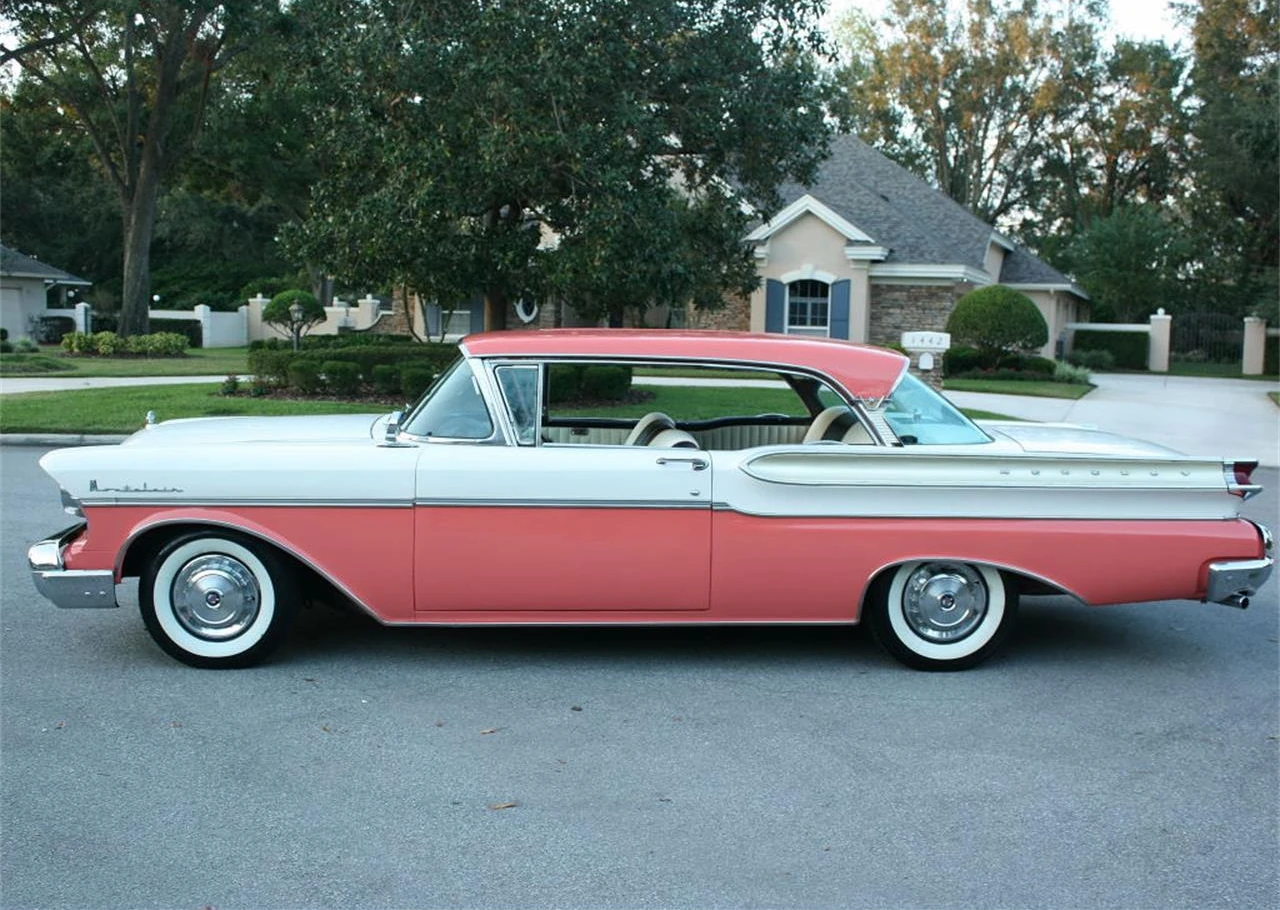
The 1957 Mercury had an all-new, bigger body, not shared with Ford. It was 5 inches longer, 3 inches wider, and 4 inches lower than the ’56 Mercury, on a 3-inch-longer wheelbase, with much flashier styling and 45 more horsepower from its standard Y-block 312 cid V-8. The physically larger new 368 cid MEL engine, which Ford didn’t offer, was optional on most Mercury models and standard on the new flagship Turnpike Cruiser. Both the Medalist and Custom lines were dropped, making the formerly mid-level Monterey the base Mercury.
Jack Reith was very clear about what the new Mercury was supposed to be. “Mercury officials call their new model a ‘challenge’ car,” reported Automotive News in October 1956. “The challenge is directed at Buick and Oldsmobile, which dominate the mid-price bracket.”
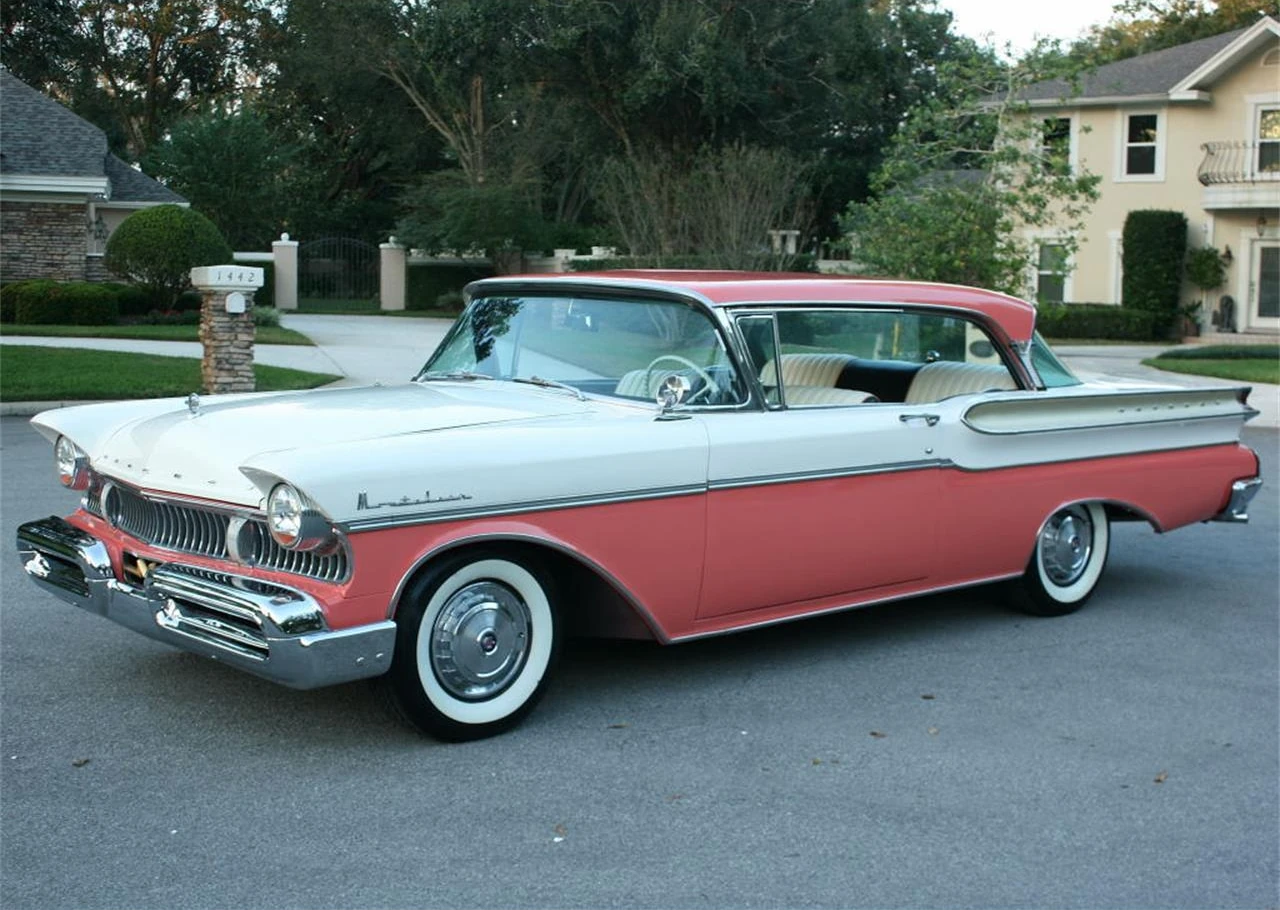
In some respects, Ford Motor Company’s taking on Oldsmobile and Buick was long overdue. However, for all the market research Ford was supposedly doing in this period, no one seems to have asked Mercury customers how they would feel about an abrupt move upmarket. In 1956, production of the cheaper Medalist and Custom lines had totaled 131,140 cars, 40 percent of Mercury’s total volume. Now, both those models were gone, and the price of the cheapest 1957 Mercury two-door sedan had risen by $282 — an increase of more than 10 percent.
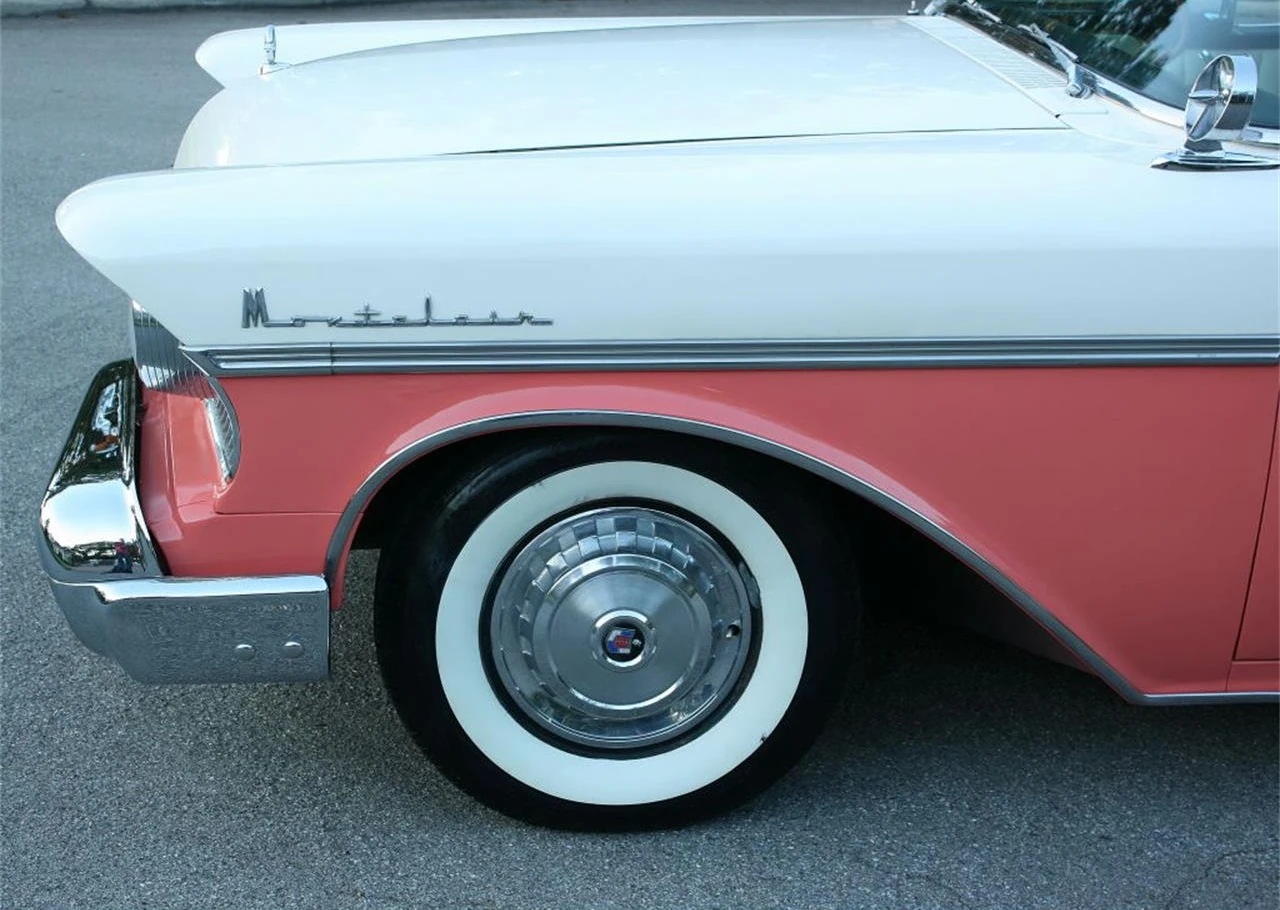
The biggest price increases were in the Montclair line, which had previously been the brand’s flagship. At the end of the 1956 model year, a Montclair two-door hardtop had started at $2,764.50. At the beginning of the 1957 model year a few weeks later, the base price of the same model was up to $3,196, and it was raised again in January 1957, to $3,235.80. One reason for the price jump was that the Merc-O-Matic transmission, which still cost about $226 extra on the Monterey, was now standard on the Montclair. Even accounting for that, the substantially higher prices clearly caused some sticker shock.
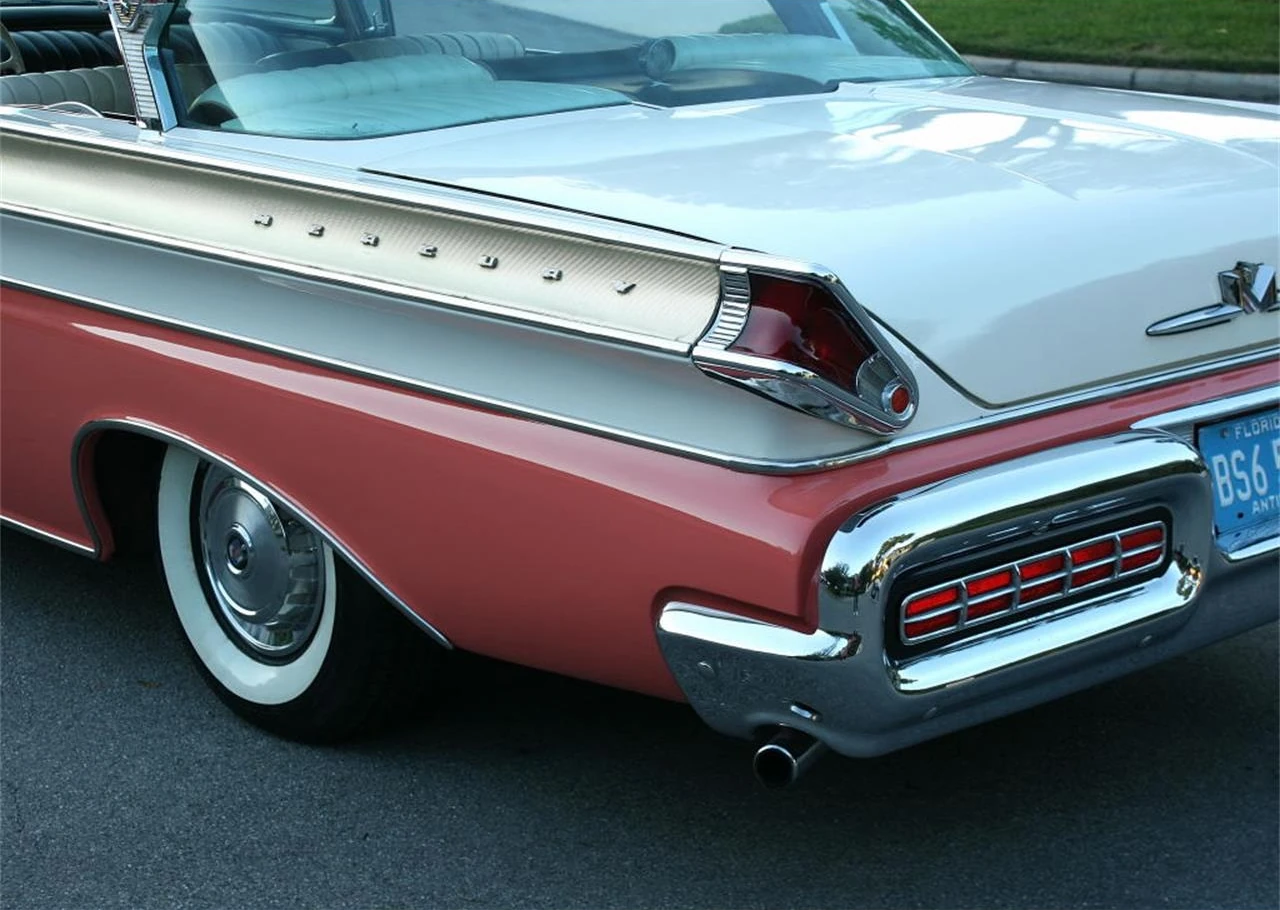
Mercury boasted that the all-new 1957 cars had “Dream-Car Design,” with dramatic V-angle taillights and “Jet-Flo” bumpers.
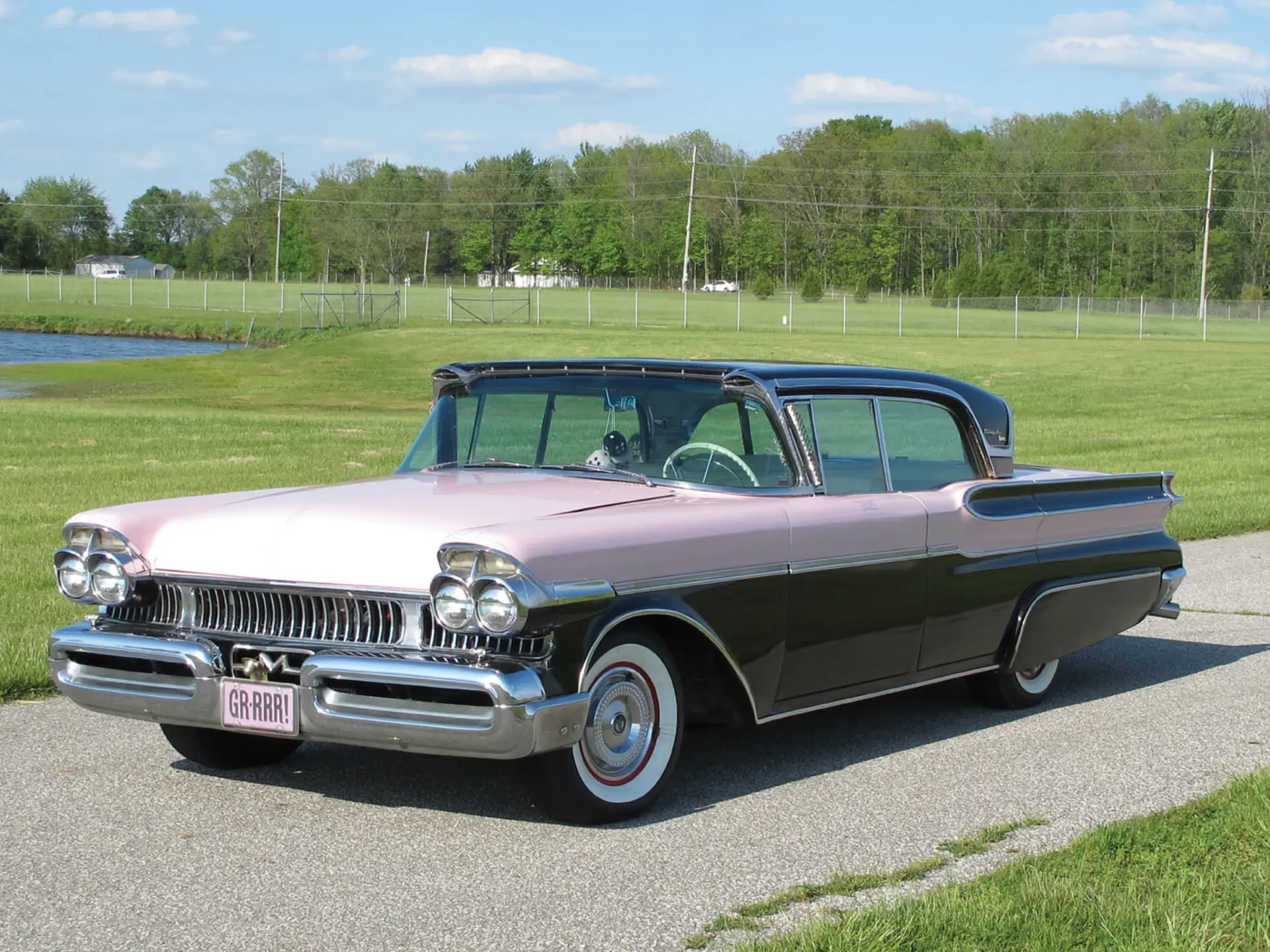
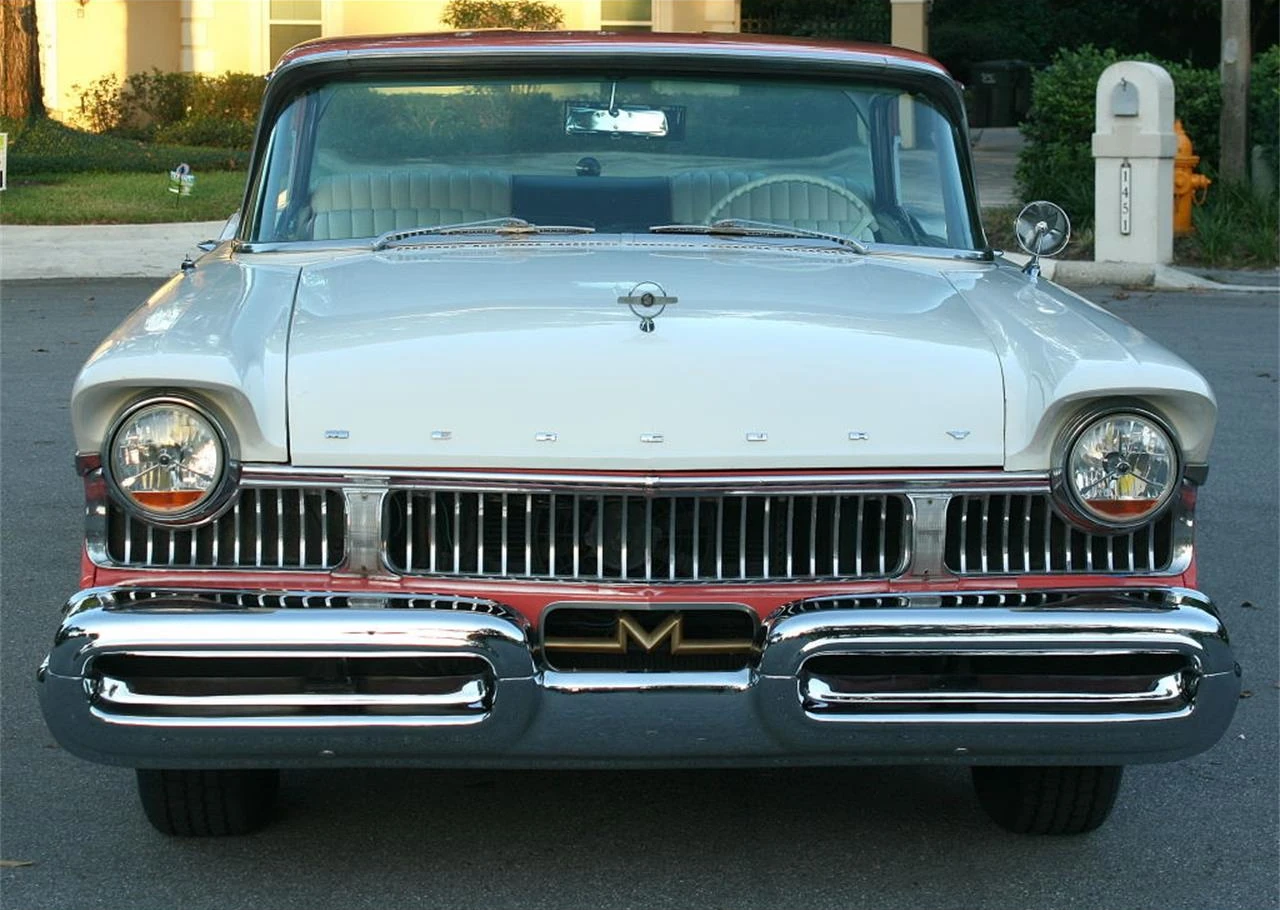
Most 1957 Mercury cars had single headlights, but the front end had been designed for quad lights, which were installed on a limited basis late in the model year. (Quad headlights were not technically legal under some state lighting laws in 1957.)
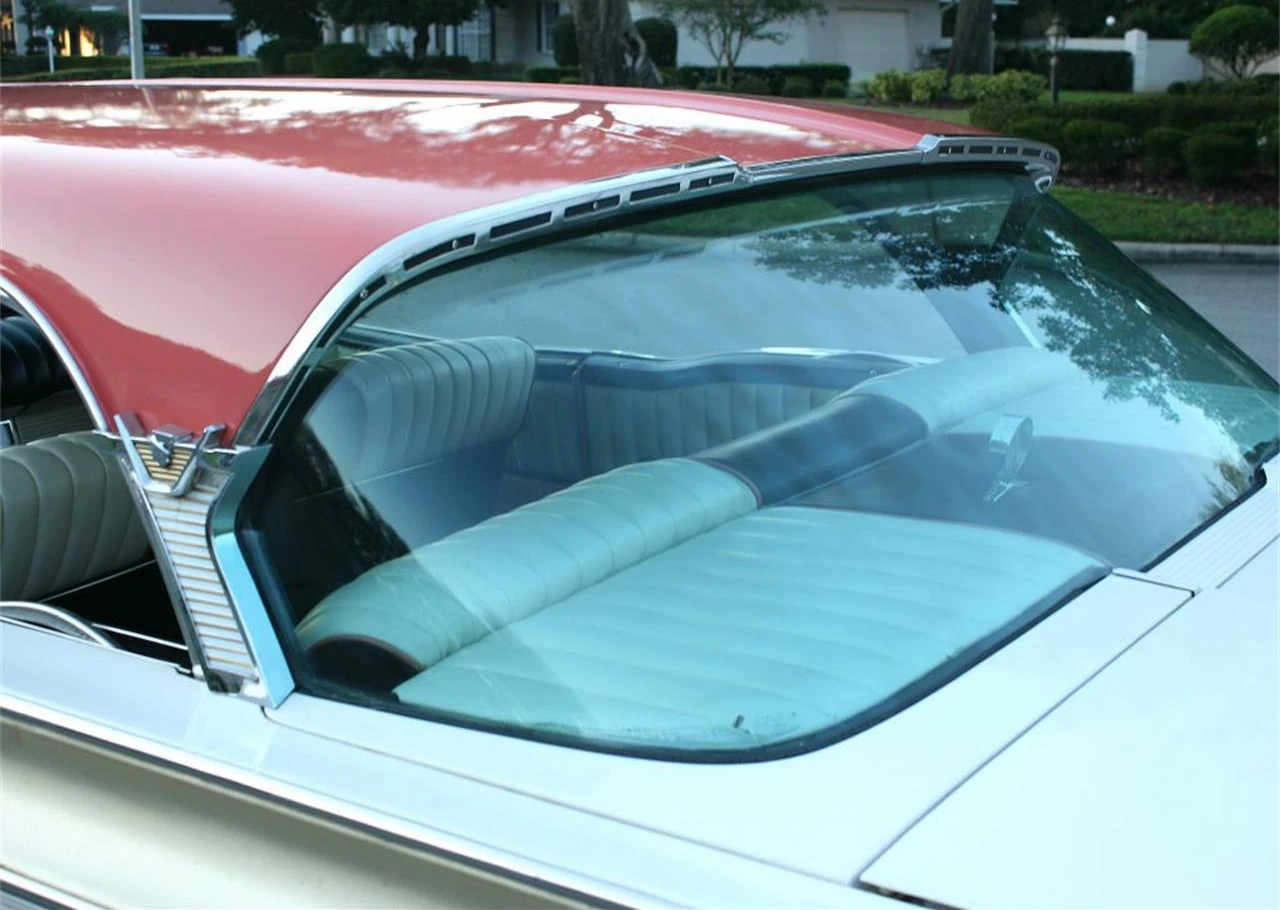
The Montclair series still offered a four-door pillared sedan, initially starting at $3,148, but more than two-thirds of Montclair production was the two- and four-door hardtops, which Mercury now called Phaeton Coupe and Phaeton Sedan respectively. The emblems on the sail panels featured small busts of Mercury with his winged helmet.
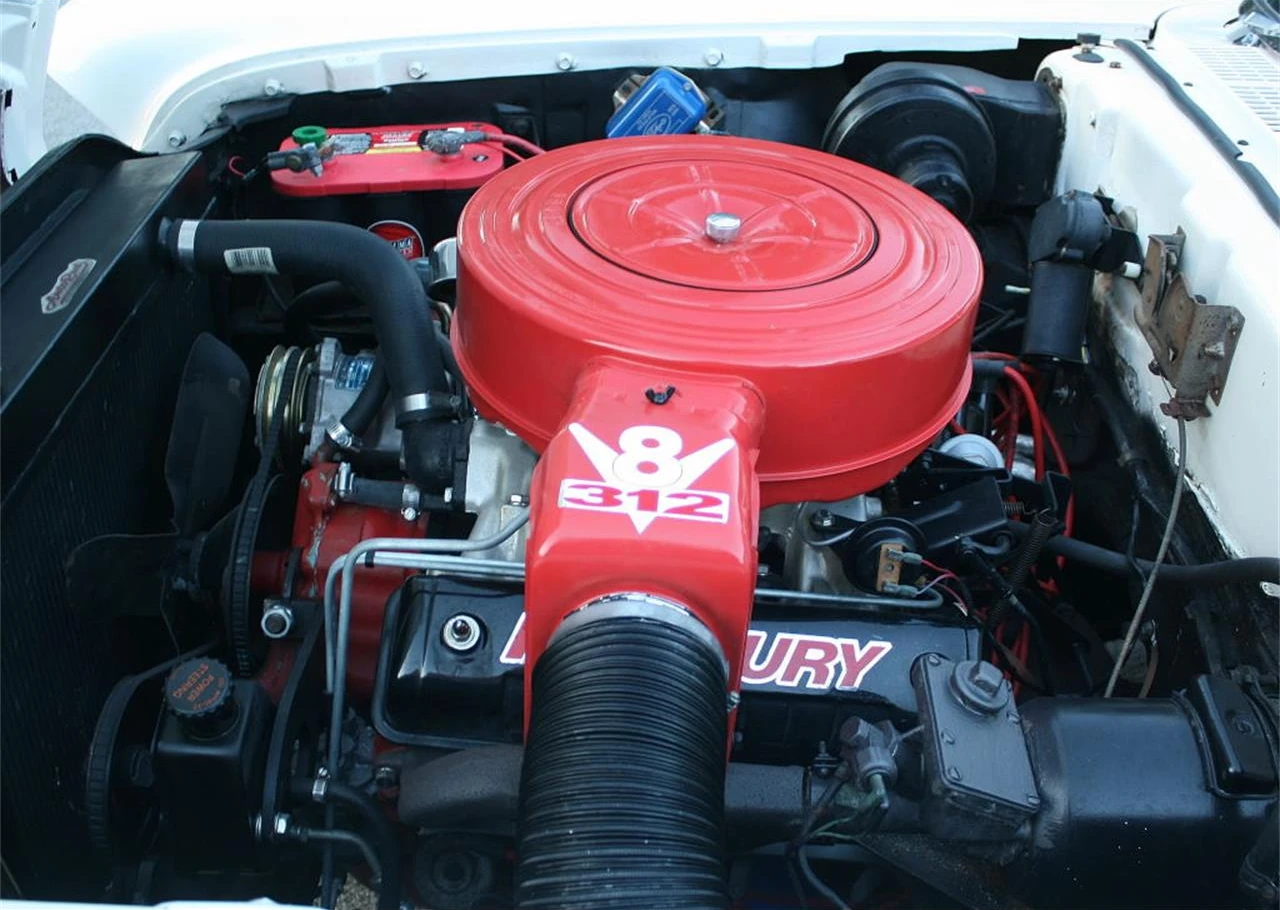
This particular hardtop has the standard engine, the four-barrel “Safety-Surge” 312 cid V-8, with 255 gross horsepower. On the Montclair and senior station wagons, this featured a thermostatically controlled “Power-Booster” cooling fan that would automatically disengage when not needed. Mercury claimed that on the road, disengaging the fan saved up to 17 horsepower at 3,800 rpm. An instrument panel indicator labeled “Power Booster” indicated when the fan was disengaged.
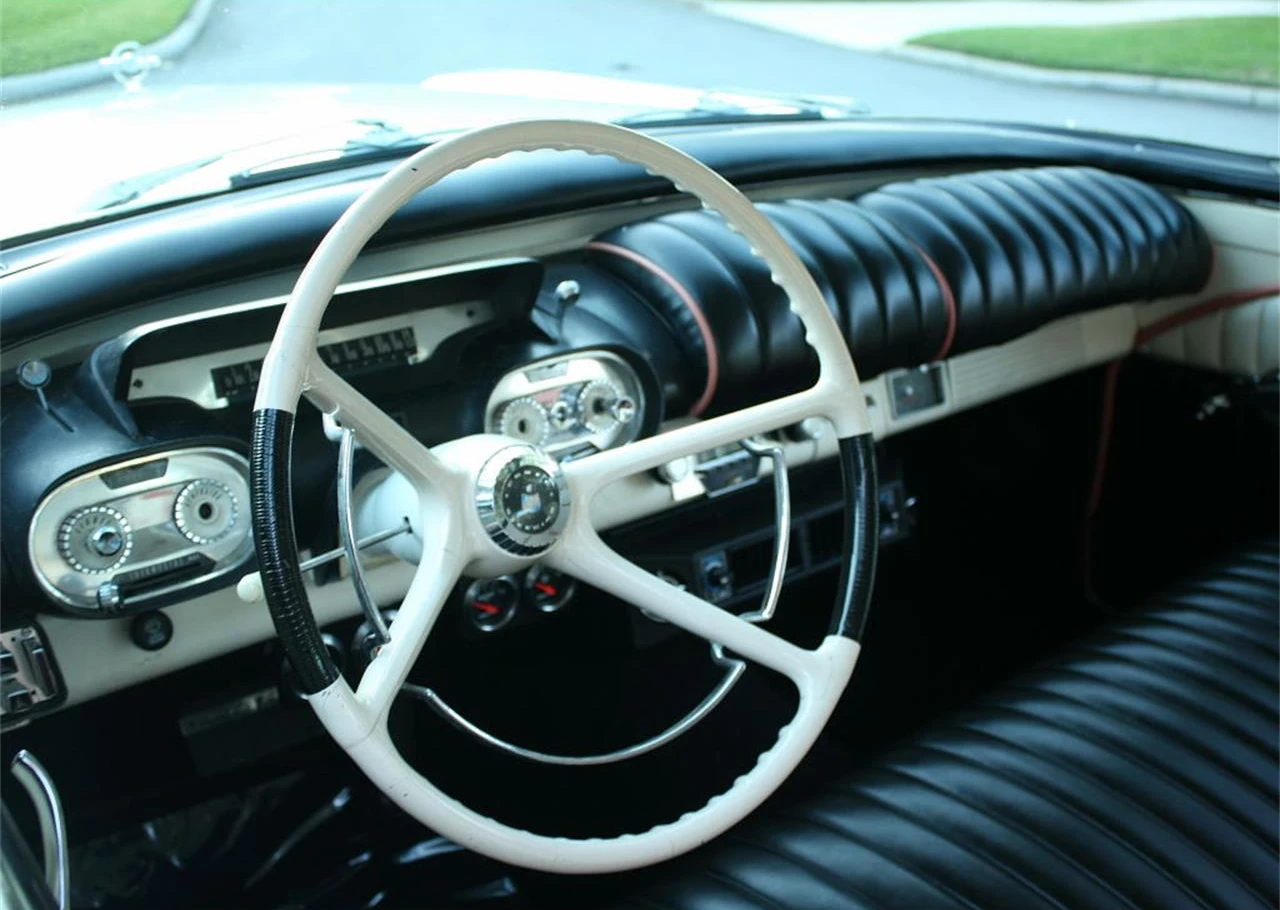
Reith loved those kinds of gimmicks, and the 1957 Mercury was littered with them, both stylistic and functional. Options included a “Seat-O-Matic” power seat with a dashboard-mounted control dial and a memory that would recall the previous setting, and automatic power lubrication, which would lubricate the front suspension at the touch of a button. (At least in concept, this was a revival of the central lubrication systems offered on senior Packards and some other high-end luxury cars before WW2.) This Montclair lacks the power seat, but it has the padded dash, one of the much-vaunted safety options Ford and Mercury had introduced the previous year.
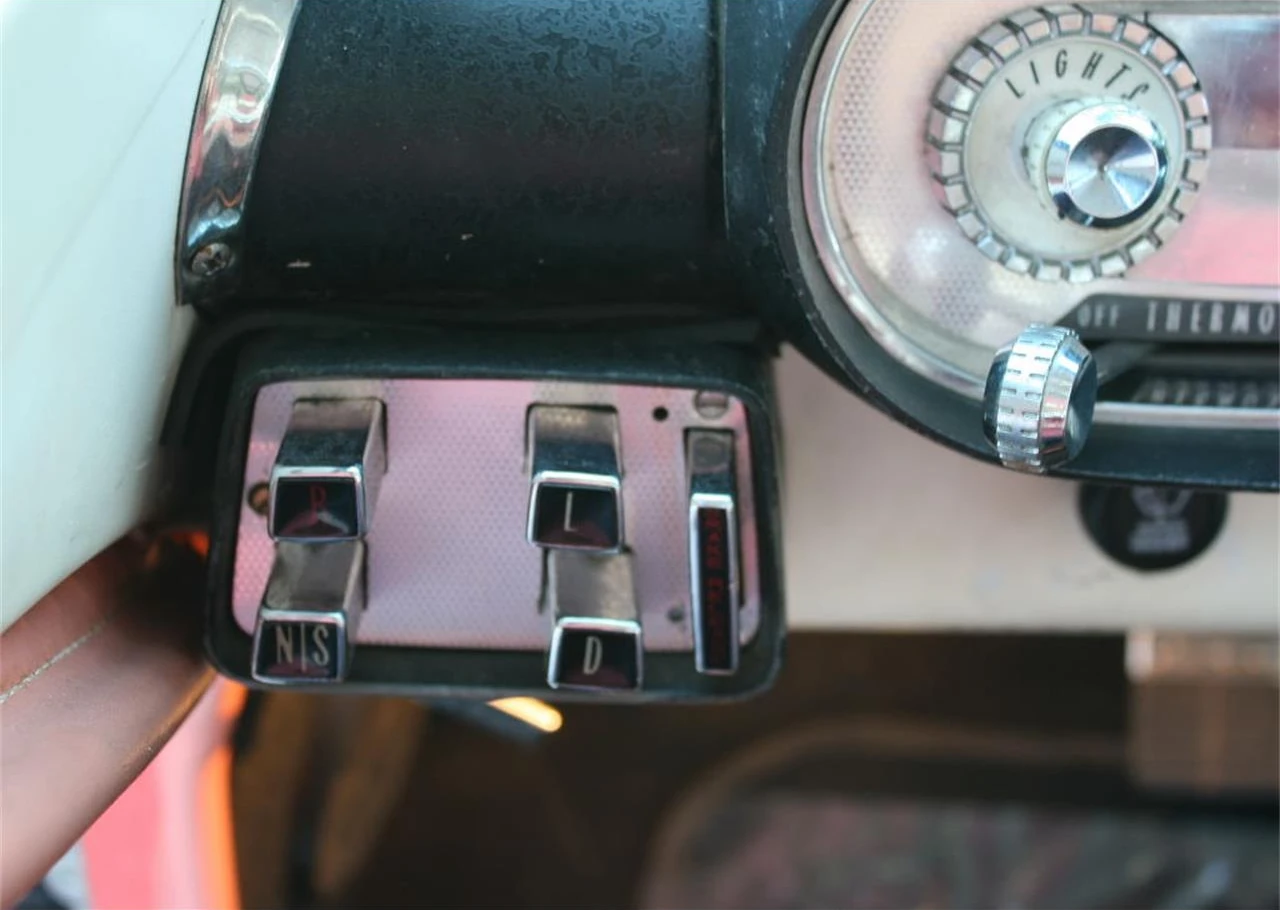
Cars with Merc-O-Matic had “Keyboard Control” pushbuttons to the left of the steering column. The N/S button at the lower left also incorporated the starter button; the vertical button at the right was the parking brake release. Early on, there was also a “Park” control at the bottom of the panel, but it was deleted during the model year (and actually removed from early cars by dealers). “Apparently, if a driver neglected to pull out the ‘Park’ control before pressing in the ‘Drive’ button and then stepped on the gas,” explained Consumers’ Research Bulletin, “under some circumstances the transmission would have to pass through reverse before it got into drive,” causing the car to leap backwards instead of forward.
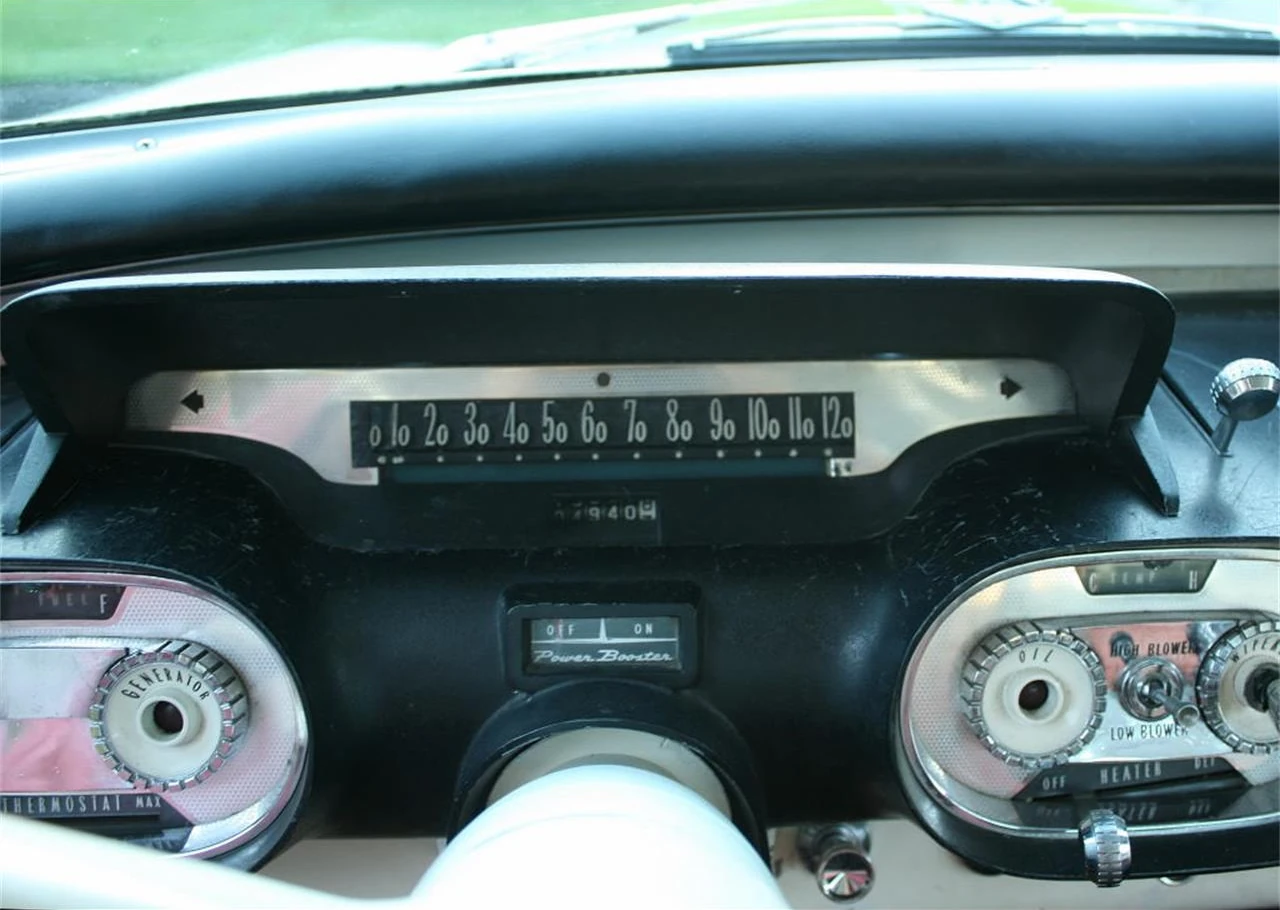
For 1957, the previous generator and oil pressure gauges were replaced by warning lights in the elliptical pods on either side of the instrument panel. Controls for the heater (still a $91.50 option, but fitted to 91.8 percent of production) were divided between the two pods, with the thermostat on the left and the blower control on the right. Note the “Power Booster” indicator below the speedometer. This was confusingly labeled so that it would indicate “off” when the engine cooling fan was engaged and “on” when it was disengaged and off.
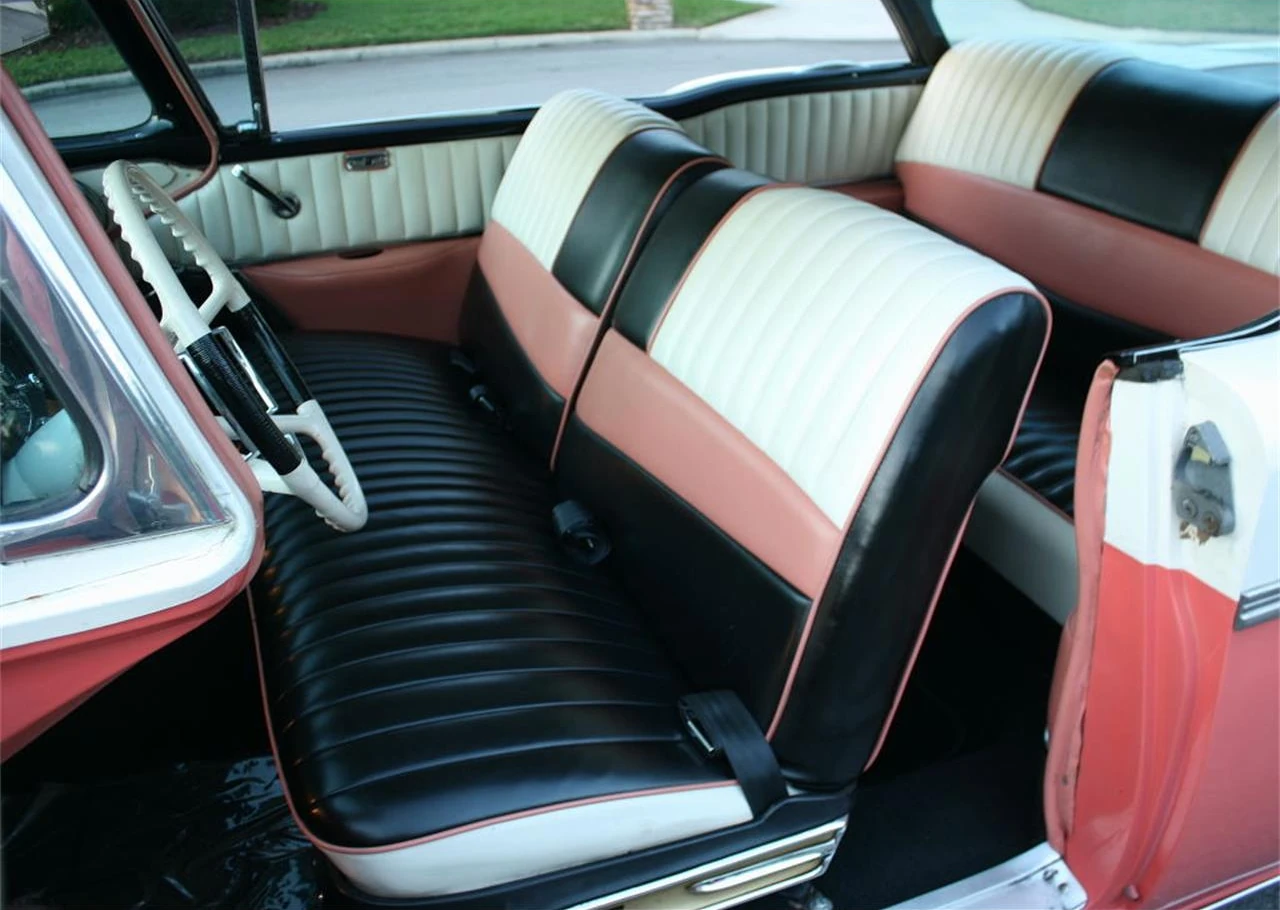
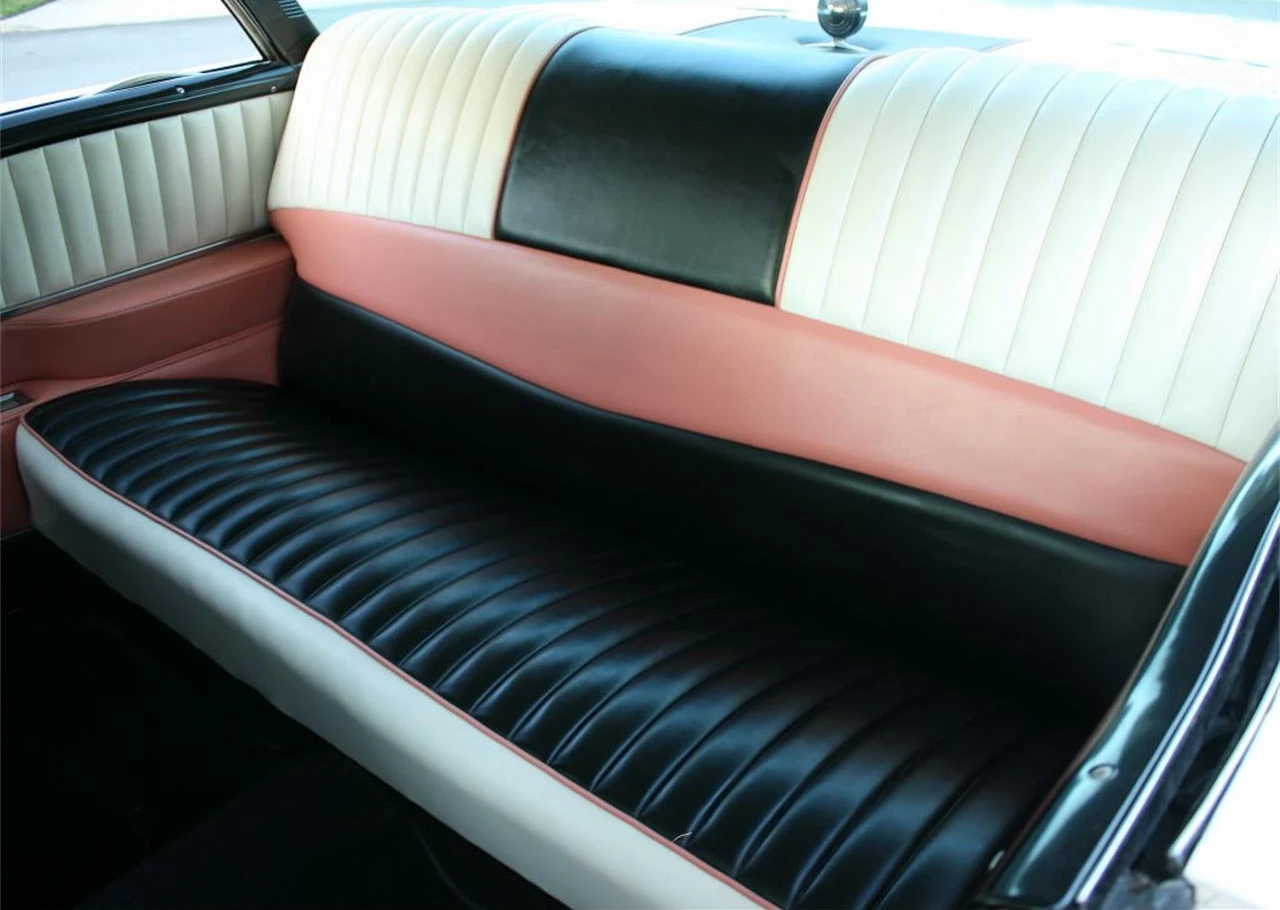
The tri-tone vinyl upholstery was as flashy as the exterior. I unfortunately don’t have a list of 1957 Mercury interior trim codes (and the photo of the warranty plate is too blurry to easily decipher in any case), but it looks delicious. Still, interior practicality left something to be desired: Motor Trend complained that there was way too little clearance between the steering wheel and the front seat, and that taller people also had to duck when getting in. MT testers also banged their knees on the dogleg windshield pillars for the wraparound windshield, which had significant optical distortion at the corners.
Critical reaction to the 1957 Mercury line was surprisingly varied. Enthusiast publications like Motor Trend weren’t very keen on the ’57, whose extra weight and softer suspension had made it thirstier and slower, with “a definite loss in steering crispness.” They also found the bigger Mercury tended to oversteer, not helped by the over-sensitive power steering, and warned that the brakes faded too readily.
Consumer publications like Consumers’ Research Bulletin and Consumer Reports were more impressed. Consumer Reports had a surprisingly favorable review of the 1957 Montclair, which they proclaimed “the surprise car of the year,” with a roomy and comfortable interior and ride quality that was “right up there with the best in the business,” with “very satisfactory” handling. They got 0 to 60 mph in 11.8 seconds with the 312 cid engine, which was quite decent for the time. They could have done without some of the gimmicks, and their 13.4 mpg overall average was significantly worse than previous years, but the testers concluded that “the buyer gets more desirable attributes for his money than in any previous Mercury.”
Buyers were not convinced, which I think came down largely to price. The demise of the low-end models clearly hurt; Mercury belatedly restored the Medalist the following year, although the damage was done. Montclair sales fell by 17.6 percent for 1957, and the even more expensive new Turnpike Cruiser got off to a weak start and never really caught on. Mercury quality control this year was also dishearteningly poor, a problem when the division was trying to persuade buyers to pay more than before. One California dealer claimed to have gotten a ’57 car with the “MERCURY” lettering misspelled.
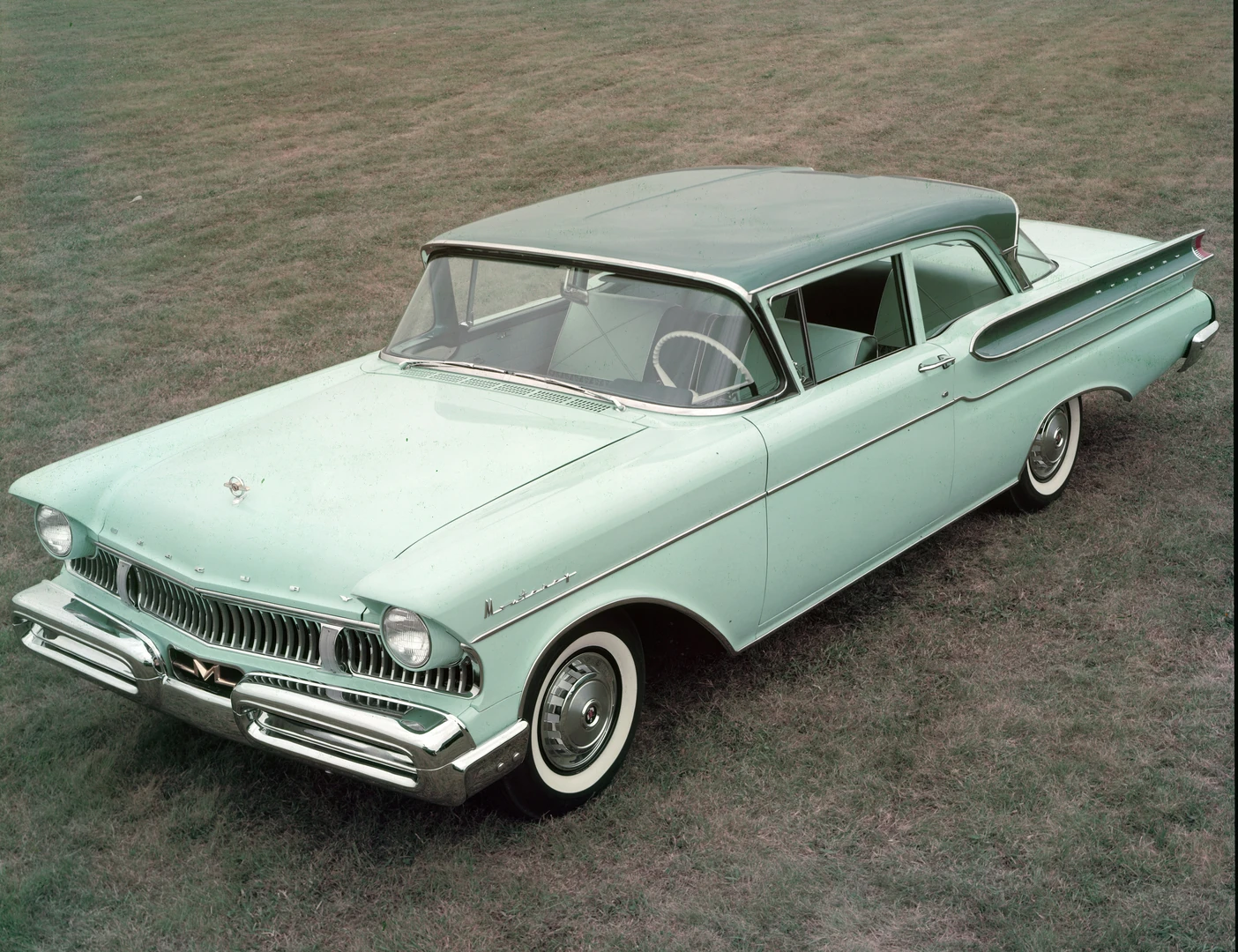
It wasn’t all gloom. The 1957 Monterey fared well — its prices were only up a little bit from 1956 (initially by $50 for the four-door sedan), and since the ’57 was clearly a bigger car with more features, customers didn’t mind the modest price bump. Monterey sales increased significantly, from 105,369 to 157,498 cars, not including station wagons. However, that increase didn’t make up for the loss of the cheaper Mercury models or the weak sales of the pricier lines. Overall, Mercury lost 43,441 sales from 1956 to 1957, a sizable chunk of the brand’s total volume.

If you’re familiar with the very popular 1957 Ford line, you might ask whether Mercury sales were cannibalized by the new “big” Ford Fairlane and Fairlane 500. Strictly speaking, there was very little price overlap between the 1957 Ford and Mercury lines (the cheapest 1957 Monterey two-door sedan was about $170 more than a Fairlane 500 four-door hardtop). However, the Fairlane and Fairlane 500 were roughly the same size as the 1956 Mercury and occupied the price range Mercury had just abandoned. It’s not unlikely that some customers who recoiled from Mercury’s higher prices and the deletion of the cheaper Mercury models ended up with a Fairlane instead, especially in areas with Ford-Mercury dealerships.
Even before the arrival of the Edsel in the fall of 1957, Ford’s big expansion plans were coming apart. In May 1957, Whiz Kid Robert McNamara, who’d been general manager of Ford Division, became executive vice president, overseeing all the car and truck divisions. McNamara wasn’t supportive of the expansion plans or of his colleagues’ obvious ambitions — they were rivals now, and McNamara wasn’t one for sentiment.
The first to fall was Jack Reith. It was clear even before the end of the 1957 model year that many of the moves Reith had made with Mercury had misfired badly. Some of those plans had been conceived by former executive vice president Lewis D. Crusoe, but Crusoe had taken early retirement for health reasons in May, leaving Reith holding the bag. Reith had allegedly also been less than honest with senior management about Mercury Division’s quality issues and financial performance. “Jack was so sure that everything he did would be right that he didn’t hesitate to warp the truth a little bit in order to make it happen,” said designer Gene Bordinat. Company chairman Ernest R. Breech, who had begun to clash with Reith on nearly every point, accused the Mercury general manager of lying to him and giving him bad information.
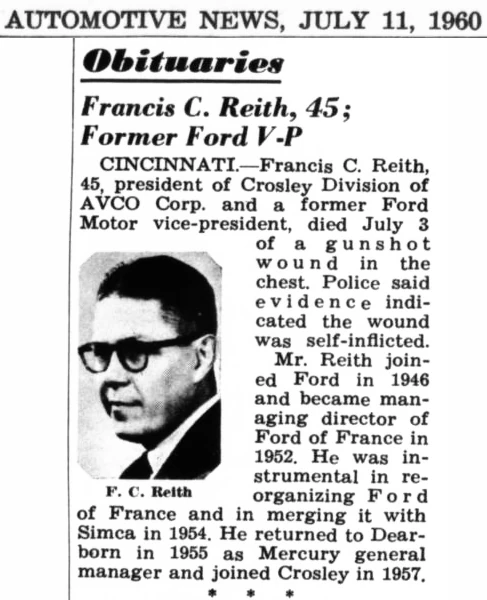
In September 1957, Ford announced that the Mercury and Lincoln Divisions would be rolled back into one, with former Packard president James Nance taking over as general manager of the revived Lincoln-Mercury Division. Officially, both Reith and Lincoln Division general manager Ben D. Mills were to be reassigned, but Reith had already met with Henry Ford II on August 23 and been told, “Things aren’t working out.” He was offered a new post as head of Ford of Canada, but it was clearly a demotion, so Reith, who was only 42, took an offer from AVCO to head their Crosley Division in Cincinnati. He found the work unsatisfying, and by late 1959, he’d lost out in his bid to become AVCO president. On July 3, 1960, Reith was found dead in his home of an apparently self-inflicted gunshot wound.
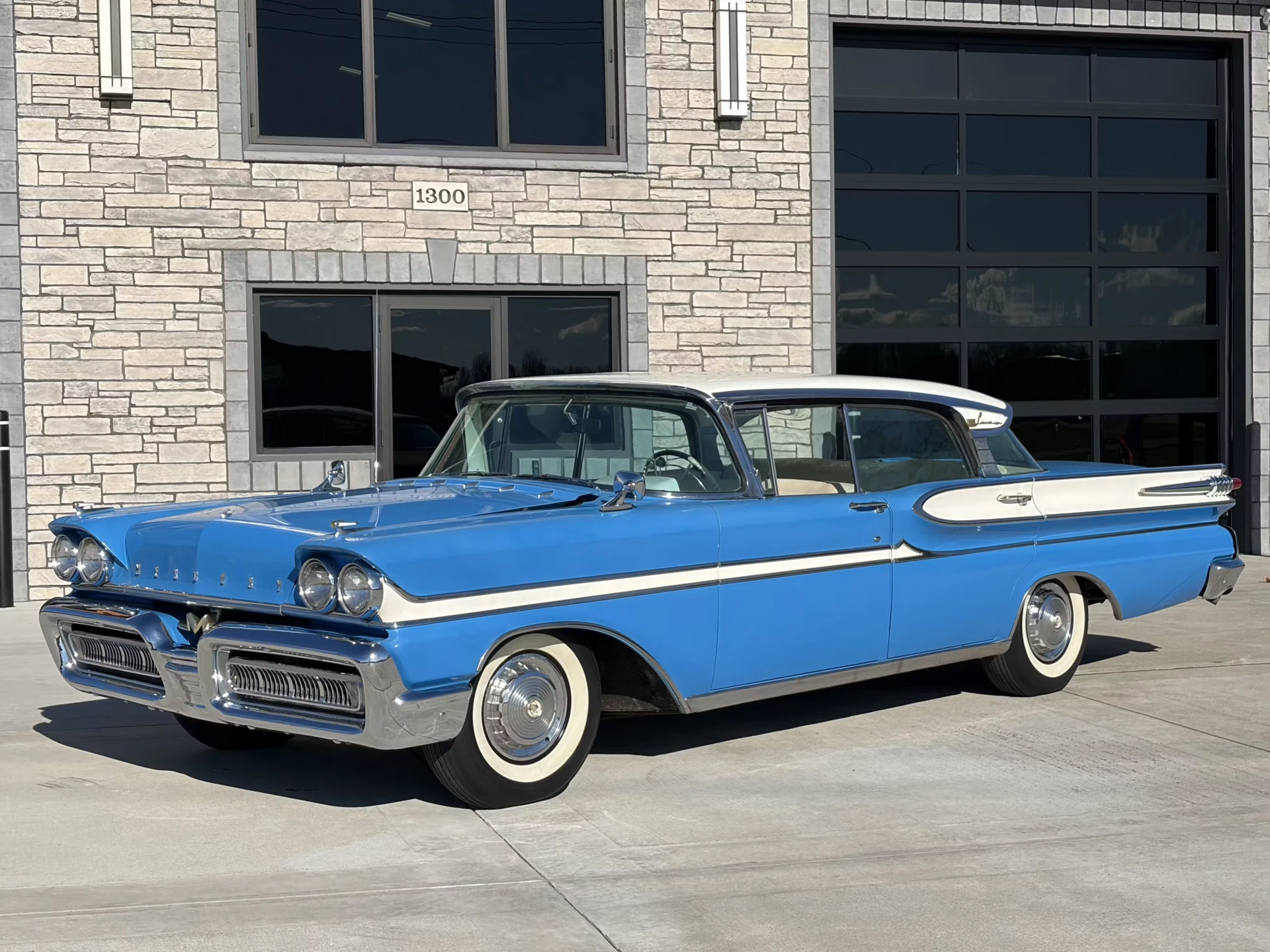
Jim Nance took over Lincoln-Mercury too late to do anything different with the 1958 Mercury line, which proved to be an utter disaster. The Medalist was hastily reintroduced (although it was now little cheaper than the 1957 Monterey), but Nance was stuck with Reith’s final boondoggle: the Mercury Park Lane, an even bigger Mercury model that was supposed to rival the GM C-body cars (Oldsmobile Ninety-Eight, Buick Roadmaster/Limited, and Cadillac). The Park Lane, originally known internally as the “Super Mercury,” was supposed to share its larger body shell with Lincoln, but Lincoln’s abrupt switch to unit construction for 1958 had made that impossible, leaving Mercury to go it expensively alone. By the time the Park Lane arrived, the U.S. economy had also slid definitely into recession, which sent sales of most mid-price brands tumbling.
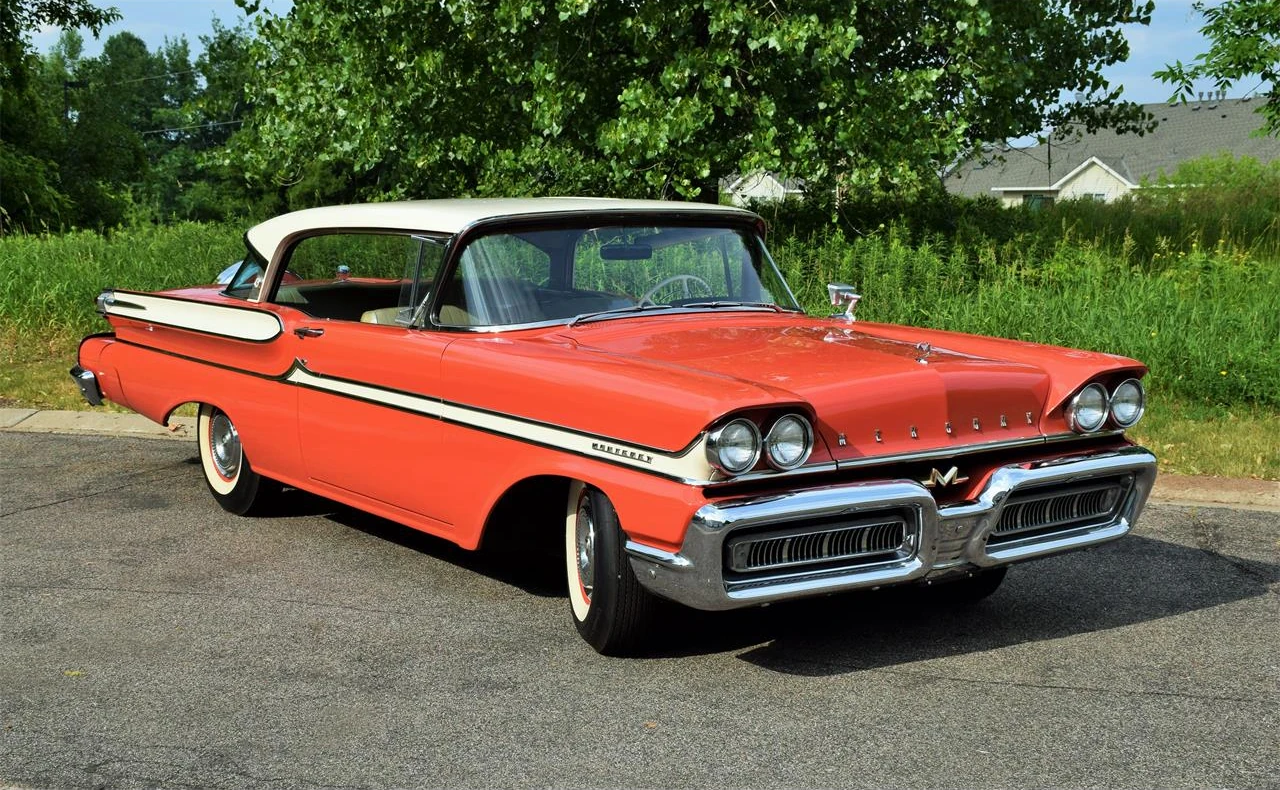
If Mercury had stumbled in 1957, 1958 was an unmitigated face-plant. Total model year sales, which hadn’t been great for 1957, fell by more than half for 1958. By August 1958, Nance had also been forced out; he resigned as general manager of the recently merged Mercury-Edsel-Lincoln Division in early September, succeeded by Ben Mills. 1959 would be no better. The Edsel brand was dead by the end of the 1959 calendar year, and the standard-size Mercury line would struggle through the mid-1960s, with the Mercury brand surviving largely on the strength of the compact Comet.
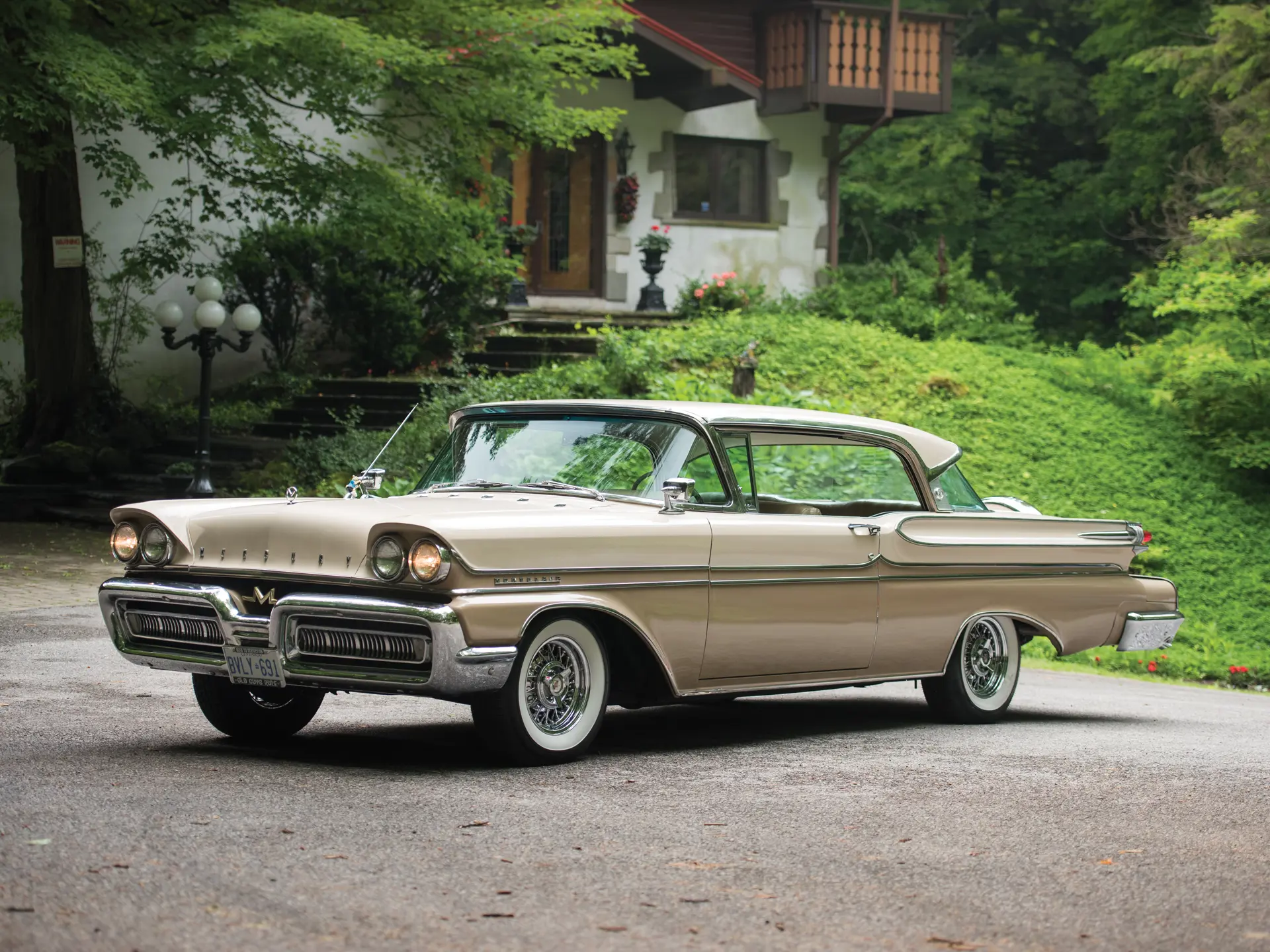
It was a painful example of the old adage, “Be careful what you wish for.” Mercury had gotten what a lot of division officials and senior executives had wanted for years, and what a lot of observers and pundits in later years continue to insist Mercury should have had: its own body shells; at least some of its own engines; and a clearer separation from Ford in size, price, and features. However, all the planning and scheming had missed a critical point, which was that successful mid-price brands sold based on prestige and badge cachet as much as any tangible quality. In that respect, Mercury had badly overreached. It was like if a chain restaurant like Denny’s or IHOP abruptly doubled its prices, eliminated the kids menu and all the value meal options, and tried to present itself as a fine dining establishment, alienating existing clientele without establishing much credibility with new customers. The only reason the whole debacle wasn’t a bigger story was that it was overshadowed by the Edsel catastrophe.
Failures like that can cast a very long shadow. It wasn’t until the ’80s that everyone at Ford with firsthand recollections of this period had retired, and I think even younger executives were still painfully aware that things had gone very wrong. I suspect that was further colored by the downfall of Jack Reith. There had been no love lost between the Whiz Kids and Jim Nance, but Reith’s exit and death were jarring for many of his former colleagues. (When I worked with former Ford product planner Chase Morsey on his memoir back in 2012, I asked him about Reith, but he said it was a difficult subject he preferred not to talk about.)
Ultimately, the Mercury brand went away in 2011 because mid-price brands had become largely obsolete, something Ford had actually demonstrated even in the late ’50s with products like the Thunderbird and Country Squire, which sold to affluent buyers despite their Ford badge. However, for a long time before Mercury was finally dropped, if you’d asked senior company officials why they didn’t do more to differentiate Mercury from Ford, I think they would have privately admitted, “We tried that before — it just didn’t work, and it cost us way too much.”
Related Reading
1957 Mercury Turnpike Cruiser–Wowing Prospects on the Showroom Floor! (by Stephen Pellegrino)
Curbside Classic: 1957 Mercury Montclair – Reaching For The Stars Only To Hit A Moon (by Jason Shafer)
Car Show Classic: 1957 Mercury Monterey – Does Anybody Know Who’s Running This Place? (by Aaron65)
Museum Classic – 1957 Mercury Turnpike Cruiser- The future was so bright, it needed sunshades (by Jana Lingo)























The Mercury brand went away after 1948 here of the 57 models exactly one came here, it wasnt a Montclair or flow toned it was solid metallic blue, it lived next door to my grandparents old property, and apparently still exists though its in poor condition now, the RHD conversion was chain driven a real odd ball.
Are those turn signals in the bottom portion of the dual headlight sealed beams on that one 1957 Mercury? If so, how did they manage that? I can only surmise they were some sort of special, one-off for that particular year and model and, today, must surely be made of unobtanium.
Most likely modern “personalization” of that car. I’ve seen lights like that on street rods. The original turn signals are the two vertical elements just below and inboard of the M and Y on the hood.
The headlights with the amber portion in the bottom are cheapo modern units. The factory turn signal/parking lights are in the grille. If you open the pic in a new tab and zoom in you can see they are the convex items with the clear lenses. Here they are loose. https://www.ebay.com/itm/294483636393?chn=ps&google_free_listing_action=view_item
On the quad light cars they are incorporated in the top of the headlight bezels
That was not the original configuration.
Thanks for the explanation. On the ’58, it looks like the turn signals were moved to the outer sides of the bumper openings.
On the ’57, the OEM grille turn signals look too much like a couple of chrome fixtures.
The whole thing seems odd but, hey, it was the late fifties when the sky was the limit for auto styling gimmicks.
I always thought they should have left Mercury alone and Edsel should have been the upmarket car. Mercury should have been to Ford what Pontiac was to Chevy. None of the Whiz Kids were car guys.
The roofline of the 1939 Mercury sedan coupe was very influential at GM I think. Look at the late 40s to early 50s A-body coupes and then the first gen Corvair.
I agree with your analysis that the public just did not consider Mercury a premium brand on par with Buick and Olds and was unwilling to pay a premium car price for it. In retrospect, Ford should have placed Edsel above Mercury as a new premium brand designed to take on Buick, Olds and Chrysler, leaving Mercury as a cheaper model to compete with Pontiac and Dodge. Of course the timing was terrible, as the recession at the time created severe headwinds for all mid-priced brands and the public was beginning to tire of the bigger, gaudier, heavier direction the industry had taken.
Nice write-up, Aaron.
Your reference to the late strategy change in February 1955 was new news to me. A change that late suggests the original plan was to tool new panels with a level of change that the ’58 Edsel carried, and it’s easy to envision that car as the 57 Mercury, on a longer wheelbsae to lengthen the Pacer’s stubby front fenders and hood. In that scenario there would be no Edsel.
The company had none of the cost discipline that Chrysler had in these years. In the 57 Lincoln they had a decent large car good enough to see the company through 1958, and adaptable enough to offer a lower trim level that narrowed the price gap with a Ford-based Mercury. That same large body, with new front and rear appearance and longer axle-dash could have also filled out the Continental division’s bespoke showroom (I am a fan of Continental’s showroom moreso than the original car). The 59 Lincoln and Continental would then use the original ’59 Mercury hardtop’s body.
The 57 concave cove fender design has been a favorite of mine since they came out. And the rocket taillights were fantastic looking to a then 10 year old already a car nut.
The Power Booster fan clutch was a really useful innovation that was soon adopted widely. It always seemed a little strange that Mercury didn’t include it on the upmarket MEL engine. No doubt the smaller engine had fewer horsepower to waste, but why not give your high roller customers the benefit, too?
The Park Lane is one of those late Fifties excesses that deserved to flop, but the same excesses make it fascinating as a collector car today.
Instead of blowing all that money on tthe Edsel, Ford could have based the 57 Mercury on the Fairlane body as well as the unique 57 Merciry body shell. (as they did with the Edsel) They would have 2 medium priced cars with an existìng dealer network and covered the medium price field with a well known brand.
BUT, the 58 recession would have still hurt sales. 58 was a tough year to sell cars in that price range. Without the huge investment of the Edsel, Ford may have held on long enough to benefit from the the rebound of the segment in the 1960s. We’ll nenever know
Mercury’s new line of wagons, a separate series, was a step ahead of Chrysler & GM in design direction.
That turquoise ’56 Medalist is just beautiful. What a step down to the awkward overwrought ’57s. Maybe the reason they sold so poorly is just because they were ugly.
I had a friend whose family owned a Ford-Mercury dealership. He once told me that you could always convince a Ford buyer to opt for a Mercury, but you could never convince a Mercury buyer to opt for the Ford. He even said they were the same car, but Mercury loyalists would defect to Buick when given the choice.
Wait a sec…buyers weren’t willing to see Mercury as an upscale brand, but Ford could sell upscale Thunderbirds and Country Squires? How can that work? If Mercury couldn’t sell upscale, how could Ford? Ford made it work, so Mercury should have been able to as well.
First off – these are outrageous and fun cars. Poor quality, but a blast in a showroom. It is dumb to follow marketers. You listen to salespeople. These cars were designed by stylists and marketers, not normal people. Edsel was similar. Boutique cars offered during an economic contraction. What idiots decided to create Edsel, Continental AND a New Mercury? Egomaniacs. The Whiz Kids whizzed all over Ford.
I’ve seen the Edsel presentations to prospective dealers and salespeople, explaining why the brand was created. Pure marketing hokum. It’s not just today’s hindsight that exposes it, it’s simple common sense and healthy skepticism. The Whiz Kids were selling swampland, claiming it could be verdant agricultural land. Bogus.
Forget GM. The Whiz Kids weren’t forward-thinking, they were recreating Ford as a throwback to the early Pre-Depression corporate order. GM was stuck with the Sloan’s Ladder marketing plan, and a good Whiz Kid should have looked forward to the LTD, Thunderbird, Country Squire, and Mustang – not Edsel or “the Big M”. McNamara saved Ford with the ‘58 Thunderbird and his Teutonic-dour Falcon as he axed the Whiz Kids out of power.
The Whiz Kids weren’t so great and what they cost Ford after it went public on Wall Street proved it. Between those corporate egomaniacs and Chrysler’s sticky-fingered executives and Exner’s ugly car designs, GM laughed all the way to the bank.
I love these cars, but they’re not solid transportation upon which to build brand legacy.
If you look at early Ford Model A advertisements from 1929 and 1930, they were targeting women and the sporty set. Several ads featured women picking up the children or young women going to the golf club or riding club. There was one ad from 1931 showing a chauffeur holding open the door to a Model A sedan outside a store. Chevrolet couldn’t market in that way because Pontiac, Oldsmobile, and Buick were above them, while Ford could present their vehicles in an upscale setting. Second, the Ford station wagons were purchased in the 1930s by Hollywood stars and other wealthy people who used them on their estates. A well-to-do family could have a Buick or Chrysler on one side of the garage and a Ford woody or convertible on the other side of the garage. By the late fifties, a Thunderbird or a Country Squire would be the equivalent.
Mercury’s problem was that Ford could not decide what it was: an upscale Ford or a junior Lincoln. The original Mercury was aimed at the Ford buyer who was about to defect to Pontiac or Dodge. The senior Buick or Chrysler buyer wasn’t looking at Mercury. They were potential Lincoln Zephyr buyers before World War 2 and base Lincolns after the war. Buick and Chrysler had a legacy of premium cars that Mercury didn’t have, even though the cheaper models were the best sellers in their lineup. You still had the cachet of a Buick or Chrysler. Mercury didn’t, which is why they couldn’t make it work. You’re right about Edsel. Ford could have saved a fortune by skipping Edsel and repositioning Mercury as a premium brand.
This article immediately had me thinking of Mercury Blues by the Steve Miller Band, although he was probably singing about a 1950 lead sled Mercury. Apart from the Edsel, Ford never really had a Buick or Oldsmobile equivalent and Mercury was more like an upscale Plymouth in the sense that it was tied to Lincoln in the same way that Plymouth was always the cheap car for Chrysler dealers.
Anecdotally I don’t know of too many people who had a Mercury. Our family friends who had a big house in Scarsdale NY and three boys owned Ford Country Squires, and other station wagon owning friends had GM. While my parents did have a 57 Ford, that was the last Ford either one owned despite being the sort of people Mercury probably targeted.
Ford really had a double whammy with the Mercury of this era. Not only did it fail miserably, the Edsel did, too. Ford’s offerings were much more restrained after this, but this was a common thing across the entire industry.
When it comes to styling, I much prefer the Monterey. It is more restrained and had less gingerbread. All of these cars were kind of over the top and the 1960 cars looked a lot better in my opinion.
Mercury should have been the “excitement” division, like Pontiac once was.
Clearly Ford failed with their ambitious 1955 plan. They could not have predicted the 1958 economic recession, but they clearly overreached with their plans for Edsel and with their plans to move Mercury upmarket (not to mention what happened with Lincoln and Continental divisions).
Theoretically, I suppose that if they could have followed the “sunk cost” fallacy theory and continued with the original plan, worked on improving the quality of Mercury and Edsel, and done the slow, hard work of lifting and improving their image and perception in the marketplace and it might have paid off eventually. But then again, maybe not.
McNamara’s desire for Ford to cut their losses with Edsel, Mercury, Lincoln and Continental and the plan that he followed certainly made sense and appears to have stopped the hemorrhaging.
Mercury’s image did start to improve a bit starting with the 1965 models, helped by styling themes that borrowed from their Lincoln big brothers. The ’69 and later Marquis came close to rivaling Buick and Oldsmobile in prestige, although it never quite got there. The down-sized ’79 full-sized Mercurys were clearly just fancy Fords. I’m mildly surprised that it (the full-sized Mercury Grand Marquis) sold as well as it did for as long as it did.
There was more communality between the ’57-up Mercury and Ford under the skin than it might appear. They had the same basic “cowbelly” frame and the front tracks were the same. This made it possible for Edsel to use the same front end on both the Ford-based Ranger and Pacer a well as the Mercury-based Corsair and Citation. The real difference was from the cowl back, where the Mercury (and senior Edsel) had a wider rear track axle and a wider body. It was a rather clever visual trick.
This was a somewhat different approach than what GM did, with its distinct A and B/C bodies, although that totally ended in 1959 when all of them started to share the same B/C body.