

Aside from the Lincoln Versailles of two decades later, few Lincolns are as polarizing as the big unibodies of 1958-60. Nevertheless, if Lincoln would have styled them like this rare 1959 Continental Mark IV Limousine, many detractors might be more kind: A slight change made a huge difference.
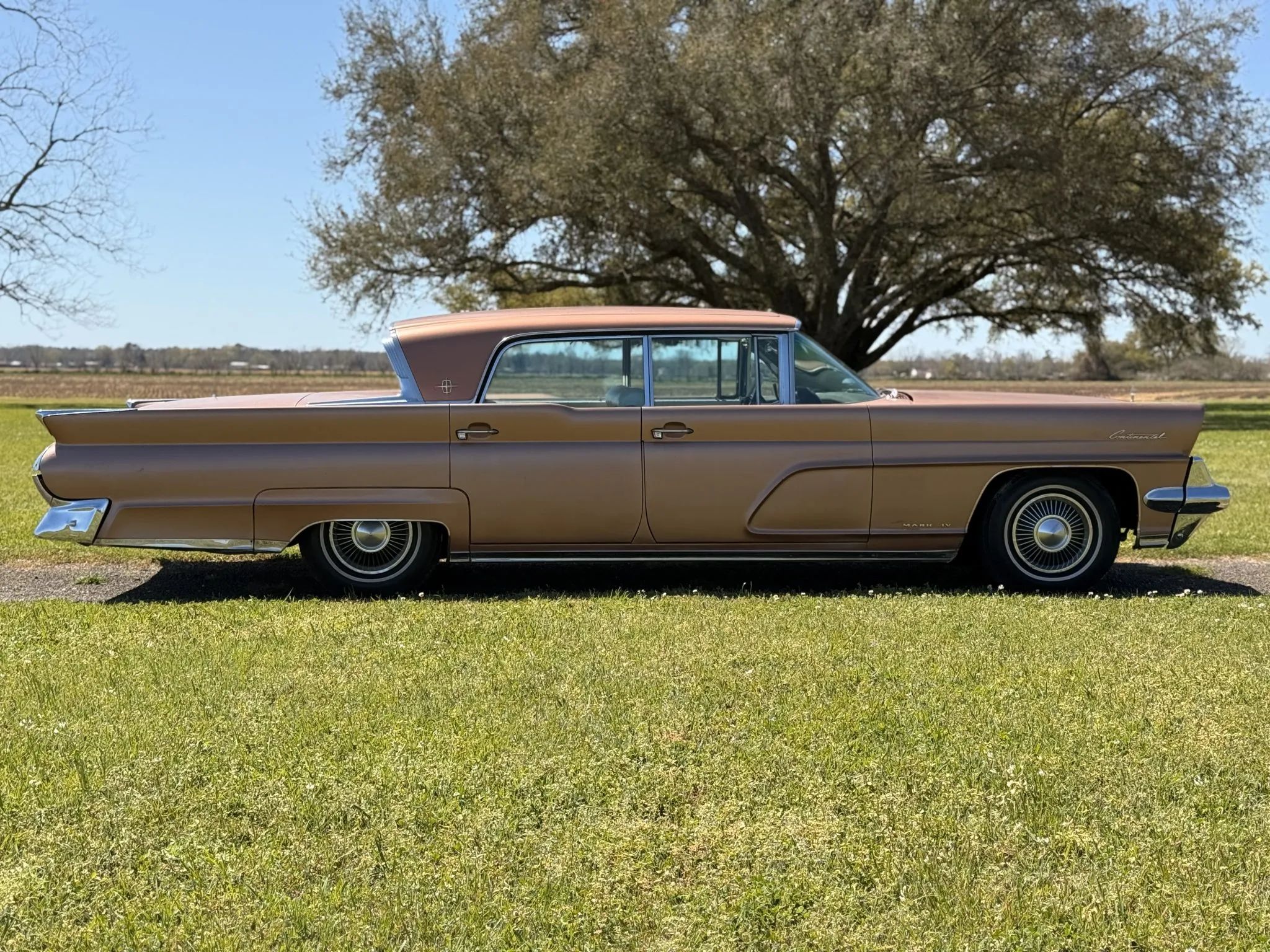
That change was the roofline. While the reverse-slanting C-pillar allowed for the retractable rear window, it’s simply too narrow, and it accentuates the Continental’s already huge rear deck. Regarding the car’s controversial styling: When you look at the car from the beltline down, it’s really not any more obnoxious than many other American offerings from the late 1950s.

And that’s where the Limousine (sometimes called “Executive Limousine”) comes in to clean things up. Ohio-based coachbuilders Hess & Eisenhardt, the builders of President Kennedy’s famous/infamous Continental, did the modifications on the Limousine and Formal Sedan models; the rear roof extension in particular drastically improved the car’s proportions. It was the roofline the car was meant to have.

It’s not a slam dunk, but the inspiration for the Limousine’s C-pillar might have been the Continental Mark II of 1956-57. This stillborn Mark III Berline concept, which shared the Mark II’s roof themes, stood a fair chance of becoming the 1958-60 Continental. It didn’t work out, which is a bit of a shame, because it’s definitely a looker. Shades of the 1969 Continental Mark III can be seen in the taillight and rear-quarter panel arrangement, so its influence was far-reaching.

One thing that is certain is that Hess & Eisenhardt didn’t lengthen the car to create the Formal Sedan and Limousine models. See the exterior and interior dimensions listed for the Continental above.

Now compare them to the dimensions shown here for the Formal Sedan (of which a mere 78 were produced). They’re identical.

Fundamentally identical to the Formal Sedan, aside from a “Power-Retractable Glass Partition between Front and Rear Compartment,” was the Limousine, and even fewer of them were built in 1959: 49. Like the old, inaccurate saw about Model T’s suggested, you could have your Limousine or Formal Sedan in any color you wanted, as long as it was black.
The price difference between the Continental and its modified linemates was significant. Here are the base list prices for each:
- Continental Mark IV Four-Door Hardtop: $6,845
- Continental Mark IV Formal Sedan: $9,208
- Continental Mark IV Limousine: $10,230

So what did you get, aside from exclusivity, for the extra thousands of dollars spent for the Hess & Eisenhardt conversion? The basic interior was functionally identical, but there were differences in trim, and the long list of standard equipment got even longer when the buyer selected a Formal Sedan or Limousine. You may have noticed that “Air Conditioning Units (front and rear)” were standard. Air conditioning on a “basic” Mark IV was a not-inexpensive $385 option, but it’s clear that the bulk of the upcharge was the price of the conversion itself, which was apparently done to a very high standard.

The Limousine’s front seat was a nod to those old Town Cars from the golden age of coachbuilt bodies; the front seat was upholstered in “black Scotch-grain leathers,” and being as this was where the chauffeur sat, the materials differed from those in the rear compartment.
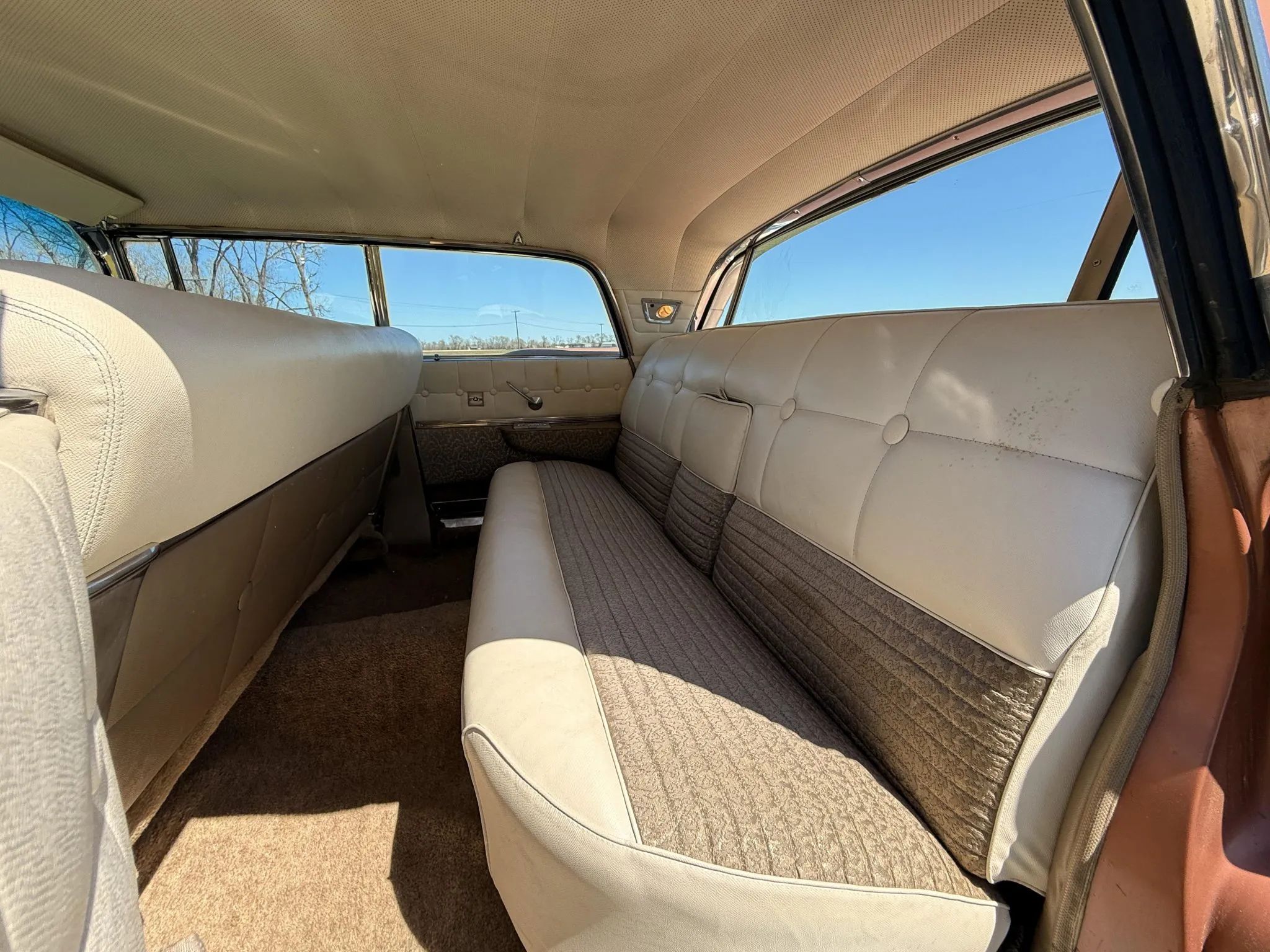
The rear seat itself offered no more legroom or headroom than the standard Mark IV, seen here. Notice the relative positions of the armrest, back seat, and door.

They’re identical to the Limousine, although the front seatback has become a divider. The upholstery is “gray broadcloth,” and the rear seat passengers get a radio of their own, naturally. I can’t find evidence of this, but judging by the setup, it’s unlikely that the front seat is adjustable…that poor chauffeur!

The Limousine’s drivetrain was standard issue Lincoln, the 350-horsepower MEL 430 V8, which was topped by a Carter AFB. This is unsurprising, since the Limousine was actually not that much heavier than the standard Mark IV: 5,450 pounds vs. 5,155 pounds. If you’re considering buying a Limousine, however, the 1959 model is the one you want, because Lincoln detuned the 430 for 1960 by way of a two-barrel carburetor. It could only muster up 315 horsepower in that configuration, and you need all the power you can get when you’re pulling around nearly three-tons of luxury.

The Limousine was indeed offered as a 1960 model before being relegated to history, and sales weren’t much better as the sixties dawned: 34 Limousines and 136 Formal Sedans were built before Lincoln pulled the plug on the project, which amounts to 297 built in total. This example sold at Mecum’s 2024 auction in Houston for a ludicrously low $14,300. It’s one of those auction sales that makes you wish you could be everywhere at once—I would have gladly paid that price and figured out where to park this behemoth later.

Looking at the rear end of this 1959 Mark IV Limousine makes you wonder what all the styling fuss was about. It looks no more absurd than a concurrent Cadillac Series 75, and it may even be more conservatively styled. Let’s face it, the late 1950s styling idiom is not for everyone, but if it’s for you, how could you not like this rare Limousine? Especially with the roofline it should have had all along.
Related Reading
Cohort Classic: 1960 Lincoln – Here Comes The Sun King (by me)
AACA Forums (This is a link to an excellent discussion of the Hess & Eisenhardt Formal Sedans and Limousines.)
Mecum Auctions (This is a link to the car pictured above.)























I agree, and found these the most attractive of this series from the first time I learned about them. I am still not sure if I have ever actually seen one in person.
The 1960 Lincoln Premiere almost got there. The conventional C pillar is not as thick as on the H&E limo, and features a rear window that protrudes out farther for the period-required wrap-around effect. I have always wondered how the Mark V might have been received if this roofline had not been restricted to the bottom-end model.
I the photo wouldn’t attach above.
Yep, the 1960 Premiere is my favorite of the non-limousine line by far, but I think they still could have made the C-pillar even larger.
And if they had not made the rear window go up so high into the roof.
I like the Premiere roofline better than the limousine’s. The latter reminds me of late-’40s Kaisers, a basically attractive design with too much roof.
It is my understanding that the concept behind Lincoln/Mercury’s retractable rear window was ventilation, and in particular, venting tobacco smoke out of the car. Given the prevalence of smoking back then, having an efficient way to suck smoke out without the turbulence of opening side windows makes sense. (yeah, the rear window reportedly also sometimes sucked exhaust back in too under the right conditions…).
So perhaps it’s ironic that a habit that ultimately came to be seen as not beneficial to humans was also responsible for poor sales of a vehicle that sought to address the downside of the habit.
It also makes sense that the limo version (without the opening rear glass) also came standard with front and rear air conditioning. Not only would AC befit the swells riding in a limo, but it would also probably do a good job handing the smoke passengers created.
I’d say the original design was cohesively bonkers, and making one facet un-bonkers does not help overall.
Kind of like putting a normal hat on Vincent van Gogh.
Agree. The formal roof does have the of shortening of that too long deck, but I wouldn’t say it saved this outlandish design.
Absolutely. This model Lincoln is the ugliest vehicle ever built. Well, that was true until the Cybertruck came along. Now THAT’S ugly.
Too bad the Berline didn’t make it to production. It would have been a huge leap in styling from anything else.
I wonder how Lincoln’s trajectory would have been different if they would have gone ahead with the Mark III Berline. There would have been no need for the restyled ’61, because they would have had a design theme they could have worked with for the future. Then, the ’61 would have probably become a Thunderbird, so we wouldn’t have had a Bullet Bird.
If Ford would have given the 1958-1960 Continental a little more of the 1955 La Tosca concept car look, along with some other changes – it would have been a cool looking car. On my concept, I gave the car a more forward aggressive look by slanting the front end more, slanting the A pillar (a big difference in appearance), raised the rear fender fins, opened up the length of the wheel opening more (they were too small), gave the rear window the Lincoln glass but with the Continental chrome trim, slanted the rear fender skirts, raised the suspension slightly, and more.
Anyway, while looking sort of the same, it has more of a look of motion and less oddity than the production car.
much improved.
That’s kind of cool, Bill, because it uses themes that Ford was already exploring in its concepts. It seems like Ford wasn’t quite as good about using those themes in their production cars as GM was, probably because its concept cars tended to be more cartoonish.
I wonder how the Lincoln limousine would have look if it got 6 windows like the Imperial limousine done by Ghia?
The Limousine roof is a bit awkwardly designed, being all roundish and puffy, which is not at all like the rest of the car. It comes off as very amateurish; it really would have looked better being a bit more sharp edged and cohesive with the rest of the body. And the C pillar is simply too long also.
But yes, a conventional roof more like the one on the Berline would have been a welcome option.
+1
Dick Teague’s 1956 Packard Predictor had a very similar reverse-slant roof, have to wonder if that was what germinated the ’58 Lincoln’s design? It too was quite outlandish and just as well it never saw the light of day.
Yet another case of how it’s easier to style a small car than a big one, the reverse slant roof worked on the 105E Anglia but not here. On that car it wasn’t too much roof or rear deck since there just wasn’t that much of either, and it was a reasonable step forward in space efficiency.
Not to mention the Citroen Ami 6, which, in all fairness, had to have a reverse-slant rear window in order for the trunklid to open!
An amazing car to be sure .
Hearing one sold for the paltry sum of $14K is incredible .
-Nate
You make a most excellent point about the fact that below the waterline, it’s really no better or worse than many other’s late ’50’s excesses, although the squared-off wheelarches would still probably make 22 inch wheels look a bit overwhelmed. But ex-factory, with the slidey backlight, it will forever be The Car As Funerial Wardrobe.
But I’m not convinced the limo’s vinyled mattress tightened down over the roof does too much for the hopeless whole, as it looks too much like the soft-edged heaviness had borne down upon the car and made wearing it a burden.
Put another way, wearing a massive and serious (but mismatched) hat has just drawn attention to one’s appalling shirt and trousers.
Ha ha…I love the metaphor, and I see your (and Paul’s) point. Still, I think the larger C-pillar improves the balance, although a top more in line with the Mark III Berline I pictured might have looked a little more professional.