
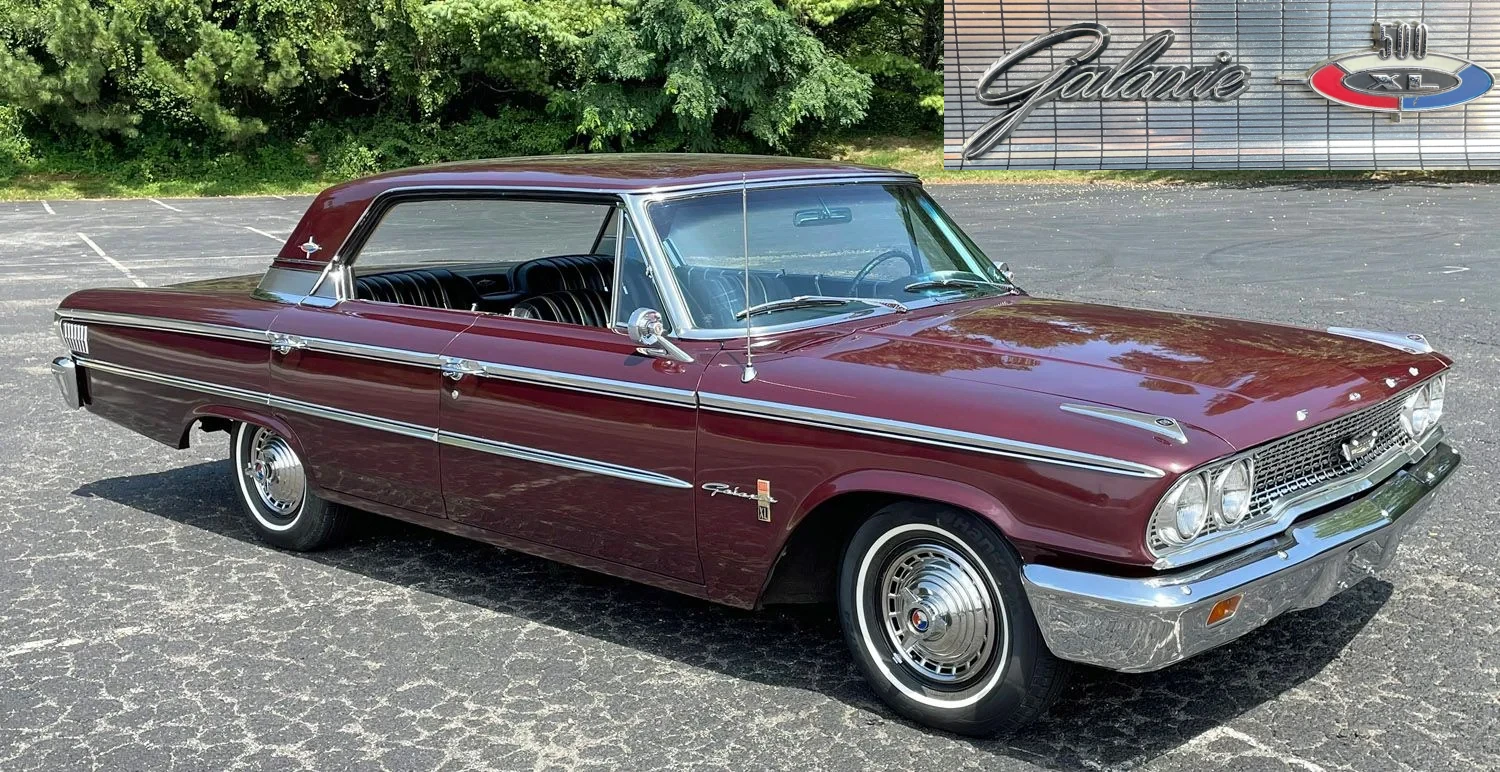
The early ’60s bucket seat craze centered on two-door coupes, hardtops, and convertibles, but buckets were offered on some four-door models as well. For 1963 and 1964, Ford expanded its sporty Galaxie 500/XL line to include a four-door hardtop complete with buckets and a “Thunderbird-inspired command console.”
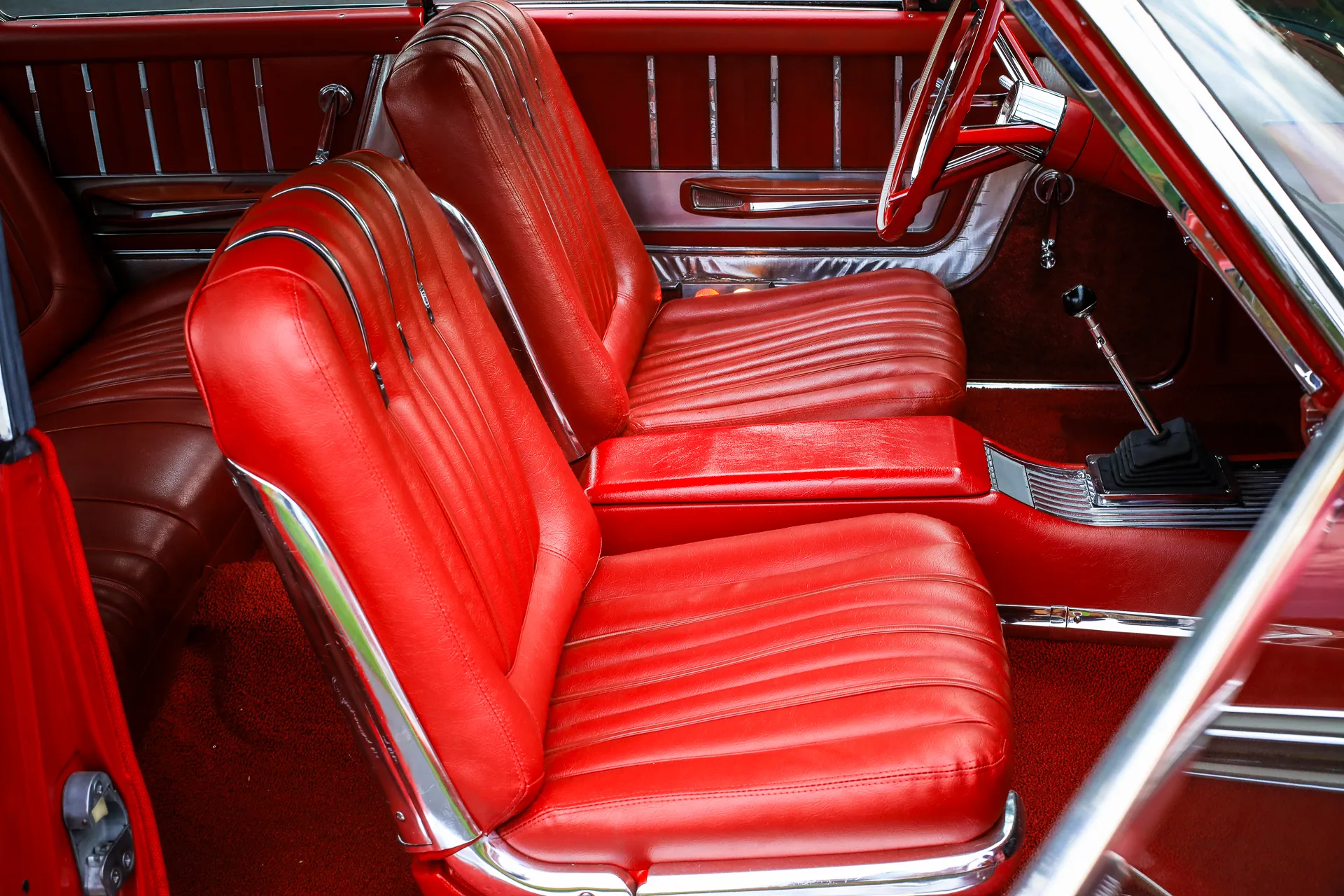
Ford introduced the 500/XL for 1962 as its full-size entry in what some auto historians have dubbed the “Bucket Brigade.” Originally offered only in Club Victoria hardtop and Sunliner convertible form, the 500/XL was advertised as “passport to the lively life,” with front bucket seats, a full-length console, individually contoured rear seats, and plenty of chrome and “chrome-like” Mylar trim. Ford called it “Luxury with a sports car lilt.” Despite prices that started $323 more than a plain Galaxie 500, the XL sold respectably well. Production for 1962 totaled 41,595 cars.
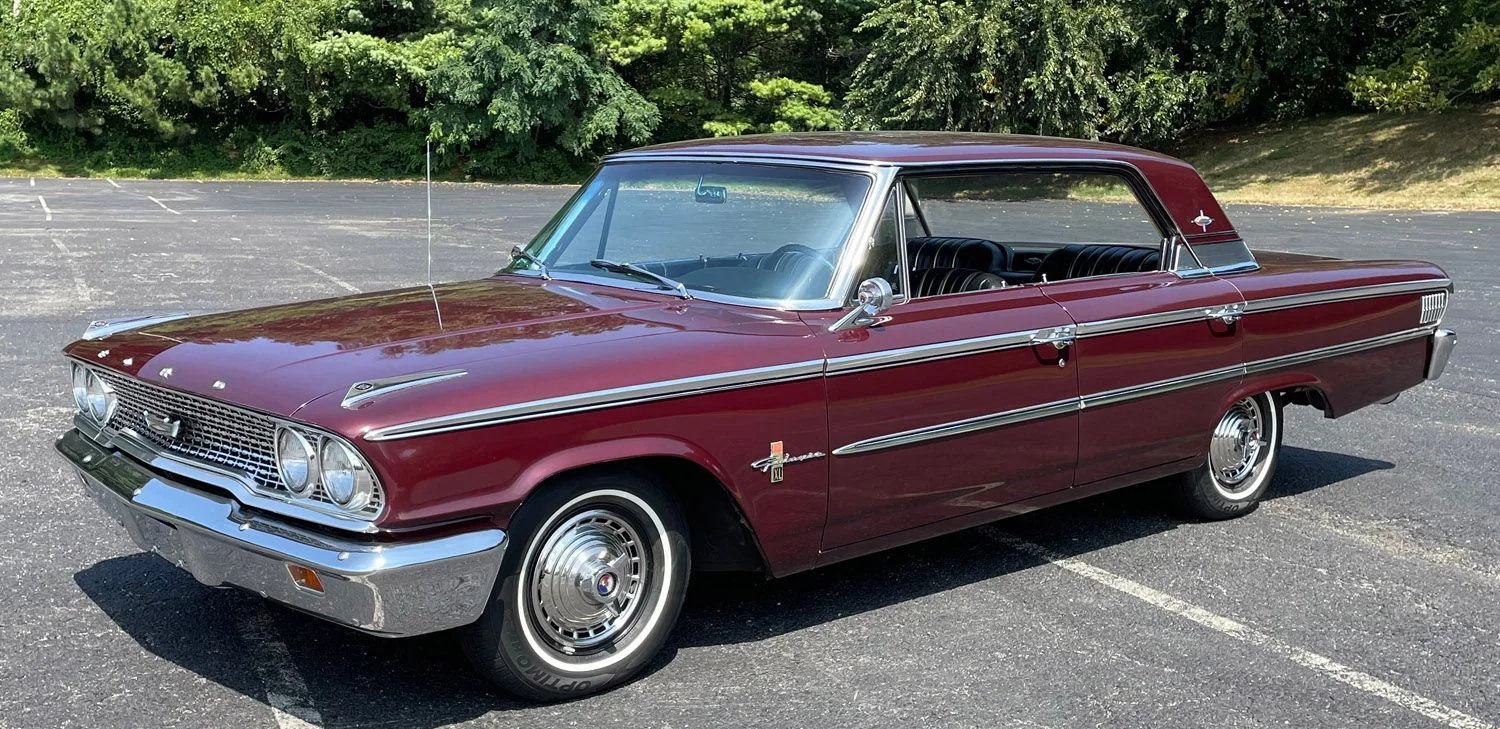
In Detroit, as in Hollywood, the response to initial excess was always to see how far the idea could be pushed, so for 1963, Ford added a four-door hardtop to the 500/XL line, with the same buckets-and-console interior. They were by no means the only ones to have this idea: Both the Chrysler 300 and Buick Wildcat offered bucket seats on their four-door hardtops this year, and you could even have buckets on a Cadillac Sedan de Ville. If Ford hadn’t already thought of offering a four-door 500/XL, the proliferation of buckets in the higher price classes would probably have inspired them — anything that increased the resemblance of the standard Ford to pricier, more prestigious cars tended to be good for business.
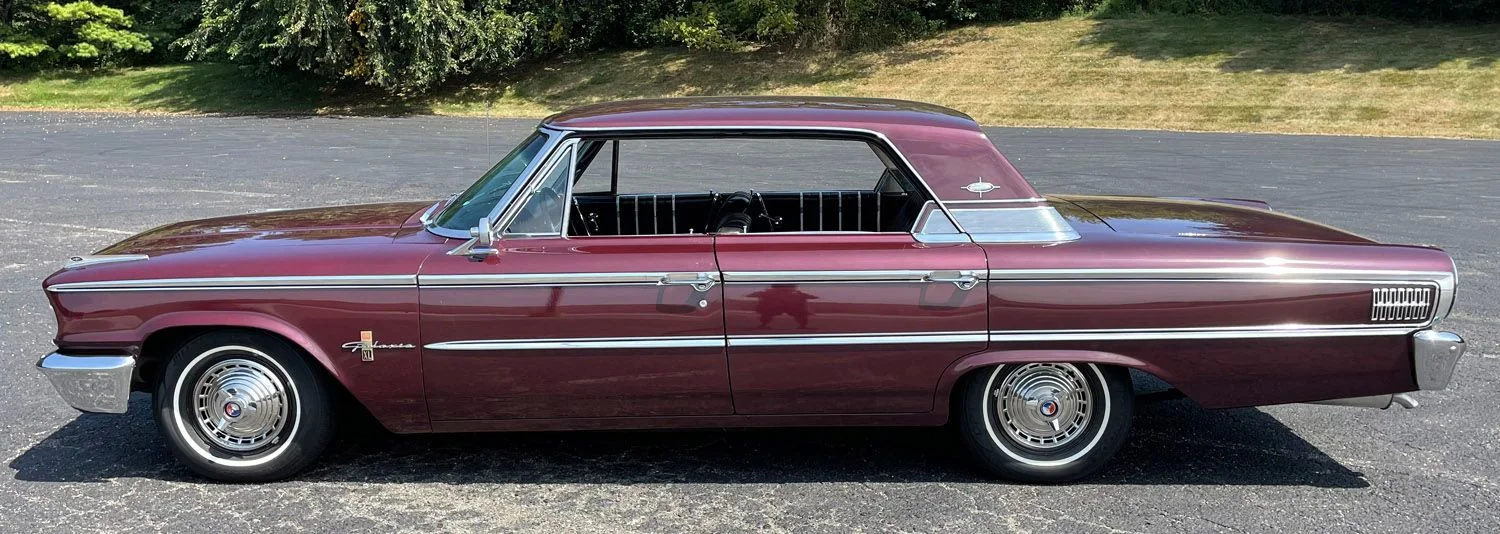
Ford had offered four-door hardtops since 1956, but except for the very popular 1957 line, they hadn’t been an outstanding success, never selling as well as either the two-door hardtop or the four-door sedan. Production of the 1962 Galaxie 500 Town Victoria, the sole full-size four-door hardtop that year, totaled a modest 30,778 cars, less than the convertible. (Ford dropped or at least downplayed the “Club Victoria” and “Town Victoria” nomenclature after 1962, perhaps fearing that it was starting to sound hokey.)
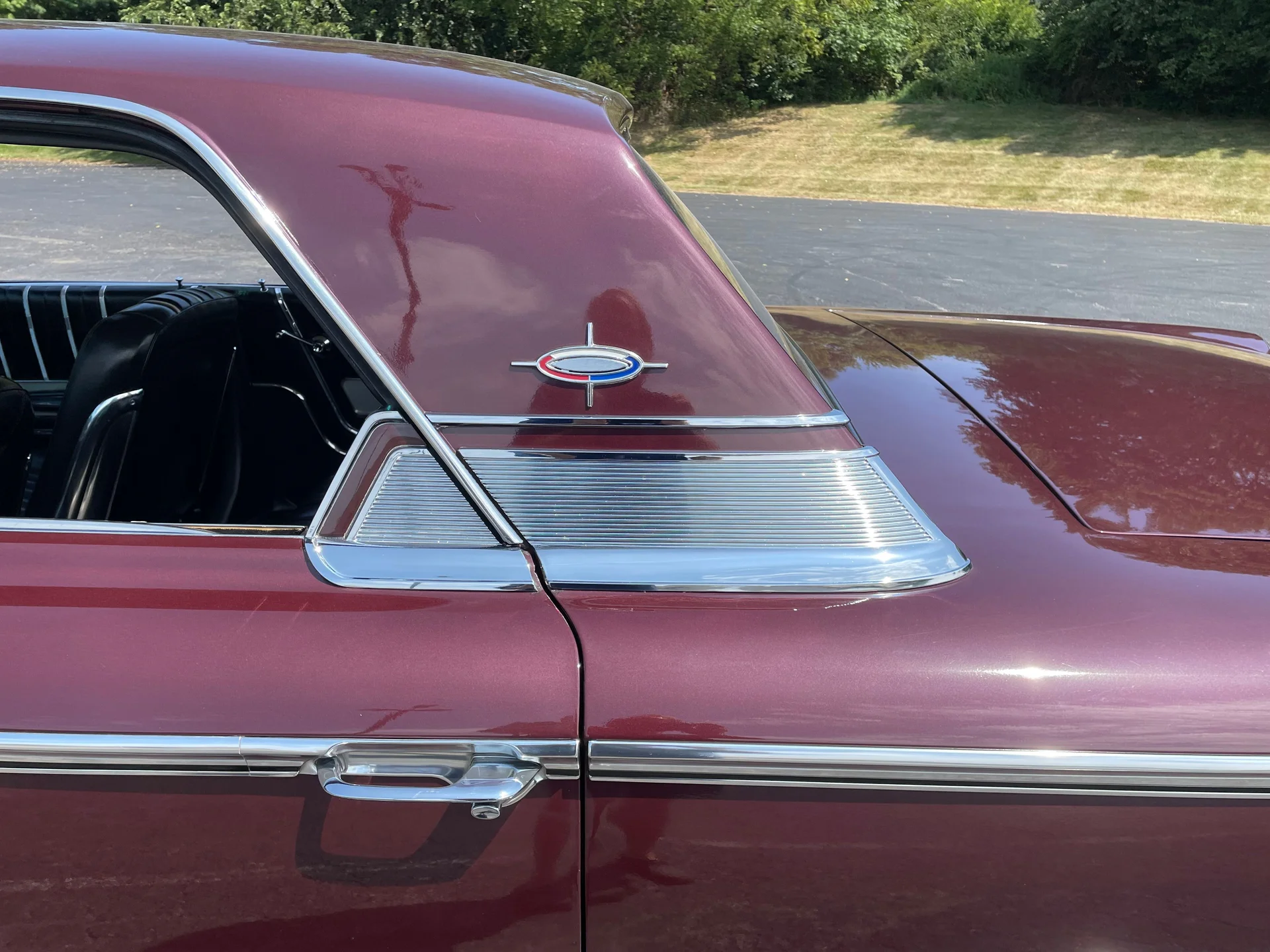
There were now two four-door hardtops for 1963, the Galaxie 500 and the Galaxie 500/XL. Both had the popular Thunderbird-style formal roof, with metal trim around the base of the sail panels extending into a small, roughly triangular fixed panel on each rear door.

The triangular panel was a fixed part of the rear door, allowing the rear glass to roll down fully.
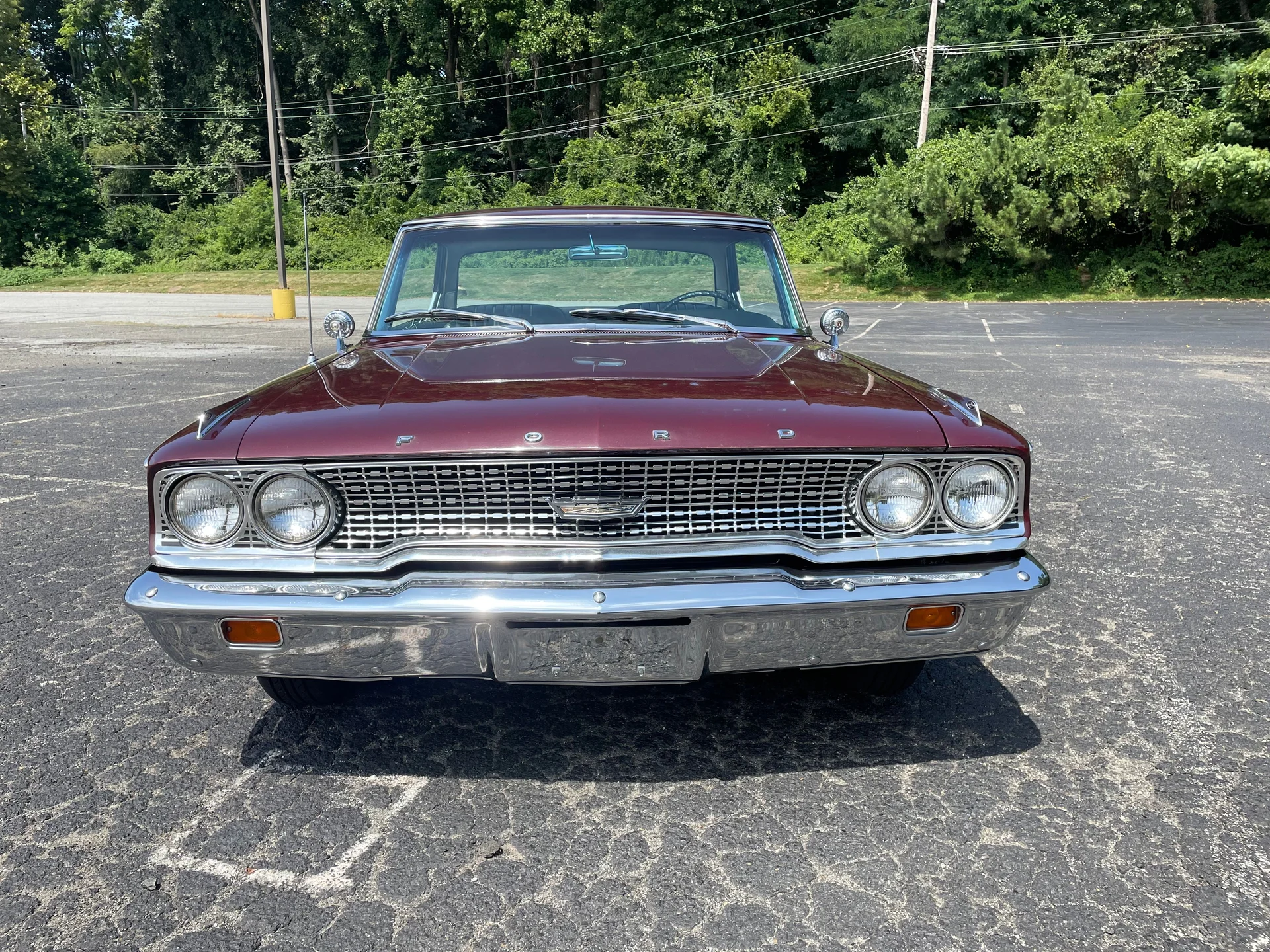
A Galaxie 500/XL four-door hardtop was the second most expensive standard Ford you could buy in 1963, with base prices starting at $3,333. The 500/XL convertible was more expensive still, as of course was the Thunderbird, but the four-door hardtop was a substantial $955 more than a basic Ford 300 Six four-door sedan.
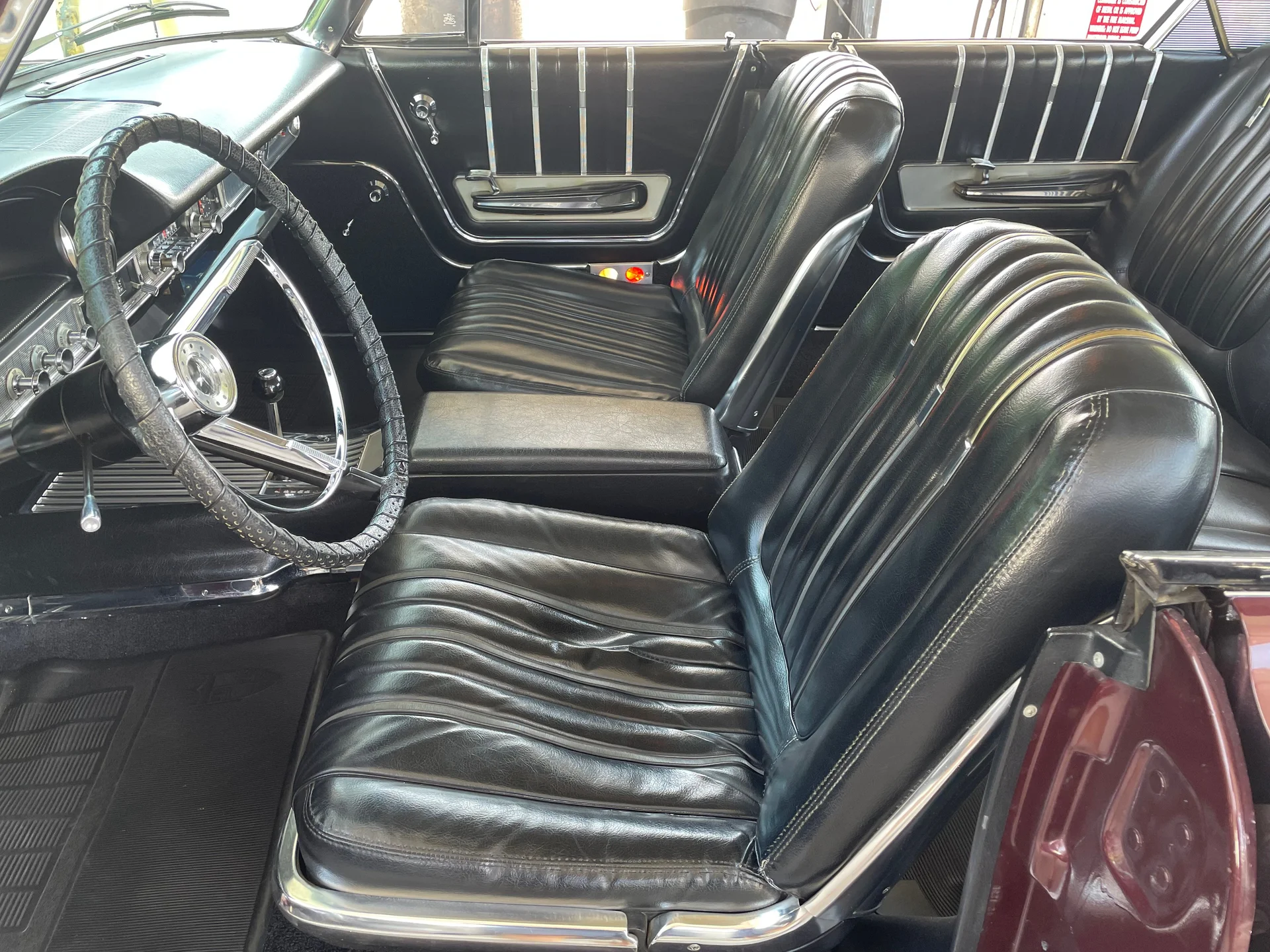
Aside from the fancy interior with its “leathery” all-vinyl upholstery, the main reasons for the higher price were that the 500/XL was available only with a V-8, and came standard with automatic transmission. Early in the year, the standard engine was the 164 hp 260 cid V-8 from the Fairlane, mated to the awful 2-speed Ford-O-Matic, but during the year, that combination was superseded by the new 289 V-8 and 3-speed Cruise-O-Matic. A 4-speed manual transmission available as a credit option, and either automatic came with a “Sports Stick” console shifter.
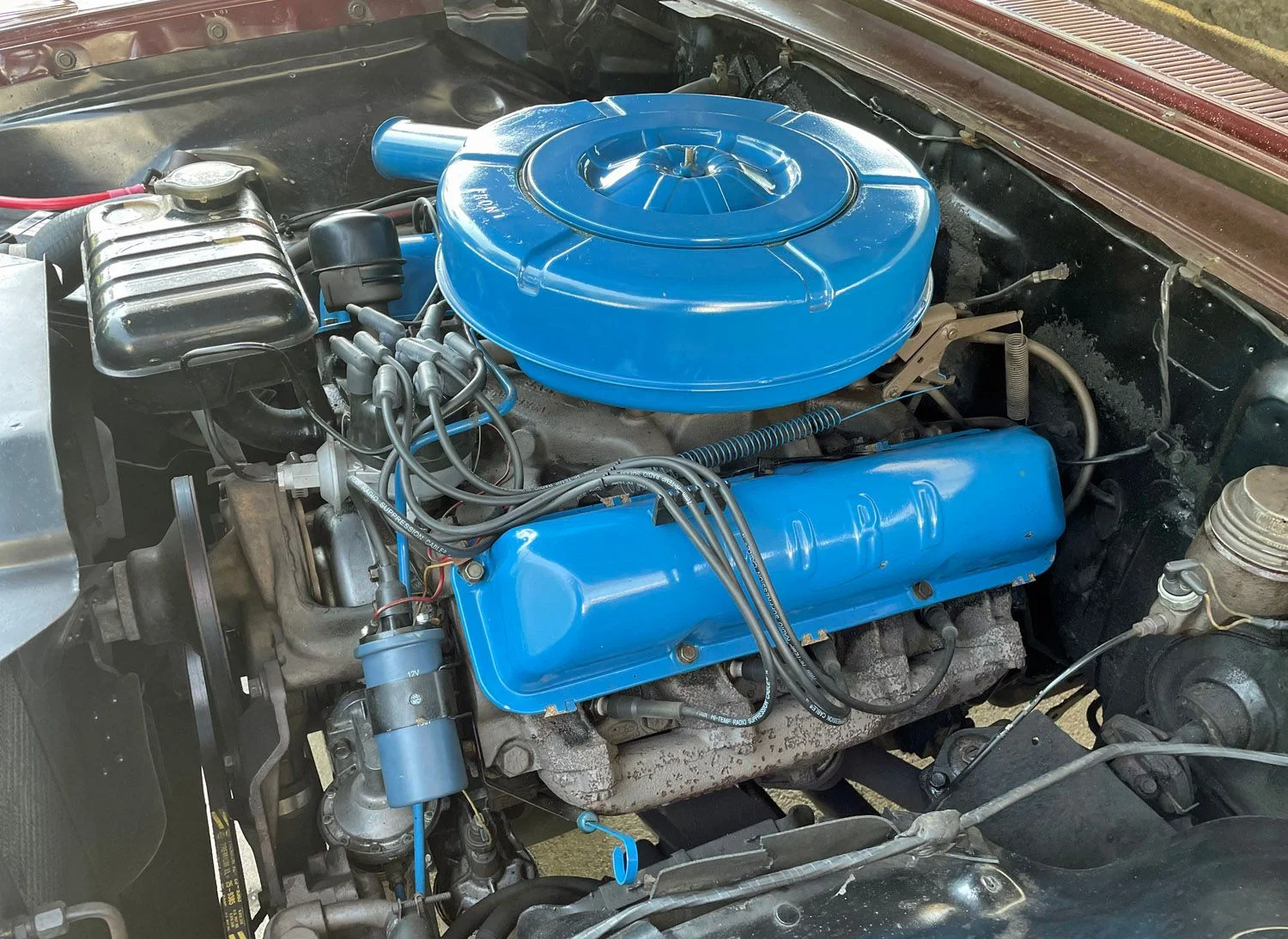
This car has Cruise-O-Matic and the first step-up engine option, the FE Series Thunderbird 352 V-8, which had a two-barrel carburetor and 220 hp. The 352, which cost $51.50 on a 500/XL, wasn’t the most powerful engine on the options list, but it was the largest, most powerful regular-fuel V-8 offered in 1963. The 289 was adequate in these cars and put less weight on the nose (the 352 added 163 lb, 126 lb of that on the front end), but the extra torque was worthwhile — even a lightly equipped Galaxie was a 4,000 lb car.
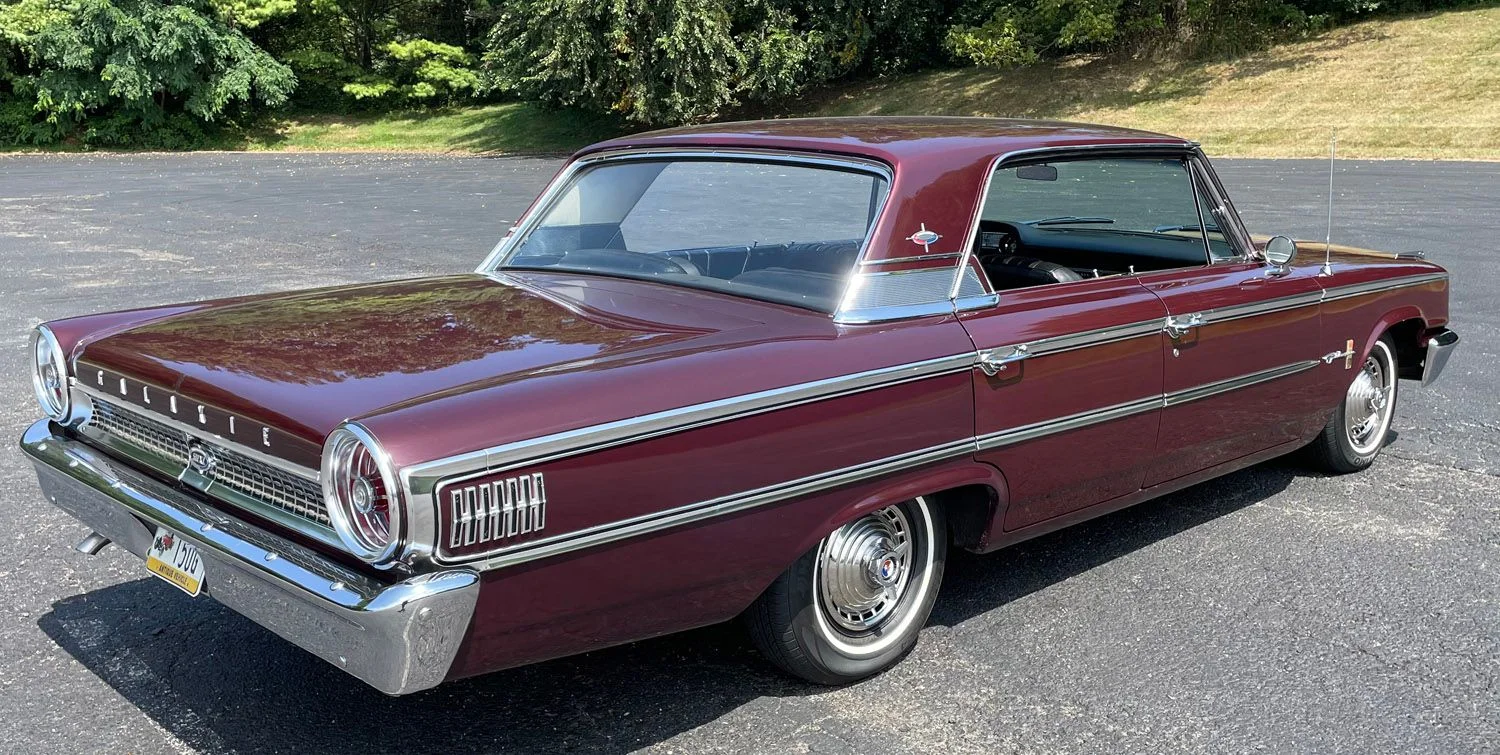
Even the 390, which came with dual exhausts, could only manage 0 to 60 in 9.8 seconds in Motor Trend‘s test of a 1963 Galaxie 500/XL convertible, so the 352 with Cruise-O-Matic was a mild performer. Interestingly, the 352 WAS available with a 4-speed, although I don’t know if many cars were built that way. Although the 352 was available with overdrive in cheaper models, that combination wasn’t available in the 500/XL, and fuel economy with automatic was mediocre even with the 3.00 axle, a consequence of the Galaxie’s weight.
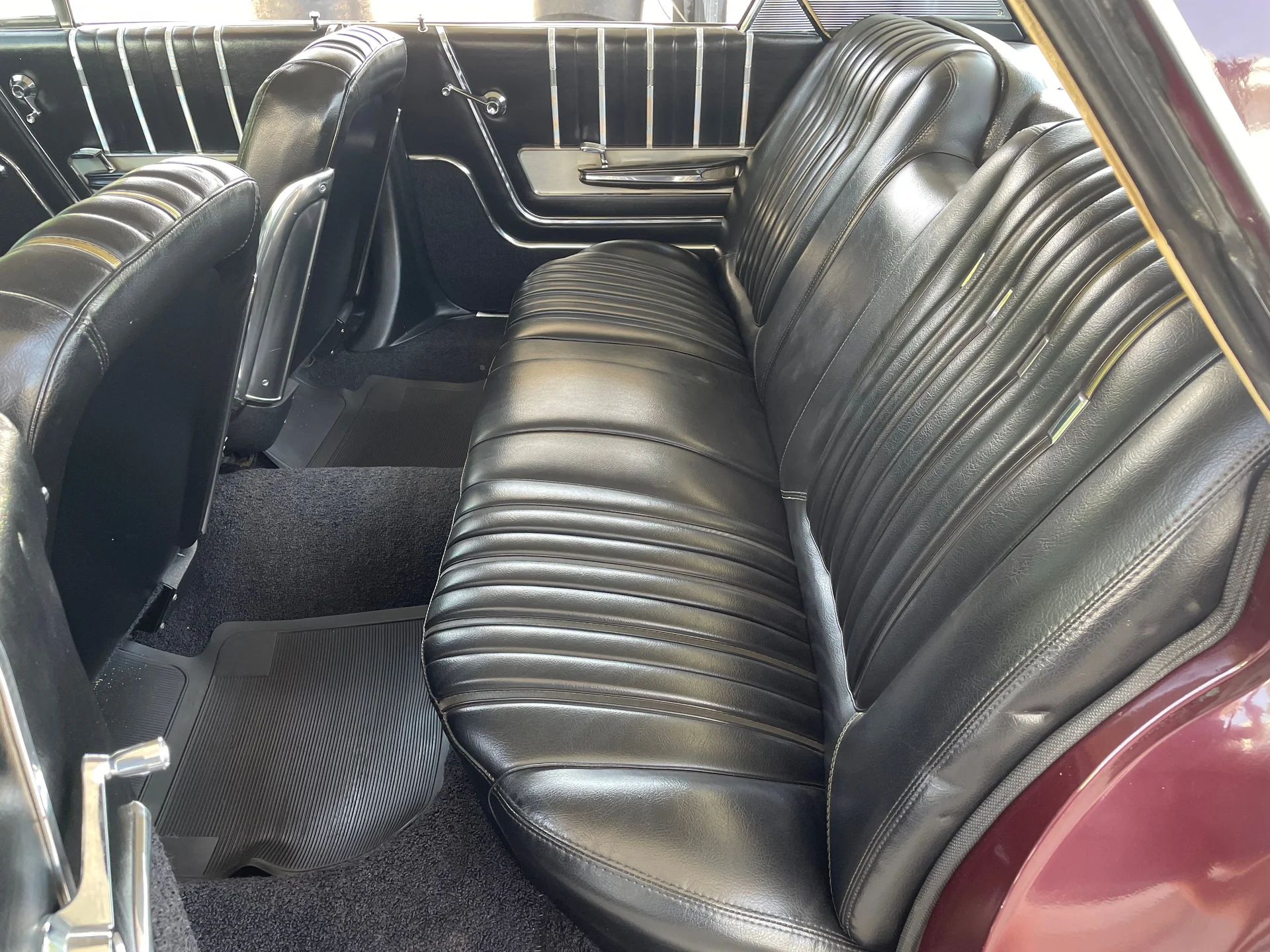
Although it was one of the biggest and heaviest cars in its class, the Galaxie wasn’t outstandingly roomy. Consumer Reports grumbled that knee room for rear seat passengers was only adequate unless the front seats were well forward, and the heavily padded divided rear seat of the 500/XL made it even less comfortable for middle-seat riders.
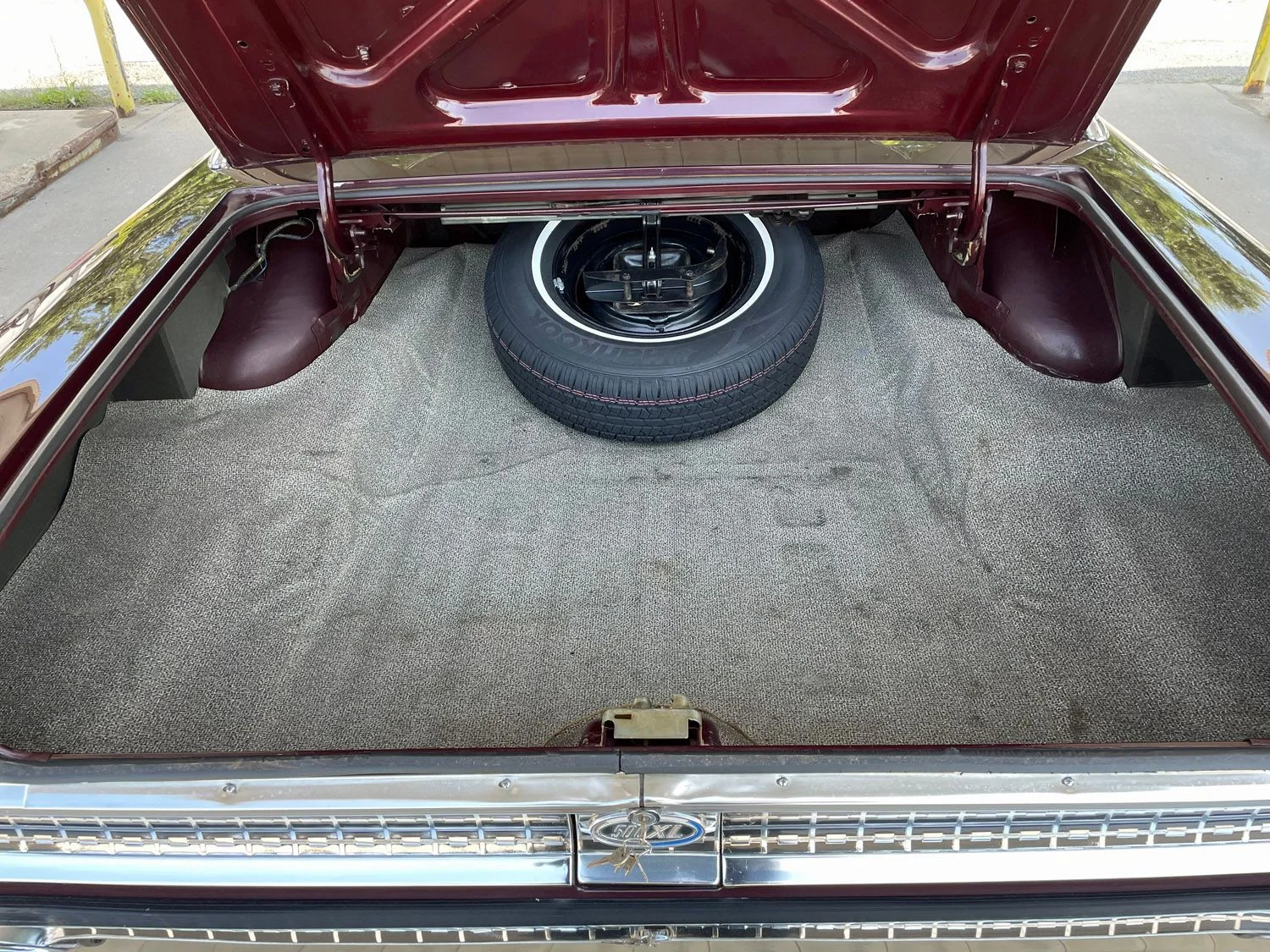
The trunk was also wide but curiously shallow, so it had plenty of room while still requiring careful packing to make use of the available space.
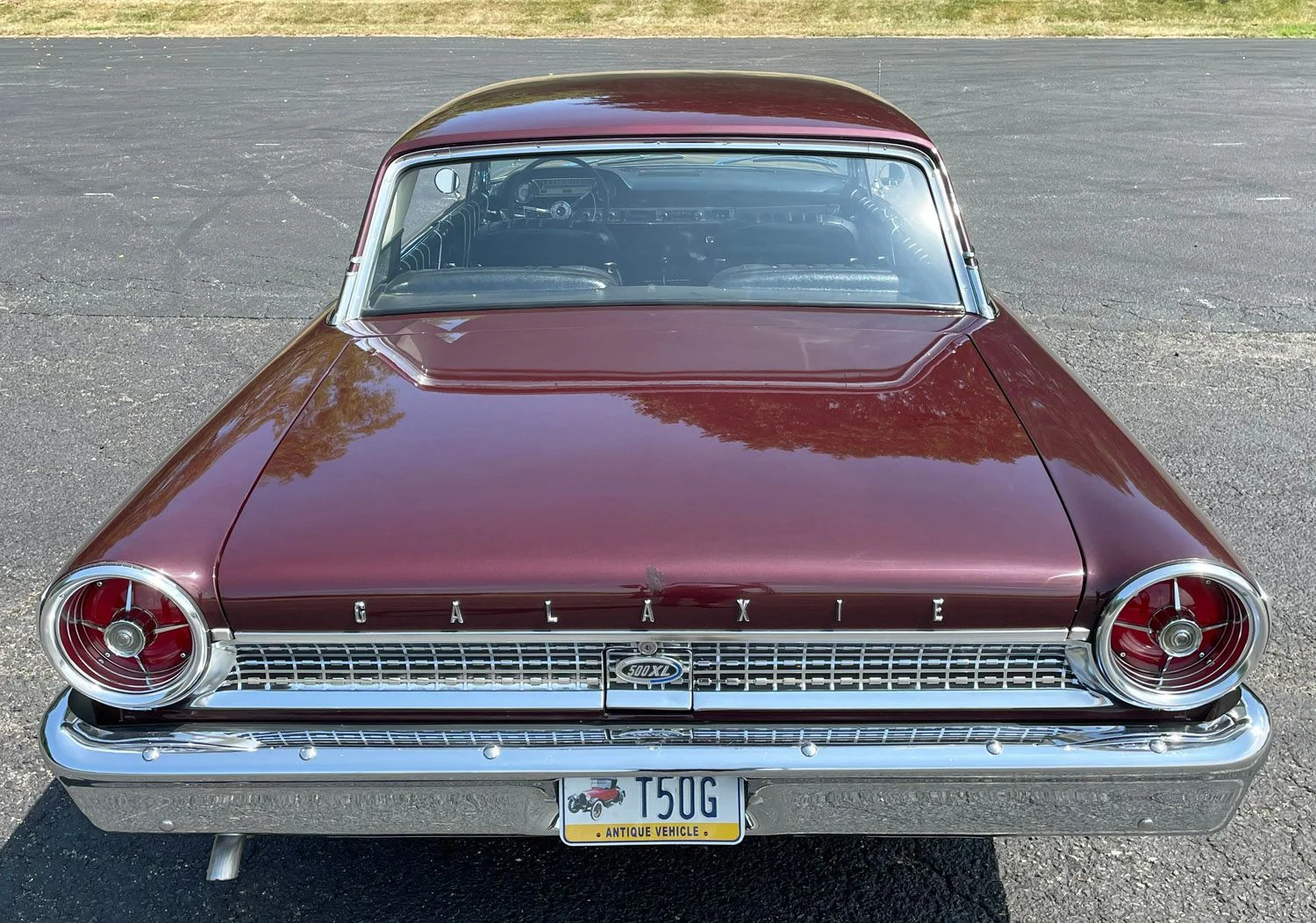
The Galaxie rode and handled reasonably well for a big car of its time. Motor Trend thought it was a bit firmer than average for its class, which also made for a good ride. Consumer Reports judged the Galaxie’s ride the best of the low-priced three, marred by some body shake on rough surfaces.
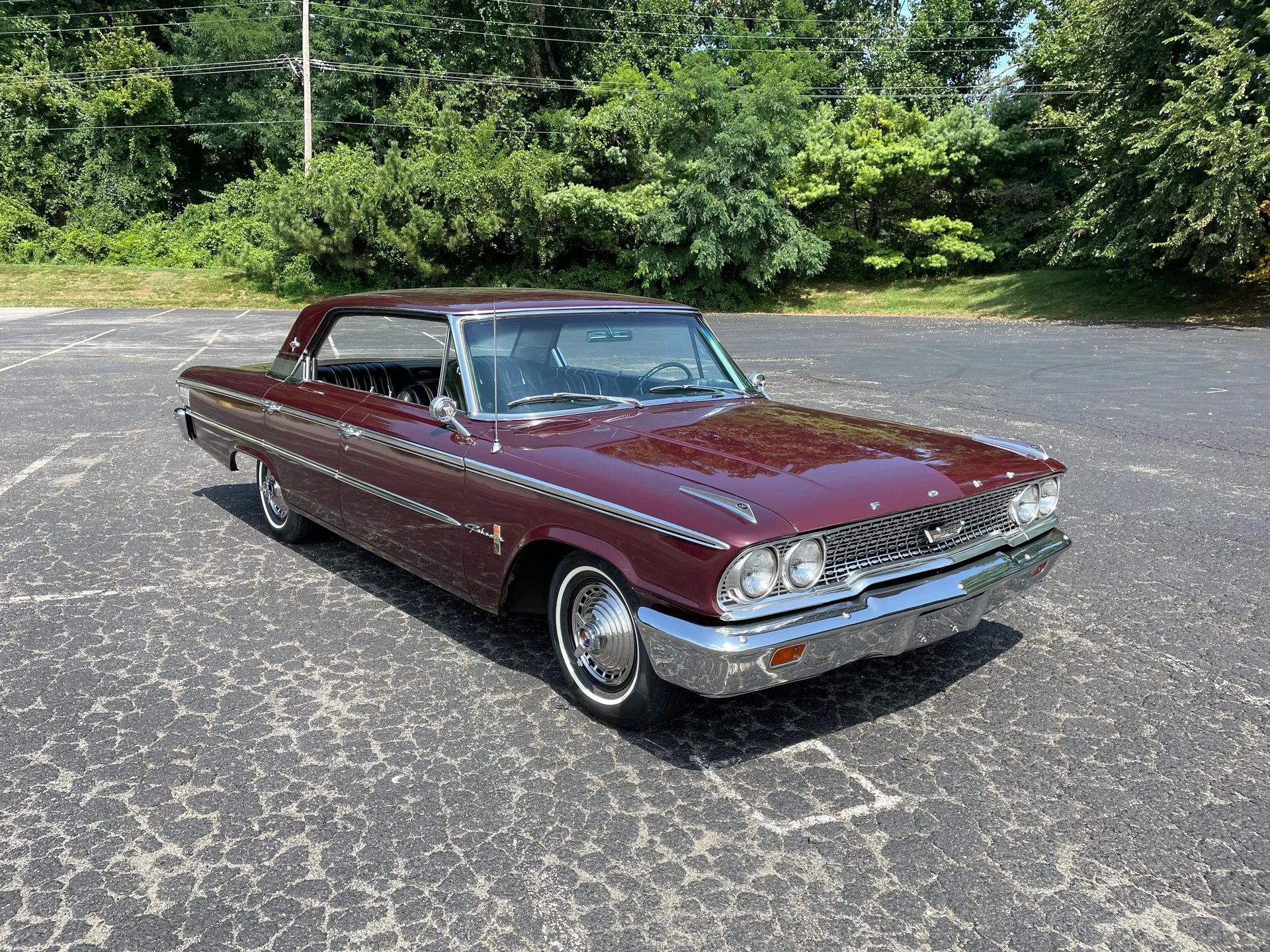
Neither those qualities nor the buckets-and-console interior produced any big rush of new buyers for Ford’s big four-door hardtops. The four-door was the weakest seller of the Galaxie 500/XL line, with 1963 production totaling 12,596 cars. Ford buyers who wanted a four-door hardtop were more likely to choose the bench-seat Galaxie 500, but even that sold only 26,558 cars for the model year. Given that Ford built more than 844,000 full-size cars and station wagons for 1963, that was a drop in the bucket. Buyers did like the 500/XL — total production for the series swelled to 94,730 cars — but they preferred it in two-door form.
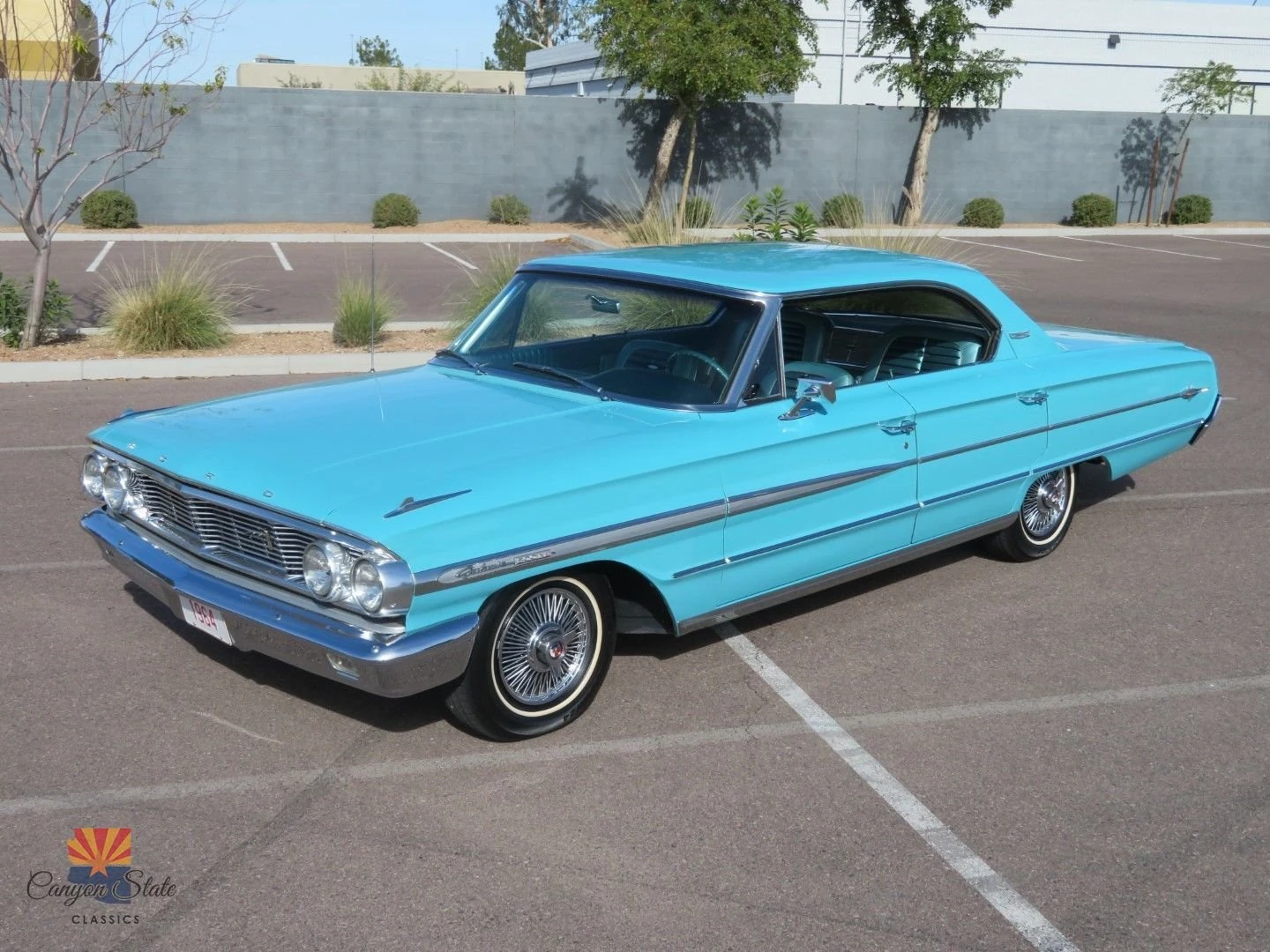
The four-door hardtop returned for 1964, with a new roofline that looked more like the fastback two-door hardtop, albeit still with the small triangular panel in each rear door.
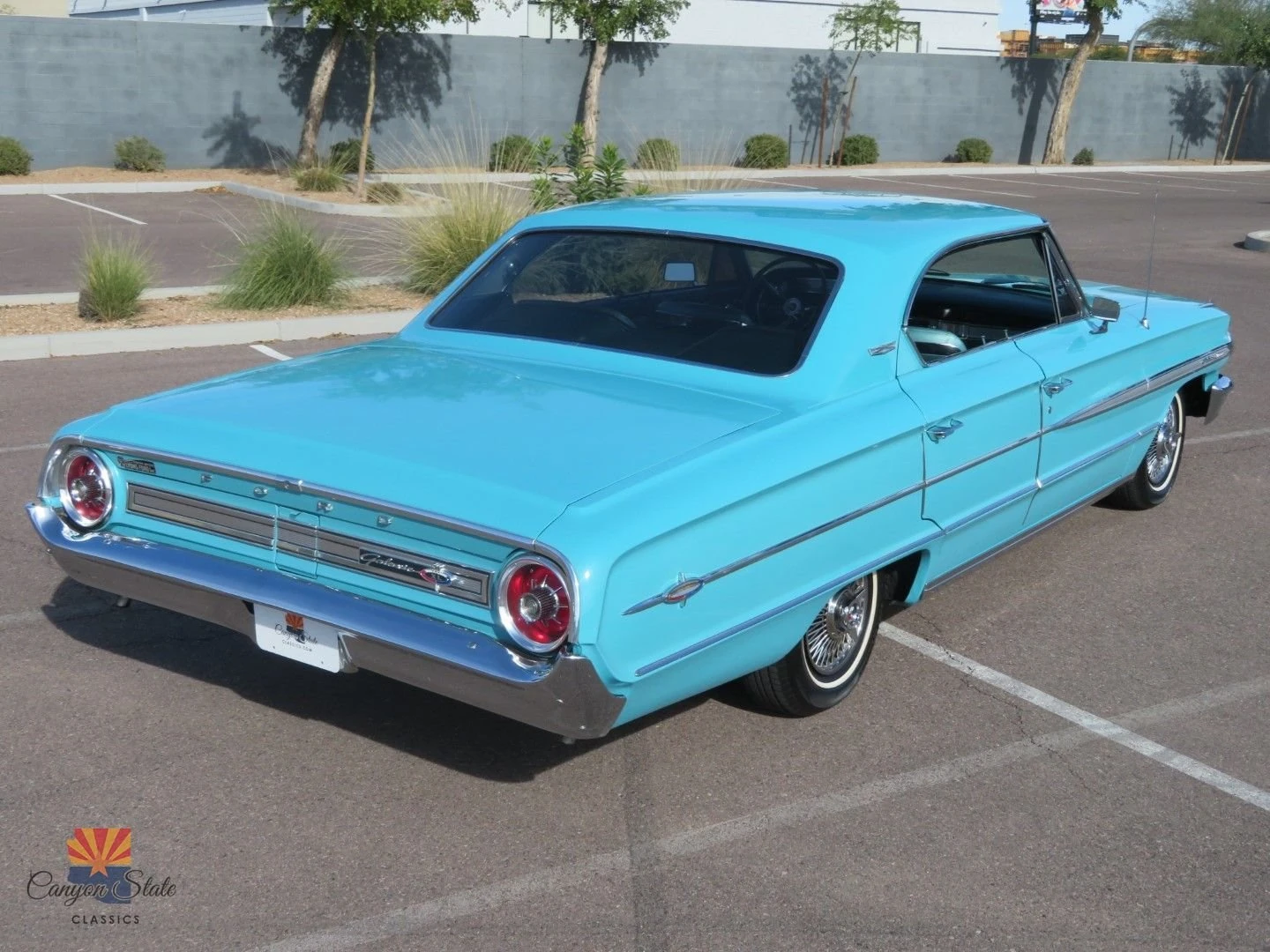
Contemporary buyers seemed to like this roofline, which did quite well in the Galaxie 500 series, where 1964 four-door hardtop production totaled 49,242 cars. However, interest in the bucket-seat 500/XL version remained soft. Production of the four-door 500/XL was only 14,661, little better than 1963, and only a small chunk of the 88,136 500/XL cars sold for 1964.
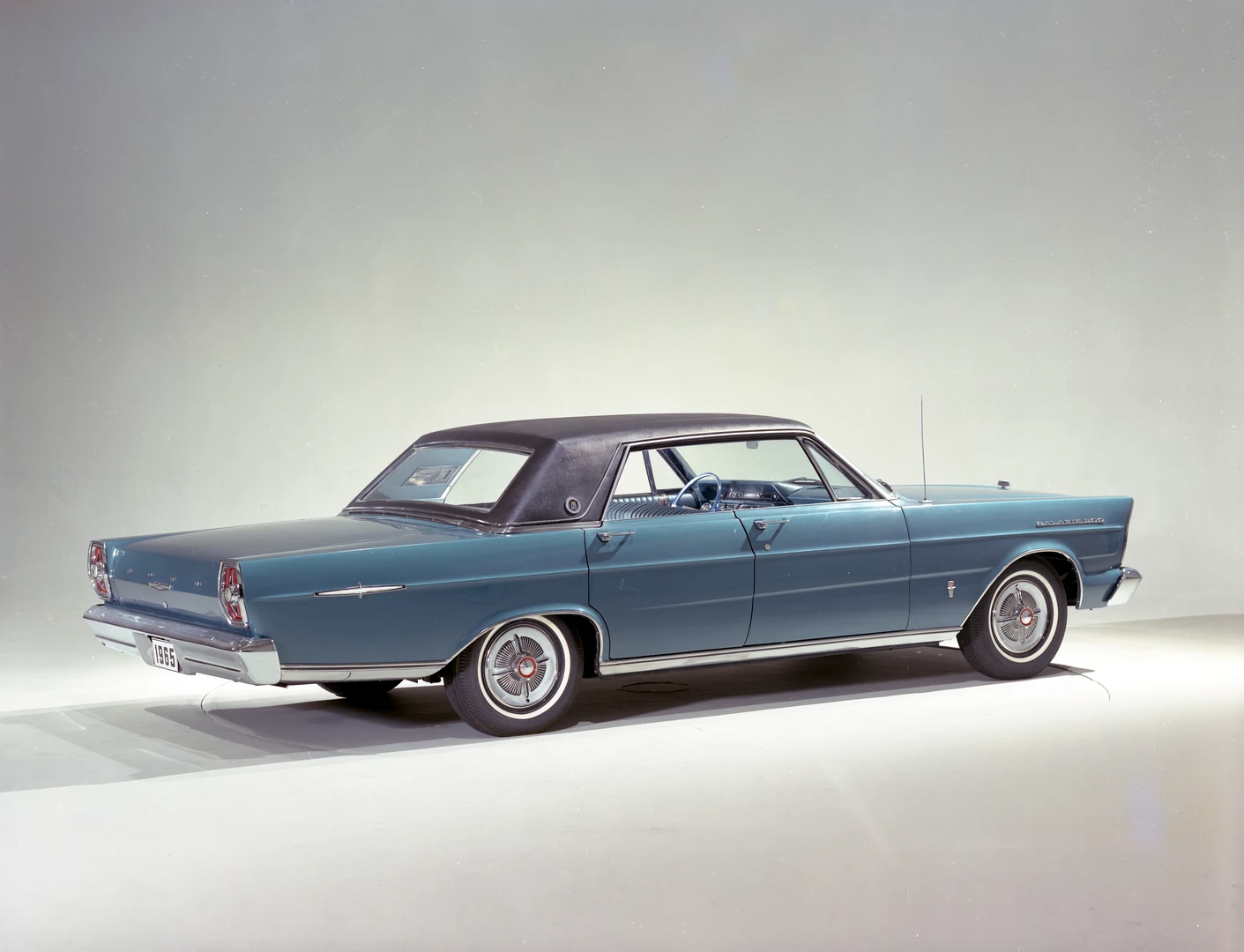
Ford apparently had second thoughts about losing the popular formal roof, which was revived for the all-new 1965 line. The four-door hardtop was no longer offered in the 500/XL series, but proved very popular in a new luxury sub-series, the Galaxie 500 LTD, which emphasized dignified luxury — a cheaper alternative to mid-price luxury cars — rather than full-size sportiness. The 500/XL (called simply XL from 1967 on) survived through 1970, but only in two-door form.
Related Reading
Vintage Car Life Road Test: 1962 Ford Galaxie 500 XL 406 – “Total Performance” Started Here (by Paul N)
Curbside Classic: 1963 1/2 Ford Galaxie 500 XL – Something Old, Something New, Something Borrowed, Nothing Blue (by Jason Shafer)
Automotive History: The Involvement of the 1963 Ford in American Society (by Jason Shafer)
1963 Ford Galaxie Sedan: Not a Galaxie 500—and That’s Exactly Why It’s Worth Remembering (by Tom Klockau)























I had forgotten that the buckets/console were in 4 door XLs in 1963. Ford certainly did nice interiors in these cars.
One nit, the 4 door without the little triangle in your photo is a sedan and not a hardtop. Every 4 door hardtop had that feature, which was necessary to reduce the glass area enough for it to roll all the way down into the door. That feature/workaround was used in every Ford 4 door hardtop from 1957 to 64. For some reason, the 56 version used GM’s method of moving the roof C pillar a bit forward to shorten the door glass, a method Ford went back to on the 65 models.
Ack, thanks for the heads up about the sedan, I’ll take that out. How embarrassing.
I have always liked the 63 Fords and that big round taillight. It just looks balanced and smooth without some of the 1960’s styling excesses. Of course, I am a committed Ford guy!
I was more of a Chevy guy as a kid, preferring the’63 Impala to the contemporary Galaxie at the time. But as I became more of a Ford guy as a teen and young adult, the ‘63 Galaxie XL became a personal favorite.
That triangular piece on the door gives off a “Hofmeister Kink” vibe….
Another CC I never knew existed (much less seen). For some reason, compared with later versions and its contemporary competitors, the 1963 Galaxie 4-door hardtop just looks…awkward.
Maybe it’s those rear door triangles. The new-for-1965 without them looks fine.
I wasn’t aware until a couple of years ago that Thunderbird’s Swing-Away steering wheel was available as an option on the full-size Fords in 1963.
Who needs (or wants) a Mercury with this available?
Looks nice and I’m sure whomever ordered this car was *very* happy with it .
-Nate
A really cool car. Shame Ford larded up the 1960-1964 full size cars without adding interior room. They really didn’t have their act together in 1959. The 1963 is a great looking year, compared to the chunkier 1962/64 years. They needed to have left the chunky heavier stylings to Mercury.
GM was making better full sized cars during these years, so it’s unsurprising that Ford sales suffered until 1965.
Even as a 4 door hardtop the ’63 Fords were handsome cars. The ’64 less so, never cared for the buldge in the front fenders. Paul is correct, these upscale Fords really ate into Mercury’s space. At the time GM was very successful in differentiating Pontiac from Chevrolet, but Mercury just couldn’t shake the stigma of being a fancy Ford.
I totally agree on all points. I like the look of all the 60-63 big Fords (almost the whole lineup, really), but the 63 would be my pick if I had to choose. 64 isn’t bad, but starting to look bloated, and 65 is neither here nor there for me; they look good in the right color at the right angle, but off from others.
With regard to Mercury, it’s amazing how early and often Ford couldn’t resist encroaching with cars like the XL, then pulled out all the stops with the LTD. Maybe worse, in Mercury’s last years Ford walked right by an opening to re-legitimize the brand. Myself and others have noted how low-rent Ford interiors got in the 00s. If you could have paid a bit more for a Mercury and got a real upgrade for your money, that could only have added sales, and it would have given Mercury some identity. Instead, it was the same girl in the same cheap dress, only different jewelry. No wonder hardly anyone noticed when Ford finally took the brand off life support.
I had a ’64 Galaxie 500 with a 289. While it felt peppy, it was not. After it got totaled, I purchased a ’65 Galaxie 500 with the 352 4 barrel and duels. It was a much more satisfying car. 250 gross HP but still used regular gas. A very nice engine in a very nice car.
The 1963 Ford is by far my favourite of the decade for Ford. The 1964 was a retrograde in my opinion. What gets me about cars of this era, and it is mentioned in the text, is the poor space efficiency. A car this large should have plenty of space, especially in the back.
Best of all, these cars were ‘four door pillarless hardtops’! A body style that across the motoring world remained uniquely ‘American’. A ‘true’ pillarless car will always be a four door hardtop and its a body style that unlike convertibles and even the more common two door hardtops is increasingly gaining attention of classic car enthusiasts.
Great article, I particularly like 1964 Galaxie four door hardtops. Simply lovely styling
Very nice. I think the 63 big Fords are handsome but think the general high regard for them among the 60-64s triggers my contrarian spirit to prefer the 61 and the 64 a little more. But really it’s hard not to like these. Recently I watched the Steve McQueen movie the Getaway, which might have made me like the 63s (in 4 door form at that)further.
It’s interesting to me how the whole bucket/console combo was such a short lived fad on the 60s full size line of cars once so popular they were called the “standard” car size, yet fell out of favor for benches and column shifters by the 70s-90s… yet now a days the “standard” car as we know it(whatever you consider it; sedan crossover SUV, minivan, literally any car of any size or configuration) has buckets and a console outright mandatory. From my modern perspective this 63 isn’t all that remarkable, and I even have a friend who has a 352 powered 64 Galaxie sedan he’d been tinkering on since I think his teens(first car) where it had XL buckets and console presumably retrofitted, and to be honest I never thought much of it, but largely because it is just such the norm combination in everyday cars I’ve been in in my lifetime they didn’t even register until now.
I love the 61 – I wouldn’t walk past a decent one in search of a 63, even though I’d say the 63 is my favorite. 60 and 62 are pretty cool in their own right too, and the 62 with the 406 is a hot ticket – just forgotten since the 427 overtook it so quickly. Now, the 64… I wouldn’t mind owning one, but it just looks like Ford took the simple, sculpted lines of the ’63 and decided to throw random features and bodylines on it – presumably so buyers were getting “something new.” I wonder what would have happened if Ford had just carried over the ’63.
On the buckets, I’d suggest the reason they dominate now is that storage and ergonomics have trumped people capacity, and expectations have shifted so much. A car without a center console would be seen as pretty low-rent these days, and a lot of people would pay for their own ride before they’d pack in three wide. Meanwhile, I once packed six people in my old Fairlane (2dr Sedan, that is) to go see a movie – now both packing a car to full capacity AND going to movies are out of style. Anyway, I think you see the best answer to the conundrum in some trucks (including my own!): you have a fold-down backrest with cupholders and a cubby, but the seat is there if you need it.
A three seat Country Squire was not the most expensive Ford (other than T-bird)?
In base price terms, no. A nine-passenger 1963 Country Squire V-8 started at $3,197. However, the main reason the 500/XL line had higher prices was that automatic transmission was standard. If you added automatic to the Country Squire (as of course most people did), it would cost more, but you could have a 3-speed wagon, or one with overdrive, for a bit less than the 500/XL four-door hardtop.