
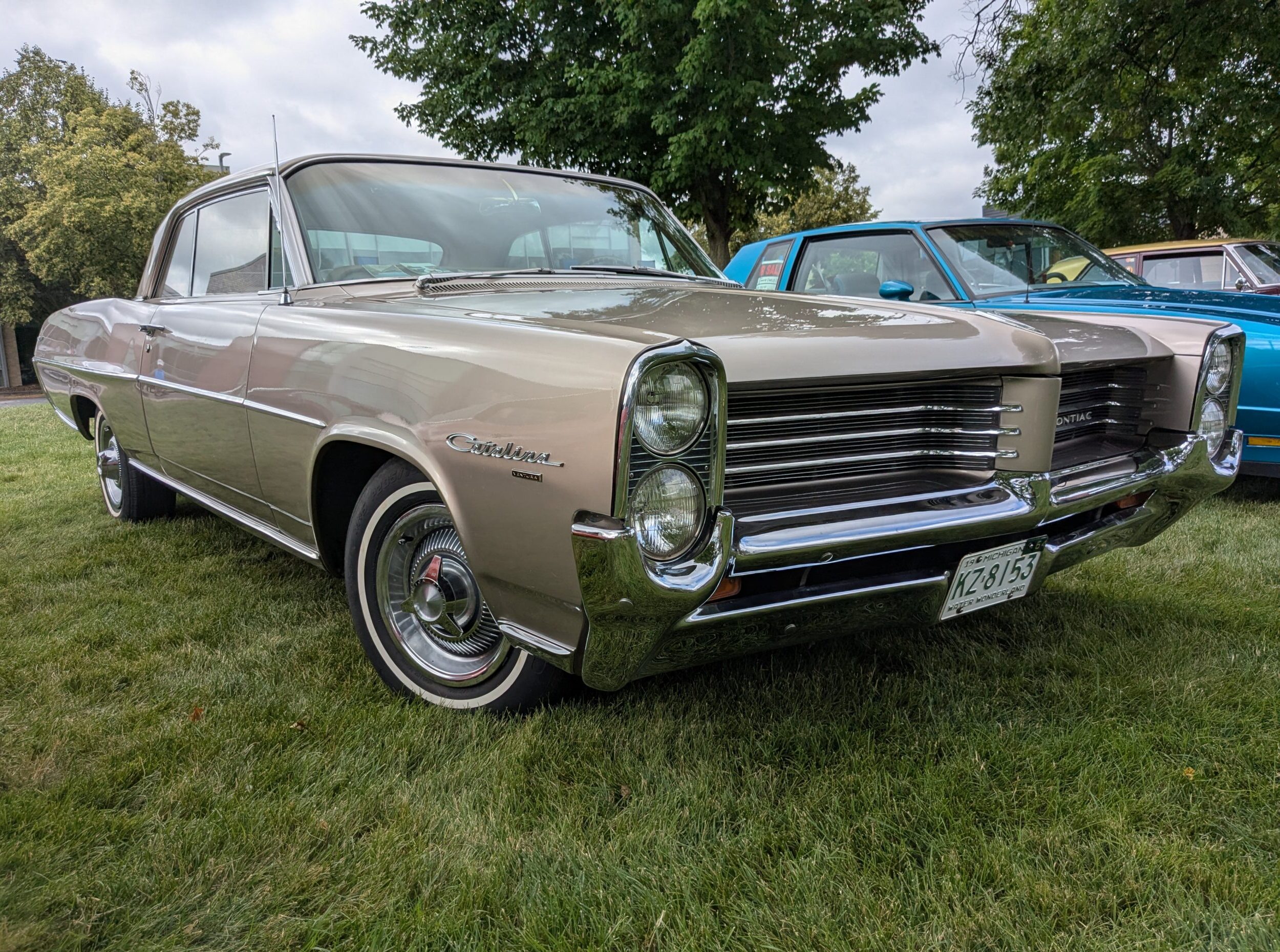
Twenty-five years ago, I was entering my mid-twenties and hell bent on finding a Pontiac Catalina two-door hardtop. Youth is filled with hope, but there were plenty of hitches in my scheme, not the least of which being that I was broke and living with my parents. Another was deciding what model year I liked best, and this may have been a taller hurdle than the first. One thing I knew is that I didn’t really like the 1964 Catalina, and looking back, that just doesn’t make any sense.
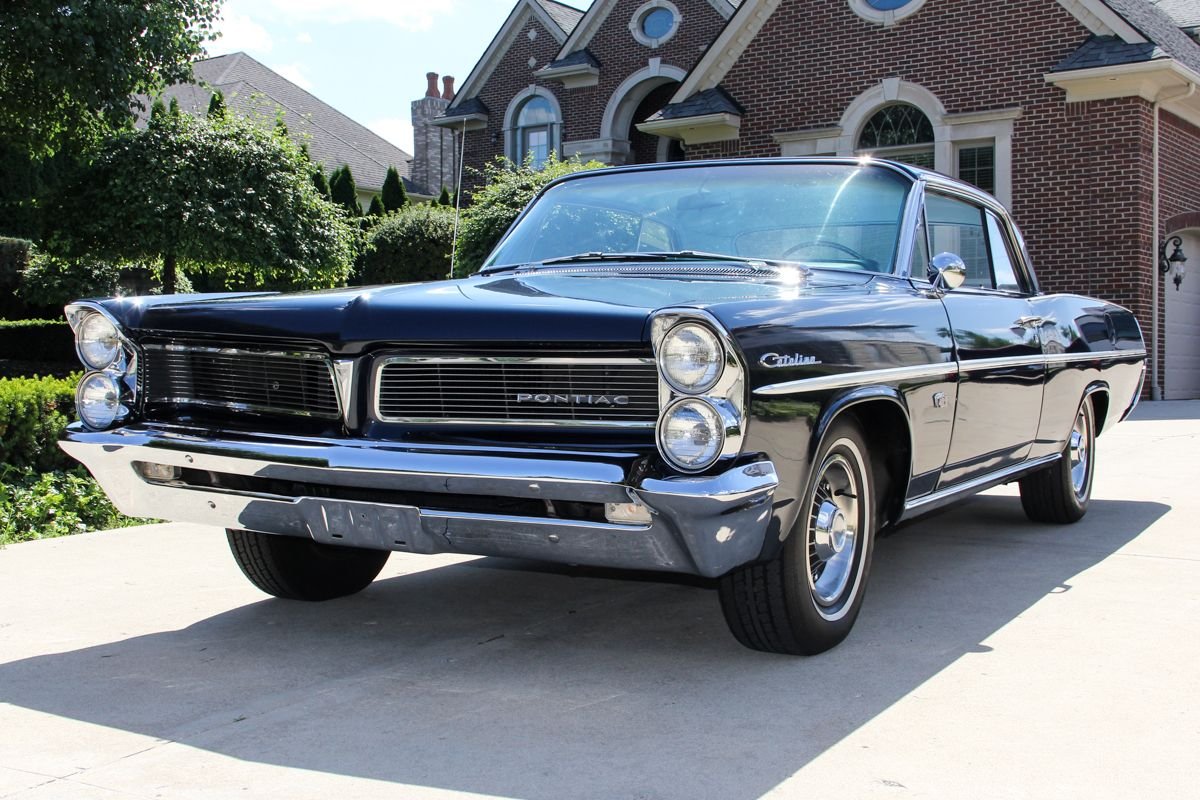
My first love was the gorgeous 1963 Catalina, and I spent many blissful hours daydreaming of walking out to a red one in the college parking lot, taking up all the space in the world, being the envy of…probably no one, but that didn’t matter. I tried to convince myself that I liked the 1962 model equally, but it just wasn’t true. What I really wanted was one of each, but the possibility of that happening didn’t even rate a daydream yet. I’m not crazy.
I will say that even to this day, I think I’d buy a ’63 if given the option. The stacked-headlight theme was brand new, and often, the first thought is the best thought. It’s nearly perfect from every angle.
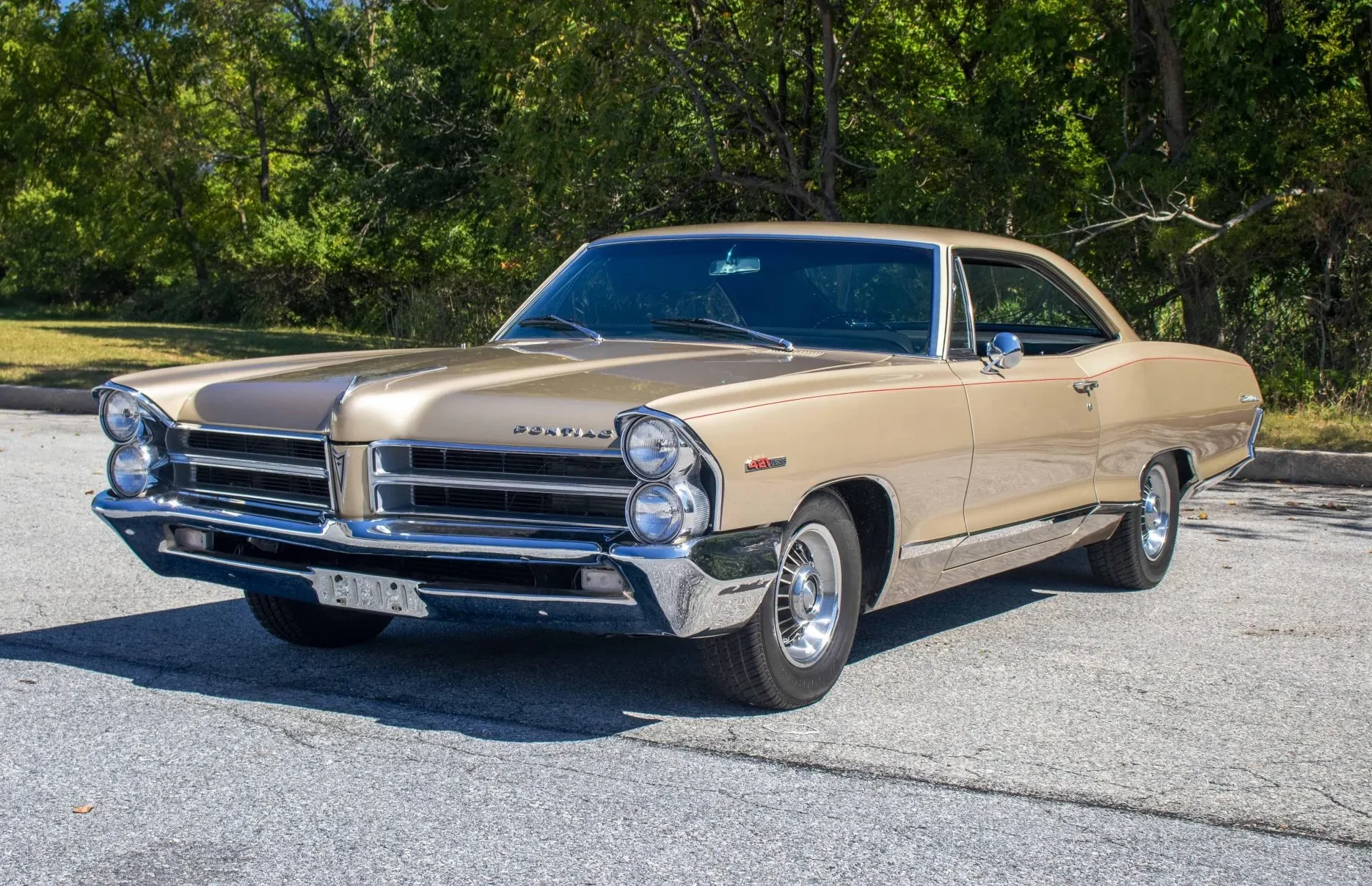
But then I found a cheap 1965 Catalina Ventura for sale and fell hard for it; although it looks somewhat bulkier than the 1963 car, its graceful curves and swells made me a convert. I wasn’t quite in the position to buy the Ventura (one of my few regrets in life), but it vied for supremacy in my heart with the ’63.
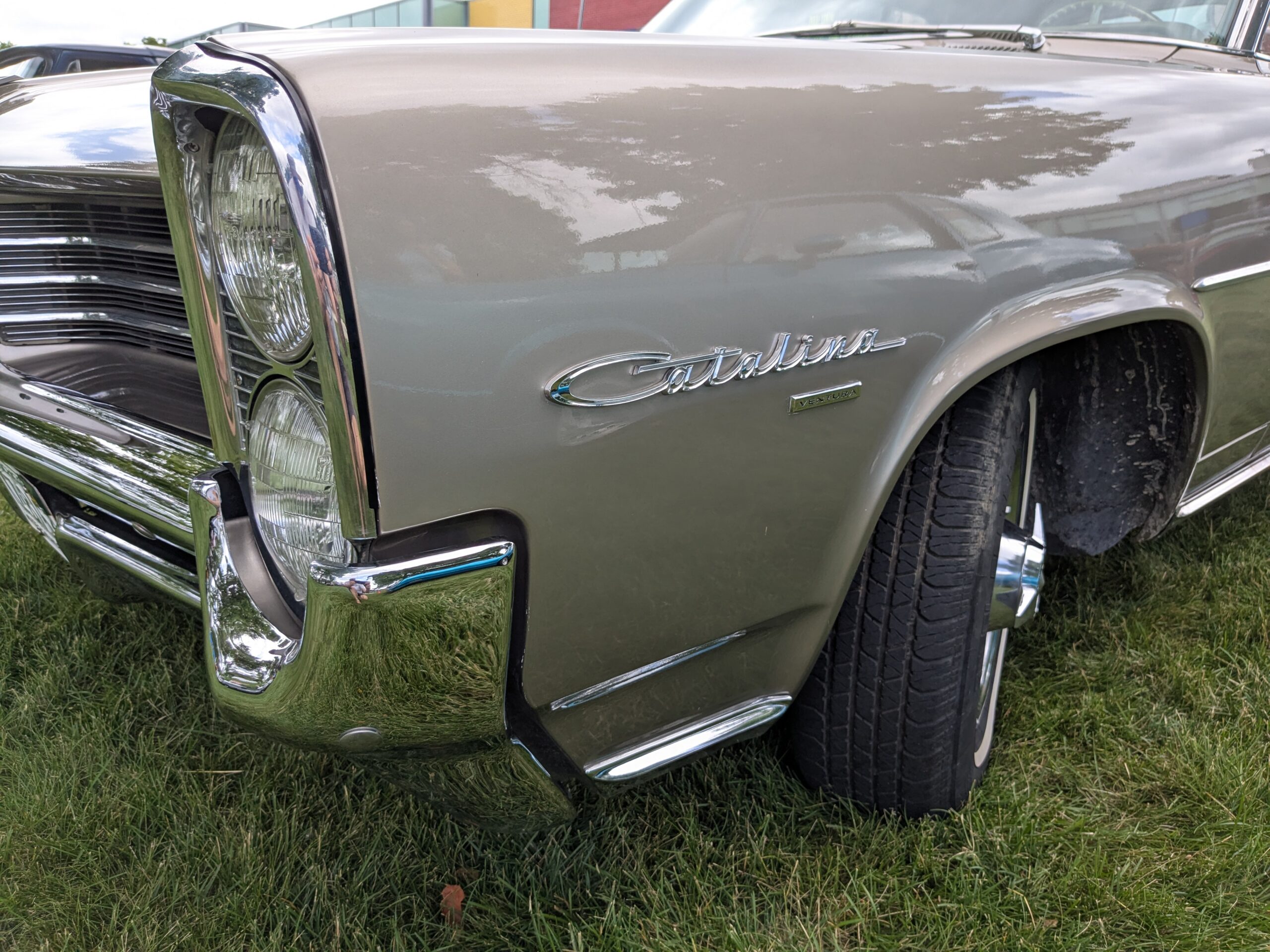
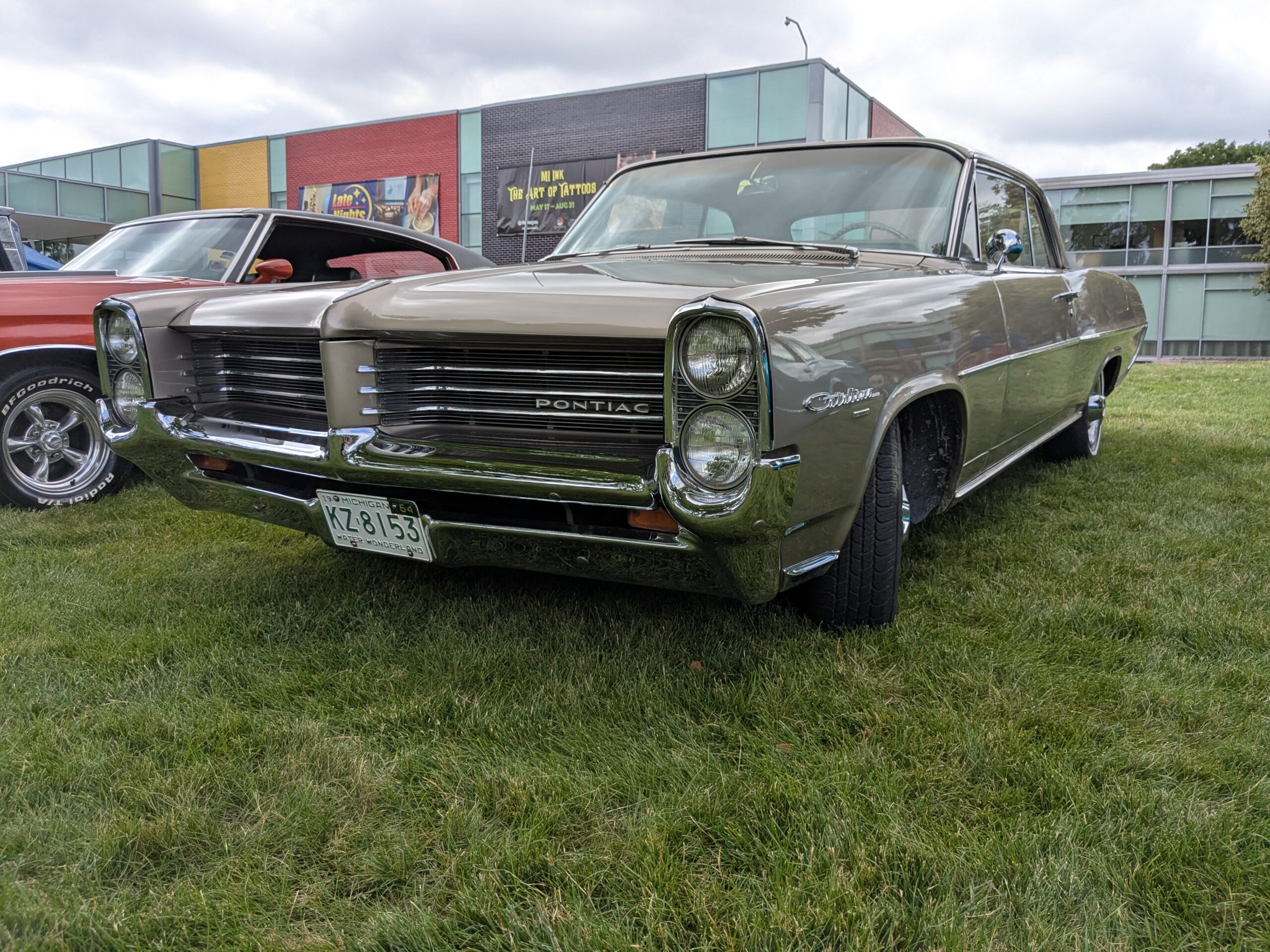
But the 1964 Catalina in between was nowhere. It lost the canted-forward headlight bezels, although these more delicate replacements now, to me, look much cleaner than those on the 1963 car. It also lost the thick side molding and moved the graceful cursive “Catalina” script down to the center of the fender. Script placement on a car makes a big difference, and from this angle today, I like the 1964 car better, a concept I never would have entertained as a young man.
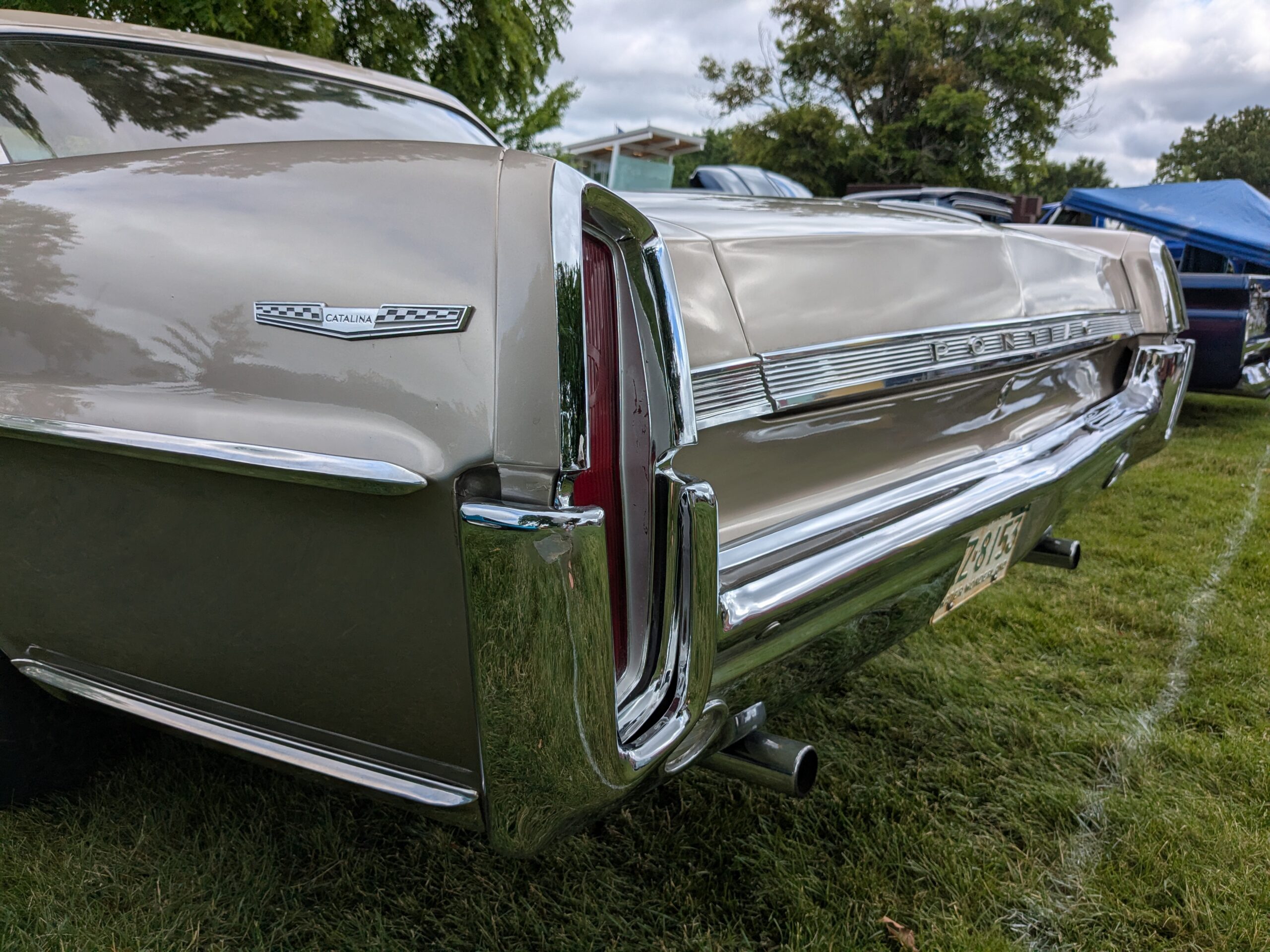
Pontiac revised the tail, too, and extended the taillights down into the bumper. They were massive but graceful, and at least as attractive as those that came before and after. The “Catalina” badge in a field of checkered flags (even though General Motors had recently and abruptly ended their overtly funded racing programs) was also a new feature.
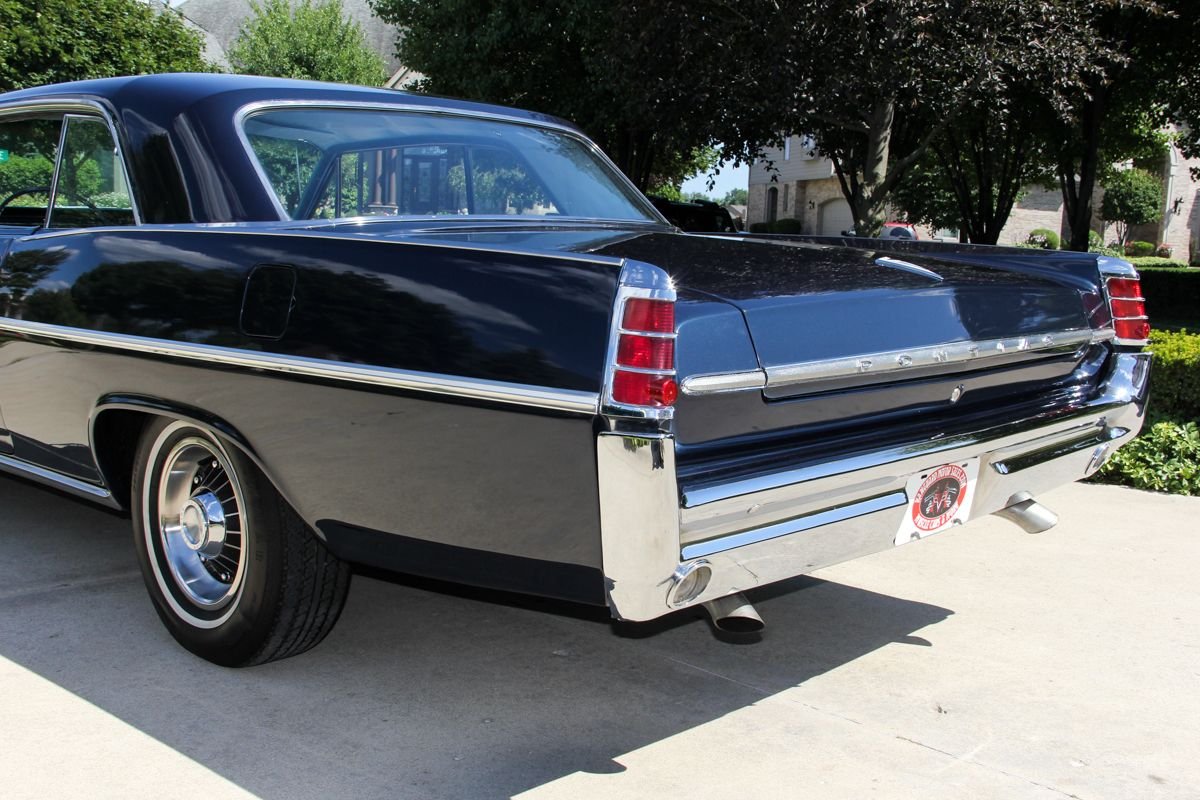
The 1963 Catalina’s taillights, although visible from the side, were about half as large.
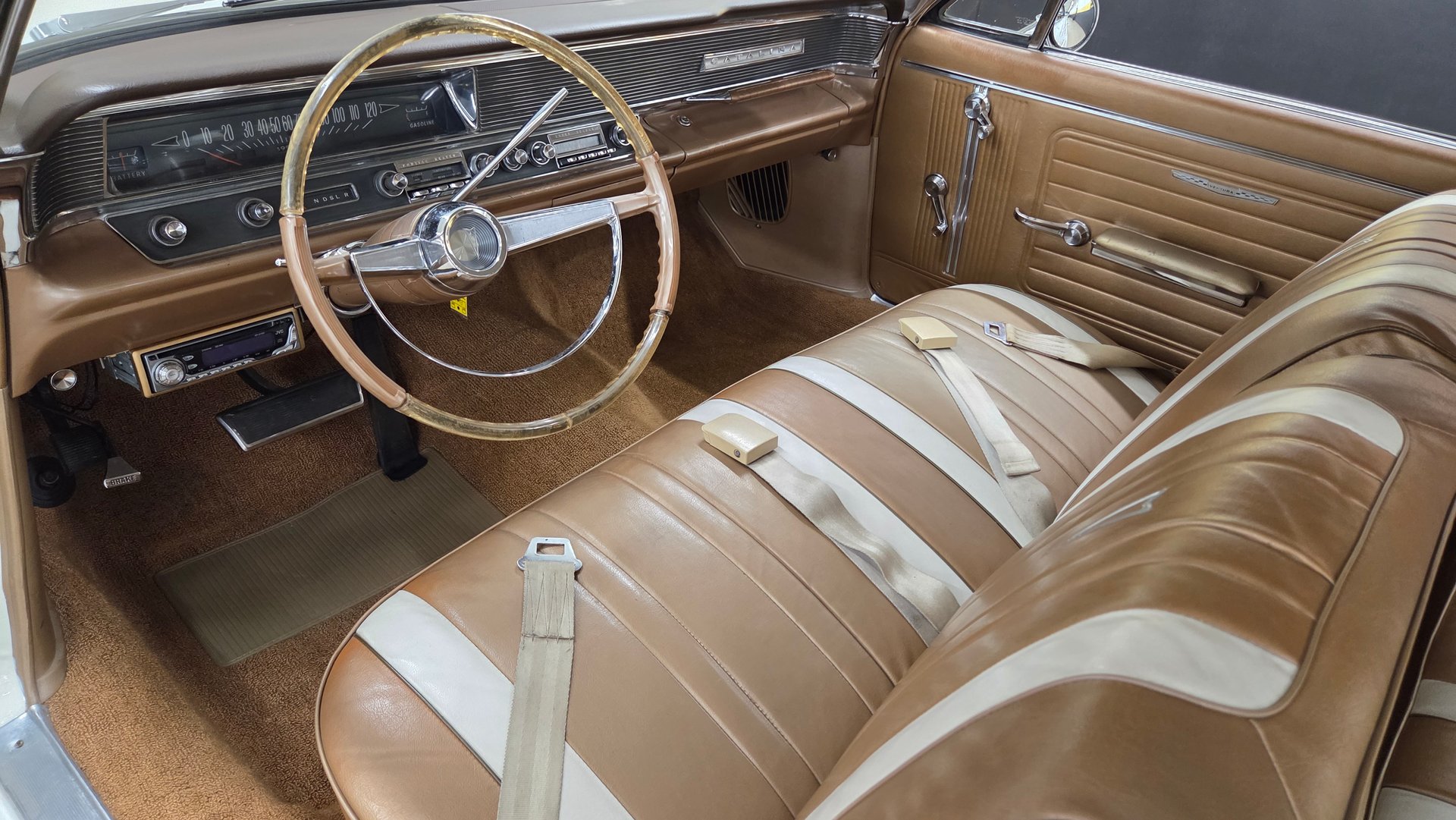
The Singapore Gold 1964 Catalina that I photographed at a car show in Flint, Michigan, has the Ventura trim package, which, according to the brochure, was “for people who like to gild lilies.” As an aside, lily gilding must have been a popular metaphor in the 1960s; it pops up in a lot of things I read, especially about cars. In reality, the Ventura package offered the buyer special “all-Morrokide” upholstery (and fender badges).
Something must also be said about the Pontiac’s dashboard. The instrumentation is boilerplate GM, but something about the font (and font size) is just right, and the ribbed dashboard trim shows that Pontiac did the little details better than anyone in the 1960s. It’s dazzling (both figuratively and probably literally, there’s a reason why the industry left bright interior trim behind).
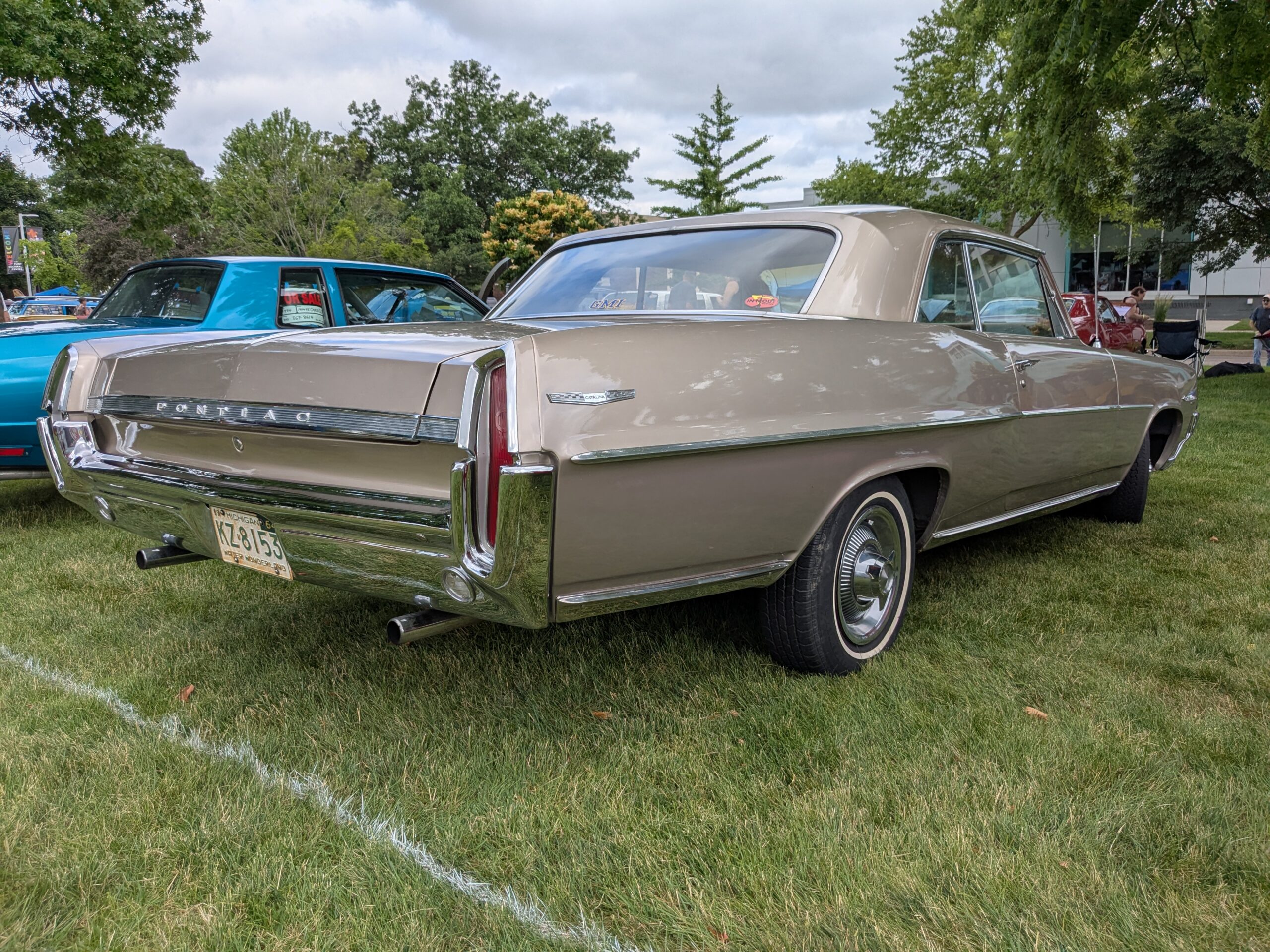
Taken as a whole, I can’t see what my earlier reticence was; the 1964 Catalina is equally stylish, adept, and bold as the cars it is sandwiched between. It has the same complex curves on its expansive quarter panels. There is literally nothing to earnestly criticize.
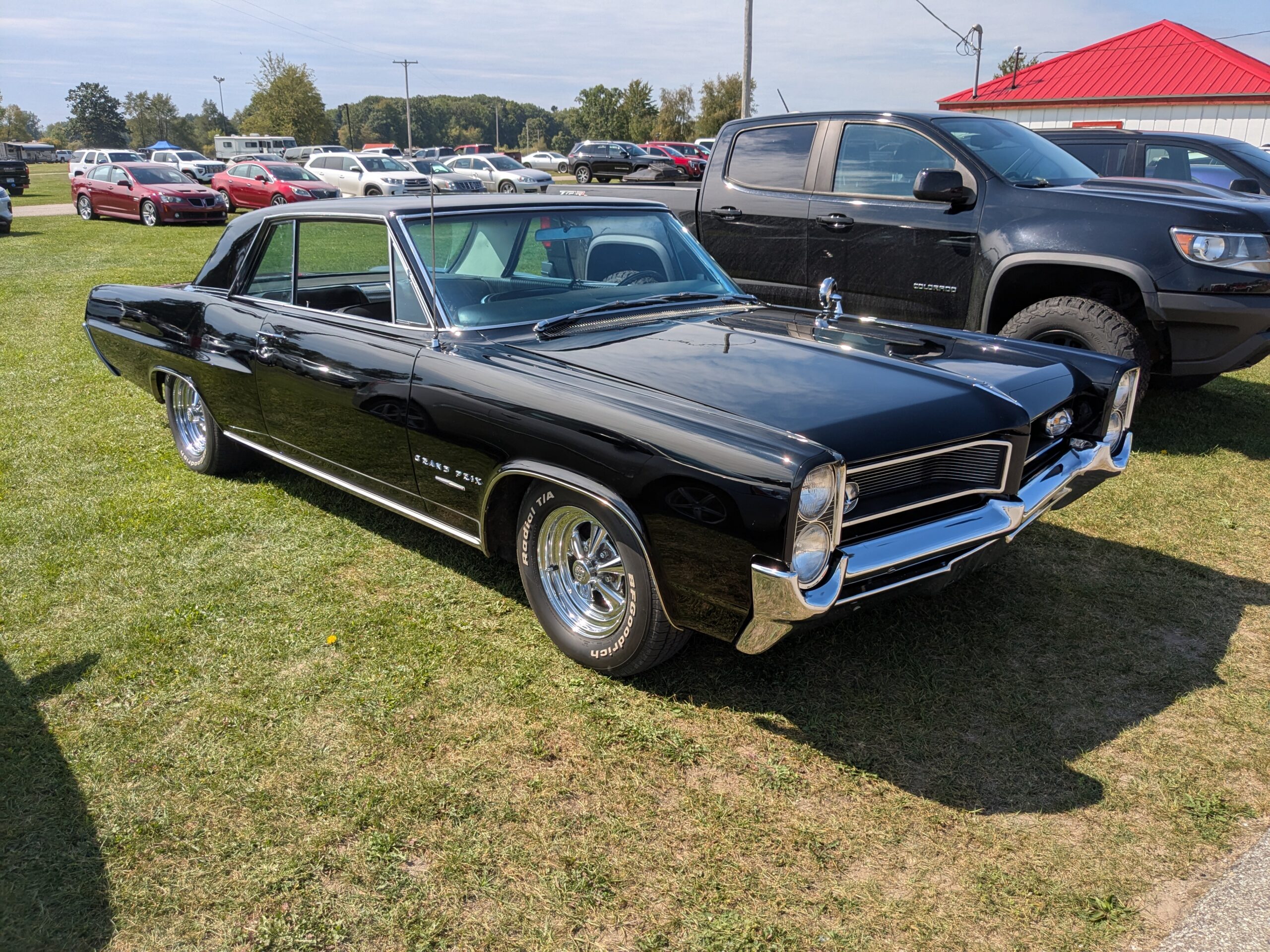
And to complicate matters, the Grand Prix perhaps looked even better, maintaining its predecessor’s almost-European absence of trim, scaled up to an American-size car. But I’m in some ways a down-to-earth guy, and I’ve always been fine with the Catalina. No need to show off.
But there’s no going back and talking to myself 25 years ago; I’m just left with the decisions he made. Nevertheless, I think he’d be open to a reasonable chat from his older self about how dumb he was about the frankly beautiful 1964 Catalina. Heck, we all make mistakes, don’t we?
Related Reading
Curbside Classic – 1963 Pontiac Grand Prix: Another Time, Another Place (by me)
1963 Pontiac Star Chief Vista Four-Door Hardtop: The Forgotten Middle Child (by me)
1965 Pontiac Catalina 2+2 – “Stop Telling Me I’m Beautiful, Love Me For What’s Inside” (by me)























And to think it could have been born a GTO?
This is an interesting question. I was an early fan of the 64, after my grandma replaced her 55 DeSoto with a used one in the summer of 1967. It was a beige Catalina sedan with an interior color similar to this (Saddle, according to a brochure I just found online). But somewhere along the line I decided that both the 63 and the 65 were better styled cars. Now you have me rethinking this. The boomerang taillights are certainly unique, and the front is not bad (even if the headlight treatment is a little flat).
The shame of the Catalina is that you were stuck with the Roto Hydramatic – I remember that my grandma traded her car in 1969 when her 64 started shifting funny. You could get the old-school 4 speed HM in a Bonneville or a Star Chief, which would steer me to one of those models, attractive as one of these Catalinas might be.
The Ventura Custom Interior was a little more elaborate than just all-vinyl upholstery, which Pontiac offered at some points as a standalone option for less money. The Ventura had different door trim (shared with the 2+2 hardtop), the vertical pleated seat style, and the contrasting color stripes around the inserts, so it looked fancier than the standard Catalina interior. I confess I’m not persuaded that it was ENOUGH fancier to be worth $118.36 extra, but buyers seemed to love it. So did dealers — there was a $75 wholesale allowance for Ventura trim even on a three-year-old car, suggesting high confidence in its buyer appeal.