

It isn’t obvious from this angle, but did this big red 1969 Ford XL SportsRoof, which Hyperpack posted to the CC Cohort, influence the styling of the Jaguar XJ-S?
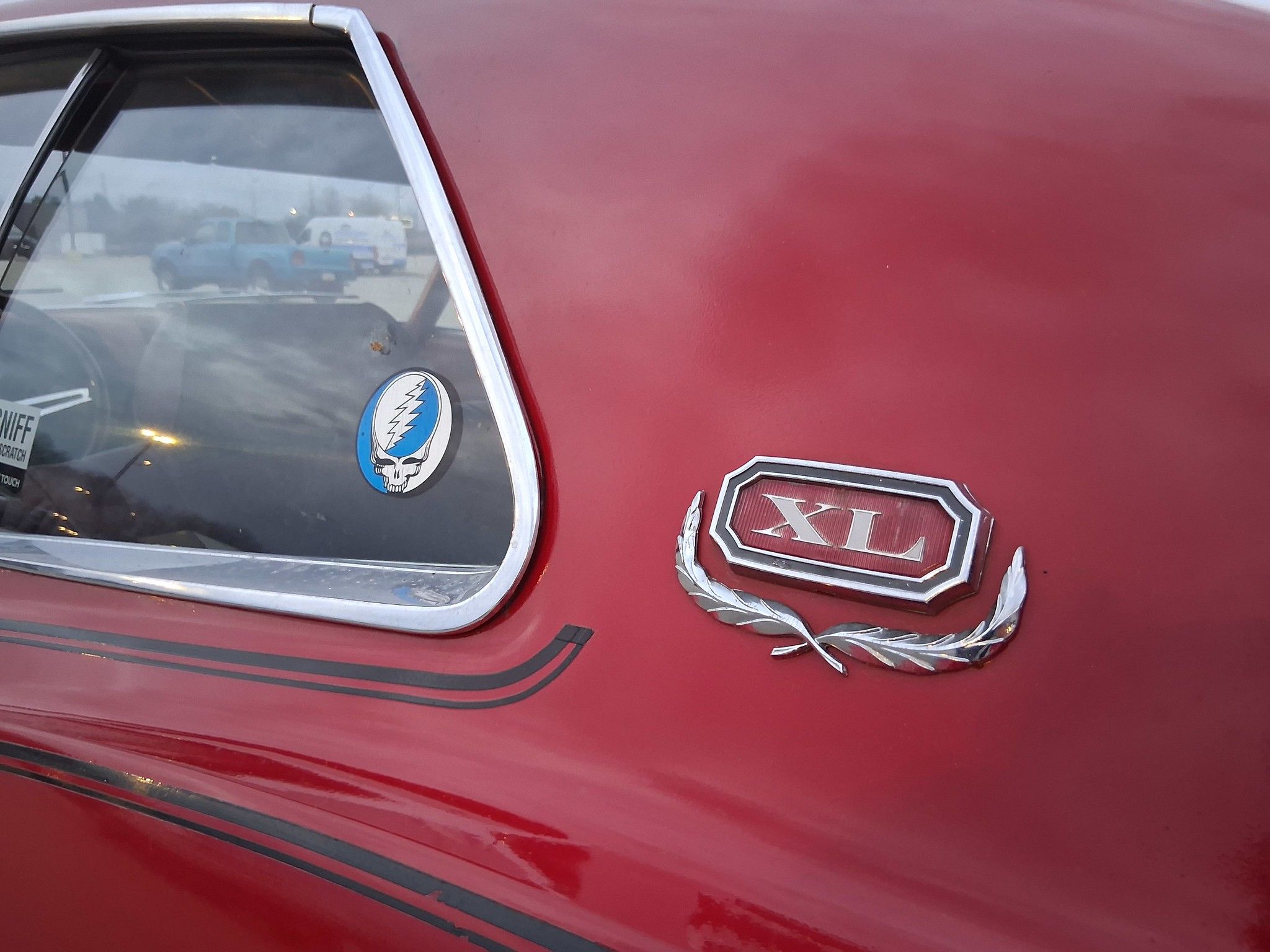
Before we get into that discussion, however, what is an XL?
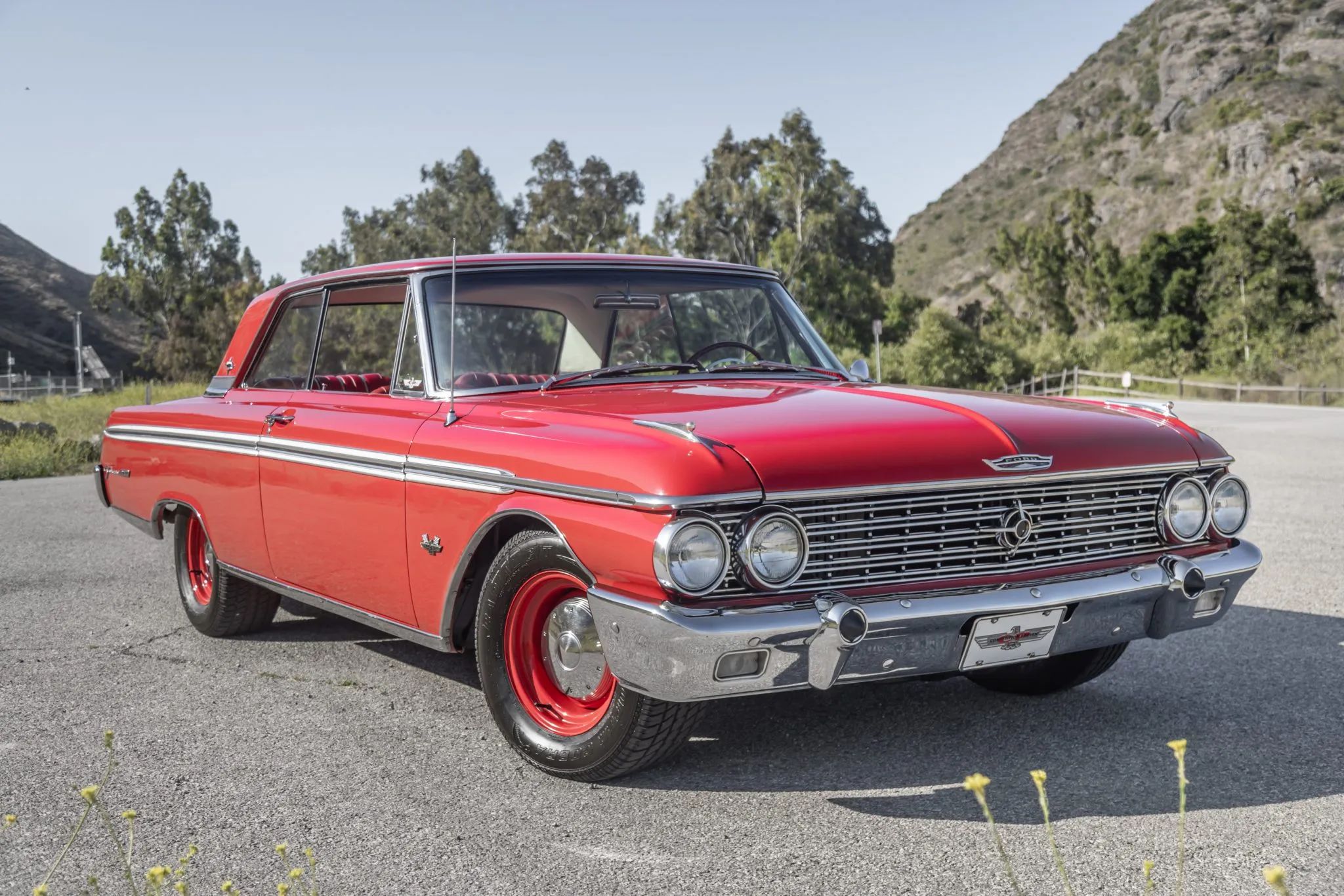
Introduced for the 1962 model year, the Galaxie 500XL was a bucket-seat-and-console trim package that took advantage of a market that wanted a big, sporty car. There were plenty of them on the market, such as the Impala SS, Pontiac Ventura and 2+2, Oldsmobile Starfire, Buick Wildcat, and Chrysler 300.
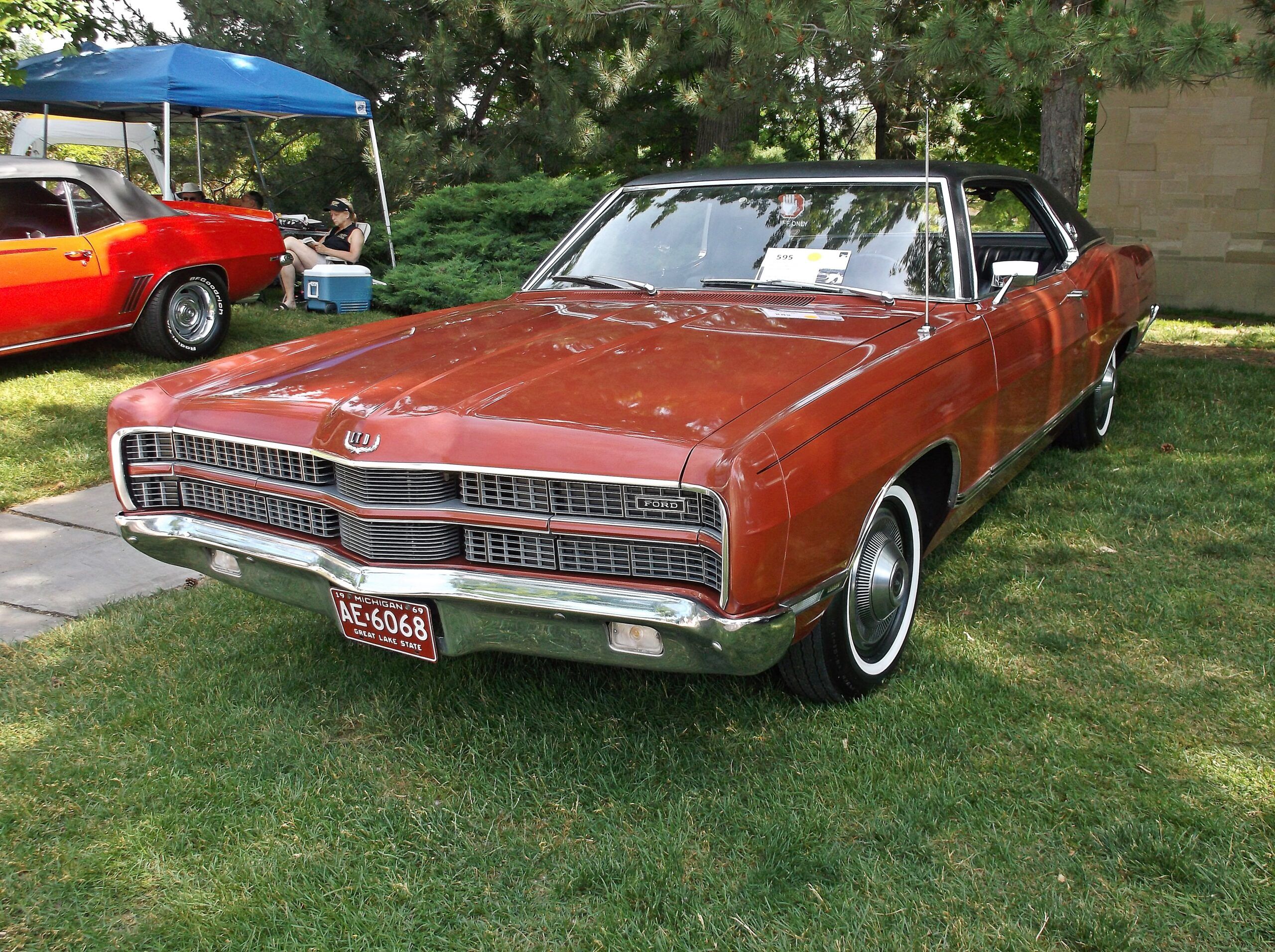
As the sixties wound down, however, the full-size market had definitely shifted to a preference for more luxurious offerings from the Big Three, including this handsome and popular 1969 LTD, a separate model from the Galaxie 500. In total, the LTD line outsold the Galaxie 500 line by a fairly significant margin: 417,677 to 359,238. Of those Galaxie 500s, the XL (which was counted in the Galaxie 500 total) couldn’t have made for many sales (aside from my grandfather: see here).
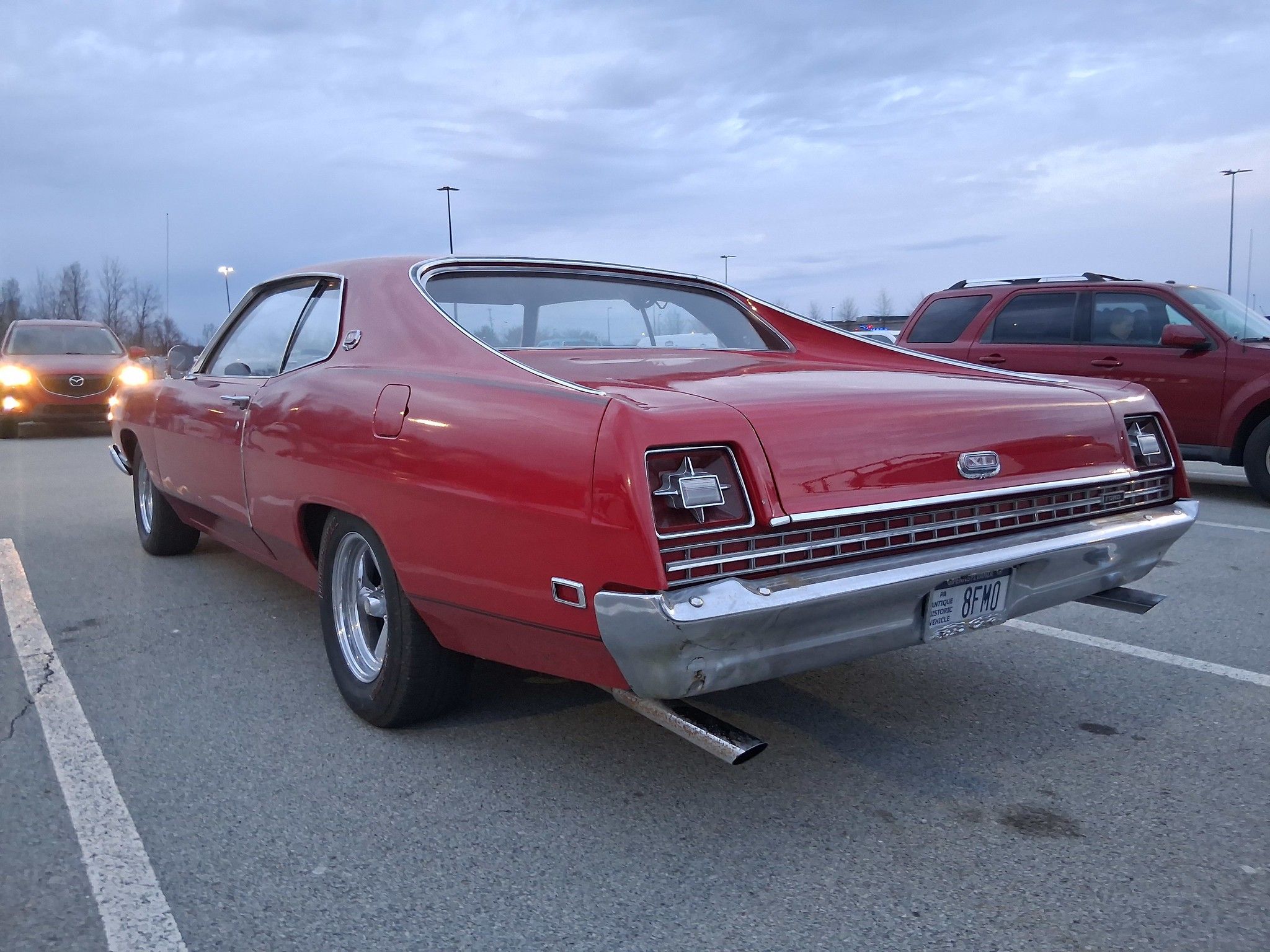
But the XL soldiered on for 1969 and 1970 with two available models: this SportsRoof and a convertible. The SportsRoof has chic-for-the-time “flying buttress” sail panels, which makes the profile view somewhat discordant from this rear three-quarter view seen here. If you look closely, however, you’ll see that those C-pillar buttresses look familiar.
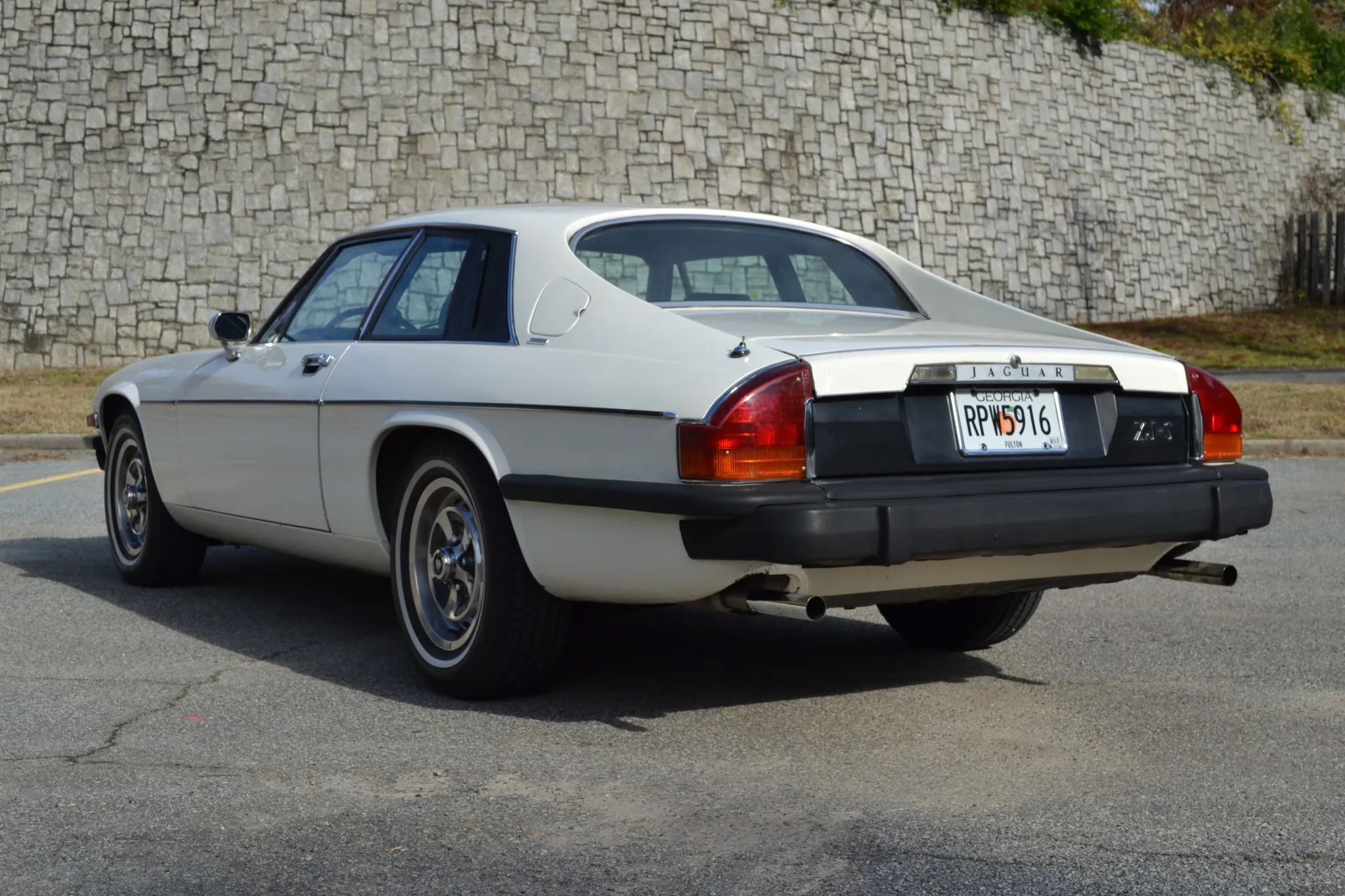
The Jaguar XJ-S, which was introduced in 1975, has a buttress design that looks very reminiscent of the Galaxie XL’s: The sweep of the buttresses themselves and even the detailing around the rear window are too similar to not be related. Did Jaguar’s stylists (led by the late Malcolm Sayer before his untimely passing in 1970) really look to a somewhat derivative and not-too-popular American Ford as an influence?
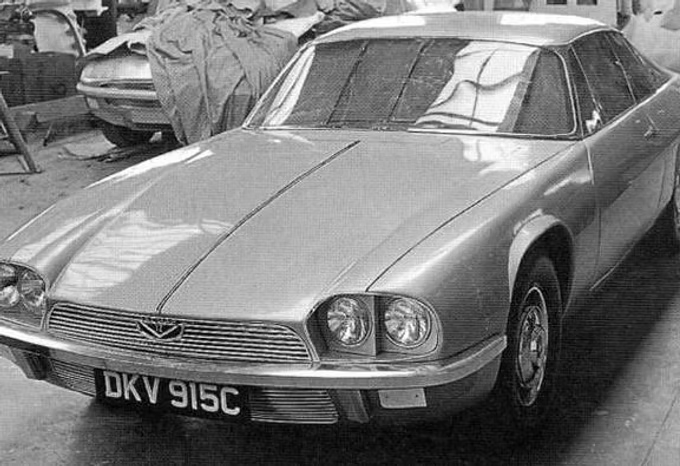
Almost certainly not. Malcolm Sayer saw things in terms of aerodynamics over beauty, and the XJS Club posted this picture of an “XJ27” styling study from 1965 or 1966 that clearly has the buttresses (OK, perhaps not so clearly from this angle). Other sources say that this car might have come about as late as 1969, but that would still make any influence from the 1969 Ford unlikely.
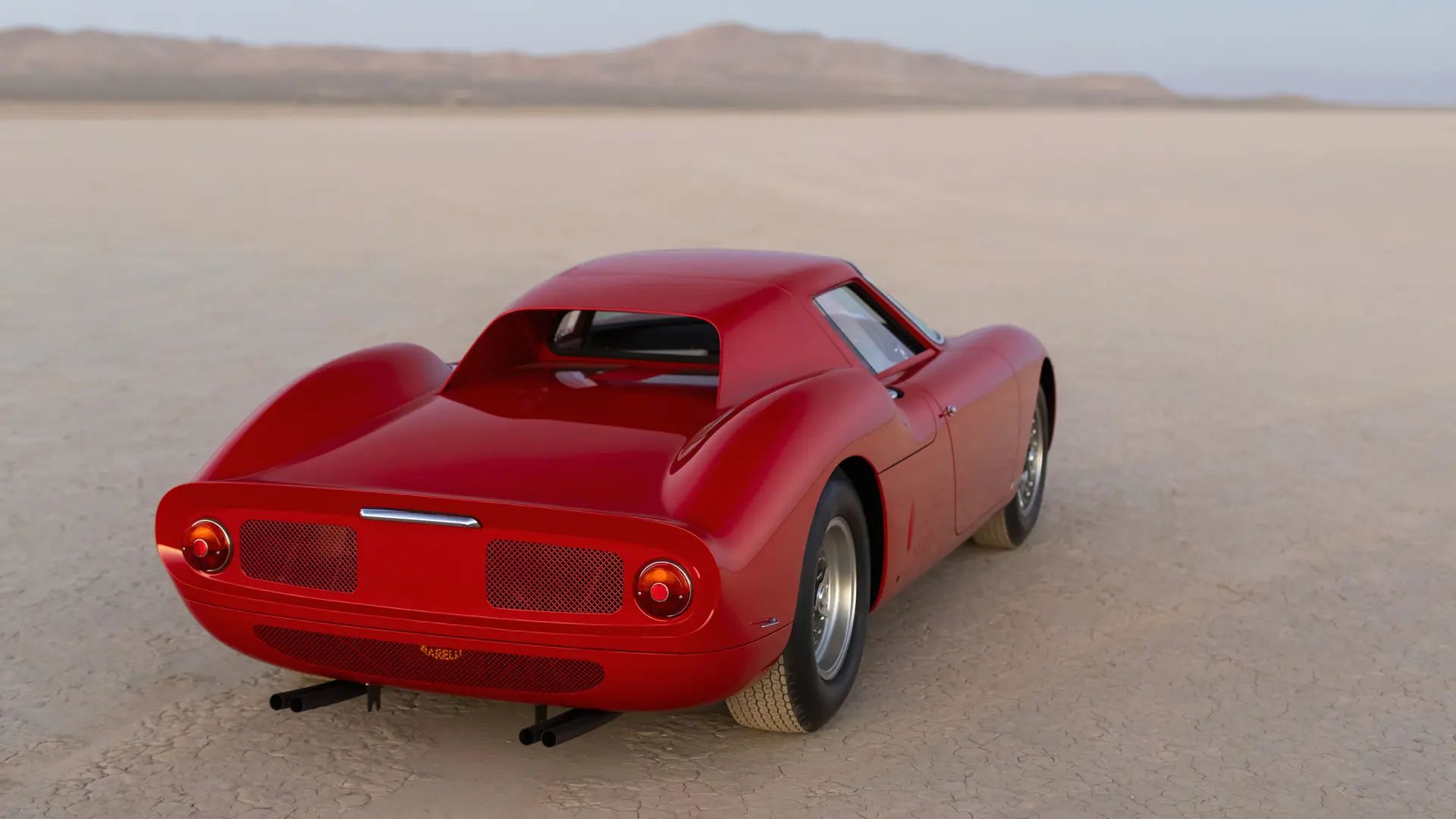
Therefore, if Sayer did copy the idea of a tunneled backlight, which I somewhat doubt, he would have probably gotten it from the Ferrari 250LM. But even that doesn’t really resemble the XJ-S.
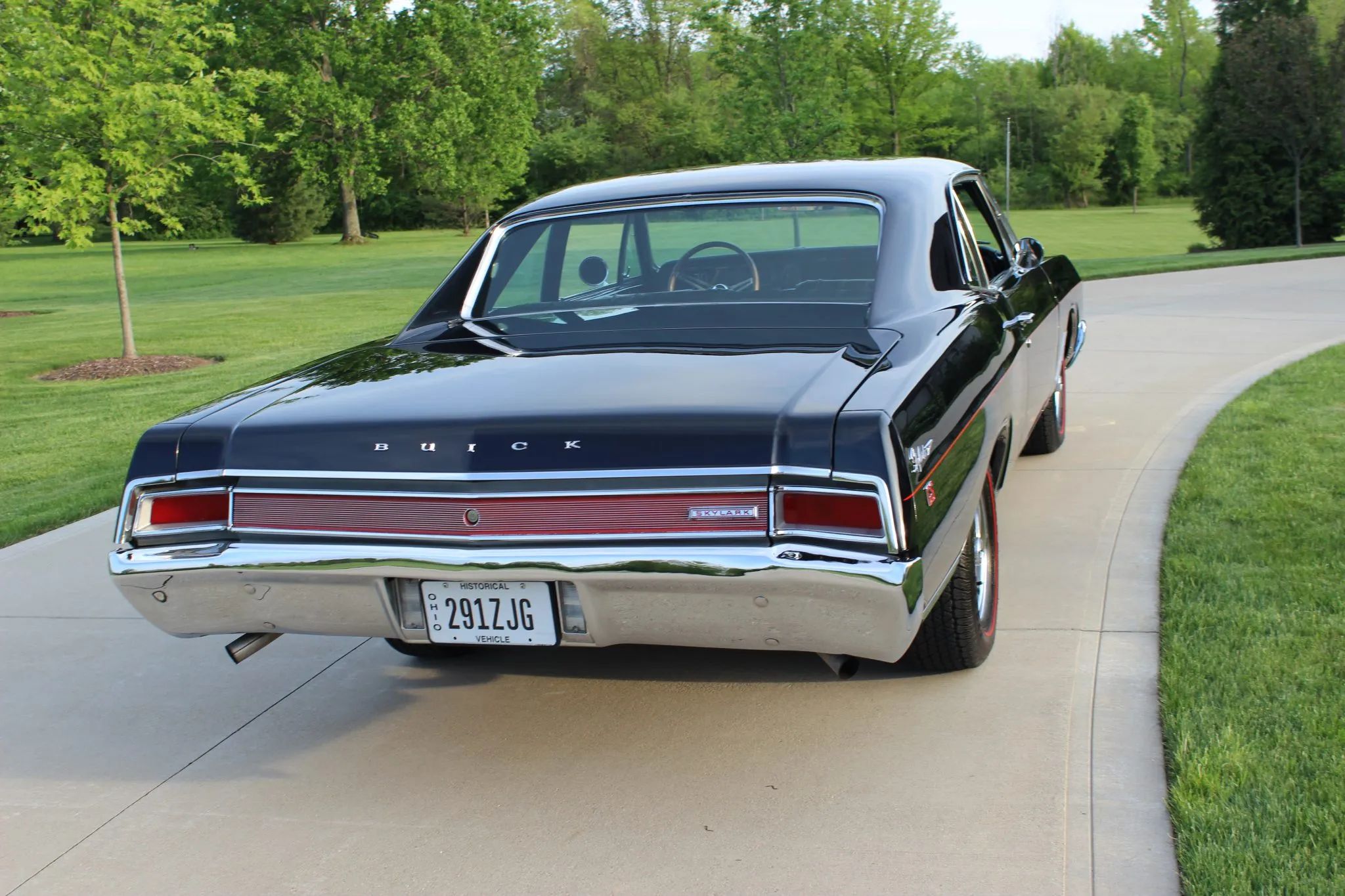
In addition to that, buttresses were simply in the air in the mid-1960s. For the 1969 XL, Ford probably stole the idea (as did the 1968 Dodge Charger) from the 1966 General Motors A-Bodies, such as the 1966 Buick Skylark shown above.
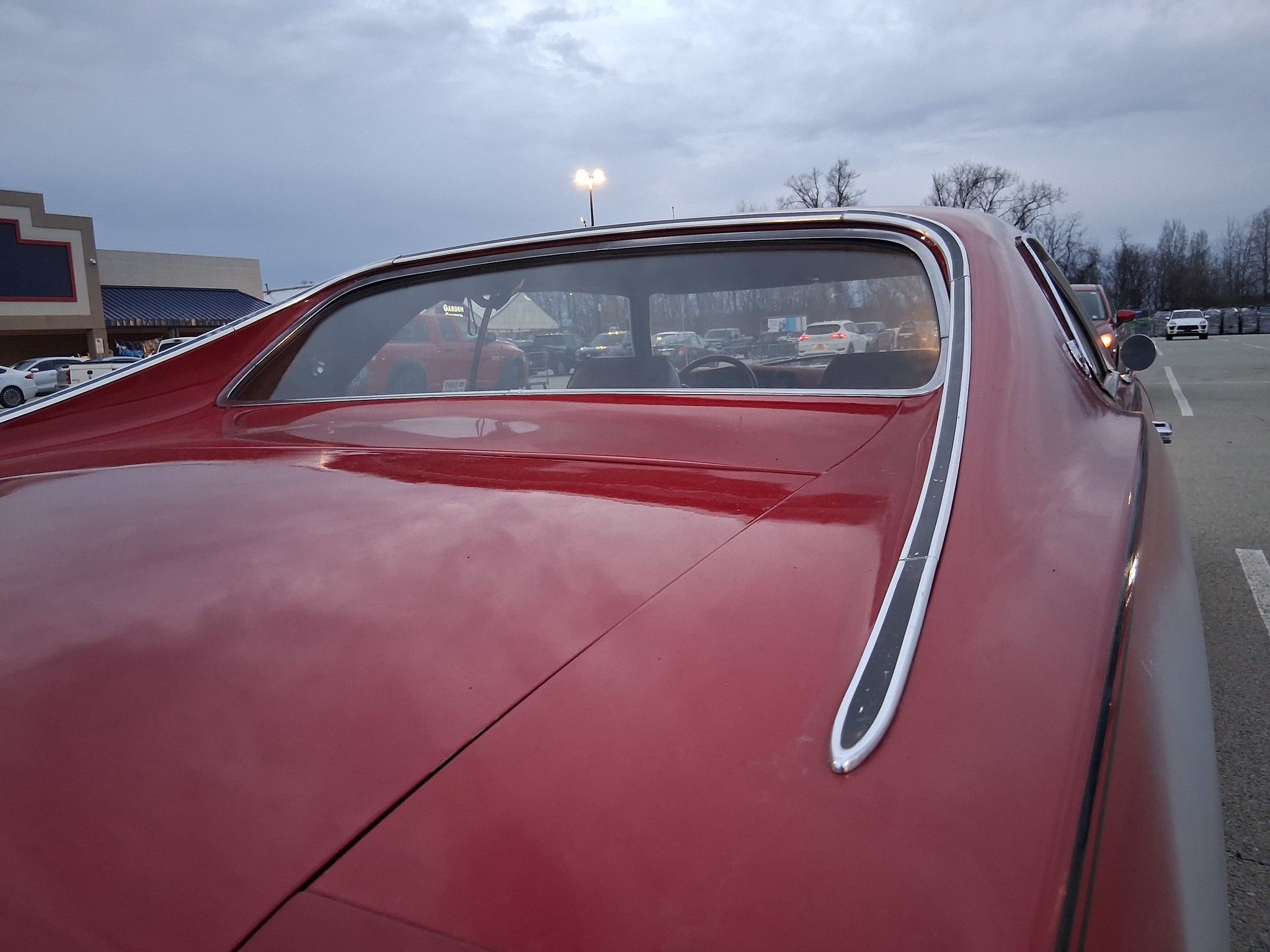
While the 1969 XL and the Jaguar XJ-S took them to their radical conclusion, Ford did so as a stylistic touch, while Malcolm Sayer’s Jaguar would have used them as an aerodynamic consideration. I’ve seen nothing to suggest that Sayer was influenced by anyone in his styling endeavors, but the buttresses may have been a controversial choice, as more than a few people never warmed to the long-lived E-Type successor (which, to be fair, was never meant to truly replace it).
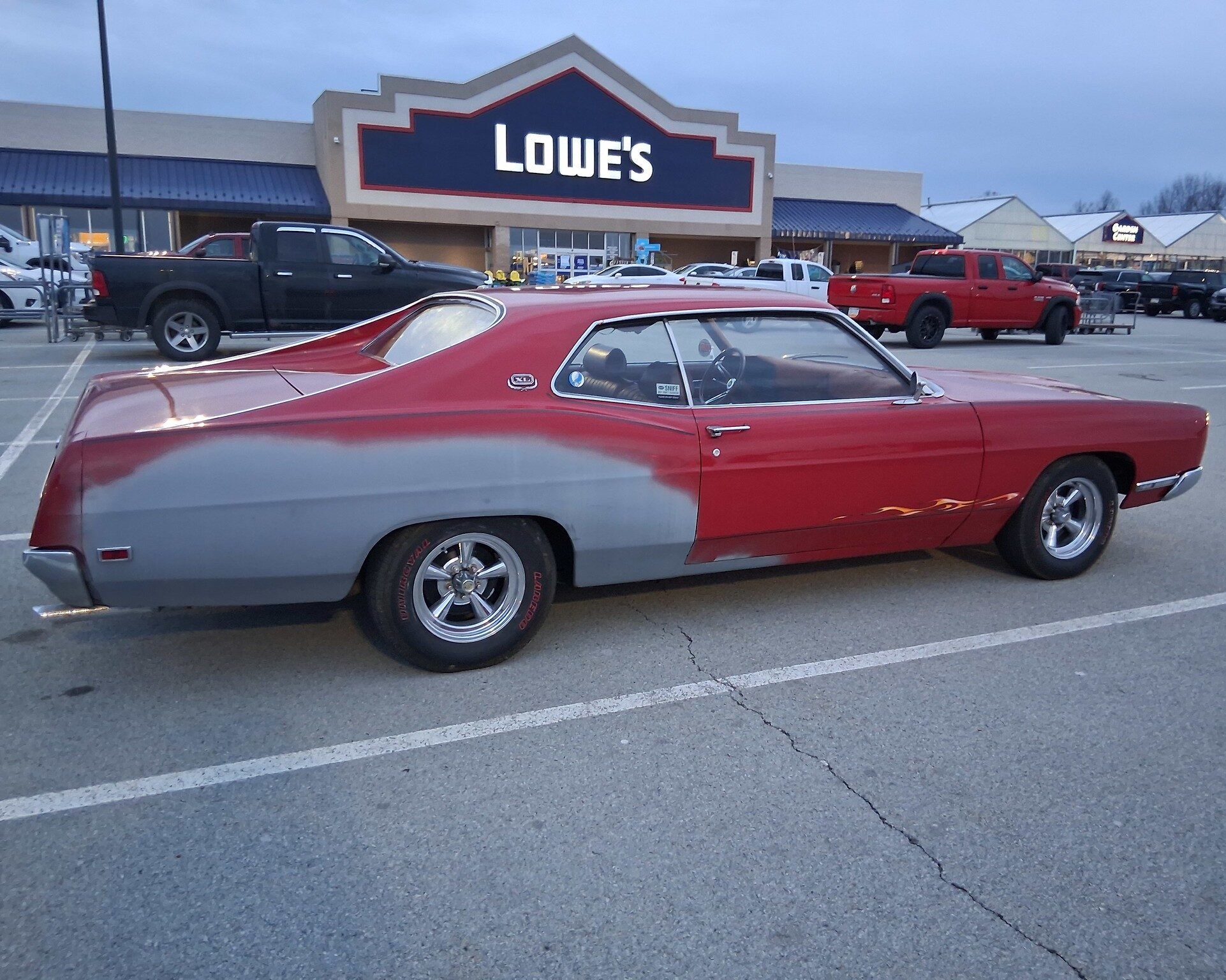
With that being said, the XL’s fastback styling was on its way out by 1969, and while it would continue to be used on several Fords through 1973, they would do away with the buttresses after the 1970 model year. As we all know, however, Ford doubled-down on SportsRoof styling with its “Flatback” 1971 Mustang, a polarizing design if there ever was one, and the 1972-73 Gran Torino Sport also offered an attractive SportsRoof bodystyle. No buttresses there either.
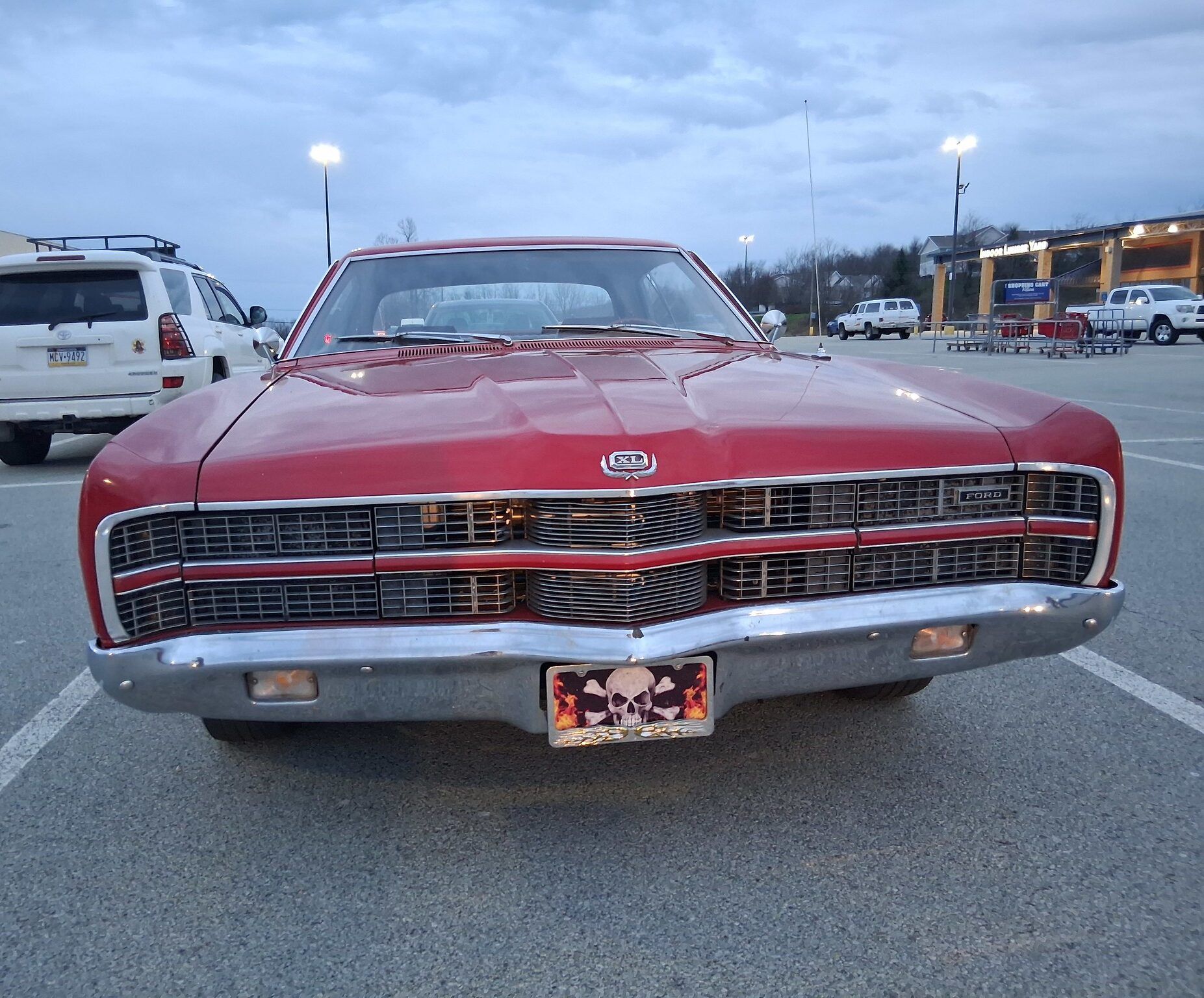
Love or hate the roof, it’s hard not to like the XL’s expensive-looking front end, which it shared with the posh LTD. With hidden headlights and a vaguely “Edselesque” vertical centerpiece (which probably aped Pontiac more than it did Edsel, thanks to Mr. “Bunkie” Knudsen), it was one of Ford’s better efforts. Forget Mercury, the XL and LTD seemed to be designed in the “Continental tradition,” at least in the front in the case of the XL.
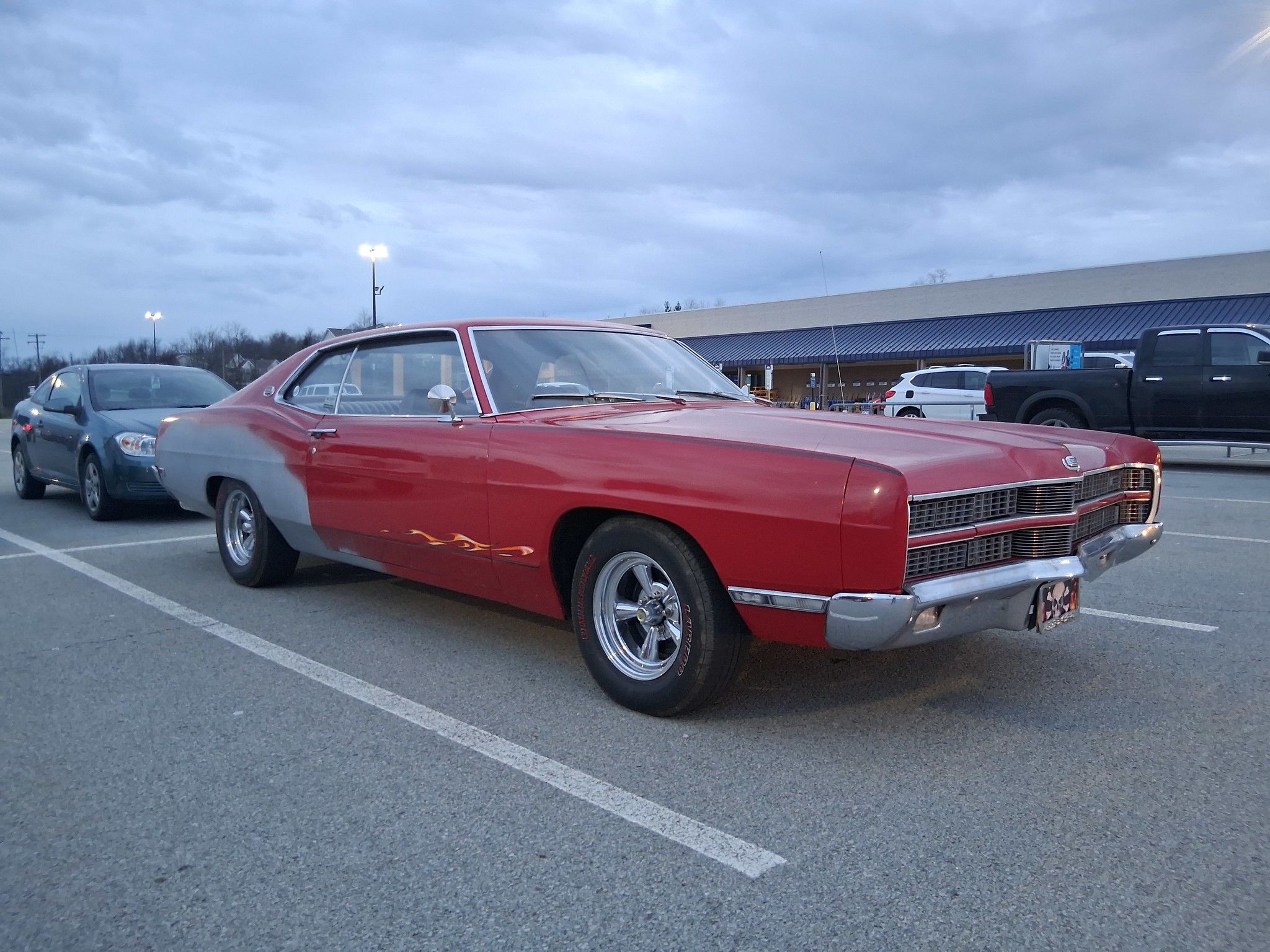
But the front didn’t quite match the rear, and overall, the XL was a car without focus in 1969. It wasn’t a performance car in its standard specification (a 240-cubic-inch “Big Six” was standard), and although it could be ordered with a 360-horsepower 429, it wasn’t the NASCAR-influenced hot rod (in image) of the old days. While the “flames” and polished Torq-Thrust replicas on Hyperpack’s example might fly in the face of this car’s ethos, especially considering that the 1969 XL had abandoned its original mission by offering a standard bench seat, it’s simply nice to see one out and about 57 years on. And although it almost certainly was not the harbinger of Jaguar’s mid-1970s coupe, it’s an interesting sidebar in full-size Ford history.
Related Reading
Car Show Classic: 1969 Ford LTD – How My Dad (Temporarily) Turned My Grandpa Into A Ford Man (by me)















Doubtful. The flying buttress appeared in architecture many centuries prior and in automobiles several years before this Ford (see Ferrari Dino and other Pinifarina confections)
Few cars offered so much reason to pop for the higher model than the big 69 Fords. The front end of the LTD/XL looked fabulous, with its hidden headlights and sharp center prow. The Galaxie 500 and lower models, on the other hand, looked like they could have been called Big Generic Sedan. For some reason, neither Chevrolet nor Plymouth were as successful at creating a better front end that would so successfully upsell customers.
I liked that flying buttress roof a lot better when i was a kid than I do now.
Still a good idea…
A Miata exactly like that one sometimes shares my commute, and I’ve never noticed its flying buttress styling!
They are not flying buttresses. Neither are the one one the xjs. Some Maseratis had flying buttresses
Pedantic and 100% true. Thea ate better called ….sail panels I think?
They are sail panels, but that term really applies generically to a wide range of exterior panels over rear roof pillars, not just this kind.
Mustang pony car fever drove stylists into putting muscle car entrapments on everything, even this car. They had a hammer and every design job became a nail, didn’t it?
Yes – putting a formal LTD front end on a car trying to appear sporty, simply doesn’t work. The Marauder of that era also just doesn’t work visually. Iaccoca understood this. His 1969 Mark III showed how to produce a larger car using classic luxury styles, instead of trying to ape a GTO.
Odd how it wasn’t the Thunderbird that set the new era of luxury coupes, instead of the new Lincoln?
For the next 20 years, everywhere one looked, one saw padded landau roofs, hood ornaments, shag, velour and formal roof lines. A sporty full size doesn’t appear for another 30 years. Slow full size car sales were looking for anything to survive.
Bucket seats and a console in these full-size Fords are rare as hen’s teeth today, but highly desirable, IMHO! Most were ordered with bench seats. One feature the console cars have that was far more popular in GM’s offerings was the “basket handle” shifter in the console for cars with an automatic transmission! My favorite versions of these were not the flying buttress cars, but the convertibles, particularly if they were sporting a console and bucket seats with an automatic transmission and a big-block V8 under the hood! Bonus points for a convertible with air conditioning, also quite rare at the time!
I love the flying buttress look, and I think it’s great on this Ford. Better, perhaps, than on Ferraris of the same era (Dino below)… maybe the Ford’s bigger size lends itself more to this kind of styling flourish.
You’re right, of course that the Ford XL was almost certainly not the harbinger of Jaguar’s XJ-S, but I wish that a writer from a 1970s enthusiast magazine would have made that comparison. Jaguar folks would have absolutely cringed!
I don’t know, Eric…that Dino is gorgeous.
Regarding the comparison, I didn’t even think of it until I looked at Hyperpack’s pictures. I’ve seen XLs before, but the resemblance of the shapes are really uncanny. It’s a BIG stretch, but it’s one of those coincidences that’s funny to think about.
Definitely gorgeous. I just think the flying buttresses look a bit out of proportion on a smaller car.
Hidden headlights don’t look nearly as “performance” here as say on a same year Charger. (I guess that’s the [Ford] car in general though).
I’d still drive an XL today though. But that Name.. ‘XL’. Yikes!
And those foot long exhaust tips.. (can blame Ford for plenty, but not those Tips).
True, that exhaust is definitely an aftermarket installation, LOL! IIRC, these used to turn the exhaust to exit to the sides, just behind the back tires, like on a T-Bird. “XL” is forty (40) in Roman numerals, or an abbreviation for “Extra Large”, which certainly applies here, LOL! I agree, Ford dropped the ball naming these, something like an LTD SS or Galaxy SS might have worked better. I just wish that Ford had learned to spell “Galaxie”, LOL!
Even better was the XL GT…I always chuckled at the “Michigan Strong Boy” tagline.
Point of nomenclature: These are just regular (aka “solid”) buttresses, not “flying” buttresses. The “flying” type are just a free-standing strut that “flies through the air” between the vertical and horizontal planes where its ends are anchored, leaving an open gap under the strut (which is sometimes glassed-in), whereas the regular “solid” type are a fully filled-in wall.
For illustration, compare the early Lancia Montecarlo with solid buttresses vs. the later Montecarlo with glassed-in flying buttresses:
Or the Maserati Merak. Point taken.
Before we get into that discussion, however, what is an XL?
Well we have Xtra Large already and then Xtra Long, Xtra Luxury, Xtra Lira (no not that one), Xtra Loose (never know)…
Per the 1963 sale brochure XL was “extra lively”.
I wonder if that was just advertising copy, Patrick. Wasn’t the tagline for the 1963 Fords “The Lively Ones”?
I remember a Wheels magazine road test of the XJ-S from the 70s comparing the rear buttresses to the Valiant Charger
Nice ;
I don’t think I ever got to ride in one of these .
-Nate
For the “Edselesque” vertical centerpiece, I think the 1971-72 full-size Ford front end was more closer to the “Edeselesque” front end than the 1969 and 1970 models. https://www.oldcarbrochures.org/United%20States/Ford/1971_Ford/1971-Ford-Full-Size-Brochure/index.html I guess the Ford designers put the final touch on the 1971 design before Bunkie Knudsen was fired.
I agree – it took the theme to its “logical” conclusion. 🙂
Using a registration plate on a mock up is a common practice, and usually identifies the vehicle or the date. The registration on the mock up DKV915C is a UK reg from 1965 but that seems a red herring, as this would then predate the XJ6 with the more typical Jaguar front end and which the front end of the XJS tried to move on from.
DTW have published a sequence on the XJS in which the buttress idea is quoted as being proposed in late 1968 by Malcolm Sayer, who would most likely have been following an aerodynamic principle.
So, influenced no doubt, possibly by the Dino and definitely by aerodynamics, but not this Ford. And now ageing very gracefully