

The 1970s was an era where the 2-door coupe luxury coupe reigned supreme. It’s been generally agreed upon that the 1965 Ford LTD was the beginning of the low-priced luxury “brougham” cars, and I tend to agree with this assessment. Initially this low price luxury was limited to the full-size cars of the era. As the concept began to get traction in the marketplace, the Big Three couldn’t help but spread the brougham concept (plague?) throughout its model line-ups.
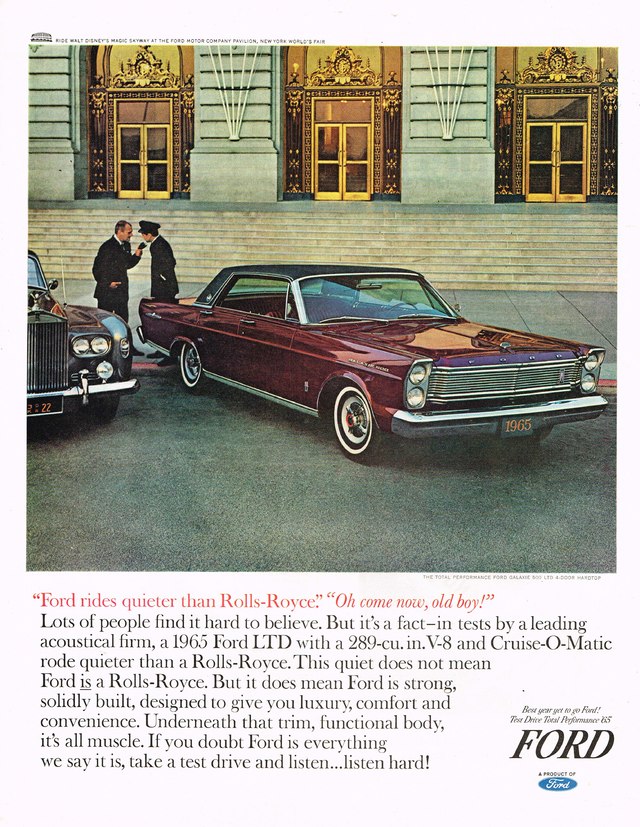
While I can appreciate the concept of the 1965 LTD and I actually don’t mind those cars, I can’t say that I am much of a fan of 1970’s Brougham-mobiles. Growing up we usually had plain cars, and my dad was always of the opinion that the more options, the more there is to break. I was certainly influenced by my dad, as I also generally prefer a plainer car with less frills.

Most people who have read my comments and posts over the years know that I own a Torino and I will often defend these whipping boys of all that is wrong with 1970s cars. However, to provide full disclosure, while I am a fan of Torinos, I suppose it’s only a small niche that I really have any interest, specifically the performance oriented models with appropriate engine and suspension options. When optioned correctly, these Torinos can be quite competent cars for the era. Nevertheless, I realize that performance was definitely not Ford’s primary mission when the Torino was redesigned for 1972.

Ford was banking a lot on the Torino redesign in 1972, as they had the foresight to realize the mid-size market was going to continue to increase in popularity. Ford was predicting that mid-size car sales would surpass the full-size cars in sales sometime in the 70’s. The plan of action was to make the Torino more like a full-size car in size, comfort, silence and appointments. At the time, it seemed like the appropriate move, especially with the increased interest in luxury oriented amenities and qualities in the lower priced cars.
Ford Torino’s base suspension offered a smooth ride with its very soft spring rates
By 1973, the mid-size performance market was quickly fizzing out, while the mid-size luxury market was expanding. Chevrolet had its established low-priced luxury coupe, the Monte Carlo, while even over at Chrysler, Dodge had its luxury inspired Charger SE. Ford had a Gran Torino Brougham model for 1973, but it was available as a sedan as well, and didn’t really capture the essence of a luxury coupe. The Elite was to eventually fill this gap, but that wouldn’t be introduced until 1974. In the meantime, Ford needed a solution to fill the void.

As Ford had done in the past, it was decided to introduce a spring-time special model as its new low-priced 2-door luxury coupe. In March of 1973 Ford introduced the Luxury Décor package for the Torino line. This package was limited to 2-door Gran Torino models and was trimmed quite a bit differently from other cars in the Torino line-up. While the Gran Torino Brougham used older style cloth/vinyl interior, the luxury decor package Torinos used a more modern upholstery design trimmed in ultra-soft vinyl. Even though it was a bench seat, the seating almost had a bit of a sporty flare, at least compared to the other seating options. While not exactly a European interior, I’d argue that the interior was probably one of Ford’s more tasteful luxury interiors of the era.

The option package had an MSRP of $395 ($2238 adjusted) and was only available with specific exterior colours: saddle bronze, medium copper metallic or metallic ivy glow paint. The option package included a white, brown, or green halo vinyl roof with colour-keyed body-side molding. A halo vinyl top did not cover the a-pillars in vinyl, making the vinyl top appear as if it was floating like a halo over the roof.

Also included was a pinstripe package, colour keyed rear bumper pad and wheel covers, black sidewall radial tires, flight bench seat in tan super soft vinyl with matching door panels, deluxe 2-spoke steering wheel, wood tone instrument panel applique, dual note horn, 25-oz cut-pile carpet, and upgraded insulation. Overall, it seemed to be a good value for the money, if these were the type of options you desired.


Ford did a decent job in making the Luxury Décor Torinos more exclusive from the “ordinary” Torinos, but to the casual onlooker it didn’t really stand out. It certainly didn’t have the exclusive exterior styling like the Monte Carlo. The Luxury Décor option package was discontinued after the 1973 model year, with the Elite the new focus of this personal luxury market. It undoubtedly had the more exclusive (garish?) styling, nonetheless also included practically every mid 1970’s brougham cliché you can imagine.

Interestingly, the Elites had an Interior Luxury Décor option that was unavailable on other Torino models. However, the interior option wasn’t much different from a Gran Torino Brougham interior trimmed in super soft-vinyl. Nevertheless, the 1973 Luxury Décor interior did live on in the 1974 Gran Torino Sport. The same seating, door panels and upholstery were used in the 1974-75 Gran Torino Sport. However, it had more interior colours available, and could be equipped with a bench or bucket seats. When equipped with the black red combination it had much more ‘70s sporty vibe than luxury.


I found this 1973 Ford Gran Torino with the Luxury Décor option for sale some time ago. I had been meaning to do a write-up on it, but just hadn’t had the time. The car has since sold, a bit surprising since it was originally listed at ridiculous $27,995 (in 2018). I would think that it went for significantly less than the list price.

This car was a very nice example though with only 9,924 miles on the odometer and it appears to be in excellent condition. The car is mostly original, and is equipped with the “H-Code” engine, which refers to a 351-2V. An H-code can be either a 351W or 351C engine. This car has the less common (in Torinos) and less powerful 351W, putting out 156 SAE net hp. The interior on this car seems to be in remarkable shape, with little signs of wear.

Undoubtedly this car much has spent much of its life indoors to remain so pristine. This is also reflected in the exterior paint and trim and undercarriage which look to be in great condition. Although the exterior colour combination is hardly my favourite, I do think it does a great job of capturing the era. Hopefully, it stays this colour.

I find it interesting that the dealership has seemingly dressed this car up as a pseudo muscle car. I mean, all cars from the mid-60’s to the early 70’s were muscle cars, right? Clearly, the dealership selling this car has no idea that it has a unique option package. Even if it did, I am not sure what kind of appeal it would have with today’s typical vintage car customer.

At some point this virtually original car had dual exhaust added along glass pack mufflers, which is completely contradictory to this car’s original mission. The large aftermarket wheels don’t actually look too bad in my eyes, mostly because the extra width and diameter do a much better job of filling the fenders compared to the tiny stock 14” wheels.

I am still no fan of the 1970’s era brougham-mobiles, but I do hope that whoever bought this car keeps it well-preserved. Regardless of my opinion, as this car sits, it would make a great weekend cruiser that would no doubt stir up some interesting conversation.
Note: a rerun of an older post.























This auto frame developed a Multiple Personality Disorder as the years went by.
Started as the upscale ’72 Grand Torino to compete with the Chevrolet Chevelle/Malibu and Mopar Coronet.
Became a Hollywood start with Starsky & Hutch.
Moved to the Grand Torino Elite at the dawn of the Malaise era.
Then wore proud features as the sales hit ’77 thru ’79 Thunderbird.
Lets not forget the Mercury Cougar tagged along on the same frame from ’74 thru ’79.
Somehow, I see Lee pulling more rabbits out of his hat while at Dearborn.
And years later, the Gran Torino became again a Hollywood star thanks to Clint Eastwood’s movie “Gran Torino” and to a latter extent, the movie The Big Lebowski altough this one was a 4-door sedan.
https://www.hotcars.com/heres-where-the-ford-gran-torino-from-the-big-lebowski-is-today/
A little surprised that both the 1973 Torino print and TV ads had a visual focus on the front massive bumpers. Why focus on a products worst features. About 1971 in Miami, my good friend and disco dancing partner had a new 1971 Torino GT convertible, red w/white interior, hidden headlights etc. That was a beautiful Torino. Come 1973, I was already loosing interest in new cars mostly because of those massive, NYC cab style bumpers.
Just a few hours ago I watched a nice Jay Leno video reviewing a beautiful 1969 Pontiac SJ Grand Prix. Leno is my guy, and he mentioned in his opinion, 1966 was the last year before the government starting influencing American autos. I agree in part, but there were still some good looking cars up to 1972. Sure I had a 1976 Eldo, and thought Cadillac did a good job with designing impact bumpers, but that was rare.
“A little surprised that both the 1973 Torino print and TV ads had a visual focus on the front massive bumpers. Why focus on a products worst features.”
This was recognition by certain marketing and advertising people that a significant group of customers desired vehicles that looked aggressive and threatening to other drivers. Something that really caught on in the design and marketing of pickup trucks and SUVs.
About those massive front bumpers – can’t wait to see the 1974 Torino with the matching massive rear bumpers.
Among Ford’s products in 1973-74, I thought the Torino to be the best looking. However I would add that these looked like very heavy cars. With the 351, they would have been in the 4000 lb range, but they looked a might heavier than even that.
A high school friend’s mom bought a new 1972 Torino. I’d never seen a stripper model as my dad liked options. Hers was white with a blue interior, no carpet, no radio, a vinyl top, automatic and a six cylinder engine. I remember thinking that basic transportation maybe wasn’t such a bad idea. The only issue they ever had in the 4 years they owned it was it was very cold blooded and hard to keep running. I think Ford had tried to correct the issues with the choke and carburetor under warranty.
Funny that my first car was a 1973 Mercury Montego MX villager wagon!
Great article
Wow!!! What a beautifully preserved example!!! It is sad that they put glasspacks on it. I can understand that the exhaust may have been rotted out and the “might as well give it duals”, but “stock” mufflers would have been my choice. The wheels work and it certainly drives better than it would with the stock sizes, which you have few choices for in today’s world. I do hope they didn’t toss the factory wheel covers though.
Too bad they didn’t splurge on an H or X pipe. I think the glass packs are not a good choice although that’s what I ran on my Torino or Torine-boat as I called it. I think the wheels work pretty well on it, too.
My first car was a copper-brown ’75 Gran Torino with a smogged 351W. It was a decent looking car, but my favorite Gran Torino is ’72.
I learned my way around cars constantly working on it. My joke was 30 minutes of driving required 2 hours of work on it.
Surprisingly well tuned the car had some get up and go.
Not a fan of Vinyl Tops, as I’ve mentioned before. This color is fine, would look better without the vinyl.
Like the dual exhaust. Also like the Torque Thrust II rims, same as I had on my Crown Vic wagon. They work with so many different cars. Much better than say, Cragar 5 spokes. Back in the 80’s, I would have been ok with Cragar 5 spoke (or SST) on most anything. Of course, Chrome reverse is my favorite wheel choice ever (since American Graffiti).
Guy I knew in school had a “Starsky n Hutch” Torino, same pain and all.