

It was December 2024, and I was making one of my regular visits to good ol’ USA. As often happens before these trips, my mind drifted into CC daydreaming from the moment the flight was booked: “So, what old classic will I find by the curb this time?” Being a visit to the U.S., I was hoping for something quintessentially American that I hadn’t seen in years. After all, fifties and sixties muscle cars—and even the occasional plush Cadillac—aren’t exactly rare in Central American car shows. Heck, every now and then they even turn up parked by the curb.
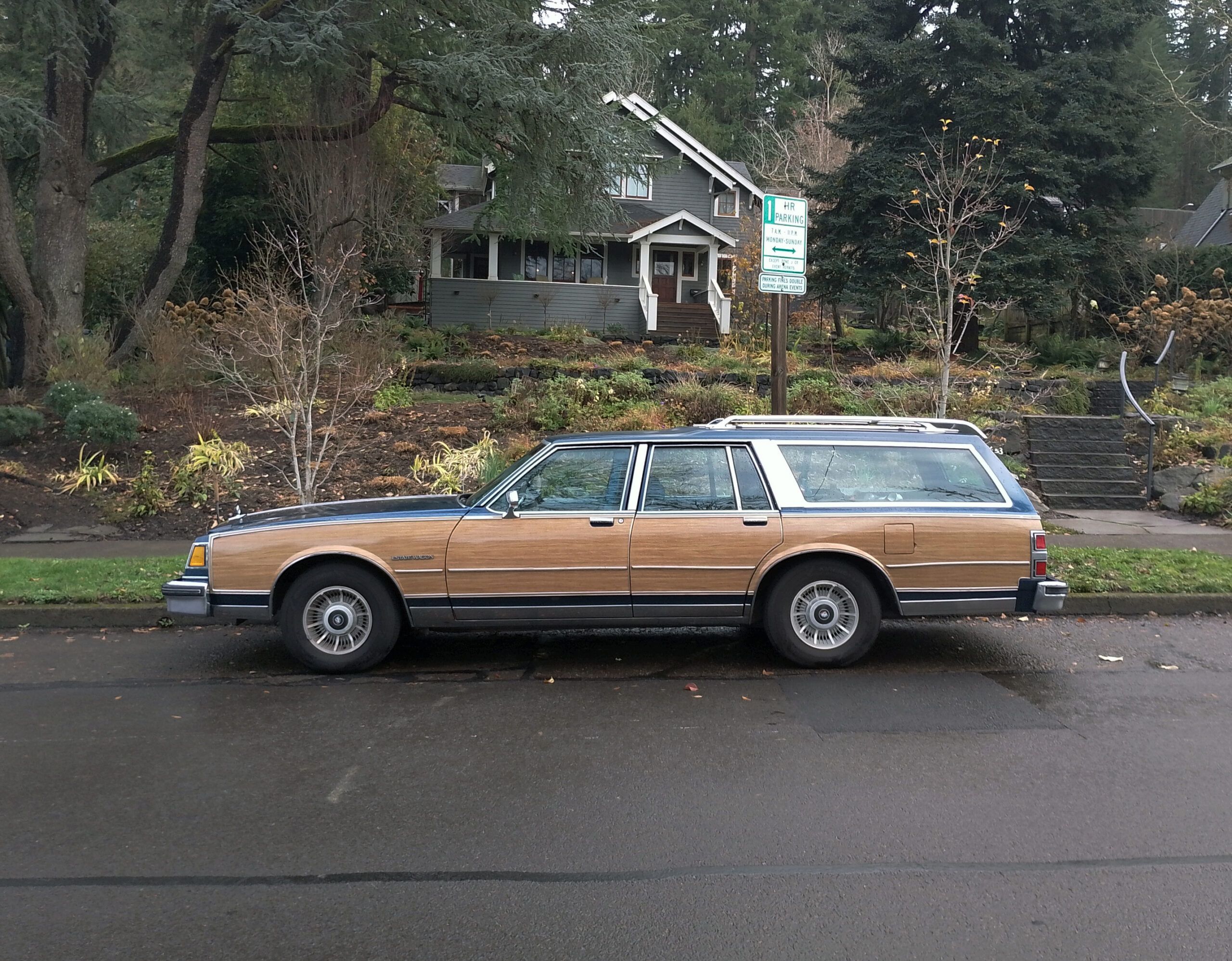
Since most of my visit was spent in California, stumbling across classics was a given, and I’ve already featured a few. But of all the cars I encountered, the one that best captured the distinctly traditional flavor I’d been missing was this remarkably well-preserved 1990 Buick Estate Wagon. A rear-wheel-drive, faux-wood family hauler from the twilight years of the classic American station wagon, riding on GM’s attractive boxy B-body introduced for 1977. Not truly the final chapter in GM’s rear-drive wagon story, but one that embodied the kind of full-size family cruiser that had been a familiar enough sight during my teen years.

Longtime readers may actually recognize this wagon; it was posted by none other than Paul back in 2023. And if you’re wondering, yes, I was making a brief stop at his hometown during my short visit (more on that later).
With this wagon covered by Paul, the 1990 Estate Wagon model itself seen in more detail by Aaron S. last year, and even the story of faux-wood (Di-Noc) covered as well, most of what’s to be said about these late Buick wagons has been told.
So, what’s left for me to say?

Perhaps it’s a chance to delve into a topic that has long been of my interest; buyers’ enduring affection for faux wood station wagons. Or more precisely, why are some imitation materials embraced—even loved—while others are dismissed and shunned?
Admittedly, we’re talking about personal likes, which is inherently subjective and difficult to measure. Sales do tell a great part of the story, and we know these faux-wood sold well and became a common fixture. But why did folks really like it? That’s harder, if not impossible, to figure out. Not that it isn’t fun to go into the matter.

If we’re talking about artificial materials, it all begins with one of the Industrial Revolution’s great promises: making something once provided only by nature easier, cheaper, and often more functional. Artificial substitutes have been reshaping industries ever since, and I should know. I live in a country whose economy was turned upside down after German chemist Adolf von Baeyer synthesized artificial indigo dye in 1883. Less expensive and far easier to produce than the natural product, synthetic indigo quickly became the standard. Today it colors roughly 85 percent of the blue jeans sold worldwide. Meanwhile, regions that had relied on natural indigo production saw their livelihoods disappear almost overnight. Across Central America, fields of indigo shrubs were rapidly replaced by coffee, bananas, and pineapples as economies scrambled to adapt.
Another successful example is vanilla—or rather, artificial vanilla. First synthesized in 1874 by German scientists Ferdinand Tiemann and Wilhelm Haarmann, it replaced yet another natural product native to Mexico and Central America. Today, synthetic vanillin is found in more than 90 percent of vanilla-flavored products, making it the “vanilla” most of us use daily. Not hard to understand why. A quick look at the cost of pure vanilla extract versus its artificial counterpart tells the story. Plus, there’s only so much land available to grow vanilla orchids.
Talk about acceptance: indigo and vanilla, two examples of artificial goods so intertwined with our modern lives that we don’t give them a second thought. Ever heard anyone complaining about their artificially dyed blue jeans? Nope? Me neither.

But artificial materials haven’t just been about practicality or conserving limited natural resources. They’ve also catered to nostalgia. As the Industrial Revolution reshaped our surroundings at an unprecedented pace, imitation materials offered a way to preserve the appearance of familiar things while embracing modern manufacturing. So why not create a few convincing illusions to pretend it all remained as it was? From candle-shaped light bulbs to synthetic fabrics that mimic the look and feel of wool and such materials.

Want a car-related example? How about this curious contraption? I’m not even sure if this was ever built, or if it remained a curiosity filed away at the patent office. But from the looks of the concept, it seems to have been aimed at people who found the idea of a “horseless carriage” just way too… horseless.

Whether that concept was truly horsed around (har, har) or is simply an urban legend, it speaks to a broader truth. That the early days of motoring were a period of experimentation and transition, eras ripe for hybrids and curious creations.
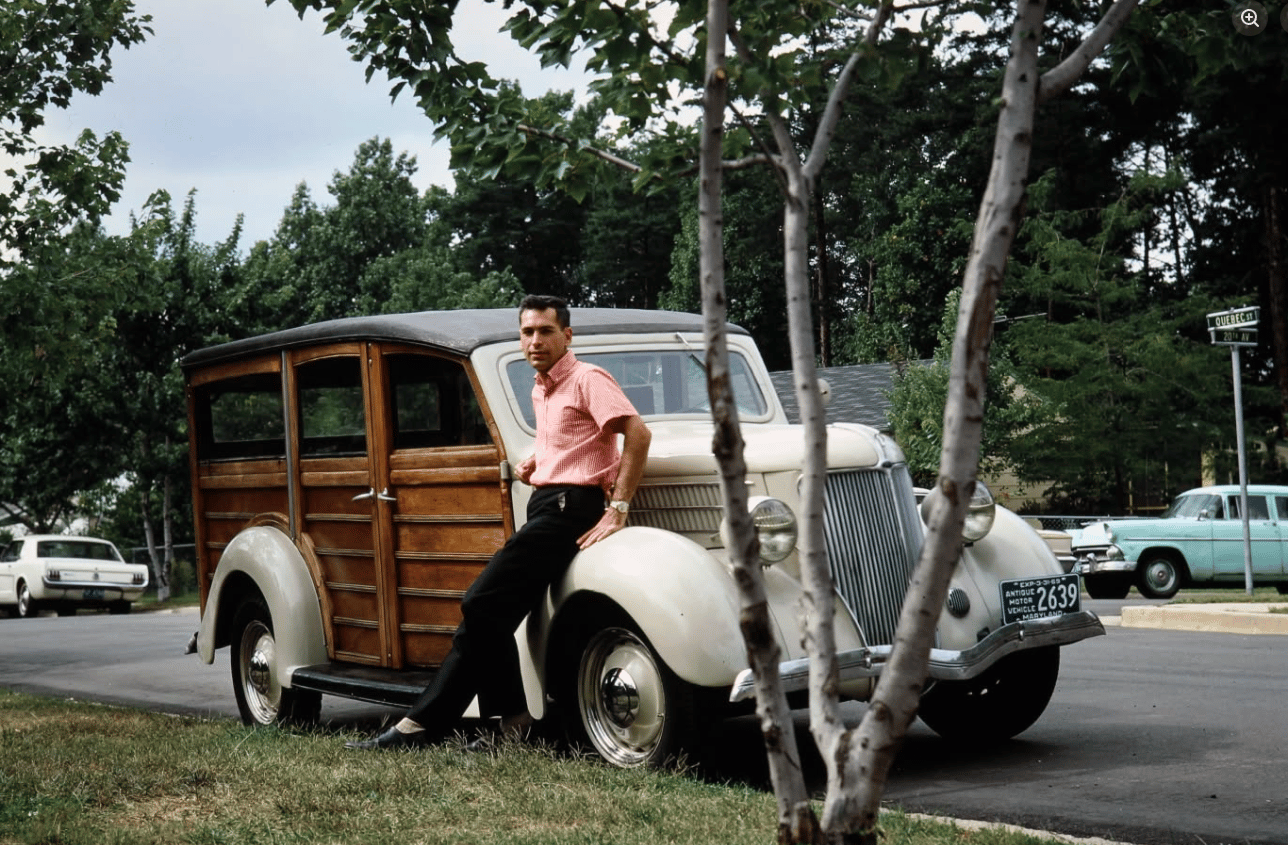
It’s well known that wood was commonly found in early cars, from their frameworks to other body parts. In the case of Detroit, all-metal became mostly the norm by 1937, though wood remained around in station wagons for some time; built in lesser numbers and not yet worth the all-steel-body trouble.

Let’s also make a note at this point that elsewhere, in luxury brands or specialty builders (particularly in Europe), real wood touches remained around in some form or another for decades.

With wood being the norm in wagons and accenting luxury/sport vehicles for way longer than in regular cars, they became the most associated with the look. As such, the faux wood interior surfaces of a 1971 Monte Carlo or a 1990 Buick Estate Wagon (both models, with upscale pretenses) are, generally, accepted.

On a 1980 Westmoreland VW Rabbit? Way harder to accept, to my eye. Actually, I always found this concept funny-looking on most small economy vehicles.

Elsewhere, attempts to bring the “woody look” to other body styles never really quite caught on. Mercury and Chrysler tried to make convertible woodies a thing in the late 1960s, with both selling dismally and fading away as quickly as they had shown up.
Curiously, the 1983-1986 Chrysler LeBaron Town And Country convertible did modestly better. An eighties 1940s nostalgia thing?

Whatever your feelings about faux-wood, the concept clicked with the public. Appearing early on when the all-steel bodies came out in the early 1950s, Di-Noc woodies were usually the priciest choice in a carmaker’s wagon line. Overall, the look felt “right,” and more importantly, fulfilled that industrial age’s promise; the look many preferred, sans the complications and expense of real wood.
With their distinctive Di-Noc looks, Ford’s Country Squires are, perhaps, the most remembered of them all, and seem forever linked with the segment.
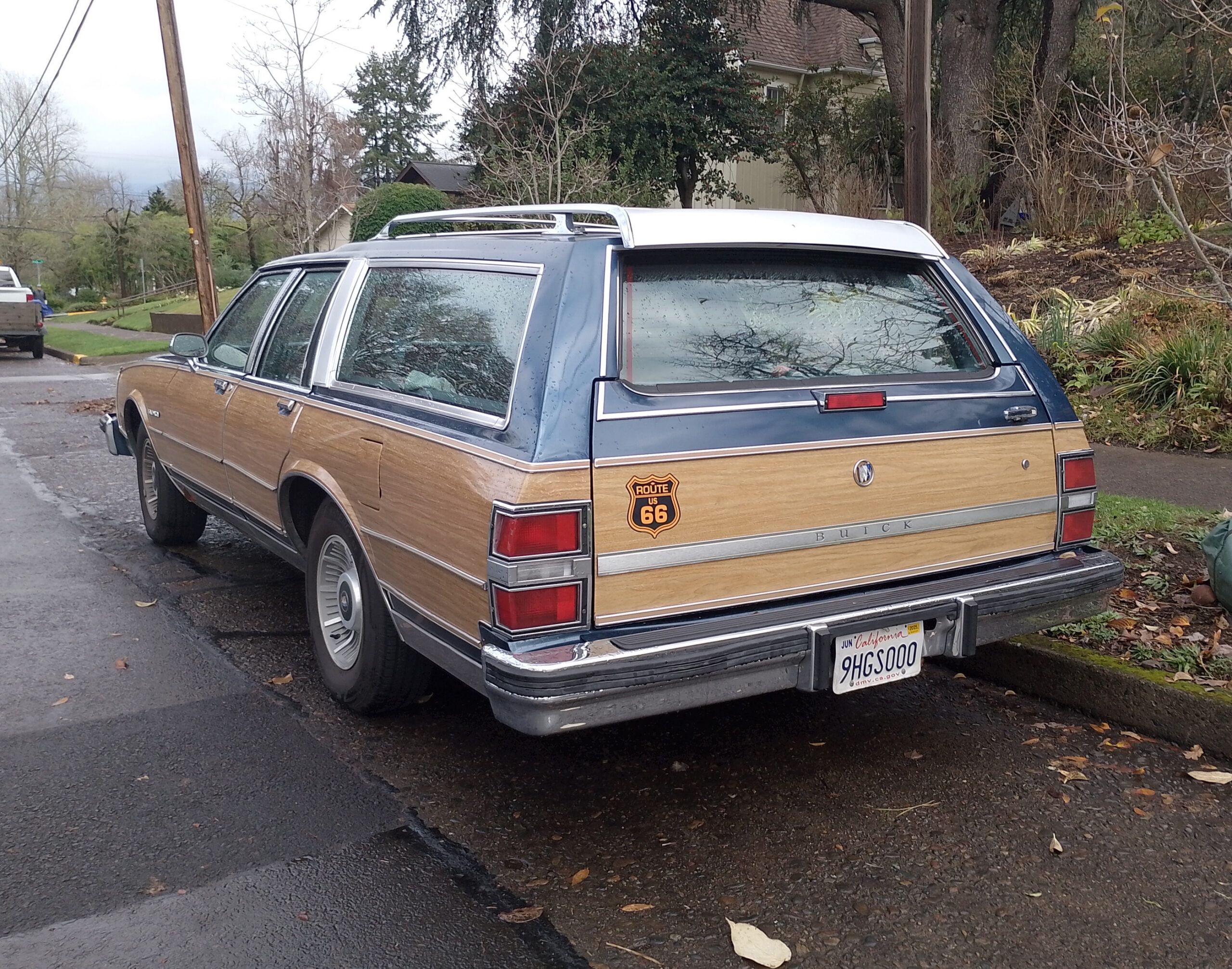
By 1990—the model year of today’s Estate Wagon—that segment had dwindled to just 3.3 percent of the market. Minivans had largely taken over family-hauling duties, while SUVs were beginning their steady climb. Yet here was a holdout for the traditionalist, clinging to nearly every hallmark of the classic American wagon: rear-wheel drive, body-on-frame construction, a boxy body tracing its roots to GM’s 1977 “Sheer Look” redesign, a soft-performing Olds-sourced 140HP V8, and, of course, faux wood lavishly applied to show this was Buick’s top wagon.

Just how many traditions is that? Body-on-frame construction. V8 power (with econo-minded malaise-era hangover). The handsome, if dated, “Sheer Look” styling that, even in downsized form, still embodied Harley Earl’s low, long, and wide ethos. And naturally, the simulated woodgrain that had been almost synonymous with upscale American family wagons.
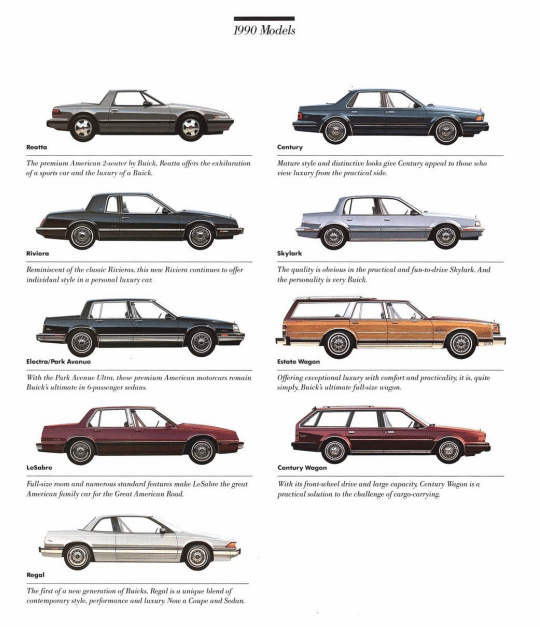
Unsurprisingly, by 1990 the Estate Wagon was living on borrowed time. Yet its survival almost made sense within the often bewildering product strategy of 1980s GM. Whether it was Buick, Oldsmobile, or Chevrolet, the company’s lineups were basically impossible to figure out to a young car-aficionado like me. I mean, what was going on at Buick’s showrooms in 1990? The boxy, faux-wood Estate Wagon carried over from the Seventies; the awkwardly styled meant-to-be-a-halo-car Reatta; the updated-to-acceptable-degree Riviera; the once-modern A-body products gone past their sale date; the handsome, well-sorted, but getting dated C-body; the frumpy Skylark; and the relatively fresh Regal, wearing GM’s diluted idea of Eighties Aero.
What, exactly, was Buick supposed to be? Older buyers still spoke of it as a premium marque, but that wasn’t immediately obvious to anyone who wasn’t already a loyalist. As for me, Mr. young Gen-X back in 1990, show me the Acura brochure, please!
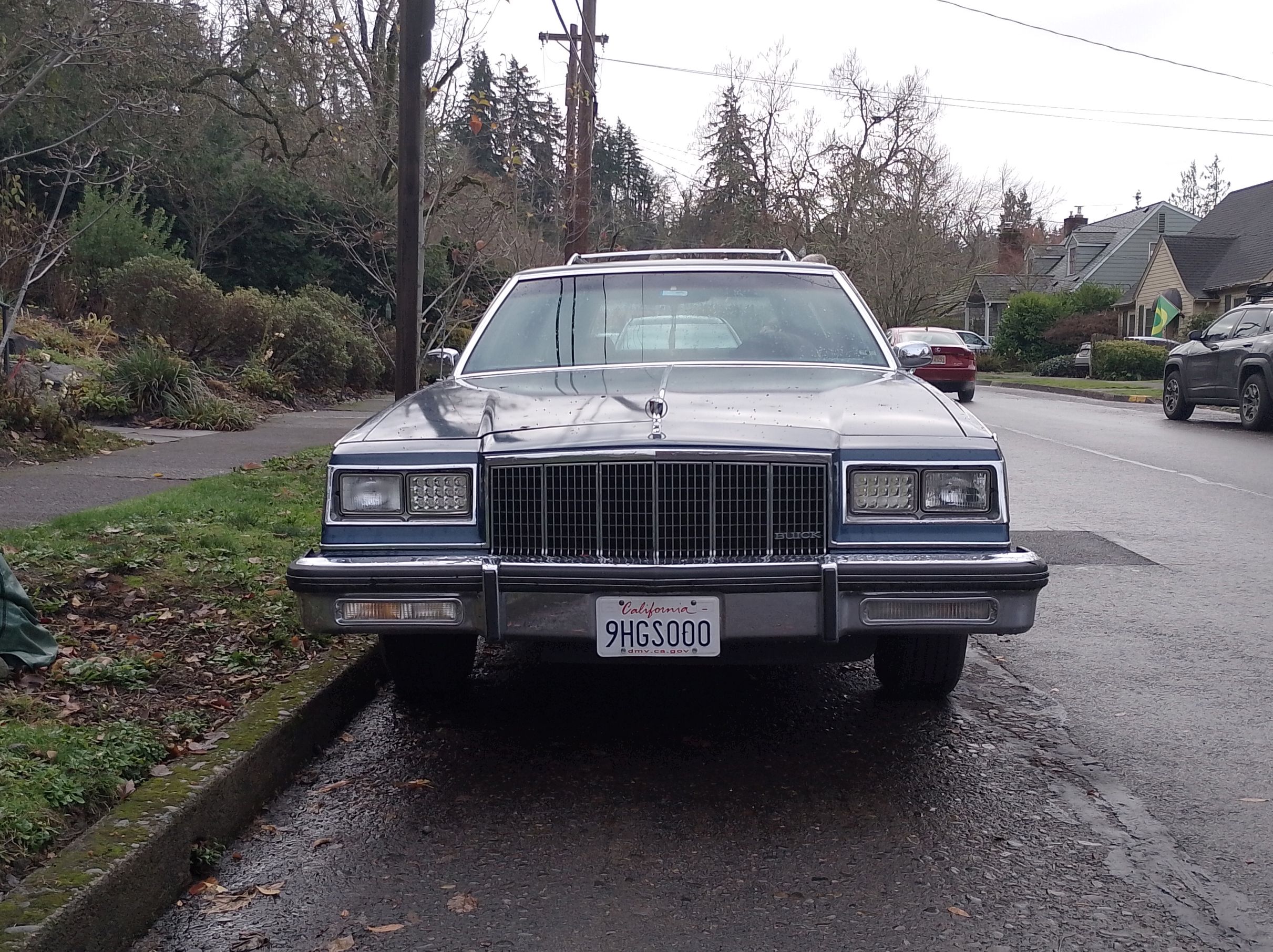
But that was then, and this is now. Oddly, of that whole lineup, had you asked me back then which was the real Buick, this is the one I would have picked. And it is still the Buick face and look from the eighties that I prefer. Something that probably speaks to its design still possessing 1970s GM swagger; crisp looks, an attractive waterfall grille, and boxy styling accented by nicely defining subtle curves –the essence of the “sheer look.”
Granted, it didn’t come exactly looking like this back in 1977, but the later retouches are minor and tasteful.

The wagon also has a nice set of “turbine” rims, way more attractive than the fake wirewheel hubcaps that about half of GM products seemed to carry back in those days. Talk about a form of artificiality I never warmed up to.

I didn’t take a photo of the interior, but this one is from Paul’s 2023 entry. As Aaron’s post told, these Buicks were usually stuffed with the expected bells and whistles that the three-shield emblem implied. It’s lavish, in a traditionalist way, and truly spoke to preferences that were out of step with the “Sharper Image” eighties.
But if you’re to live in the past, why not do so in as nicely appointed a way as possible?
The Buick Estate was undeniably a nice curbside find. One that, as I said, happened while I was paying a visit to Paul in CC-famous Eugene. A short two-day visit that was pleasant and memorable, with Paul proving to be a very gracious host.
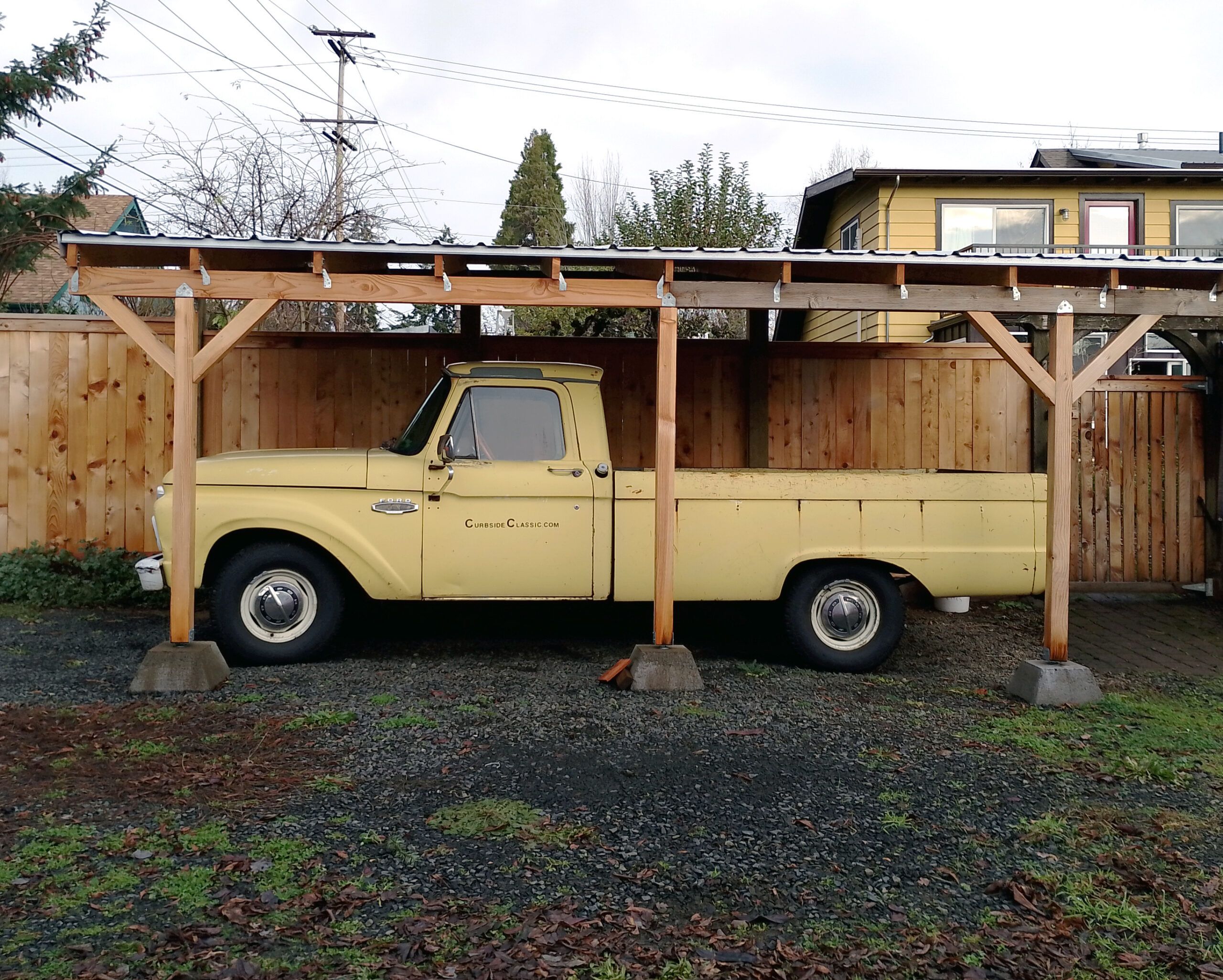
Naturally, I also got to meet CC’s car mascot in person; Paul’s 1966 Ford F100. Annoyingly, the sole photo I took next to it was ruined by my cell phone camera’s dumb “portrait” function, blurring a whole lot to create a weird, unpleasant photo. At least I got this one shot of the F100 alone, sitting pretty in what were its then recently built quarters.

Paul openly told me he would have preferred I arrived in the summer so that I could experience the region at its prettiest and best season. True words, but that didn’t happen. In any case, the drizzly and quickly changing Eugene winter weather was a nice change from my current tropical home. And while far from epic, the daily strolls were very pleasant. One thing; Paul has often mentioned at CC that he’s an energetic hiker, often outpacing everyone around him. I’m here to tell you that is very true. I didn’t quite struggle, but let’s just say that I had to keep focused to keep up with his pace.

Regrettably, I didn’t get to meet Stephanie, as she was dealing with family matters at the time. I did try her fabulous homemade pastries and sweets (which I can still almost taste), and also had a chance to meet this nice fella who is no longer among us. So long, and godspeed; as brief as our encounter was, I enjoyed meeting you.

Back to faux-wood. For some reason, Europeans never warmed up to the idea, and if used, it was often real wood (think Mini Austin Countryman; a small car where I do like it). Meanwhile, from what I can tell, Japanese buyers never seemed to have fallen much for it either. However, their carmakers did know their American buyers well, and several of their wagons arrived appointed as such.

Meanwhile, with the idea of wood being a “car thing” falling further into the past, I notice that not even luxury models seem to make much use of it today. Though in some ways it is no wonder; the soft, warm ambiance wood provides just seems to clash with the overtly aggressive styling that is now favored.

But fear not for Formica and the like; they are all still doing much business. Indeed, one could argue fakeness artificial stuff has never been better. Be it marble, aluminum, copper, wood, or even concrete surfaces, all are available –feeling and looking more convincing than ever.
The 1990 Buick Estate Wagon would not be the last chapter in GM’s RWD family hauler story; that would be the 1991-1996 models, still using B-body underpinnings, but with rounder bathtub styling. An acquired taste for many, and looking even more anachronistic in Di-Noc regalia.
So if I’m to go with a late traditional wagon that speaks to the spirit of the family hauler as it used to be, an Estate Wagon sounds like a good choice. True, there were mightier, larger, and more iconic ones, but this is a less obvious choice of the group. And as for woodgrain per square inch goes, I think this has to be among the woodiest of them all.
Related CC reading:
1990 Buick Estate Wagon: Luxurious Family Hauler The Old-Fashioned Way
1990 Buick Estate Wagon — Well Aged Wood
The History Of Di-Noc: As Different From The Real Thing As Night And Day























GM got a lot of years on the B-Body platform Not as much though as Ford got out of the Panther platform. The faux wood on the sides of wagons was a 1960s and 1970s thing. It did “class” up the station wagons of the era including the Classic Grand Wagoneer. The wood grain also was nice inside of a car if it wasn’t overdone. Some cars later didn’t have quite matching wood grain on the interior due to poor quality control. The full sized wagons were nice as were the smaller midsized and compact ones of the 1960s and 1970s. Practical for hauling loads from lumber to washers and even families. Also great for pulling trailers. They died out when SUVs became popular and also what probably made them lose more sales were the minivans. Minivans are not “cool” anymore. Maybe station wagons will make a comeback along with minivans. I don’t think fake wood will ever become popular on cars again but will hopefully still hold its place on the inside. The giant screens and huge black plastic dashboards need something natural looking to balance it out!
It’s really remarkable that this basic shape lasted 14 years. Compared with most passengers vehicles, that’s almost beetlesque. Plus, it still looks good.
I think this has to be one of the stranger applications of Dinoc:
It’s a funny one. Chrysler also had some odd-looking ones in their fuselage wagons of the early seventies; sort of like faux-wood meets modernism.
1972 Dodge Royal Monaco
How nice to see another take on this woodie box wagon. And to revive such pleasant memories of your visit to Eugene. Yes, it was classic PNW winter weather, and I can see why that would be a refreshing contrast for you.
It’s been three years since I handed the reins to you; that was one of the best things I’ve ever done. I’ve finally been able to step back to a significant degree (pretty much totally lately). Thanks to you and Aaron S., CC has continued to deliver its unique focus on cars (and more) and thrive in an increasingly difficult media landscape.
Thanks for coming to see me and a really big thanks for all you’ve done for CC. I am deeply grateful.
BTW, the horseless carriage with the fake horse in front was conceived so that it wouldn’t startle real horses pulling buggies and wagons. That was a very real issue at the time, folks complaining about horses bolting when encountering a horseless carriage. I’m not sure if this contraption went far to assuage horses’ anxiety, but it was a good try.
I skipped the part of my arrival by train via the Coast Starlight; a portion of the trip that provided lots of great-looking views on my way from Oakland to Eugene. Trains generally sound counterproductive, time-wise, but those trips often turn more memorable over time.
Was it just a vinyl wrap?
If so, it seems to last very well for a thin PVC film, I think modern car wraps won’t last this long under sun UV exposure.
My father had one of these that was a few years older, but same look. Wagons were a constant in the family fleet. He was in the corrugated box business so a wagon went hand in glove with delivering large size samples and picking up sample product to design around. Lots of lighting and audio companies that he dealt with. We only had one wagon I can remember without the wood look: a late 60s light yellow Fairlane. I believe he always got the wood look because it meant you were going “top of the line.” meanwhile the Buick has to have been the bottom in ranking. Lackluster V8 and severe engine problems by 50k miles.
I have never been much of a fan of “fakeness” and in the case of the featured Buick, I really dislike the fake wood. I mean, it is fake and faded quickly with an UV exposure. It adds nothing to the utility of the car.
I also intensely dislike fake wire wheel caps. Getting then off required as special tool that always got lost, making them a service headache.
The 307 was adequate in sedan form, but it was not built for speed. It must have seemed even more anemic in the heavier wagon.
I owned an 88′ underpowered but in all other respects a great car! In 1992, a RWD, Body-On-Frame replacement surfaced. The 92′-96′ Roadmaster wagon!
Wagons are cool although this one is a bit too boxy for me. Some flowing lines please which is why I am stuck on the 66-68 Country Squire. They were all up and down Community Street, in Canoga Park, 1966-68. Took my wagon out for a drive last night which is the first at night and saw headlights aimed 30 feet out. Corrected that and all was fine till the rear window decided not to come back up. Another pain…
It might be just me, however, I don’t care for GM’s take on wood paneling for this era’s wagons.
I prefer my fake wood paneling to appear one dimensional, not slapped over blister fenders and around corners like that. This makes the fake wood appear even more fake and lacking in fake craftsmanship. There’s little framing here – it looks like a vinyl wrap.
Nice color, admittedly, but not really trying either.
Great take on the topic of fake wood. Somehow, I’ve never thought of fake wood similarly to fake other things, maybe because wood-paneled wagons didn’t even try to pass the stuff off as looking real.
It’s funny that you mentioned the Chrysler Town And Country wagons as being a modest reversal of the inevitable decline of wood-paneled wagons – I feel that Chrysler’s 1984 minivans were similar. It’s odd that so many people who bought an innovative, ingeniously-packaged product in the 1980s chose fake wood sides on those. Even my father did… he bought an ’84 Voyager with wood sides. As an early import adopter and as someone who generally loathed American cars, that was an odd choice. I still can’t explain it.
Your comment about building materials like marble, aluminum, copper, etc. looking more convincing than ever is generally true, though I feel there’s a major exception to that rule with vinyl plank flooring, which seems about as convincing as Di-Noc. I’m convinced it’ll be shunned within a decade or so.
Also, it’s great to hear about your visit to Eugene – sounds like a wonderful time!
Fake wood on the side of a station wagon is a good example of a skeuomorph, which is defined as a derivative object bearing a decorative element that was functional on the original object. Another instance is the laces at the collar of a hockey sweater.
A favorite car of mine is the Ford Flex, which bears horizontal grooves on the sides and tailgate. I like to hold up the Flex as a “skeuomorph twice removed”.
Logically, I know that simulated woodgrain paneling is, at best, a bit kitschy. But still it does have a certain amount of charm. I miss station wagons. I miss conventional automobiles.
I’ll take the kitsch fake wood over the fake mars rover styling of a certain popular brands dystopian megalomaniacal ideals of faux futurism(that’s been popular discussion here today) personally.
As a side note, it’s kind of crazy that these turbine style alloy wheels are not repurposed 84-85 Grand National wheels. They look very similar at a glance(almost like aftermarket Vector wheels ala General Lee) but the extra fins between spokes were unique to these big Buicks.
I’m probably dating myself but Adventures in Babysitting had a very similar Buick wagon that got them stranded in downtown Chicago after a blowout. Loved that movie as a kid and I’ll always have a soft spot for these wagons.