
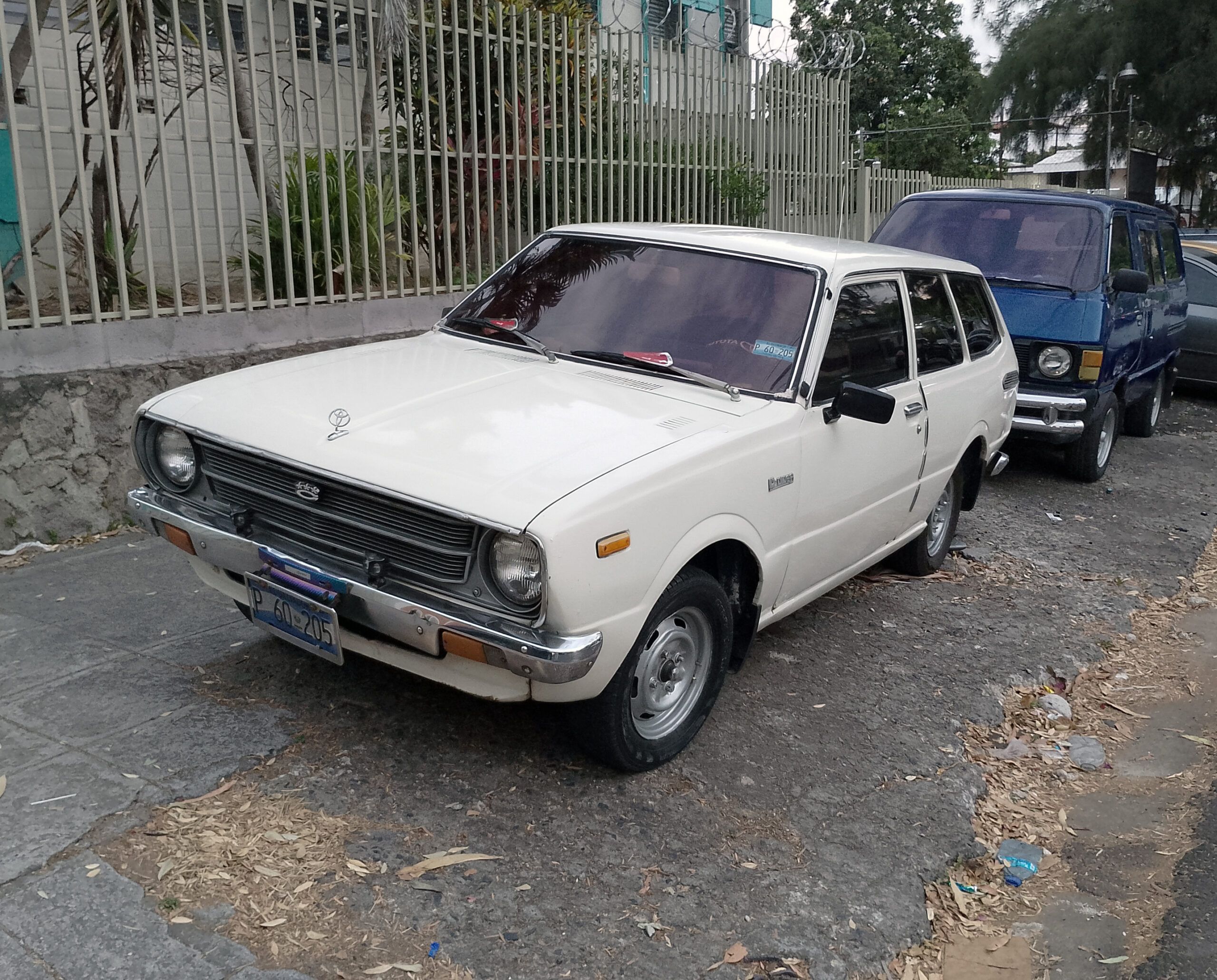
“I asked for a car that lasts. I got it,” was a line used in Toyota’s 1976 print materials. And while this 1976-1977 3-door Corolla wagon isn’t in the US, it shows that promise more than fulfilled, as it sits by the curb in as well-preserved condition as a fifty year old daily driver can be. Long lasting, you said? You got it!

I normally don’t get too excited when one of these E30 Corollas shows up; they’re still awfully common around San Salvador’s streets. But this one’s condition really struck me. Time capsule–almost! Sans the chintzy tiny hubcaps these came with, it’s the best looking one I’ve seen in years. And just with enough nicks and wear to prove that it’s someone’s precious errand runner.

Toyota’s reputation was built with cars like these. Originally, an unknown foreign curio that gained a foothold with the FJ Land Cruiser, notoriety with the 1964 Corona, and quickly climbed up with the 1966 Corolla. By the time these 1974-1978 E30 models showed up, the Corolla was an established commodity and you knew Toyota had arrived to stay.
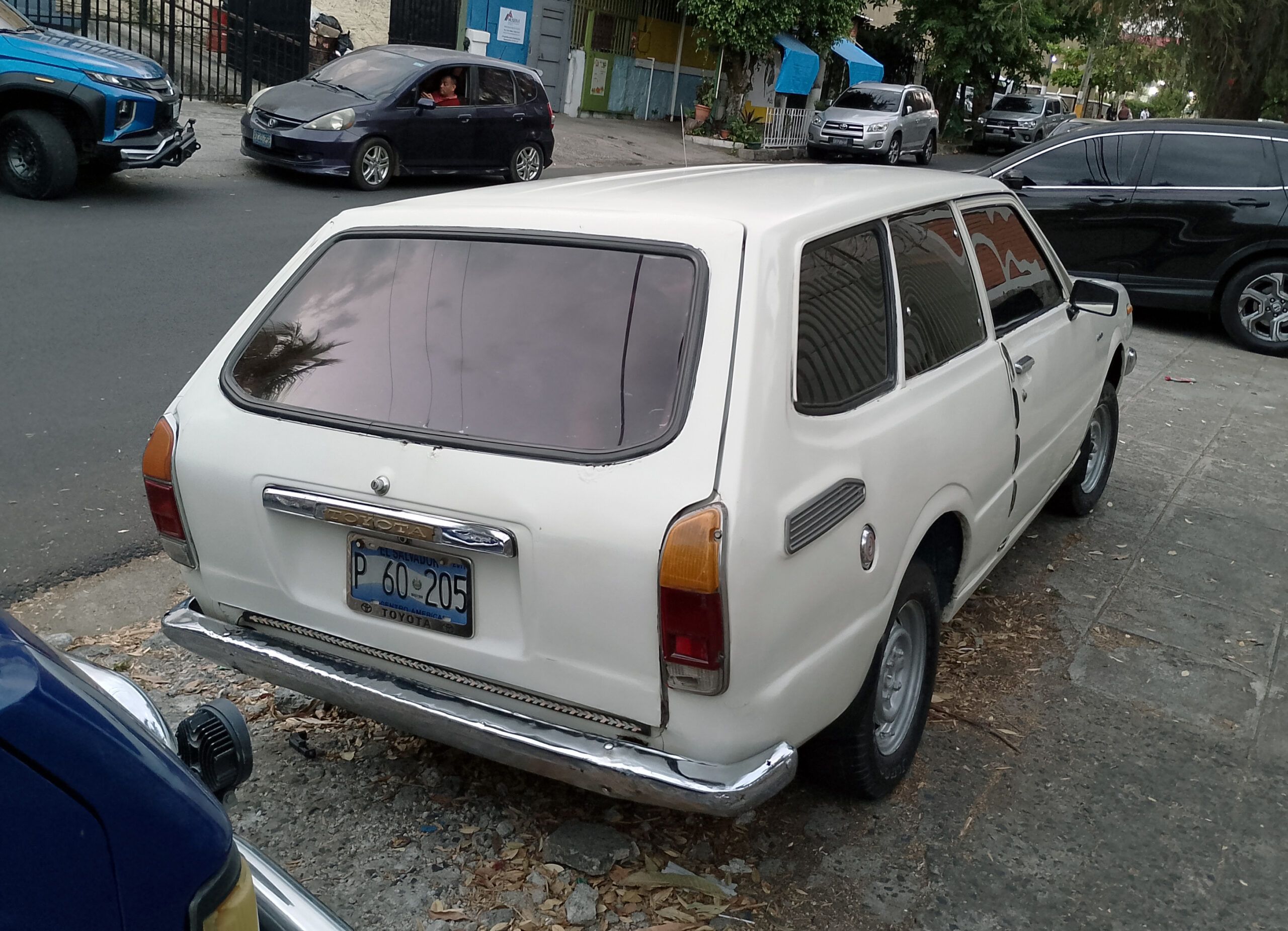
If you wonder, these 3-doors didn’t reach the States, with the US brochure instead featuring a 5-door slathered in American-looking faux-wood (optional, of course). This one also has the JDM bumpers, which is how they came to South America.

In other differences, these were offered Stateside with a 1.6L Hemi 2-TC engine, but in most South American markets, the 1.2L 3K engine was the norm. Built from 1969 to 1977, the pushrod OHV 4-cyl. 3Ks have a fame for near indestructibility around here. Looks to be the case with this survivor. Being a wagon, shifting is more likely via Toyota’s 4-speed manual rather than their slick-shifting 5-speed (Another clue? Around here, such goodies are usually shouted to the world via emblems, stickers, and whatnot).

When the E30 was conceived, Toyota made a very conscious decision for the new model to feel more substantial and slightly grown up, under the concept “a comfortable and economical car comparable to a luxury car.” The latter goal, within the limits of the economy class, of course. But true to the mission and in Toyota form, the E30 was evolutionary, improving in areas meant to please the model’s customer base –and even expand on their expectations.
Mechanically, it kept to the previous front-engine RWD layout, with McPherson’s upfront and leafs at the back, plus Toyota’s wide array of hardware (varying by market); 1.2L, 1.3L, 1.4L and 1.5L engines, with 2-3 speed automatics and 4-5 speed manuals. The latter, much praised. Elsewhere, the cars grew slightly in exterior and interior dimensions, with attention to safety, emission controls (an area the Japanese had a headstart, offering products with few drivability issues during those “malaise” days), and comfort. Vibration and noise reductions, improvements in A/C and heating, formed a good deal of that brief.

The E30’s new emphasis could be felt in their performance and looks, as period reviews attested, with some nagging about the model growing duller and less tossable. But overall, a car that felt more substantial and delivered on those intentions.
Enthusiast’s qualms aside, the public loved it; these were the Corollas that truly exploded in numbers. For a small car, the Corolla offered a lot of car for the money.
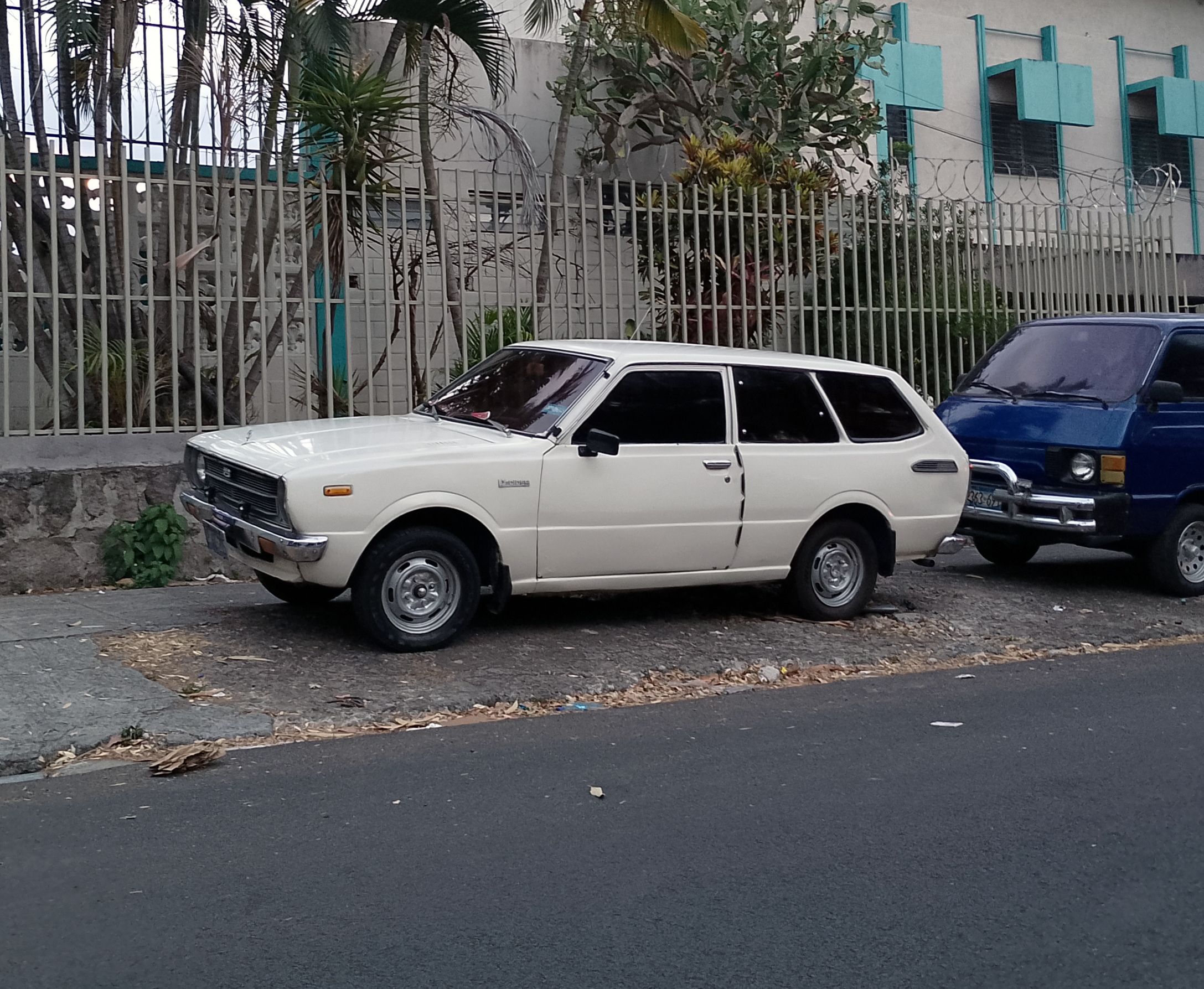
Now we get to the very subjective matter of styling. So far, I’ve seen little love in that regard thrown the way of these 1970s Corollas. Some seem to prefer the Italianesque looks of the 1966 E10, or the shrunken Coke-bottle looks of the 1970 E20. Much better, the sharper origami looks of the 1979 E70.

As for their looks, I’m the wrong person to ask. These were everywhere in my childhood, and when there’s a need in my head to conjure “just a car”, it’s either something like this or an early Nova stripper that comes to mind. I guess that, like the previous E20, a certain Americanness could be detected on the whole, but hard to tell what and from where. Overall, it’s got clean soft lines that proved pleasant and very marketable.

Admittedly, the sedan/coupé’s soft fastback styling wasn’t trend-setting, but I always found it successfully attractive, if not exciting. The E30 was also the first Corolla to come in a 2-door hardtop body, which made for a neater package. This one has some dumb fender flares, but well… locals just gotta customize. You know?

But elsewhere on the JDM menu, I can understand the qualms about Japanese carmakers being too taken with certain American styling traits. Like in the E40/60 Sprinter models based on the E30 coupé. That face is one tough pill to swallow.
Still, Toyota was to move to other styling grounds by the decade’s end, adopting European modernity quite successfully.

Back to today’s find. On close inspection, the E30 stuck to some of Toyota’s styling fixations from the era. From shiny lockable gas caps (here, replaced by a generic one) to plasticky vents at the rear.

Then, hood vents. Also on this shot, Salvadorian-style water sealing, and theft-resistant emblem efforts.
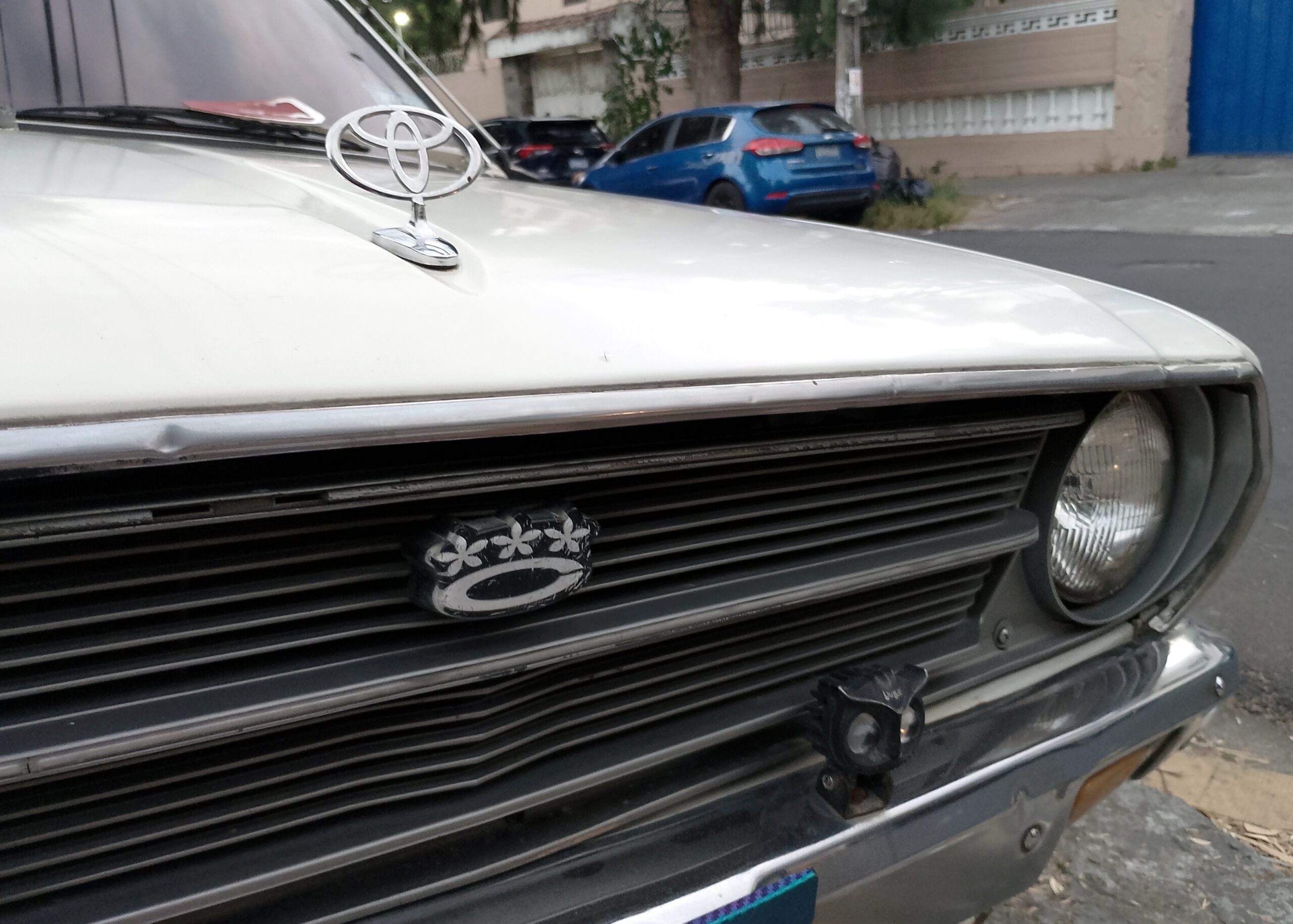
Not sure what the deal is with the newer Toyota logo stuck “M-B like” on the hood, nor can I fathom the reason for those plastic owl heads on the bumper. But locals gotta customize around here, and at least it isn’t some silly BumbleBee or TRD concoction.
Now, what year exactly is this one? That, I have a hard time telling. Looks wise, these were little changed between 1974-1978, and grilles and trim varied from year to year and region to region. Also, a few markets got later 1980-1981 models, though those got an easier to ID new fascia. But from what I can gather, this face shows up as “1977 international spec” on Japanese sites.

Whatever the case may be, this Corolla is either a half-century old or close to it. Rarely do I ever feel like asking an owner, “How much for it?” but this one almost compelled me to do so. However, I’m pretty sure that whoever the owner is, this Corolla is a lifelong possession and won’t be inclined to let it go.

Related CC reading:
Vintage R&T Review: 1975 Corolla SR-5 Coupe – Still The Best In Class, Despite Some Bloat
Junkyard Classic: 1977 Toyota Corolla Revisited
Autobiography: Driving Nirvana — In A 1975 Corolla
CC Capsule: 1976 Toyota Corolla Liftback – The Very First Of Many
COAL: 1975 Toyota Corolla 2 Door – Dullsville
CC Outtake: 1976 (or so) Toyota Corolla (E30) Wagon – And a Toyota Pickup in the Alley
CC Outtake: 1979 Toyota Corolla – Still Haulin’ The Groceries Too
CC Capsule: 1978 Toyota Corolla (E-30) Hi-Deluxe – Boring Wins























Never seen the 3-door wagon version before.
I had quite a bit of seat time in an E30 1600 two-door sedan which replaced a previous generation 1200 that got hit. The E30 was definitely a bit bigger and more refined all-round, but I wouldn’t exactly call it luxurious.
I had a ’77 4 dr wagon… light metallic blue… 1st new car I ever bought… served well, until it was stolen in 1982
I heard a story a long time ago – I’m not sure if it’s true – but a friend of a friend had an E30 Corolla that was about to be junked, and he wanted to finish it off. He drained the oil and took it out for a drive, but it took a loooong time for the engine to give up the ghost.
I’m impressed by the obvious love lavished on this basic car .
Re chroming mangled bumpers is a rare thing, I’m sure decent spares are unobtanium in Centro America .
Like wise the good looking paint that’s well applied, no “orange peel” and it’s still fairly glossy .
Indeed these little cars last and last -if- one takes reasonable care of them, until fairly recently they were still average cars around the Blue Collar So. Cal. community .
I love that hood ornament .
-Nate