
Text by Patrick Bell.
The post World War II era brought many changes to the U.S. auto manufacturers. It was especially rough on the independents, with some long time companies fading away. The focus today is on the products of those independent companies; with what they had to offer in a very competitive market. Let’s take a look.
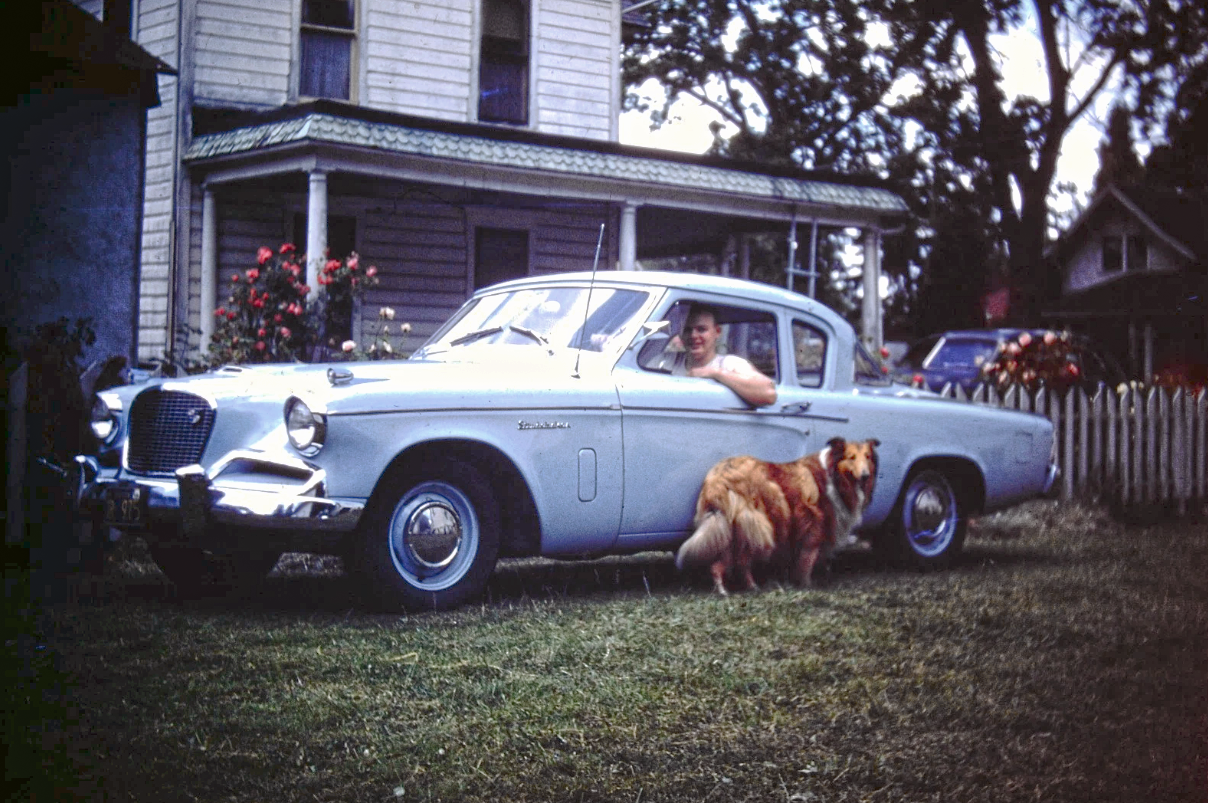
Our lead image was a 1956 Studebaker, either a Flight Hawk or a Power Hawk. A man was at the wheel, and Lassie was standing outside. The Flight Hawk was powered by a Sweepstakes 185 cubic inch L head 6 cylinder, while the Power Hawk used the Sweepstakes 259 ci V8.
For 1956 the sedans and wagons received a reskin, while the coupes were named the Hawks. There were two others; the top of the line Golden Hawk with a Skypower 352 ci V8, and second in rank was the Sky Hawk that used the Sweepstakes 289 ci V8.
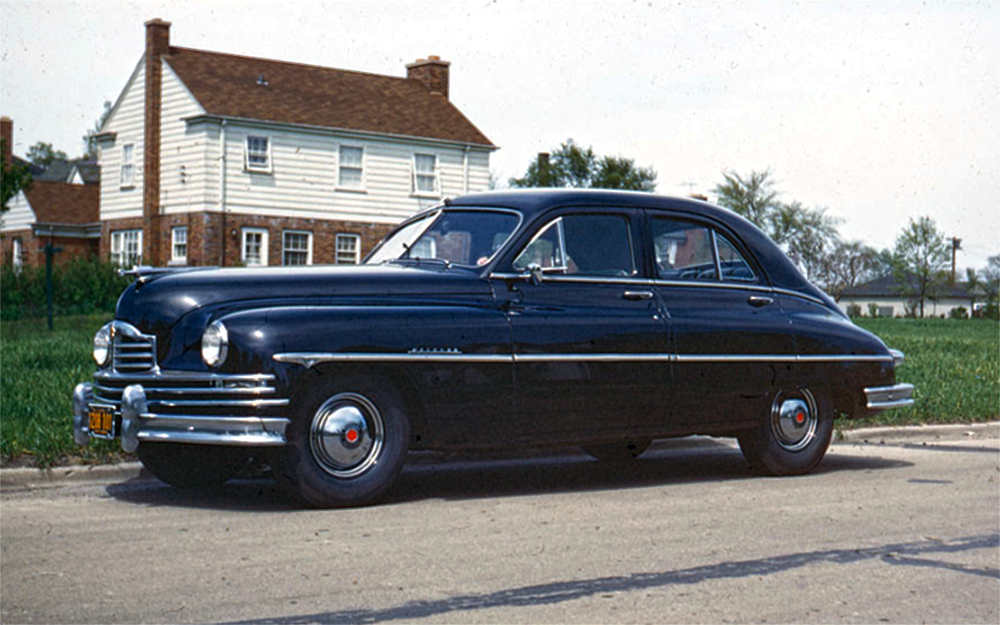
Here was a late 1949 or 1950 Packard Eight or Eight Deluxe Touring Sedan. It was the 23rd series, and their Golden Anniversary model. This was the entry level Packard, and most popular by a substantial margin.
The only engine available was a L head in line 8 cylinder of 288 ci with 135 hp. The Ultramatic Drive (automatic transmission) debuted in this series.
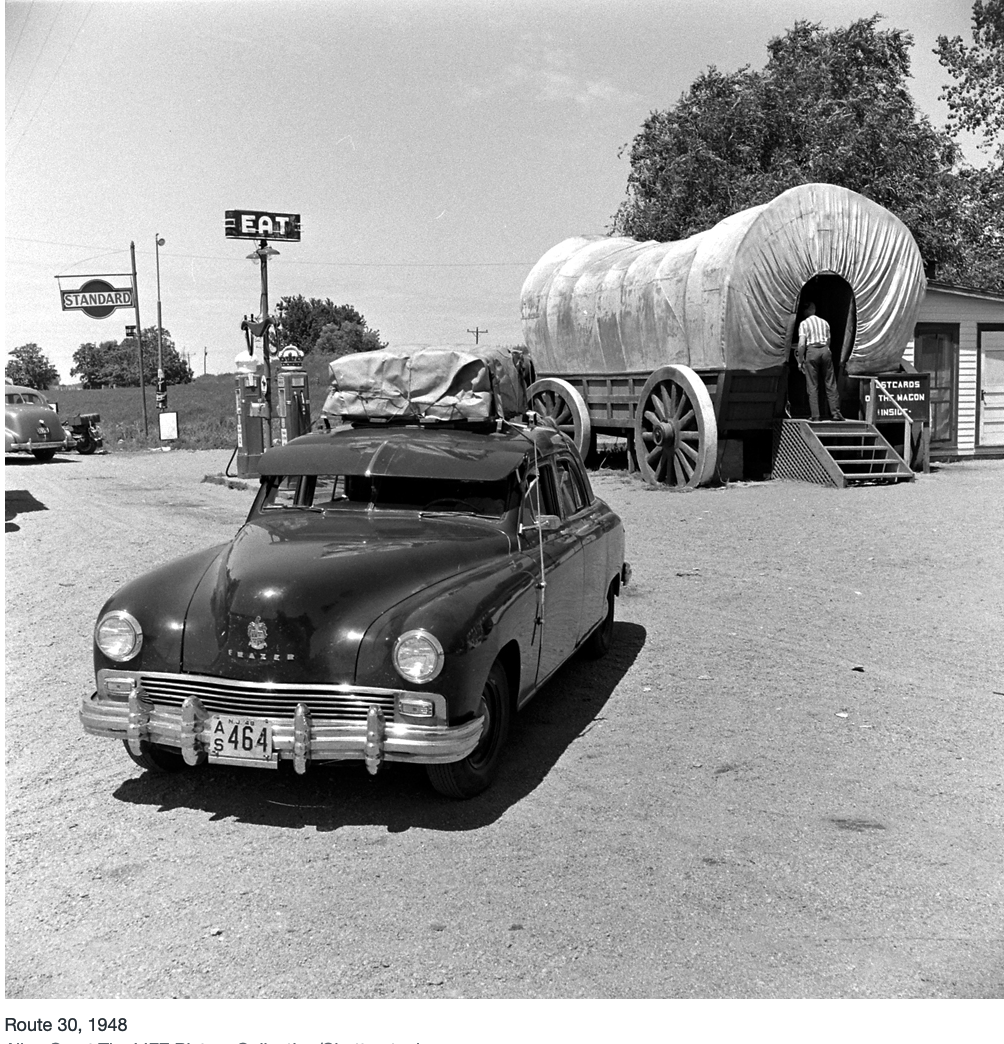
And a 1947 Frazer Standard with a sun visor and a New Jersey license plate that was traveling through Nebraska on U.S. Route 30 in 1948. This road had its origins as part of the Lincoln Highway, and it has since been superseded by IH 80. It looked like at least a gas stop, perhaps they had a meal and toured the covered wagon.
Frazier and its stablemate Kaiser claimed to be the first postwar all new car, and they did well in the first years aided by the pent up demand for new cars. It was powered by a 226 ci L head 6 cylinder with 100 hp.
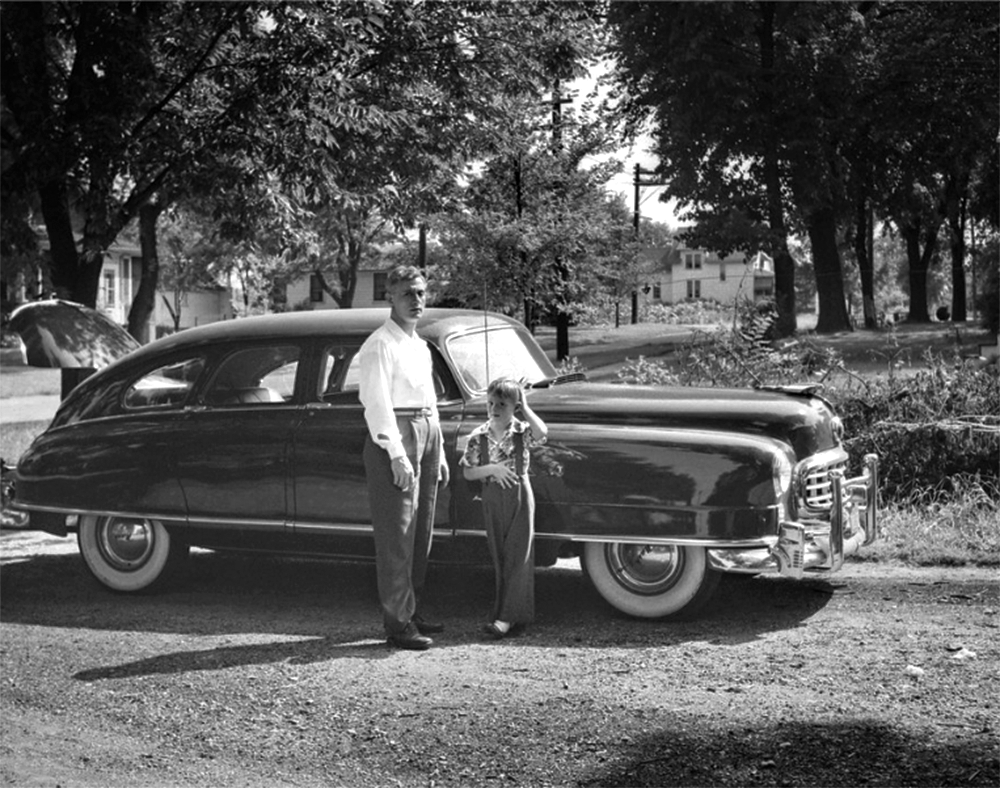
These two were posing by a 1949 Nash Ambassador Airflyte 4 door sedan with a grille guard, plus the standard bumper guards had been moved outward to the corners. This design was known as a “bathtub Nash”. It was all new for 1949 and was the beginning of a three year cycle.
The Ambassador had an overhead valve 6 cylinder of 234.8 ci with 112 hp. The shorter and less expensive 600 model made do with a 172.6 ci L head 6 cylinder with 82 hp.
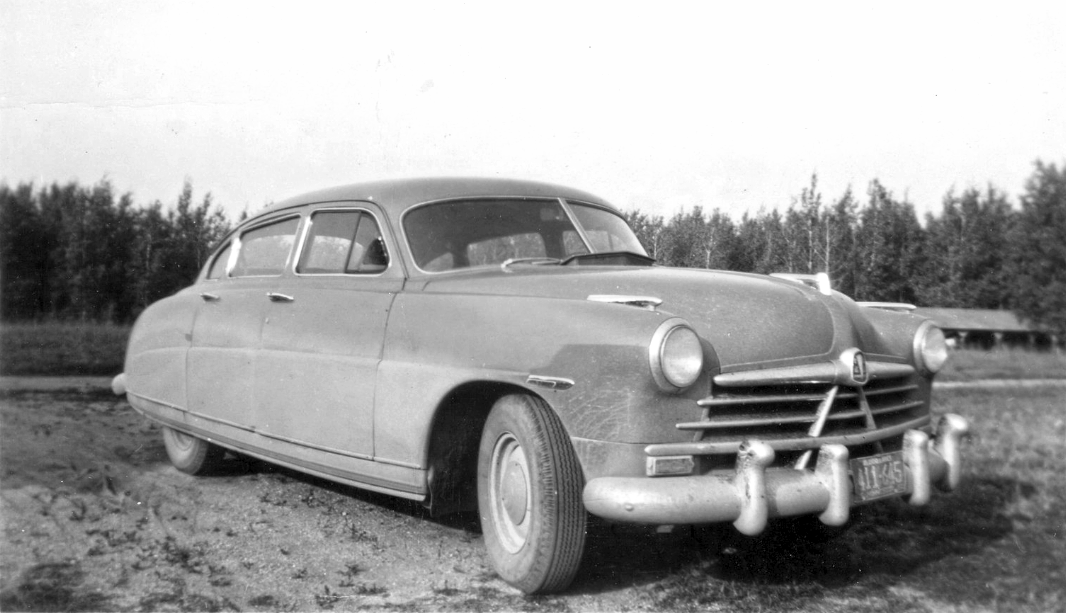
This one is a 1950 Hudson that could have used a bath, either an entry level Pacemaker, or mid level Super 4 door sedan. The Commodore was the upper end of the scale. This was the step-down design, where the floor was lower than the frame giving it a low profile.
Three L head in line engines were used in the power department, with a 232 and 262 ci 6 cylinder with 112 and 123 hp, and a 254 ci 8 cylinder with 128 hp.
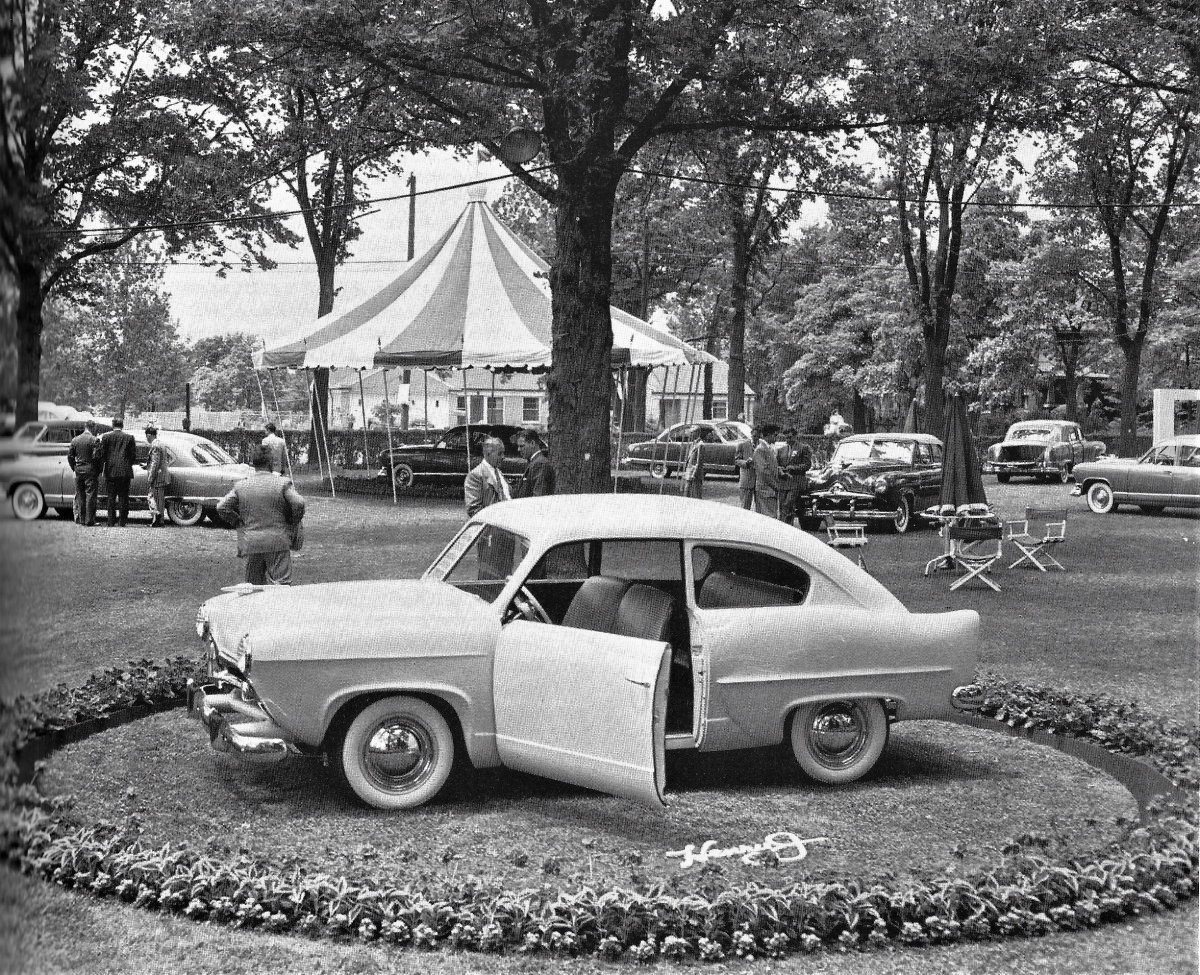
A local Kaiser-Frazer display showcasing the 1951 models was underway with the new Henry J in the center front, and a full selection of other models in the background. The Henry J was on the austere side as it did not come with extras such as a trunk lid. For trunk access you had to go through the back seat.
It was a compact car with an 100″ wheelbase, the same as the Nash Rambler, and was available in one body style, and Standard and Deluxe trim. The Standard had a 134.2 ci 4 cylinder with 68 hp and a base list price of $1363. The Deluxe model used a 161 ci 6 cylinder with 80 hp and was priced at $1499.
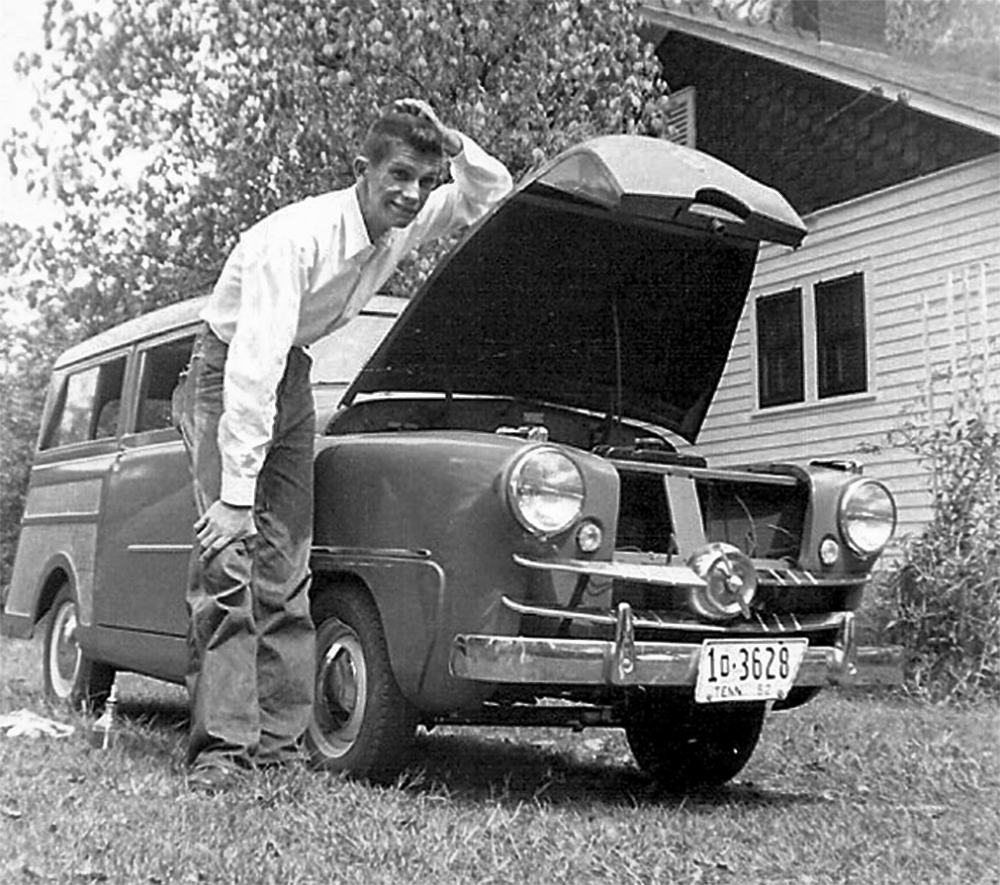
Now we have a sub sub compact, a 1951 Crosley Super wagon with a Tennessee license plate issued in Davidson County, where the seat is Nashville. It was offered in sedan, wagon , convertible, and roadster body styles, and Standard and Deluxe trim.
The wheelbase was 80″, and go power came from a 44 ci 4 cylinder with 26.5 hp. The featured Super wagon was the most popular, and the most expensive at $1077 list.
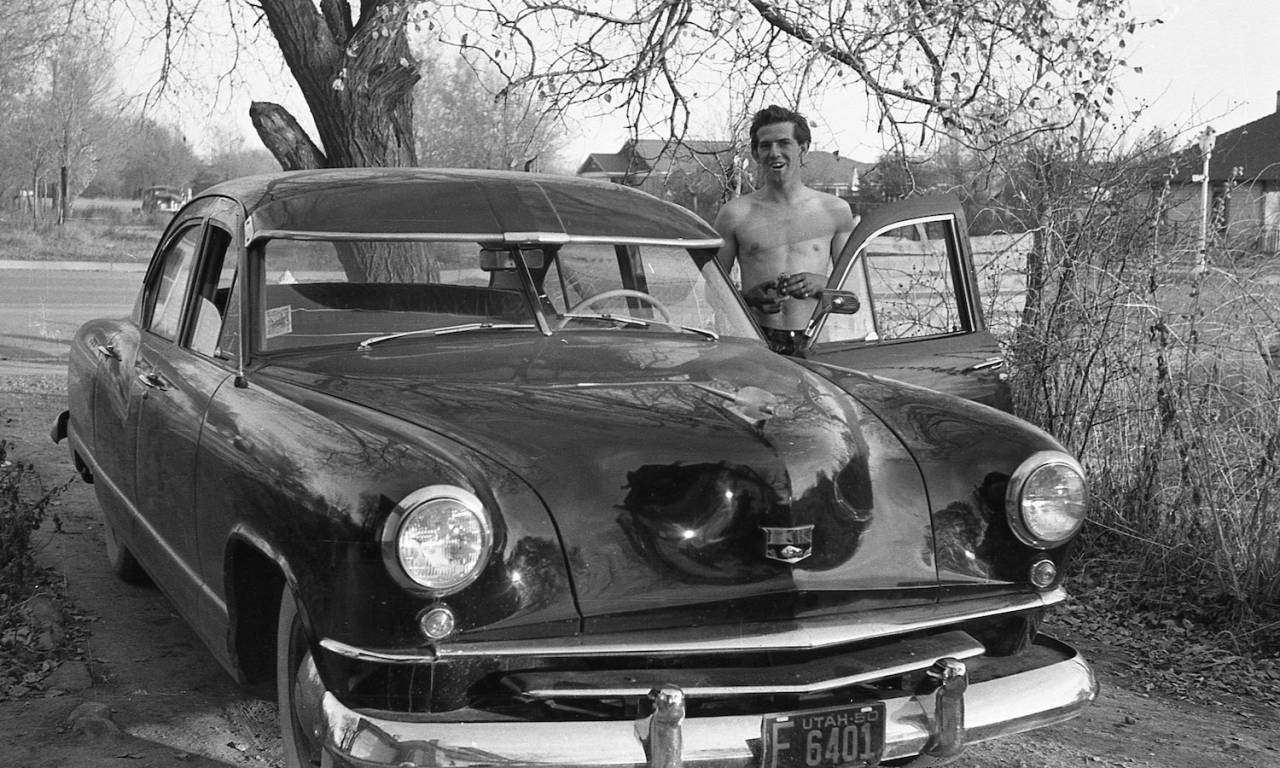
As the name suggests, Kaiser-Frazer also had a line with the Kaiser name, such as this 1951 Kaiser Special 4 door sedan with a sun visor and white wall tires. It was a new design and an early model as it had a 1950 Utah license plate.
Power came from the same 226.2 ci L head 6 cylinder that debuted in their 1947 models, though now it had 115 hp.
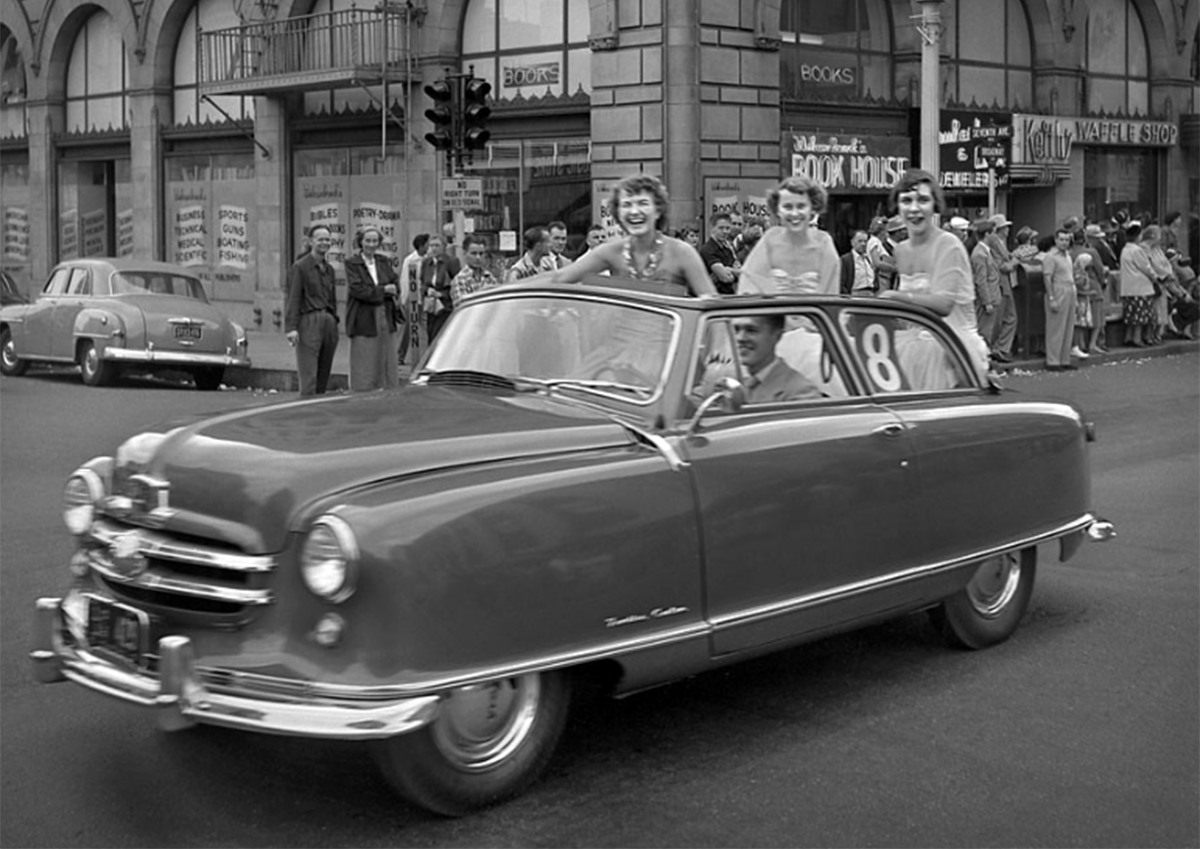
Three beauties were riding in a 1950-1952 Nash Rambler Custom Convertible Sedan that was part of a parade in San Diego. It appeared to have a dealer license plate, so the car (and maybe the driver) was provided by a local dealer.
It was an unique body style that was produced through 1954, and was powered by the Flying Scot 172.6 ci L head 6 cylinder with 82 hp. On the left edge was a 1951 Plymouth 4 door sedan.
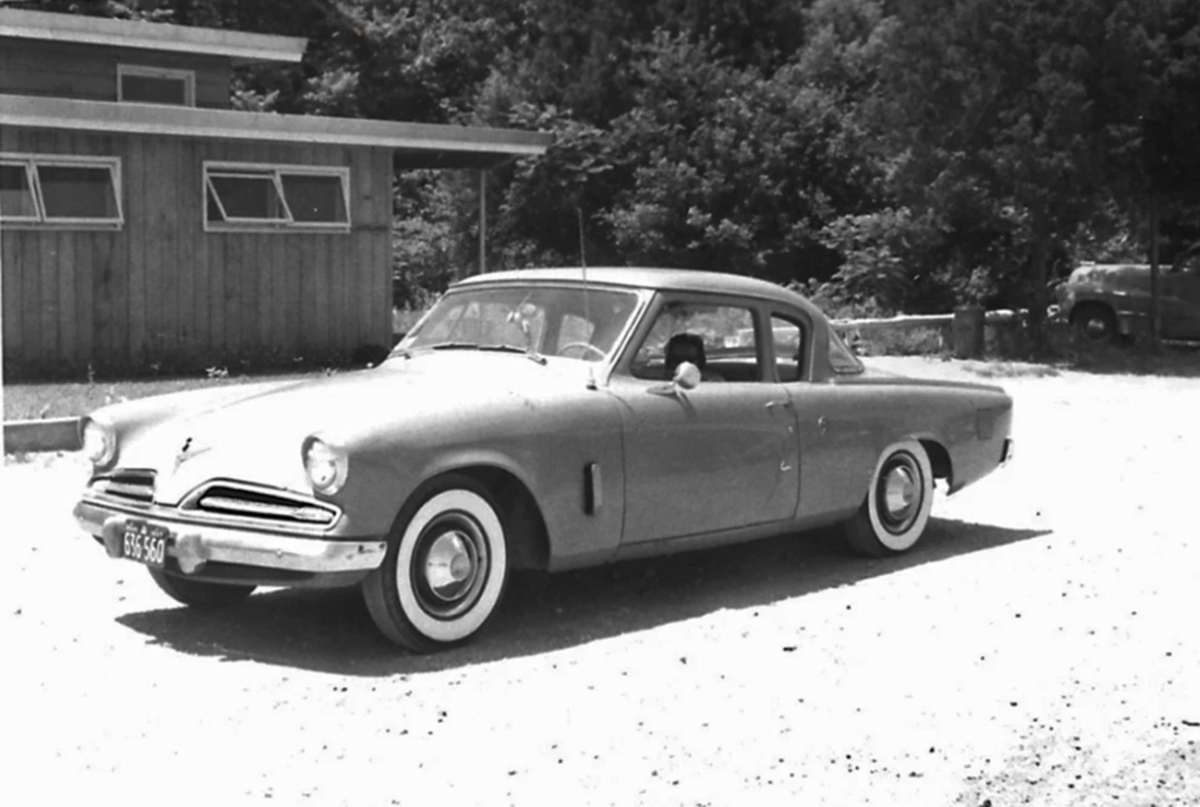
Here was a 1953 Studebaker Commander Deluxe Starlight Coupe with possibly an Ontario license plate. Whoever ordered this one was looking for the least expensive V8 coupe.
The radical new 1953 Studebaker used a carry over 232.6 ci V8 with 120 hp that was first introduced in the 1951 model year.
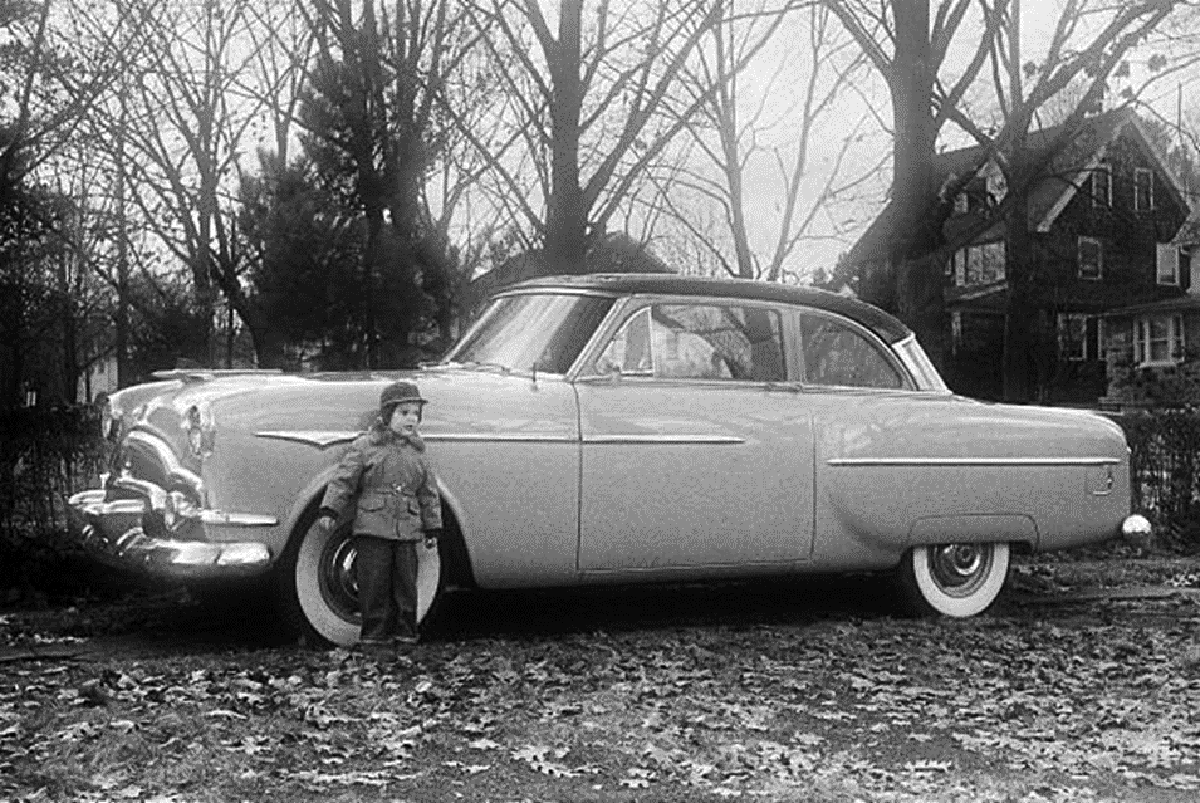
A young man was dressed for the cool fall day as he was posing by a clean 1953 Packard Clipper Club Sedan. This was Packard’s entry level model and it had a base list price of $2544.
Included in that price was the Thunderbolt 288 ci L head in line 8 cylinder with 150 hp.
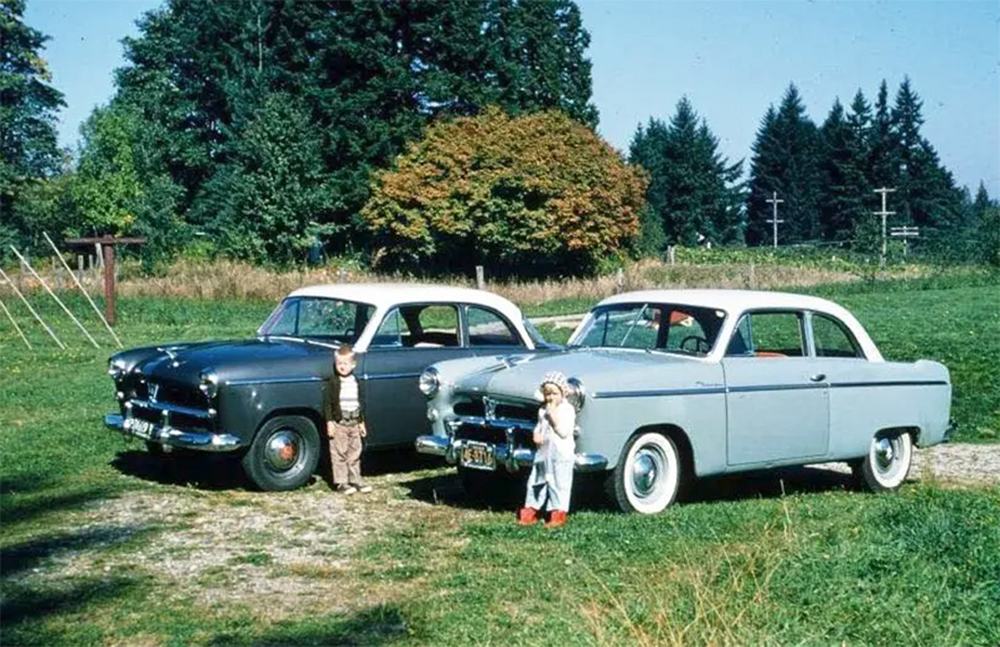
We have seen this image in the past; his and hers Willys Aero 2 door sedans. The boy had a grey 1954 Aero-Lark, while the girl had a baby blue 1952 Aero-Wing, as best as I can tell. They had different style license plates, neither of which I can read the details. This company also built the Willys Jeep.
The Aero was a compact built from 1952-1955 with three different 6 cylinder engines for power; a 161 ci L head Lightning 6 with 75 hp, a 161 ci F head Hurricane 6 with 90 hp, and in the last two years a 226.2 ci L head 6 with 115 hp was optional.
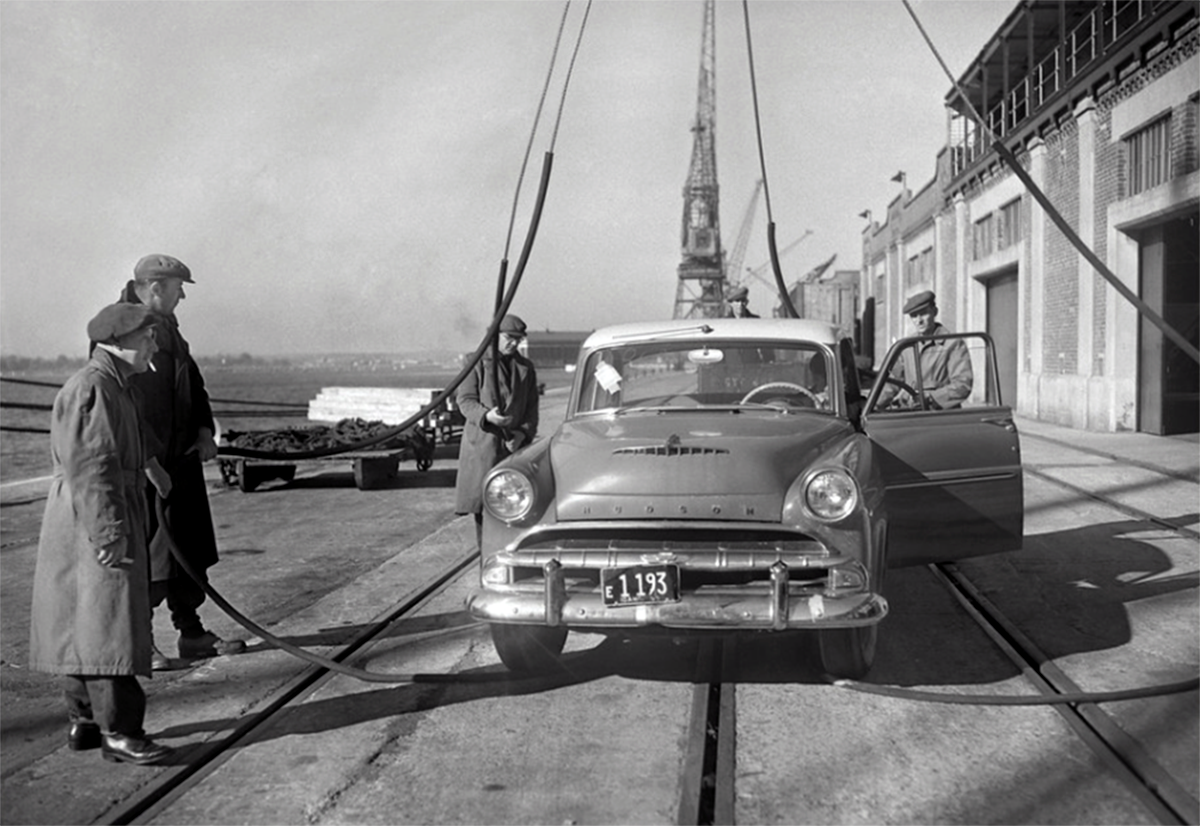
Here was Hudson’s entry in the compact market, the short lived Jet. It was produced from 1953-1954, and went away with the Nash merger. This image of a 1953 or 1954 Super Jet 4 door sedan was shot as it was arriving at a pier in England. That was a long way from Elmore County, Idaho, the home of the license plate, and where the county seat is Mountain Home.
The only Jet engine available was a L head 202 ci 6 cylinder in two states of tune; the standard 104 hp, and the optional “Twin H” dual carburetor version with 114 hp.
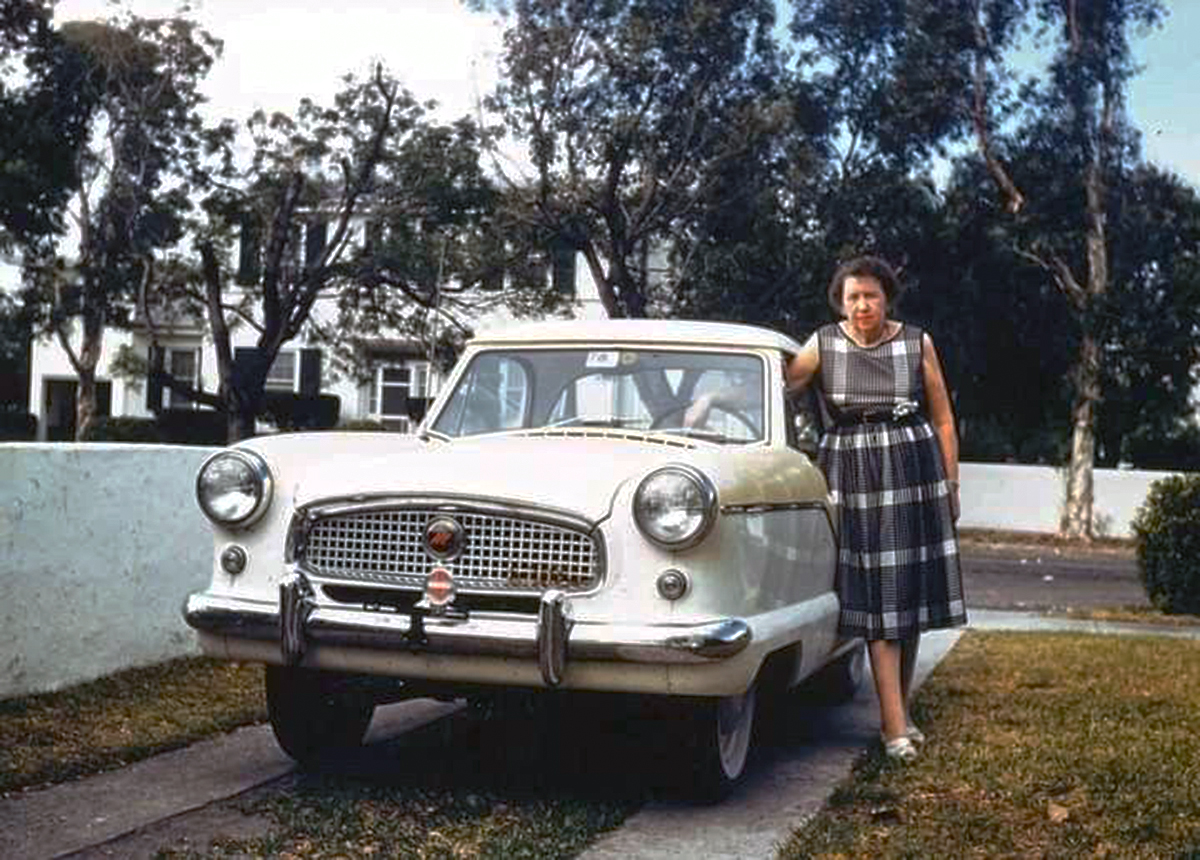
And a lady with a 1959-1962 Metropolitan 1500. The was a Series IV, with improvements that included vent windows and a trunk lid. It was the final edition of production that began in 1953. It was built for Nash/American Motors in England, and was a subcompact with an 85″ wheelbase.
Power came from an Austin overhead valve 1489.6 cc 4 cylinder with 55 hp.
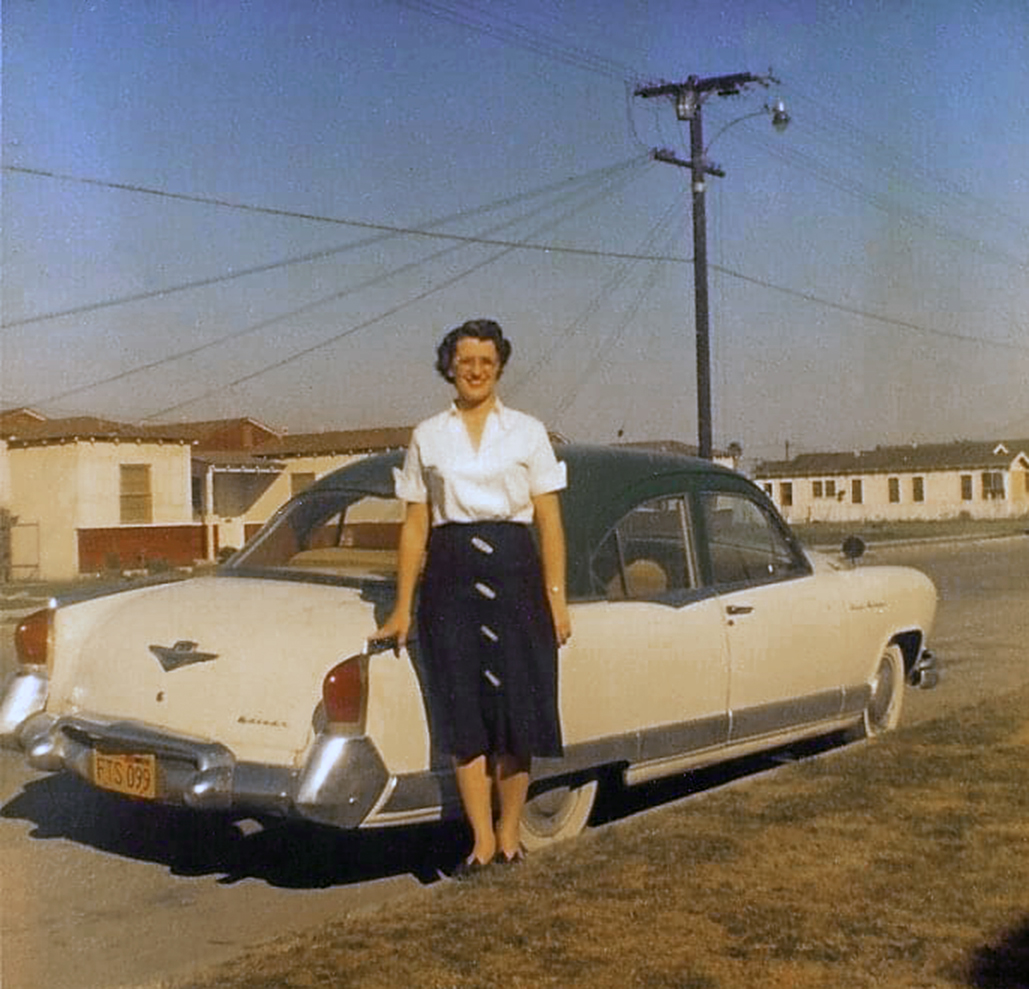
This one was a 1953 Kaiser Manhattan 2 door Club Coupe from California along with a happy looking lady. This was the top of the line model and the 4 door version was the most popular model for the year.
The 226.2 ci L head 6 cylinder was now up to 118 hp, and continued to be the only engine available.
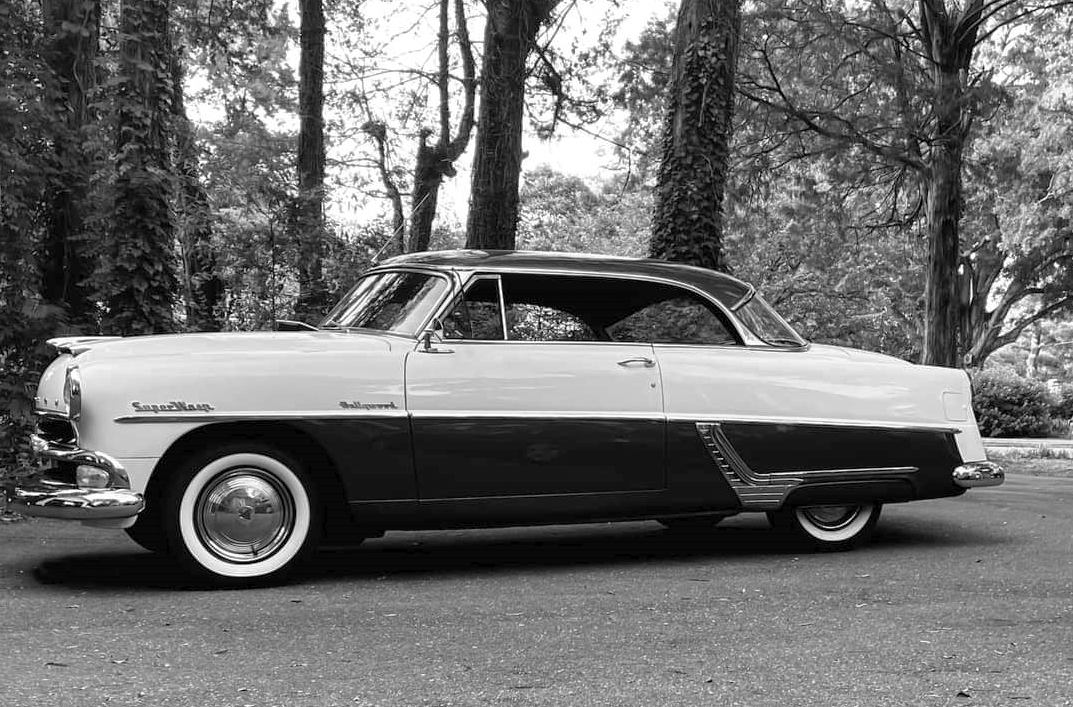
Now we have a sharp looking two tone 1954 Hudson Super Wasp Hollywood hardtop. The Wasp and Super Wasp had a 5 inch shorter wheelbase than the Hornet Special and Hornet, and this year brought a new reskin.
“Instant Action” L head 6 cylinder engines were used in the full size Hudson’s, with two versions of the 262 ci (140 and 149 hp) for the Super Wasp series.
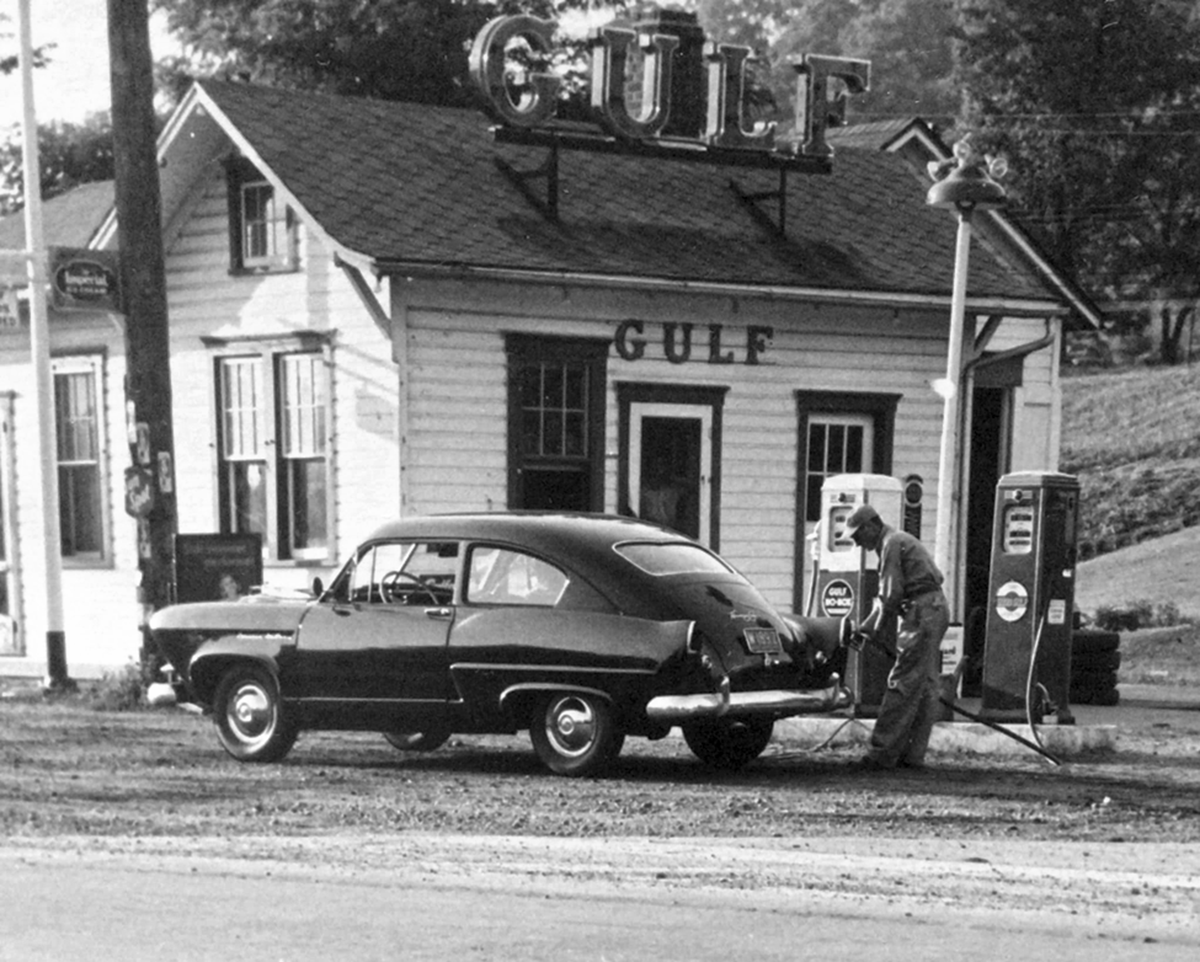
A man took a picture of his new 1952-1954 Henry J Corsair Deluxe while it was getting gas at a Gulf Station in Lowell, Ohio. The license plate looks like a Ohio 1953 issue.
There were some minor style upgrades in 1952, but the engines remained the same over its four year existence.
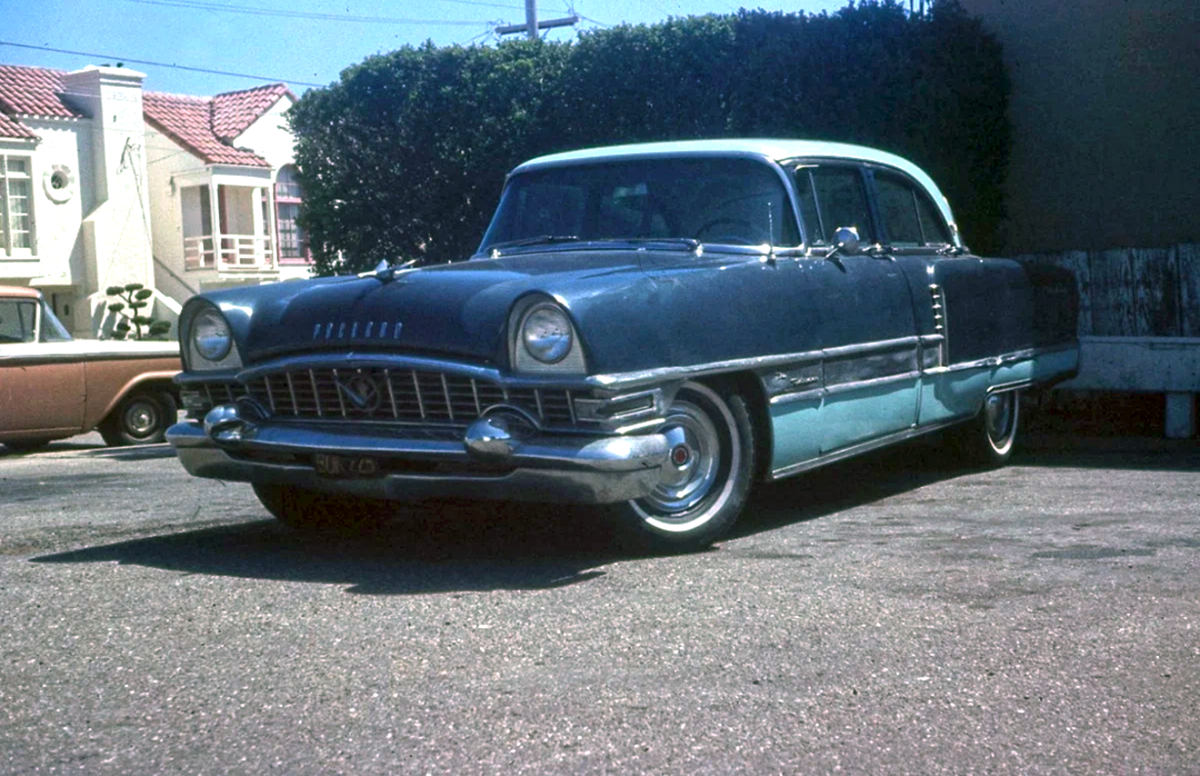
We will close with a three tone 1955 Packard Patrician that was on the rough side. The license plate was partially obscured, but going by the colors, and the building in the background, I would say it was California. It looks like an original issue black plate, so this photo was likely 1964 or later. So, a ten year old top of the line orphan Packard. I wonder how much it was worth.
This was the first year of the new Packard overhead valve V8, and in this series it was 352 ci with 260 hp. To the left was a 1959 Ford Custom 300.
Thanks for joining us and have a great day!























I know the ’55 Packard is in rough shape but it sure still looks stately. CC has over the years done a phenomenal job with detailing Packard’s fall from grace in the 50’s.
I’m betting it was photographed in San Francisco, most likely in the Sunset.
Agreed. It looks like the middle part of the Sunset. That front porch of the house on the right sure is distinctive b
Great set of pictures. There must be a story behind the Idaho Jet in England. Hudson had a sizable factory in England, so this wasn’t the easiest or cheapest way to get a Hudson!
Great subject matter for an article.
Nice spread of cars here .
I love the Nash Metropolitan having owned two .
It has the National Metropolitan Club badge , “Motores Prudentes” .
-Nate
I love a good license plate mystery, and it seems that the two plates in Picture #12 (his and hers Willys Aeros) are late-1950s plates from Washington and Oregon.
The Washington plate is hard to pin down to an exact year, since it’s tough to see the details of any registration tab or sticker. The Oregon plate is probably from 1958-59, when Oregon used bare aluminum tabs in the upper-right corner, which this plate appears to have.
A fantasy of mine is recreating the Chicago Auto Show between the years 1950-1954. The signs, brochures, models and cars on slowly spinning stages. I believe that there are enough classic car clubs to pull it off. This year’s Chicago show was a pathetic shadow. Most all my life, it was a big deal. As late as 2015, the Show was still a place to sell new cars and trucks. Not now.
If I was able, I’d have a floor of the recreated 1953 Chicago Auto Show and a floor of the 2027 Chicago Auto Show. I’d charge entrance fees for the 1953 Show, that’s separate from the 2027 Show.
I believe that a show like that would be very popular and perhaps spur similar shows. Many would like to see a 1965 Chicago Auto Show, or a 1985.
If Chicago Auto Show is serious about selling the future shows, putting in a recreated auto show would do it.
A “what if” 1950 Studebaker Starlight Coach, based on the Starlight Coupe design. The postwar independents had a futuristic styling that pre-dated the jet age look, which I always thought was rather cool looking.
Now then you mention it, I found this CC article about the 1947 Studebaker wagon that almost have.
https://www.curbsideclassic.com/vintage-snapshots-and-photography/vintage-pr-photo-1947-studebaker-woody-wagon-prototype-it-was-pulled-from-production-at-the-last-minute-but-later-rescued-and-restored/
And no, my rendition is not AI. It is 100% my styling rendition – rather crude, but it gives a good idea of what a Coach would look like.
That’s a big-a$$ Conestoga in that third picture.
https://yesterdaystrails.wordpress.com/2024/11/06/bg283-the-covered-wagon-roadside-attraction-on-hwy-30-in-kearney-nebraska-1942/
Here’s a more recent pic.
The Starlight coupe was a brilliant design that still looked good as Econo 2 doors in those Hawk versions. If cars had sold on beauty alone they should have been world beaters. It’s a car I regret never having owned.
The kid in the picture of the ’53 Clipper could have been me, I was 3 that year and just about that size. Grampy had a blue ’52 Hudson Hornet that was fascinating to me, I loved just to look at the grille.
That building in the San Diego picture looked familiar to me and here it is today.
Crosley Car Owners Club membership is free, there are no dues, and actual Crosley ownership isn’t mandatory, though most members have at least one.
I know power outputs were lower then, and without doing some homework, which I haven’t, it looks like both power and specific power, per displacement were low for the relatively small companies that didn’t survive.
Now I’m extrapolating a bit here, but it’s almost like people might drive one of the independents, test drive, then one of the big 3 and while not being in a race at all, just go, yeah, I like driving this better. Not speed, just “pickup” off the line. Move into traffic without trying to push the pedal thru the floor.
Anyone confirm or deny my hypothesis, that the independents were lower powered?
“L” or flathead engines have inherent limitations that make high specific output difficult. Combustion chamber shape limits compression ratio and breathing is limited. Also they were long stroke, small bore, limiting rpm, which limits peak hp. Granted, Pontiac kept flatheads until ’55 and the Plymouth six until ’60, but had optional V-8’s long before that.
I didn’t know that the Henry J had frame-less doors!