
Text by Patrick Bell
The Chrysler Corporation built some popular cars that became classics during this time period, and that is what we are featuring today. Most of them were the muscle car variety, and all of them were as seen back in that era. They were affordable when new, which added to their popularity. In today’s world they remain very popular, but the affordability has long since faded away. Let’s take a look.
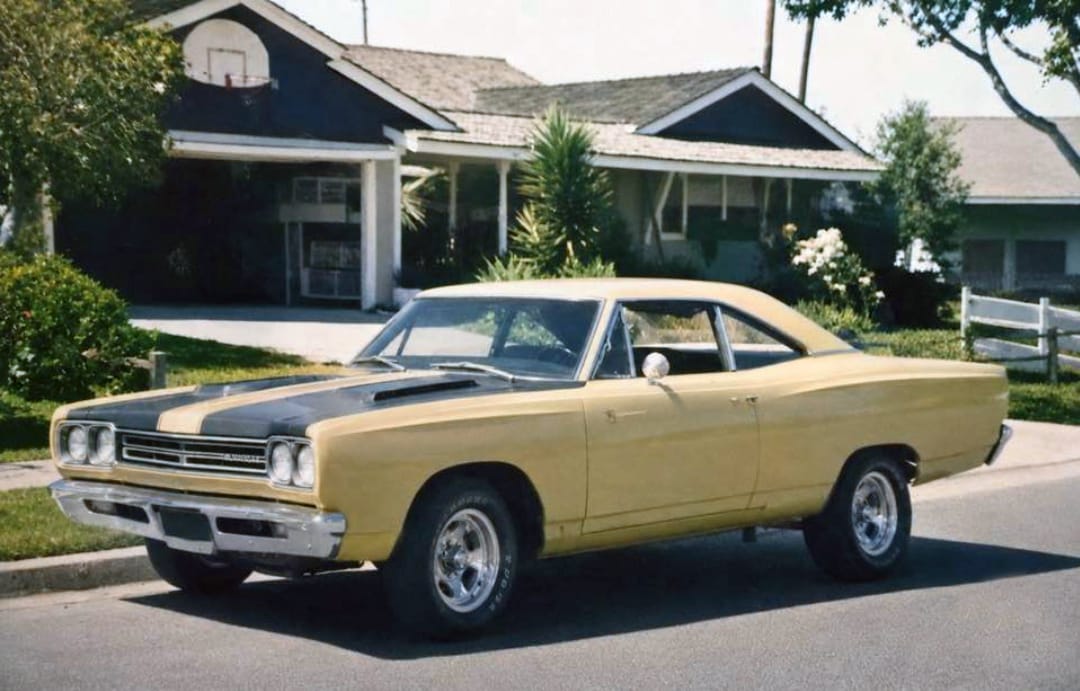
Our lead image was a 1969 Plymouth Road Runner Coupe, or perhaps a Road Runner clone. The hood looked like an aftermarket copy, the nameplate in the grille belonged on the hood edge, the Road Runner emblem on the door doesn’t look quite right, and the side markers were filled in or airbrushed out of the image. But it was someone’s pride and joy, and they dressed it up some more with aftermarket wheels and tires.
The Road Runner Coupe debuted in 1968 and was based on the entry level Belvedere trim with a standard “Road Runner 383” cubic inch V8 with a 4 barrel carburetor, dual exhaust, and a nice option list. The Hardtop with Satellite trim arrived later in the year, and a convertible came out in 1969.
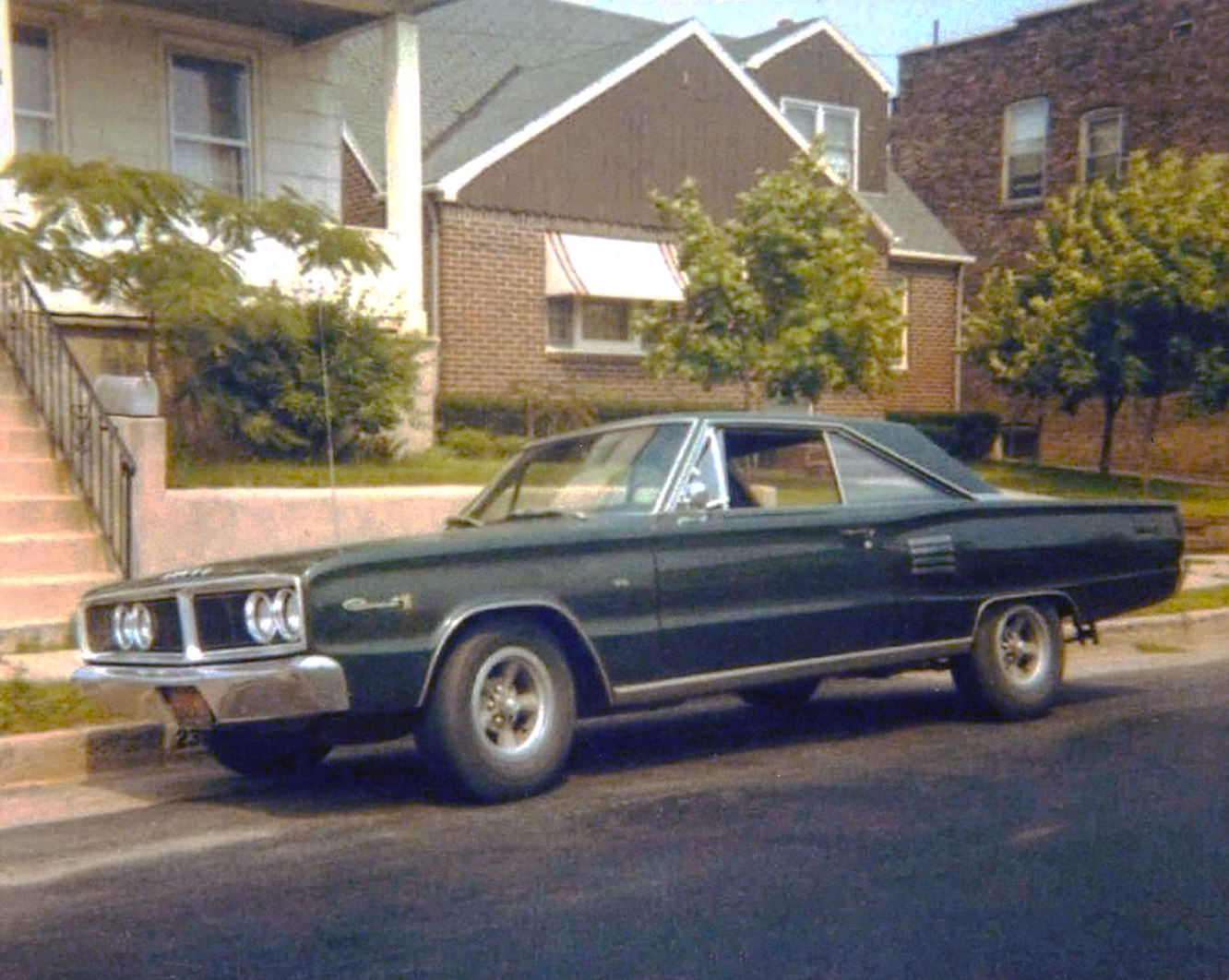
Here was a 1966 Dodge Coronet 500 hardtop, the sporty model of the Coronet line. It had aftermarket wheels and perhaps a New York license plate. A 273 ci V8 was standard, along with a bucket seat and console interior.
The Coronet 500 was not necessarily marketed as a high performance car, but the options were there if you wanted them to build you one. Such as a 383 ci V8 and 4 speed transmission.
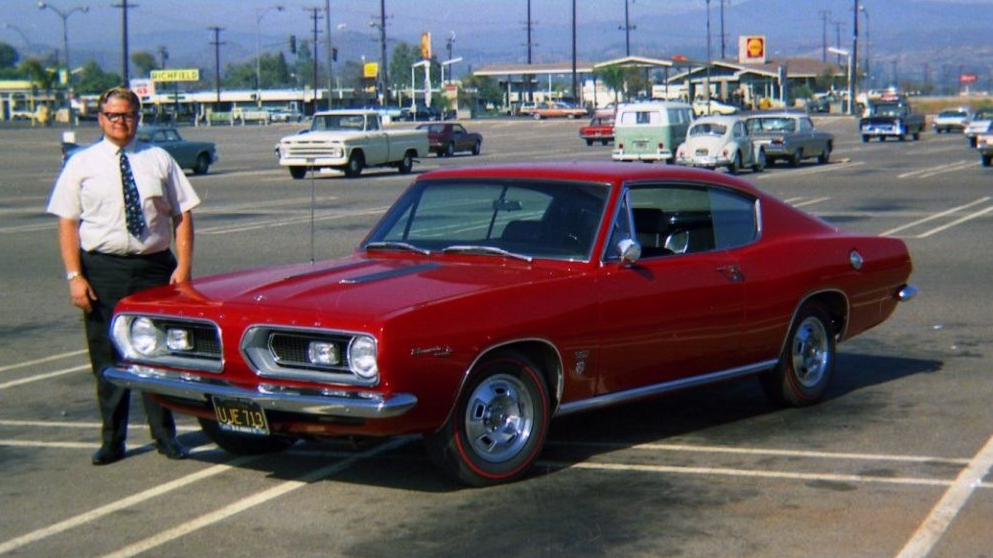
And a man was posing with a sharp 1967 Plymouth Barracuda Formula S Fastback in a parking lot likely somewhere in California. It looked close to new, and was optioned with the 383 V8, remote control mirror, red line tires, and bolt on wheel covers.
The Barracuda was restyled that year, and a coupe and convertible model were available as well. The Formula S package was the box to check if you wanted high performance, with a 273 ci V8 with a 4 barrel carburetor as the base engine, and the 383 V8 was optional.
There was a variety of interesting iron in the parking lot that day, plus two gas stations in the background.
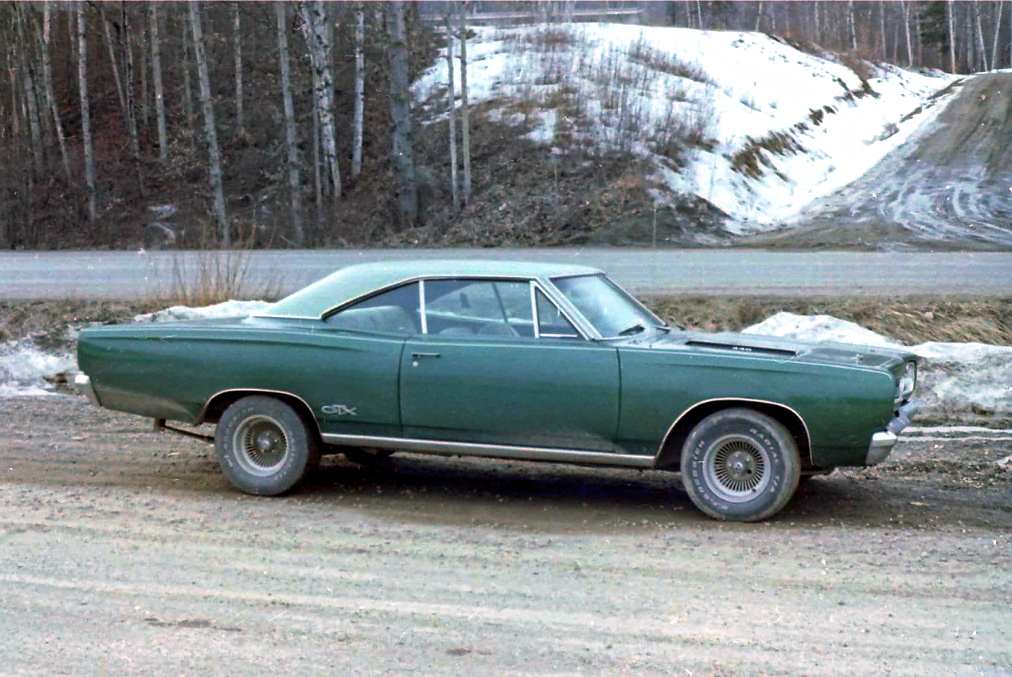
This one was a 1968 Plymouth GTX hardtop with the standard Super Commando 440 ci V8, and optional vinyl roof or two tone paint to go with the owner added wheels and spring shackles. The standard side stripes had been removed.
The GTX was Plymouth’s first mid size performance car, and was based on the high trim Sport Satellite. It’s base list price was about $300 more than the Road Runner hardtop.
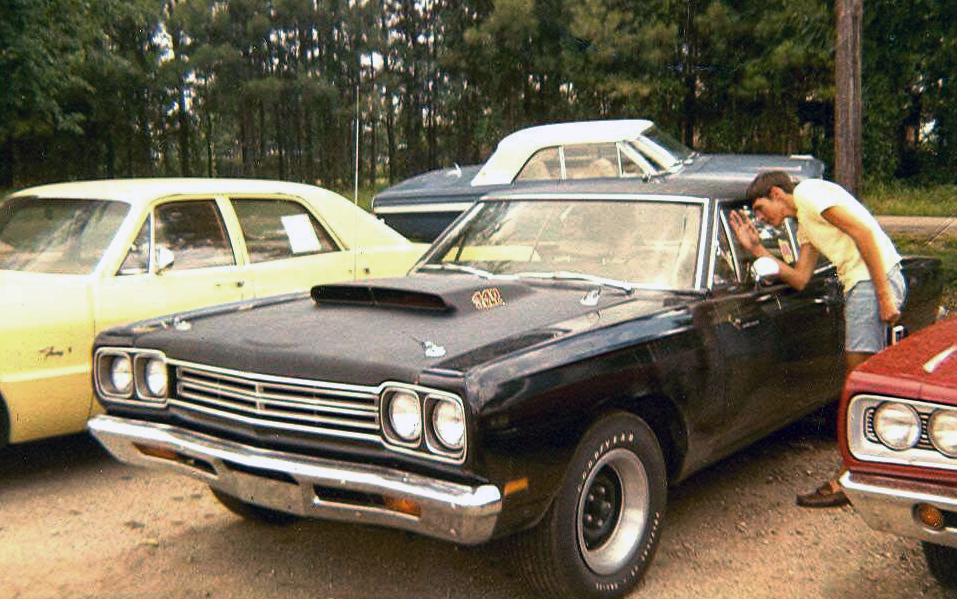
A man was checking out a 1969 Road Runner hardtop with an aftermarket hood that claimed a 440 V8 resided underneath. That was a fairly typical upgrade once the original 383 was trashed. The image notes indicated this was a 1970 photo, so it had a rough life.
To the left was a 1970 Plymouth Fury I 4 door sedan, and to the right was a 1969 Dodge Coronet. Parked in the back was a 1964 Ford Fairlane 500 2 door hardtop.
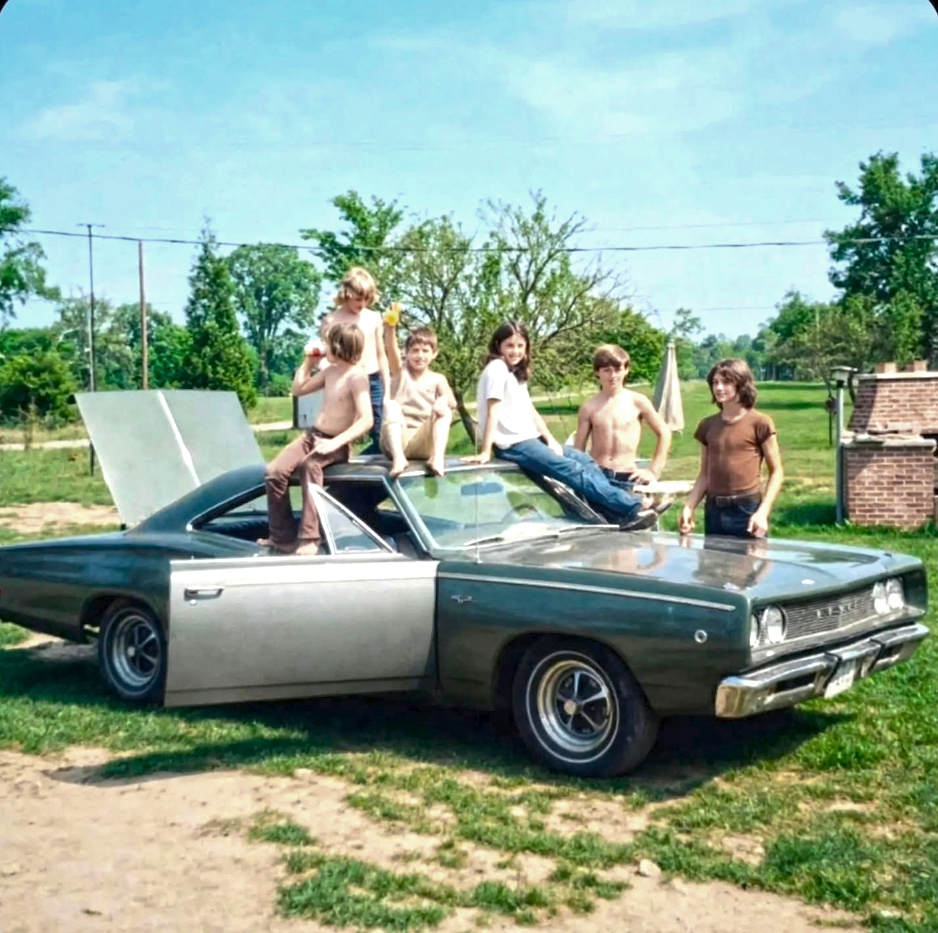
A group of juveniles had taken over this 1968 Coronet 440 2 door hardtop that was equipped with the optional Chromed Road Wheels and bumper guards.
The “440” was a series name that had no bearing on the engine size. It was the mid line series, between the entry level Coronet Deluxe, and the “luxury” Coronet 500. Available engines included the Slant Six, and V8’s in 273, 318, and two versions of a 383 cubic inch.
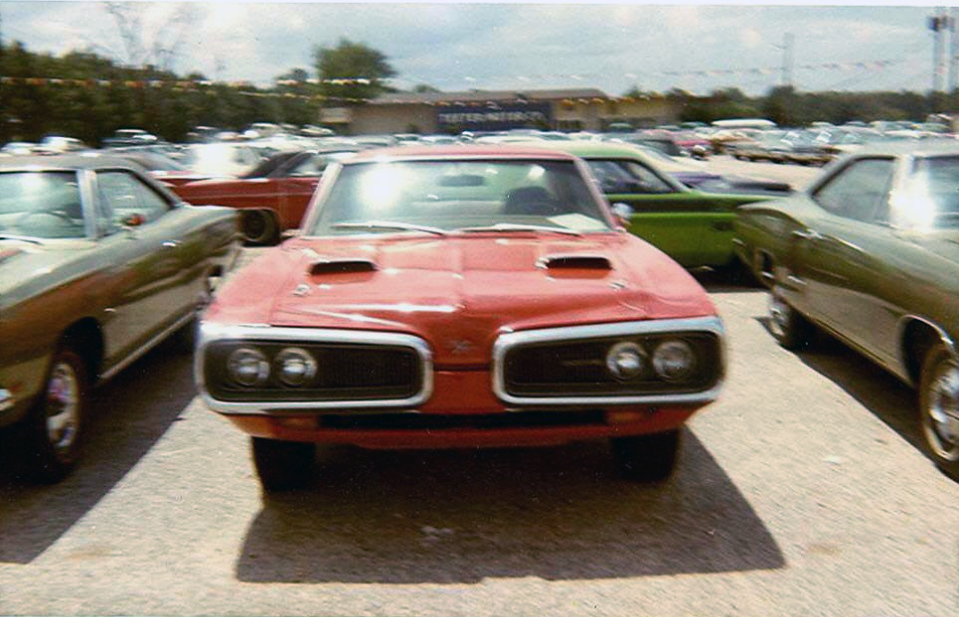
Here we are at a dealer’s lot, with a 1970 blurry image of several units. In the forefront was an Arrest Me Red 1970 Coronet R/T, with a 1969 Satellite 2 door hardtop on the left, and a 1970 Coronet 500 2 door hardtop on the right. Behind them was a “Sublime” green 1970 Challenger T/A.
The Coronet R/T was Dodge’s first mid size performance model that was based on the Coronet 500, but with a standard 440 Magnum V8. A Six Pack version (beginning in 1970) and 426 ci Hemi were optional.
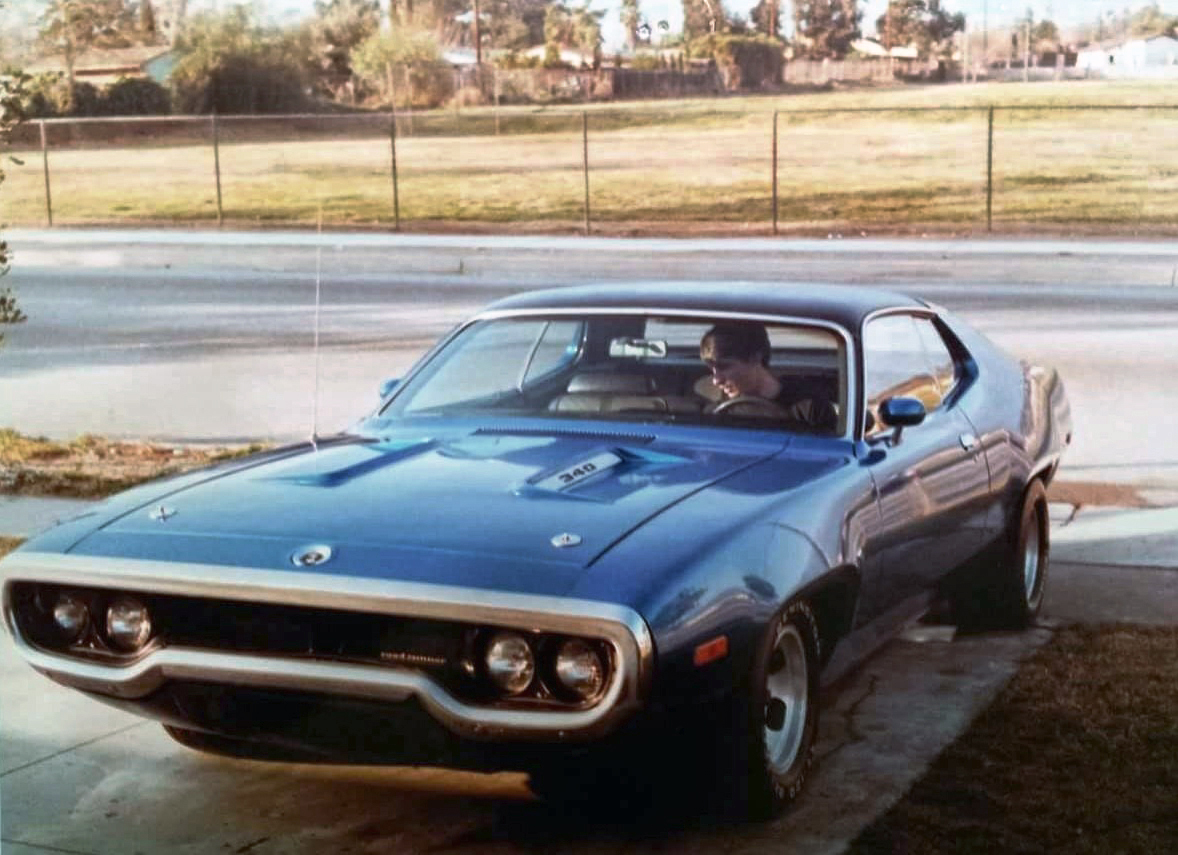
A man was sitting in a 1972 Road Runner with a 340 ci V8, a Canopy Vinyl Roof, Hood Pins, and aftermarket wheels and tires.
A 400 ci V8 was now standard on the Road Runner, with the 440 and 440 Six Barrel optional as part of the GTX package. A new option that year was the 340 V8. The 426 Hemi had been discontinued.
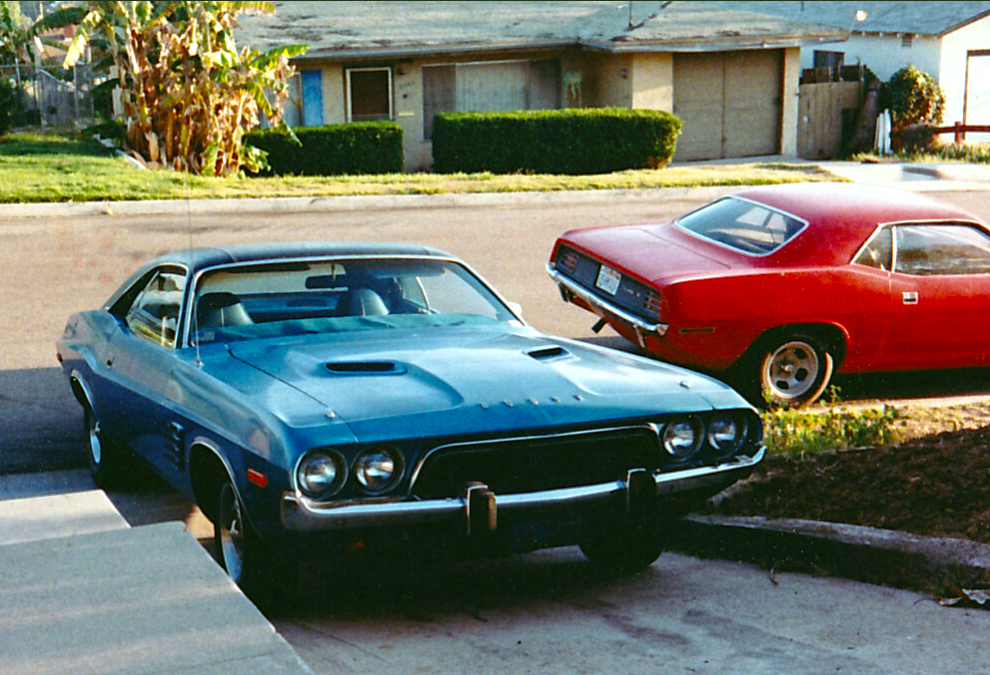
This household taste’s were easy to discern, with two of a kind parked out front. A 1973 or 1974 Challenger Rallye occupied the driveway, and it had escaped the modifier’s touch. Visible options were a vinyl roof and Rallye Wheels. In the street was a 1970 ‘Cuda with aftermarket wheels at least on the rear, and a damaged rear bumper lower valance panel.
The Barracuda was an all new style for 1970, and the Challenger version debuted at the Dodge dealers. They were available with a full array of high performance engines and related hardware, but the muscle car era was fading fast by then.
The house across the street was overdue for some roof work.
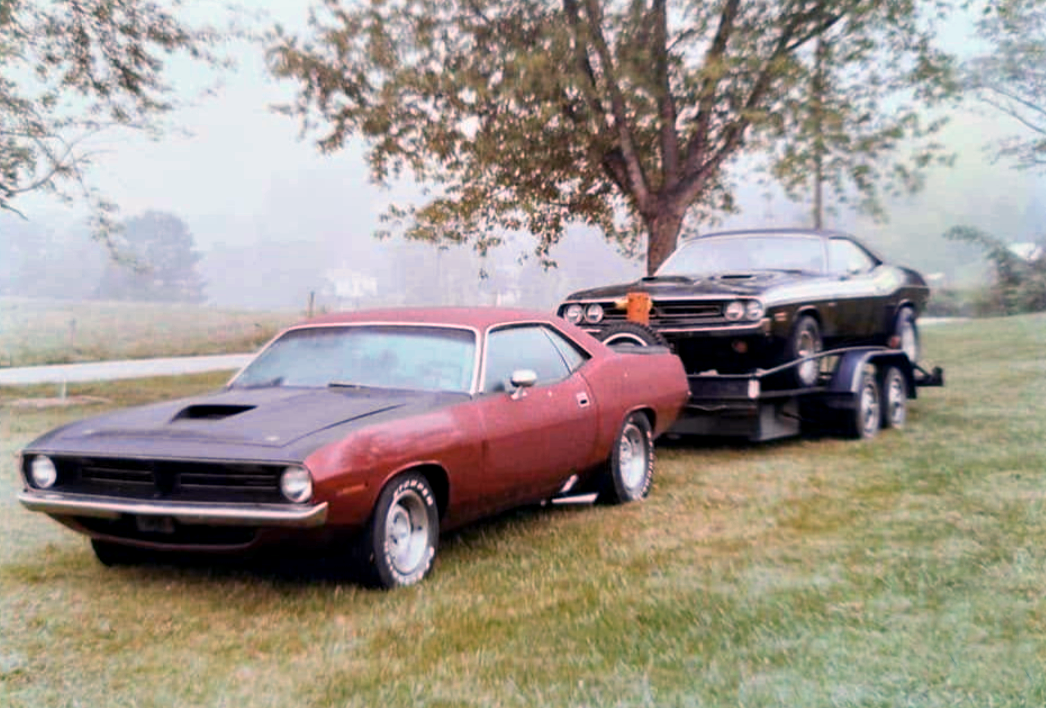
Here was a similar situation. In front was a 1970 AAR ‘Cuda without the graphics, or a good clone. The hood, black out paint, and exhaust all look correct. The AAR (All American Racers) was a mechanical twin to the Challenger T/A (Trans/Am) in image #7. They both were special edition street cars designed to meet the requirements for the Sports Car Club of America (SCCA) Trans Am racing series. They were equipped with a 340 Six Pak V8 (3 2-barrel carburetors), fiberglass hood with scoop, dual exhaust that exited before the rear wheel, and stripe kits that were the most obvious differences from the regular production cars. 2724 AAR’s and 2399 T/A’s were built for only one year.
On the trailer was a 1971 Challenger R/T with aftermarket wheels and tires. And I seriously doubt the ‘Cuda was pulling the Challenger.
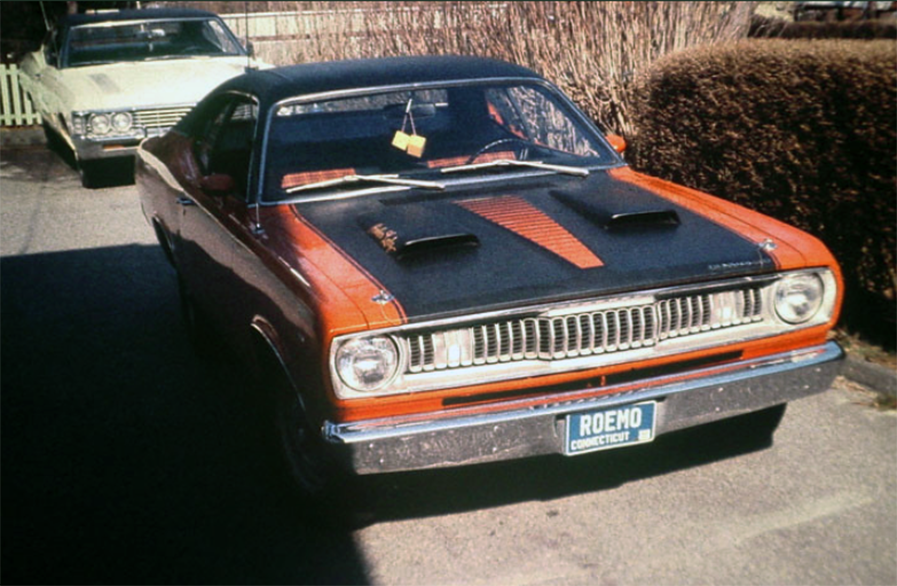
“ROEMO” was a 1971 Plymouth Duster 340 from Connecticut. It was optioned with a vinyl roof, and as far as I can tell the hood scoops, pins, and paint treatment were not factory options. Parked behind it was a 1967 Chevrolet Impala Sport Coupe with a vinyl roof.
The Duster 340 was the performance model of the highly successful Duster that debuted in 1970 as the lowest priced Plymouth.
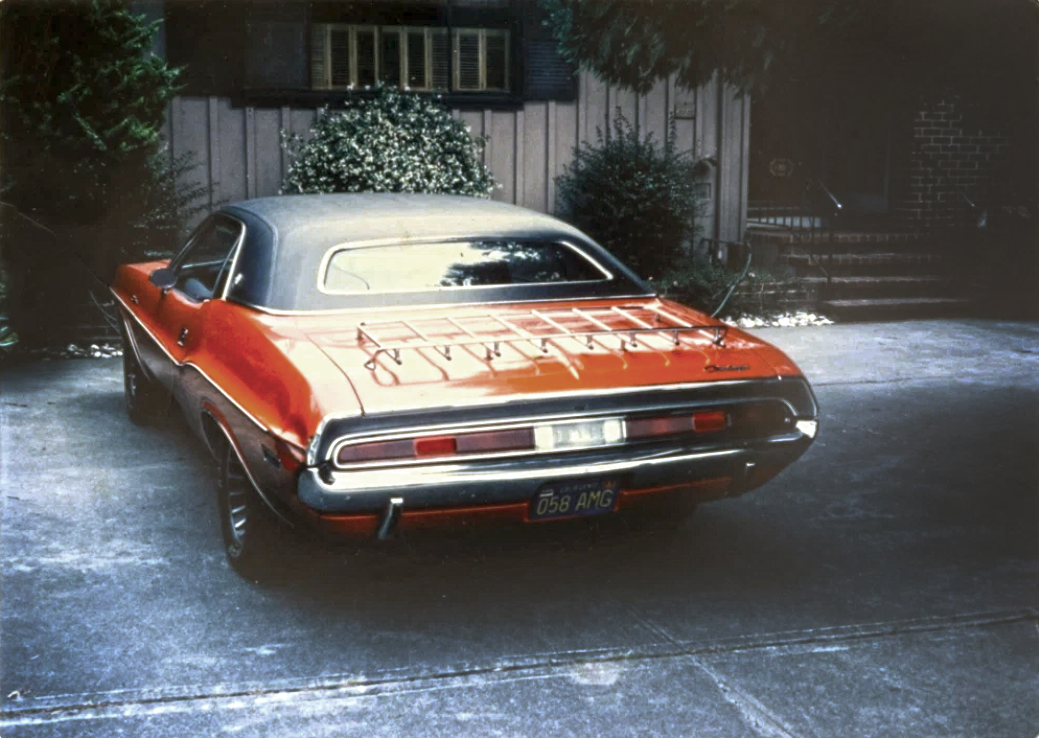
And a 1970 Challenger SE with some quarter panel damage on the left side. The vinyl roof with the small back glass was standard on the SE, and options include the deck lid rack and body side moldings. The wheels looked like they were aftermarket, and it had a California license plate.
The SE was for “the formal type”, per the sales brochure. Also standard were leather seats and door trim, and an overhead console with warning lights. The price premium over the base Challenger was $232.
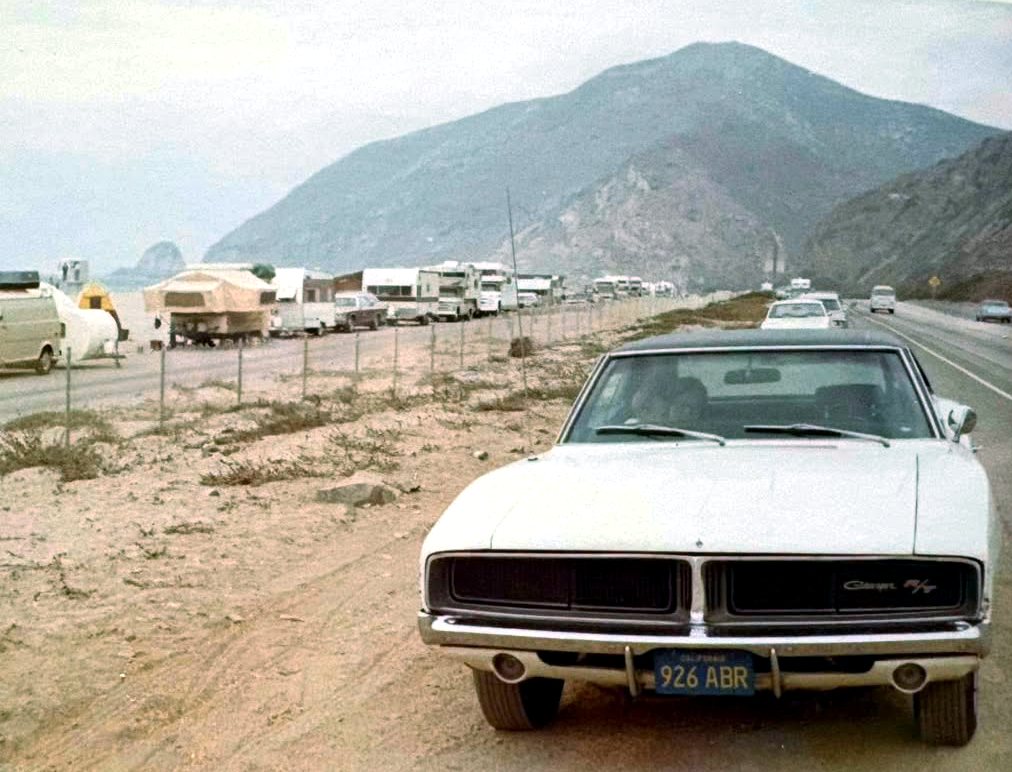
A 1969 Dodge Charger R/T was taking a break along a highway that bordered a camping area. It had a vinyl roof, remote control mirror, slight damage to the front edge of the fenders and the grille center bar, and a California license plate.
The Charger was a unique and popular model in the Dodge line up during this era. It was mid sized, and shared platforms with the Coronet and Plymouth Belvedere. The only body style offered was a 2 door hardtop, and of course the R/T was the performance model with a standard 440 ci Magnum V8.
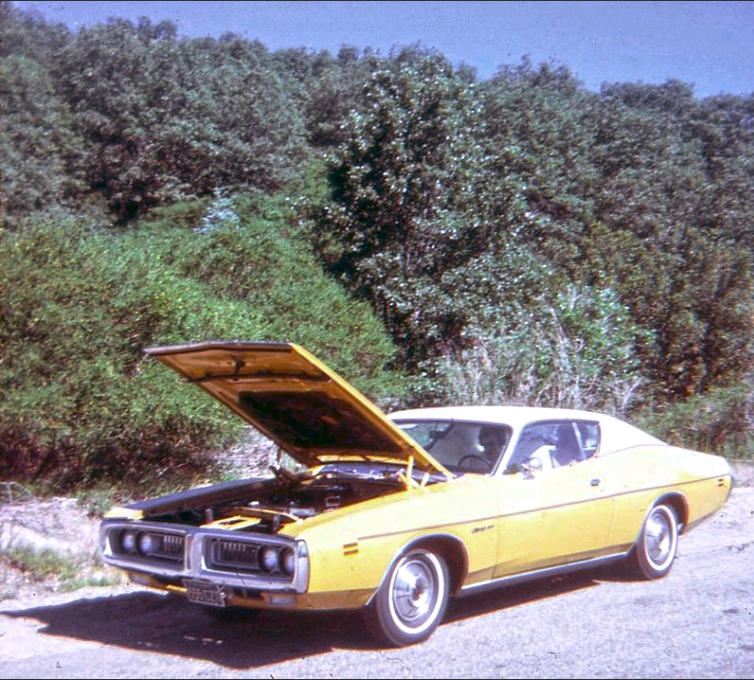
The 1971 intermediate platform restyle is shown here in this 1971 Charger 500 that may have been stalled on the road. It possibly had a white vinyl roof to go along with the white interior.
The restyle eliminated the Coronet coupes, so a couple more models were added and the Charger was now the only mid sized coupe in the Dodge line.
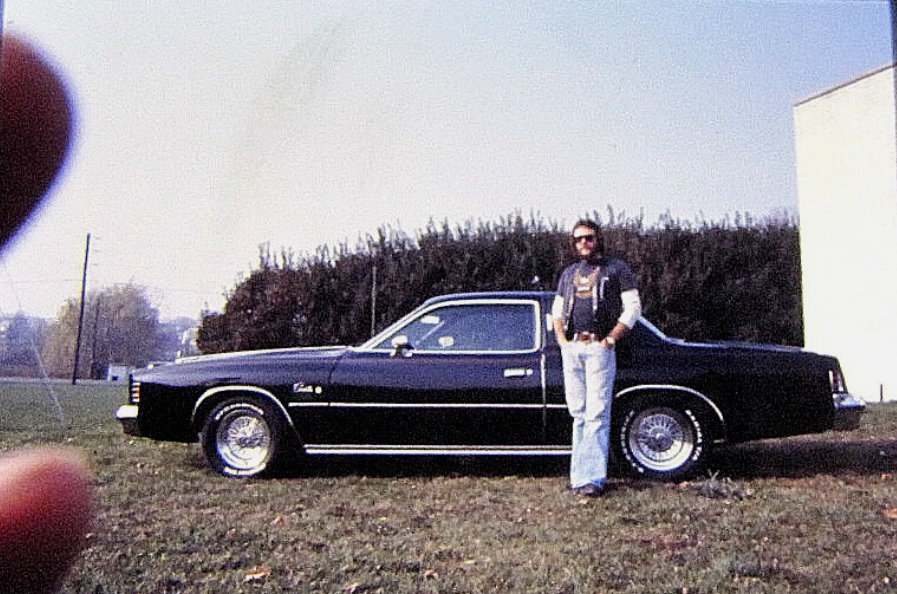
Chrysler introduced the Cordoba for the 1975 model year as their “small car” to be able to compete in a market where cars were shrinking. It was available only as a coupe, and was aimed squarely at the personal luxury coupe market that was exploding at the time. It did very well, selling almost 48% more than all the rest of the Chrysler line that first year.
The one shown above was a 1975-1977 model with a Landau vinyl roof and Sport Styled mirrors for options. The wire wheels were aftermarket additions. The Harley-Davidson man liked a something nice for his four wheeled vehicle.
Thanks for joining us and have a great day!























These all look like they were ridden hard and put away wet.
A nice collection of shots from back in the day. For a long time after muscle cars started to generate collector interest, a regular guy could still afford a Mopar example unless he wanted a Hemi. Today it’s very different of course.
The hood on that ’69 Road Runner looks factory to me, I believe that is a 440 6bbl car and those came with the pin on scooped hood if I’m not mistaken. The Duster may not be a 340, that looks like one with the “Twister” package which did include the hood scoops. Twisters were slant six or 318 only and were aimed at the market who wanted the looks of a muscle car but without the cost and insurance hit.
I was a Chevy guy back then, but stuff like this was still very common in our high school parking lot ca. 1980!
Me and my 3 year old, 2K used 1973 Challenger 340 Rallye. My best friend spent Big Buck on a new Trans Am; only to have my Mopar suck his headlights out on a regular and reoccurring basis.
Having bought a “special order” new 1969 340S Barracuda fastback, I recall studying the option list closely. That 383 you mention may have been an option in ’69, but not in ’67. Of course any owner can retrofit an engine to a car. I recall that the ’67 had the 273 and maybe the new 340 block.
I recall studiously avoiding the nose-heavy bigger engine model and wanting a way-better handing car. It was indeed excellent for autocross, but I lacked time and money to set it up for road racing.
That 340 was brochure-rated at 275 HP, and in the real world was rated at about 300 HP. At the time this was done deliberately to avoid the then-onerous insurance hikes for vehicles at 300+ HP.
With the limited slip differential, four speed, and fast-ratio manual steering it was near perfect for a guy just out of the service with automatic-sent-home-to-bank accumulated savings $$ and no (not yet, anyway!) a wife and a mortgage on a new home. 🙂 Still have the wife and the home… time flies…!
The 50K warranty was a strong selling point, too. When the rear end needed a rebuild at 48K miles, I sold the car. After having such a major part repaired for free, I did not want to fix stuff on my own dime…
After that I got into (as they say nowadays) “tuning” on a Datsun 510, and a couple of subsequent 122S Volvos. Good Times!!
That Barracuda was quite underrated in comparison with Mustangs and Cameros, strictly IMO. I notice that reviewers nowadays really dote on that engine model. It would be nice to have it back for a Sunday drive today, but it would need power steering and a much lighter clutch foot-pressure.
And then I am totally spoiled by modern AC in cars and power-everything! 🙂
The 383 became a mid-year option in 1967. 340 in 1968.
Great pictures, I love every one of those cars. I miss the days when they were just cars and not high dollar collector pieces.
Back in’82 I had the chance to buy a perfect ’66 Coronet. 2 door, Canary yellow, black interior, bucket seats, console for the TF shifter, poly 318V8. $500. I passed. Why? Chrysler was still in deep do-do at the time, and me, like many others was afraid of being stuck with an orphan which was a very real possibility at the time.
They’re still making cool cars today, though the sticker prices are turning people with normal incomes away.
Two years ago I bought a 2006 Dodge Magnum Hemi R/T with 39,000 miles on it. It looked show room new even underneath. I took it to my local Dodge Dealer to have them give it the once over and they told me “We dont work on anything more than 10 years old.” I called another Dodge Dealer in Augusta and they said “We don’t service any cars older thsn 8 years old.”
DO YOU THINK I’D EVER BUY A USED DODGE AGAIN? Not very likely. Love my car, but it’s going to be interesting finding a mechanic who specializes in these cars.
Let’s see:
GTX with snow on the ground, not ideal. Reminds me of the GTO add as the official car of the US Ski Team!
Charger R/T on the side of the road is somewhere on the PCH between Malibu & Ventura California.
Lastly the website has developed an annoying habit to POP an add and take you to the top of the post, even when you are typing a comment.
“Especially when one is typing a comment”. (like now; just happened)
Me too……ugh
Agreed, incredibly annoying… and if trying to post a comment at the time it will lose it entirely! please fix it!
There is a fairly painless solution:
https://www.curbsideclassic.com/membership/
That was my motivation and either version eliminates that annoying jump back to the beginning.
Geoff beat me to it but I agree with him that that’s a factory 440+6 (A12) Roadrunner. I’m not sure I’d agree it had a rough life, besides it being on a dirt lot and the photo looking grainy it might be in good shape, probably why that guy’s checking it out.
A12s came stock with black steel wheels and chrome lugnuts, so it appears by the time this picture was taken trim rings were added to spiff them up and the tires were “upgraded” to polyglass
These are very rare so this may well be the very same car, down to the vinyl top.
The yellow one I do think is a possible fake. The hood isn’t aftermarket but it has 68 style scoop inserts, plus it has vinyl roof trim but doesn’t have a vinyl roof so it was likely repainted and dressed up.
Had a 1968 roadrunner in 1974 when I was 17 years old paid 665.00 dollars for her wish I had her now.
Ah, the days of big rear tires and extension shackles on the springs to clear. I did that once in 1970 and by 1974 they were gone to protect my leaf springs.