

(first posted 2/22/2011) From a contemporary and European perspective, the Gremlin (CC here) makes no sense whatsoever, with its large 3.8 L six, mediocre fuel economy (20 mpg, 11.75 L/100 kmh), and poor space efficiency. Never mind its slow steering and clumsy handling. Now I’m not going to claim that the Gremlin really did make sense, but I am going to try to put a little historical perspective to it.

Two passenger body style versions of conventional “full-sized” American cars were very popular from their earliest days up to WW2. Yes, the four door touring version of the Model T was the most popular, but in retrospect, it’s surprising how common the two-passenger roadster and coupe were too. Of course, the roadster was always the cheapest version of any car’s model range; but then that was the case with the Gremlin. It was (essentially) a two passenger Hornet.
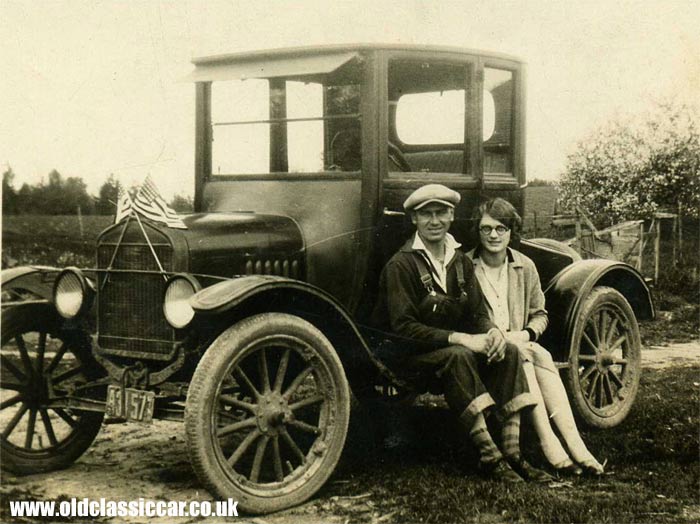
Roadsters and coupes were often bought by folks who used their cars primarily for business, or the younger buyers who didn’t have kids, and those that just wanted or needed to spend as little on the purchase price as possible.

The traditional two-passenger coupe evolved into the “business coupe” as cars got longer in the late thirties. Some coupes and roadsters also offered rumble seats that folded out of the trunk.

By the late thirties or forties, that rear storage area grew in size. This shows a late version, from the early fifties.

The Chrysler Corp. cars from 1941 through 1948 had a particularly sexy booty business coupe, if large ones are your thing. This is a ’46 Dodge.

And some business coupes, especially those after WW2, had small back seats, suitable for kids, like the Gremlin’s. Business coupes did have huge trunks, which made them popular with traveling salesmen and the like, and hence the name.

They disappeared around 1953 or so. Anyone know which was the last (other than the Gremlin)?
Around the time the Gremlin appeared (1970) gasoline prices were near an historic low in America ($1.95 adjusted) up until then. Gas prices had actually dropped, in inflation adjusted dollars, all through the sixties. So folks looking for an “economy car” weren’t necessarily interested so much in in fuel economy, but a low purchase price. The Gremlin’s $1999 price ($11,000 in 2010 dollars) matched the Beetle’s, and was as cheap as any American car at the time.
Many Americans, especially away from the coasts, didn’t trust foreign cars, or had legitimate issues with them, like the VW’s wretched heater. That meant something in cold upper-Midwest winters (don’t ask about the Gremlin’s traction in snow, though). Service for imports was sketchy, and the Gremlin offered an utterly familiar and easy to service vehicle.
The Gremlin was likely bought by a single person starting out, since cars were very affordable in relation to hourly wages at the time. In fact, 1971 was the all-time high for median hourly wages. Get a job, instantly go buy a new car; the (good old but not so ubiquitous anymore) American way. The Gremlin offered good straight-line performance, and felt familiar from the front seat forwards. Or it was bought as a second car, for a family still devoted to traditional American vehicles.
I’m not trying to exonerate the Gremlin from its many shortcomings, but hopefully, this puts it in perspective a bit, as the last American business coupe.







Thanks, Paul. I guess this was the answer to my wondering earlier. You work fast.
One thing I wonder though, about Business Coupes. I have seen some two-seater version with a cargo hold instead of a backseat, but were they open through to the luggage compartment, or were they in fact two compartments? One interior, and one accessible only from the outside? In effect, what I wonder, were they like modern hatchbacks, though without the actual hatch?
Another thing I wonder, why did the two-seater Gremlin come without a hatch? Wouldn’t a hatch had been more practical? I mean, it’s the only Gremlin with a large enough compartment, and it’s only accessible from the inside? Doesn’t make sense.
Ingvar, I’m not aware of any Business Coupes that had a pass-through, but I could be wrong. Yes, some had a storage compartment (I’m going to add a picture of that) where the rear seat might otherwise be. That, combined with an out sized trunk, made for quite a bit of room.
The only reason the base Gremlin came without a hatch was in order to make it’s price just slide under that magic $2000 level. The hatch and back seat were optional in that $1999 stripper version, but they got away from that after a few years. I doubt that many actually were sold without the opening rear window. Pretty stupid, but it made for good ad copy to have that $1999 sticker.
My first new car was a base 71 Gremlin two-seater that I bought as a 17 year old junior in high school enrolled in work release program. Creative dealer took base car, added chrome reverse wheels with white letter tires, put on Gremlin X stripes ( covered X with K, dealer name Bob Kay), and a chrome T handle on 3 speed floor shifter….and priced at $2100 ! Car was competitive with base Beetle, Pinto & Vega….but my Gremlin was “CUSTOM”. I don’t think I even noticed hatch was stationary until I got it home ( i learned to drive a stick on that drive home). I was one proud high schooler, and within a couple months I put the widest 60 series Mickey Thompson’s I could get on 5″ wide rims on the rear, air shocks for the rake and clearance, and of course a glass pack / no tail pipe….my first “Hot-Rod” (tongue in cheek) ! BTW, at 17 this was my third car, 63 Belaire 4 door at 15 and 63 Chevy II ragtop at 16.
How about the Chevy Chevette Scouter with no back seat and didnt the original VW Rabbit have hardboard door cards to get it within the $3000 level.?.
Previous post mentioned that it was about capital cost and cost of replacement parts, servicing and insurance behind the idea of the Gremlin not really fuel economy and being a practical hatchback. The driving experience, or lack of it ,must have been what the typical conservative buyer was used to .
My aunt and uncle had an old Chrysler Corp. business coupe that the kids drove. Can’t remember if it was a Dodge or Plymouth, but it had no back seat, just heavy cardboard-type material all around. Three of us sat on suitcases back there to take one of my cousins to the train station nearby. I was only about 7 yrs. old and enjoyed the ride. I think originally the Gremlin had fixed back glass, but later versions allowed it to open as a hatch. Side windows were fixed but flip-out was an option. My 1976 was a hatch w/fixed quarter windows. Base version. The business coupes were easy to spot, as the rear quarter windows were short and the trunk was very long. Also Paul, do you remember the huge Chrysler or DeSoto three-window coupes from that era? A large car with no back seat and no quarter windows! Even came in a convertible version! That’s a CC I’d like to see and learn more about.
Those are delicious. I added a ’46 Dodge to the article; thanks for reminding me.
These cars also featured the center rear brake light, a “butt-light” as me and my buddies referred to them as. I also saw a lot of these with factory “blue dot” tail light lenses, too, and made that nice reddish-purple glow at night. Fantastic memories rush in, I can’t remember them all at once!
You can certainly put alot of junk in the trunk of a ’48 Dodge.
sorry 🙂 couldn’t resist. That ’36 Ford BC is a stunner. I’d drive that for 365 days!
I bought a ’71 Gremlin in the summer of 1978. 232-6, 3-speed on the floor. Ratty but I only paid $60 for it. Don’t remember ever getting over 16 MPG. Ran well and it was cheap fun, especially since it had a stick. I drove it for a couple years before trading even-up on a ’69 Camaro convertible (no kidding, although it was a northeastern bondo bucket).
I’ve always been fascinated by the strangeness of those old business coupes. Imagine a modern Camry business coupe. But unit bodies now rule that out. I suppose the ubiquitous pickup with hard cover is today’s body-on-frame equivalent.
Would you say the is a business coupe version of the Sidekick?
–Mike
Oops, I tried html but expected to be able to edit it or preview it.
Would you say the 1996 Suzuki X-90 is a business coupe version of the Sidekick?
http://upload.wikimedia.org/wikipedia/commons/7/7f/X90silver.jpg
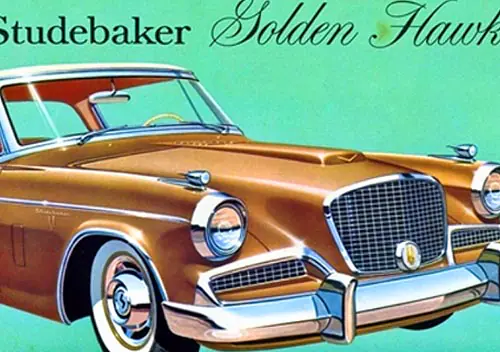
In these days when people talk about “two-door coupes” the distinction among business coupes, club coupes, and two-door sedans will soon be only a memory. In the late 40’s and early 50’s particular, in the low-priced three each of these had its own distinctive body style, with different tops and rear quarter windows. Even Studebaker had a business coupe as well as the Starlight club coupe and a two-door sedan. Iirc Hudson also made club and business coupes. I think Packard was the only manufacturer in those years to have only one coupe/two-door sedan body style.
I remember seeing something called a business coupe in 1957-59 Plymouth brochures, but this was simply a two-door sedan without a back seat and with fixed rear glass. In 1960 and 1961 the Plymouth and Dodge two-door sedans were shaped a lot more like the traditional club coupe.
My second car as an acne scarred teen was a 1950 Dodge business coupe. I did not relish the fading black exterior, so I painted it with a 4 inch brush with $1.98/pint glossy black enamel to very mixed results after the first rainstorm. $19.95 madras slip covers from J.C.Whitney completed the customization.
The trunk was cavernous with a notion that I could rent it out for elopements or full scaled wedding receptions, but I had no takers for either. There was no pass through. Entry was through the trunk.
I do recall the straight six had a “semi automatic” three speed tranny allowing turtle like acceleration from any gear. Vacuum-driven wipers dictated driving in dry weather only.For my $65 investment, “Bessie” provided a summer’s less than thrilling transportation.
I also owned a 71 Gremlin green automatic. The only issue I remember with it was the four gas caps that we stolen from it.
Hi Paul, you state that “1971 was the all time high for median wages”… not according to this chart http://www.data360.org/dsg.aspx?Data_Set_Group_Id=773
Only the red line on this graph is relevant. Unfortunately it does not go back to 1971. The blue line is not corrected for inflation and is therefore no relevant.
Nice try Paul but evem labeling it as something else doesnt make a Gremlin an attractive proposition its still a cutdown Hornet. Lots of AMC cars found their way over here but Ive never seen a Gremlin in the wild, far too many proper compact cars about when it was new, and little collectibility since Business coupes were a great idea even the sloper style from Aussie built on many US cars a style long gone from the worlds roads
Look out for the one n only RHD Gremlin that was imported for evaluation purposes. Was doing the car show rounds in Australia..
The RHD pacer was imported into the UK in very and I mean very small numbers. It had the same fuel economy as a xj6 and the rear passenger door opened up. Into the traffic!. Motor named it as the worst car they had ever tested.
“Business coupe” would pretty much describe the 1980 AMC Spirit (Gremlin with full rear windows and updated grille and tail lights) I owned several years ago. 2 doors, no rear hatch (Just an opening rear window), no rear seat, just a large carpeted area behind the front seats, which a previous owner had covered with a thoughtful carpet-covered sheet of plywood, hinged at the “front” edge for extra cargo capacity. 4 cylinder GM “Iron Duke”/GM200 column-shifted automatic transmission.
I Took it in for an oil change shortly after buying it – proprietor told me he was ex-dealer mechanic, if I wanted car to last, get overflow tank for radiator (which just had tube dumping overflow straight to the road surface), as Spirit was a stripped loss-leader. I bought one from a local scrap yard out of an AMC Corcord – bolted right in to exact spot on Spirit it came out of on the Concord. Other mechanics were amazed when they saw it…
I sold it when I “upgraded” to an ’85 Chevette.
“Anyone know which was the last (other than the Gremlin)?”
Surely you don’t mean the Chevette Scooter… :^D
The low budget reclaim for Gremlin radiator content was a plastic 1 gallon milk jug with its handle sliced horizontally in the middle. The factory overflow hose exactly fit inside the jug handle and was long enough to reach the bottom.
All available cooling was requried for a modified AMC 6, with exception for the Gherty Dyno Kit (recurved distributor) featured in a 1972 Car & Driver article “Big 6 Quick Fix”. The kit corrected factory over-retarded timing, allowing 2 more mpg , a bunch more power at higher rpm, and diminished cooling problems. I monitored the temp gauge closely again only after adding Hooker headers and a factory Carter WCD “Rambler power-pac” (on a factory 2BBL intake manifold ordered from the local AMC dealer). The WCD dual floats fixed a known Gremlin issue with fuel delivery during hard corning.
The AMC 7-main bearing motor was a reason to chose a Gremlin over imports. It would take any abuse in return for regular oil changes. I measured 165 lbs per cylinder after 135,000 miles and 8 years of enthusicatic service.
$2250 purchased new, $300 when sold to the next owner = $243 per year.
Funny story about that back glass.
Original Gremlin 1970 hatch glass had two struts and never failed, but ’71 and after got just one strut support (I assume to cut cost) which did fail catastophically (asymetric spring pressure?) and brought laughter from junkyard dealers when Gremlin owners sought a replacement window for the one that ejected itself on the Interstate . I refitted the latches, hinges and (single) strut to a sheet of dark tinted Lexan when my factory window abruptly stopped being a window and became a heap of tempered granules.
One snippet I remember about the Gremlin is, it “broke all records” in Popular Science’s braking test. I suppose this was due to its Hornet brakes?
Regarding gas hatch struts, that’s one advantage of trunks: their long-lived lateral torsion bars.
My MGB’s driver-side window disintegrated spontaneously, luckily while it was rolled down. I have no idea why.
Spontaneous window breakage can usually be traced to thermal shock abetted by scratches and strain. The scratches need not be deep or extensive, they just need to coincide with a hot spot or cold spot on the glass for whatever reason to start the fracture. The fracture will spread (slowly or quickly) for some reason, or no apparent reason (hence your rolled-down failure – strain or strain relief in just the right place).
A 1940 Willys 440 Business Coupe with Holden body – the boot/trunk looks cavernous!
In about 1974 my 1600 hemi Toyota Corolla was rear ended and I needed a two-week rental while awaiting repair. The body shop had a Gremlin (unknown year/model) at $25 / week – what could go wrong ? The Iron Duke six had distributer issues, no way could the plate be fastened to provide consistent timing. A small application of Loktite retaining compound fixed that issue (and made future distributer adjustments impossible) but a massive ring failure at the intersection of Buford Highway and ?? left it un-drivable. After using the starter motor to get the smog generating hulk out of the intersection, I rate this as the worst car I have ever driven …
I have a 1941 Plymouth Business Coupe ( hot rod ), and it does have the ”pass thru” from the trunk by pushing the passenger seat forward. My ‘electric door poppers ‘ failed to work one day, and my wife was small enough to crawl thru the back seat opening to unlock the passenger side door manually.
At car shows , people cannot believe the size of the trunk . The car has a 117 in. wheelbase, so it is nicely proportioned . It rides nice, has a/c , power brakes, steering,a V8, and a ton of character from 75 years ago.
I think the business coupes were the cheapest way to buy a new auto and skip extra expenditures involved with the purchase of a new vehicle
Love the story about the ejecting Gremlin hatch window. Not so much fun for the drivers behind that car on the highway, though!
As a teenager I discovered another reason for window shatterage. A fellow student had borrowed his parents’ circa-‘73 Buick LeSabre two-door hardtop (huge doors) so we could run an errand for our high-school newspaper. I had to ride in the back seat, and on the floor were thousands of those granules.
“What’s up with all this glass?”
“Oh, yeah, I forgot. Sorry about that.”
As a high-energy 17-year-old with lots of after-school responsibilities, he had swung the LeSabre into a parking space, hopped out, and quickly slammed the driver’s-side door—. by pushing on the frameless glass instead of the door panel. The glass had flexed inward so much that when it hit the door opening on the body… POW!
Business coupes weren’t really for salesmen who needed the trunk, they were for executives who were expected to use the car only for company purposes. The missing back seat mattered more than the extra space. Gremlin would have been a practical car for such purposes, but AMC had negative prestige, so no executive would want to be seen in a Gremlin.
The Gremlin made more sense as a traditional sport coupe, with a powerful engine for its size and decent handling.
“like the VW’s wretched heater.”
Seems like about a week ago I was schooled that the VW fresh air heater was the world’s most efficient device, capable of keeping a Bug warm at -344’C.
It was mostly fine, as long as you cracked the vent. If not, it was rather wretched.
That was stated rather clearly in that post, no?
I knew someone was gonna mention the beetle heater thing!
Gremlins have become quite collectible and pricier than I would have thought. They also seem to lend themselves to some serious customizing! Just Google AMC Gremlin images and see what I mean! The little car, with the cut off rear end, is no laughing matter these days!
The worst flaw of the Gremlin was the name “Gremlin”. Certainly one of the dumbest names ever given to a vehicle. This was rectified with the eventual name change to “Spirit 2door sedan”. I do not see a problem with the form and concept of the car. In fact I like it. The rear hatch shouldve been a low lift height type with license plate and tail lights in the hatch door, and should’ve had a metal frame around the glass. The name should’ve been “Spirit” from the beginning. And the drivetrain should’ve been the VAM 282 cubic inch with a 5speed stick. The history of AMC would’ve been entirely different had this been the case.
My 6’5″ uncle had one to drive to work in the 70’s. As with his Mercury station wagon, he had the front seat bolted further back for more legroom. I believe that was the last car he was able to have that done.
The name Gremlin may have been a flaw but it was hardly the worst one in that car. Being young and poor and with a bunch of poor friends I got to know the Gremlin pretty well. There was a crudity to these cars that may not be apparent if you just see one today at a car show without the context of driving their contemporaries. They seemed like cars from the 40’s or early 50’s; my girl friend had a 71 that had vacuum operated windshield wipers, something I had never imagined existed until I learned of them one night whiled were driving in a rainstorm; we went up a hill and the wipers slowed to a crawl. Since there wasn’t much power anyway we were already going very slowly, and thus survived to pull over and wait out the rain.
The body panels were poor stampings which seemed like thick metal, but one day I was leaning against the outside of the drivers door talking to my girl friend while she sat at the wheel and the door panel bowed in. Horrified I sort of instinctively did the only thing I could think of and swung my hand down and banged the lower part of the door panel and the damn thing popped back out.
I will simply say that the interior was…inferior.
Another friend had one on which the accelerator cable from the pedal to the carb broke; who ever heard of such a thing (Except for VW Beetle owners)? He ran a length of parachute cord through the dash and tied a T-handle on the end, as the part was unavailable and had to shipped in – in the time before Internet and FedEx this took weeks.
That rough running slow turning six cylinder engine was actually the best part of the Gremlin. Gas wan’t that expensive, and so the mileage didn’t seem terrible and those engines took horrible abuse in stride. And, to be fair, so did the entire car. Shaking, rattling, chugging, and sloughing parts and paint, all while rusting slowly away (but not as badly as Vegas or most Fords of the day) these cars endured. Like an old farm mule with one ear mangled and one eye gone, scrawny and mangy and walking with a limp a Gremlin would always get the job done. You might not be proud of how you arrived somewhere, but you did get there.
However to say that a different engine and name would have made them competitive is not really true. A better engine might have both raised the price of the car and actually required some type of routine maintenance. And the name: it was perfect. If you bought a Gremlin, you did so without any illusions: you were buying a rough even if brand new POS. To have given it a lofty name (see Ford Aspire) would have only led to later disillusionment – this way you knew the terms of the game from the moment you sat down at the table.
Certainly there is some story attached to that Gremmie there.
Apparently you have no clue what a VAM 282 is. It is nothing more than a large bore version of the 258 AMC/Jeep motor developed in Mexico by the Mexican branch of AMC. AMC was much more respected in Mexico than it was in the states. VAM stands for vehiculos automotores Mexicanos. You maybe should re-read my comment now that you have that bit of knowledge added to your understanding.
My brother had owned two Metropolitans in a row, so it only made sense (of a sort) that he’d do the same with Gremlins. By biggest objection was that when he went grocery shopping with me and my girlfriend I was the one who got jammed into the back “seat”! It was a year or so later, when I drove it shortly after a Tennessee ice storm, that I discovered how easily these things could become undriveable; the slightest tilt of the roadway upwards would render it helpless!
He finally unloaded his last one … and bought a Triumph Stag! Can you say “Devil for punishment”?
In the mid-1950s, my mother’s never married sister died. We inherited her 1951(?) two door Pontiac. I remember that her previous car had been a two door Pontiac business coupe (late 1940s, I believe). It had the extended trunk box in place of a back seat. When our family rode with her, my older brother and I would sprawl on the top of the trunk box. My mother and father joined my aunt in the front (and only) seat as she drove.
The business coupe would have been chosen strictly based on cost.