

Vinyl roof coverings were incredibly popular on American cars of the ’70s, offered in a bewildering variety of styles and a whole range of colors. Here are some of the decade’s most striking vinyl roof color combinations, offered on cars like the Ford Thunderbird, Lincoln Continental Mark, Oldsmobile 98 Regency, and Cadillac De Ville.
Few automotive accoutrements scream “Seventies” as loudly as the vinyl roof. Although vinyl tops had been offered on some models for years and became increasingly common in the latter ’60s, they were almost inescapable throughout the ’70s.

As illustrated by the above graph (based on Automotive News tallies), at their peak in 1973, vinyl roofs were installed on just under half of ALL domestic cars. Vinyl tops were somewhat less common on cheaper models like the AMC Hornet and Chevrolet Nova, but they became more and more ubiquitous as you moved up the price ladder, and they were basically compulsory on most domestic luxury models.

As the option proliferated, it became more diverse, no longer limited to simple padded black vinyl on a hardtop roof. Vinyl tops had become a full-fledged automotive decorative art, which could add an extra note of formality, sportiness, or baroque excess to almost any car. One of the key attractions was now color: Many automakers now offered vinyl tops in a half-dozen or more colors, making it possible to either color-coordinate or create a variety of two-tone effects. Some models did still offer two-tone paint jobs in the ’70s, but vinyl tops allowed a shift in texture as well as color, and the second color was potentially more intense:
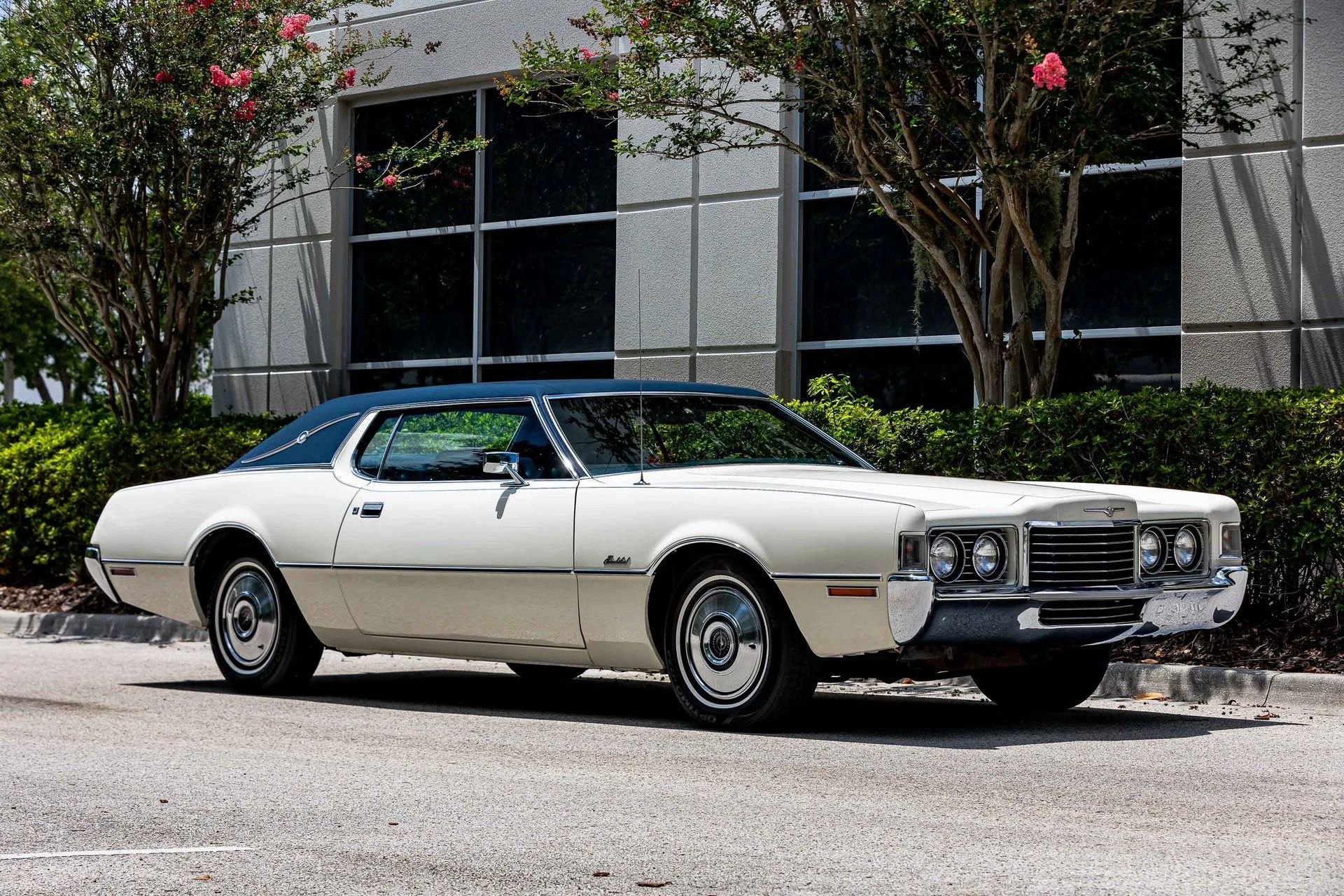
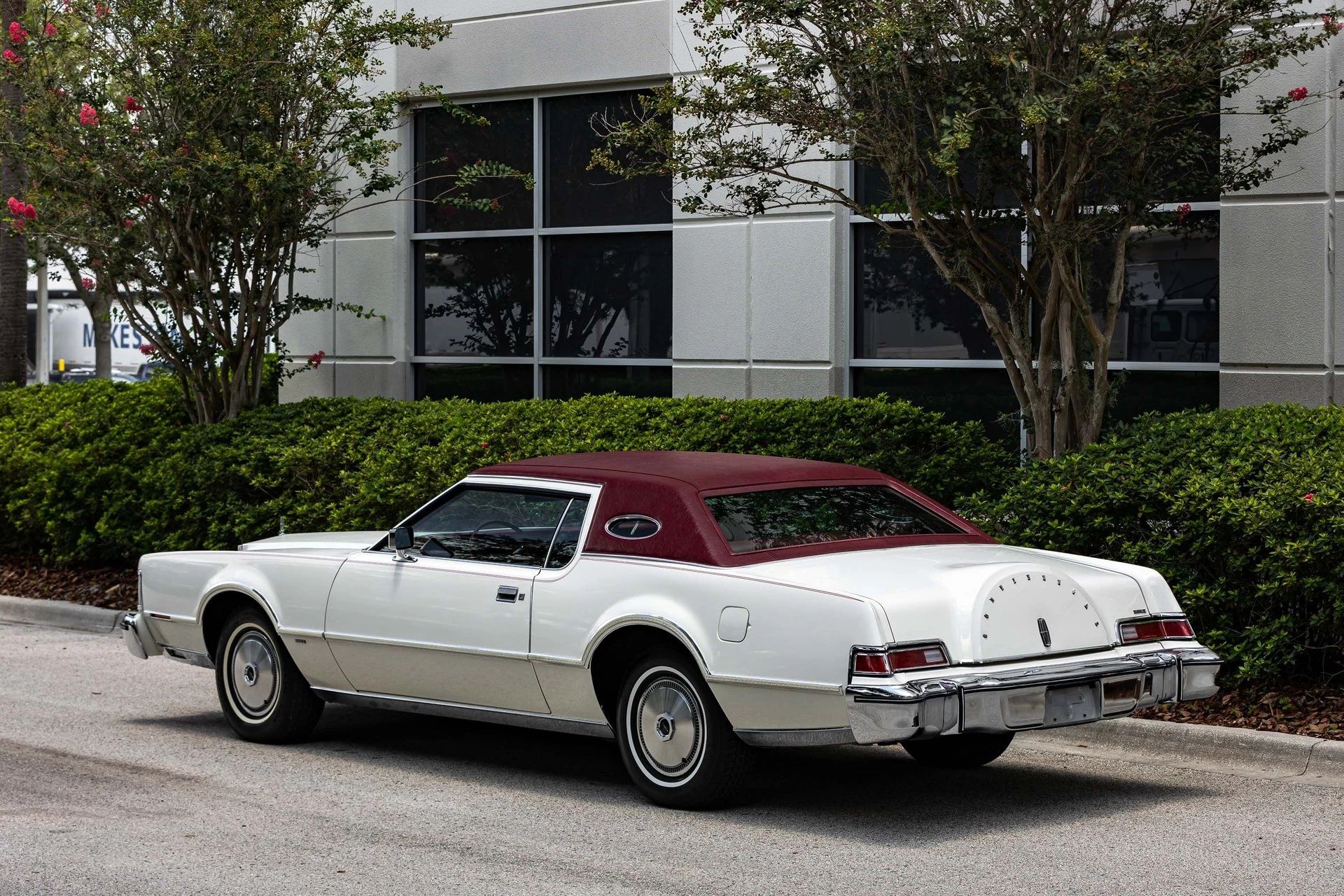
Naturally, the effect was most pronounced on a white car …
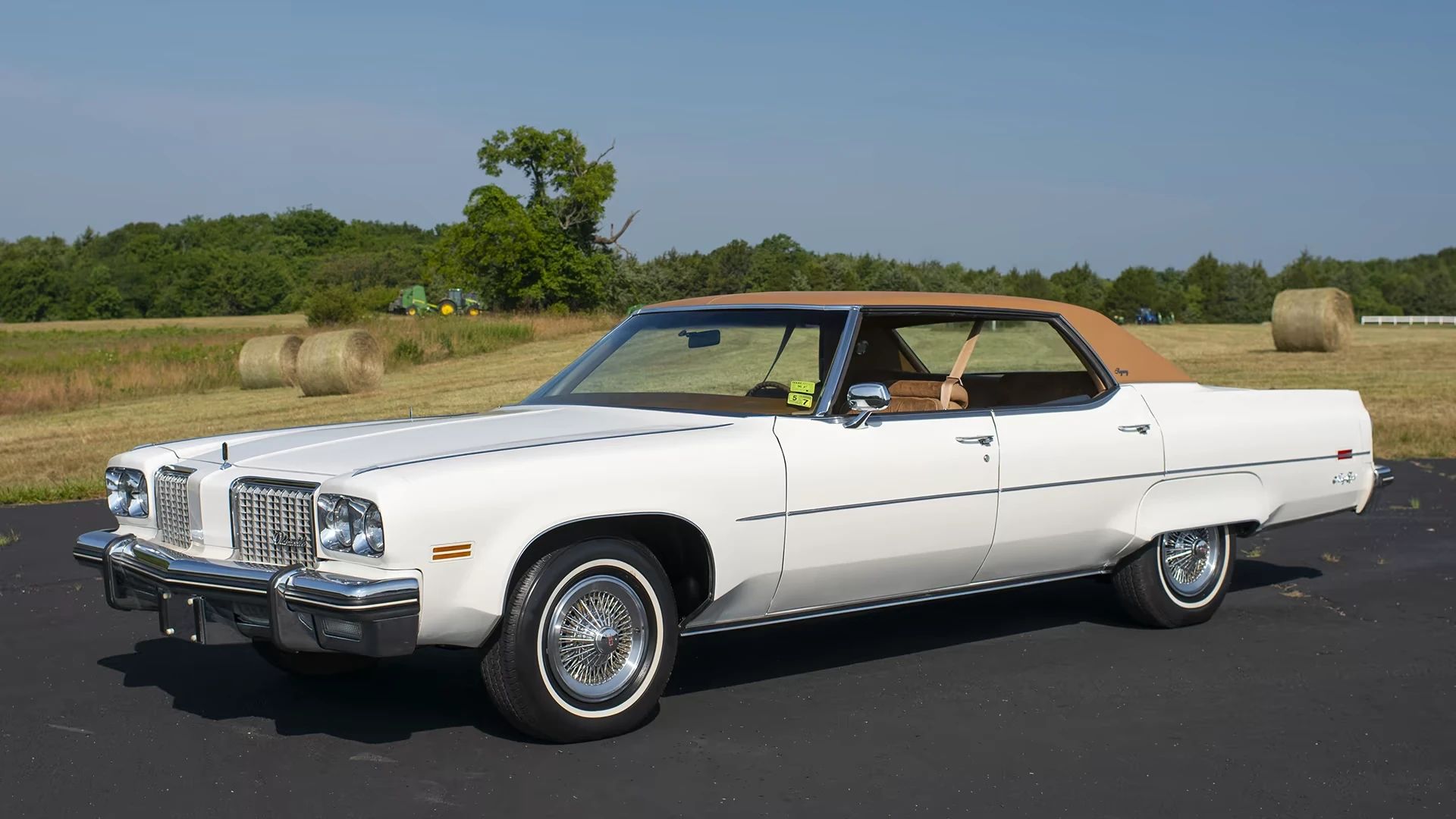
… but lighter colors like silver could also provide a dramatic contrast:
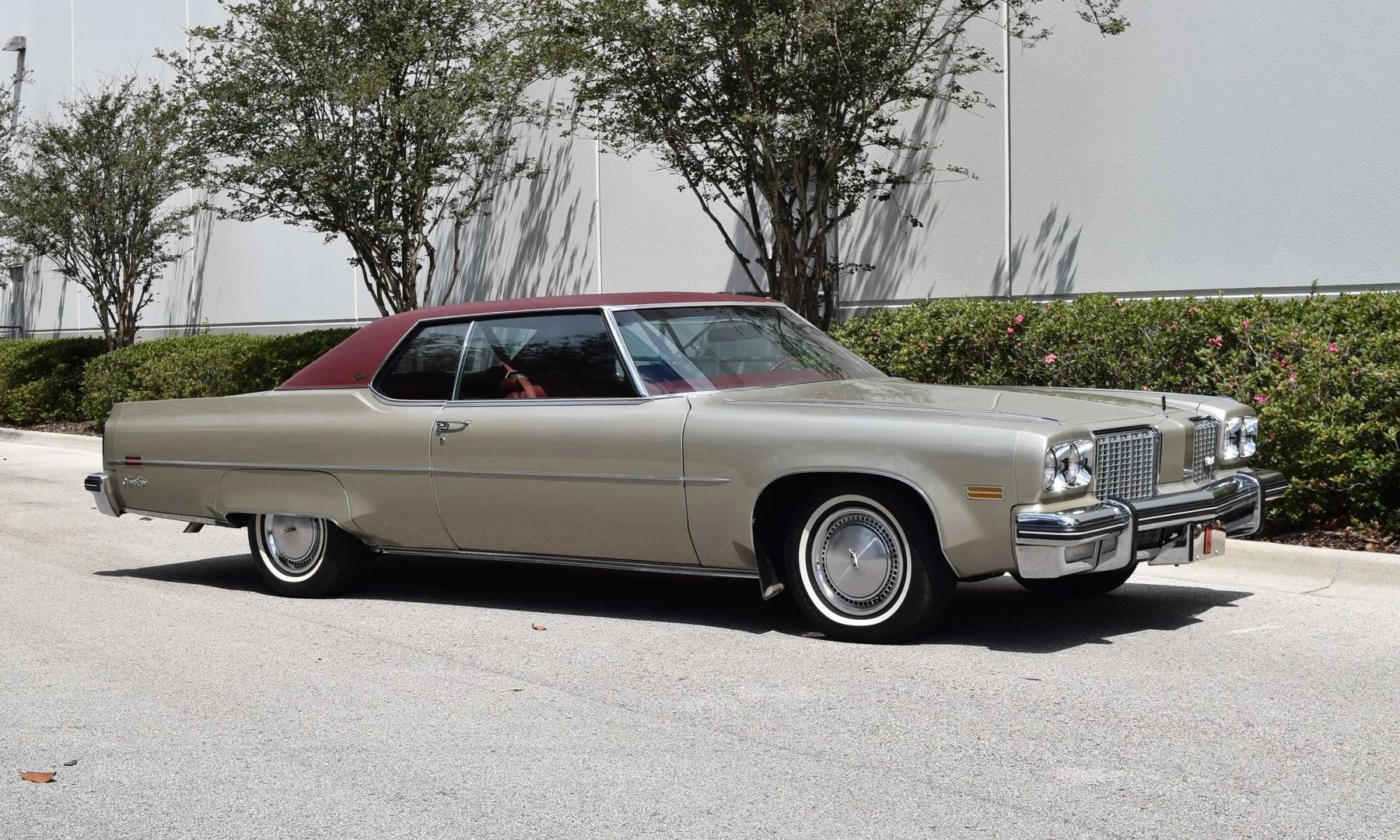
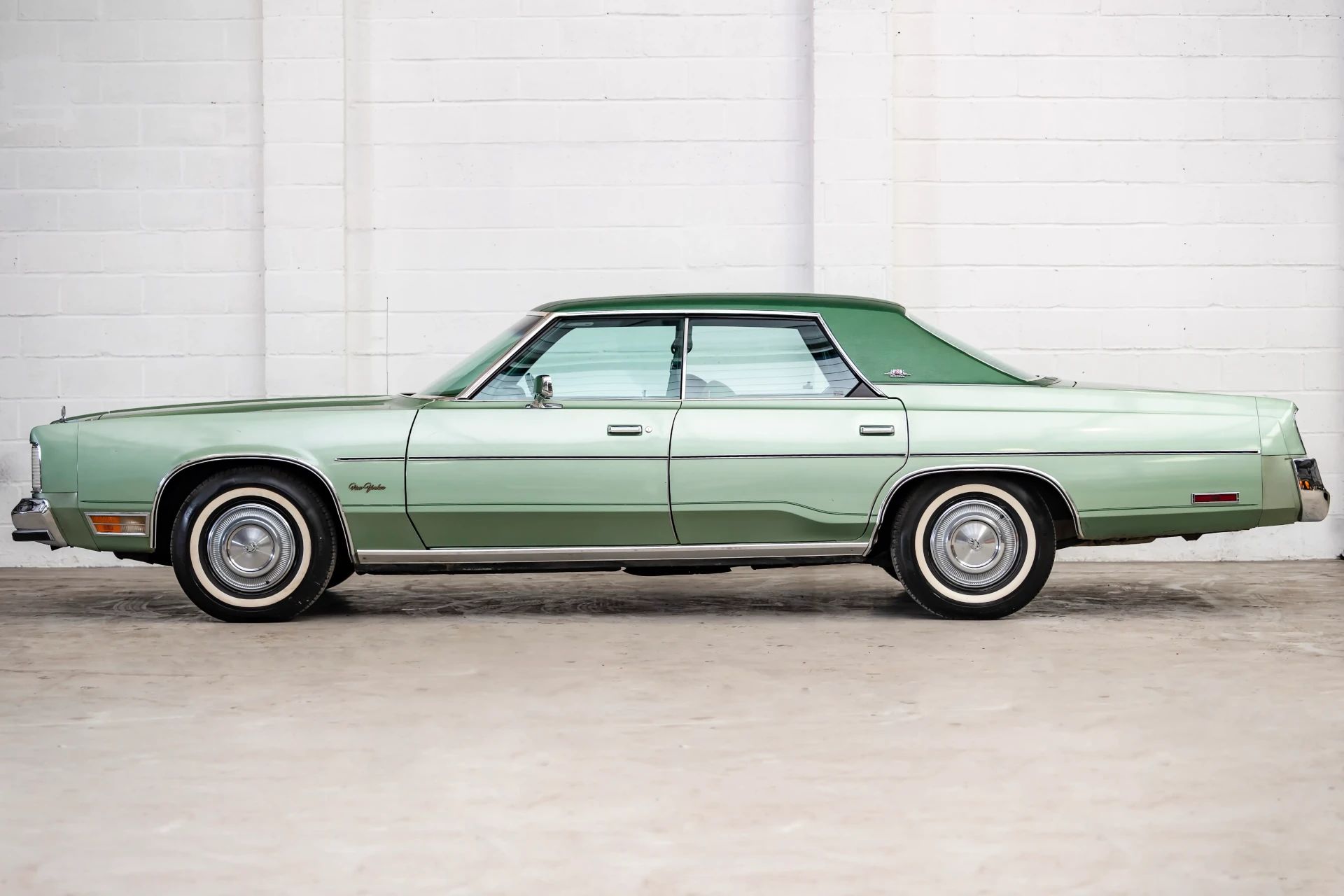
Light-over-dark combinations were also possible, although as this 1974 Chrysler Newport demonstrates, they sometimes suggested a bald man wearing the wrong toupee:
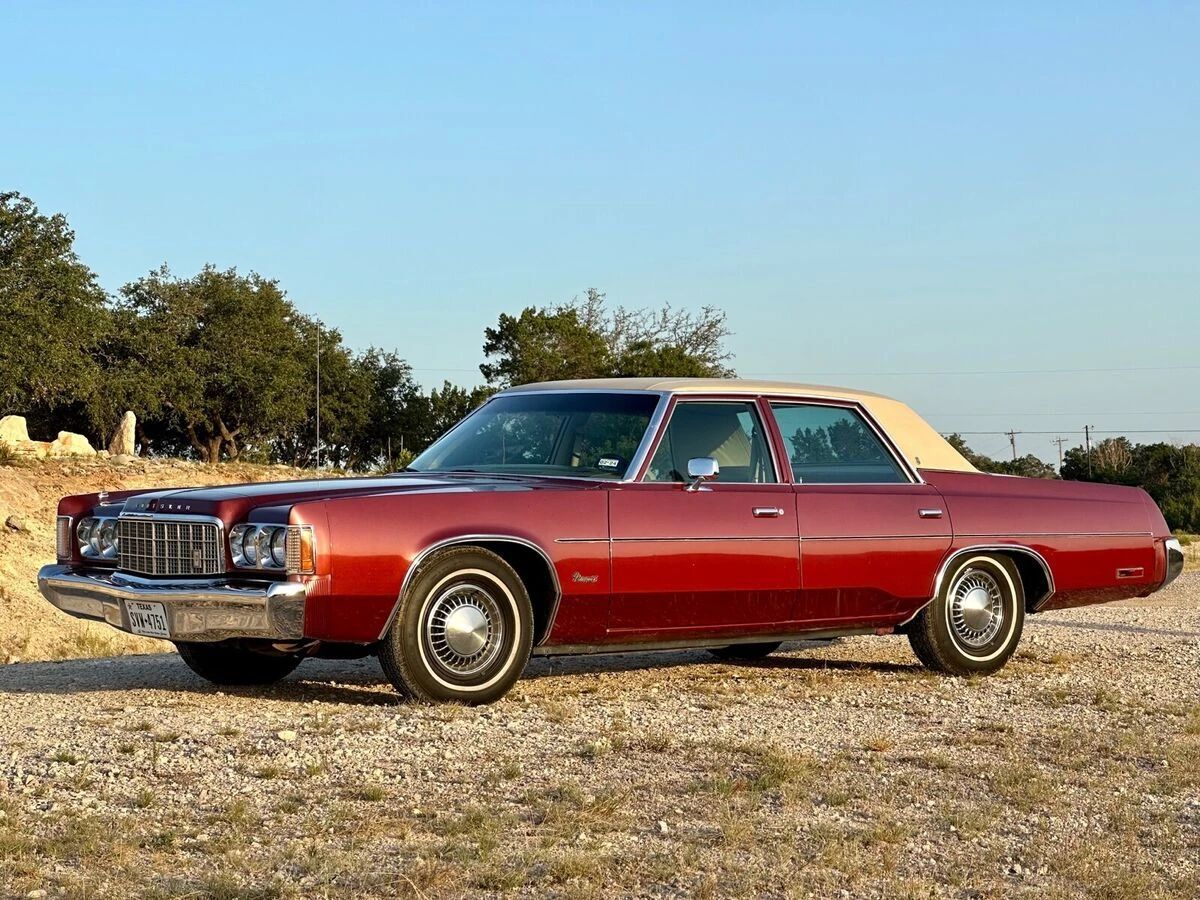
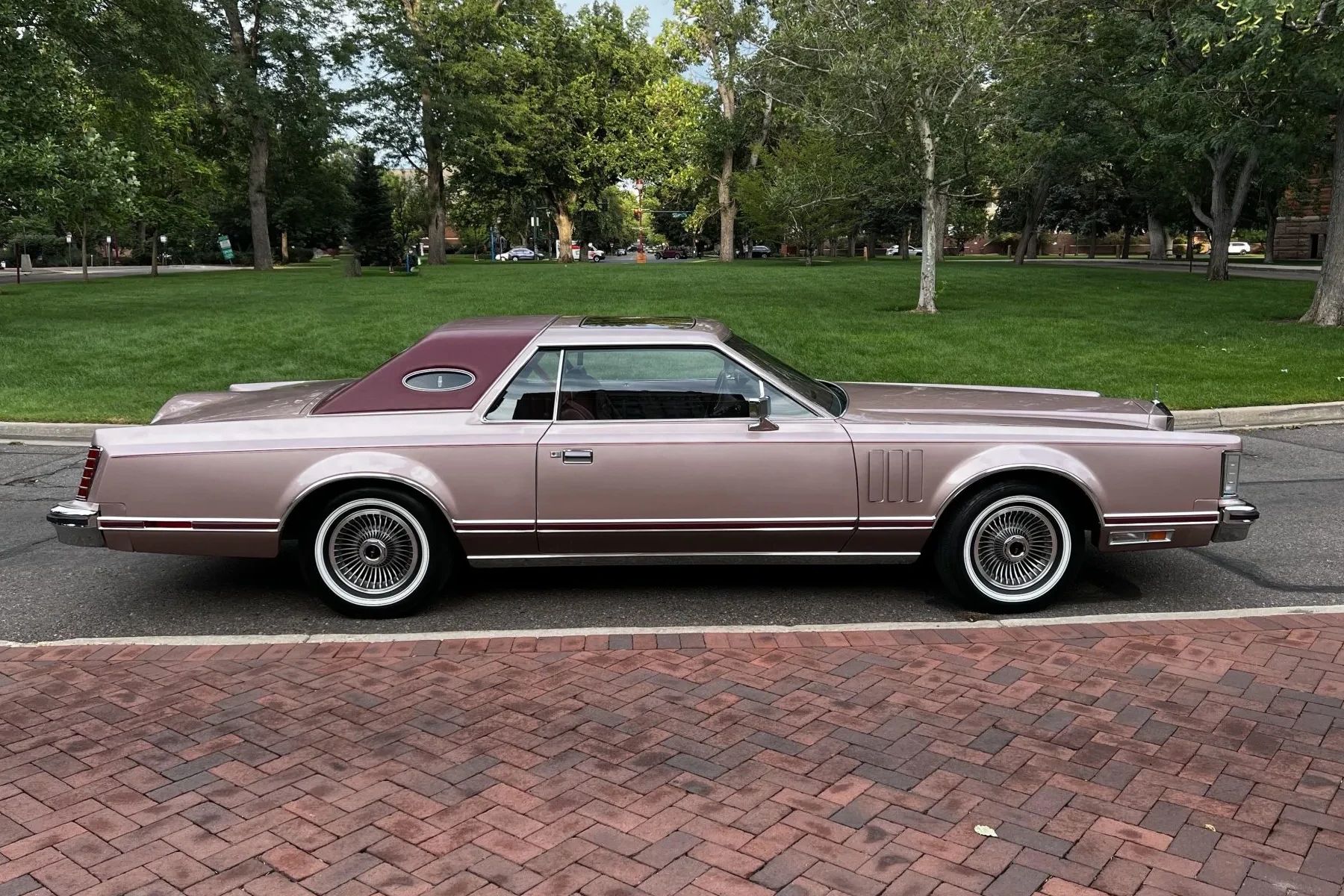
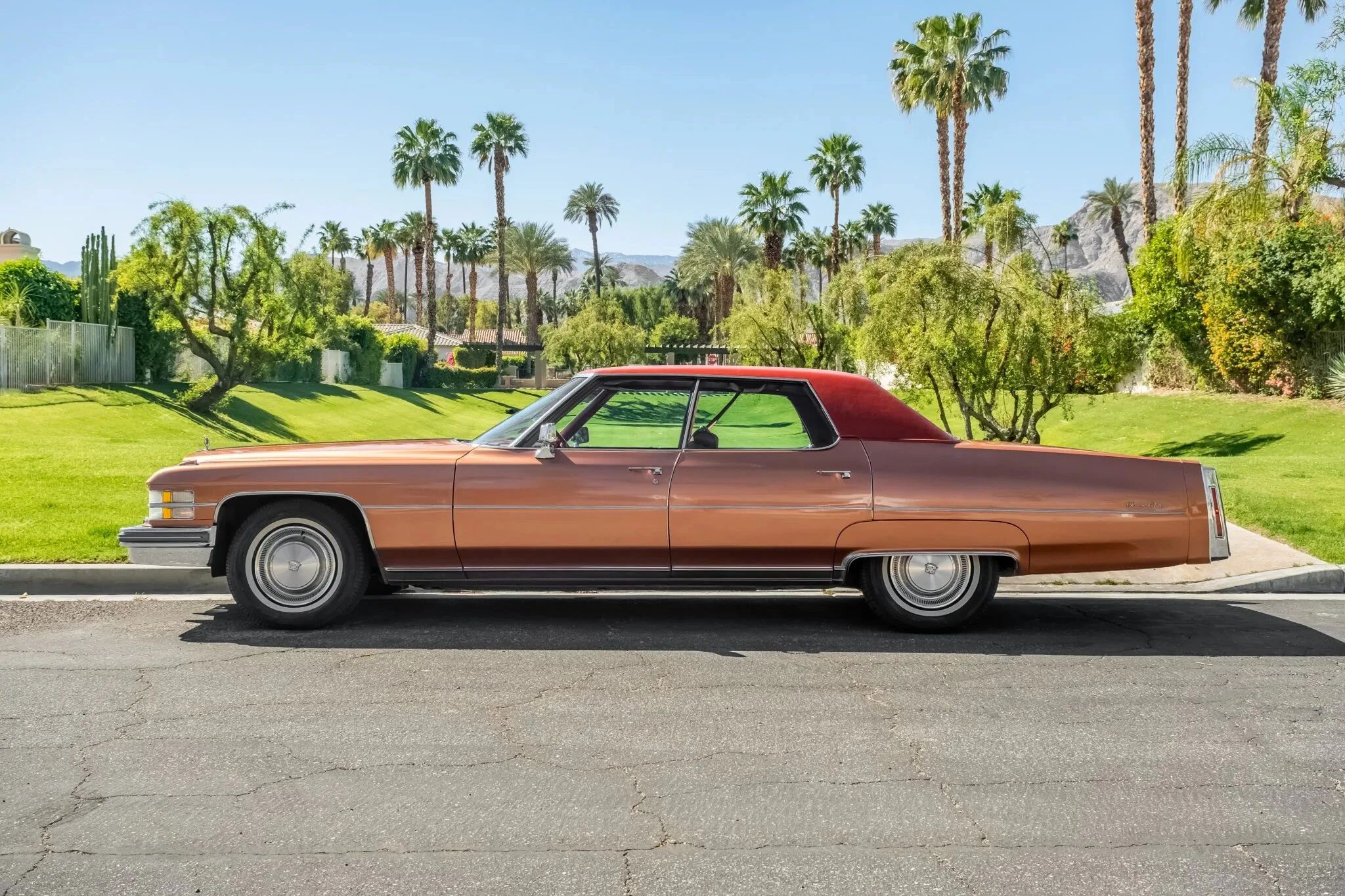
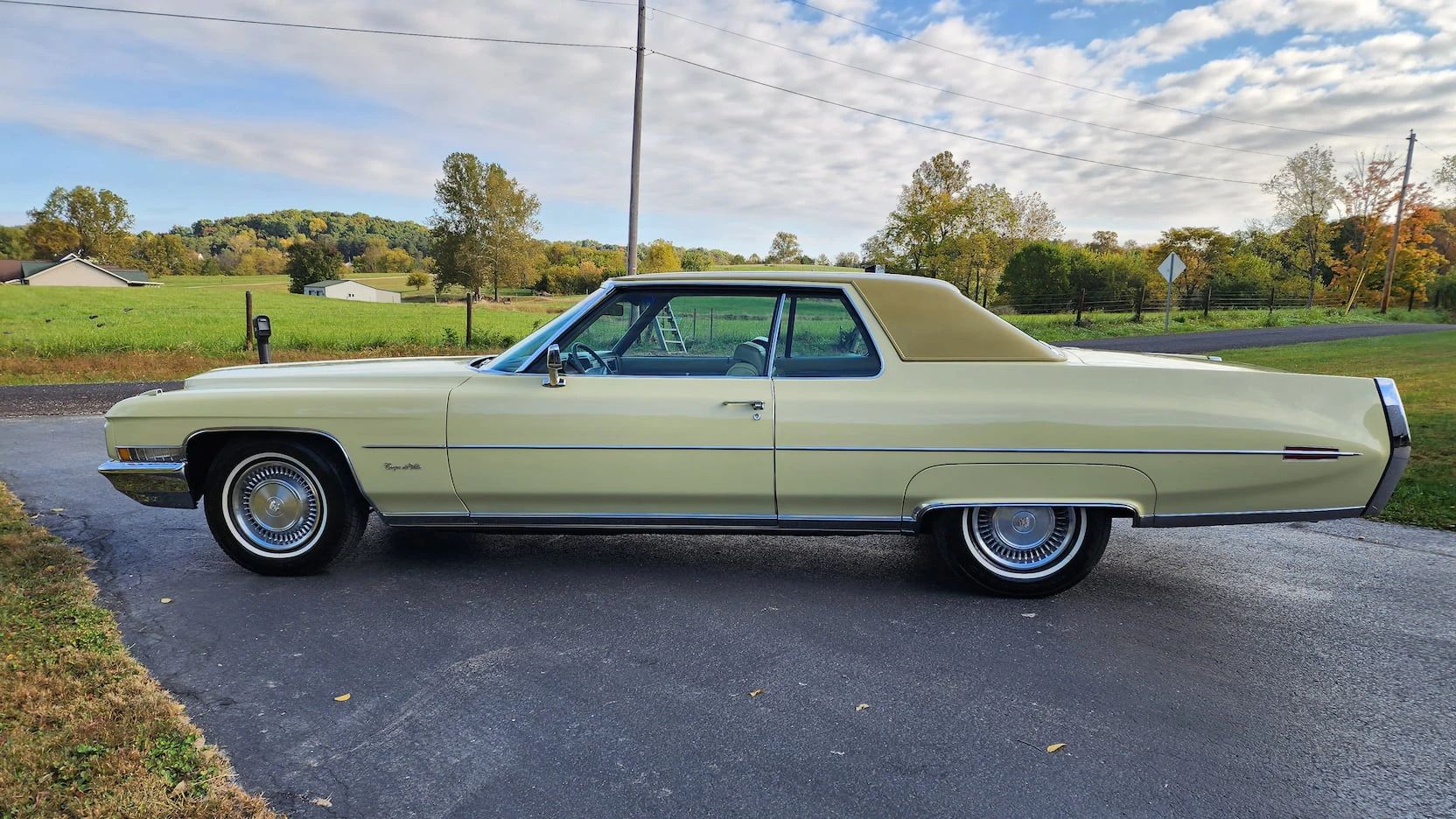
Especially in the luxury class, some buyers preferred to closely match the vinyl roof to the body color, but many opted for contrasting shades of the same basic hues:

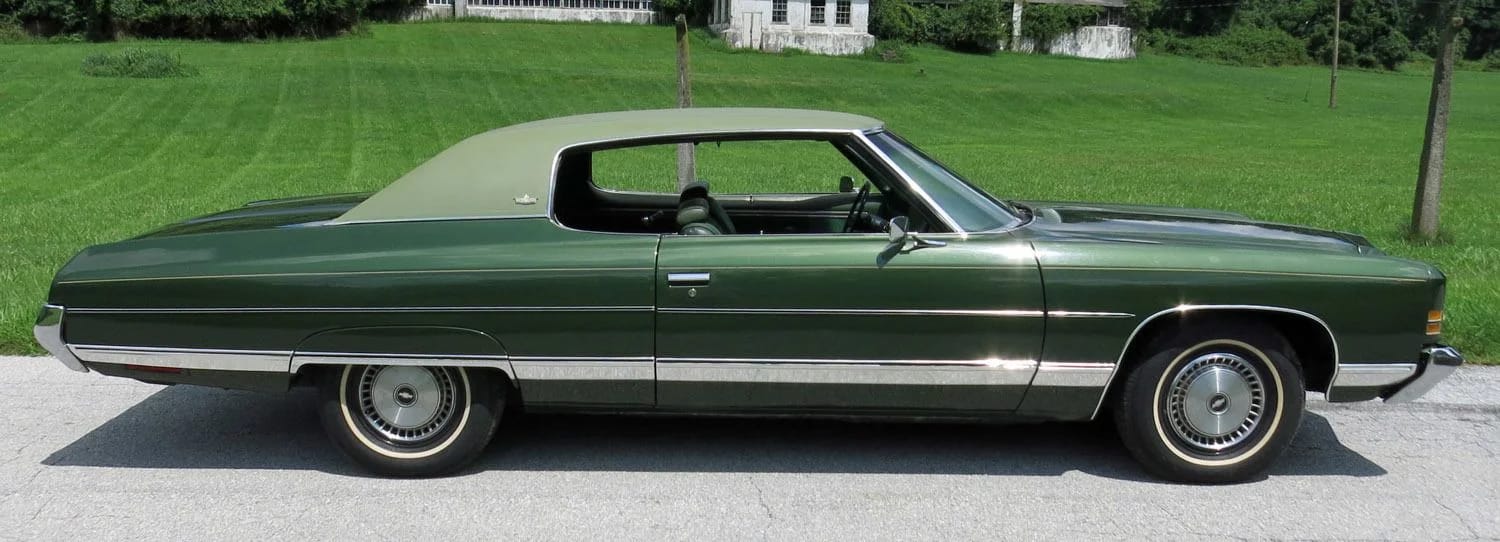
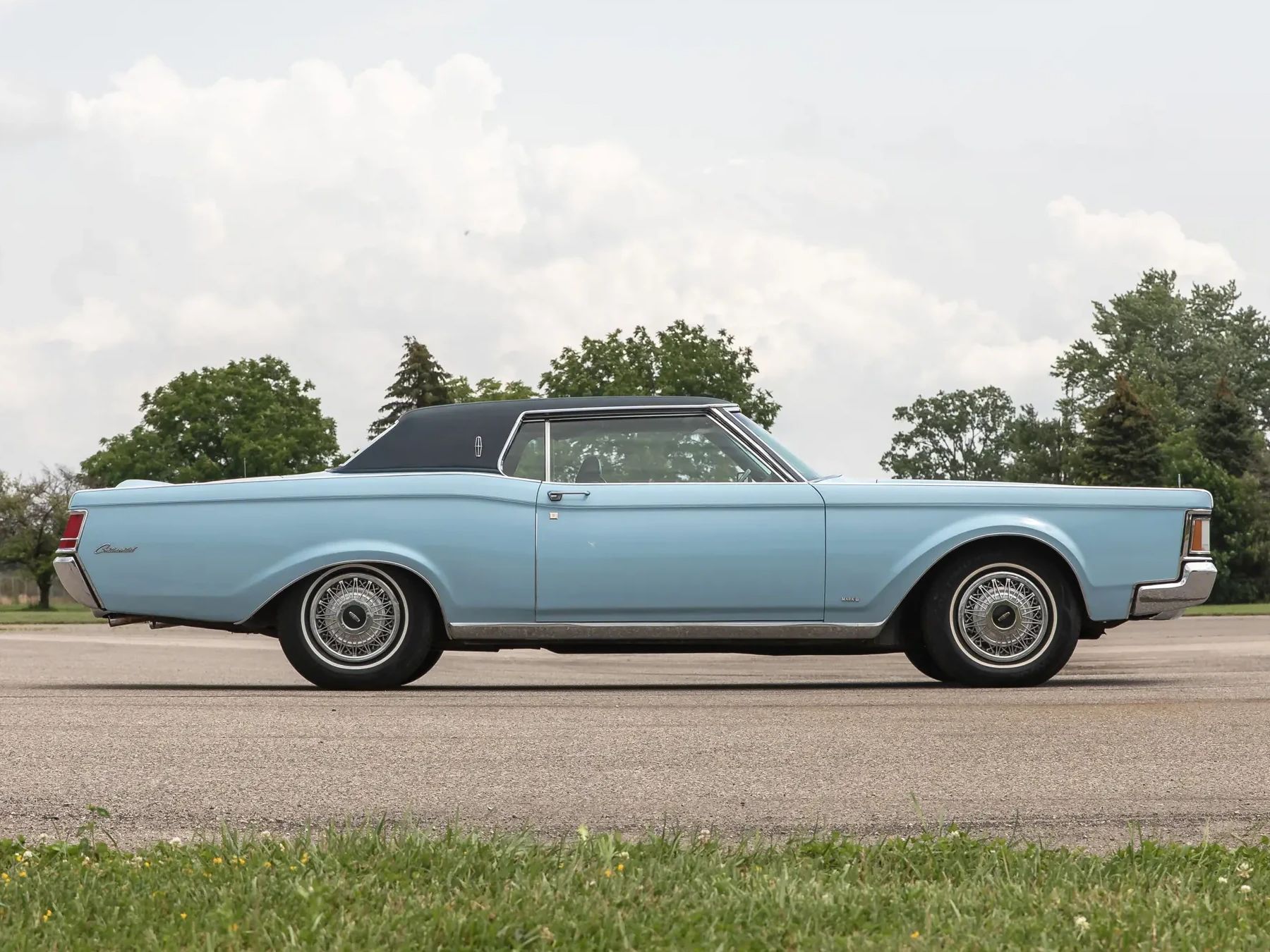
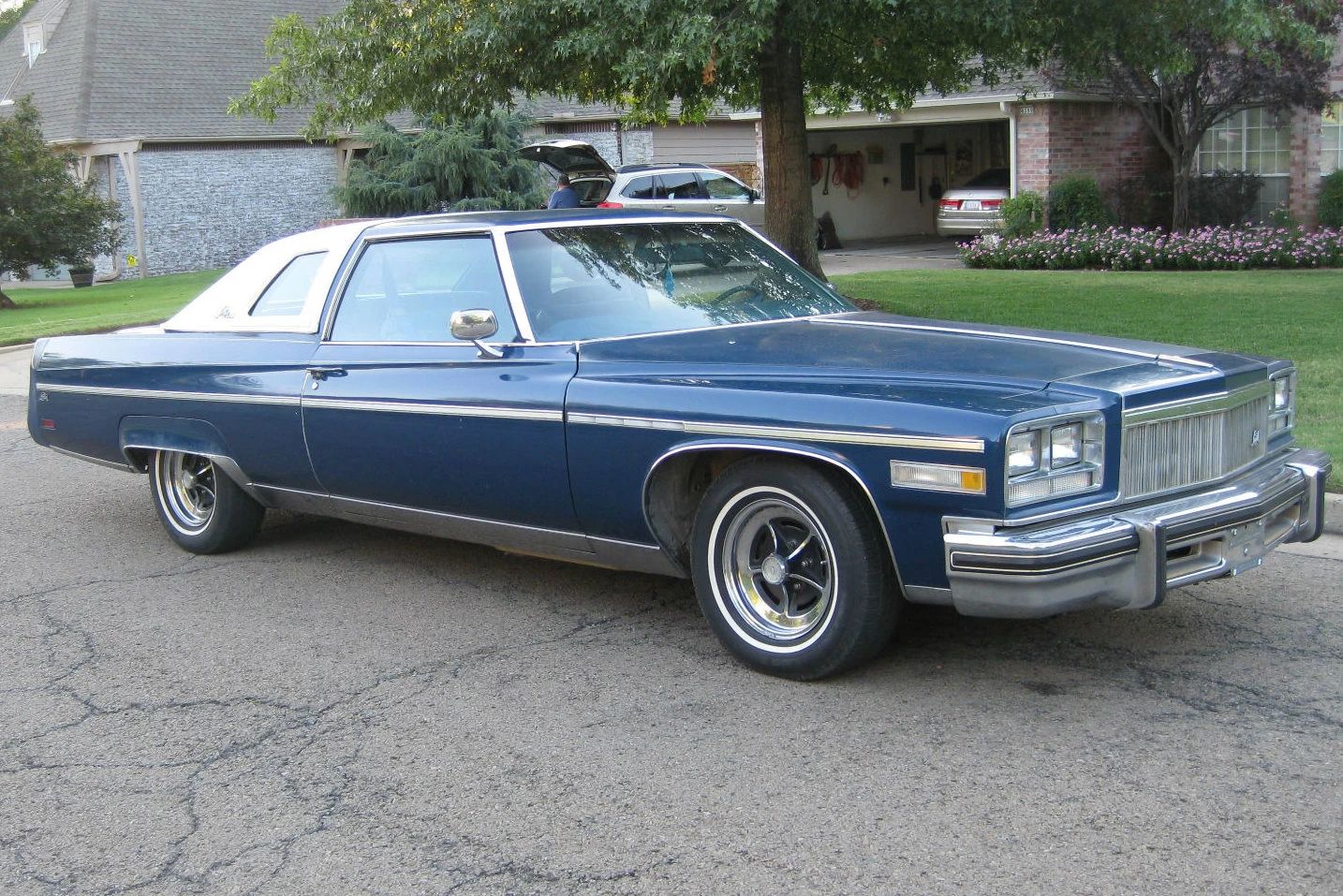
One interesting result was that a given model was sometimes available in inverted versions of the same color combination. For instance, the 1976 Buick Electra Limited was available in white (“Liberty White” — it was the Bicentennial) with a blue top …
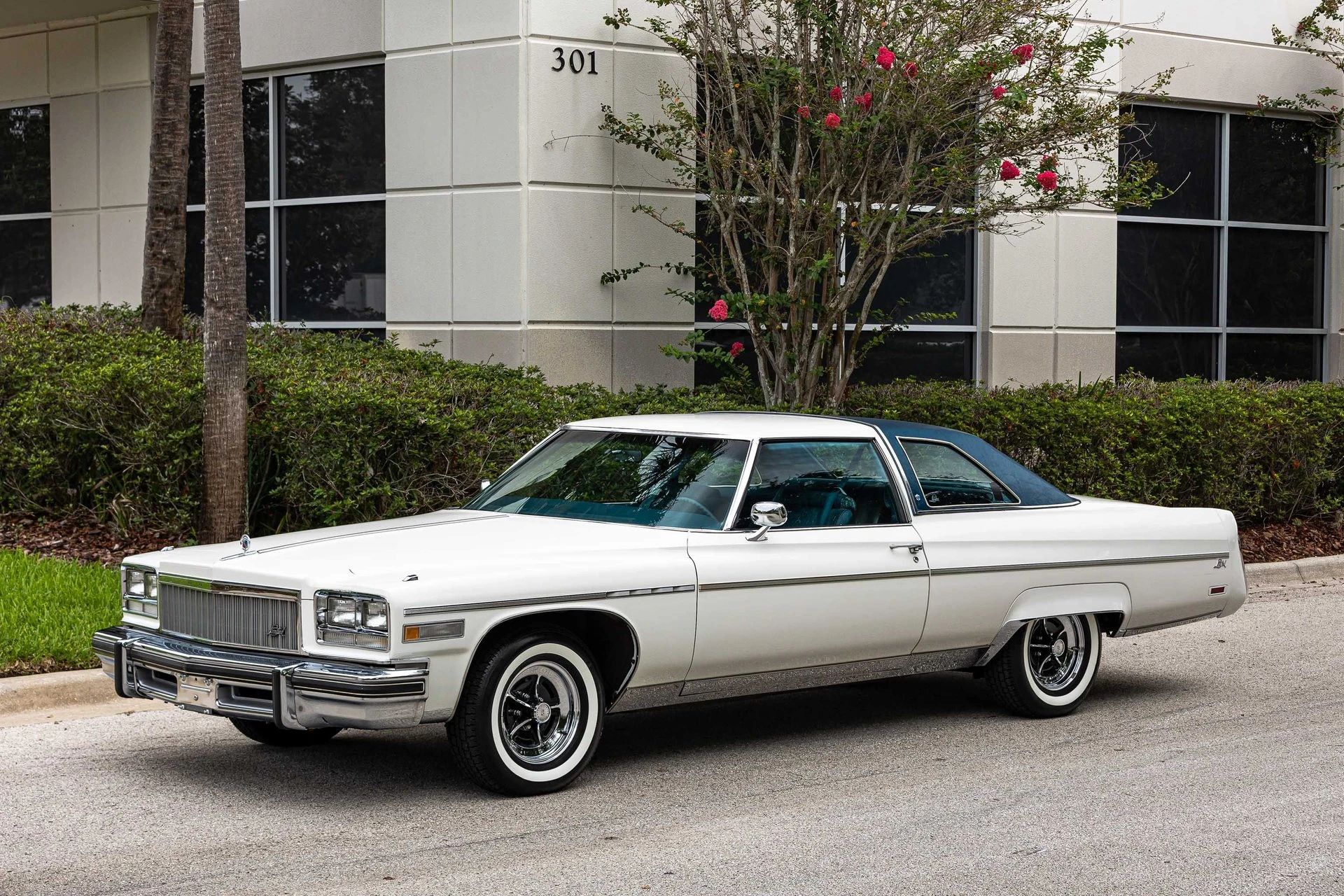
… or in blue (“Continental Blue”) with a white top:
The same was true of the 1977 Pontiac Grand Prix …
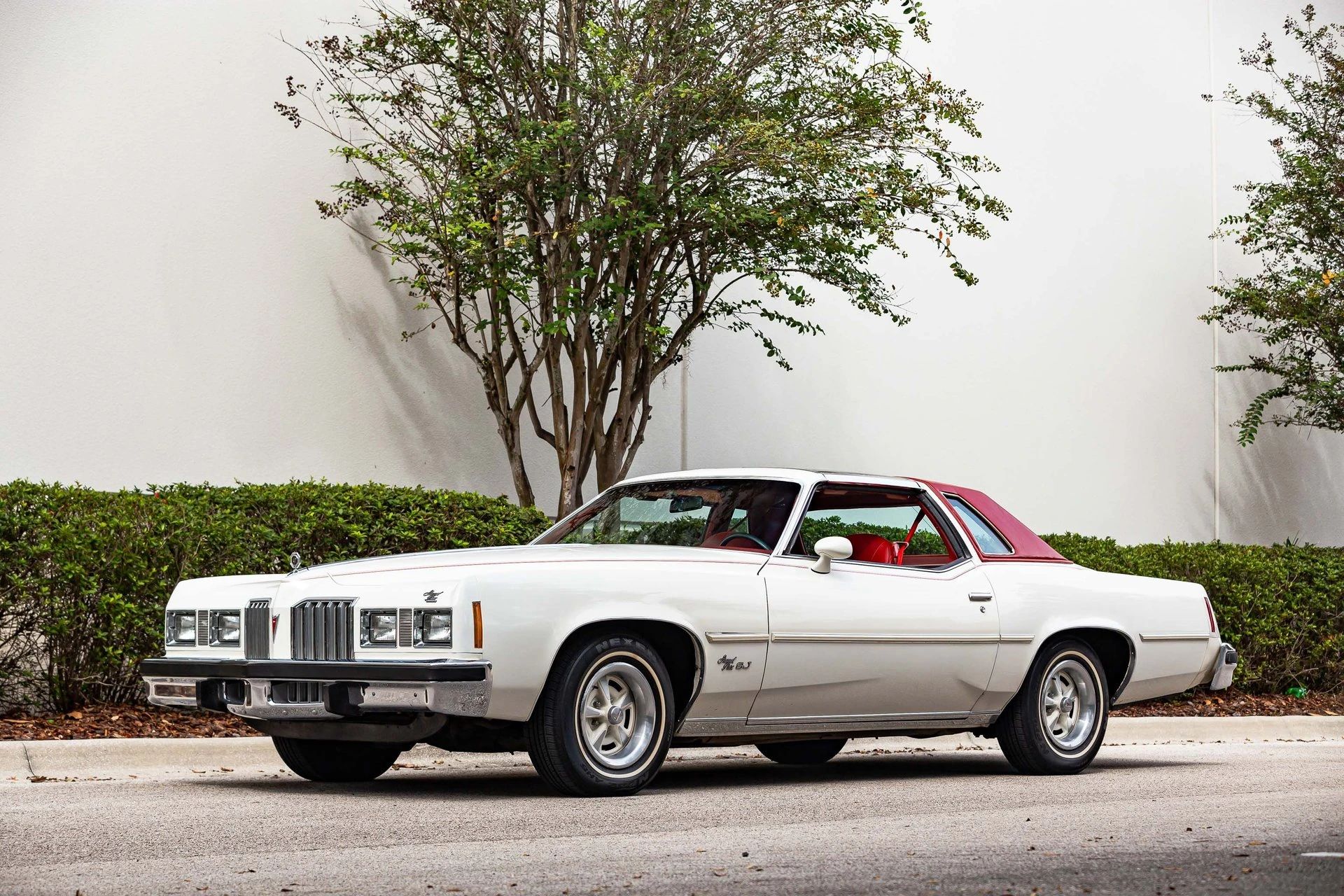
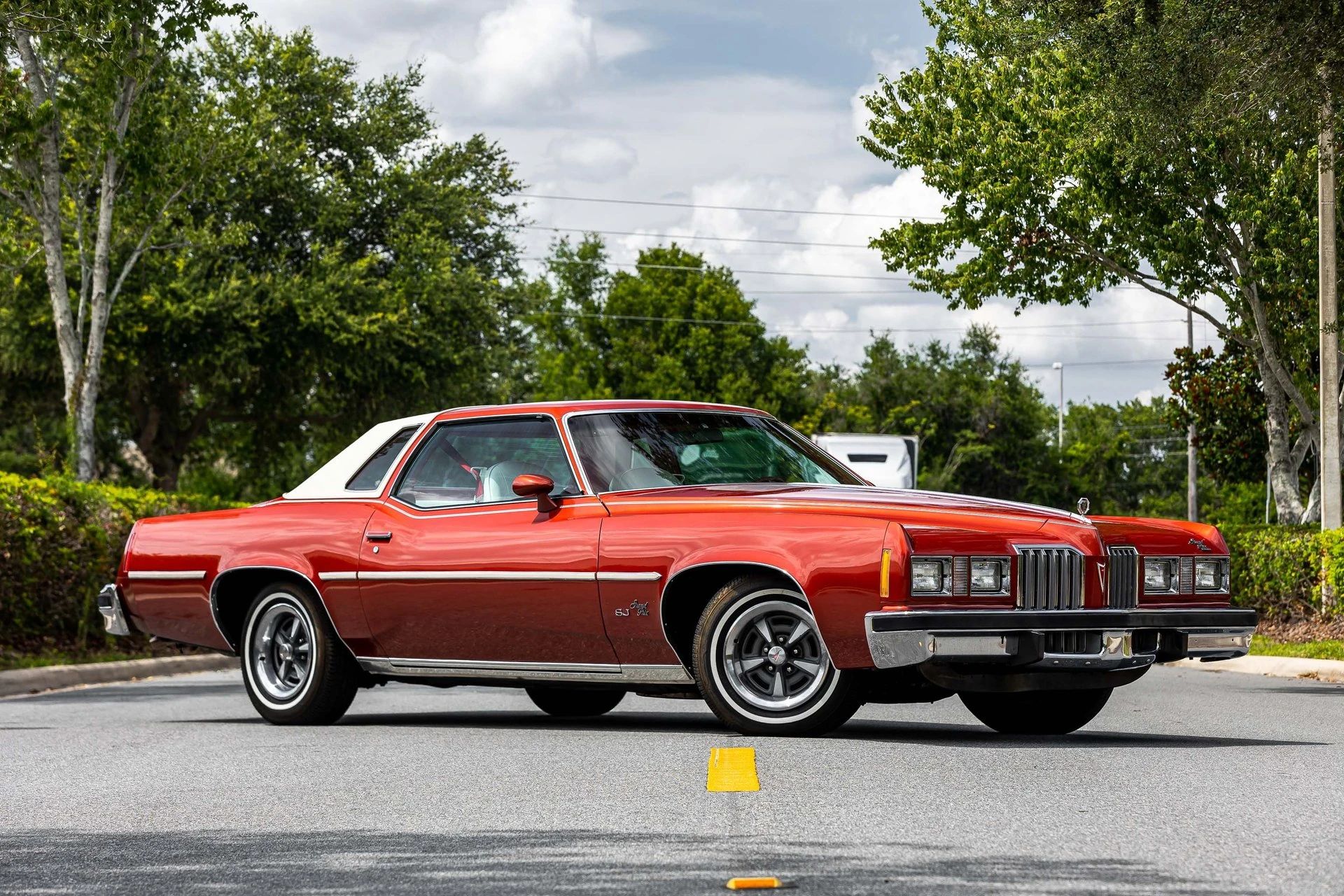
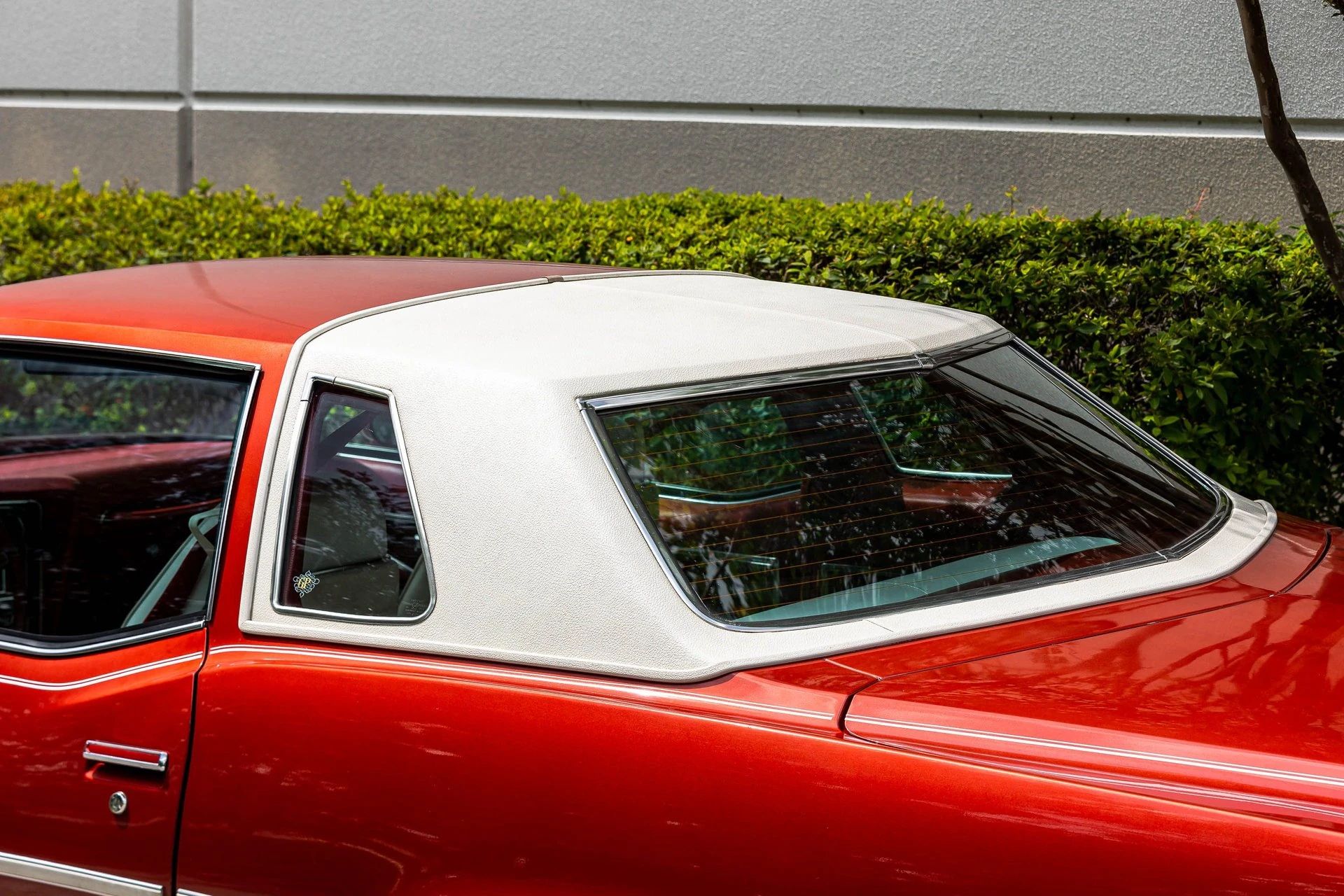
… whose optional “Landau-style” vinyl half-roof could now be combined with your choice of a steel or glass sliding sunroof or a T-top “hatch roof” with removable glass panels:

… or just a plain steel roof:
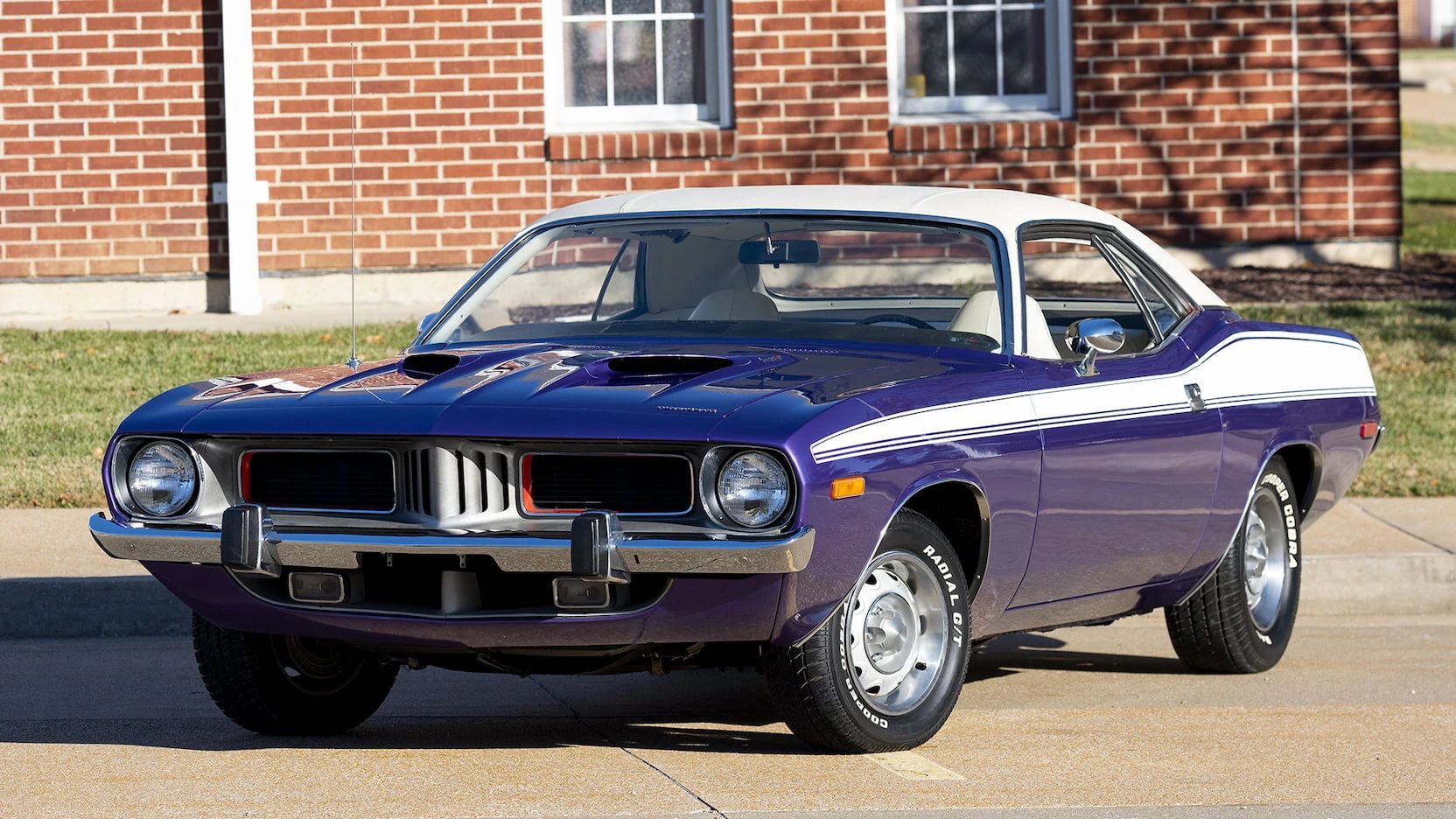
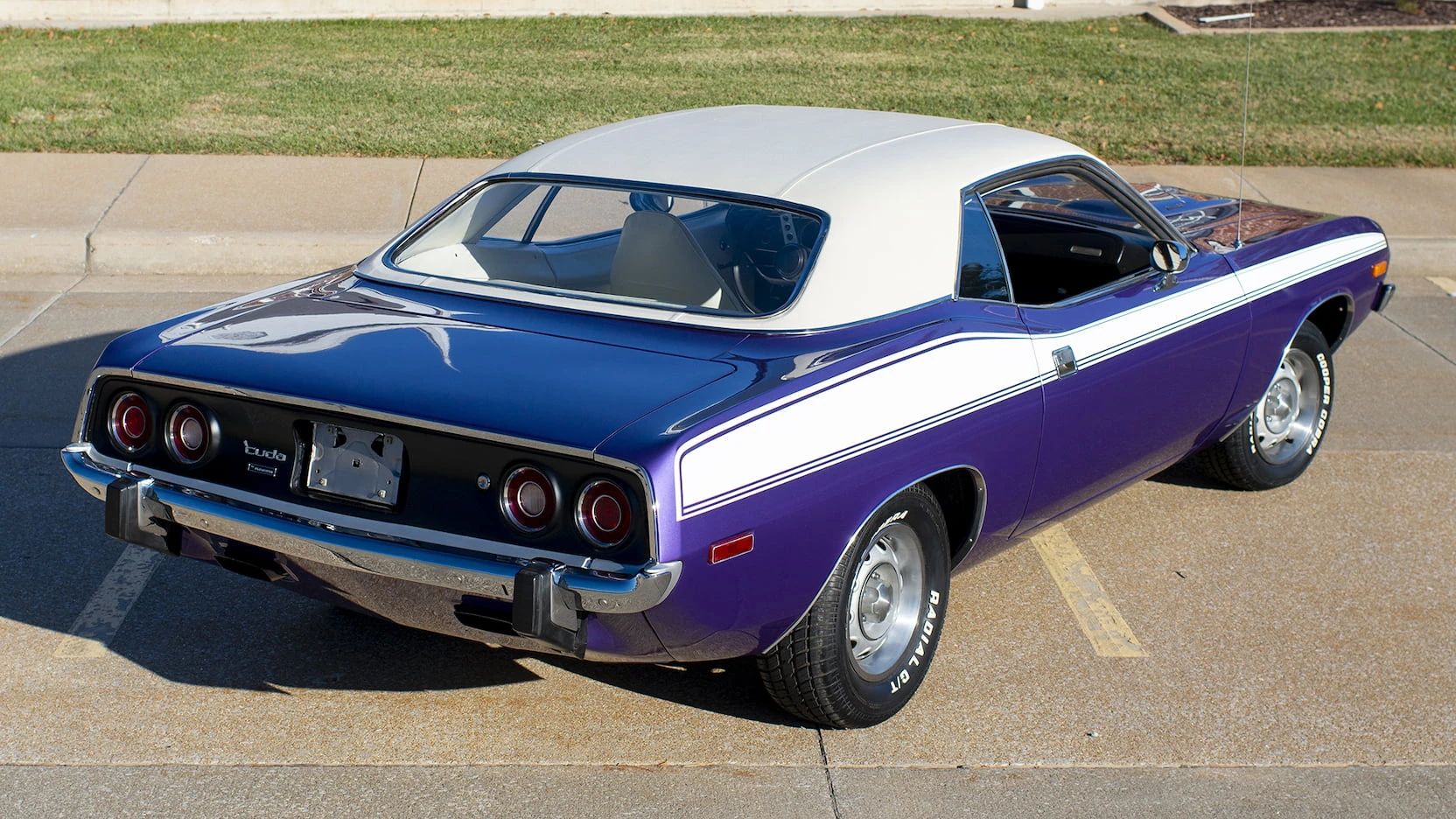
White vinyl tops on darker-colored bodies were fairly common throughout the decade. They could be combined with more vivid colors to eye-popping effect — a particularly dramatic example is this In-Violet 1973 Plymouth ‘Cuda, whose full vinyl top is matched to the body-side stripes:
Given its enormous popularity, this stuff fell out of fashion amazingly quickly: From their peak of almost 4.9 million in 1973, vinyl roof installations fell to 3.3 million by 1979 and only 1.5 million by 1981. The economic downturn of the early ’80s helped many American buyers break the vinyl roof habit (as Ford Division option programs manager Allen K. Strunk remarked to Automotive News in 1982, skipping the vinyl top was an easy way to economize), but tastes were also changing. By the end of the ’80s, vinyl roof combinations like the ones pictured here had become rare except as tacky dealer-installed options, making for an arguably more tasteful but often less colorful automotive landscape.
Related Reading
Vinyl Top Styles Of The 1970s: Landau Tops, Canopy Tops, Carriage Roofs, And More (by me)
Automotive History: The History of the Vinyl Roof, Part 1 – Origins (by Tom Halter)
Automotive History: The History of the Vinyl Roof, Part 2 – Peak Vinyl (by Tom Halter)
Automotive History: The History of the Vinyl Roof, Part 3 – Topping Things Off (by Tom Halter)
Cadillac, Lincoln, And Imperial Interiors Of The 1970s: Almost Every Color Of The Rainbow (by me)























Indeed many of those look great .
Because they induce rusting I’ll never be okay with them however .
-Nate
When I bought my 1970 Torino Brougham in 1978, it had a black vinyl roof beginning to show cracks. (The car had lived its entire life in the sunny desert Southwest, so rust wasn’t an issue.) Within a year or so, I had new seat covers installed (in a shade of green very, very similar to the original upholstery) and had the black vinyl roof removed and a white one put on. That white roof had the advantage of keeping the interior cooler, which helped the A/C. I kept that car through 1982, when I succumbed to the charms of a ’77 Honda Accord. Never any rust on the Ford.
Still, some Camry owners once installed vinyl roofs as aftermarket, like this one.
https://www.flickr.com/photos/8058098@N07/6740672489/
I’ve always thought they were ugly.
Vinyl roofs hastened depreciation. The metal under it rusted, and the vinyl often came loose and flapped in the wind.
I wonder if anyone considered using different paint finishes to look like leather without the problems. Old electronic equipment was often finished in black crackle, which was durable and “leatherish”.
Chrysler used a similar leatherish finish on dashboards to avoid glare.
You’re not wrong, but it was the ’70s — just listening to the wrong radio station would cause cars to rust more quickly, or so it seemed.
I saw a BaT listing the other day for an early ’70s Dodge Colt that originally had a black vinyl top. An earlier owner, fearing corrosion, had stripped the vinyl top off and repainted the roof matte black, figuring it would be more durable. Inevitably, rust formed beneath the new paint.
I think the basic problem is that any automotive exterior finish has an inherently difficult life: sun damage, smog damage, heat cycling, nighttime condensation and/or frost, snow, hail, flying debris, bird droppings, dead insects, minor collisions, vibrations of various kinds, plus a certain amount of inherent flexing in the body panels. Plus, if you apply any kind of different material to a surface, that material may have different rates of heat expansion or different thresholds for environmental wear that result in peeling or cracks, leading it to become a moisture passage/moisture trap in basically similar ways.
I would suspect a few things about the Colt, number one being the damage was already done on the roof before it was painted and that the paint went right over the rust. Plus depending what the matte black was (ie rattlecan primer) it does nothing for keeping moisture away from the steel underneath.
Rust was certainly more prevalent in older cars but the ones with factory painted roofs unquestionably hold up better.
Oh, I’m sure the Colt was probably not pristine and the black paint was undoubtedly not a conscientious high-end job. My point is that any time you add a separate coating to an area of a painted car of a distinctly different texture, there’s going to be some risk that it will age and weather differently than the surrounding surface, or that whatever process bonds it to the roof will deteriorate and either create passages for moisture ingress or just look terrible.
Back when their popularity was at its peak and for several years after, good old JC Whitney used to offer “simulated vinyl top kits” to “dress up and modernize your plain car”. They were sort of similar to today’s DIY roll on bed liner kits. I did see a few back in the day and they certainly didn’t look very good up close. They looked even worse after a few years as the paint started to wear thin or peel. Of course since it was a DIY thing, the skill and attention to detail of the applicator definitely was a factor in how good or bad they looked and held up. If I remember correctly they offered them in black and white at one point.
They also sold vinyl top reconditioning kits, to “rejuvenate your old top or change its color”. Of course again it depended on the skill of the person doing it but they didn’t look that great and if you did change colors the old one was sure to start peeking through over time.
As far as hastening depreciation, they actually lessened depreciation for the first several years of the vehicle’s life and was a definite add come trade in time for that first purchaser. It wasn’t until they were very far along the depreciation curve that they started to fail. That is why at the peak of popularity there used to be a good business in aftermarket vinyl tops, it wasn’t uncommon for dealers to install them on lesser model used (or new) cars to increase their value and profit margin.
There was typically a trade-in allowance of up to about $100 for a vinyl top, so if you traded in every year or every other year (as a lot of luxury car buyers clearly did), you got much of the initial cost back.
Rare vinyl roof: 1973 (if I remember the year correctly) on the Dodge Dart two-door hardtop in BLUE. Production started. It was found that the color did not hold up, so this option “V1B” was discontinued within a couple of months of introduction. I have never seen one. If anyone had a picture, let us all see it. Dealers kept ordering “V1B” in vain.
Roofs rusted out on a lot of Aussie cars because of factory vinyl toupees because the roof wasnt painted first before the top went on, Vinyl tops were the go to fix for hail damage so often you were buying well disguised garbage instead of an upscale offering, those half tops look cheap and kind of stupid not just now they looked like that from new ugly and cheap
I came here to say the same thing. Not to mention the left over Mod Tops that were redyed to use them up which inevitably ended up showing through the redye over time.
The mod tops on the “Coronet”/”Satellite” looked best. Had a friend who got a “70 Fury”, with a paisley print top. ((brown over copper color conbo)
He bought the car in “78”.
It was amazingly clean!!
Paisley Top never look so good.This ’70 Fury Gran Coupé is one of those rare cars ordered with a Mod Top option. Simply superb with this Walnut Metallic paint ,dog dish hub cap and its thin red line tire. https://www.youtube.com/watch?v=sCPtyu22H40
I’m not much of a Mopar guy but I do love that car in no small part because of that vinyl top with matching inserts in that glorious earth tones combination. The Hemi is a huge bonus but I’d still take it with a lowly 318.
…and me, even with a 225 .
I think those installation percentages jumped considerably in mid-sized cars or larger, probably peaking at well over 90%, especially on higher trim levels.
I still remember how much work it was with a small scrub brush to get the dirt out of the teeny crevices of the beige vinyl roof of my 77 New Yorker!
They sure did rust.The steel under the factory installed pebble grain vinyl roof on my 67 LeMans was hit hard. By 1980 it was holed through on the front passenger side. Dad and I peeled it back to reveal a real mess over the entire front. Should removed it all but make it a half roof and fixed the holes with fiberglass. Ford did better on my 66 Mustang. All the edges at the drip rails were sealed a thick rubber.
They really did not all rust.
My Dad bought at new ’69 Javelin with vinyl top that we owned for 8 years, and then a friend of mine drove as a regular driver in Ohio (salt country) for another 7 years. There were no bubbles under that top. Quarters were rusty. The roof was not.
Then I bought a rusty ’70 Javelin in WI, which I held onto for 30 years planning to restore it. The car had seen a lot of salt, and had significant rust…but again, not a bubble anywhere to be seen under the half (landau) vinyl top. Would I have found some rust had I stripped off the top? Maybe. I’m just saying a vinyl top was not automatically a rust trap.
(And though I’ve never owned a Mopar, I have to say the Mod tops of 1969 and into ’70 were kinda off the chart! Glad a few of them survived!)
They didn’t die completely. Ive got a (hilarious, and really puffy) aftermarket landau top (the Statesman!) on my ’08 DTS. Some rich farmer in southwestern Minnesota showed his neighbors he finally made it.
As a pre-teen, I thought vinyl roofs were cool when they started showing up in the 1963-64 timeframe. (Yes, I know now that vinyl roofs were available in prior decades but didn’t know it at the time). The novelty wore off fast for me though.
When my brother and I helped our mother special-order a new 1973 Chevy Monte Carlo, we all agreed on not ordering a vinyl roof, and the car looked resplendent in its single color, dark blue metallic.
Carmakers loved it.
The labor & materials to make the vinyl roof was less that the materials and specialized labor to smoothly finish bare roof seams.
Plus they got to charge extra for it.
In addition vinyl roofs were much less expensive to do (but could charge the same amount) verses 2-tone cars that had the expenses of finishing the bare roof seams, pulling the car out of the line, masking the color seam, running it through the paint booth a second time, removing the masking, inspecting the paint work, and hand fixing overspray and drips.
I remember with one of the car magazines did a hot rod T-Bird with one of the late 70’s versions. They did do a custom order and were quite annoyed that there was no way to even special order a completely vinyl free top. The body itself wasn’t really designed to get a paint grade finish and of course the line lacked a station and skilled labor to do so. So they reluctantly ordered it with the vinyl assuming it wouldn’t be that hard of a job to strip it finish it and paint it. They found out otherwise and had a fiberglass cap created, painted to match and glued on.
So true. When I pulled the vinyl roof, off the Dodge, there was one coat of primer laid down. Very superficial surface rust around the C pillar seam. The next place was the bottom of the rear window channel and where the holes were drilled, through the dutchman panel, for the trim. However, this was a car living it’s entire life in Lodi California till I acquired it in 2010. So that helped. These Spring Specials only offered with white or black depending on which of the four color options ordered. I’m not sure that an all white roof, on this particular car, would even look good and not like an oversized freezer with tires. Of course I laid down two coats of primer and two coats of color. Can’t wait to pull the vinyl off the 67 Parklane, a San Jose car, to see.
This thread needs some Mod Tops!
(xp oops, already mentioned)
As time progressed, cars were adopting a more aerodynamic body shell.
As an example, a vinyl top accented all the folds and creases on the 1982 Thunderbird.
Yet, the body of the 1983 Thunderbird would have looked out of place with vinyl with its aero dynamic shape.
Similar situation with the 1983 versus 1984 Lincoln Mark series.
The ’83 was designed with vinyl in mind where as the 1984 would have looked god awfull.
Maybe not the ’70s yet here,
mine’s a ’68… but the tops were already strong out there in late 1960s. Especially against the gold, I love my black vinyl top🤌
I had vinyl tops on two of my cars, the ’73 LTD and the ’79 Fairmont Futura. I never had a problem with the roof rusting from underneath with either car.
The trick was to keep copious amounts of Armor All on the vinyl, and carnauba wax on the paint. Just so long as water beaded up and ran off, you never had to worry about rust.
But in my teens, I had plenty of time to take care of my cars like a crazy person.
Call me a fool, but I’ll take a nice car with a vinyl roof any day over the boxes on the road today.
My father was an interesting character. He loved buying new cars and in 1979, he factory ordered a Chevrolet Impala. He resolved to get air conditioning as he never tolerated heat well. He then ordered a white vinyl top to reduce the load on the a/c. He also ordered tinted glass for the same reason. That while vinyl top was a total pain to keep clean.
He also didn’t order power windows or locks.
Some of those two-tone cars look pretty sharp! But as with clothing, it’s just as easy to go the wrong way with color combos. A couple elderly relatives had cars with vinyl tops – both body color. One was garaged all it’s life that I knew it, and it had no issues; the other was driven by my brother and parked outside; it assumed a distressed look pretty quickly after losing the shelter of a garage.
I think on some cars it gives a mature, refined look, but it is a liability. There’s a far greater chance of some kind of failure of a vinyl top over the life of a typical car. Still, it’s something I’d like to see still sold on a select few cars. The 70s uptake rate waa ridiculous – no argument it was a fad, but not one that needs to die out completely. A typical sedan or crossover would be ridiculous with one, but the right car could still pull it off. It’s take some guts to offer it though – I can think of no quicker way to get your car labeled as a geezermobile.
Mostly dislike vinyl roofs, with a passion, for both appearance reasons and what they end up doing to perfectly good steel underneath.
I remember a while ago Jim Klein did a junkyard classic featuring an upscale late 70s early 80s Ford product, I was impressed by the fact that the covering appeared to have not caused any damage to the metal roof.
It made me wonder if Ford products were a bit more durable in this respect in those times.
I don’t mind them on 60s to mid ’70s cars. My ’69 Skylark has one. Once removed, there was no rust that I could blame on the vinyl top.
There was rust along the lower edge of the windscreen and rear window. Even the small damage under the chrome moulding between the roof and the paint on the C pillars would have happened with a white painted roof.
In my experience interior heat soak is more a factor of interior colour and upholstery. I base that on two of the many HQ Holdens I’ve owned.
Black vinyl roof (that one did cause rust) with a flax cloth interior. Versus a white roof with Black vinyl upholstery. The black roof car was noticeably cooler.