
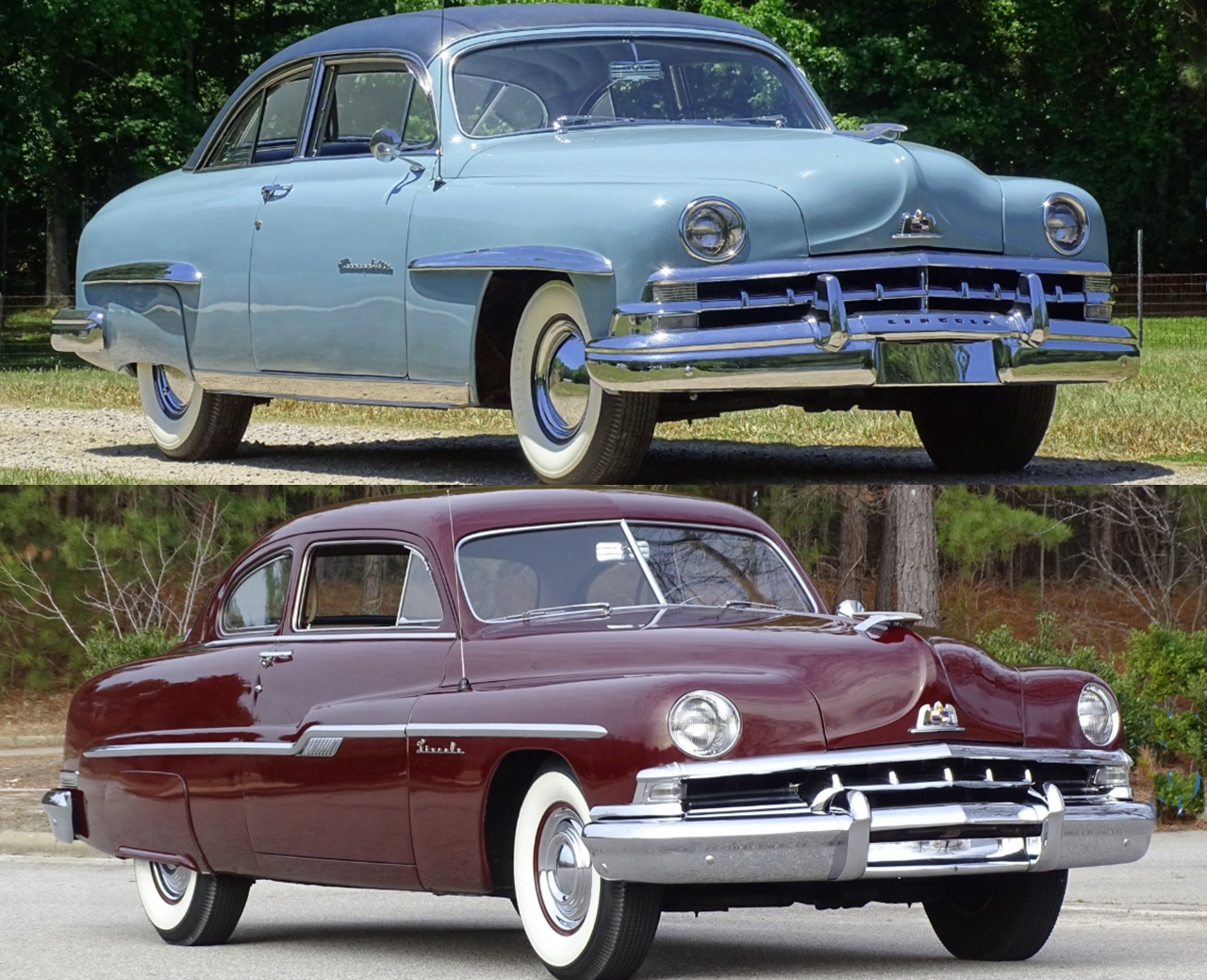
When you hear the name “Lincoln”, these 1949-51 “torpedoes” are not usually the cars that come to mind. I myself didn’t even know they existed until I found them in the American Car Spotter’s Guide many years ago. They were Lincoln’s first new postwar designs, which to me seem to be the culmination of stylists’ dreams of the ’30s-’40s: a long, low, streamlined-looking, “World of Tomorrow” car, gliding smoothly and powerfully along the new superhighways that were just being planned. But as always, “the future” has a way of becoming the past, and these rather bulbous cars were superseded by crisper new designs as the ’50s progressed.
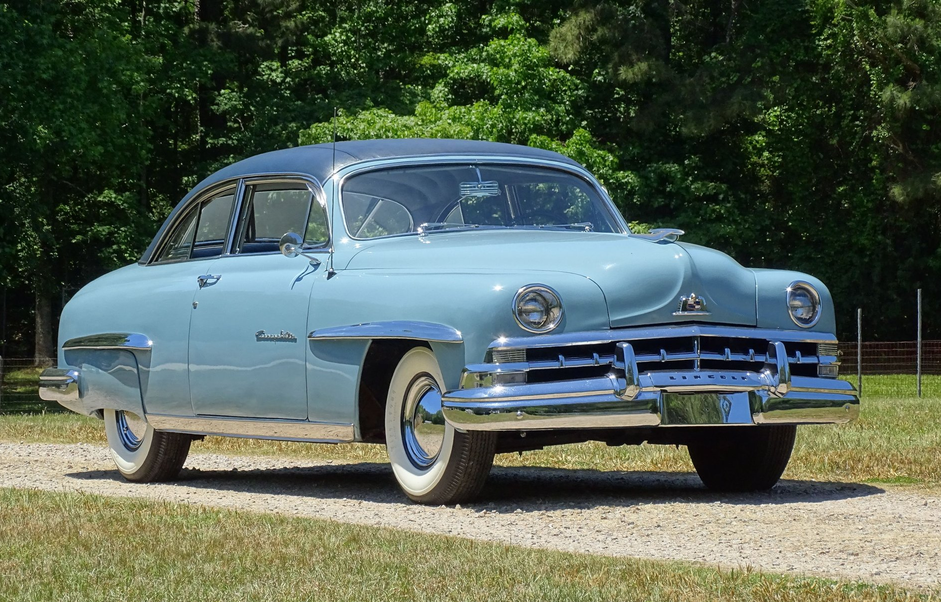
Our first example is a 1950 Lincoln Cosmopolitan Coupe offered by Raleigh Classic Car Auctions. Here’s the full description:
1950 LINCOLN COSMOPOLITAN
This beauty is extremely original and the actual miles of 27,823 are verified by the title work. It is unusually well optioned for the day including automatic transmission, halo vinyl roof, power windows, back up light, dual exterior mirrors, locking gas filler door, working factory clock and radio and full fender skirts. This is likely the lowest mile, original condition, highly optioned example to be found.
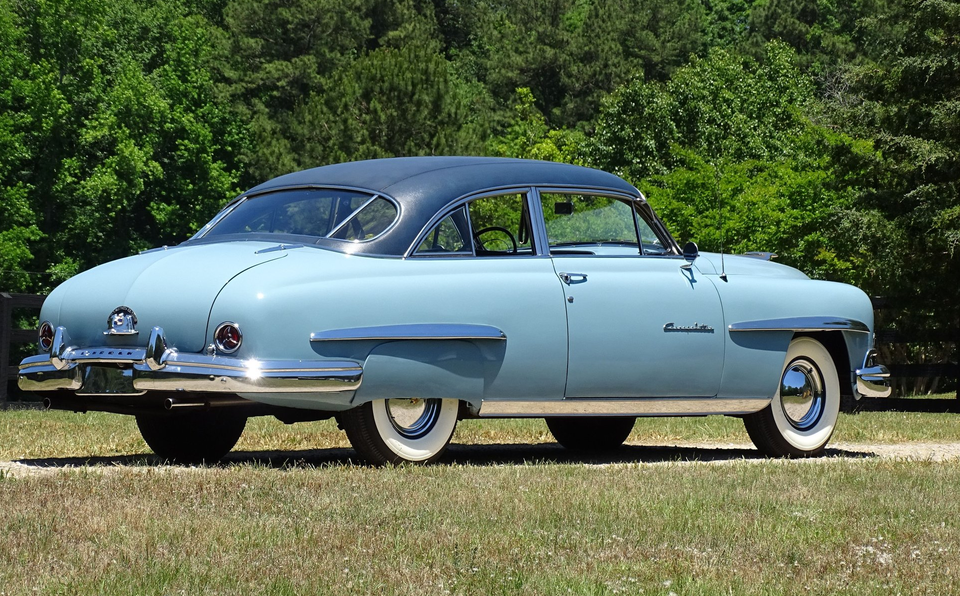
This generation of Lincolns offered two different bodies. The cheaper Mercury-like base models, which were just called “Lincoln,” used a smaller body with a 121-inch wheelbase. The much more expensive top-of-the-line Lincoln Cosmopolitan used a bigger body with a 125-inch wheelbase. I prefer the Cosmopolitan, with its distinctive streamlined roof and one-piece windshield.
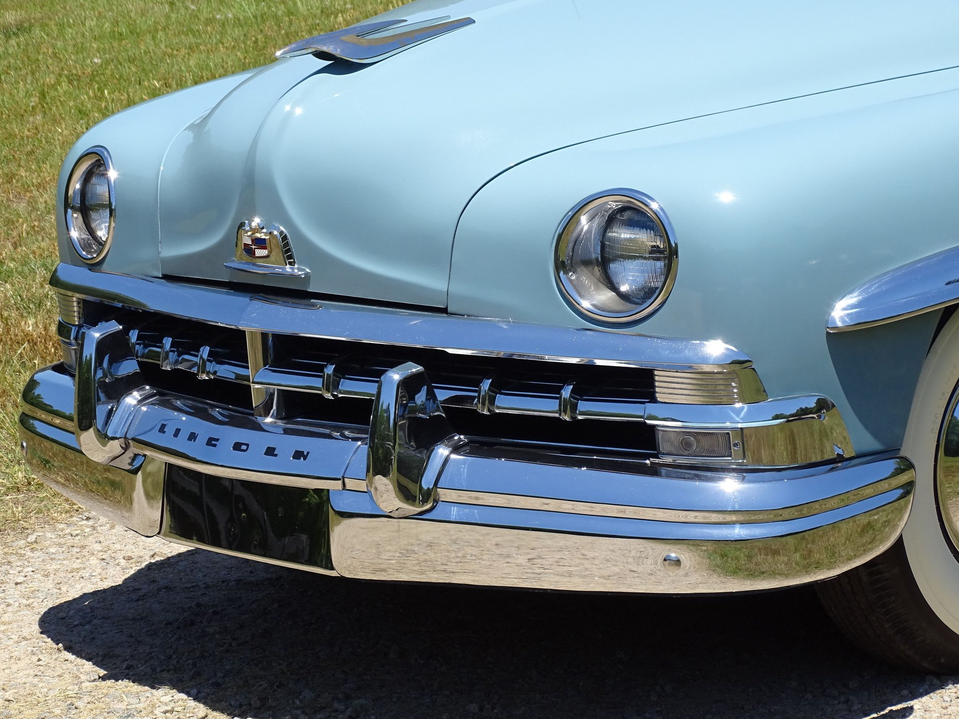
The headlights are “Frenched” (recessed), for a smooth, distinctive look. In this photo the Lincoln looks like a sad puppy dog who feels guilty for doing something wrong, but I like its styling nonetheless.
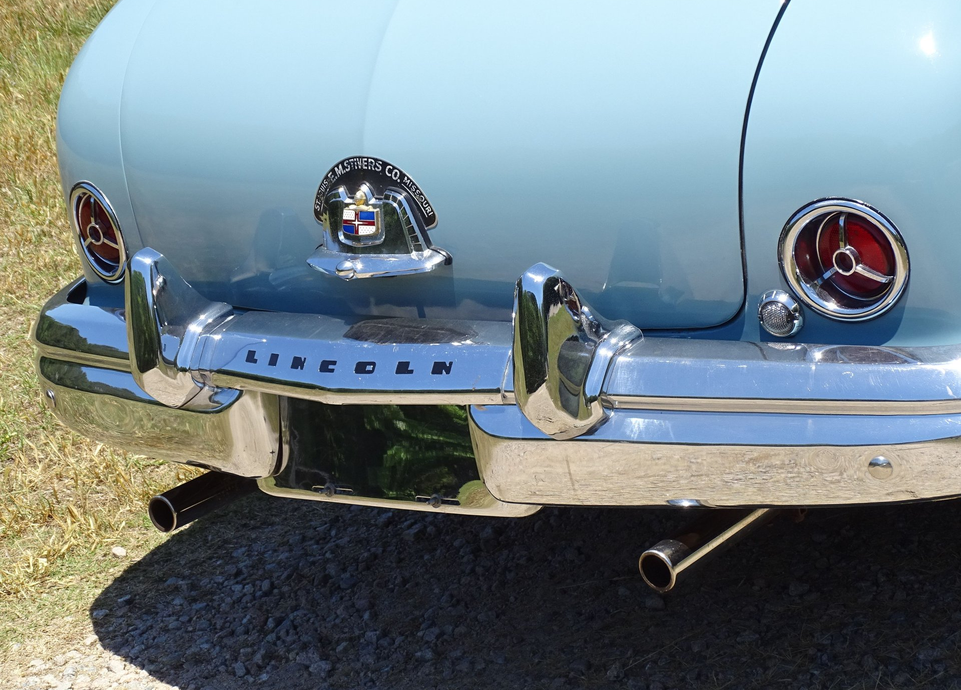
The styling theme is echoed at the rear where we see recessed round tail lights with chromium tri-bars.
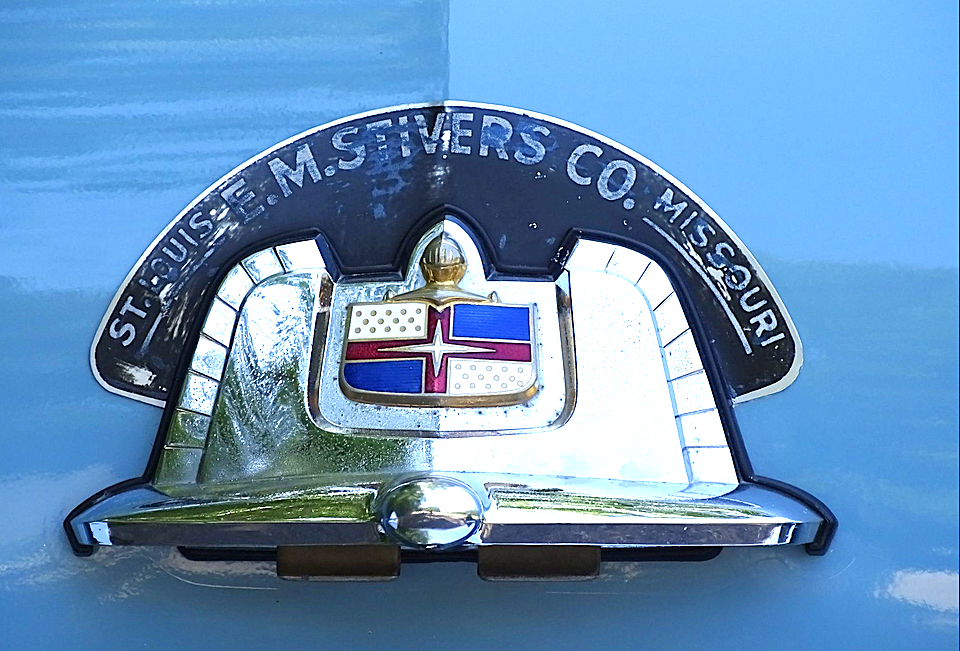
This example is originally from St. Louis.
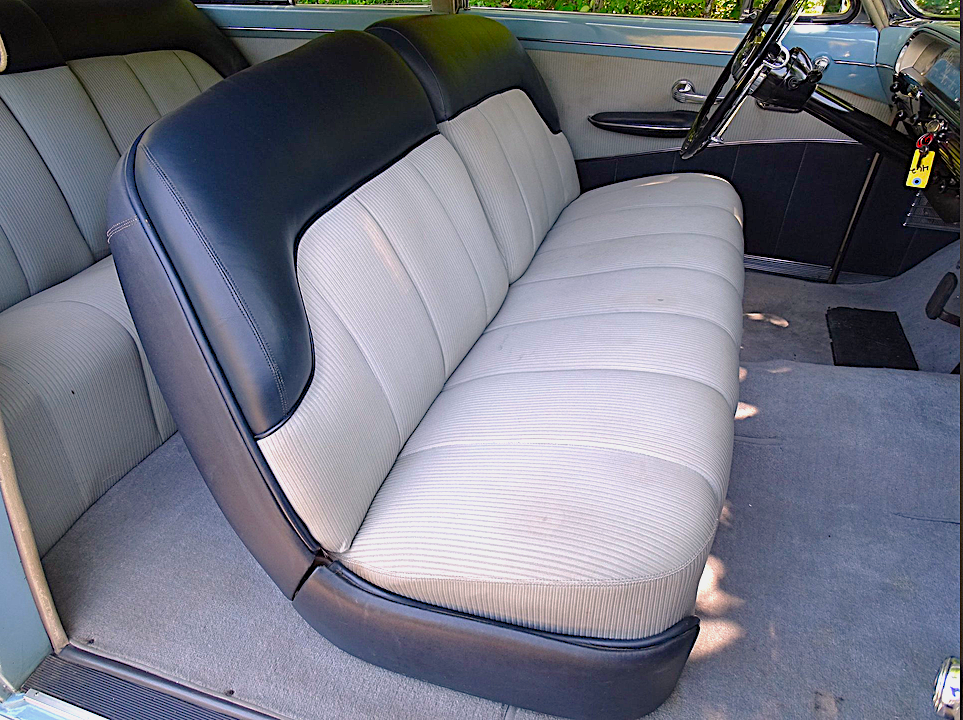
Inside, comfort and roominess is king!
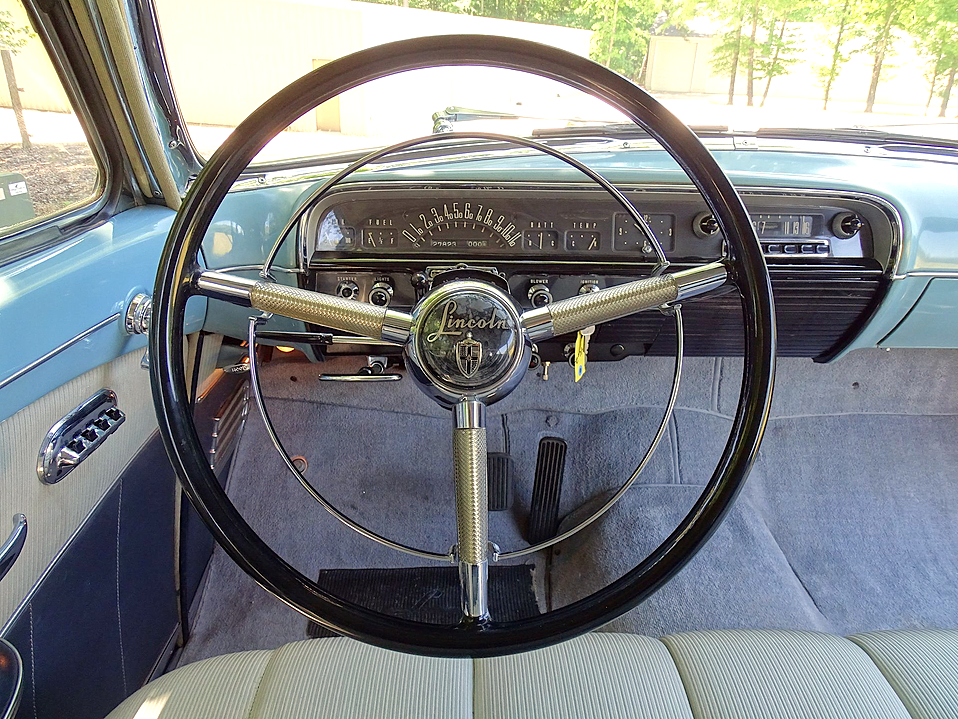
Behind the Lincoln wheel. There’s a new instrument panel design for 1950. This car’s automatic transmission came from GM: Lincoln now offered optional Hydra-Matic transmission.
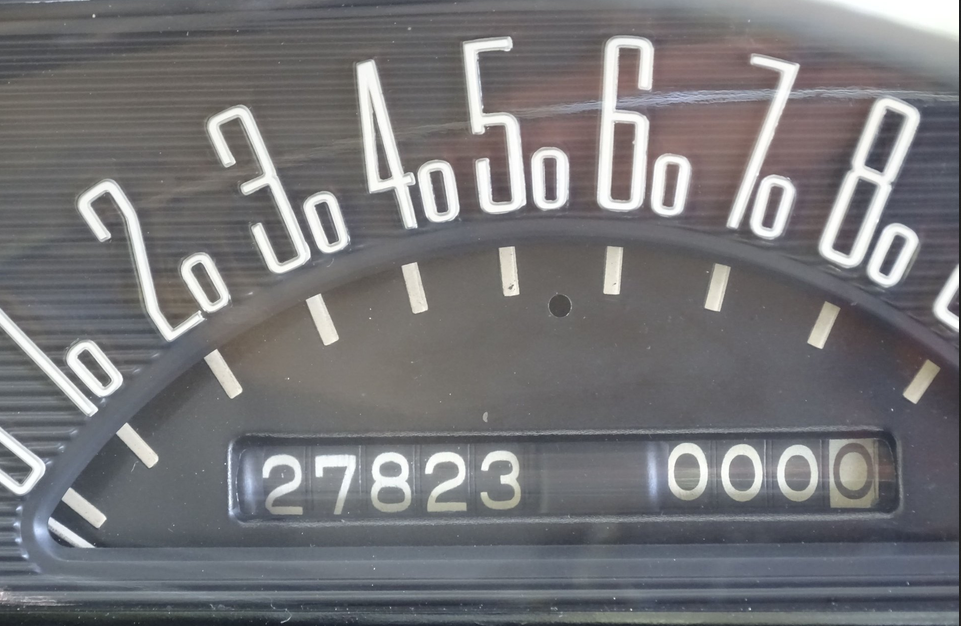
Each of those speedometer numbers is individually molded, not just sprayed on. Making the zeros smaller–I love little artistic details like that!
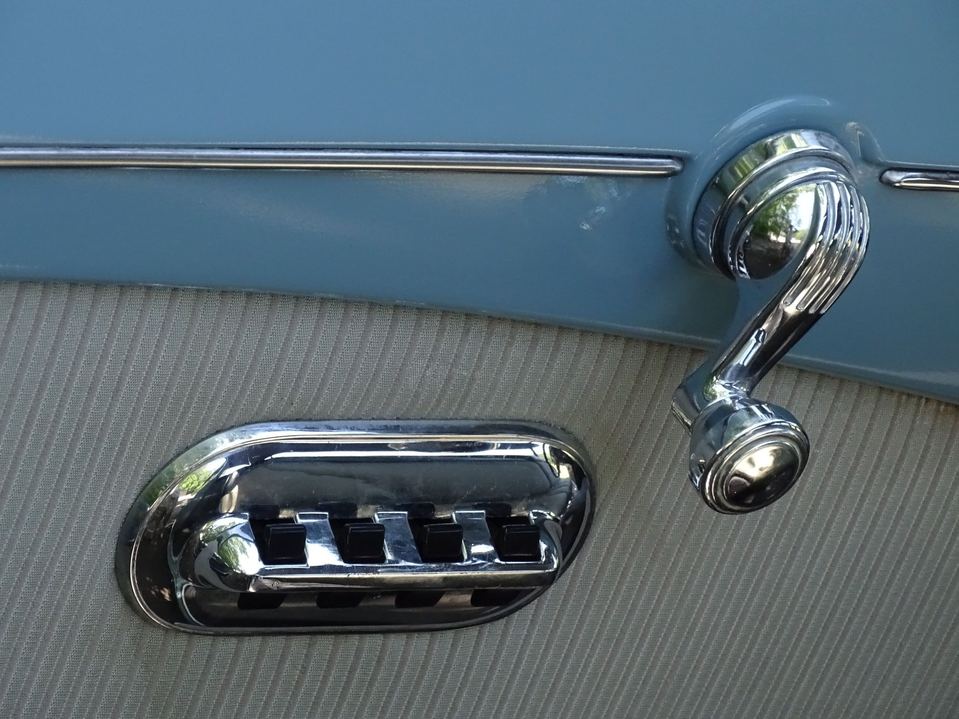
Every finely-crafted detail of this car is worthy of the luxury class. The power windows are hydraulic.
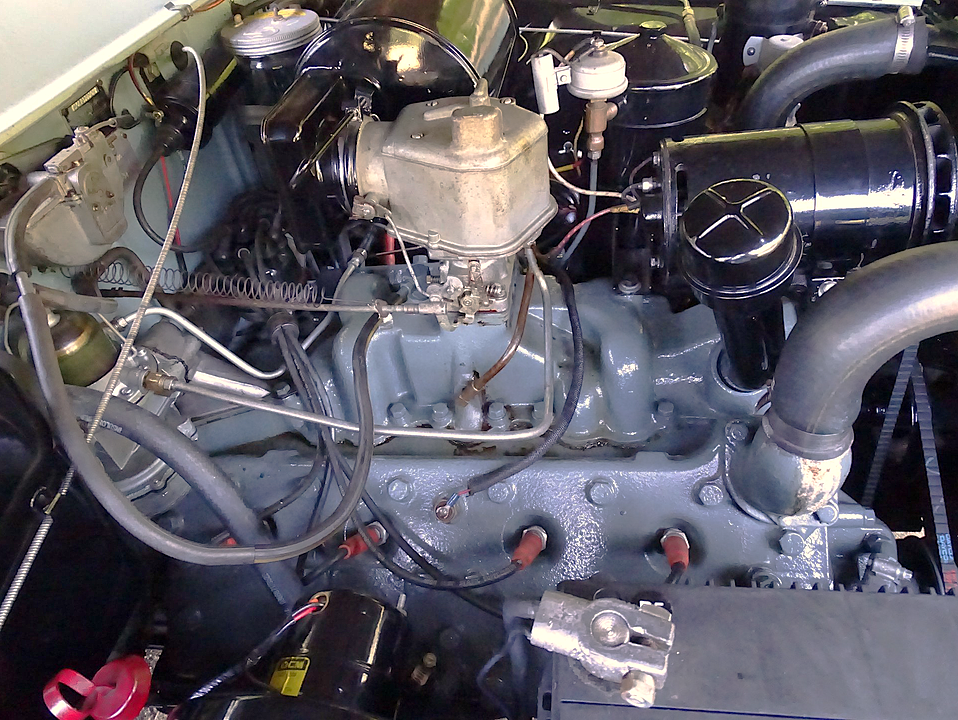
The heavy flathead V-8 (337 cubic inches; 152 HP) actually came from Ford’s F7/F8 truck series. But according to the book Great American Automobiles of the ’50s by Richard M. Langworth and Chris Poole, “21 major revisions to improve idling, valve and camshaft wear, and cylinder head durability [made] the Lincoln unit a strong, refined, reliable engine admirably suited for luxury car duty.” Lincoln advertisements called this engine “airplane-type”.
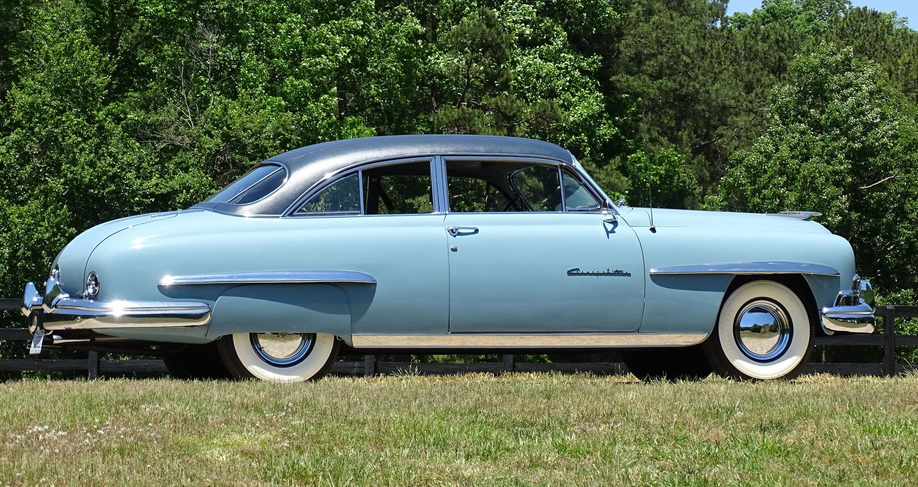
There it is–a beauty! It sold for $21,500 in December 2025.
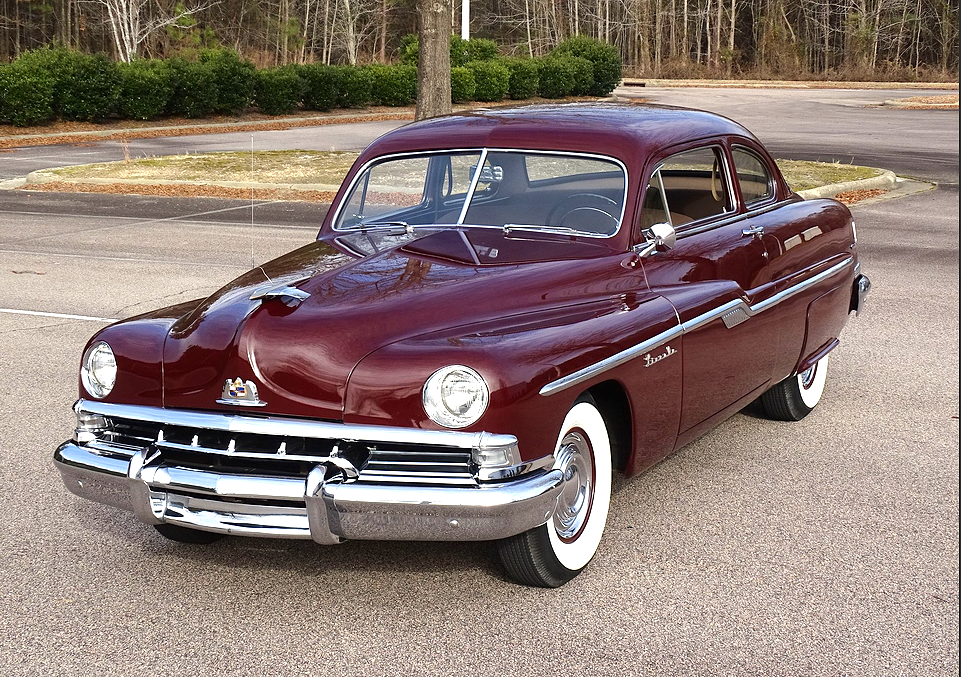
Here’s our next example, from the same auction house. A base model 1951 Lincoln coupe–another excellent, low-mileage original. Makes me wonder–did both Lincolns come from the same collection?
1951 LINCOLN 2 DOOR
Total production of the2-door Lincoln was 4,482 in 1951, and this Club Coupe is a 18,787 actual mile example from new. The car is equipped with a 337ci V8 engine and optional Hydra-Matic automatic transmission. It retains its original Luxor Maroon paint and Brown striped interior. Options include whitewall tires, full wheel covers, radio and a heater.
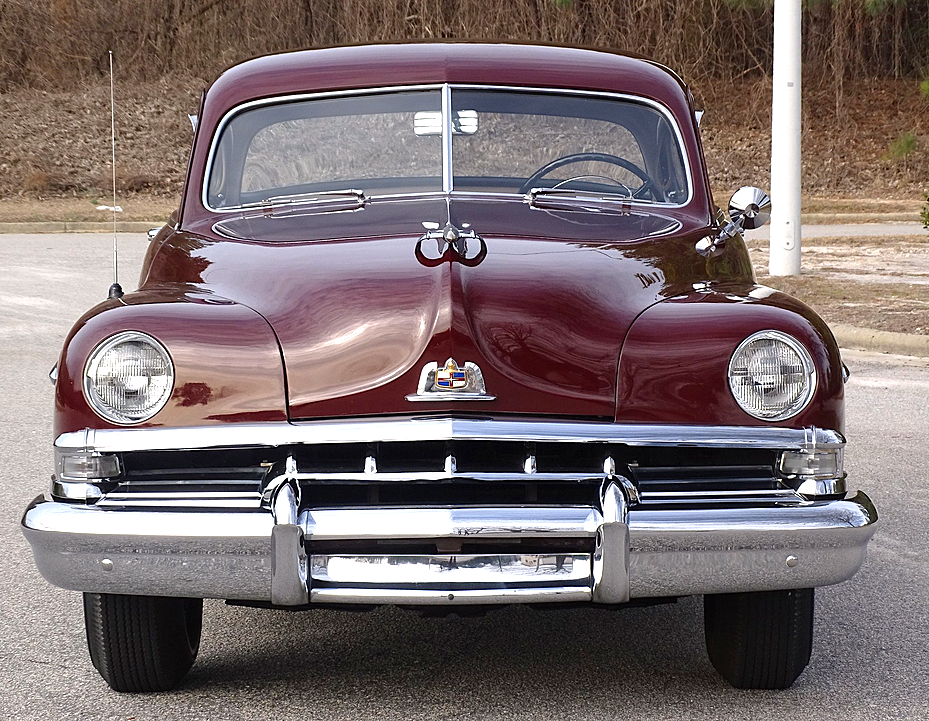
The lower-tier Lincoln body (shared with the Mercury) was narrower than the big Cosmopolitan, with a divided windshield. Both models got a refined grille for ’51, with fewer “teeth” than before.
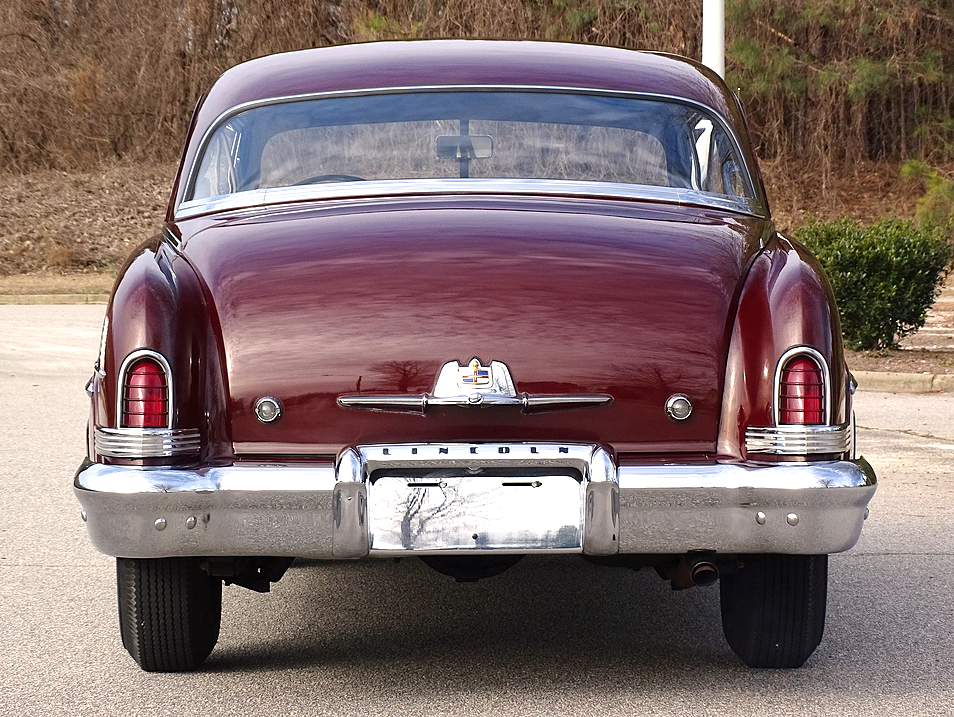
Base Lincolns had a different rear-end design than the Cosmopolitan — on the Cosmopolitan, the fenders and rear deck were one smooth shape. The Neo-Art Deco ribbed chrome trim under the taillight was exclusive to the base cars.
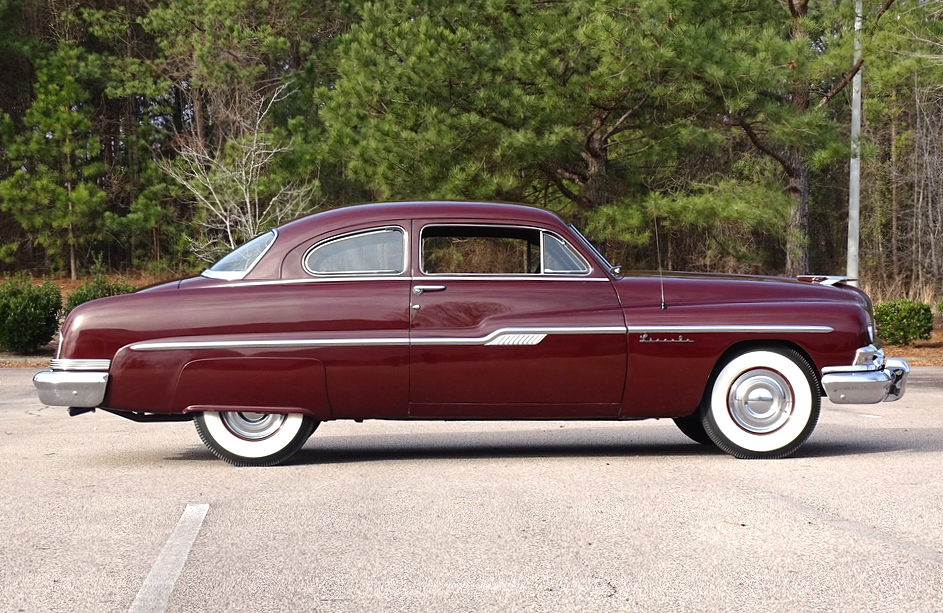
I mentioned 1930s styling–you could almost imagine this as a VW Beetle that has been severely stretched horizontally.
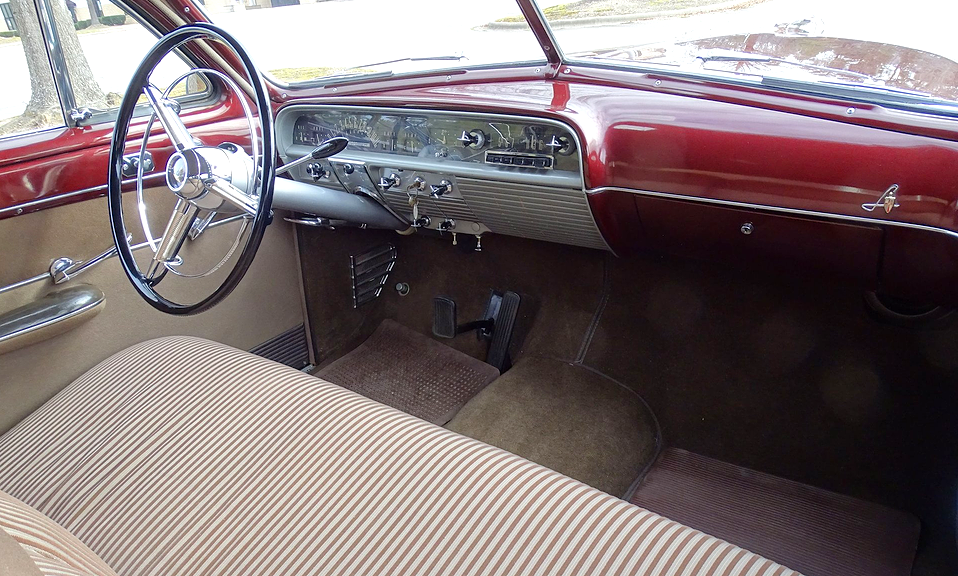
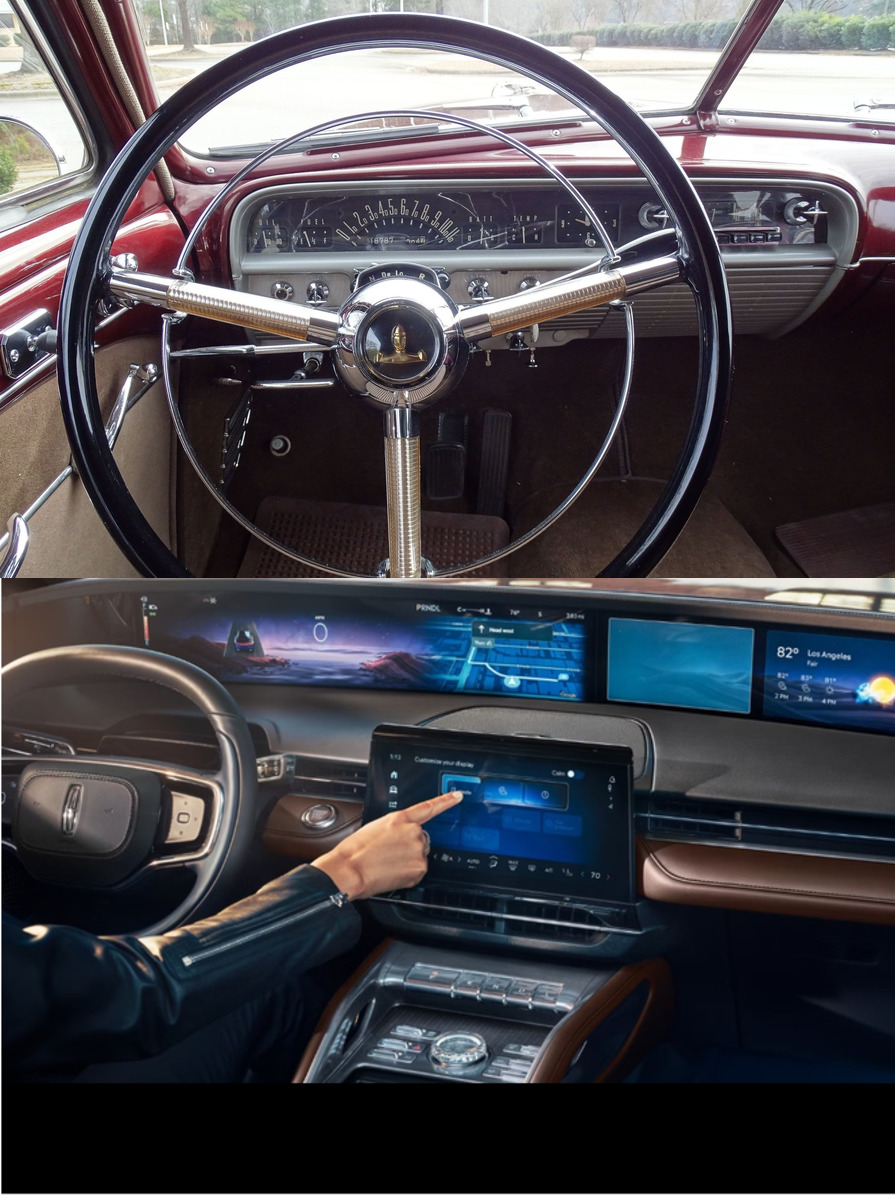
Front compartment view.
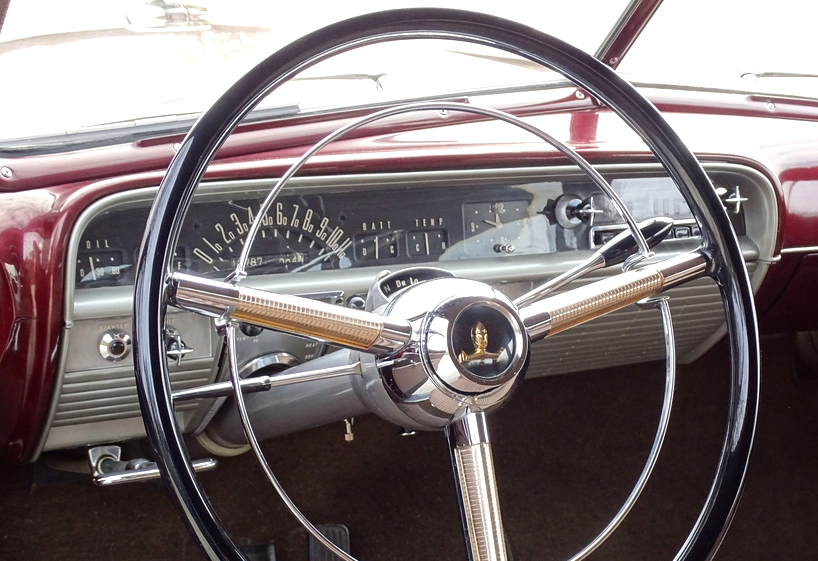
Those star-like knobs on the dashboard are exquisite!
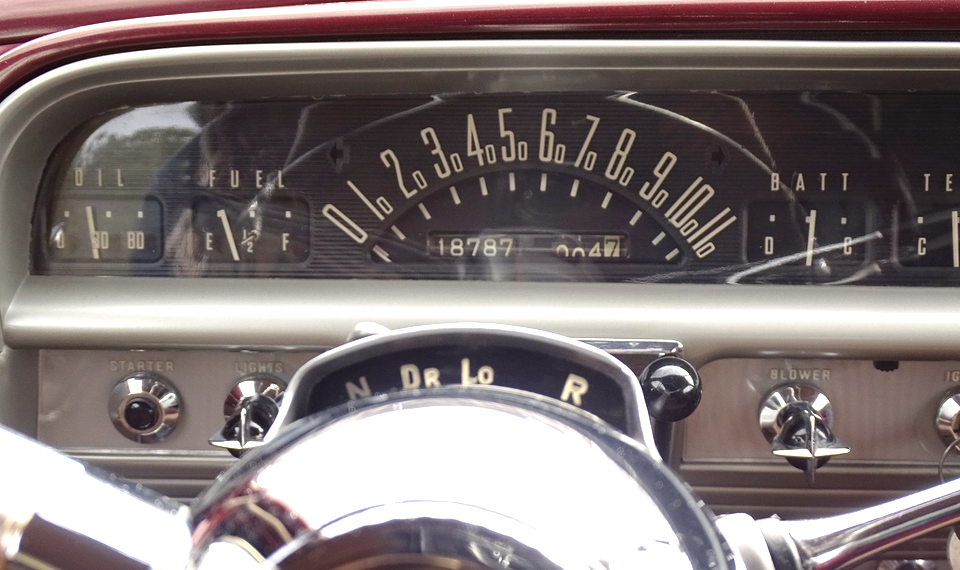
This car also has 4-speed Hydra-Matic from GM. Lincoln did not get its own automatic transmission until 1955.
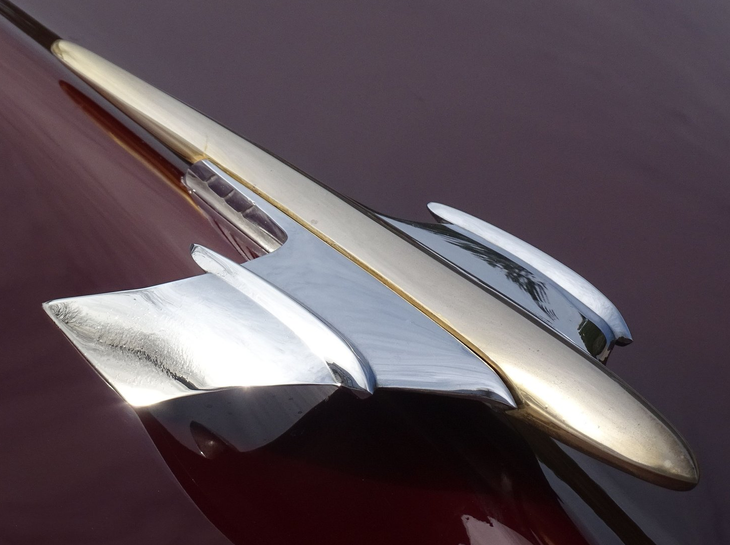
A stunning hood ornament in chrome and gold.
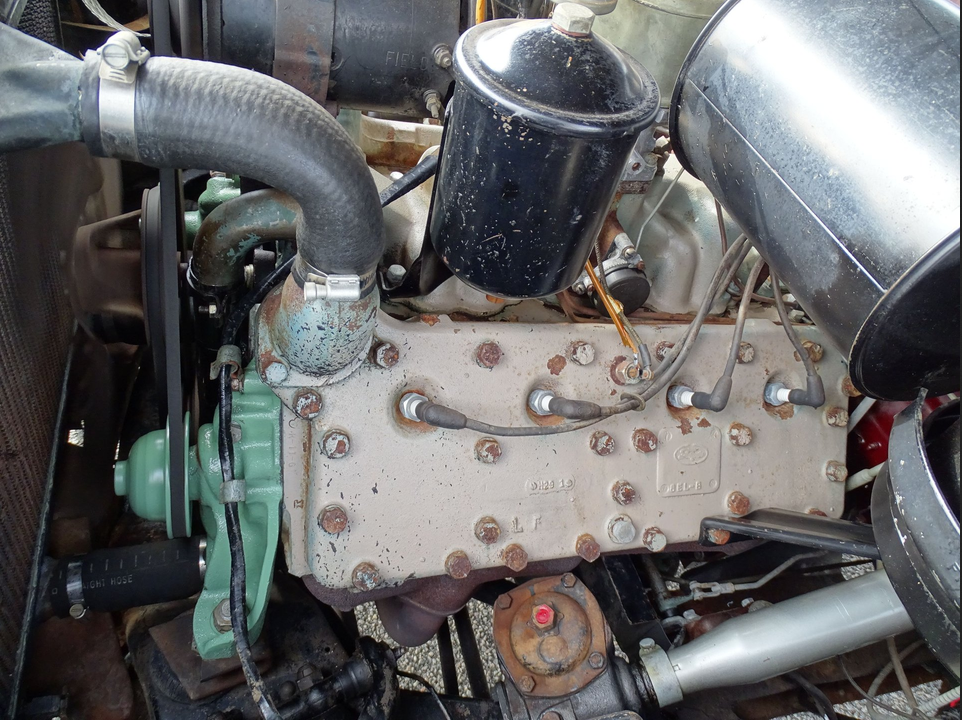
Same engine as in 1950, but with 2 more horsepower.
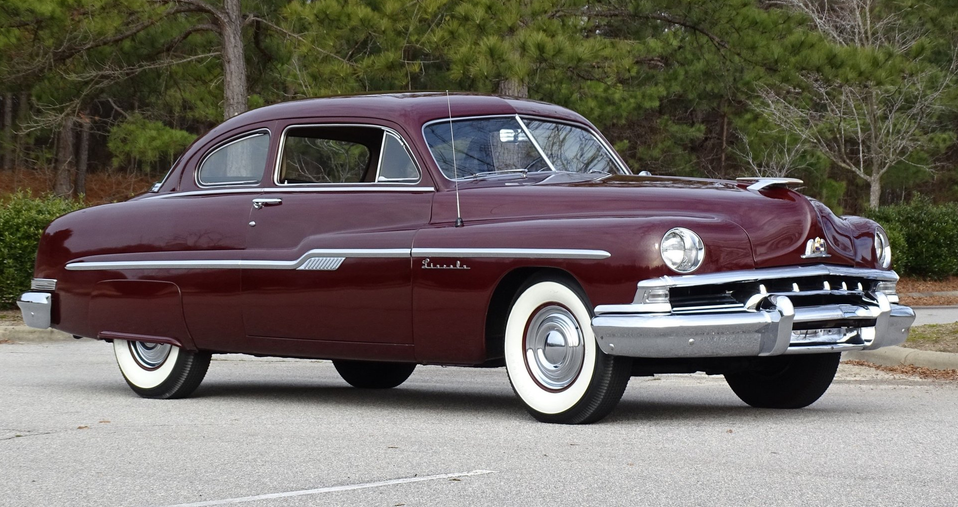
This 1951 base-model coupe ended up selling for $43,000–quite a bit more than the ’50 Cosmopolitan!
If a person from our time (who is used to driving modern vehicles) were to get behind the wheel of one of these early ’50s Lincolns, what would he think of it? Remember, these are cars weighing well over 4,000 lbs. with no power steering, no power brakes, no ball-joint suspension, and bias-ply tires that don’t track like radials do. The feeling of driving this old Lincoln must be extraordinary and would require some getting used to.
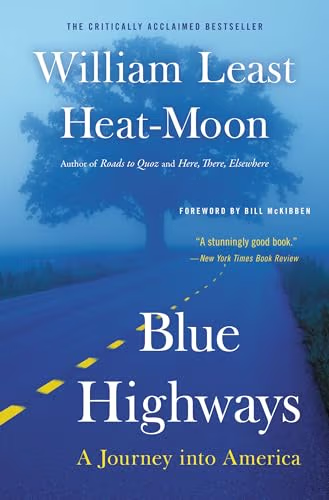
To me, this car is probably at its best driving along the “Blue Highways” (a term I picked up from a book by the same name, about traveling across America by skipping the Interstates and driving the old county, state, and U.S. highways–drawn in blue on paper road maps). Yes, I can see myself guiding that big wheel–cradled on cushy seats and soft suspension, windows down with the soft burble of the flathead V-8 in the background as the passing scenery goes by. Talk about a time machine!
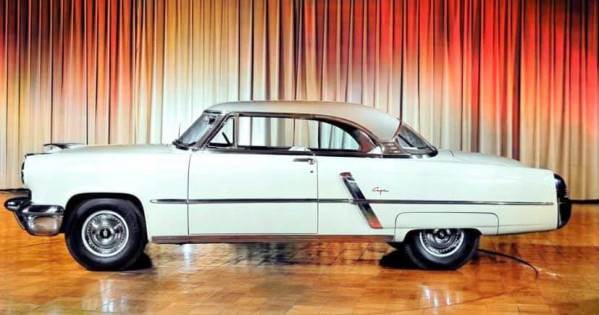
In 1952, a new Lincoln was introduced. It certainly is an attractive, clean design–but I have the same problem with this car as I do with the non-Cosmopolitan 1949-51 Lincolns: it’s too easily mistaken for a Mercury. Not that there’s anything wrong with the Mercury–but a luxury make should be unique and distinctive with its own aura of richness. If you compare this to what Cadillac was offering in 1952, you’ll see what I mean.
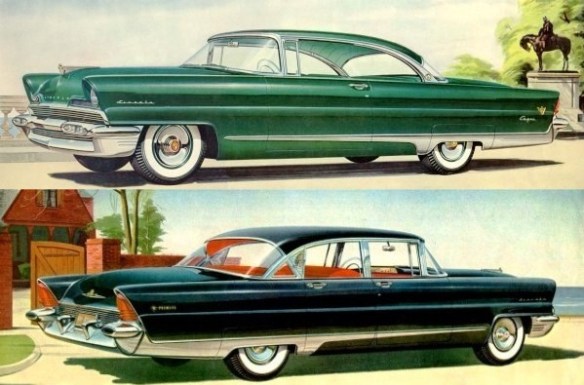
1956: Lincoln finally found the winning formula. A long, sleek, distinctive car that wouldn’t be mistaken for anything else. Sales rebounded accordingly.
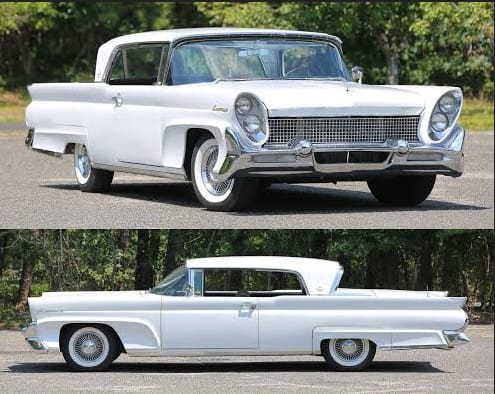
1958: Same strategy as ’56, but even more so! Much to the disappointment of company planners, sales were below expectations.
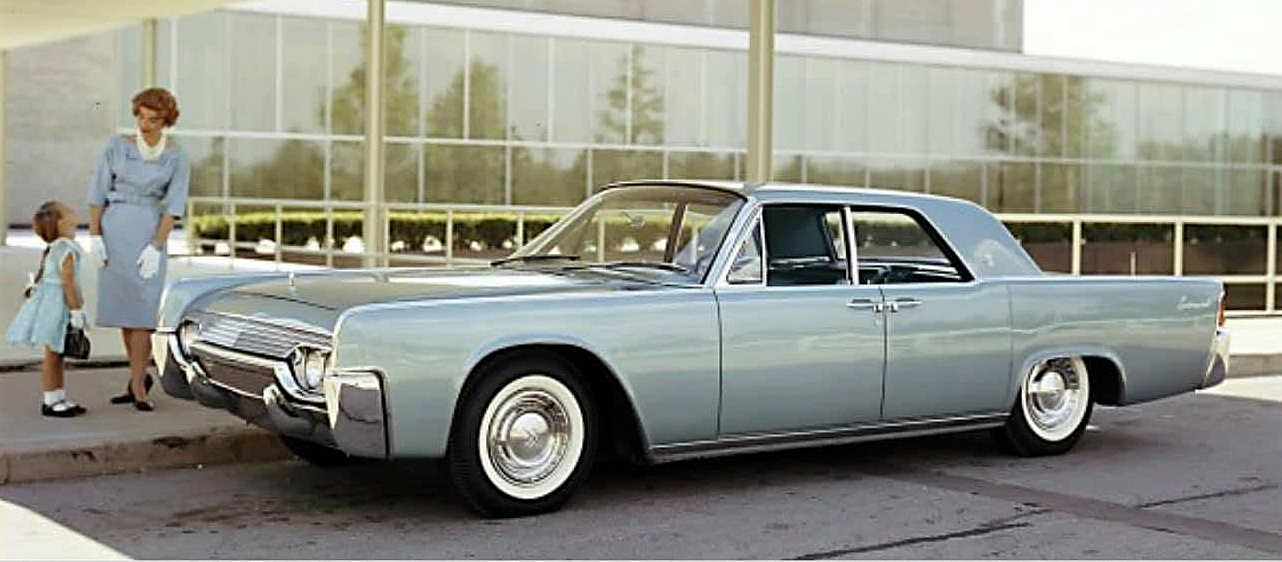
1961: Time for a whole new concept. Within ten years the most rounded car becomes the most angular. However there were not just styling changes but many engineering advances too. It seems that a Lincoln owner who traded every few years got a car so different in character from his previous one. Auto evolution really moved fast in those days!
Further CC reading:
Car Show Classic: 1949 Lincoln Cosmopolitan Coupe–Cadillac Thanks You, In More Ways Than One by Paul Niedermeyer























That’s practically a factory lead sled!
Inspired many 1950s cars, I think.
The interior, especially the dashboard, looks 10 years ahead of it’s time.
Chopping off their tops pointed their design direction timelesswards?:
If I’m remembering correctly, the 1949-51 Lincolns were supposed to have hidden headlights but for some reason they had to change them to the tunneled ones we now see. I remember reading reports that snow would accumulate around the Lincoln’s lights and hindered forward visibility. I don’t like the tunneled lights but think hidden ones would probably have looked worse. Much like the 1942 DeSoto seems to have too much unbroken sheetmetal up front compared to what we’re used to seeing on its contemporaries.
A long while ago, one guy at a defunct website imagined what if there was a 1950 Lincoln Continental. https://web.archive.org/web/20110803094525/http://www.whatifcars.com/gallery/What-If-Cars/1950_Lincoln_Continental_new
And there was some aborted plans for a 1949 Continental by mainly using tooling of the Cosmopolitan. https://lcoc.org/lincoln-continental-the-lost-years/
This readaholic can confidently say that Blue Highways is a GREAT book. I hope your local library has a copy. This site should prepare an article on good vehicle/road trip related books. I will start things off with Jupiter’s Travels by Ted Simon.
Don’t forget “Travels with Charley” by John Steinbeck, another true classic.
I once read there’s some question as to whether Steinbeck actually performed his around the country drive by staying in his GMC with one of the first slide-in campers. The story goes that he drove, alone, from his home in Sag Harbor, NY to Chicago, where he stayed in a hotel, waiting for his wife to join him. Then, for the rest of the trip, while they did, indeed, take the GMC, they otherwise stayed in hotels.
If true, not all that big of a deal, but does diminish the impression that he was ‘roughing it’ in the back of a camper while writing the book.
Crazy that the Cosmo went for half of what the Lincoln went for! The Cosmo exterior’s gorgeous. I never understood why all Cosmos didn’t come with the chrome pieces on the quarter panels as well, until getting a clue from Fpord’s term for them – Airfoil! They’re airplane wing cross-sections! I also like those round taillights and wondered where they came from. Answer discovered not too long ago – they harken back to ’20s Lincoln taillights.
The other thing I’ve never understood is why the dash layout is so pedestrian. To me, nothing about it indicates a high-end car.
I like the dash a lot, along with other 1950s Lincoln dashboards. It gives you all the information in a legible, no nonsense layout. It’s all under one piece of glass or plastic, which I think was not cheap to do.
I agree. In fact I was quite taken at how clean and modern that dash design looks, and with some padding, would not look at all out of place in a car of the late 1960s.
Fully agree on the dashboard — definitely foreshadowing what would be used in the 60s (of course, with idiot lights replacing battery and oil pressure gauges).
Both of these cars appear fairly regularly in the old movies that are popular at my house. Just last week I saw a Cosmopolitan convertible get wrecked in a 1951 noir called “The House On Telegraph Hill”.
The regular Lincoln may have lacked distinction, but it really gave Mercury a shot in the arm. Also, the tail end of that 51 Lincoln is what I thought of whenever I saw the final iteration of the Town Car in the early 00s.
JP, I watched ‘House on Telegraph Hill” as well on Sunday AM. The car that got wrecked (the wife driving?) was a `50 Mercury cvt.—her husband cut the brake lines! Imagine dealing with that in SF!! And all the wife did was partially roll it onto a pile of dirt! Not a hair out of place either! LOL
Aah, I think you are right on the Mercury. Making Stephen’s point. 🙂
I know I saw a Cosmo on film recently, now I have to remember the movie.
These cars appeared in many Joan Crawford movies of the era, including several in This Woman is Dangerous.
Both are very beautiful .
-Nate
Tthe “wings” above the wheel openings on the Cosmo predate the MB wings on the 300SL it would seem. The MB precursor W194 did not have such wings. Maybe MB copied the Cosmo feature.
They are splashguards. The fender skirt makes the back one redundant. I’ve never seen them on the back of Lincoln before leading me to believe that the rear one is not original.
In the 1954 film “The Long, Long Trailer” the hero car was a 1953 Mercury Monterey convertible; but, for some scenes, an embarrassingly similar looking ‘53 Lincoln Capri convertible was substituted because it’s 205 hp engine could tow the massive trailer up steep roads the 125 HP Mercury couldn’t handle.
Best of the bathtub era imo. Did these have the cooling issues of the flathead Fords? Don’t like those chrome excrescences over the wheel openings, similar to the heavy handed bulges on the MB 300SL.
Man, that picture of the 51 dash with the 2026 dash (full of stupid screens) below just shows how silly these interiors have become.
I’d give my right arm to go back to the interiors and dashes from that 1951 in a second!!
I like the base model not so much the fancy one.Tablet with car attached is a dangerous stupid trend I’ll not be taking up I like dials and switches
Amazing cars! Lincoln cars of this era sure don’t get a lot of ink. Everyone is focused on Cadillac, which outsold Lincoln massively. The featured cars look really cool. The bathtub styling suits the cars.
When I was a little kid, the barber in town drove a 1950 Lincoln Cosmopolitan. It was an imposing vehicle. Just like some dog owners look like their dogs, some car owners look like their cars. The barber was an austere, elderly man, very tall and thin, who never smiled. His facial expression reminded me of his car’s grill.
Another example why, IMHO, post war until ’51 maybe ’52 is the absolute top ever era of American car design.
The 1951 Lincoln reminds me of James Dean’s 1949 Mercury in ‘Rebel Without a Cause’ and the chopped-top, lead-sled in ‘American Graffiti’.
How strange the seller of the Cosmopolitan didn’t mention it was one of the 509 Capri Coupes that year, readily identifiable by the vinyl top. additional chrome ‘brow’ over the rear wheel well, and convertible-style upholstery and details. Caught flatfooted by the introduction of the 1950 GM and Mopar B-pillarless hardtops, Ford quickly ginned-up fancy-trimmed coupes in a pale effort to compete: Ford Crestliner, Mercury Monterey, Lincoln Lido and Cosmopolitan Capri.
I thought everyone knew the story of Ford’s all new 1949 lineup. The 1949 Lincoln Cosmopolitan with its longer wheelbase was always going to be a Lincoln (It may or may not have been intended to use the “Cosmopolitan” name. The plain 1949 Lincoln with its shorter wheelbase was originally going to be the 1949 Mercury. The car that became the 1949 Mercury was originally going to be the 1949 full-sized Ford. The car that became the 1949 Ford Vedette (built in France) was originally going to be a 1949 “light” (smaller) Ford built in the U.S.
The condensed version is that originally Edsel Ford and designer Eugene “Bob” Gregoire had proposed having 2 1949 Ford Models including a “light” or smaller car and a full-sized car, and then a single Mercury and a single Lincoln. But Edsel died and when Henry Ford II took over he didn’t like the proposals for the new Fords. Supposedly he thought the proposed “light” Ford was too small and the proposed full-sized one too big, so he brought in an outside design team led by George Walker who came up with the 1949 Ford that actually went into production and that we all know.
The proposed 1949 models were quite far along in their design, though and Ford didn’t feel like just writing off their investment. Instead the tooling for the light Ford was shipped off to France where it went into production as the Ford Vedette. The proposed Gregoire-designed full-sized Ford was rebadged as the 1949 Mercury. You can certainly see the similarity in the styling between the French Ford Vedette and the car that became the 1949 Mercury. The Vedette looks like an 8/10 scale Mercury.
The proposed full-sized Gregoire-designed Mercury was rebadged as the “plain” 1949 Lincoln (and featured the same wheelbase and much of the same sheet metal as the 1949 Mercury). The proposed 1949 Lincoln went into production as the Lincoln Cosmopolitan.
Tough to choose!
But I know now where the Ford Cortina MK1 taillights came from