
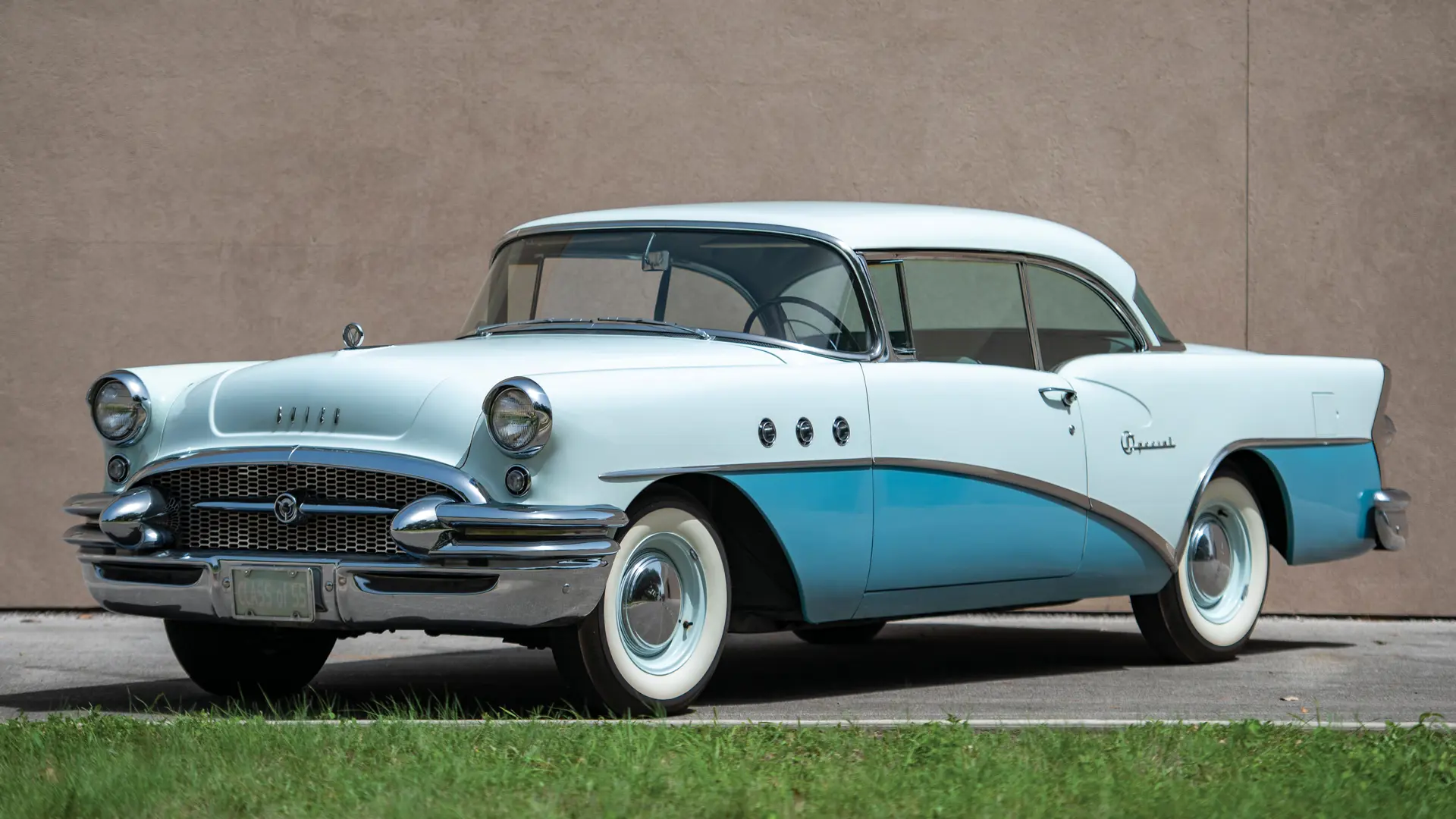
Buick sold fewer than 200,000 vehicles in the U.S. in 2025, but seven decades earlier, they were one of America’s top automotive brands, accounting for more than one in every 10 new cars. This unrestored, startlingly low-mileage 1955 Special two-door Riviera hardtop was the most popular version of Buick’s most popular model in one of the marque’s best years.
1955 was an exceptionally good year for Buick. Their model year production totaled 738,814 cars, good for 10.36 percent of total U.S. model year output and the coveted No. 3 spot behind Chevrolet and Ford. Production of the entry-level Buick Special totaled an impressive 381,946 cars, more than the entire combined output of the “Little Three,” AMC, Studebaker-Packard, and Kaiser-Willys. Today, sales like that would easily top the popular Toyota Camry, which sold 317,185 cars in the U.S. in the 2025 calendar year.
The Special wasn’t exactly cheap — the least expensive two-door sedan started at $2,232.88 (a relative worth of about $37,400 in 2025 dollars) — but it was the cheapest route to owning a new Buick.
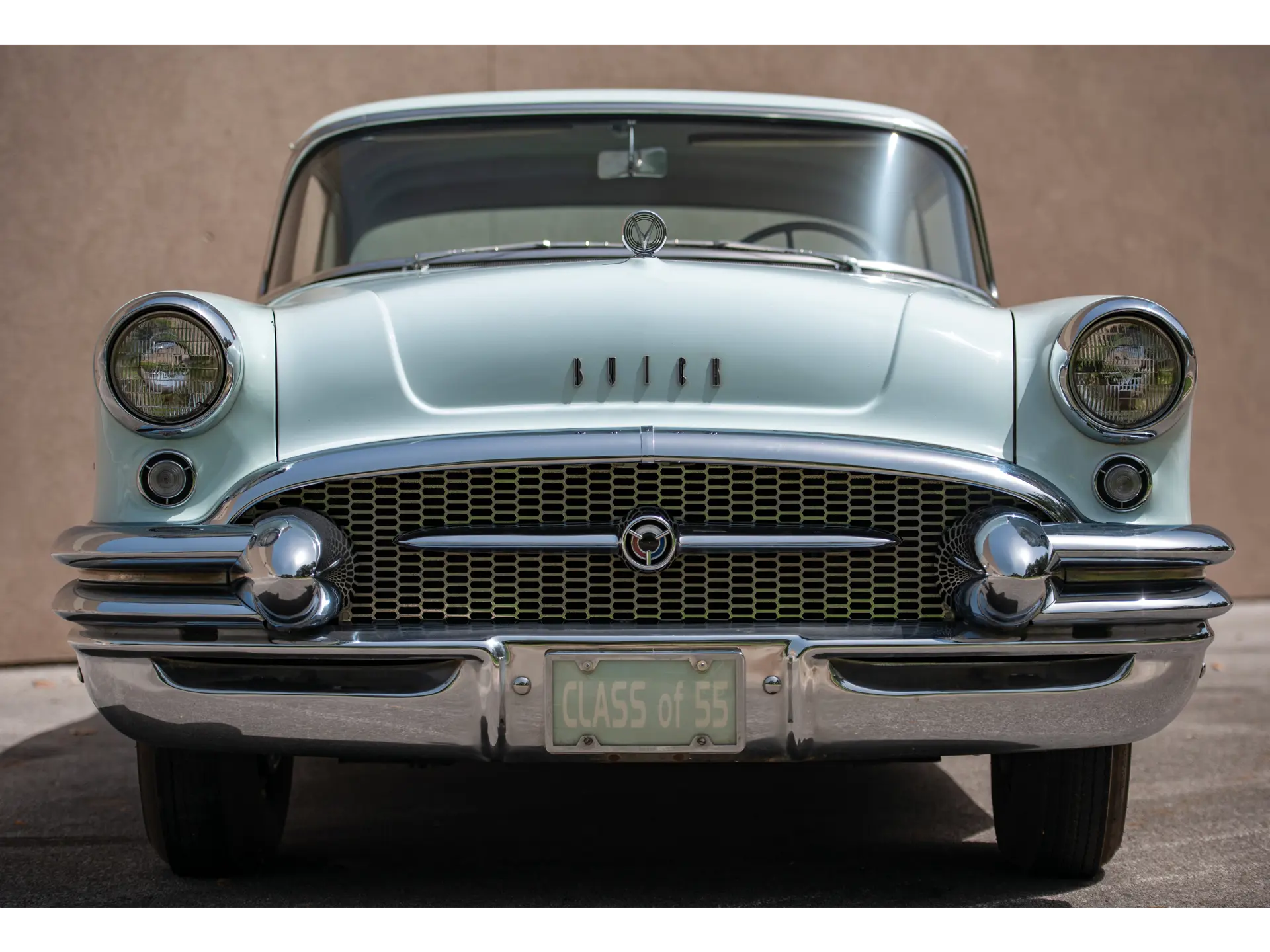
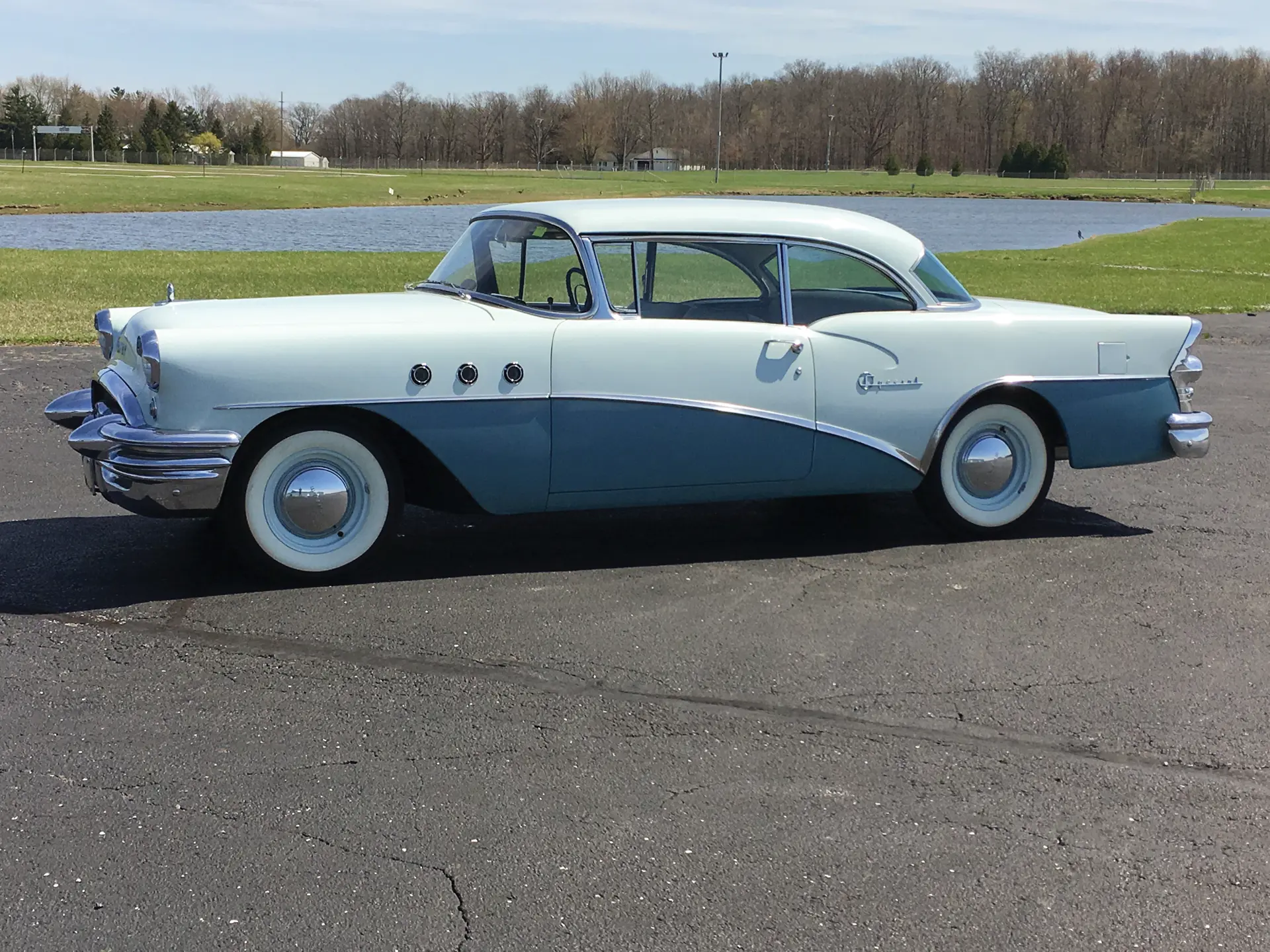
In 1955, the Special was available in six body styles, but the most popular was the Model 46-R Special two-door Riviera (hardtop) pictured here. Buick built 155,818 of these Riviera hardtop coupes, 40.8 percent of Special production, with prices starting at $2,332.43 (a relative worth of about $39,000 in 2025 dollars). This was about $166 more than a Chevrolet Bel Air sport coupe, but actually $2.56 less than a Pontiac Chieftain 8 Catalina. The Special was also hundreds of dollars cheaper than the least-expensive Chrysler Windsor, and this Riviera was $141.57 less than an Oldsmobile 88 Holiday Coupe.
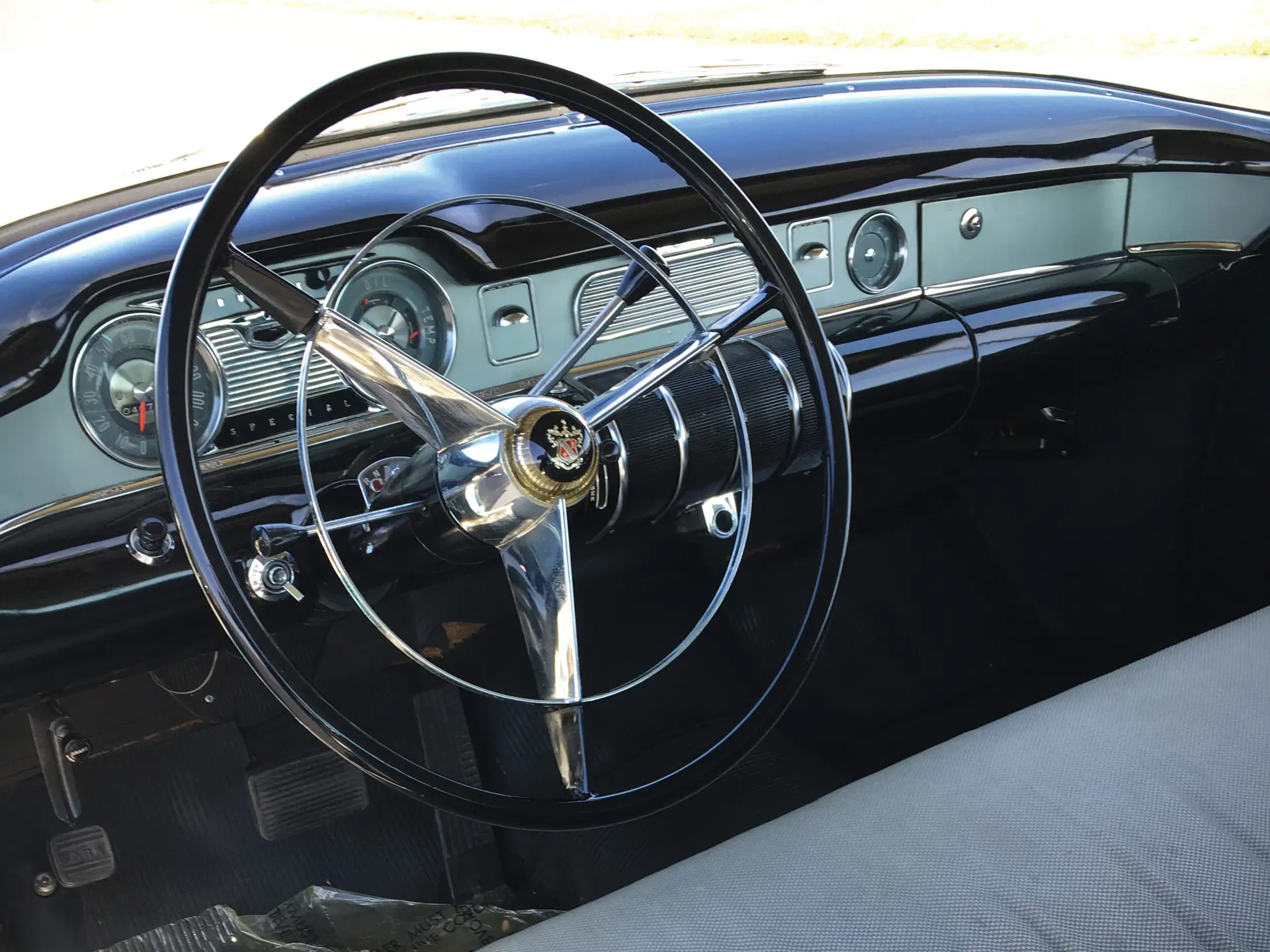
This car is fairly spartan for a Buick. Its only big-ticket items were Dynaflow, which cost $192.50 extra, and the WeatherWarden heater, which was $81.70. It also sports whitewall tires ($28.60), and I think that’s the optional deluxe steering wheel (a $15.10 extra), which would be enough to push the sticker price to about $2,650 (a relative worth of about $44,400 in 2025 dollars). However, this car has no wheel covers, no radio, no clock, and no power accessories that I can see. You could option up a Special with power steering, power brakes, a power seat, power windows, and even trunk-mounted air conditioning, but all those features would have pushed the sticker price well over $3,000.
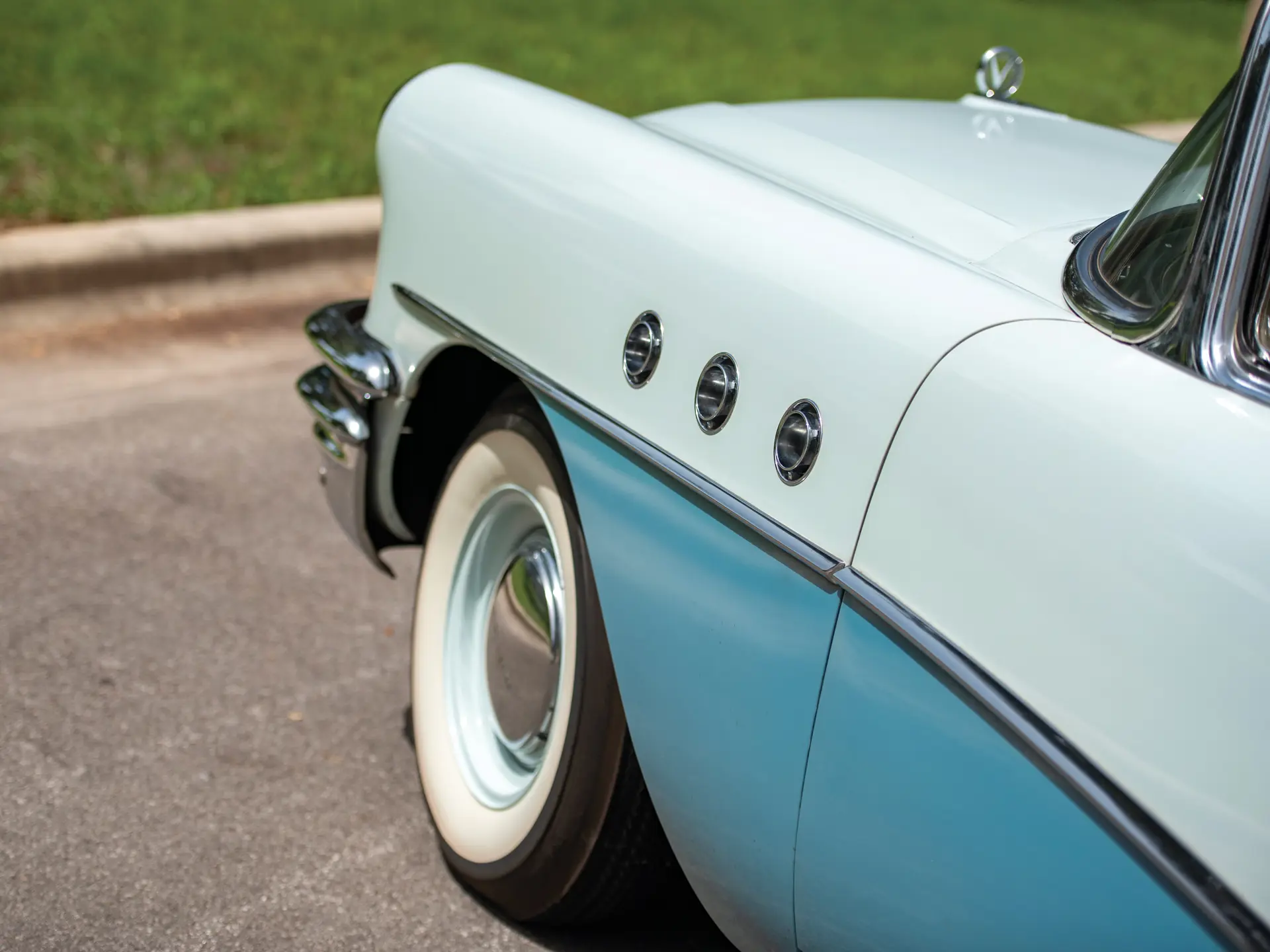
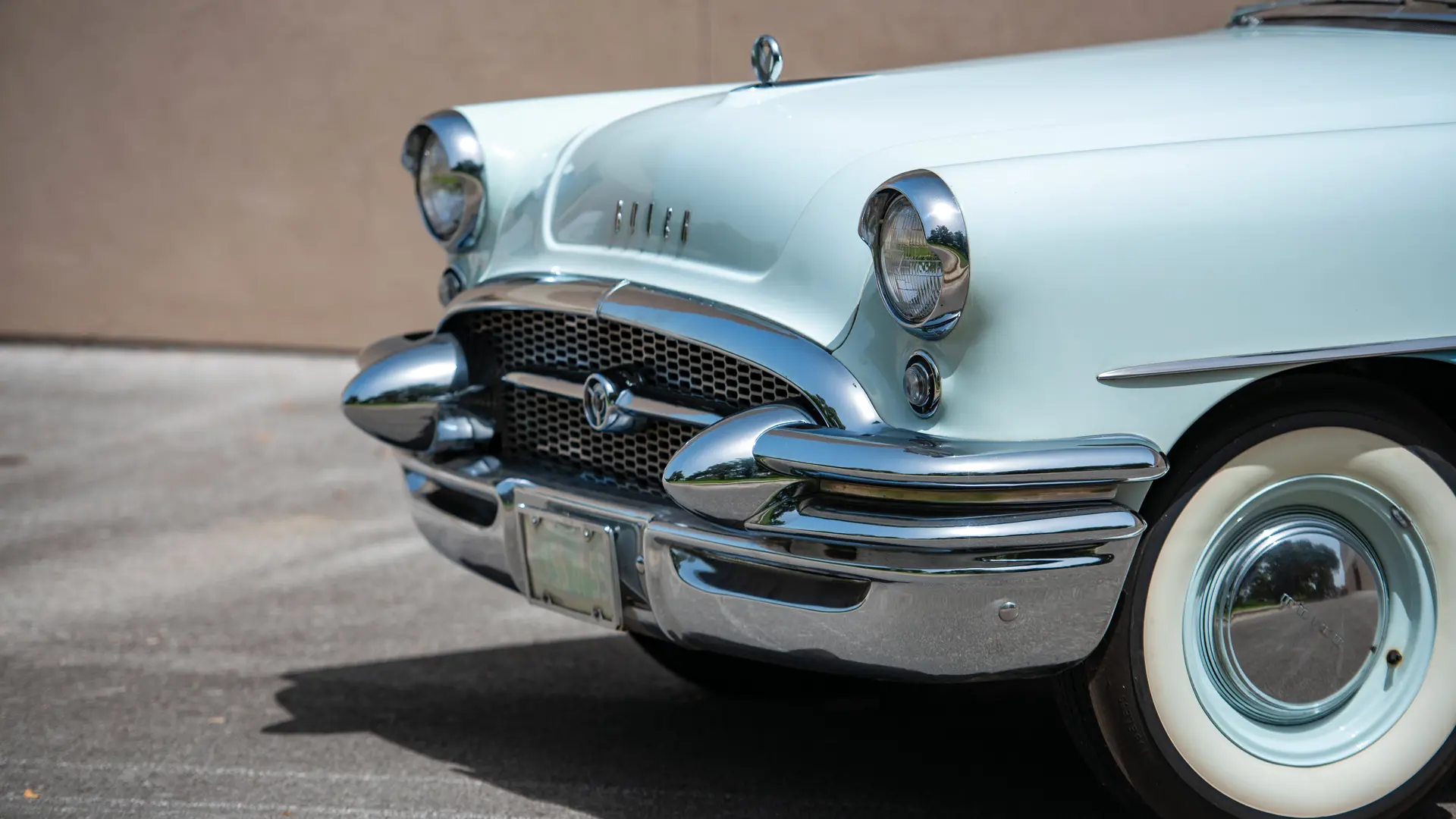
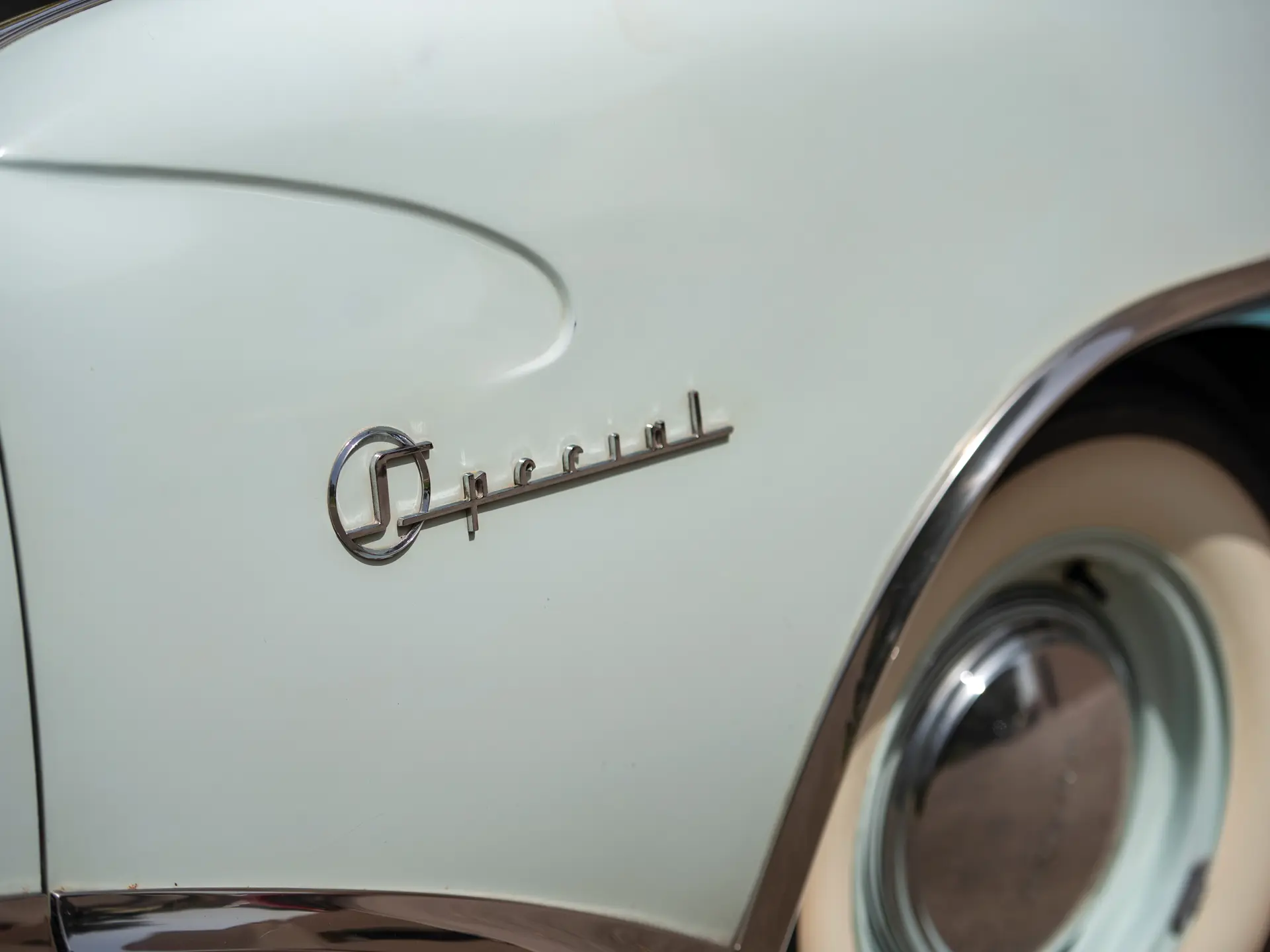
In 1955, the Special was considered a full-size car, although 15 years or so later, it would have qualified as an intermediate if not for its 122-inch wheelbase. It was 206.6 inches long, 76.0 inches high, and 62 inches high unladen, with a curb weight of about 4,100 lb. On the outside, the Special was immediately distinguishable from the pricier Buick models by having only three “Ventiports” on each side of the hood rather than four.
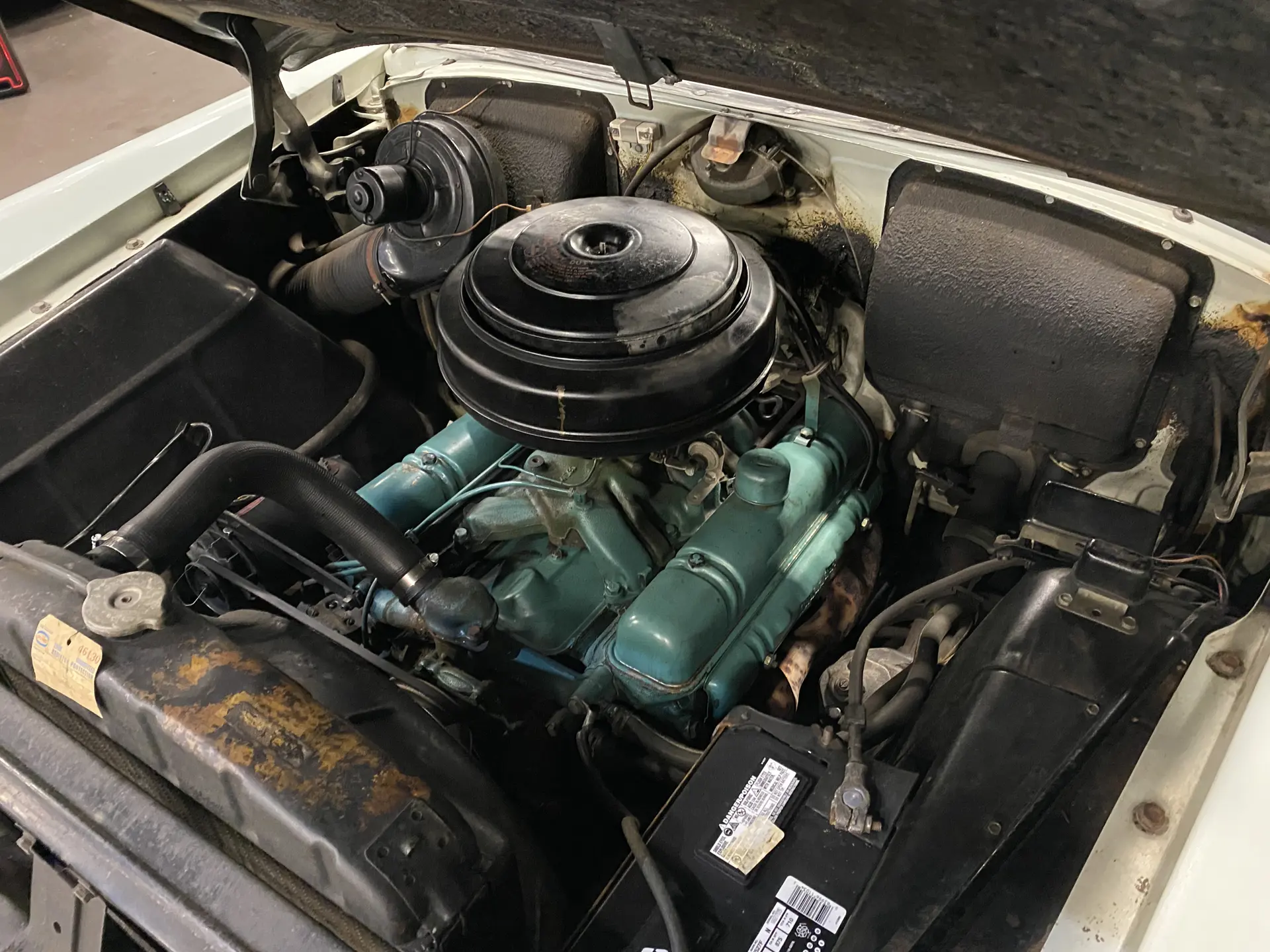
All Buicks had V-8 engines in 1955, but the Special had a 264 cid version of the divisional “Nailhead” engine, with a two-barrel carburetor and a smaller bore than the 322 cid version found in the senior Buick models. With Dynaflow, the 264 engine had 8.4 compression, giving 188 gross horsepower on regular gasoline.
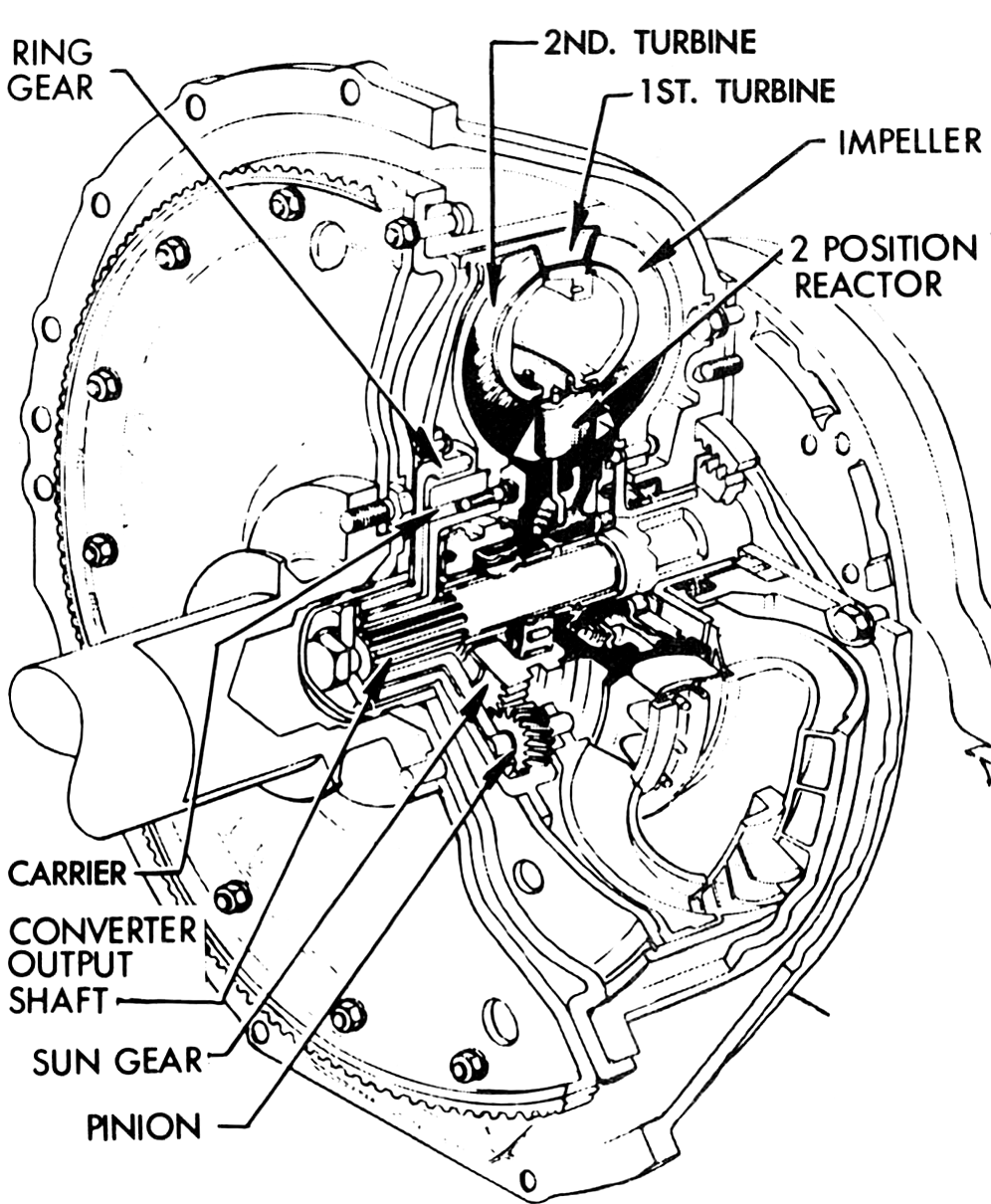
More than 90 percent of 1955 Buicks had the new Variable Pitch Dynaflow, which had a “switch-pitch” stator whose blades changed to high angle if the throttle was floored. The idea was that the high angle would give a little more kick for fast starts or passing while allowing a more efficient low angle for cruising. You could also manually select Low below about 40 mph, which made a dramatic difference in this car’s otherwise leisurely acceleration. Motor Trend explained:
Taking off in normal DRIVE range (with throttle floored to switch Special’s Dynaflow blades to “high” pitch) is no particular thrill. Time to 60 mph, 16 seconds; to ¼-mile, 20.4. By using LOW range up to true 57 mph for best results (4500 rpm), these averages were lowered to 13.8 and 19.4 seconds.
By doing the same thing, Consumer Reports recorded 0 to 60 in 13.5 seconds and a 19.5-second quarter mile with their Dynaflow-equipped Special, which was respectable for a mid-’50s car of relatively small engine displacement. For 1956, the Dynaflow torque converter would get a second stator that gave better all-around acceleration with less need to use Low.
There’s a common assumption that Dynaflow was disastrous for gas mileage, but by 1955, that was really no longer true. Consumer Reports recorded an overall average of 13.9 mpg over 2,050 miles of driving, which was actually better than either a Dodge Royal V-8 or a Mercury Monterey. Despite its higher numerical axle ratio, the Special got 19 mpg at a steady 50 mph, 3 mpg better than the Dodge and 1.7 mpg better than the Mercury. These were decent figures for a mid-’50s domestic car weighing more than two tons.
What was the Special like to drive? Contemporary testers thought it felt even more massive than it was, and it had a VERY soft suspension. Buyers seemed to like that, but it meant that the Special only really rode well on smooth pavement. “On smooth roads, Special was literally out of its class,” remarked Motor Trend. “But tar strips and cracks in cement paving bothered it (you could feel and hear irregularities in the surface.” Consumer Reports objected to “the vertical shake produced on any but the smoothest roads, as well as by the suspension’s lack of control on big bumps,” which “seemed ridiculously out of keeping with a car of the Buick’s weight and size.”
Some of this was due to Buick’s torque tube rear suspension, which had a lot of unsprung weight and could cause the rear wheels to hop sideways unexpectedly on rough surfaces. A 1955 Oldsmobile, of similar size and weight, but with a conventional live axle, was better composed. By 1955 standards, the Special’s handling on smooth pavement was okay, but Consumer Reports found the steering “rather rubbery,” and with 5 turns lock-to-lock, any tight maneuver required a lot of wheel-winding.
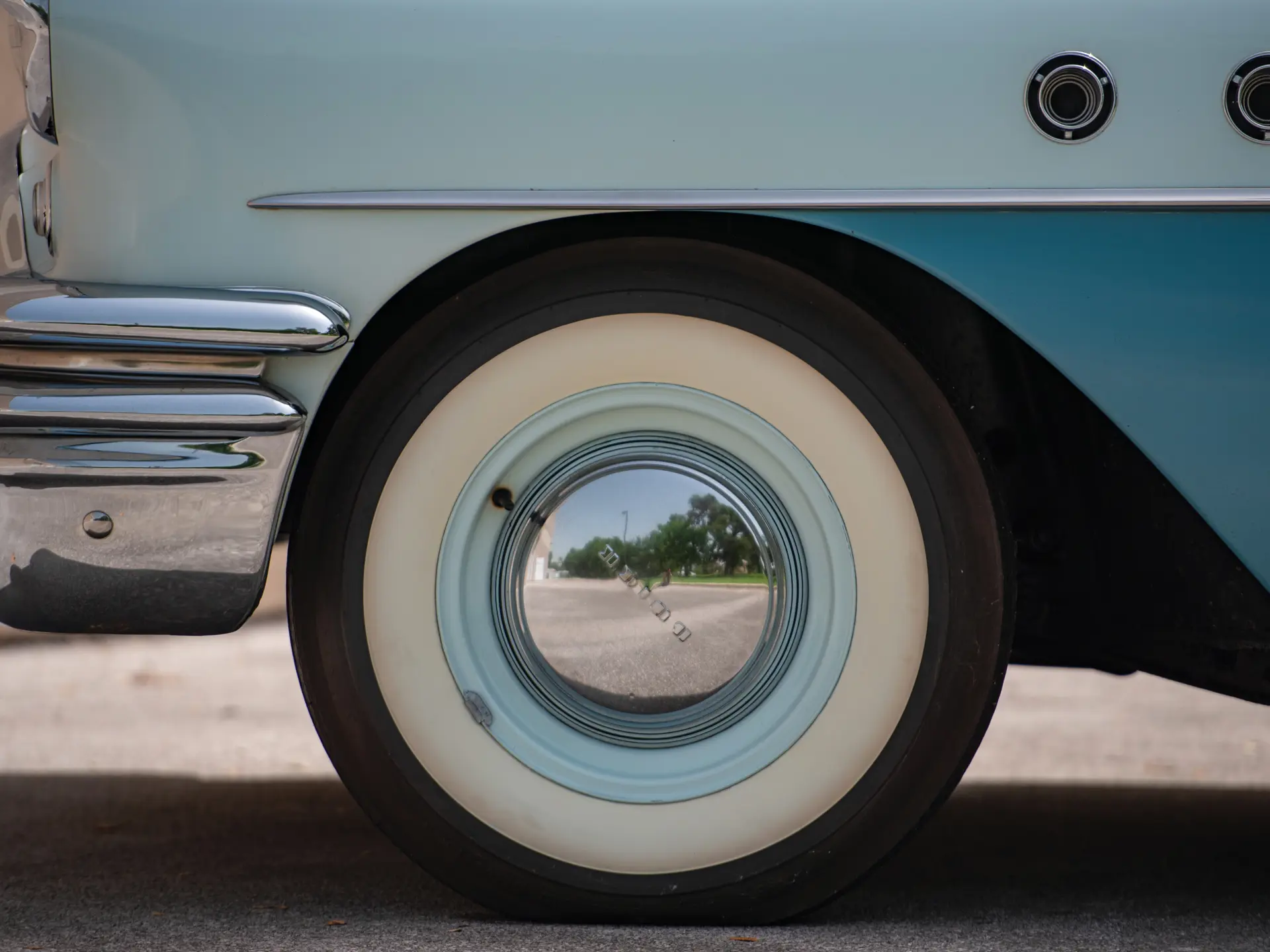
Worse, the standard 7.10-15 tubeless tires were overloaded by 150 lb even at curb weight, with no driver, passengers, or cargo. Wider 7.60-15 tires were optional for $14.00 (not including the price of whitewalls), but even those didn’t allow a lot of safety margin.
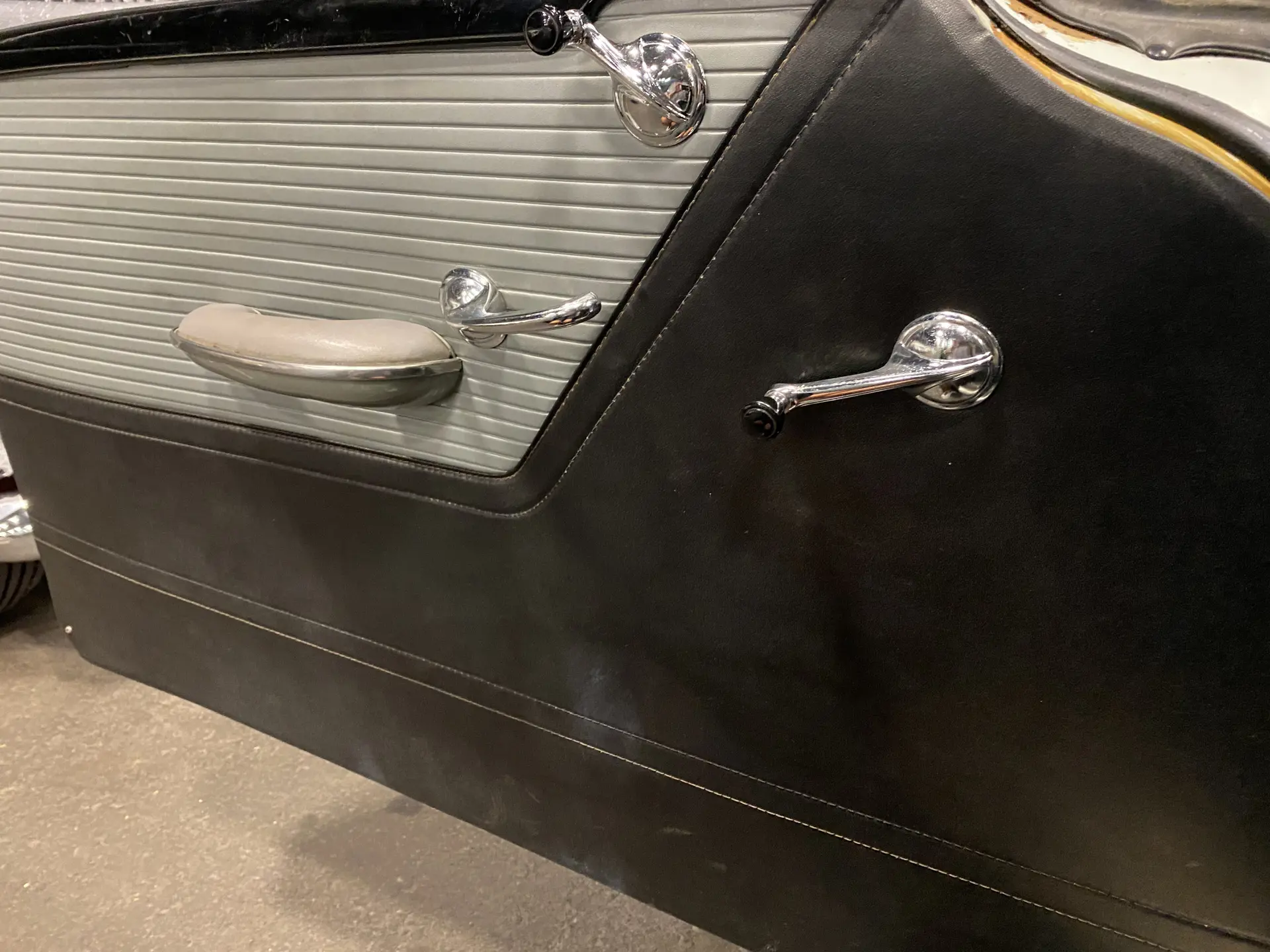
Senior Buicks could be quite fancy inside, but the Special was fairly basic. Even in this form, its trim and interior appointments were a little more upscale than a car from the “Low-Priced Three.” However, looking at the interior, you get the feeling that Special buyers put a higher priority on the neighbors seeing that they were driving a Buick than on maximum interior luxury.
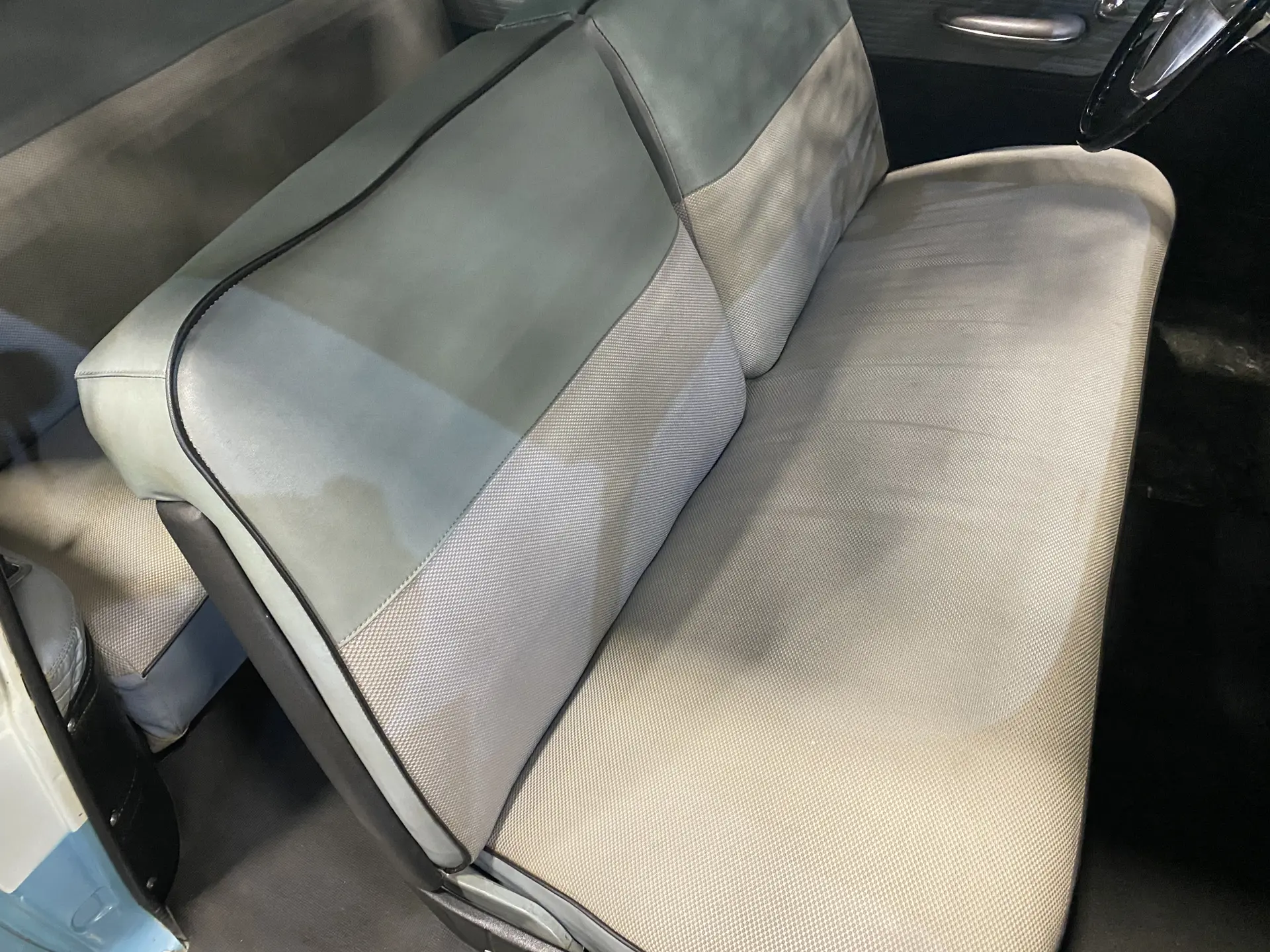
Neither RM Sotheby’s listing has very good photos of the seats, which are apparently all-original, with nylon cloth bolstered in “Cordaveen” vinyl. This was one of the standard trim options, not the more expensive Custom trim.
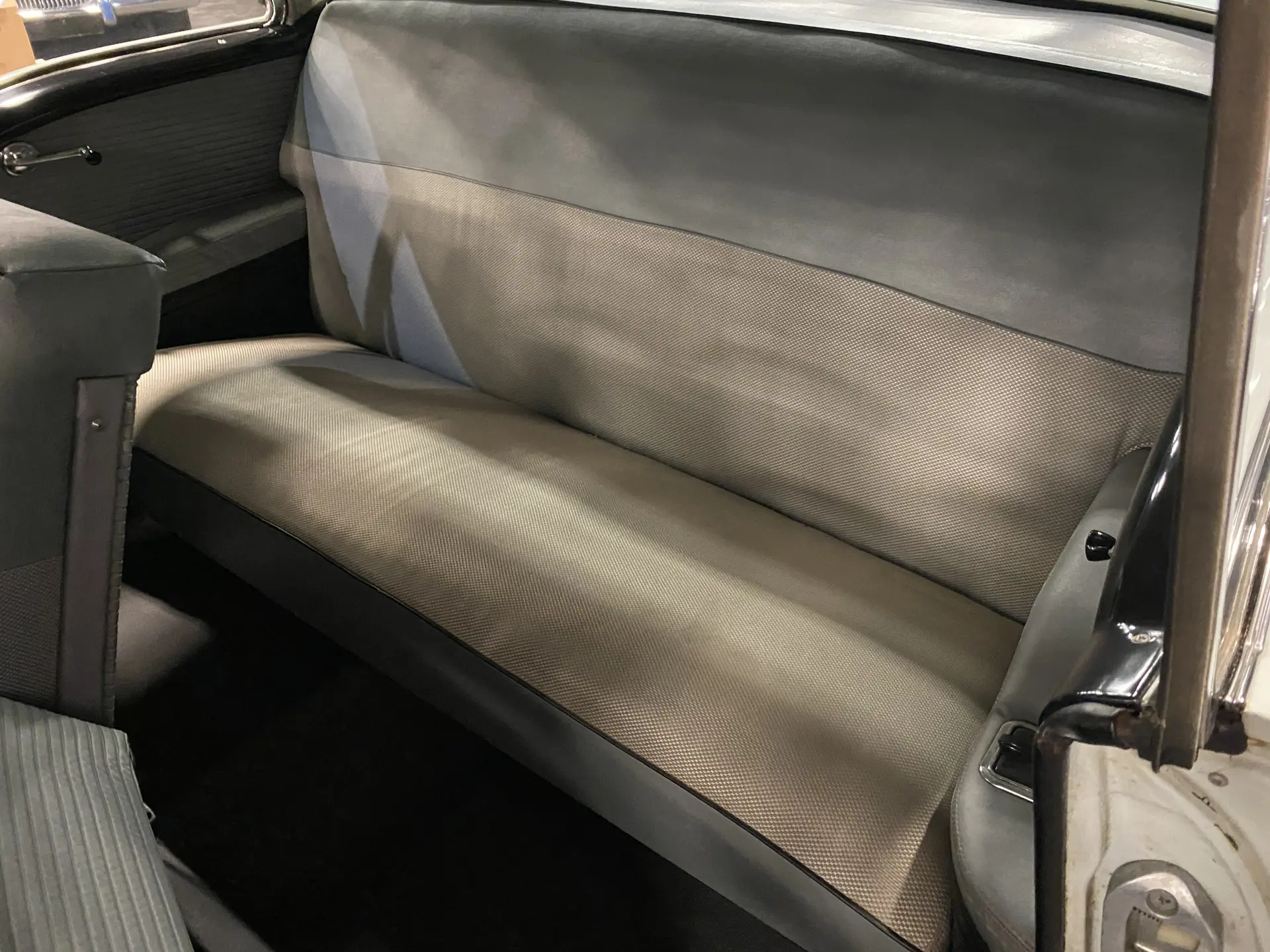
Consumer Reports felt the width of the Special’s seats (which provided about 62.5 inches of hip room) made the cabin look roomier than it really was, noting that head and legroom weren’t outstanding for this class. It seems more than adequate, although a four-door sedan would provide better accommodations for back seat passengers than this two-door Riviera.
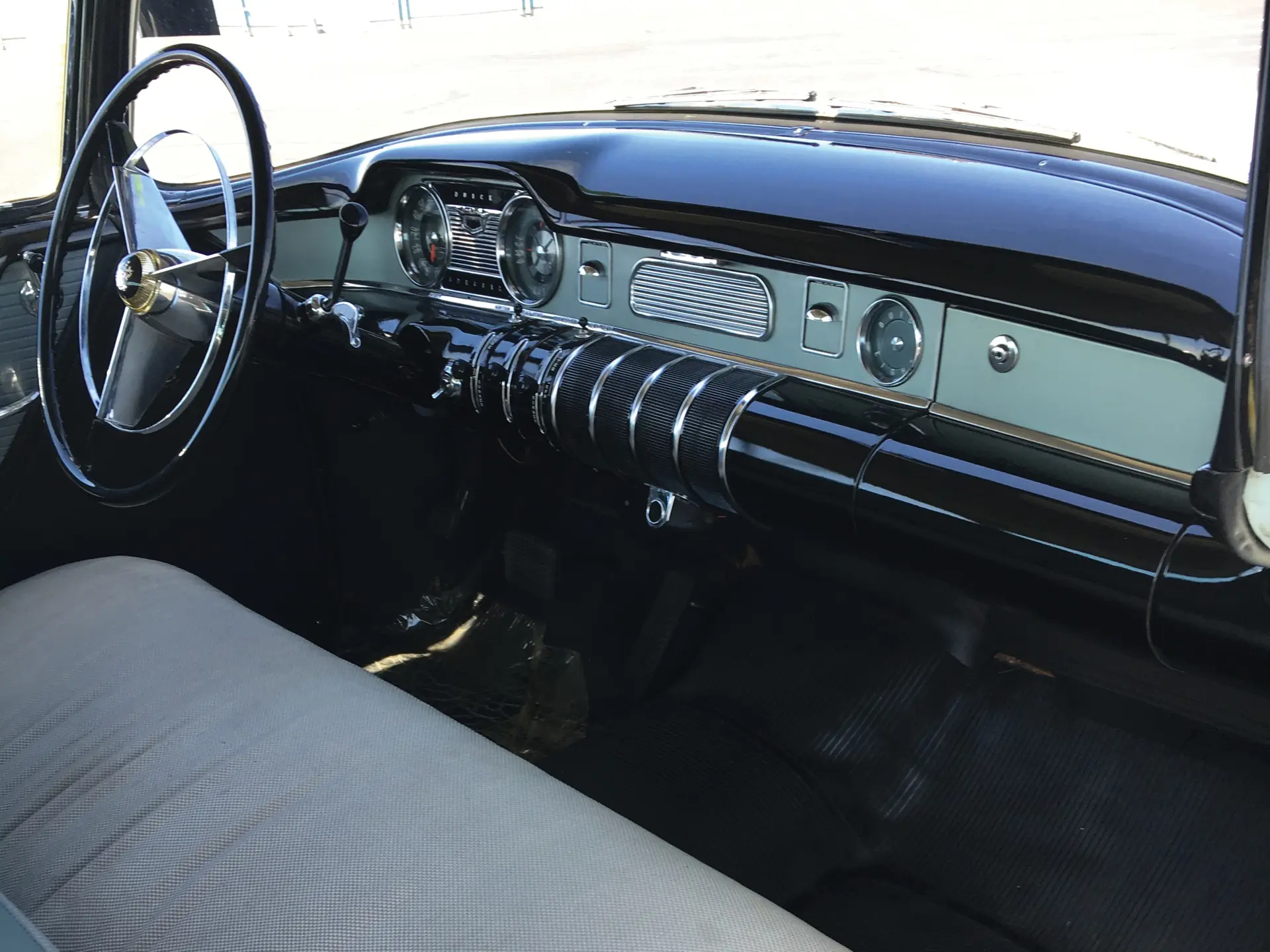
There was a common assumption that buying a more upscale brand meant higher quality. That was true to a point, at least when it came to interior materials, but Buick wasn’t immune to the usual Detroit assembly glitches, which were growing more frequent as sales volume swelled. The 1955 Buick’s ergonomics left something to be desired as well, and at least three contemporary testers complained of an “exceptionally large” degree of speedometer/odometer error — up to 10 percent.
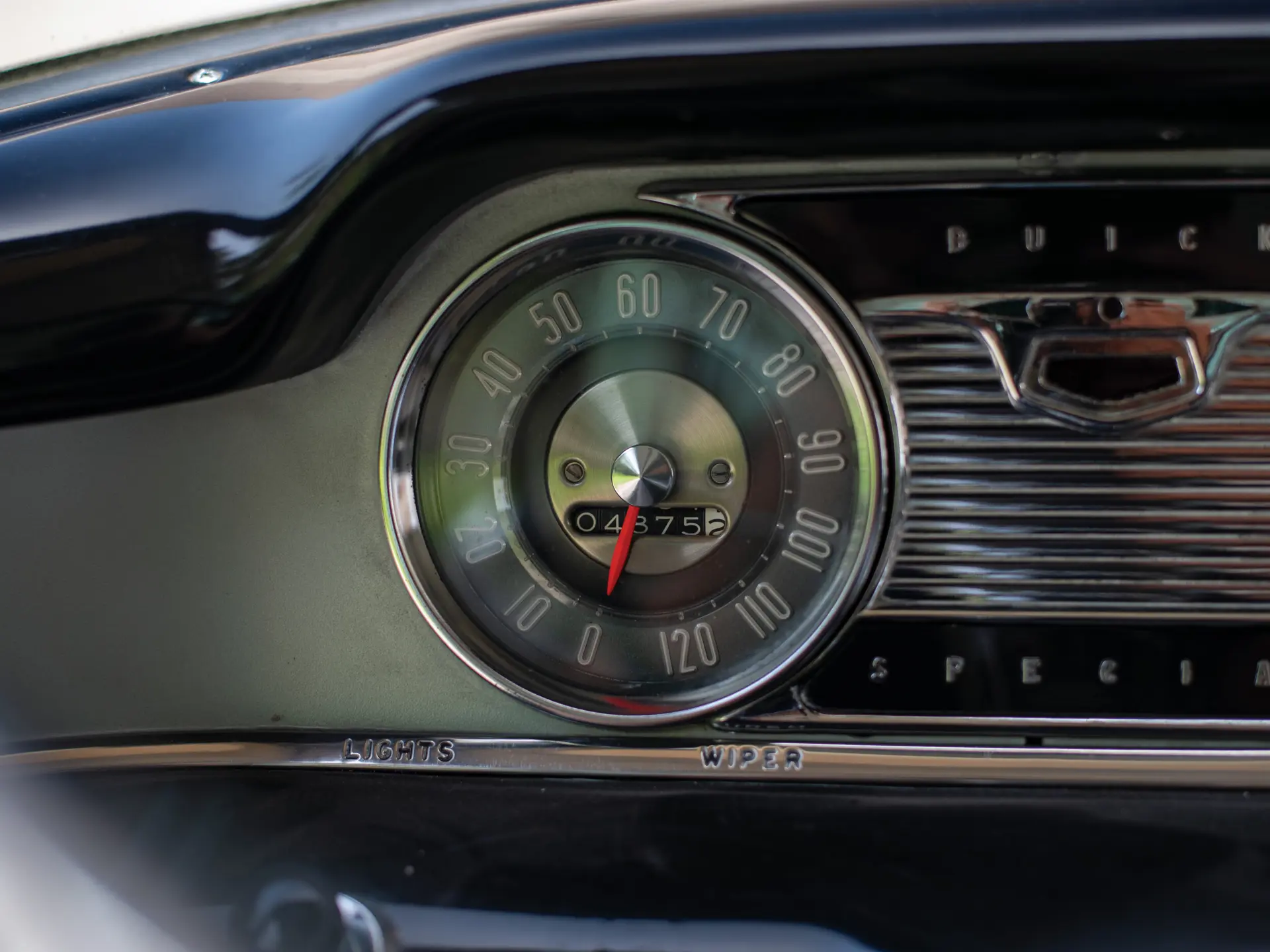
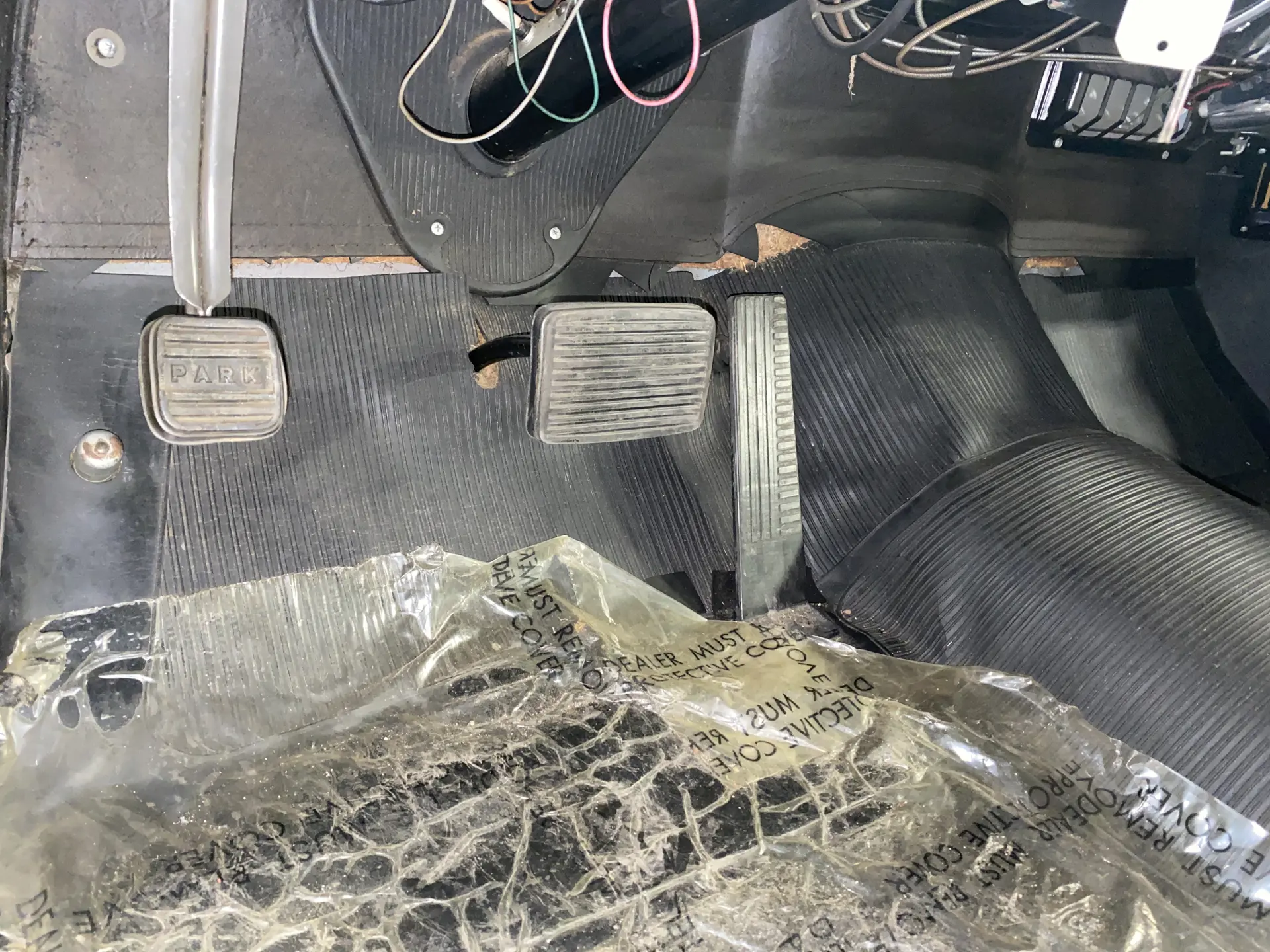
When this car turned up for auction in 2019–2020, it had fewer than 4,900 miles on the odometer. The chrome is a bit pitted, but the two-tone paint is in good shape and apparently original, so the seller seemed convinced that the odometer digits were still on their first orbit. If so, that’s a remarkably low mileage for a car of this age.
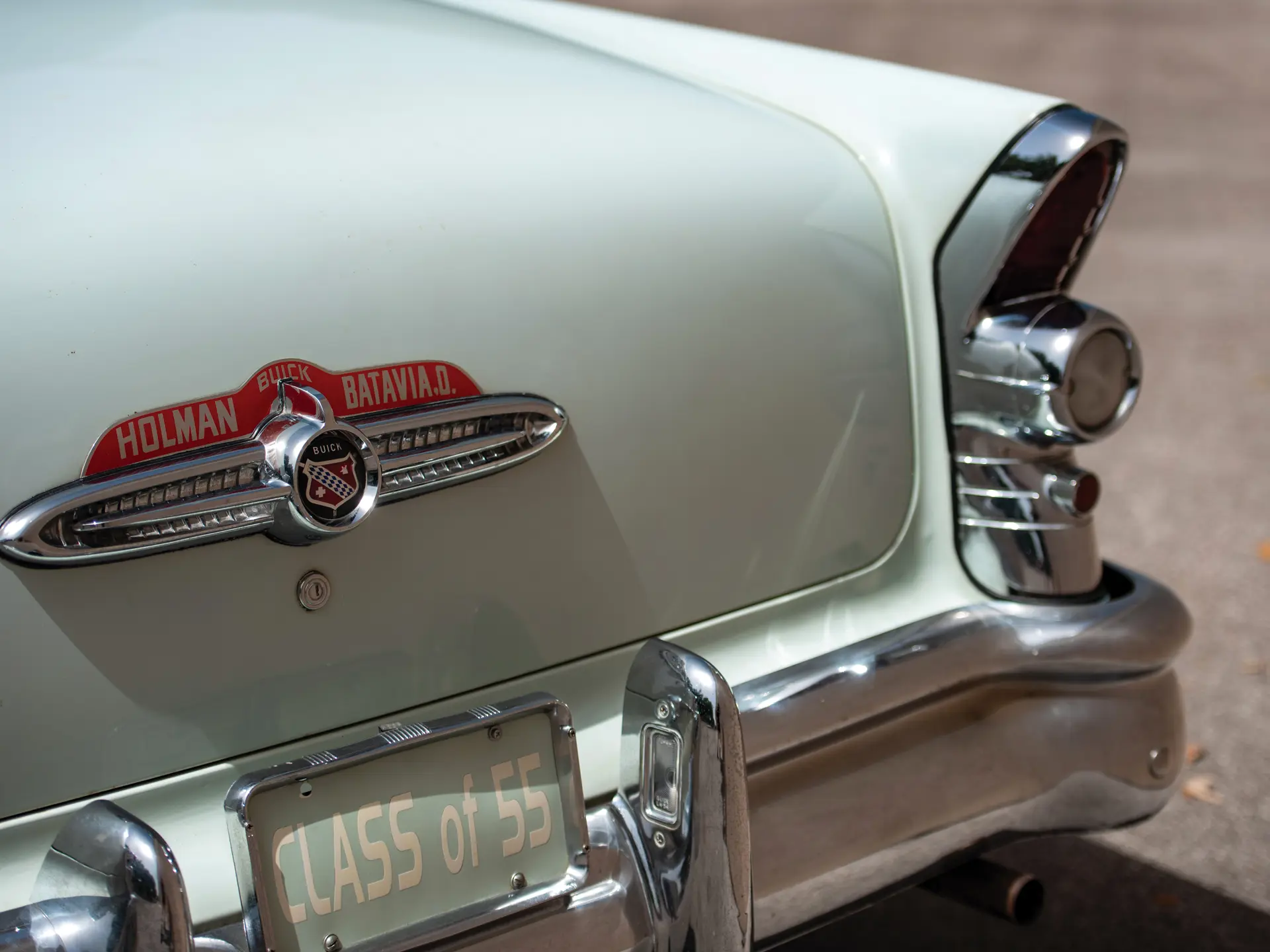
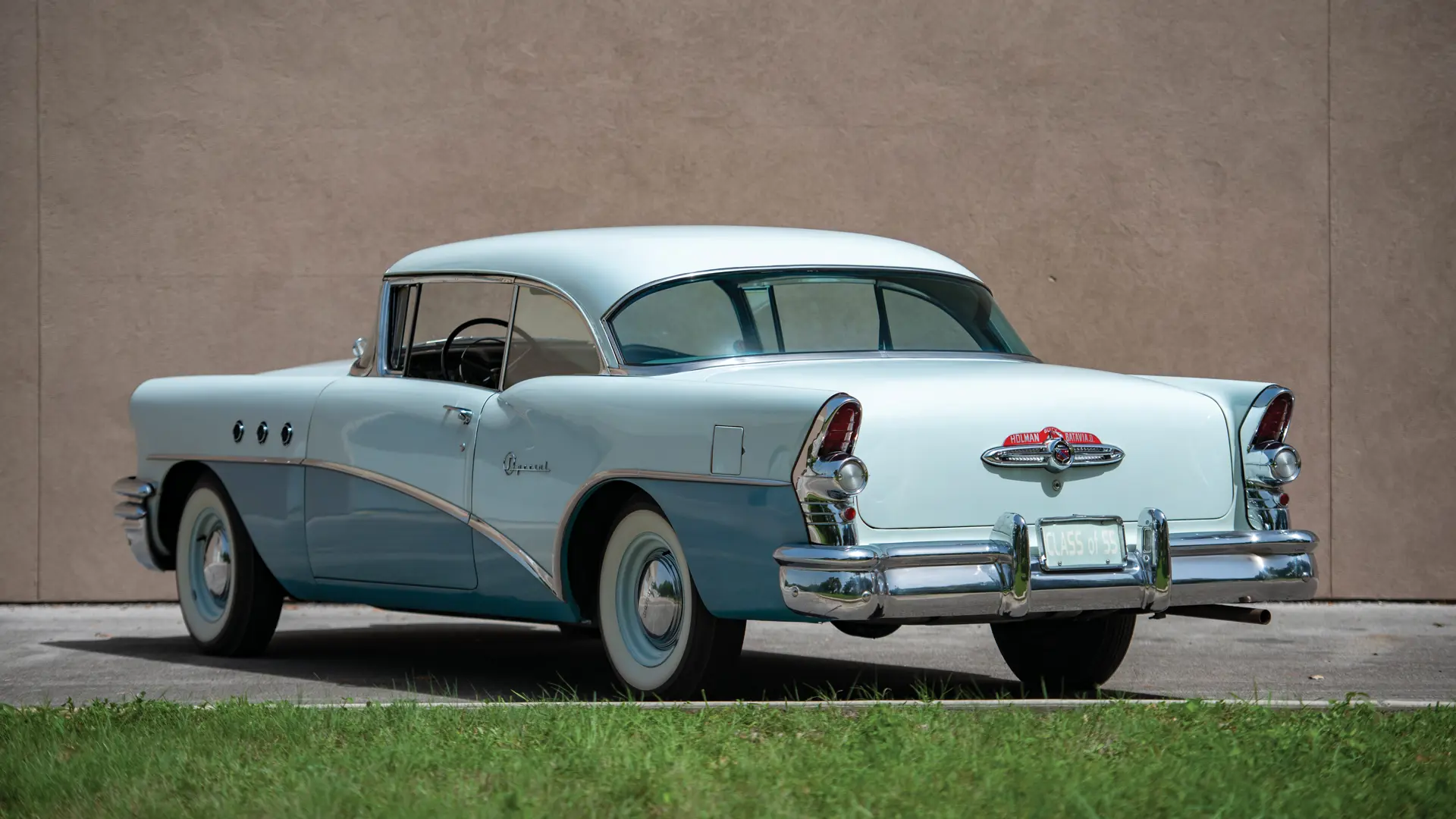
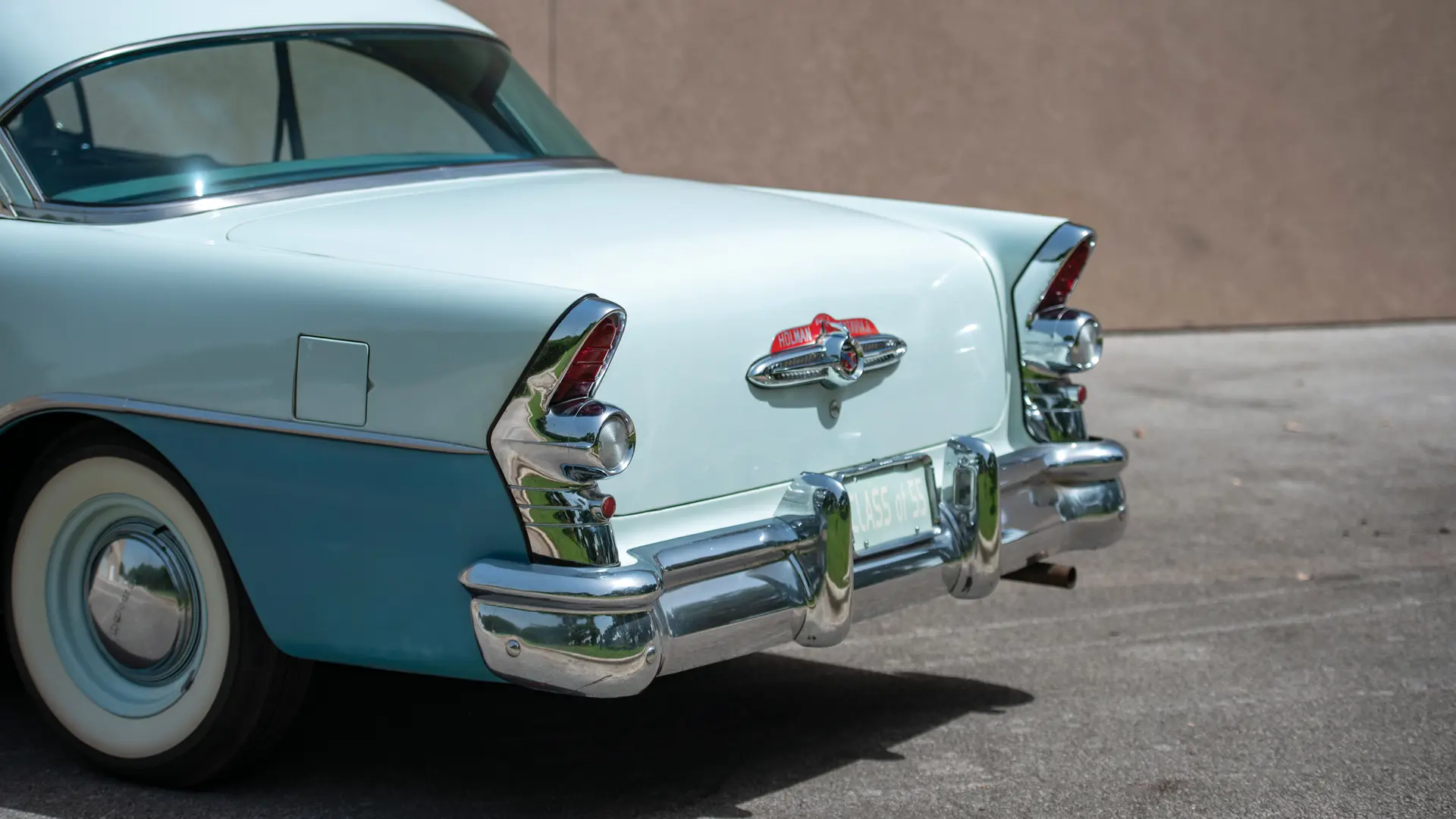
The tail bears a placard from Holman Motors in Batavia, Ohio (which is still in business as GMC dealer). Who was the original buyer? At the risk of stereotyping, this seems to me like an elderly person’s go-to-church car, driven only a few miles a week in light traffic that made most other options seem superfluous. If the roads were smooth, the torque tube would have mostly behaved itself, allowing the driver to enjoy the soft, quiet ride and the smoothest, most seamless powertrain in the business.
Consumer Reports grumbled that for its price, the Special did not “represent sufficient added basic value, in comparison with the lower-priced cars.” However, consumer testing publications didn’t try to quantify the power of Buick prestige, which contemporary buyers obviously valued highly. I think the typical 1955 Special buyer typically splurged on more accessories than this car has — more than 80 percent had a radio, for starters — but customers were buying class as much as anything else, and even a sparsely equipped Special delivered plenty of that.
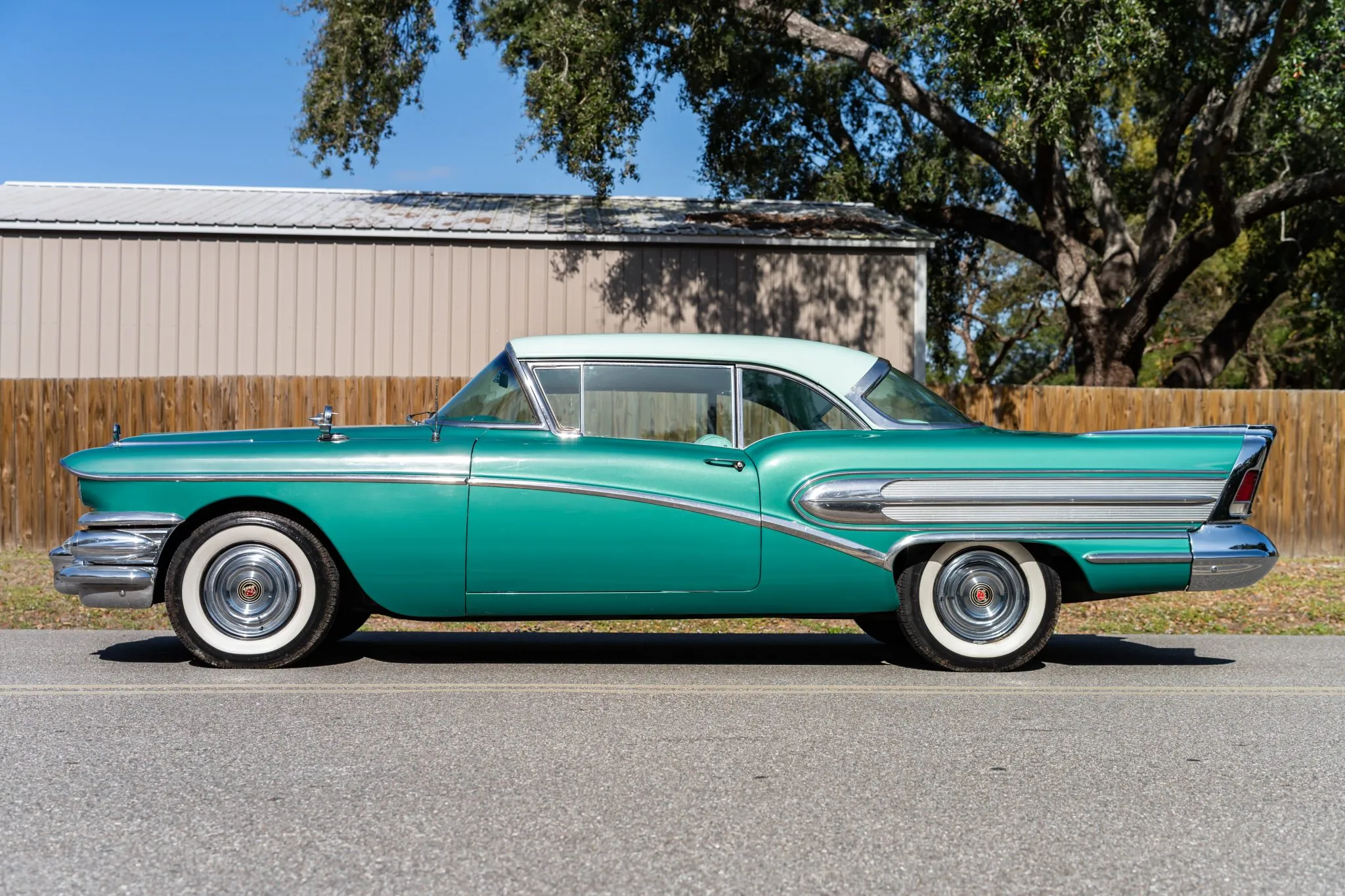
By 1957, Buick had overreached, and by decade’s end, poor quality control, reliability problems, and questionable styling choices had seen the division’s previously enormous sales volume slashed to barely one-third of its 1955 level. Some heads rolled at the top of the division, and new general manager Edward D. Rollert went to work cleaning up the division’s assembly quality and tarnished image. The model names were all changed for 1959 to suggest a fresh start, and the full-size Special became the LeSabre. For 1961, the Special name was revived for the new Buick “senior compact.”
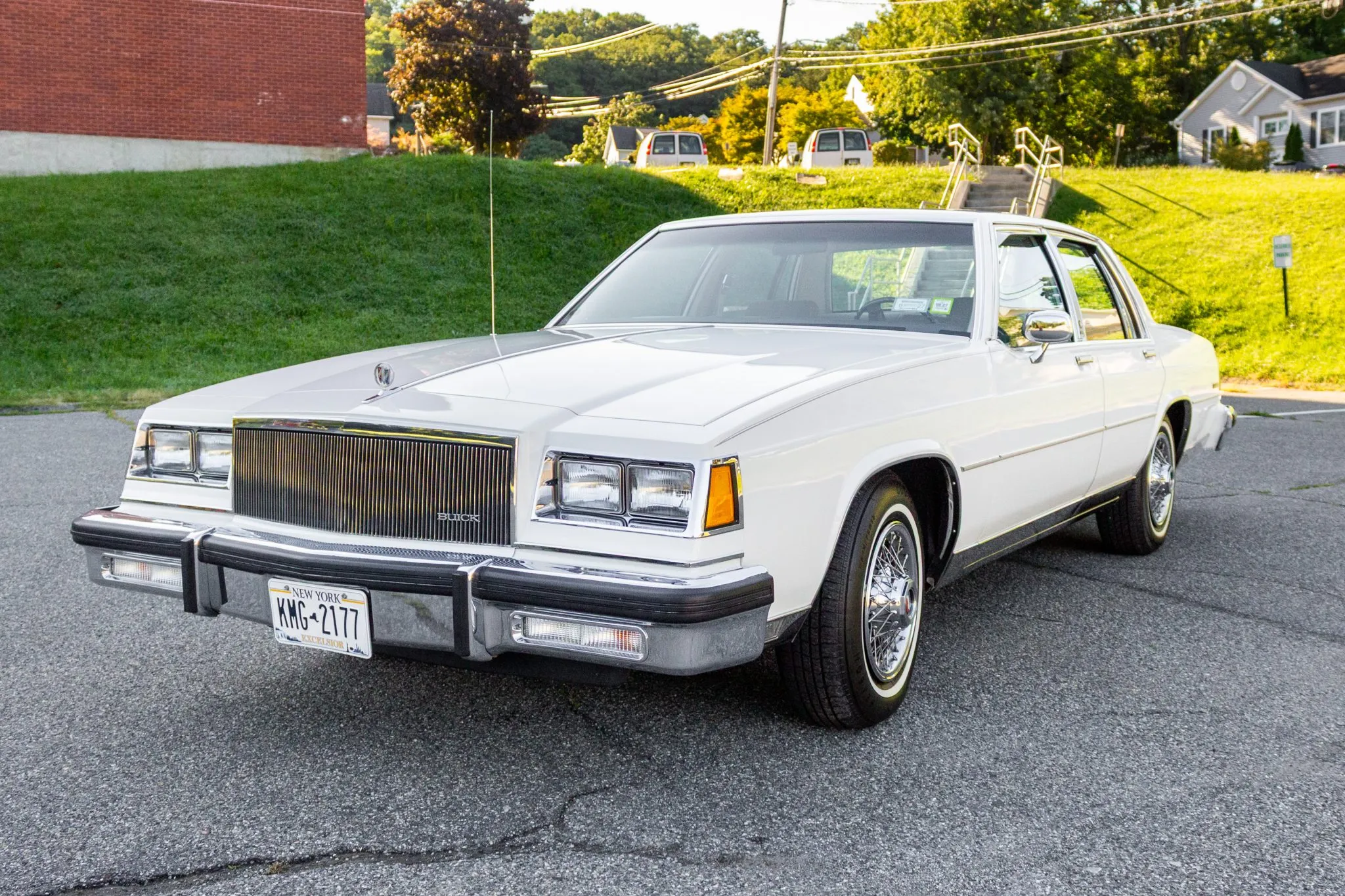
It took until the mid-1960s for sales of the full-size cars to recover, but by the ’70s and ’80s, the Buick brand sometimes topped its mid-1950s peak. In terms of domestic market share, its best year was 1984, with just over 14 percent of total U.S. new car production. In terms of actual domestic production, the peak was 1985, when Buick built more than 1 million cars. (In the 2010s, Buick did even better than that on a global basis, thanks in large part to its enormous success in China.)
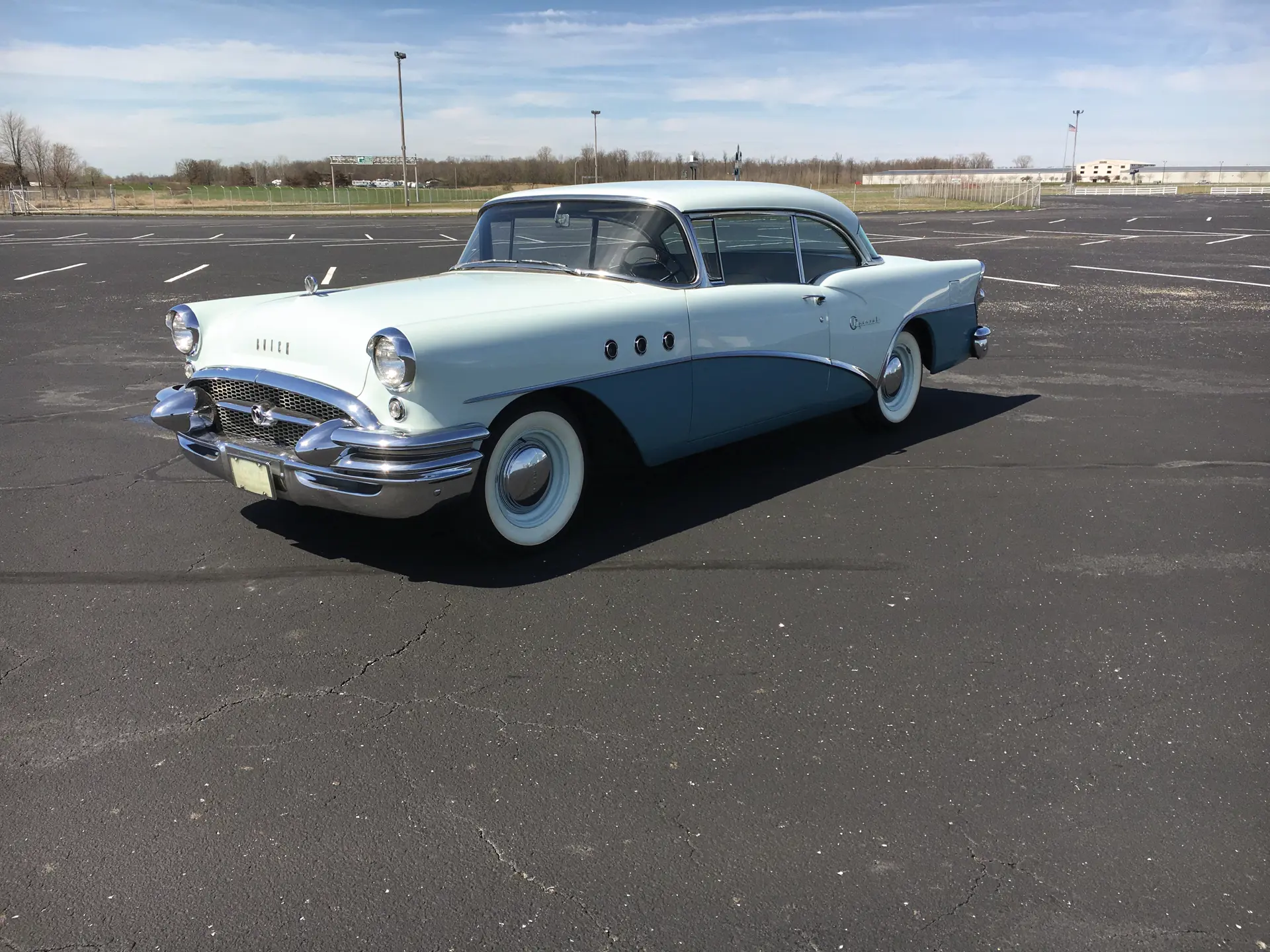
However, in later eras, Buick’s success has been divided among a whole array of different models. There were four models back then (Special, Century, Super, and Roadmaster), but they were essentially the same sausage at different lengths. The senior models had the bigger V-8, nicer trim, and more equipment (and the Super and Roadmaster had more room inside), but for hundreds of thousands of contemporary buyers, the full-size Special offered a reasonable amount of Buick luxury at an attainable price.
Related Reading
COAL: 1953 Buick Special Riviera – My Vehicular Soulmate (by Aaron65)
Curbside Classic: 1955 Buick Special Sedan–Battleship (by Stephen Pellegrino)
Curbside Comparison: 1955 Oldsmobile Eighty Eight vs. 1955 Buick Special – Battle of The B’s (by Laurence Jones)
1956 Buick Special Convertible: A Two-Owner Fifties Dreamboat (by Aaron65)
Curbside Classic: 1958 Buick Special – Anything Worth Doing Is Worth Doing To Excess (by J P Cavanaugh)
Full-Size Buicks Of The 1960s: How Buick Reinvented Its Lineup Between 1959 And 1970























This is the kind of time capsule I could pore over all day long, just to soak in the original details that are usually lost through wear or restoration. Like those extremely plain door panels and the very basic level of upholstery trim. Did this car not even come with front carpeting? But the inside did not matter because all everyone saw was the outside, and the outside was every inch a Buick.
What a colossus General Motors was in 1955.
This one ought to be in a museum. The ’56 was much improved in looks and mechanically, and we had several of each on our street, Buick was truly a sales monster in the mid-50s.
Sweet .
I remember a ’56 Buick two door a gas station I worked at had, all original but no where as clean as this .
-Nate
Perhaps a better comparison would be relative market share. Given that the US market in 1955 was roughly half of the current market, the Special had over twice the market share of a Camry today and more than Toyota’s RAV4 in 2025.
Yes, Buick was the beneficiary of a willingness by average buyers to pay more for a large semi-premium brand car in the mid ’50s. The ’57-’58 recession suddenly changed their minds, big time. These Specials were soon traded in on a Rambler or Lark.
Wow. Good point to remember. Before the 1957-58 recession, buyers were queuing up for this market and Ford gambled away hundreds of millions developing new brands to sell to it. That recession hit Detroit like a nuke. There were 25 domestic auto brands in 1958, and that recession really cleared out the weaker ones by 1960.
Relative market share is surprisingly difficult to calculate with any precision: 1950s registration data isn’t separated by model, only brand, and the very different size and shape of the ’50s truck market defies direct comparison.
In 1955, factory sales of cars and trucks under 10,000 lb GVWR totaled 8,126,909, which, as you say, is almost precisely one-half of 2025. Statista gives a calendar-year 2025 total of 16,233,360.
Buick’s share of all light vehicle sales in 1955 was roughly 9 percent, approximately half that (maybe 4.6 percent?) the Special. Today, it’s about 1.2 percent for all models. Toyota sold 2,147,811 vehicles in the U.S. in 2025, which is 13.3 percent; they were No. 2, after GM. The Camry had a 2025 market share of about 1.95 percent, while the RAV4, which is the bestselling non-pickup truck, had a market share of 2.95 percent.
It doesn’t have to be precise to make the point, which is that the Special was more “popular” than the RAV4 is today, especially since “popular” is more a relative thing than an absolute one. Meaning that market share seems to me to be a better descriptor of popularity than absolute sales numbers.
My sisters husband had a ’56. I was fascinated with the portholes but the styling seemed bloated and I still have that opinion. I don’t understand why they were third in sales for awhile. I seem to recall many old ladies had them at our church. I suppose it was the reputation.
Don’t forget to add they screwed up the brakes badly and that prompted the finned aluminum drums later on
I never really got super soft suspensions. Yes, they were nice under certain circumstances such as loafing along on the interstate but under every other situation it sucked. Going around corners caused huge body lean and the torque tube would be bouncing like a basketball. The car magazines all commented on it, yet such soft riding cars lasted another 30+ years.
If you grew up with the rock-hard suspensions of 1920s and 1930s cars, luxury meant soft suspensions and silence. As long as the pre-war generations were buying cars, the market supplied what they couldn’t get when they were young.
Baby boomers grew up with wallowing boats, and ran to imports and sport sedans. And their kids bought SUVs and technology.
We want what we couldn’t have.
I find it hard to believe that a 70+ year old car would have only 5,000 miles. If I were buying, I’d want documented proof. But this one does look nice on the outside.
A suggestion for a future article would be a “how and why” on the use of torque tube rear suspensions and their continued use into the early 1960s on some car models.
I agree on the low odometer reading cars. Those old odometers are just too easy to replace, turn back, or not realize they are rolled over. Claims like these require documentation.
Parking brake pedal and brake pedal look to have been used a lot longer with all that dirt embedded in the grooves. Just an observation.
Anyone else notice the absence of an outside rearview mirror? Hard to believe that was an optional accessory back in the day, particularly on a Buick (even if it is the lowest tier model).
That was pretty typical — as late as 1962, Oldsmobile was also charging a few bucks extra for an outside mirror.
Our next-door neighbor when I was growing up was a Plymouth man. His last one after he retired was a 1964 Belvedere sedan, which had no outside rearview mirrors.
My mom always opted for a driver side mirror on her Chevys before they were standardized in the late 60s.
It is hard to even buy a Buick nowadays. Vermont is down to exactly one Cadillac-Buick-GMC dealer. All the others are now GMC-only.
Mom’s older brother went for the most basic Special for his first new car in 1955. It was a two door sedan with the rare standard transmission, but had whitewalls, radio and heater. Sure was impressive in the driveway. My dad went for the Pontiac for his first new car the same year, similarly equipped. A Bel Air was much fancier inside, but less prestige.