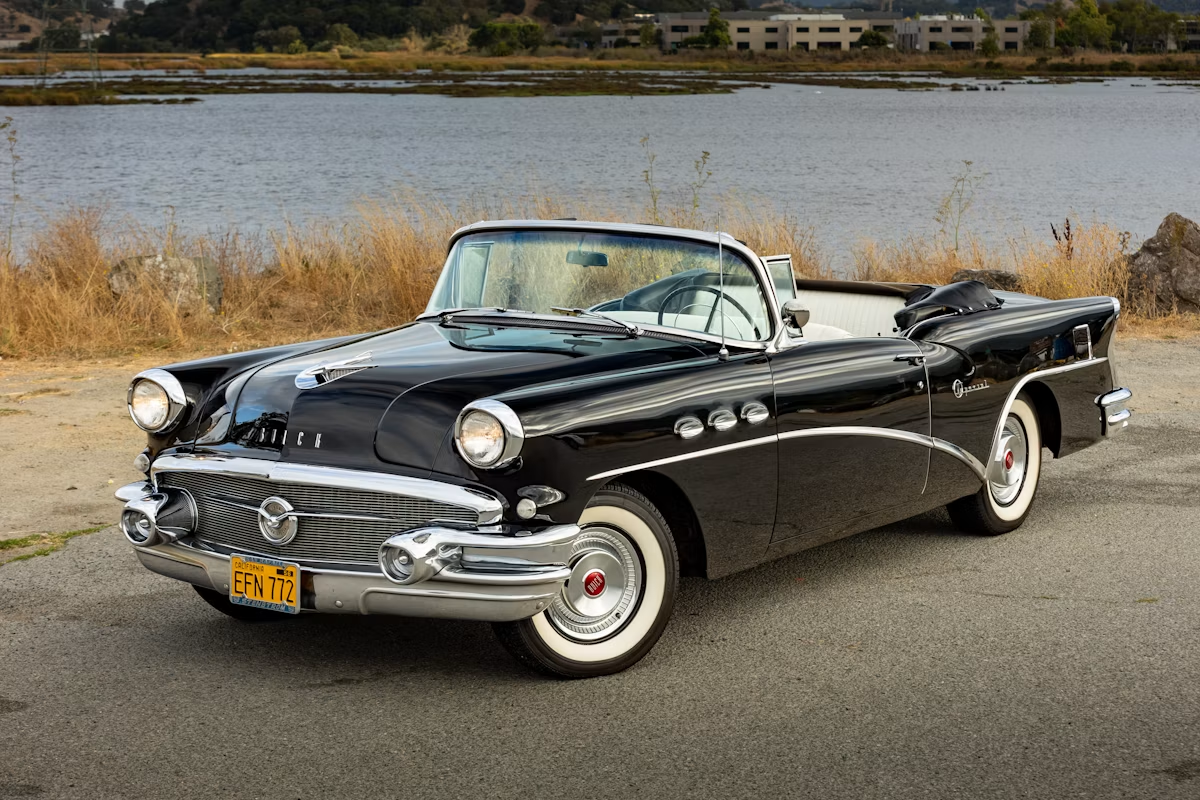
I’ve always said that a fifties Buick isn’t for everyone, but if it’s for you, then there’s really nothing like it. At least as far as sales are concerned, Buick could do no wrong for at least the first half of the 1950s, as buyers fell for its bold styling, unique engineering, and good value. The Series 40 Special was indeed the value line, but it could still be ordered to look far more expensive than it was. One way was to order a convertible, maybe in black, and that’s what the original California did when they bought this car, which is being auctioned by its second owner on Hagerty Marketplace in Novato, California.
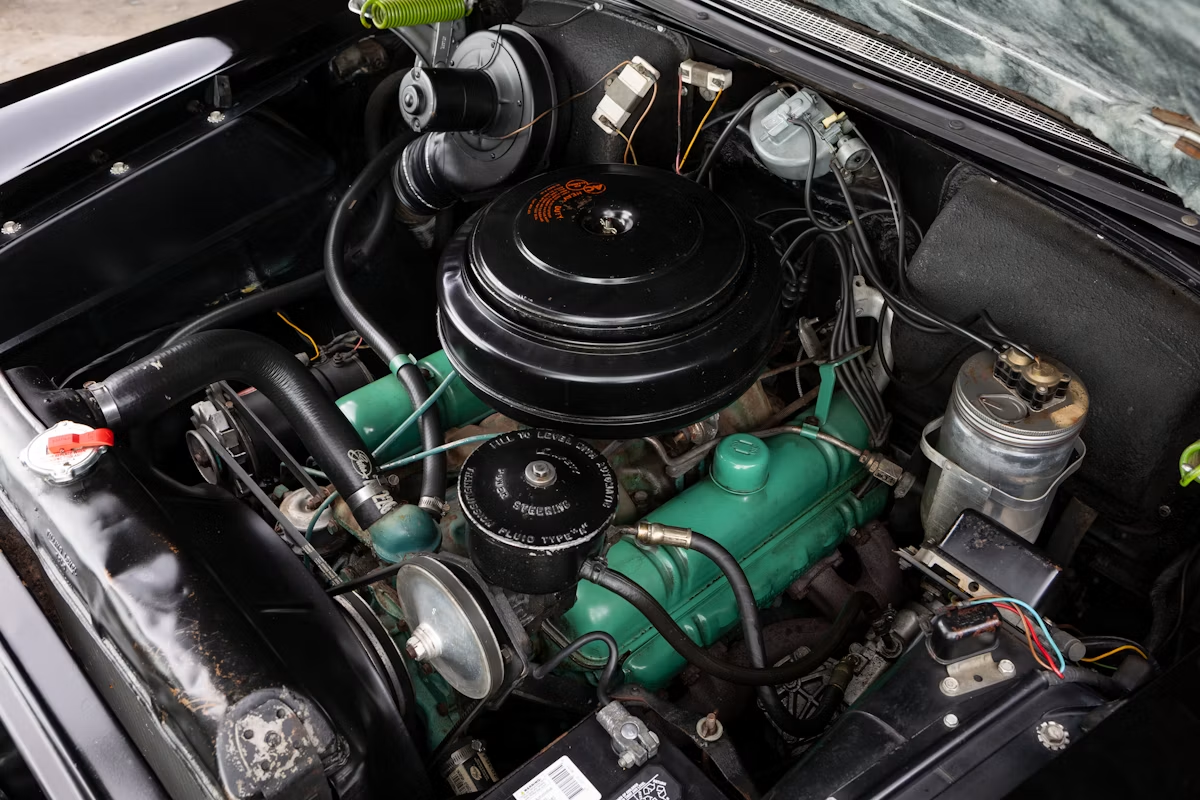
The Special was behind the other lines in getting Buick’s new V8, but in 1954, it joined the others with a downsized 264-cubic-inch version of the vertical valve “Nailhead.” By 1956, however, the Special’s engine displaced the same 322 cubic inches as the other models, with one exception: it had a two-barrel carburetor. So equipped, the 322 put out 220 horsepower compared to the 255 of the four-barrel-equipped Century, Super, and Roadmaster. The engine in this car was rebuilt way back in 1986 and has only been driven 12,000 miles since then.
Even though the Series 40 was the base model, power steering and power brakes were options that were ordered here, and believe it or not, those ballast resistors that appear to be haphazardly bolted to the firewall are stock.
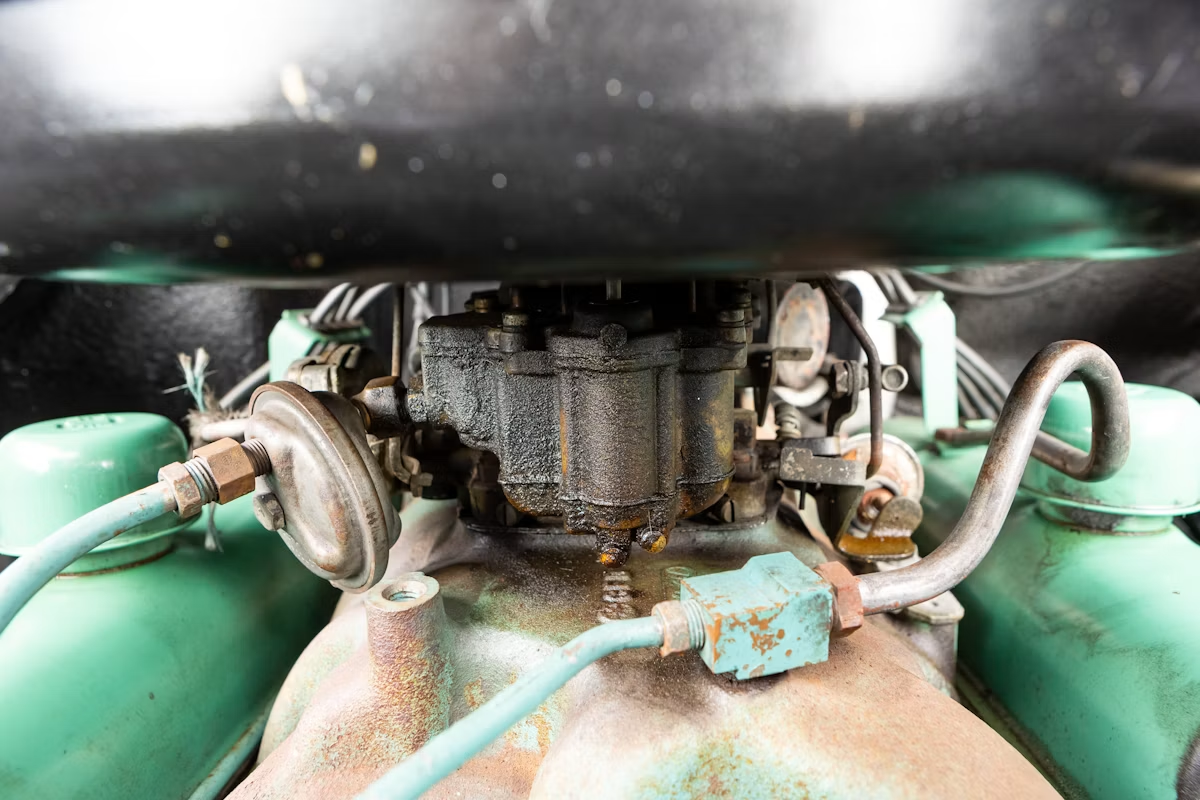
The Stromberg Aerotype two-barrel was a very simple carburetor that worked well, but this one looks as if it’s well past its date with a can of carburetor cleaner. Luckily, once an Aerotype is set up, there’s very little else to do with it, so a superficial cleaning may be all it needs. It’s one of the unsung heroes of fuel metering.
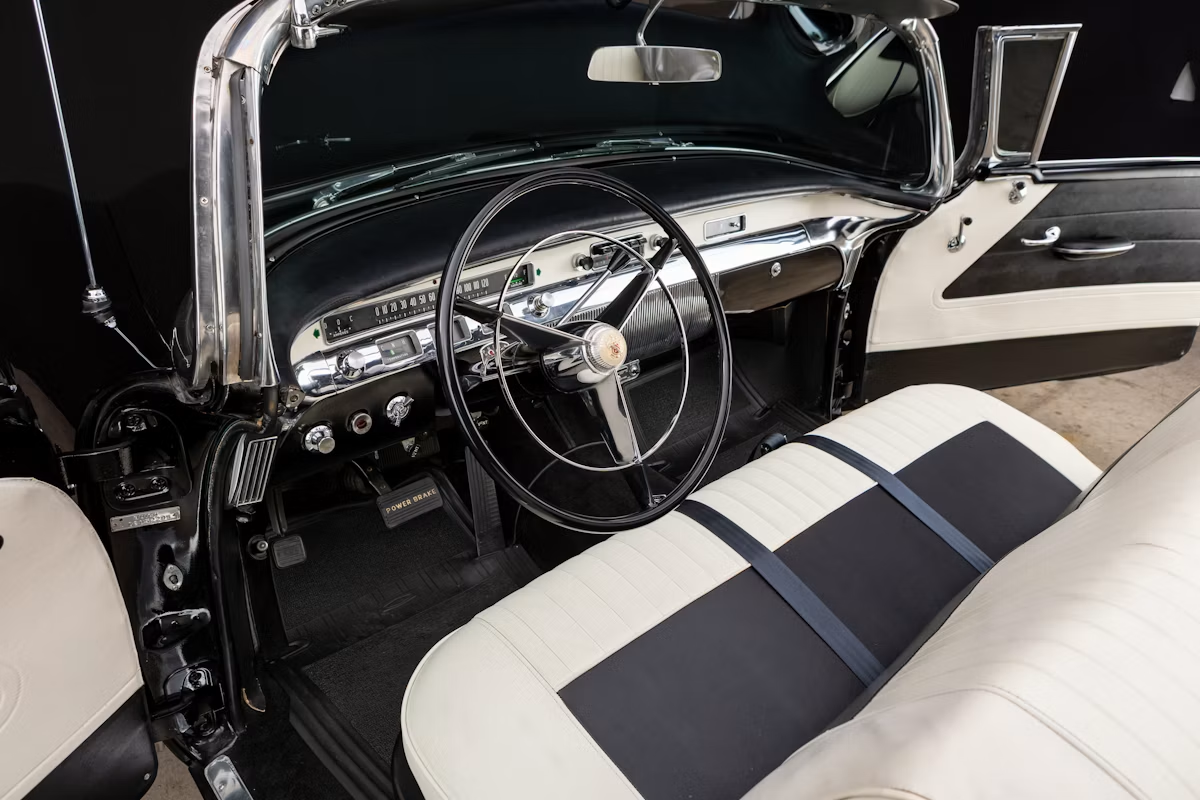
The Buick’s body tag says that the car came from Buick’s home factory in Flint, Michigan, with a trim code of 430: Ivory and Black Cordoveen. The upholstery roughly matches the factory brochure, but the ad’s text says that it’s showing some wear. I’d be shocked, however, if it were original.
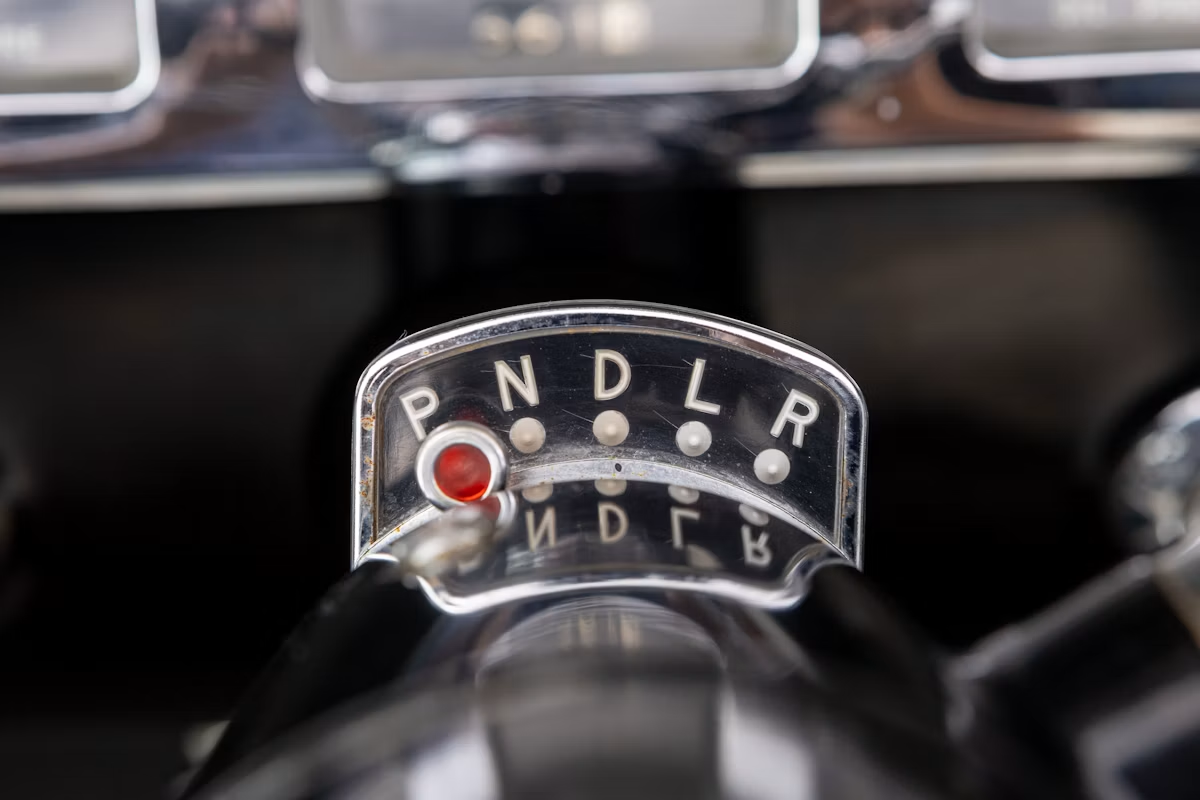
One thing the ad does mention is a Dynaflow, which is always mislabeled as a two-speed. While there are technically two ranges to a Dynaflow, almost all driving is done is “D,” and when the selector is placed in that position, the driver will never feel a traditional shift, because there isn’t one. The Dynaflow uses torque converter multiplication under all circumstances in this range, from zero to 110 miles per hour, the Buick’s approximate top speed.
If low range is selected, the transmission will stay in low until the valves float or the driver upshifts to “D.” The 1956 Buicks did have the Variable Pitch Dynaflow that offered extra punch when passing by changing the angle of the stator blades in the torque converter. As you might expect, almost 97 percent of 1956 Buicks had Dynaflow.
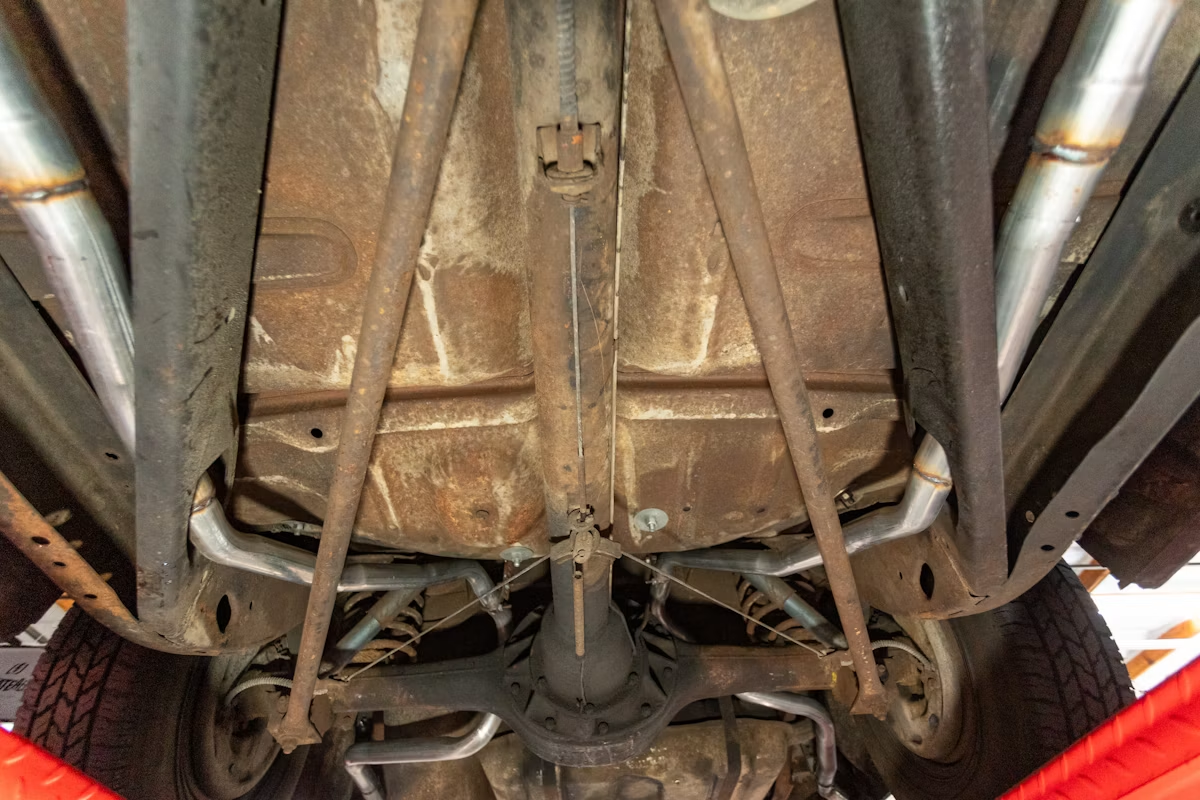
Buicks used torque tubes all the way through their 1960 models, so the only suspension bushings that need changing in the rear suspension are the Panhard bar bushings. Dual exhausts were optional in what the sales materials called a “Dual Exhaust Power Kit,” which offered better gas mileage and “even more horsepower to [the] rear wheels,” something that didn’t show up in gross horsepower ratings.
The current owner, by the way, bought the Buick from its original owner back in 1978, so its repairs and maintenance, including a new paint job in 2005, are well documented.
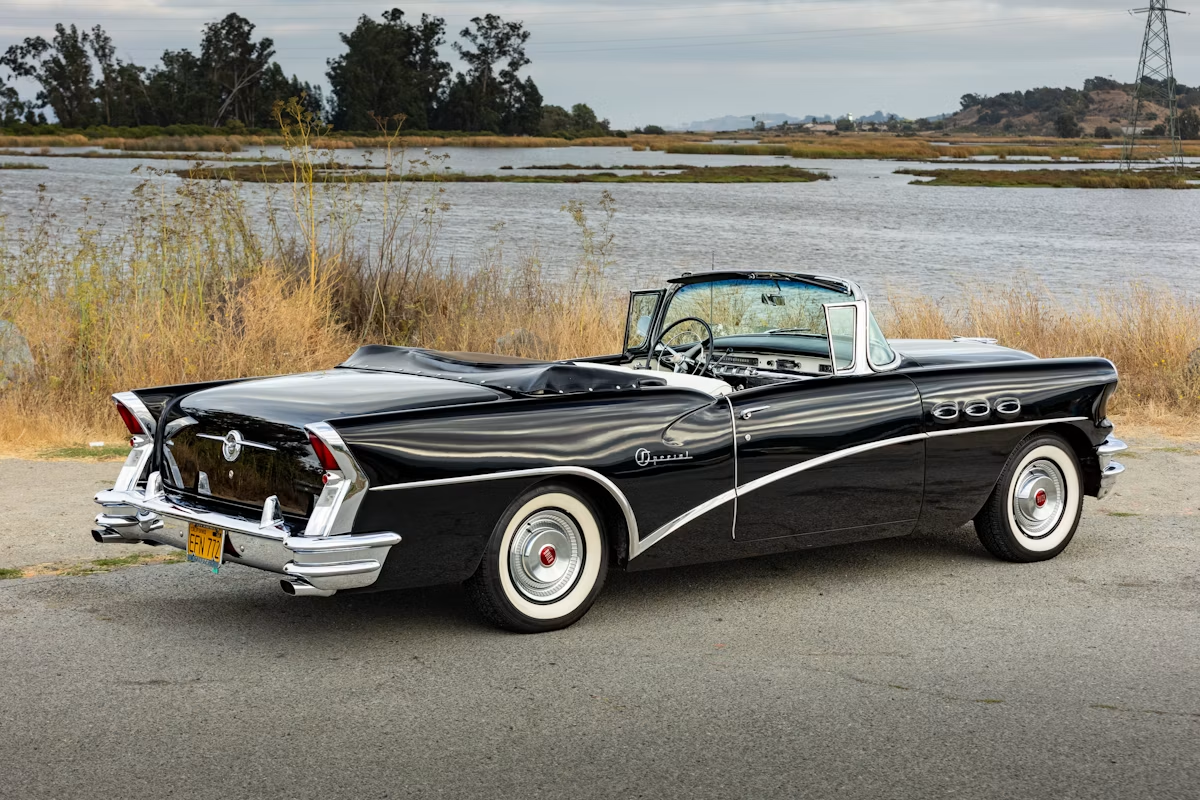
The Special was the best-selling Buick convertible in 1956, with 9,712 units leaving the lot in what was a very good year for Buick, which nabbed third place in sales for one more year before things started to fall apart in 1957. The 1956 Buick also represented the last of a three-year styling cycle that still looks good today; yes, it’s a proper fifties dreamboat.
Related Reading
1956 Buick Centurion – Motorama’s Vision Of A Future Without Rearview Mirrors (by me)
CC Outtake: 1956 Buick Super – His Baby, Coming and Going (by Joseph Dennis)
Cohort Outtake: 1956 Buick Special – Daily Driver In Finland (by Paul N)
Curbside Musings: 1956 Buick Super Riviera – It Has Been Super (by Joseph Dennis)







What a beautiful example of peak fifties Buick. The ‘56 may have been a minor restyle of the ‘55, but every change, especially instrument panel and taillights, was a tasteful improvement. Similar to the ‘56 Chevy, which I prefer to the ‘55.
Buicks kept full gauges standard longer than other full size GM cars. Buick ribbon speedos were a simple red ribbon rather than changing colors with speed like some others. However the gauges in the ’56 model featured colors for each function. If you’re a fan of jukebox interfaces, this would have been the car to have in 1956.
Mid-50s Buicks were common in our neighborhood and family. Never saw a Buick convertible, and it seems like a contradiction in personality! Buick people and topless people are separate sets.
It is a shame they didn’t have it painted a nice color! Black looks drab and cheap in my opinion. Henry Ford probably would think otherwise 🤔
Actually you would have to see one up close and in person to appreciate the black color and all the chrome. I did, last Friday, and it was fabulous. Also looks great in B&W film shots.
Although for a convertible a different, brighter color maybe in order.
Yes a lovely car in an anodyne color. Black is for limos. With all the great colors in 1956 it’s a weird choice for a sporty model.
Also what’s with the pop up ads now that jump the page to the top in the middle of reading, or justifies the text to the L side of the page, it’s making reading here a real pain. I understand the financial reason for the ads but it’s getting excessive. Several folks have told me they no longer come here because of it. And paid membership isn’t always possible for those on very limited fixed incomes.
I am not familiar with the Stromberg Aerotype carb. Sounds ideal, from a lack of required adjustments and tuning.
Dual exhausts by themselves never increased gross hp ratings because the engines were run without any exhaust on the dyno when tested for gross hp. Or they shouldn’t have…but they certainly made a substantial difference in the real world.
The Aerotype is great; I have one on my ’53 Buick. They are very sensitive to float height and it helps to run a thick spacer underneath to help heat soak, but aside from that, there are no flat spots or any weirdness as long as they’re jetted correctly. You can change jets without removing the carburetor, too.
I thought it was interesting that the 1956 Buick brochure mentioned that dual exhaust improved power to the rear wheels, which is absolutely true.
Years ago, my uncle owned a used car lot on Portland’s SE 82nd Ave (still a 15-mile stretch of delightful car shopping and snooping). He would sell me what he termed as “a really good deal” and I went through a selection of 50’s and 60’s delights.
One was a ’56 Roadmaster, medium blue and white. All worked: power windows, foot-actuated radio seek, power seats, etc. Best was the 4-barrel carb and dual exhaust: sweet!
I lived and worked in Salem and my soon-to-be wife lived in Boise, ID, 500-miles one way. I’d get up at 1 am on a Saturday morning and cruise Hwy 20 across Oregon’s desert at 110-120+ mph, arriving in Boise in time for breakfast. My record was 4 hrs, 32 minutes. Spent the weekend with my darling (we celebrated our 59th anniversary earlier this year), filled up the tank and returned. Slower.
Thinking back: night time, used bias-ply tires, uncertain brakes, a tired 10-yr old car, beater 2-lane open range highway (deer, antelope AND cattle). The angels really do look after fools in love.
A beautiful car, I too would prefer a pastel color but then again I didn’t pay for the respray .
-Nate
I love the styling but a black convertible? In California? It must have been only driven at night. At least the interior is (mostly) white.
The styling was just right on these ’56 Buicks; the only change I’d suggest is making the front turn signals/parking lights larger.
There is a lot to like here! I agree with some others that the black paint was an interesting choice, especially for a convertible. But it has certainly aged well and looks great.
At my high school job one of my co-workers had a boyfriend who picked her up in his 1964 Thunderbird convertible, black over black leather interior – even the top was black. This was in 1967 so the Bird was three years old. We had a beige on beige 1965 Thunderbird coupe at the time, less glamorous but wonderful car. I honestly thought the black convertible was the coolest car around. So here’s to black convertibles, scarce at they may be!