
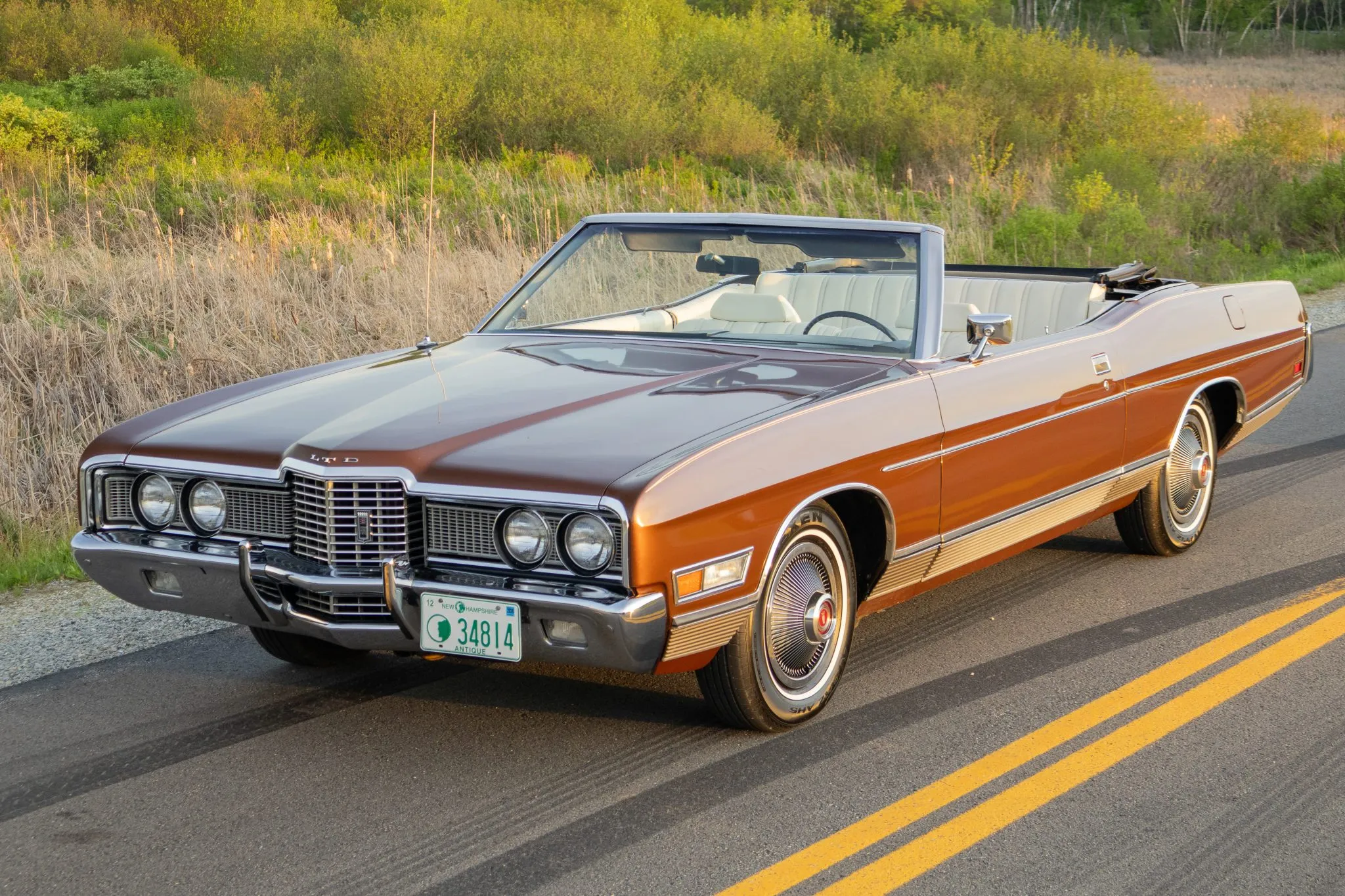
GM’s last full-size convertibles expired in 1975 (and the Cadillac Eldorado in 1976), but what about Ford Motor Company? This “Ginger Glow” 1972 Ford LTD ragtop is a late example of the final year of the full-size Ford convertible, a rare straggler offered after most of the company’s open cars had been already dropped.
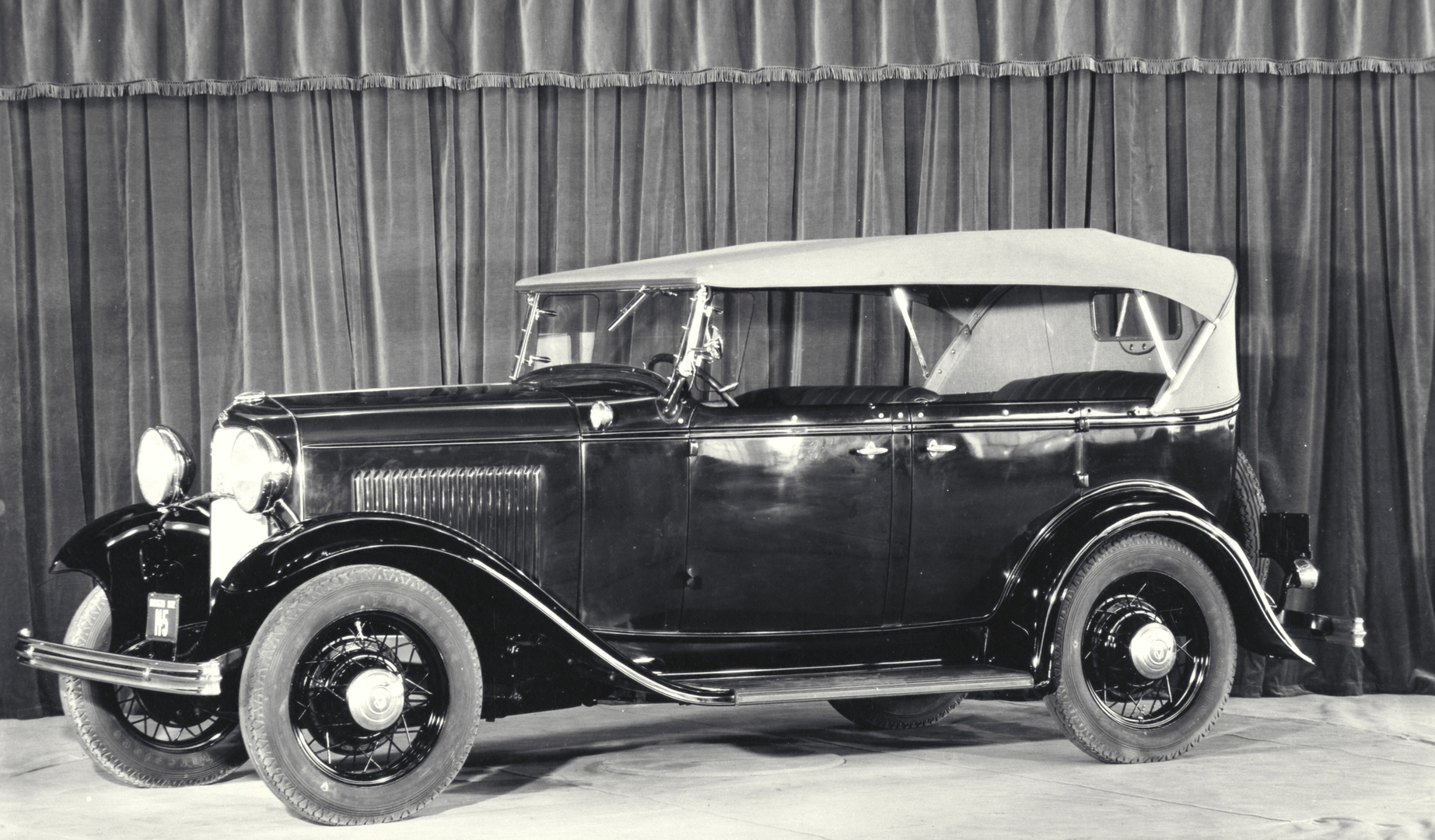
Once upon a time, Ford offered a whole array of open cars: roadsters, touring cars (which Ford called phaetons), even some convertible sedans in addition to the usual two-door cabriolet. By the 1930s, they no longer sold nearly as well as more practical coupes and sedans, and by 1940, Ford was down to a single convertible coupe model, usually offered only in the fanciest, priciest trim series. Even in the extended 1949 model year, where Ford sold 1.2 million of its all-new ’49 Ford line, the Custom 8 convertible accounted for just 51,133 units.
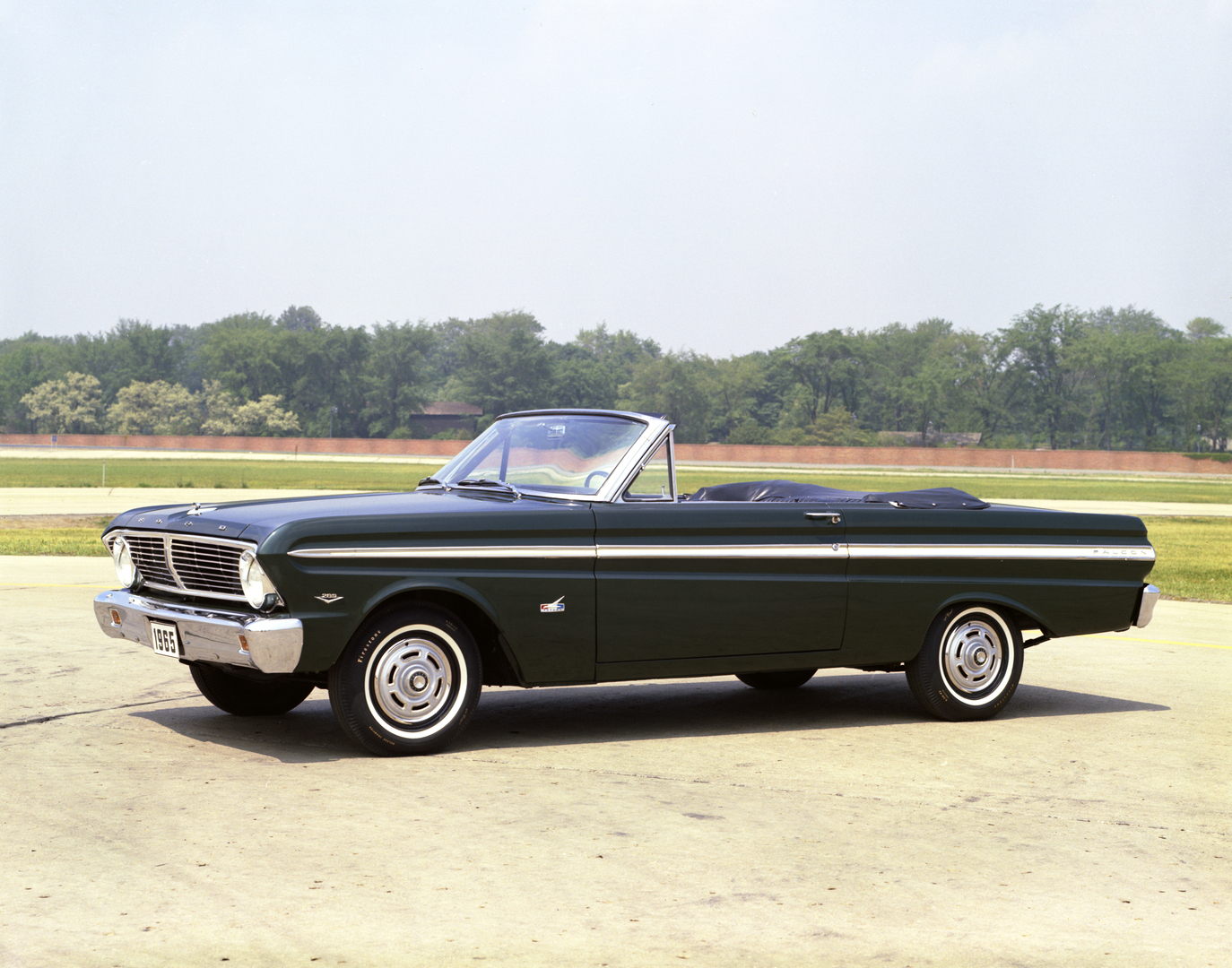
The expansion of the Ford line in the early ’60s led to a short-lived resurgence: In 1965, for instance, Ford Division offered five convertibles, in the Falcon Futura, Mustang, Galaxie 500, Galaxie 500/XL, and Thunderbird lines, while Lincoln-Mercury had the Mercury Comet Caliente, Monterey, and Park Lane, plus the Lincoln Continental convertible. There wasn’t enough demand to sustain that kind proliferation for long, and convertible models began falling by the wayside. By 1971, Lincoln-Mercury had only the Cougar convertible, while Ford Division had the Mustang, the intermediate Torino GT, and the full-size LTD. The Torino convertible didn’t return for 1972, leaving the Mustang and LTD.
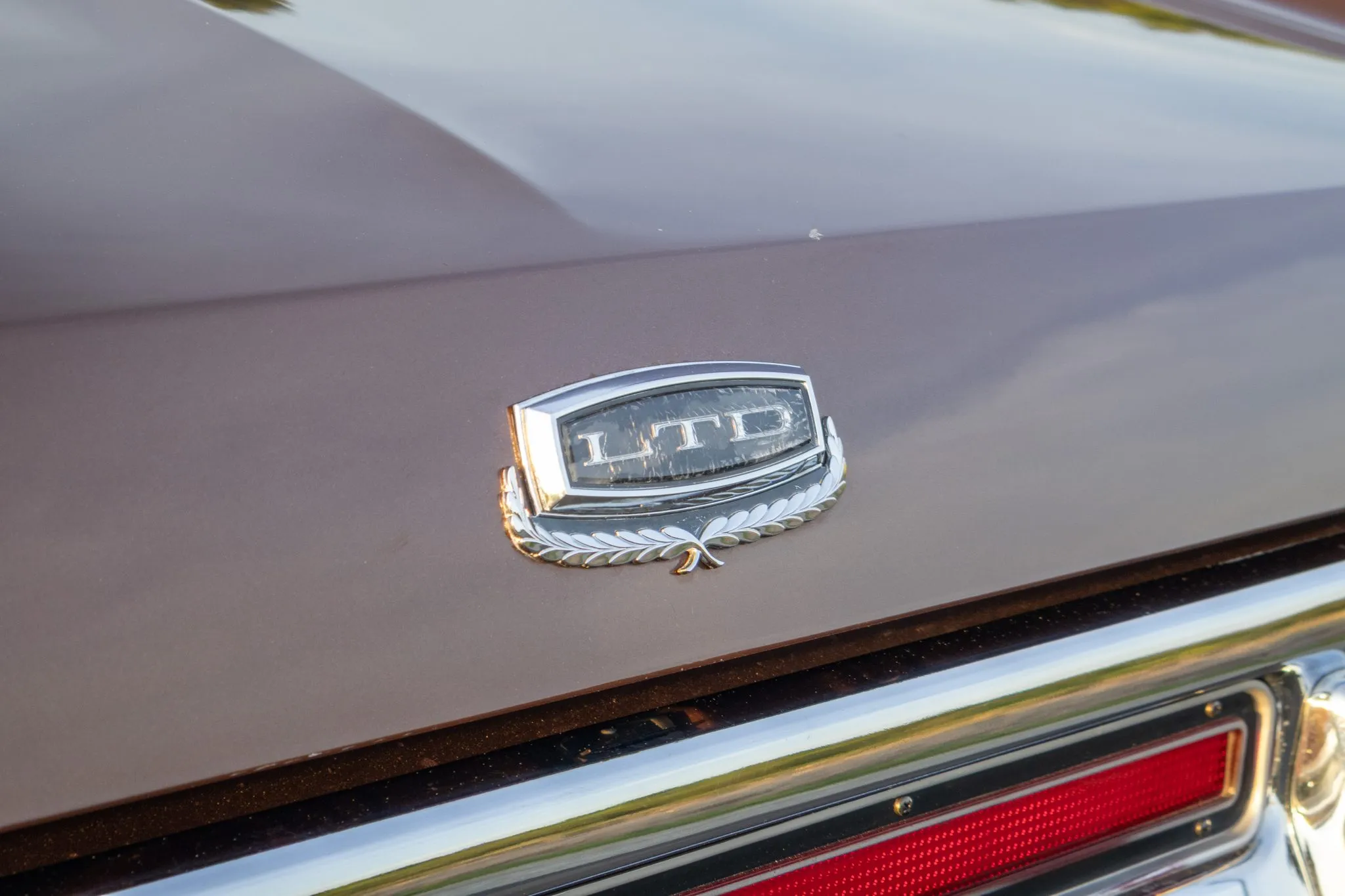
One of the most commercially important American cars of the ’60s, the LTD had by this time been demoted to second-tier status. If you wanted a “real” LTD — that is, a relatively low-priced full-size car with the interior plushness of a mid-price model — you now had to buy an LTD Brougham, but the LTD Brougham didn’t offer a convertible.
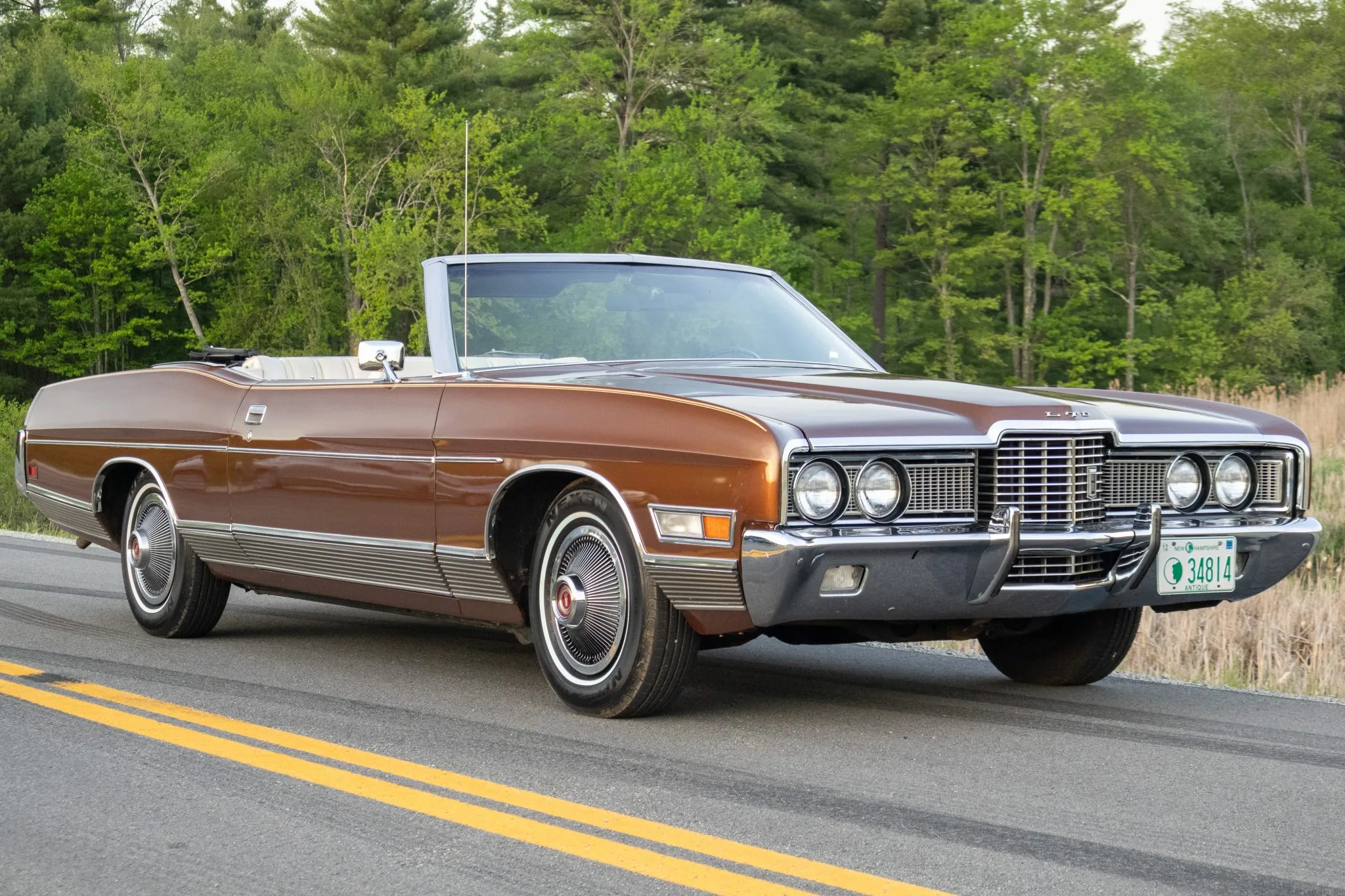
The 1971–1972 LTD was an interesting-looking car. “Interesting” was not necessarily synonymous with “attractive” — the basic proportions were okay, but there was an abundance of detail that didn’t always add up to a cohesive whole. Ford designers of the ’50s and ’60s tended to accumulate bags of gimmicks that might be applied to any model of any brand if they seemed to fit. This LTD feels like a “three from Column A, two from Column B” design.
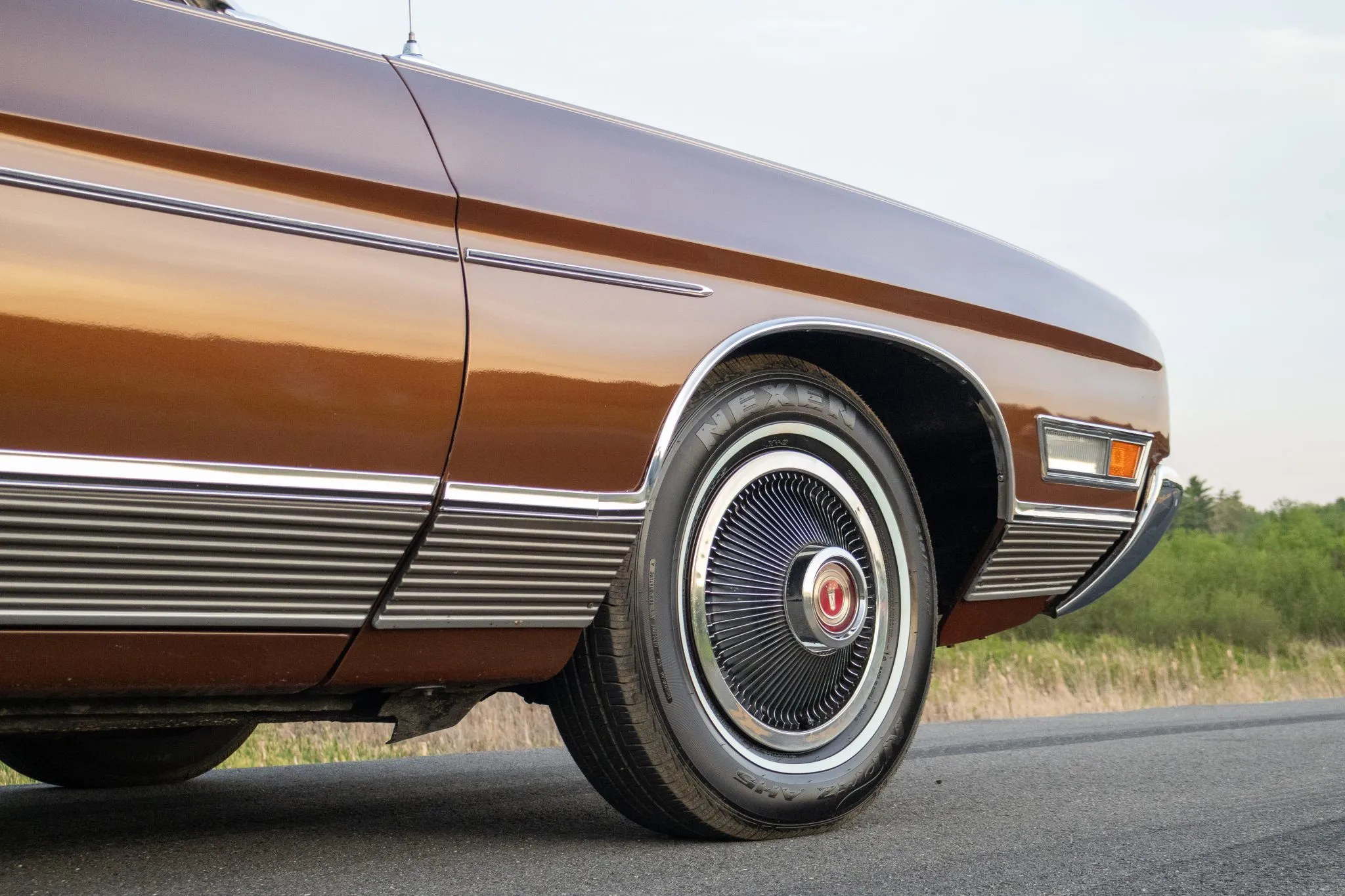
Personally, I rather like the ribbed lower body-side moldings, although they did seem like a relic from seven or eight years earlier. The ribbed texture paired well with the radial spokes of the deluxe wheel covers (a startlingly pricey $87.07), though not with the thin body-side moldings with their black vinyl inserts. I’m strongly in favor of cars having sensible body-side protection, but the rub strips (which were a $33.20 option) clashed with the sharp horizontal creases through the fenders, which also made the strips of very dubious protective value.
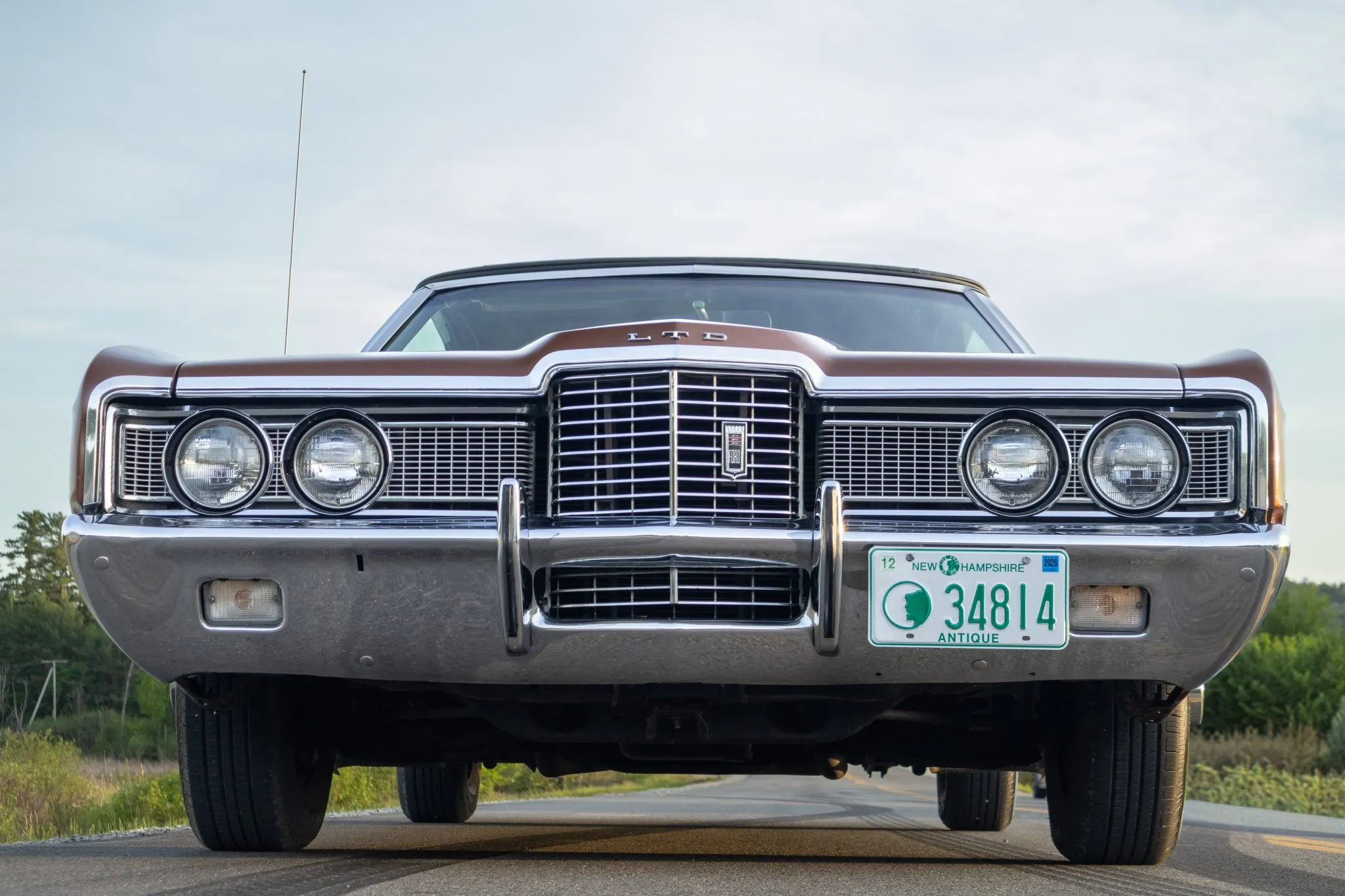
The front-end treatment was deliriously busy, combining a series of themes and textures into one cluttered-looking whole. It’s fun to look at, but I couldn’t really call it pretty.
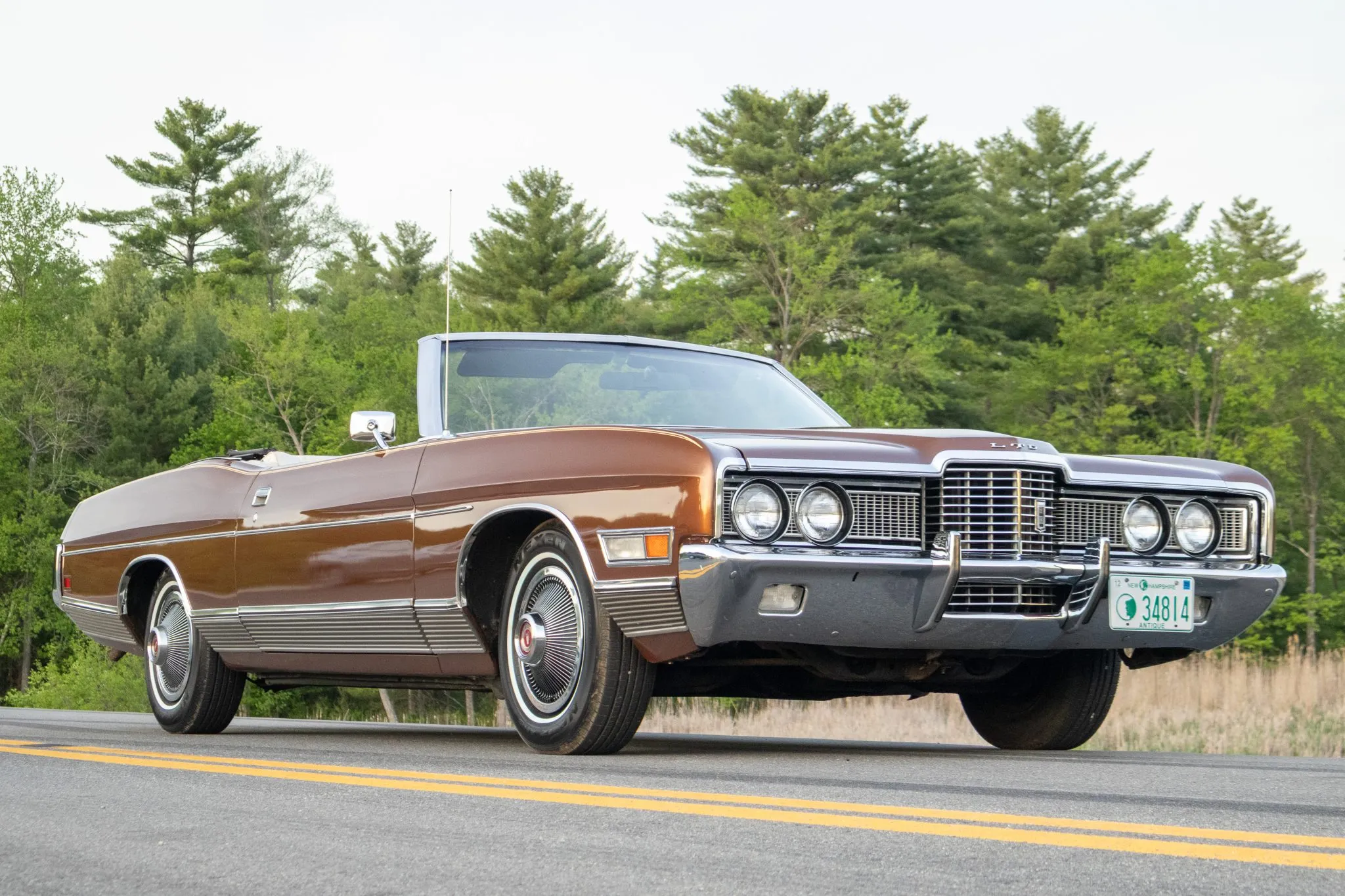
Full-size Fords of this era were not all that satisfying to drive either. The enthusiast magazines disdained the LTD: “It has nothing that could be described as ‘handling’ in the enthusiast’s lexicon,” complained Road & Track of their LTD two-door hardtop. Motor Trend conceded that “an abrupt lane change at freeway speeds is well within the operating envelope, as long as you make only one,” but warned against trying to “repeat in the opposite direction before all the bits and pieces have come to rest. That it won’t do.” Consumer Reports judged the big Ford’s emergency handling only fair and found that bumpy turns “made the rear wheels step off to the side.”
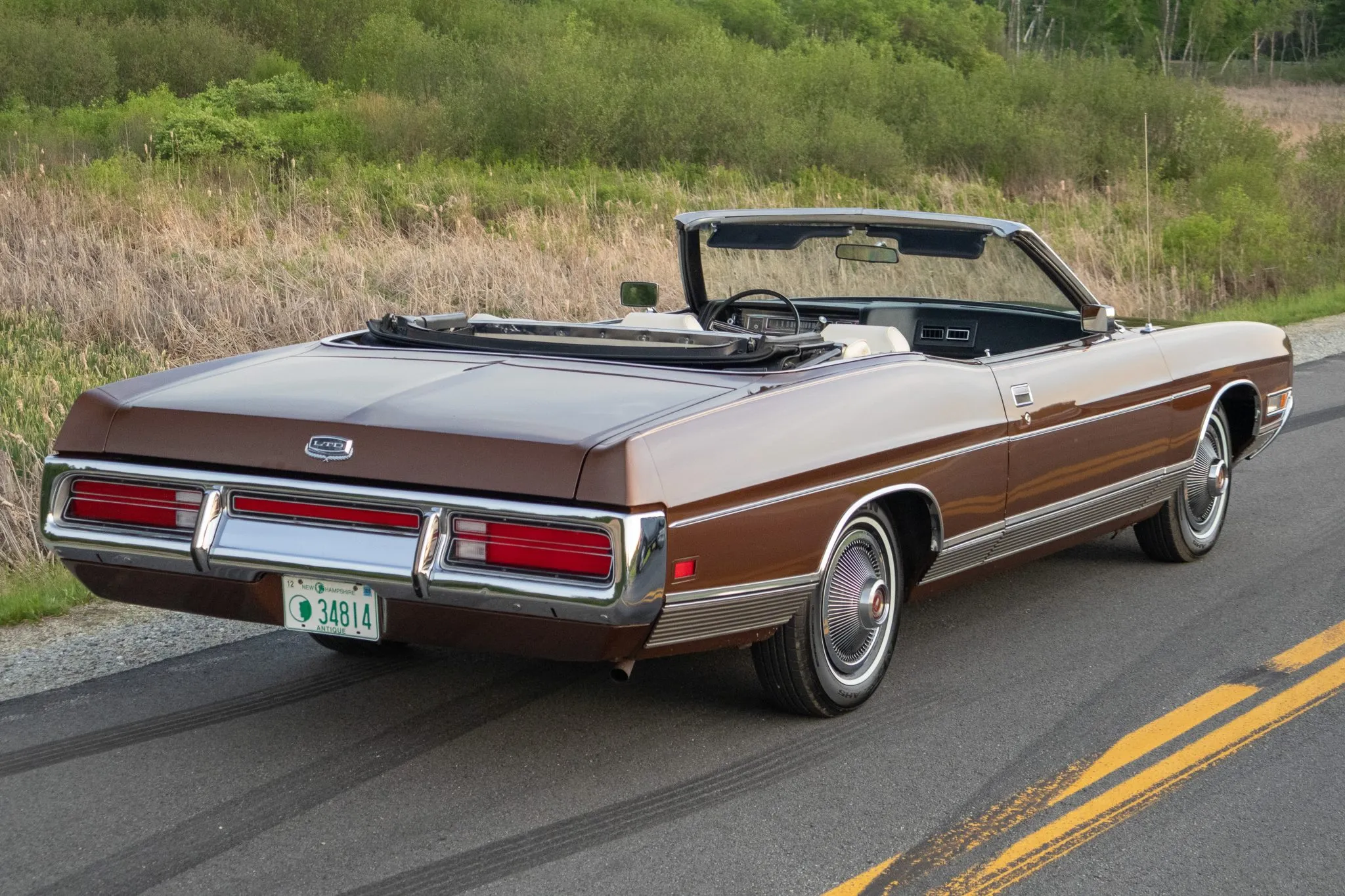
In a comparison of full-size sedans, Consumer Reports ranked the 1972 Ford fourth out of five. In ride and quietness, they judged it significantly inferior to its pricier Mercury Marquis sibling, which could also handle a full load of passengers and luggage without constantly clanging off the suspension bump stops the way the big Ford did. But, those judgments were based on the four-door sedans; the Marquis hadn’t offered a convertible since 1970.
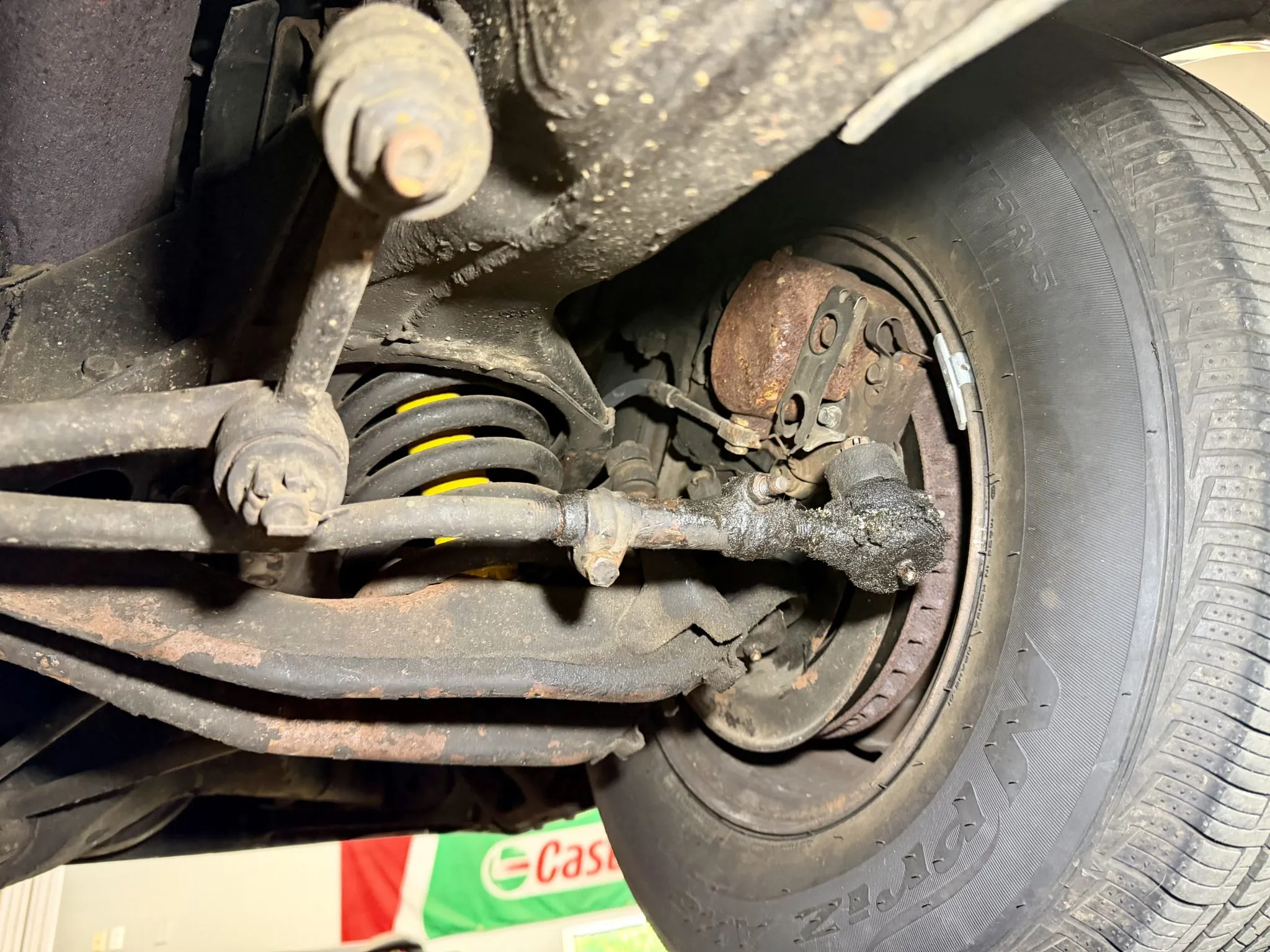
Front disc brakes with power assist were not yet standard on all full-size Fords in 1971, but they were standard on the LTD and LTD Brougham, which provided adequate stopping ability. Consumer Reports found the pedal effort a little too low and the brake balance not ideal — their Marquis test car was much better in both respects — but given how poor brakes had been not too many years earlier, it was a step in the right direction.
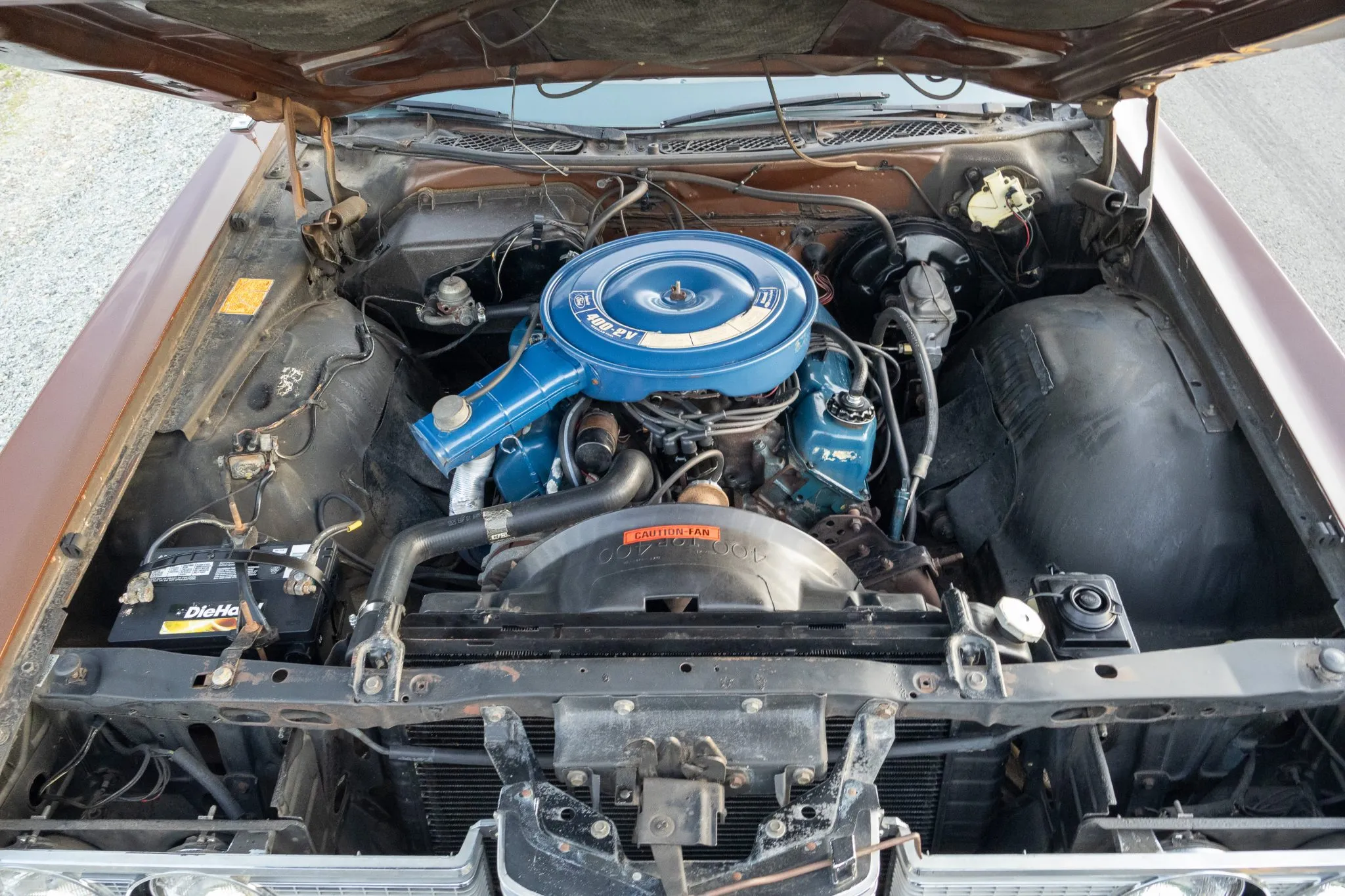
The LTD now came standard with the 351-2V engine and Cruise-O-Matic. These were heavy cars, and the 351 (which had 153 net horsepower this year) was straining the limits of adequacy. The original buyer of this Ginger Glow convertible sensibly paid $51.63 for the first step-up option, the S-code 400-2V engine, which had an extra 19 net horsepower (172 hp) and 32 lb-ft more torque. That trimmed 0 to 60 mph acceleration to a more workable 11 seconds or so, with little real penalty in gas mileage (not an area where these cars shone in any case).
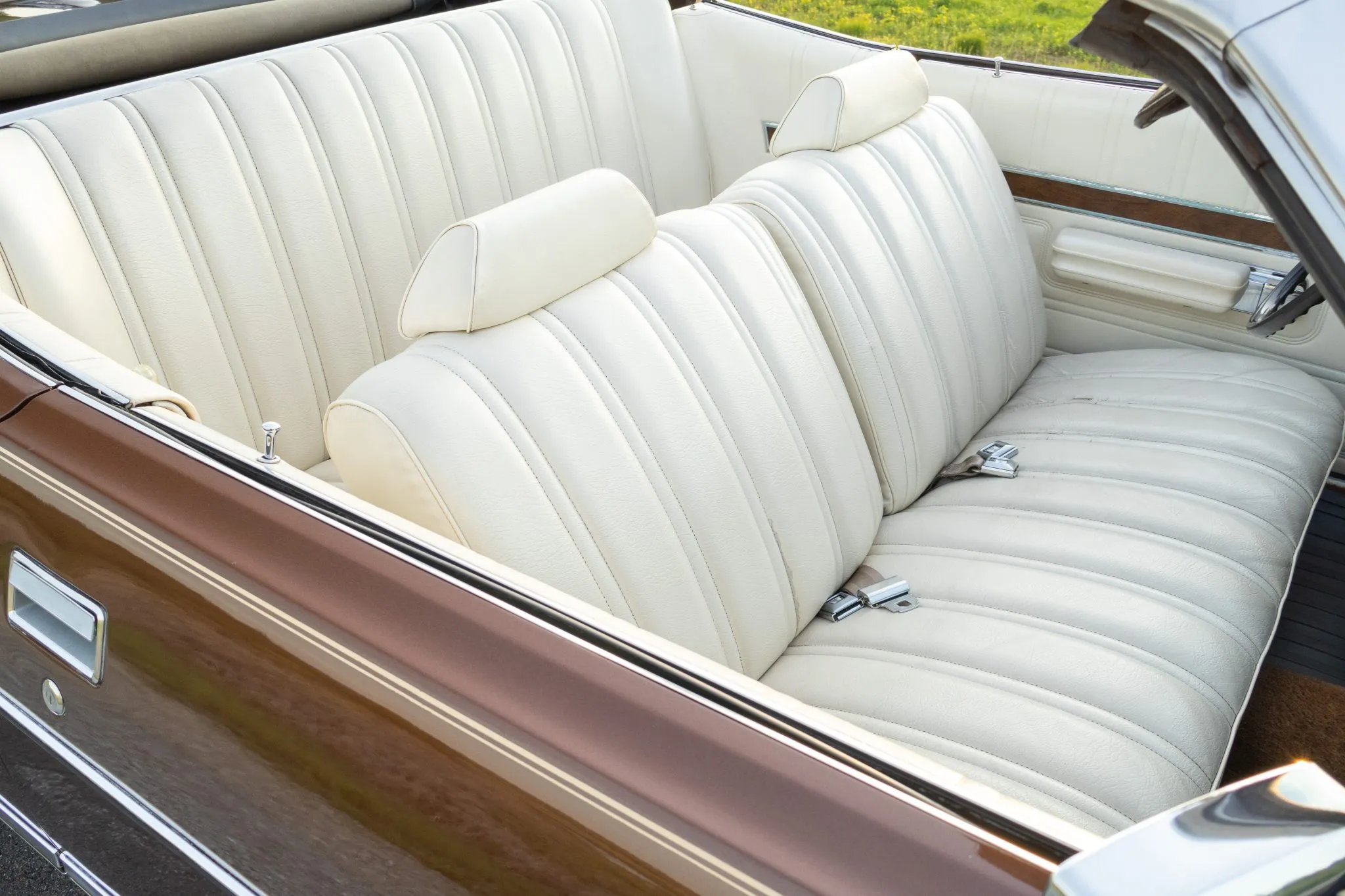
All LTD convertibles came with vertically pleated vinyl upholstery, which the brochure compared to “that on quality handmade luggage.” To my eyes, the seats in this LTD look so much like the ones in a contemporary Caprice Classic convertible that Ford and Chevrolet might as well have been buying seat covers from the same suppliers.
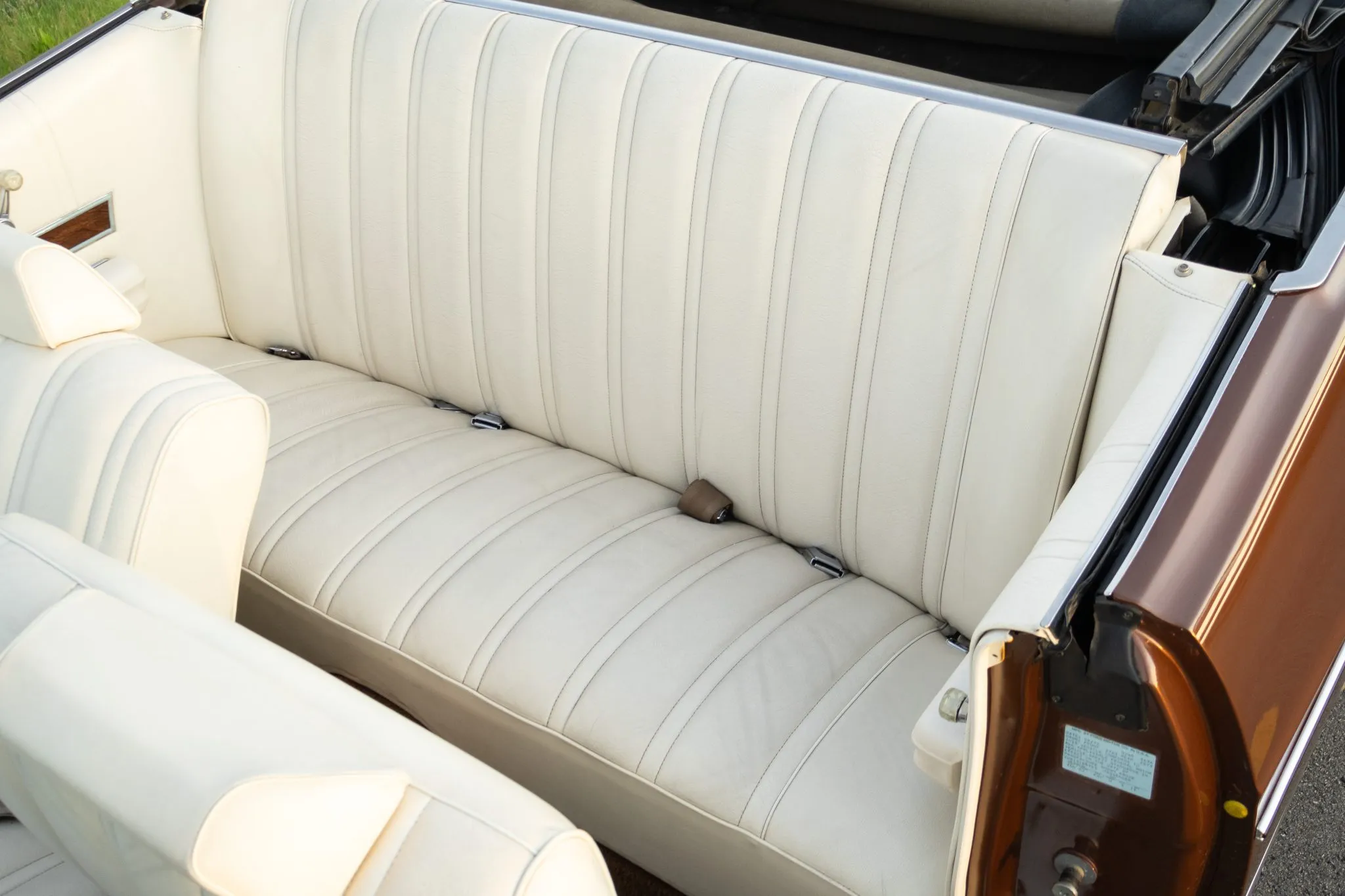
Consumer Reports was annoyed that for all its size — 218.4 inches on a 121-inch wheelbase, 79.2 inches wide — the full-size Ford was really a four-passenger car. There was room for five or six, but Consumer Reports warned, “the center occupant in front or rear would need to be somewhat of a stoic.” Rear legroom wasn’t abundant in the two-door hardtop or convertible either.
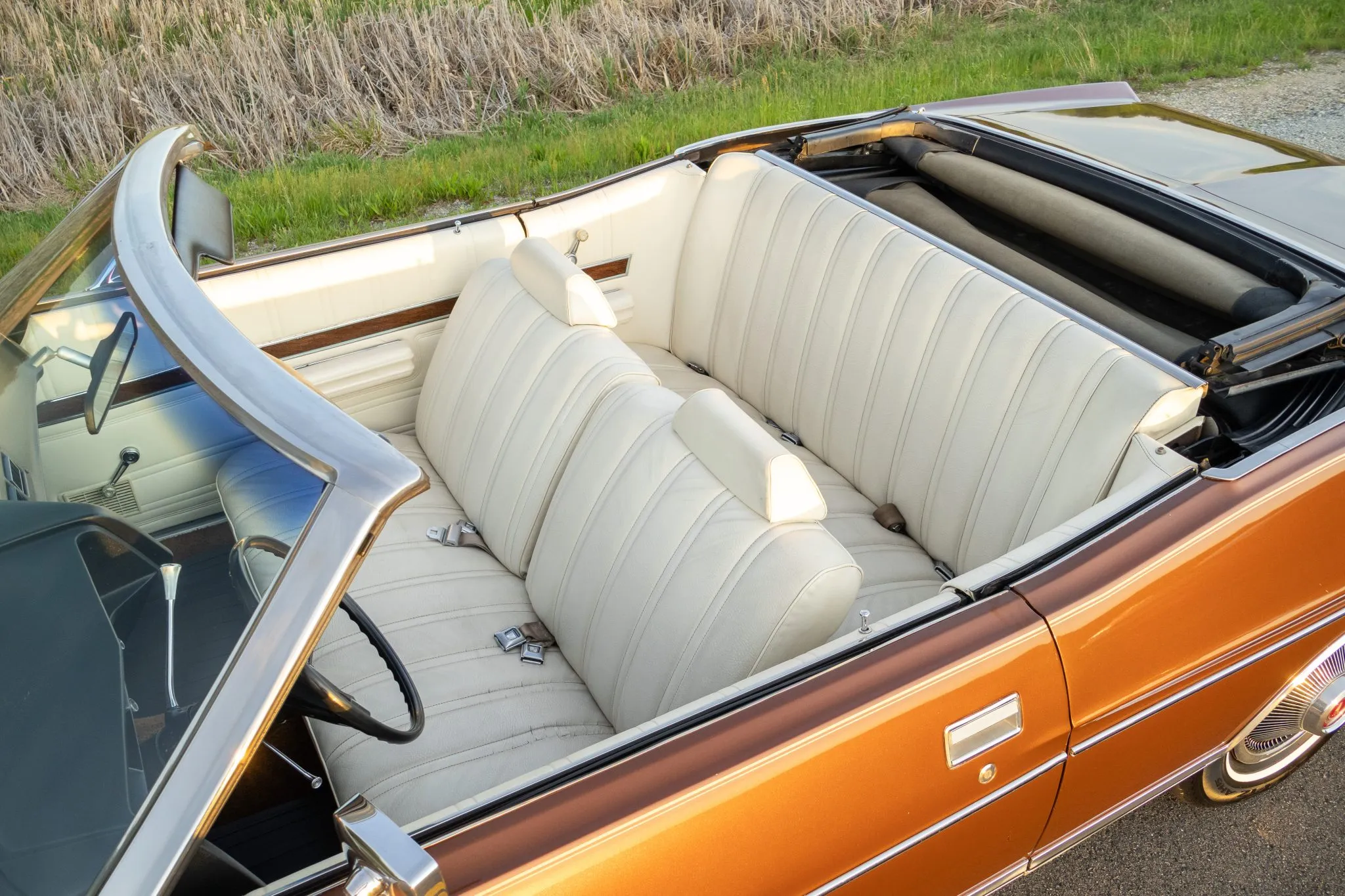
As with ride, handling, and noise levels, the convertible excused some of those faults. The back seat of a convertible with the top down at freeway speeds is a miserable place to be, especially if you have long hair (as many people did in 1972). Being able to cram three friends in the back for a short drive on surface streets was convenient, but you weren’t likely to take many long trips that way, inhospitable center padding or no.
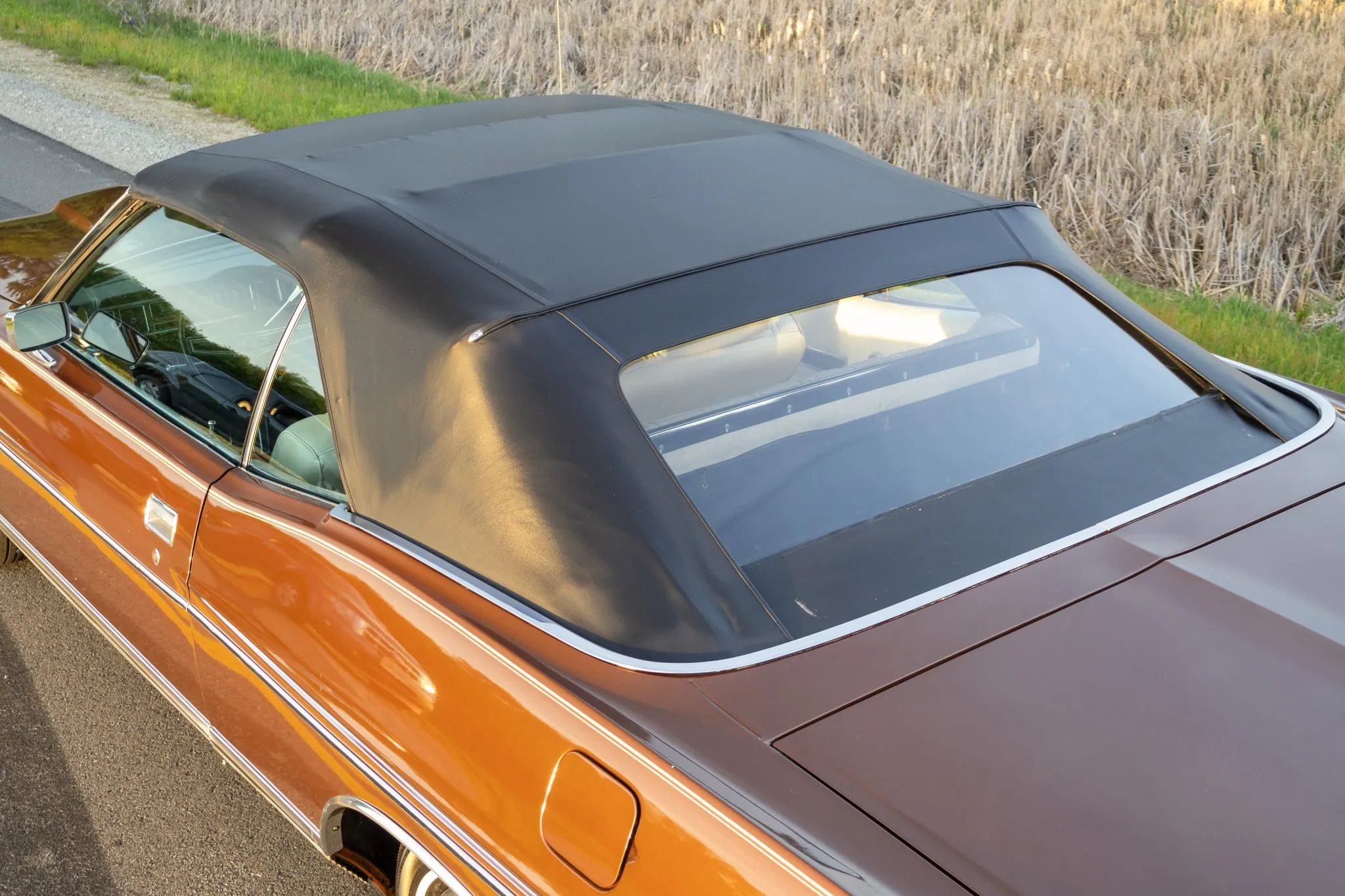
With the top up, there also wasn’t much rear headroom (or rear-quarter vision), although the LTD power top did have a glass rather then plastic rear window. (This car’s black top is a replacement; it left the factory with a white one.)
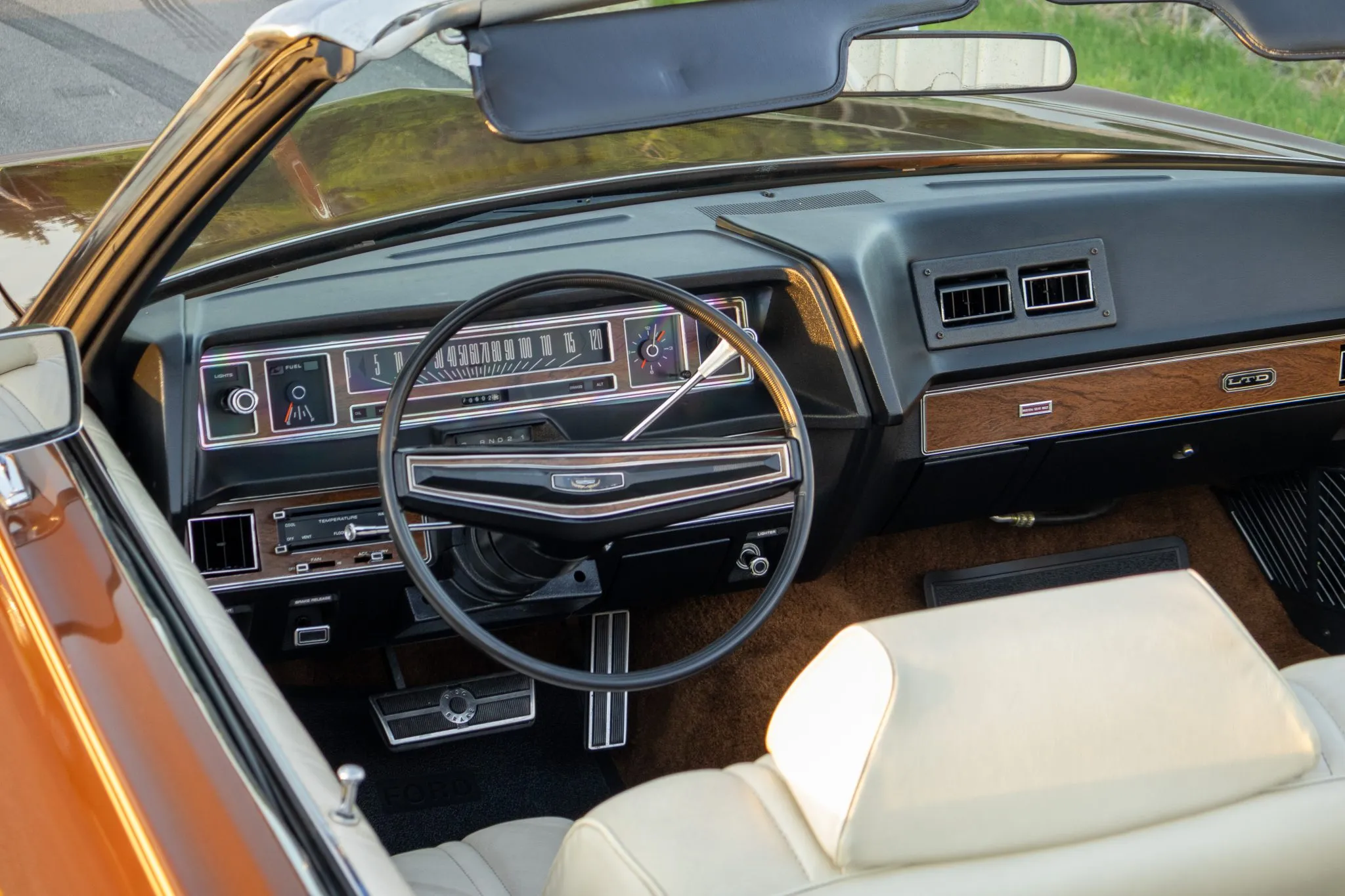
While this was no longer the fanciest LTD, it did still include a big helping of simulated woodgrain interior trim, including on the ugly two-spoke steering wheel (which has the rim-blow horn feature and tilt adjustment). I’ve never been sure why Ford interior designers of this period became so fixated on two-tier dash layouts that crowded the driver’s knee with the heater, radio controls, and cigarette lighter.
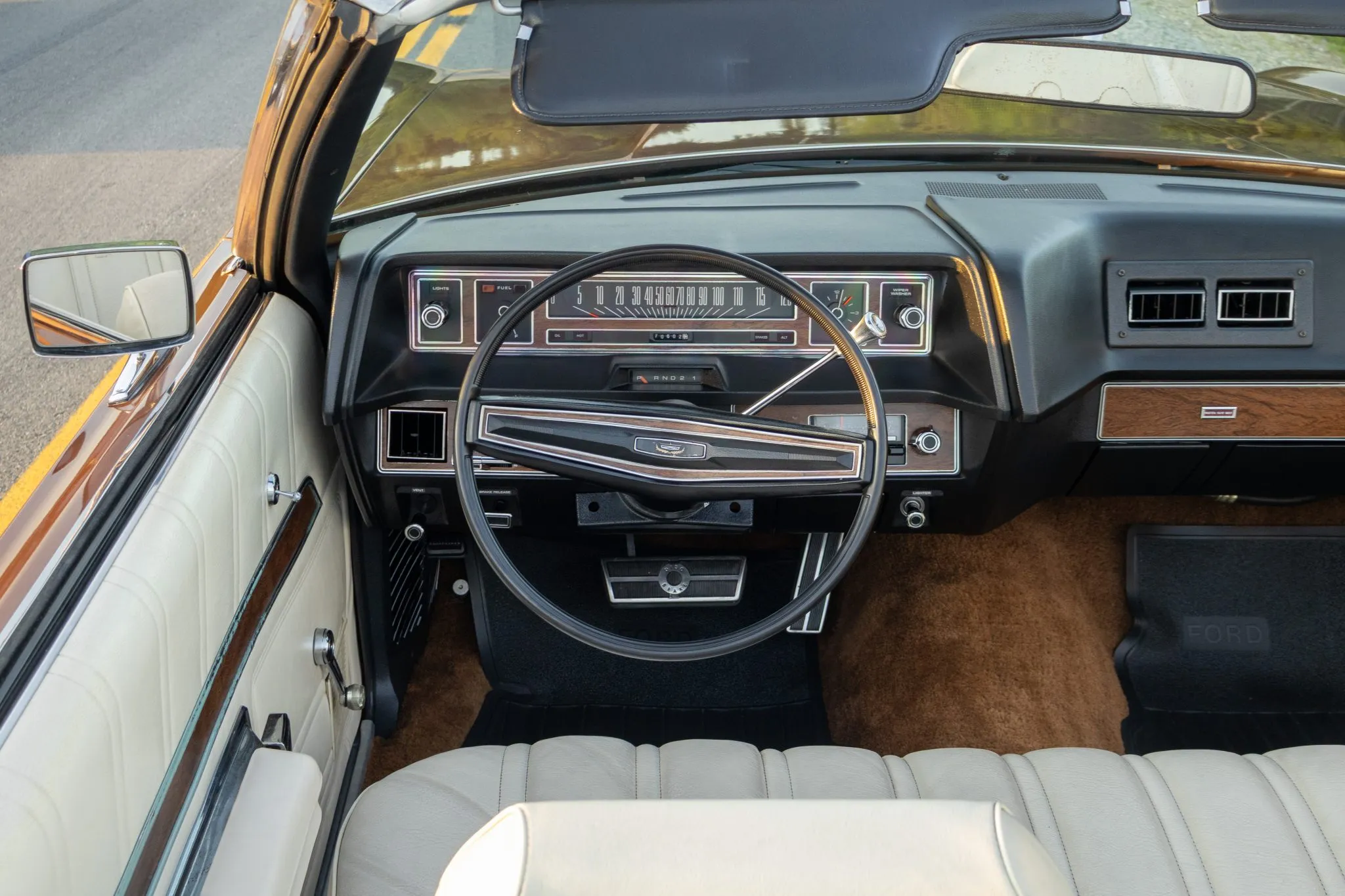
This is a rather basic car from an equipment standpoint. Power steering, power brakes, and automatic were standard on the LTD, so much of the $797.09 load of options is dress-up stuff like the fancy wheel covers and “Color-Glow” paint.
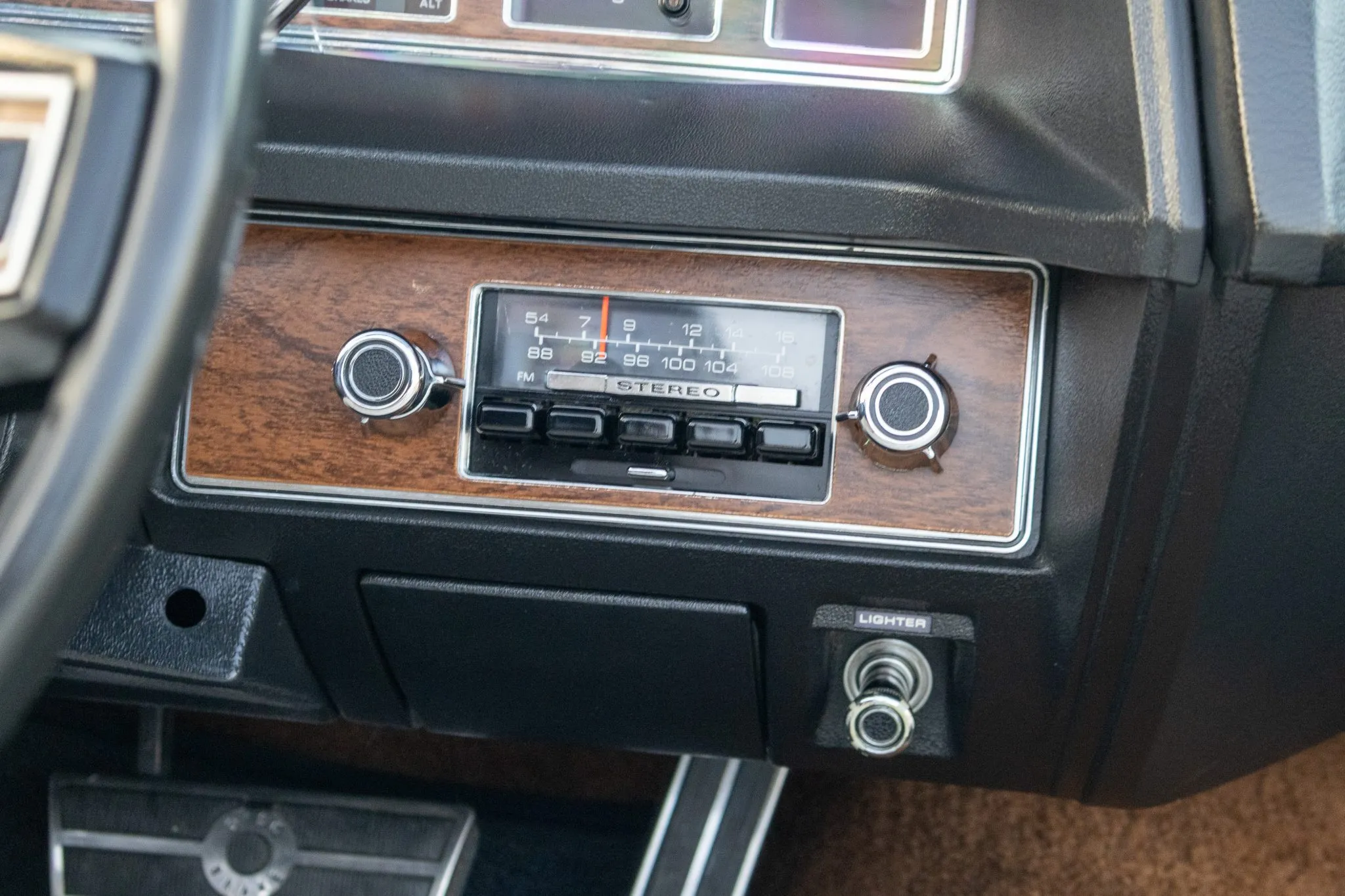
There’s no air conditioning or power windows, so the biggest-ticket item was the expensive AM/FM stereo.
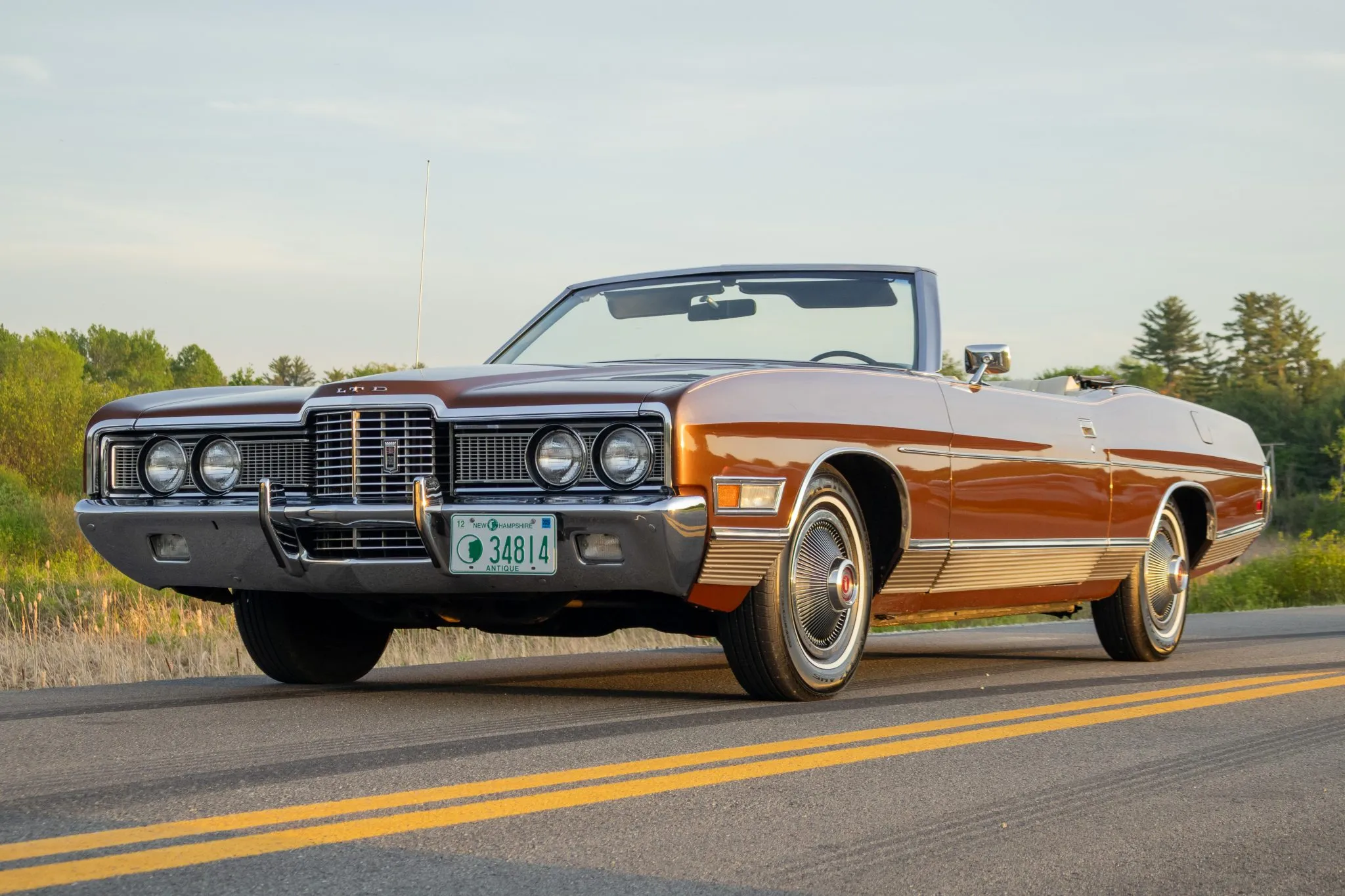
Ford found homes for only 4,234 of these LTD convertibles in 1972, which would have made the future of this body style look pretty gloomy even if it weren’t for the regulatory situation: As I’ve discussed elsewhere, the rollover crash injury requirements in Federal Motor Vehicle Safety Standard 208 was scheduled to outlaw convertibles in the near future.
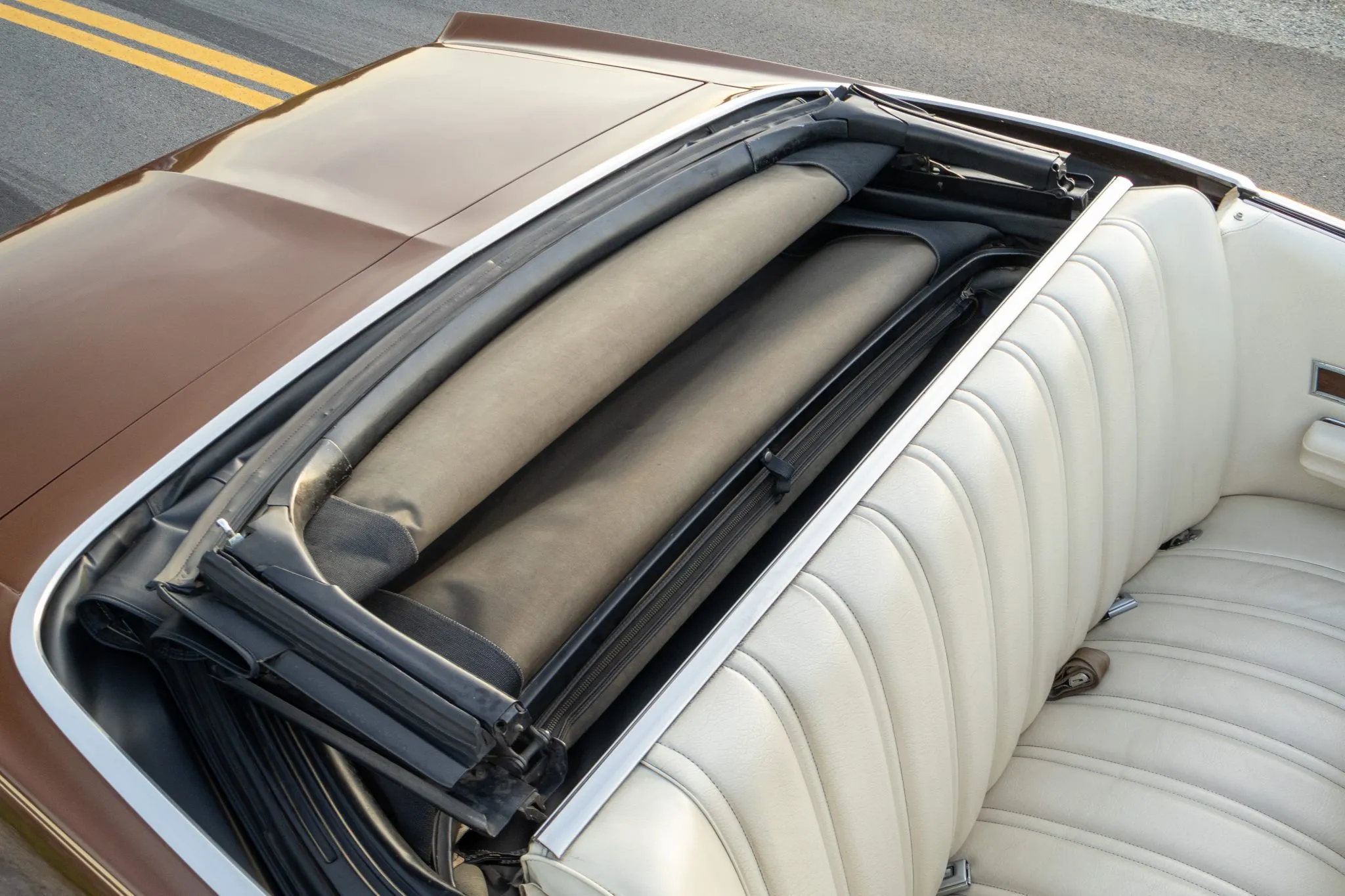
In December 1972, a federal appeals court ordered the NHTSA to “amend Standard 208 so that it does not in fact serve to eliminate convertibles and sports cars from the United States new car market,” but none of the domestic automakers were interested in waiting to see how that would play out. The redesigned 1973 full-size Ford line that had arrived some weeks earlier no longer included a convertible, leaving only the Mustang and Cougar convertibles, which were in their final year. The Mustang convertible would return 10 years later, but the big convertibles wouldn’t be back.
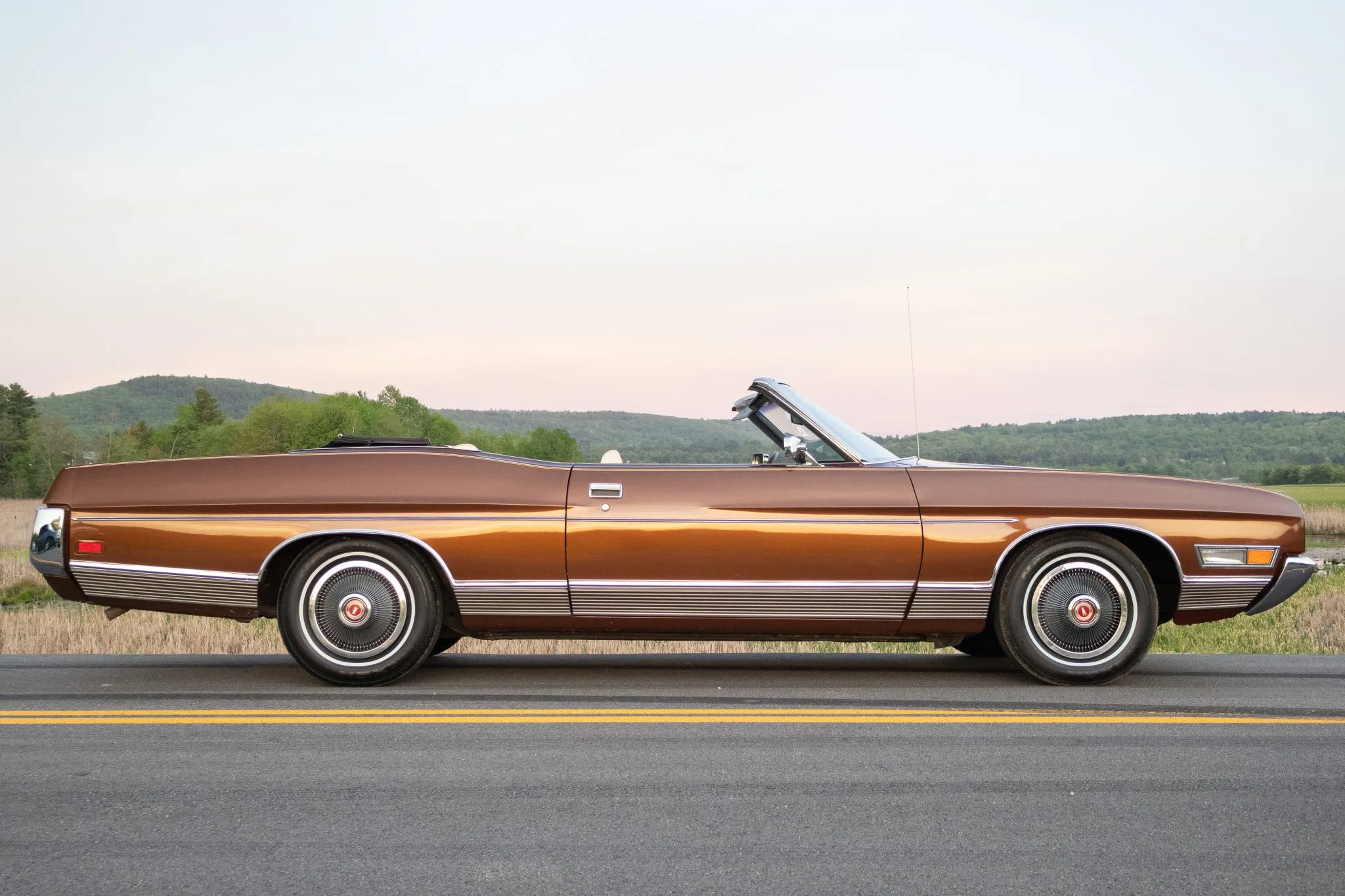
So, in real way, this Ginger Glow LTD convertible was the end of the line. It wasn’t the very last big Ford convertible ever built, but it was assembled relatively late in the final model year (May 9, 1972, according to the Marti Report), and after this, there would be no more. This LTD sold for $14,050 on Bring a Trailer in June 2026.
Related Reading
The Last Full-Size Convertibles – The End Of An Era (by William Stopford)
Cohort Classic: 1972 Ford LTD Convertible – Banana Boat (by J P Cavanaugh)
R&T 25th Anniversary Review: 1947 and 1972 Fords – “It Has Nothing That Could Be Described As ‘Handling'” (by Paul N)























When I was a kid, I would always switch television channels to the end credits of ‘The F.B.I.’ just to see what Ford product Efrem Zimbalist, Jr. would drive off in, and one of the models I most vividly remember were those big convertibles. The show ended in 1974 so, for that final year, no more convertibles. But it was still a good run from 1965-1973,
In effect, whomever scored the feature car could pretend they were Zimbalist’s character (Lewis Erskine) in the final moments of each show’s episode.
The thing that fascinates me about the 1971/2 Ford is that designers seemed to channel the Edsel for the front end, which at the time was still remembered as such a failure that it seems preposterous that they would do so.
Still, like you said, I like them more as the years pass, but they will never be cars that I love without reservation.
I saw one of these on the road a few years ago – I hate to say it, but these are among the few convertibles that don’t excite me. I feel that the bulky styling just didn’t translate well into a convertible format. Still admirable for being a rare survivor, though!