
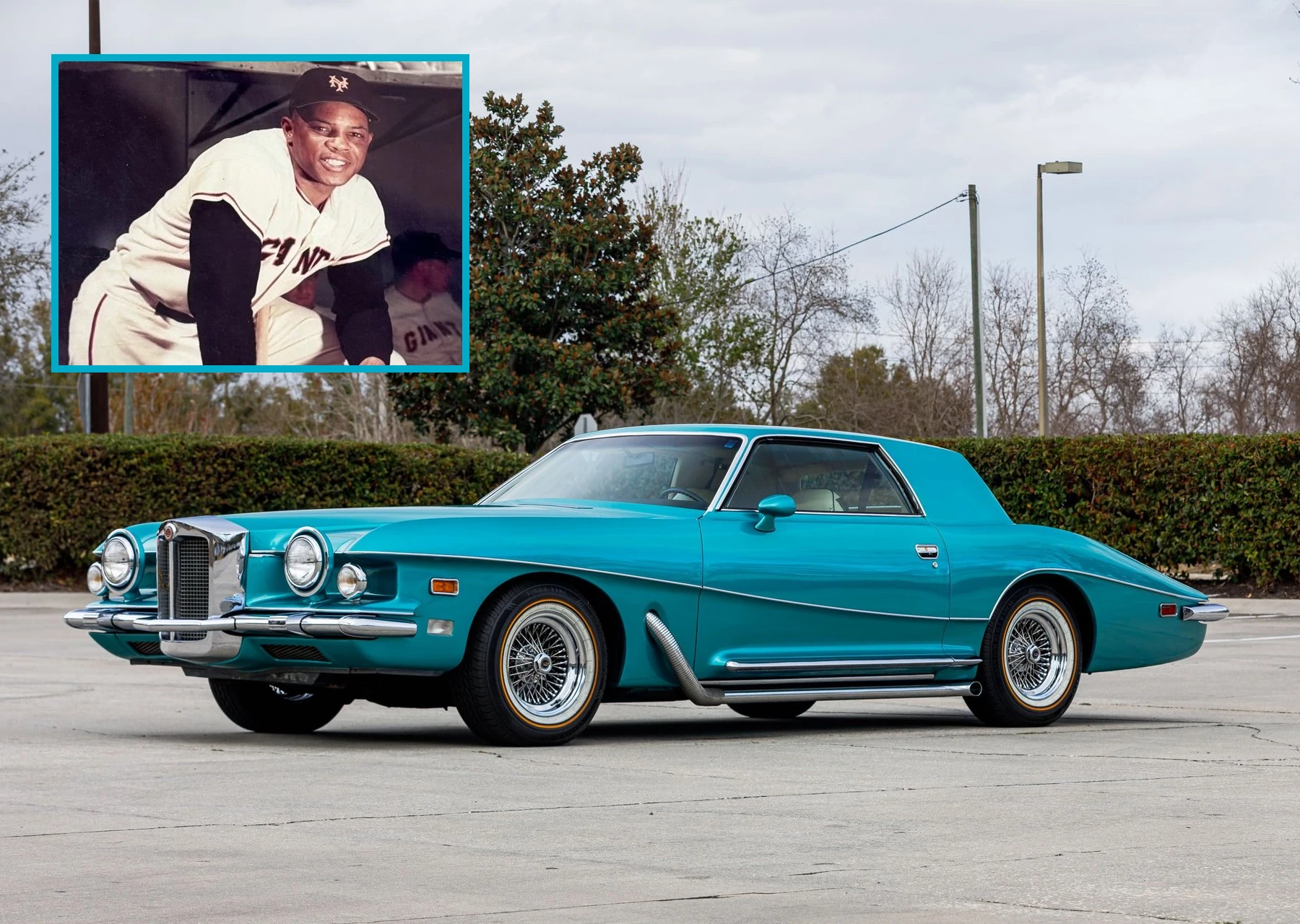
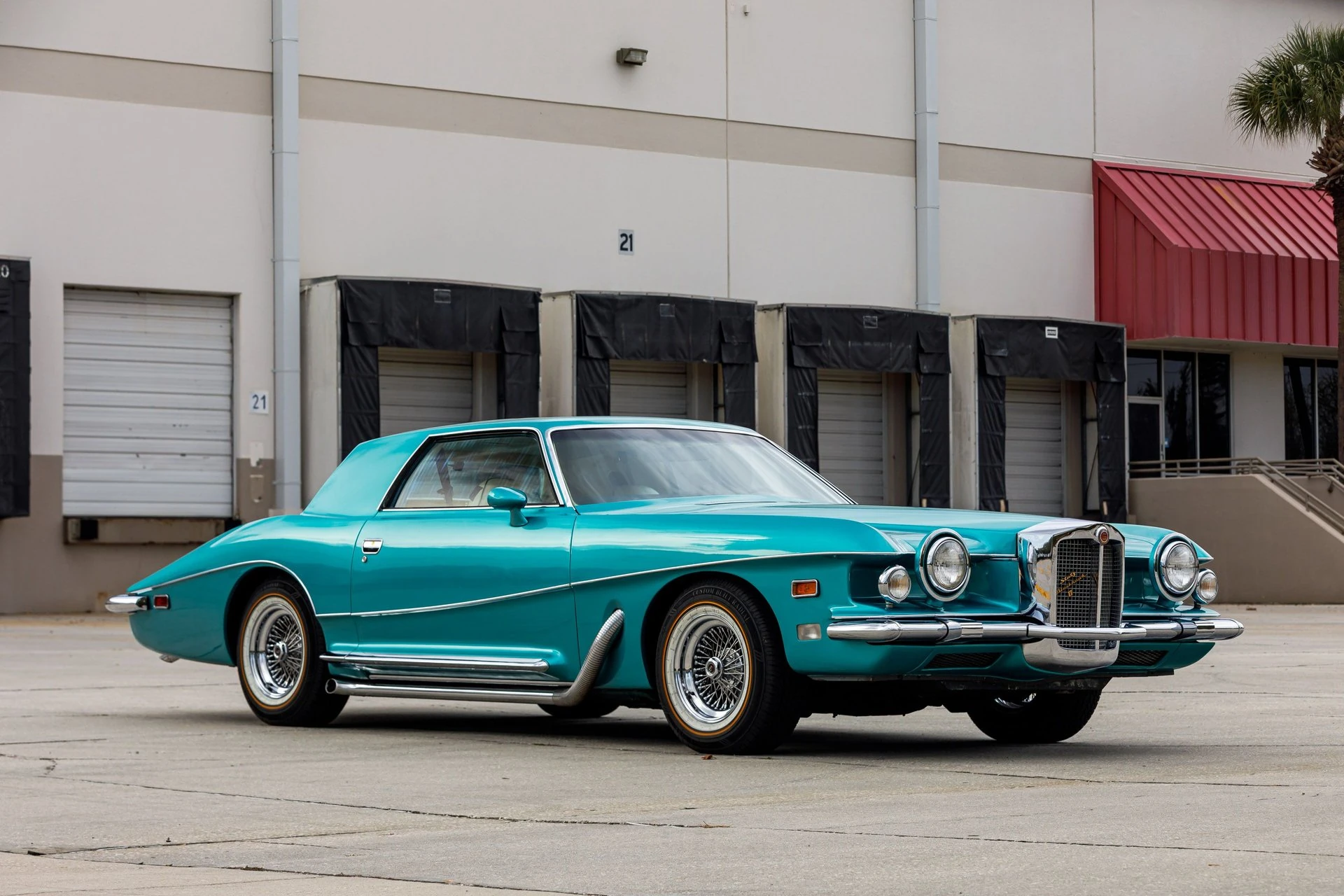
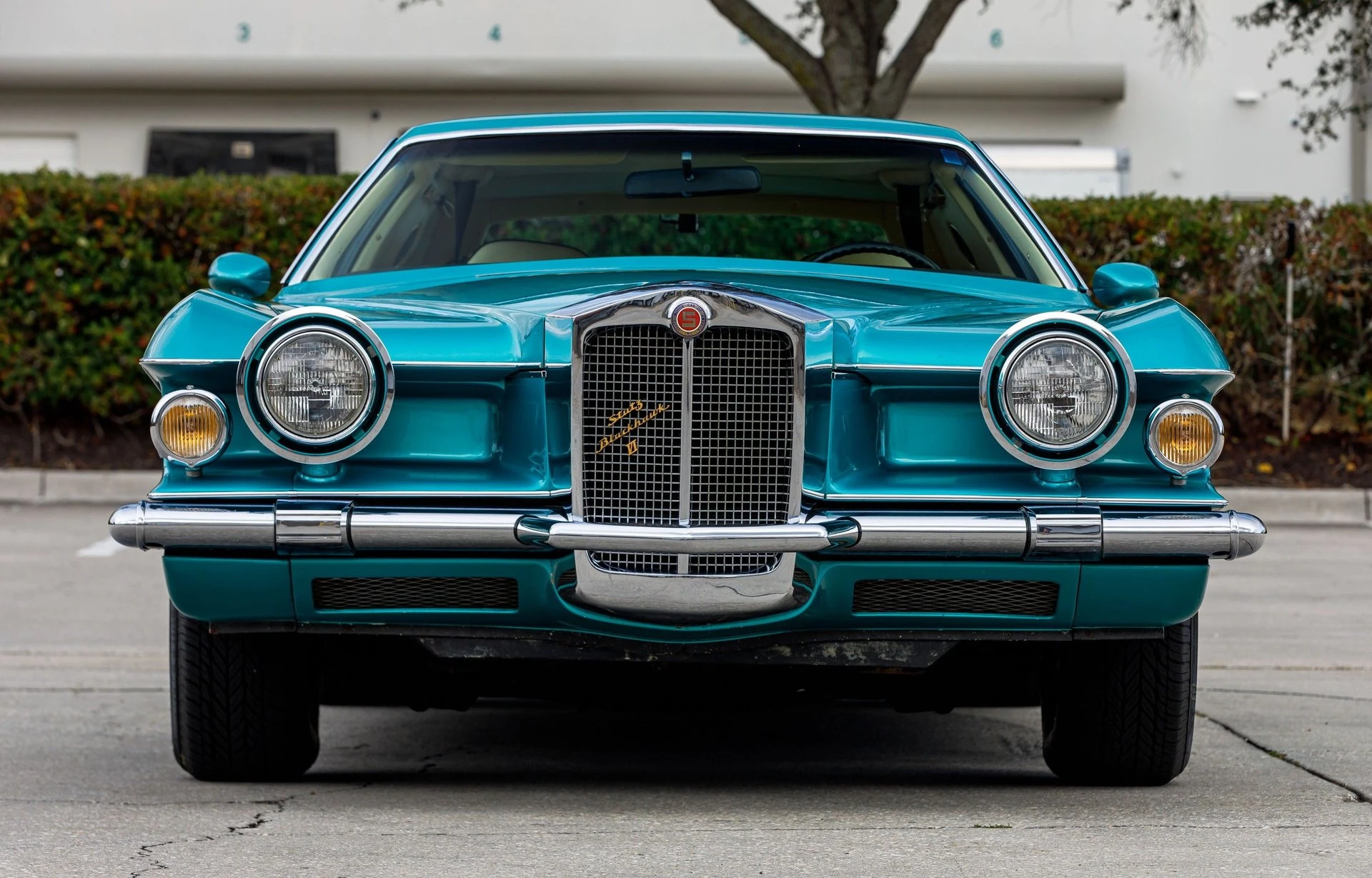
Given how many times this, uh, striking neoclassical Stutz coupe has been flipped in the past few years, you’d think that former owner Willie Mays must have been a gymnast rather than a legendary baseball player. Every bit as flamboyant as the Eldorado “pimpmobile” from the 1972 movie Superfly, the 1978 Stutz Blackhawk VI was essentially a heavily modified Pontiac Grand Prix with a new Italian-made body, designed by former Chrysler VP of styling Virgil Exner Sr., and an over-the-top wood-, leather-, and gold-encrusted interior.
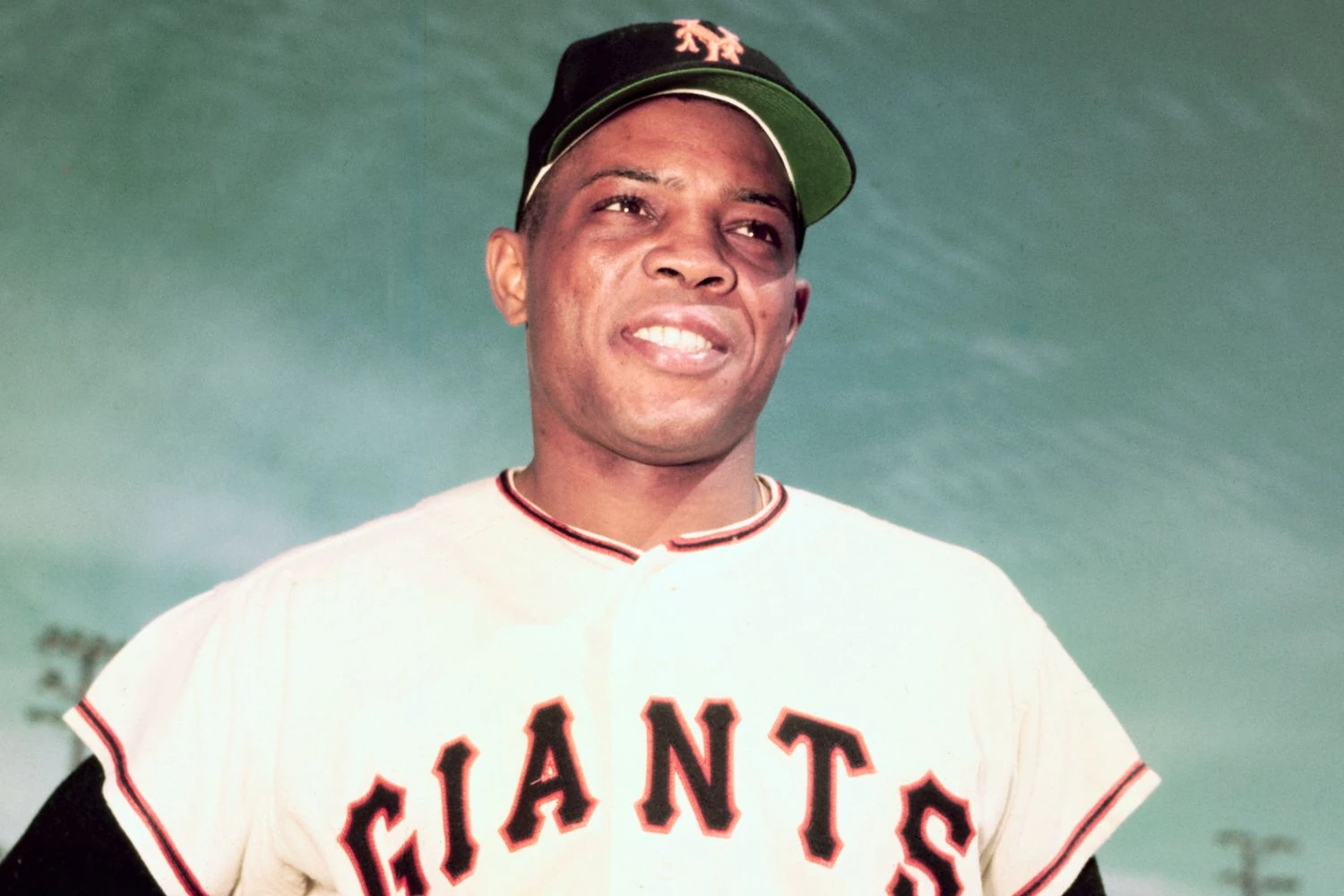
The baseball career of the late Willie Howard Mays Jr. (1931–2024) is really beyond the scope of Curbside Classic, but he was one of the sport’s all-time greats. Originally from Westfield, Alabama, Mays started in the Negro Leagues as a teenager in 1947 and signed on with the New York Giants for 1951. Sporting News named him the 1960s’ “Player of the Decade,” both a highly decorated all-rounder and also one of the highest-paid athletes in the United States. Mays’ famous nickname, the “Say Hey Kid” (allegedly coined by New York Journal American sportswriter Barney Kremenko), actually had nothing to do with his prowess on the field: Mays tended to greet people with “Heeeyyy!” because he was bad at remembering names.
Although Mays played his last game for the New York Mets in October 1973, he was certainly not hurting for money in the ’70s. For his two final seasons, the Mets had paid him a salary of $165,000 a year (the equivalent of about $1.3 million a year today), plus an agreement to pay him an additional $50,000 a year for 10 years after he retired. Mays had also had lucrative endorsement and merchandising deals since the early 1950s. So, on April 4, 1979, Mays went into Dick Gidron Cadillac at 696 E. Fordham Road in the Bronx to take delivery of this new 1978 Stutz Blackhawk VI, for which he paid at least $70,000 including tax and license (a relative worth of around $358,000 today).
Model years were a tricky business with cars like this Stutz. The VIN indicates that the Pontiac Grand Prix on which the Mays car was based was a 1977 model, but the process of transforming a Grand Prix into a Blackhawk was time-consuming. Each donor car had to be shipped to Italy for installation of the new body and trim, and then shipped to the distributor or point of sale. It often took Stutz Motor Car Company of America a year or more to fulfill each order. (For mass-production models, regulators and state officials generally don’t tolerate this kind of dating ambiguity, but back then, there were still various loopholes and exceptions for small operations like Stutz.)
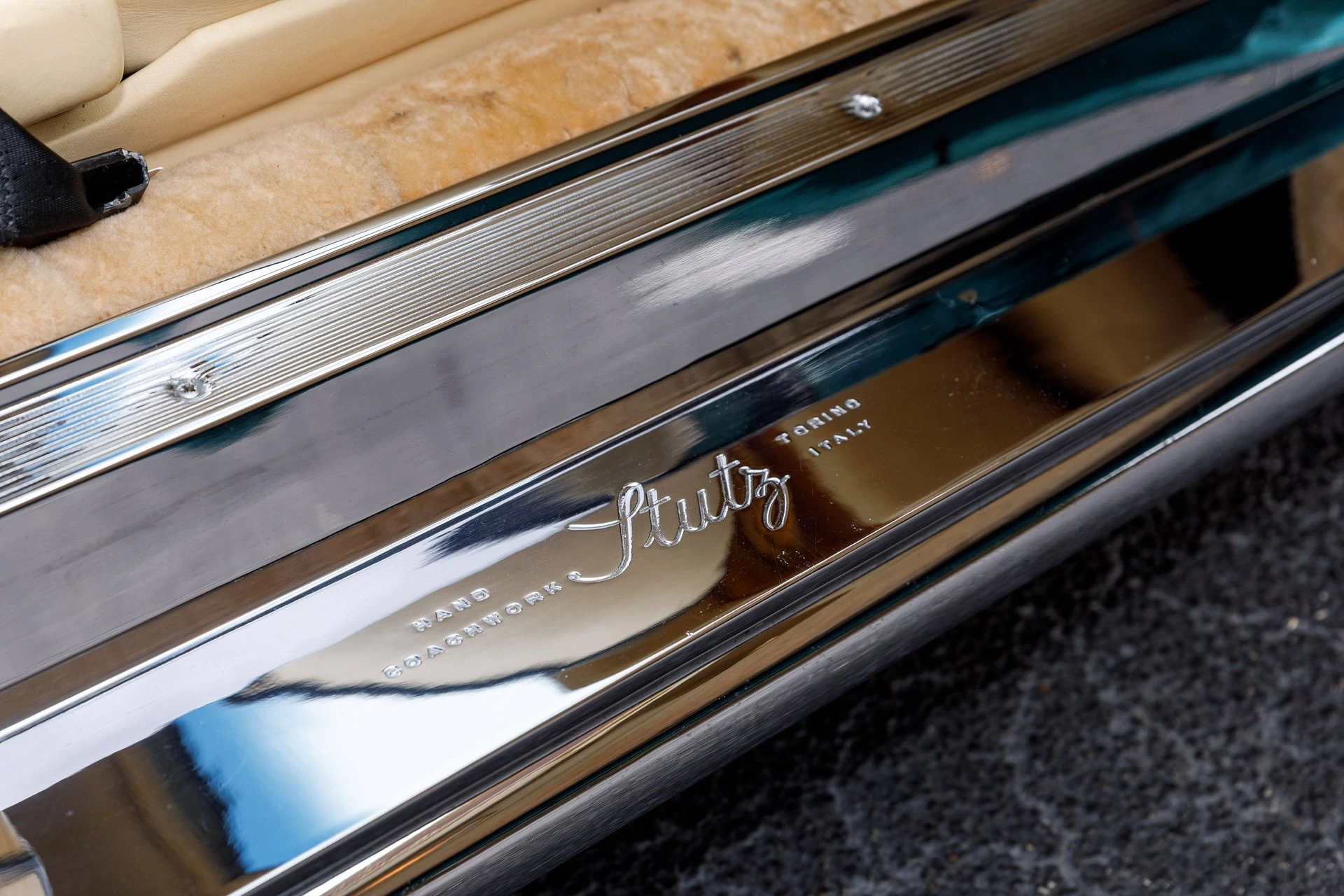
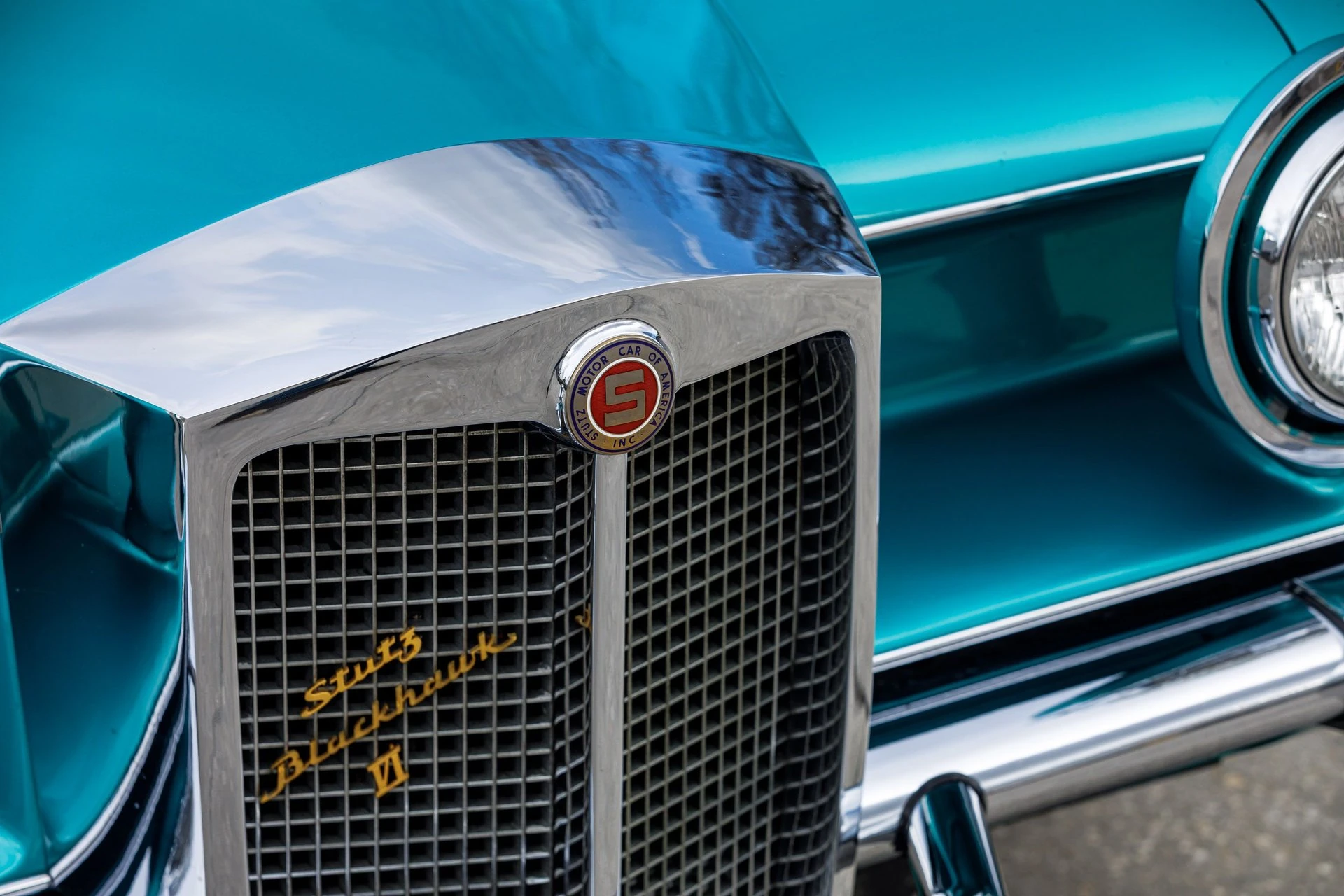
When the Blackhawk was first introduced in 1970, the bodies were produced by Officine Padane in Modena, which Newspaper Enterprise Association automotive editor Bob Cochnar dismissed as “an Italian coachbuilder of no great reputation” (they primarily built buses). In 1971, Stutz made a deal with Rinaldo Mina and Gabriele Martino to establish a new Italian company called Carrozzeria Saturn, which built Stutz bodies in a small factory in Cavallermaggiore, south of Turin, beginning in 1972.
In the ’70s, Saturn had 85 to 100 employees producing new steel bodies for the Grand Prix donor cars. The company estimated that each Stutz car required about 1,000 hours of labor. The fancy hand-rubbed paint job alone (variously described as having 18 or 22 coats of lacquer) took about six weeks to apply.
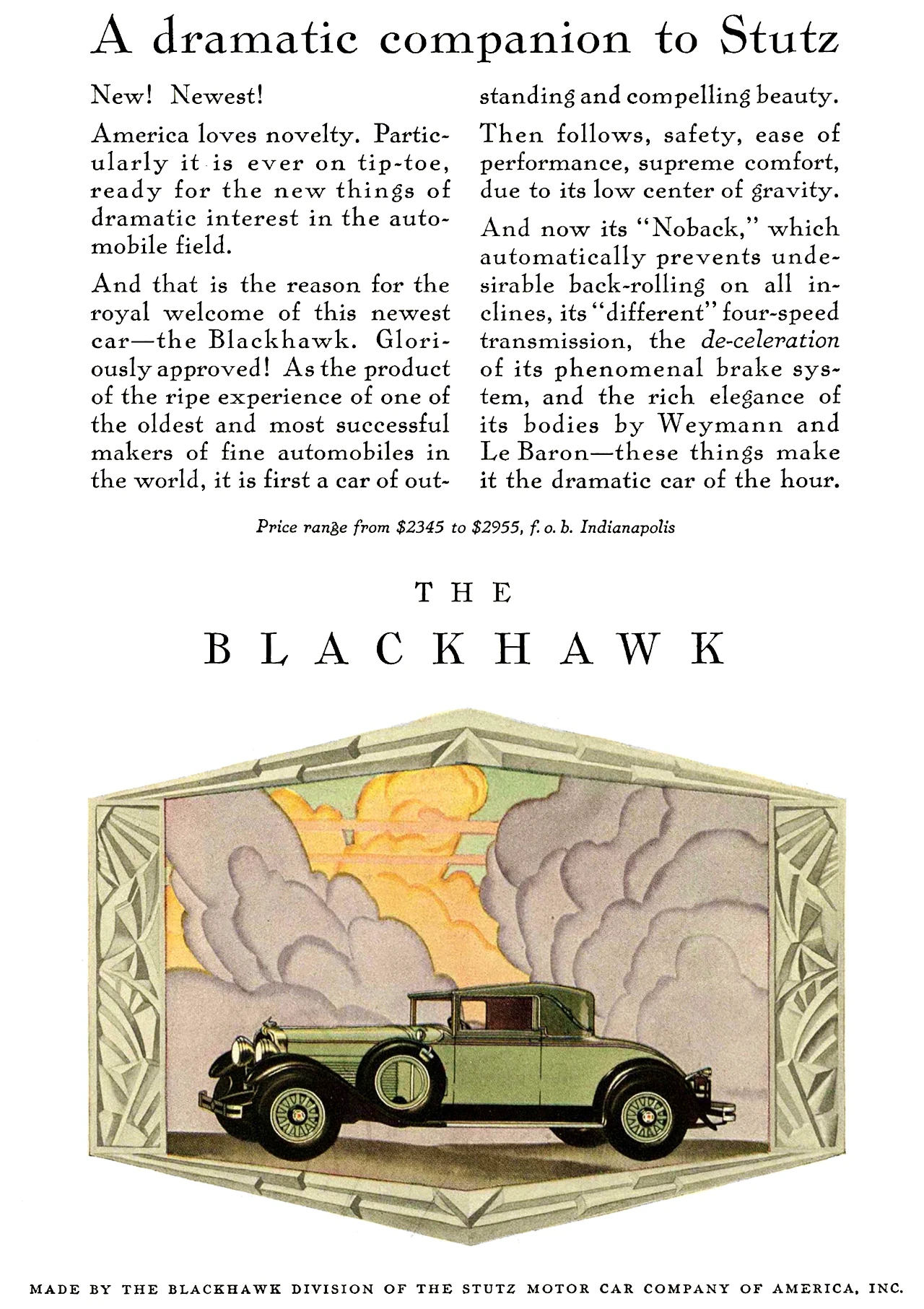
Jana Lingo has previously related the history of the revived Stutz Motor Company. The original Stutz Motor Company, founded in 1911 as Ideal Motor Car Co. (the name changed in 1913), had been a kind of American equivalent of Bentley or Delage, but by the 1960s, it was long gone. The Indianapolis-based company had filed for bankruptcy in April 1937 and was forced to liquidate in October 1938, having failed to come up with a reorganization plan acceptable to its creditors.
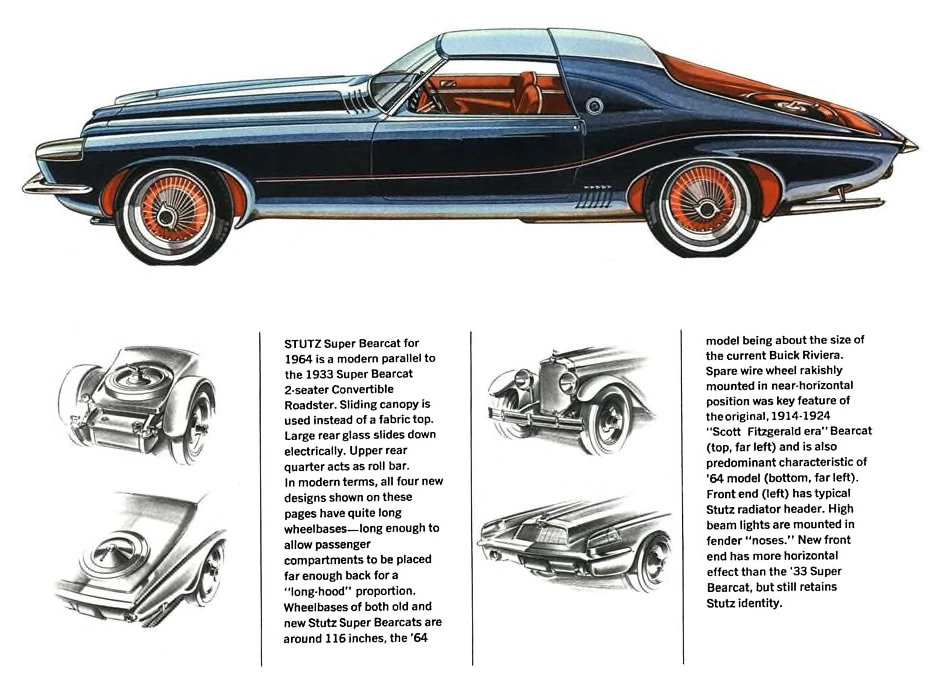
In December 1963, Esquire magazine had published images of a fanciful concept by former Chrysler styling chief Virgil Exner Sr. and his son, Virgil Exner Jr., for a neoclassical “1964 Stutz Super Bearcat,” intended to evoke “Stutz identity” in a more modern package.
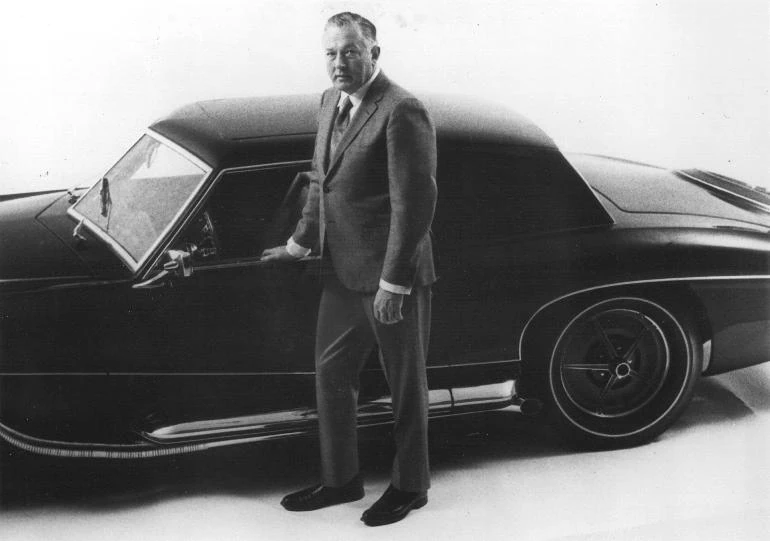
In 1968, Exner and New York investment banker James D. O’Donnell (whom Exner had previously approached regarding a failed Duesenberg revival project) joined forces to develop a limited-production version of Exner’s Stutz concept that could be built with low-cost Italian labor on a mass-production American chassis: specifically, the latest Pontiac Grand Prix, which had long-hood, short-deck dimensions that suited Exner’s conception. Pontiac general manager John DeLorean agreed to supply chassis and running gear for the project.
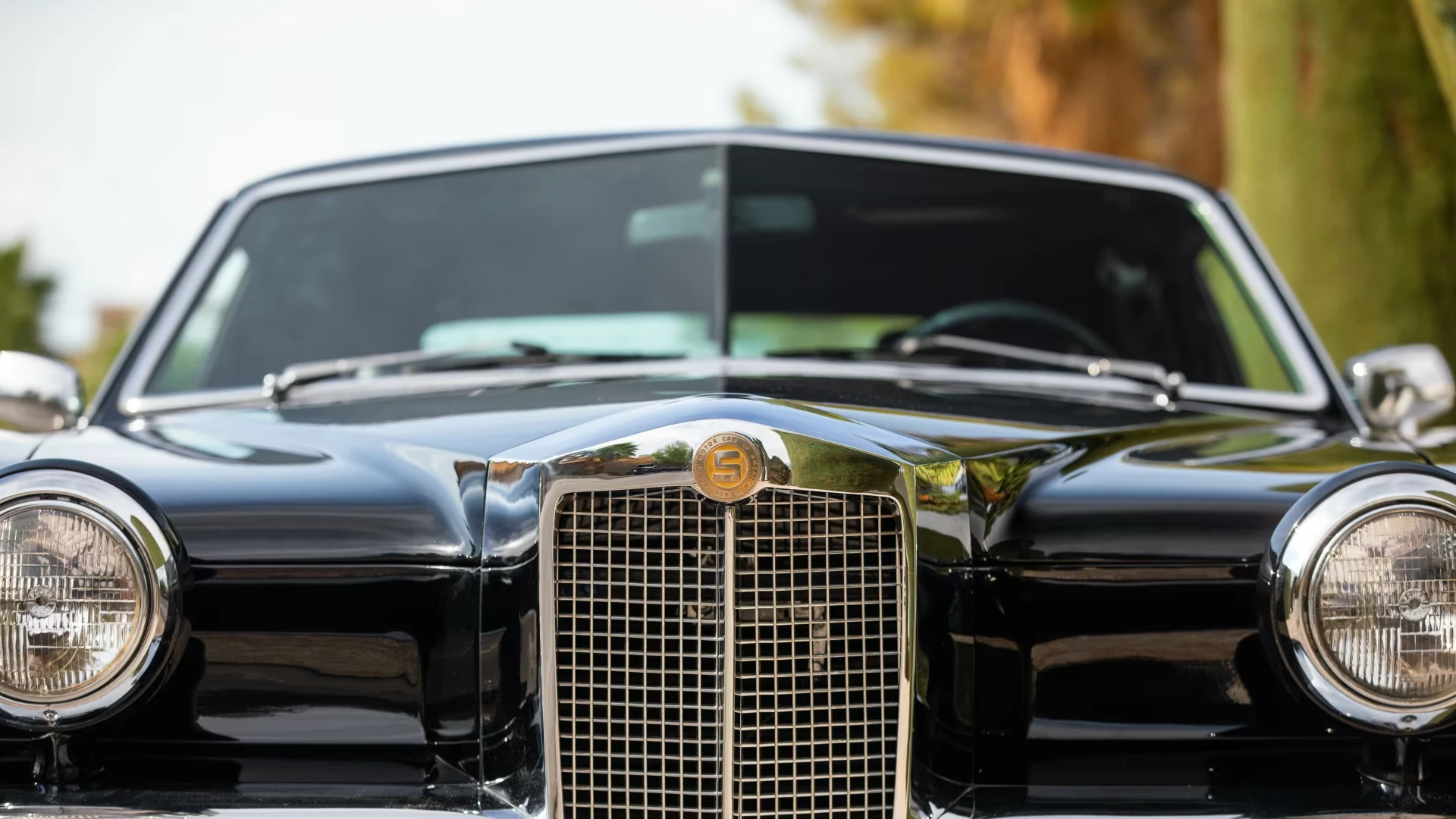
In October 1968, O’Donnell bought an early 1969 Grand Prix that would be transformed into the first Stutz prototype, at a cost of about $300,000. The new Stutz Motor Car Company of America unveiled the prototype — dubbed Blackhawk, reviving a Stutz model name from the late 1920s — in January 1970. O’Donnell quoted a starting price of $22,500 (a relative worth of about $209,000 in 2025), which was enough in those days to buy a Cadillac Eldorado, a Lincoln Continental Mark III, AND a nice European vacation.
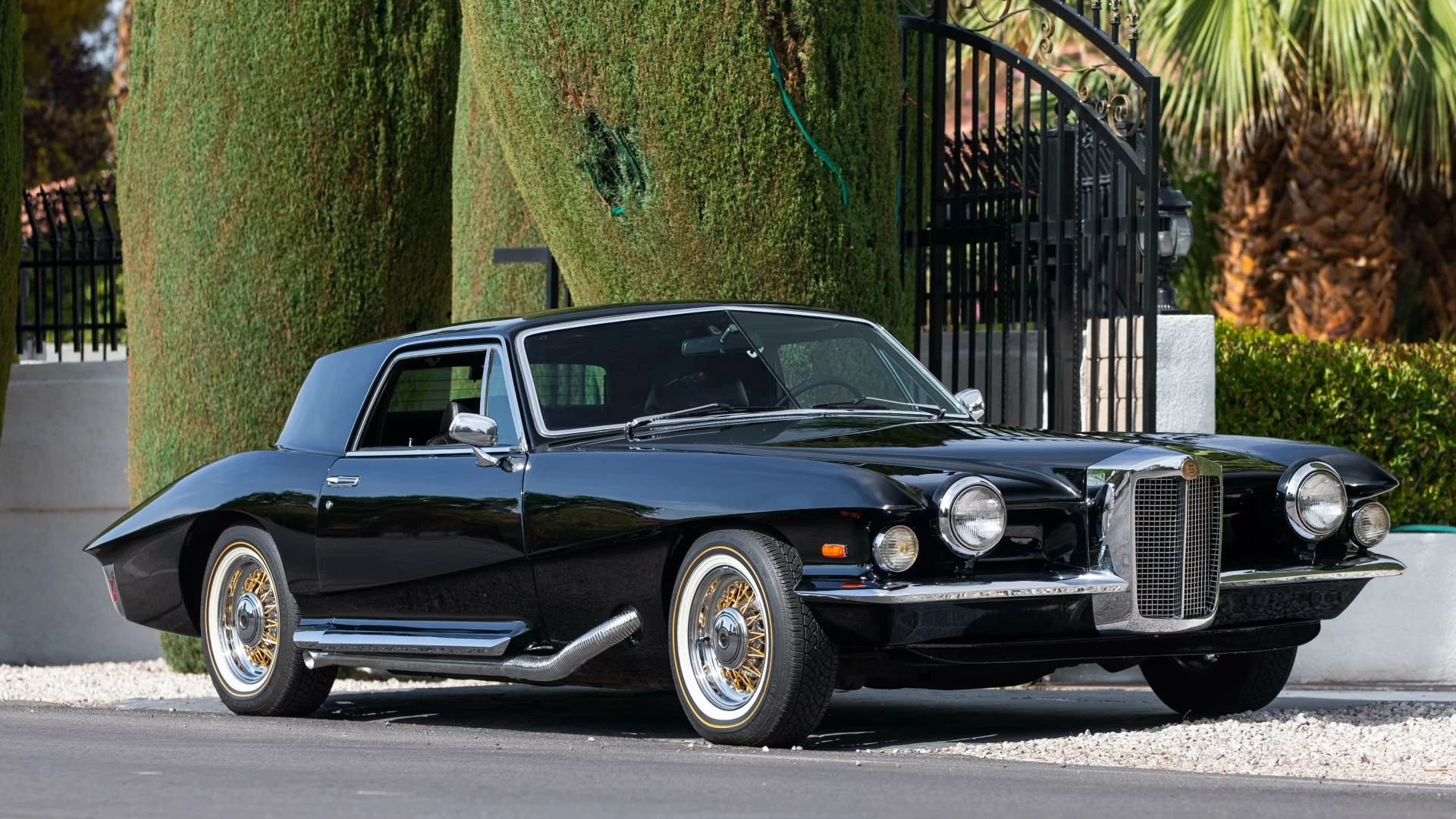
Although Stutz declared that the styling of the Blackhawk would not change “with each whim of fashion,” there were some updates through the early ’70s, typically but not always identified with Roman numerals (Blackhawk II, Blackhawk III, and so on). The most noticeable styling change was the early abandonment of the original Vee windshield, a casualty of the push to retain more pieces of the Pontiac donor car. Production was always slower than O’Donnell anticipated — it took until 1978 for Stutz to finish its 300th car — so the initial price turned out to be too low for profitability. Base prices climbed rapidly, hitting $41,500 by 1974 and $51,400 by early 1976.
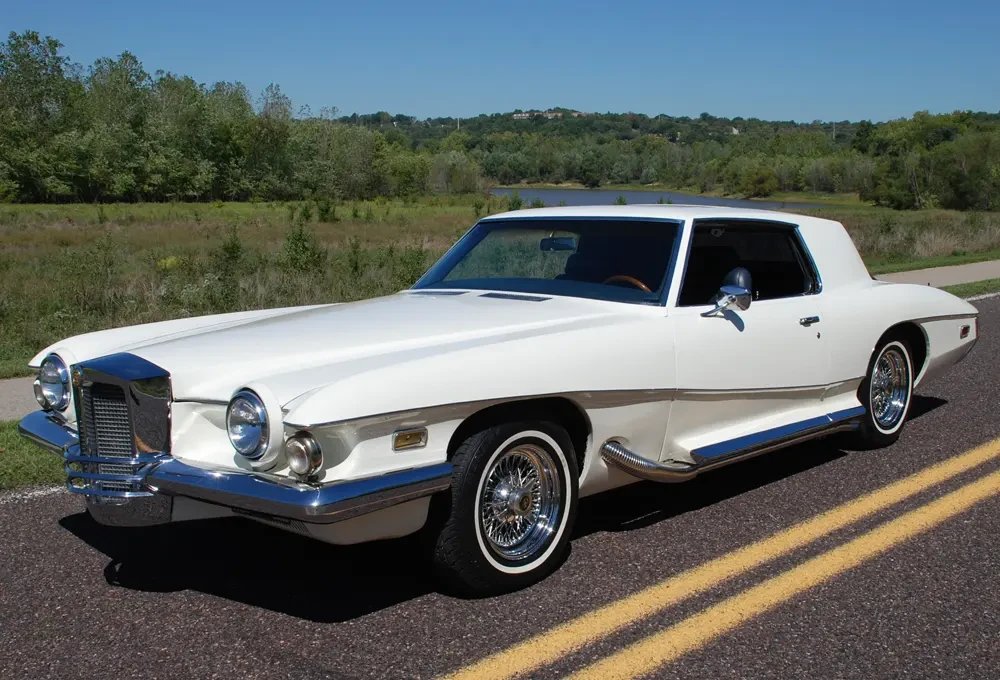
The Blackhawk quickly became a favorite of American celebrities and Middle Eastern royalty, for whom high prices and limited-production exclusivity just added to the appeal. Elvis Presley got the first production Blackhawk (he later bought several more), while others went to stars like Dean Martin, Lucille Ball, Evel Knievel, and Elton John. (Contrary to some accounts, Frank Sinatra did NOT own a Blackhawk, although several of his friends did.)
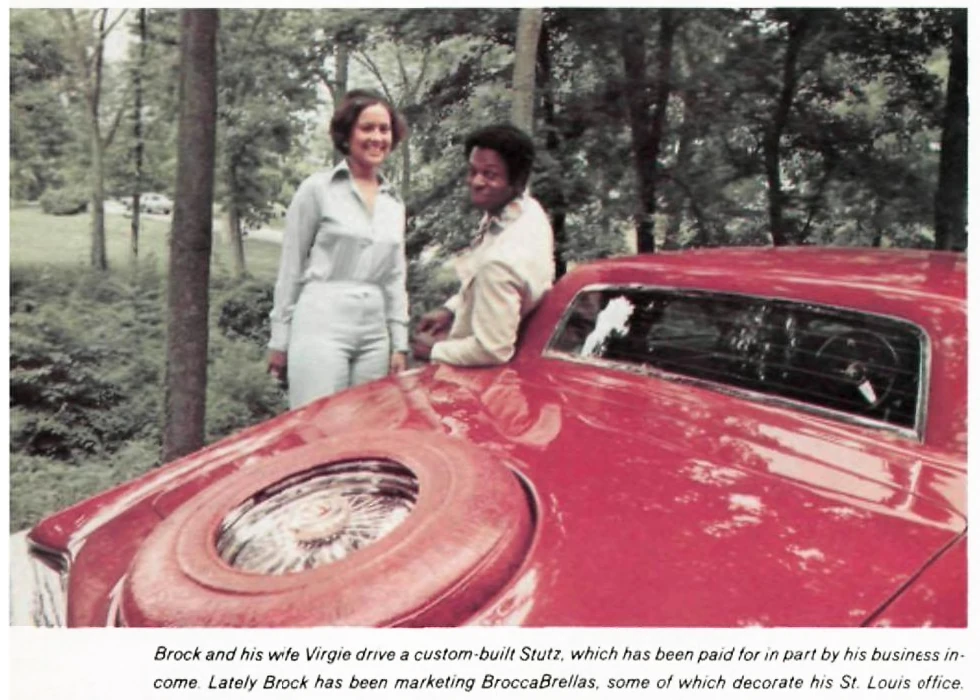
Sammy Davis Jr. had a Blackhawk, as did Muhammad Ali and base-stealing St. Louis Cardinals star Lou Brock, whose red Blackhawk VI (above) had shown up in a 1977 Sports Illustrated profile. (Did Mays read that article? It seems not unlikely.)
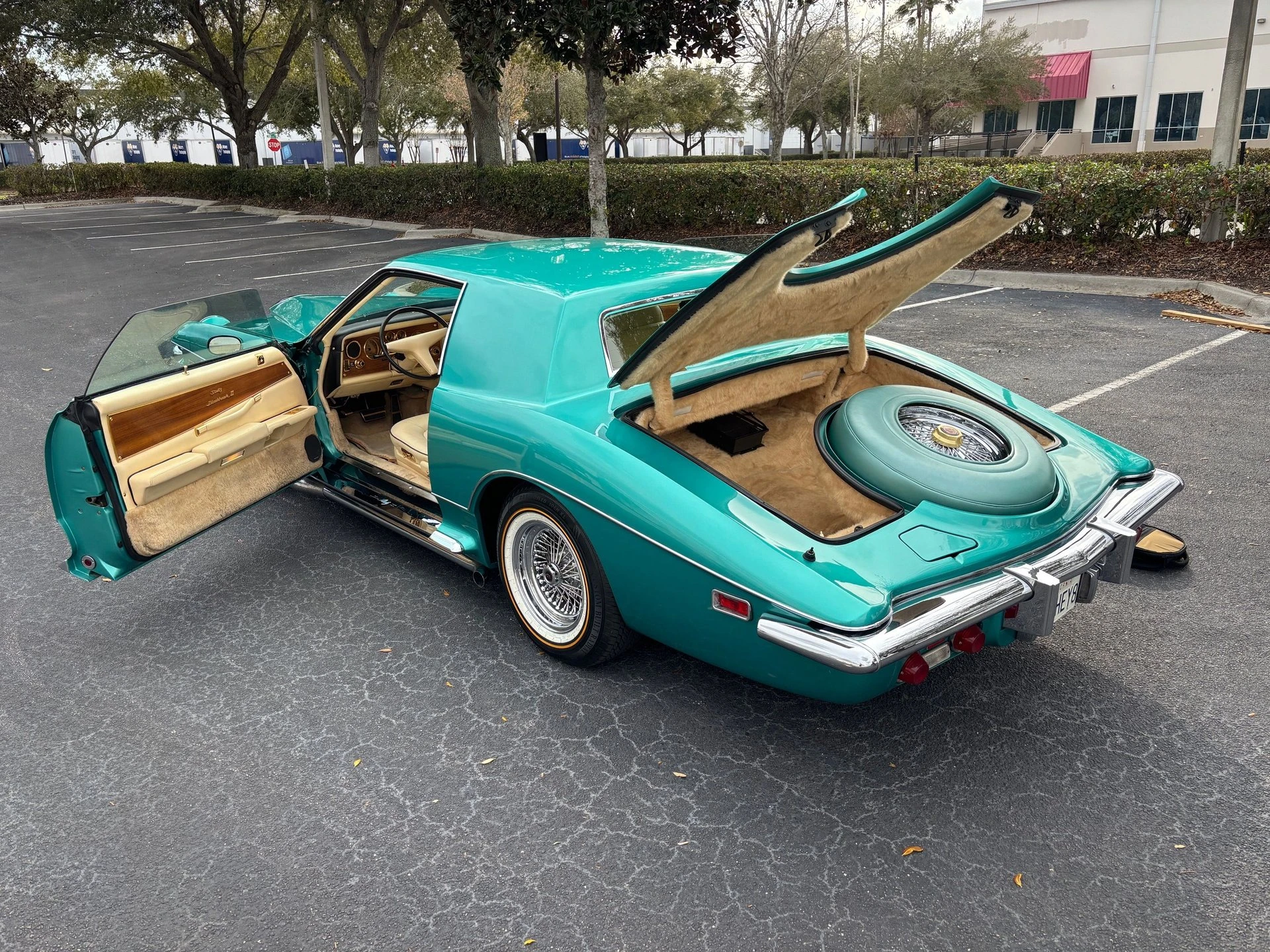
Given the production lead times, Mays must have ordered his car sometime in early 1978, likely putting down a substantial deposit. Stutz had announced in January that it would build only 30 more of the Blackhawk VI coupe because they were running out of chassis — the downsized 1978 Grand Prix was now too small for Blackhawk duty. Base price in 1978 had risen to $64,500 (a relative worth of about $360,000 in 2025 dollars), making the Blackhawk the second most expensive car sold in America, after the Rolls-Royce Camargue. A Stutz buyer could easily boost the price by 50 percent or more by selecting some of the sillier trim options, like chinchilla or mink fur carpeting.
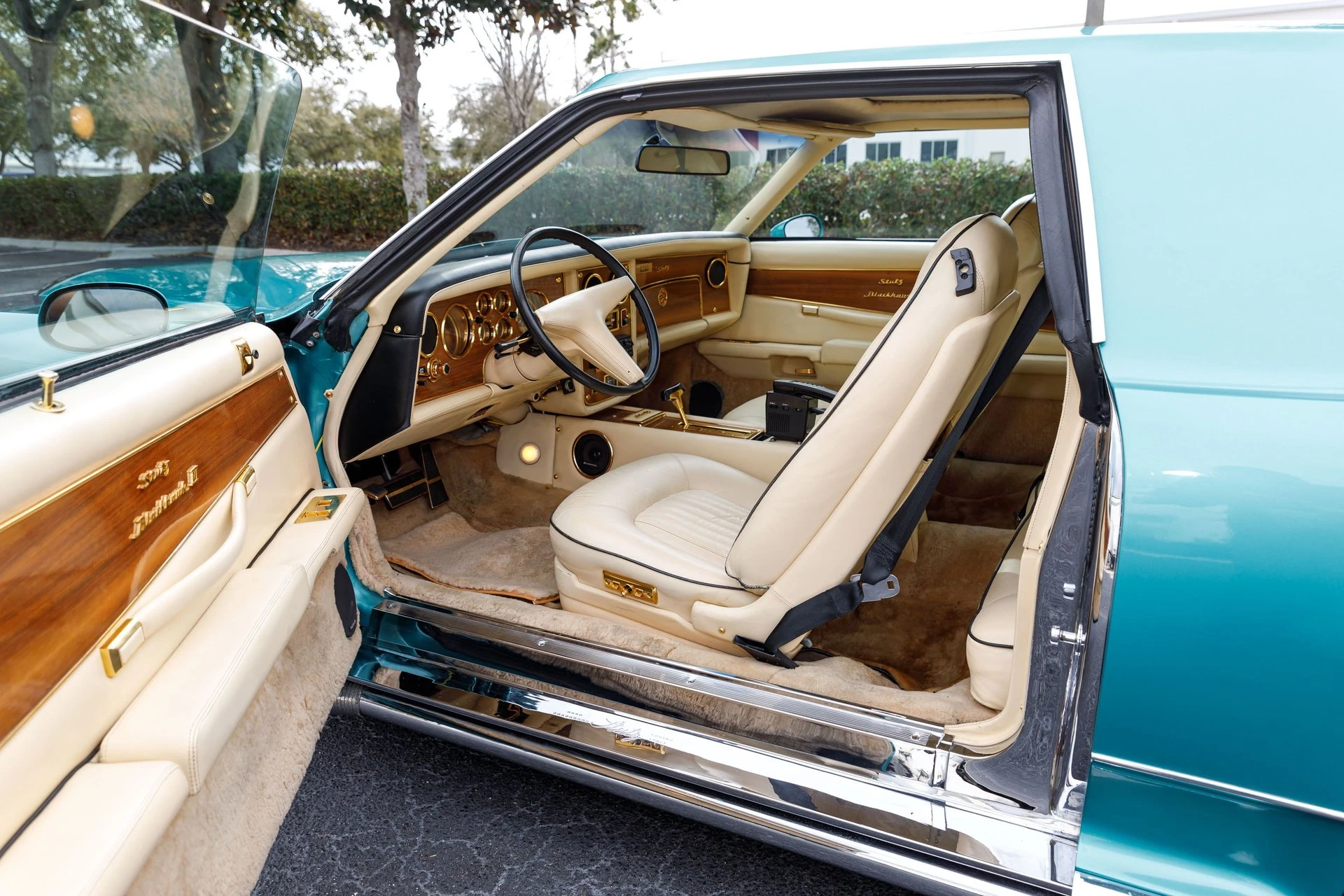
Mays didn’t go for that, although the standard Blackhawk interior was lavish enough, with “bark-tanned” Connolly leather, New Zealand lambs-wool carpet, and real wood paneling.
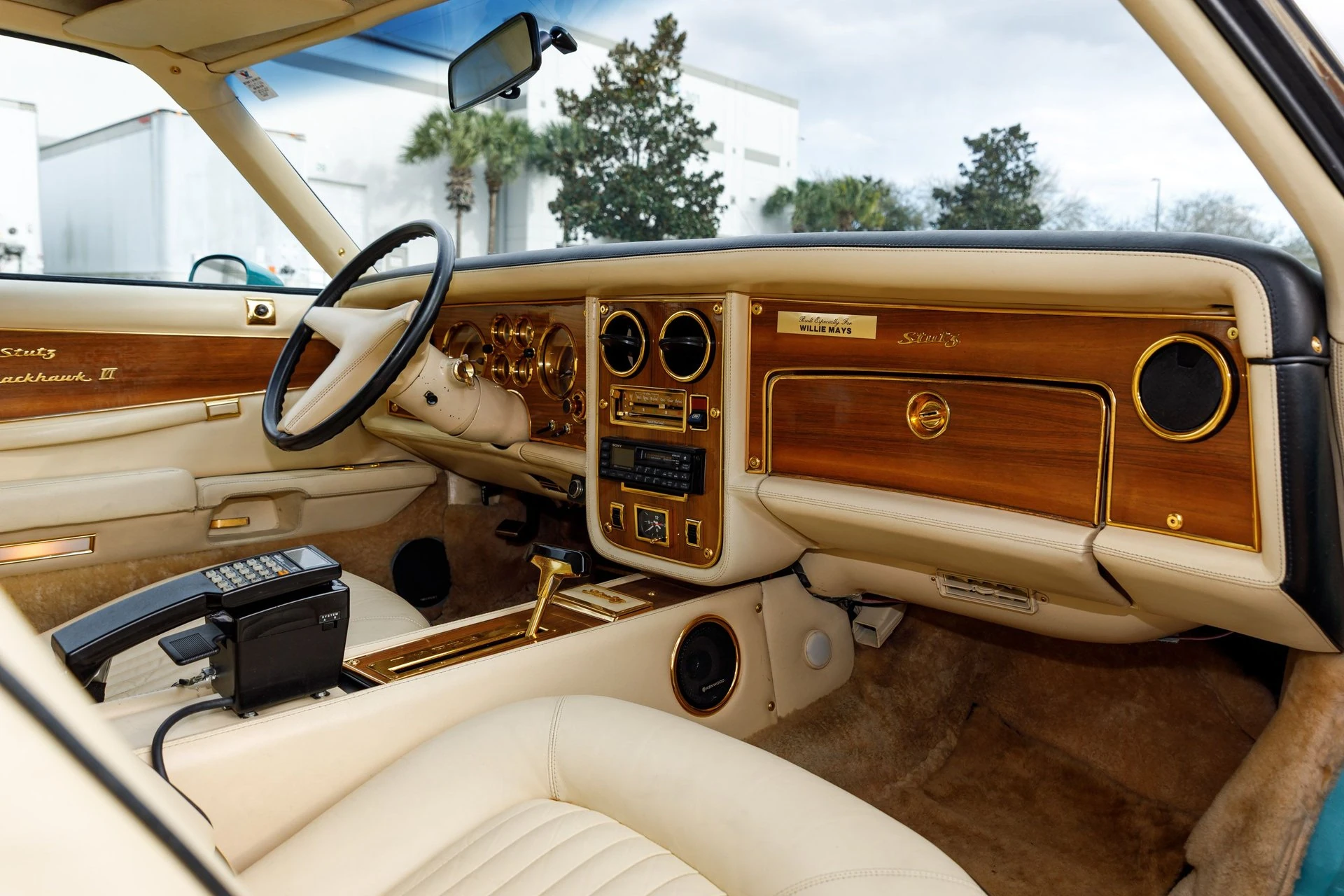
The interior moldings and bezels for controls and instruments were 24-karat gold …
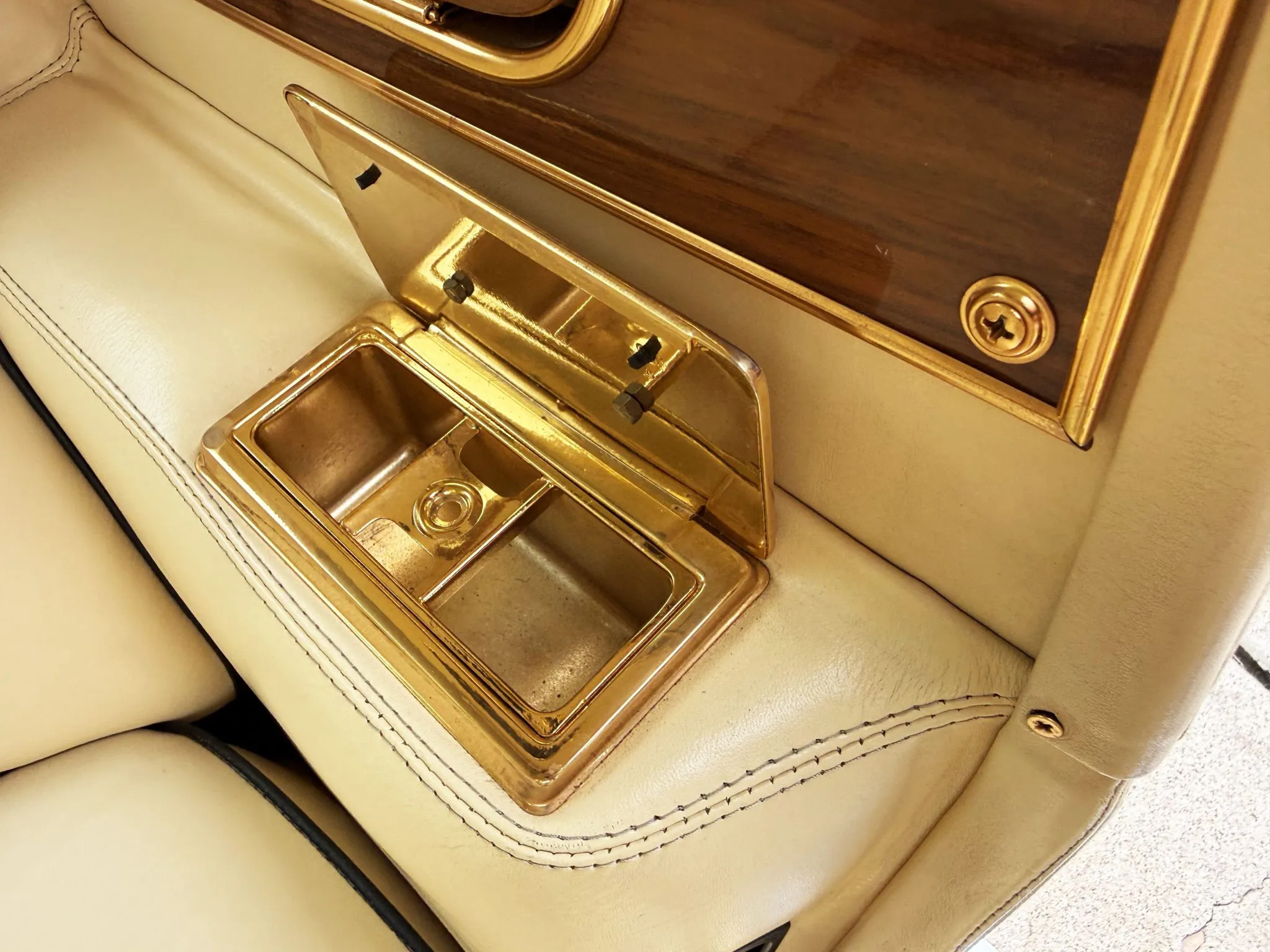
… all the way down to the rear ashtrays.
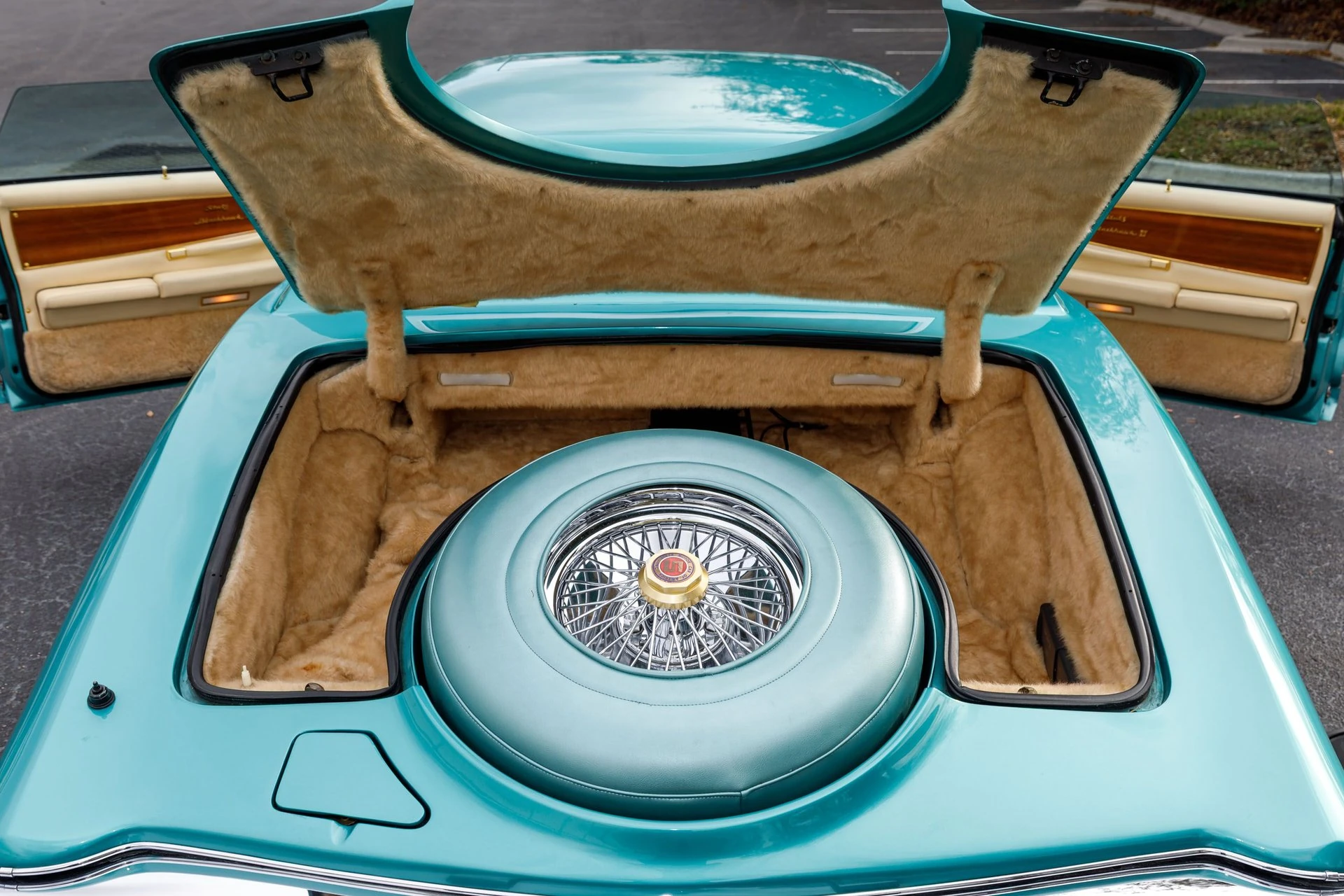
The trunk was even plusher than the cabin, although I honestly find its lush padding a tad nauseating.
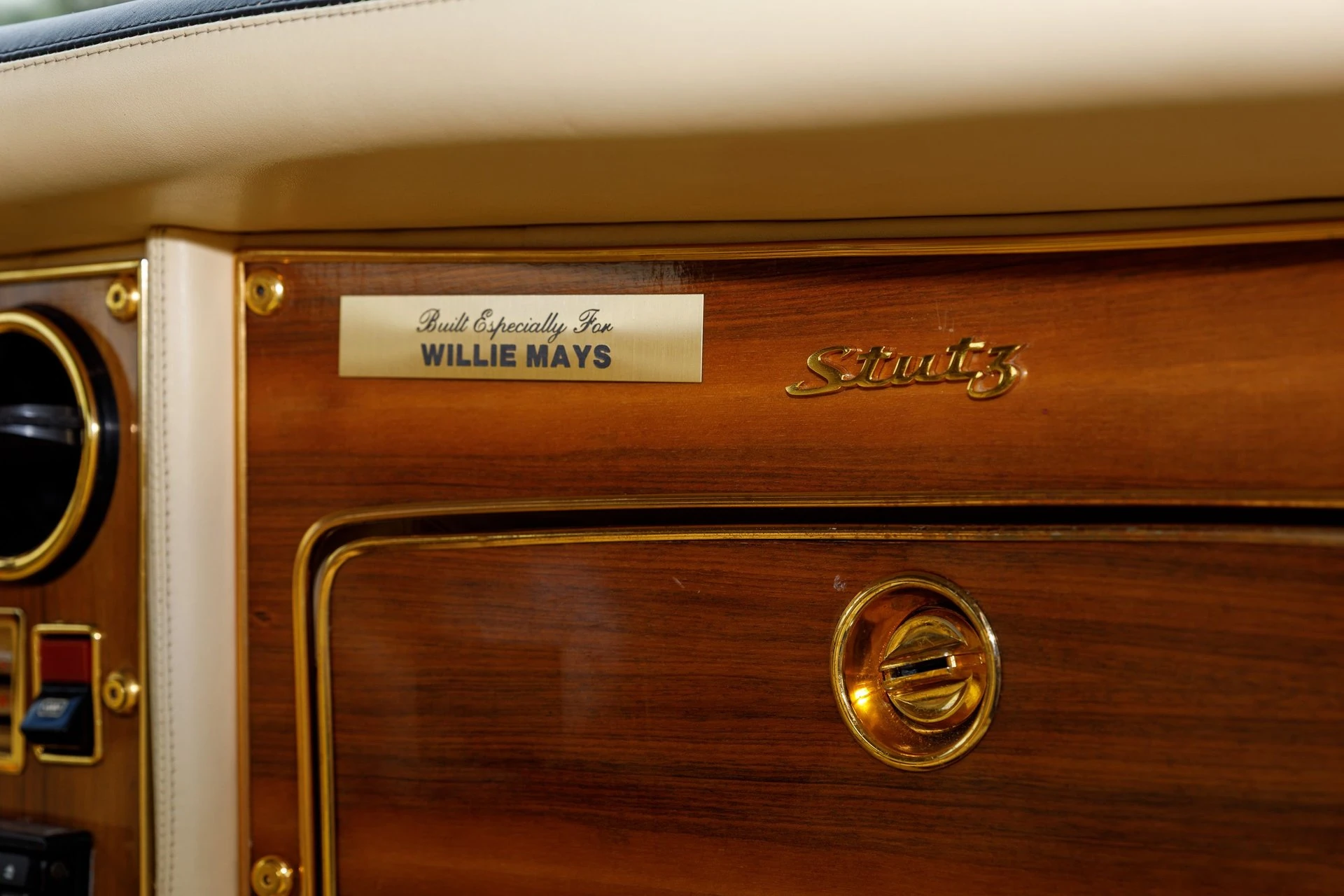
The Mays car has a plate above the glove box reading “Built Especially For WILLIE MAYS.”
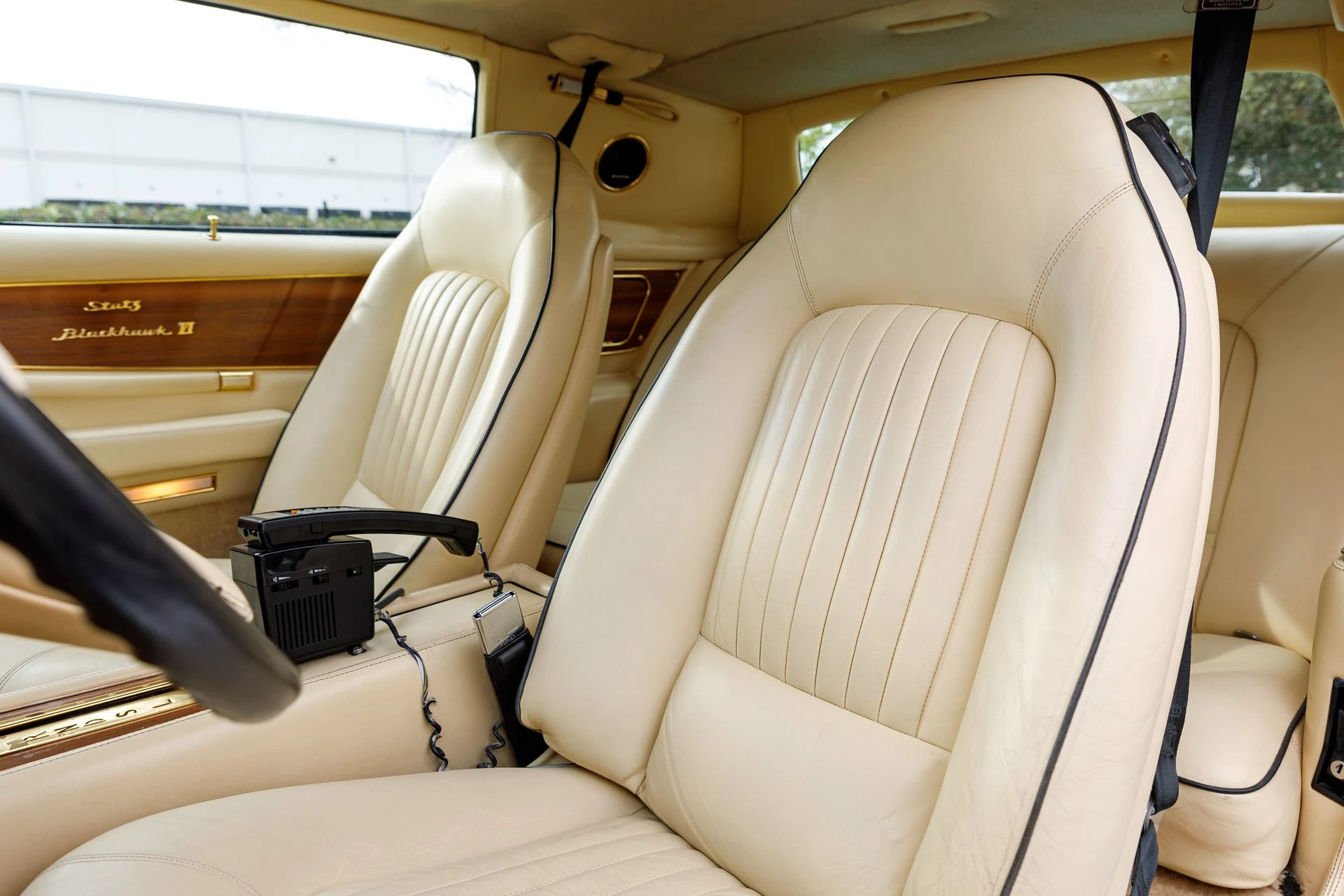
Despite all the expensive finery, if you’ve owned or spent any significant amount of seat time in a 1973–1977 Pontiac Grand Prix with bucket seats, the design of the seats, dashboard, console, and door panels will look awfully familiar, even if the materials were considerably more lavish than anything coming out of GM’s Fisher Body Division.
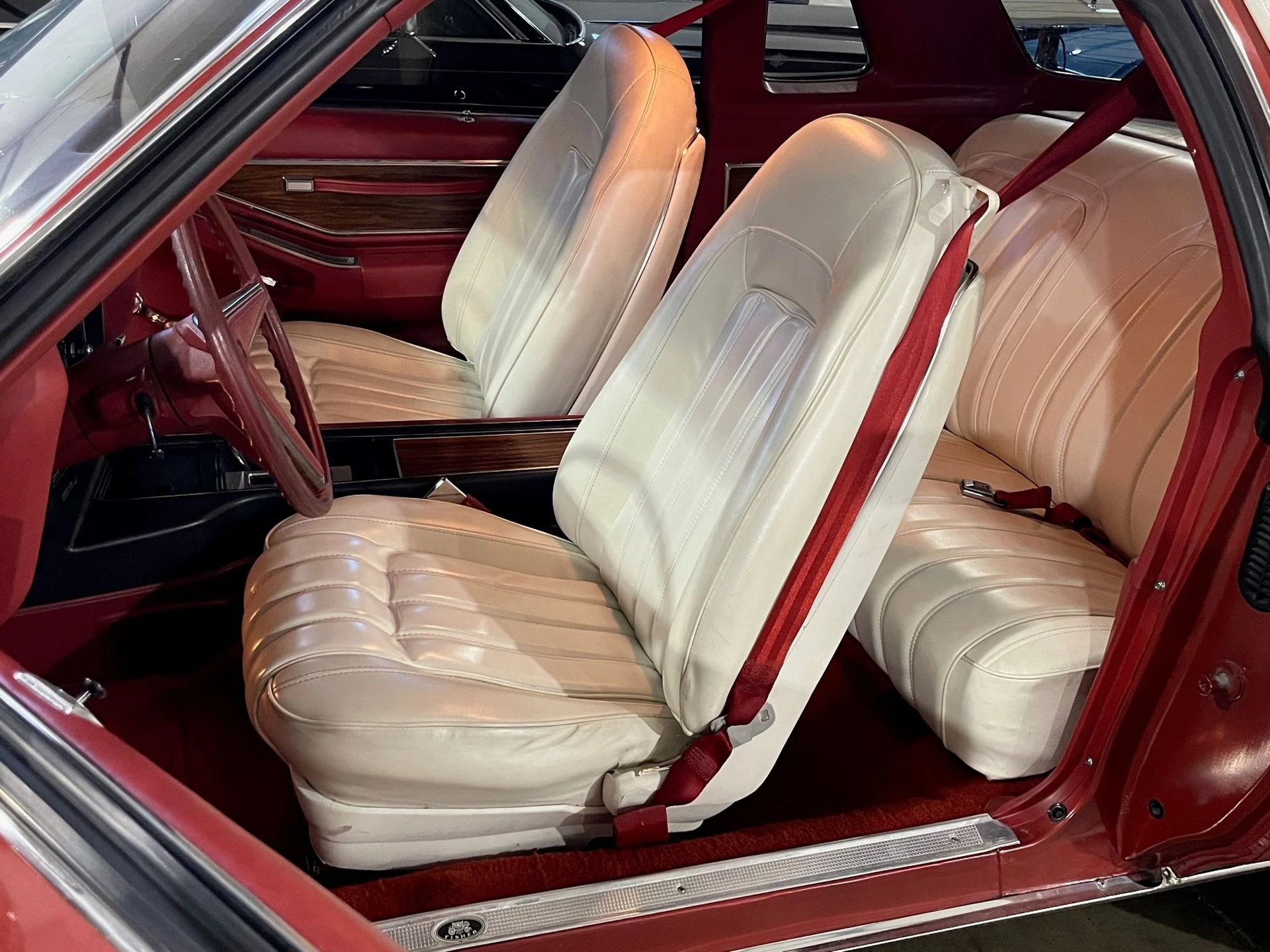
Granted, the Grand Prix interior did have a certain neoclassical flair to start with, especially when equipped with the Rally instrument package (which provided the gauges Stutz re-faced in brass with Italian and English labels). The 1977 Grand Prix LJ and SJ had even been available with real leather upholstery, albeit not fancy Connolly leather.

For that matter, the 1977 Grand Prix had been plenty flamboyant on the outside as well. However, the GP was common, a popular mass-market car — Pontiac built 288,430 of them for 1977 — and at least half the point of driving a car like the Stutz Blackhawk was that you didn’t have to worry about seeing another one every time you stepped out for a hot dog.
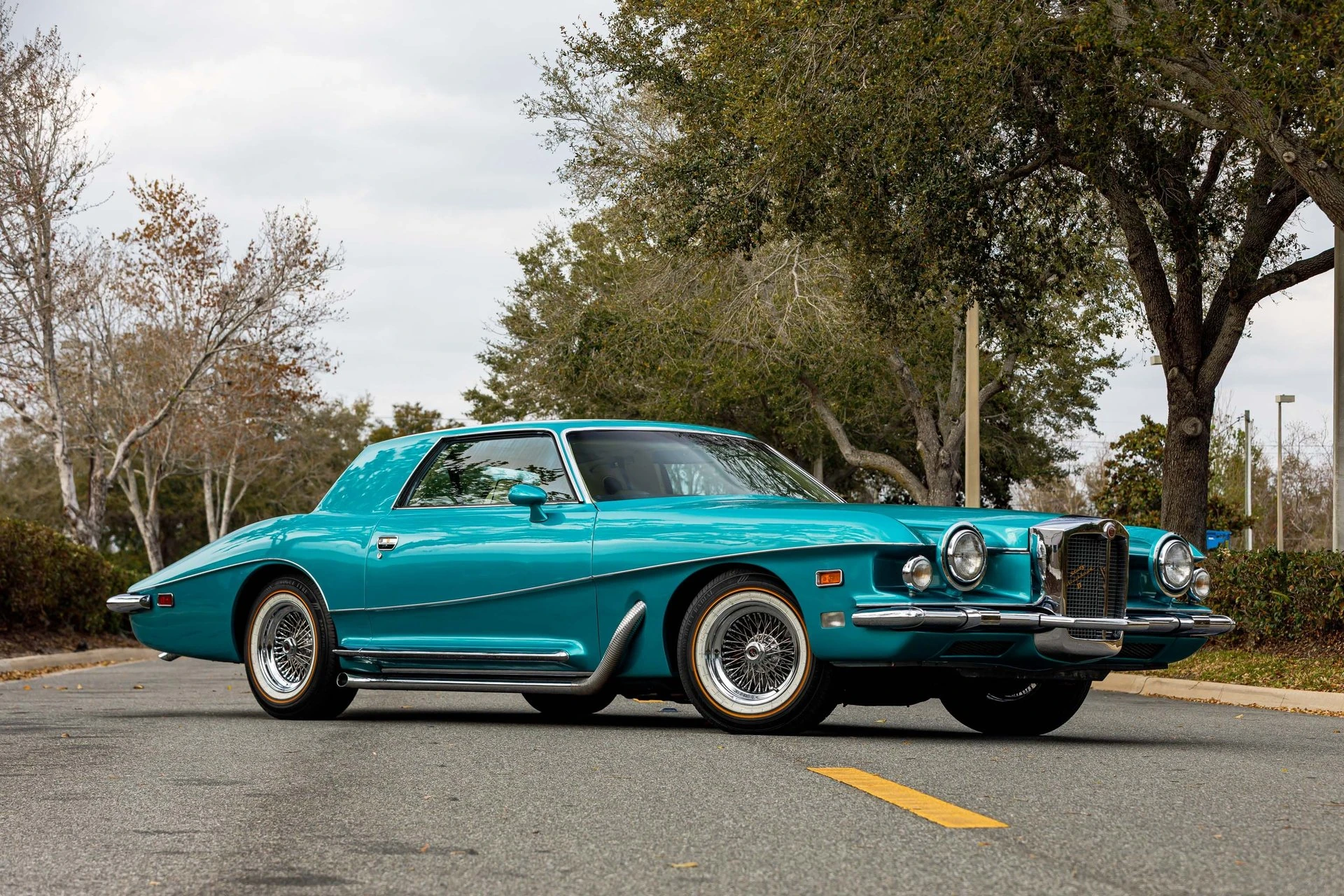
Anyway, the Blackhawk was really what personal luxury cars like the mid-’70s Grand Prix and Chevrolet Monte Carlo were trying to be, or at least evoke, so the relationship between them wasn’t altogether inappropriate.
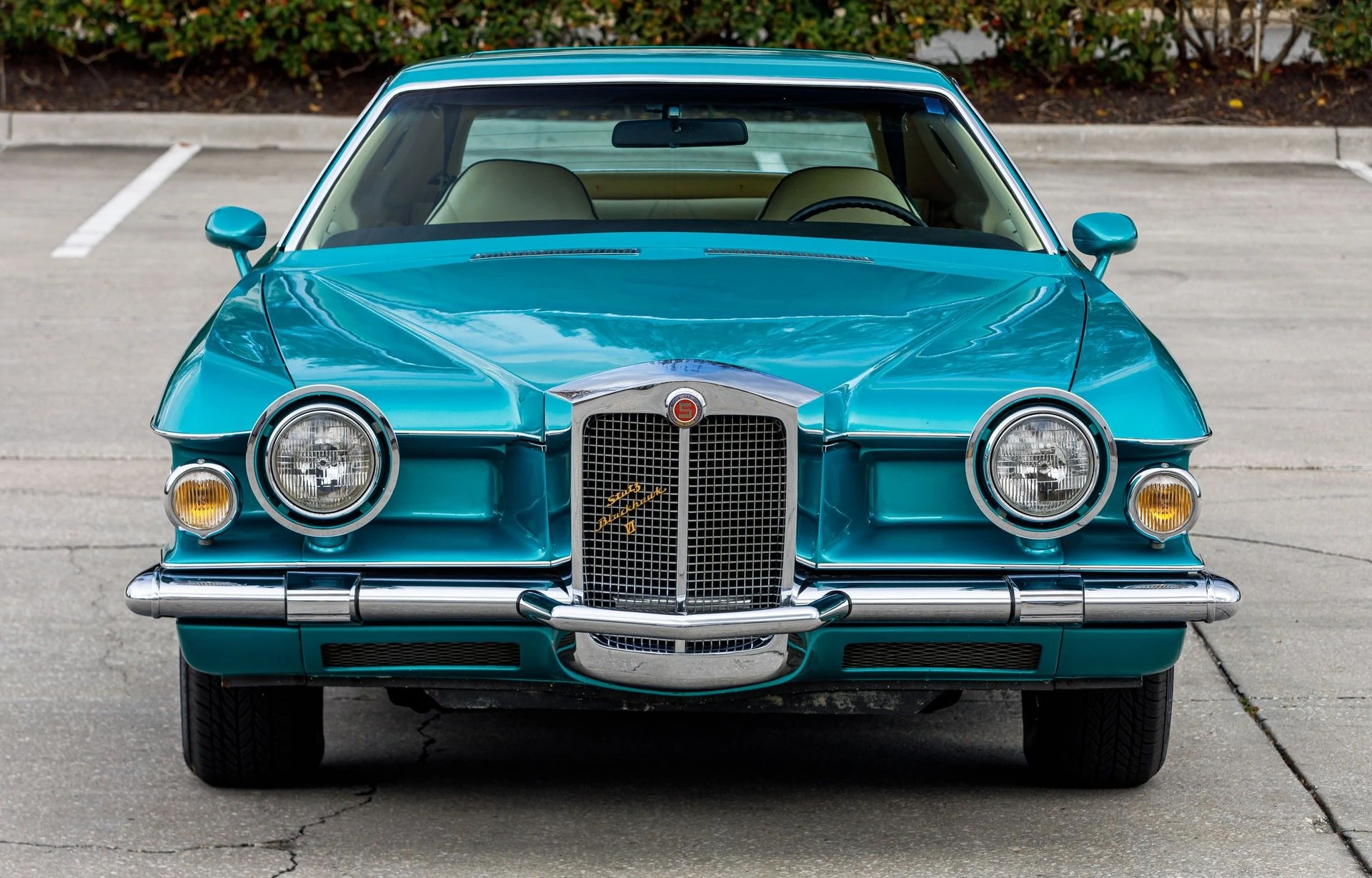
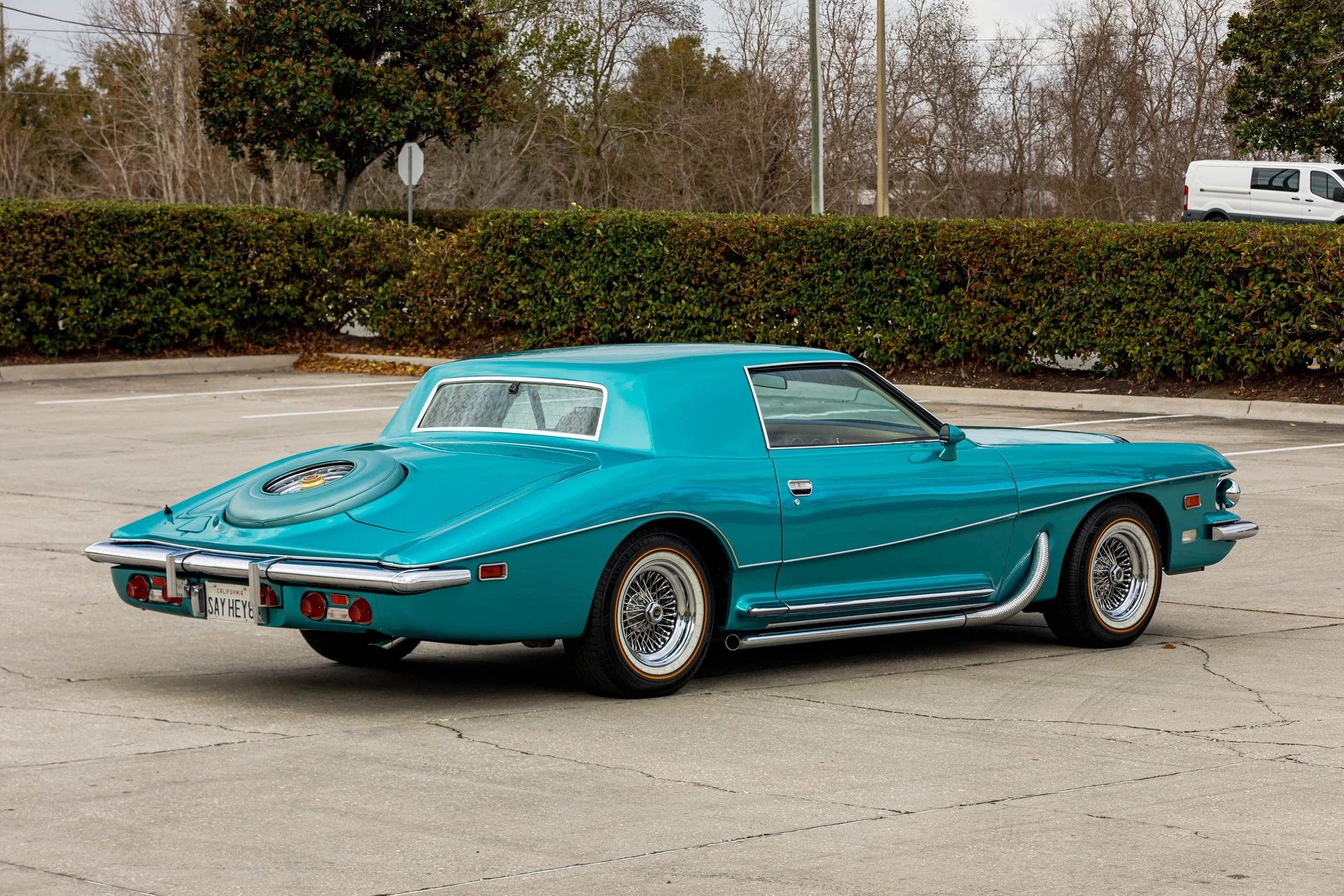
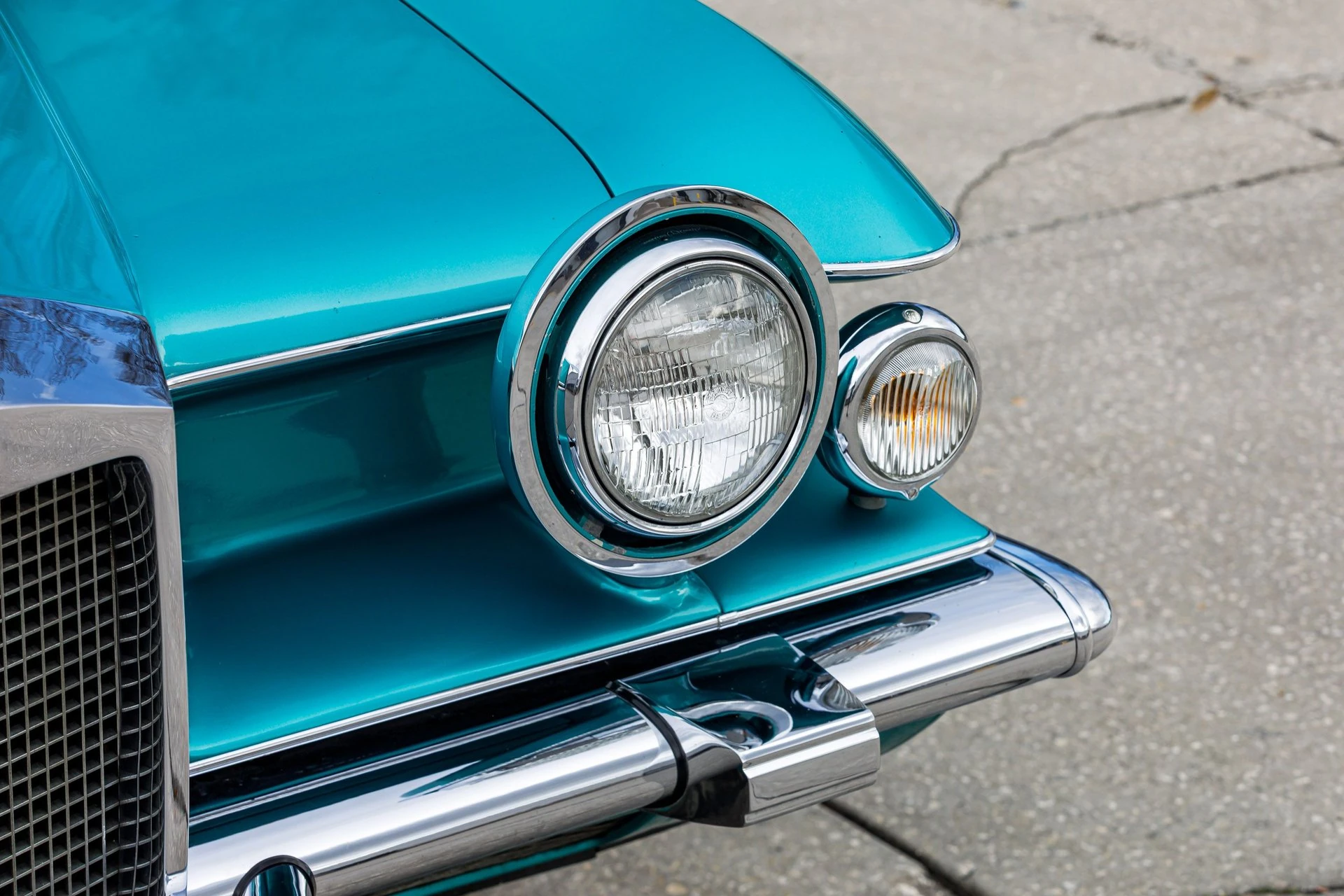
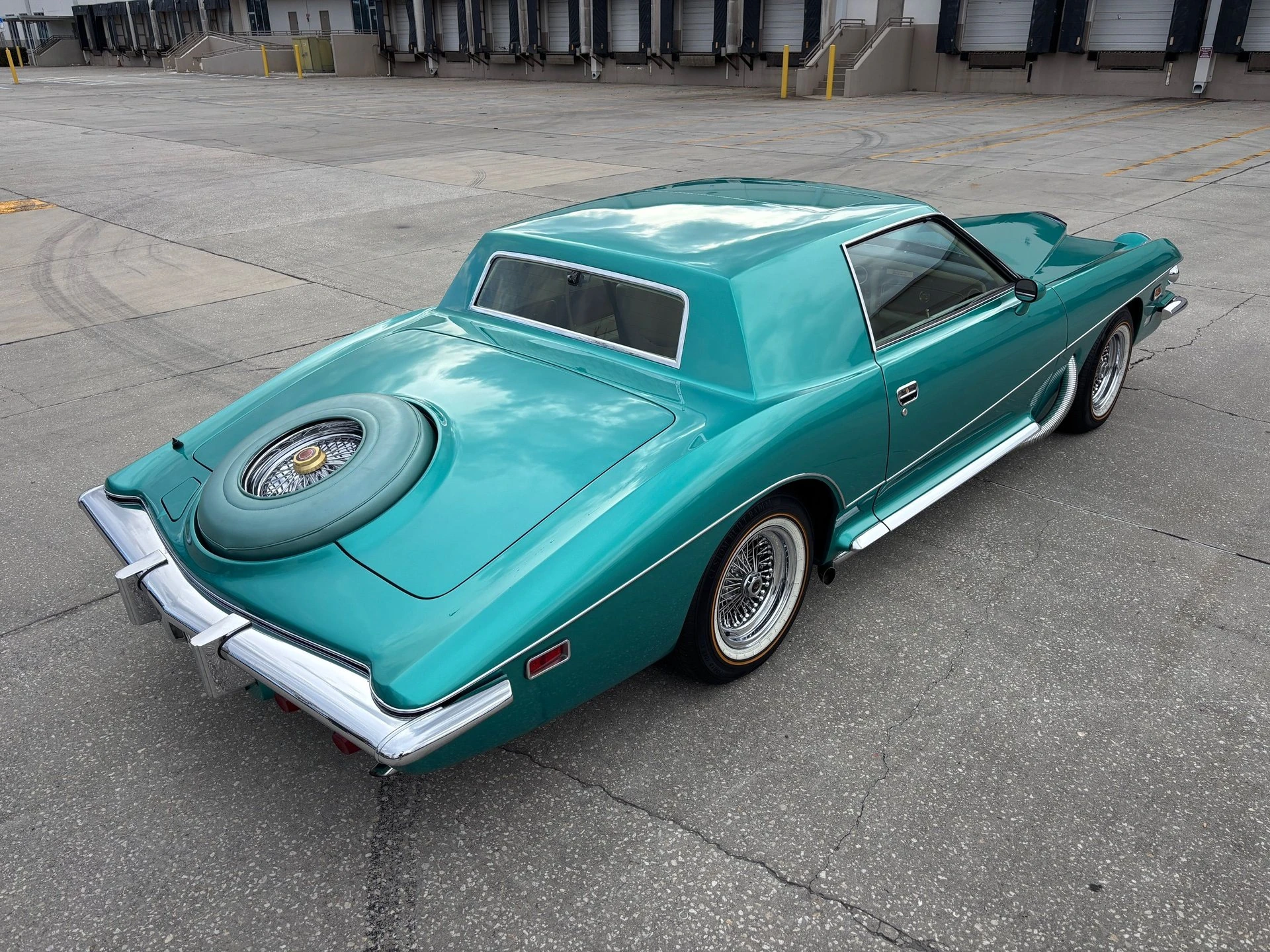
Whether you think the Stutz body elevates the form or drags it down is a matter of taste. Like a lot of later Exner designs, I personally find it needlessly fussy, and I see excrescences like the free-standing headlights and toilet-seat spare tire mounting as rather distasteful, but I’m definitely NOT the target audience for this sort of thing.
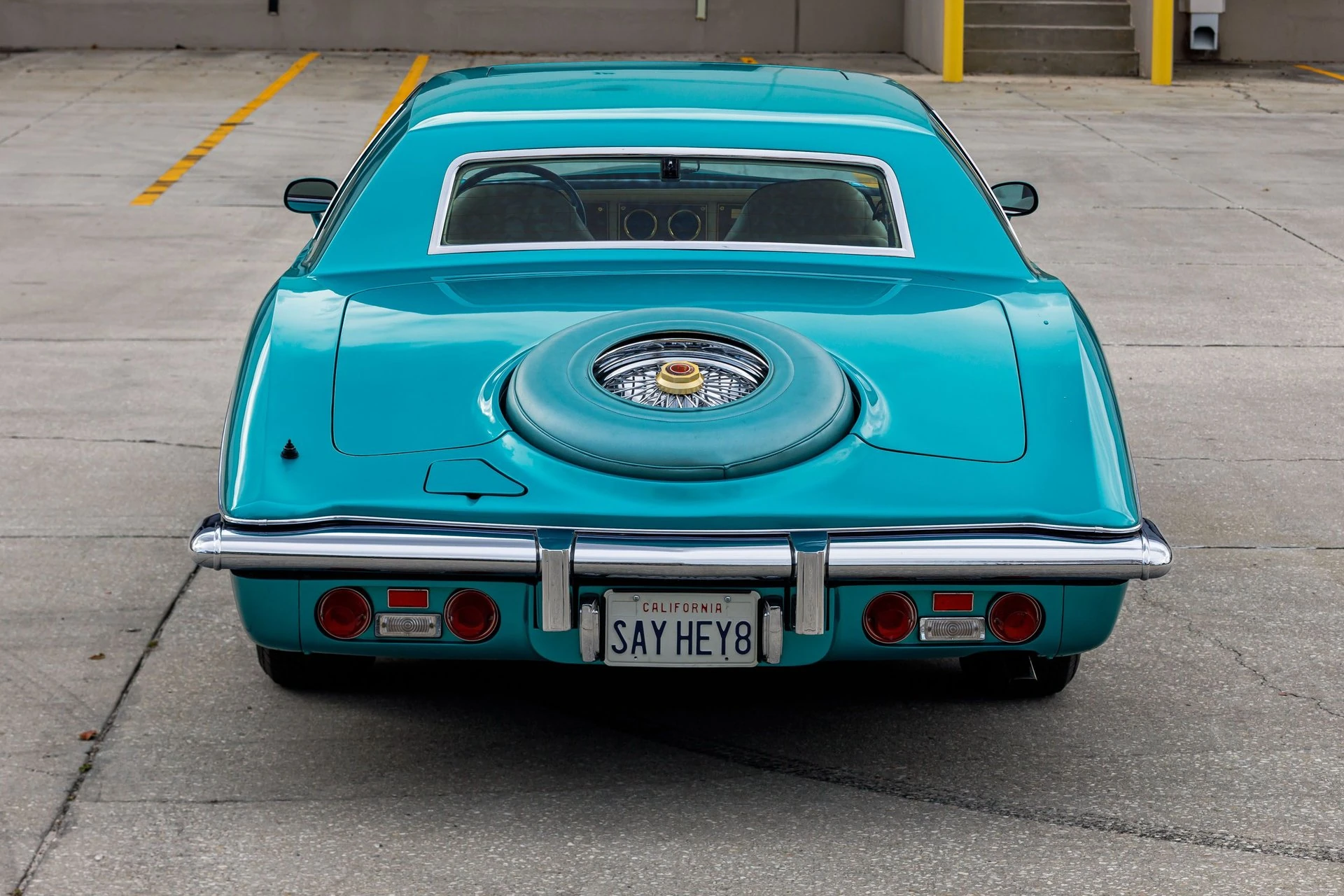
If nothing else, this Blackhawk was novel among ’70s personal luxury coupes for its lack of a padded vinyl top (although I’m sure Stutz would have been happy to install one upon request). This is also an interesting color — one auction house called it turquoise, another described it as “medium aqua,” and Orlando Classic Cars called it “teal,” while the original New York title listed it as “green.”
Although they sometimes acquire their own niche following, limited-production cars like this tend to fall between the cracks of the usual automotive press and enthusiast crowds. Stutz was too small for the industry trades to pay it much mind (the 1970 debut of the Blackhawk rated one tiny picture and about two sentences in Automotive News), while the consumer reviewers mostly just averted their eyes. Small companies like Stutz couldn’t afford a press fleet to supply the enthusiast publications with test cars, so there generally weren’t any real road tests other than the occasional bemused driving impression.
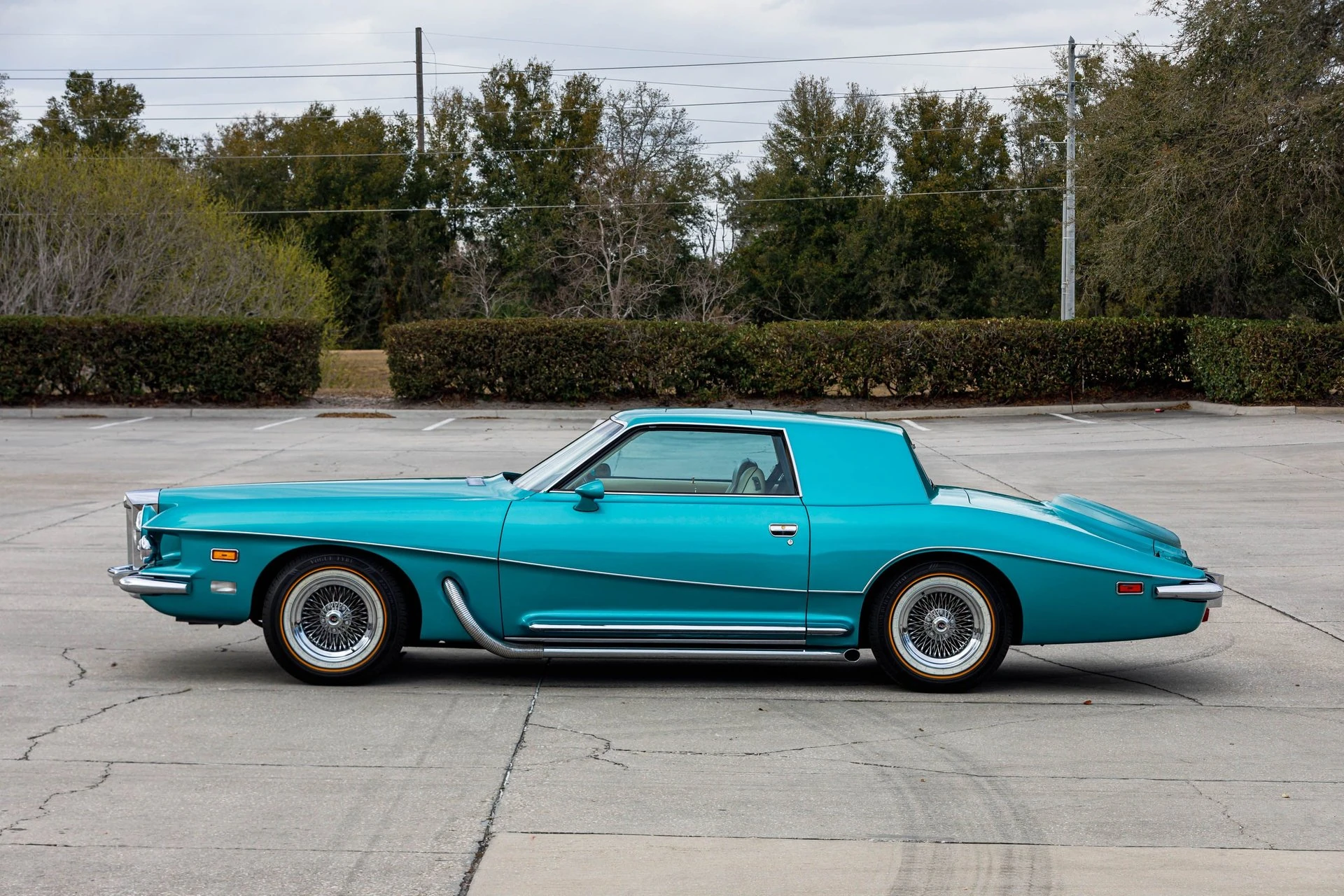
Even detailed specifications are scarce outside of rare factory literature. Through 1979, the Blackhawk shared the 116-inch wheelbase of the outgoing Grand Prix. World Cars 1978 lists the overall length of the Blackhawk coupe as 227 inches, although a somewhat earlier (undated) Blackhawk VI owner’s manual listed a more-plausible 217.5 inches, which would make the Stutz 4.8 inches longer than the Grand Prix whose chassis it rode. With its new steel body, extensive equipment, and fancy trim, the Blackhawk was heavier than a Grand Prix SJ, probably by something on the order of 400 to 500 lb. (More precise comparisons are hampered by ambiguity about whether quoted weights are shipping weights or curb weights.)
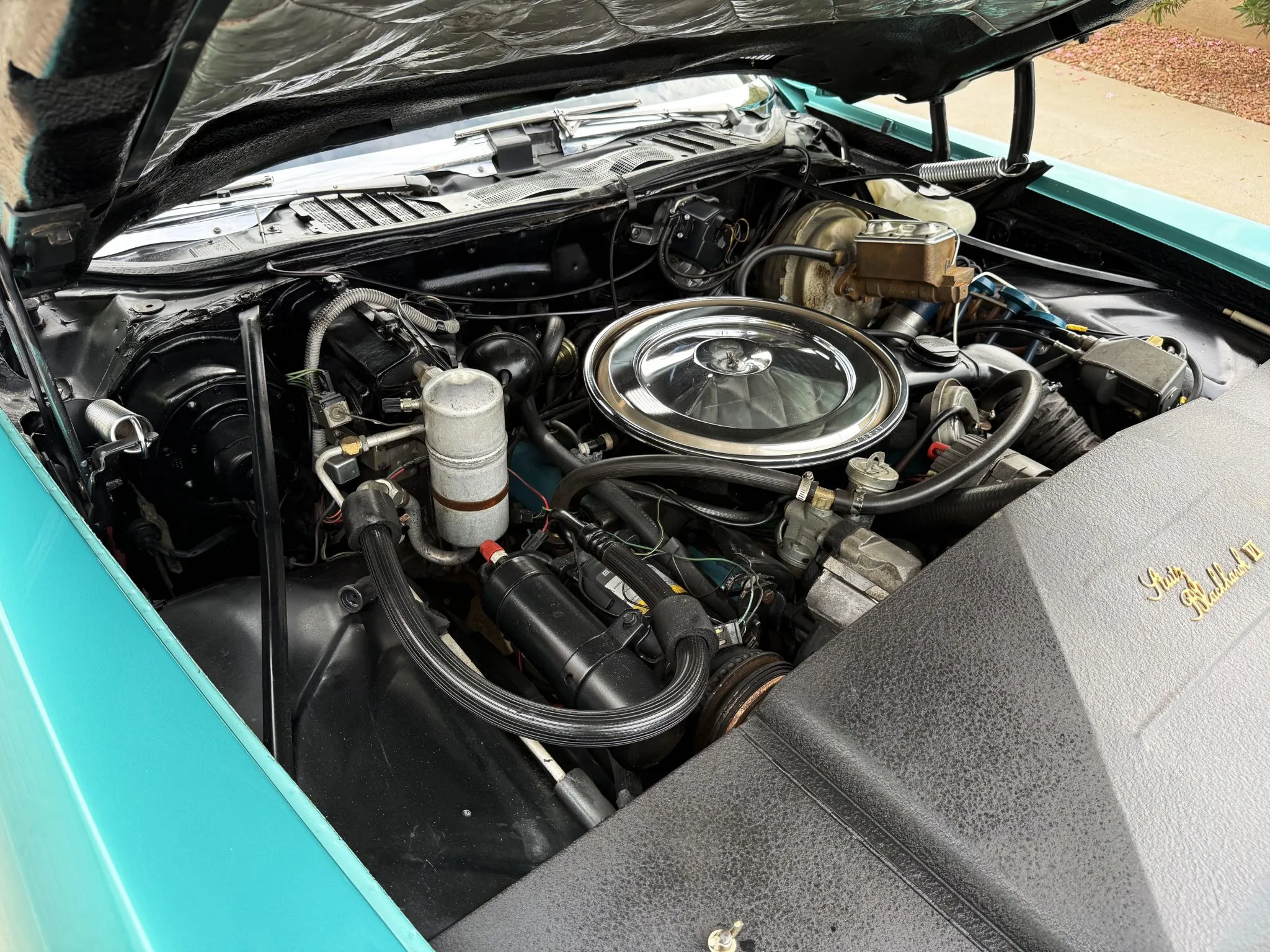
Early Blackhawks used a “blueprinted” Pontiac 400 cid V-8 with a claimed 425 gross horsepower, and most mid-’70s examples used the Pontiac 455, in a milder and more emissions-compliant state of tune. The Mays car has the Oldsmobile 403, which had been the top Grand Prix engine option in 1977, with 185 net horsepower. It has a single exhaust system with a catalytic converter.
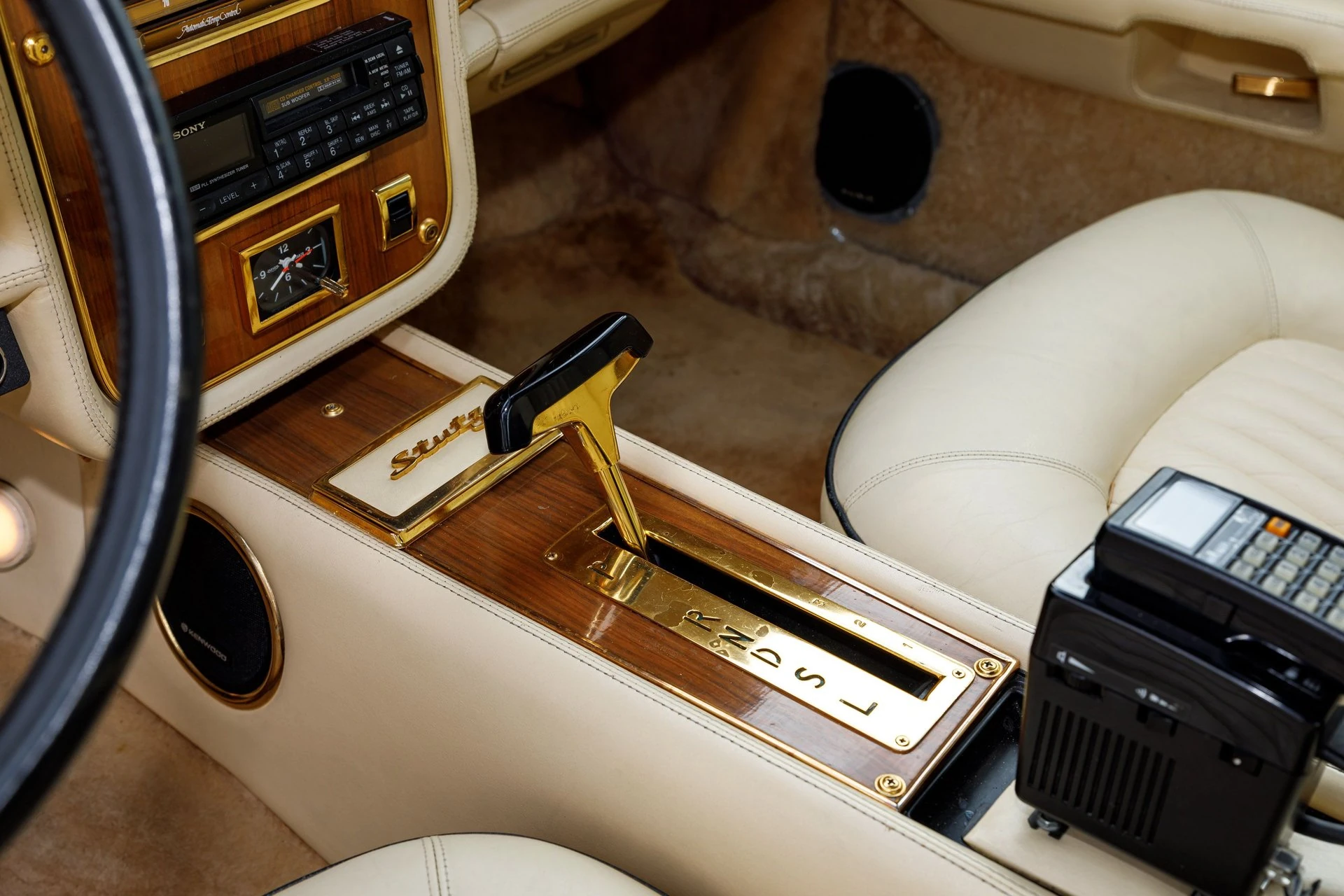
Turbo Hydra-Matic was mandatory.
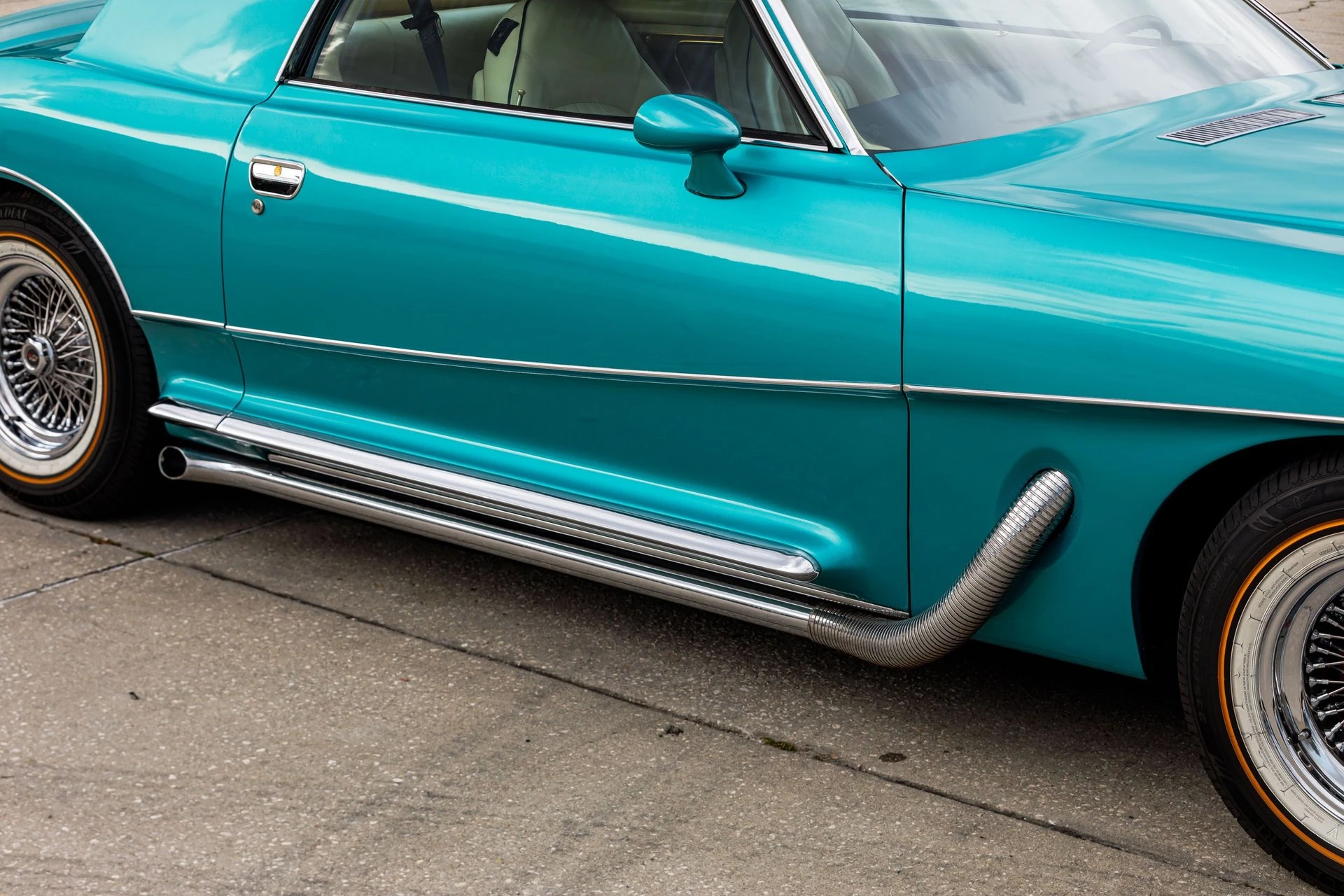
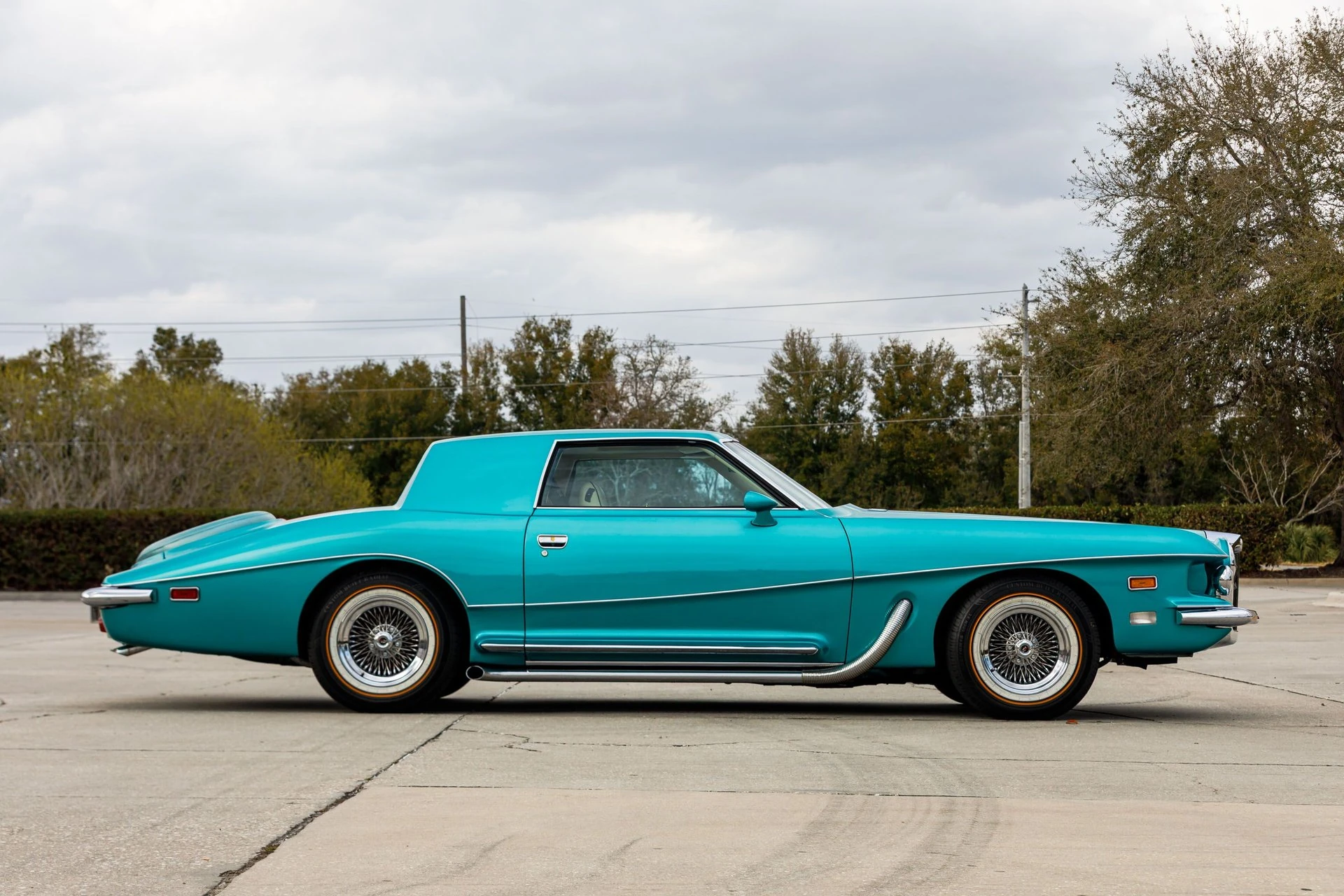
If you’re wondering, the side pipes were strictly cosmetic, just like the “running boards.”
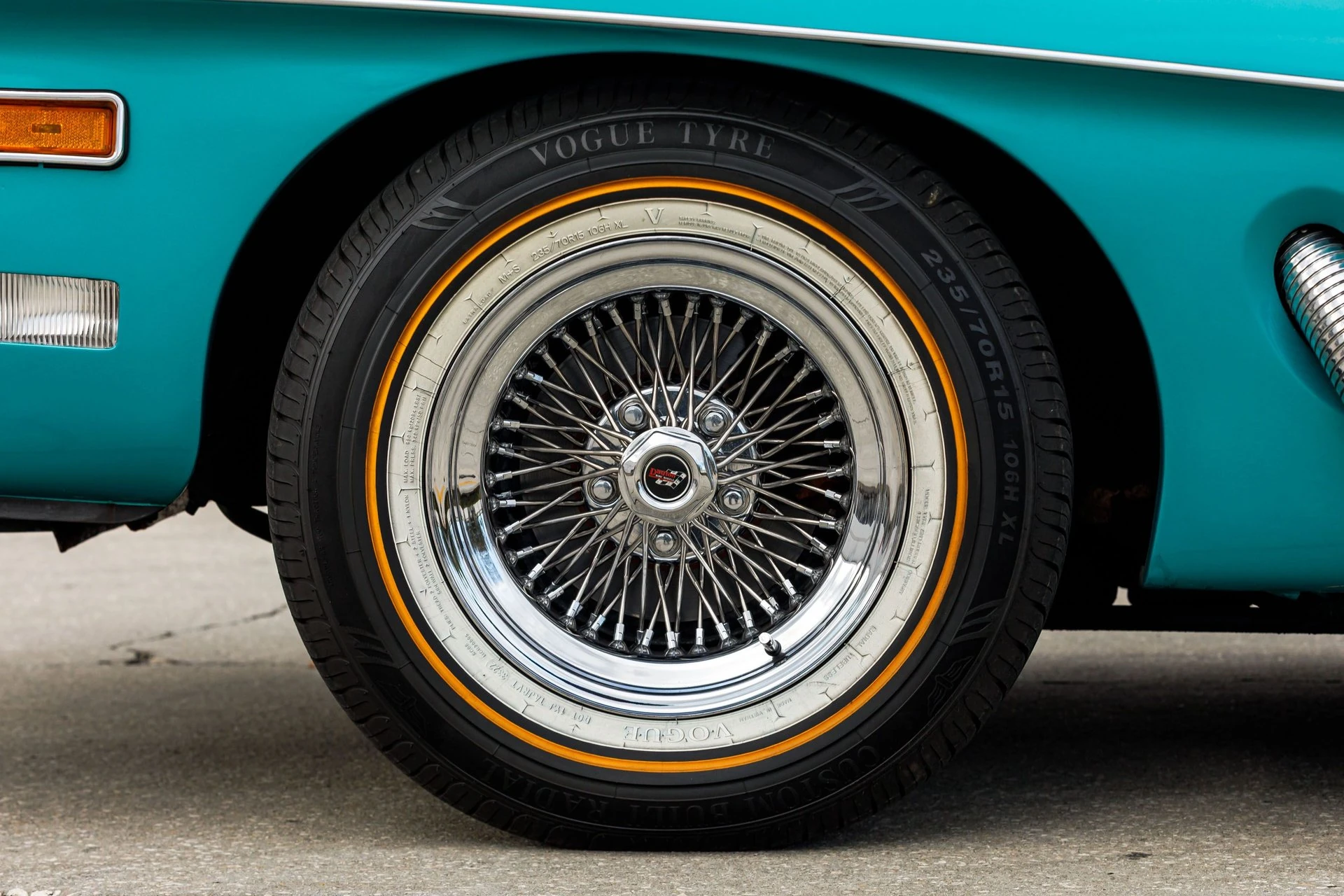
The Mays car wears white- and gold-stripe Vogue tires, which look to be a little the worse for wear, on 16-inch wire wheels.
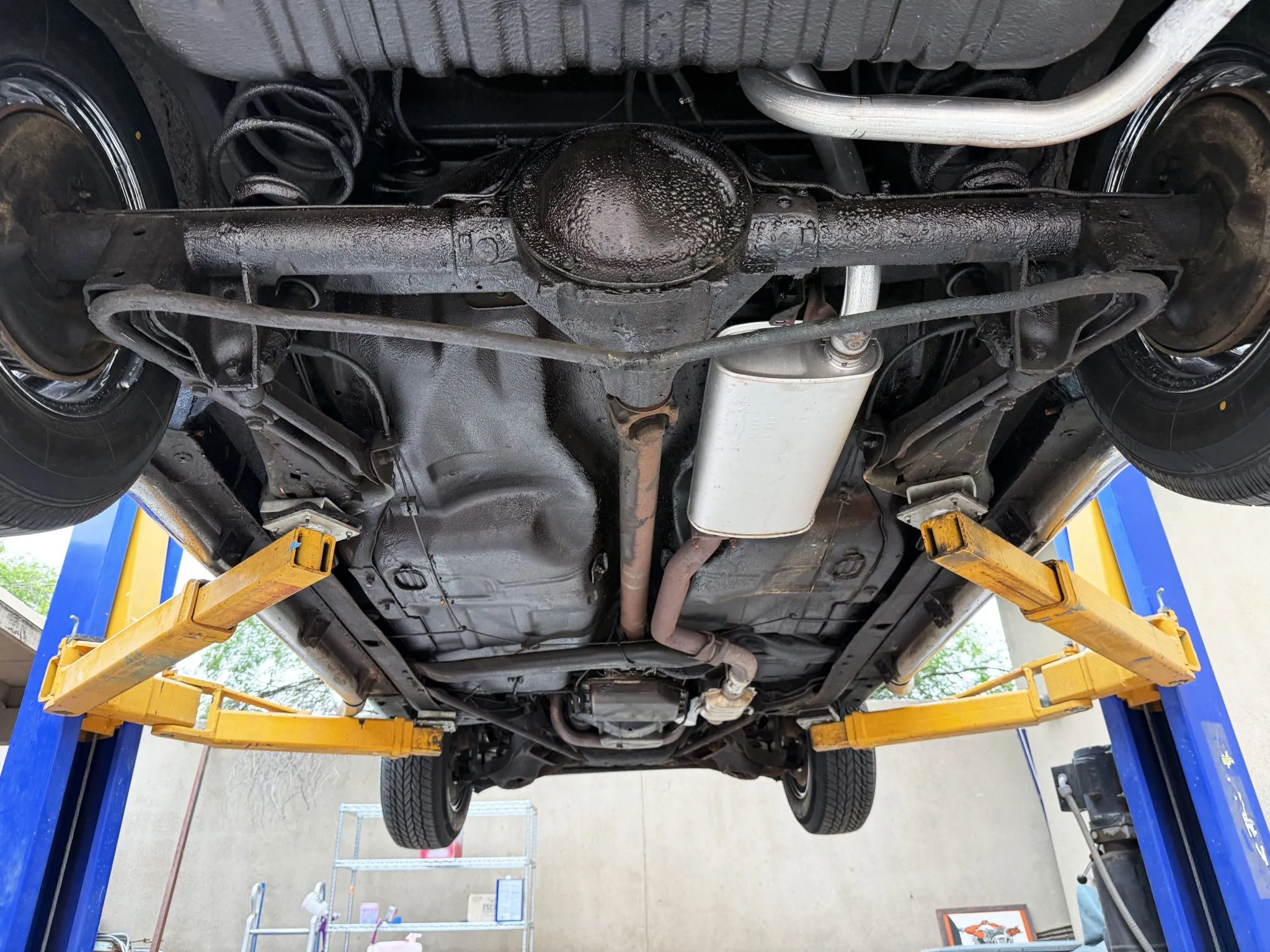
I think the suspension and brakes are standard Grand Prix SJ, with front discs and rear drums; there is a rear anti-roll bar, although like the Grand Prix, the Blackhawk was more freeway cruiser than canyon-carving sporty car.
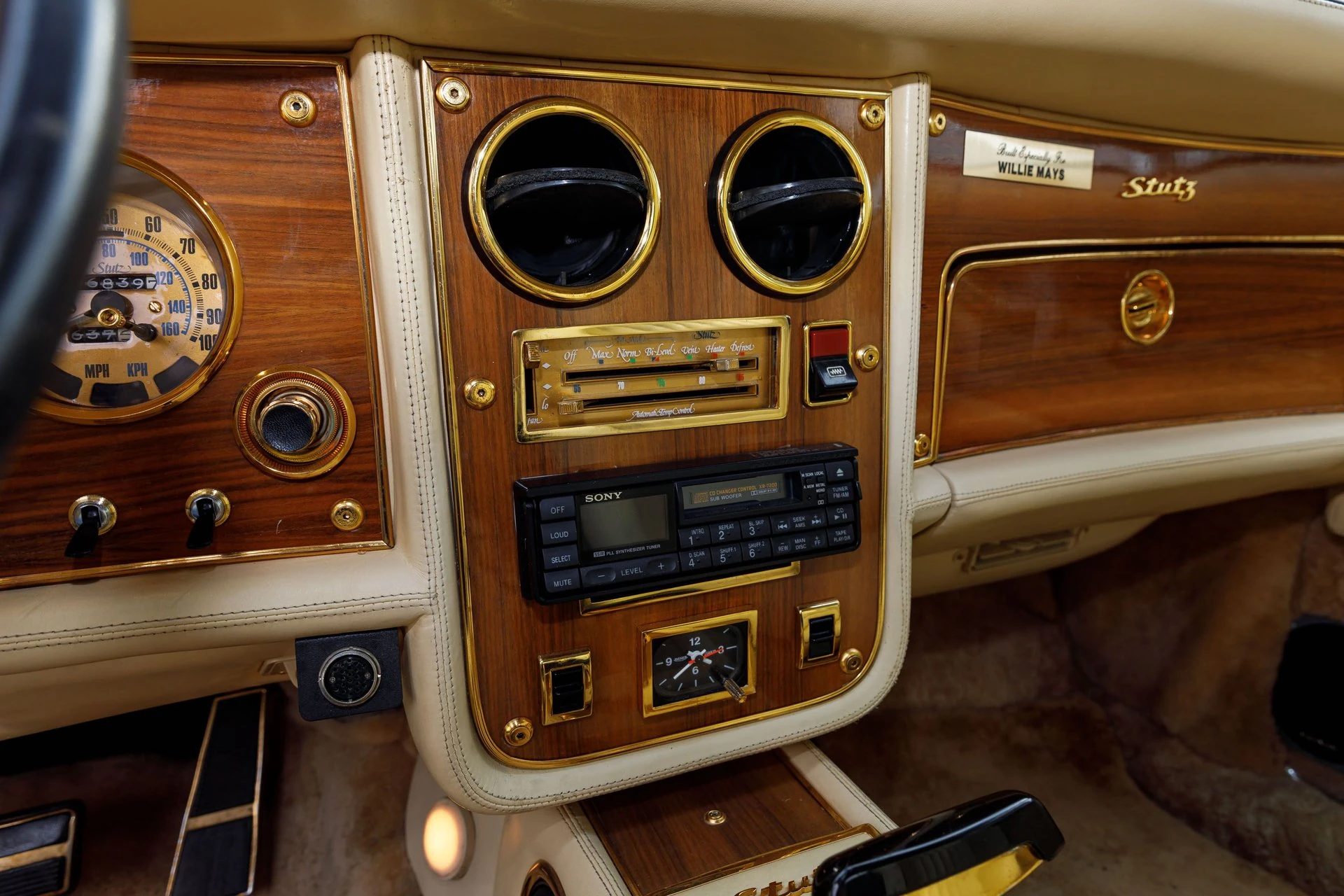
With cars like this, the well-heeled audience tends to get bored quickly and moves on to newer gaudy fancies. However, Mays apparently liked this car, and he held onto it until the end of his life, even after he moved to California and could no longer drive due to glaucoma. He never drove it very much — the odometer shows around 16,800 miles, probably its first time around — but the car sports a Sony cassette deck/CD changer that’s clearly of later vintage than the car itself.
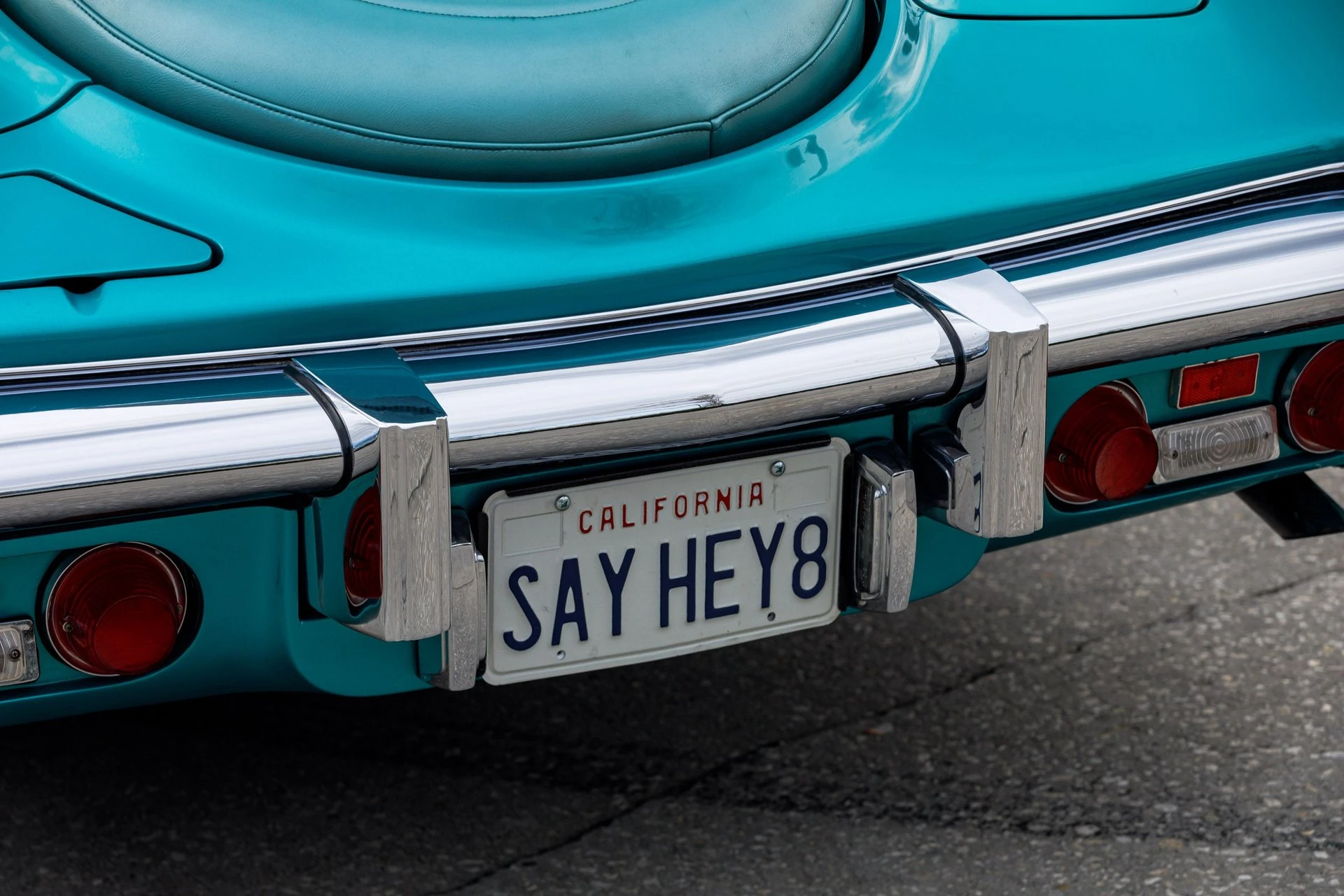
Not long before Mays died in 2024, he approached his friend Jeff Bleich and said that after his death, he wanted all his memorabilia — including his World Series ring and this car — to be auctioned to benefit his Say Hey Foundation, which “creates opportunities for youth in underserved communities by providing education, athletics, safe spaces, and wraparound support.” The Blackhawk and other Mays memorabilia was sold at Hunt Auction in September 2025. The Stutz was apparently acquired by a dealer in Scottsdale, Arizona, who tried unsuccessfully to flip it on Bring a Trailer in January 2026, with the top bid of $75,000 not meeting the reserve. As of this writing, Orlando Classic Cars now lists the car as “sale pending,” with an asking price of $119,000.
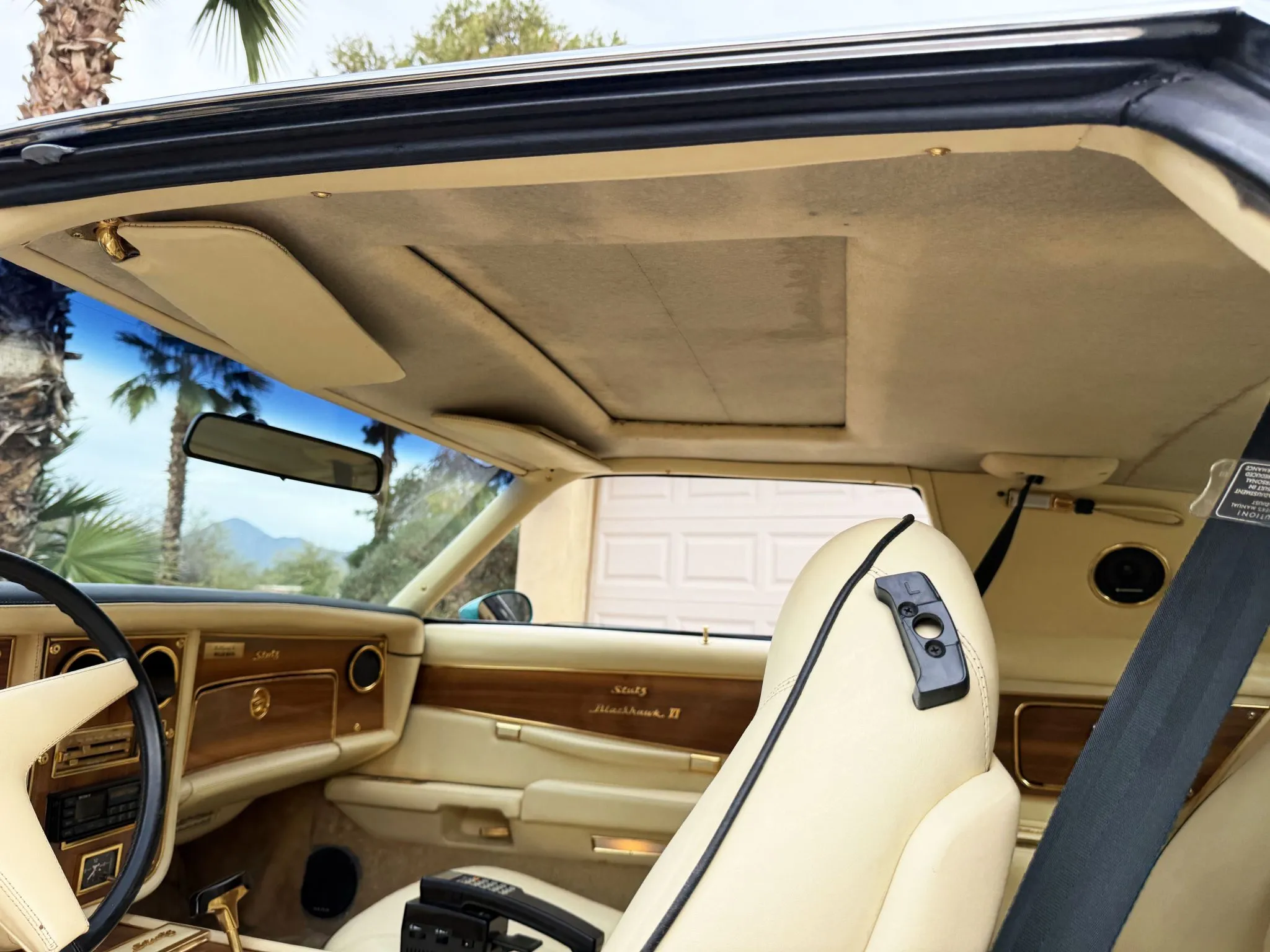
Honestly, I’m not sure the car’s provenance and condition merit that price. Even if you love Willie Mays, this is hardly an essential purchase for a hardcore baseball fan, and the more detailed photos of the Bring a Trailer listing reveal what looks like extensive water damage to the headliner around the sunroof (perhaps due to plugged drainage lines), which could be an expensive hassle to properly fix.
The modern Stutz Motor Car Company survived for a surprisingly long time. For 1980, the Blackhawk design was updated by Italian stylist Paolo Martin (since Virgil Exner Sr. had died in December 1973) so that it could be built on the chassis of the downsized Pontiac Bonneville or Oldsmobile Delta 88 coupes rather than the too-small Grand Prix. In 1987, the company unveiled the Bearcat II, a Firebird-based convertible with a carbon fiber body. Carrozzeria Saturn was cut loose (they went under in 1991), and Stutz completed the last of about 13 Bearcat II convertibles in 1995. O’Donnell retired as president in 1988, selling his interest in the company in 1990 and going back into investment banking. Remarkably, he also decided to go to college, graduating in 1992 at the age of 78. He died in December 1997.
Total neo-Stutz production ended up being around 600 cars. Not all were Blackhawk coupes — I think the company was sustained to a large degree by the lavish sedans, limousines, and converted SUV escort vehicles it made for clients like the Saudi royal family, the Shah of Iran, and the king of Morocco — but that was more than many of these low-volume dream cars ever manage.
A lot of designers and entrepreneurs get the idea of turning their study-hall supercar fantasies into exclusive limited-production models like this, but for better or worse, most of them don’t get nearly this far.
Related Reading
Automotive History: Stutz, Take Two – It’s True, You Can’t Go Home. (by Jana Lingo)
The Cars Of Elvis Presley (by Jana Lingo)
Vintage PR Shots: The 1982 Stutz Line Of Fine Automobiles (by Paul N)
1977 Pontiac Grand Prix: The Final Colonnade Model Was America’s Favorite Grand Prix






I’ve long held a fascination for these. Sidepipes FTW!
Somehow an excessively flamboyant car for an excessively flamboyant big star seemed to work in the 1970s.
I don’t think it really works like that any more.
I agree, it did work in the 70s. I guess you had to be there. It was certainly “fly”.
Today, seems like it’s more than likely going to be just a ‘slightly’ blinged-out Escalade with double-dubs. Ford even got into the act briefly with a factory ‘Funkmaster Flex’ Expedition (which was actually rather tasteful):
https://www.curbsideclassic.com/blog/in-motion-classic/2008-ford-expedition-funkmaster-flex-edition-an-automotive-mixtape/
TBH, I rather miss those old days when celebrities drove ostentatious wheels. A great example was John Lennon’s psychedelic painted Rolls-Royce (although his last car was a quite unassuming fuselage Chrysler T&C station wagon). Another was Dean Martin’s Stutz with its ‘DRUNKY’ license plate. Interestingly, Dino’s Blackhawk was a convertible.
Dino had at least three Blackhawks, including a 1972 with a “humptrunk” rear deck. I don’t think any of them were convertibles.
Stutz didn’t officially offer a convertible until 1979; the official ones were called Bearcats. There were some Blackhawk conversions, including one called the D’Italia, which ended up being sold to Evel Knievel. Stutz management was nervous about trying to offer a convertible because of the complicated regulatory situation. O’Donnell had wanted to offer a Bearcat convertible from the start, but the FMVSS 208 rollover injury standards made it seem too risky. The “production” Bearcat had a fixed roll bar until the Bearcat II in 1987–88.
Well, there is a UPI report dated May 10, 1982 of an arrest by CHP for drunk driving which states one of his Blackhawks was a convertible. So, at the very least, it would have been early conversion without a rollbar.
The report is lacking details (including whether the car he was supposedly driving was the convertible), as well as if he was given a sobriety or breathalizer test so, who knows?
https://www.upi.com/Archives/1982/05/10/Entertainer-Dean-Martin-who-reached-stardom-playing-a-rascal/6533389851200/
You’d be surprised to learn how many celebrities whose spawn are a certain (young) age drive Toyota Siennas. Of course, there are many reasons not to want a flashy ostentatious car for kid-hauler duty.
The most amazing thing about these – aside from reading about the 20th century celebrities who owned them – is just how much one is clobbered with “1970s Pontiac” when seeing the car in person. It’s really totally inescapable and “fanciest Grand Prix ever!” is exactly what comes to mind each time I run across one.
There’s one at the Stutz museum in the former Stutz factory in downtown Indianapolis.
Kissing cousins for sure…
Though I lived through the era, I knew next to nothing about these; I’m now much better informed. Thanks for all the time invested in the researching and the writing.
I also try to charitably avoid the “what were they thinking?” attitude when dealing with the choices of other people of other eras–but this car did indeed “fit right in” with what opened the wallets of big-money buyers then.
OMG how ugly! ’nuff said.
These were awful back then, awfuller, now.
The word ostentatious comes to mind, yet I can’t help but like these anyway, I think there are some genuinely interesting design elements that look more fully realized as a neoclassical design than the big OEMs dared try, and maybe that was for the best I suppose. I think without the spare tire, unconvincing side exhaust and the standup round headlights it would look much nicer, and closer to the Exner Duesenberg concept I do genuinely like the design of.
Nevertheless though I can spot a few Grand Prix elements recycled they’re kind of trivial, like the gauges, overall it comes across as a genuine no compromise effort true to the original vision few high concept car designs pull off, especially with such a small operation to convert them. I mean put this Blackhawk beside a 1980s Zimmer with its grafted on fiberglass nose and rear section to an entirely unchanged obvious Mercury Cougar midsection and it’s night and day the different approaches to this little neoclassical sub market. The later Studz efforts pale in comparison to these blackhawks too, the long nosed Grand Prix chassis is why these worked, not so much on the downsized B body ones and definitely not for the F body based Bearcat II with the tell tale raked back windshield.
Looking at the interior, I wouldn’t call the Grand Prix elements trivial: It’s really just a Grand Prix SJ with bucket seats, but with the woodgrain replaced with wood, the Morrokide replaced with leather, and gold moldings and brass fittings on everything. This is a common issue with this kind of high-end limited-edition conversion — no matter how much money they lavish on Connolly leather and ermine carpeting, a lot of basic interior structures, switchgear, and the like are borrowed from some much cheaper car because tooling up for a new dashboard is too expensive even at these prices.
The thing about the tacky add-on exterior stuff, like the headlights (gag), toilet-seat spare, and fake running boards is that if you take it all off, the results would just look like a Midjourney amalgamation of the 1969–1972 and 1973–1977 Grand Prix and first two generations of Monte Carlo. (Or vice versa, if you want to look at it that way.) It would be more tasteful, but it would lack that hey-look-at-me quality that attracted celebrity owners to this kind of thing. Everybody in the ’70s had or knew somebody who had a Monte Carlo or a Grand Prix. The point of the Blackhawk was to marry that popular style with a desire for conspicuous display.
The dash is most definitely not the same as a standard Grand Prix dash, nor the console nor the door panels. I see many individual components like the instrument cluster, pedals, door pulls, the seat cores and a few other items that are shared for sure but it’s not much different than finding Fiat items in a Ferrari or Ford items in an Aston Martin. Yes it cheapens it a bit, but credit where is due the overall presentation is definitely not the same, I’m not mixing it up with a Grand Prix interior. It certainly doesn’t have a cockpit like dashboard/console design like the Grand Prix which has always been a very distinctive feature in that era Grand Prix to me(and just to show I’m not mindlessly defending the Studz I vastly prefer the GP layout!)
I don’t disagree removing those exterior traits would take away much of the showiness that attracted the kind of buyers who could afford it to it, but I will disagree with you that it would look like an amalgamation of GM and MC without them. The thing shares little if any sheetmetal with those cars and presumably a substantial portion of inner body structure was substantially altered for the completely different roofline and drooping tail. The design without the spare tire, side exhaust and round headlights is a relatively faithful adaptation of the Exner Duesenberg only in 2 door form and with those appendages added; look at the nose beyond the headlights and it’s there, look at the formal roofline, it’s there, look at the drooping tail etc. it’s missing the flowing wheel openings but otherwise it’s all there in the 66 Duesenberg design, and arguably that was the car that played a huge role in what would be the aesthetic that defined the PLCs like the Grand Prix or Monte Carlo. It’s not to my taste either but I cannot not dismiss it so easily it for the simple reason that I can’t help consider the Blackhawk the ultimate form of what PLCs of the time aspired to be.
They carried over just enough that you can imagine the celebrity owners keeping the mileage low because they could never get that “I just paid Rolls-Royce money for a Pontiac” feeling out of their mind. That or “I should’ve bought a Grand Prix LJ and put the difference into real estate.”
Of course, anyone who bought these new would already have extensive property holdings and multiple cars.
The idea of sports celebrities or movie stars tooling around in custom built or customized cars was always a kind of fantasy. Though they did routinely buy the most expensive and exclusive cars that were available. Nowadays there is no shortage of stupendously priced limited production cars available; Aston Marten, Ferrari, McLaren, Bugatti, Rolls Royce, and others that I don’t even know the name of. Believe it or not, at the local gas station/car wash just a mile and a half from my house, I saw a Pagani Huayra. It was a gorgeous candy red color. It appeared to be brand new as it didn’t have license plates. I was familiar with Paganis, having read an article in Road and Track about the Zonda. I later googled the car and found that the current value on those cars is around 3.5 million dollars! Yes, the Rich are not like us.
The wood paneling is not birdseye maple.
This is what birdseye maple looks like
https://www.alignfurnishings.com/wp-content/uploads/2017/08/2-BIRDSEYE-MAPLE.jpg
I changed that to just “wood.”
It kind of looks like rosewood.
Virgil Exner’s bag of tricks was not a deep one.
I agree with XR7Matts points above, I’ve sort of liked these since I saw a picture in my 1973 World Cars book.
There is also a picture of a 4 door Stutz Duplex listed as having a 472 Cadillac engine, and equipped with the recalled Firestone LXX wheels.
I also give it points for not having a vinyl roof and as to the spare wheel, it is better than a continental kit.
And I think the Firestone wheels would look a lot better than the wires.
Well, I like the color.
I think I prefer the drawing to reality, but the front looks very complicated.
Country singer Charley Pride had a Stutz IV that he wrecked. He took it to the Fast n Loud guys to have it fixed, but they declined. Ultimately I think he had it fixed at another shop.
One reason the Stutz and Grand Prix appear so identical by 1977/78 is because GM copied some of the original 1970 Stutz design elements including the roof and the dash for the 1973 model year. Who copied who??
I love this car. It’s not remotely a good car by any objective measure, nor particularly tasteful. But who cares? It’s the kind of thing a star-struck kid would walk right by rows of Bentleys Ferraris, you name it, to declare the greatest car ever. It’s bonkers, but in a way that I feel would drive off rich people trying to impress other rich people. I hope it ends up in good hands – someone with the resources to preserve it, but also willing to put a few miles on it and share the spectacle with the rest of us!