
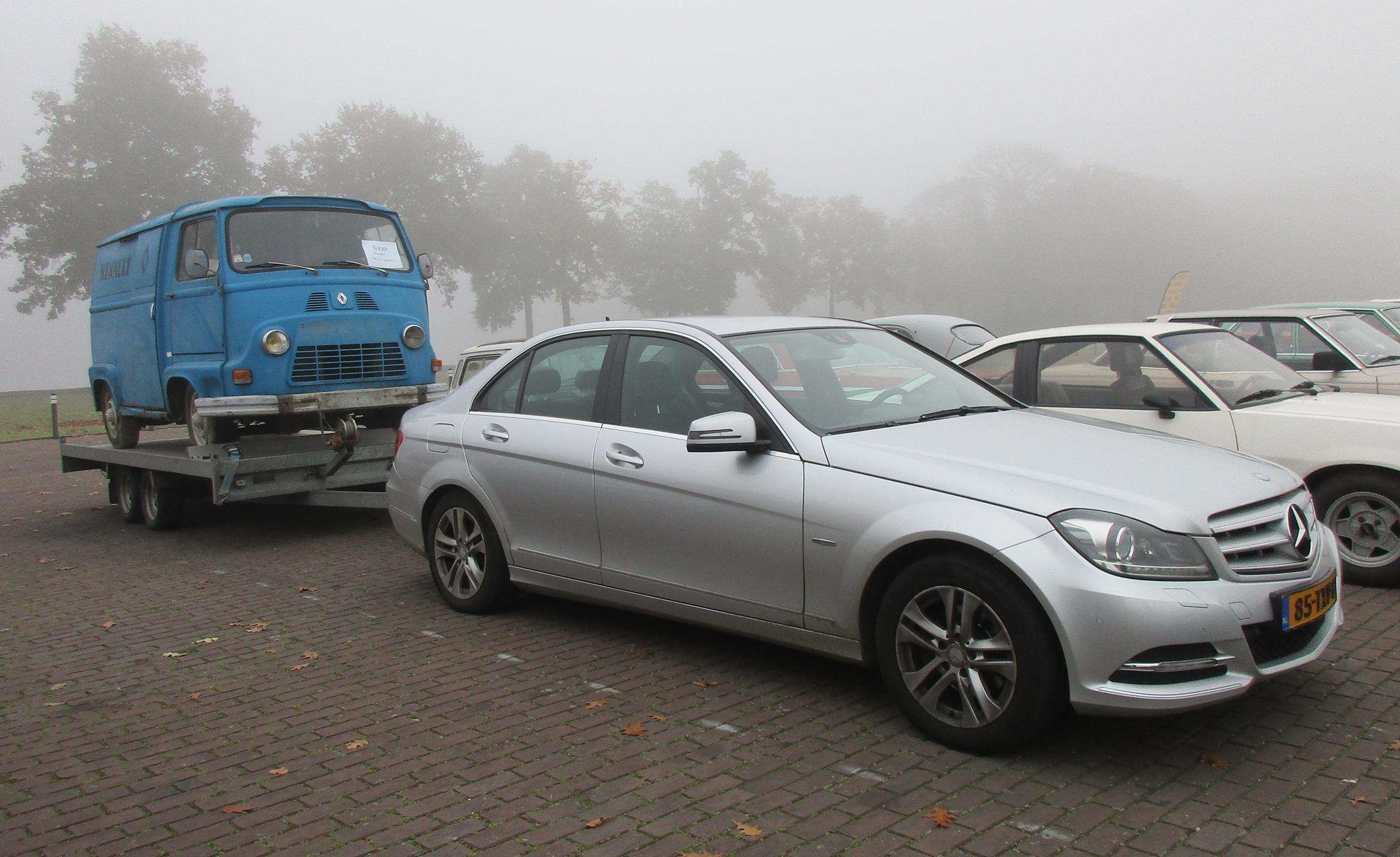
Logically, passers-by only paid attention to the Renault Estafette van on the trailer, since we were all visiting a classic car event. But I just had to zoom in on the whole combination too. I mean, this is how it was done in the seventies and eighties, anyone who had to tow a trailer for professional reasons, usually opted for a diesel-powered Mercedes-Benz passenger car. Think of contractors, livestock traders, farmers, the horsey crowd, and market vendors.
Back then, it was about the only car available in Europe that didn’t fall apart after a few years of hard use and had a fuel-efficient, long-lasting diesel engine. And without the business trailer, you had a splendid family car. That is, after a thorough cleaning of the inside and outside.
And let’s not forget that the carmaker’s diesel-powered midsize sedans were the quintessential taxi cabs (and in northern Africa, many of them still are). In chronological order, these sedans are known as the Mercedes-Benz W115-, W123-, and W124-series.
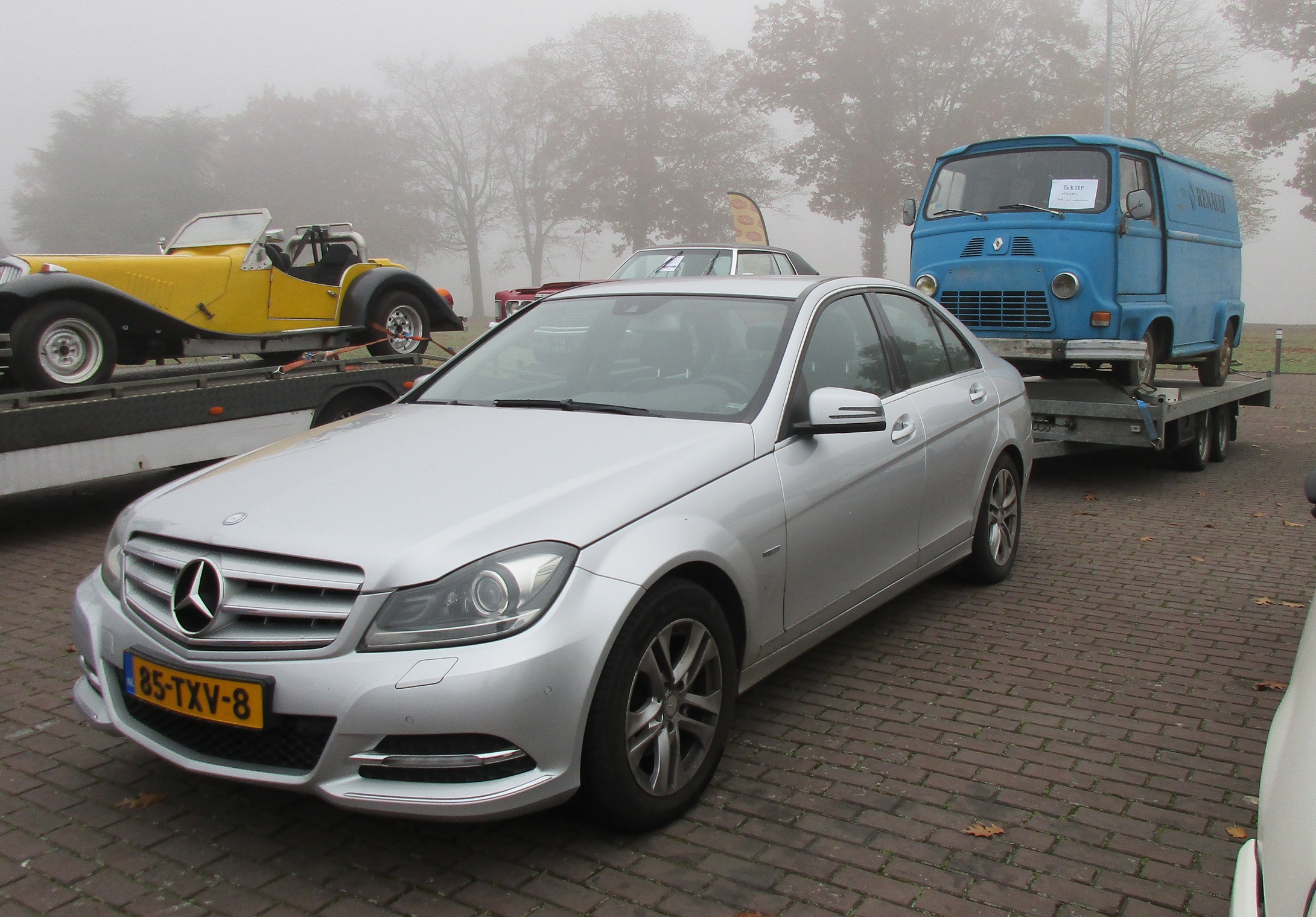
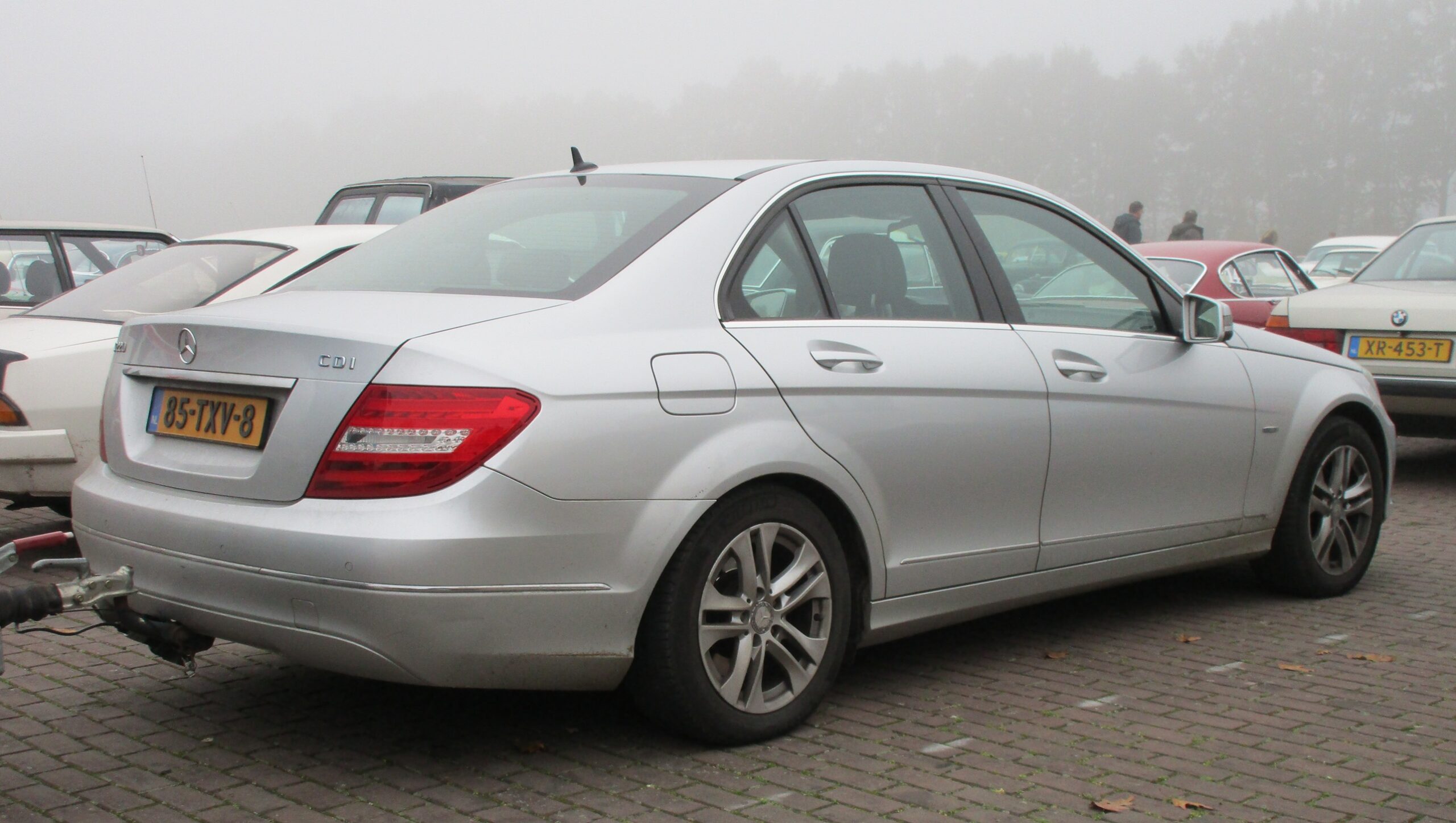
Fast forward to November 7, 2026. In this case, the tandem axle trailer was coupled to a 2012 C-class sedan, powered by a 2,143 cc, OM 651 DE 22 LA turbocharged and intercooled four-cylinder diesel engine with common rail injection. The engine’s maximum power output is 120 kW/163 DIN-hp and its maximum torque is 400 Nm/295 lb-ft @ 1,400 – 2,800 rpm. That’s a far cry, in a positive way, from the classic Mercedes-Benz sedans with the 220 D model designation.
Since we’re talking trailer towing, the registered towing capacity of this W204-series Benz is 1,800 kg, which is equal to 3,968 lbs. Everything seems to be in order here.
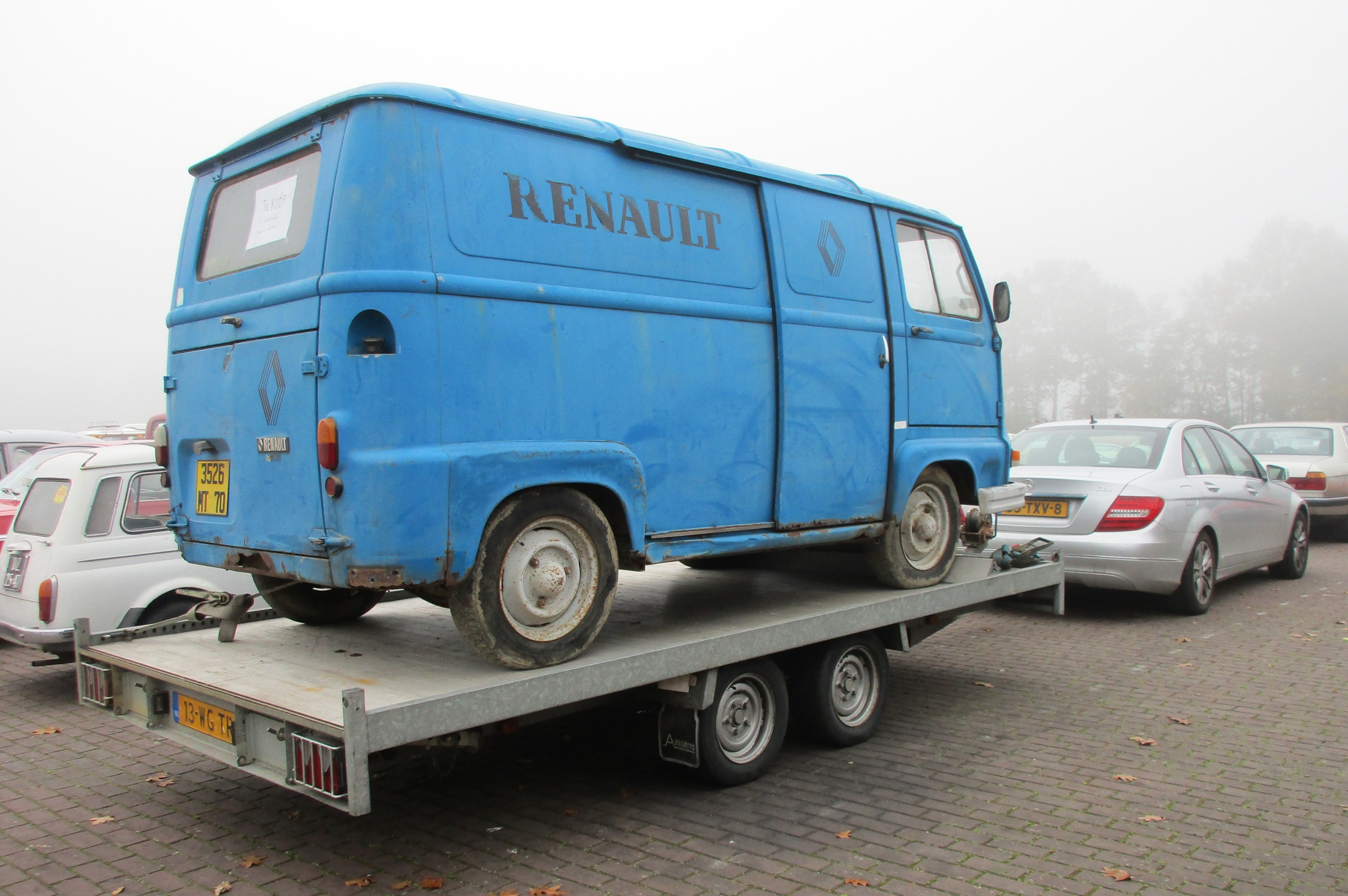
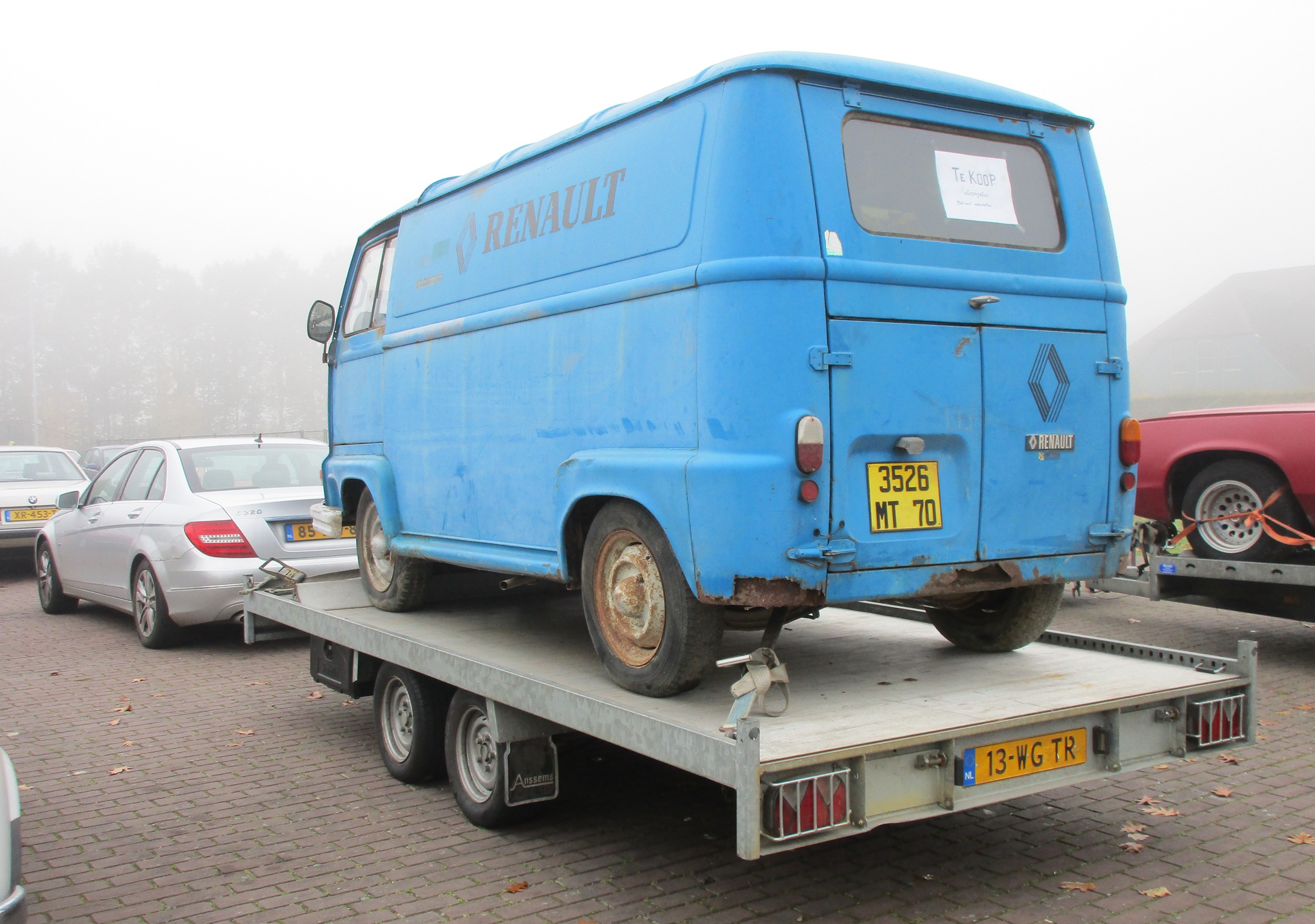
The old Renault Estafette panel van is sitting on a 2011 Anssems MSX flatbed trailer with a curb weight of 536 kg (1,182 lbs) and a gross weight rating of 3,000 kg (6,614 lbs).
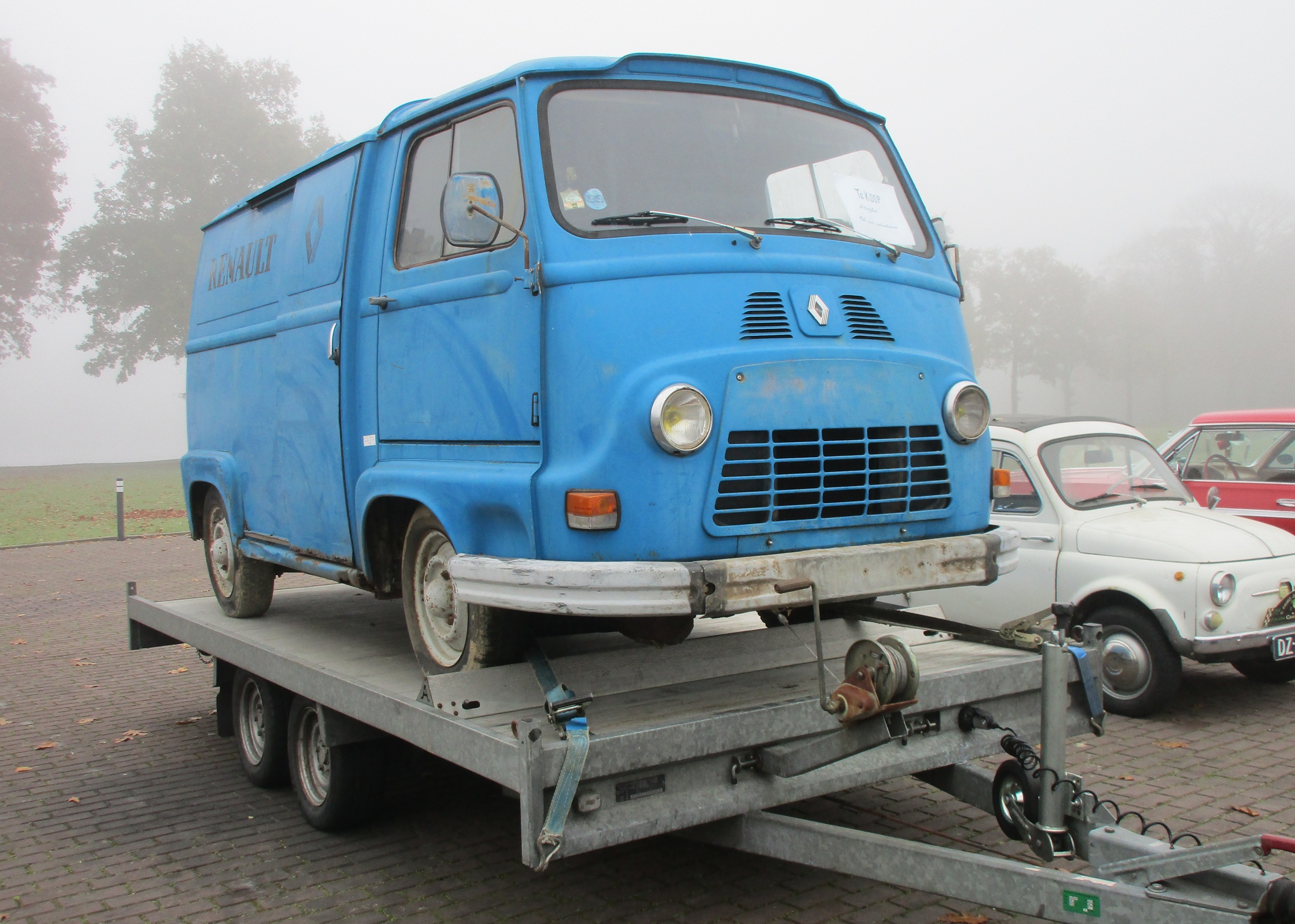
Judging by the grille, this is an Estafette Phase 4, the final edition of the entire series. The Phase 4 was offered from 1973 to 1980 and was superseded by the Renault Trafic.
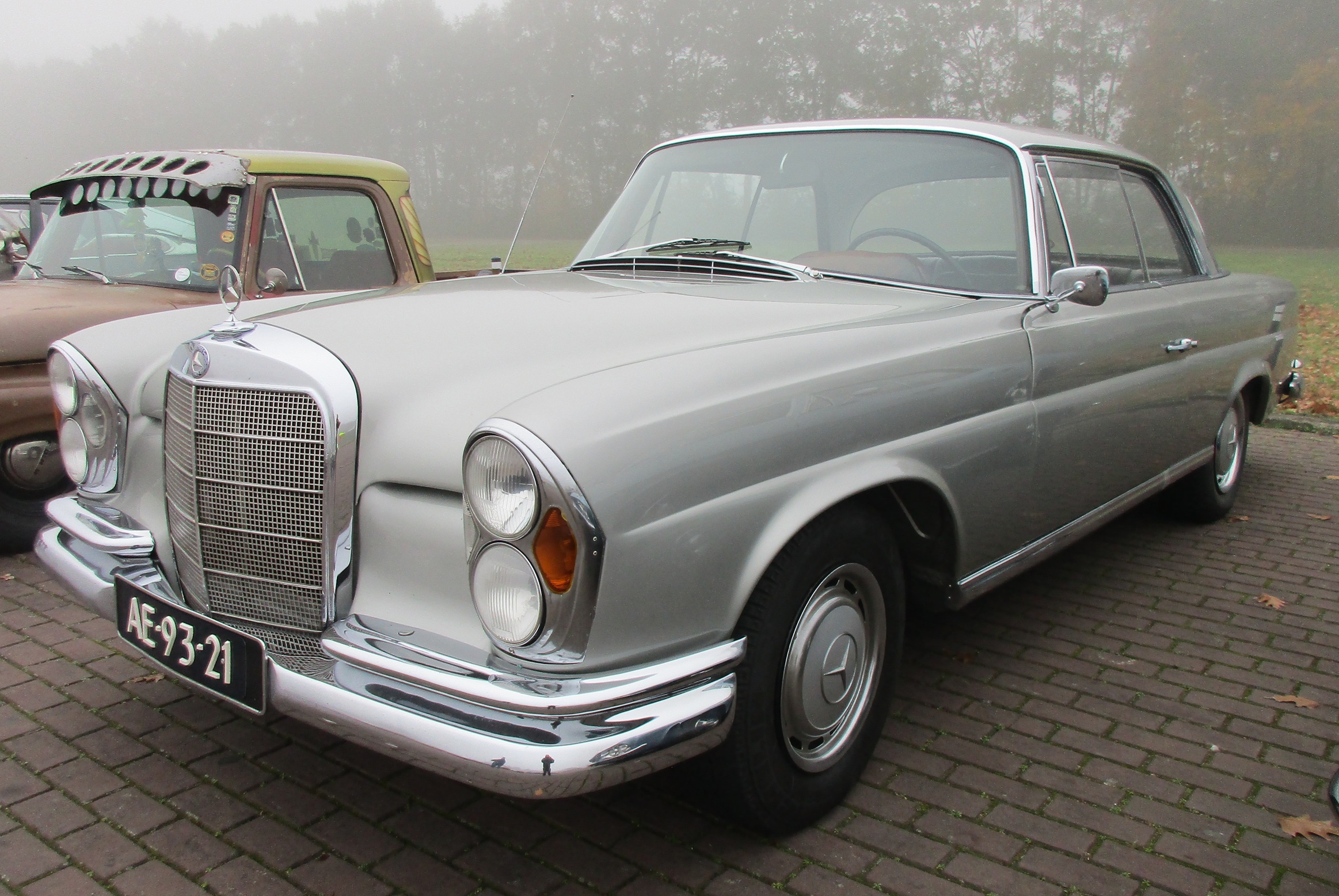
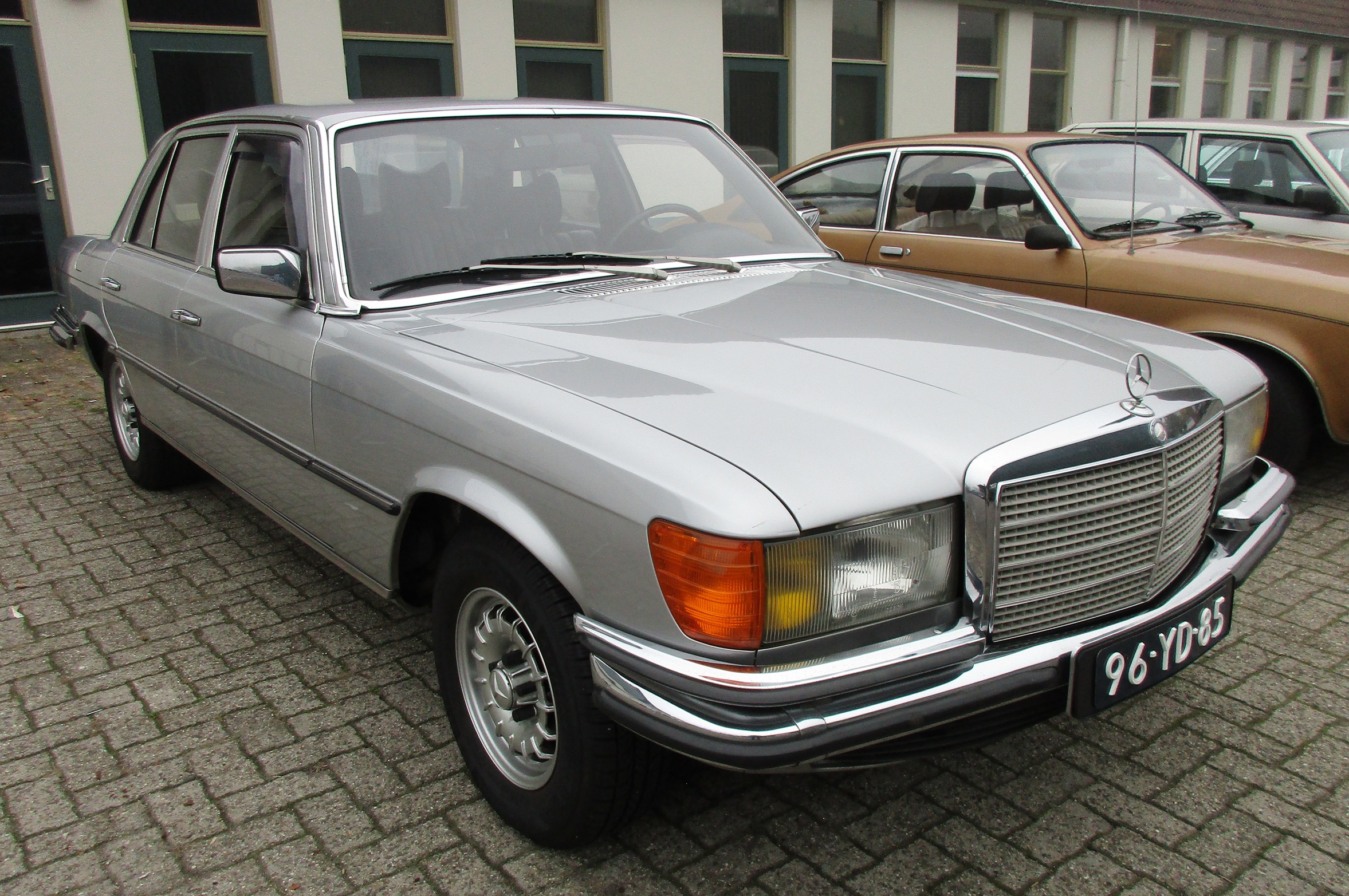
And of course there were some other silver Benzes present at the show too, although these two have always rolled in an entirely different class.
It speaks for itself that much more classics will follow soon enough. The weather was cloudy, misty (as you must have noticed), and chilly. In other words, more than perfect conditions to take many car pictures!
Now what happened to the professional trailer-towing class? Well, the Japanese, diesel-powered workhorse-type of SUVs made great inroads in the eighties and nineties. More specifically, the Nissan Patrol, Mitsubishi Pajero, and the light-duty Toyota Land Cruiser models. Later on, joined by Kia and SsangYong from South Korea. Almost all of them got an aftermarket panel van conversion to be registered as a commercial vehicle. Currently, trailers up to 3,500 kg (7,716 lbs) gross weight rating are mostly hooked up to a midsize or full-size cargo van. You know, like the Mercedes-Benz Vito and Sprinter.













I can say with certainty that I’ve never seen a Mercedes diesel sedan towing a trailer in the US. Not in the Seventies or Eighties, not recently, never. Thanks for the reminder that the world is a diverse place.
Though I have in the last few years noticed quite a few Porsche Cayennes as well as their Touareg and Q7/Q9 stablemates, towing. Far more than the Mercedes GL equivalents. I suspect (at least with the Porsches) that many are gasoline. However a neighbor pulls a small camping trailer with her V6 diesel Touareg and told me that she loves the “torques”.
On a related note, tandem axle Tabbert travel trailers were (and still are) usually towed by a Benz, think nomadic communities. The trailer below is from 1996.
I was curious as to whether MBUSA lowered the stated towing capacity of the W204 in the US as so many other manufacturers did/do, in order to limit liability due to the significantly higher allowed towing speeds in many states. From a quick search, it appears not, which is a bit surprising. As we’ve noted before here a number of times, Europe allows as little as 3% of the trailer weight to be on the hitch, but limits towing speed to 90kmh (or less, if stated), which is 56 mph. Folks in Texas routinely tow at 80 mph (130 kmh), but require 10% of the trailer weight to be on the hitch, hence the lower tow ratings in the US. So yes, I am a bit surprised that it was not changed for the US, but then I didn’t dive into the actual owners manual.
What a great pairing! Not often (at least I) see a sedan towing a van. I bet it does just fine if you keep the speed how and no big cross winds.
That yellow and black roadster on the next trailer over looking interesting as well.
I’d be apprehensive of towing with any newer Mercedes car, and wouldn’t touch a used one that had towed. It’s possible it would be fine as long as you forced lower gears going up hills, kept speeds down, etc. But cars like this aren’t remotely built like the classic Mercedes you mention. They’re designed to make it off warranty, and if they blow up not long after, it’s still “job well done” to the brass at Mercedes.
Here in North America, towing a rig like the one illustrated would have to be done with a Ford F-350 Superduty, because all towing needs this. It also justifies the $100,000 you paid for it.
In Europe, it is different. My Danish buddy tows a two horse trailer with his Dacia Sandero 1.5 diesel. It is a bit slow off the ling but once boost builds, it does just fine. I was surprised when he showed me.
The photos reminded me of the Dutch weather I used to ride my motorcycle through in the 1980s, back & forth when working in Stockholm in the warm months and in London the rest of the time. Good thing Dutch cafés had excellent coffee…
We’re in the mist season right now, still relatively warm water, combined with longer (as in less daylight) and colder nights.
I think I have seen a W123 with a trailer hitch in the US but most towing is done with some sort of light truck. Our son regularly hauls car trailers with a1999 K2500 Suburban with a 5.7 liter V8. I think that generation had some diesels but the 6.5 wasn’t very good. I have a friend who towed a pop up camper with a Honda Pilot and a neighbor uses a minivan to tow his snowmobiles so not everyone in the US uses a large truck.
Many trips around 1980 in a 65 DIN-hp, W123 – 240 D. It was owned by one of the three brothers who ran the company my dad has worked for. The car frequently towed a tandem axle trailer to transport poultry equipment. Whatever had to be hauled was simply loaded on the trailer. That is, no one ever paid any attention to the car’s maximum towing capacity or the tongue weight. Oh yes, the owner also belonged to the horsey crowd.