
Text by Patrick Bell.
The Chevrolets that many remember best are the feature today, as we look at some popular models from the past. Most of these had some modifications, but that was entirely normal and reflected the owner’s desire to add their own personal touch. These were common on the streets of yesteryear, so let’s take a look.
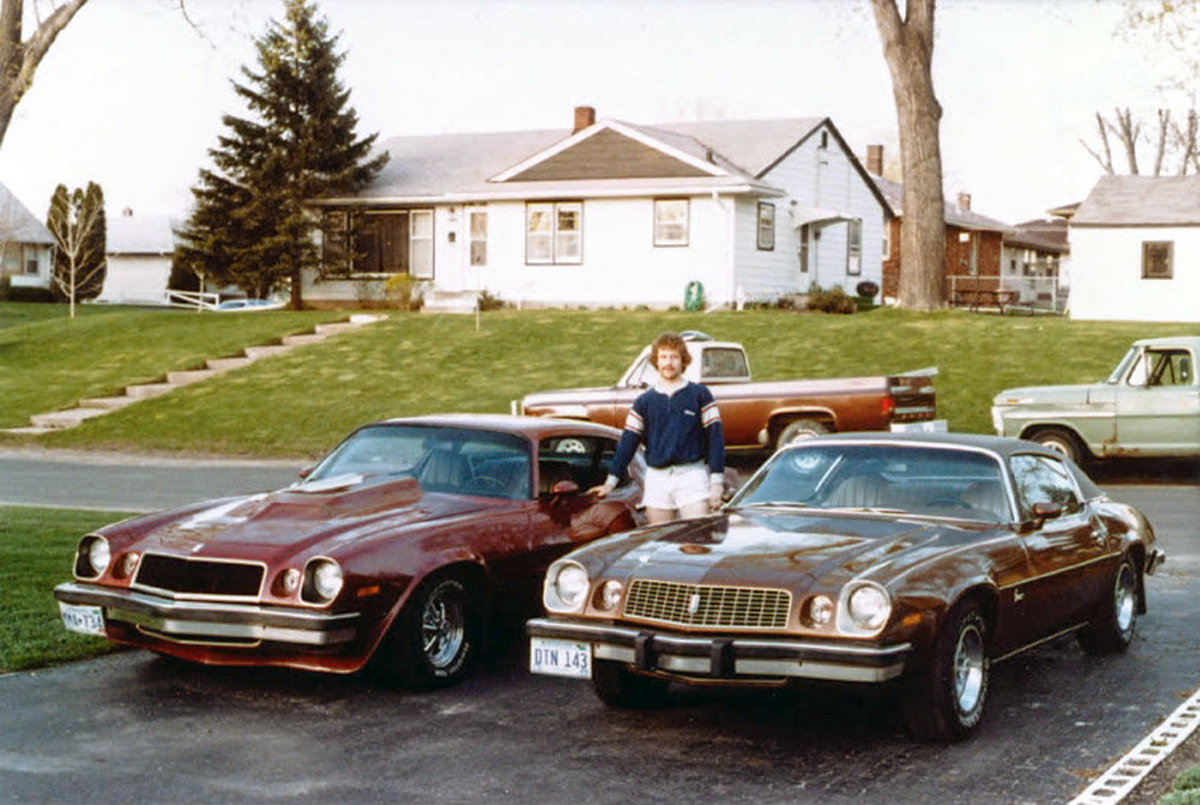
A driveway with two Camaros is where we begin. They were both licensed in Minnesota, so that most likely was the location as well. On the left was a 1976 or 1977 LT model, going by the seat upholstery pattern. It was modified on the exterior with Z28 style blacked out grille, headlamp bezels, and glass moldings. And then it had a custom hood, front lower spoiler, and wheels, plus whatever was unseen. On the right was a 1974 model with a vinyl roof, dual sport mirrors, bumper guards, and Rally Wheels.
Parked in the street was a 1973-1980 Chevrolet or GMC C series Fleetside, and behind it a rusty 1968 or 1969 Ford F-100.
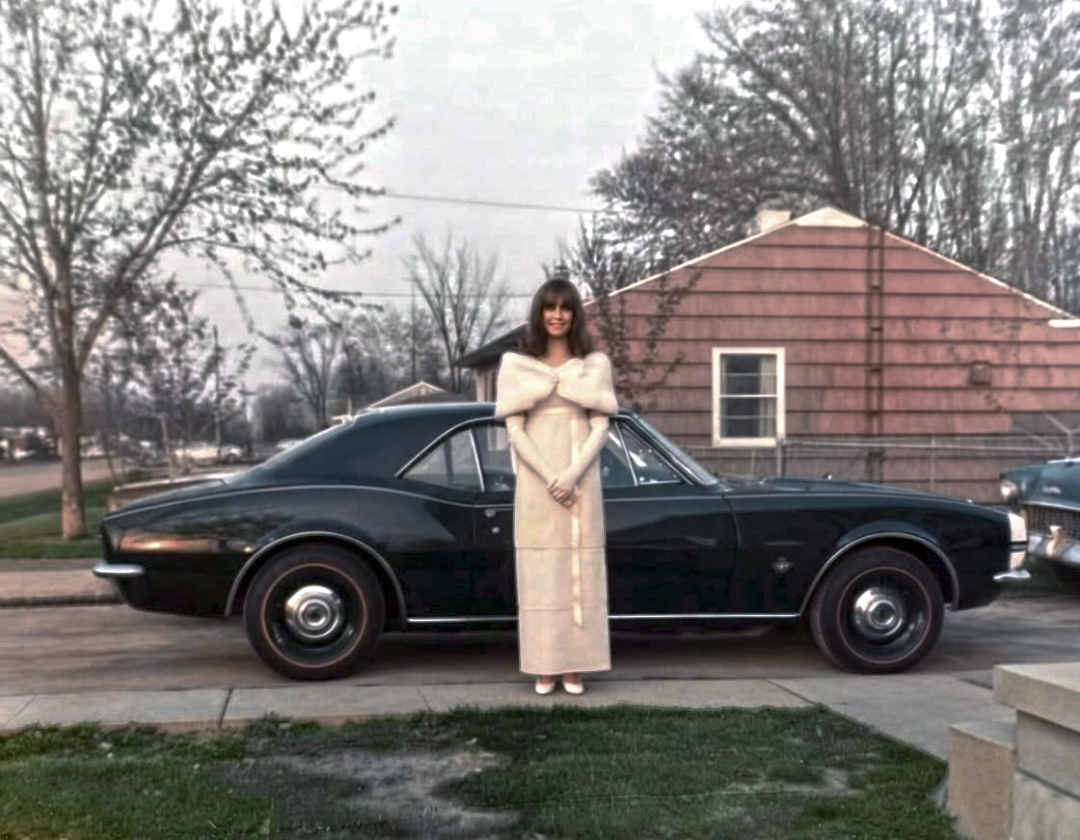
Here was a nice looking young lady all dressed up and ready to go somewhere. Behind her was a first year 1967 Camaro SS Sport Coupe that had the optional Style Trim Group (bright drip gutter molding, pinstripe, and wheel opening moldings), along with the standard hub caps.
The Turbo-Fire 350 cubic inch V8 debuted as the 1967 Camaro SS power plant and generated 295 horsepower. On the right edge was the nose of a 1955 Chevrolet.
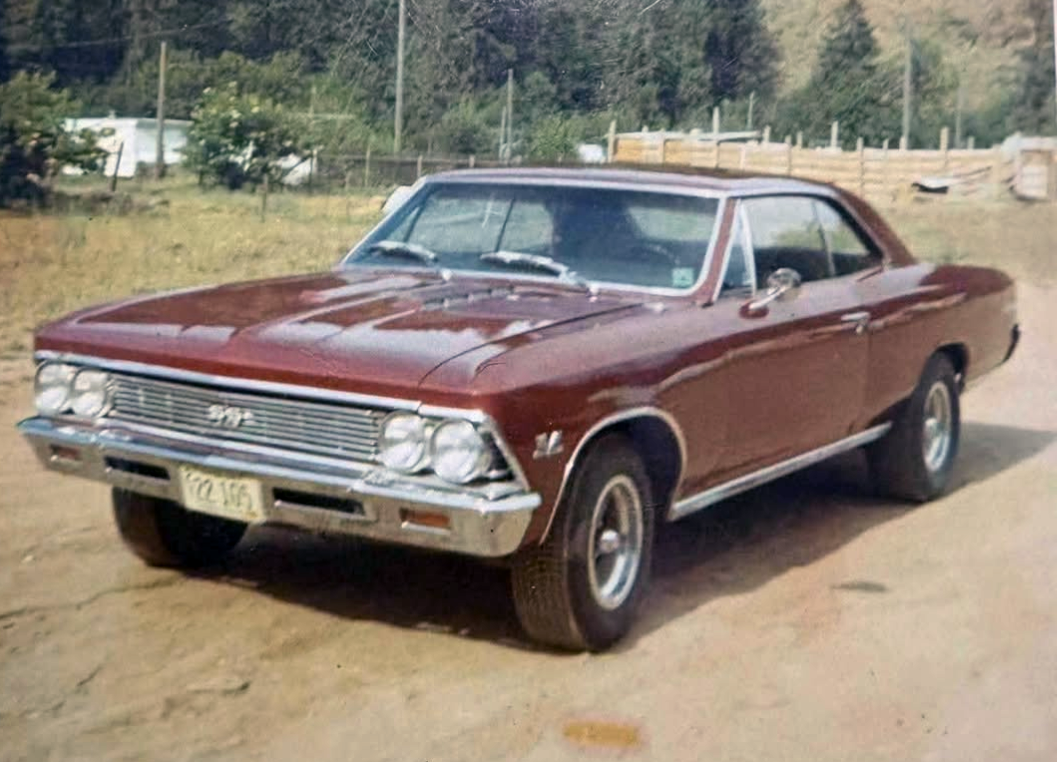
A 1966 Chevelle Super Sport 396 Coupe was all cleaned up, and was in a rural area. It had aftermarket wheels and an Idaho license plate issued in Twin Falls County, where the seat is a city of the same name.
A Turbo-Jet 396 ci V8 was the only engine available, but you could choose from a 325 or 360 hp version. Transmission choices were a 3 or 4 speed manual, and Powerglide automatic, and all had a floor shift in the bucket seat and console interior.
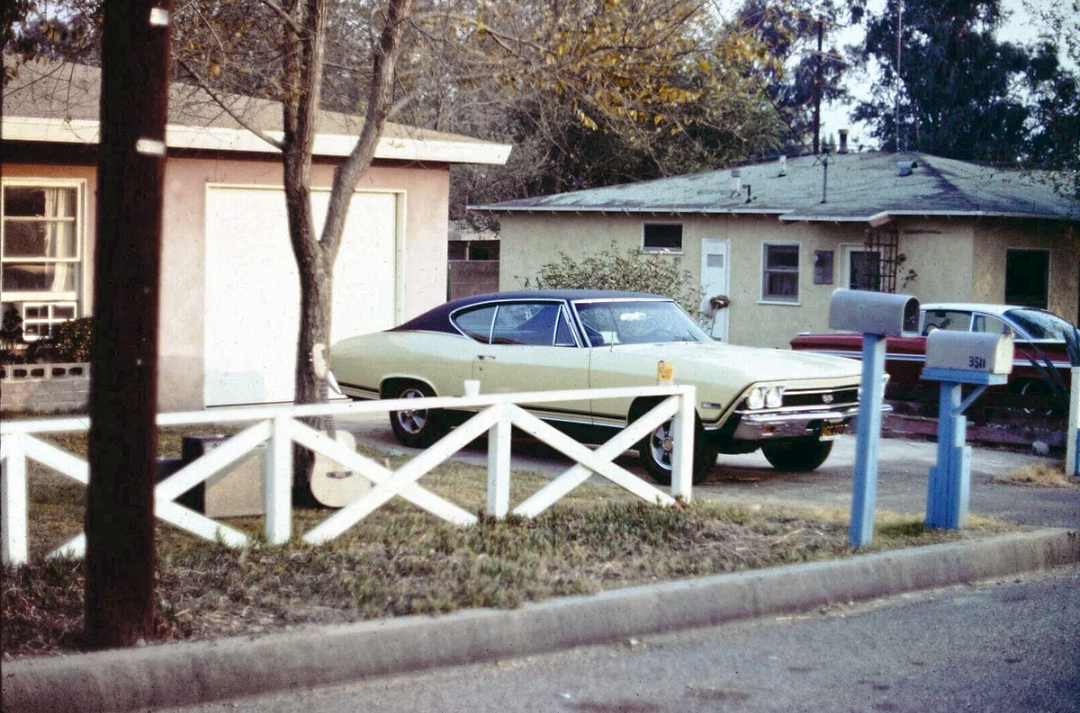
This one was a newly restyled 1968 Chevelle SS 396 Sport Coupe with a California license plate. It also was equipped with a vinyl roof, Special Accent Striping, and Mag-Style Wheel Covers.
The Turbo-Jet 396 carried over in the standard form, but the optional version was down to 350 hp. The Turbo-Hydramatic transmission was added to the option list, and a bench seat was now standard, and the buckets and console optional. To the right was a 1959 Impala Sport Coupe.
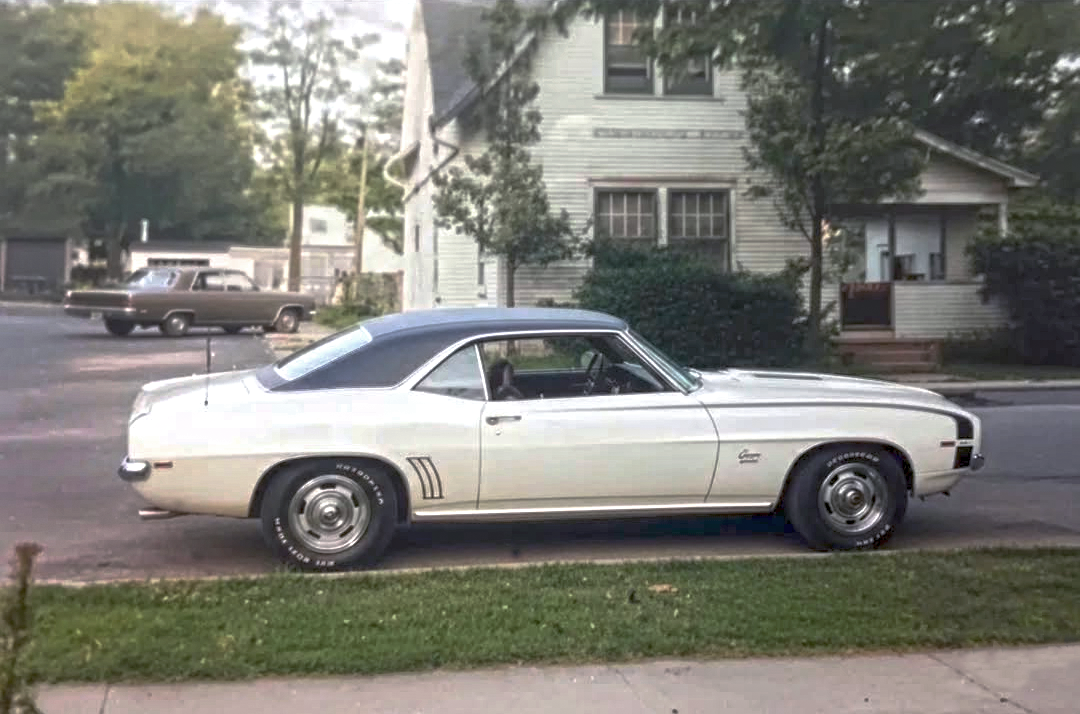
And a 1969 Camaro SS Sport Coupe that had a vinyl roof and Rally Wheels. The SS engine choices that year were a Turbo-Fire 350 with 300 hp, or a Turbo-Jet 396 with 325 hp.
In the background was a 1966 AMC Ambassador 990 4 door sedan.
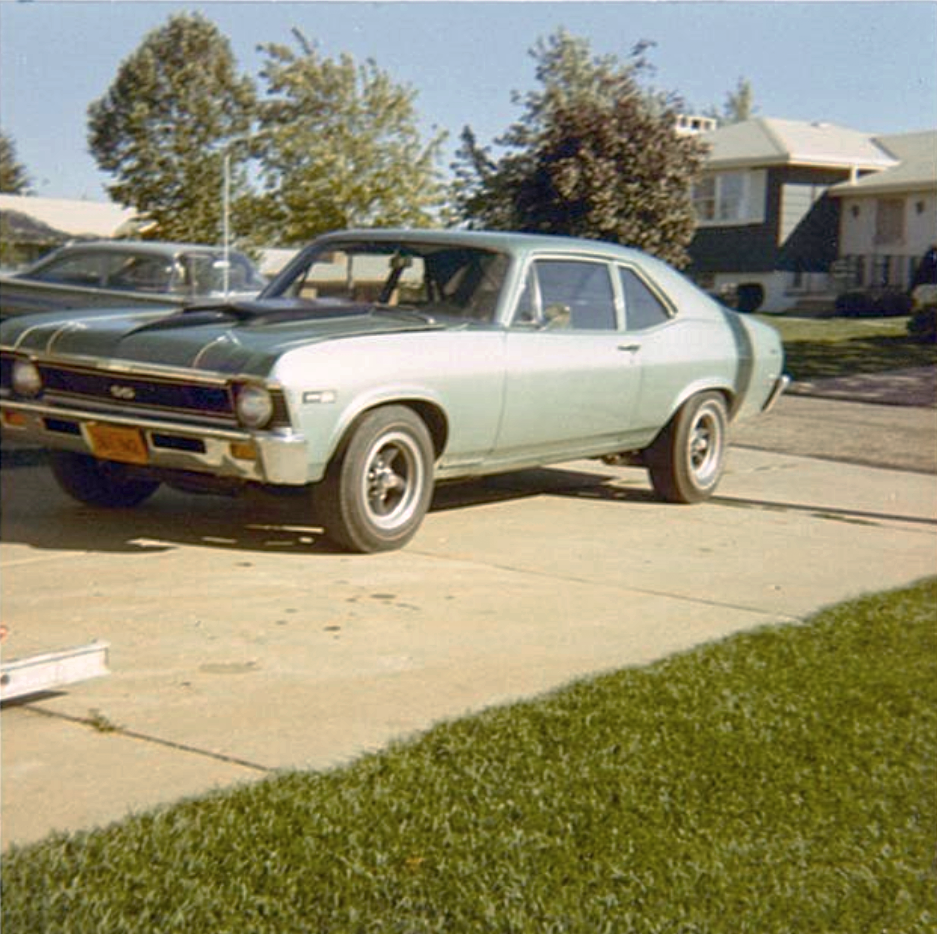
A 1968 Chevy II Nova SS Coupe was shown here in a suburban neighborhood. It was dressed up with aftermarket hood scoop and pins, traction bars, and wheels.
The Nova SS power for 1968 came from the Turbo-Fire 350 with 295 hp that was introduced in the previous year Camaro. There were four transmissions to choose from; 2 3 speeds, a 4 speed, and the Powerglide. Parked in the street was a 1960 Bel Air 2 door sedan.
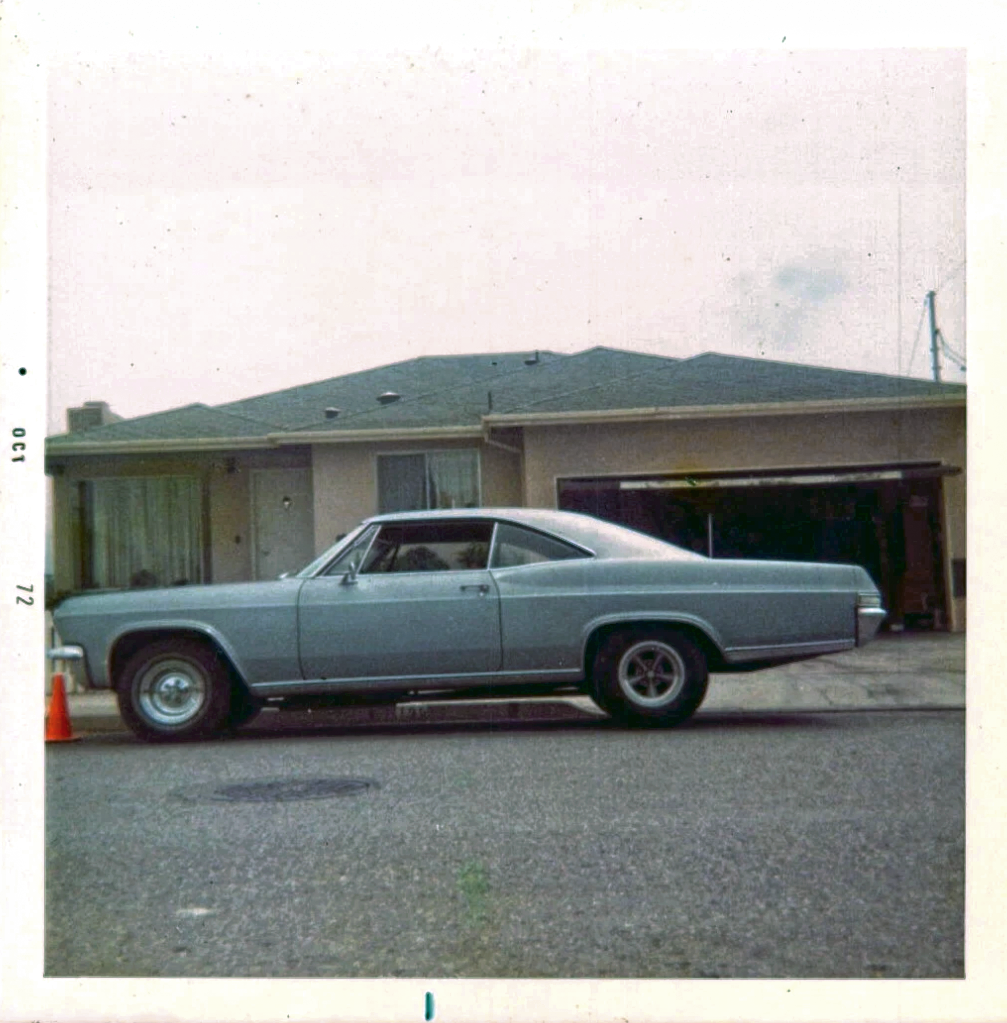
The 1965 Impala was a very popular car in its day, and this Sport Coupe shows the new for 1965 style that helped to make it so popular. This one was over seven years old per the image date, and had reached the age of a well used car, perfect for some owner modification. All we can see was the wheels and tires, but there were likely others as well.
Six engines and four transmissions were available at the beginning of the model year. The above car had been detrimmed, so we have no clues what it came with. The most popular was the Turbo-Fire 283 ci V8 with the Powerglide transmission combination.
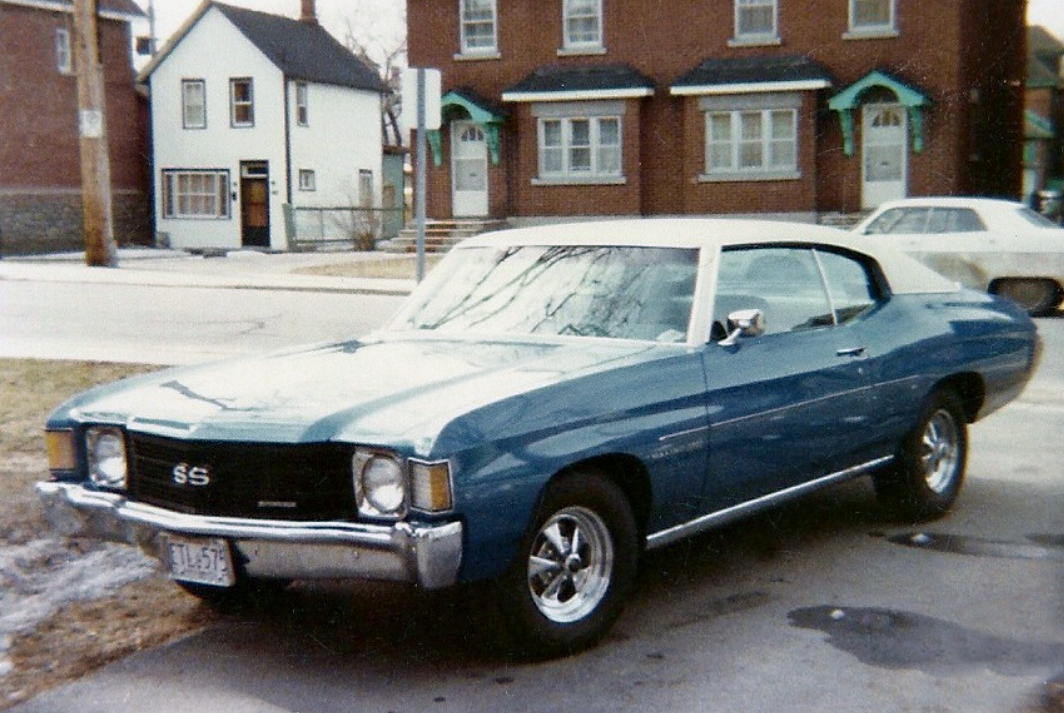
This 1972 Chevelle Malibu Sport Coupe was part of the last year of the generation that began in 1968. It had a vinyl roof, remote control mirror, and body side moldings from the factory, while the owner had blacked out the grille and added the “SS” letters. Plus he added the chrome Cragar or Cragar style wheels, and it had an Ontario license plate.
The fender callout indicates it had one of the two optional Turbo-Fire 350 engines, with a net horsepower rating of 165 or 175. In the background looks like a dirty 1973 Plymouth Fury III 4 door hardtop.
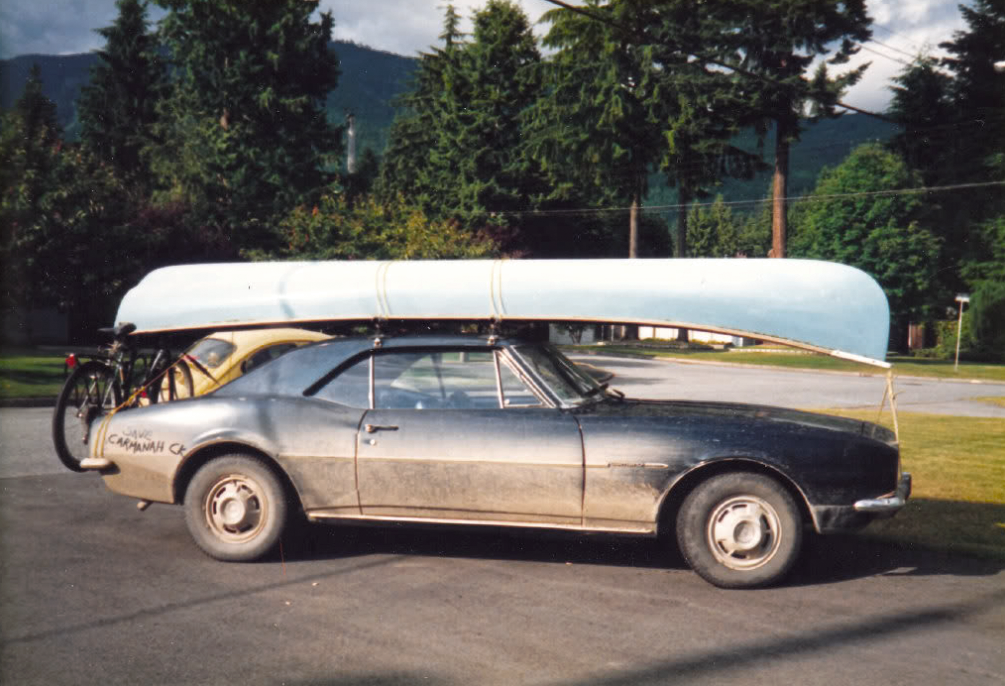
A dirty 1967 Camaro Sport Coupe was ready to go canoeing and biking. The only option I see is the full wheel covers. The body side molding looks like an aftermarket addition.
There was no engine callout, so it likely had one of the standard engines; either the Turbo-Thrift 230 ci 6 cylinder, or the Turbo-Fire 327 ci V8 with 210 hp. In the background was a post-1971 Volkswagen Type 1.
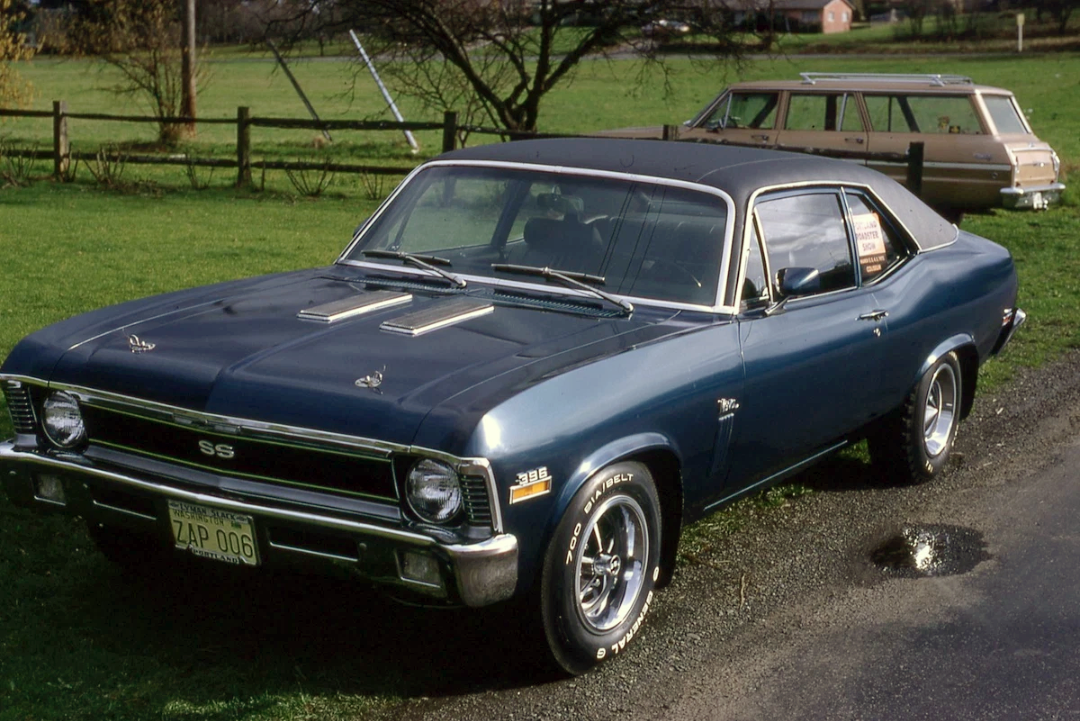
There were 2 Novas in this image; a go fast 1970 SS 396 Coupe in the foreground, and a family car 1963 Chevy II Nova wagon in the background.
The 1970 SS 396 was equipped with a vinyl roof and Sport Wheels, although I don’t think the rear matches the front, plus it had a snow tire. The outside mirrors and hood pins were aftermarket, and the Washington state license plate was issued in Klickitat County, where the seat is Goldendale. The license frame indicates it was likely purchased at Lyman Slack Chevrolet in Portland, Oregon. The Turbo-Jet 396 option was not listed in the sales brochures, but it was available in two versions; with 350 and 375 horsepower ratings.
The Chevy II was in its second year in 1963, and the Nova models only had one engine available; a Hi-Thrift 194 ci 6 cylinder with 120 hp.
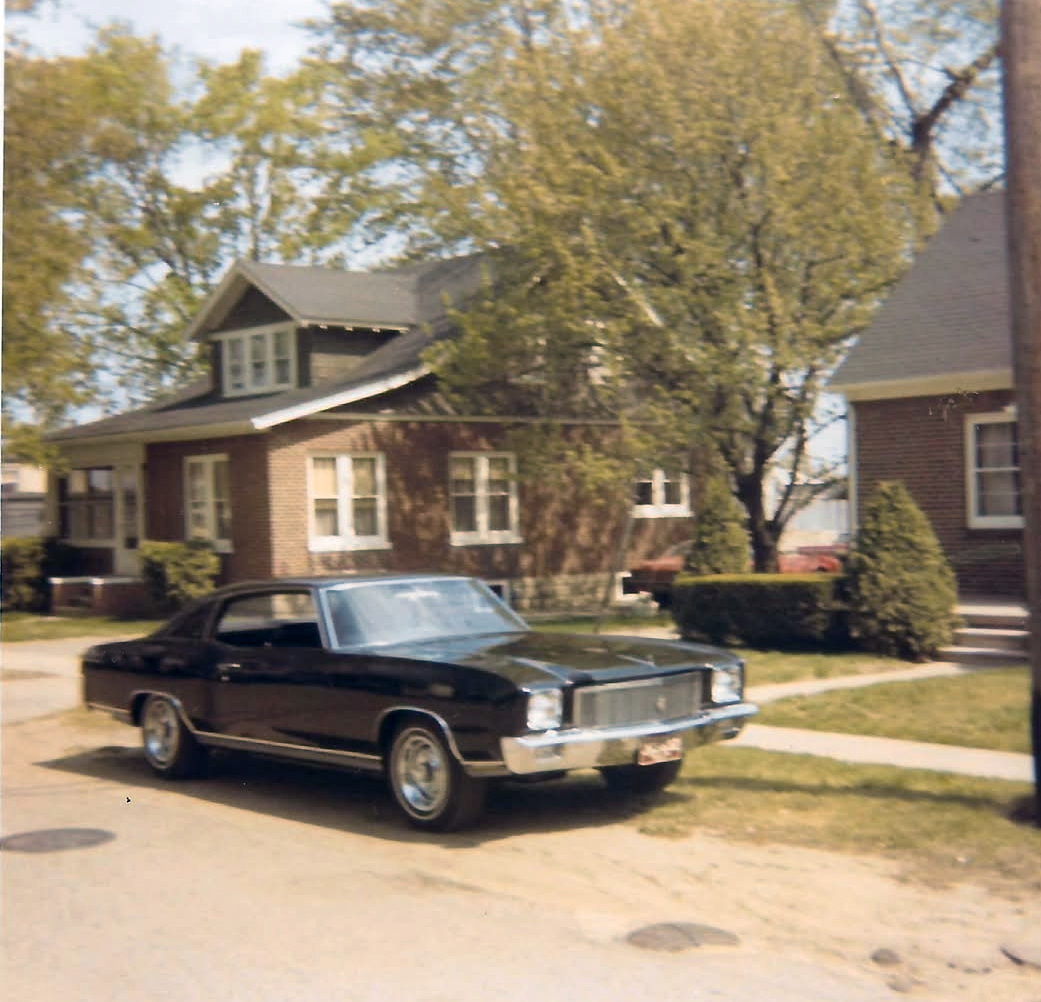
Chevrolet’s personal luxury coupe was the Monte Carlo which debuted in 1970. Shown above was a 1971 model that had some minor trim updates, mainly in the front lights, grille, and bumper. This one does not appear to have the optional vinyl roof, which was unusual. It did have Rally Wheels, and a Michigan license plate used in 1971 and 1972.
Standard power was a Turbo-Fire 350 ci V8 with 165 net hp. Options included and 175 hp version of the Turbo-Fire 350, and a Turbo-Jet 400 ci with 260 hp. If that still wasn’t enough there was a SS 454 model available that had 285 net hp.
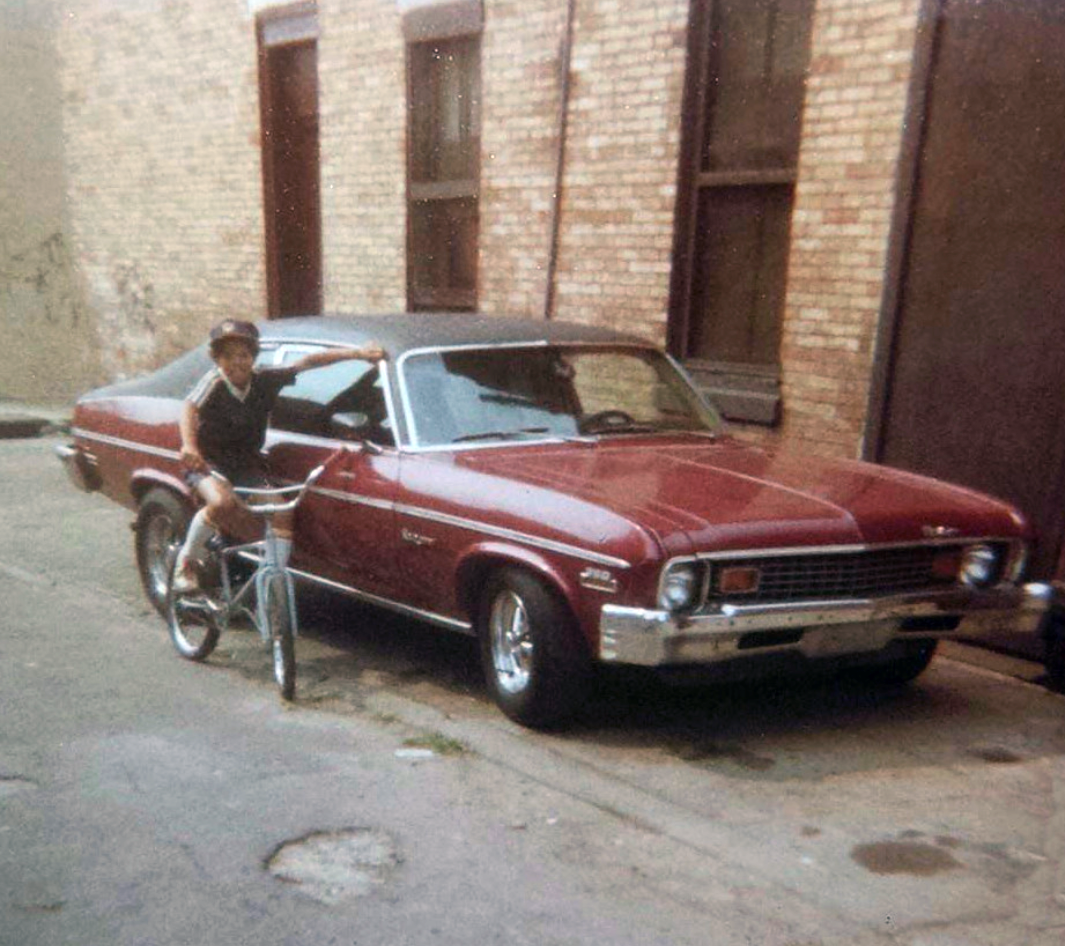
A young man was posing with a 1973 Nova Custom Coupe or Hatchback that perhaps he envisioned as his next vehicle. The vinyl roof was aftermarket, as it continued past the sail panel to the upper quarter panel in the rear. And the wheels and rear tires were owner added. The bumper was damaged and the impact strip was missing.
It had one of the optional Turbo-Fire 350 V8’s for power, which came in 145 or 175 net horsepower ratings.
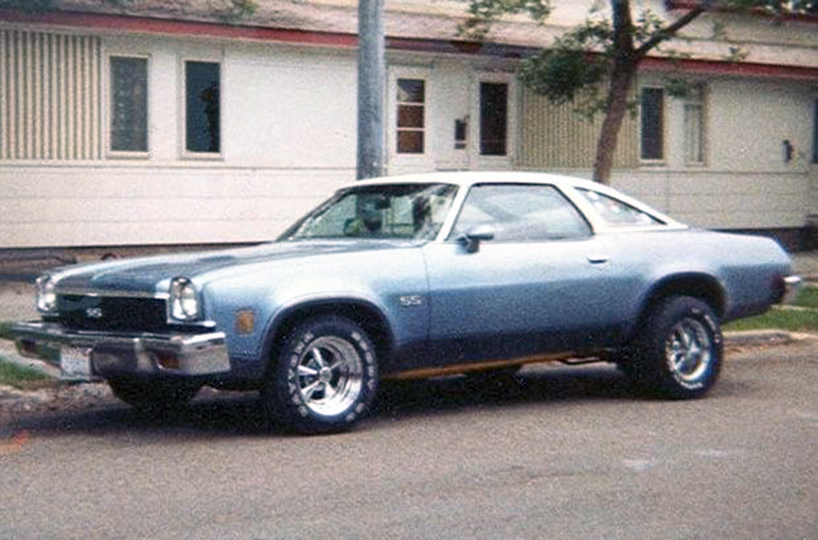
The Colonnade generation arrived for the 1973 model year, and this 1973 Malibu SS was the last SS offered in the Malibu line. The only option I see was the white vinyl roof that was barely seen due to the glare. Of course the wheel and tires were aftermarket.
The engine choices for the SS were a Turbo-Fire 350 V8 with 175 net hp, or a Turbo-Jet 454 V8 with 245 net hp. And the transmission choices were a 4 speed manual, or the Turbo Hydra-matic.
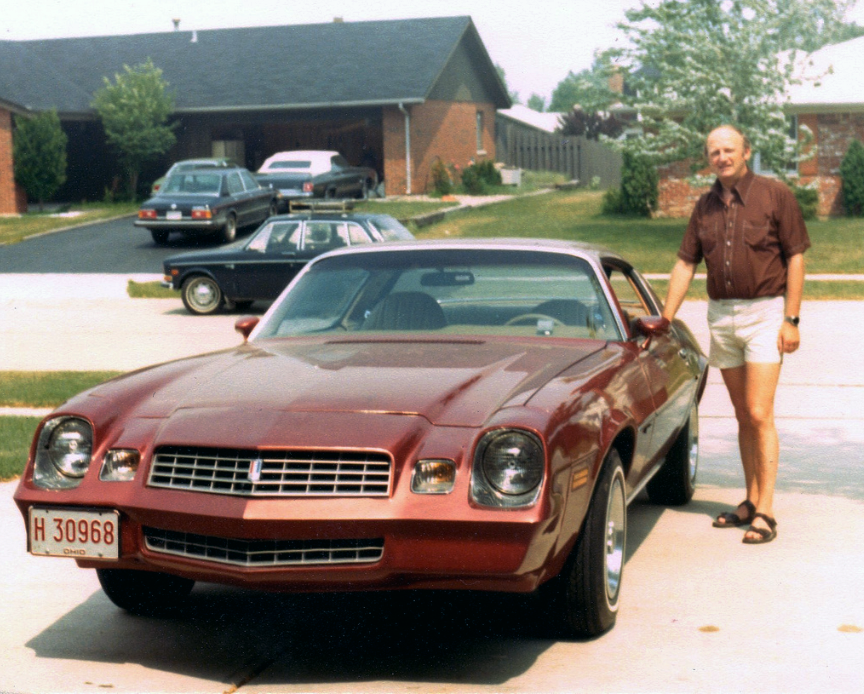
A 1978 or 1979 Camaro was posing with a man in a driveway in a suburban neighborhood. Dual Sport Mirrors, Rally Wheels, and white stripe tires were the options that could be seen, and it had an Ohio license plate that was used from 1976-1979.
Power choices in both years were a 250 ci 6 cylinder, and a 305 and 350 ci V8. Parked in the street was a Volvo 144, and in the driveway a BMW 7 series, and a 1975 Oldsmobile Delta 88 Royale convertible.
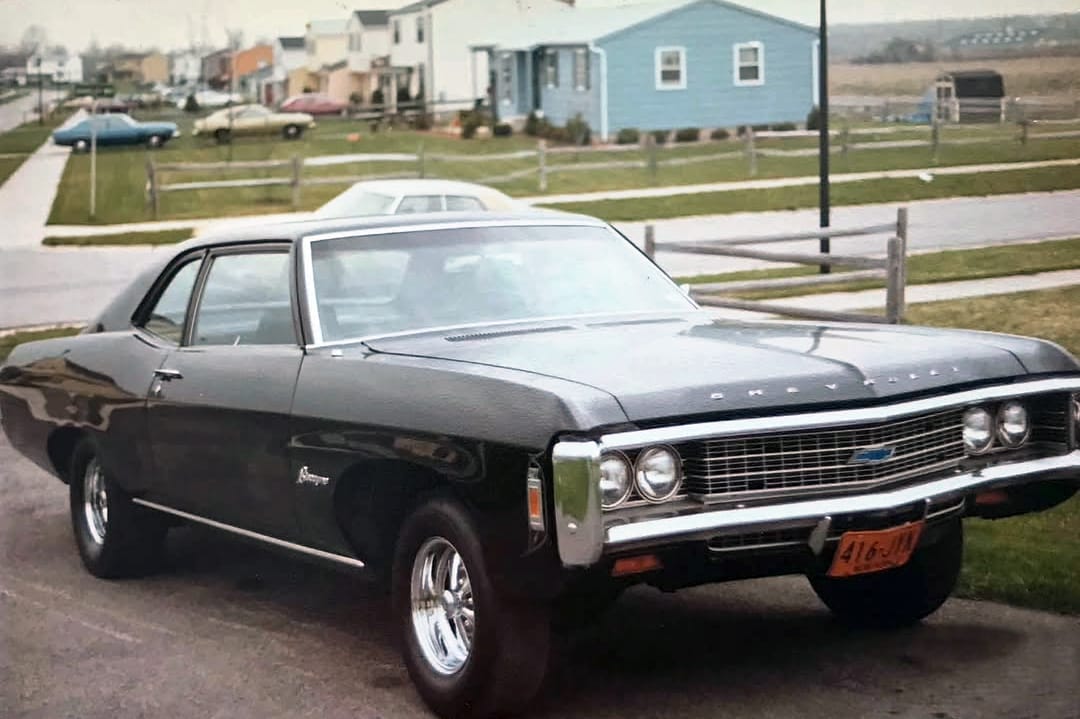
This was the last year you could get a full size Chevrolet 2 door sedan. It was a 1969 Biscayne that had been optioned for high performance, at least in a straight line. The engine callout above the side marker lamp indicates it had one of the Turbo-Jet 427 ci V8’s, which were available in 335 or 390 hp ratings. If the owner would have kept the stock wheels, it would have been a real sleeper. But, I am sure what he chose worked out better at the drag strip.
The license plates were New York issue that were used from 1973-1980, and the neighborhood was a subdivision built in a rural area.
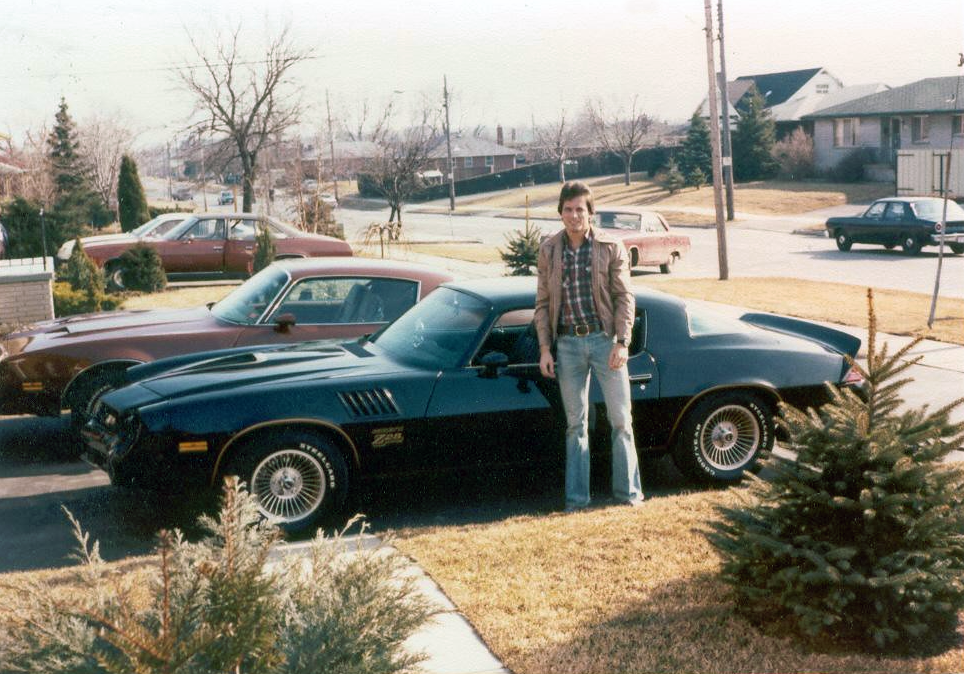
We close our Chevrolet adventure with an image of a man standing by a 1978 Camaro Z28 on a winter day. It looked close to new, and was all stock with the optional aluminum wheels. On the other side of it was its cousin, a Firebird Formula that was from the 1977-1981 range.
The Z28 power that year was a 350 ci V8 with 170 net horsepower. Transmission choices were a standard and close ratio 4 speed manuals, and an automatic.
In the driveway next door was a 1973-1975 Malibu sedan, and one of the 1975-1980 GM H-body fastbacks. Pulling in the drive looked like a Dodge Dart Swinger, and passing by was a 1967 Ford Falcon 4 door sedan.
Thanks for joining us and have a great day!























This reminds me very much of my younger hot rodding days, and my favorite flavor was very much Chevrolet.
I has a ’68 SS396 Malibu in Olympic gold with a green interior and black vinyl roof. With a TH400 and 2.73 gears it wasn’t really that fast but a beautiful highway cruiser. A buddy and I sold it back and forth as financial needs dictated, neither of us ever had the cash to do it justice and eventually he sold it to someone else who did. Oh well…
The dusty Camaro with the canoe gave me a laugh. The “save carmanah creek” traced in the dirt refers to what was known here in BC as the “war in the woods’ between environmentalists and loggers. The tree huggers won the standoff, and then left the area leaving a wasteland of garbage, discarded camping equipment and all manner of refuse that could still be seen in the area years later. The area was saved a park and is well worth the effort to visit today.
Thanks for the walk down memory lane!
Were the mopars had a charger rt nothing came close except 454 chev but they were rare lots of 383 mopars around
Carmine Camaro is a 1978. 1979 Camaros had black inserts within the exterior emblems versus red, white & blue.
Pretty sure the BMW in the pic with the brown Camaro waas an E12 5 series car, either 528i or 530i. As an aside my dad used to have sandals like that in the 70s, called em “Jesus boots” for some reason.
Ah yes, ‘Jesus boots’. As high schoolers circa ’69-’73 in N.E. Ohio this was a common term. I wonder how widespread it was ?
On an unrelated note ‘Camaro’ has to be the most misspelled car name in history. It seems that almost half the used car ads were for ‘Cameros’.
It’s written right on the car, and people still couldn’t get it right!
And we were in Cincinnati, so the term was at least regional.
Yeah, it looks like an E12 5-series. I owned one briefly. Next to the Olds convertible, my first guess was a notchback Monza or similar GM H Body, though it could also be a Mustang II, though the green color looks very GM. What do y’all think?
We had a ’78 Z28 and despite its faults we loved it and only sold it as 220,000 miles (by which time it was completely worn out). At less than 1,000 miles the needle and seat needed replacement and the shifter level came out of place as if I had pulled a stick out of some muck. What a surprise. Fortunately, we were only two to three miles from a Chevy dealership which was happy to fix things under warranty. Then a month later the eight track tape player malfunctioned, and when I went to change the oil at 2,000 miles, the filter was on so tight that I wound up using epoxy to attach a bottom mounted filter wrench to the oil filter so I could get a firm purchase on the filter to remove it. Then when I had placed out German short hair pointer in the garage with the Z28 I came home to see that it had chewed off the center part of the (plastic) front bumper. The auto body repairman is likely still laughing 43 year later. Shortly after the seat-back pivot broke and had to be welded to secure the driver’s seat in position. A few years later the HEI electronic distributor system left me stranded the night before I was to take the GRE, and I had to run five or six miles to an auto parts store (and back) to do a roadside repair in the dark. At roughly 180,000 miles the driver’s side real wheel suddenly went shooting past the rest of the car at maybe 60 mph. Fortunately we safely stopped and I removed the driver’s side front wheel to replace the missing rear wheel and used the compact spare for the driver’s side front wheel. Why did the rear wheel go flying past the rest of the car? Four of the five lug studs had sheered off. Yes, we drove 45 miles home at a top speed of forty mph on one rear lug stud, and yes, it crushed the driver’s side rear fender when the wheel detached from the lug studs, and when the car dropped to the highway the transmission was cracked and needed replacement. Interestingly enough the independent mechanic (who specialized in Chevrolet) had a very dismissive attitude about replacing the transmission, “It’s only a Camaro.” Well, for us, it was our Z28 Camaro, and it was, “Fix it as we could not afford to buy a new one.” Not a whole lot later I went out hunting on a 10 degree afternoon during a heavy snowfall. The Z28 got me there and back safely (20 miles from home); however, when I got home I parked the car on our driveway and when ten minutes later went to move it into the garage it would not start. Turns out that the two primary mounting bolts holding the starter in position snapped off. I could not complain though as it had happened at home instead of forty minutes earlier twenty miles from home in the freezing cold (before cell phones). In addition despite my replacing worn out batteries, alternator, and water pumps, and a radiator, and regular oil and oil filter changes, it left my wife stranded several times on her commute to or from work. Regardless, we loved that car. Interestingly enough, when I went to sell if for $600.00 in 1991, one potential buyer was ready to fist fight me over that fact that the blower motor only worked on the lowest speed. Fortunately another guy bought it and fixed it up and we saw it around town every now and then for the next fifteen or so years. And for a real bonus, every tie we watch Terminator 2: Judgement Day, we get to see an almost identical Z28 sitting in the Voight’s driveway.
Nice, in So. Cal. Camaros were so plentiful they were derided as “bellybuttons” because ‘everyone had one’ .
-Nate
74 Camaro on the left and 75 or 76 on the right.74 didn’t have bumper guards, they started that in 75 and 77 Camaros had the bumper painted to match the body. I drove a 74 Z28 when I was in high school, it’s sitting outside and I’m 63 by the way.
Let me tell you about the one that got away.
In 1978 I was looking to buy my first car. The wife of the owner of our local butcher shop was selling a 1969 Camaro convertible for $900. Blue with a black top. 307 V8 with a Powerglide. Other than needing a new top (which I could buy a replacement from JC Whitney for $100) it was in great shape. Well, practical me decided to instead go with a nearly new ’77 Chevette from the local Chevrolet dealer. It even smelled new!
Looking back I do wonder how the social standing with my High School classmates would have changed if I had gone with the “cool” car.
P.S. I did buy a set of J.C. Whitney black racing stripes for my Chevette. They looked pretty good.
In 1978 I had my eye on a ’73 2 door Ford Gran Torino with a 351. Instead I chose my mom’s 4 door ’65 Impala with a 283. I’m not sure if the Gran Torino would have increased my social standing with classmates but I’m sure the ’65 Impala decreased the chance of speeding tickets.
Ah, it also had a large back seat…
Should be illegal to put hubcaps on a Camaro.
Given the girl standing in front of it the evidence would be against you.
Bitchin’! When I was in high school in the early to mid-80s, disintegrating mid- to late 70s Camaros were a common site. I can’t recall ever riding in one that wasn’t a rattletrap – but then again, every one of them was on at least its third (cash-strapped) owner. Ditto for the couple of Monte Carlos I rode in. I don’t know if they were inherently shoddy vehicles or not but by the time they were a teenage boy’s ride, they weren’t going to be fixed right.