
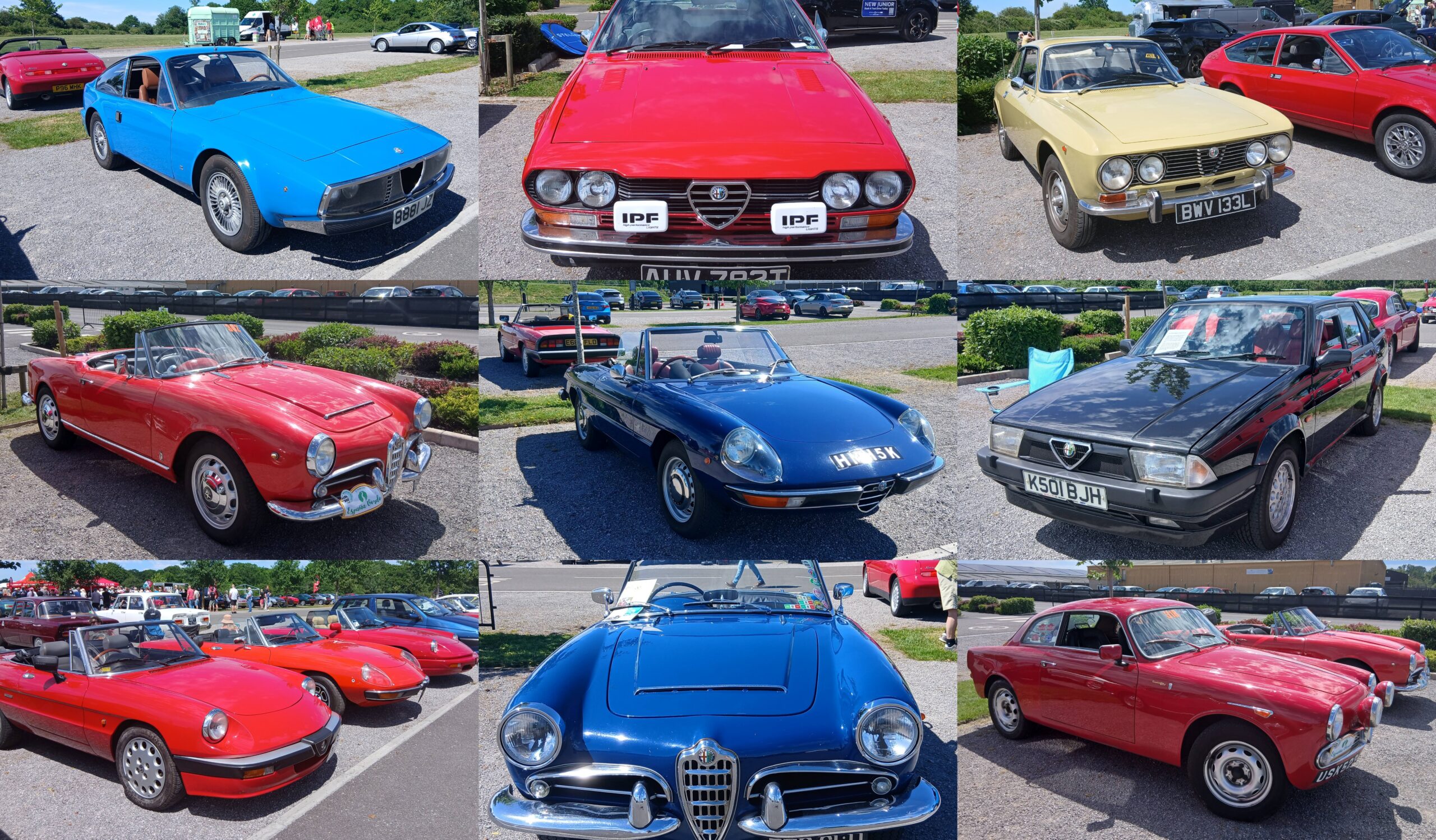
Alfa Romeo—and Alfa Romeos—get into your system, and often the only credible response is to meet some fellow patients (or enthusiasts, as I prefer to call them) for a little group therapy. I think it’s fair to say that, whatever the state of current Alfa Romeo sales in the UK, it is probably one of the best-supported overseas brands in the UK classic-car community. South West Alfa Day (SWAD), organised by the energetic and professional Alfa Romeo Owners’ Club UK, provided the perfect opportunity for such therapy, held in the extensive grounds of the Haynes Motor Museum in southwest England. Here are some personal highlights.
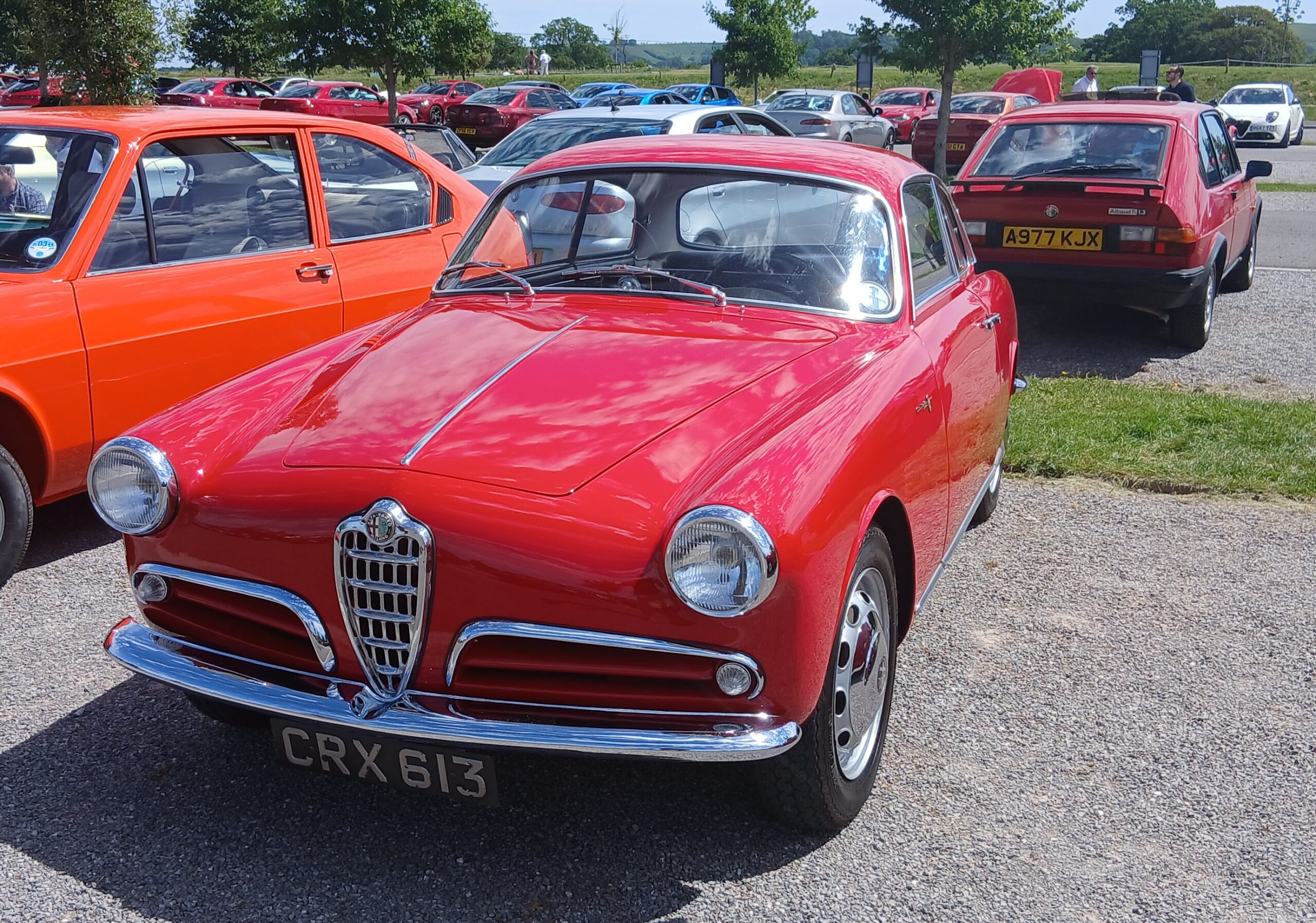
A 1961 Giulietta Sprint – this actually came to the market ahead of the saloon it was based on, due to issues in the supply chain and in establishing manufacturing capability. The first cars were built in 1954 and were built by Bertone rather than Alfa. The engine was the 1290cc version of the famous Alfa twin cam four cylinder, which was used into the 1990s.
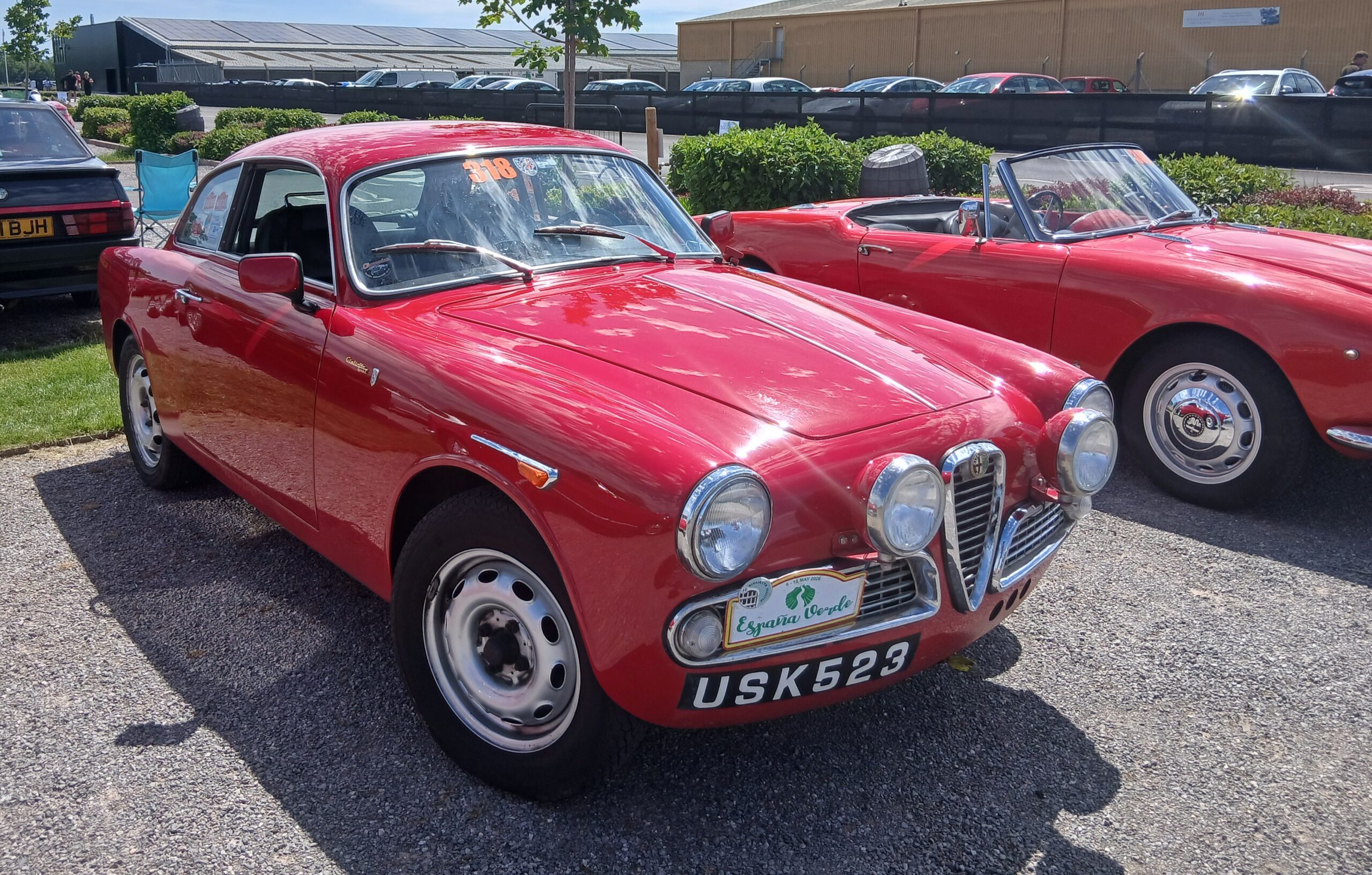
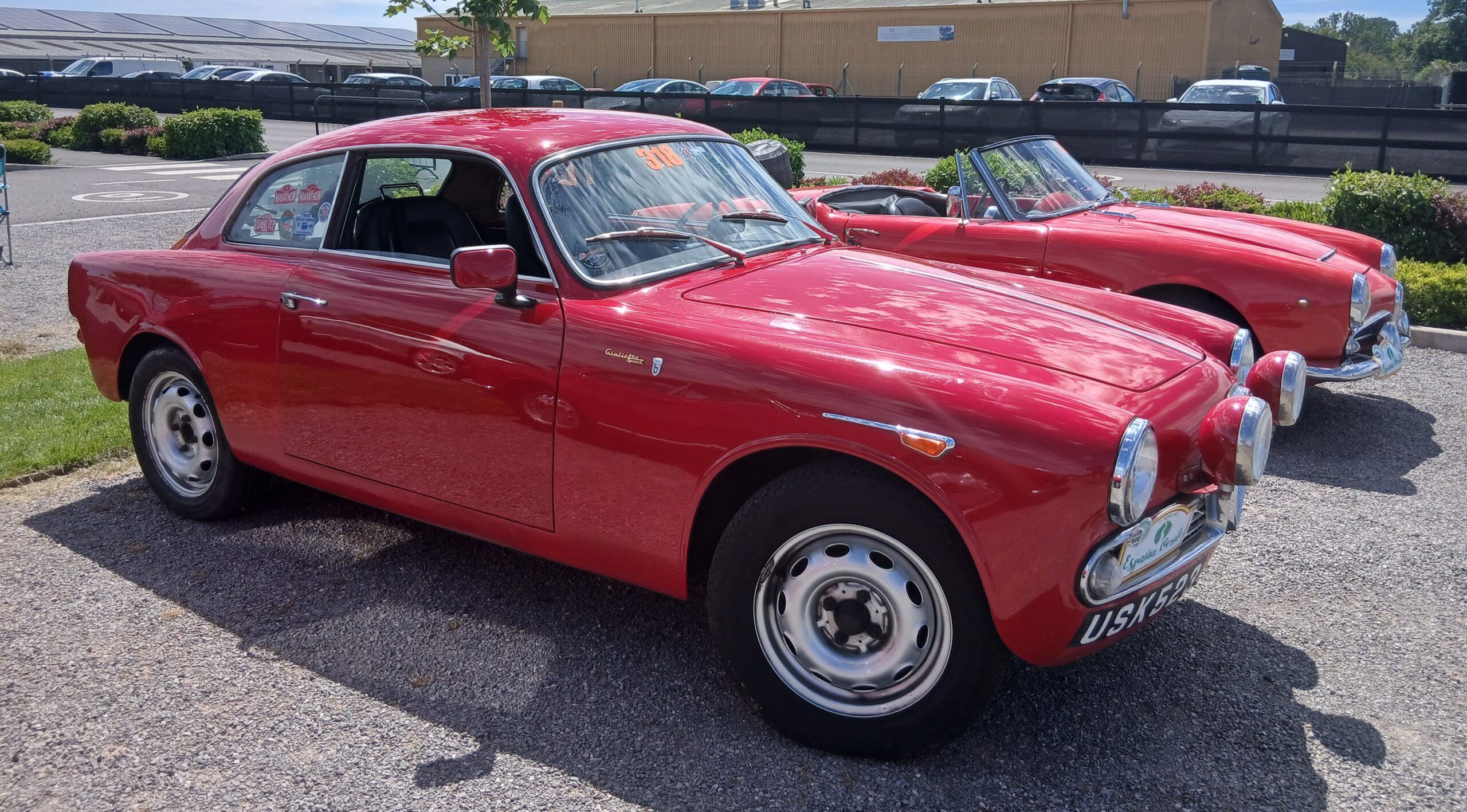
This is a 1962 car, gently configured for motorsport with a 1570cc engine.
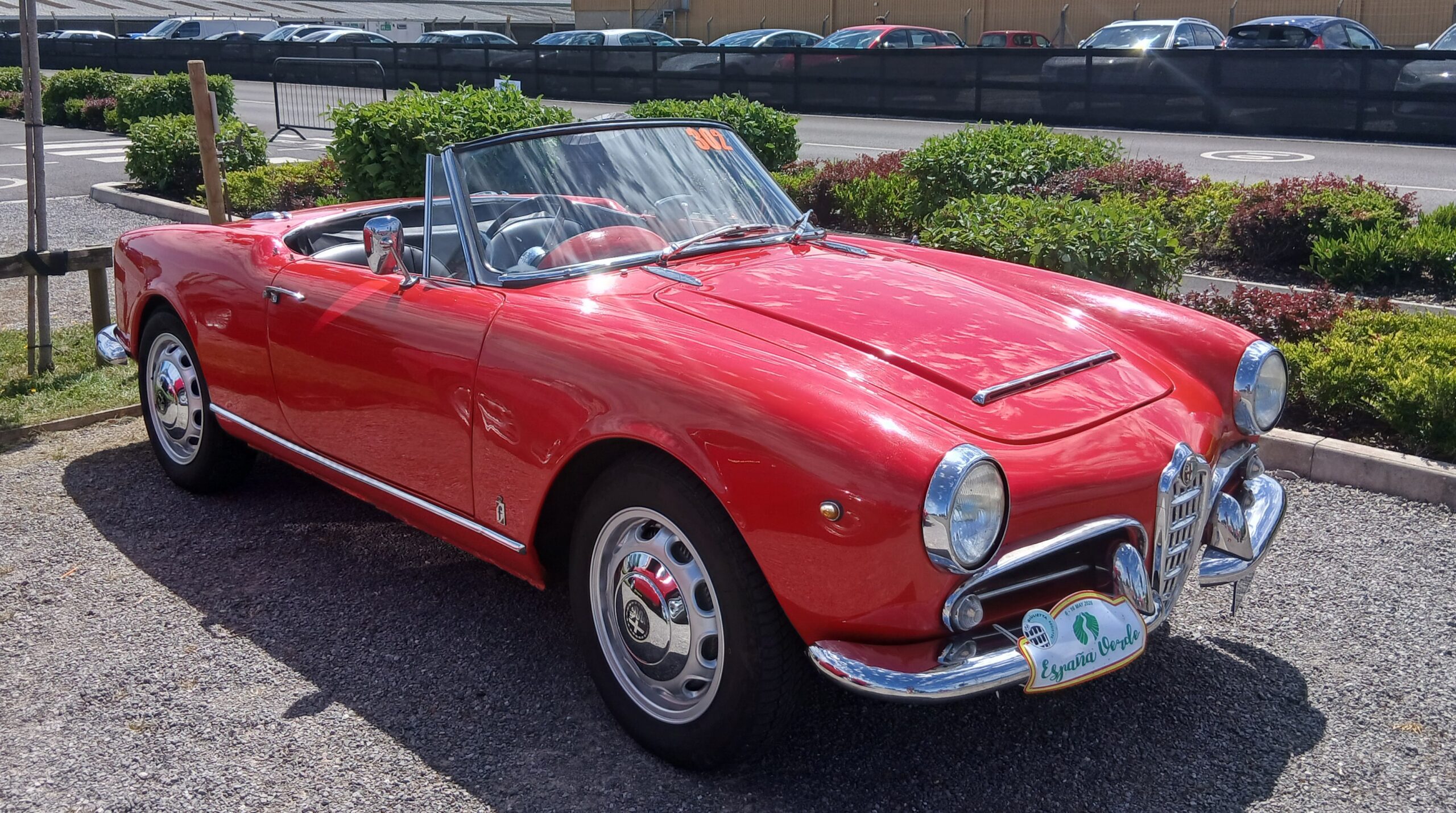
My personal favourite of the first series of Giulietta is the Spider – do I need to explain?
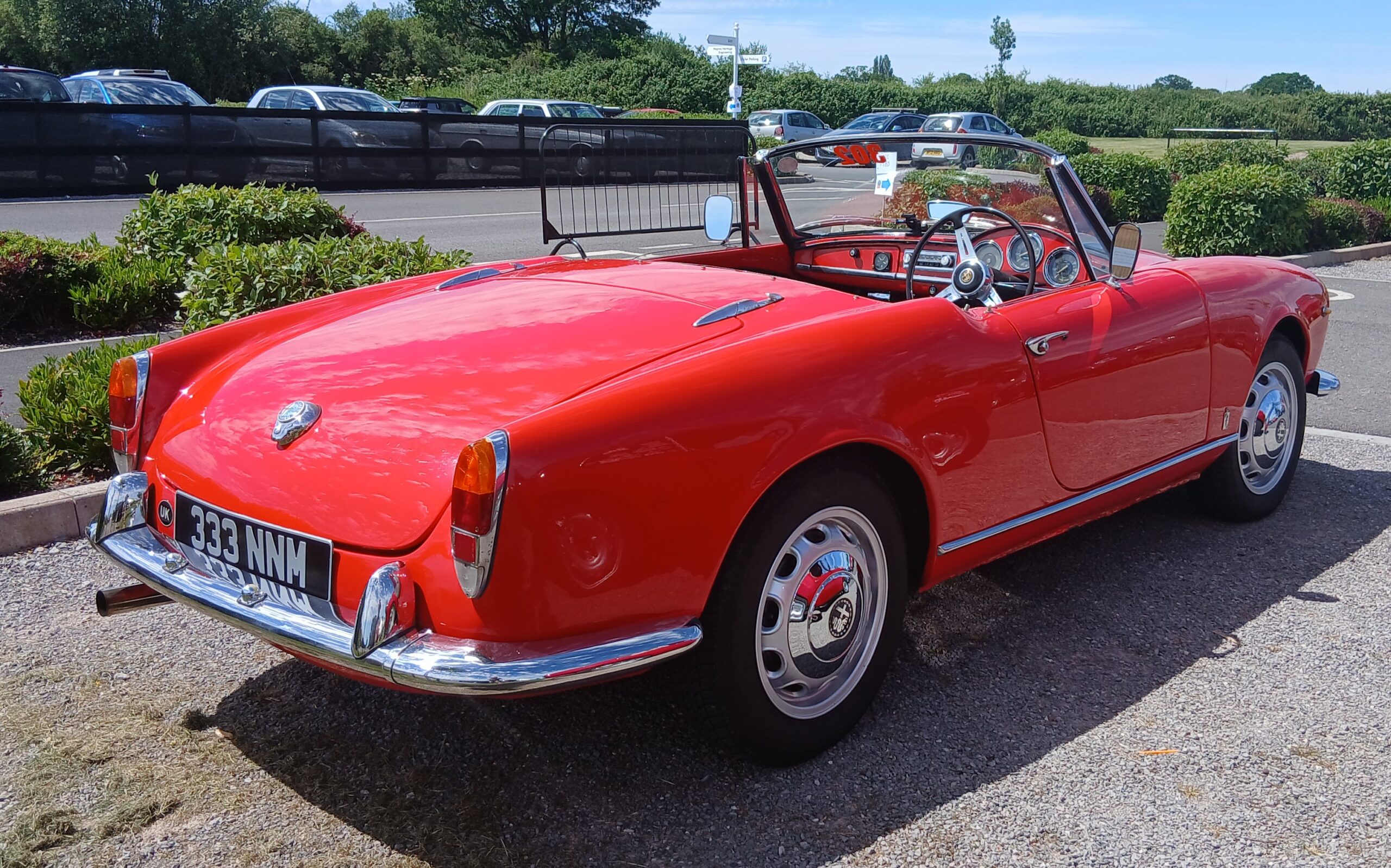
This 1964 car has the 1570cc engine. Styling was by Pininfarina for this variant and we can thank Max Hoffman for the suggestion of building it. This is actually a later Giulia Spider, most easily distinguished by that very neatly integrated raised bonnet line.
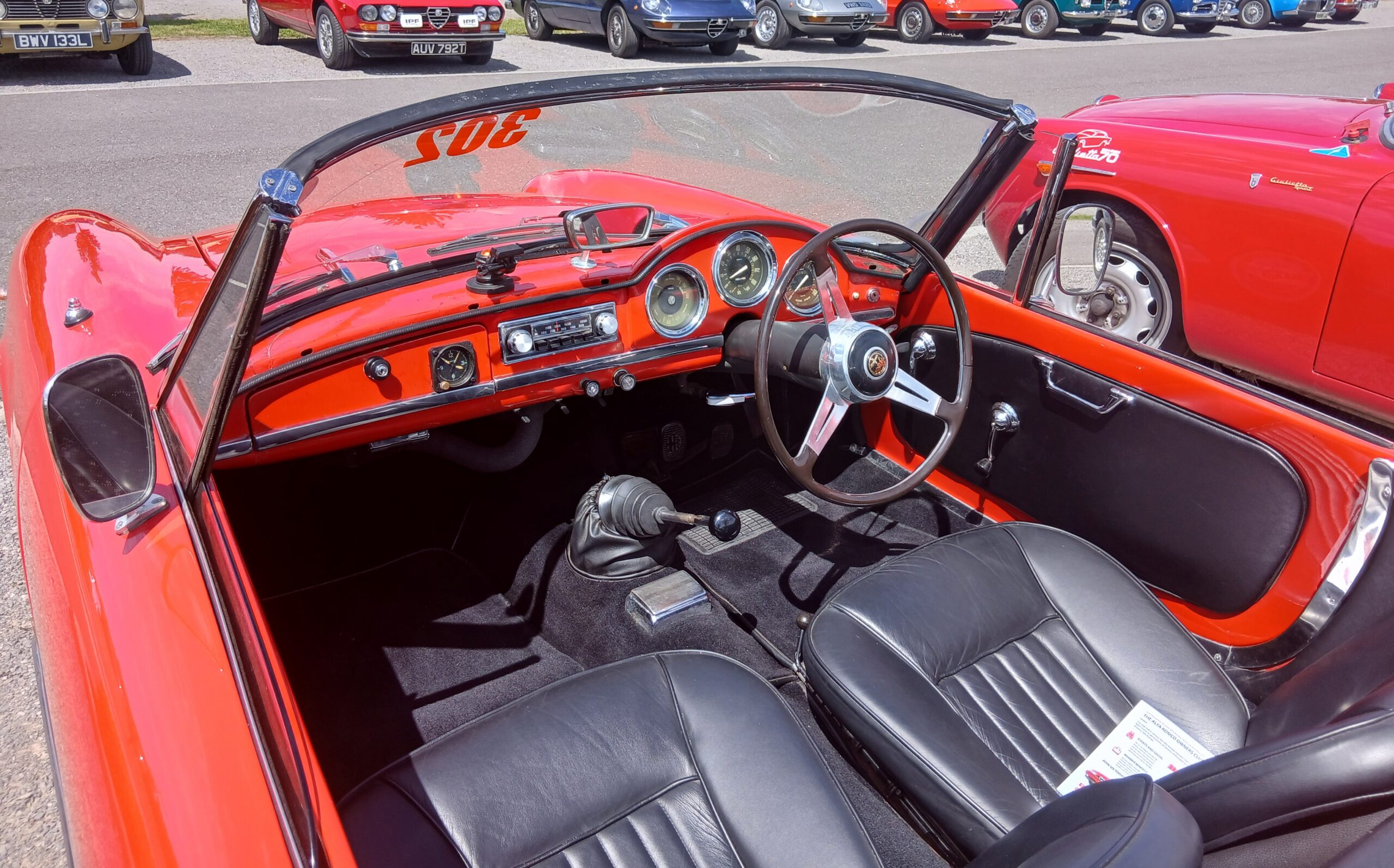
Sometimes, a painted dash is all you need. The glovebox lid is another Giulia only feature.
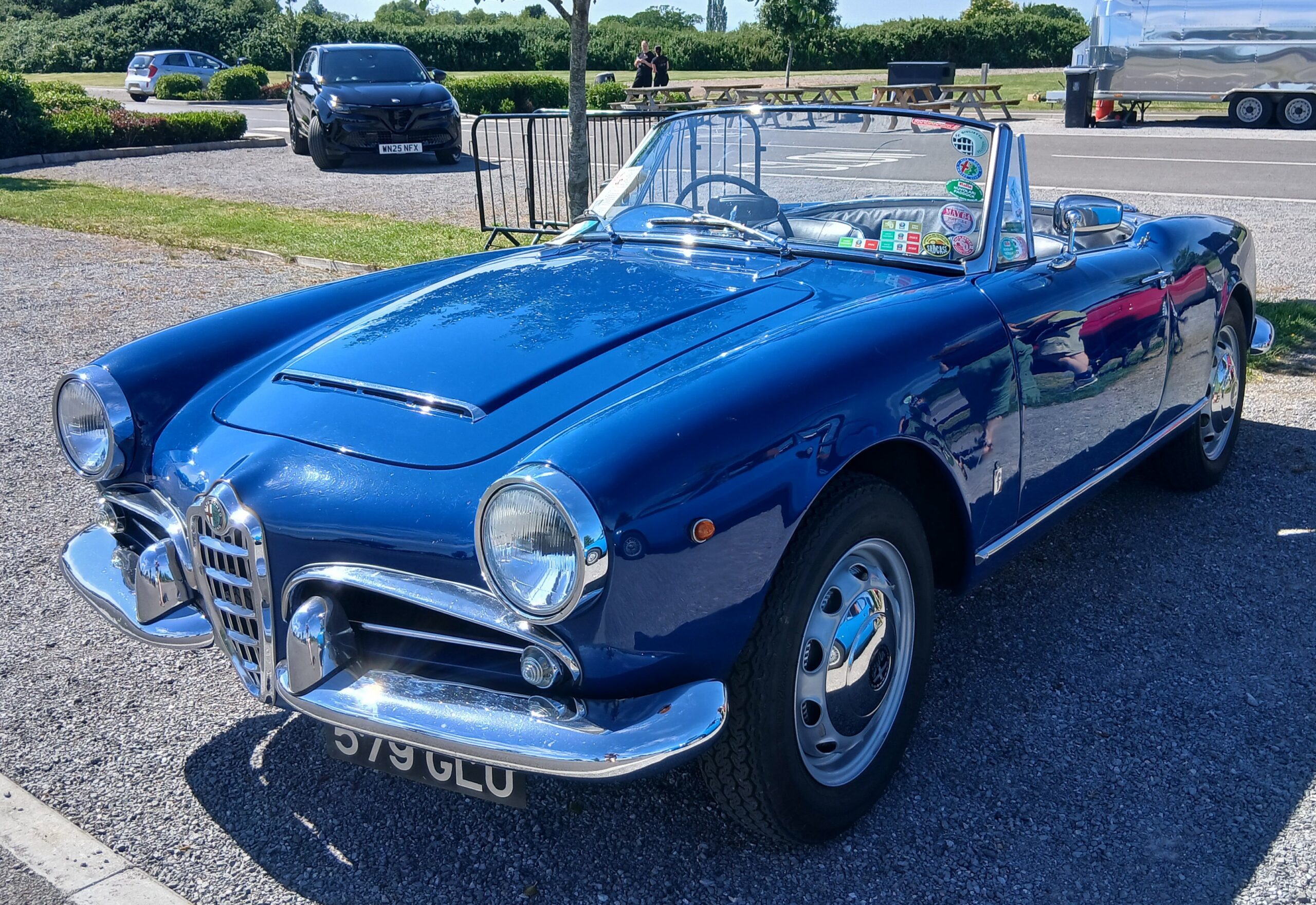
And sometimes, you don’t even need Rosso Alfa – this navy blue exactly hits the spot for me.
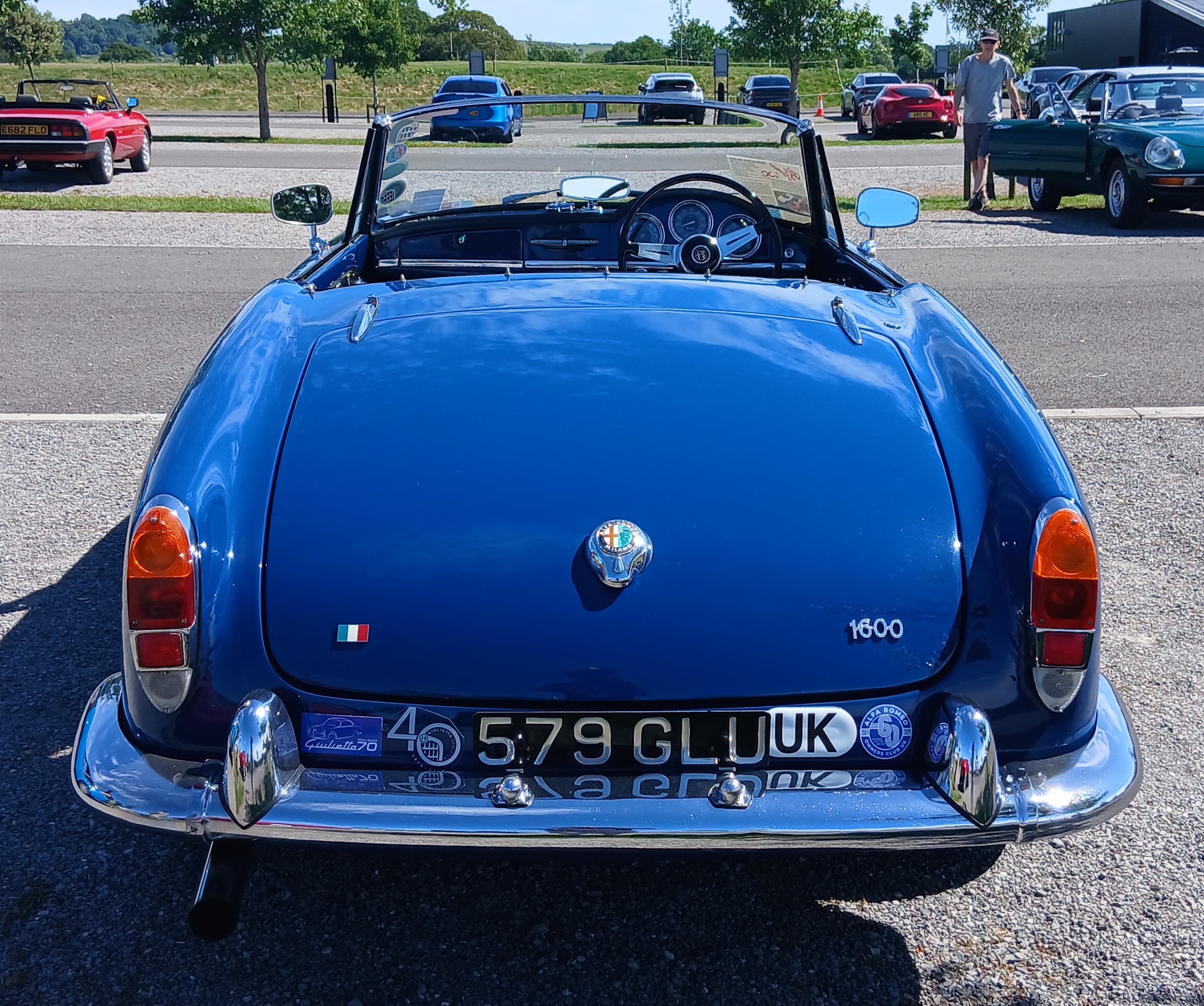
This is a 1963 car with the 1570cc engine.
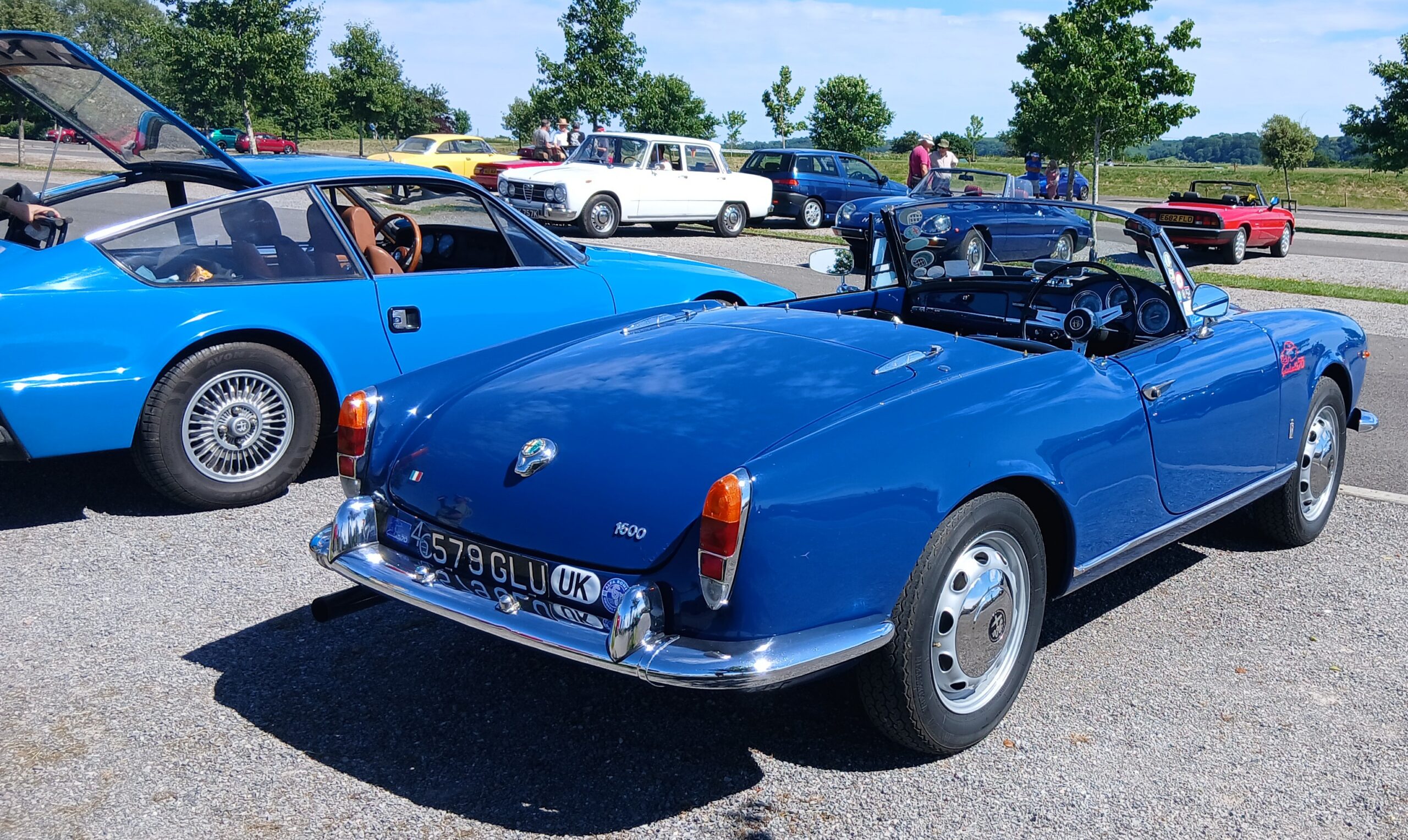
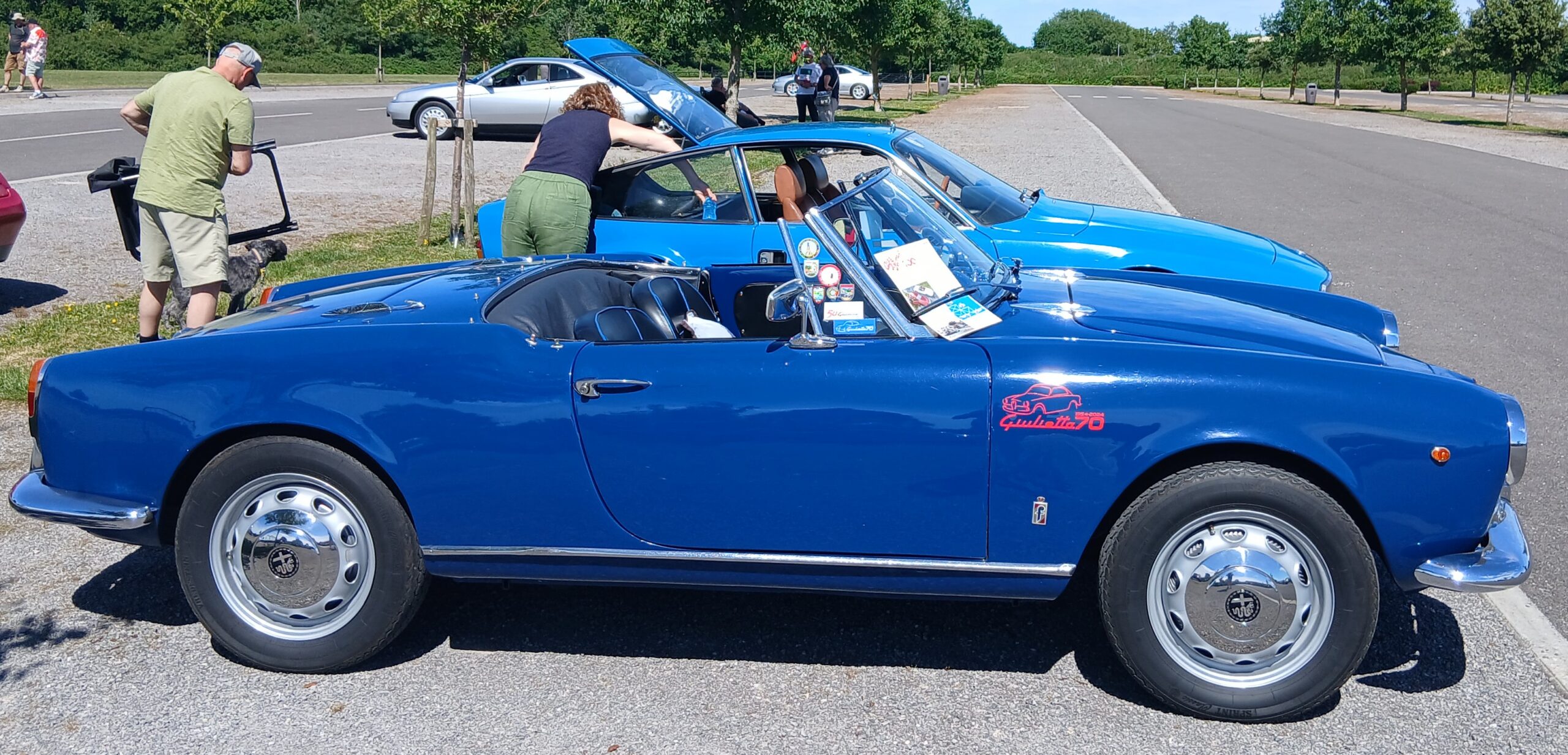
And who really needs elaborate wheels and trims?
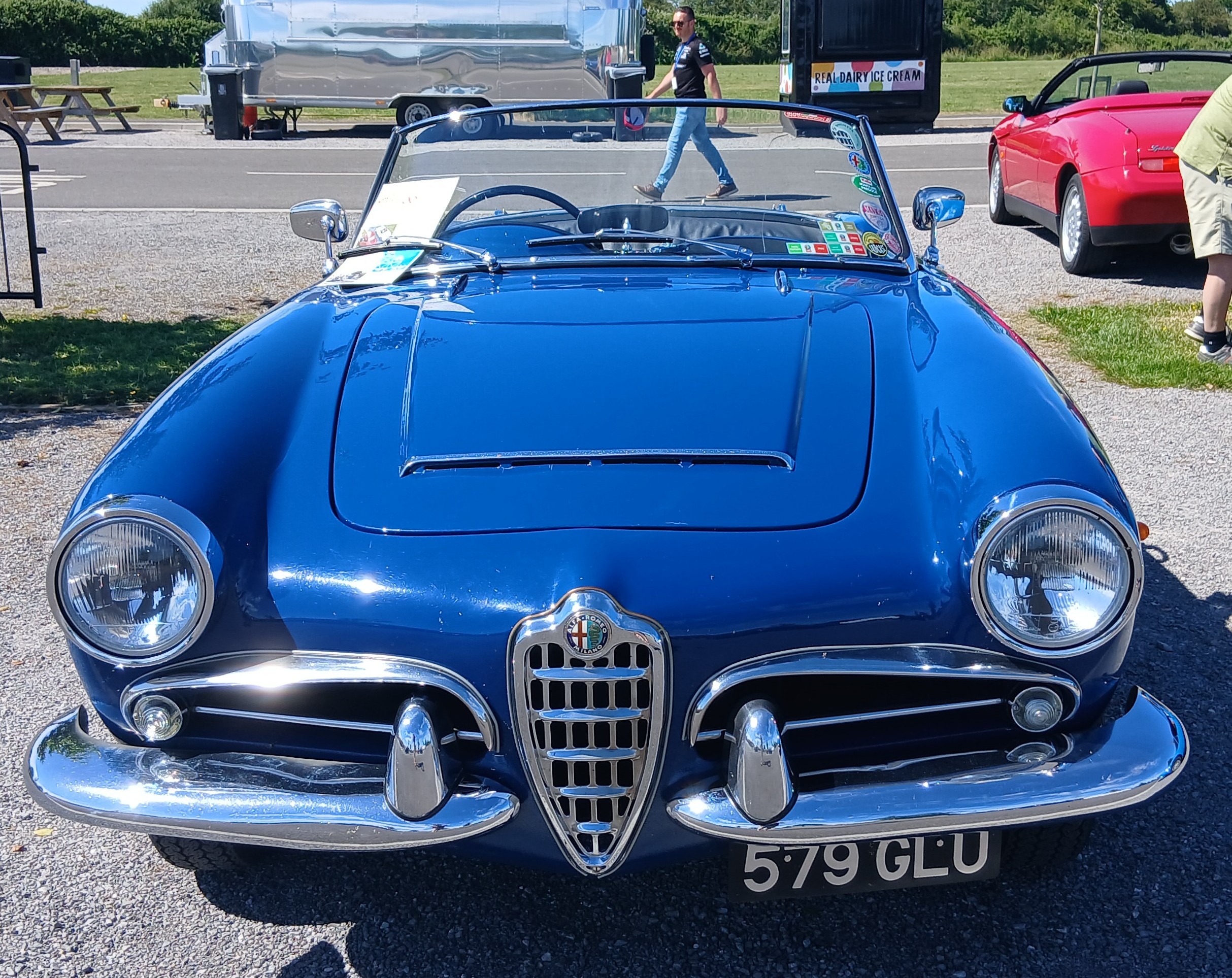
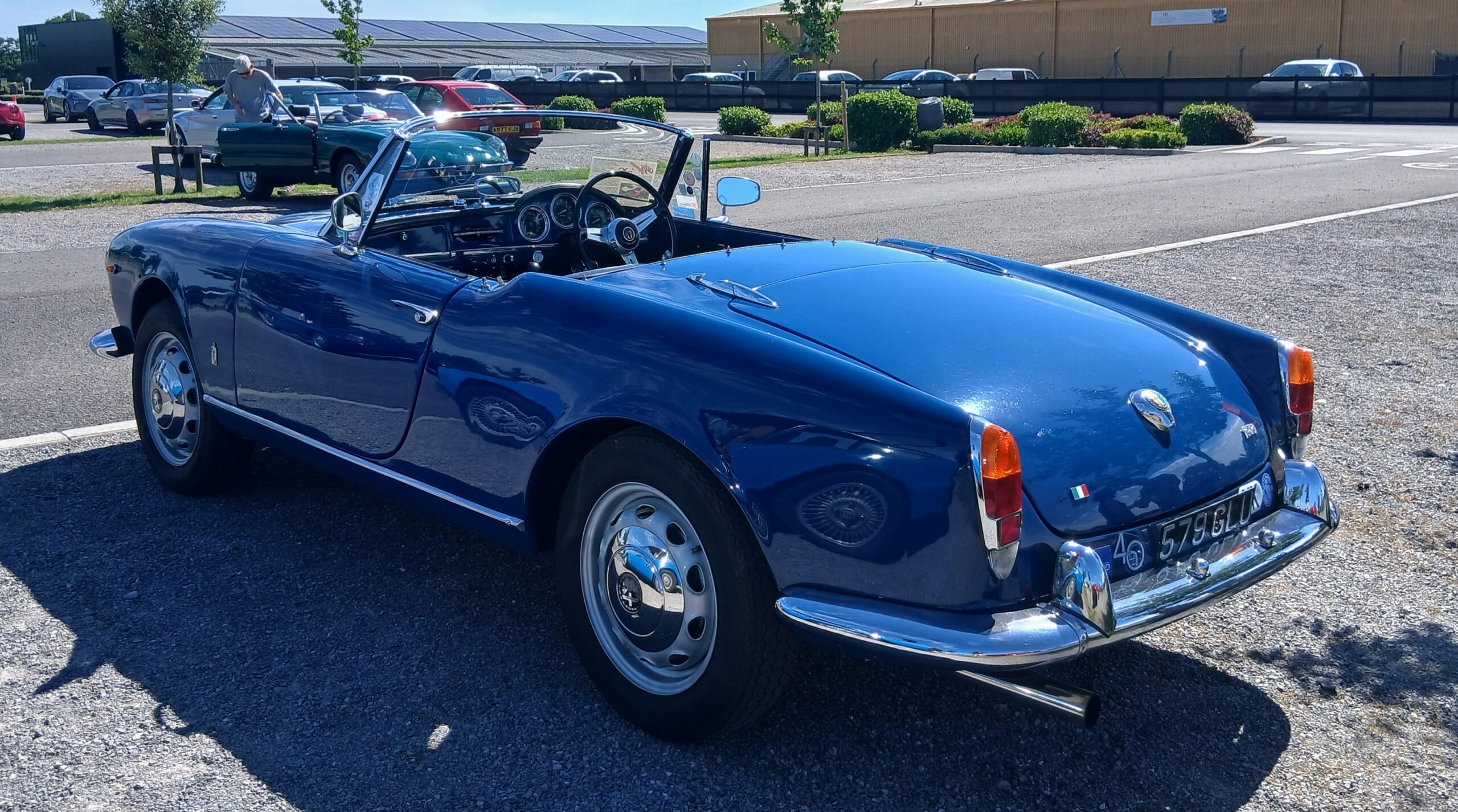
Has this ever been matched visually for a compact convertible?
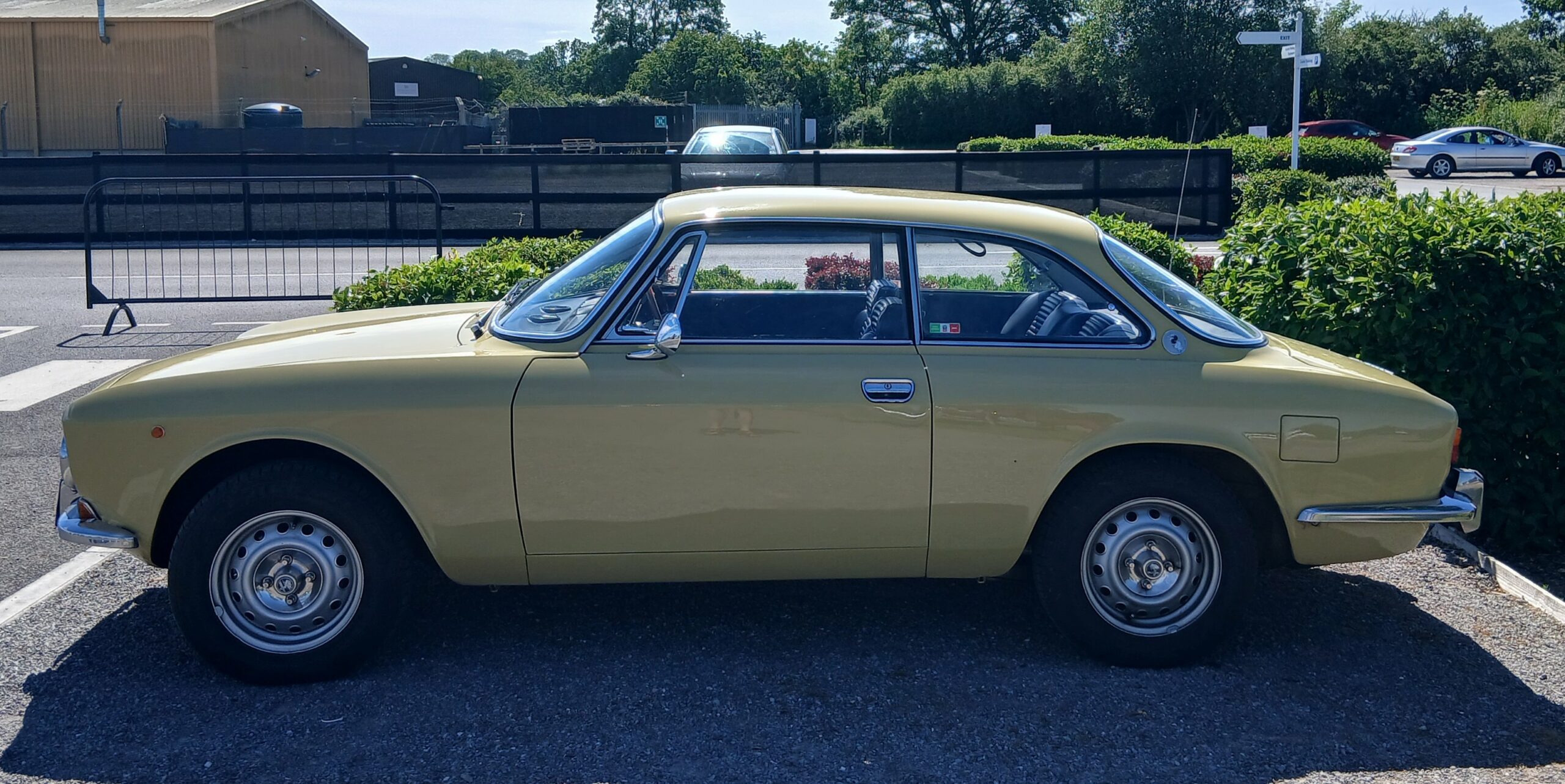
The Giulietta/Giulia Coupe was replaced by an all time great – the Tipo 105. Again styled by the Bertone company but the name most associated with the styling was that of a promising young designer called Giorgetto Giugiaro. Not a bad piece work to start your career.
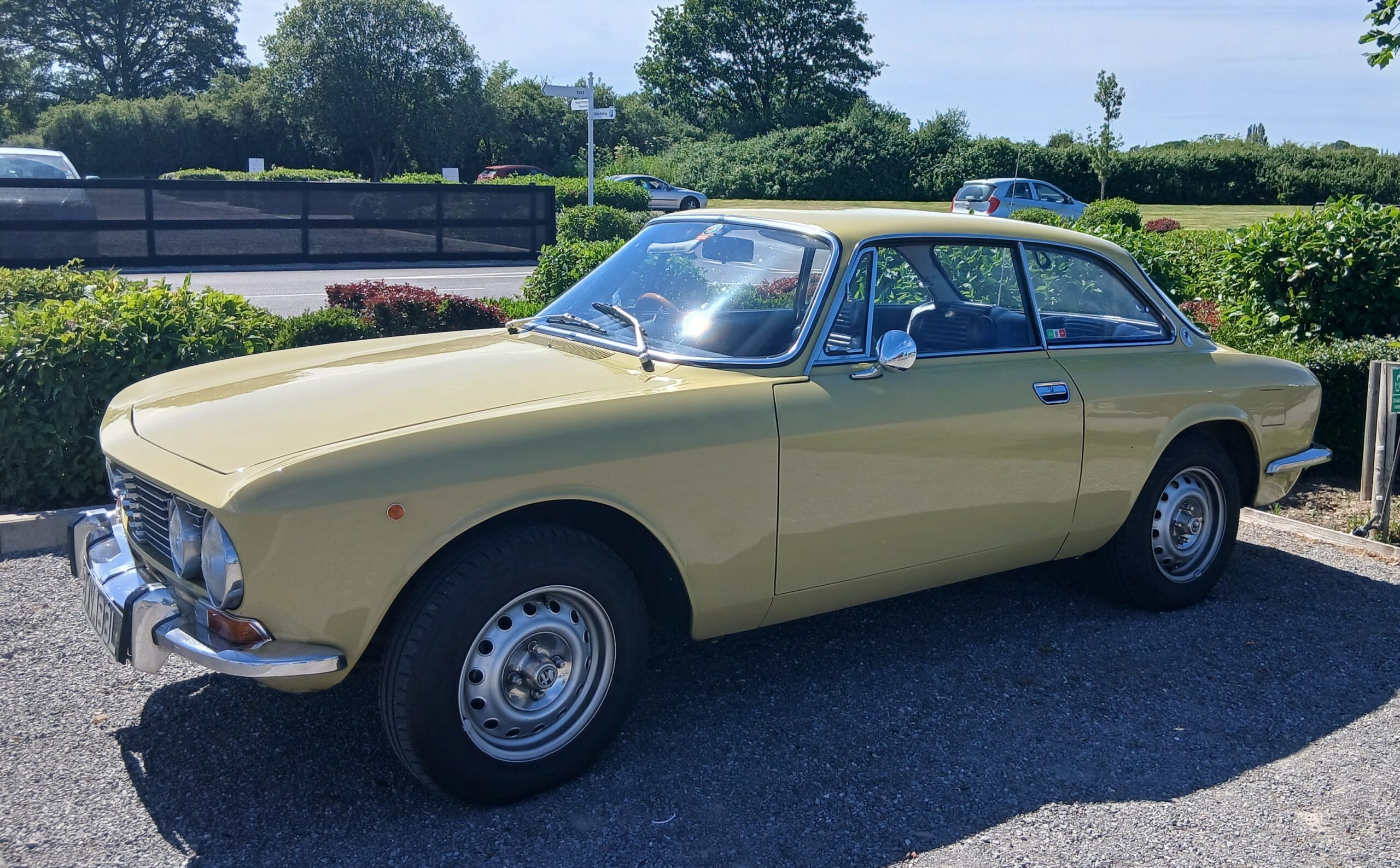
This car came in many variations from 1963 to 1977, ranging from 1.3 litre to 2 litre, a few convertibles and in lightened GTA format.
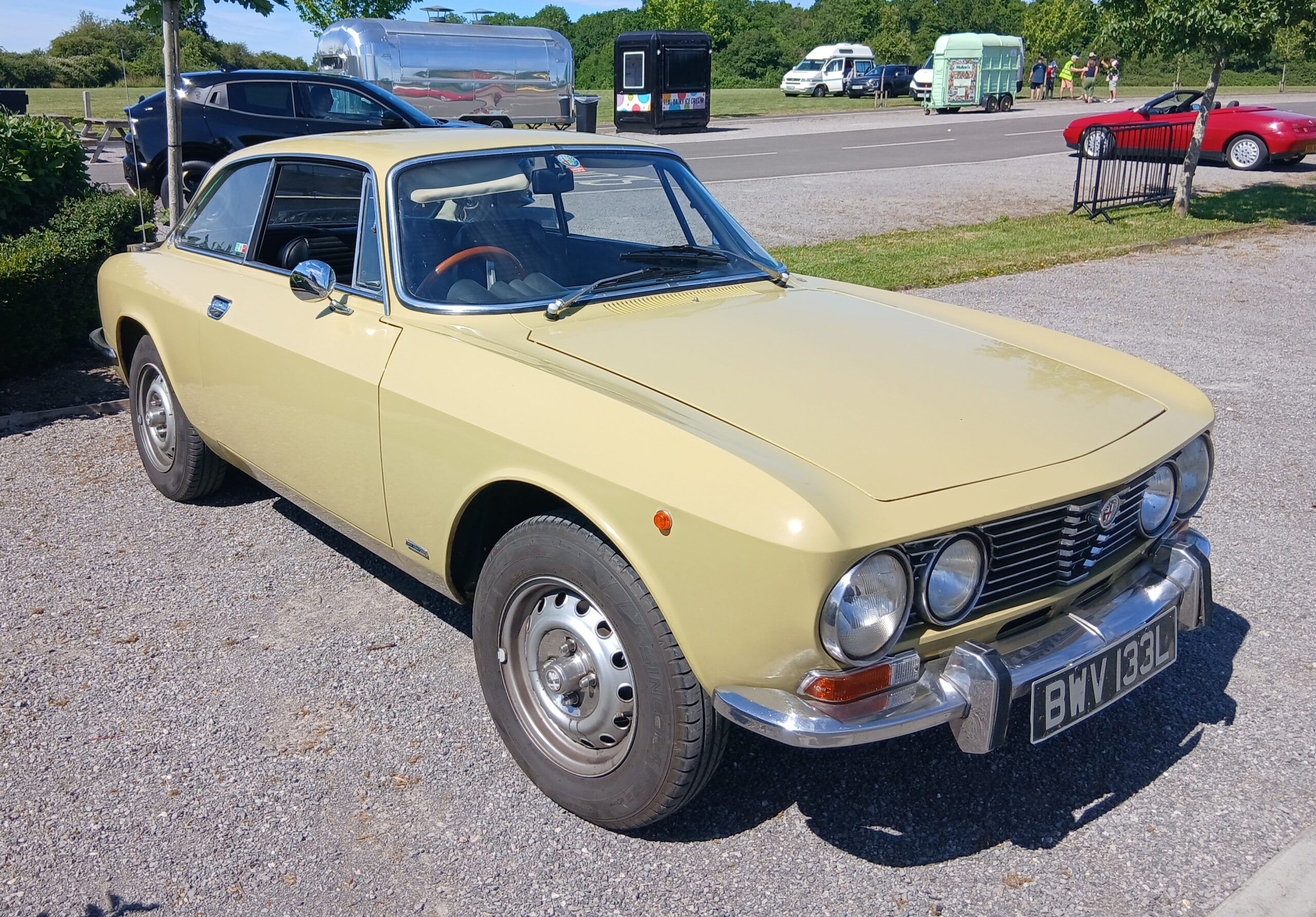
This is a 1973 2000 GTV – GTV is Gran Turismo Veloce, denoting the higher power than the initial 1300 and 1600 cars.
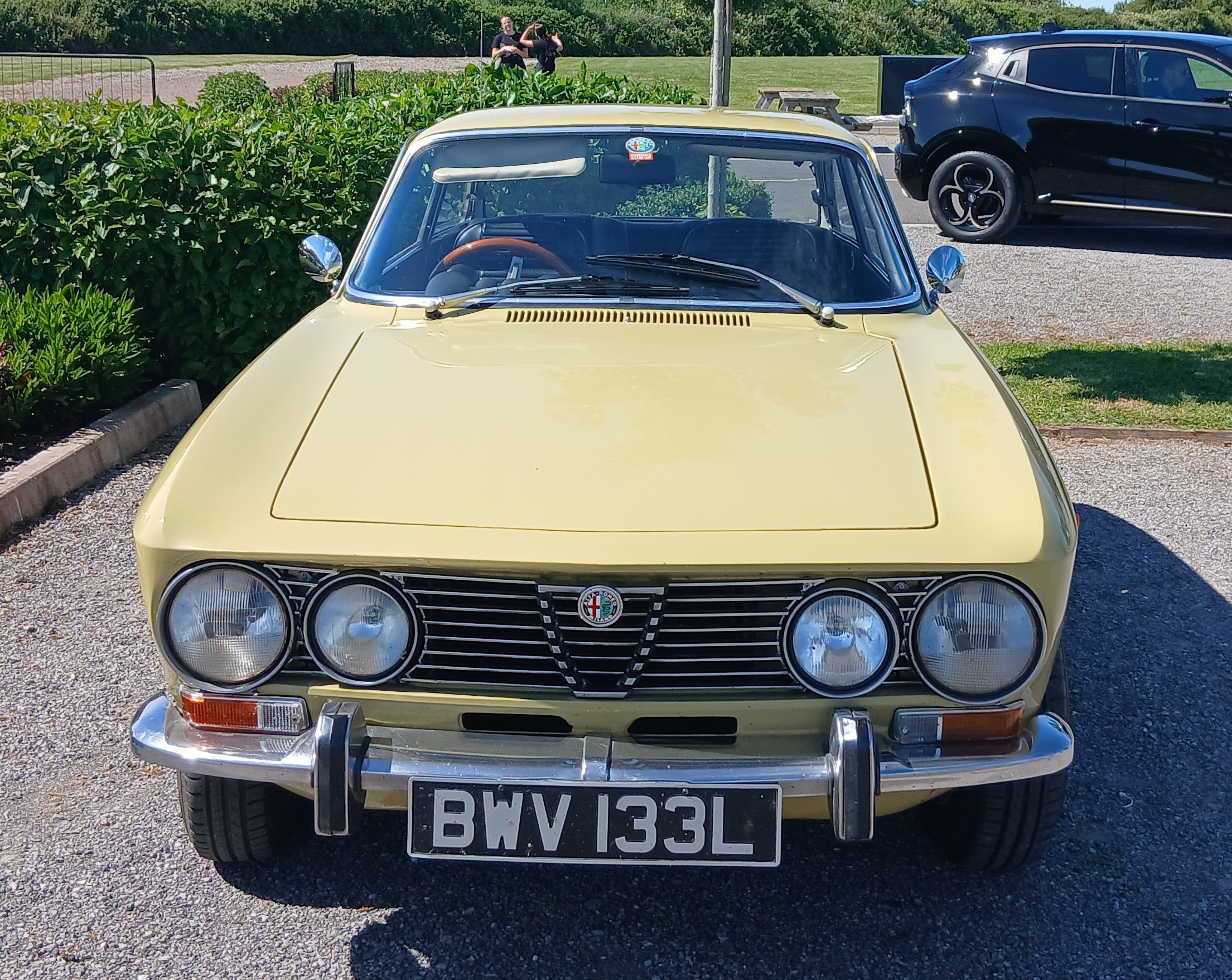
Perhaps the best looking coupe of the 1960s? In the background, a 2026 model Alfa Romeo Junior, a car for a future CC post.
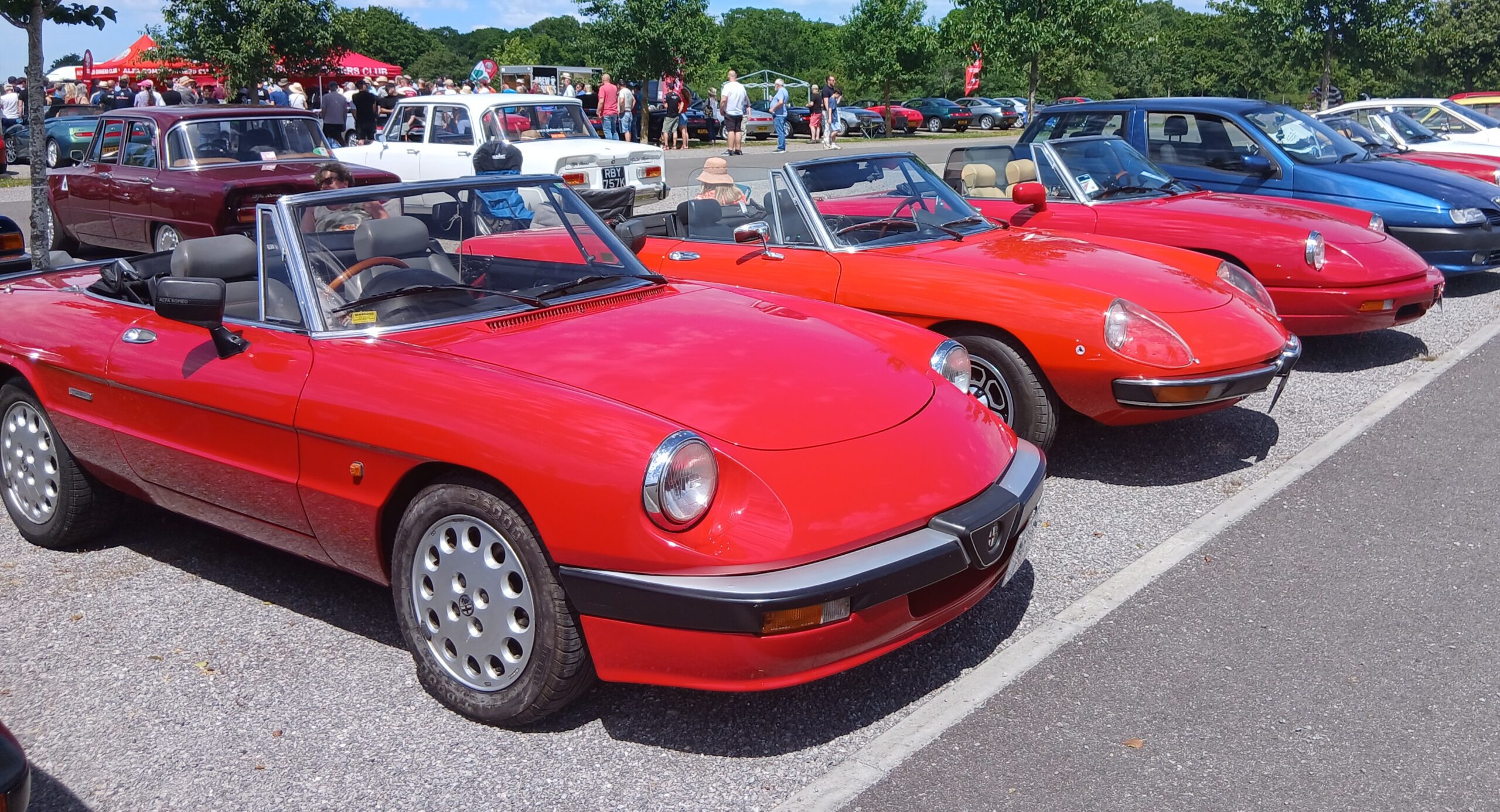
Of course, no Alfa event could feel complete without a selection of Tipo 105 Graduate Spiders, and SWAD was no different.
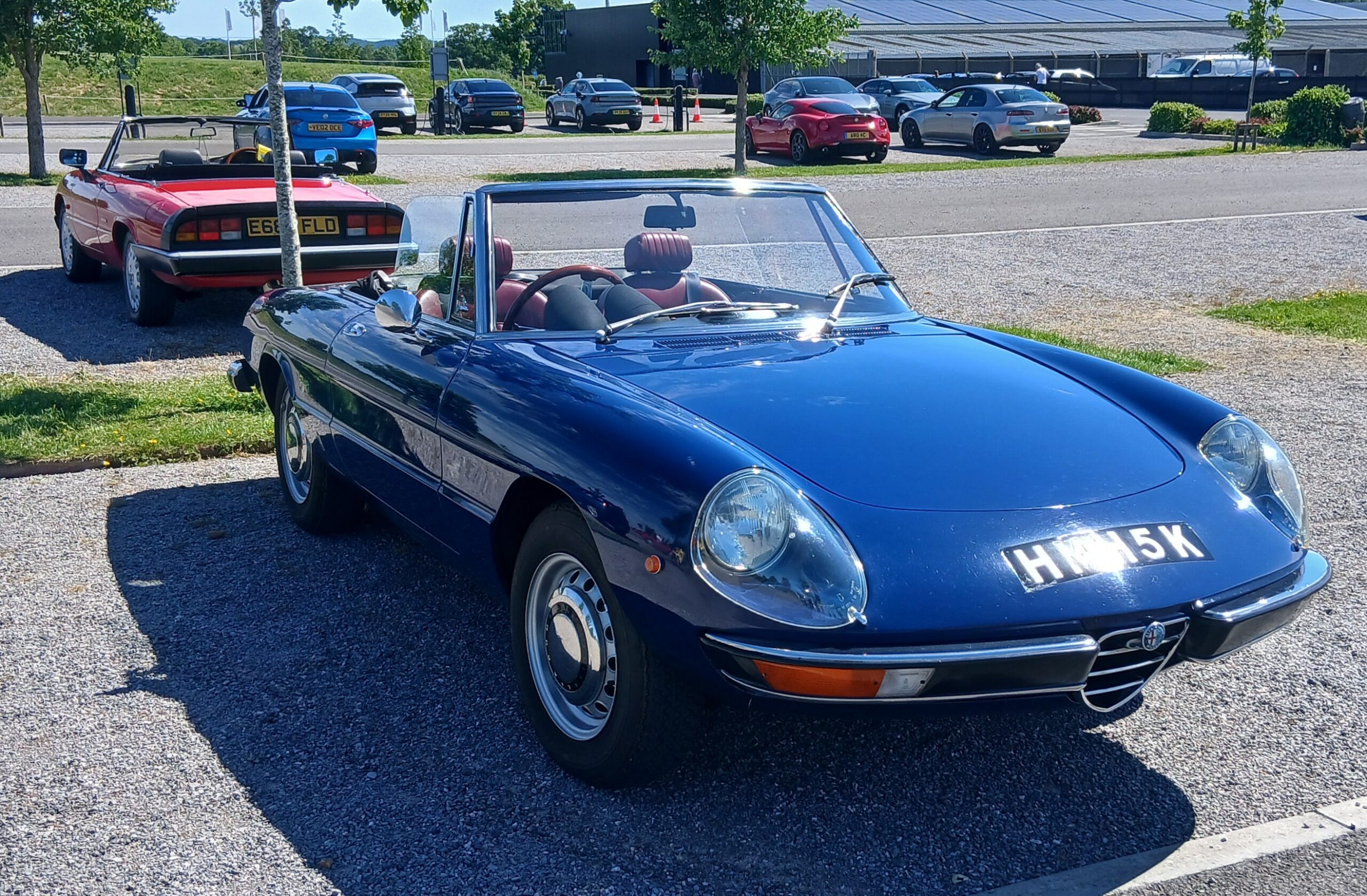
Preferences always exist, but I suspect more prefer the earlier series 1 and 2 cars to the later big bumper series 3 and 4.
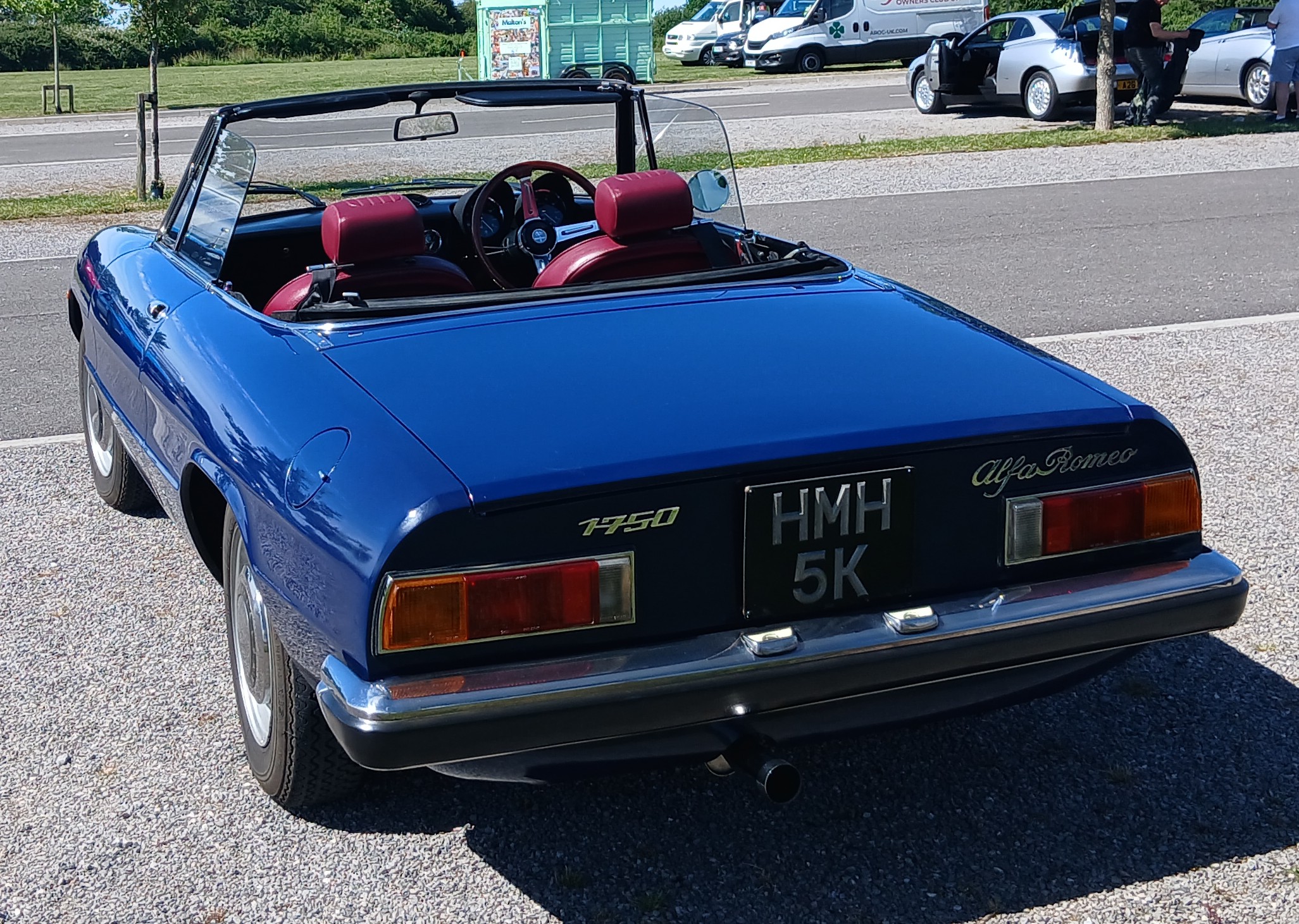
This is a 1971 Spider 1750, with the 1779cc version of the Alfa twin cam engine. Series 2 cars have the Kamm tail over the rounded tail of the series 1.
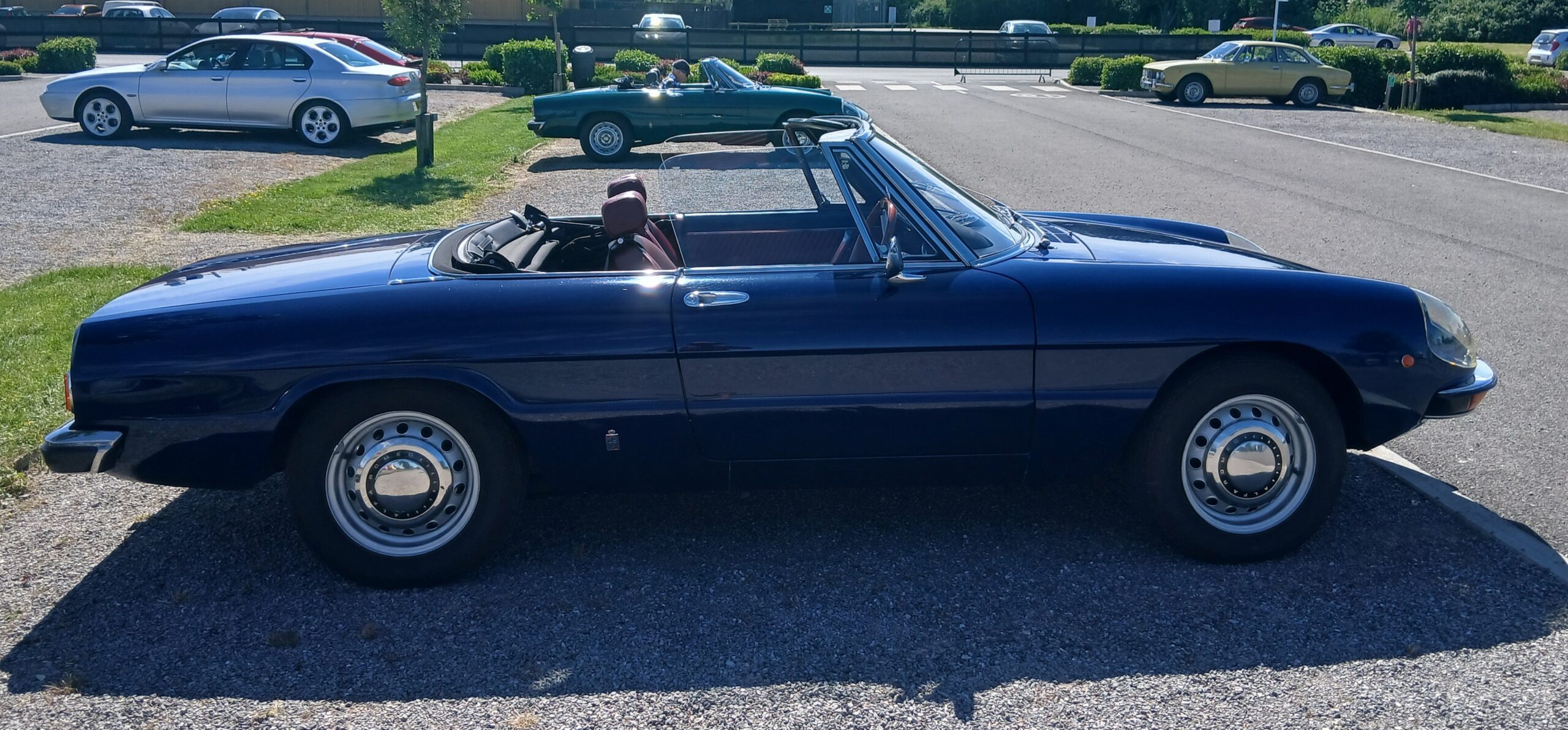
Dark blue works here too, especially with the red interior.
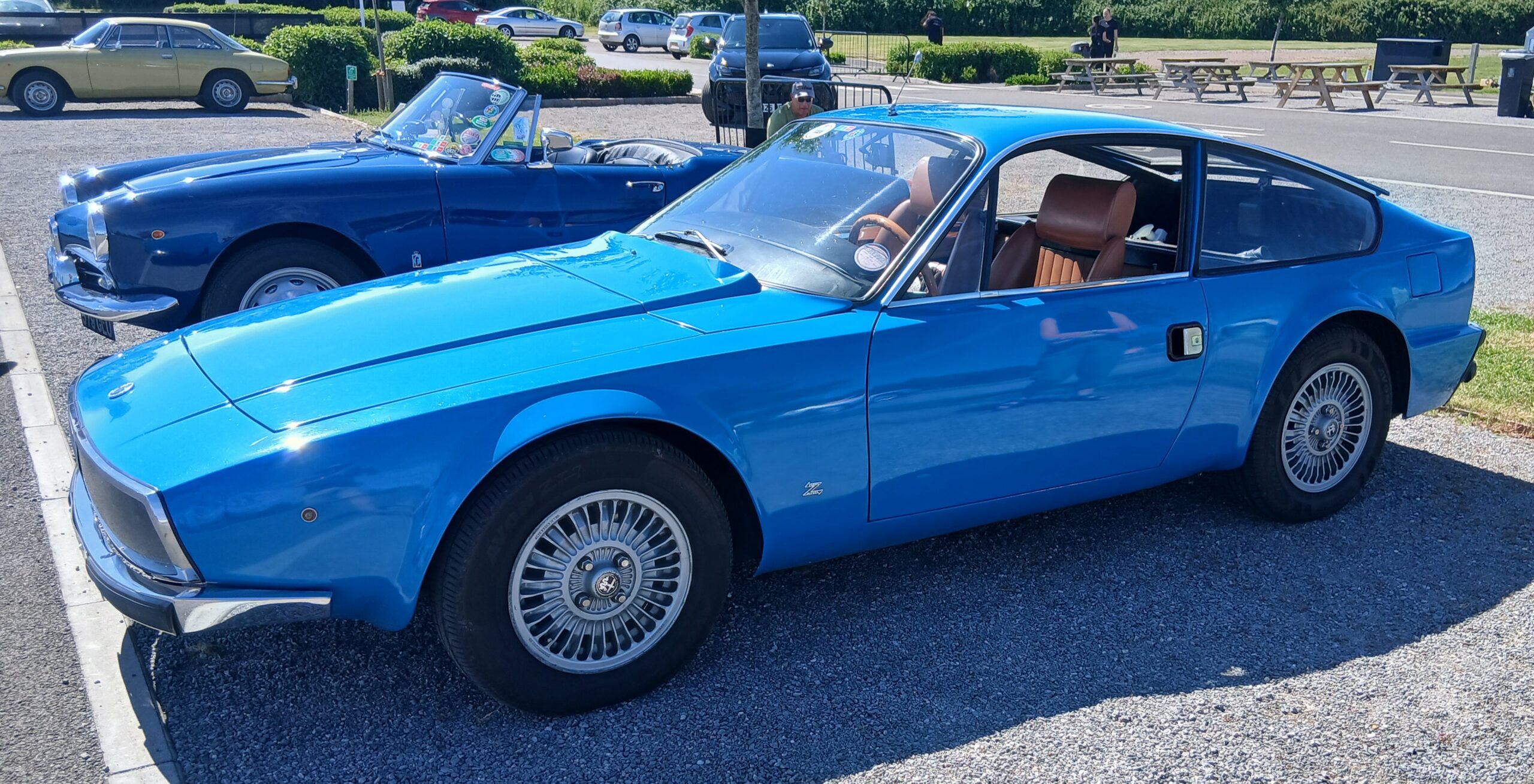
Less familiar is this Alfa Romeo Junior Z – Z for Zagato. Built on the floorpan of the Spider 1300 with a body designed by Ercole Spada (a man with terrific range and variety on his CV), it was first seen in 1969.
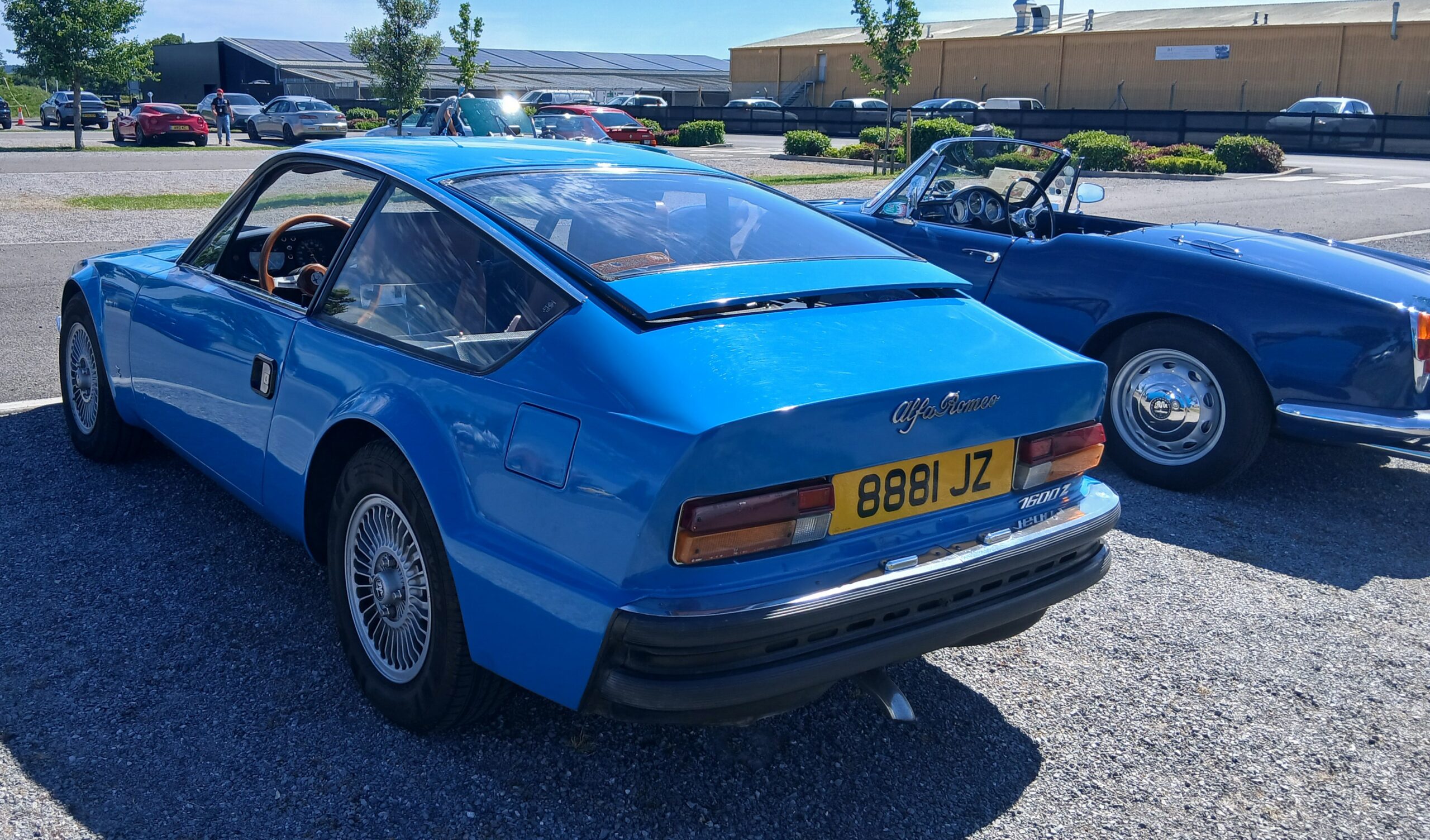
The rear window could be cracked open for ventilation.
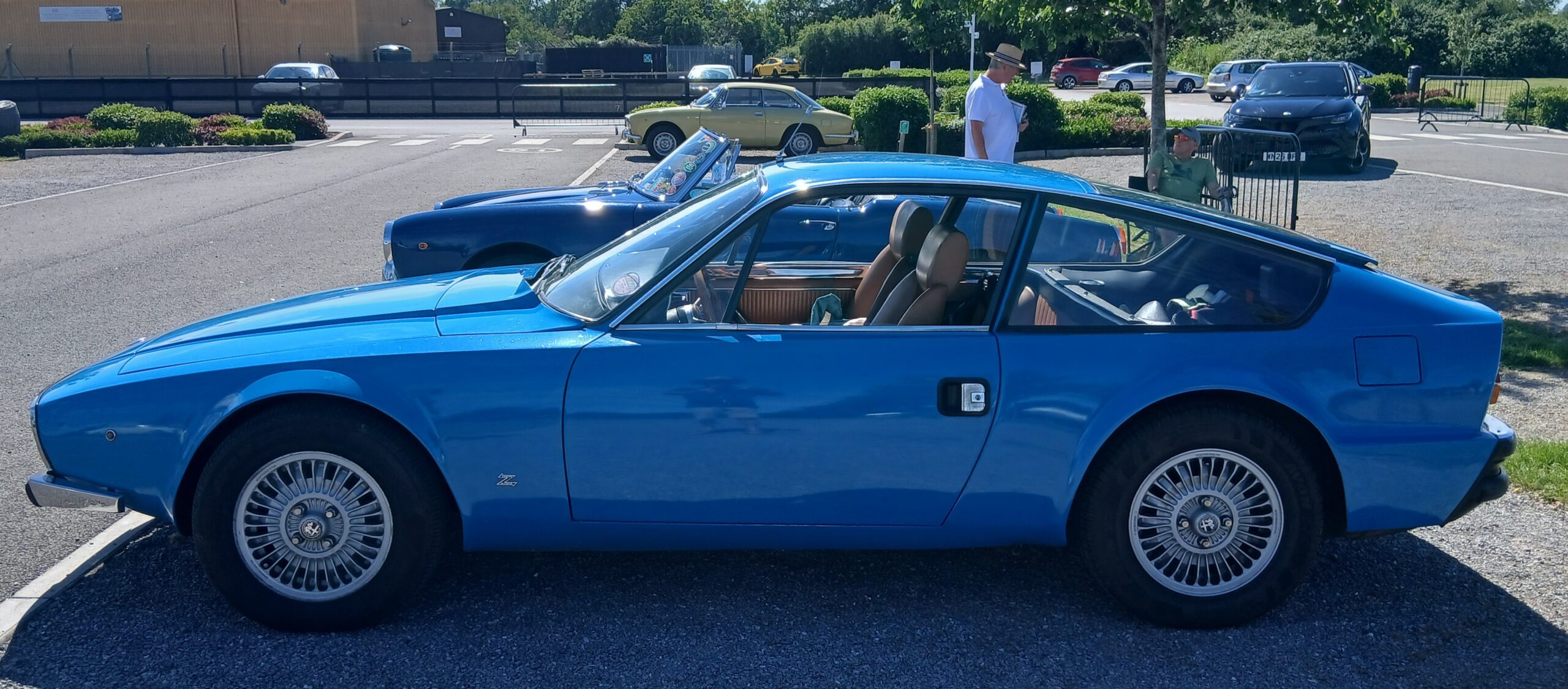
Originally, the car had the 1290cc engine; later versions had the 1570cc but this late model one now has the 1998cc engine, and why not? This car was registered in 1974 and production totalled something around 1100 cars.
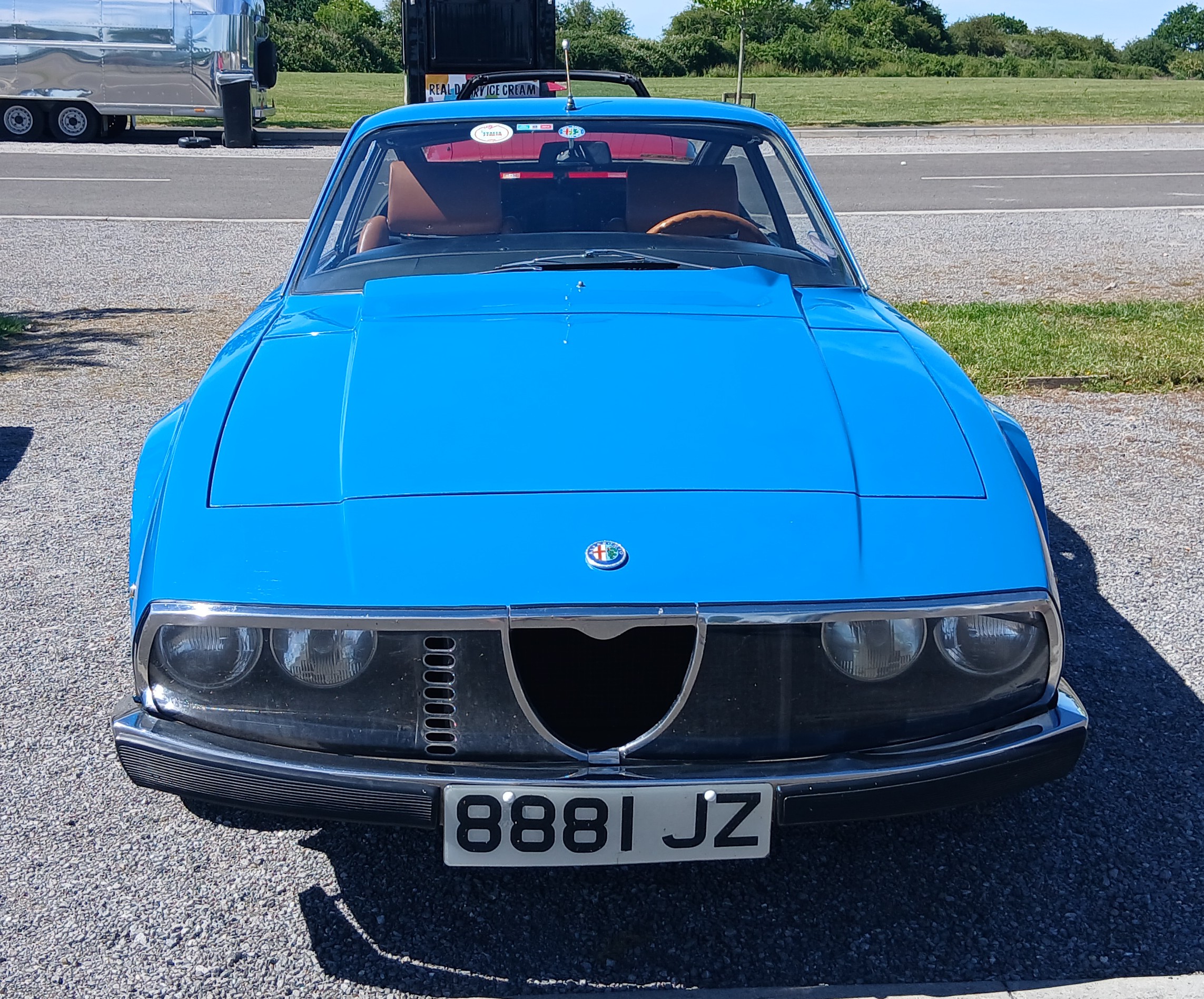
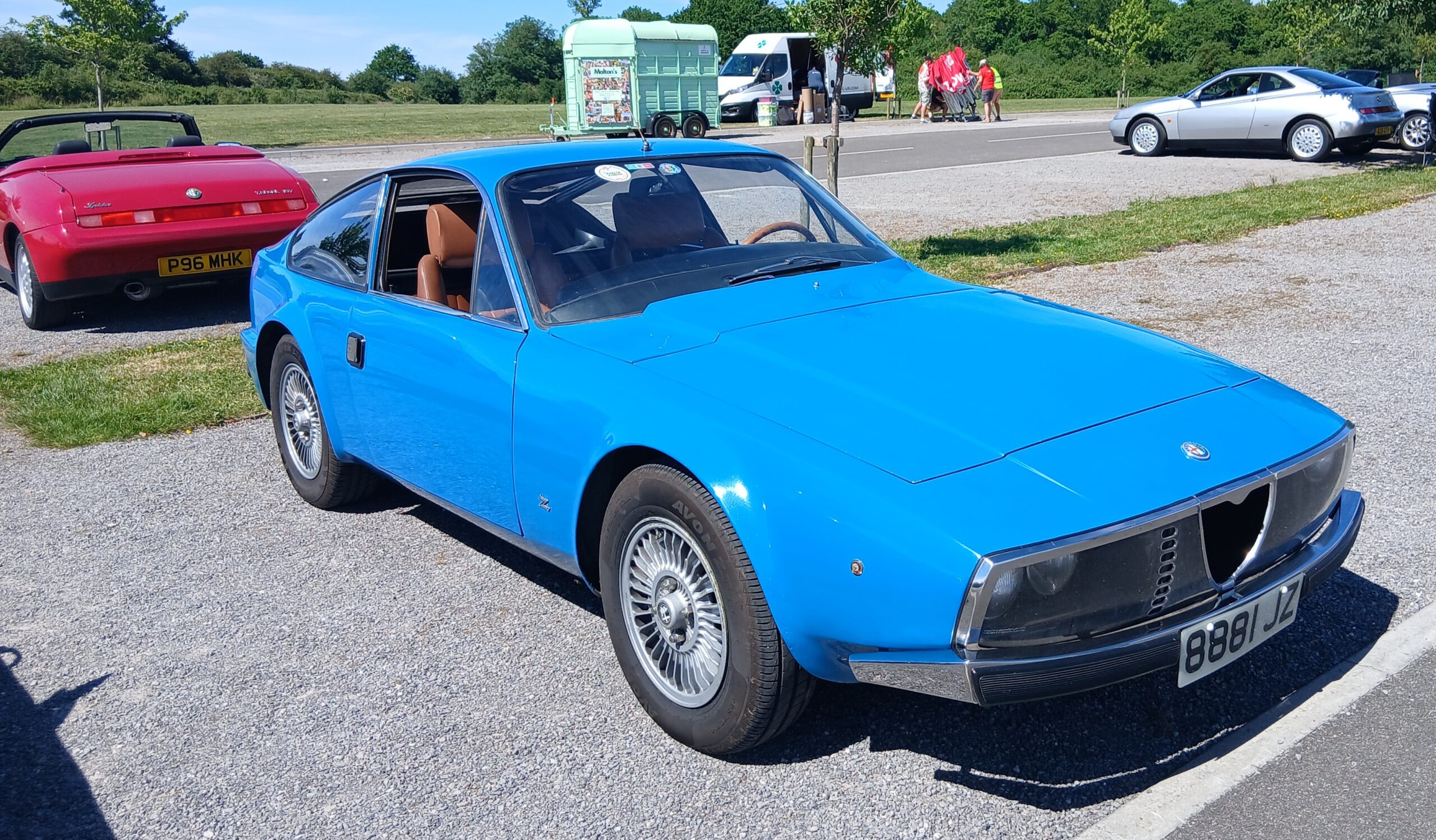
This car has been in the same ownership for 40 years and owner is not even slightly tempted to discuss any change to that. She made that quite clear!
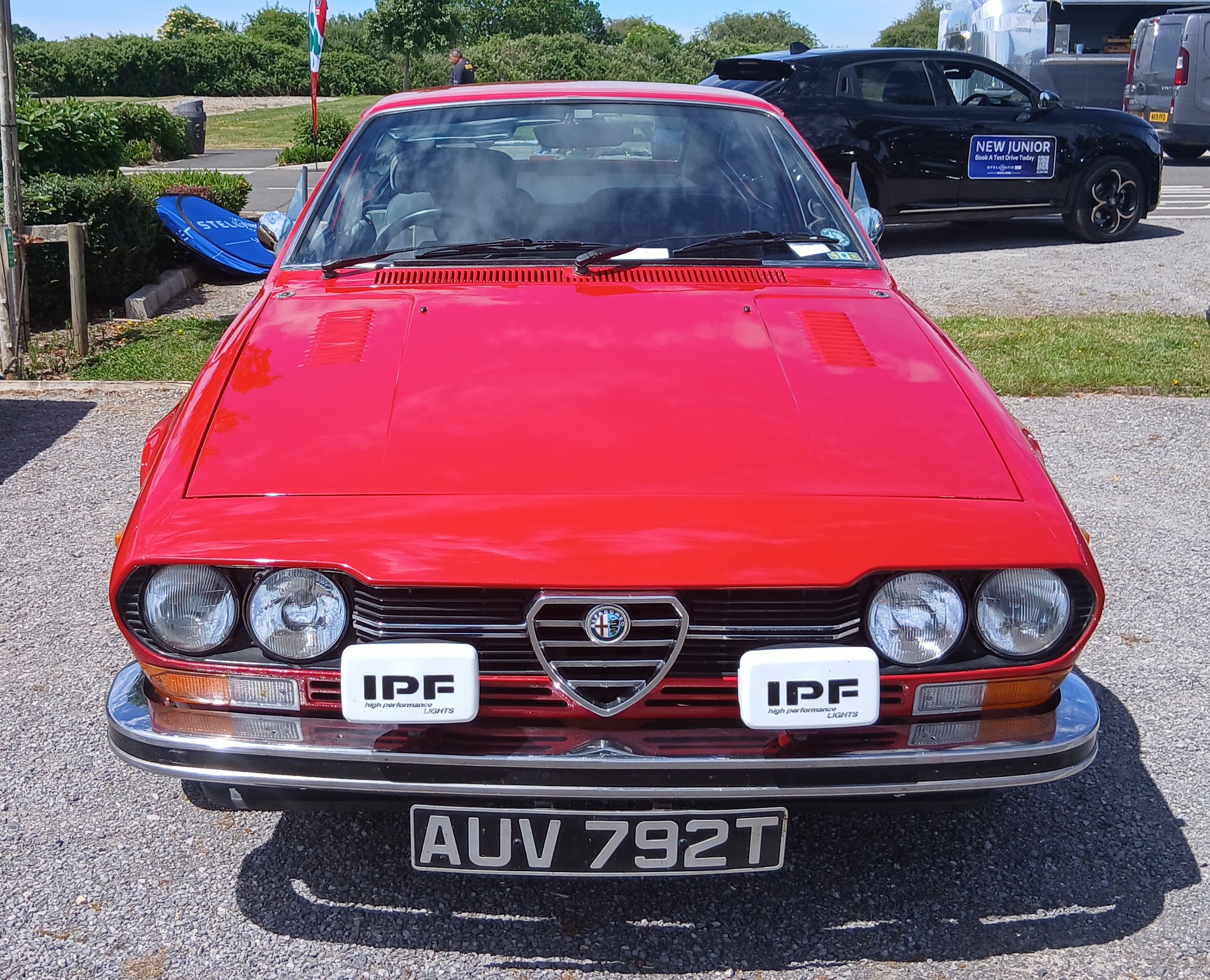
The Tipo 105 coupe was superseded by the Alfetta GT, from 1974 to 1987. Again, Giugaro was chosen and you see why.
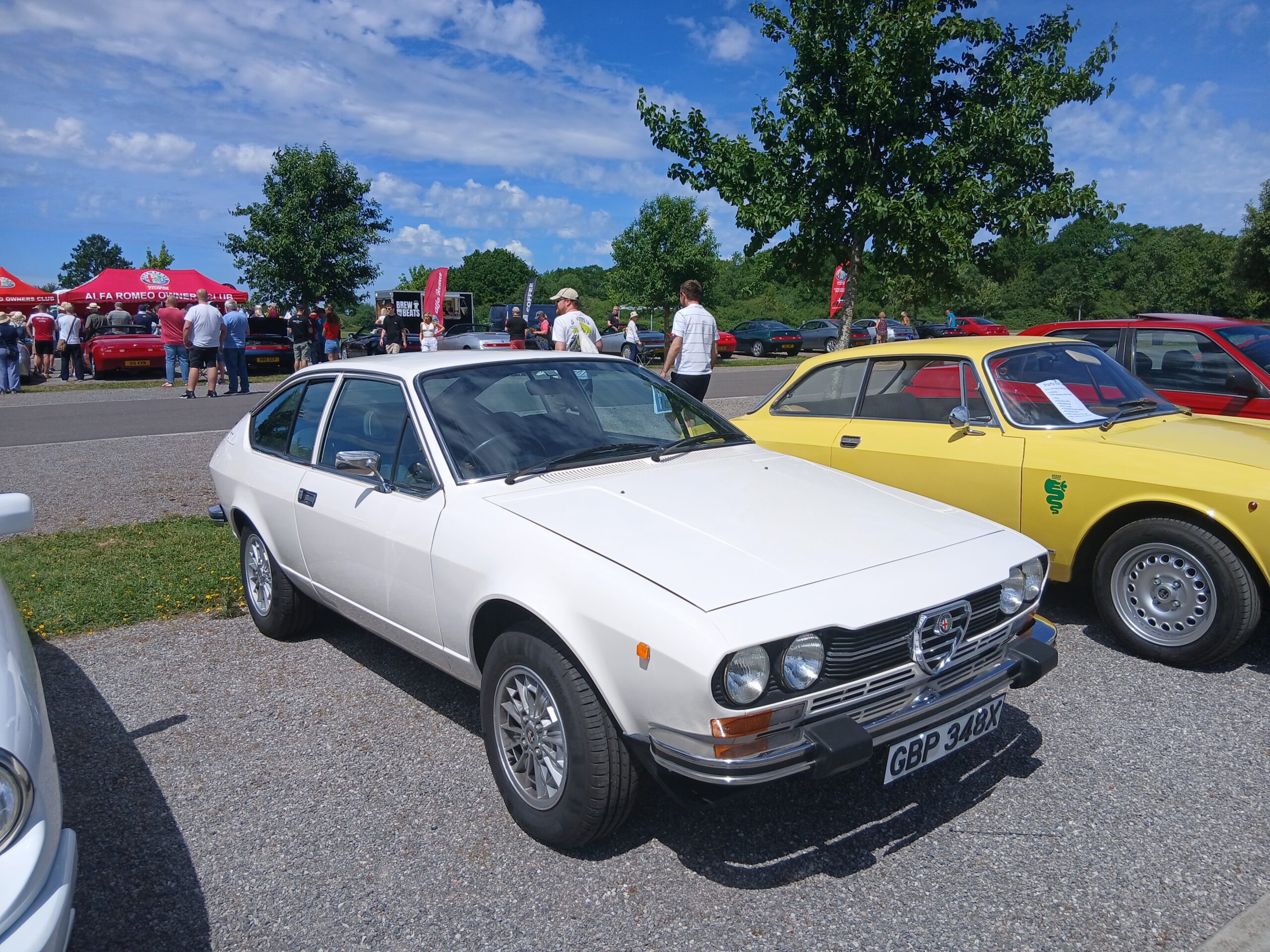
Initially, it was the GTV1750 (actually 1779cc) but this evolved quickly to the 1570cc and 1962 cc and then in 1980 to the GTV 2000 and the GTV6 with the 2.5 litre Busso V6. This is a 1981 GTV 2000.
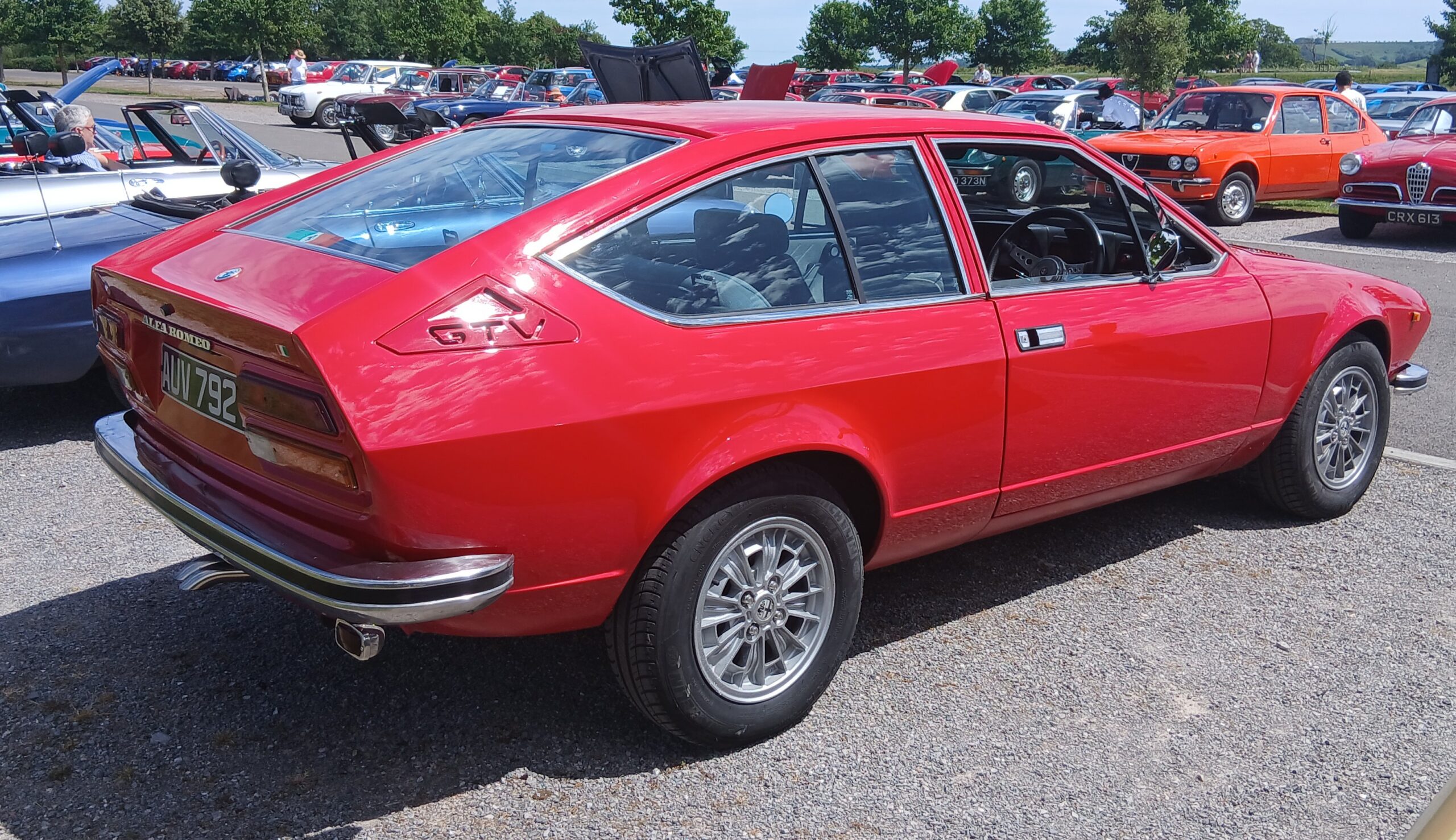
A 1979 GTV 2000, with exactly the right wheels.
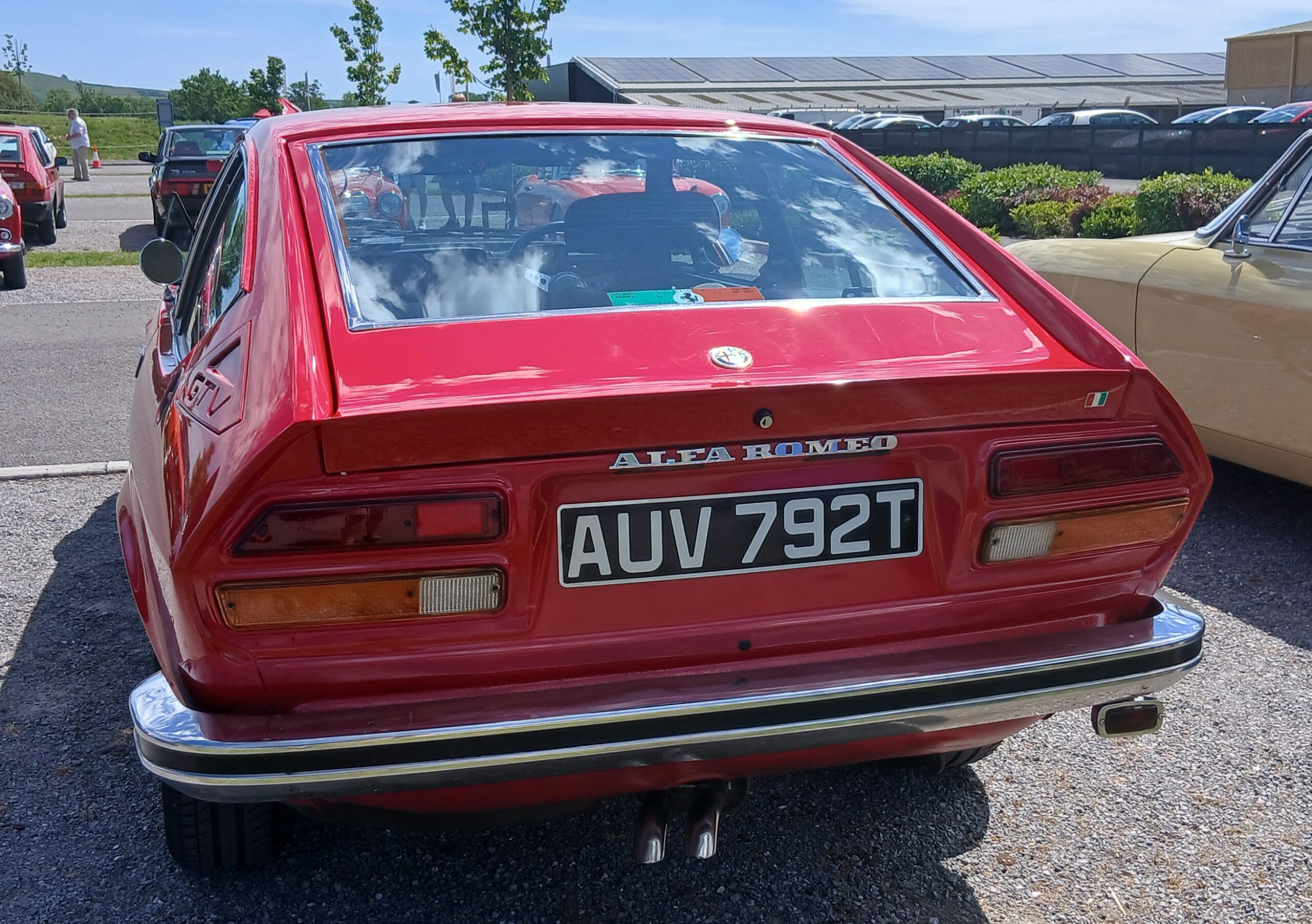
Still want a VW Scirocco?
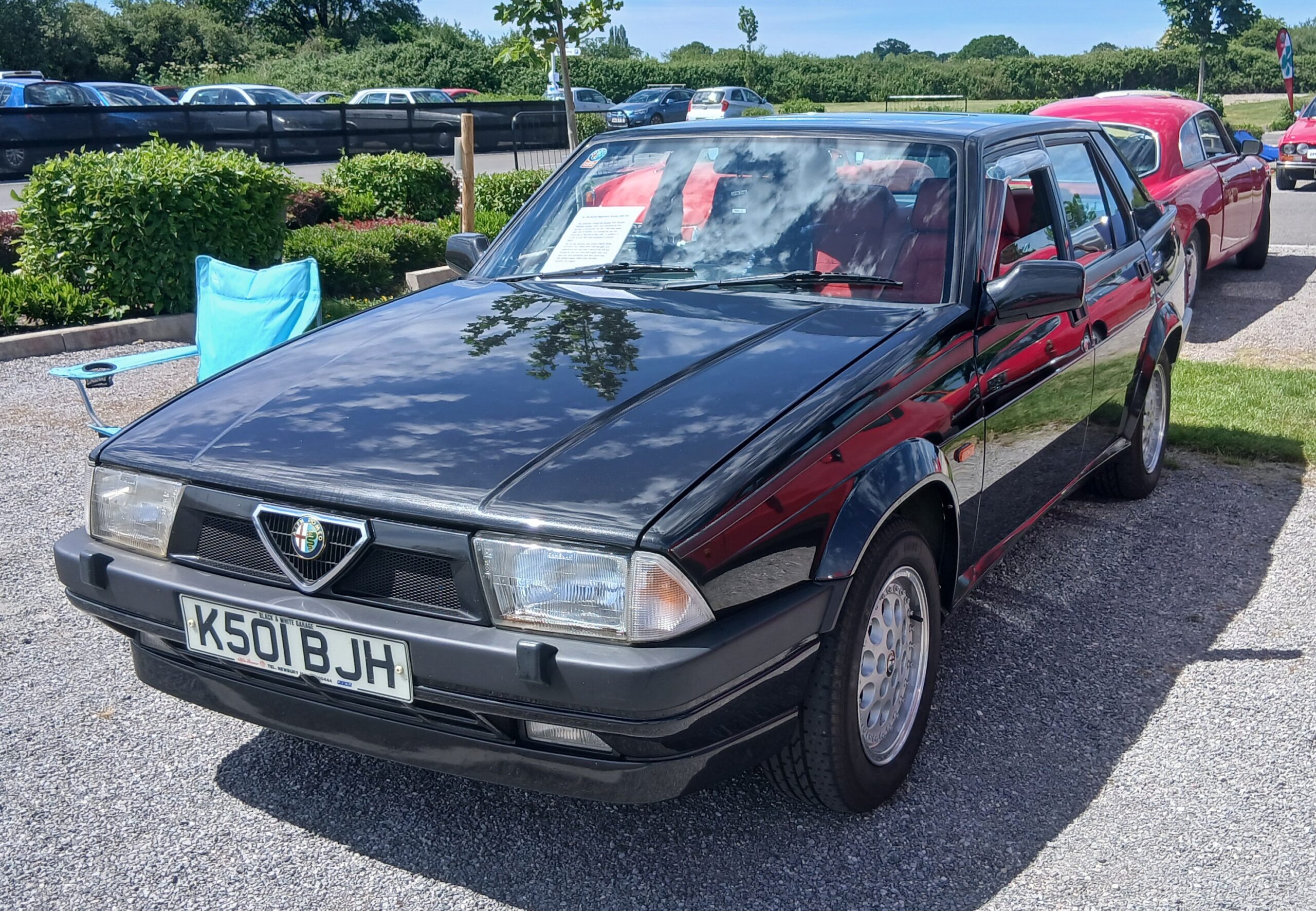
The GTV was derived from the Alfetta saloon – sadly I missed any Alfettas (I was working in the museum itself for a lot of the day) but I did catch this 1992 Alfa Romeo 75 2000, the last standing derivative of the Alfetta.
And now the front wheel drive cars, starting with another all time great.
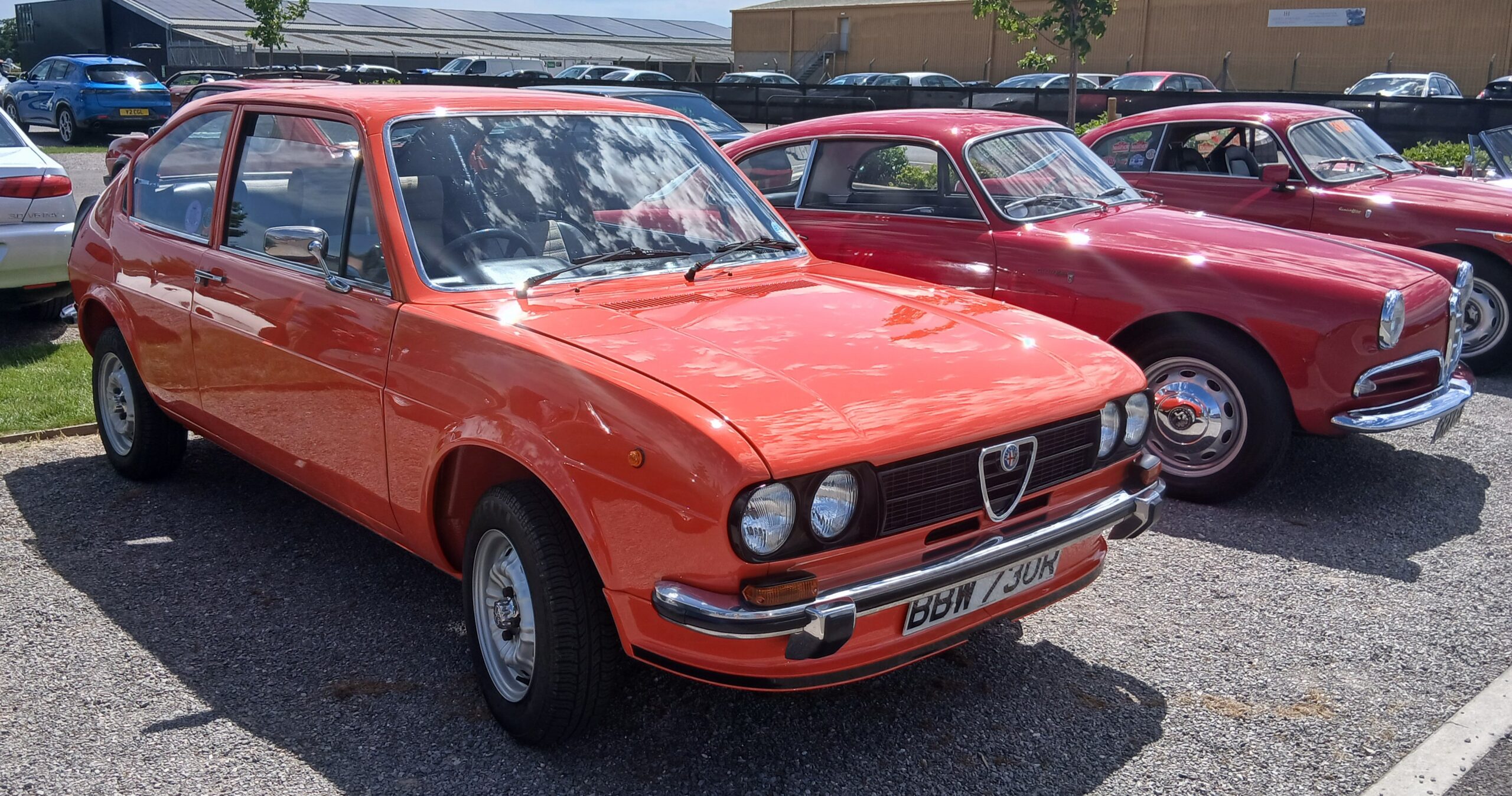
The first front wheel drive Alfa Romeo was the 1971- 1989 Alfasud. CC has seen my view on its history and its place in the top echelons of compact cars so hopefully there’s no need to repeat that. Henry Ford tipped his hat when he saw an Alfa; I always stand and point excitedly when I see an Alfasud…..
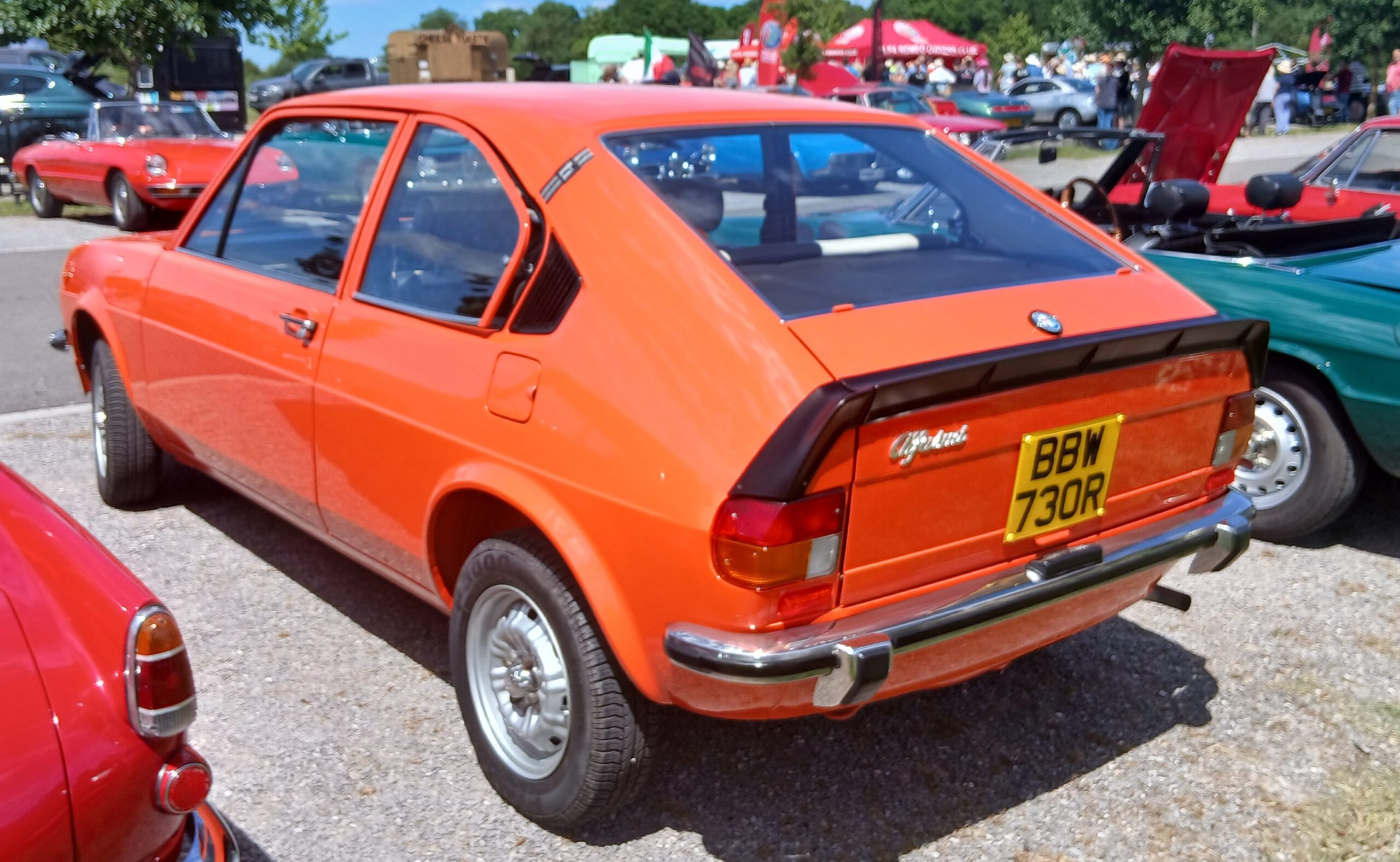
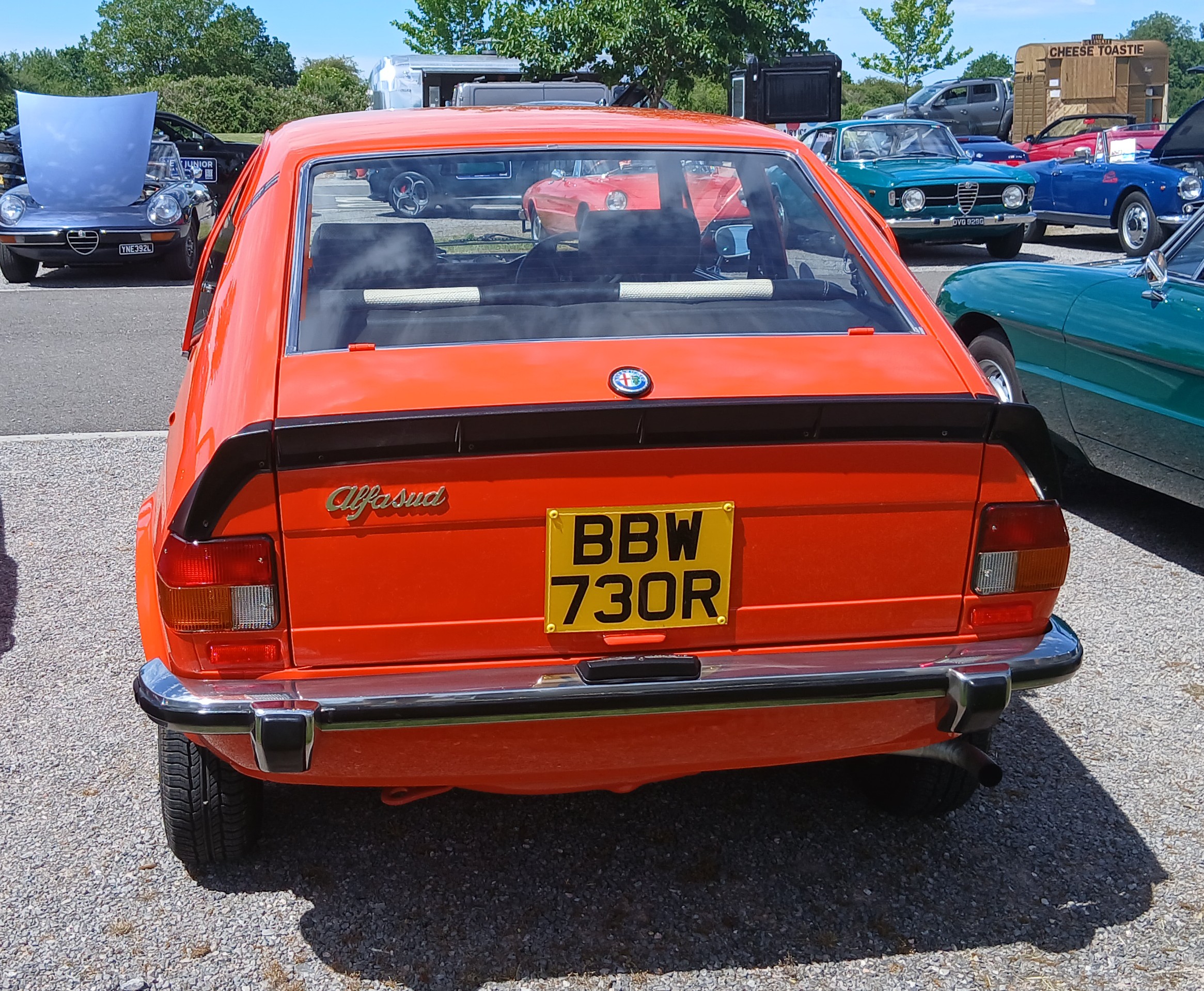
This is a 1977 Alfasud Ti 1.2, the more sportingly focused derivative so only three doors and a five speed gearbox. To many, an example of peak pure Alfasud and it would deserve a place in any fantasy garage.
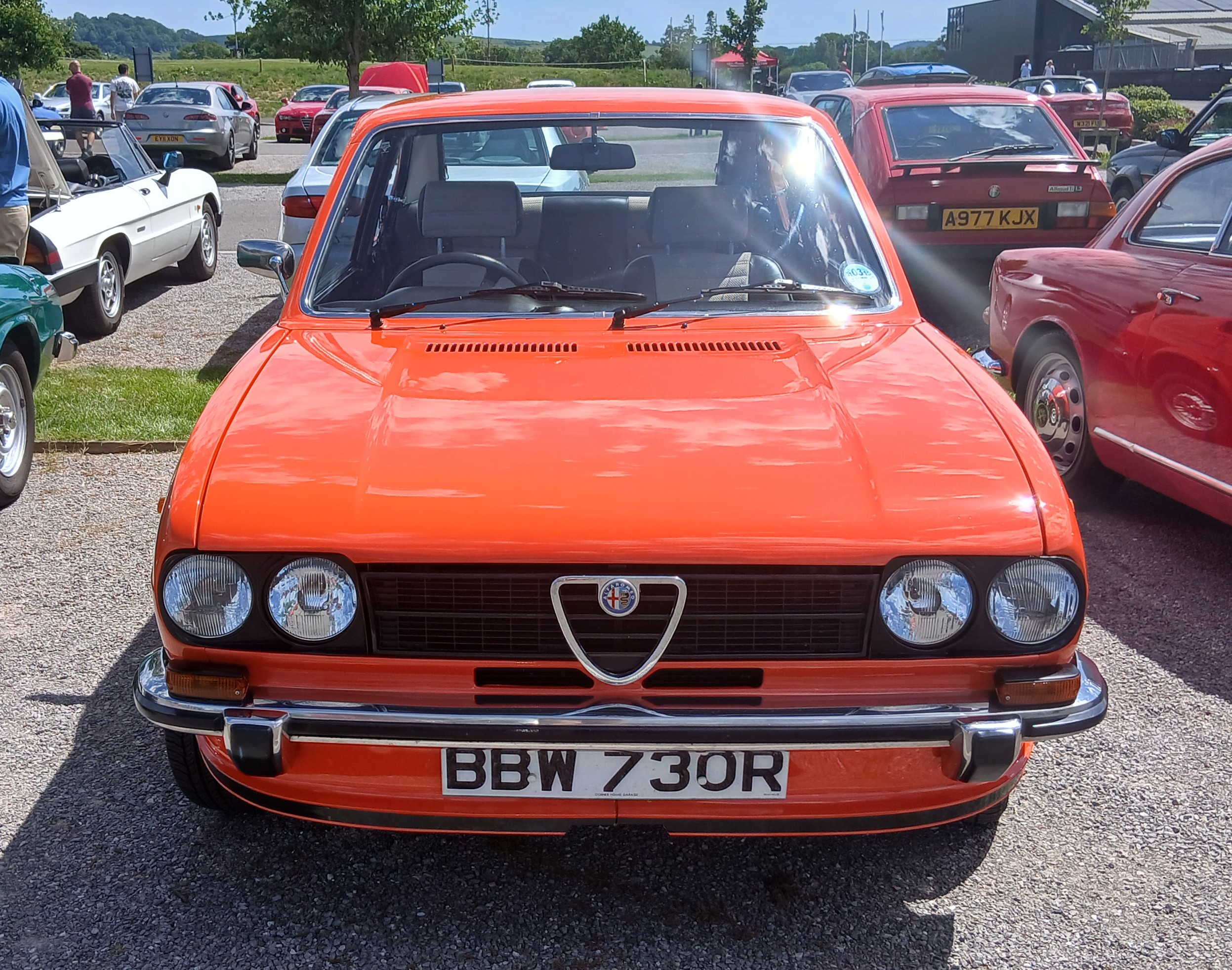
Behind this car is an example of the later hatchback version from 1981 onward – a car good enough to keep the contemporary Golf GTi or Ford Escort XR3i on their toes.
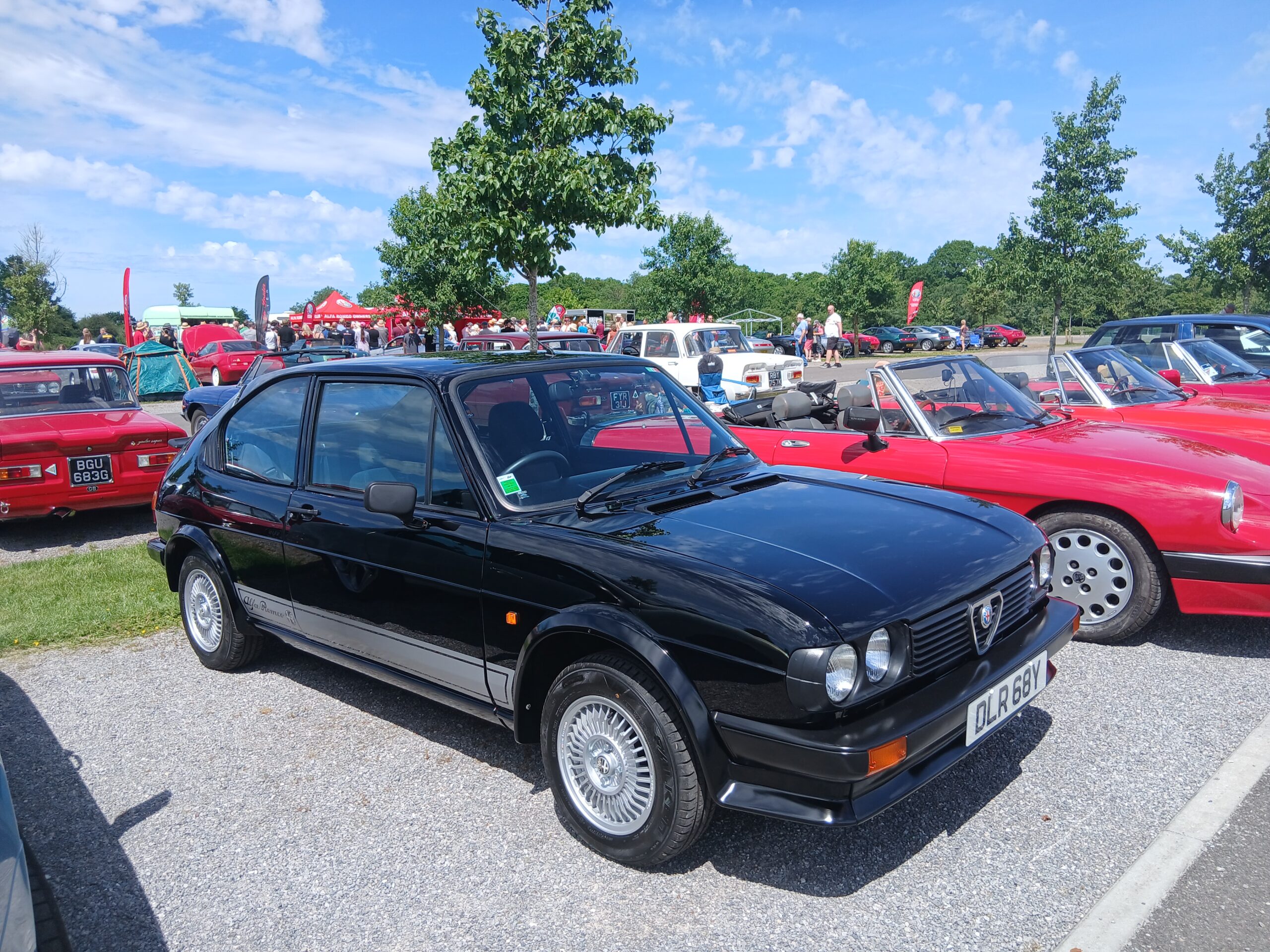
This is a 1983 car, with a hatchback and bigger bumpers. Still great, but losing a little of the earlier cars’ simple purity. That doesn’t mean I’d say “no thanks” though.
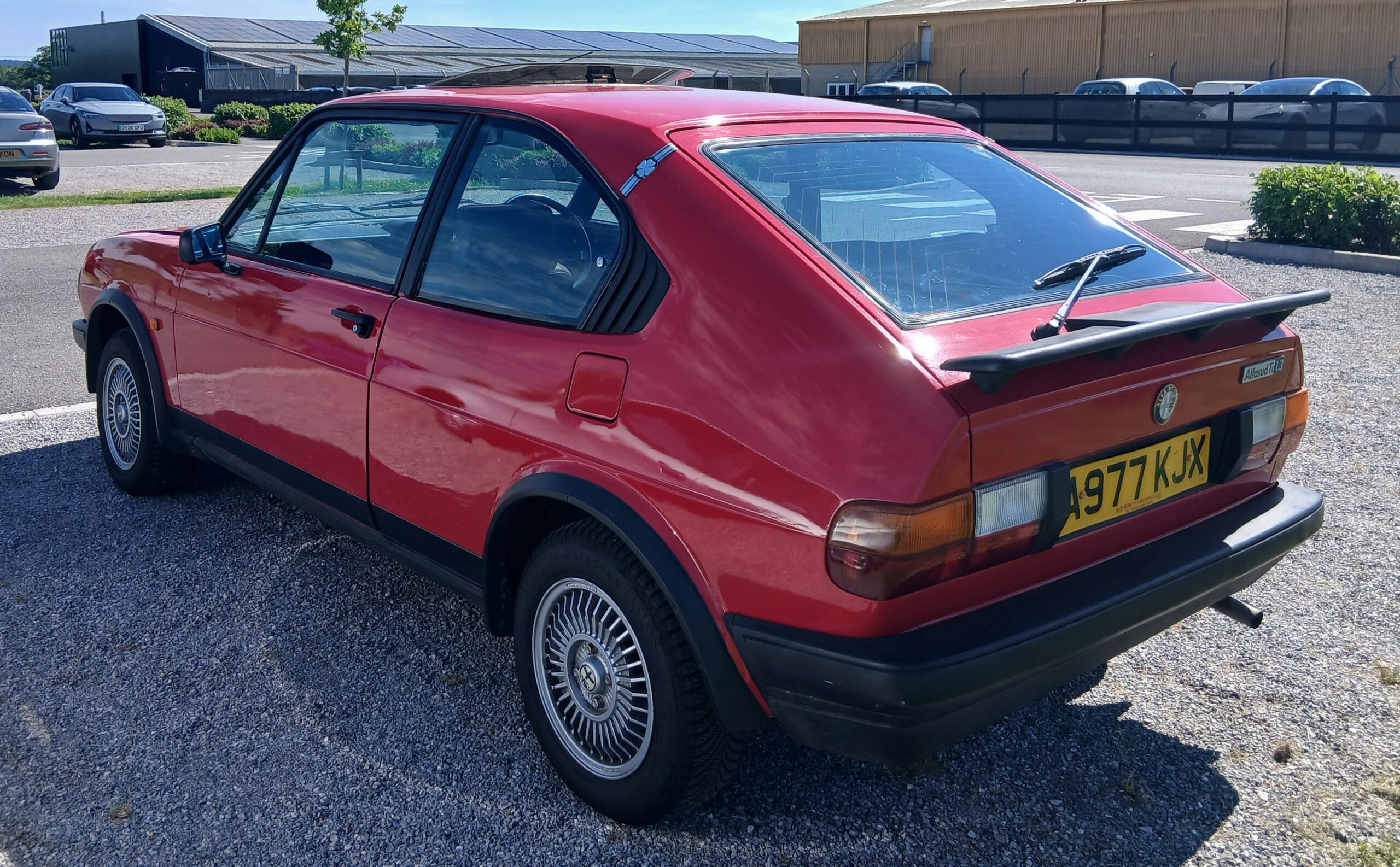
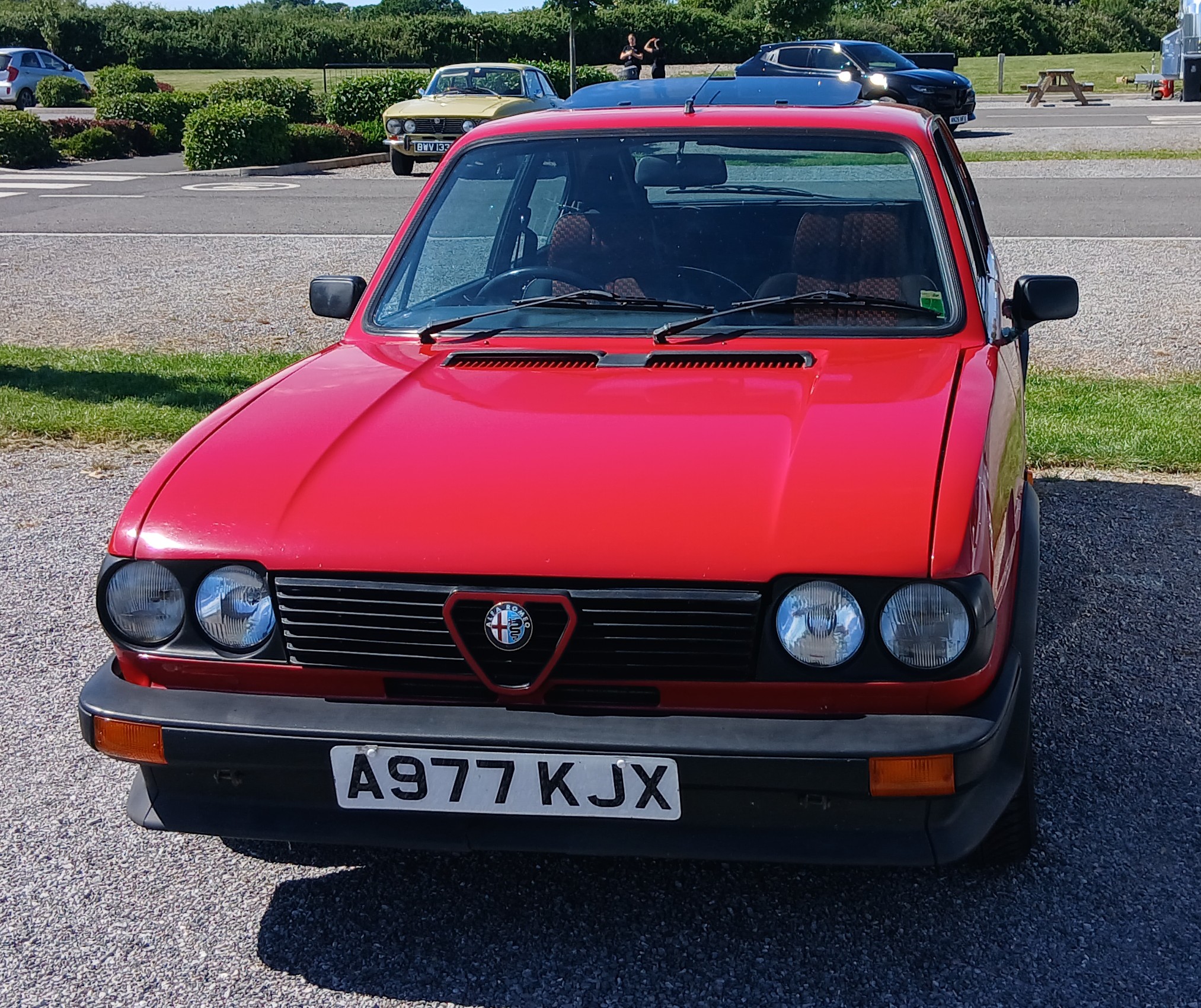
Here’s the 1983 1.4 litre hatchback in close up – more practical obviously but the spoiler is, to my taste at least, quite well named.
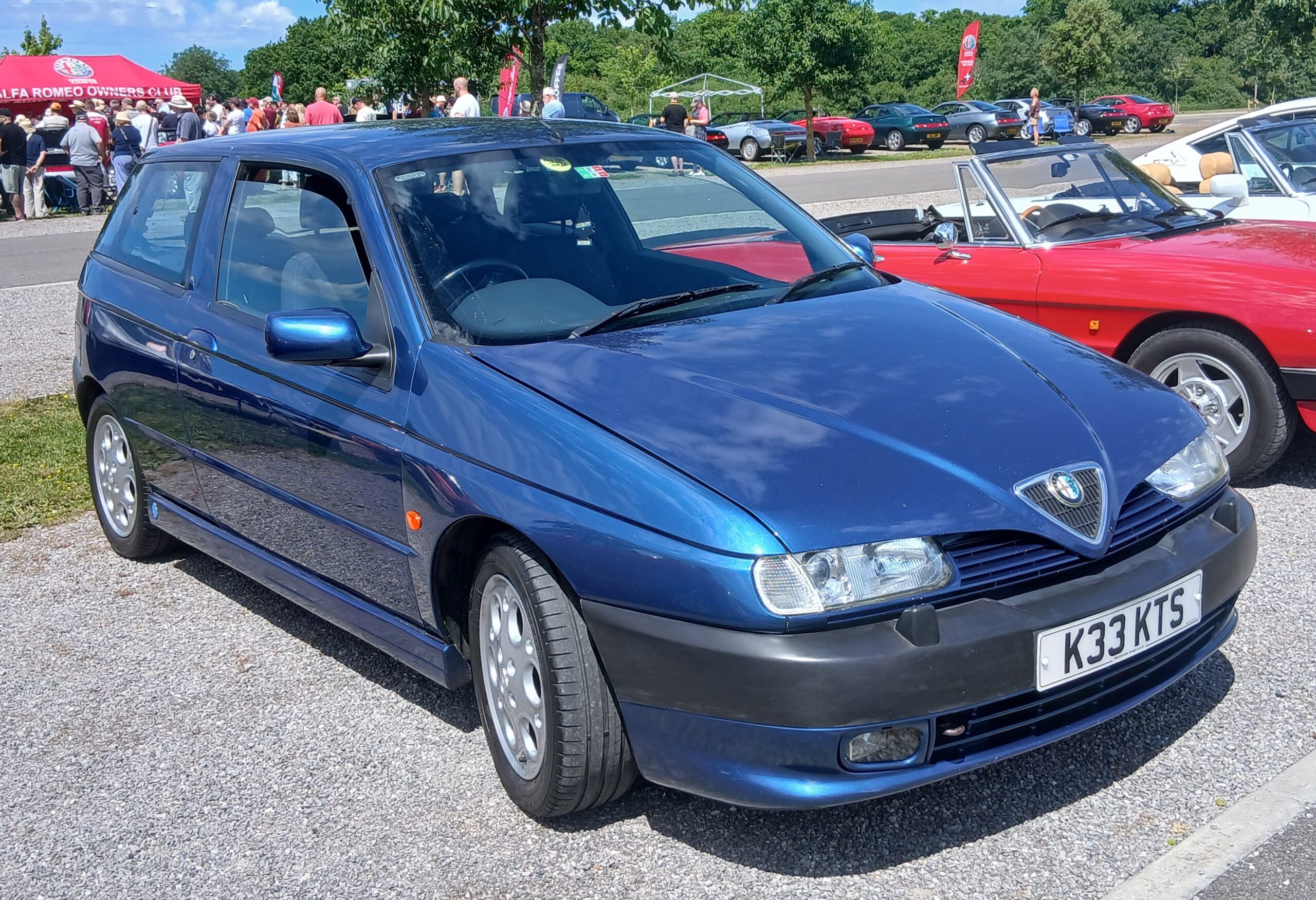
The 1994 – 1997 Alfa Romeo 145 (3 door) and 146 (5 door) were the last cars to use the Alfasud’s boxer engine drivetrain, along with other configurations from 1996. This is a 1998 2 litre 145 with the Alfa Twin Spark engine, also used in the 147, 155, 156 and Spider and GTV models.
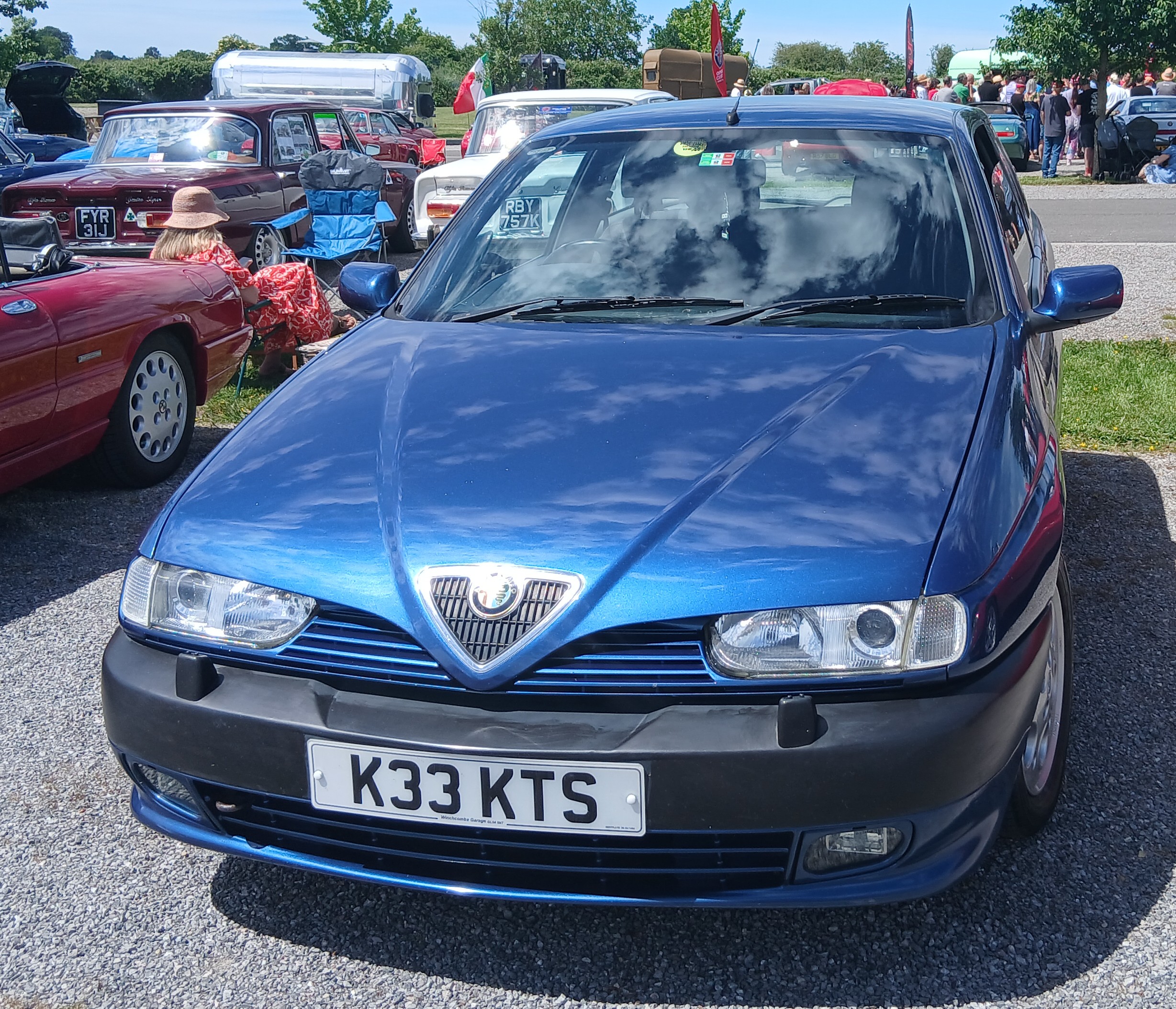
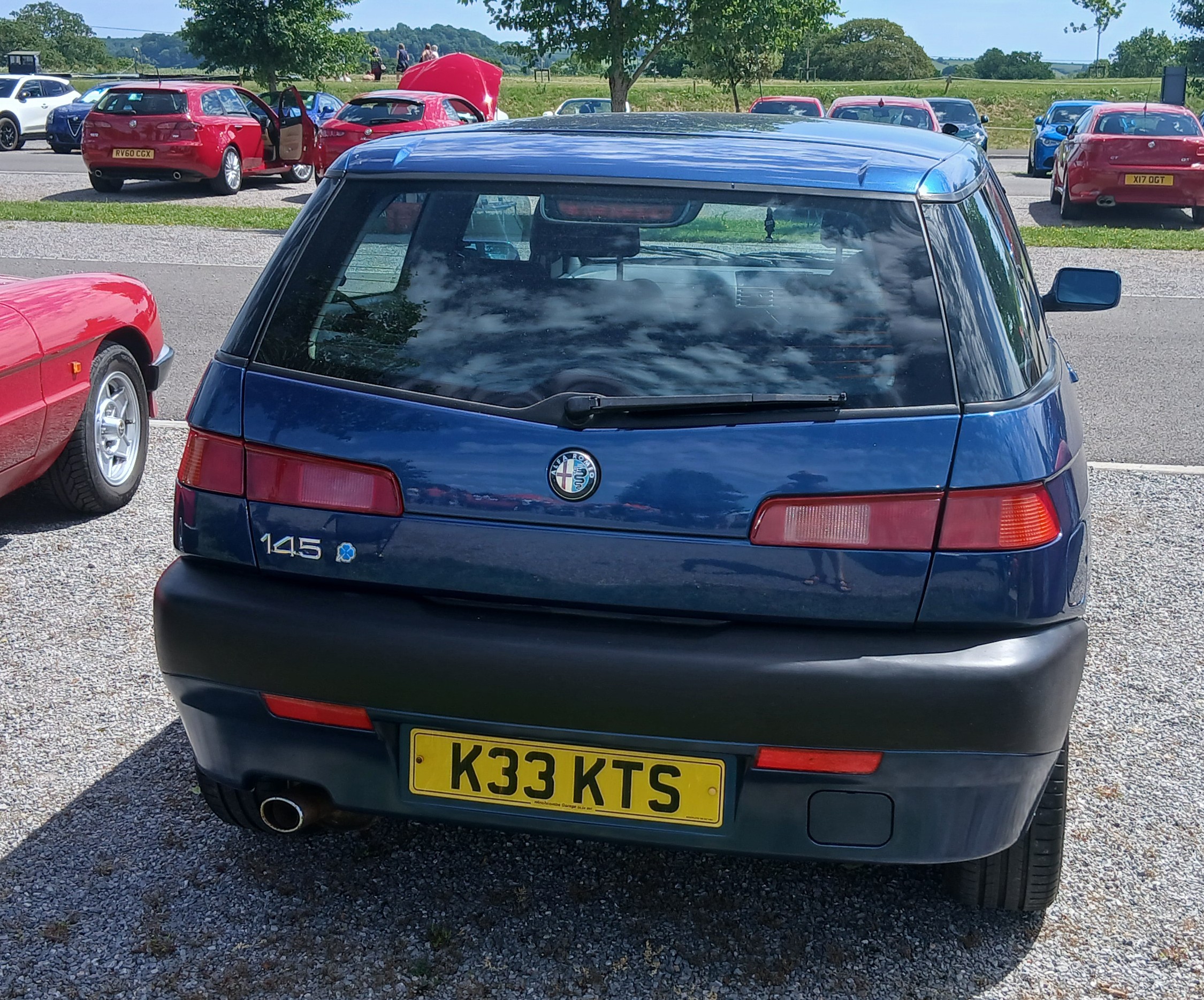
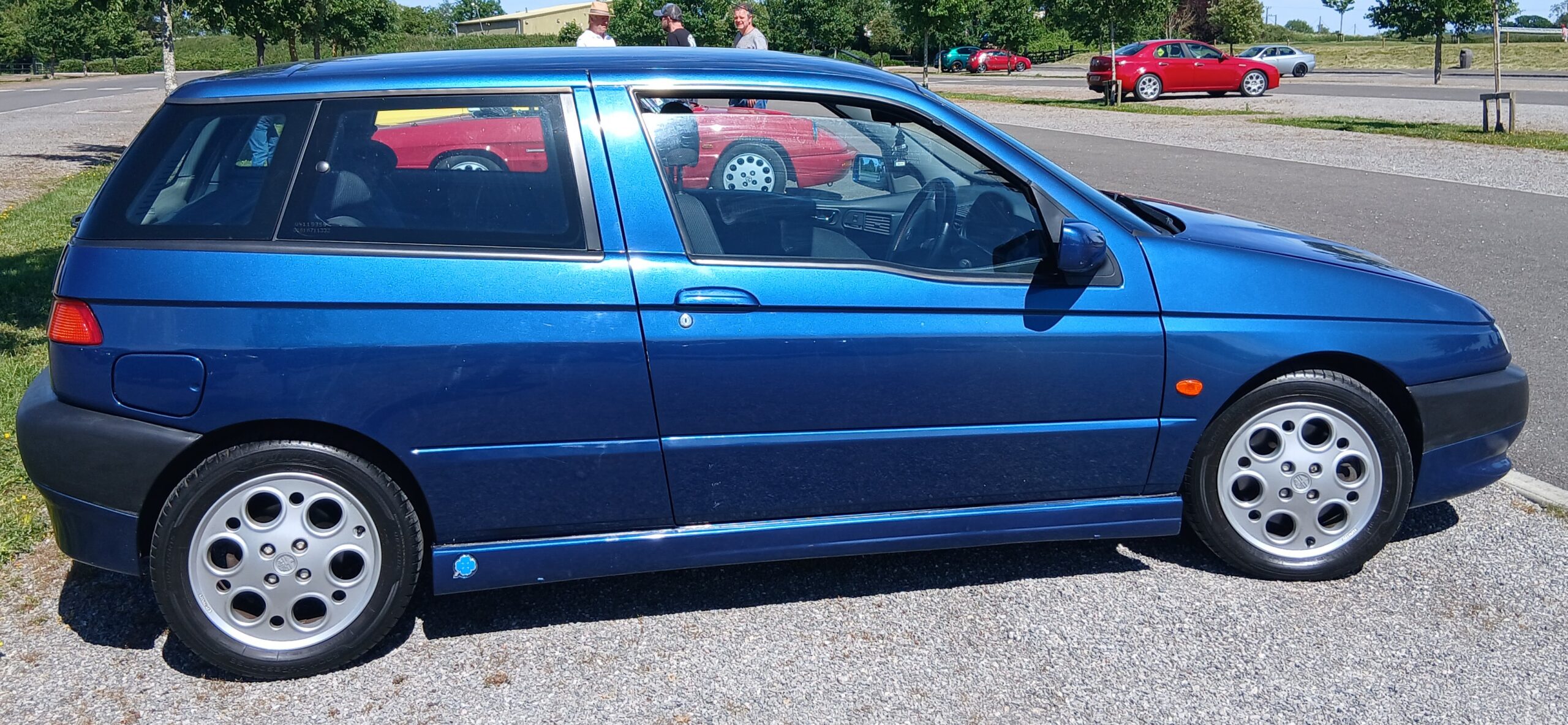
The styling of these cars was by Chris Bangle, later of BMW, and which I suggest is now ageing well, after a difficult early reception.
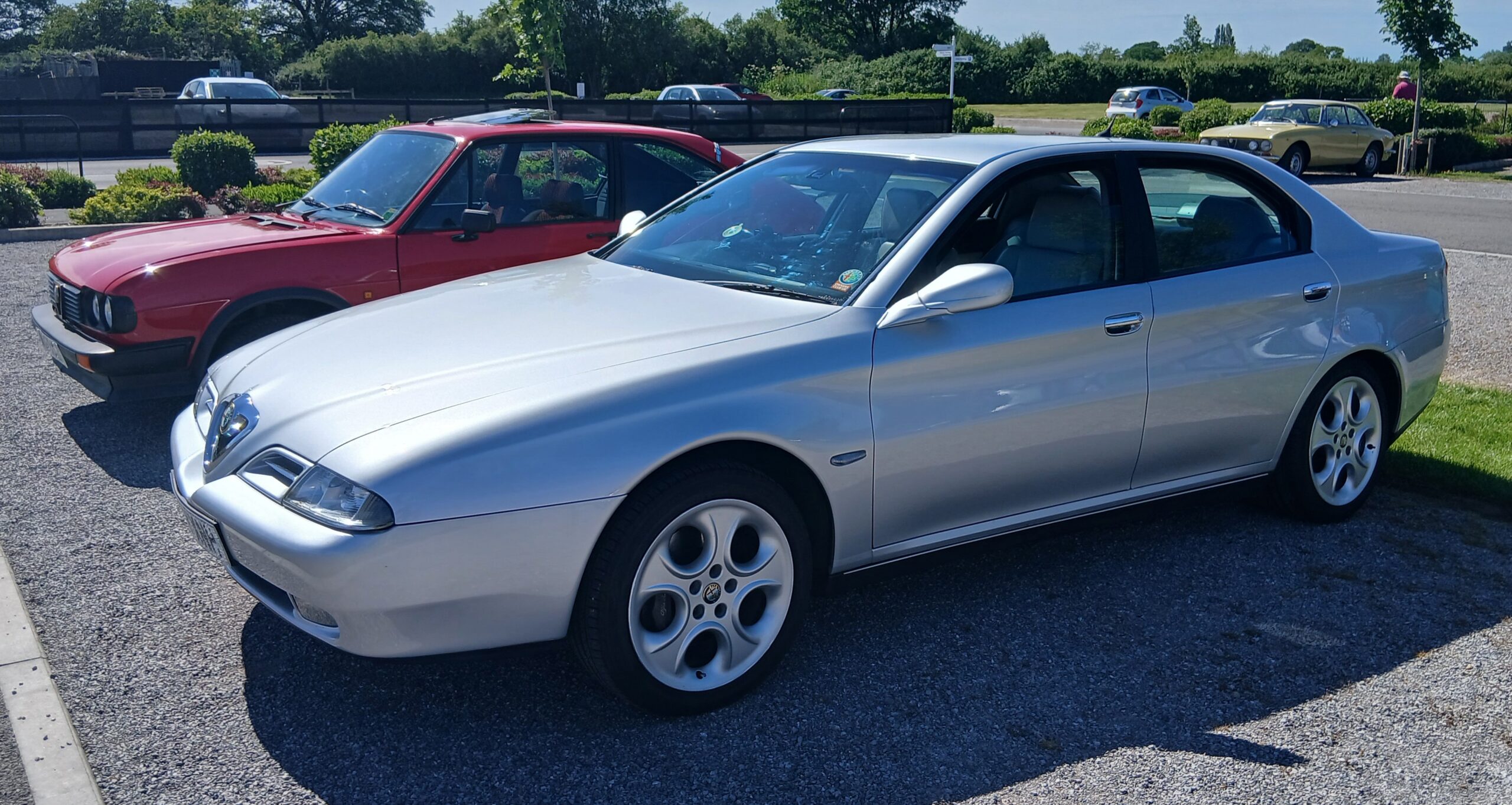
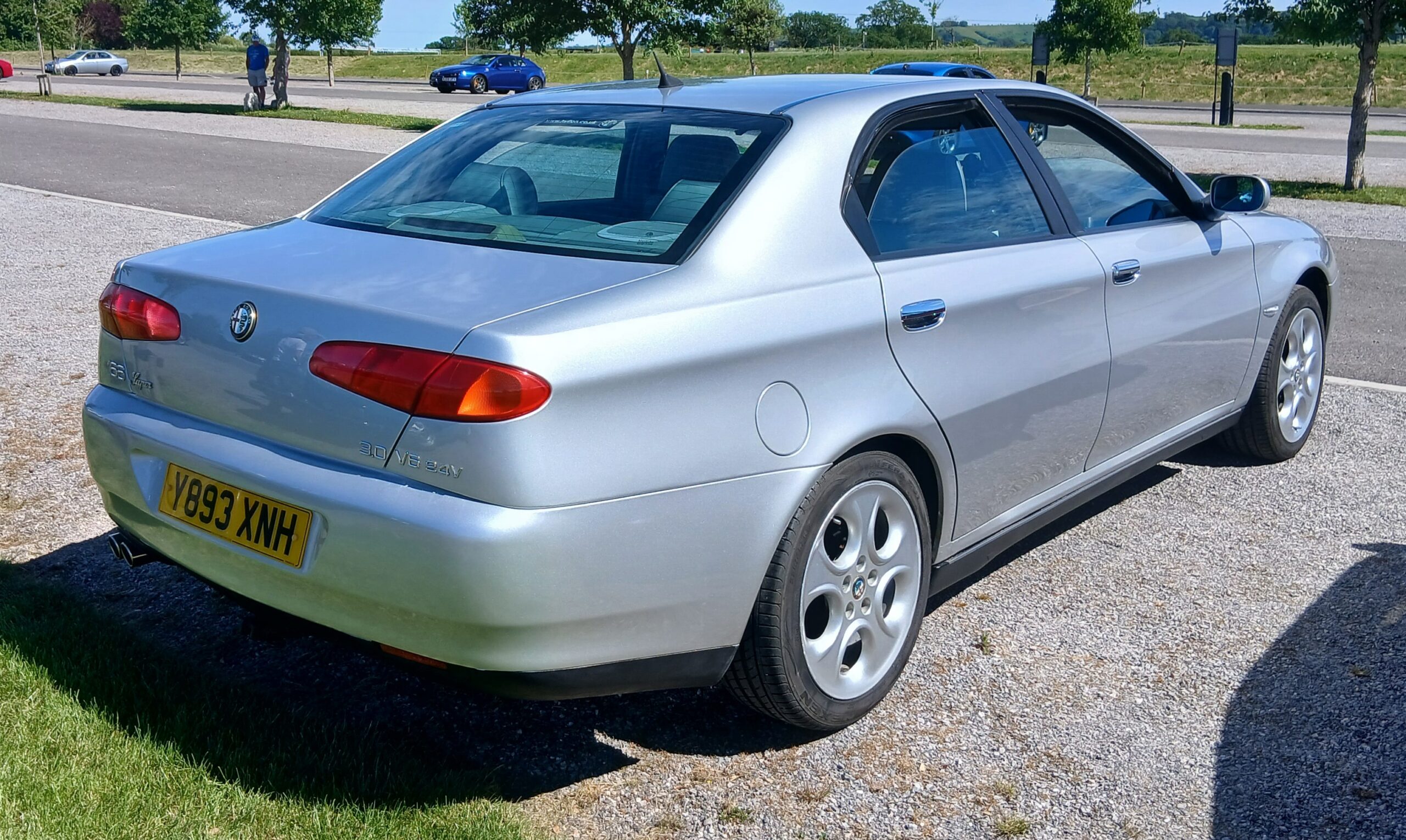
There is a very good case to be made that the Alfa Romeo 166 is the best looking saloon car of the last 50 years or more. Not many can claim to be ahead of this can they?
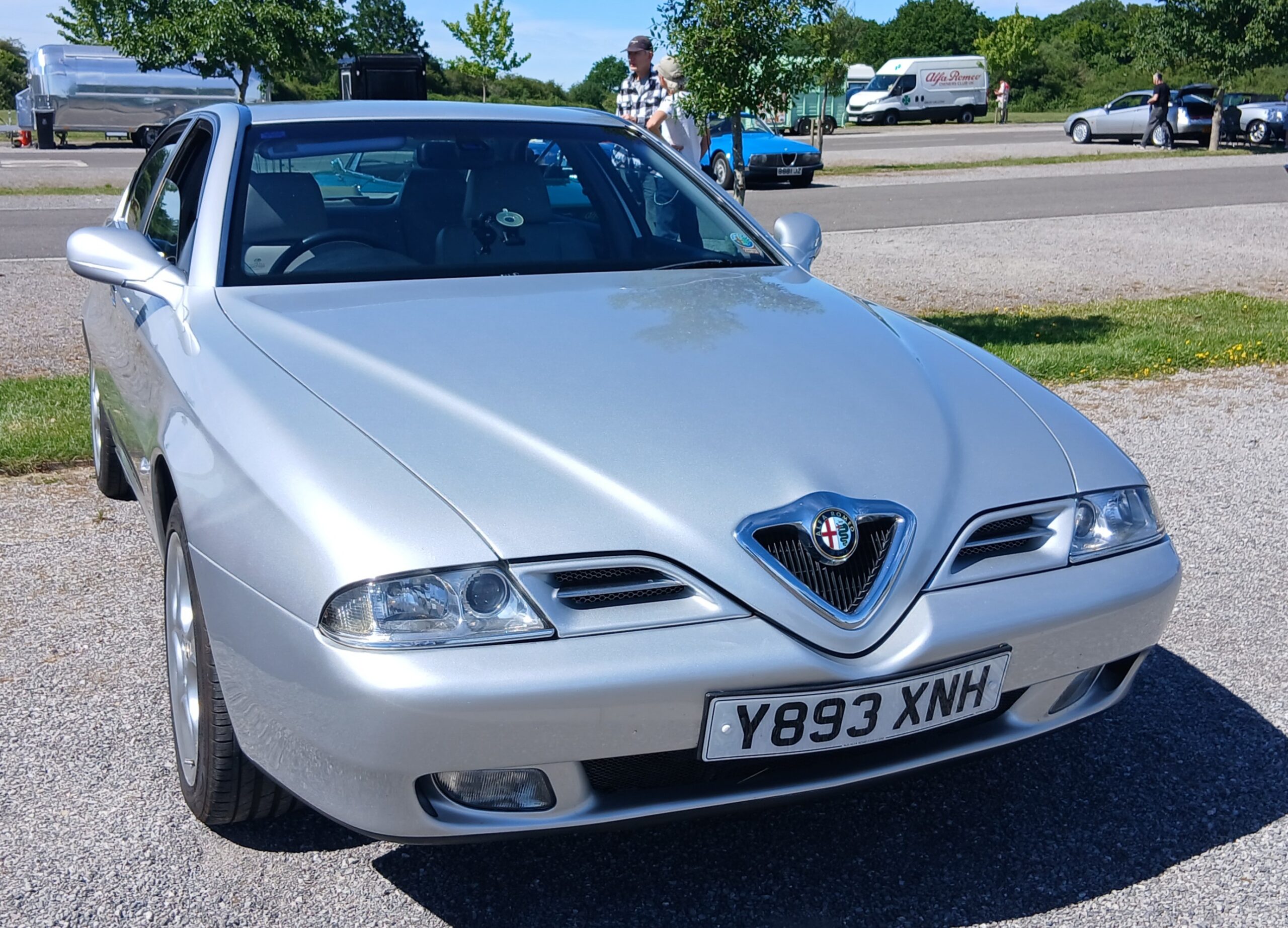
This is a 2001 car with the 3.0 litre 24V Busso V6.
If you don’t like the look of the car, perhaps try the look of the engine – here it is in a GTV.
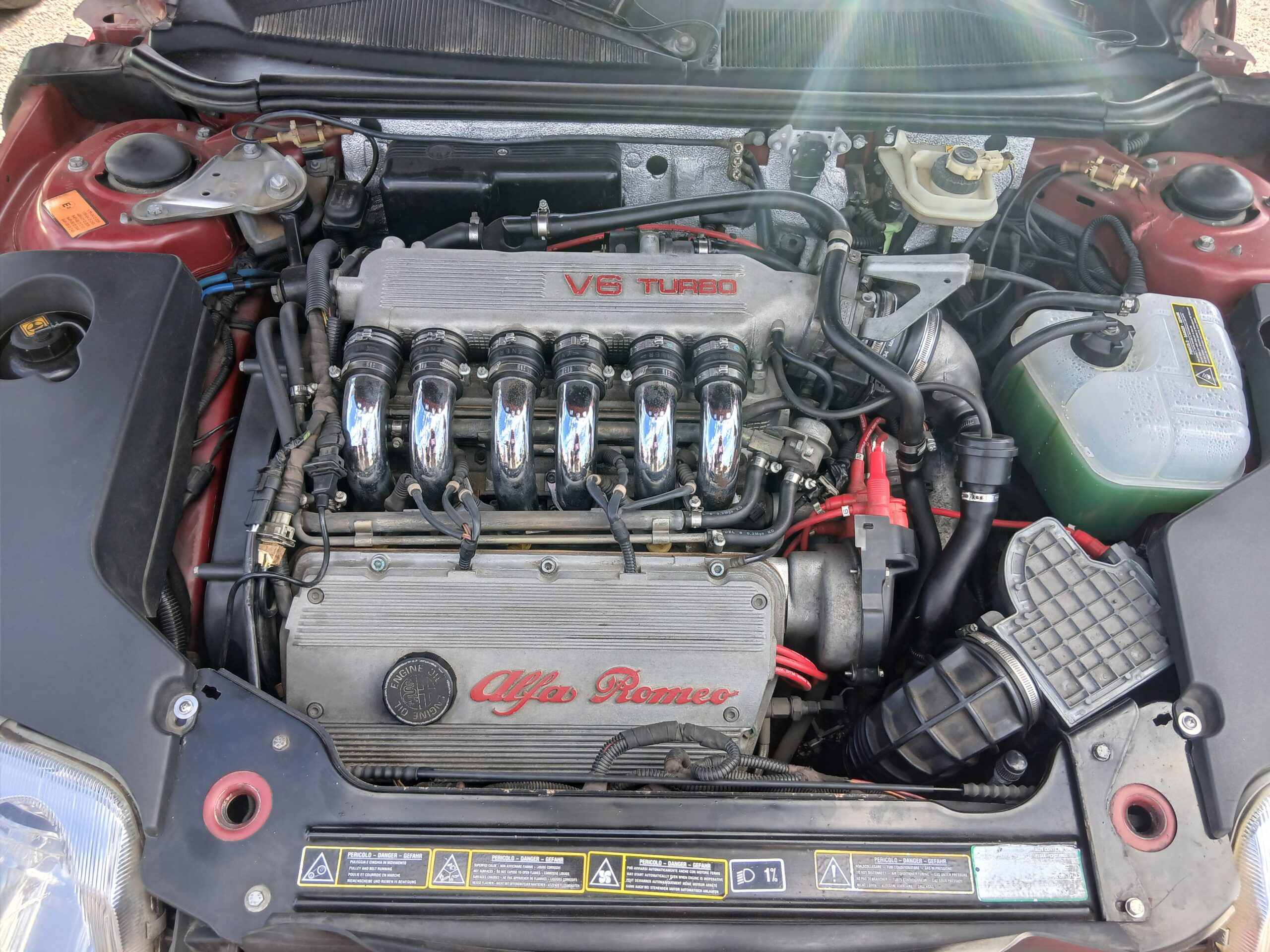
And the sound isn’t exactly shabby either.
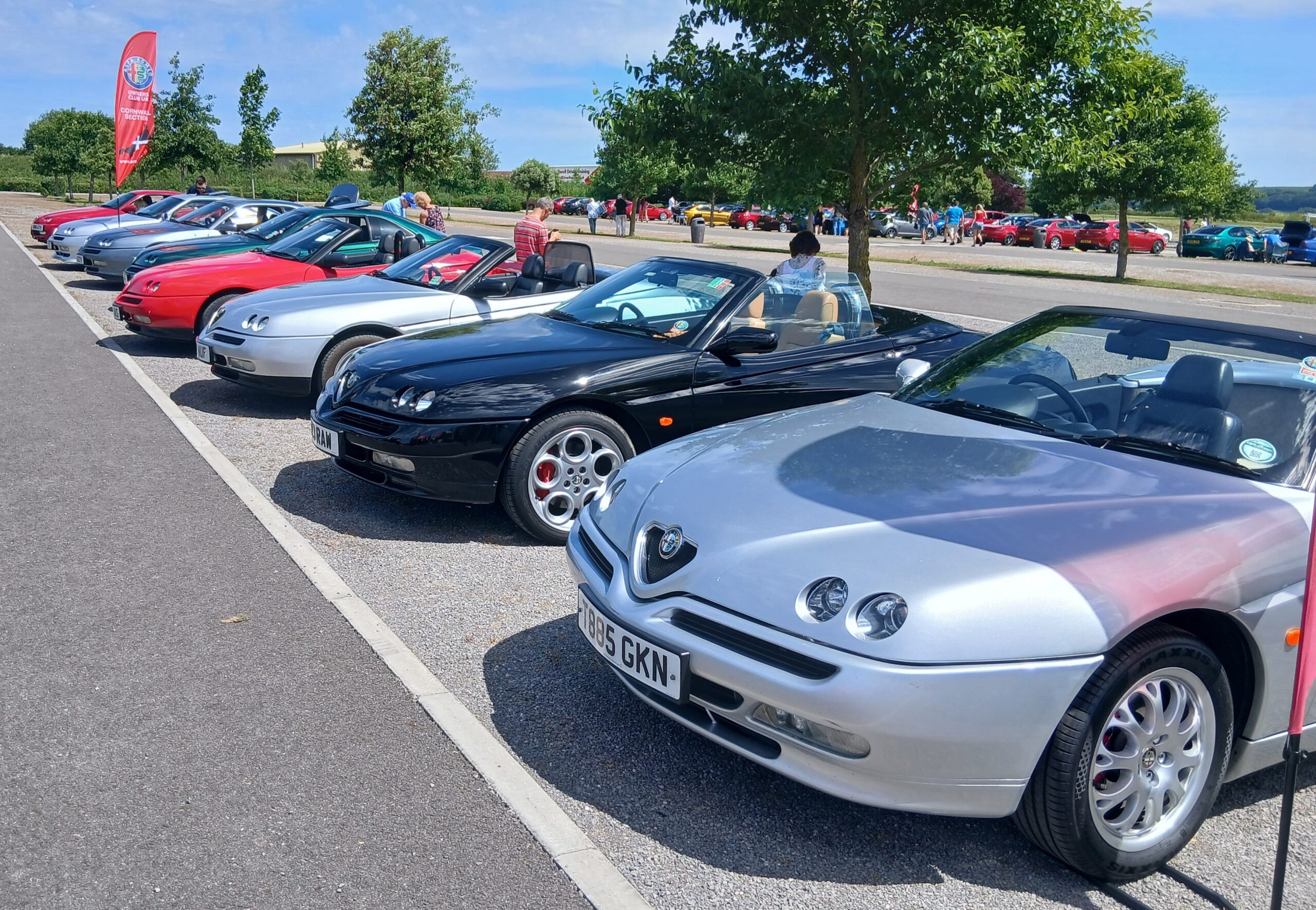
And last, but not least, the 916 Spiders.
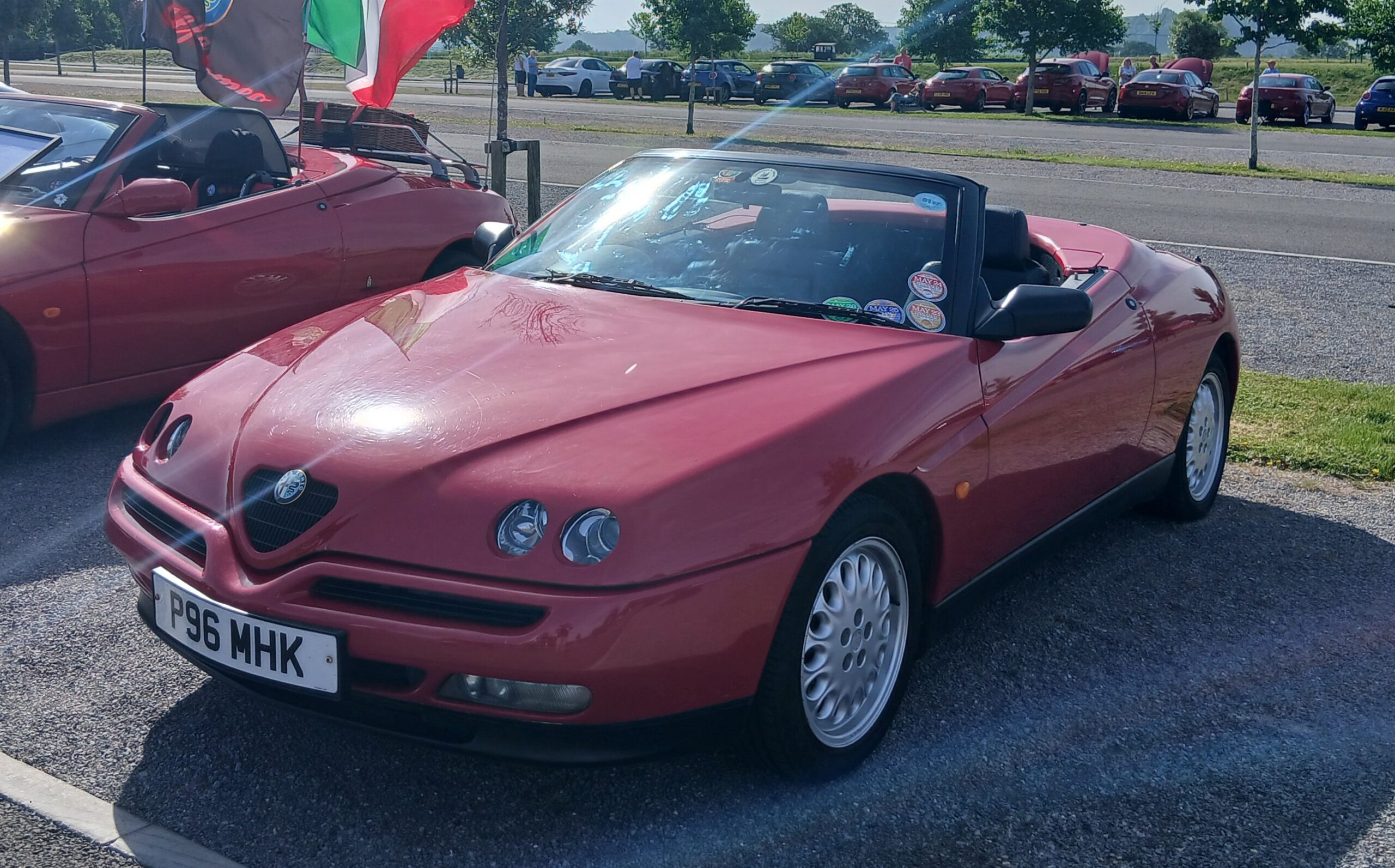
This is mine, now with 156,000 miles and another trip to southern France on his resume, more of which another day.























>>> it is probably one of the best-supported overseas brands in the UK classic-car community
Meanwhile in the States, I have not seen an Alfa in any capacity in over a decade. They generally are good looking cars but I’ve rarely seen them on the road in my lifetime. I would love an early 70’s GT Veloce but they’ve become too expensive and there are few mechanics left who would know how to fix one. I’m beyond the age when I can shimmy underneath a car or bend over for long periods.
@Don Are you including modern Alfas ? Here in Calgary, I see a current Giulia sedan once a week or so, and the Stelvio SUV more frequently.
First time I saw a 166 in 2000 I had to look at it for half an hour, such a beautiful car when you see it in real life, especially in silver. Pure art.
Almost bought one this summer but price and mileage was a little bit too high, but hope another one comes around soon.
Sadly they are becoming rare and 166s for sale are becoming fewer and fewer by the year so probably the right time to buy one is now while they still are priced according to depreciation and not demand for rare classics.
They are very handsome cars, in an unconventional way – the original design much more so than the (a bit cowardly) facelift design. Much better built than the contemporary 156 and also, so it seems, much more resilient to rust. However, they are not easy cars to keep in good condition; in keeping with Alfa Romeo tradition, some unique parts are very, very difficult to source, so a prospective owner had better be (or be friends with) a resourceful kind of person.
Lovely car, but quite challenging to sort out, especially if you’re not in Europe! Two years in and I’ve still only driven mine 30km. It’s like playing whack-a-mole sorting it out!
Ouch, sad to hear your red beauty giving you some headaches.
Hopefully you will enjoy it soon.
Back in the mid-60’s just like the lead photo, I owned both a ’58 and then a ’61 Giulietta Sprint. That 1290cc engine could wind up all day and not break a sweat. They were fun to drive and sounded throaty for their size, catching the attention of the fellows who were driving GTO’s and other muscle cars at the time. When I popped the hood, the twin valve covers caught the attention of most, generating interest in what lied underneath.
Had to pay attention to the timing chain tensioner. Higher RPM’s would cause the chain to stretch just enough to scuff the inside of the housing, shaving aluminum dust into the oil pan.
Thanks for such great pics. I do miss the thrill of driving and occasionally seeing these cars on the road, which have all but disappeared.
Love those two Spiders at the beginning given that I love most all 60’s Alfas.
Thank you Roger, for the wonderful photos. As a former Series 2 Spider owner, I’m often tempted by another. Alfa = always looking for another. There’s one in California whose owner has replaced the original engine with a Twinspark, but swapped the Bosch fuel injection for a custom SPICA. Why ??
Re the 166 being the most beautiful saloon of the last 50 years, I don’t disagree, with the exception of the nose. I prefer the front of the later 159. Found one in Calgary just a week ago, posted the photos on Neil Osbourne’s Italian Epoque story of September 30.
I actually prefer the Guilietta coupe: perhaps cars like the MGB have diminished the impact of the spider for me. The B is a good-looker in isolation, but the problem is they’re not isolated. There’s one on every corner and two on every straight, it seems.
Very bold claim for the 166, Sir Rog! I very nearly agree, though. There was a chrome yellow one around here years back, and it just looked exotic. Here, they didn’t rust, of course, but are just never seen any more, all gone to god with electrical or transmission issues way beyond their total value.
My cousin still has his Busso Spider one of a handful left in the UK he wont part with it.
A high school classmate had an early 70’s GTV. Intriguing machine The only Alfa in our school. A bit unusual even in Los Angeles.
There was a local Alfa dealer (gone now) so I drove an ’82 Spyder Veloce for a while before the warranty ran out. Fun car alongside my BMW 1600.
Italians know how to beautify anything.