
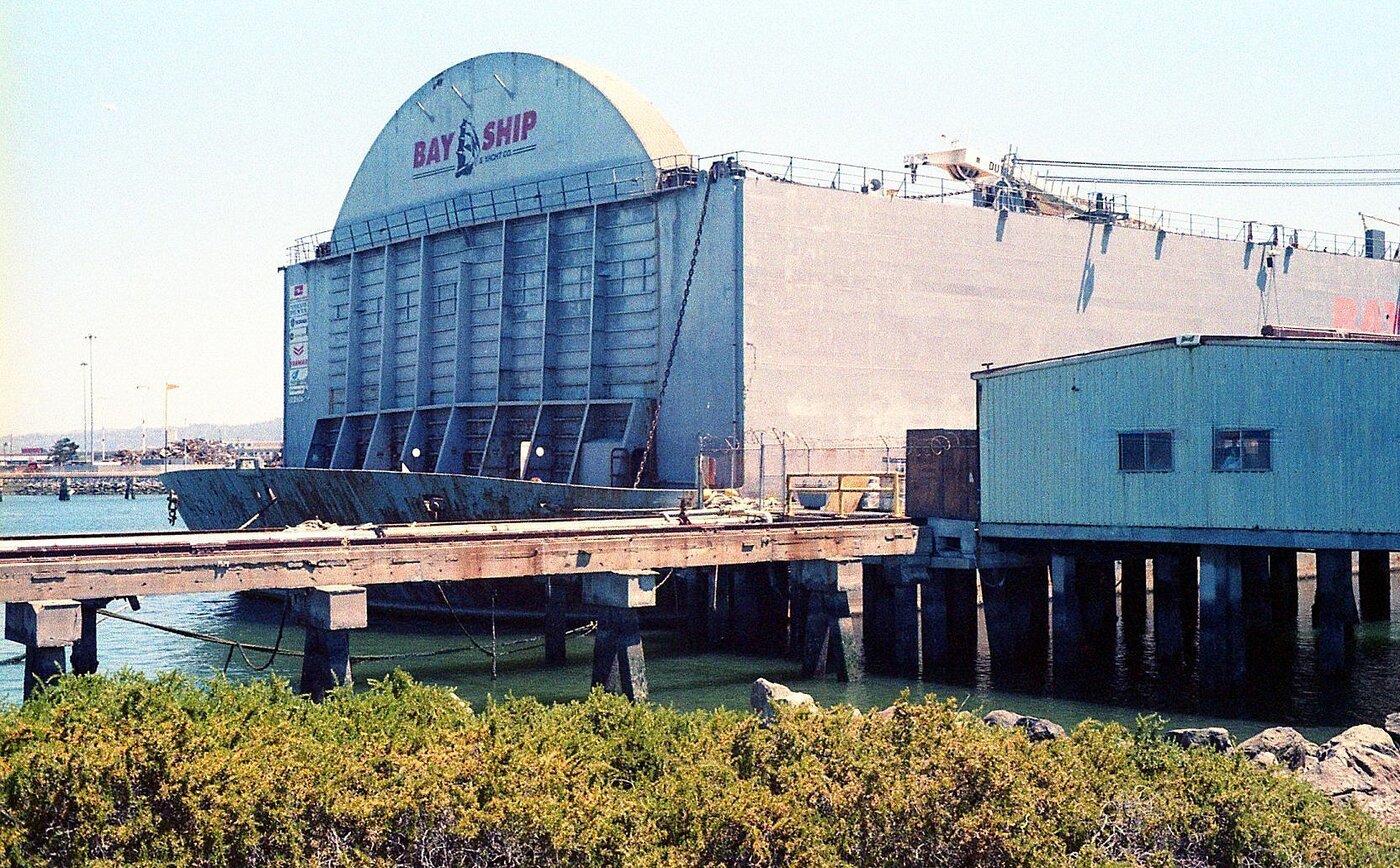
At first glance, there’s nothing particularly remarkable about the structure sitting just off to the right of the Alameda Ferry Terminal. But, if you knew its history, you’d realize this rather innocuous-looking structure has quite a story to tell: This is HMB-1, a barge that was originally built by the CIA for a highly secretive underwater recovery operation, and that was later used in an experimental stealth ship program for the U.S. Navy.
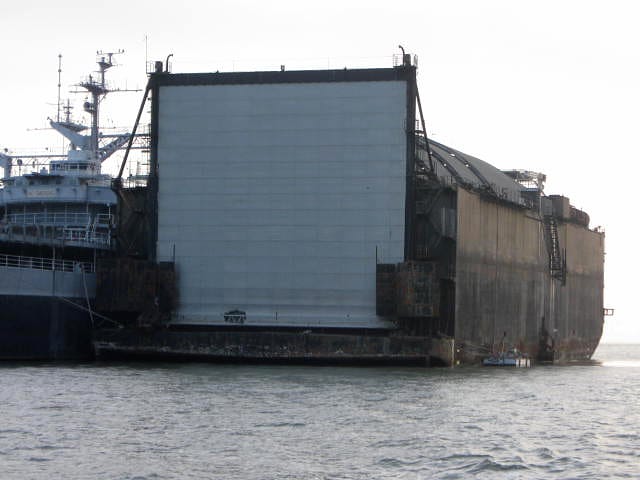
If you know something about ship repair, you might take it for a floating dry dock, which in fact, it later became. However, the name painted on the rusty-looking hull reads “HMB-1.” Put that name into Google and you’ll find that it’s the Hughes Mining Barge, a 324-foot submersible barge built for Project AZORIAN, the CIA’s attempt to recover a sunken Soviet submarine. This six-year mission was only partially successful, but it is an incredible story.
The story begins in March 1968, when the Soviet “Golf II-class” ballistic missile submarine K-129 sank about 1,500 miles northwest of Hawaii when a snorkel malfunction caused half the ship to flood and the batteries to explode. Although the Soviets couldn’t locate the lost sub because its last known position was uncertain, the U.S. Navy had a pretty good idea where it was. The SOSUS underwater listening network had heard the battery explosion, and the Soviet search-and-rescue effort revealed that a submarine had probably been lost.
What was left of K-129 sank to the ocean floor at a depth of about 16,500 feet. Retrieving anything from such a depth was a huge technological challenge, but K-129 was an intelligence prize worth going after. It carried three SS-N-4 nuclear-armed ballistic missiles, along with Soviet cryptographic equipment and other potentially valuable intelligence. (It later turned out that two of the three missiles had exploded during the sinking.) The CIA therefore developed an elaborate plan to build a ship capable of recovering the remains of the sub while giving the operation a plausible commercial explanation so the Soviets wouldn’t realize what was really taking place.
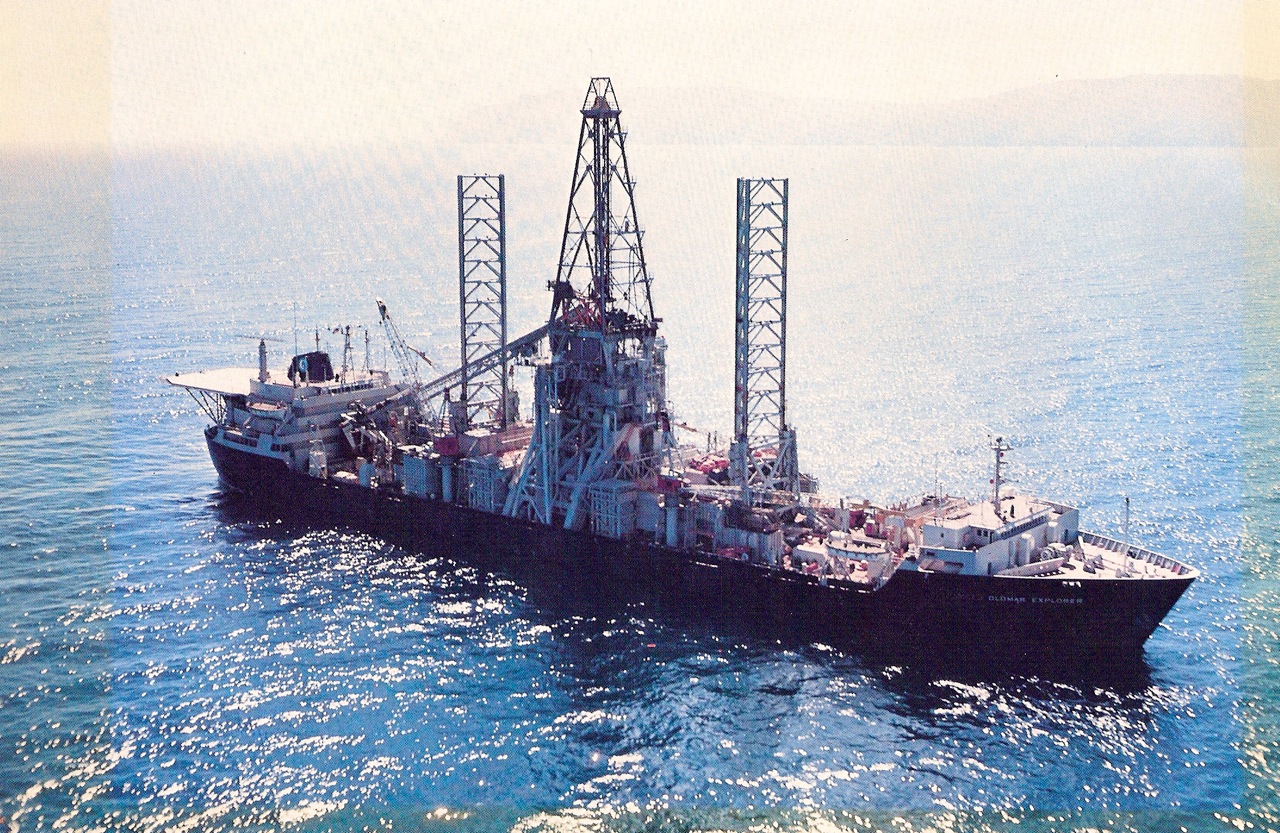
Designing and executing this plan, codenamed Project AZORIAN, took six years. The CIA made a deal with eccentric billionaire Howard Hughes, who was then living in a Las Vegas penthouse, to build a ship to haul an enormous mechanical claw and hydraulic system that could be lowered to the depth of the K-129 wreckage, grasp the hull, and bring it to the surface. The 618-foot ship was called the Hughes Glomar Explorer, which was publicly explained as a deep-sea mining vessel intended to mine manganese nodules from the sea floor.
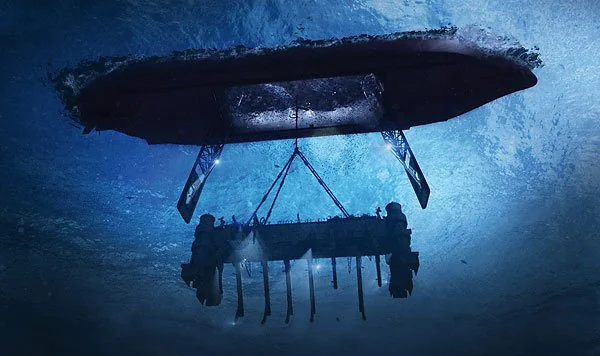
The centerpiece of the recovery system was a gigantic mechanical capture vehicle, nicknamed “Clementine,” designed to descend nearly three miles, grab the submarine, and lift it to the surface. Building and handling something that large and complicated presented another problem: how could it be assembled and transferred to the Glomar Explorer without anyone seeing what was really going on?
That’s where HMB-1 came in.
The Hughes Mining Barge was essentially a giant underwater workshop. At 324 feet long, 106 feet wide, and more than 90 feet tall, it was a submersible barge with a retractable roof. “Clementine” could be assembled inside HMB-1 and kept completely out of sight while the barge was towed into position.
For the transfer, HMB-1 was towed to a location near Catalina Island, off the California coast, with the capture vehicle inside. The barge was then partially submerged onto stabilizing piers installed on the seafloor. The Glomar Explorer could maneuver directly over it, open HMB-1’s retractable roof, and lift “Clementine” into the ship’s enormous central “moon pool.” Remarkably, the operation could be carried out in plain sight from shore, the cover story being that the whole operation was simply routine deep-sea mining work.
The Glomar Explorer finally arrived over the K-129 recovery site on July 4, 1974, and the operation began. The capture vehicle was lowered roughly 16,500 feet to the seafloor, where it successfully grabbed the submarine. Unfortunately, the operation didn’t go entirely according to plan. As K-129 was being lifted, part of the capture mechanism failed and a large section of the submarine broke away and fell back to the bottom. The Glomar Explorer managed to recover the remaining section, which contained, among other things, the bodies of six Soviet submariners. The U.S. Navy gave them a burial at sea, complete with a filmed ceremony that was eventually sent to the Soviet Union.
That was HMB-1’s only role in Project Azorian. Afterward, it was towed back north and mothballed at Todd Shipyard in San Francisco.
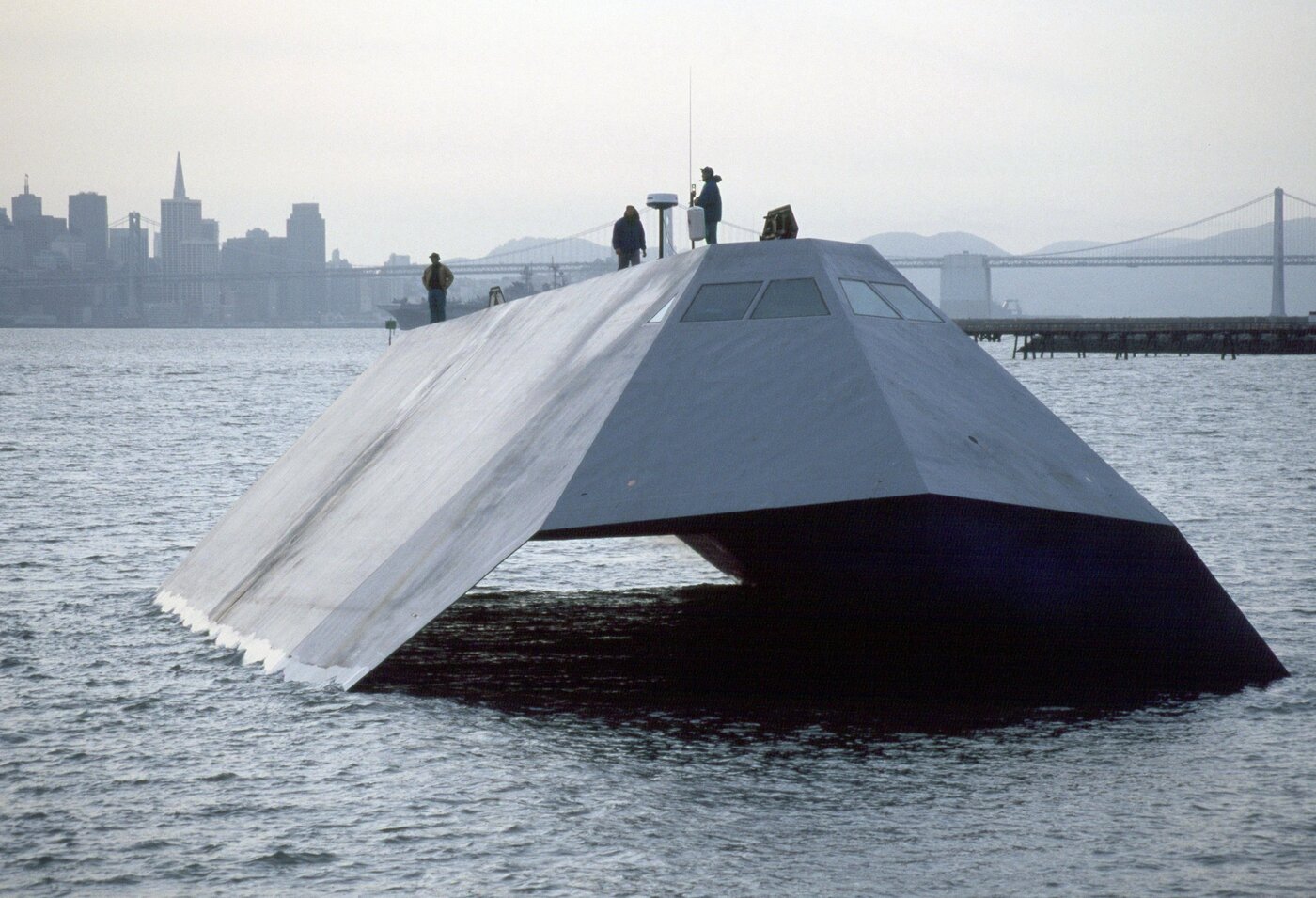
In 1982, HMB-1 was towed to Lockheed Martin’s facility near Redwood City, where it began a second, equally unusual career as a floating dry dock. This time, its job was to support the construction and sea trials of Sea Shadow, an experimental stealth ship.
Built by Lockheed, Sea Shadow was essentially a floating technology demonstrator, intended to explore how a ship’s radar signature could be minimized while also testing highly stable hull configurations. Some of the technology and design concepts developed through the project would later find applications in oceanographic vessels (Lockheed director Ben Rich discussed the development of the Sea Shadow in his 1994 memoir Skunk Works.)
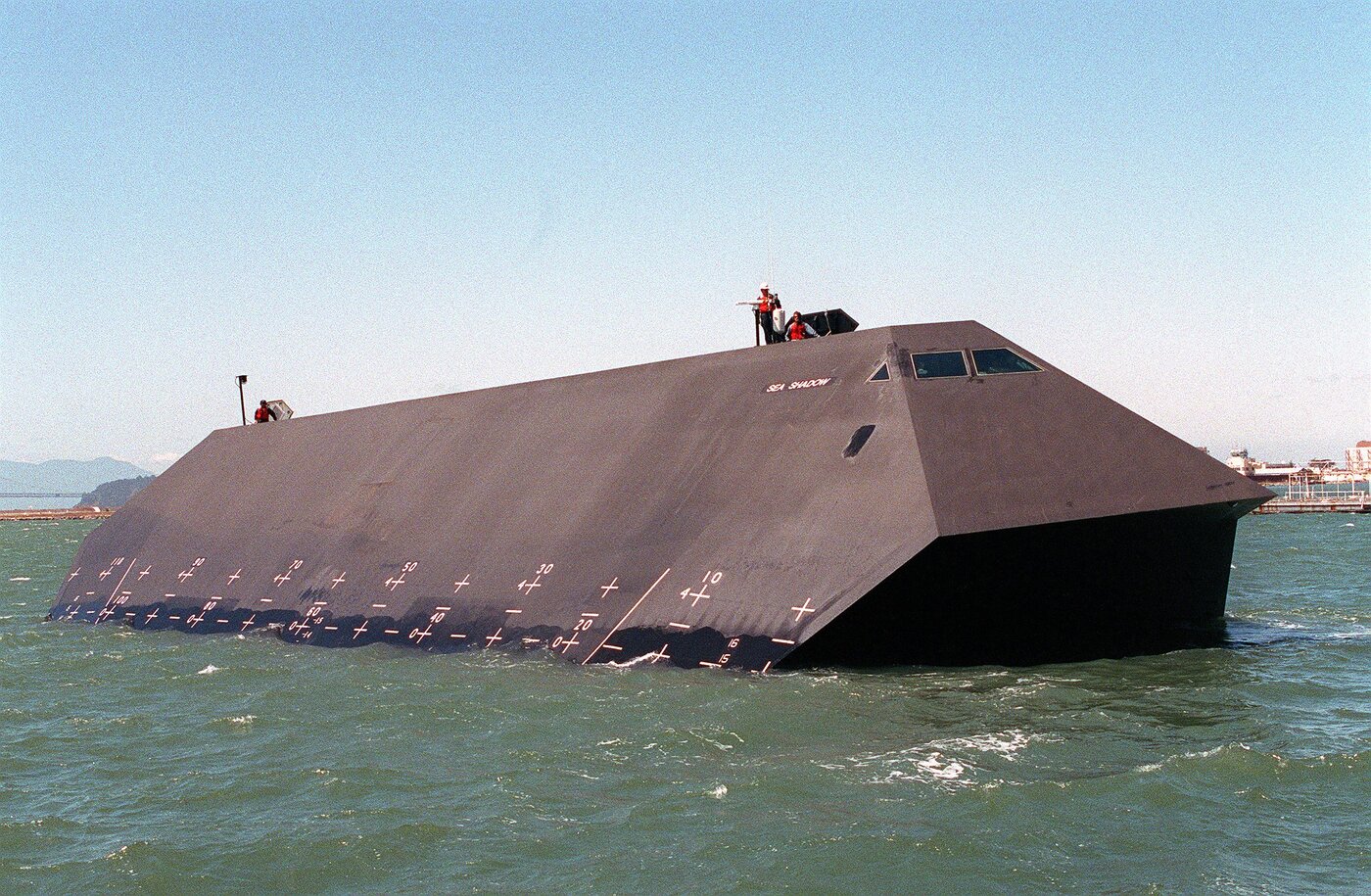
Sea trials were conducted at night, after which Sea Shadow was returned to HMB-1 and hidden inside during the day, keeping the experimental ship out of prying eyes. After the trials were completed, Sea Shadow was finally revealed to the public and spent 1993–2006 docked in San Diego.
In 2006, both Sea Shadow and HMB-1 were moved to the Suisun Bay Reserve Fleet. The vessels were put up for auction, but nobody wanted Sea Shadow. Eventually, it was sold for scrap to Bay Ship, which duly dismantled the stealth ship—but kept HMB-1.
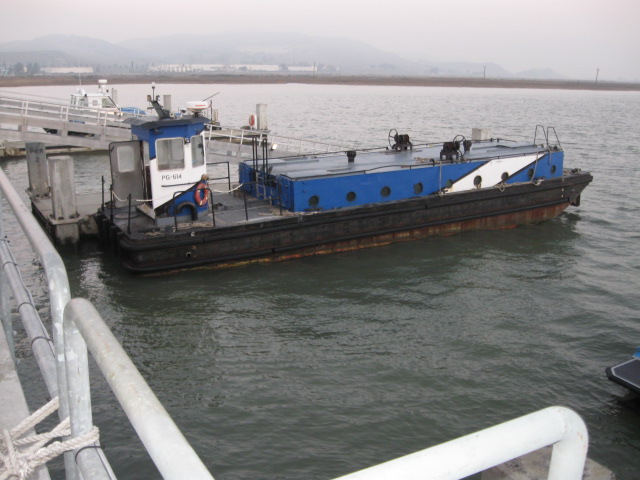
My own connection to HMB-1 came in 2010, during the many monthly trips I made to the Reserve Fleet between 2005 and 2013, pulling parts for the USS Hornet. We’d arrive around 7:00 a.m., board a motor barge, and head out to whichever row of ships we needed to visit. Once there, we’d disembark and go hunting for parts, which could be anything from a simple metal plate to a twin 3-inch anti-aircraft gun mount.
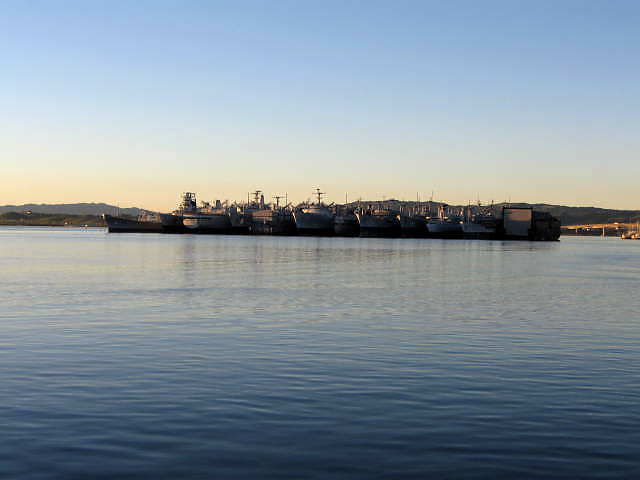
One morning, we pulled up alongside HMB-1, the vessel at the far right of the row. I didn’t know anything about it at the time, but since it was where we were getting off, I boarded and headed inside. My first clue that something was unusual came as I looked up and wondered how ocean debris had somehow ended up on the overhead above my head. Did this thing sink?
Once inside, things got even stranger. Hanging over me was what appeared to be a gigantic black shadow. I had absolutely no idea what I was standing underneath.
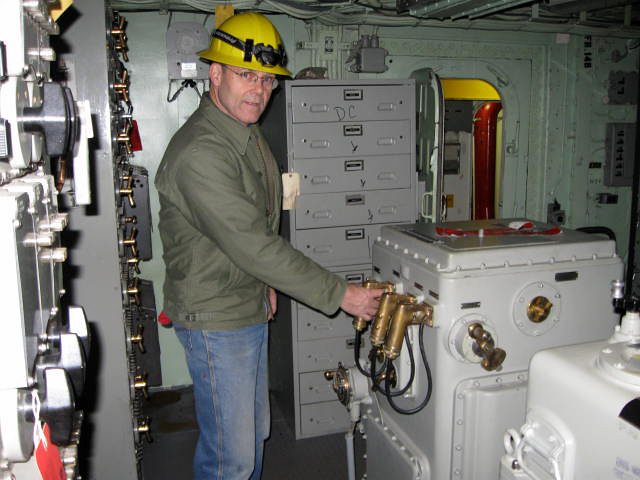
The big ship immediately to HMB-1’s left is BB-61, USS Iowa, which I crossed over many times since the barge would sometimes drop us off there. I also had the privilege of accompanying Richard Landgraff, one of America’s foremost battleship experts and a naval architect who worked on the Iowa-class refit in the 1980s. I knew Richard through the World Affairs Board, and he invited me along on an inspection tour of Iowa before she was moved to Long Beach, a project he was heading.
I got to see the ship—and then some—on that tour, including plenty of areas most visitors never see. Row G was a particularly interesting collection of ships, and I took tons of pictures of all of them before they were eventually scrapped.
And now, a few close shots of the HMB-1:
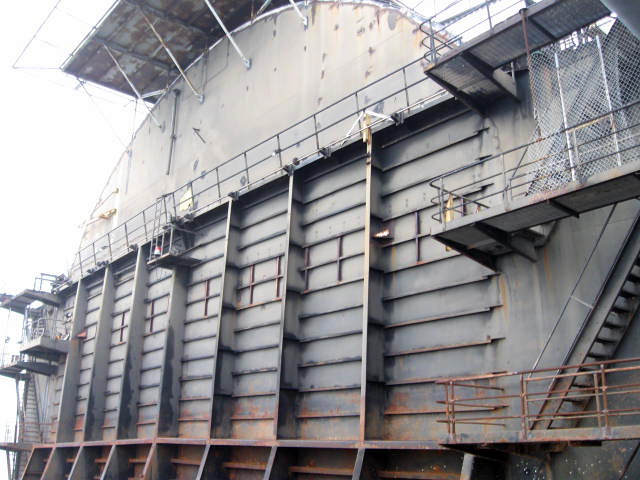
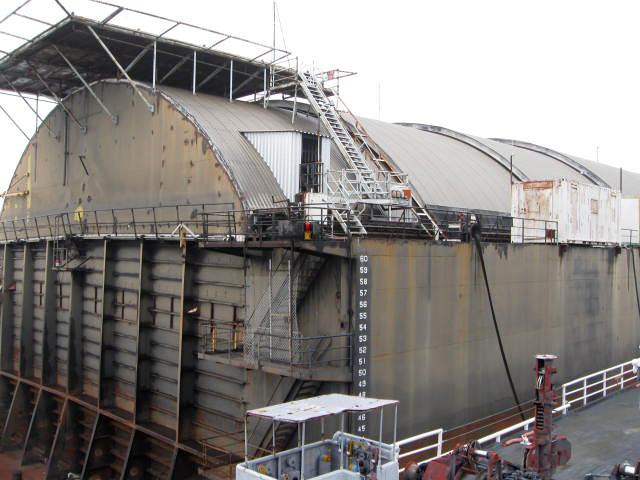
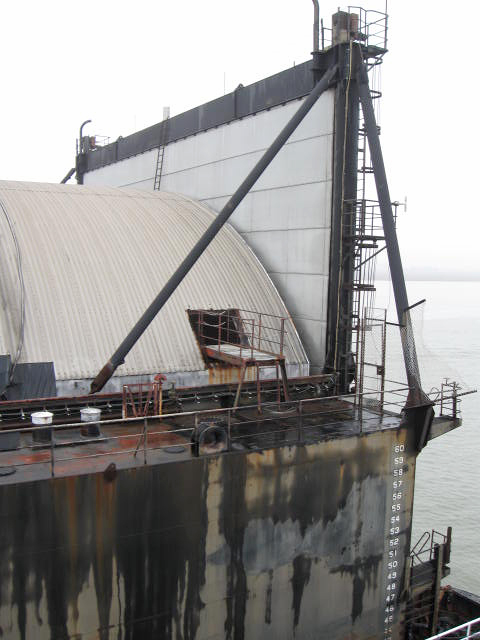
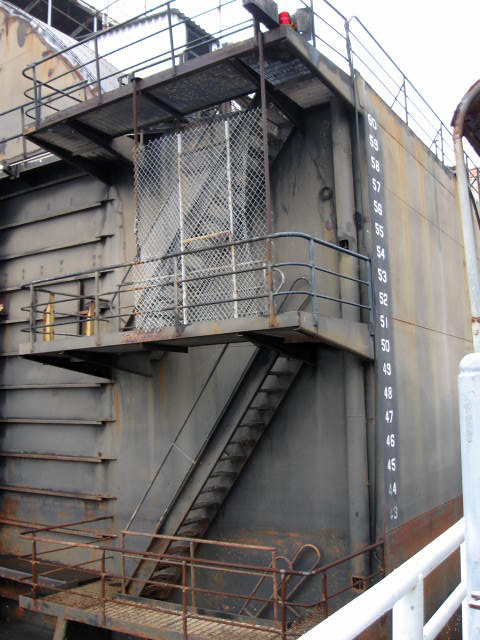
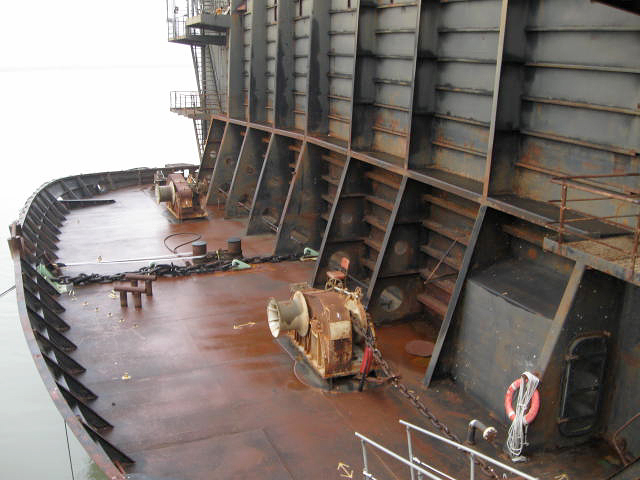
The last shot is where I finally realized what I had been standing on, as we walked up the gangway to the adjoining USS Mispillion. Suddenly, all those strange details I had noticed earlier made sense.
And there you have it: a rather unassuming old barge that played a part in one of the CIA’s most secretive Cold War operations, and later served as a dry dock for an experimental stealth ship. Today, HMB-1 is just another working dry dock at Bay Ship, its remarkable history largely invisible to anyone passing by—and, until that morning in 2010, completely unknown to me.























Great stuff, I could read stories like this all day.
I have three more Dockside Classics I could write up. A WWII sub, A WWII Liberty ship, and a WWII Victory ship. Will be on the Victory ship next Sunday for breakfast with another former Hornet volunteer.
Ah! That would be the SS Red Oak Victory. I’ve worked on that ship for 26 years now. Enjoy your Pancakes!
BTW, I’ve been on that barge and walked past that funny looking boat.
Wow, quite a fascinating story and one which I am going to devote a small rabbit hole of further reading to… not the type of article I came to CC this morning for but also the type of article I do come to CC for!
Thank you, sir.
Thanks for the piece to the K-129 story I had forgotten. I didn’t know HMB-1 was still around ! I lost track of the Glomar Explorer a few years back and only now realized she was scrapped in 2015. As to the Sea Shadow, I thought James Bond blew her up. 🙂
The Glomar Explorer and its operations also resulted in the famous “neither confirm nor deny” response to FOIA requests https://en.wikipedia.org/wiki/Glomar_response
While I’ve never seen a secret vessel in person I have seen news photos of Oregon Irronworks projects testing in the Columbia river like the Sea Hunter and Sea Scout drones.
Great story! I saw the Glomar Explorer in San Pedro a few times. Old Howard kept the Soviets up at night…
I love reading histories of behind-the-scenes things like this (also, thanks for the links to the K-129 and AZORIAN articles, which are also excellent).
I looked in my copy of Skunk Works to see how HMB-1 was described, and Rich simply said that Sea Shadow was assembled inside a “huge submergible barge” and went into no further detail. So you article and pictures fill in a gap that I never would have known existed.
Here it is in the HMB-1 when active
Heading in beside CV-65 The Big E at NAS Alameda
Now I am inside
Wow. Very much looking forward to the next three entries in the Pierside Classics series!
Funny you mention that since my friend and I were just discussing a moment ago about taking a Oct. 24th 3 hour cruise on another memorial ship dating back to before WWII.
The Glomar Explorer saga ended up becoming all too public at the time for some bizarre reasons.
First, in 1974, right around the time the initial recovery attempt actually began, Hughes’ office was burglarized and a bunch of documents were stolen, including a memo talking about his involvement with the CIA retrieval program. The LAPD/FBI investigation made so much noise that the press quickly got wind that something was going on, and the Los Angeles Times nosed around until they found people to tell them most of the story. (The main omission was that they’d gotten the idea the operation was called Project JENNIFER rather than AZORIAN.) That came out in early 1975, and by the end of March, humorist Art Buchwald was speculating, “What if Howard Hughes really owns the CIA rather than the other way around?” I guess the CIA had wanted to make a second attempt to recover more of the remains of the wreck, but by spring 1975, everyone knew what they were up to.
The second part is also kind of wild. Because HMB-1 and Glomar Explorer were supposed to be part of a commercial mining effort, Howard Hughes’ company got slapped with big property tax bills on them from San Mateo County and Los Angeles County, where they were docked. When the CIA story got out, there were estimates in the press of how much the Glomar Explorer really cost (a lot, and even the published estimate was probably a lowball), the L.A. County assessor upped the tax bill on it to $7.5 million.
The CIA and FBI went to the assessor and asked him to please back off in the interests of national security, but $7.5 million was a huge amount of money for the county, so the assessor told them to get bent. The federal Department of Justice then SUED L.A. County to try to block collection of the tax, saying the ship was really federal property (which made it exempt from state and local taxes) and Hughes was just holding it as their agent.
Even after being shown the classified contracts, the county assessor — truly full of brass — insisted that it was ridiculous for the feds to demand the cancellation of property tax for a private company, and that the proper procedure would have been to pay the tax in full and then ask for a refund! Finally, in January 1976, a federal district court ruled that Glomar Explorer was definitely federal property, which mean that L.A. County couldn’t collect, but there was no longer any question at all about its CIA connections. (I don’t know how the San Mateo County situation went down, but I assume it was the same thing.)
Part of the reason the ship and the barge mostly languished after that is that no companies or agencies that might have afforded the cost of leasing and operating them wanted to touch them, fearing they too would be branded as CIA fronts. Also, everyone knew that any commercial operator who docked in San Pedro would immediately have the L.A. County assessor’s office up their nose, looking to for somebody they could stick with the property tax bill.
That’s actually all pretty hilarious.
As a former resident of LA’s South Bay, I’ll point out the USS Iowa is docked in the Port of Los Angeles, not Long Beach. While the two harbors share a common breakwater, they are seperate entities.
Back in 1909 Los Angeles annexed the town of San Pedro to gain access to the harbor and marine commerce, revenue which helped build LA into the megacity it is today.
By the way, residents of the state of Iowa can tour the USS Iowa free of charge, since the state of Iowa provided assistance in the battleship restoration.
BTW, the Hughes Glomar Explorer was tied up near the Benicia / Martinez bridge near the Suisun Bay “Mothball Fleet” for many years.
Probably this pier where the Iowa was brought as she made her way out of the Reserve Fleet.
What a remarkable tale. It sounds like something from an old Frederick Forsyth thriller. The good old military-industrial complex hard at work with your tax dollars.
And what dollars! This all must’ve cost a mint, and you’ve got to ask, for what? What was found that good old fashioned spying legwork in Russia couldn’t? The Soviets seemed to get most of the inside info they ever needed the prosaic way!
How many times have we been told that some latest vastly expensive military tech will be the uber tool, only for it never to be, usually sidestepped by far cheaper but smarter stuff? Maybe because the rulers keep putting foxes in the henhouse, like the just-announced appointment of the biggest government money rent-seeker of them all as one of three to advise on future weapons tech at the Pentagon.
Oh well. Makes for good James Bond plots. And a tale on CC this reader had certainly never heard.
The reported cost of this adventure was in excess of $350 million USD, and some people at the time thought that was a lowball estimate.
Some great photos of the Suisun Bay/Benicia Bay mothball fleet. https://www.amyheiden.com/suisun-bay-mothball-fleet
I know her because the only way she could get those photos was to accompany the Hornet crew out to the ships. We went out once every month on a Wednesday and Thursday. The shots deep in the bowels of the USS Holland she got because I was able to find my way down to the very bottom of the ship, in PITCH black darkness, using a flashlight without killing myself. That was common because even though the rows had electricity it worked sometimes and sometimes the ship itself didn’t have much in the way of tubes or bulbs. The USS Holland, AS-32, was one amazing ship out of all that I went on.
Should note that some of her friends then snuck out to the fleet on a few weekends to spend those nights on the ships. When it was found out the proverbial you know what hit the fan big time with the Feds. We got blamed and it was several months before we were allowed to go back out. Naturally we were not fans in the end.
THANK YOU for this fascinating and detailed article, I hope you write more soon .
-Nate
Fantastic read, thank you