
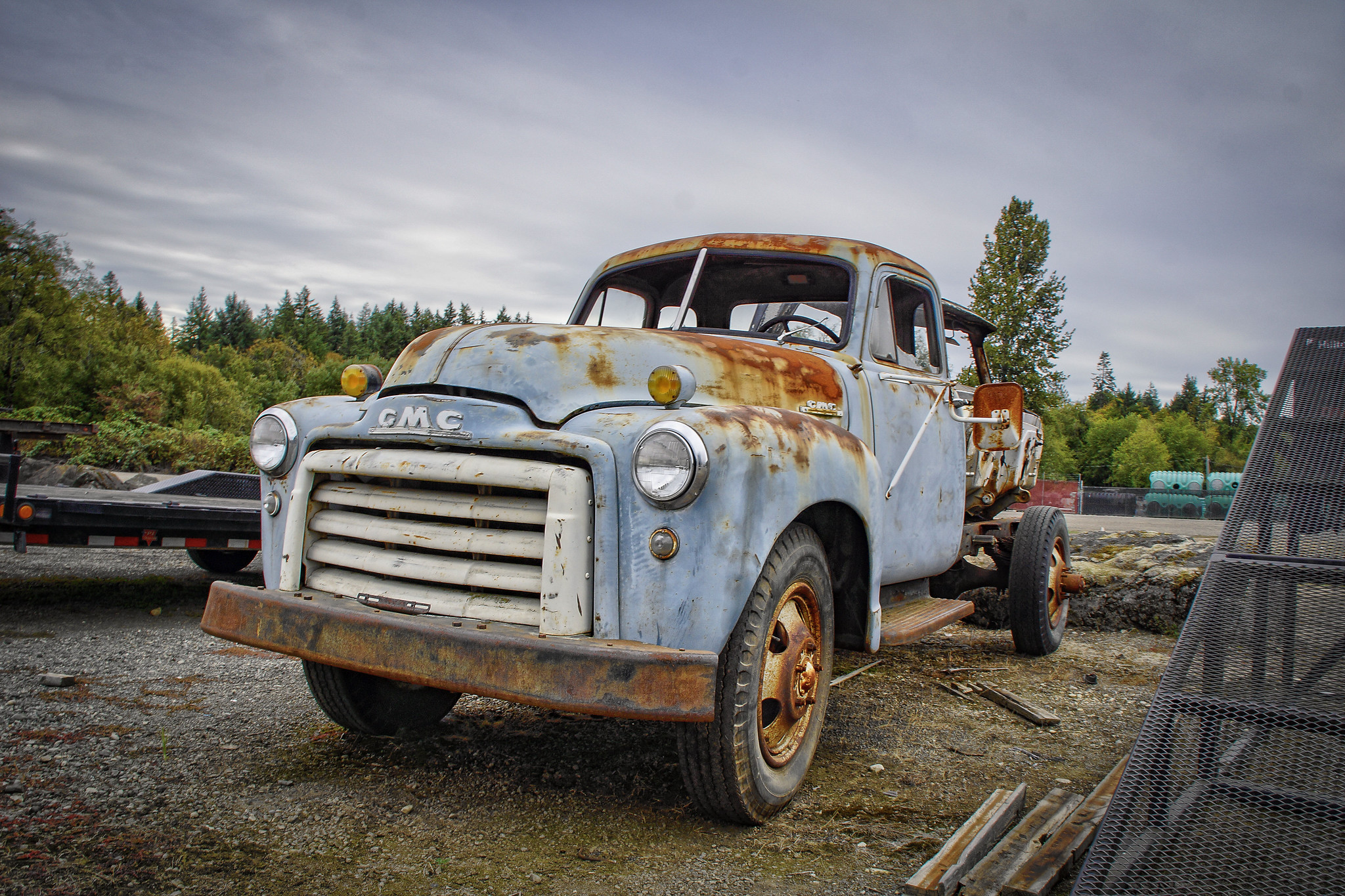
Every so often, we have to revisit the sad beauty of old workhorses left unrestored and found just as they are, with decades of patina telling their story. Few vehicles make such photo-friendly subjects as GM’s Advance Design trucks—or New Design, as the GMC versions were called. And it’s even more of a treat when the images come from CC Cohort regular contributor Ralf K (Don Kincl).
The GMC in the opening photo was found outside a restoration shop in Olympia, Washington. I’m not sure what’s sitting in the truck’s bed—or, more accurately, over the rear frame. But let’s not think about that for too long; we have a couple more Chevrolet/GM workhorses to look at in this short gallery. Next up is another Advance Design model sitting in the same lot.
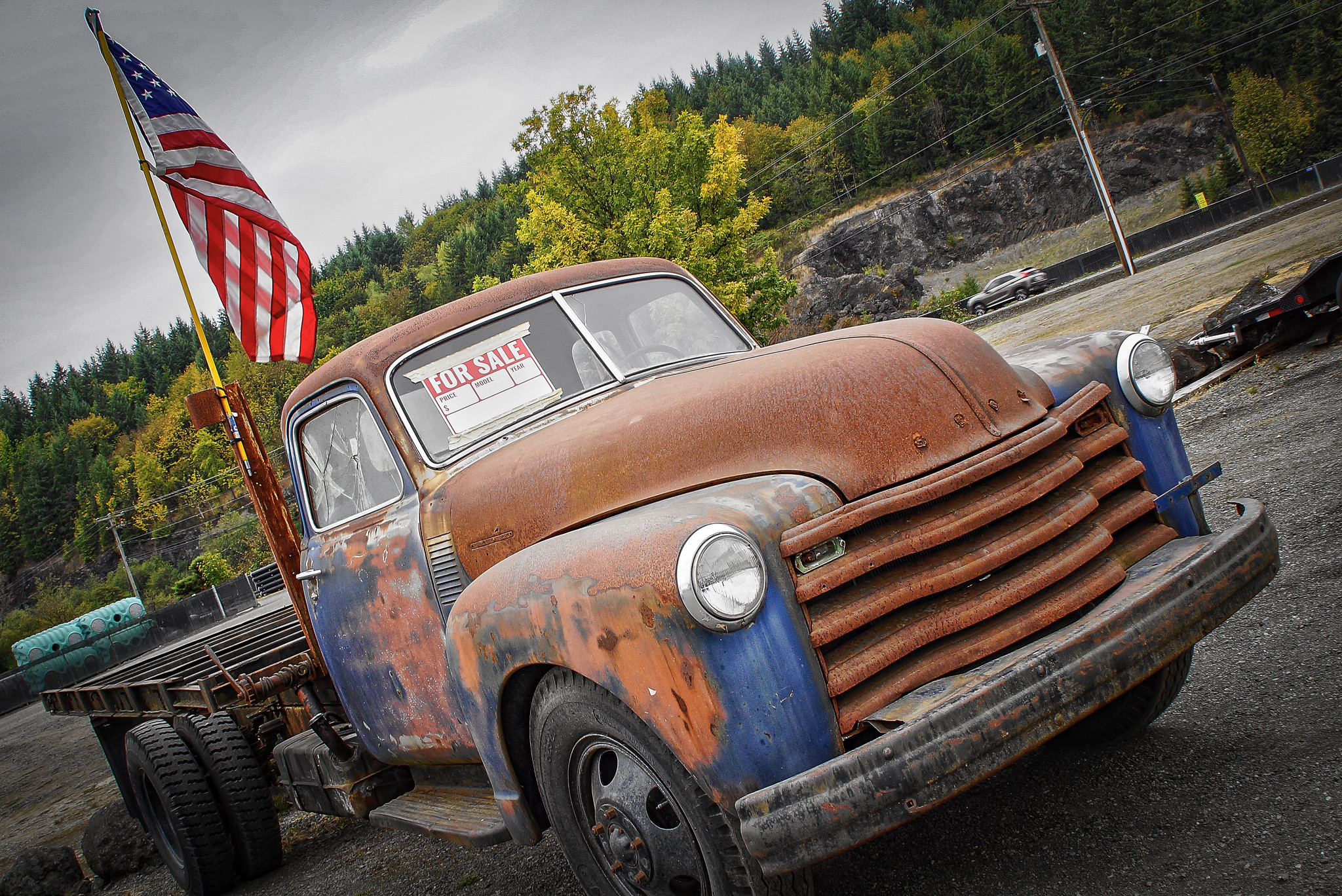
Despite the rust and patina, this Chevrolet looks a bit closer to roadworthy condition. We’ve covered these 1947–1955 models pretty extensively here at CC, so check out the links below. When it comes to these groundbreaking trucks, I tend to favor the Chevrolets, especially the looks of the earlier models, before the heavy-handed nose job arrived for 1954. Regardless, they’re all lookers. And this one is for sale, too. Any takers?
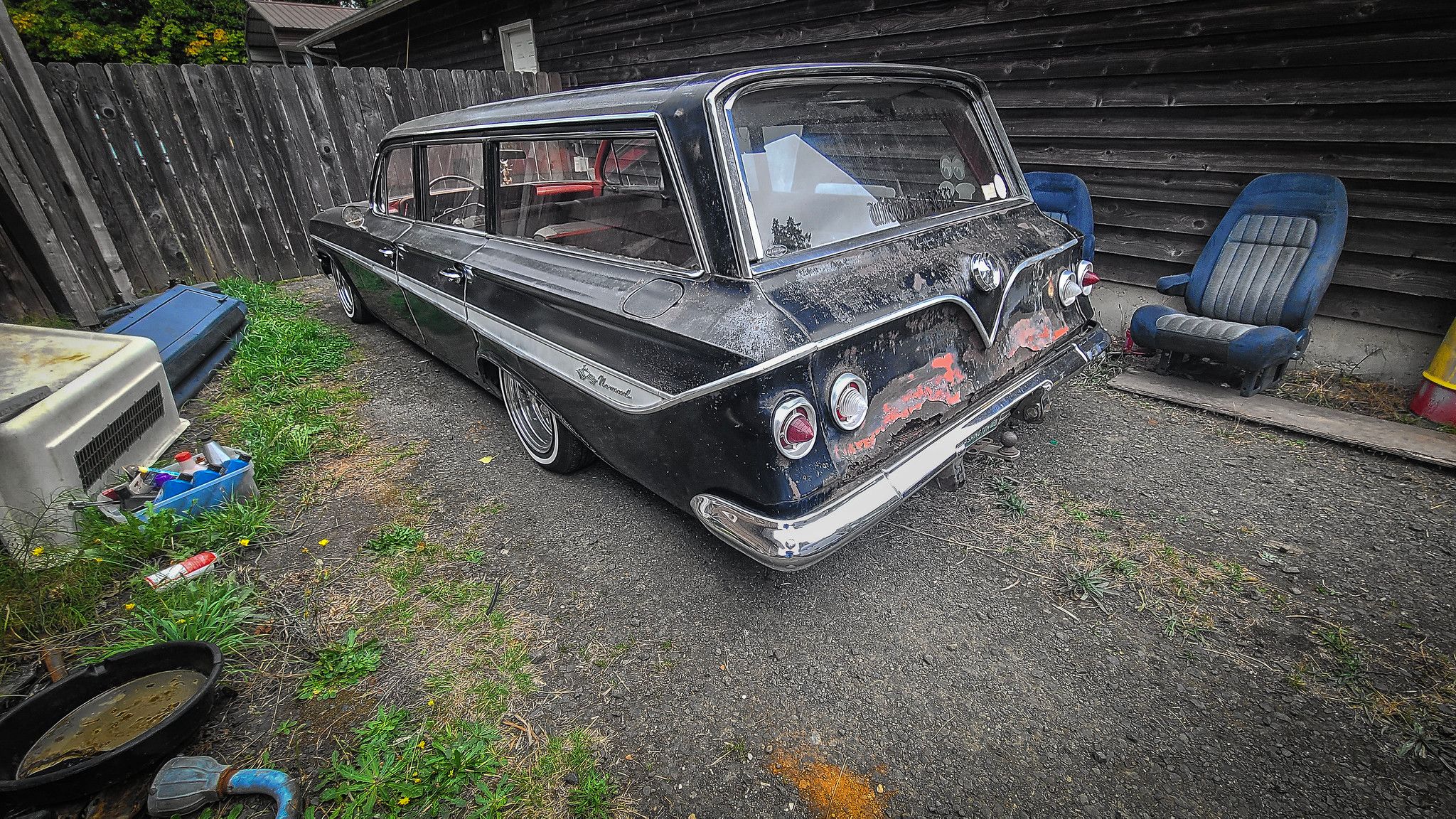
A different kind of workhorse in this last image: the family type. A 1961 Chevrolet Nomad, and while it sure looks worn now, this was once a shining ride. Back in ’61, the Nomad was Chevy’s top-of-the-line wagon, and remnants of its former glory can still be seen in its extroverted styling (though tamer than the 1959’s). The bright trim, glossy finish, and confident, distinctive shapes—a car that was meant to make an impression, and still does.
I assume this one still runs. Those glitzy wheels certainly suggest so. Perhaps glory will find its way back to this old Nomad, sometime in the future?
Related CC reading:
1954 Chevrolet 3600 Pickup – Placid Advance Design
1961 Chevrolet Parkwood Wagon – Last Call For Wagon-Names Only (For a Few Years Anyway)























The widow maker split rims are deal breakers for me but that Nomad wagon looks good.
There are modern brand “F” wheels with the correct off set to use instead of those darn (well named) “widow makers” .
I’m lucky in that when I was young, mid 1960’s I got to run a fuel oil route using a clean old totally original 1949 Chevy 2.5 ton tanker .
Much fun, that poor old thing smoked like a train but was 100 % reliable, this means a lot in January in Rural New England .
For many years my shop truck was a clapped out 1949 3100 series (1/2 ton) Chevy with a 1957 full pressure oiling 235C.I.D. i6 engine, what a fantastic truck it was .
Agreed that’s a beautiful wagon, I hope it gets saved before the tin worms eat it all up .
-Nate
The GMC is a 1951-1953 model, and on the back is a cab from a 1964-1966 Chevrolet or GMC truck that is sitting sideways. What you can see best is the cowl and windshield hole.
The Chevrolet looks like a 1947 or 1948 4400 or 6400 series.
Both of them have the Nu-Vue cab corner windows.
Great photos.
GM had those 10 stud wheels up into the early 2000’s, using 5 studs on the front hubs, 10 on the rear. There is a common 19.5″ tubeless radial tire wheel that fits the old trucks nicely.
I’m a little confused by the taillights on the ‘61 Chevy Wagon.
A top of the line Nomad, and I can zoom in and see the Impala logo above the “Corvette” flags, and yet the two taillights on each side would imply a mid trim Bel Air here….
Please enlighten me. I know Chevy played fast and loose with that in the sixties. IIRC, the ‘64 only had one taillight on each side, but the top trim ‘63 had 3 per side.
I don’t know the reasoning behind the decisions, other than the one standard; money. But the sedan and wagons rear lamps often did not match.
1960-1962 wagons all series used two taillights per side. If you bought the optional back up lamps, in 1960 they were below the bumper, in 1961 and 1962 they took over the inside taillight, so you actually only had one taillight per side, as seen above.
1963 and 1965 matched the sedans by series.
1964 – as you mentioned had one rectangular lamp on each side with the back up lamps in the bumper.
1966 – the Caprice sedan had it’s own style of taillights, but the Caprice wagon matched the Impala’s.
1967 – it was the Biscayne sedan that had a unique taillight that was not used on the wagon. It used the Bel Air style.
1968-1970 matched the sedans by series.
You are correct, they played fast and loose, probably to keep us spotters guessing.
I hope this helps!