
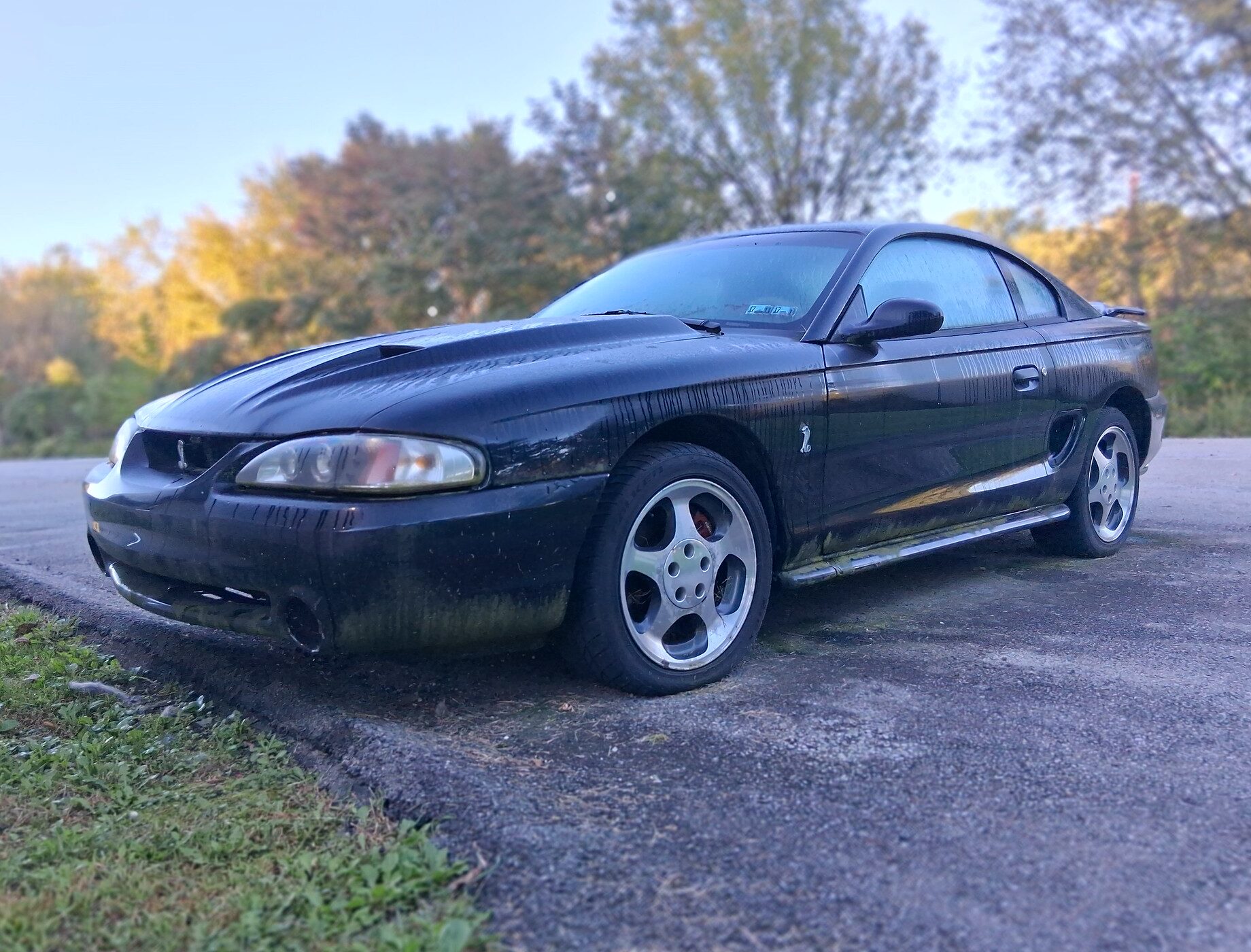
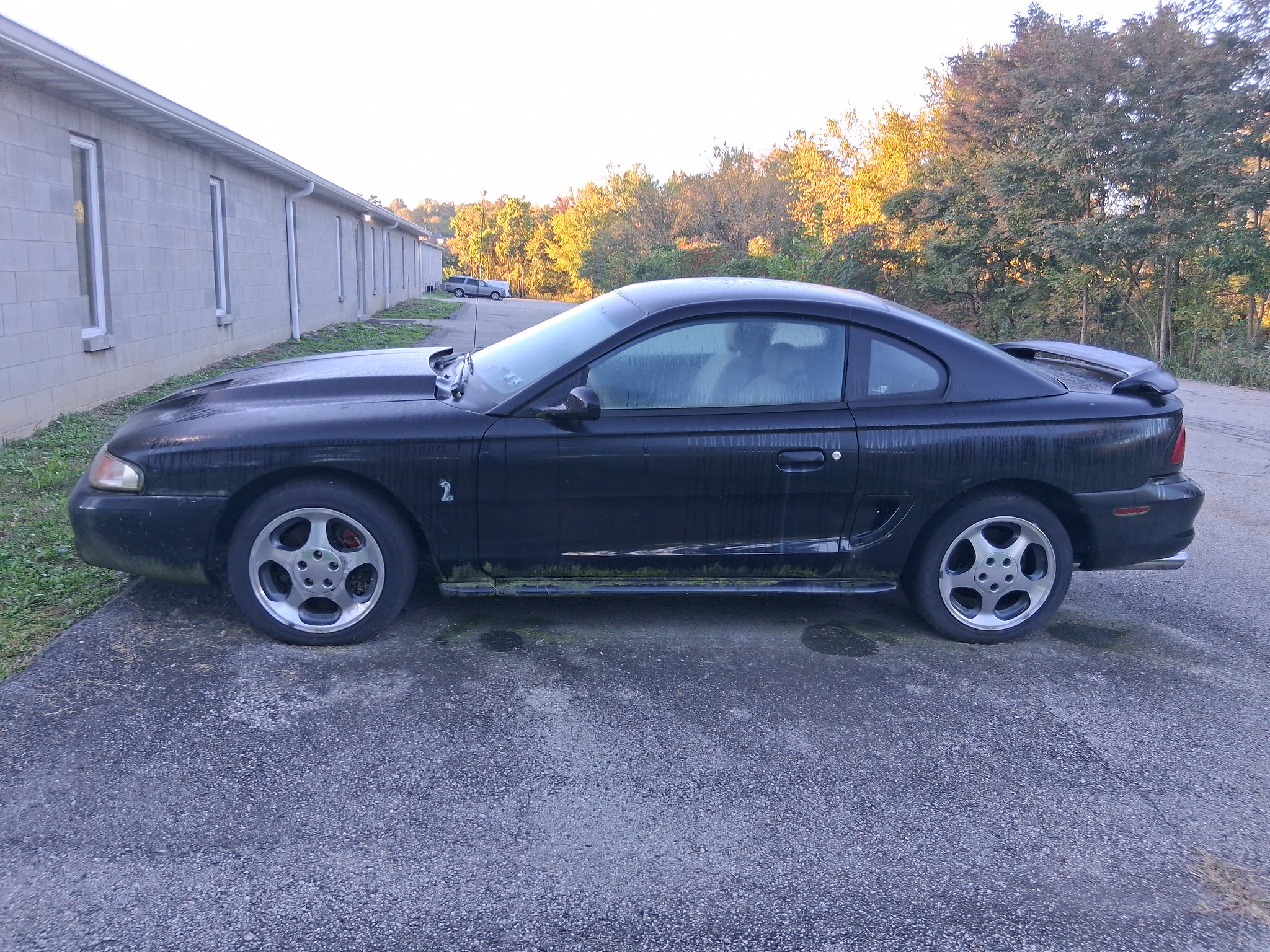
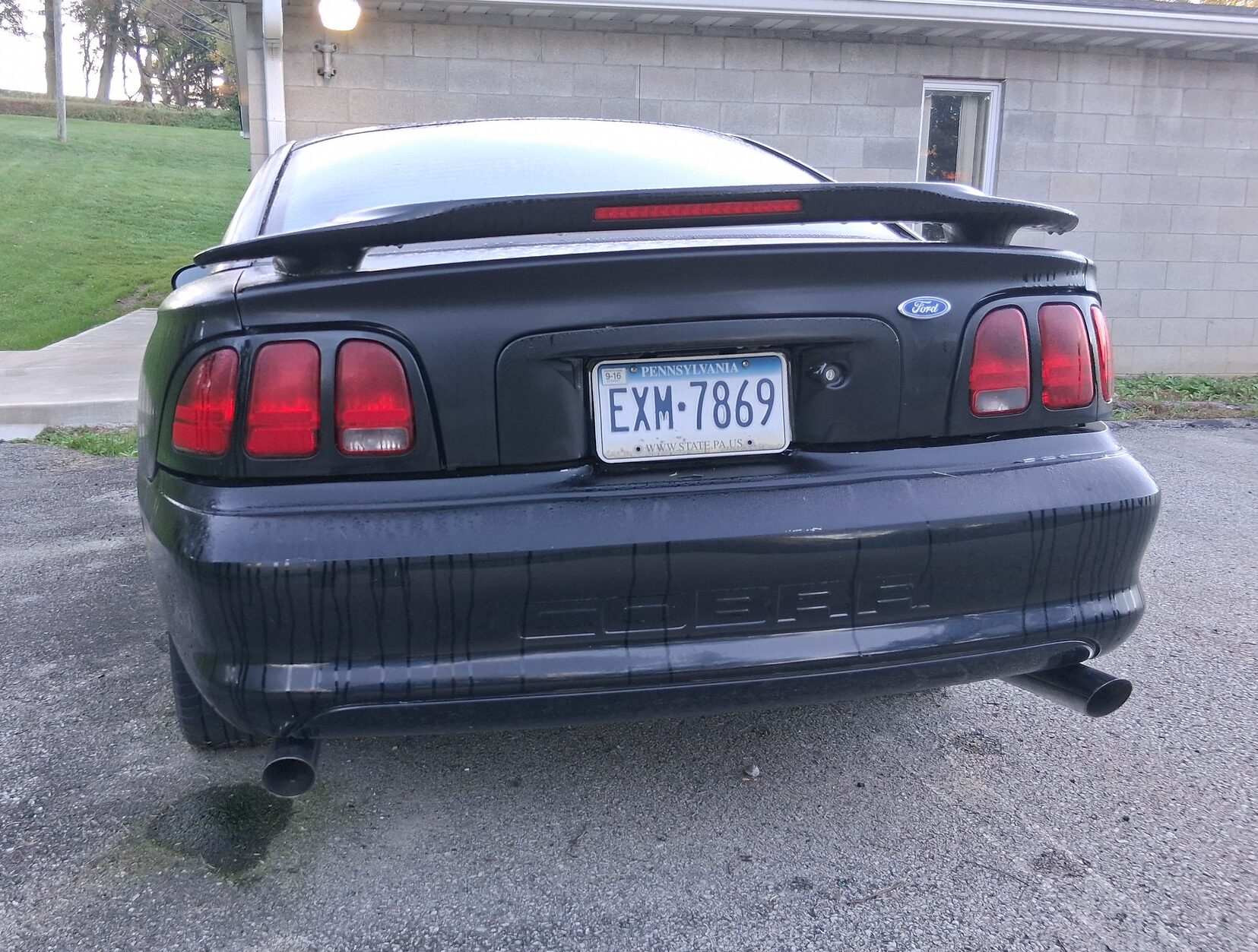
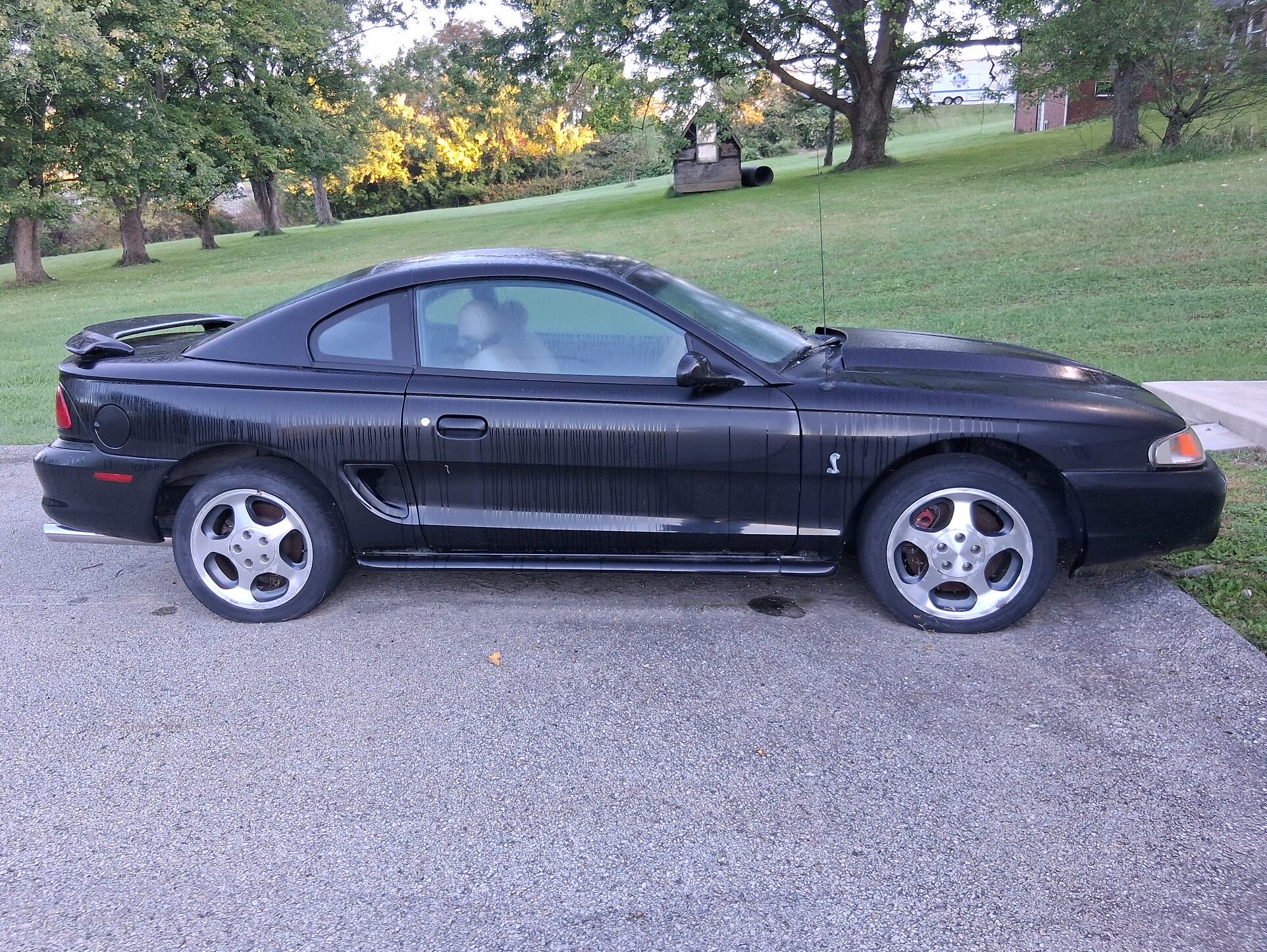
The Ford faithful had high hopes in 1996 when it was announced that the Mustang GT’s good old pushrod 5.0 was being replaced by a 4.6-liter single-overhead-cam “Modular” V8, but those hopes were soon dashed when it was found that the new car was no faster (and even slower in some tests) than the old one. Then, the new dual-overhead-cam 305-horsepower Cobra was announced, and finally Ford fans had something with enough firepower to go head-to-head with the LT1-powered F-bodies that were introduced in 1993. Hyperpack posted some pictures of one of those special Mustangs, this down-on-its-luck 1996/7 Cobra, on the CC Cohort, and it reminded me of the Cobra I got a chance to test drive when these cars were new.
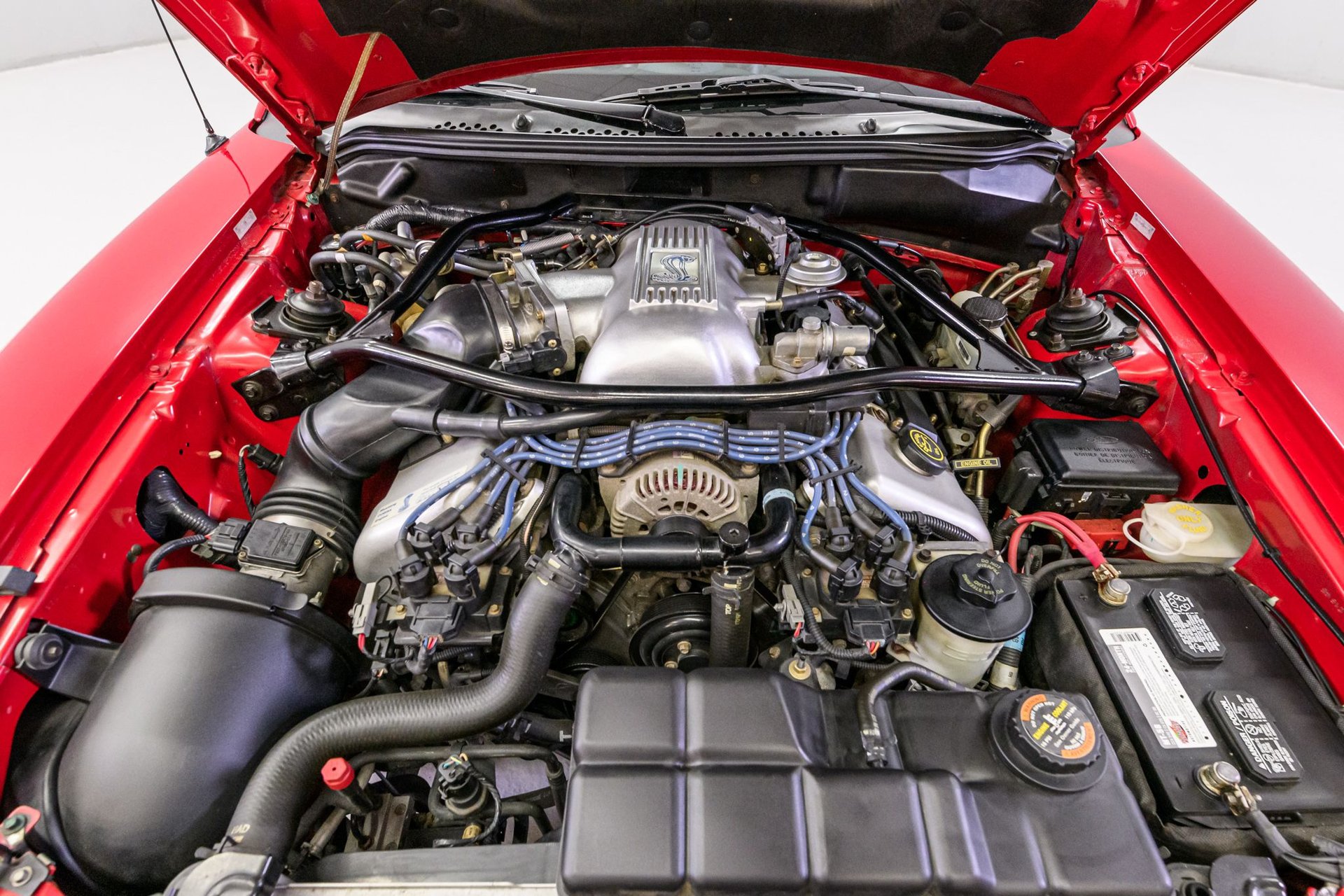
Aside from a few visual tweaks such as unique front and rear fascias, a scooped hood, and special wheels, the Cobra didn’t look that much different from a Mustang GT, but it had a tweaked dual-overhead-cam 4.6 that originated in the Lincoln Mark VIII, and it added up to 305 horsepower at 5800 rpm and a not-too-impressive 300 lb-ft of torque at a peaky 4800 rpm. The DOHC 4.6 was physically massive, about as big as a Boss 429, but it looked cool and finally gave the Mustang acceleration to almost match the Camaro and Firebird. I read all the road tests back in the day, and 0-60 times in the mid-five second range, along with quarter-mile passes of around 14 seconds at 100+ miles per hour, were the norm.
Car and Driver compared a Cobra to the Camaro SS (an SLP-tweaked Z28) and a Firebird Formula with the WS6 package (which was also modified by SLP). The Mustang came in second to the Camaro, which was noticeably faster but not the kind of car that the editors would have enjoyed living with; the Mustang was a balanced package with power and road manners.
When the Cobra came out, I was a college kid driving around in my own family-heirloom 1965 Mustang that I still own today, although back then it was somewhat shabbier (not that it’s perfect now). Like any card-carrying car guy, I cruised the dealerships regularly, waiting for the good stuff to hit the lots. At some point in probably the late-summer, early-fall of 1997, I was dating a girl who was somewhat older than I was and had already gone corporate, so I dressed in a “business casual” outfit to take her to lunch; after all, I didn’t want to look like a college bum on a date with a professionally dressed lady. Of course, I swung through the car lots afterward and found a new red Cobra at the Ford dealer.
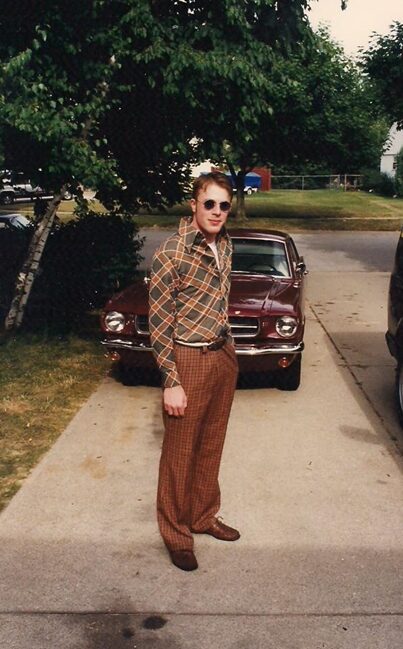
Picture this guy wearing business casual rather than his friend’s dad’s clothes from the 1970s and that’s the general picture of what I looked like in 1997. A salesman came out to talk to me about the car, so I figured that I’d be an idiot if I didn’t ask for a test drive, and he surprisingly obliged. We took the car around town, I got on it a little bit (but not much), and he finally asked what I did for a living. I replied that I worked at Bob Evans, which, for those who aren’t from the United States, is a family-style restaurant chain.
The salesman melted into a disappointed puddle in his bucket seat. He didn’t say a word for the rest of the drive, and when we returned to the lot, he literally jumped out of the car while it was still in motion and ran inside, his voice, doppler-effecting itself into the distance, shouting that he had customers. I sat there with a running Cobra, alone, replying, “I guess I’ll just stay here then” as if I were in a Monty Python flick. What else could I do? I parked the car, walked into the showroom, set the keys on his desk, and thanked him for the test drive, undoubtedly with a smile that was a couple notes smarmier than necessary.
Of course, I feel worse about the whole escapade now than I did then, but not too much. At the time, I tried to play the wronged party by saying that the salesman didn’t know that I wasn’t some spoiled college kid, nearing graduation, whose parents were ready to drop twenty-five grand on a new Mustang as a gift. “It’s bad business,” I thought! But in reality, the guy called it as it was: I was a car-crazy kid taking a joyride, wasting time that could have been better spent on paying clients.
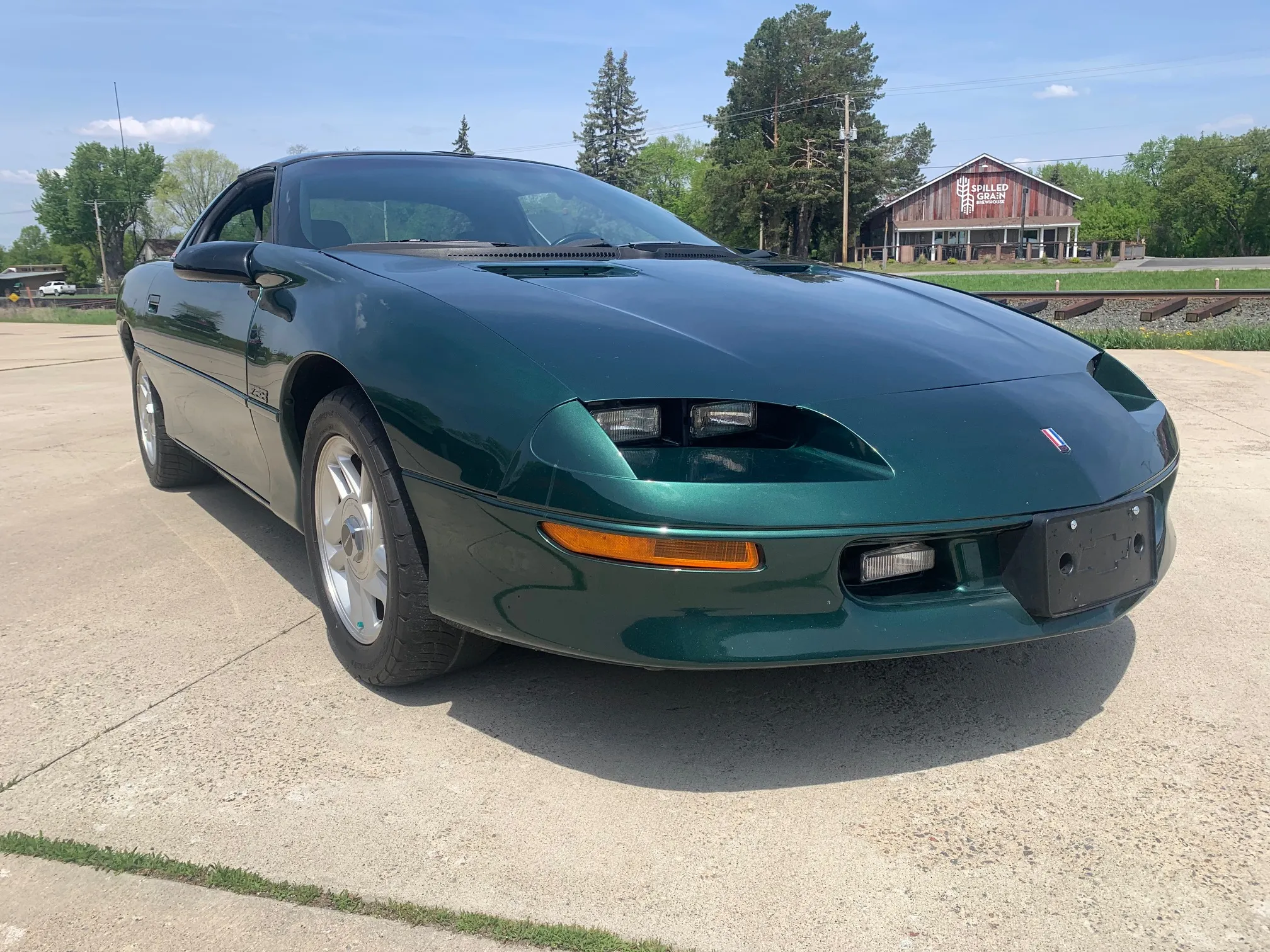
If my parents were going to spoil me with a new pony car in 1997, I still think I would have taken a Camaro Z28 (not that my dad would have allowed it as a Ford guy). The Cobra had some disadvantages; at $24,810 for a coupe (in 1996 when they came out), it was about five grand more than a Z28, which was usually timed as being just a tick faster than the Ford. For those who didn’t want to shift for themselves, the Camaro was available with a four-speed automatic that was every bit as fearsome as the stick, while the Cobra was only available with the manual. Finally, Cobras were only sold at select SVT dealers, which is why I never saw one for sale in my hometown; sales were thus a bit limited, but still not bad at around 10,000 cars a year in 1996 and 1997. Clearly, there was some pent-up demand for a truly fast Ford.
But as a Mustang owner and son of a Ford man, I thought the Cobra was really cool, and I loved driving it around, even if the circumstances were awkward. Cobras are reasonably priced collector cars these days, and one of my wife’s old high school classmates brought his black ’97 convertible over to show me last year. It’s still a fun car, even if I can’t quite get used to the fact that it’s almost 30 years old. So Ford took a swing at the F-bodies and just about got there, but as we all know, the Mustang has generally come out ahead in the end. I hope that this neglected Cobra can do the same.
Related Reading
My Hobby Car of a Lifetime #11: ’96 Mustang GT – In Praise Of The Throwaway Car (by Jose Delgadillo)
1994 Chevrolet Camaro Z28: How To Convert A 17-Year-Old Mustang Kid (by me)























I remember how the new modular V8 was supposed to be the gateway into the future. But it turned out that the future wasn’t everything we had initially hoped. Frankly, I had forgotten all about these.
Oh, the poor salesman. A rich college kid whose father is about to buy him a car? I don’t think any of those has ever worked at a Bob Evans. 🙂 I might have been tempted to go with the “I’ll be graduating soon from college” thing. Of course that might have had the guy calling you, and you would have had to resort to the “I bought a Camaro” escape hatch.
Ha ha, yeah, at the point where he realized I wasn’t a paying customer, I decided not to push the issue. Afterward, I was a little bit fake insulted, but it was mostly in jest (and part of my inner monologue).
One look at that engine compartment and I definitely know I would rather work on a 1969 Boss 302 engine than this modular engine.
It’s big an intimidating but there isn’t much to work on to begin with, plugs and wires are about as easy as it gets on a V8 engine.
What? There are alternators, power steering pumps, AC compressors, cylinder heads and countless more and we are talking 30 years old now. Some V8’s you need to be a contortionist to get to all the plugs or need to remove some parts to get to that #8.
The only one of those that isn’t particularly easy to remove on 4.6s is the power steering pump, in fact it’s one of those parts I personally backyard mechanic and always leave one of the four bolts out(also one of the three starter bolts, ugh). Alternator? It’s probably the easiest engine ever manufactured to replace, 3 bolts front dead center on top and in/out. AC compressor? Mostly same, 3 bolts to the lower right side and in/out. Cylinder heads… ok yeah not pleasant, but do you ever hear of modular 4.6s blowing head gaskets? They aren’t 4.6 DOHC Cadillac Northstars!
I’ve done all of the above on 5.0 ohv engines, and to me accessories are no more or less fun to deal with than the modulars, only I’ll add one you didn’t mention; the water pump! Every 5.0 is a horrendous fight getting the bolts out without snapping/rounding/extraction. No drama on 4.6s. Because the bolts aren’t several inches long so they can pass through the timing cover and block to find places to corrode along the way!
Plugs/plug wires like I said are the best aspects maintenance aspects to the modular engines. My 94 Cougar was my first car and naturally the first car I did maintenance on, and I was spoiled by how easy plugs/wires were, which were literally straight down from the top next to the port fuel injectors, prior to that car I grew up admiring OHV V8s and the first car I messed with them (a 5.0 swapped 89 Cougar otherwise like mine) made me realize why people complain so much about notoriously cramped cars like FE Mustangs or B/RB Mopar A bodies, and it wasn’t even that bad! I still have my Cougar to this day and always will, whether I can afford to fuel it regularly, and have since engine swapped it to a 4.6 DOHC and changing the plugs is basically a nothing task; unscrew the intake tube, unscrew the valve cover… covers … and change. 5 minutes.
I guess my 68 Cougar spoiled me then. That along with my father’s 04 LeSabre.
Yeah the relative ease of access in my 2002 F150 with an SOHC V8 and my son’s 99 Suburban with a 350 is striking. Quite a bit of the Ford engine is under the cowl and hard to reach. I’m not a fan of the SN95 Mustang regardless of engine, I prefer the looks and simplicity of the Fox body or the well done retro of an S550
I find the contrast of the engines of Mustang and Camaro interesting. Ford has a huge, four cam V-8 which was only produced in limited numbers. The Camaro had a SBC with all of one camshaft, and it smoked the Mustang anyway. That SBC was produced in massive numbers, while the Ford Cobra V-8 was always rare. I have never seen one in person, but I left the garage business in 1994.
I often wonder how the Mustang/Camaro rivalry would have been different if Ford would have pooled their resources into updating the Windsor engine (like GM did with the LS). A lot of people speculate that the LS took a lesson or two from the Windsor anyway, and Ford had the 351 all along, which fit into the Mustang without too much trouble.
Yup, the firing order and intake/exhaust port layout are both things Ford beat Chevy to (although I don’t know that Ford necessarily innovated those). Another Ford advantage back when was placing the distributor in front, but that receded as electronic ignition came along, and was made moot by coil pack ignition. One more: Ford camshafts were positively retained by the timing sprocket and a thrust plate, where the SBC was floating and could walk under certain circumstances. Funny that Ford got it right, then decided OHC was the way to go, while Chevy picked up the ball and ran with it.
It’s not that uncommon or exotic, unlike Chevy’s DOHC ZR-1 engine, in 1994 the only model using the DOHC modular was the Mark VIII, so not seeing many isn’t a surprise, but later the Continental would adopt a transverse variant, then the Navigator in 5.4 form, then Aviator and eventually non-SVT performance Ford’s like the 03-04 Mach 1 and Mercury Marauder before the 3V sort of replaced both SOHC (2V) and the non-supercharged DOHCs.
Ultimately the 5.0 Coyote owes most of its architecture to the modular DOHCs, so it took a while but it eventually paid off. Meanwhile Chevy’s latest “tried and true” single cam OHV V8s have become oddly problematic.
I’m really shocked at how problematic the newest GM V8s have been. The V8 is their bread and butter, and it’s not a good look when something goes this spectacularly wrong with their specialty product.
I was a hardcore Ford kid when these came out, so it was a little disheartening to see the expensive quad cam wonder unable to beat the old bowtie straight-up. I think Ford made a mistake going to the modular engine so early; the Explorer with the last of the 5.0s got revised heads and coil packs – only good for 210HP as-is, but that’s with an RV can and horribly pinched exhaust manifolds. The later SN-95s could have been 250 HP without breaking a sweat, done cheap, and probably lighter than the GT’s 4.6 if they’d done aluminum heads. It’s like Ford was caught off-guard when people didn’t care about “new and improved!” when it was no quicker.
Anyway, the Mustang won out by being more liveable, and (I think) prettier in the SN95. The Cobra was a solid package – my brother had one – but just not a great value. They do have a ton of potential – they respond well to boost and the internals can take it. That barely matters though; it was only a handful (mostly racers) who pushed those limits, and you had an uphill battle if Motor Trend said the other one was faster.
I like these 96-97(and 98 with different wheels) Cobras quite a bit. The styling changes from a regular Mustang were subtle but fitting for a car called Cobra and though the SOHC 4.6 was definitely a disappointment in GTs, the 94-95 5.0 cars weren’t much to write home about to begin with, with the heavier(albiet welcomely more rigid) chassis and more restrictive upper intake manifold designed for the lower hood line(which was actually recycled from the 91-93 Thunderbirds which went 4.6 for 1994). The 5.0 to 4.6 GT transition was a lateral to negative change performance in performance, however the 96 DOHC Cobra was still a performance step up from the 94-95 SVT Cobras which are kind of forgotten today.
As to the big picture performance, yeah GM ultimately had the hotter gearhead combo, not just in power and value but having a 6 speed manual transmission (which by the way that T56 being the more stout one compared to the Mustang’s T45 5 speed)…To that end though I personally think the biggest setback of these Cobras was that they were undergeared at 3.27:1. The 4.6 DOHC, especially that 96-98 “B head” DOHC simply does not make torque, and it is actually noticeably more sluggish to drive normally than the SOHC GTs! Had they received the same 6 speed as the Camaros used to keep the highway RPMs low and 3.73 gears I wonder if the performance gap would tighten if not surpass. The 4.6 DOHC is a strong engine when it’s in its happy place in the revs, but getting there the 5.7 GMs had the distinct advantage.
Ford’s SVT premium too was dumb(or smart if you’re a a greedy businessman), as an annoying enthusiast consumer however other than the curiously Italian Teksid cast blocks DOHC 4.6s used from 93-99, the DOHC wasn’t really an exotic piece of hardware, it literally is the SOHC 4.6 with double the valves and cams! So why put it a in such a premium role under the niche SVT umbrella rather than just take the full measure and make it THE V8 Mustang engine like GM would do with the LT1 and LS1 F bodies and price them competitively against them?
That said I also question the modular engine decision to begin with. For I’m sure CAFE reasons in the early 80s the Camaros, Firebirds and Mustangs all seemed to have a 5 liter cap imposed on them, which later in the decade GM would break out of but Ford seemed very faithful to the 5.0, or less with the 4.6, which becomes really curious by 1995 where the SVT Lightning pickup and the extremely limited production, and even by 90s standards bare bones and ludicrously expensive, SVT Cobra R were sharing a Cobra headed(GT40 in Ford nerd speak) Cobra intaked 5.8 (351w) roller lifter 300 horsepower engine! A literal match for the GM engines obtainable in a mere Z28(which had more creature comforts btw). To top that off the final 5.8s of the 9th generation F-150s now used roller lifters with the cast/machined in block provisions just like 5.0 H.O. Blocks for that one single year, 1996! One of the great Ford mysteries of the 90s
In the late 1980s-early 1990s I’d have Mustang GT owners beat me off the line in my 1987 Trans Am GTA. I was okay with it because my car was more of a grand touring one than a raw street light fighter. But I traded that in on a new 1994 Firebird Formula LT1 with the 6-speed (275hp/325lb-ft stock) and it was game over for every non-modified Mustang GT that came up. Some wouldn’t even challenge me noticing the quad tail pipes.
Otherwise the Formula looked like a base V6 Firebird. A sleeper. Throw on about $1,000 worth of bolt-ons between intake, headers, cat-back exhaust, and a Hypertech custom program, and there was an easy 315hp. Amazingly similar to the SLP’s Firehawk Formula and Firehawk Trans AM (and Z28 SS of the era) which cost $10K more over the regular models!
I was just a fourth-grader when the GTA came out, but I remember thinking that they were one of the coolest new cars of 1987. It must have been a blast to own one.
It was my first new car, and I ordered it. That was the first year the digital dash was available but I knew even back then that may fail long term, and I planned on owning this car from college into my first job.
One thing that irked me was that I could not get T-tops with the L98 Corvette 350. GM back then, and it went for the IROC-Z as well just in the 1987 model year, didn’t think the t-bar roof cutout would hold up long term with the increased torque. It was of course a stupid fear mongering as in 1988 the T-Top (CC1) option was available for the 350! But I still loved it as I gave birth to it from the order paperwork.
Every box checked except rear wiper and defrost (not needed in Florida. Here’s a photo of the same model and color that was for sale some years back. To say I still miss it is an understatement (and yes, I still dream about it):
It was the next model that became the legend. The supercharged 2003-2004 Terminator Cobra. Those have the oblong driving lights in the front bumper. They produced 390 hp coupled with 390 ft/ lbs of torque.