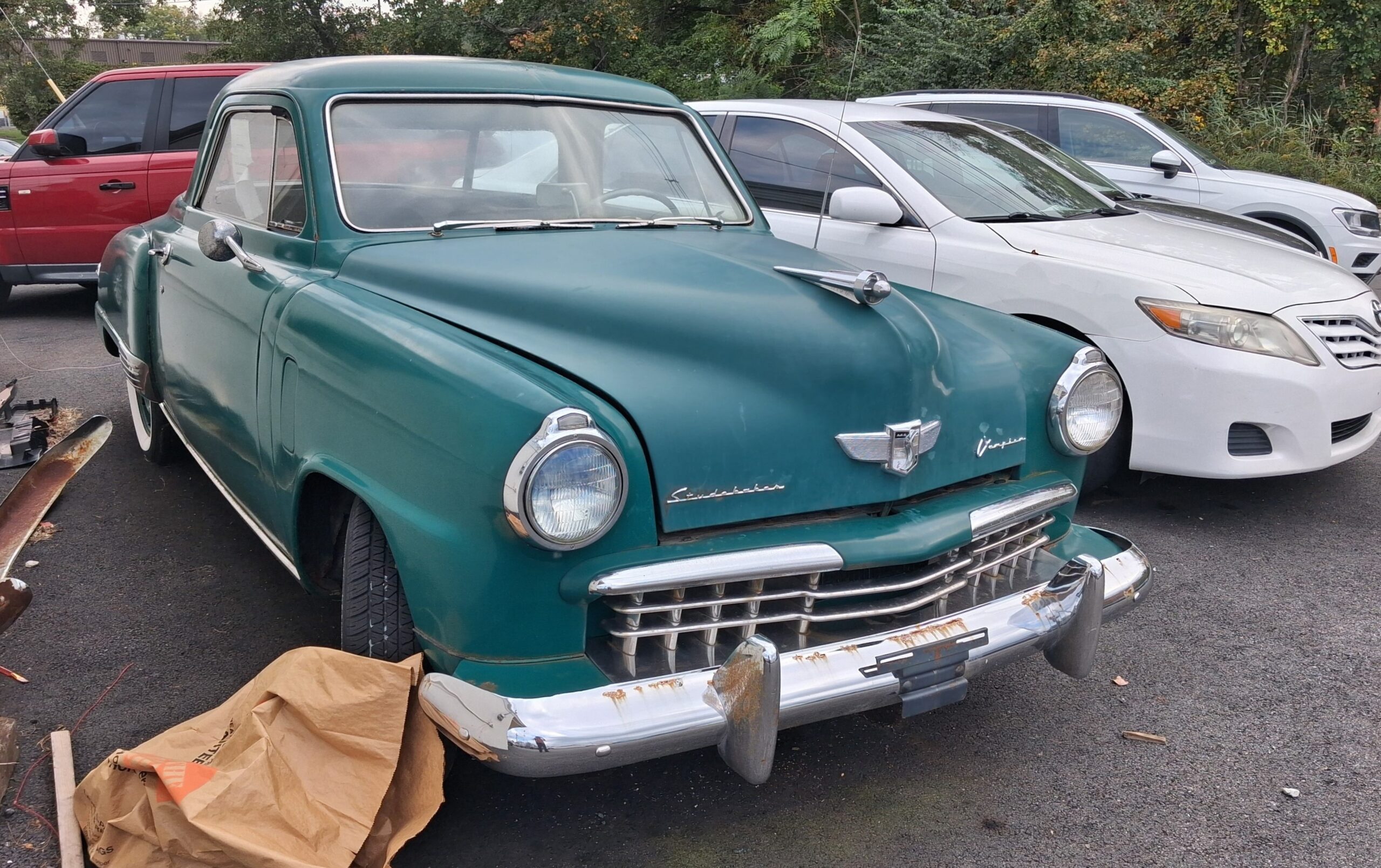
Here it sits–looking a little forlorn and dejected, but still surviving and mostly intact–a rather unlikely sight: When was the last time you saw a 1940s Studebaker at a used car lot? Well, I found one. And you can buy it right now, if you’re so inclined…
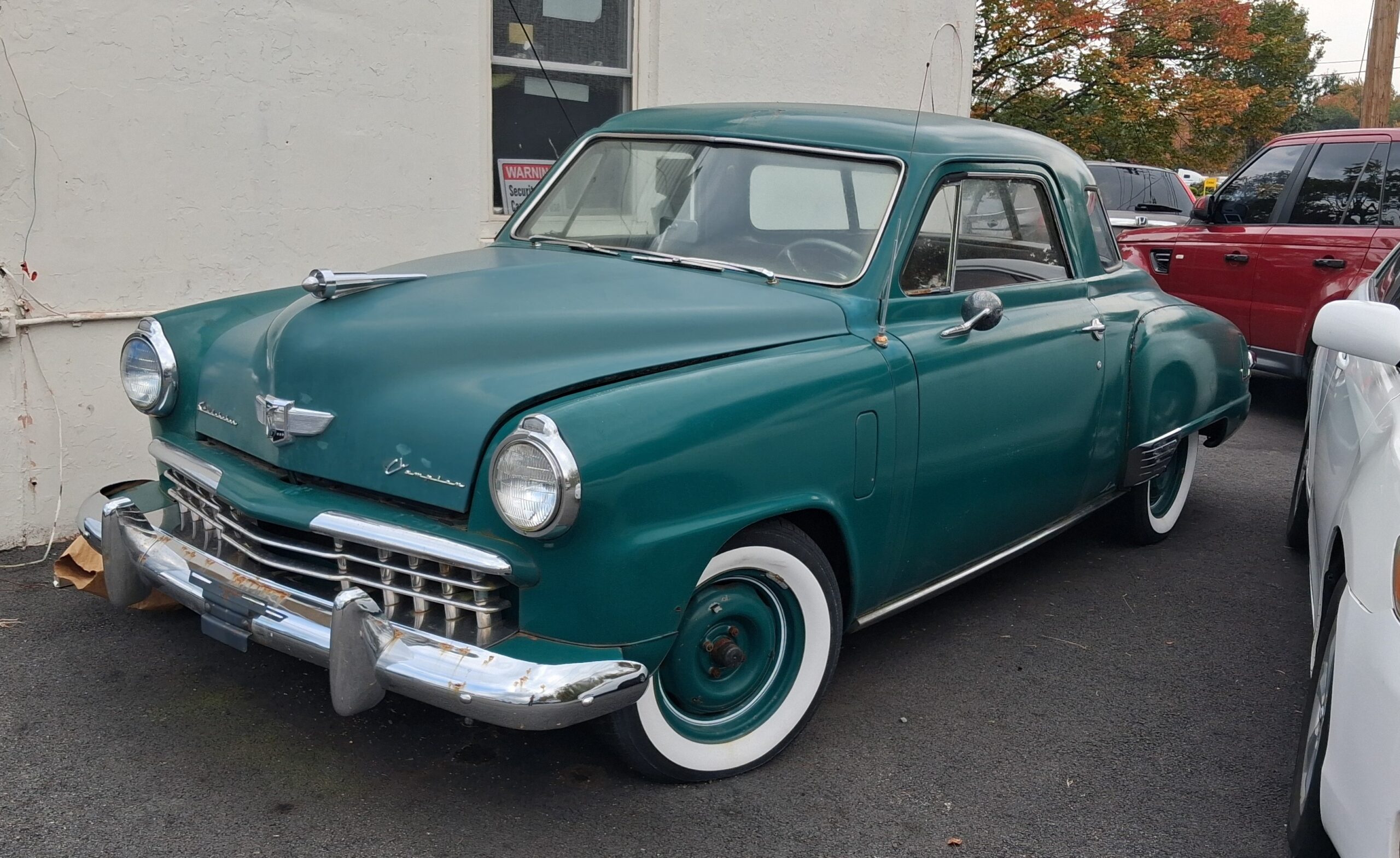
What an attention-getter! While driving eastbound on Route 46 in Parsippany NJ, past Jan Auto Sales, I spotted this fascinating little green coupe. Of course I had to stop.
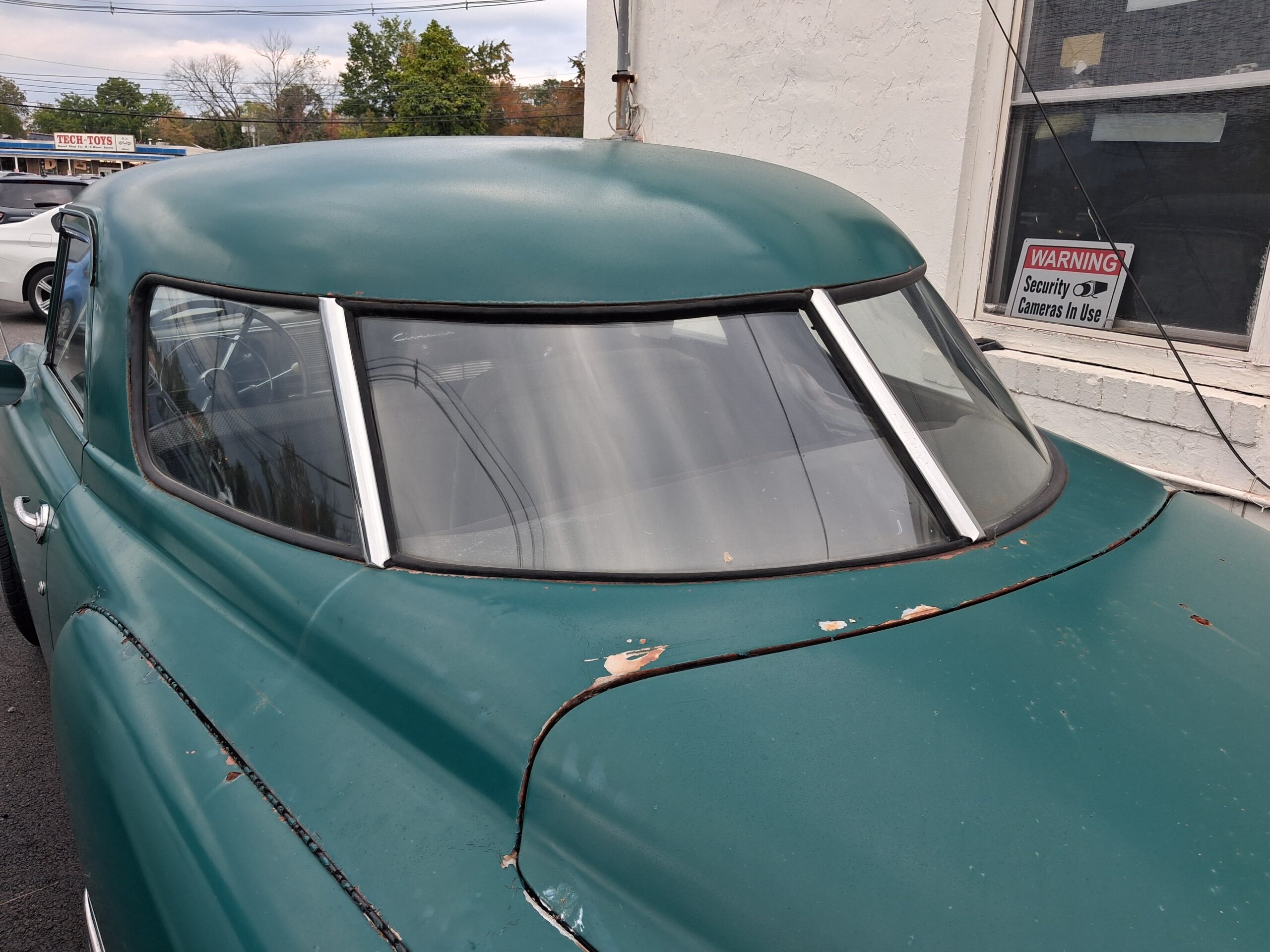
The find is a 1949 Studebaker Champion De Luxe Starlight five-passenger coupe. When this design first appeared in 1947, with its radical wraparound rear windows, comedians joked that you couldn’t tell if it was coming or going. There’s more to that story, of course, and JP and Paul covered it before.
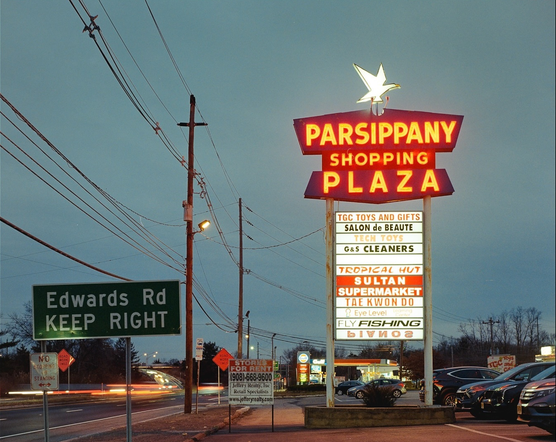
As an aside, for those of you who are interested in roadside nostalgia, I consider this to be a historic part of Route 46. This used car lot has been here since the 1960s, and across the highway you can see one of the last vintage Mid-Century Modern neon signs along this stretch.
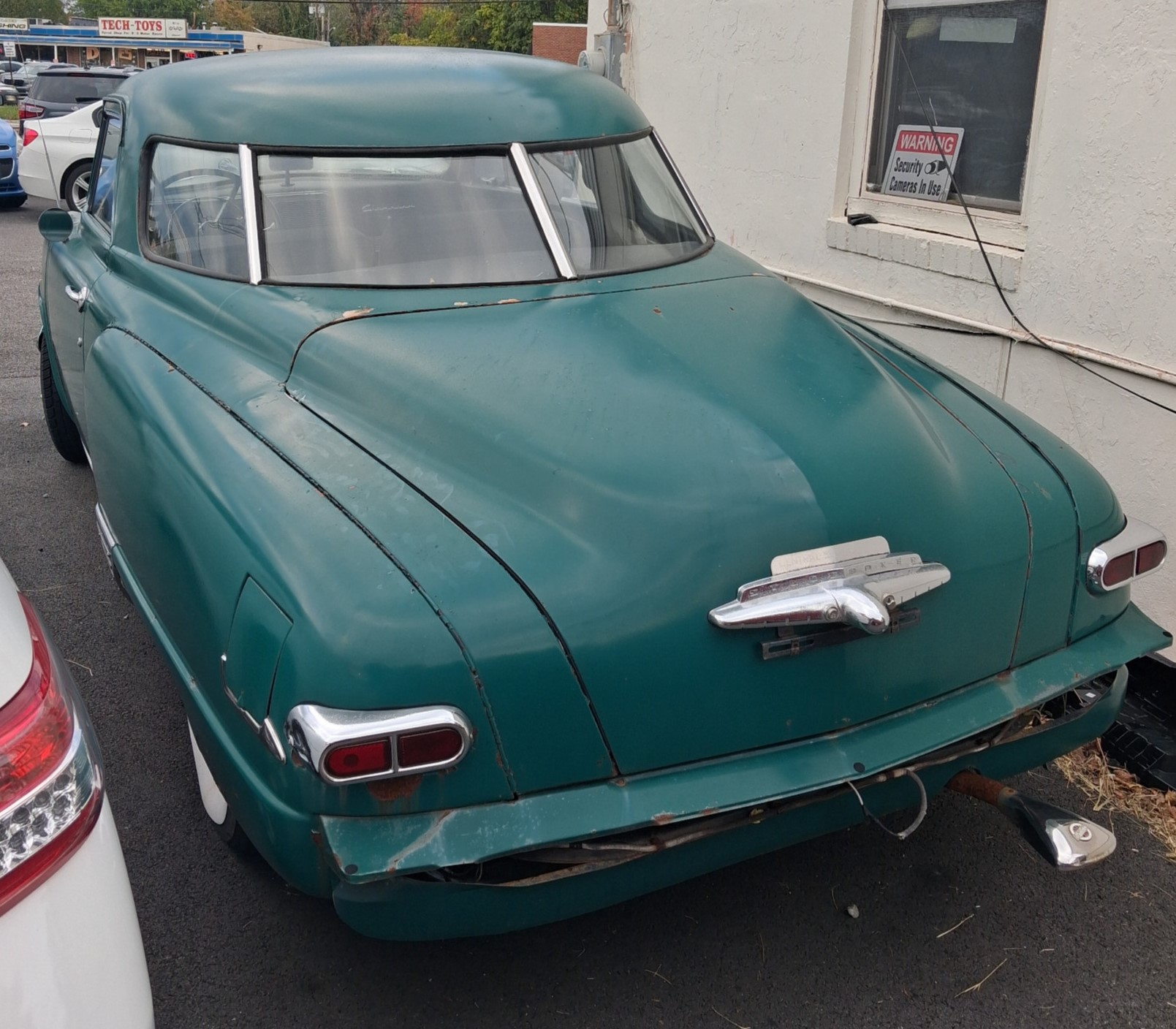
So while you’re here on the lot with me, let’s do a little walk-around and check out this interesting Studebaker:
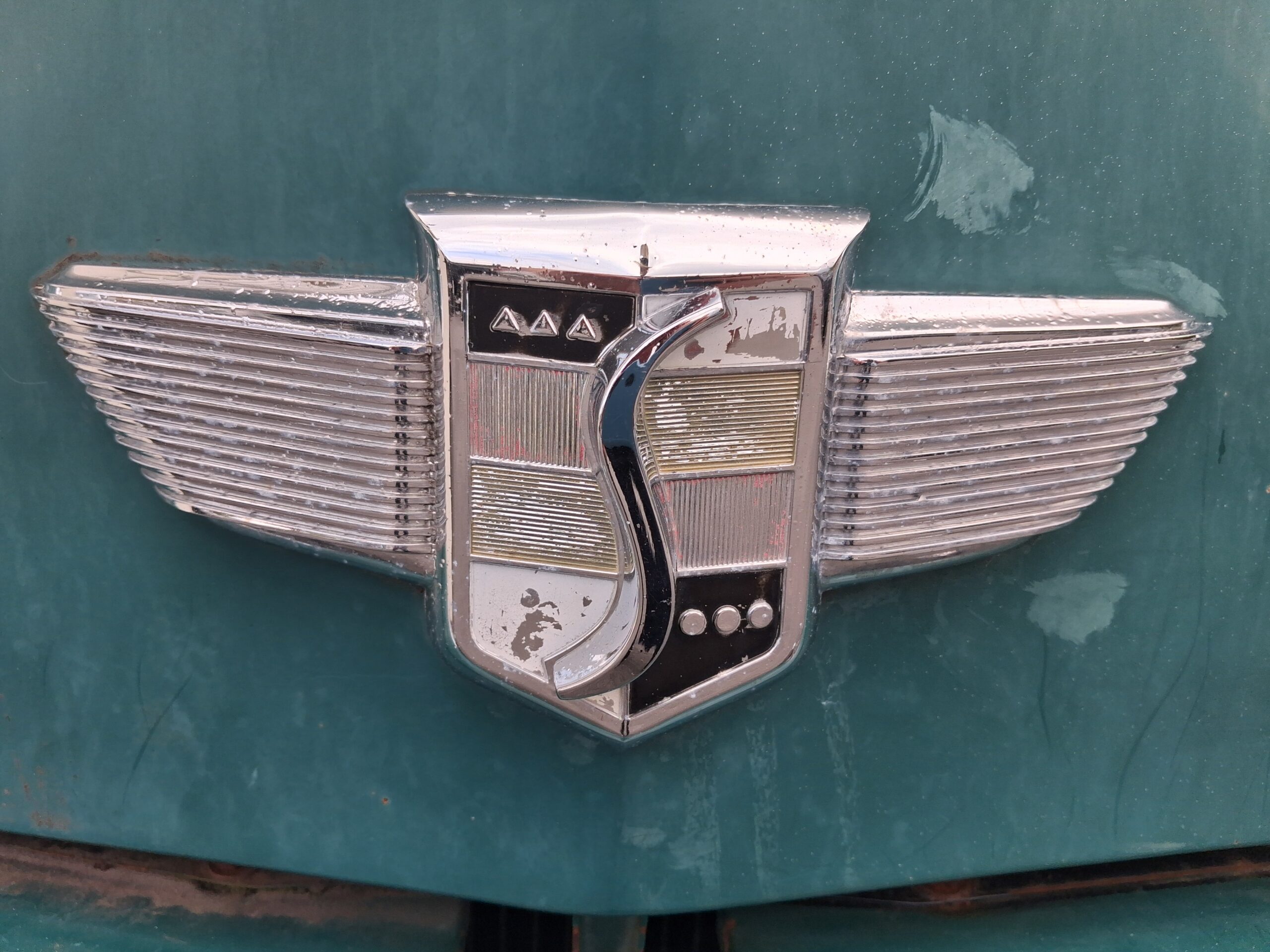
One thing I immediately noticed was all these fascinating little artistic details that are often overlooked.
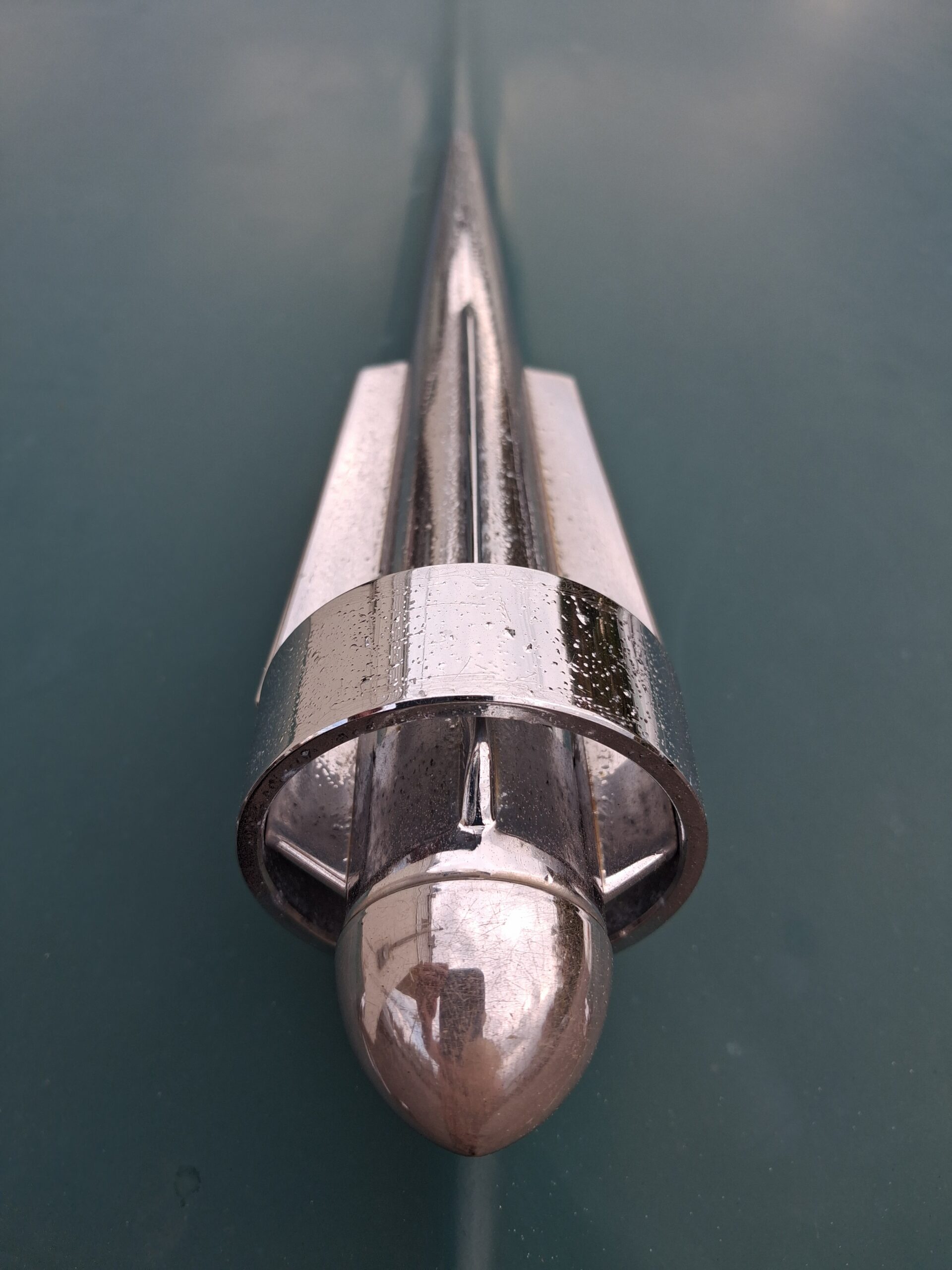
I’m loving this hood ornament, LOL! It’s still mild compared to the dramatic “Bullet Nose” yet to come.
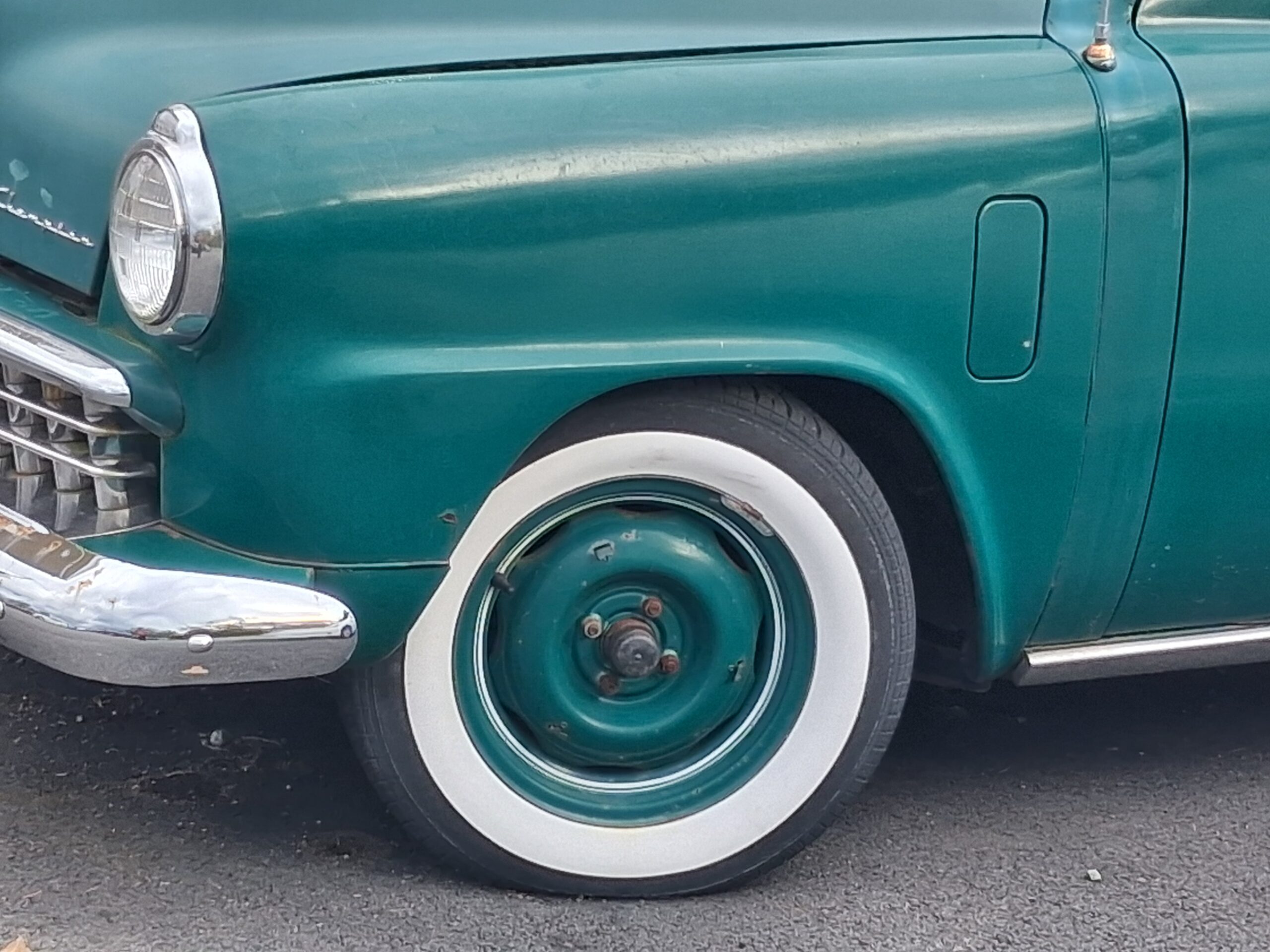
For many years, Studebakers had these cowl side panels on the front fenders. There’s this vertical “seam” going down–what sort of coachwork is this?
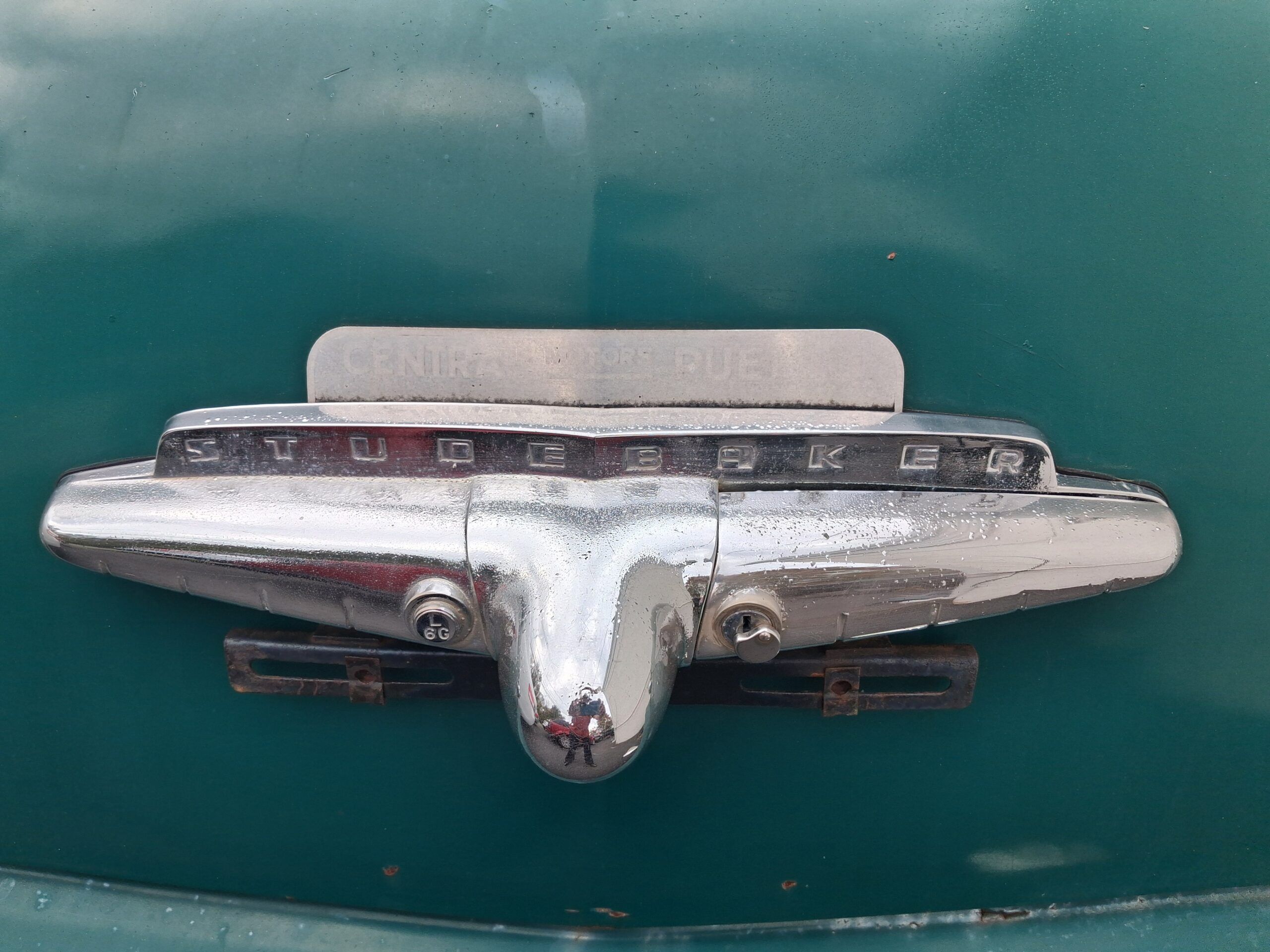
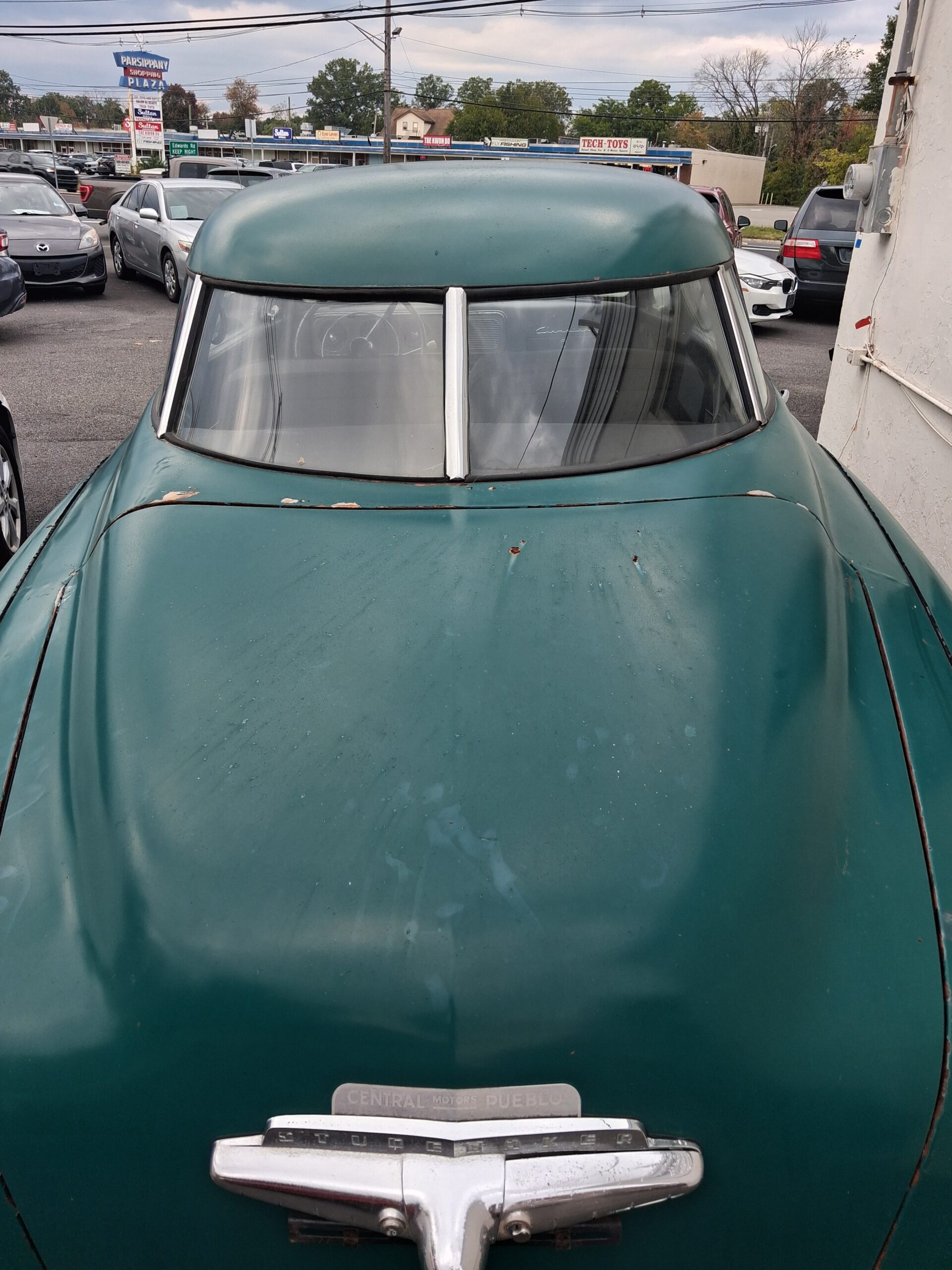
Above the trunk handle you can see the words, “CENTRAL MOTORS PUEBLO”. Somehow this Stude made it from Colorado to New Jersey. The button on the left reads, “L6G”. No idea what that means.
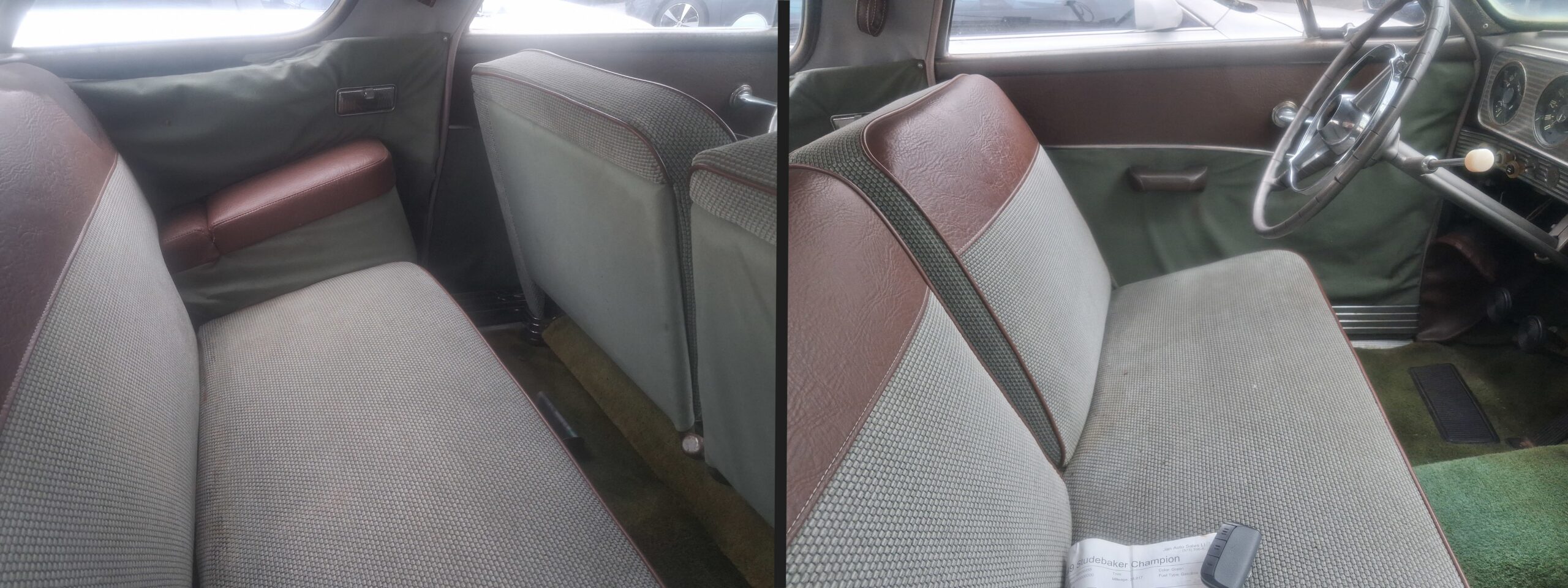
Inside: Seat upholstery looks pretty nice!
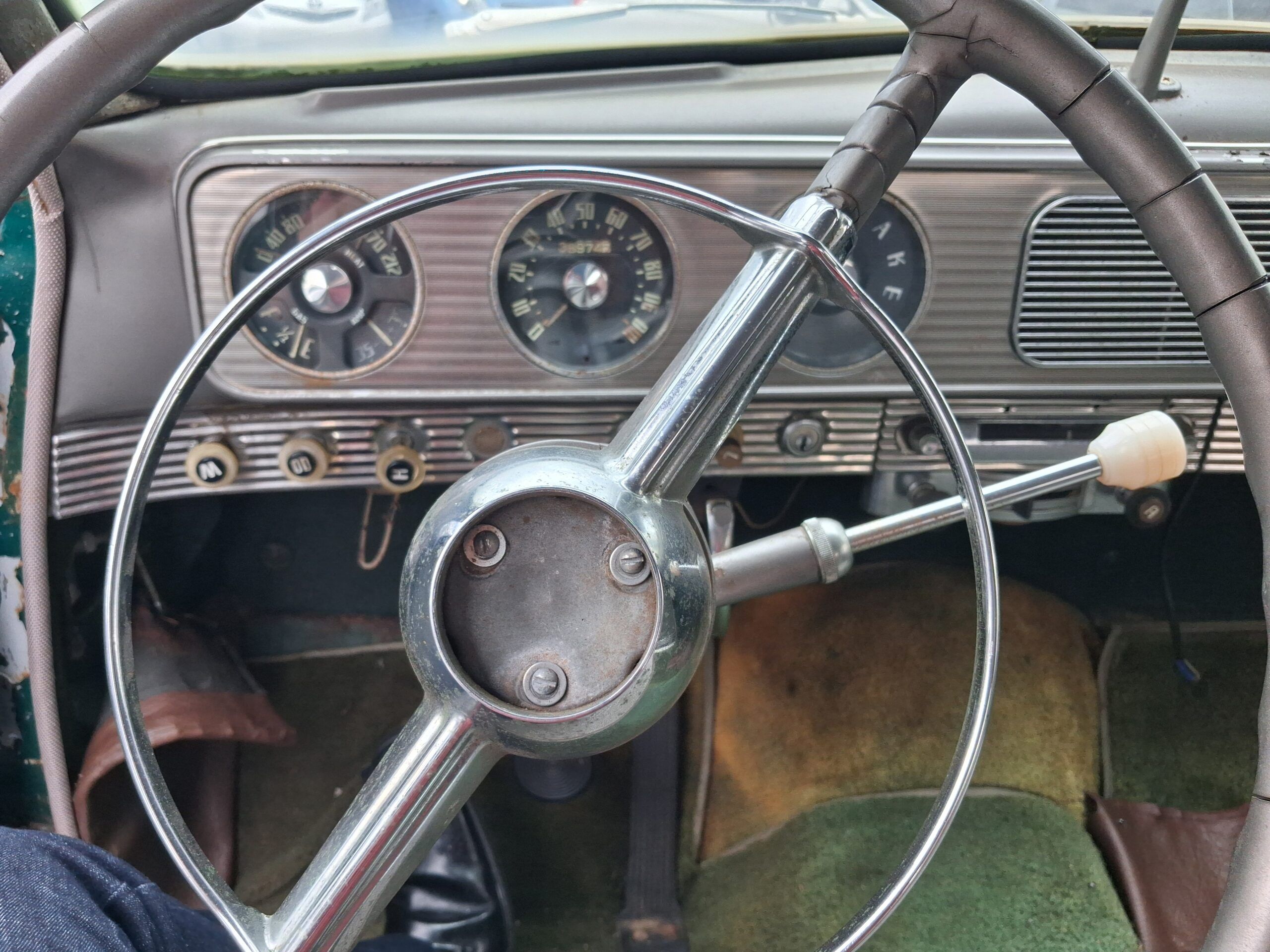
Sitting behind the wheel. There should be a Studebaker “S” emblem in the center.
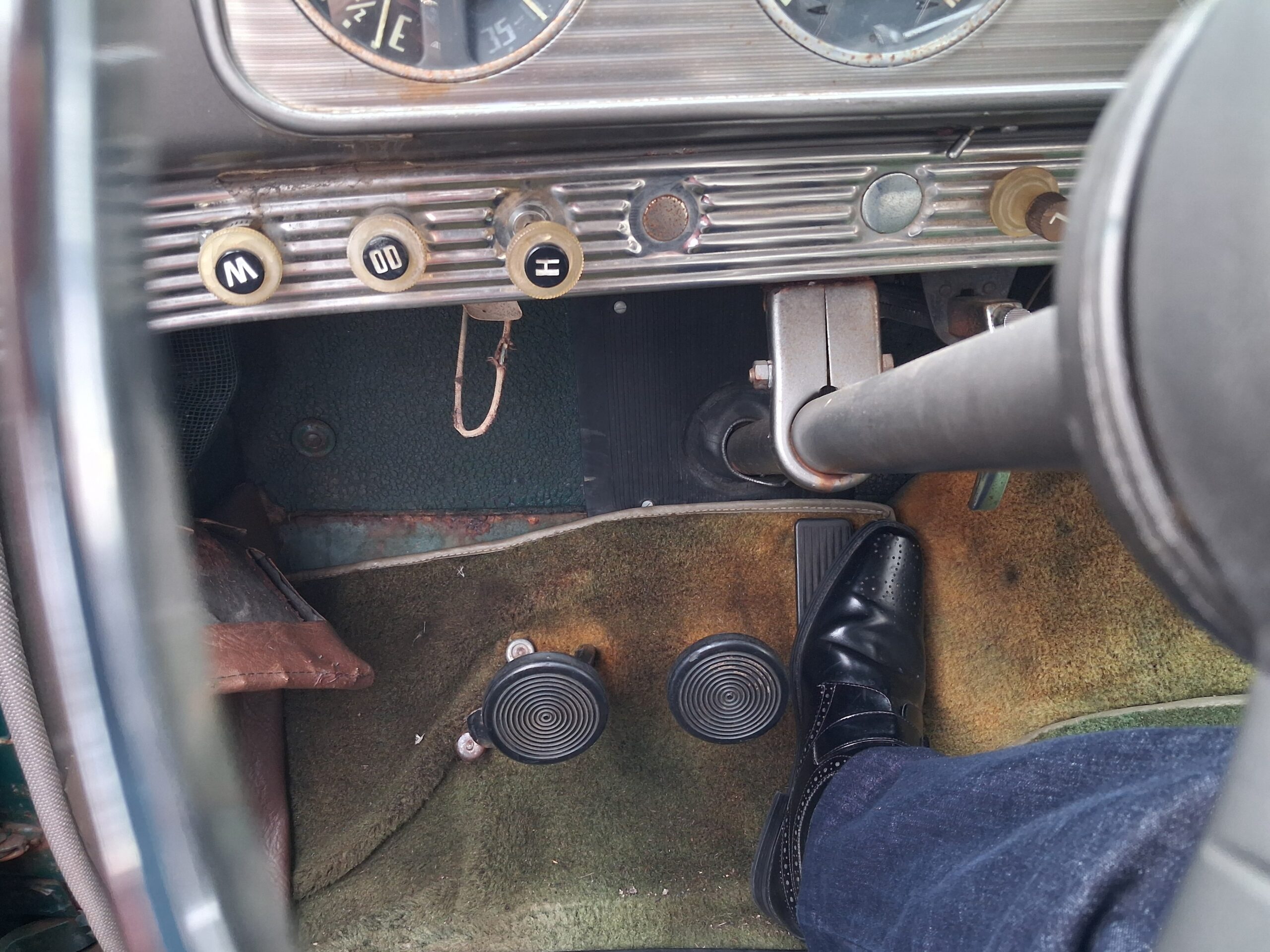
Clutch–brake–accelerator. Knob labeled “OD” which is “Overdrive”. Studebaker did not offer an automatic transmission until 1950.
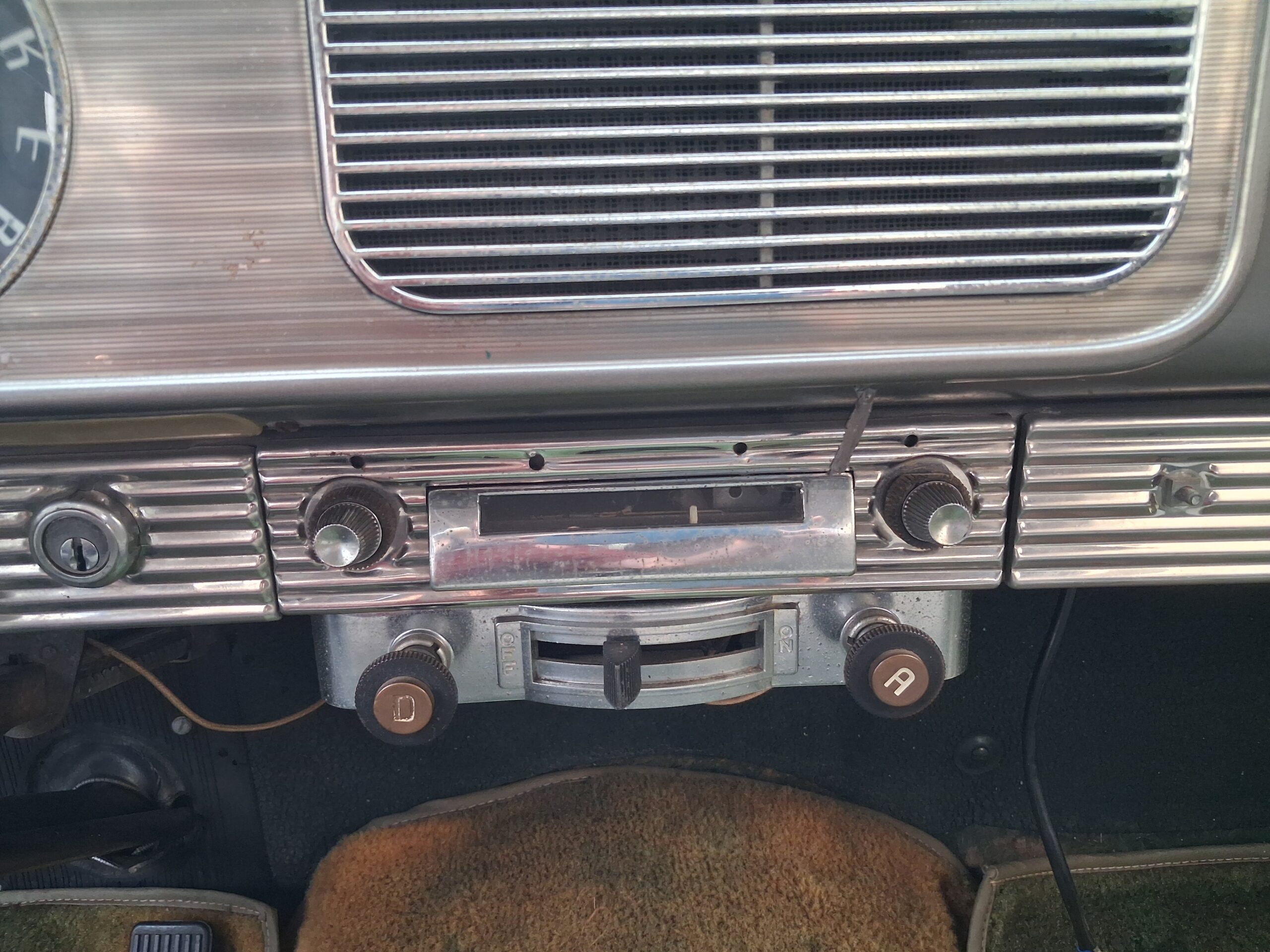
Close-up of center of the dash. Below the missing (?) radio is the heat control lever, with “D” defrost control on the left, and “A” fresh air on the right.
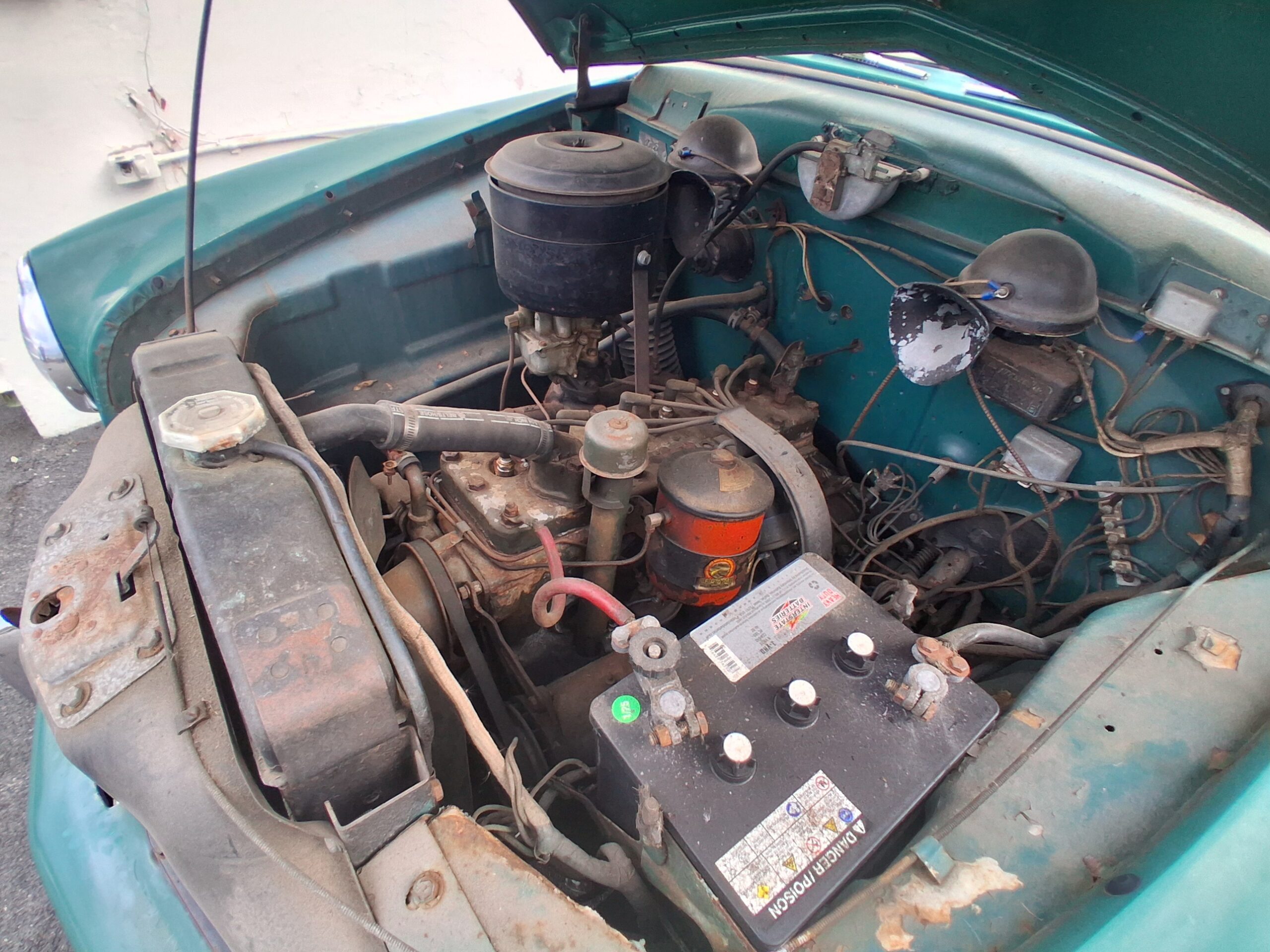
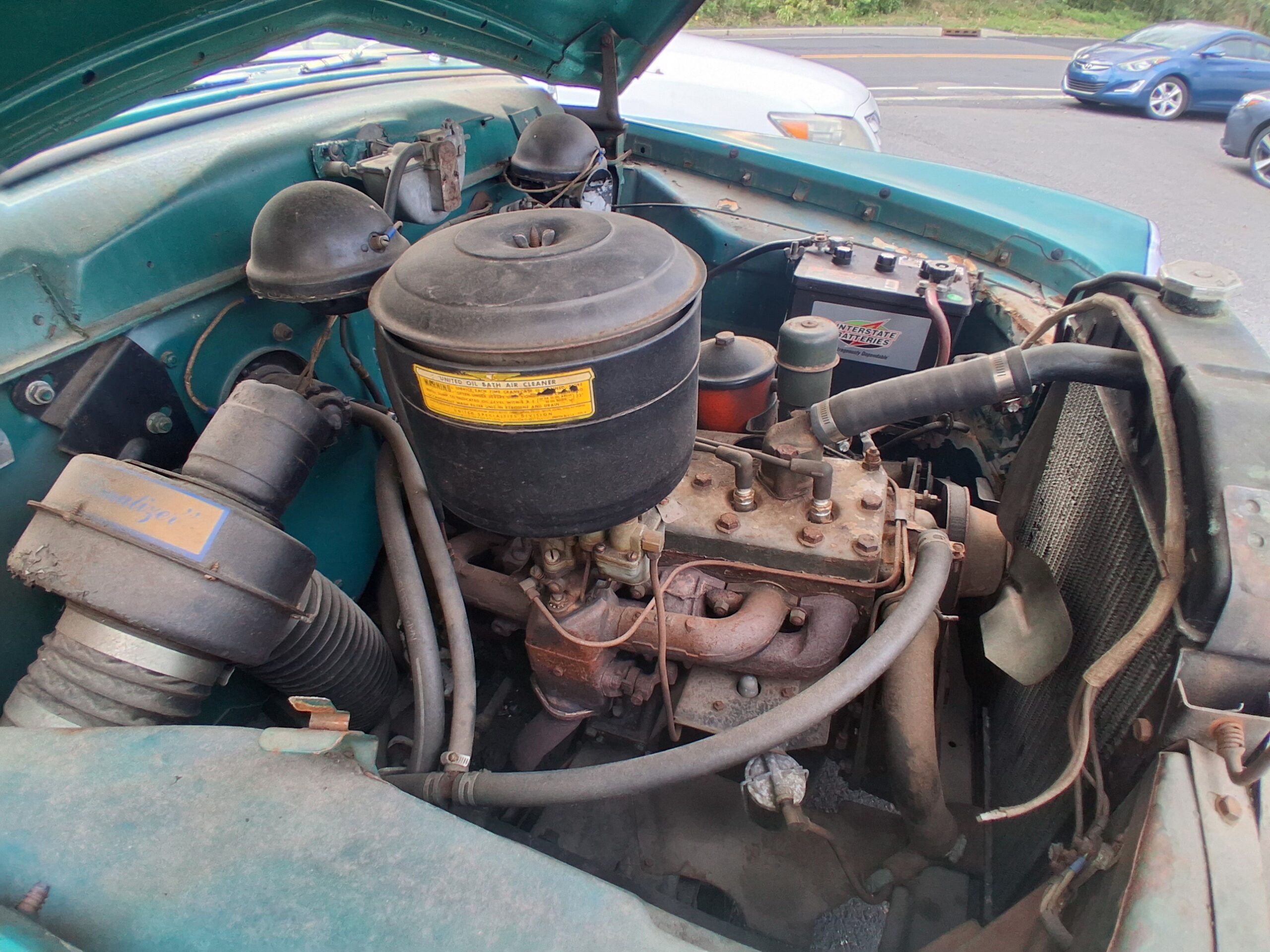
Engine shots. The 170 cubic inch 6-cylinder flathead Champion engine makes 80 HP. Unit on the left reads, “Climatizer”.
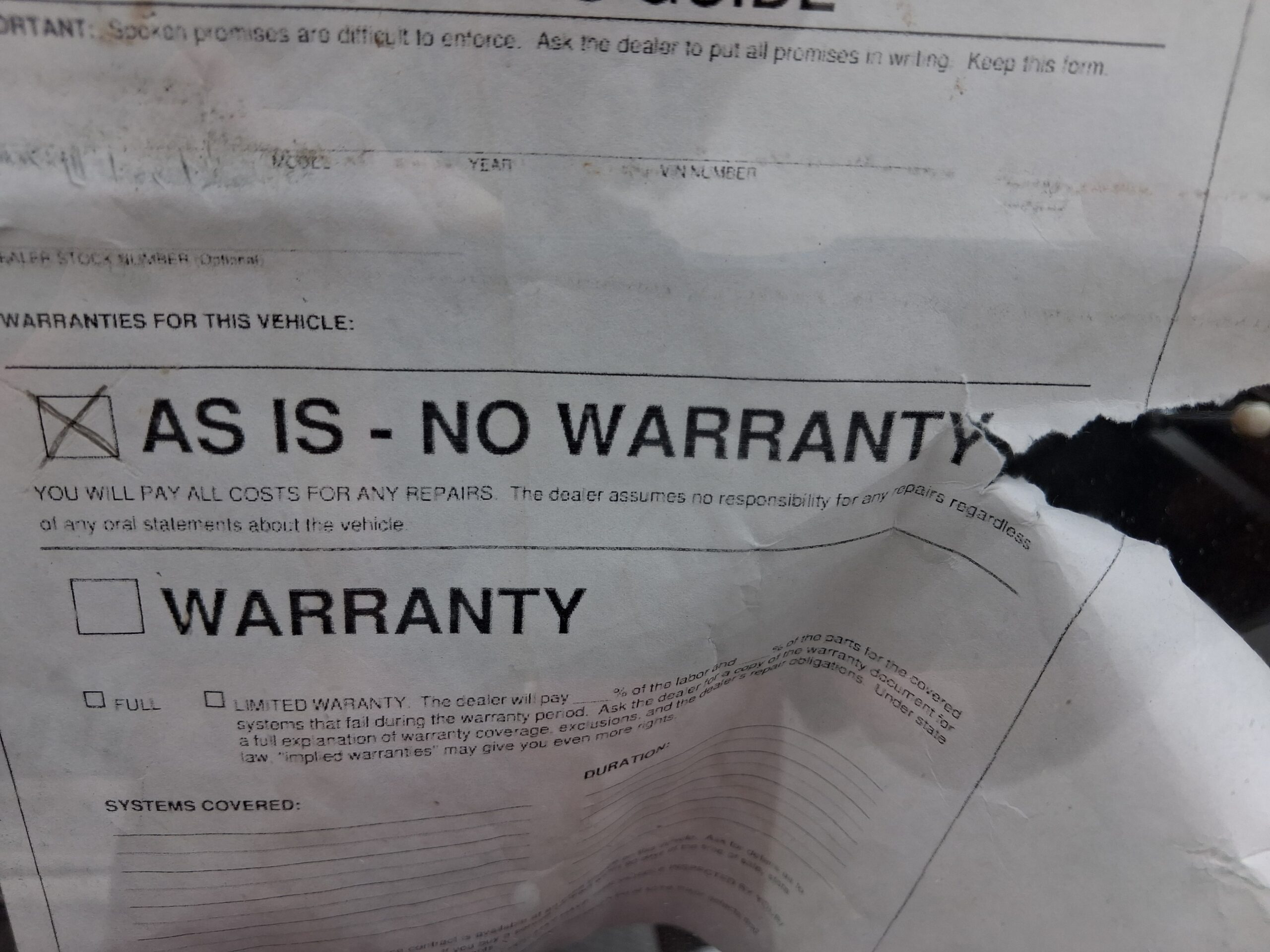
Window sticker: AS IS–NO WARRANTY. It further states, “The dealer assumes no responsibility for any repairs regardless of any oral statements about the vehicle.” Uh, huh. 🙄
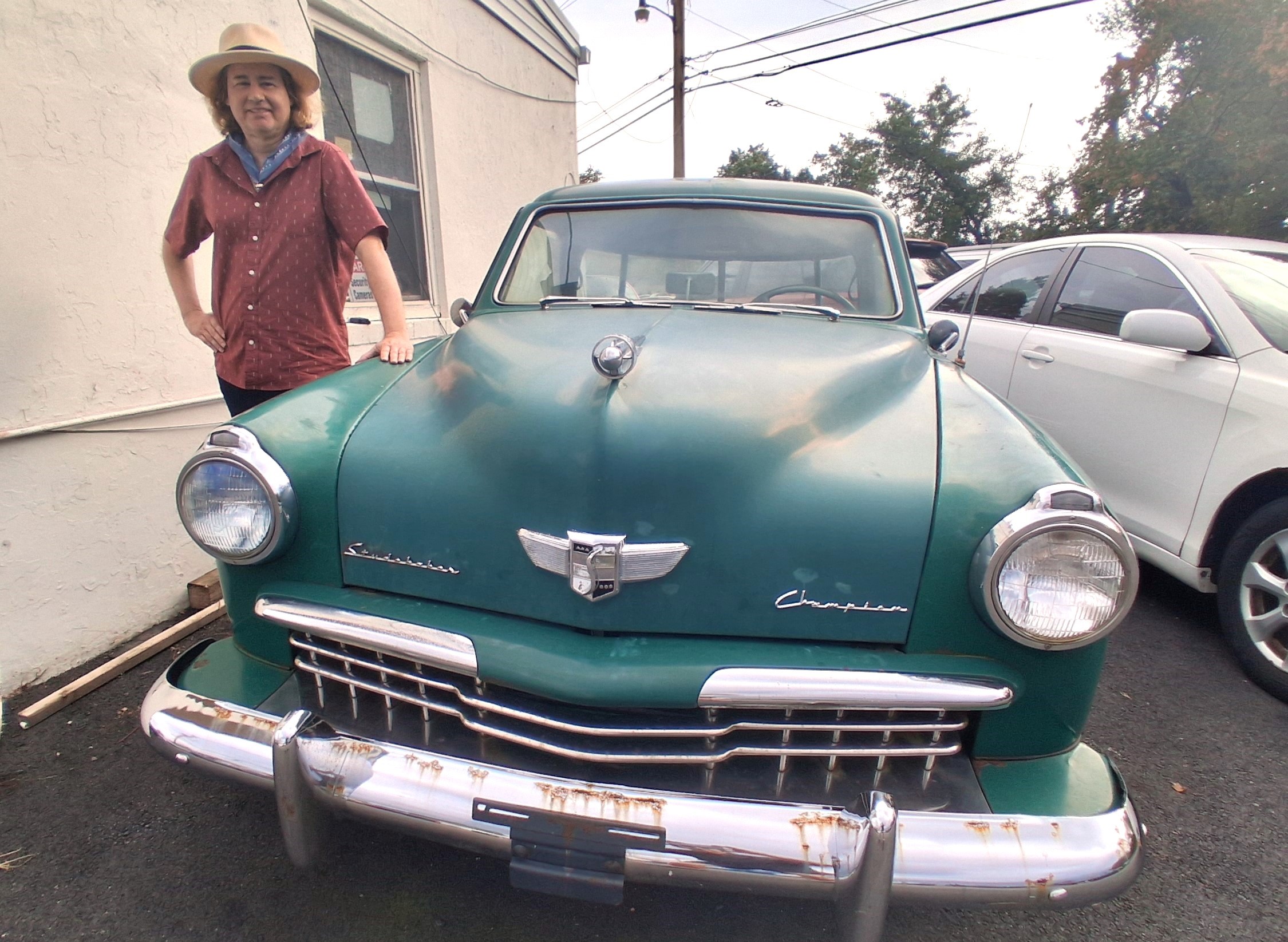
The salesman (Greg) took my picture with the Stude.
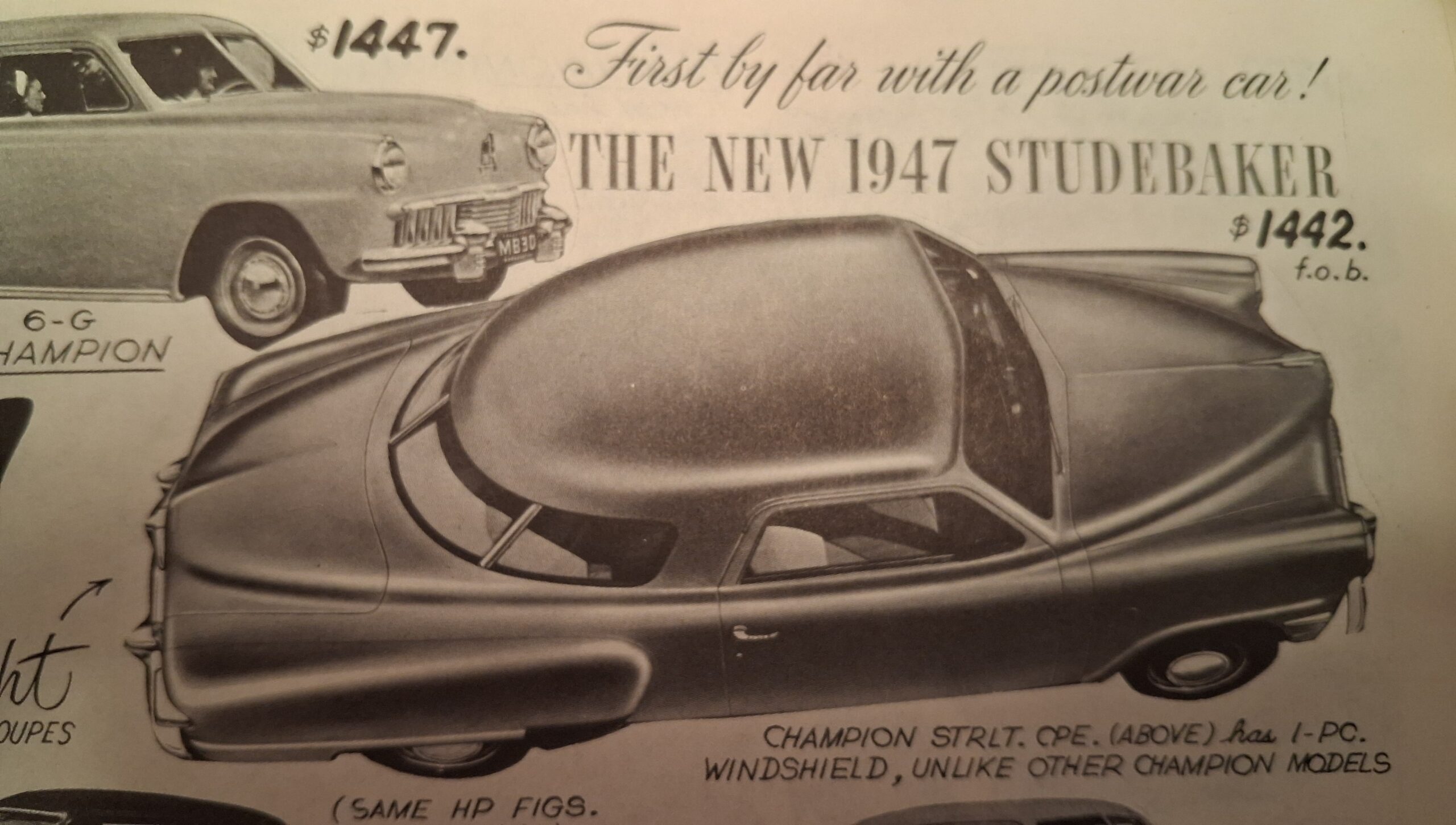
So that’s all I know about this Studebaker Starlight. I probably should have asked more questions. Compared to what Ford-Chevy-Plymouth were offering, it certainly was a unique design. It was lighter in weight than its competition, but it appears to be as solidly built as a tank. I think it looks best seen from above (as shown), but few people will see it from that angle.
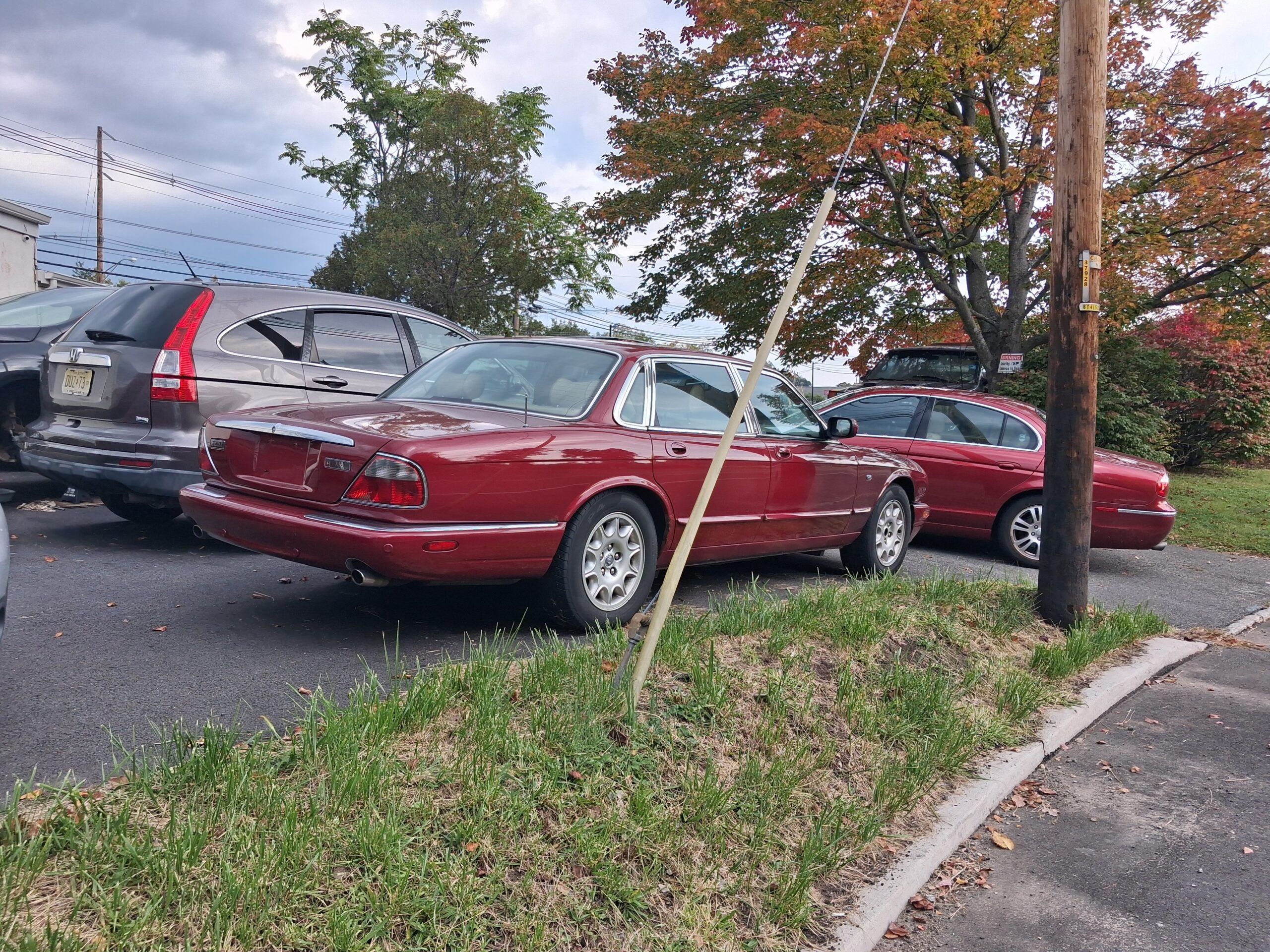
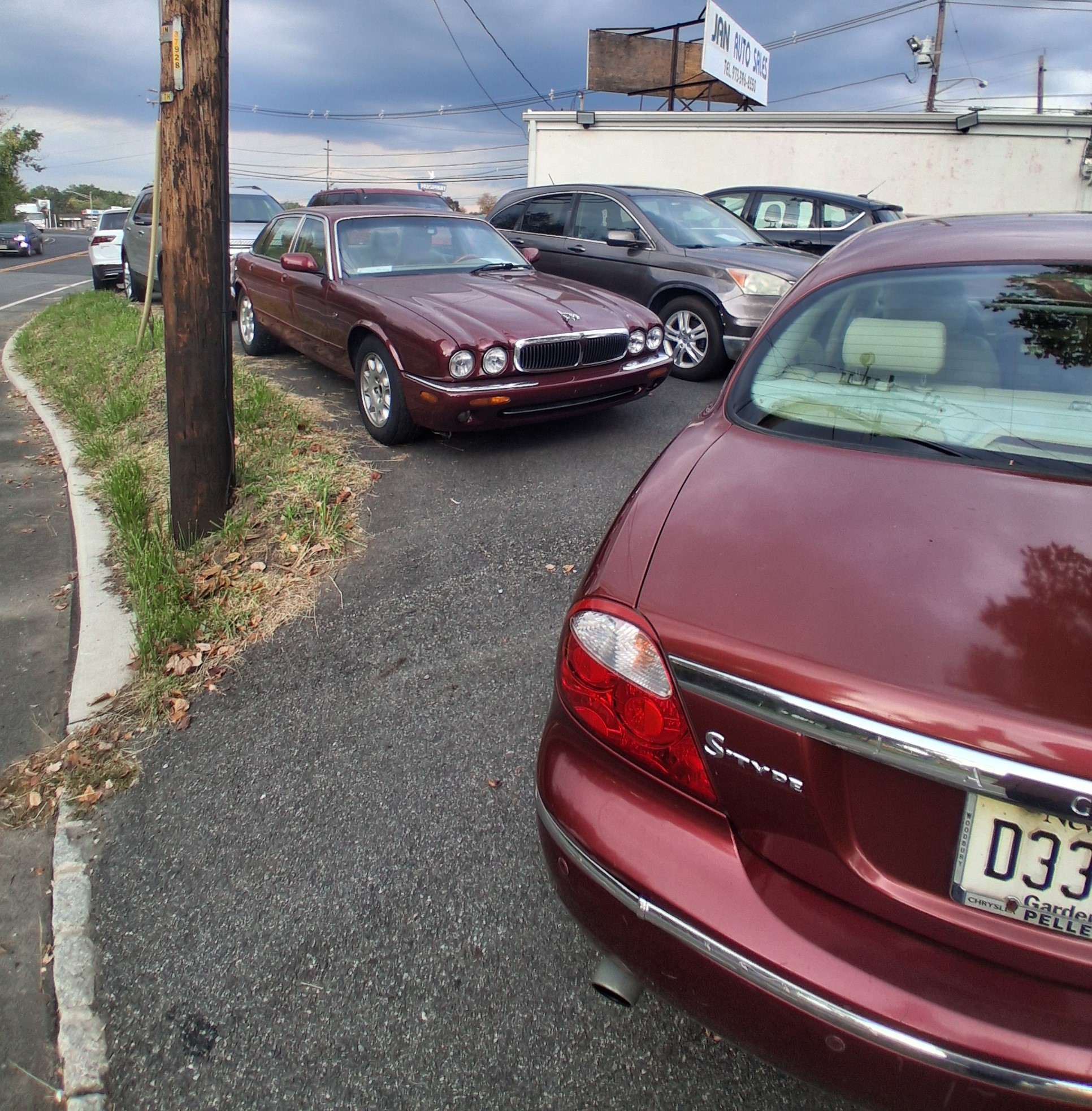
Leaving the used car lot. There was a shiny red Jaguar sedan parked near my red S-Type. An interesting comparison.
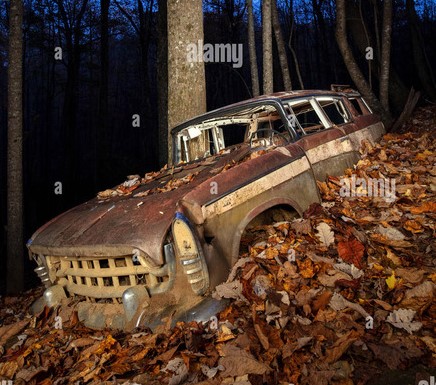
A little postscript: According to aerial photos shown on the website historicaerials.com, in the 1960s there was a large auto junkyard just west of Jan Auto Sales. This is now a wooded area. But while traveling westbound on Interstate 280 (just south of Route 46), I spotted what appears to be a late ’50s Rambler station wagon abandoned in the woods. Could this be a forgotten survivor from the old junkyard days that escaped the crusher? Could there be more abandoned oldies hidden in the woods? I’ll have to park my car somewhere nearby, take a hike and investigate. I’ll update you if I find anything interesting.
Related reading:
A Curbside Story… and Curbside Outtake: 1949 Studebaker–Champion It Is! by Ed Stembridge
Curbside Classic: 1949 Studebaker Land Cruiser–On Top Of The World by J. P. Cavanaugh
Vintage Brochure Rendering: 1949 Studebaker Commander Starlight Coupe–Out Looking At The Stars by Paul Niedermeyer






I don’t think the radio is ‘missing’, I think the strip with the frequencies on has dropped down or disappeared somehow.
That sort of coachwork is the result of an automaker that has no money! Nice find!
Or the kind that still designs and builds bodies with engineering ideas from the 1930’s.
Yes, something I’ve noticed on these that I haven’t seen discussed before. That extra vertical seam ahead of the front door is because the cowl structure is seen on the outside of the body. Also even with envelope bodies, like on GM and Chrysler new postwar designs two years later it still had attached rear fenders. On the Studebakers and GM four doors the front part of the fender was blended into the door stamping but on two doors it was entirely separate with the VW type cording. The 1949 Chryslers were so conservative the whole fender was behind the rear doors on four door models and the back seat arm rests were often on the body like in prewar cars.
Cool old car, I hope someone saves i!
It’s great to see Tech Toys is still at the Parsippany Plaza! I’d always stop in there after going to a model toy show at the PAL hall nearby to see what other cool car models they had. The old neon sign is a classic, I hope it survives! It also recall the junk yard just off of RT 80 past there in the 1990’s, with lots of woods all around.
Neat survivor! Improbably, the building that housed the original dealer (Central Motors in Pueblo) is still standing as well, and largely original. The vertical blade sign looks like it uses the original Studebaker sign’s frame, but the sign itself has been replaced. From what I can tell, Spangler’s Rugs moved into the store sometime in the 1950s, and has been there ever since, so I assume the sign was replaced then.
Also, in the image below, a 1954 Chevy is parked by the side of the building – looks like it belongs there!
Google StreetView (but without the Chevy):
https://maps.app.goo.gl/ydALCuf13gZyDaBG9
I hope a Studebaker-lover buys this, maybe even someone from South Bend. It would be great to see it show up at the Studebaker National Museum’s (SNM) summer Cars and Coffee meet-ups. It would fit right in in its unrestored, survivor condition.
The wraparound rear window is a terrific testament to the independent’s lament of survival by finding a niche that the Big 3 had not yet found. Typically didn’t work but there were occasional, short-term successes.
It appears to be in quite solid and original condition. I used to really want a bullet-nose Starlight coupe, as this milque-toast front end does not do the rest of the car justice.
Stephen, it’s almost as if you have your chequebook in your back pocket, just out of sight of the photographer!
But . . . but . . . How much? It appears to be a lovely, solid old car with a really nice interior and in a great period color. If it is anywhere around what it cost new, I could be talked into this.
According to Jan’s website, $7975.
That’s a good price to keep it on the lot deteriorating for years to come.
20K + landed plus compliance, I’ll pass but I do like it.
In adjusted dollars, it cost some $23k when new. So this is a bargain! 🙂
Seriously, this does seem to be in surprisingly good shape, including the interior. I could really see you in this…
For those who didn’t see my comments in the past on this vintage of Studebaker, I’ll re-post it here:
When I was a kid, I had asked my Dad if he was in WWII. He said, “Why yes I was! I was a tail-gunner on a `48 Studebaker!”
Dad knew that I was well aware of Starlight coupes! I caught the joke immediately.
That looks like it could be a rather nice driver condition car. The interior looks pretty darn good except for maybe the steering wheel button. Add a rear bumper and drive!
How much do they want for it???!
Cool studie… Saw a similar vintage in a convertible version over the weekend, a no sale at the Saratoga auto auction while I was attending the vintage BMW show at the museum. They park some of the leftovers behind the museum. You mention the bullet nose, there was a coupe beside this one…
The bullet nose was a business coupe with drop down curtains behind the seat so occupants could sleep in the trunk area… Interesting
Nice, $8K is steep for this given the value of plebian 1940’s cars in these times. And of course the bullet nose is the one to have with this body style.
I would say yes to saving that orphan: put the bumper back on, find some hubcaps and buff out the paint! But no time, no space, no spousal goodwill for such a thing at the moment.
This clearly was someone’s beloved hobby car at one point, sadly they left out the vapor barrier sheets when re doing the interior, originally waxed paper I use heavy plastic sheeting these days and not only no water damage to the door cards but better sound and temperature insulation to boot .
That the rear bumper isn’t attached makes me suspicious but that’s my general nature in used things .
At $5,000 and running this car -may- have a chance to sell, sitting like this is only going to damage it worse, I wonder how bad the brakes and so on are .
That paint looks to me like it can still be compounded & waxed to a nice shine, chips yes but still a good looking car overall .
Overdrive means it can be driven in today’s traffic sans problems .
-Nate
The L6G on the rear trunk lock is the key code to that car’s (original) lock.
Why cars of that era put the key cutting code on the car is something I can not understand. Was it to make sure anyone with key cutting skills and a Studebaker blank could steal it more easily by making their own key?
There were so many trusting/crazy things with car keys of the era. One was DAV tags to put on your key chain. That let anybody who found dropped keys in a parking lot, go find the car it went to because they had the plate number. And if they were a real creative crook, find the registration in the car and use the house key on the ring to rob it after stealing the car.
Another genius concept was to put locks on metal dashboard compartment doors but make the compartment itself out of cardboard (because no thief could possibly buy a razor knife to bypass the door?)
Makes no sense today but that is what that stamping is.
Someone has great eyes to see this buried in among other cars from the road. Either that or an acutely tuned radar for old cars which could mean always on the lookout. Now where is my wallet but not for $8K. Now those door cards???
I had a 1949 4 door version of this car. Same engine. It was in near perfect condition.
Wish I still had that car. Great gas mileage. Ran like a top.
Did you see what the odometer said? Something tells me that is the original paint considering the car is from the west and it matches well under the hood and on the doorjambs, but it could be a old resto job. It doesn’t look like it was used hard, so my guess is the original owner didn’t like the price they would get on trade and just kept it as a second car for occasional use, or it was a maw-maw car. In time it went up in a barn or garage and was pretty much forgotten about. Decades later, my guess is the 2000’s, it was hauled out when their estate was dissolved. Someone brought it east and took it on as a restoration project, put a new interior in it, painted some steel wheels and whitewalls on it to roll it around the shop, and didn’t get much further than that. When their estate was dissolved, or age finally made them sell it, it probably ended up there from lack of buyers or from a possible estate just wanting to get rid of it.
My question is, it looks original under the hood (minus plugs, radiator hoses, etc. ofc). Does it run? If so, how well? Something tells me guy who put the interior in it had it running pretty well, or at least enough to get down the road and back, (maybe not if the original tank is in it) but it looks like the soft parts under the hood have been replaced. If it doesn’t smoke and it has good compression and has no other issues besides the rusty bumpers, I would say 45, maybe at the most 5k, but that’s with new brakes and a good shifting trans. What bothers me is if and how long it has sat. Something tells me it was pushed to where it is, and it needs more than good gas to get it running well. It’s a shame. I’m in the minority, but I like cars from the 40’s-early 50’s a lot more than the later stuff.
I never found it difficult to tell which way was forward on these despite the common jokes about it. Some of the sedans with center-opening doors did have a bit of a push-me pull-you look to them, but the pontoon fenders on the rear wheels only (common in the 1940s and early ’50s) give away which way it goes. I don’t find it hard to tell which end of the car is which on any of the two-door body styles.
Yes the which-way-is-it-going thing seems weird now, but prewar cars didn’t usually have a long tapering trunk shape but at most a tumor type vertically oriented trunk shape on the back unless there was a rumble seat in there. Some variations on that were starting to appear prewar, but most were two box cars, engine hood and body.
I’m surprised by the four bolt lug pattern wheels.
The 1947-49 Champion was a small, lightweight car. The wheelbase was only 112 inches and it only weighed about 2700 pounds. A 49 Ford Club Coupe with a six, certainly no heavyweight, had a wheelbase 2 inches longer and outweighed this Stude by 400 pounds. These early postwar Champions kind of split the difference between standard low priced cars and the early compacts that several independents introduced.