
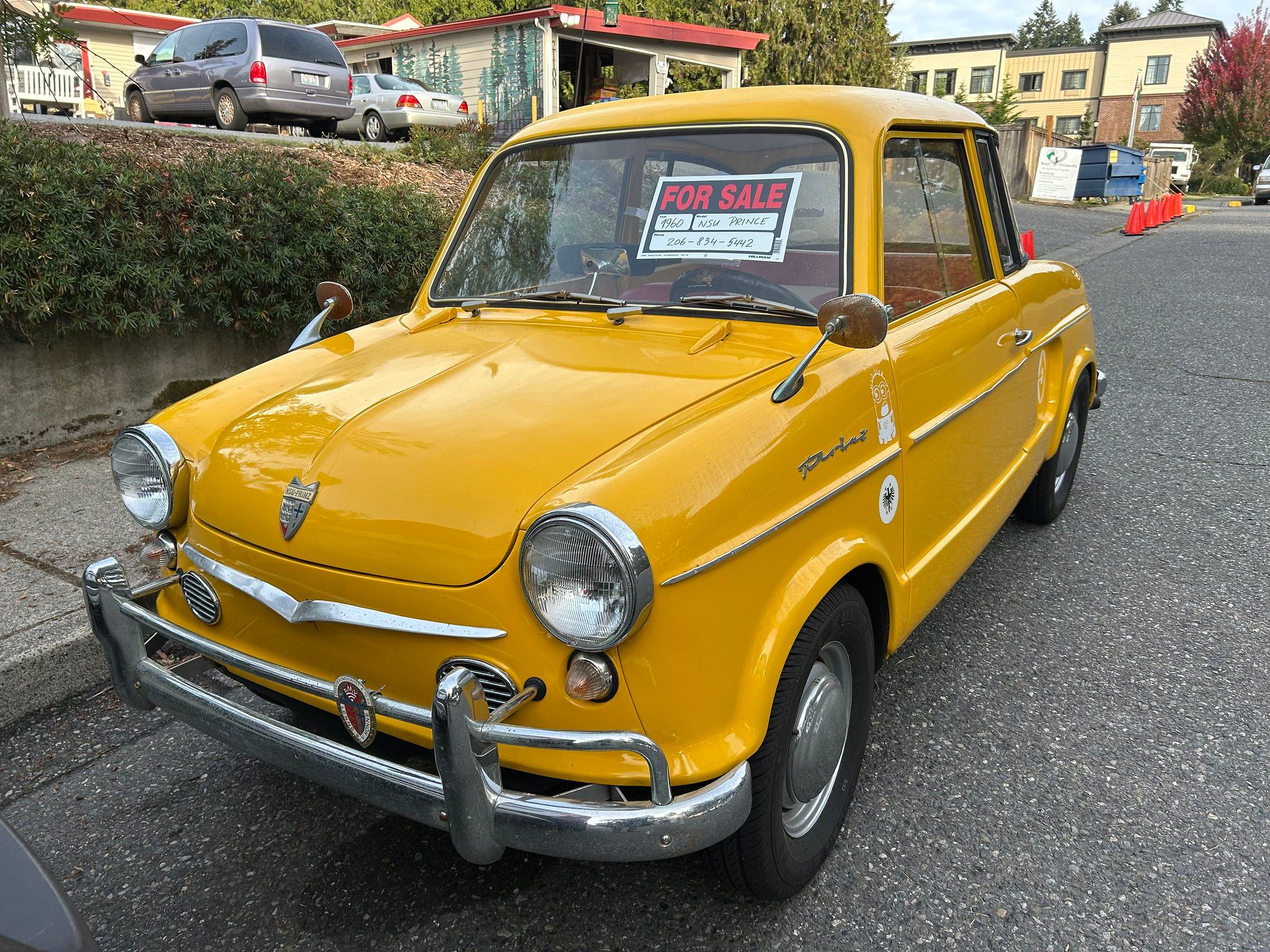
What was tiny, budget-minded, German-built, powered by an air-cooled rear engine, and sold in the U.S. back in the day—but was not a VW Beetle?
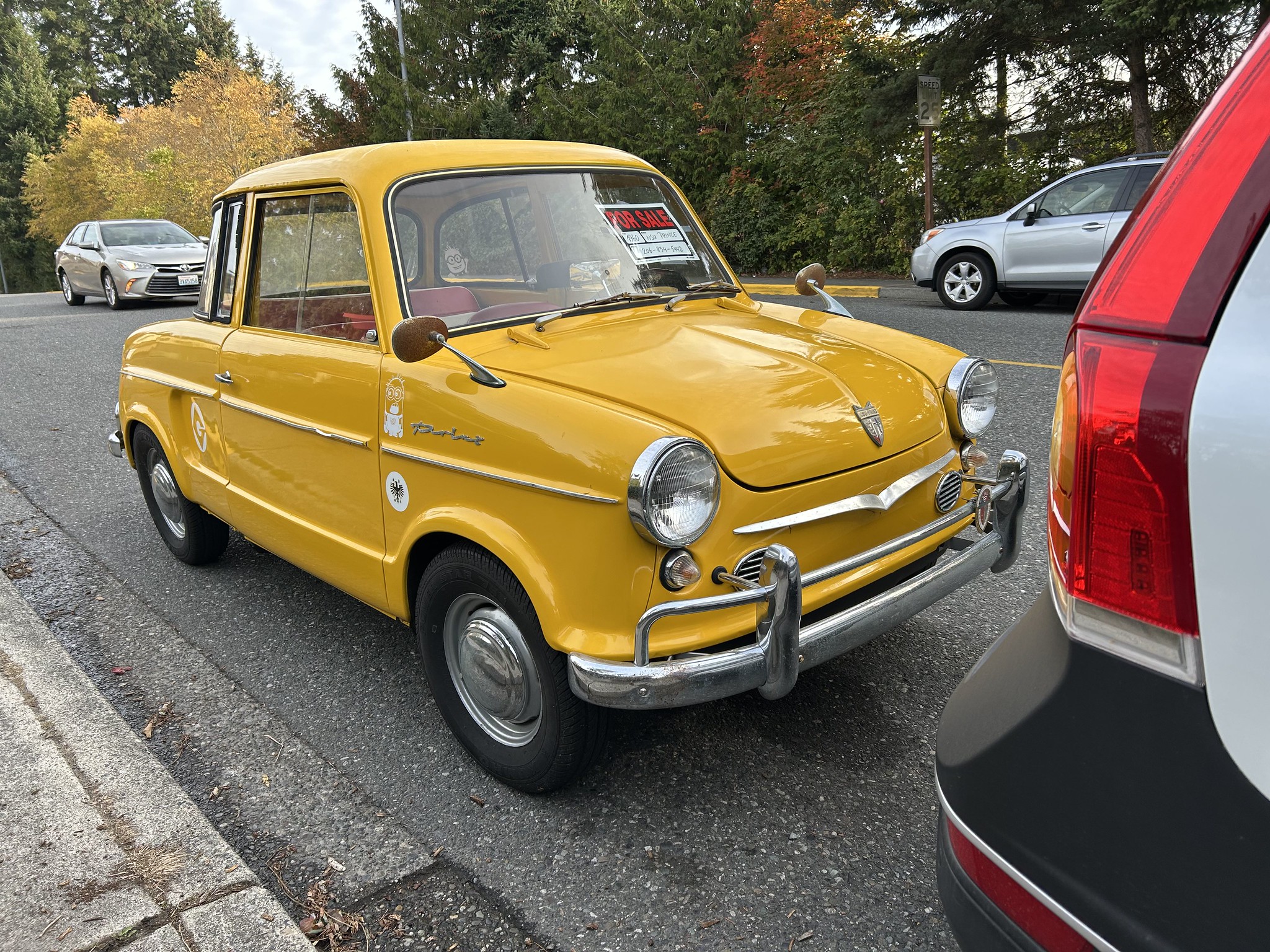
If you dig a little deeper, the answer offers more possibilities than you might think. Quite a few German-built small cars arrived in the U.S. during the late-1950s import boom*. But in this case, we’re talking about an NSU Prinz, represented here by a remarkably well-preserved, bright-yellow 1960 example spotted in Washington and shared by Eric Clem on the CC Cohort.
At first, the Prinz may seem like just another footnote of the import boom, selling only a few thousand examples during its brief 1958–1960 U.S. presence. But unusual cars always seem to find a following, both for their looks and their spirit. Against the odds, fans of the uncommon keep these oddities alive, and every now and then one turns up in the wild. This particular Prinz is especially tempting, too, as it’s actually for sale—an opportunity for someone with an adventurous streak and a taste for preserving the unusual.
*Air-cooled, rear-engine fans may point out that other low-cost German models available in the U.S. could also fit the bill, including a Goggomobil or an Isetta. Move a little further up the price scale, and there was also the BMW 700, another small, rear-engine German offering from the era.
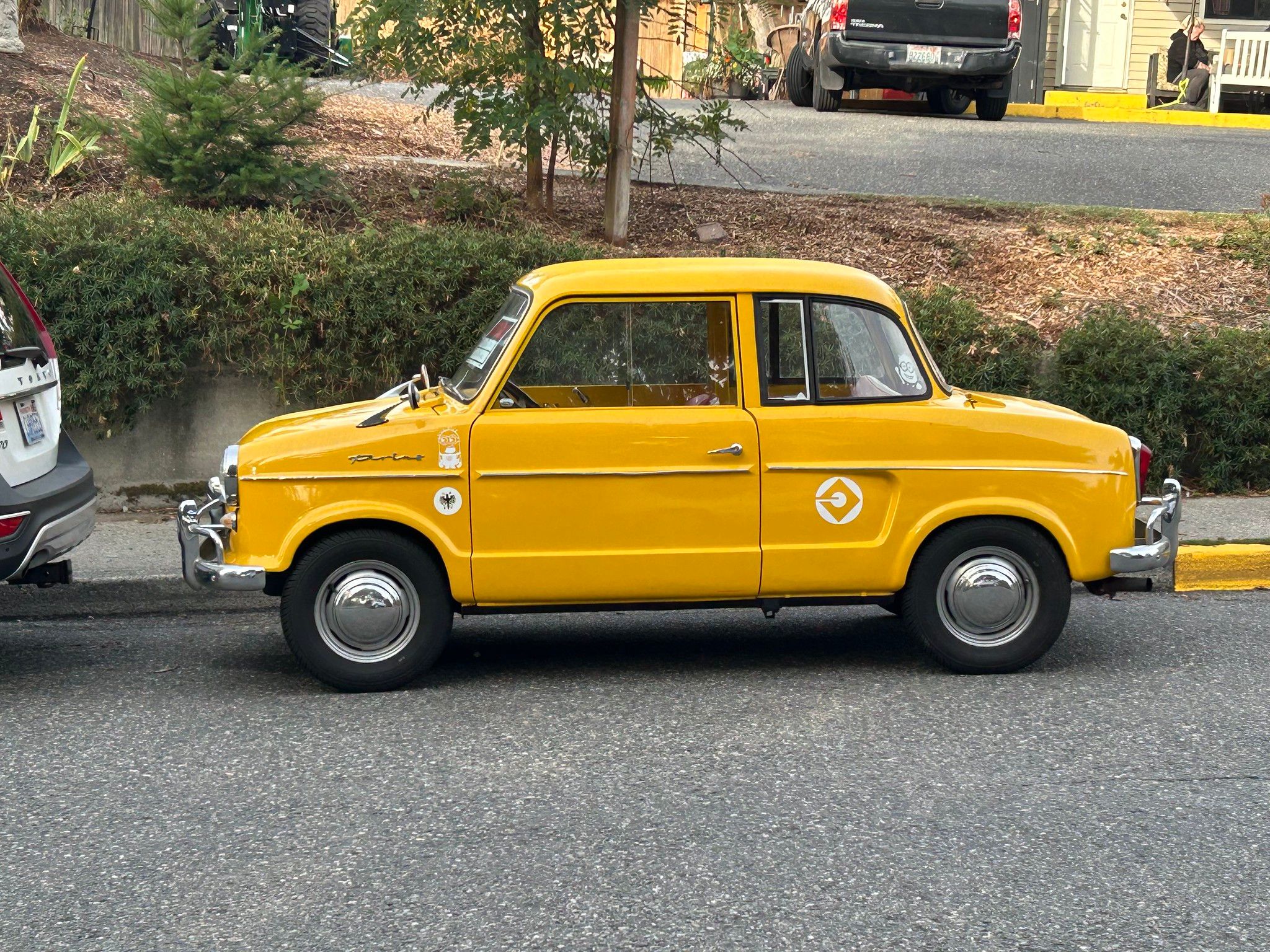
The NSU Prinz has been dutifully covered at CC, so check out that earlier story to revisit it fully. In short, the Prinz was NSU’s first passenger car after years devoted exclusively to motorcycle production. By 1955, NSU had become the world’s largest motorcycle manufacturer, and the little Prinz marked the company’s return to carmaking, entering the booming European microcar market in 1958.
Like many small cars conceived around efficiency and economy, the Prinz made modest resources go a long way. The boxy cabin prioritized up-front comfort (the rear is a different story), while its engineering included unibody construction, fully independent suspension with a double-wishbone design in the front, and rack-and-pinion steering.
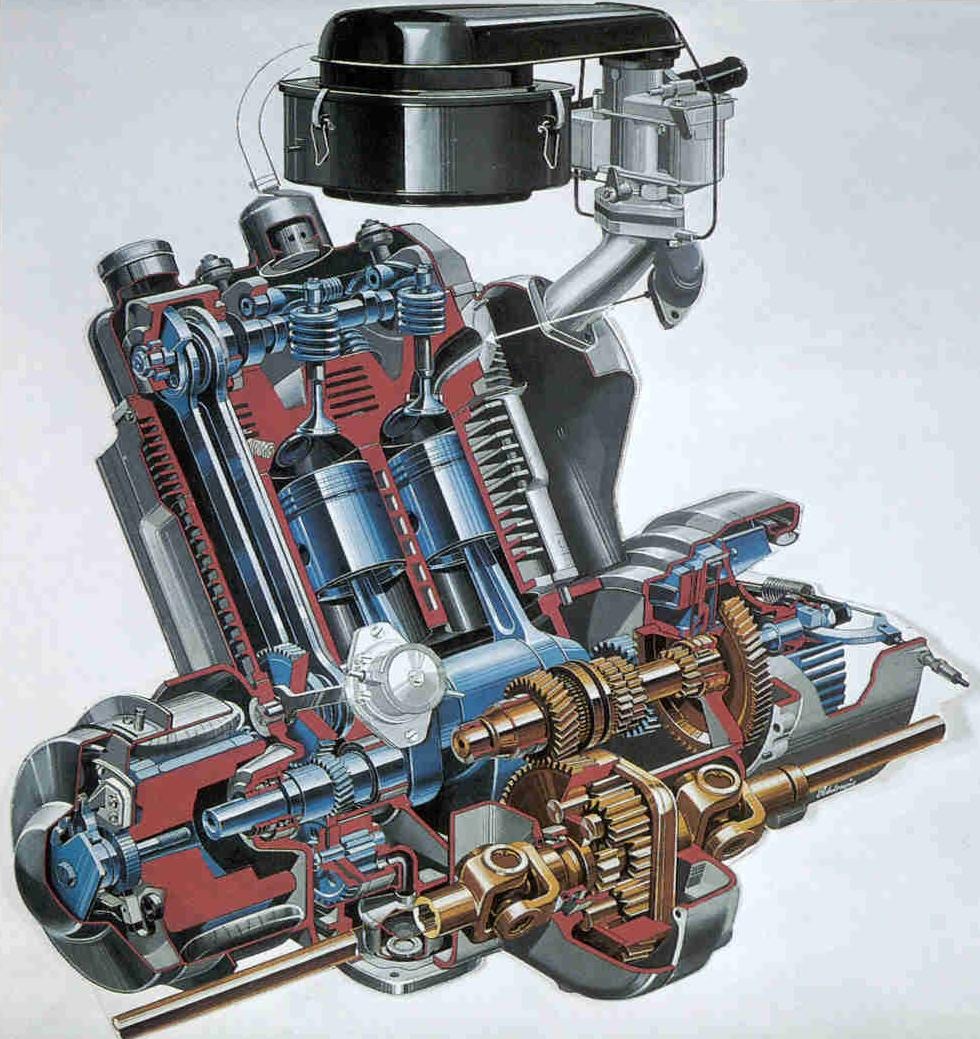
Out back, the Prinz’s powerplant benefited from NSU’s extensive motorcycle-making experience. As noted in our previous CC entry, the rear-mounted, 533cc two-cylinder engine:
It is a crossflow design with a single overhead cam and rockers to actuate the valves. The cam was driven by three connecting rods that were mounted on the eccentric ends of the timing gear and camshaft, just like the single cylinder engine in the NSU Max motorcycle.
Contemporary reviewers praised it for its straightforward maintenance, fuel economy, and durability—qualities that mattered a great deal in a car built to make the most in its intended market segment.
If I’m to trust online translations, the Prinz was advertised with the slogan “Fahre Prinz und Du bist König”—“Drive a Prince and you’re a king.” A reminder that ostentatious marketing has been around since just about forever. Still, if you have doubts about the Prinz’s royal credentials, just remember that Europe has had its share of rather tiny kingdoms.
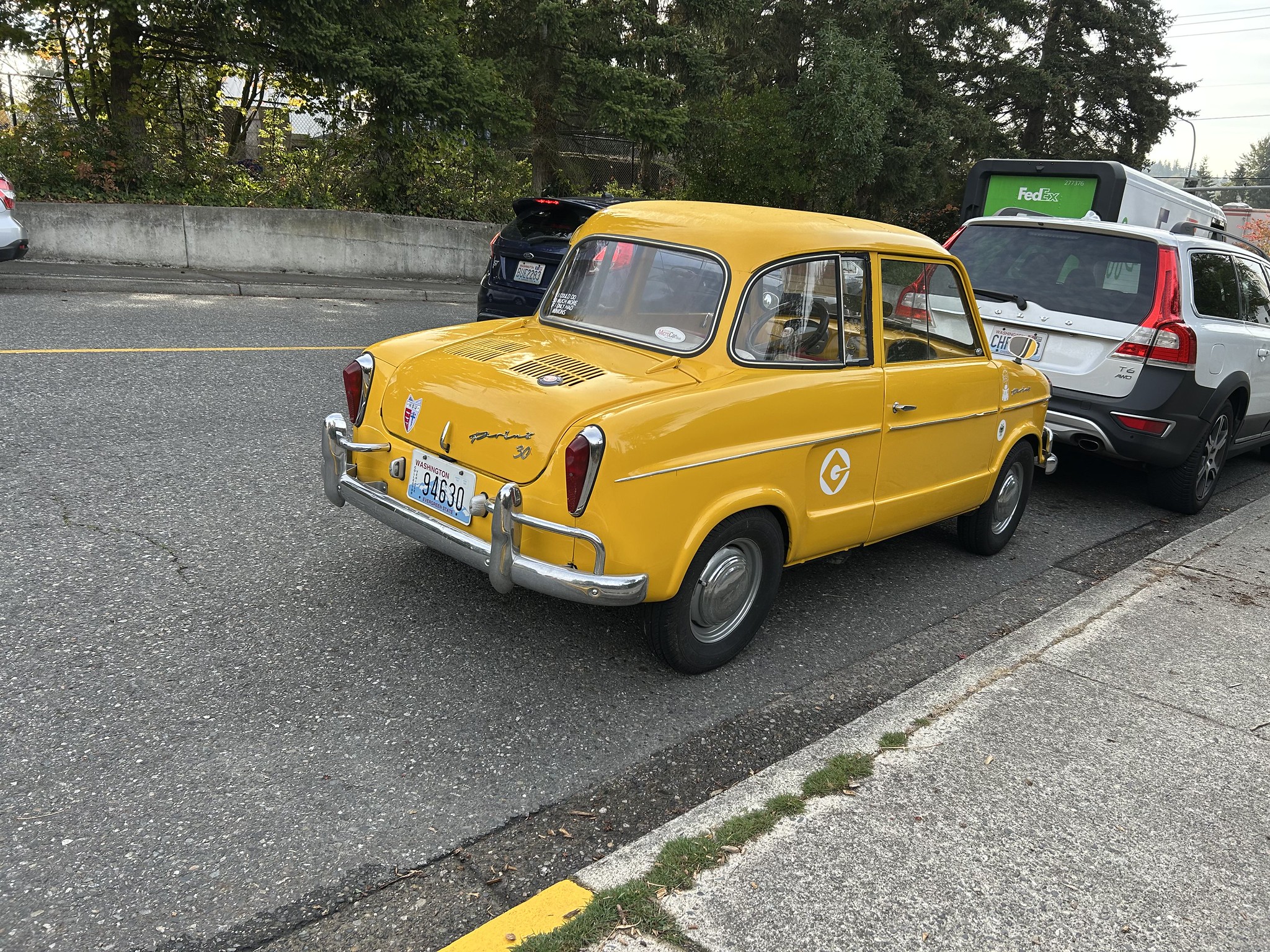
Also, notice the “30” emblem on this example. It identifies the 30 PS version of the engine, equivalent to about 29.6 hp. That might not sound like much, but it was a meaningful step up from the 20 PS (19.7 hp) offered in the lower-powered version.
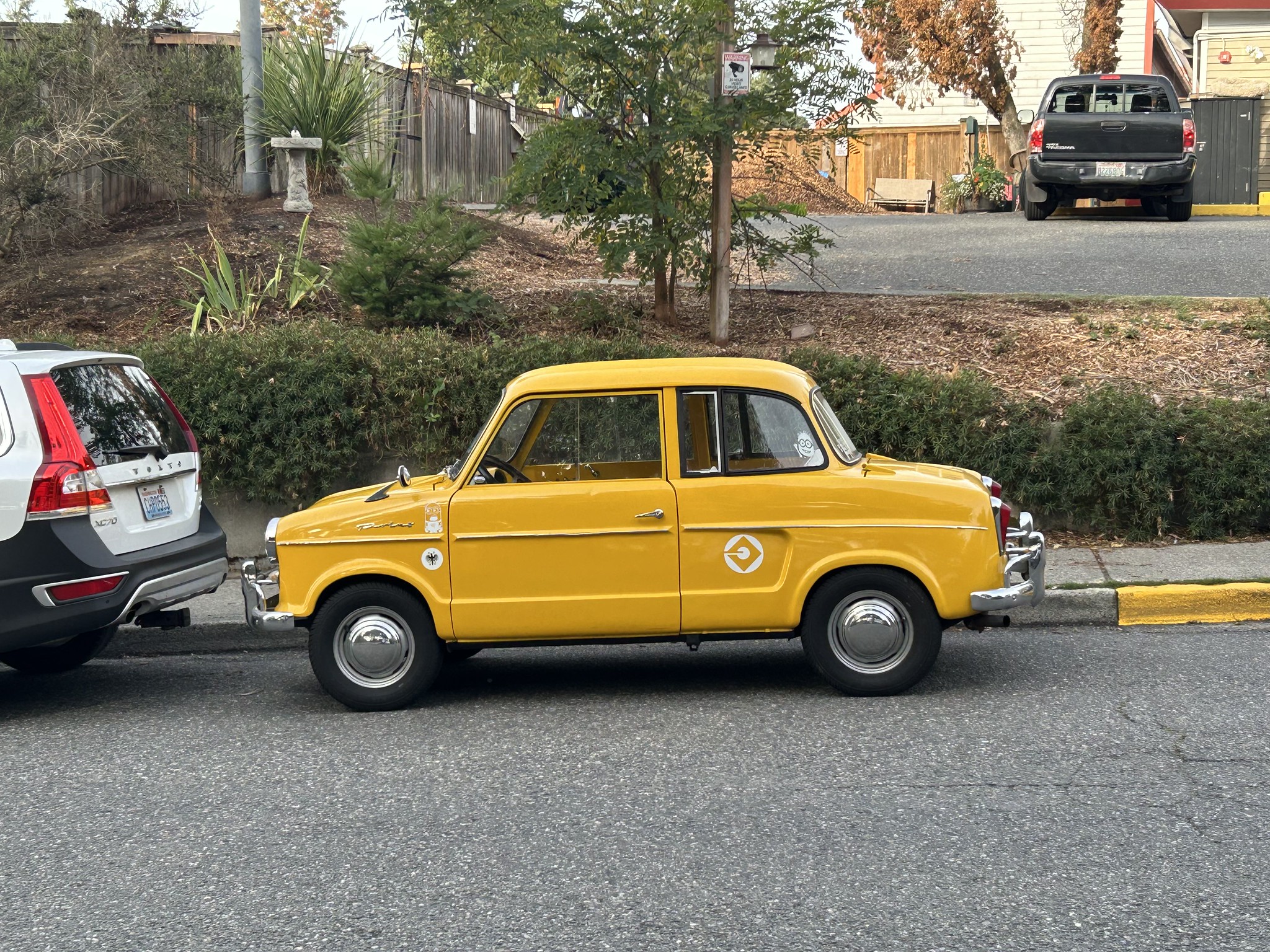
Today’s find belongs to the Prinz’s 1958–1962 production run. A larger, more substantial successor followed that lasted from 1963 to 1971. And if you’re wondering about the cartoon decals, I’m guessing they’re references to the Minions from the Despicable Me animated films.
Not entirely sure how I feel about the added cuteness these “Minion” decals bring to this little Prinz. One thing, though, and Despicable Me fans, correct me if I’m wrong; I believe the vehicle featured in the films is an Autobianchi Bianchina cabriolet (and we had a Bianchina just yesterday!). If so, this Prinz’s owner may be counting on the –likely correct– assumption that most people wouldn’t know the difference anyway. Don’t all microcars look alike? (Nope, they don’t!)
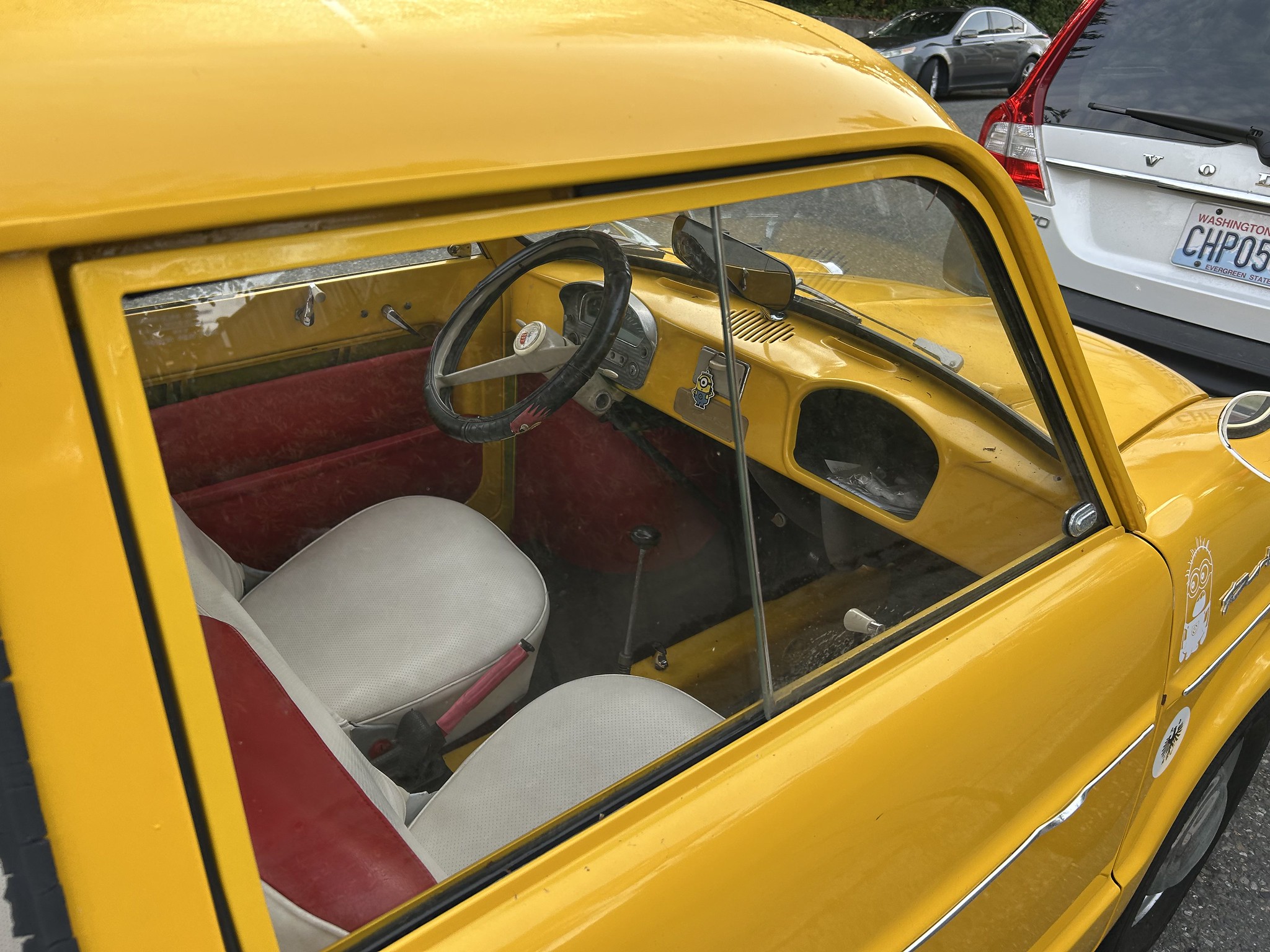
Interior accommodations are pure postwar microcar efficiency. Clearly, the dashboard was designed from the outset to accommodate either left- or right-hand drive. Early Prinzs came with a “crash” gearbox, but a four-speed synchromesh shifter came soon after to work with the Prinz’s noisy two-cyl. mill.
Perhaps the more intriguing chapter in the Prinz saga involves its close relative, the NSU Spider, the world’s first production car powered by a Wankel rotary engine during its 1963–1967 run. The Spider was something of a dress rehearsal for NSU’s star-crossed Ro 80, introduced in 1967; the Deadly Sin chapter that brought NSU under VW’s corporate umbrella –A saga just about as enthralling as the backroom dealings in European royal courts.
In any case, as can be seen, this tiny Prinz was sitting for sale when Eric Clem spotted it. As with any unusual classic, a cool head and a realistic assessment of one’s commitment to the cause are essential before taking such a plunge. On the other hand, this might just be one of the least expensive ways to buy yourself automotive nobility credentials.
Related CC reading:
Curbside Classic: Putting the NSU Prinz on a Pedestal























I do believe that the car is the color of a minion, hence the stickers.
Maybe this car would be a nice addition to Paul’s garage.
John Glenn had one of these, to which his fellow Mercury 7 astronauts made fun in ‘The Right Stuff’ novel (nearly all of them drove Corvettes). I think Glenn actually had to go to Canada to get his Prinz.
Coincidentally, I once saw a picture of Glenn behind the wheel of an early sixties Mercury convertible, not unlike the CC immediately preceding this one. He also had an Impala station wagon while everyone else leased their Corvettes from a local Chevy dealer.
Perhaps we could have a ‘cars of John Glenn’ CC article?
What a lovely little car. The cartoon decals would not be to my taste but easily removed. I have seen a few of these for sale over the years but usually in “project” condition.