
 Photos from the CC Cohort by Hyperpack
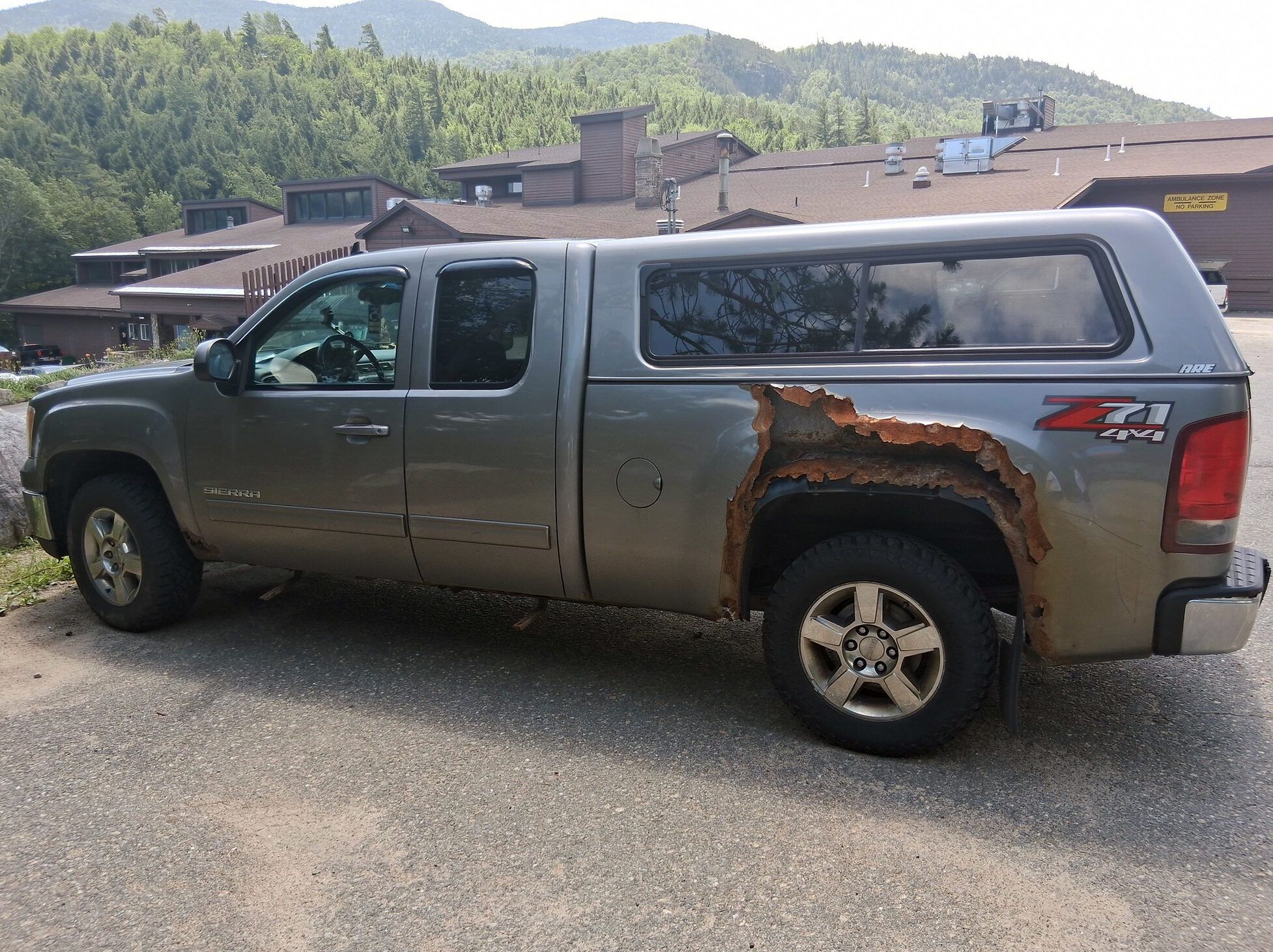
Rust has become less of an issue in cars from recent times, but here, to make up for it, it’s this GMC Sierra with a rust gash of dramatic proportions on its bedside. Hey buddie, ever noticed that your rear fender is… gone?

I don’t think I’ve ever seen rust damage quite like this, not even in the coastal areas. Being a curbside find, there’s no back story on this Sierra, but what could have caused this?
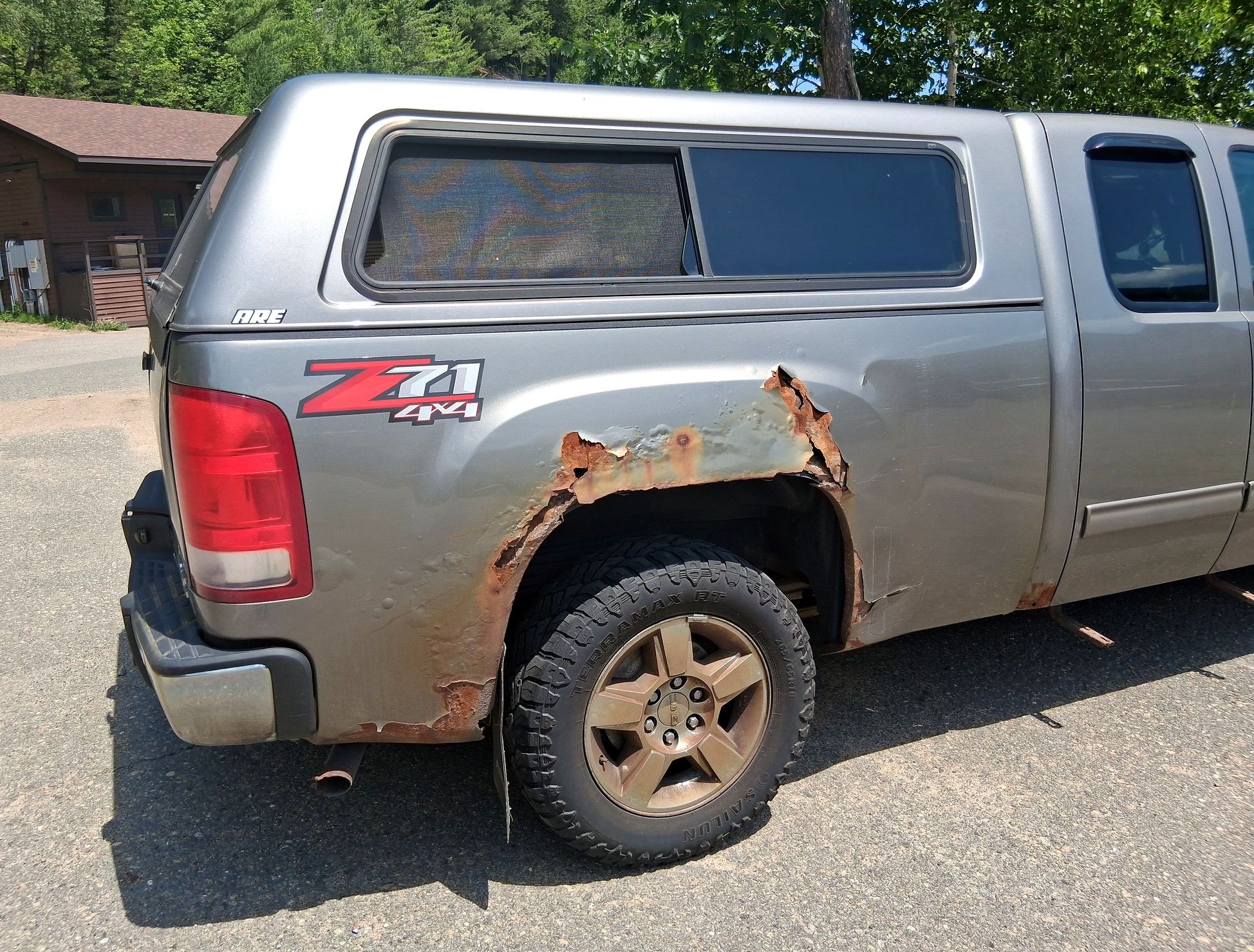
Here’s a view of the opposite side. Not quite as dramatic, though I wouldn’t call this rust damage normal either.
Lots of questions come from a sight like this: How did it come about? Why just on that side? And so on. However, I’ve no solid theories to solve “The Mystery of the Disappearing Bedside.” So, feel free to add yours in the comments section.























Looks like a sqarebody😂
Maybe the owner took the cap off in winter and put a salt spreader in the bed. And maybe the spreader itself or when loading it leaked/spilled on both sides above the leading edge of the wheel well. Otherwise the rust pattern is a corrosion conundrum.
This one even has (rare for a Chevy) fender liners in the rear fenders which are not standard on any full size except for the Tundra. This rust is very common in most of these in salty climates (back east and the north, we see some here in Colorado too). The rear wheels kick up the salt and there is a shelf/flange above the wheelwell on which it then sits and slowly eats things away from the inside out. The first indication is bubbling right above the rear wheel arch which doesn’t look too bad until you look inside the fender and realize how it’s more a thin layer of paint holding things together from the outside rather than metal. Then it gets worse and worse resulting in what you see here.
If the makers cared more about making a truck that could last 300,000 miles than selling you a new $50,000+ truck, they would solve this problem once and for all. Ford’s Al body helps a lot but has rust issues of its own on underbody components. Toyota went to a composite bed. Ram and GM are still with steel but this rust seems most common on the GM products, many people use aftermarket bolt on fender flares to cover up less severe instances than this.
Looks like many NY trucks, where only structural underbody/frame rust is flagged during inspections so many are still on the road like this. GM seems the worst by far, their vans also deteriorate quickly and have for decades.
Don’t forget Dodge Rams in Wisconsin
It might be a pattern of rust with these trucks in salty/snowy areas. A few years ago I saw this Chevy truck in Iowa that had a similar rear fender rust pattern (disguised a bit by the plastic wheelwell trim).
I thought this was dramatic enough that I took a picture of it – don’t see much rust like that here in Virginia.
Here in Vermont, this particular vintage of Chevrolet truck is notorious for extreme bed rust with a few exceptions. The other vintages, before and after, hold up better in the long run despite the salt.
This is a particularly bad case of rust, but I think the manufacturers consider truck beds maintenance parts, like mufflers and brake pads. Replace every 5 years, or as needed.
I have seen that on trucks from all the manufacturers except the aluminum body Fords which have their own problems. It’s caused by salt-laden mud collecting between the inner and outer fenders. The effects can be minimized with careful maintenance and aftermarket undercoating. The plastic fender liners help if you install them when the truck is new, but if you add them after the rust has started they are just another trap for corrosion causing elements. I have also seen dramatic rust such as this resulting from poor rust repairs in the past. Repair techniques such as Bondo over expanding spray foam…
I’ve seen rust like this occur when people launch boats, and don’t hose off the salt water afterwards, why is it only the rear?
Underneath would probably reveal some interesting views..
Was thinking this too
When I wash my truck (2019 F-150) I spend most of the time spraying and rinsing the underside, especially around the wheel wells, rear bumper and frame. The aluminum body still looks good after 6 years and 60,000 miles. Upstate NY is known for salt use and the 2010 I had before was developing rust issues when I got rid of it.
Always make sure you keep your weep holes open and you shouldn’t have this problem
In salt country it’s not unusual for vehicles to rust heavier on the drivers side. Salt is often applied in the center of the road so that the melting brine is drained to the side of the road. The drivers side is exposed to more salt spray by every passing car. Dirt roads and mud just compound the problem with moisture holding dirt sitting wherever it lands. If it looks this bad from the side, it looks worse underneath.
Looks like typical salt belt rust to me .
In the 1960’s an average car would look like this in 3 ~ 5 years .
-Nate
I own a 97 F250 HD with 160000 miles. During its early life it was exposed to highway and urban use around Kansas City. It has zero rust over the wheel wells even though many similar Fords do suffer from it. I credit it’s condition to the fact that it has had an old fashioned bed liner installed since day one. The liner covered the stake holes and they were never open to the elements. Hence, no water or salt could enter the inner fenders via the stake pockets.
Haven’t lived in salt country for 40+ years, but I know my brother’s Ram had a completely rusted out frame by year 7 up that way….
That’s not unusual for an Upper Midwest or Upstate NY truck. Lots of road salt and letting it collect will do that.
in the PNW the roads aren’t salted so rust is mostly top down stuff in coastal areas plus the occasional car fro out of state.
Would be inclined to pay a body shop for a sway out of the bed….color need not match.
I suspect the frame and the cab are no better and just using the truck till it craters.
Now is the time to step away before something bad happens.