
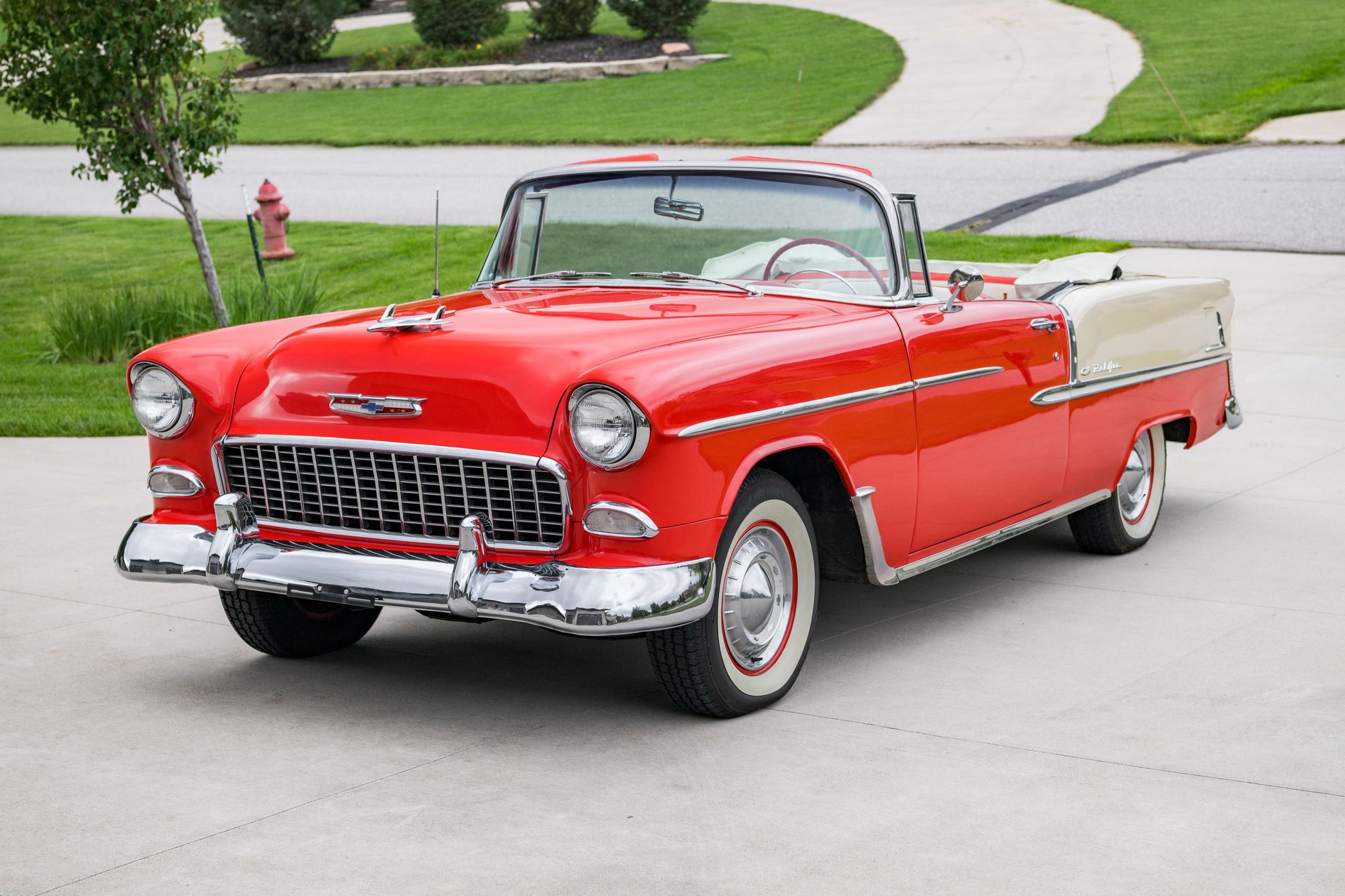
Occasionally, I’ll find a 1955 Chevrolet that makes me stop and reappraise why it’s probably the best thing General Motors ever made. Too many are lowered, repowered, billeted, and otherwise modified, and while I understand the appeal, it’s not my thing, so I walk right on by. But a stock Bel Air Convertible? Really stop and look at it again: It’s perfect. Harley Earl and Company didn’t get a line wrong, it’s the perfect size, and it’s powered by the first edition of the legend, the 265-cubic-inch small-block Chevy. There’s not much to not like, and this one is being auctioned on Cars & Bids in Lincoln, Nebraska.
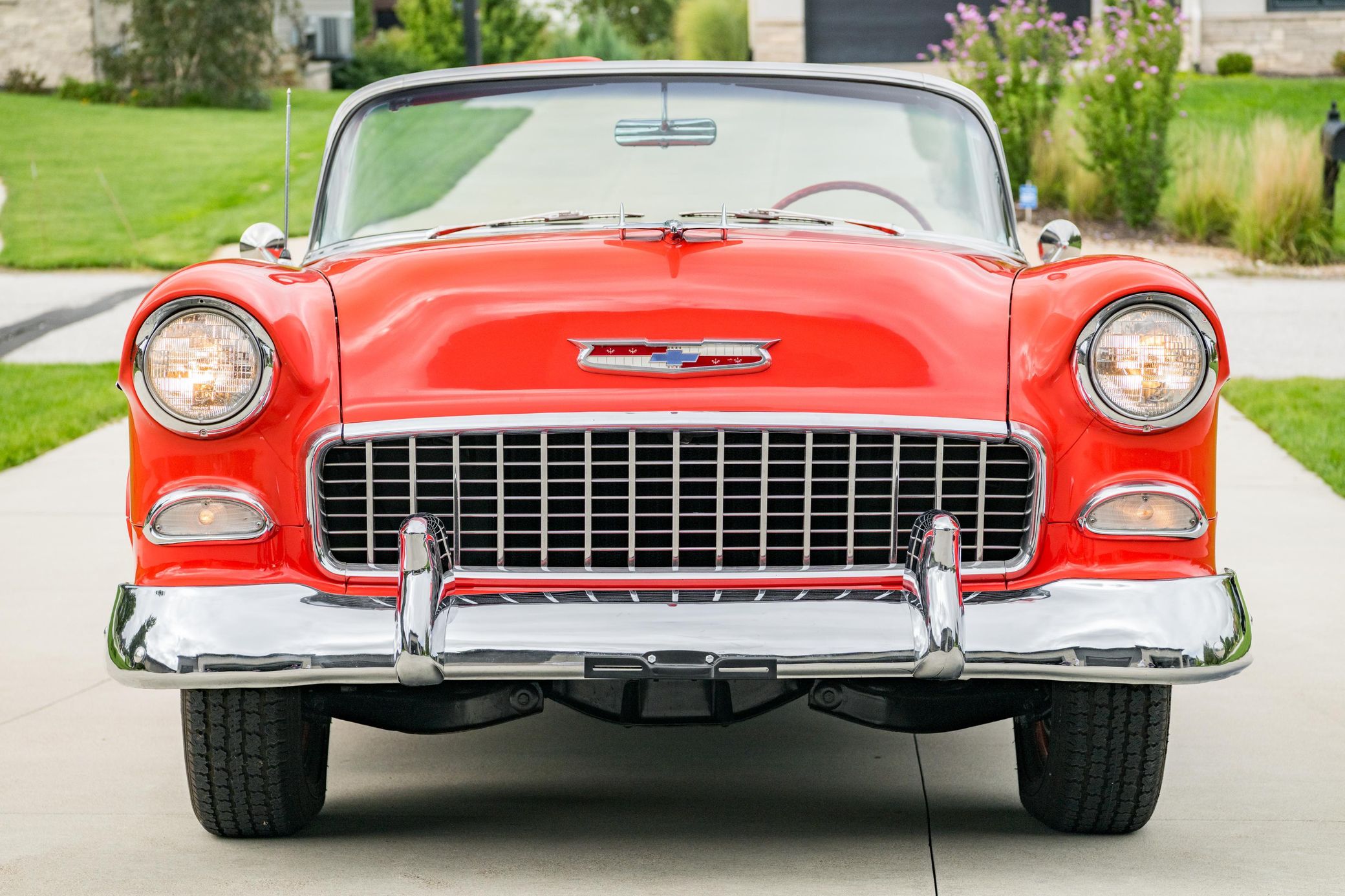
Seriously, can you imagine walking into the local Chevrolet dealer as the owner of a 1953 or 1954 Chevy and seeing this? The eggcrate grille, the hood that was missing Harley Earl’s “power dome?” There was always a chance that Mister Earl went too far, too fast, but it didn’t work out that way; the public snapped them up, for good reason. According to Michael Lamm’s excellent book Chevrolet 1955: Creating the Original, slow sales in the first few weeks of production caused some panic, which led stylists to prepare the wider grille for 1956. But they needn’t have worried, as production quickly picked up and stayed very strong for the entire model year. There’s nothing wrong with a ’56 Chevy, but I’ve always preferred the original.
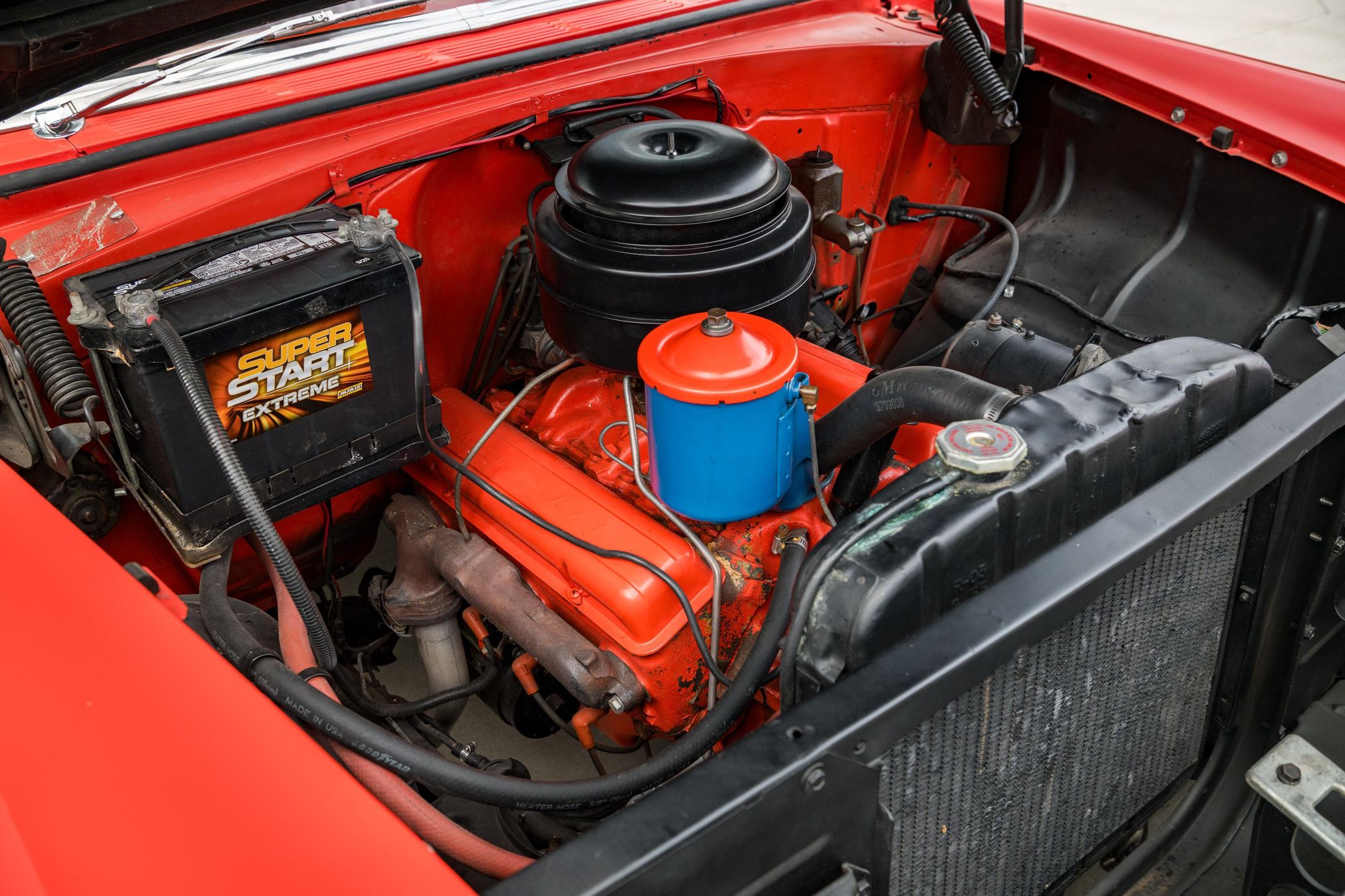
Almost half of 1955 Chevrolet buyers opted for the new 265-cubic-inch V8, shown here in basic 162-horsepower two-barrel tune. The 265 was actually Chevrolet’s second try at a V8 in the 1950s; the original design (by engineer Edward Kelley) was much like Cadillac’s new-for-1949 V8. Ed Cole was assigned the task of giving the 1955 Chevy a clean-sheet engine that minimized production costs, something that mattered less to Cadillac than it did to Chevrolet. Two things that made this possible stand out: a green-sand casting method that allowed more precise (and thus lighter) engine blocks and lightweight stamped sheet metal rocker arms. John Dolza of General Motors engineering was given most of the credit for the former, and Clayton Leach of Pontiac’s engineering staff for the latter, but both innovations made the long-lived Mouse Motor possible.
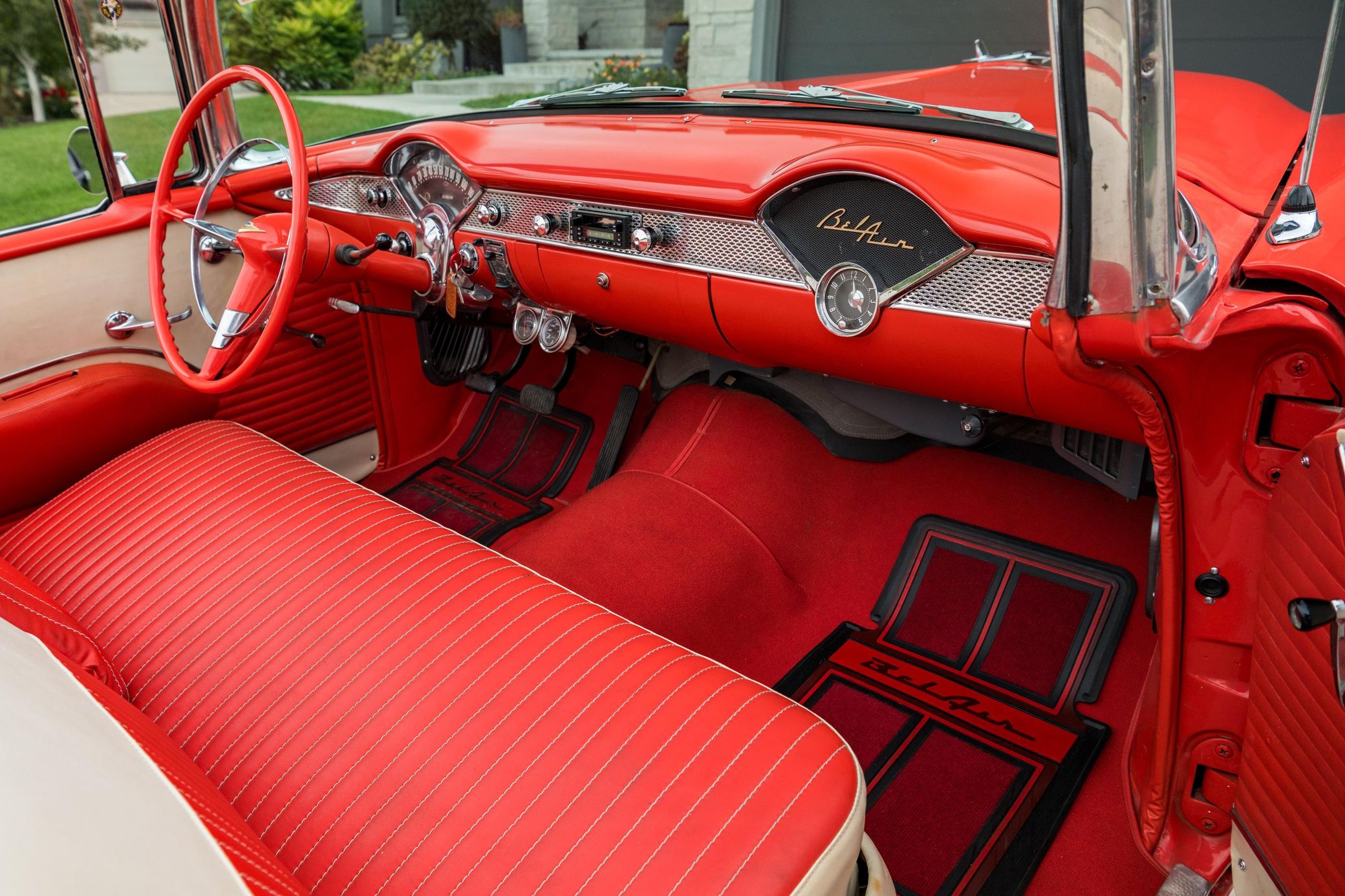
Depending on your viewpoint, the standard three-speed manual in this car may be a boon or a bane; shifting a three-on-the-tree is not exactly “fun” in the traditional sense, and the Powerglide offered in 1955 Chevrolets wasn’t really that bad. The interior appears to be in great shape, and it matches other Bel Air Convertibles I’ve seen, aside from the underdash auxiliary gauges, which aren’t uncommon in old cars.
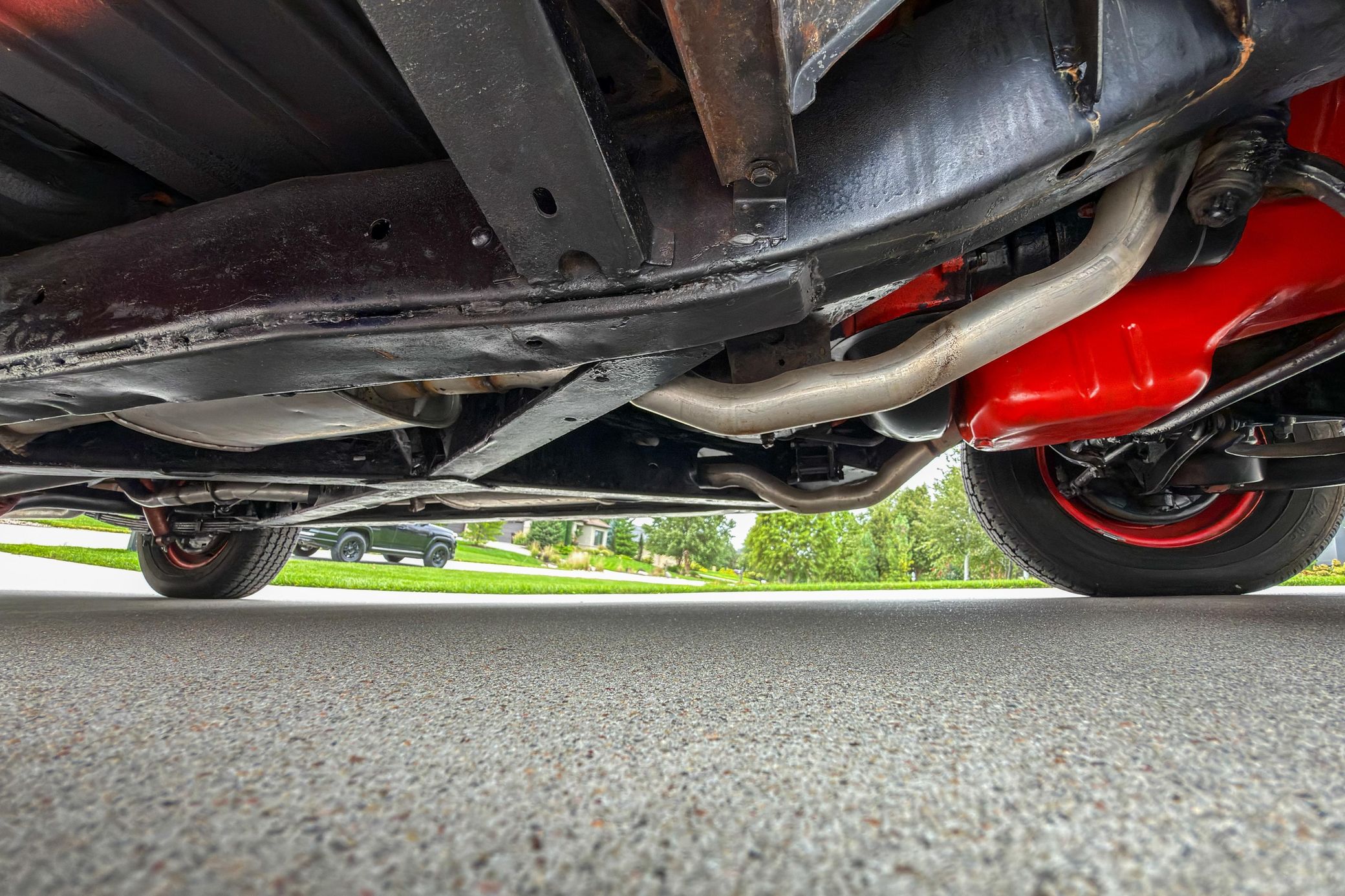
The seller of this car says that it’s only been driven 100 miles since 2010, but given the extensive maintenance and repair receipts, including having the undercarriage cleaned, it’s been well maintained in running condition.
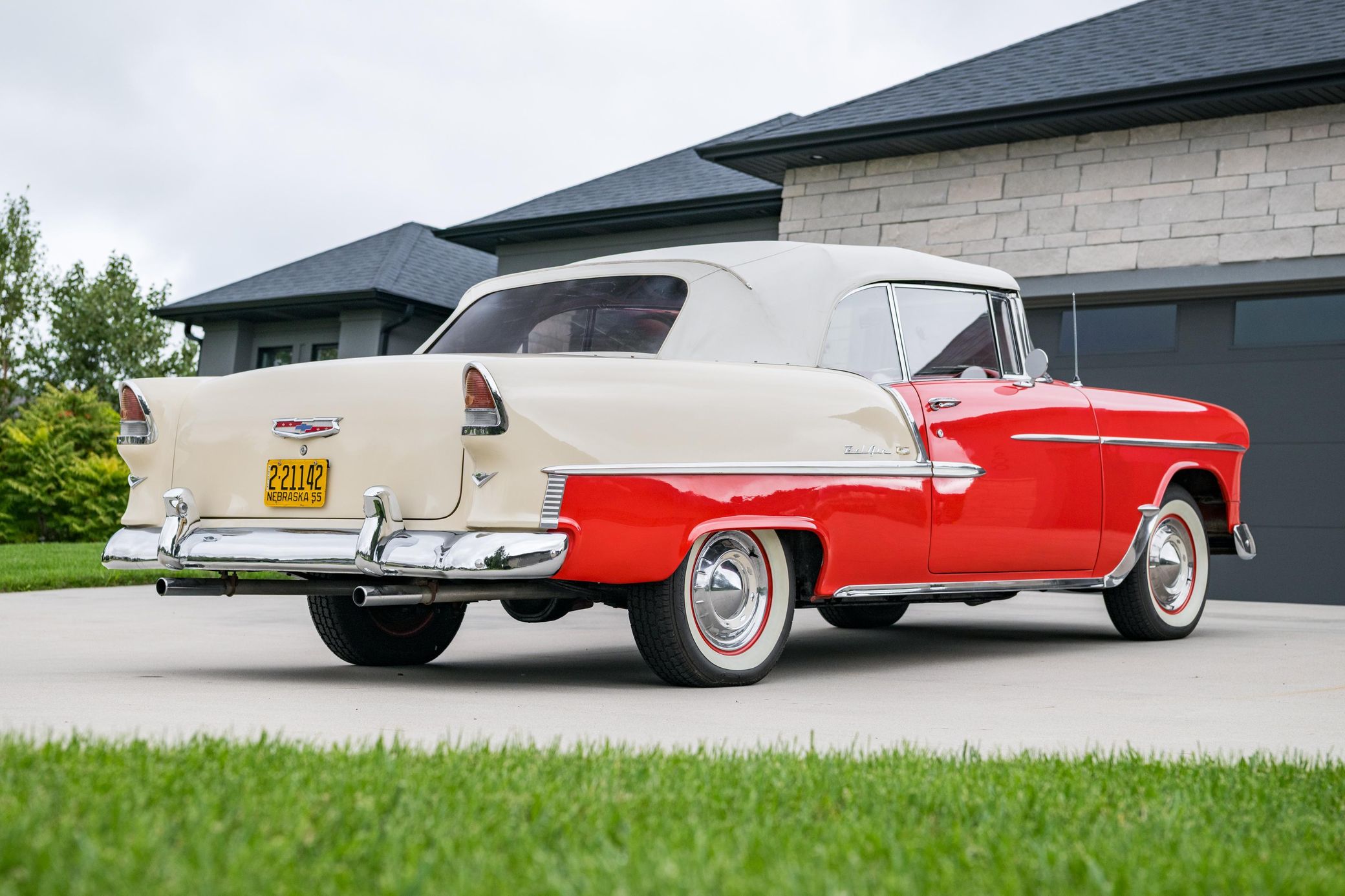
The ubiquity of the Tri-Five Chevrolets means that many of us walk right on by when we see them, and that’s truly too bad. It was a revolutionary car that redefined what a “low-priced car” could be when it comes to styling and performance, and their popularity has made modifying them easy. And that’s why it’s so refreshing to see one as Chevrolet produced it.
Related Reading
Curbside Classic: 1955 Chevrolet – The iCar – GM’s All-Time Greatest Hit (by Paul N)
Curbside Classic: 1955 Chevrolet Bel Air–“Nice To See You”– (by Stephen Pellegrino)
Vintage Road Test: 1955 Chevrolet 210 V8 – The Legend Is Born, And Tested (by Paul N)























I”m a Ford guy, but these have always struck me as just-right cars, and it’s great to see this ’55 today. I guess Chevy/GM *had* to do makeovers for 1956 and 1957; but, like movie sequels, the original always makes the firmest impression on me.
I wouldn’t have known about Mr. Lamm’s book, but it sounds interesting. Thanks for mentioning it!
I could never, _EVER_ walk by a ’55 Chevy no matter the model or condition .
They were stunners when new and IMO have aged far more gracefully than the ’56 & ’57s .
I’m not a huge Power Glide fan as two speeds means it robs most of the power just moving .
Make mine an inline 6 cylinder, 261 C.I.D. truck engine and either over drive behind that three speed box or a three speed slushbox .
Gotta have a vacuum booster on the brakes too .
The Chevrolet Motor Division hit it right out of the ball park with these and they’re still flying high decades later .
-Nate
I’m with Aaron; if it’s modded, even lightly, I’m not interested. It takes way more effort and expense to keep an old CC original, but with the popularity of the Tri-Five Chevy, not ‘that’ much effort and expense. All of that stuff is so available, I dare say, with the knowledge, time, and money, it’s possible to build an original from the ground up.
I guess I can see the lure of using a Grant steering wheel, floor-mounted Hurst shifter, Mr. Gasket air cleaner and valve covers, and some sort of aftermarket wheels, but it really hurts the appeal.
Even here, I’m not exactly enamored by the chrome dual exhaust tips, aftermarket radio and gauges, but I let those sorts of things slide since those are more like minor creature comforts for regular cruising and if done tastefully and the rest of the car is unimpeachable.
But fuzzy dice hanging from the rearview mirror? Forget it.
Have you ever met someone who had a cross thing to say about the 1955 Chevrolet? I haven’t. Isn’t it the norm for clean-sheet designs to encounter some teething issues? Many a car has come out since 1955 with the buyer saying, “I wished I’d waited a year, that was after the bugs were ironed out.” Was this a rarer occurrence in the first half of the 20th Century? Just how scrupulous and extensive was the Chevy’s development period? What did they do then that they don’t do now?
In the late ’70s I worked part time in the shop at the local Chev Olds emporium. One of the mechanics had been there since it opened just after the war and had a lot of interesting stories. Apparently the ’55 265 had some oil consumption problems, his position was that the ’56 was a better engine and the ’57 283 better yet.
I do know that the ’55 block did not have an oil filter boss, making it a one year only casting. You could order a remote oil filter but it wasn’t standard. 40 years later an acquaintance had a ’55 he was restoring and had a long search for a ’55 block….
I still prefer the ’55 myself.
The book I mentioned said that the early 265s had some teething issues, one being that the cylinder walls were honed too smoothly, which caused excessive oil consumption. It sounds like they got that solved pretty early on, but apparently the field fix for engines that burned oil was, you guessed it, Bon-Ami.
Beautiful car.
One of my 3 fav cars. Ive owned 2 55 chevys.
Just like it took an extra year for the by then ancient flat head V8 to disappear it took till 56 for the small block Chev V8 to appear in NZ assembled cars, you never know by seeing most that are still on the road though, yes its the best effort from Chevy of the tri fives
All of the tri-fives are good looking. My dad had a 56 and my mom had a 57, both hardtop coupes. The 56 had a nice spear that made the two tone paint pop. Both my parents had their cars repainted in the early 60s to get rid of the two tone paint job; mom’s car was in an accident and she said the two tone was out of date by then. Interesting.