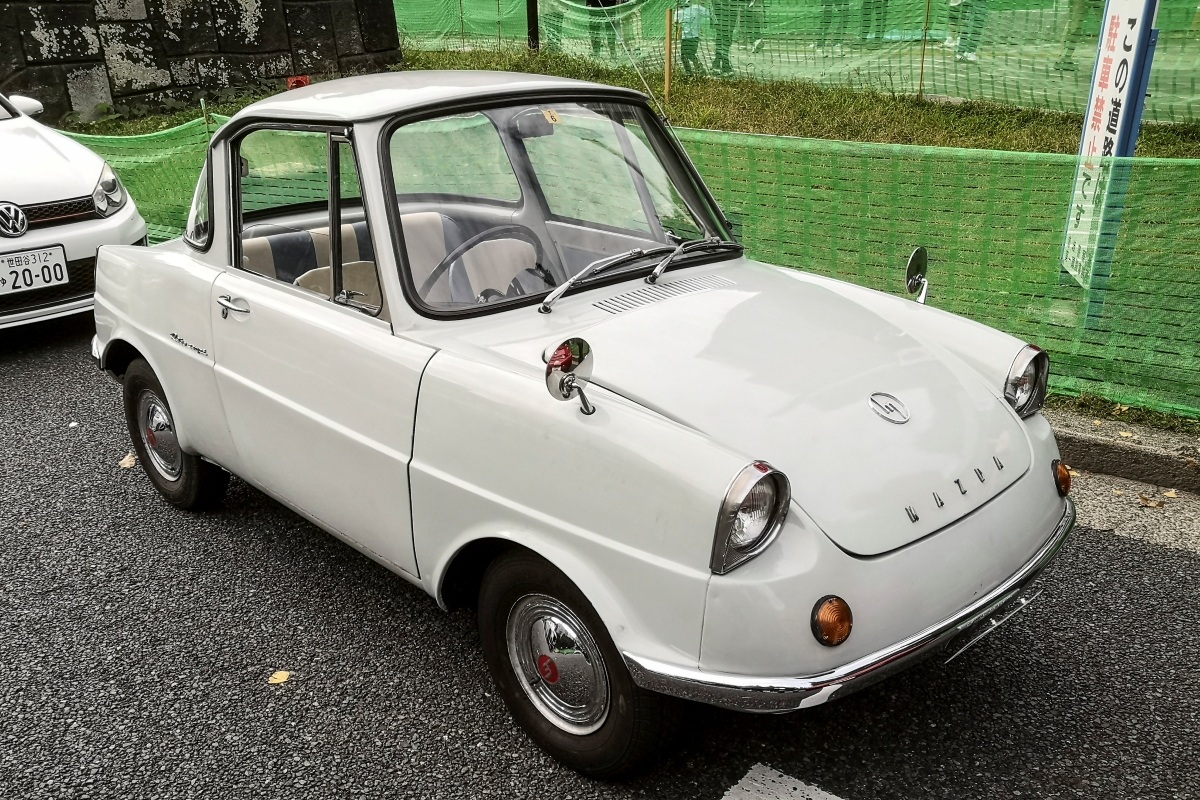
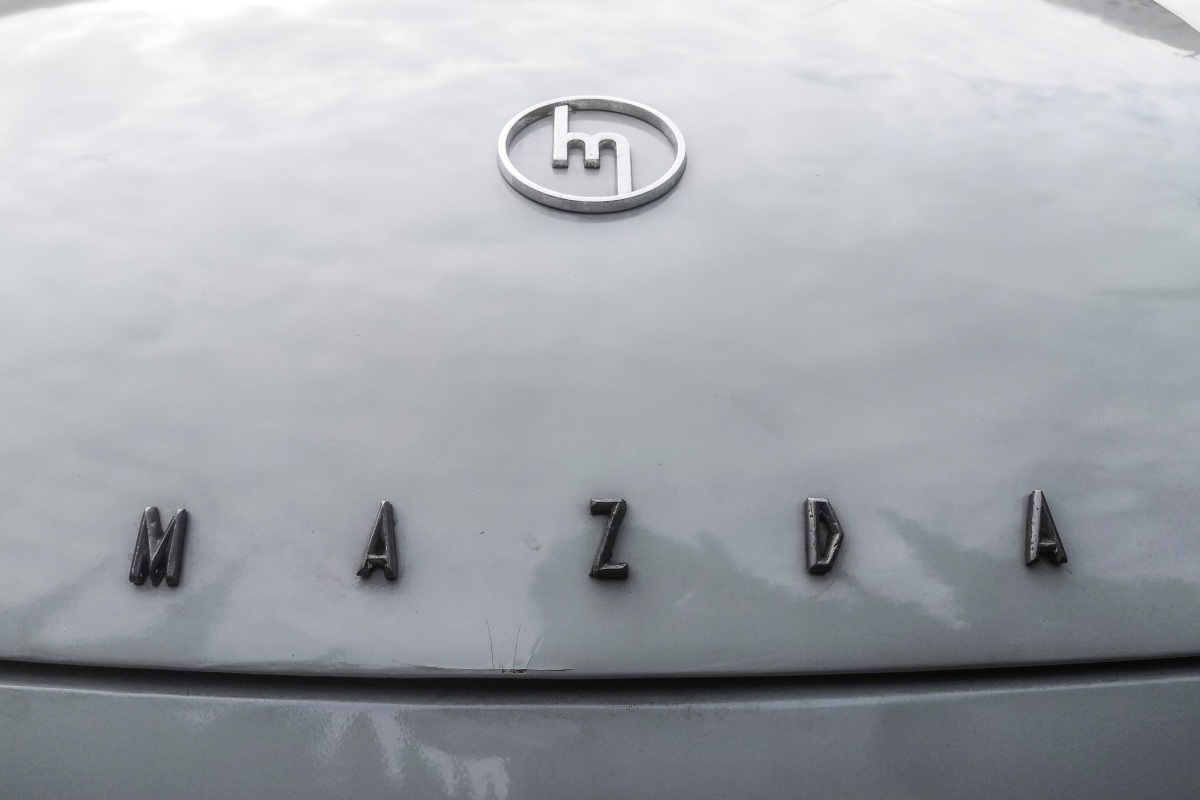
Any well-known carmaker’s first car should always be a cause for celebration. Many are too old or rare to be readily encountered on the street, of course. It’s not exactly convenient to drive an Oldsmobile Curved Dash or a 1904 Rolls-Royce in today’s traffic. This tiny oddball is just serviceable enough to be out and about 60-plus years after it rolled off the production line, enabling us to get up close and personal with the very first Mazda car.
In January 1920, a cork-making firm called Toyo Cork Kogyo Co., Ltd. was founded in Hiroshima and led by Jujiro Matsuda. (Yes, that’s how “Mazda” should be pronounced, though nobody does it outside of Japan). Before long, the singular focus on corks floated away and the firm was re-named Toyo Kogyo in 1927.
Ten years later, the first Mazda motorcycles and three-wheelers were going into production, proving that corks can lead to anything. How come it still took 30 years for Mazda to add a fourth wheel into the mix? In actuality, four-wheeled cars and trucks had been one of Toyo Kogyo’s main aims since the late ‘20s.
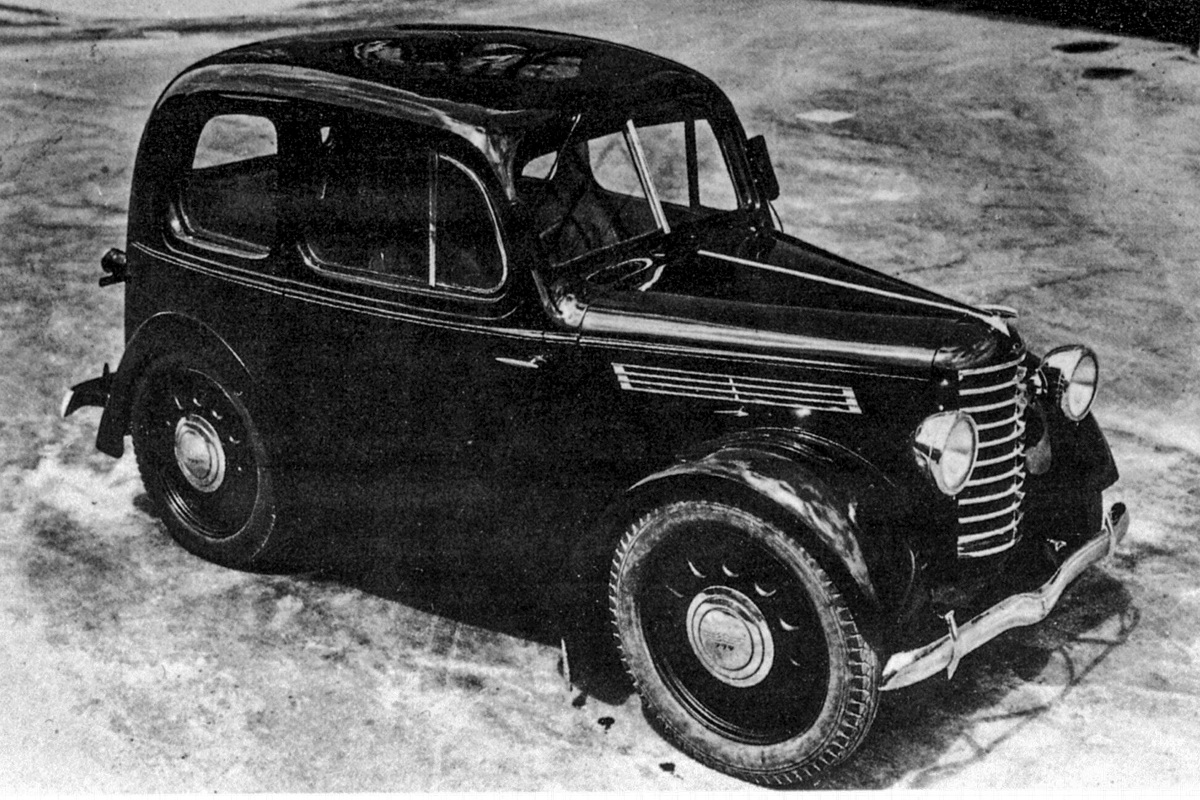
The first Mazda four-wheeled prototype (above) underwent testing in 1940. Interesting to see that they were aiming at something very small already, directly competing against Datsun. But by that date national priorities had shifted somewhat, so the project was stillborn. By 1943, trike production went on hiatus; the location of the factory meant it survived the A-bomb with minimal damage, enabling Mazda to resume three-wheeler manufacturing by December 1945.
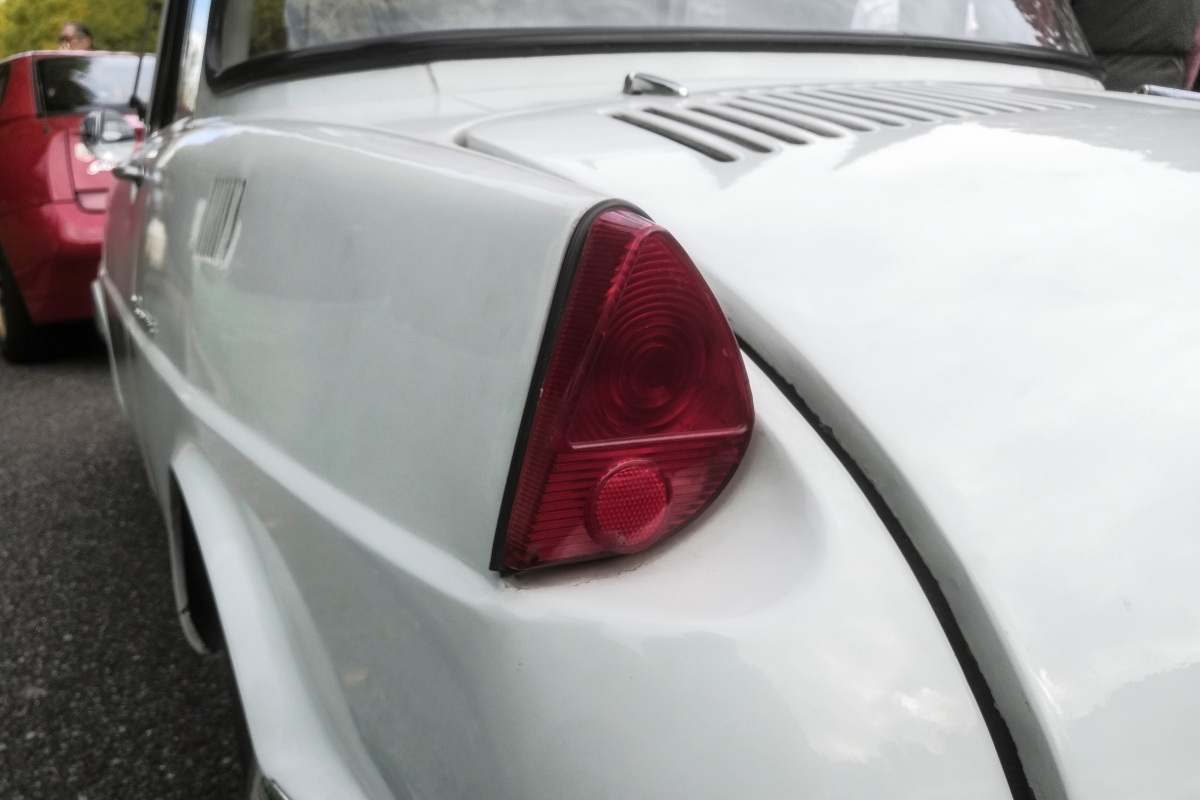
Clearly, demand and governmental policy were aimed towards cargo-hauling vehicles in the post-war period, at least for the first decade or so. Mazda still did some R&D in four-wheelers, but their trikes sold so briskly that it remained on the back-burner. In 1955, the market for kei jishoda, or light cars, was unleashed by upping the engine displacement limit to 360cc. Finally, transporting four passengers (or two passengers plus 100kg of cargo) at something approaching 100kph was both in realm of reality and sanctioned by the Powers That Be.
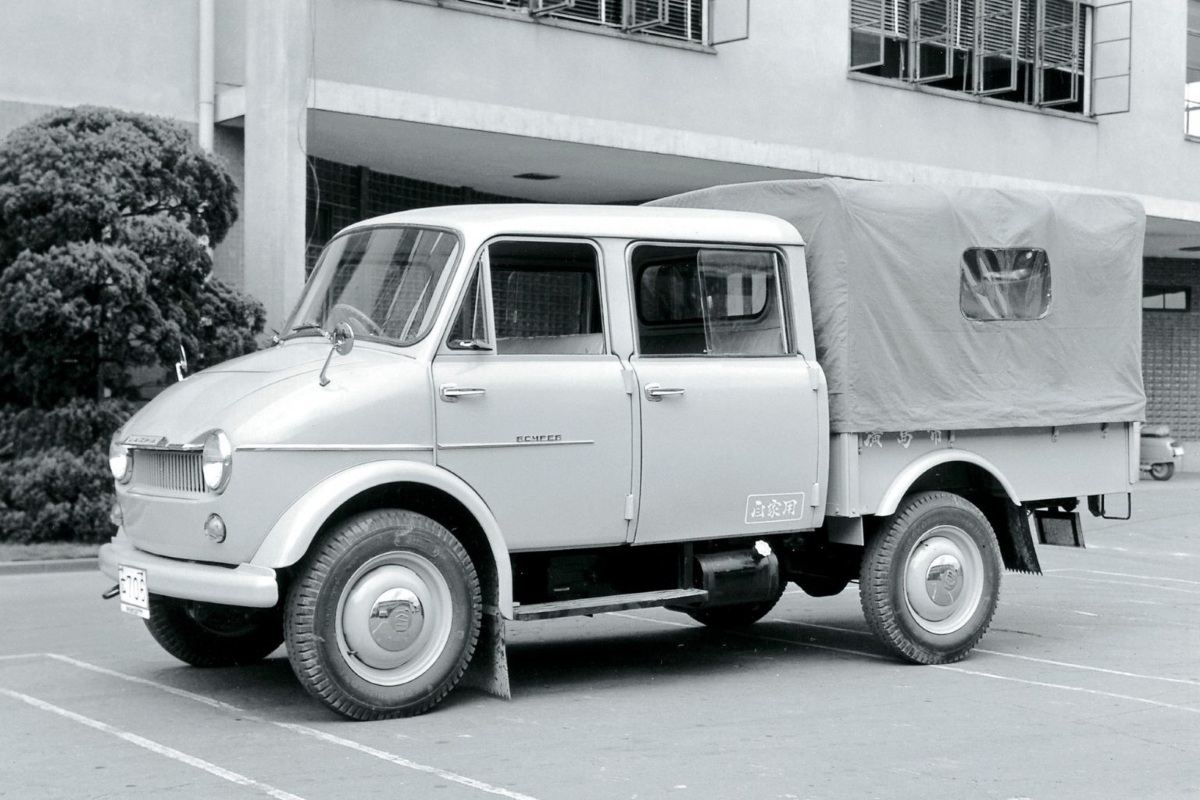
The rather rough Suzulight had the market all to itself initially, but sales were slow. Others were busy devising their own solutions: Subaru entered the fray in 1958, blowing Suzuki out of the water. That year also saw the first four-wheeled Mazda vehicle (above) go on sale – the 1.1 litre Romper truck. Something was afoot in Hiroshima.
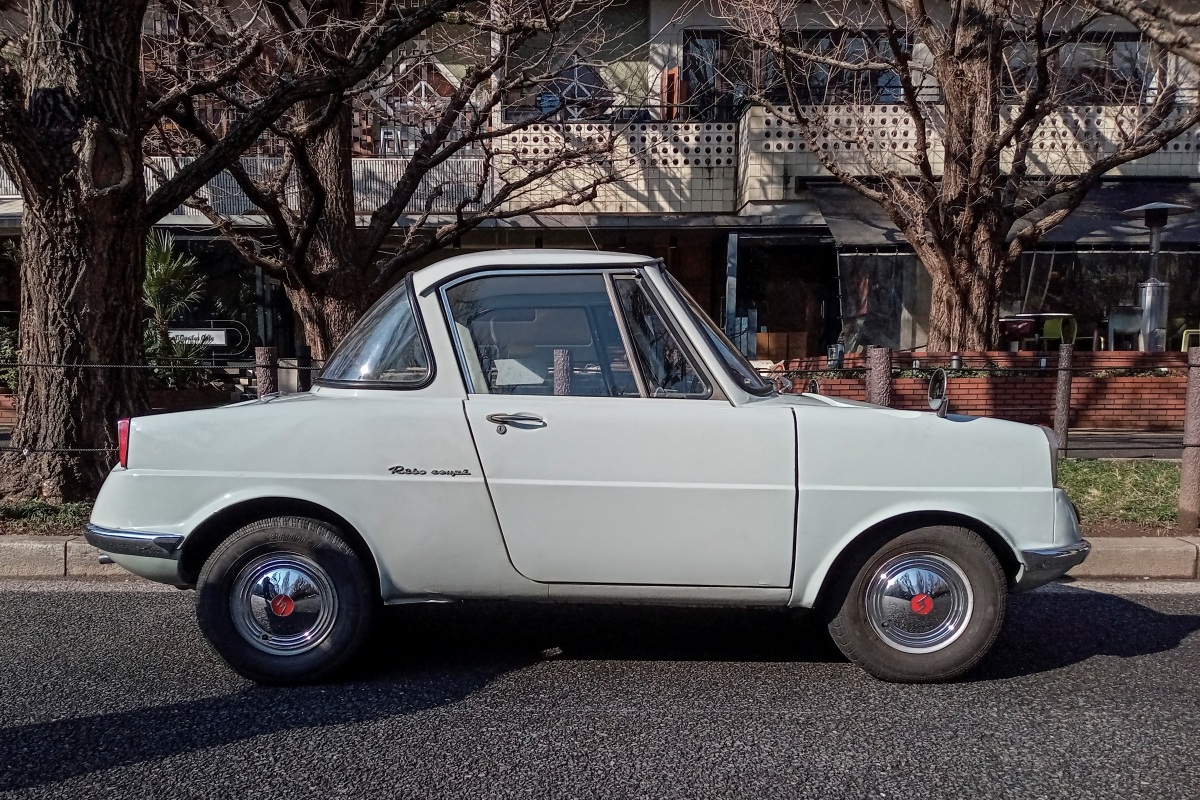
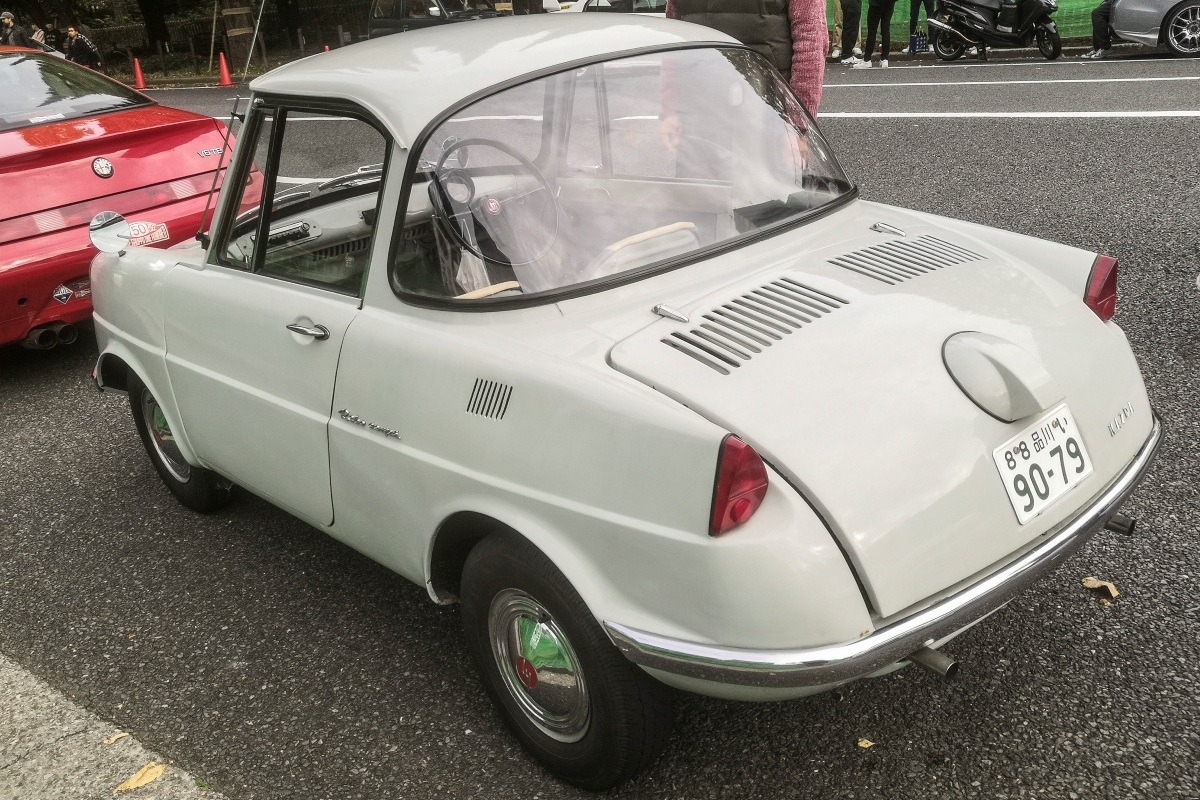
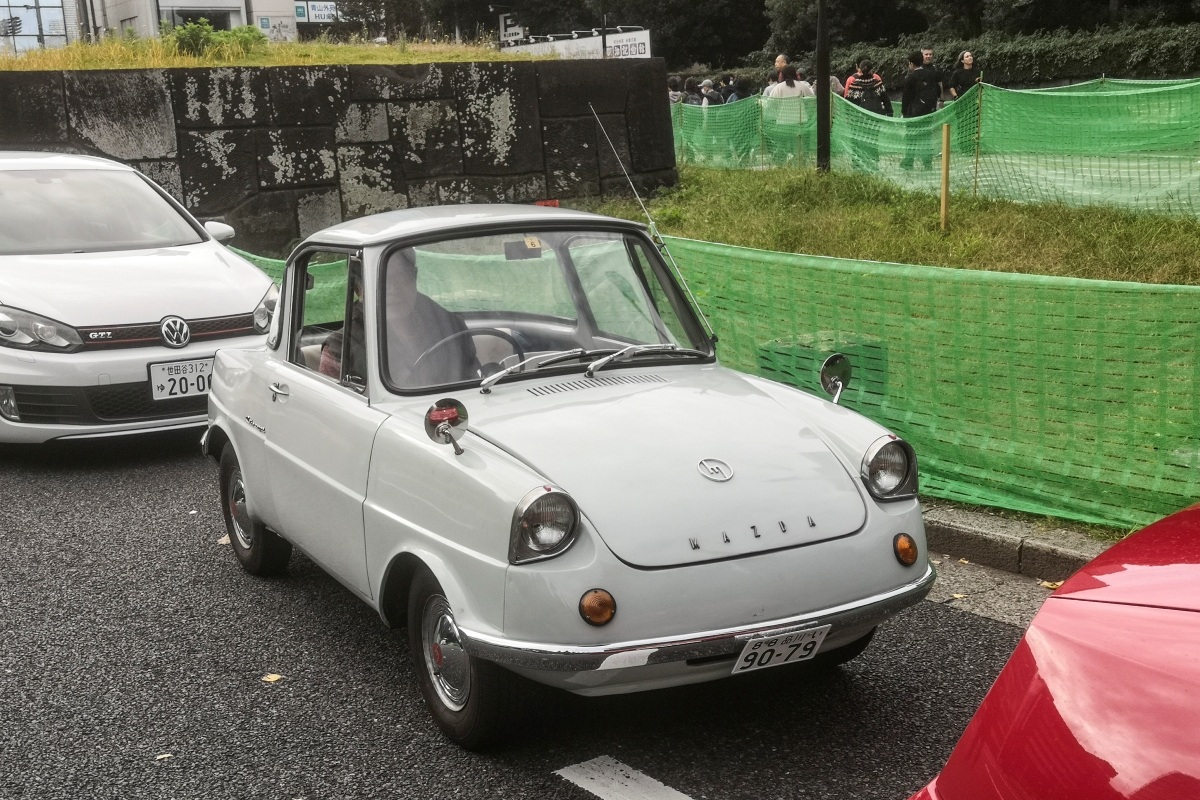
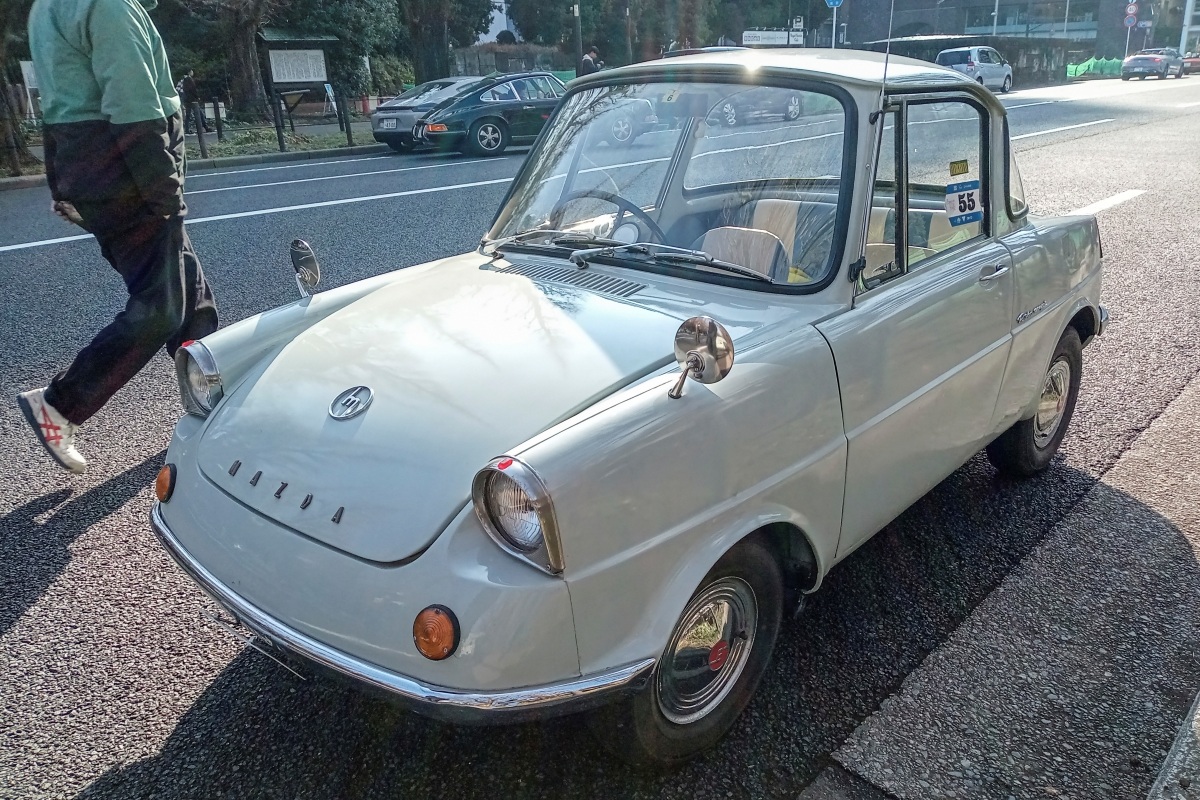
The third ever series-made passenger kei car, the Mazda R360 Coupé, was unveiled in the spring of 1960, and it was a singular offering. Designed in-house by Jiro Kosugi, who had authored Mazda’s postwar trikes and trucks, went for something far more daring than the already dated Subaru and Suzuki designs. And instead of making the tiny car a two-door saloon, he opted to design a coupé, perhaps in an effort to make the R360 stand out. Which it certainly did.
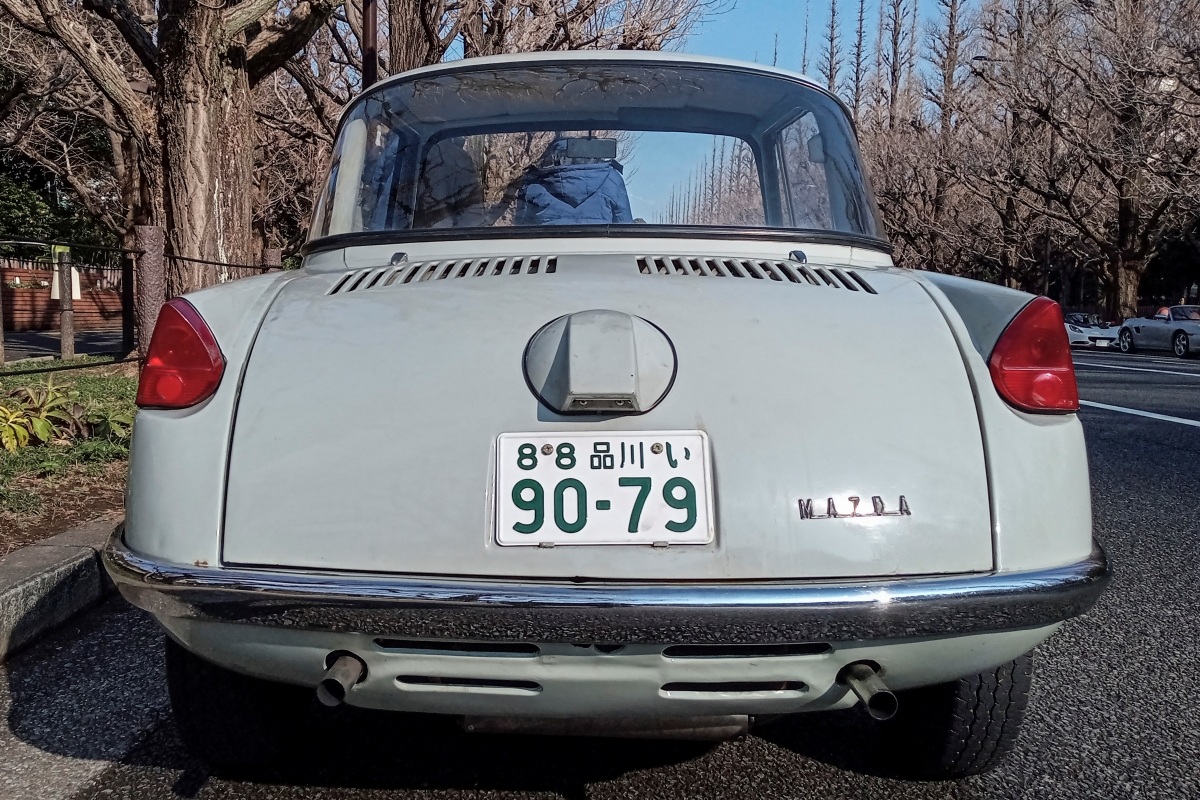
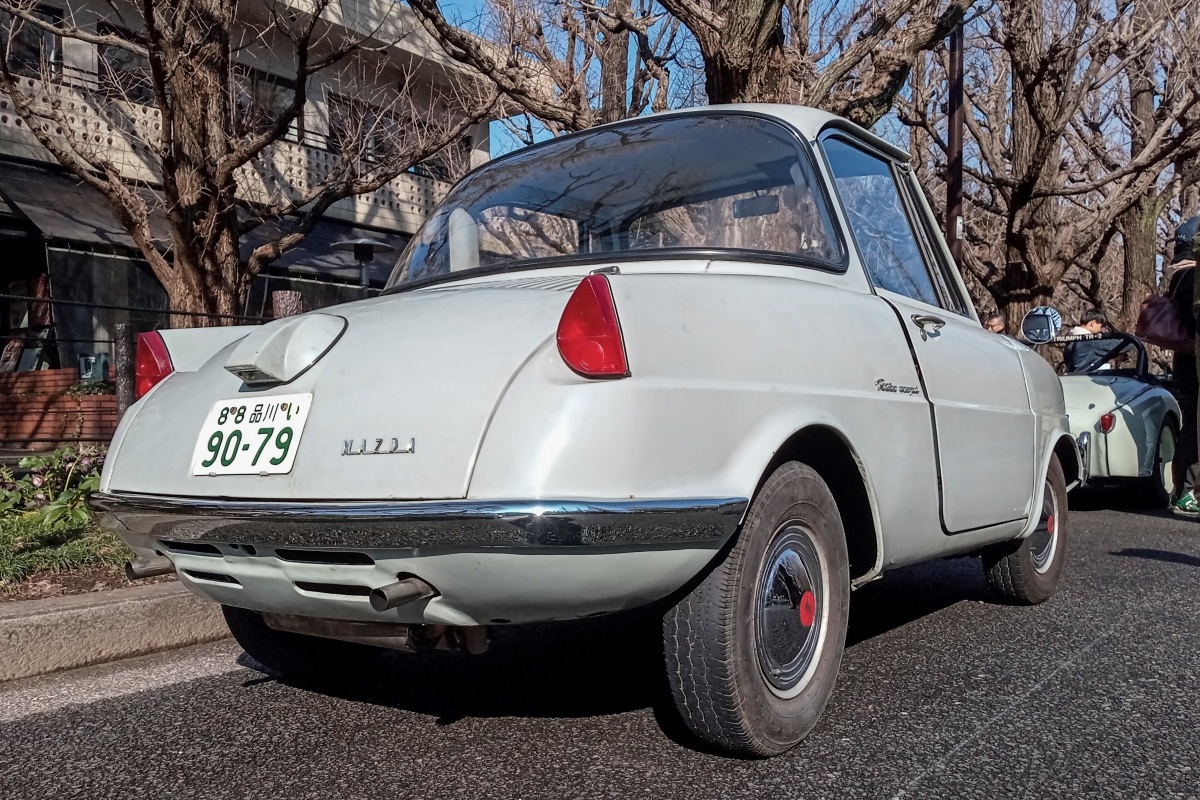
Fins were literally in the air in 1960, so the little Mazda fell for the fad and got some of those as well. It certainly made for a contrast with the bulbous front end.
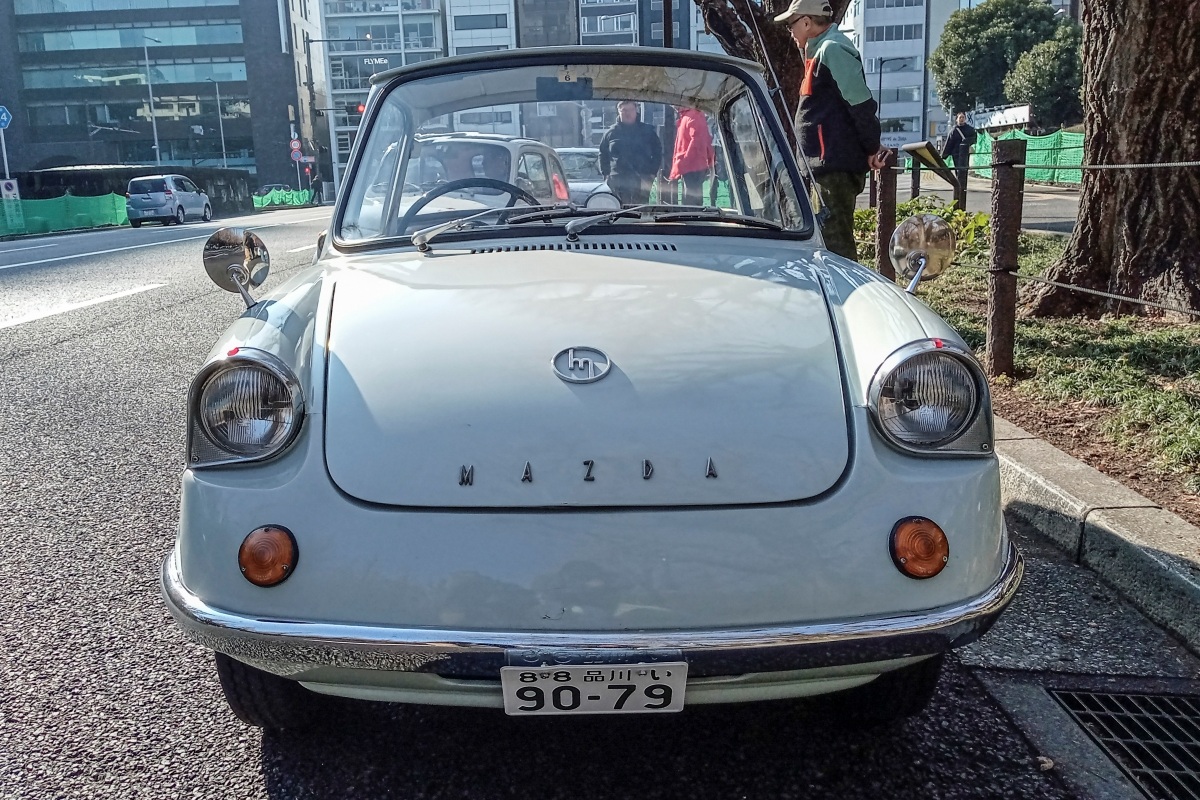
Subaru 360s may have been built by an ex-aircraft factory, but the Mazda would be the lightest first-generation kei car by a long shot. The good people at Toyo Kogyo were relentless in their quest to save weight, including by using Perspex for the windows and rear windscreen. The finalized product totalled only 380kg, which is impressive. Not that it was all down to avoiding glass, of course.
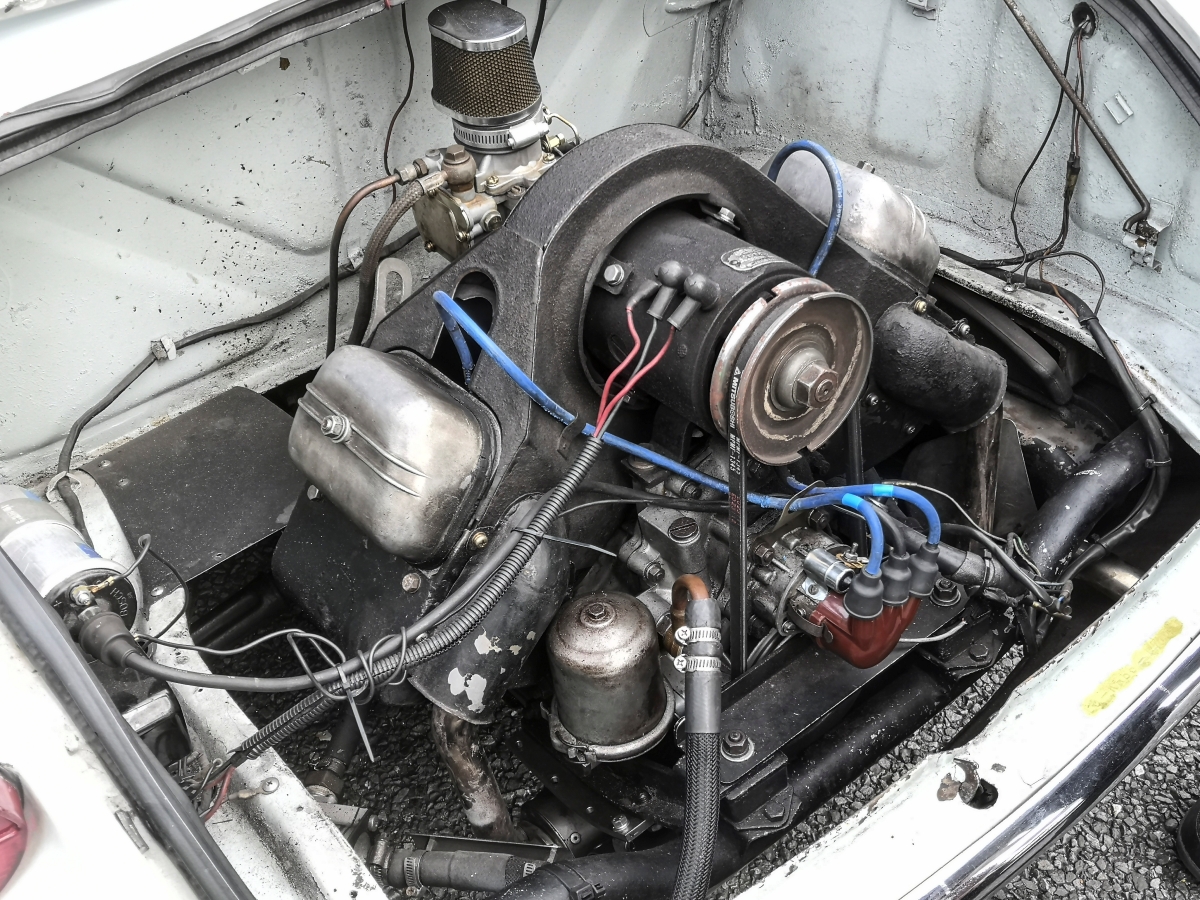
The engine was all-new and also showed that Mazda were not going to blindly follow other carmakers’ lead. This 90-degree V2 displaced all of 356cc and provided the 10-inch rear wheels with a formidable 16hp. What made it out of the ordinary was that it was a four-stroke V2 (every other kei had two-stroke engines) with aluminium heads and crankcase, as well as a transmission casing, oil pan and rocker arm covers made of magnesium alloy.
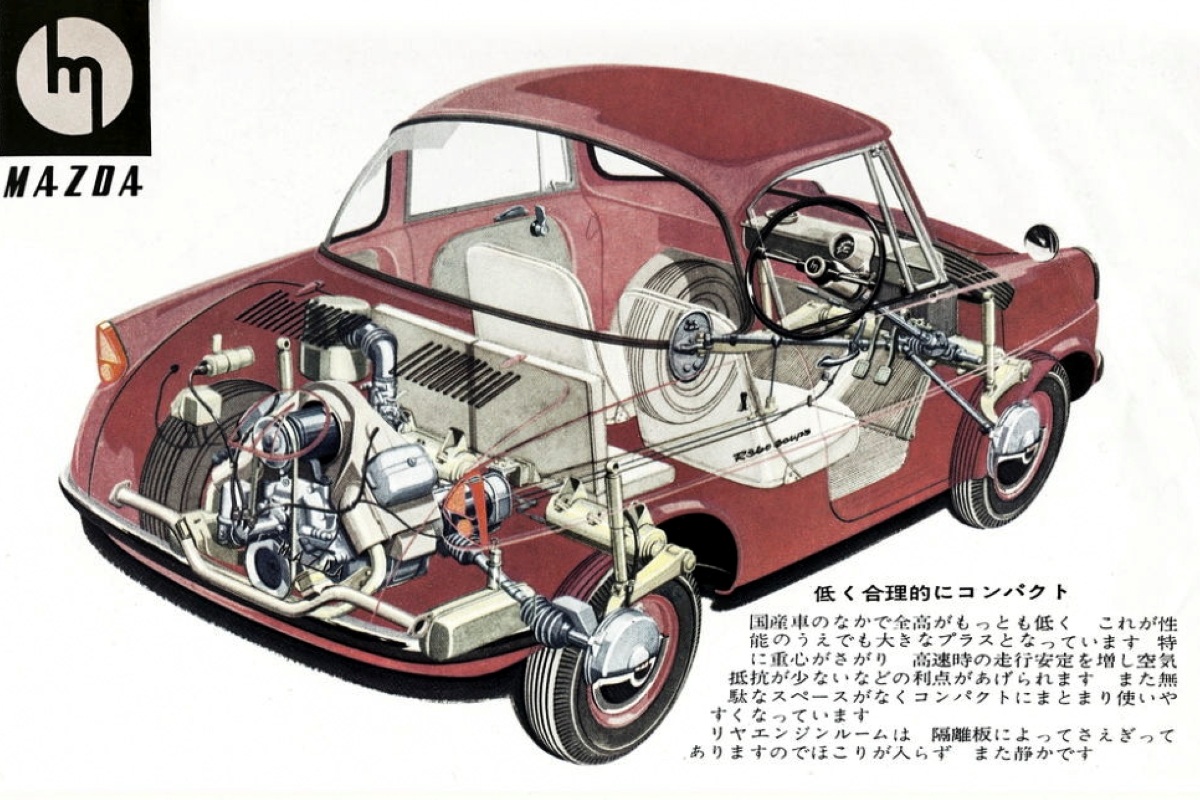
Given the weight-saving mania they were into, Mazda’s engineers did not stop at the windows and the engine bay. The monocoque was particularly well-crafted to be solid enough where it had to be, but with the unnecessary metal meticulously stamped out. The front trunk was made of aluminium and the all-independent trailing arm suspension used a curious “rubber-torsion” system, i.e. torsion bars whose springing and dampening chiefly relied on rubber parts. This not only saved weight, but also quite a lot of space.
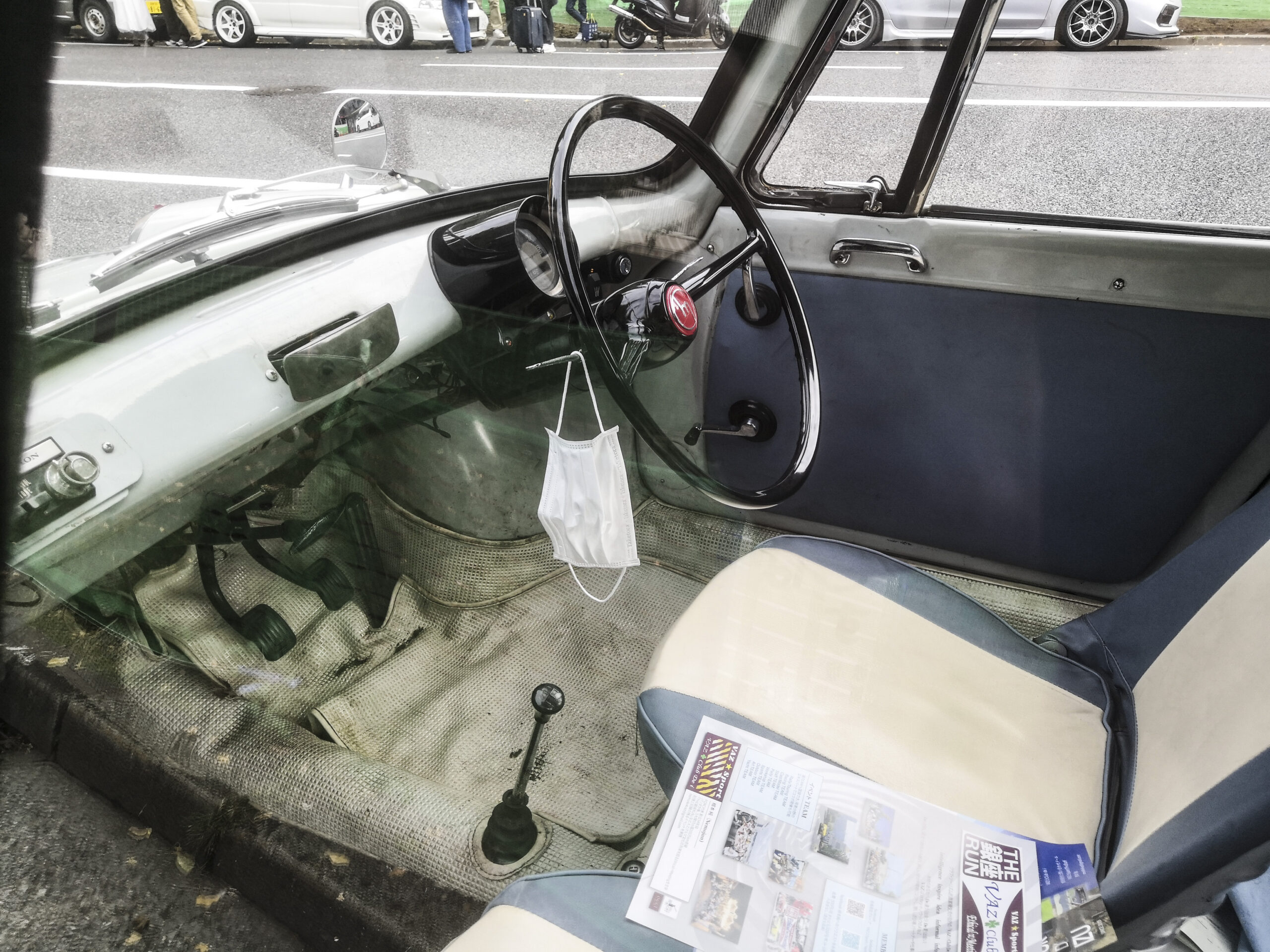
And space would be the main issue for this particular model. Front passengers were doing ok, though the front wheel well robbed them of a huge amount of legroom. That is almost always the case in rear-engine designs, but especially egregious in smaller cars.
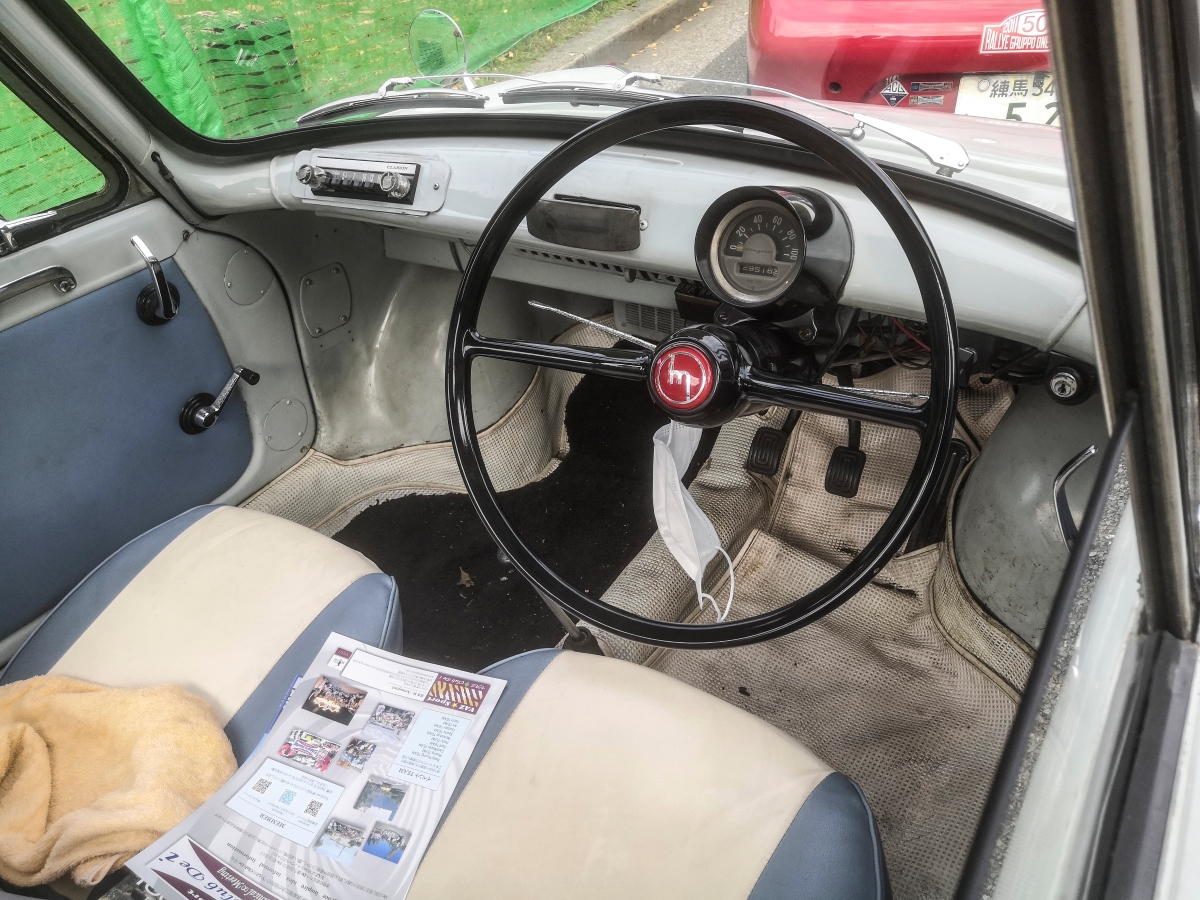
I almost forgot to mention the transmission. Our car is fitted with the standard 4-speed manual, like a large majority of R360 Coupés, but there was an options list. From the start, the miniature Mazda was available with a two-speed “Torcon,” a torque converter designed by erstwhile automaker Okamura. It was a semi-automatic because the shift between high and low gear was still manual, but R360s equipped with this system did not have a clutch pedal. This also enabled Mazda to propose a version of the car with hand-operated accelerator and brakes for people who had lost the use of their legs – a first in Japan.
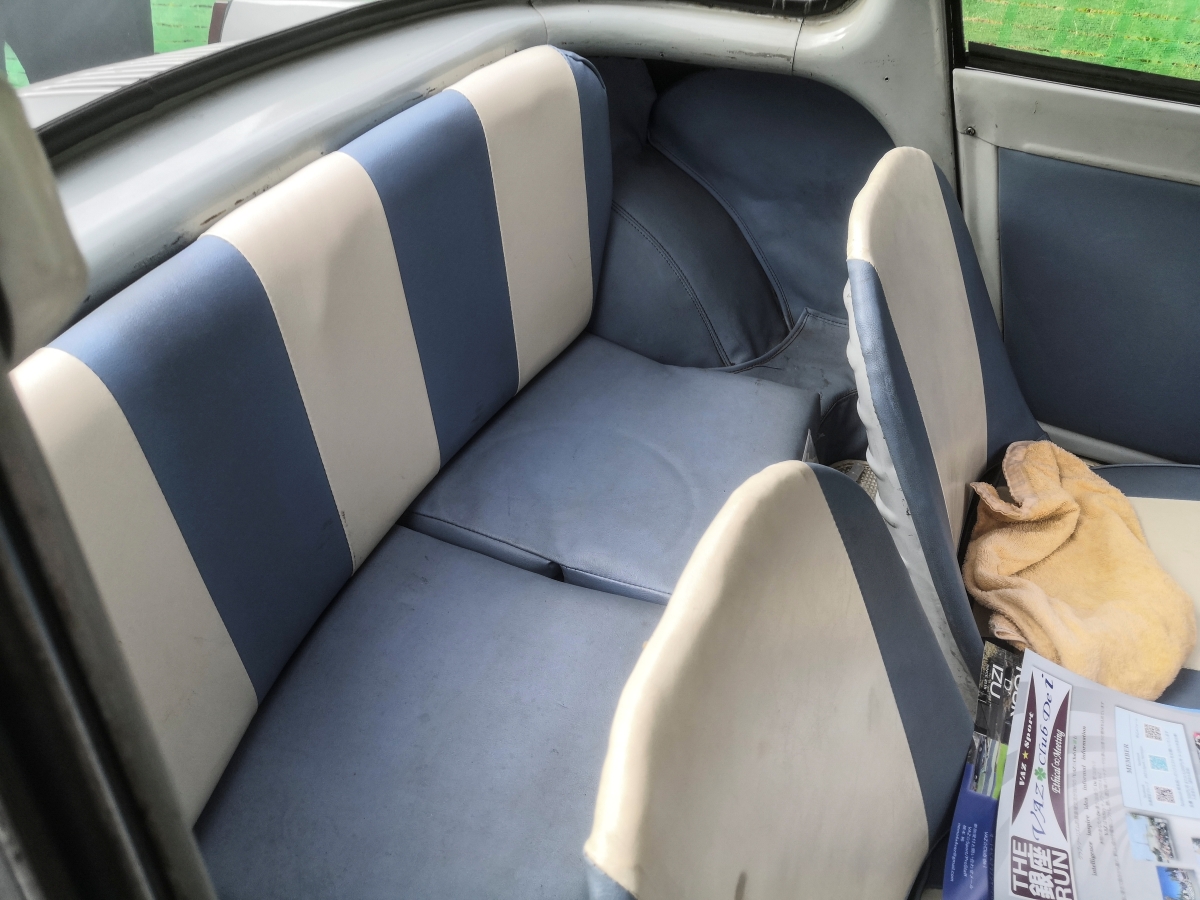
The coupé designation must have helped Mazda in justifying the miniature rear seats – I can just picture a young salesman saying (in Japanese) “See, it’s just like them fancy Italian carrozzeria specials: 2+2 seating.” Toddlers might have been able to tolerate it, but the huge acrylic backlight above their heads would have transformed that zone into a tiny tanning salon in the summer. If you thought VW were stingy on space in their Beetle, Mazda showed Ebenezer Scrooge levels of avarice in the matter.
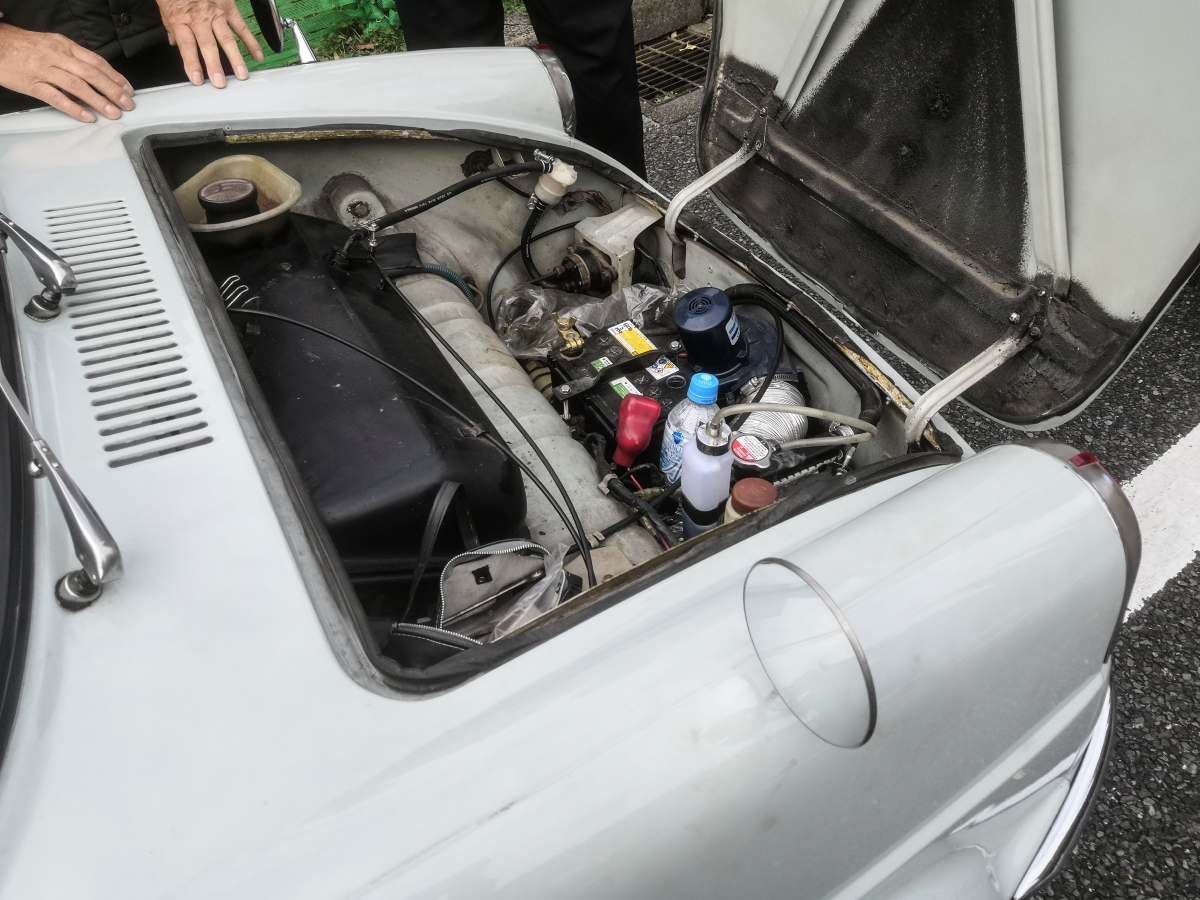
To be fair, this shortcoming was identified early on by Mazda themselves. They figured (no doubt correctly) that most R360 owners would be single or younger couples who would use the rear seating area as cargo space, given that the front trunk was not exactly capacious.
A true family-oriented four-door kei car was in the works in Hiroshima and would be launched in early 1962 as the Carol, but the R360 Coupé kept its (small) place in Mazda’s growing range, despite dwindling sales. It was their first car, it had earned its keep, even beyond its shelf life.
With a launch price of ¥300k (plus ¥20k for the torque converter), the R360 Coupé was also affordable, relatively speaking. The Subaru 360 was significantly more expensive, but it also had certain alluring creature comforts, such as an optional canvas top and actual rear legroom. In the long run, those proved more important to end users, who preferred to fork out an extra ¥100k for something that grandma could actually fit in the back of.
Still, in its initial year of production, the first Mazda car sold well: over 23,000 units were produced in 1960-61. This was the car’s high point, as competition from Subaru, Suzuki, Mitsubishi and Mazda’s own Carol heated up thereafter. Regular sales were halted in 1966, but the version for people with disabilities remained available on special order until 1969. In total, over 65k of these were put together.
These are not huge numbers, but neither are they anything to be ashamed of. One should bear in mind that there were only about 1.3 million privately-owned cars on the road in Japan in 1960 and that the overwhelming majority of kei vehicle sales throughout the ‘60s were trucks and vans, not passenger-oriented models.
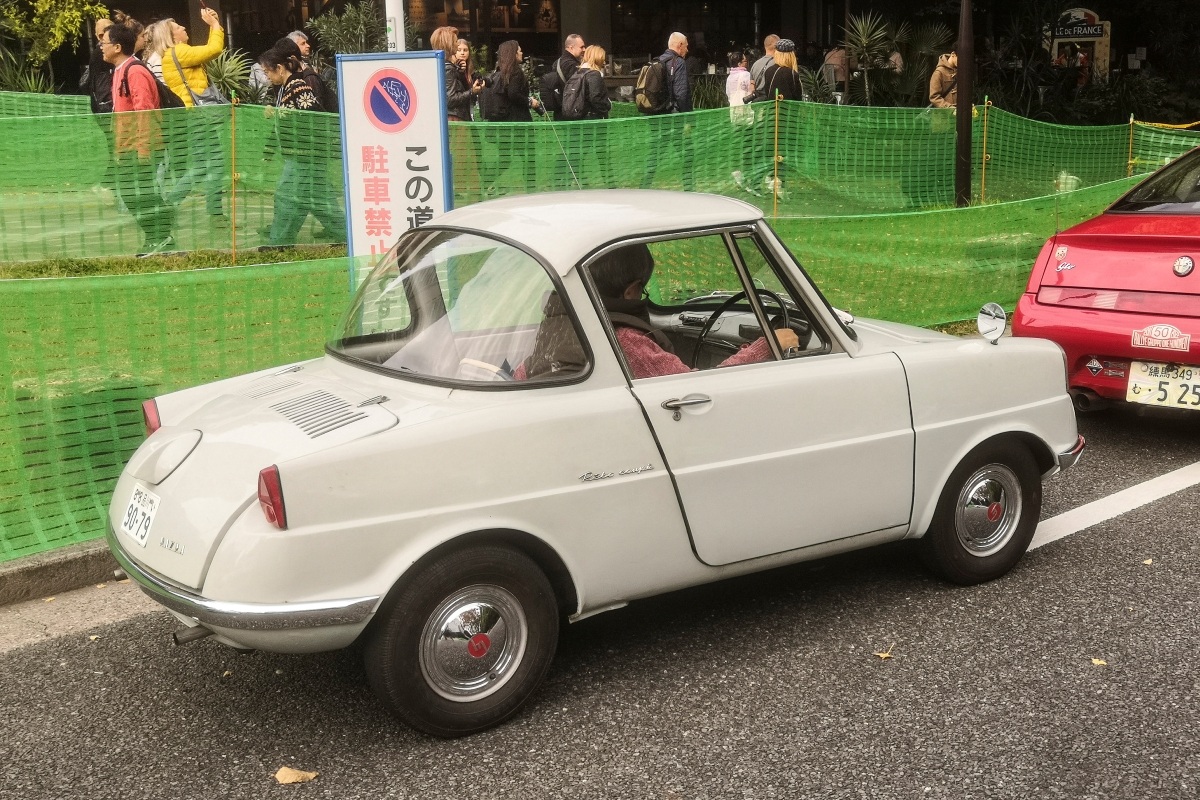
The R360 Coupé was not a massive national hit, unlike its Subaru rival, but it served its purpose. It put Mazda firmly on the map as a competent, innovative and sophisticated carmaker, a position the company has managed to maintain ever since. They still have a slice of the kei car market, but it has diminished now that Mazda keis are merely badge-engineered Suzukis. Back in the early ‘60s, though, the kei car wars had just started and Mazda made some of the finest ones. At least, until Honda got their mojo together.






The very first word that came into my mind when I saw that engine was, hamster.
When I saw the engine, my first thought was: a Harley or Moto Guzzi engine swap.
Wow, what a tall looking greenhouse .
I’d give one of these a go for in town errands and commuting .
-Nate
What is the make and model of the red car where only the rear section is visible in your photos? It looks like an Alfa.
Alfa Romeo GTV, mid-1990s to mid-2000s
It has its own sense of style. Looks like something a cartoon charactor would drive.
What a lovely little thing, really attractive design details everywhere you look.
I enjoyed the “reveal” that it actually has rear seats! If there was a competition for worst rear accommodation ever, then this car has to be in the running.
Keijidosha – think you’ve got your syllabubbles bass ackwards.