
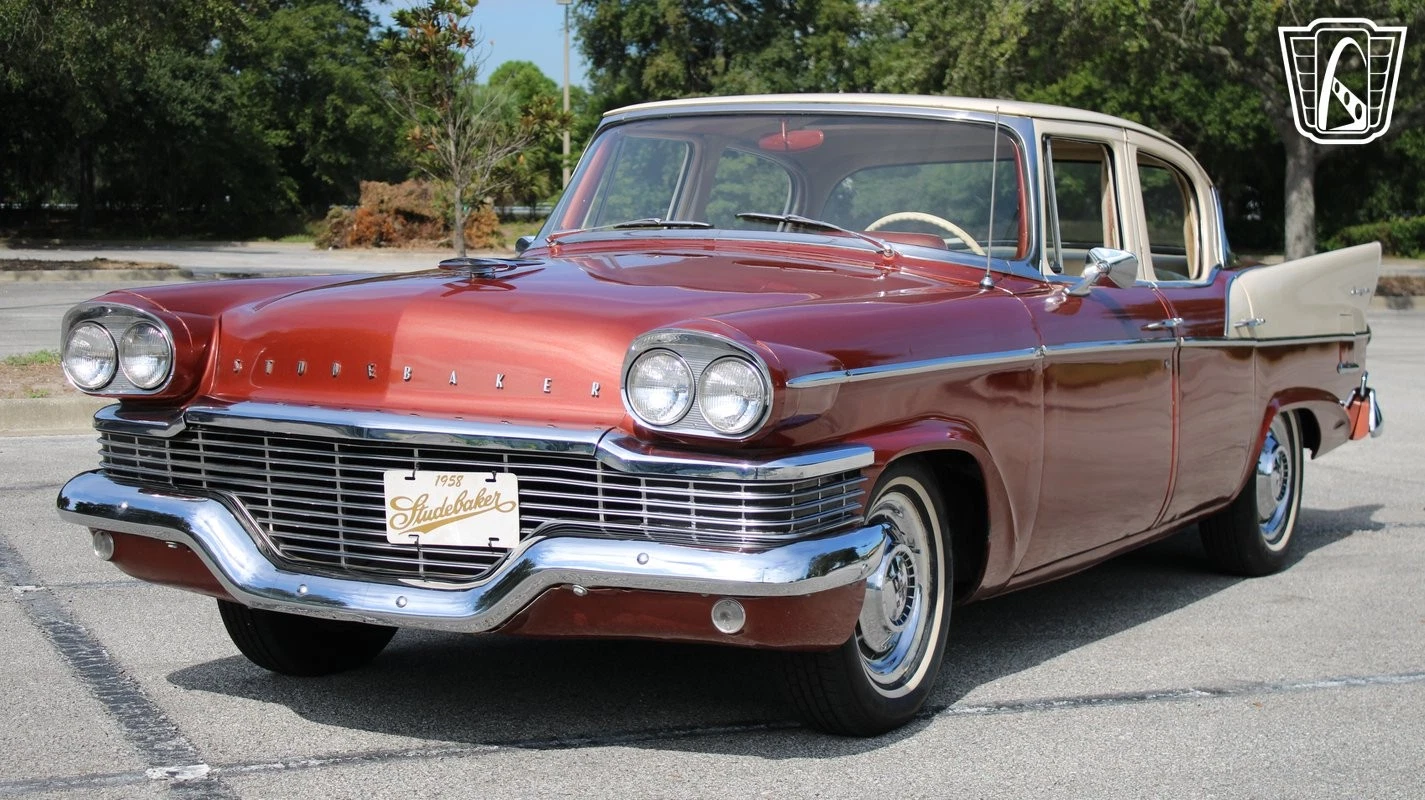
I thought finding this was a rare treat–1958 Studebakers are so rarely seen. If you wanted to go one step up from the bare-bones Scotsman, this is what you could get: a Champion 4-door sedan with the base 6 cylinder engine and manual transmission. But as this example shows, a low-priced model doesn’t have to be plain–especially when you doll it up with two-tone paint, full wheel covers, whitewall tires, and lots of unique Studebaker options.
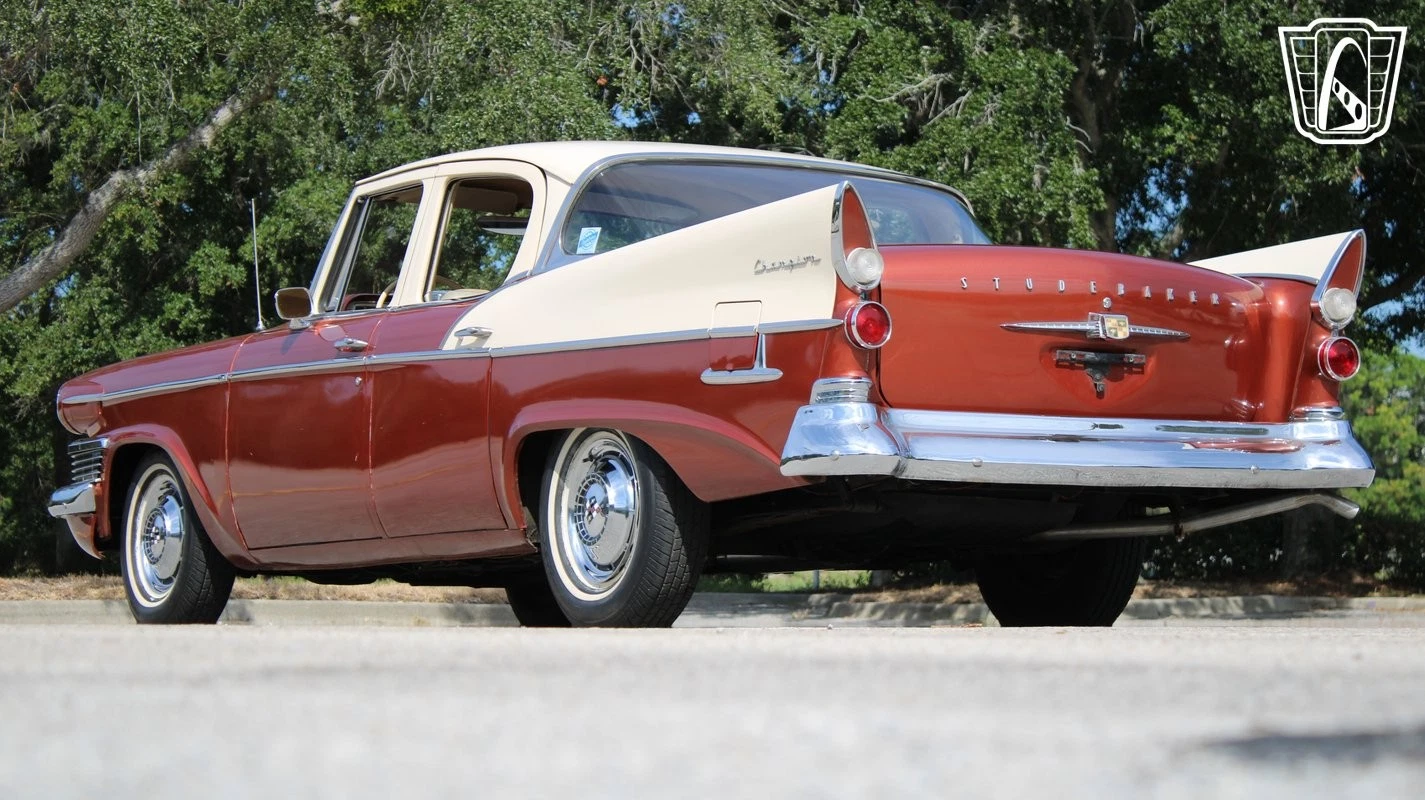
Here it is–a real beauty, offered by Gateway Classic Cars in Orlando, Florida. There are lots of detailed, close-up photos, so let’s take a look:
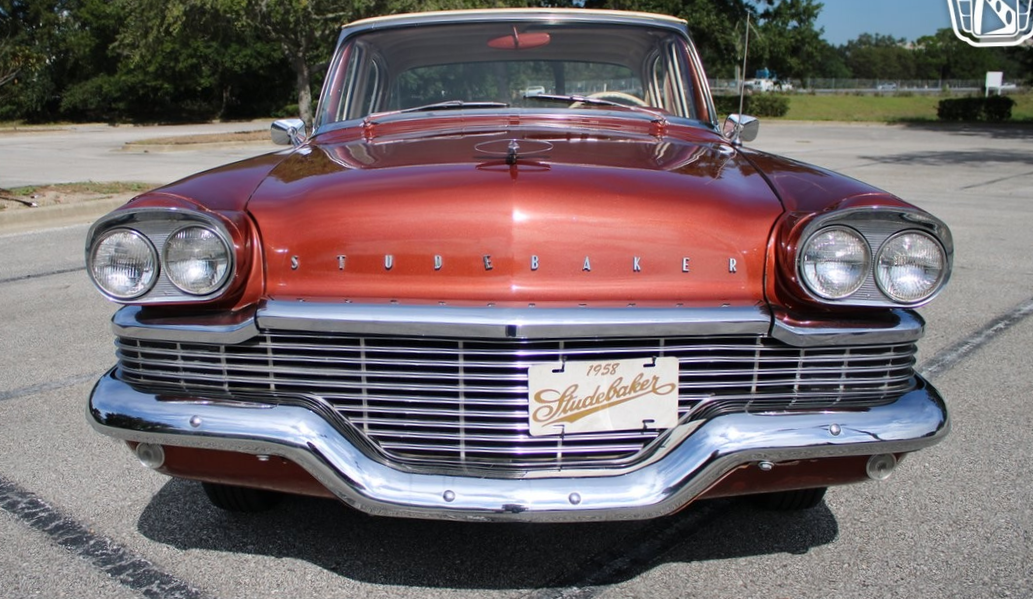
Look at that face–it’s happy to see you!
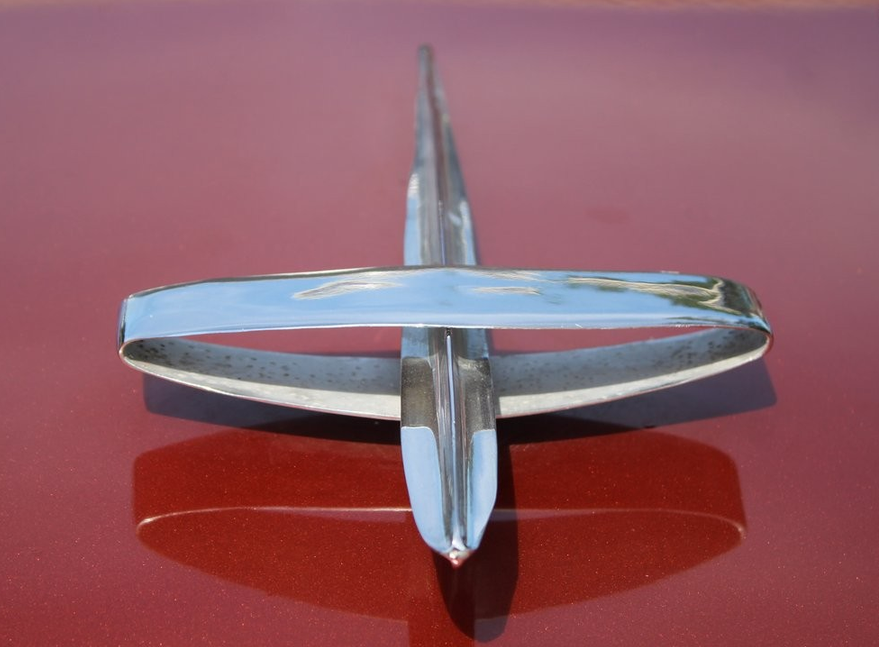
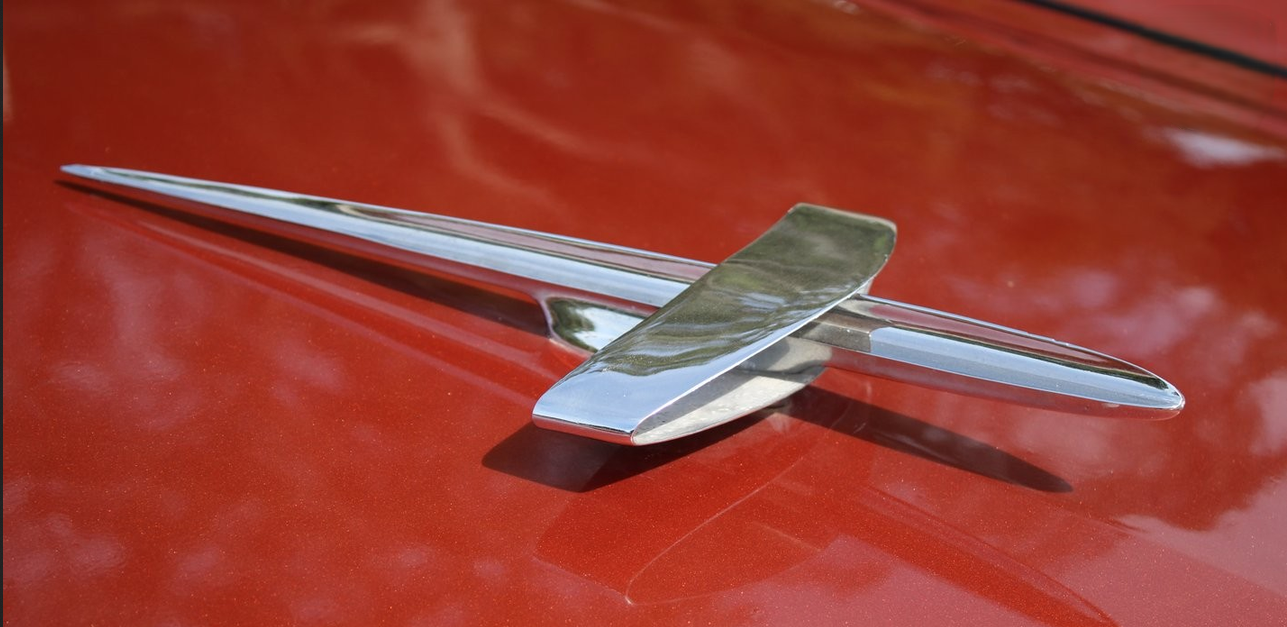
This one has the rare optional hood ornament. I’ll point out the various unique options as we go along.
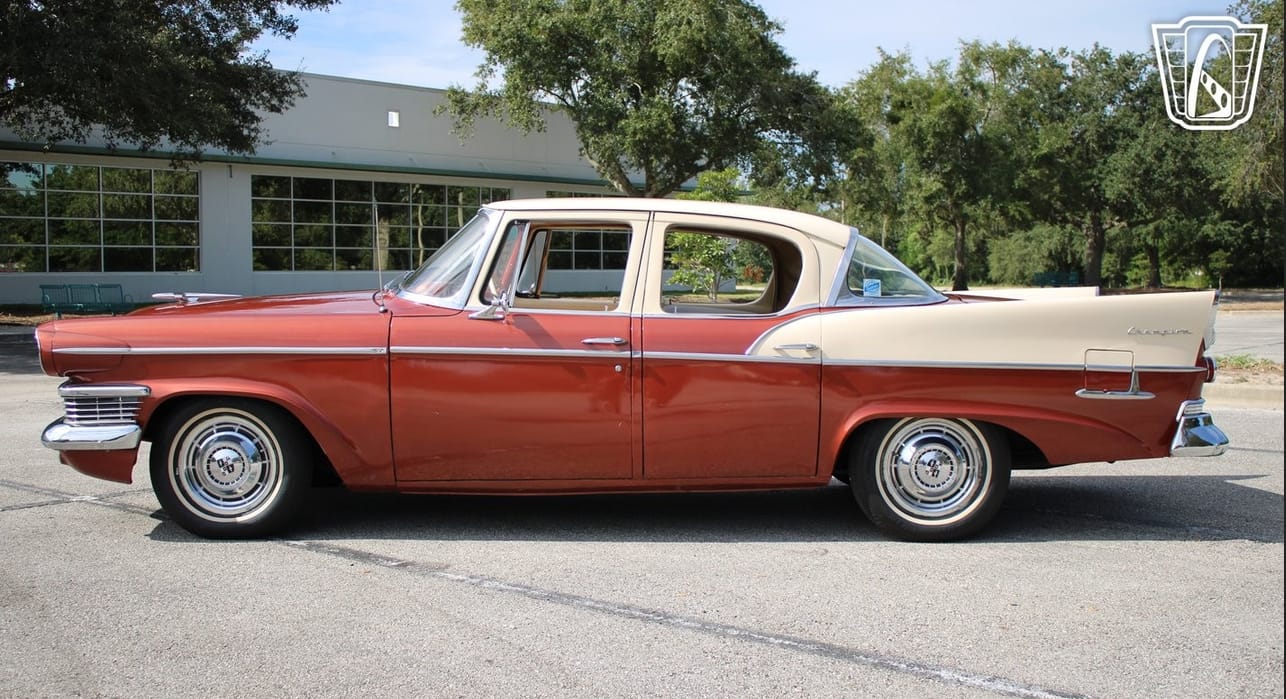
This body shell dates from 1953, but the re-styled fenders and a flatter roof give the car a certain fleetness of line.
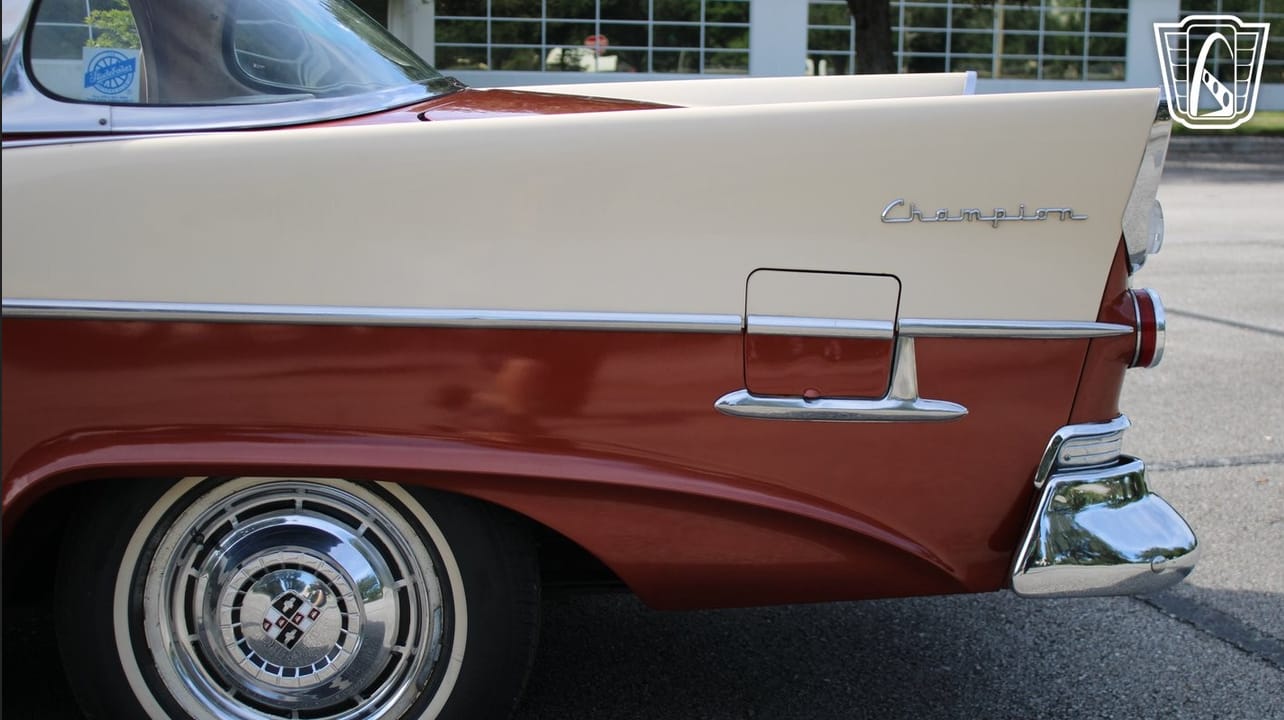
Bright-metal trim around the gas filler I believe is optional too.
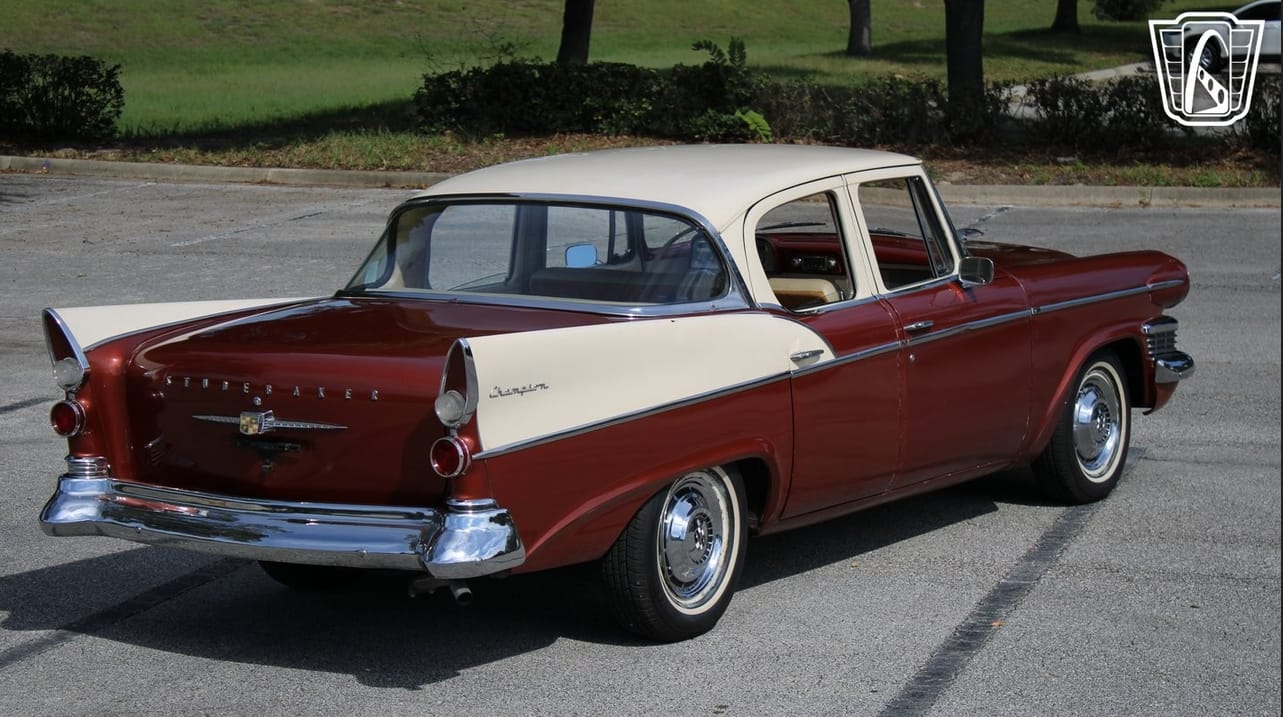
The fins in contrasting white give the ’58 Studebaker definite rear-end personality.
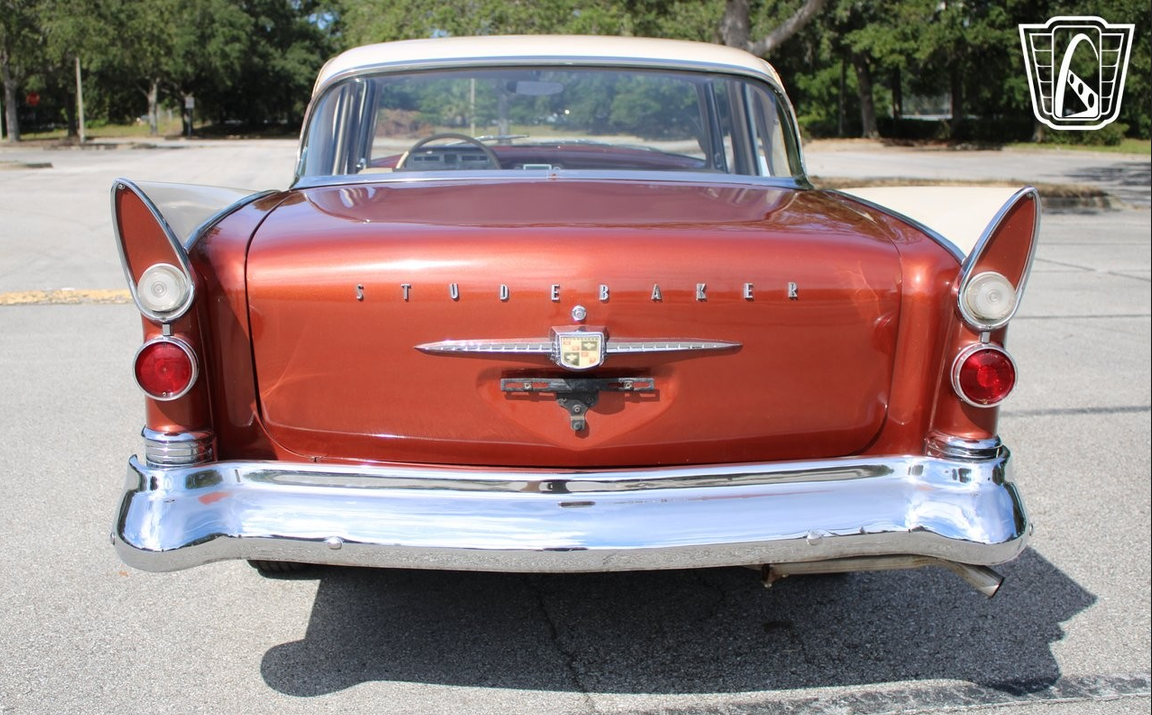
Have you ever driven behind one of these?
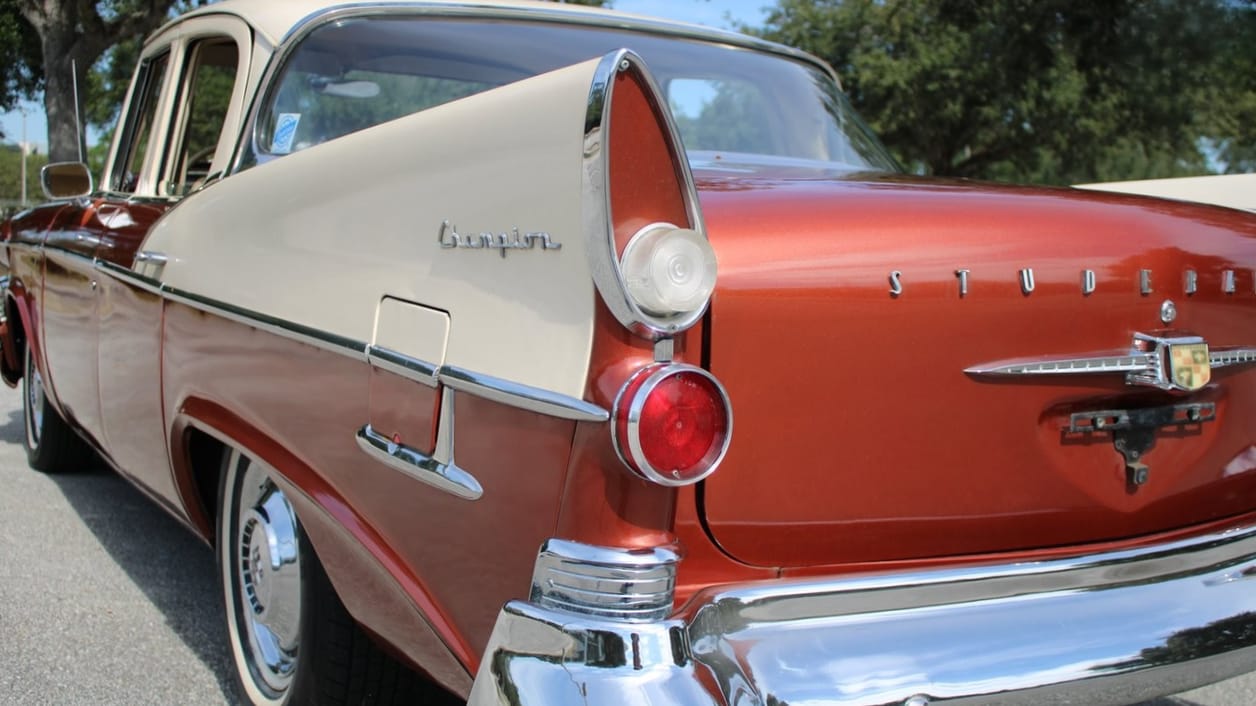
I love these close-up photos because they bring out all the visually unique aspects of the overall design.
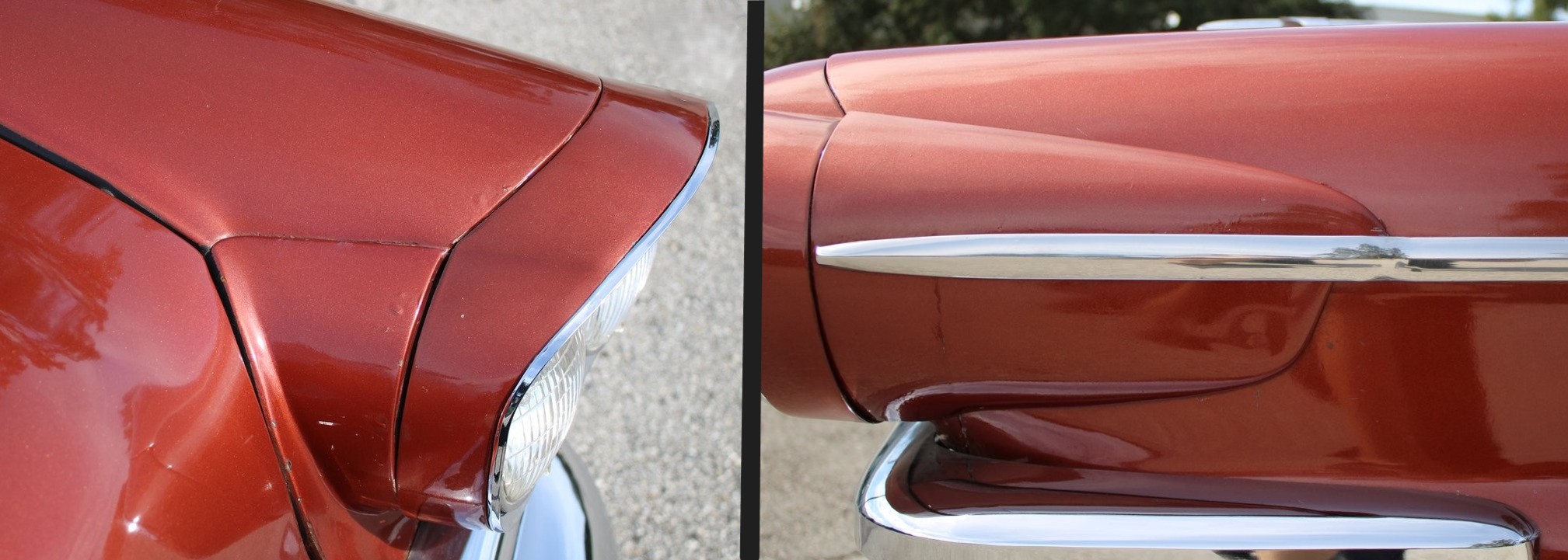
There’s a lot of complexity in those new-for-’58 dual headlight pods!
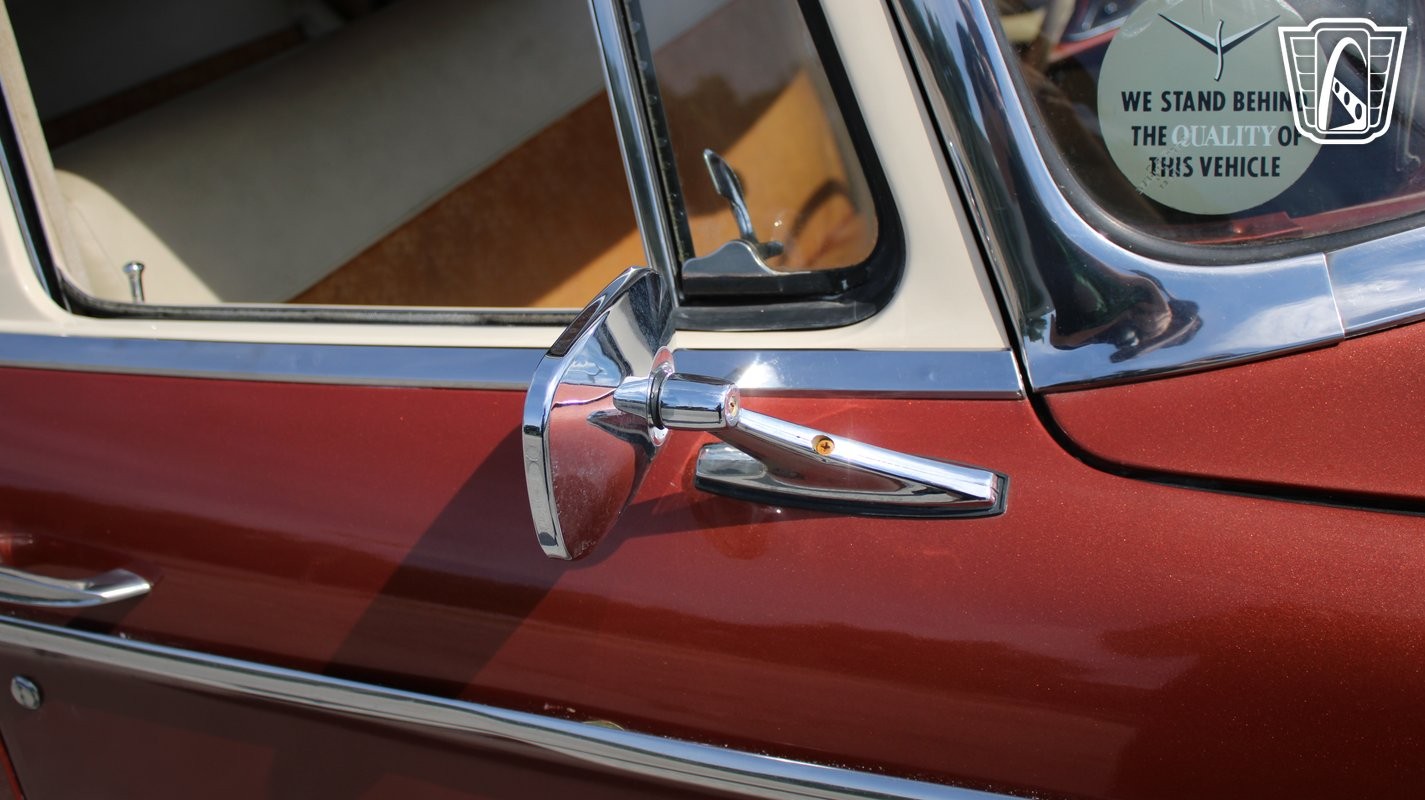
Not sure if these dual sideview mirrors are factory originals or not. “[Studebaker] stands behind the quality of this vehicle.”
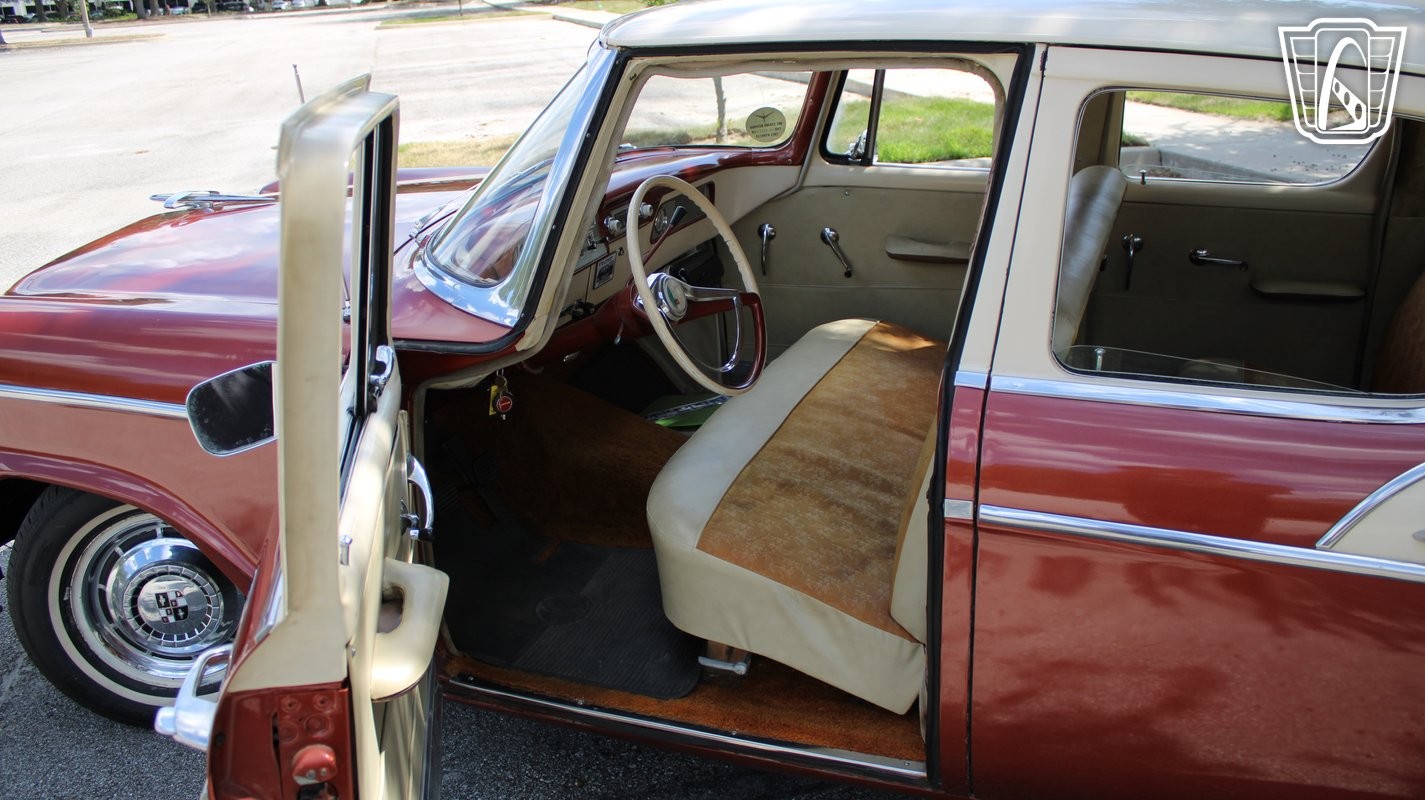
Cream and gold upholstery goes well with the exterior colors.
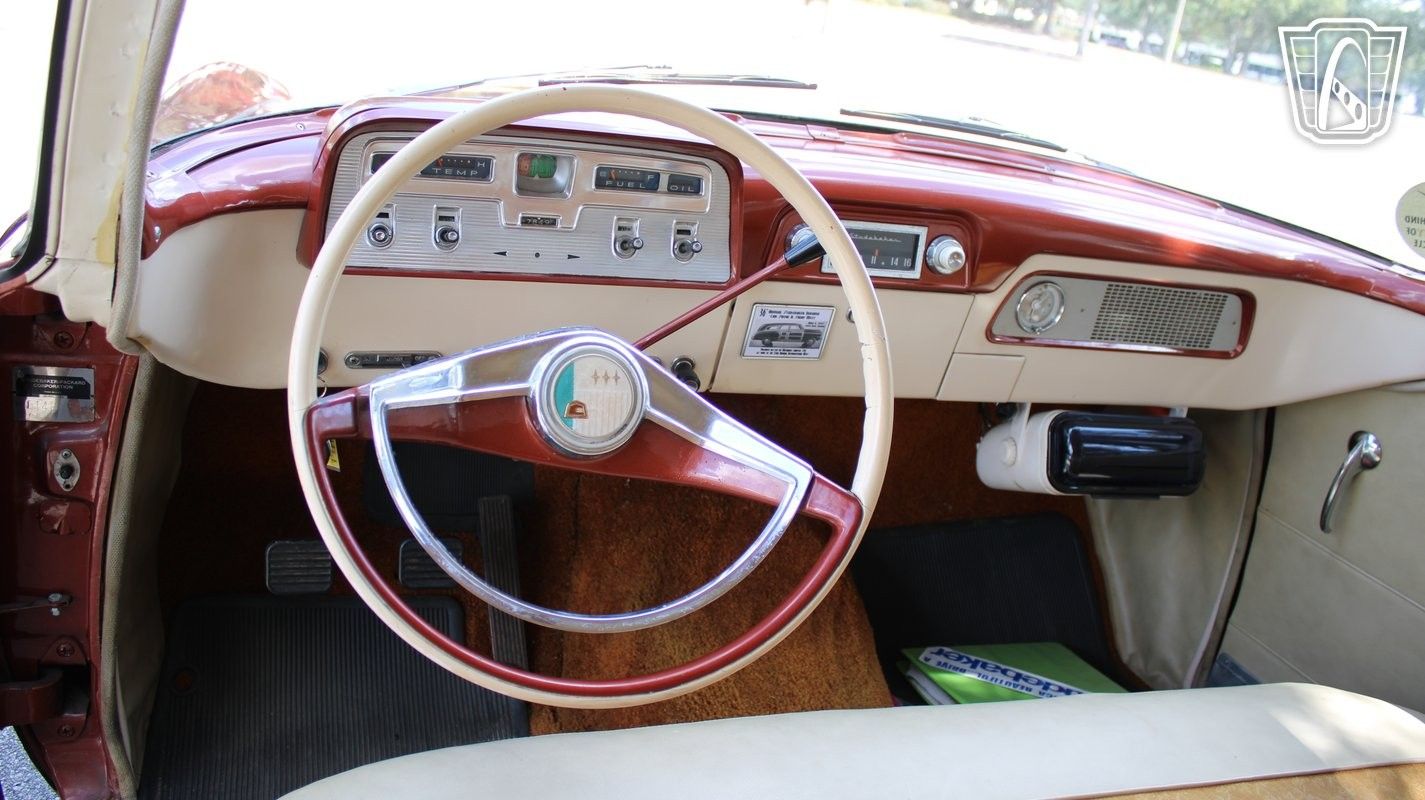
Dramatic two-toning brightens up the rather plain ’58 Studebaker dash.
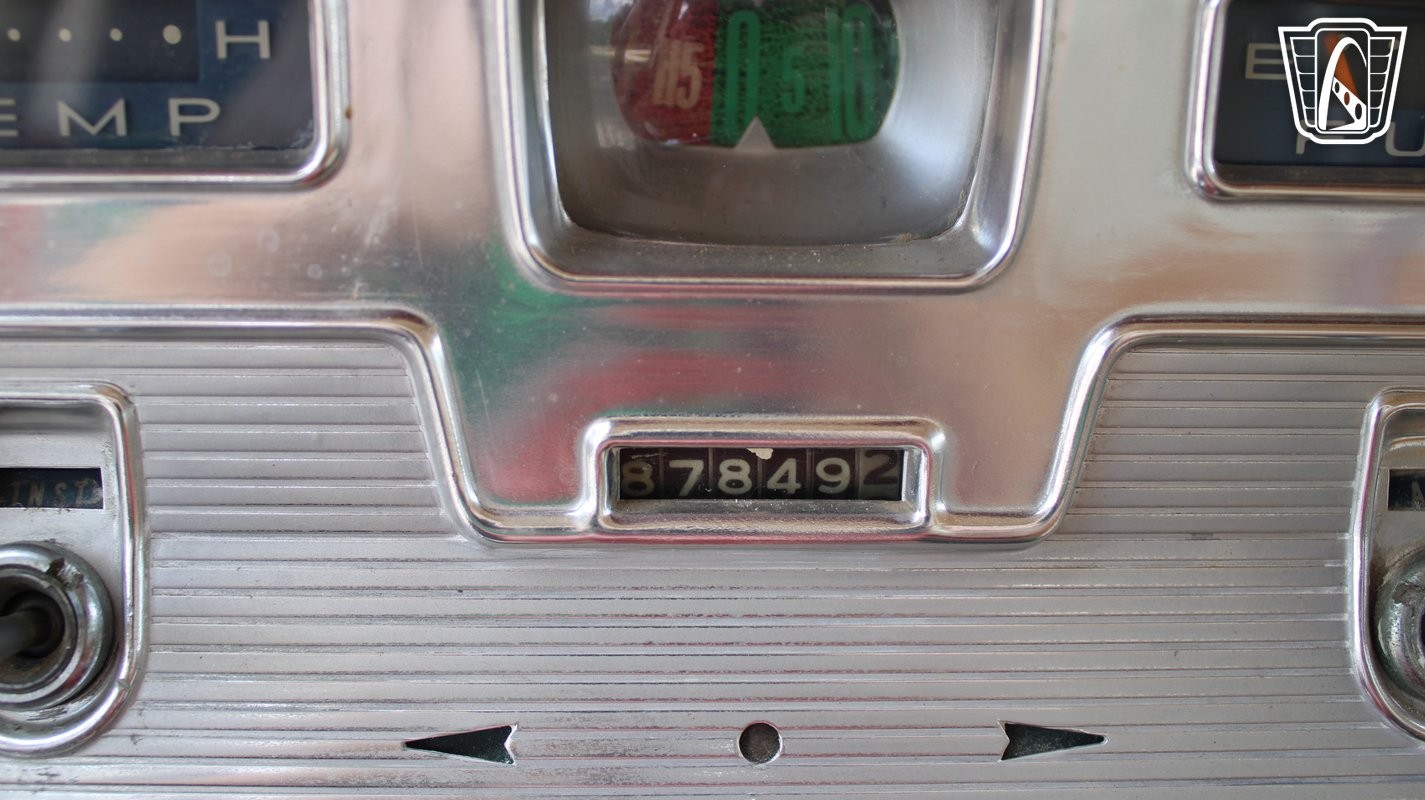
Color-coded revolving drum speedometer ( à la Edsel) is viewed through a miniature “TV screen”.
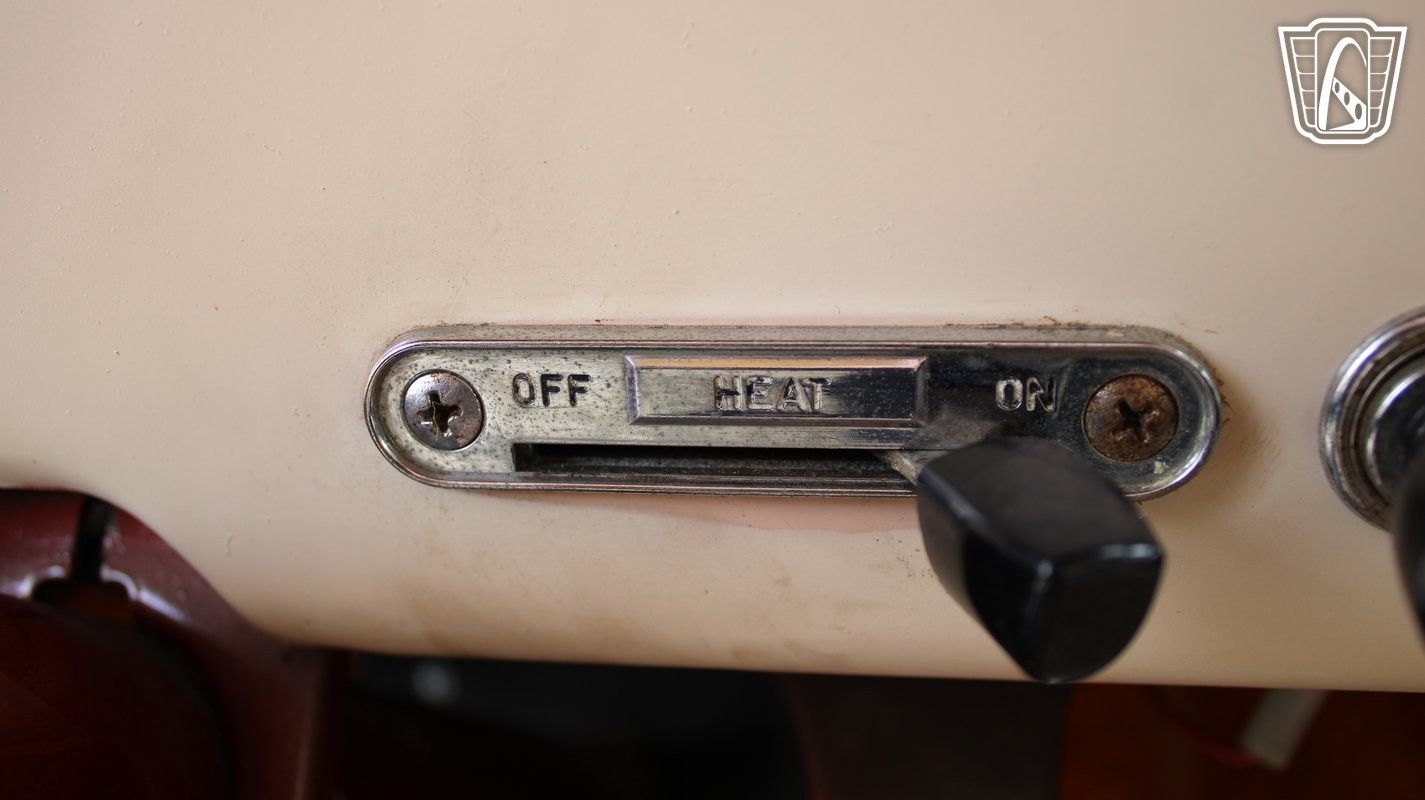
Various switches and controls look very basic, but seem to be easy to use and well-made.
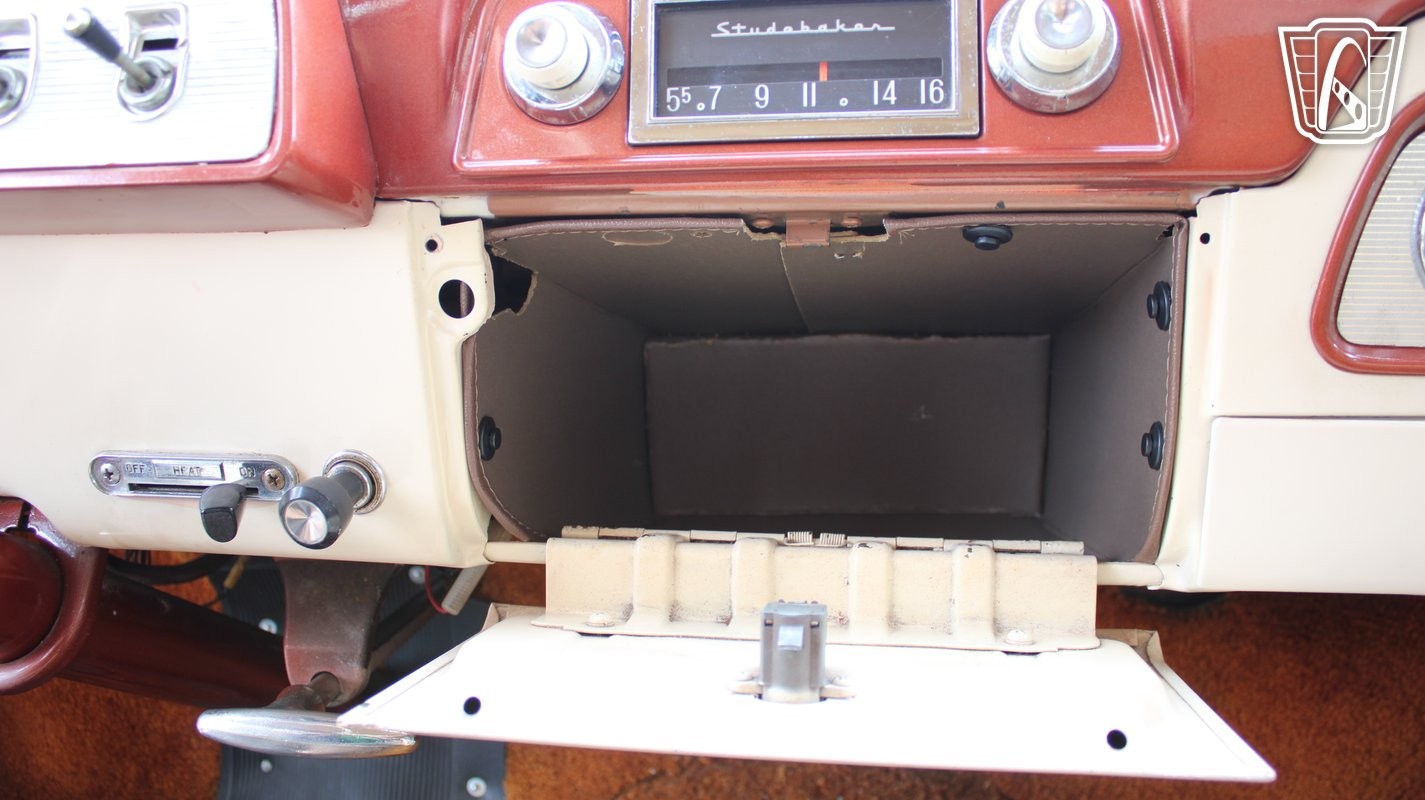
Glove box is positioned below the radio.
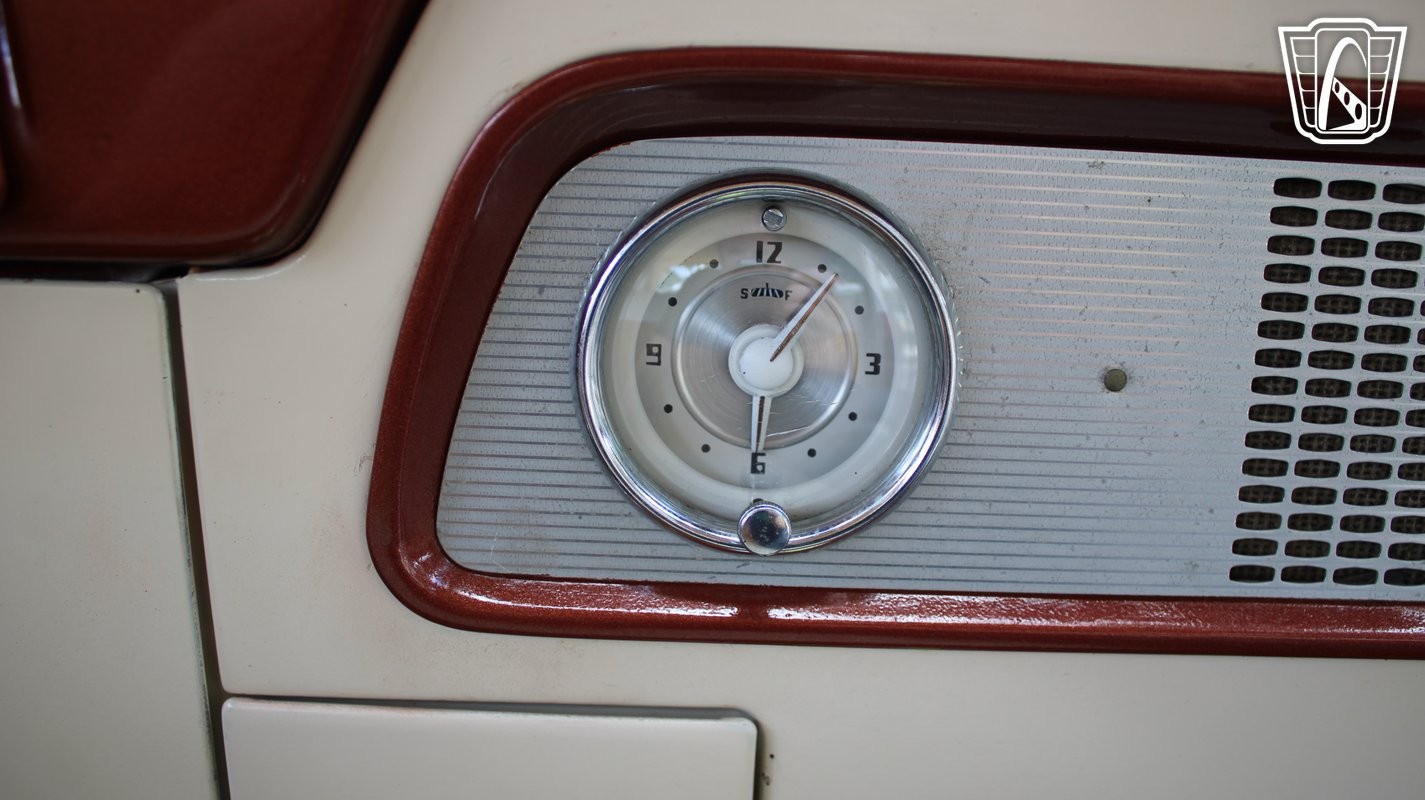
Optional electric clock. If converted to a quartz movement (which I recommend), it will keep accurate time and be a real convenience.
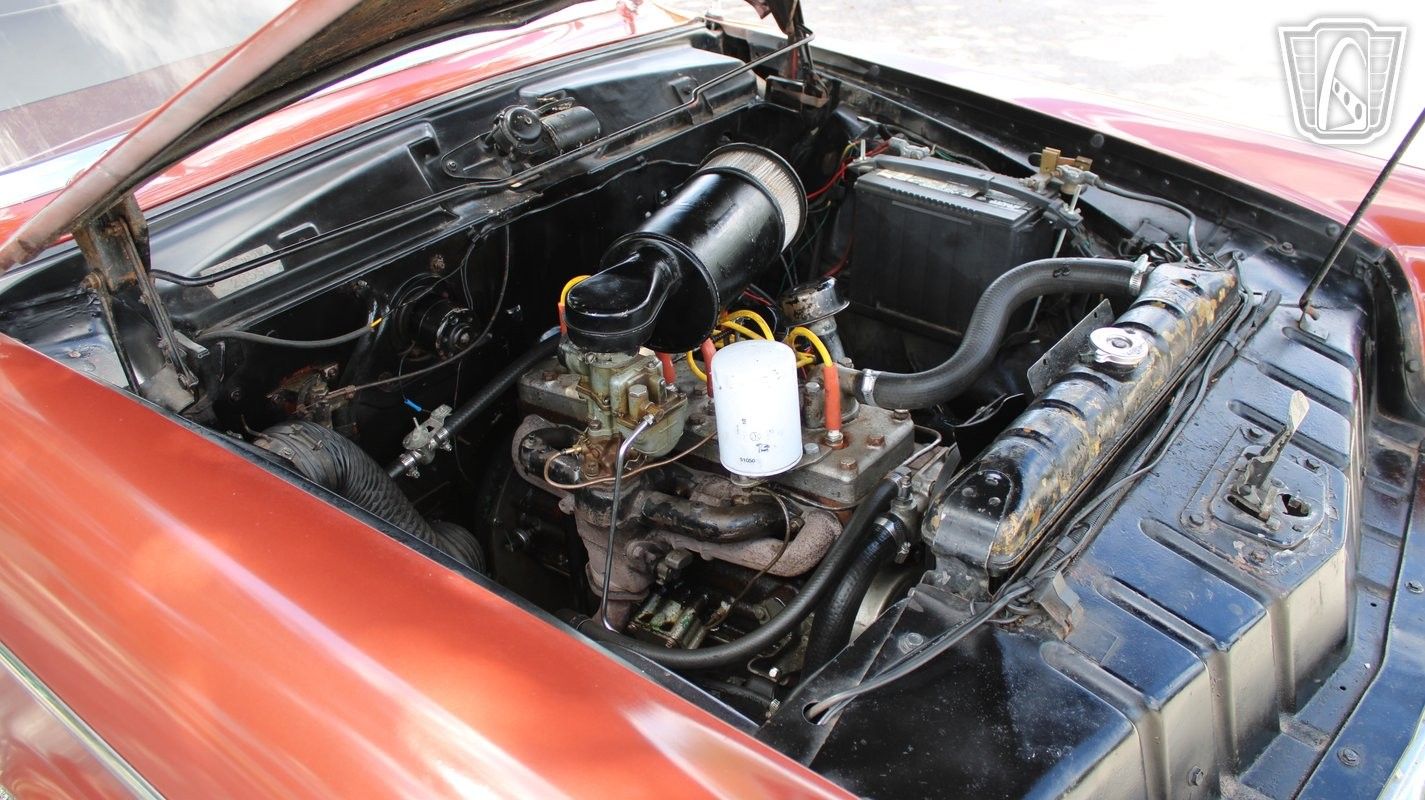
Champion’s flathead Sweepstakes Six (185.6 cubic inches) delivers 101 horsepower at 4,000 RPM. I love engines like this because everything is right there and so easy to work on. In these older engines, the engine block really looks like a “block”!
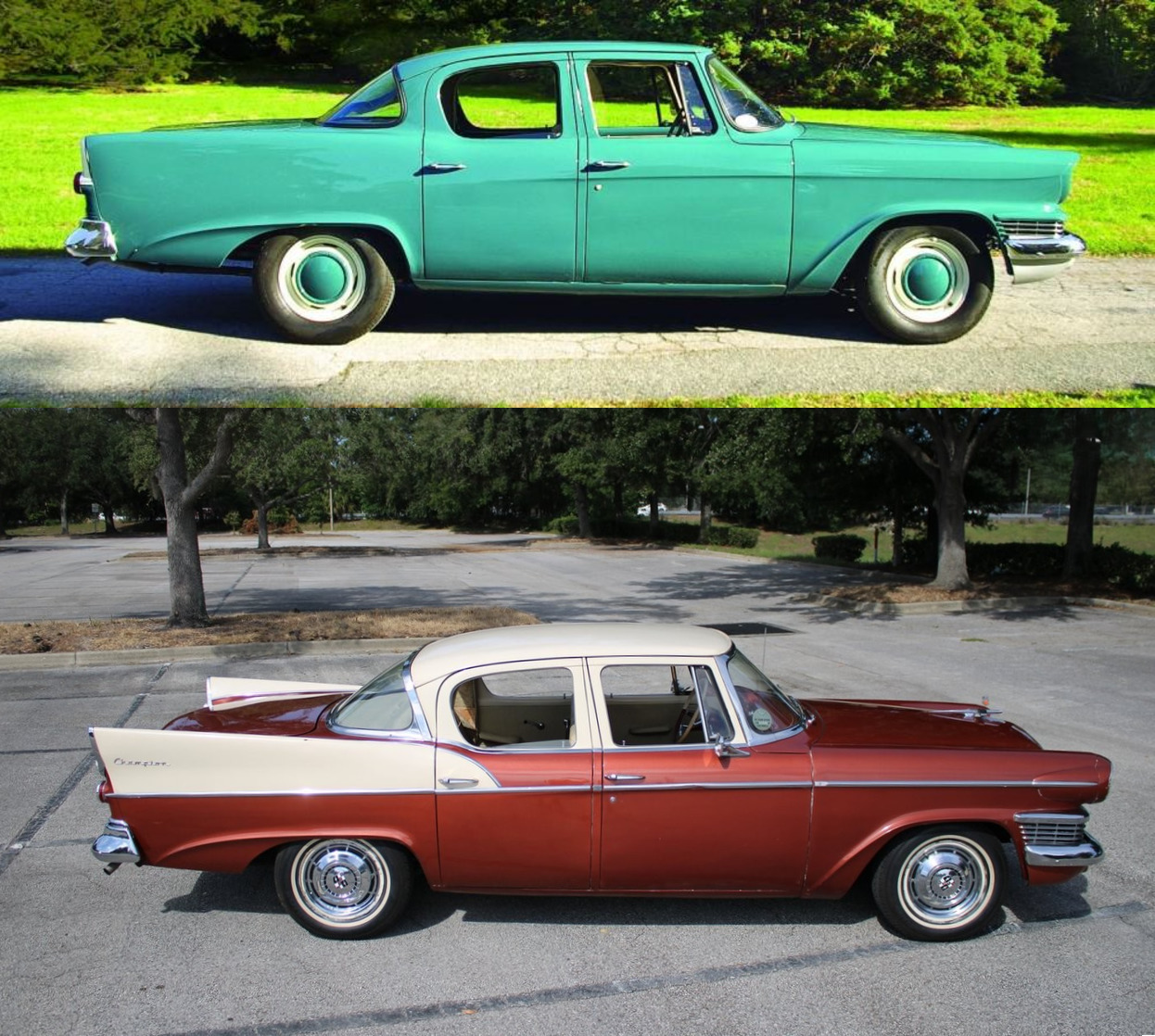
To me, the fairly well-trimmed Champion has a lot more eye-appeal than the stripped-down Scotsman, even though the two cars share the same body. The Scotsman retailed for $1874, while the Champion began at $2253, a difference of $379. Adding options (like the ones this car has) would raise its price further.
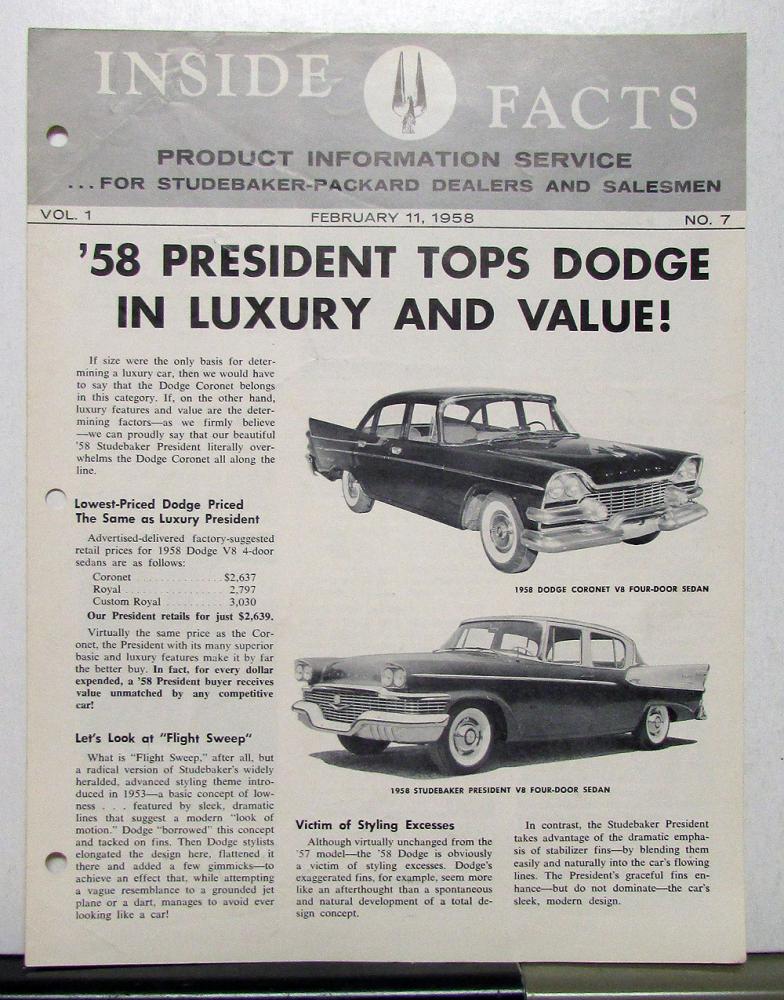
Despite all of S-P’s best efforts, Studebakers were still selling poorly. The simple reason is that, for most people, the Studebakers were not competitive. S-P’s bulletin Inside Facts tried to make the case that the President was a better car than the Dodge. But according to independent testing publications like Consumer Reports, the Torsion-Aire Dodge rides and handles much better, has more room, and more power. Dodge’s “Forward Look” body looks much newer than Studebaker’s, which is five years old at this point. Interestingly, S-P claimed that the “Flight Sweep” Dodge styling “is but a radical version of Studebaker’s widely-heralded, advanced styling theme introduced in 1953.”
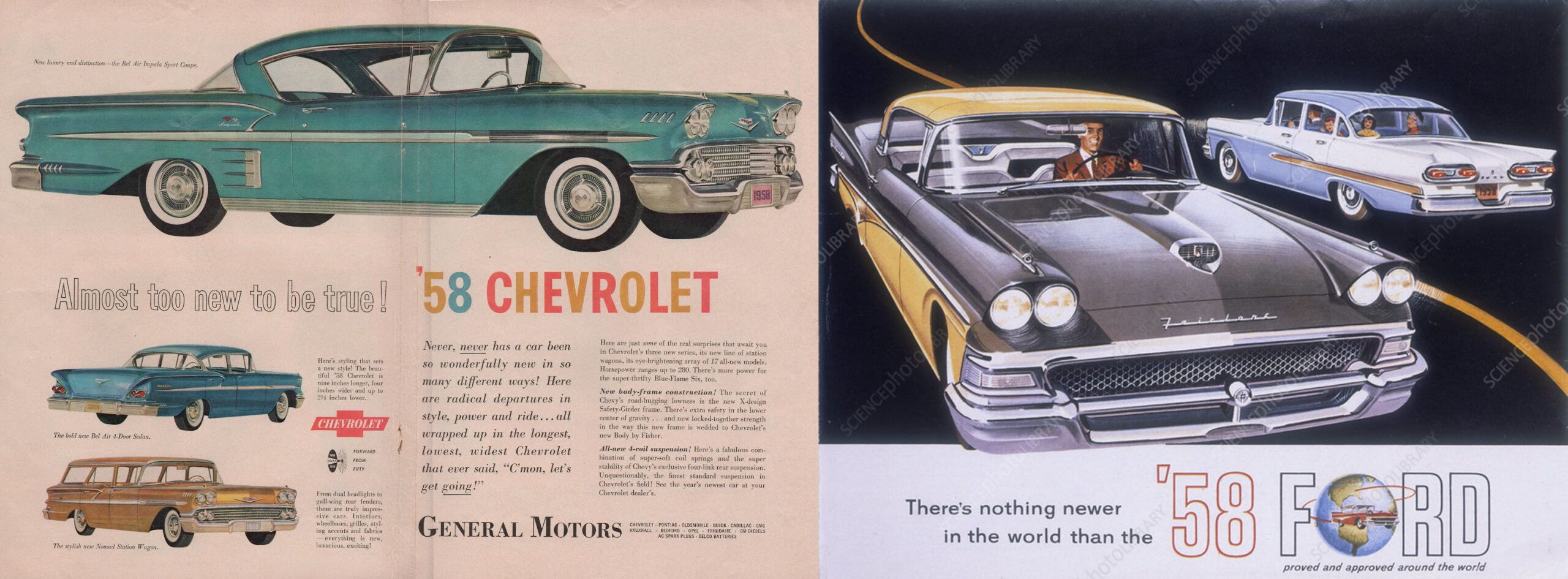
A six cylinder buyer would find Chevy’s Blue Flame Six with its hydraulic valve lifters much smoother and quieter. Ford also offered a more modern six with an excellent reputation. Both of these were overhead valve engines, while Studebaker was still selling an old flathead six. Ford and Chevy were also “known quantities” with high resale value, while S-P was seen as a struggling independent that may go under soon. So why buy a Studebaker when you can get a Ford or Chevy for the same money?
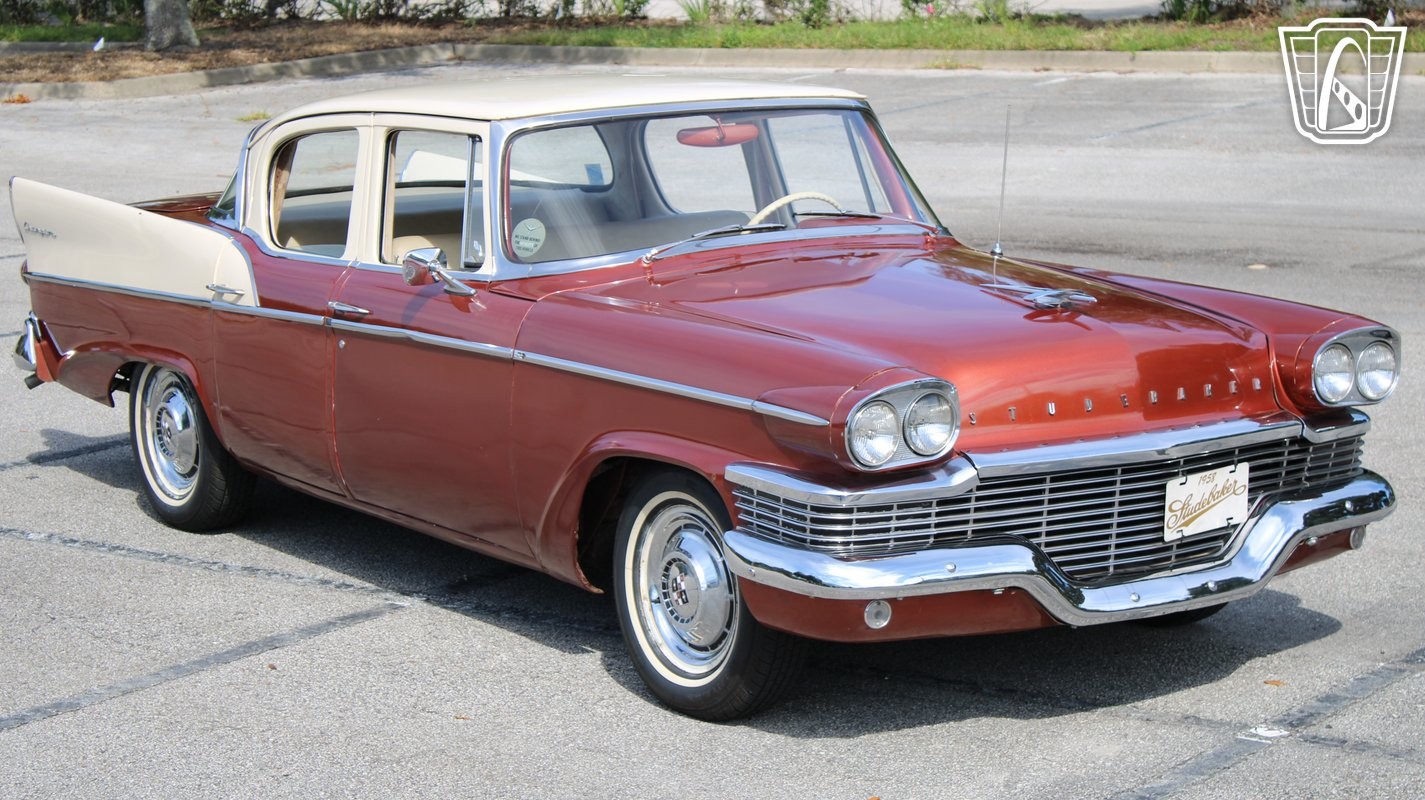
Despite all this, I still find the ’58 Studebaker strangely appealing. It has a lot of unique charm, and its flaws almost seem endearing. Few were made, and almost none survive, especially in this condition. And no one, except for a small number of car buffs, even knows it exists.
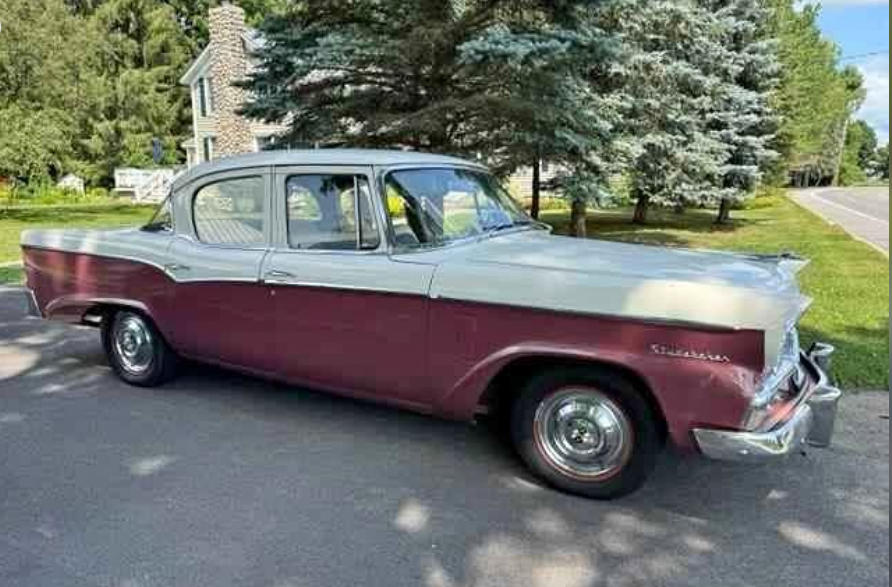
Wouldn’t you know it–I found another Champion, manual transmission, six cylinder 4-door on Facebook Marketplace. This is a 1956 model, two-toned in purple and white.
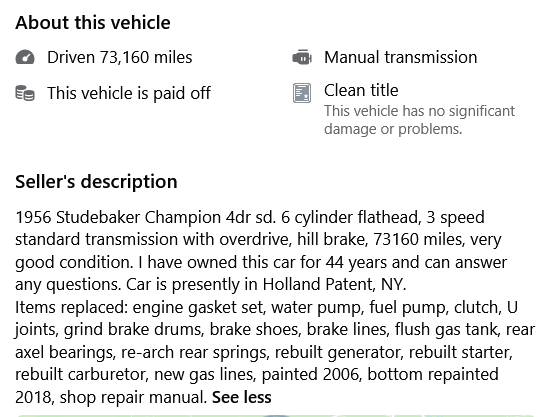
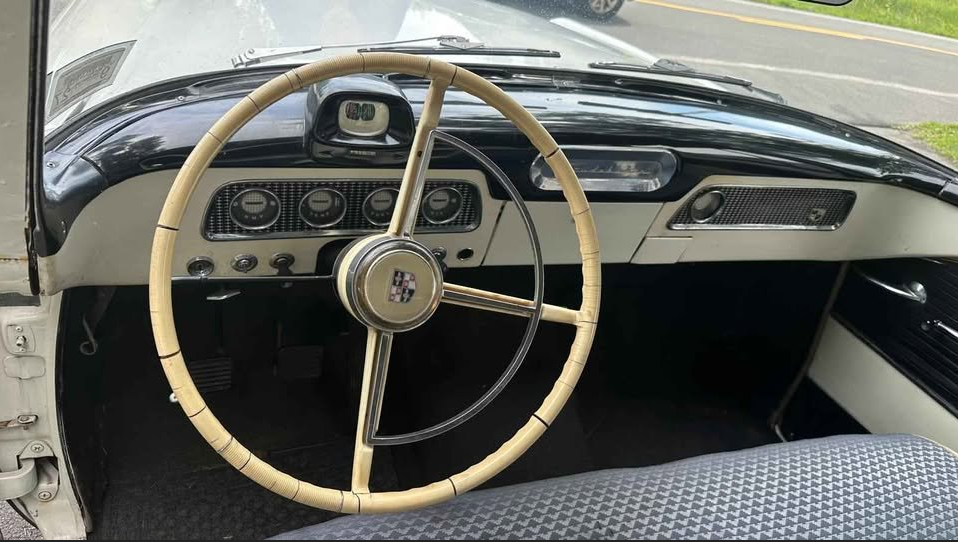
Price is $7500, which is much less than the $14,500 Gateway is asking for their ’58.
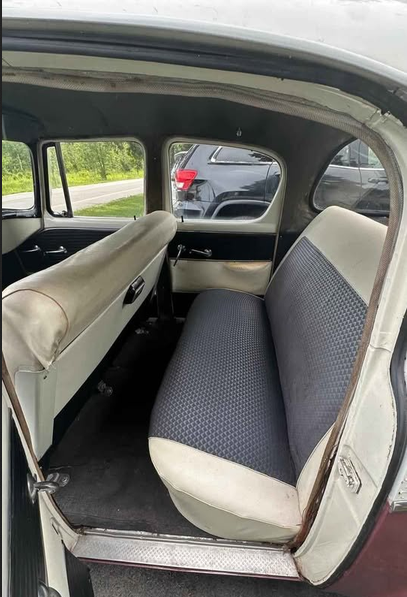
Interior looks pretty good!
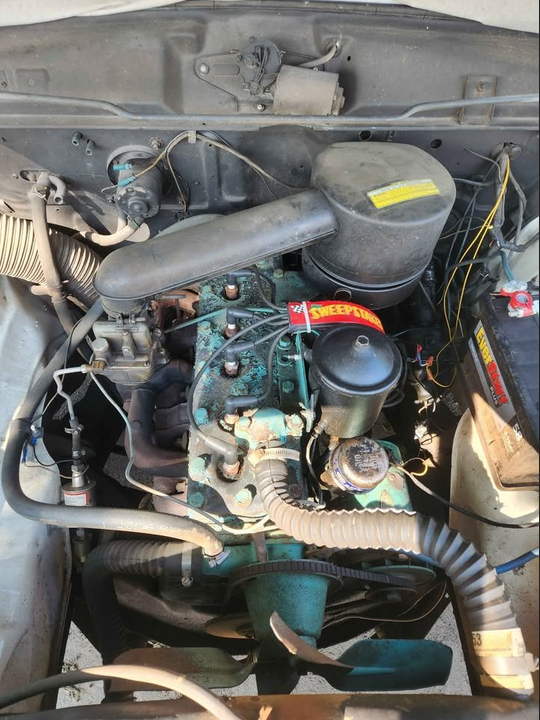
If the Facebook listing is still up, you can see a video of the engine running. I hear a little “tick-tick-tick…” Maybe it just needs a valve adjustment?
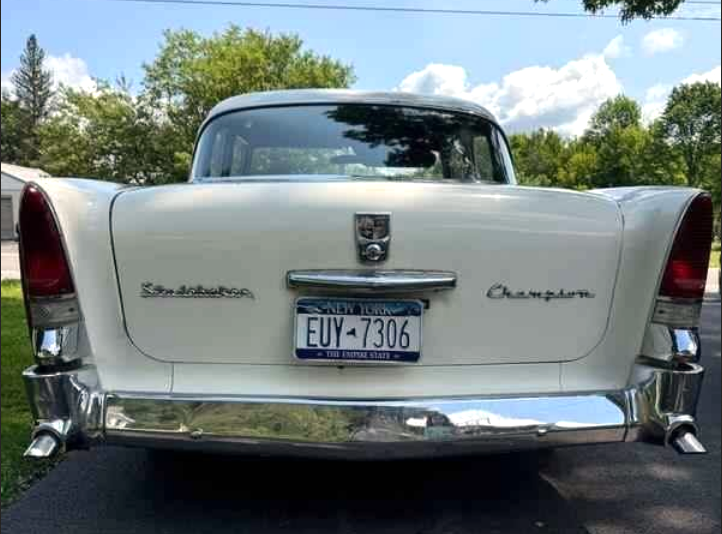
Since a six cylinder would have single exhaust, is that a dummy pipe on the left?
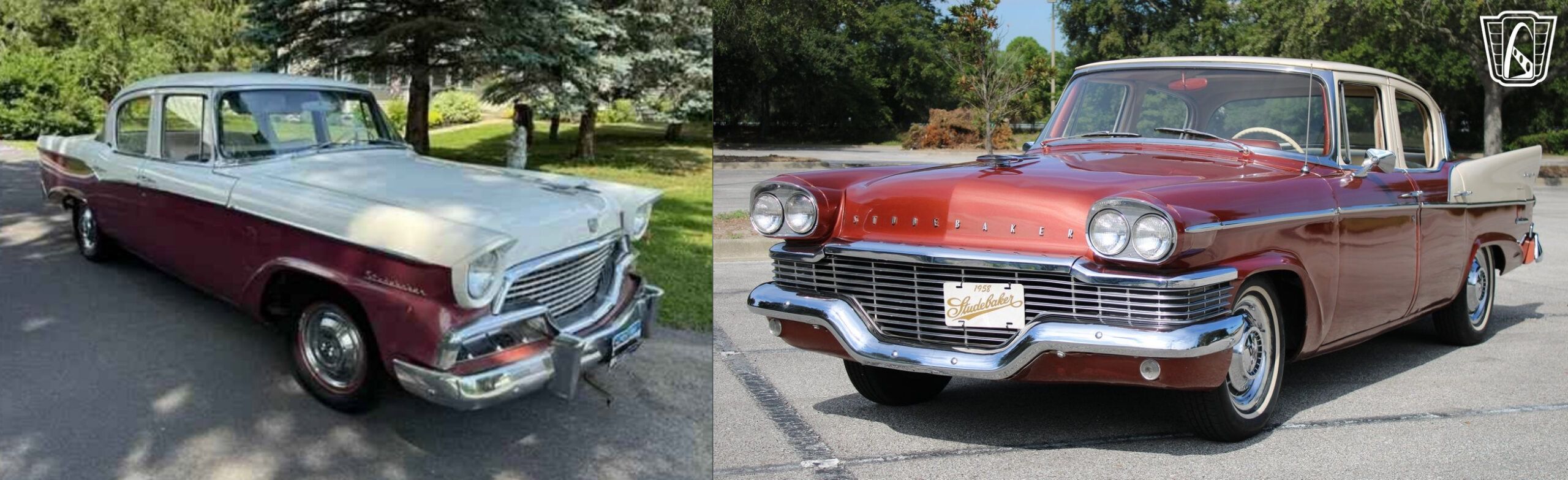
So take your pick–’56 or ’58. I would choose the ’58. Either way, you’ll get a lot of refreshing simplicity, uniqueness, and flair for your money. These examples prove my point that these low-priced models of the ’50s can look pretty snappy in vivid two-tone colors, especially when whitewall tires and full wheel covers are added. I guarantee–if you took one of these basic Champions to a car show, many attendees would walk right past the Mustangs and Camaros just to check out and admire these “see it once in your lifetime” beauties.
Related CC reading:
CC Missed: 1958 Studebaker–The Last President by Stephen Pellegrino
Junkyard Classic: 1958 Studebaker Champion–The Last Full Size Studebaker Sedan by Dave Skinner







What I take to be the ashtray is very far away; under the clock. That would have been a turn-off in the Fifties. The 1956 Champion is nice looking but the 1958 seems to me to be worth double the price based on the interior alone. That’s where I’d be most of the time and it’s more vibrant. I don’t like the front end of the 1958 as much, and I can see where GM would have been able to improve upon it.
My Dad cross shopped the wagon in 58 with a Chevy Brookwood. Good thing he chose the Chevy, with so few Stude wagons built, I’m sure he would have been disappointed. I glad he did because he saved the brochure and I still have it!
You really had to be a diehard Studebaker lover to buy one this late in the game. The issue was trade-in time. Other car company dealers would give you peanuts for your old Stude, no matter the shape. So, unless you could take the financial hit, you were stuck with a Studebaker until the bitter end.
The sad fact was, by that time, no one was buying a Studebaker, new or used. They were, for all intents and purposes, dead car company walking.
A share of 1958 buyers may have been buying their last car from an old friend who was retiring in the summer. I guess resale value would be moot.
IIRC Newman and Altman of Avanti fame drove their last Detroit built Packards long after they only sold new Studes.
A nice looker to be sure, the doors look like they’d bolt right on to a ’53, a major boo-boo .
I’m generally a GM/Chevy fanboi but not knowing the quality control issues of all the ‘Forward Look’ MoPars I think I’d bought the Dodge new .
In 1958 did Studebaker still have the “Hill Holder” ? .
Odd to see this nicely equipped Stude without the glove box map light .
-Nate
The two tone paint scheme allows us to easily see the Lark shape in the middle. Clearly the Lark had the door covering up the decades old look of the exposed B-pillar frame
As a Chicagoan, I would have chosen the car made just north of me in Kenosha, or the car made just around the corner from me on Torrence Avenue, (Fords are STILL made there!), than buy the car made in South Bend. We knew guys who worked at all three factories, btw. First and foremost, all three plants were UAW organized and workers were union first, company second in loyalty. That’s how it worked in Chicagoland.
Studebaker made a solid old car, but by 1958, it was just an old car. It looked ok from 20 feet away, but not up close. It’s just fiberglass pods and fins on an old car. Nothing was new. The guys working there got great pay and benefits, but their products weren’t competitive.
Ford was an exciting car the year before and the 1958 was pretty much the same car with double headlights and taillights. My uncle and dad were directly involved in making Fords, as were many neighbors. Like Chicago politics, you supported who paid you, or pretended to. Loyalty was expected. I would have been expected to drive a Ford, Edsel, Mercury or Lincoln.
Rambler was hot in 1958. It was the Subaru of its day. Its wagons were the 1950-60’s minivan of that era. Parents liked them. With the size of post WWII families, those wagons were perfect. It would have been tough to not want one.
The biggest kicker in 1958 was the near 50% drop in new car sales, due to the sharp recession that began at the tail end of 1957. My dad was laid off, while my uncle covered his reduced work hours at Ford with a job as a TV repairman on the Southside at the Radio and TV Hospital.
My teen parents lived in an attic apartment on handouts, so naturally I was conceived during this unemployment period.
SO, knowing what I know – I wouldn’t have chosen the Studebaker if I could have afforded a new car. I would have used my uncle’s connections with Ford and ended up with a 1958 Ranch Wagon.
“…Dodge “borrowed” this concept and tacked on fins…”
Pot, meet kettle.
Very few Studebakers sold here in the late 50s flat head six was still fitted to the Canadian sourced Plodges but OHV engines had taken over by then and most Chevs and all Fords had a V8, best selling brand in the 20s but their day was over.
The 56 looks like a much better buy. For me, the 58 is a challenge. I don’t love the fins (especially in the taillights) and I don’t love the awkward headlight pods. I especially don’t like the dash. The 56-57 design, though a little sparse, at least had a nice symmetry to it. The 58 ruined that with the cheap instrument panel, and the awkward empty space below it.
This particular 58 has some mysteries. It sports 15 inch wheels instead of the 1-year-only 14s the car came with. It is also not painted a 1958 color. I’m not sure what the color is, but it is not 1958 Canyon Copper (which is kind of a dull shade). This car also suffers, as many of this generation do, with non-authentic door panel trim and upholstery. The 56 looks to be a much more original condition car on all counts.
It appears that 15″ wheels were standard on all Scotsmans, Champions, and 6 cylinder Hawks. The V8 Studebakers and Packards had 14″.
I had to laugh at the comparison for the dealer salesmen. Selling International Trucks in the late 1960’s, for our light-duty pickup line we were sent a comparison of the IH to the Dodge, describing the Dodge as having “the bugeye look.” I just imagined pickup customers everywhere thinking, “I’d better by the IH because I don’t want to be caught even dead with a truck with the bugeye look.”
With a bit of chrome and two tone paint the Champion certainly looks far more prosperous than the Scotsman but is still archaic with the flathead engine when everyone else is OHV..
This leaves me wondering what were the last flathead car and light truck engines in production? I have a recollection of Dodge Power Wagons using a flathead until the mid 60s and Land Rovers used the F head Rover six until the late 70s
THAT HOOD ORNAMENT! My first car – a 64 Fairlane that I still own (and need to restore) – had one of those mounted to the hood when I got it. I knew it wasn’t anything factory: the angle didn’t look right and I removed it fairly early on. Now I just hope I didn’t lose it over the last 25 years or so…
Anyway, knowing “what” just begs even more “how” and “why” questions. Did somebody love Studs and hang onto one from a previous car? Did a teenager like me waaaay back decide to do a cosmetic hop-up and grab one from a yard because it looked cool? We’ll never know, but it just goes to show – you never know what esoteric riddle could be answered by browsing here.