
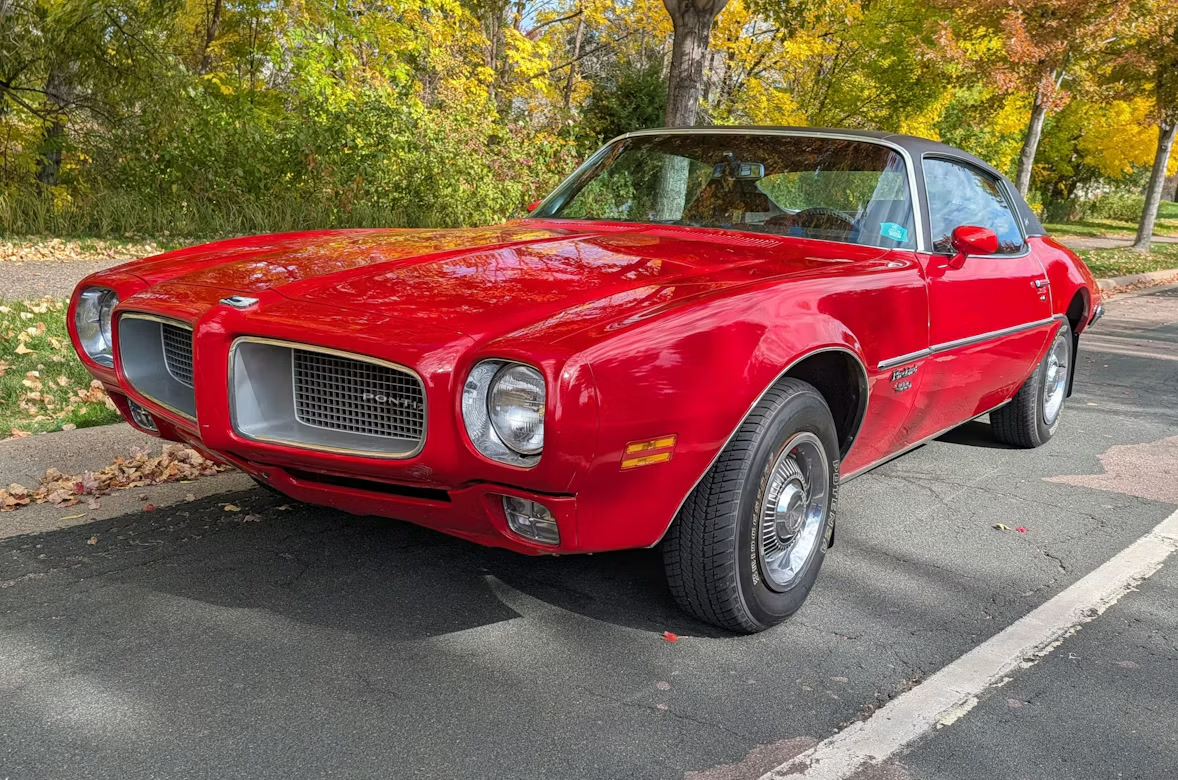
The most obvious thing about the 1970 Pontiac Firebird is that it’s almost distractingly gorgeous. Pontiac styling chief Bill Porter, a man who could talk about styling as well as he could design cars, not only differentiated the second-generation Firebird from the equally beautiful Camaro, despite using some shared components, but he also made it distinctly a Pontiac. It’s a pony car landmark, and this clean two-family-owned Esprit is up for auction on Hagerty Marketplace in Maple Grove, Minnesota.
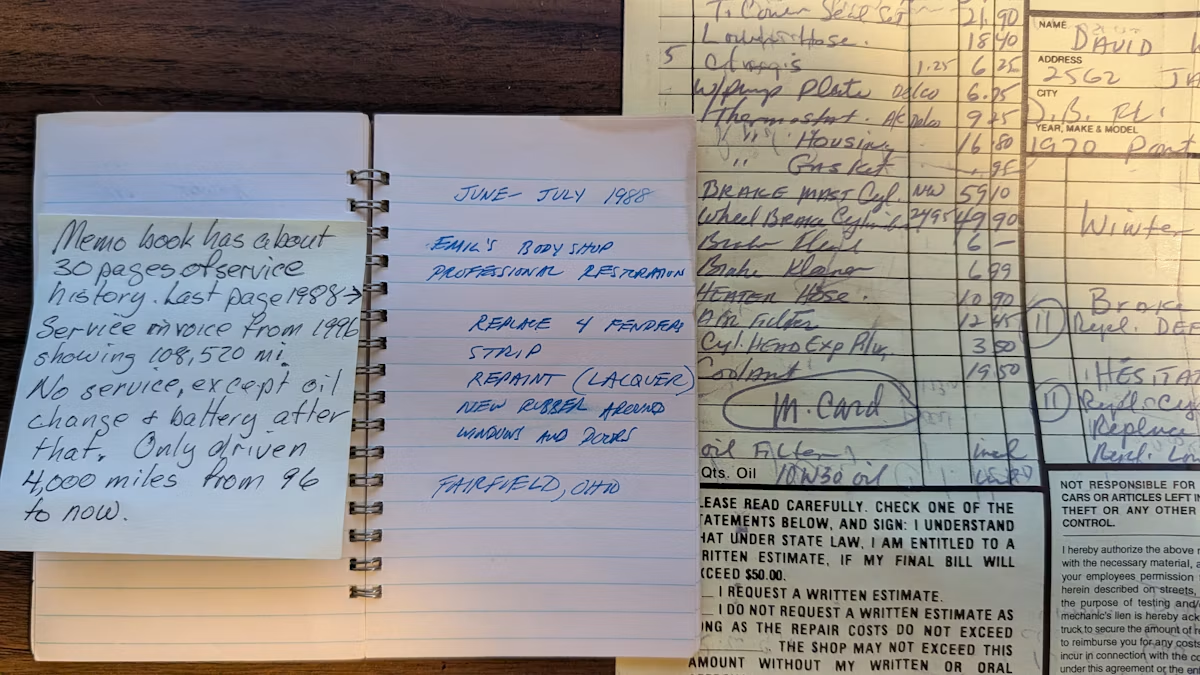
It’s always nice to have access to a car’s history, and the story behind this Esprit begins with a high school teacher who bought it from “Fehr Pontiac in Hamilton, Ohio.” In 1987, she sold the car to the seller’s brother, who sold it to him in 1996. The Firebird was repainted using lacquer in 1988, and it has been driven sparingly ever since; only about 4,000 miles have been added in the last 30 years (it has 112,800 miles on it now).
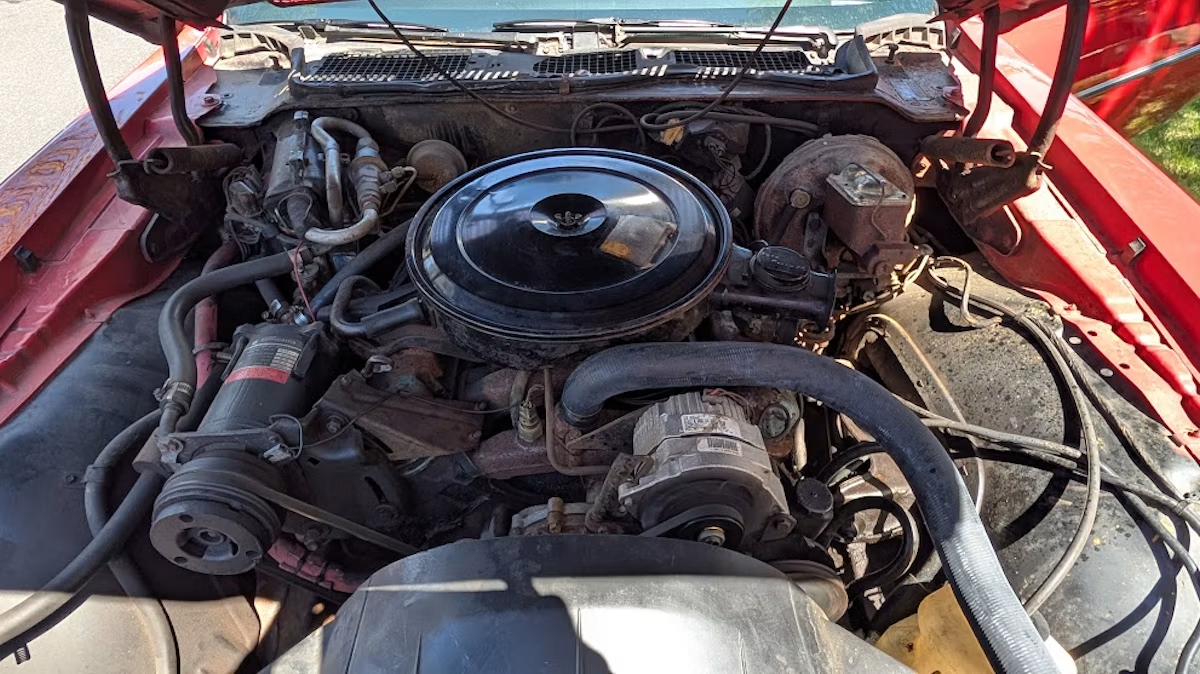
The Esprit was the “luxury” Firebird, one step up from the base model and about $366 more. For that extra money, the Esprit buyer got a V8 instead of the standard six, a 350-cubic-inch Pontiac two-barrel with 255 horsepower and 355 lb-ft of torque. Out of 18,961 Esprits, 16,857 had the Turbo-Hydramatic 350, an excellent transmission that gave relaxed cruising in combination with the standard 2.73:1 rear axle ratio.
The engine compartment of this car has clearly never been restored, and it will need a few wrenches applied for best results. It’s apparently a little cold blooded, and the seller mentions that it could use some vacuum lines, although I’d guess that an easy rebuild of the Rochester 2GC carburetor and a points filing would work wonders. Additionally, the air conditioning doesn’t work.
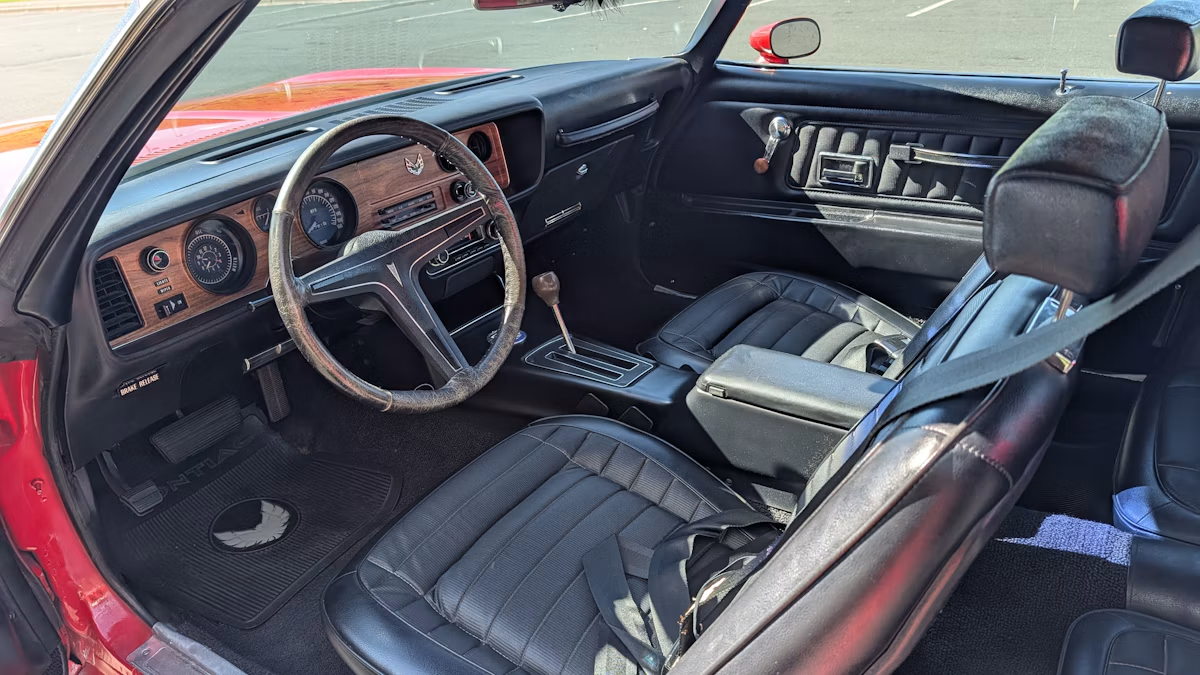
The Esprit got a few upgrades aside from the engine to differentiate it from basic Firebirds, including fancier “knit vinyl” seats, padded door panels with pull straps, and a deluxe steering wheel. A “soft vinyl” console was an option seen here, but dual sport mirrors and bright side window surrounds were standard.
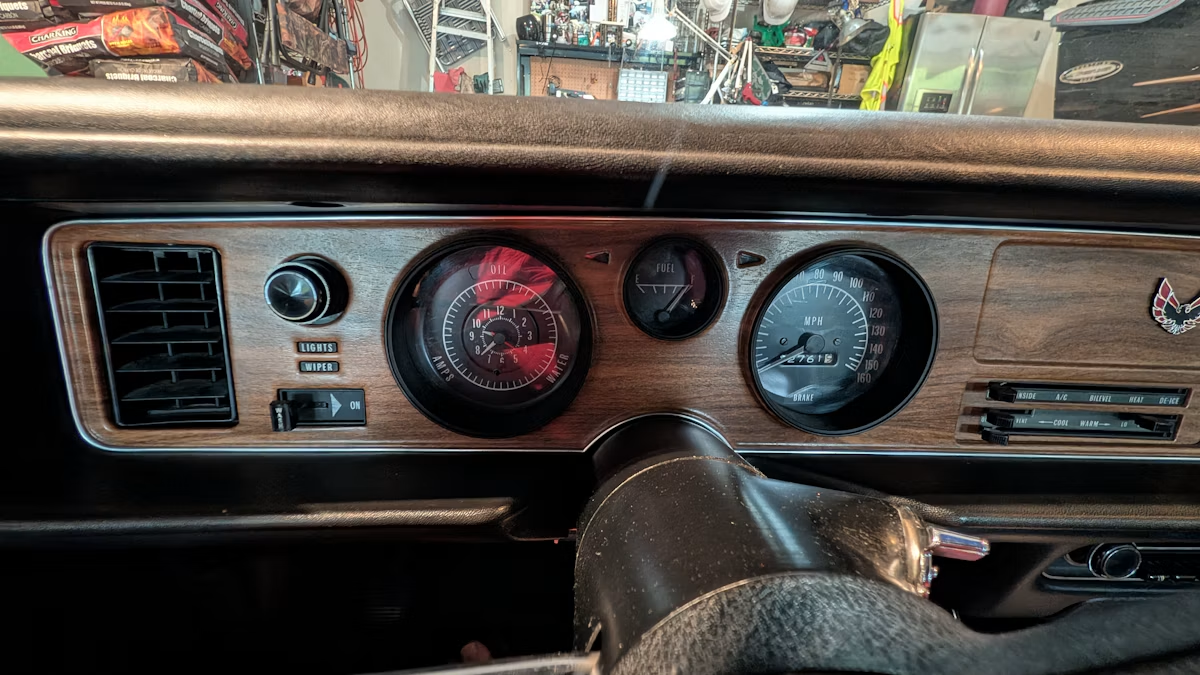
One thing I’d miss on this car (compared to my 1974 Esprit) is the rally gauge cluster, a $47 option that gave you a temperature gauge, an oil pressure gauge, and a voltmeter instead of warning lights. On cars without the rally gauge cluster, such as the one, the fuel gauge was in the center, while the clock and warning lights were located in the large left-side pod opposite the speedometer.
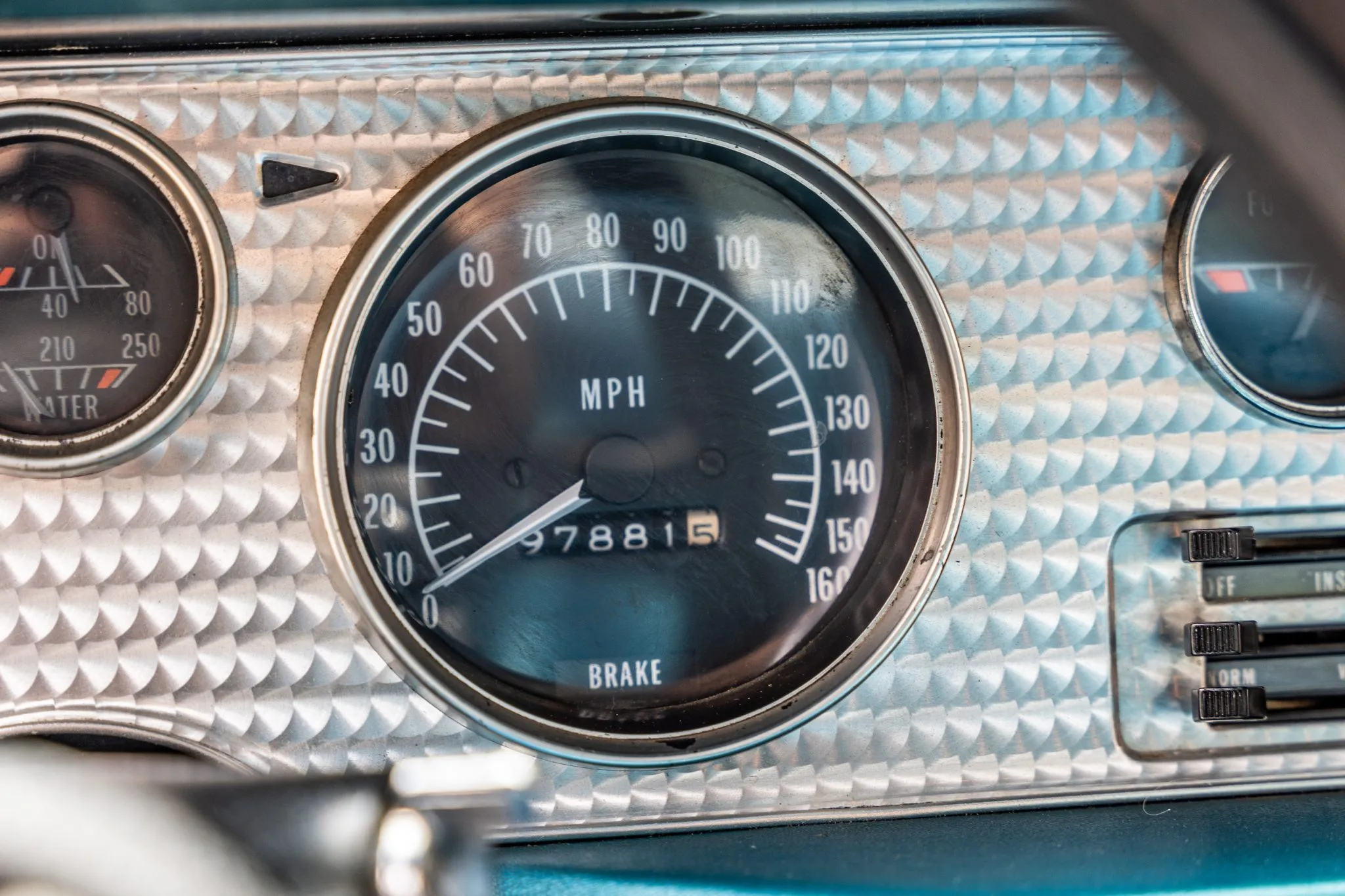
With the rally gauge package, the fuel gauge was moved to the right of the speedometer (next to a voltmeter), and the center pod housed oil pressure and water temperature gauges instead, as seen on this 1970 Trans Am.
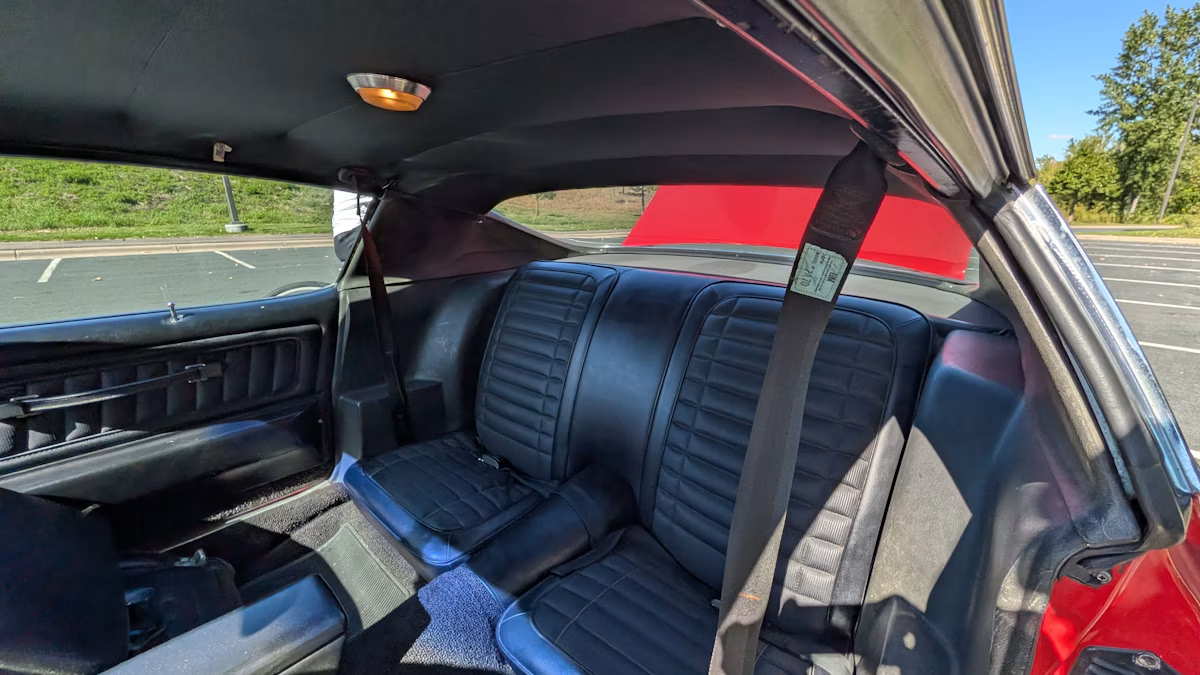
The Firebird’s rear seat was not really meant for adults, although I’m sure plenty rode back there. The 1970 cars had a headliner with traditional bows, although it was eventually replaced by a fiberboard as the 1970s elapsed.
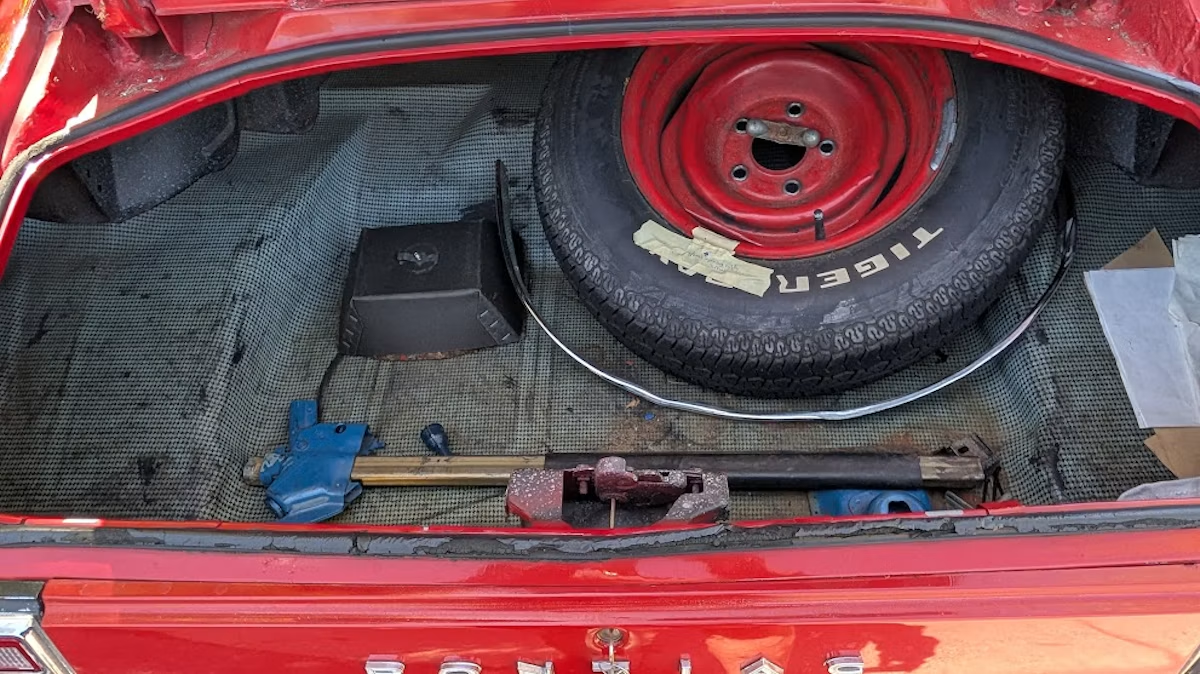
In keeping with the limited rear seat room, the trunk on the second-generation Firebird is almost laughably small, especially with a full-size spare tire. Another area for improvement is pointed out in the ad; the trunk weatherstripping should be replaced, which is an easy but slightly messy job (weatherstrip adhesive is the worst). The driver-side rear wheelwell molding has been damaged and is in the trunk for safe keeping, but you’d be better served by finding another one.
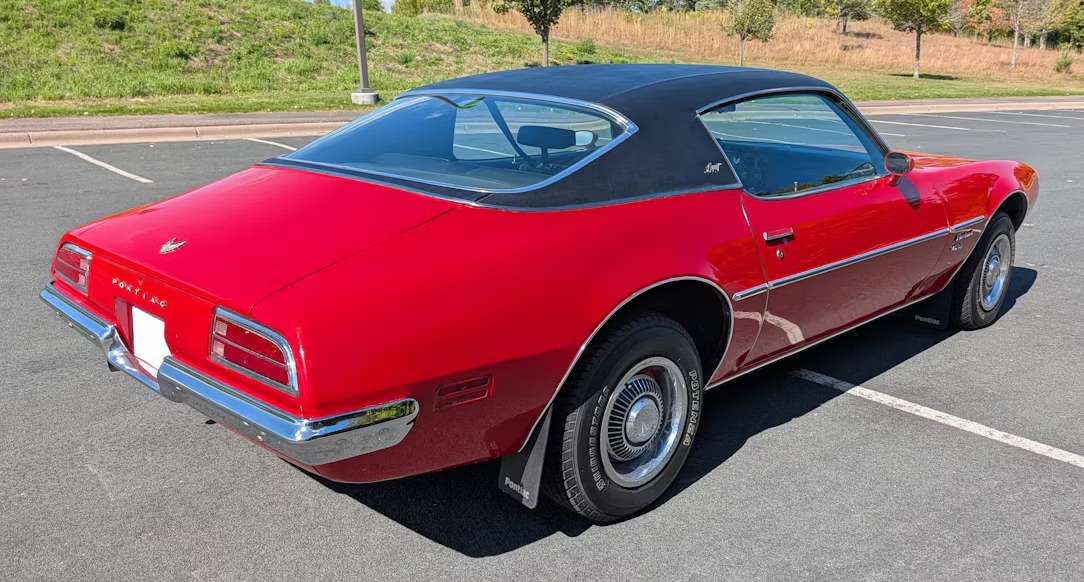
Sadly, the new Firebird didn’t sell in great numbers, at least at first. Delays meant that the Firebird wasn’t introduced until February 26, 1970, and that kept sales low: Only 48,739 were sold in that truncated model year, and it didn’t get much better for about a half a decade. That’s hard to believe given the Firebird’s good looks; in its March 1970 issue, Car and Driver said that “you could almost believe that Firebirds arrive by boat from Europe,” which was a tip of the hat to those artistic gearheads who came up with their swoopy Italianate styling. Even though it looked a little like a Ferrari, it was inexpensive enough that a school teacher from Ohio could pick up one of her own. It’s a shame that more people didn’t, but here’s your chance, 56 years later.
Related Reading
CC Capsule: 1970 or 1971 Pontiac Firebird Esprit – Getting Groceries (by Jim Grey)
Curbside Classic: 1971 Pontiac Firebird Esprit – From Pony Car To Chicken Car (by Paul N)





The vinyl roof and door moldings break up an exquisite design. I prefer the Firebird over the base Camaro but my favorite of the group is the split bumper Camaro RS. I’d put this early 2nd gen F-body in my top five American designs of the Seventies.
Yeah, some cars could get away with a vinyl roof but this is not one of them. Door strips might protect against some dings but in the end ruins the look. I’d simply park in the Siberia section of a parking lot while my wife goes ugh. She has learned to live with that.
I’ve always thought that the front end design of the ’70 – ’73 Firebird (prior to more stringent bumper regulations) is simply beautiful.
It really is beautiful. Pontiac also did five-mile-per-hour bumpers better than just about anybody (although as a 1974 Firebird owner, I’m biased).
Your red Firebird was the first thing I thought of. In fact, I wondered, “is that Aaron’s car?”.
It is a lot like mine! It’s funny, but this car will probably sell for 2-3 times what mine is worth, and I kind of get it!
A nice survivor and the AC is an easy fix, that massive DELCO R7 compressor means meat locker cold if you want it .
-Nate
Once again this car’s wheels confirm my strong preference for base hubcaps with wheel trim rings.
160 mph speedometer in the TA? That’s a bit ambitious.
The mid-level trim on the 2nd generation Firebirds (as well as the sister Camaro) was always a weird place to me. Most buyers wanted, or at least aspired to, the top trim with the bigger engines. If their wallets didn’t match their aspirations, a base model with some carefully selected performance options would have to suffice. Putting “luxury” parts on a sports/sporty car feels strange to me.
But I wouldn’t have been an F-body buyer anyhow. Instead of an F-body, I would have bought an X-body coupe with carefully selected options.
Jim Rockford and The Bandit would have surely liked that Firebird. 😉