
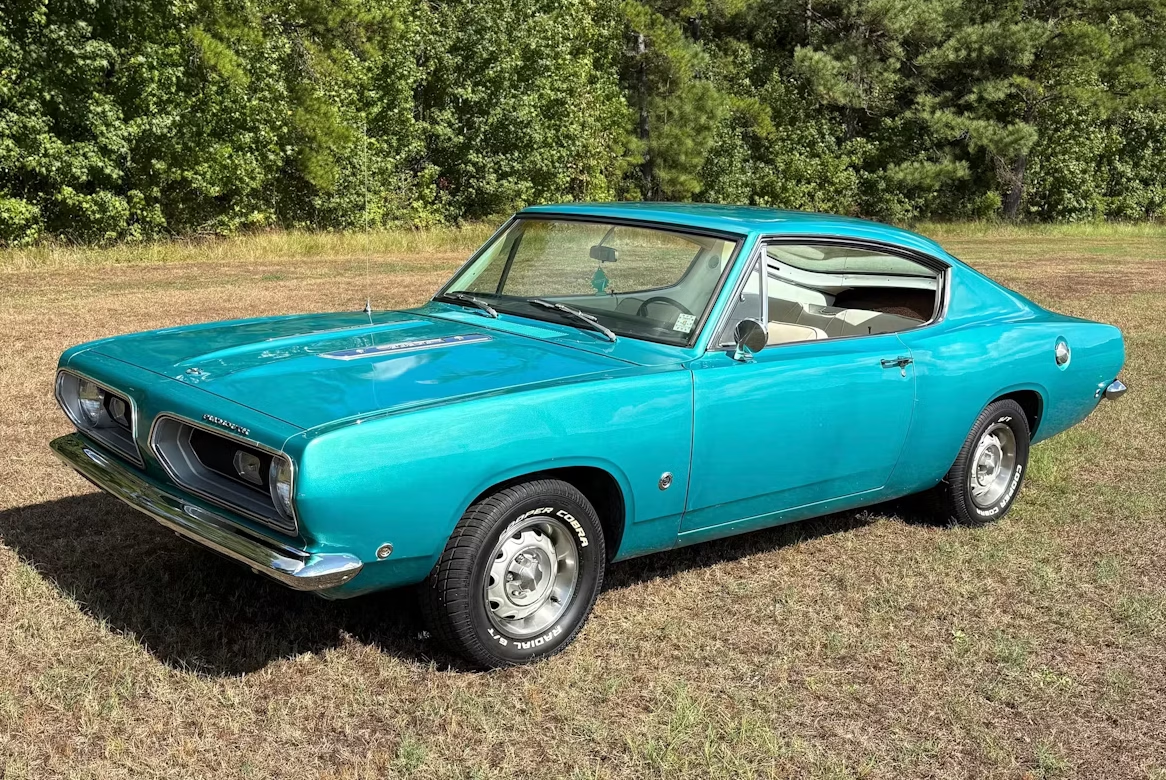
Despite its reasonably strong collector popularity, some find the second-generation Plymouth Barracuda to be a little too close to its parent Valiant’s hard points to be a truly beautiful pony car. That doesn’t stop it from being my favorite of the Barracudas, and its humdrum production figures make it all the rarer today. One of the rarest of the bunch is the Formula S Fastback featuring a 383 and a four-speed. While this example has had a few modifications from factory stock, it’s a perfect driver example of a big-block pony car the way they did it in Highland Park, and it can be found on Hagerty Marketplace in Grenada, Mississippi.
The 383 was first made available in 1967, when the Barracuda was restyled and made available in three bodystyles, including this sharp new fastback. In that first year, the 383 made 280 horsepower, enough for Hot Rod Magazine to wring out a 15.15-second quarter-mile time with a trap speed of 92 miles per hour. This was after swapping a set of spark plugs, which editor Eric Dahlquist said was a “job [that is] almost suicidal when the engine’s hot.” Yes, the 383 is tight in the Barracuda, which is one reason that the third-generation car was wider (and the front frame rails were three inches farther apart than they were in 1966).
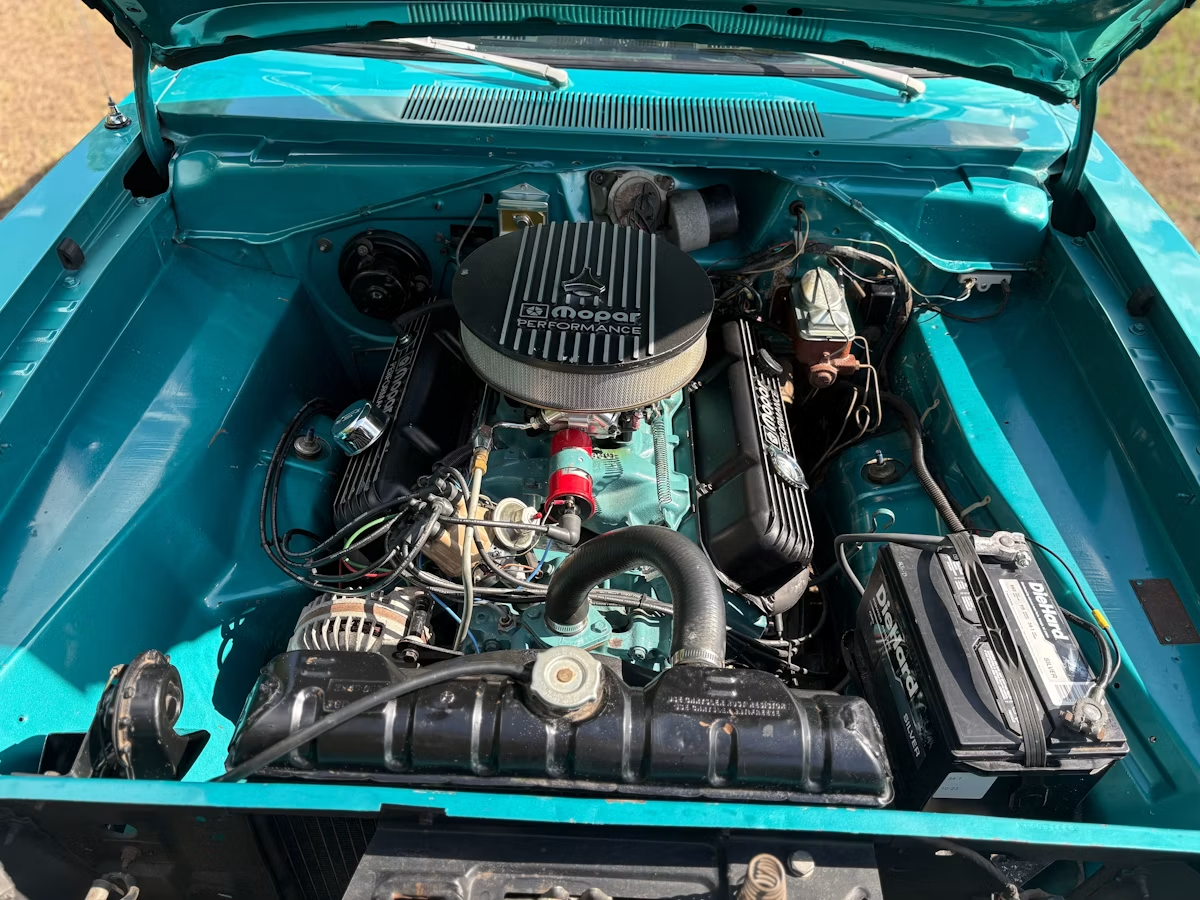
For 1968, the 383 got improved heads, and power rose to 300 (with 400 lb-ft of torque), so quarter-mile times certainly dropped into the 14s, but unfortunately, those times would likely only match the new-for-1968 340 small-block. The engine in this Barracuda has a couple modifications, including a Holley carburetor (replacing the original Carter AVS) and Mopar Performance valve covers and air cleaner.
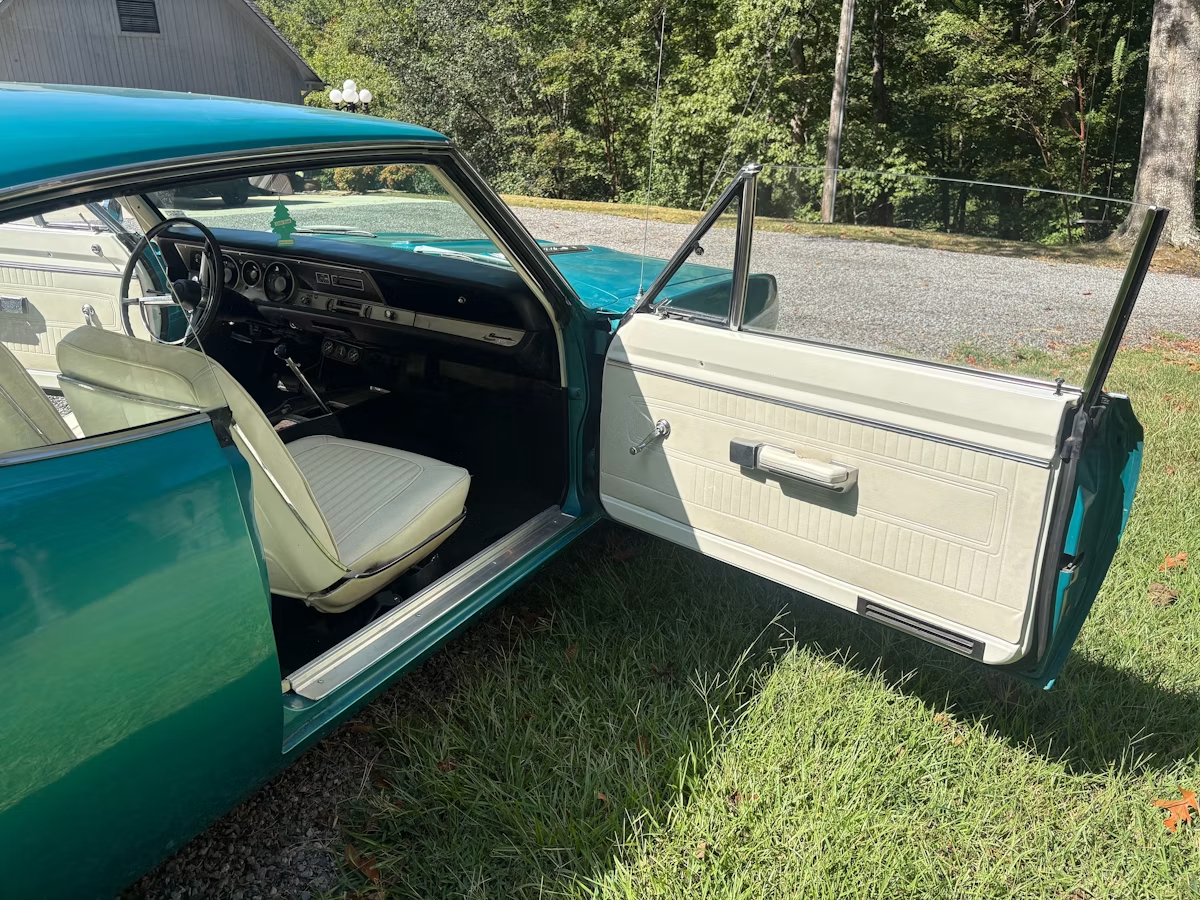
When the seller’s dad refurbished the car in the 1990s, he completely changed the color from Matador Red to some shade of “turquoise” and swapped the black interior to white. It looks like a complete job, but I think I’d prefer the original equipment in this case; nevertheless, we can see the console and four-speed shifter from this view.
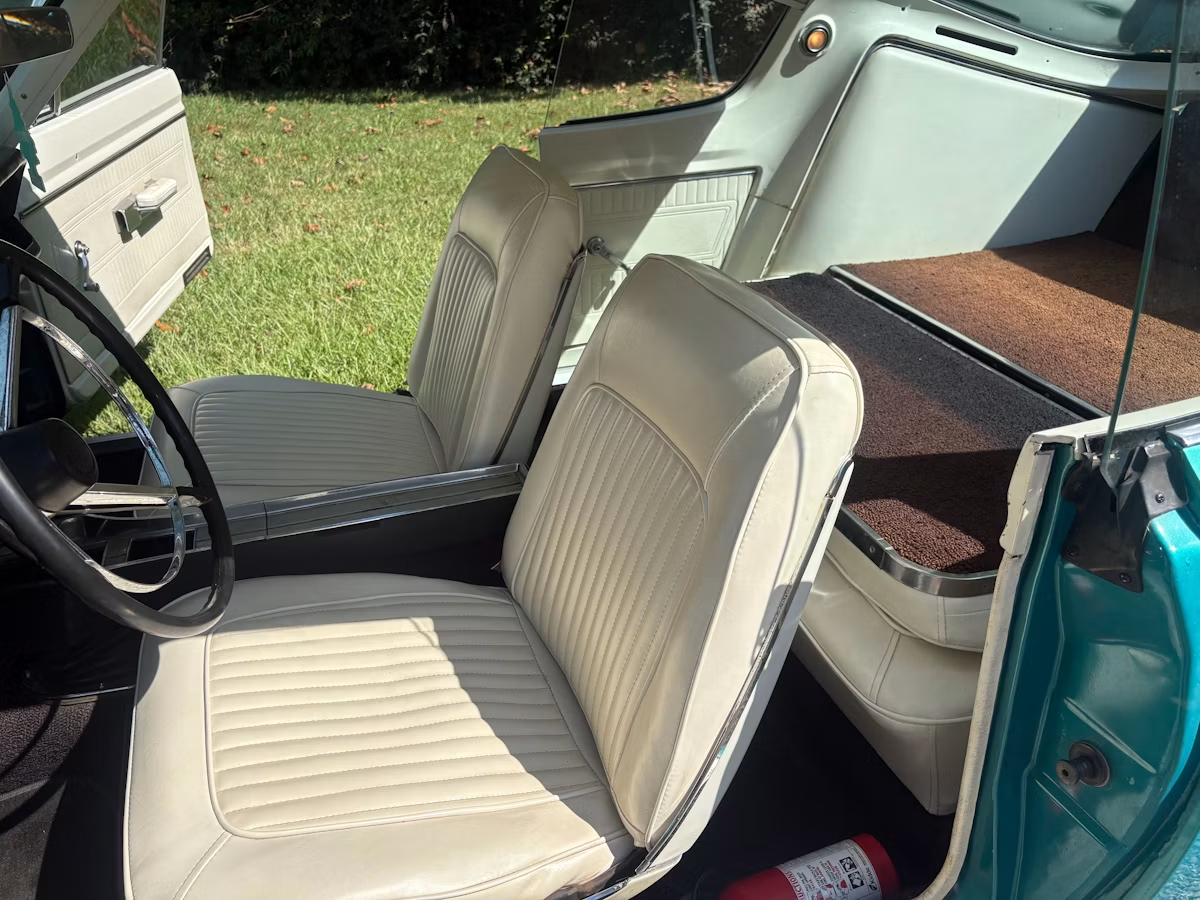
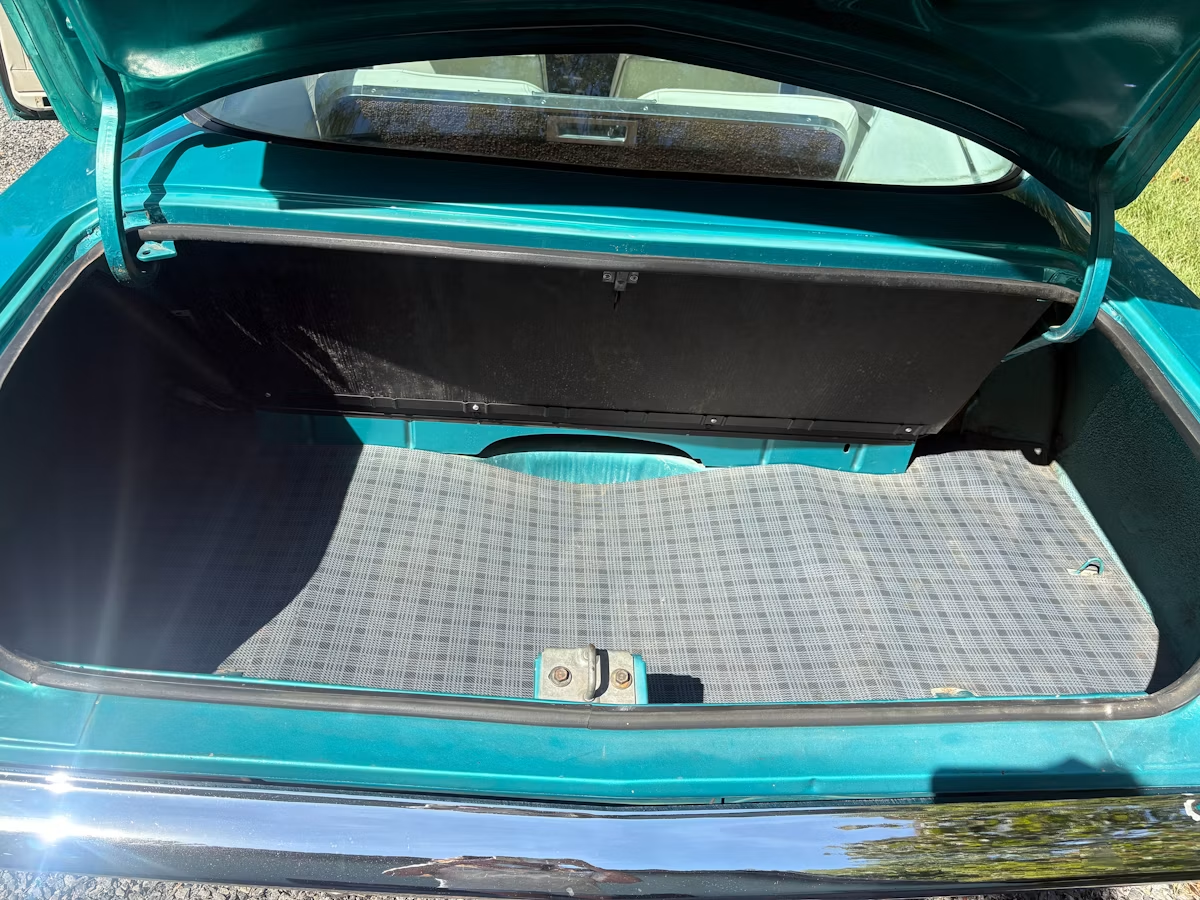
And we can see the Barracuda Fastback’s main selling point: plenty of room for luggage. Barracuda sales were indeed fairly grim in 1968, just 45,412 units, but the fastback (perhaps unsurprisingly) was the best-seller in the line with 22,575 sold. That all comes down to looks, in my opinion. Sadly, the Barracuda was the slowest-selling pony car in 1968, even outdone by American Motors’ new Javelin.
Underneath all that glass was a standard 3.23:1 gear, which is equipped with “Sure-Grip” in this car.
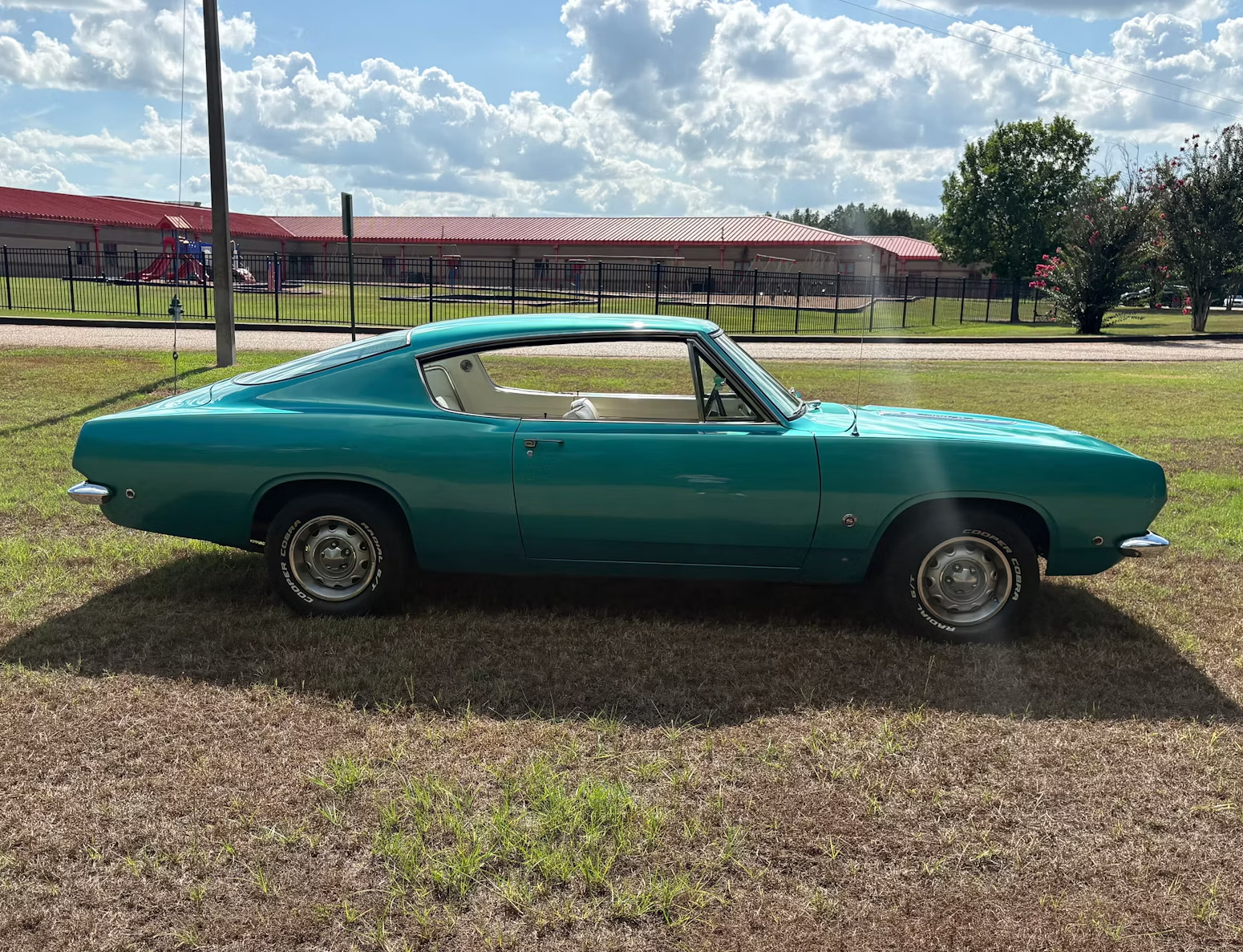
The Barracuda lost its fender badges during the restoration, but aside from that, it looks complete, and the numbers match (according to the seller). The Formula S was the Barracuda to have back in the 1960s, as it had beefed-up torsion bars, leaf springs, shock absorbers, and a front sway bar. Additionally, this car was ordered with front disc brakes (but no power assist, so bring your leg muscles). While I’d guess that many of us would prefer the stout 340 over the heavier 383, there’s something special about the way a big-block Chrysler sounds, especially when you’re rowing through the gears. Because of that, bidding looks strong, and I’d say that the second-generation Barracuda is more popular now than it was when new.
Related Reading
Vintage CL Road Test: 1968 Plymouth Barracuda 340-S – “Best Yet Of The Barracuda Brigade” (by Aaron Severson)
Curbside Classic: 1968 Plymouth Barracuda Formula 340 – The Worst Selling But Best Pony Car Of 1968 (by Paul N)
Cohort Pic(k) of the Day: 1968 Plymouth Barracuda S Convertible – A Rare And Serious Fish (by Paul N)























Am I remembering correctly that one could not get power steering with the big blocks? What a chore to drive with no PS or PB.
The second G of the Barracudas at least were not eye watering UGLY as the fist G. They looked fine, if not exciting. The 68 Mustang, Javelin, Firebird, Cougar and Camaro just blew it away looks wise.
You’re right…power steering was not available with the 383, but a fast-ratio manual box WAS available (and it would certainly not make steering the car any easier).
Not on 68s like this one, but Chrysler figured it out for ’69. I had one and can vouch for the fact it was available on the ’69 383S.
That’s weird. A couple of tidbits: the 383 was also available in the 1967 A-body, both Barracuda and Dart hardtop. Not quite as difficult a performance decision as the sole LA engine for 1967 was the 273 (which wasn’t a bad runner, but not up to 340 level).
And I wonder about power steering availability for the 1969 440 A-body. If you could get it with the 383 for 1969, I’d guess it the same for the 440, but really don’t know.
I don’t think the 440 ‘Cuda was available with power steering in 1969; the RB block is a little bit bigger and I think that was all it took.
I would imagine that’s a big reason Chrysler had no intial intention of installing the 440 into the A-body.
But when Chicago’s Mr. Norm started doing it with big-block Darts in 1968, well, I guess that made the decision for Chrysler to do it at the factory for 1969 much easier.
It didn’t hurt that, by then, Ford was installing the 428CJ into Mustangs, as well as those COPO 427 Camaros that were going to dealers like Yenko and a few others.
I think I’d prefer a slant six and a 4 speed. But that is a super nice car, I like the early Barracudas better.
It’s a shame the only way Chrysler could shoehorn the 383 into the A-body Barracuda was by crimping the driver’s side exhaust manifold to get it around the steering box. That’s where the real loss in performance comes in to make it about the same as a Road Runner or Super Bee with the same engine.
They’d fix that with the wider E-body in 1970 but, by then, the whole big-block ponycar game was over.
Another nice article made DIFFICULT to read because the article “collapses” so the ADS can be larger….very IRRITATING! 🙁 DFO
The 2nd Gen Barracudas are my favorite of the pony cars. It’s interesting that it took ChryCo four tries to develop a popular sports car that ultimately returned to the A body.
I think they had it right with the great looking 2G Barracuda, but somehow the Duster was the one that took off.
Despite not a factory color I think the subject car looks good in turquoise.
While the big block gives bragging rights, mine would’ve had the 340.
Thanks, Aaron
You’re welcome! It’s a great-looking car, in my opinion.
I think I gasped the first time I saw this generation of Barracuda fastback as a kid. I was truly stunned that this gorgeous car was a Plymouth – especially given that by the time I was in elementary school in the early ’80s, we were getting K-cars and Horizon variants to mostly carry the Plymouth brand.
Gen-two fastback is peak Barracuda for me.
I love the 2nd gen Barracudas and the fastback is my favorite. I agree that I would rather have seen this one left in its original red.
Ive driven big block A Bodys before and they are a handful especially without power steering or brakes. They’re only fun on the drag strip and even then, in ’68, the 340 would beat the choked down 383 anyway; maybe not the 440 in ’69 though but its still a beast of a car to drive. There are aftermarket PS, PB and AC adapters available now but not back then. 396 Novas seemed like they were better balanced cars.
I took my Dad to a car show many years ago and he walked up to a 68 Barracuda thinking it was the same car as the 68 Valiant he had new so maybe the resemblance was too strong lol
There are often 383- and 440-powered 1968/9 Barracudas at the Pure Stock Muscle Car Drags in Michigan, and they run pretty well, but probably not well enough to have put up with them every day. I agree that the 396 Nova or Camaro would have been the one to have if you wanted a big-block “compact.”
A sharp looking car and the color change looks very well done .
Fastbacks are a subjective thing and tend to be hard to sell used .
I like this car but would rather it have the slant 6 .
-Nate
If the gen 2 Barracudas had the Duster windshield and curved glass they’d be gorgeous
Is this the first time in the history of the world that someone restored a factory Red car by painting it a different color?
I can take or leave the other body styles, but these Barracuda fastbacks are favorites of mine.
The poor Barracuda was always troubled with something else in the Plymouth showroom that was better at doing the Barracuda’s job. By the time they stopped looking like tarted-up Valiants, the GTX— and then the Road Runner— were the muscle cars to be seen in. When the zooty gen3’s showed up, they were outshone by the malleable and inexpensive Duster. Of course, with Plymouth a distant memory, Barracuda had its revenge on us, being the most sought-after ponycar of them all.