
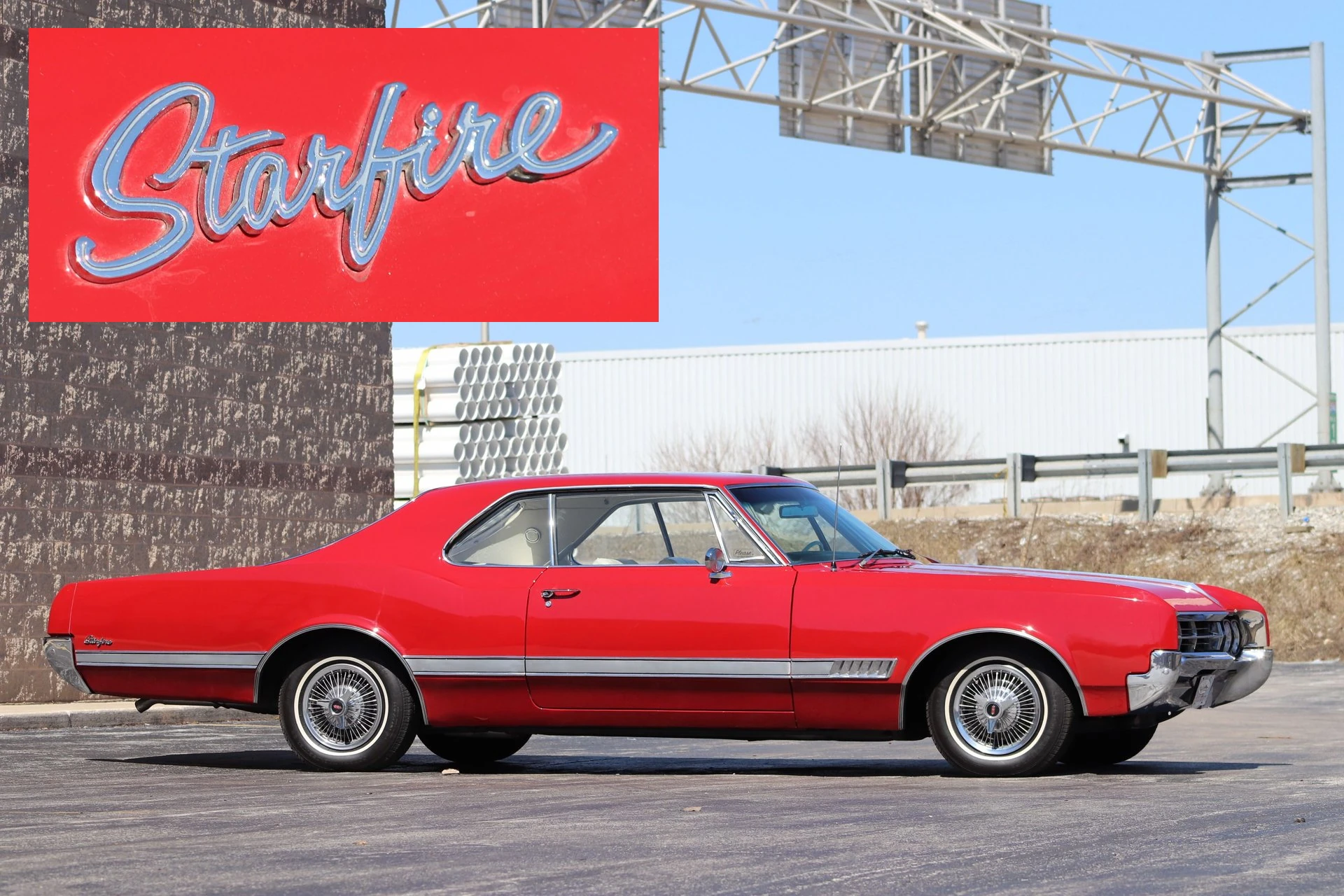
Introduced during the 1961 model year, the Oldsmobile Starfire was a flashy, well-equipped sporty version of the full-size Olds 88. It survived through 1966, but by the end, changing buyer tastes — and the intriguing new FWD Toronado — had made the big Starfire all but irrelevant.
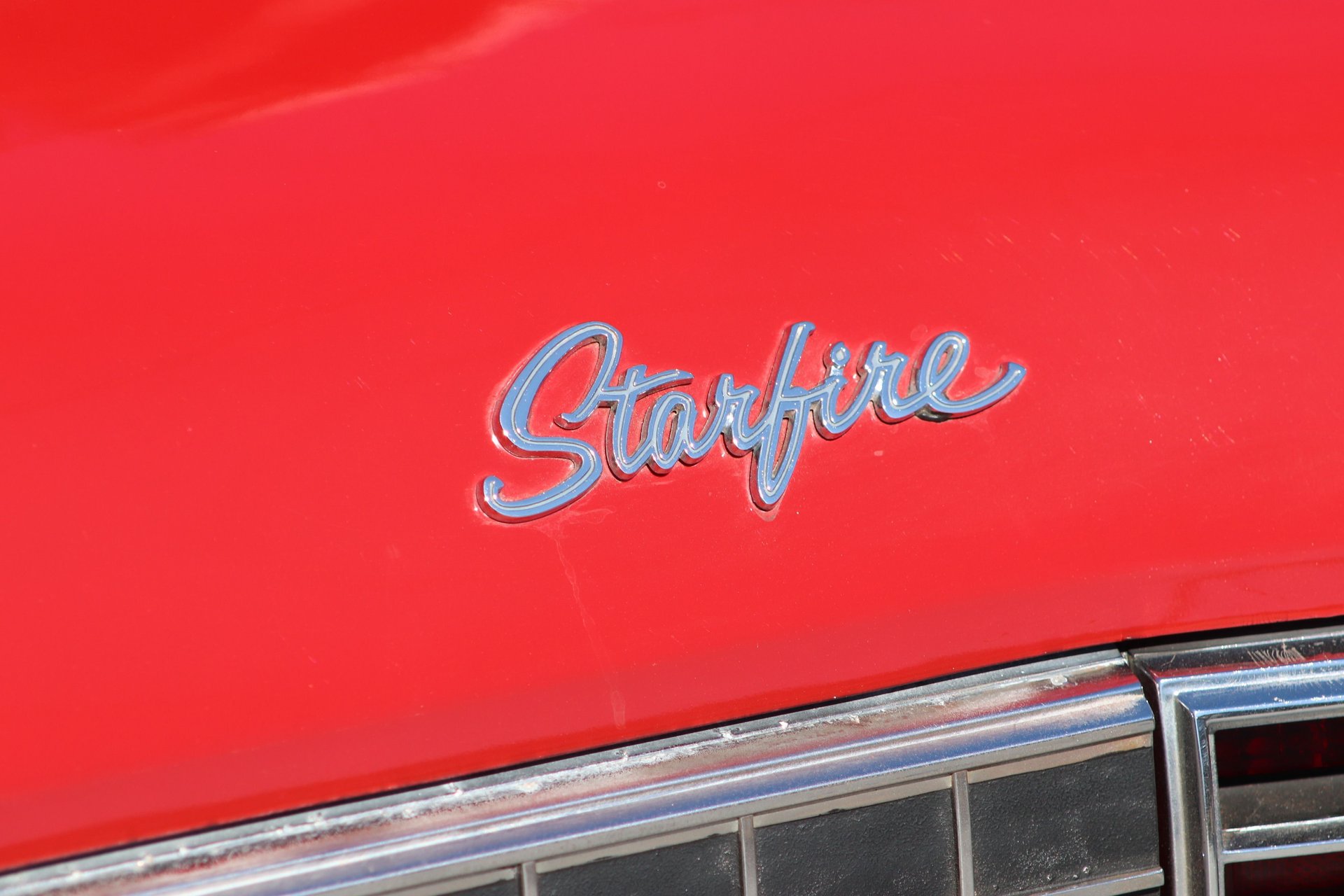
The problem with sequels is that they always run out of steam sooner or later. Even if the early installments were brilliant, the later ones eventually succumb to diminishing returns, their original spark dampened by too much repetition and too many compromises. If the original was no great shakes (like any number of mediocre horror and action franchises), the later iterations can get pretty threadbare.

Oldsmobile’s sporty full-size Starfire hadn’t been a huge hit to begin with. In its best year, 1962, it sold a decent 41,988 units, but it was downhill after that. The Starfire was good enough to cash in on the early ’60s bucket seat craze, but since it was just a well-trimmed Olds 88 with lots of standard equipment, it didn’t really make it in the emerging personal luxury segment against the Ford Thunderbird and later the Buick Riviera, which were specialty cars with unique styling.

For 1966, Oldsmobile finally got its own personal luxury specialty car: the all-new Toronado, with its ’30s Cord-inspired styling and novel FWD powertrain. Its body shell was shared with the latest Buick Riviera, but the Toronado had enough distinction to stand apart from both its Buick cousin and the rest of the Oldsmobile line. It belatedly gave Oldsmobile a credible Thunderbird-fighter, allowing the B-body Starfire to quietly fade away.
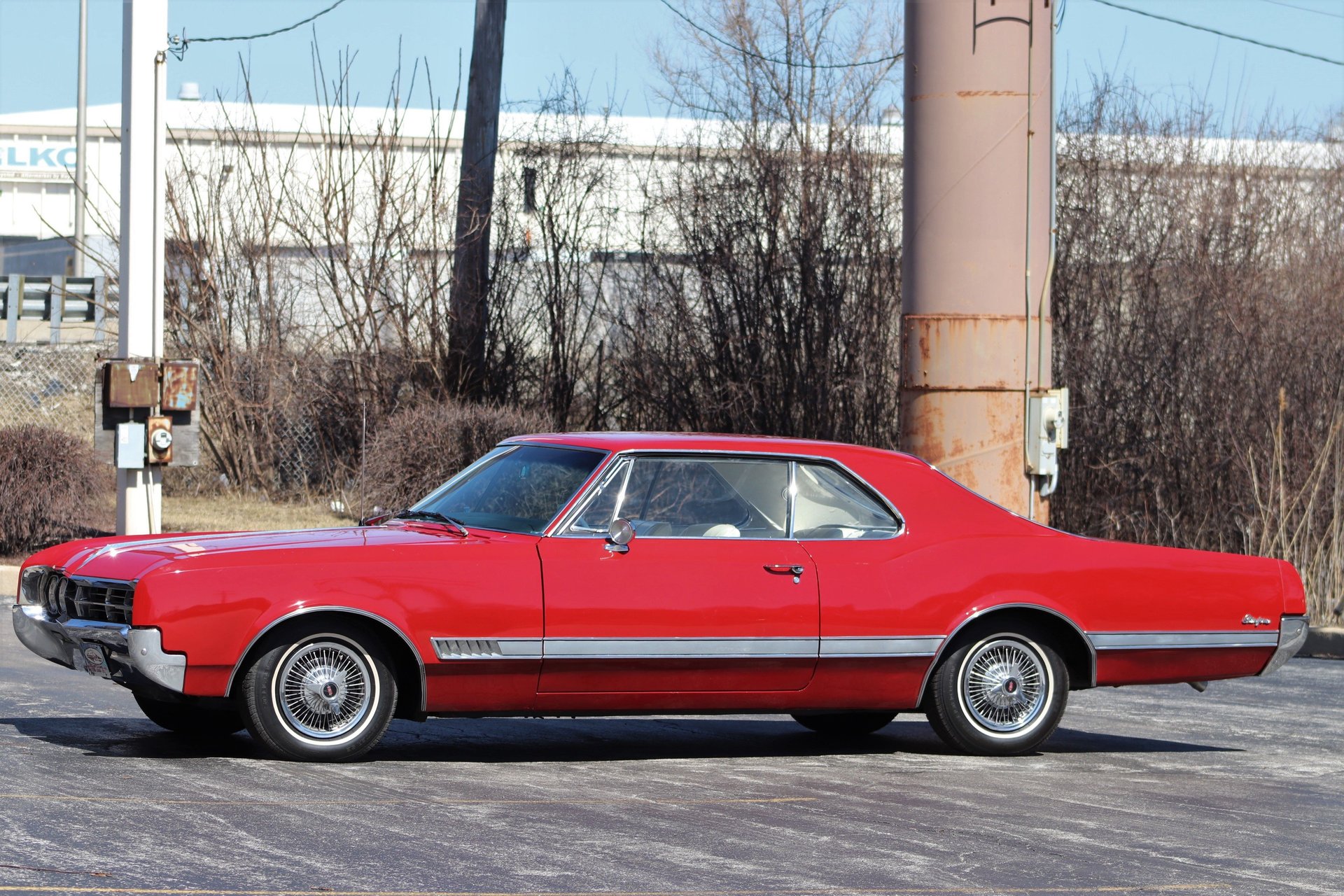
Yet, here was the 1966 Starfire, back again like a warm-up act returning for an unexpected encore. The reasons are now obscure: Did Oldsmobile general manager Harold Metzel retain the Starfire as a hedge in case buyers proved resistant to the FWD Toronado? Or did he determine that Olds needed at least two years of production to pay off the tooling investment in the coupe’s special hardtop roofline? Maybe both, but I don’t think the continuation was driven by overwhelming market demand. Since the introduction of the Mustang and the sporty intermediates, interest in big cars with bucket seats had softened considerably.
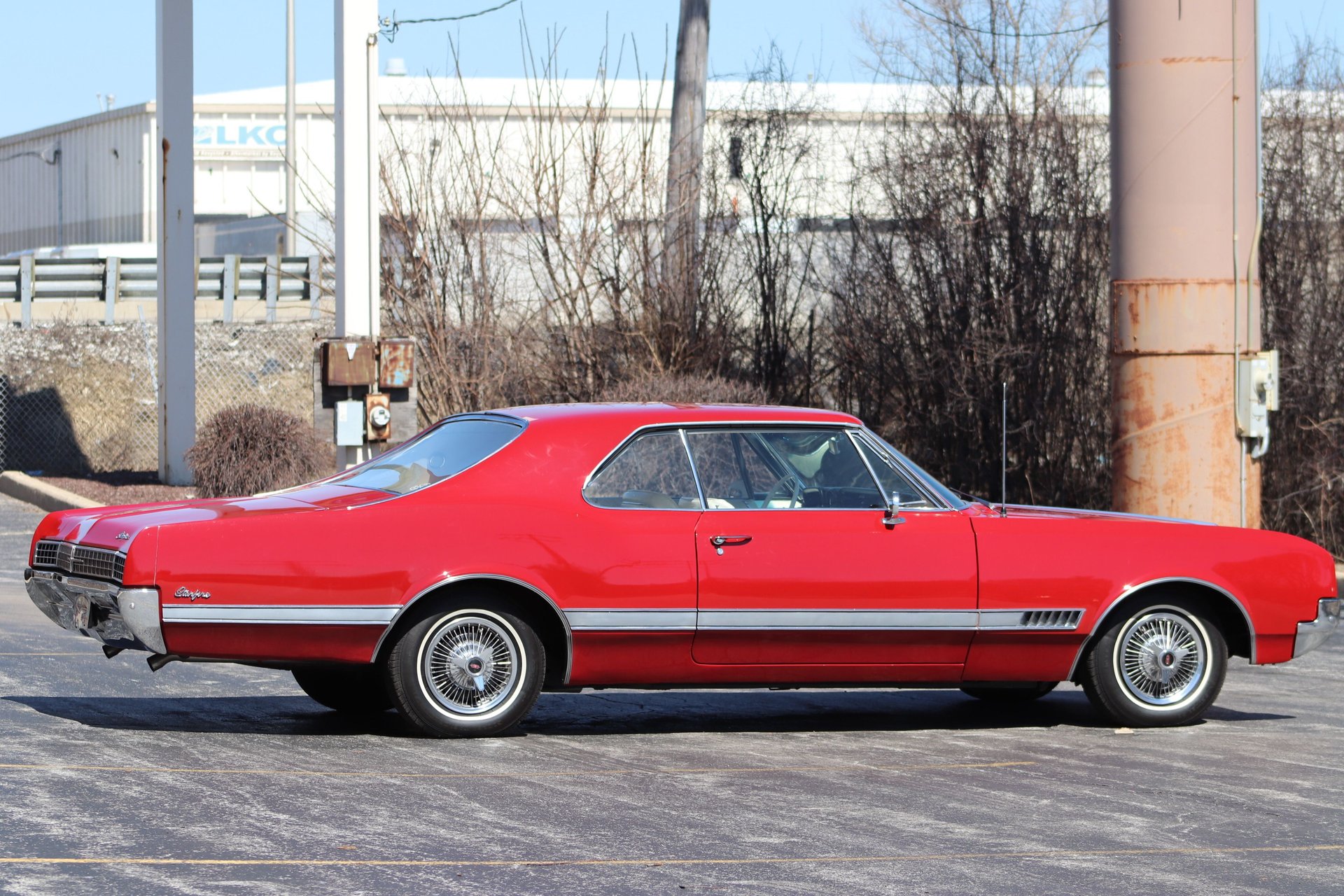
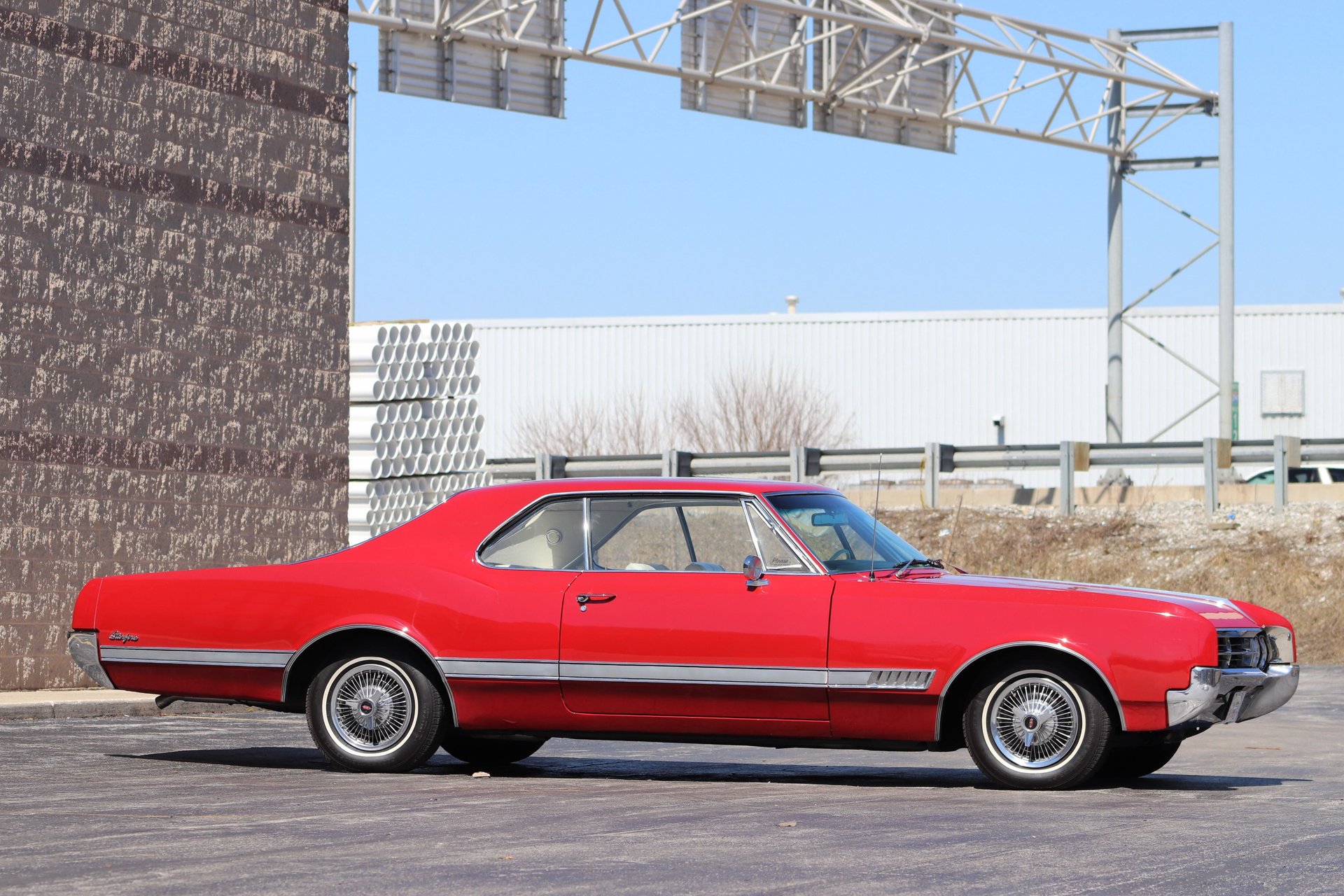
Despite weak demand, some of the remaining full-size sporty models were quite appealing, like the handsome 1966 Buick Wildcat GS featured previously on Curbside Classic. The 1966 Starfire was not, in my view, one of the Oldsmobile studio’s better efforts. It was much the same formula as before — special metal side trim (with simulated vents in the front fenders) plus a unique hardtop roof with concave backlight — but the detailing felt half-hearted, like the designers weren’t told until the last minute that the Starfire was going to continue for 1966 and had to scramble to come up with something.
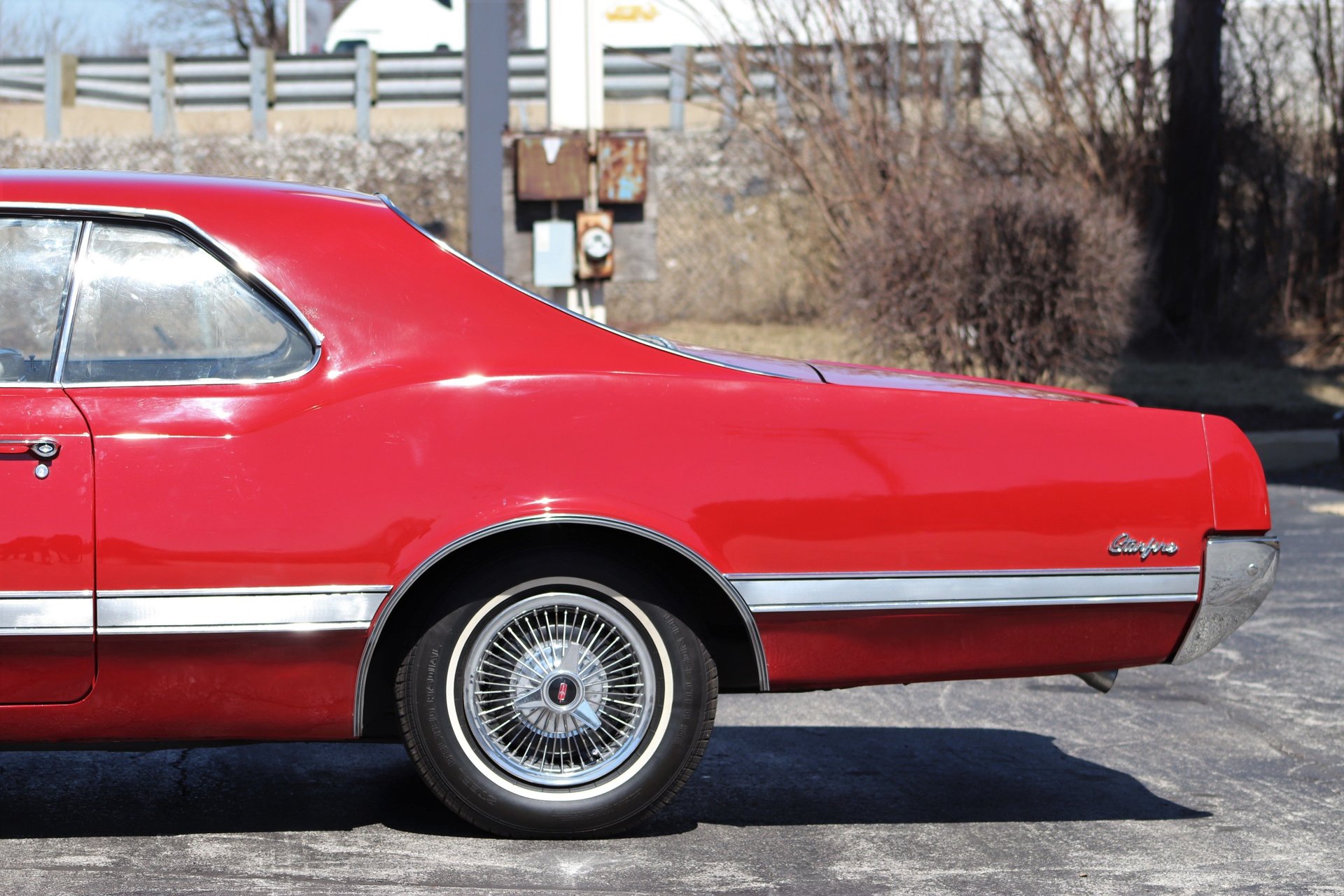
I’m sure as I type this that there will be at least one commenter who thinks this Starfire is the most beautiful car they’ve ever seen, but I think it was hampered badly by its concave rear window. The curved back glass and sloping sail panels had the effect of making the tail look unfashionably long and not particularly graceful. In some respects, it was a preview of things to come (the designers of the 1969–1970 Mercury Marauder apparently studied it closely and tried to go it one better), but I don’t think it worked very well on its own terms.
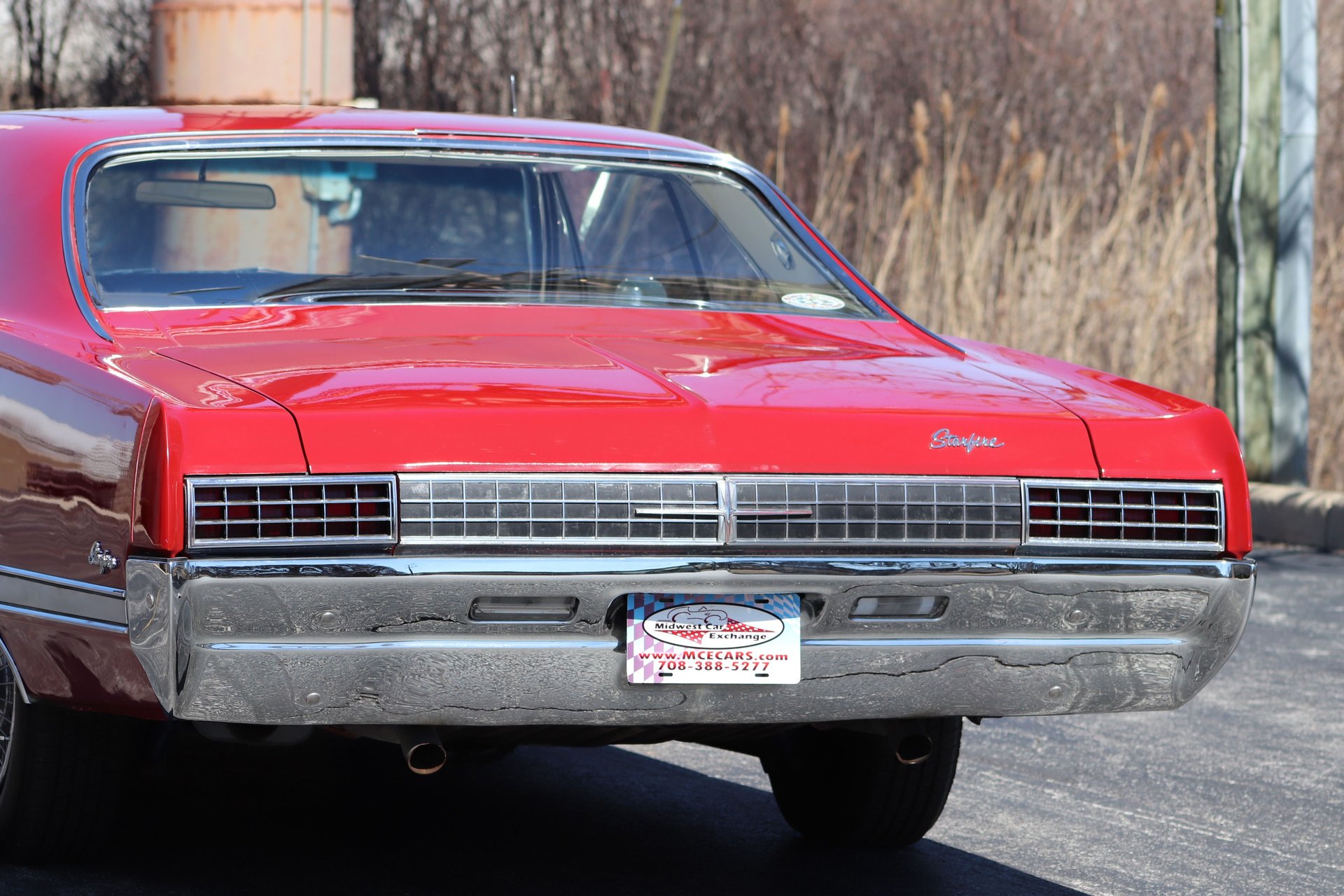
The unique Starfire taillight treatment didn’t really help. Different grilles and taillights have always been a common strategy for differentiating different models sharing the same body, since they don’t cost much to tool, but on this Starfire, it felt like added texture for the sake of texture, and it looked cluttered.
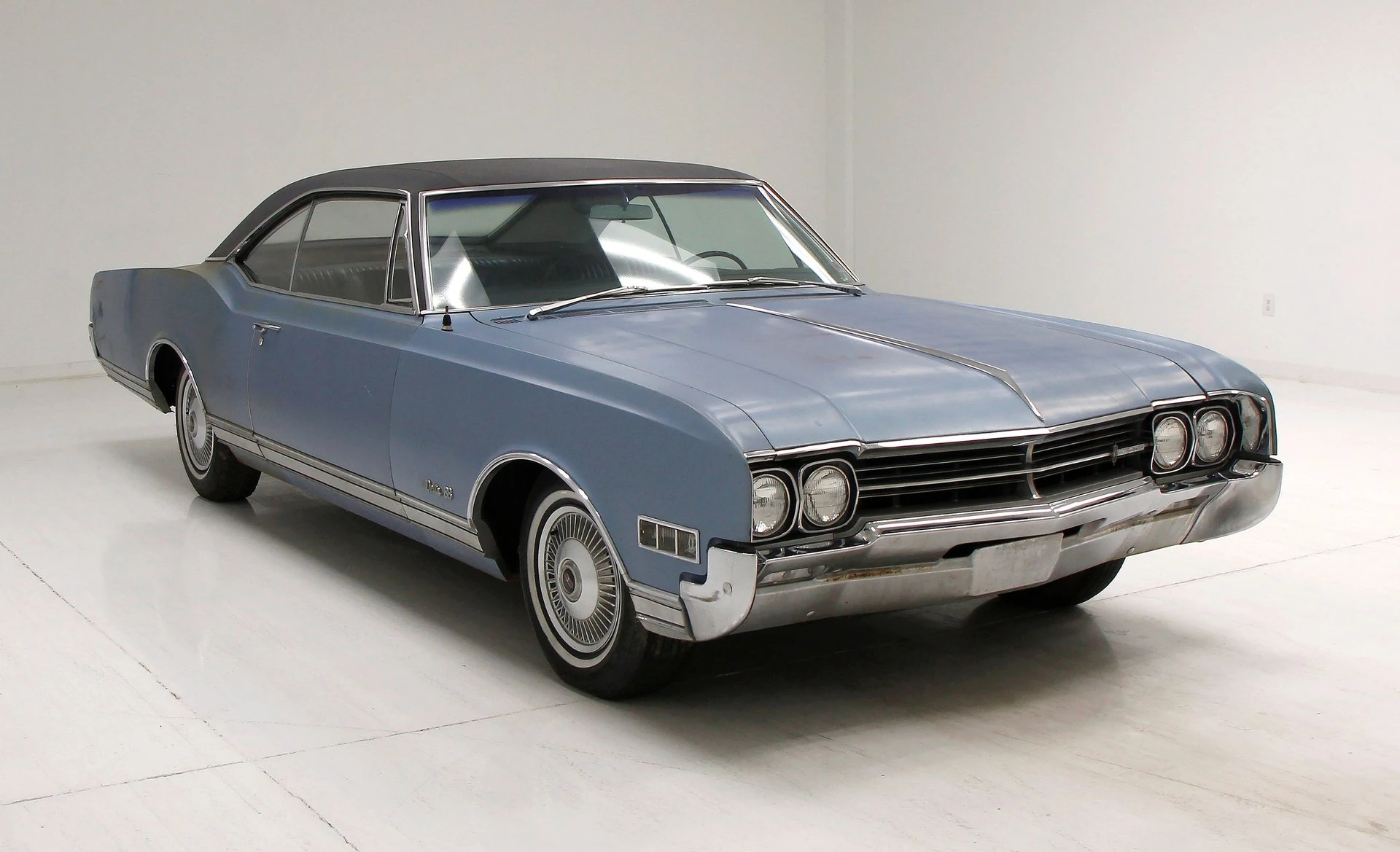
In sum, I think the Starfire was less attractive than the normal Delta 88 two-door hardtop, which had a more cohesive design theme.
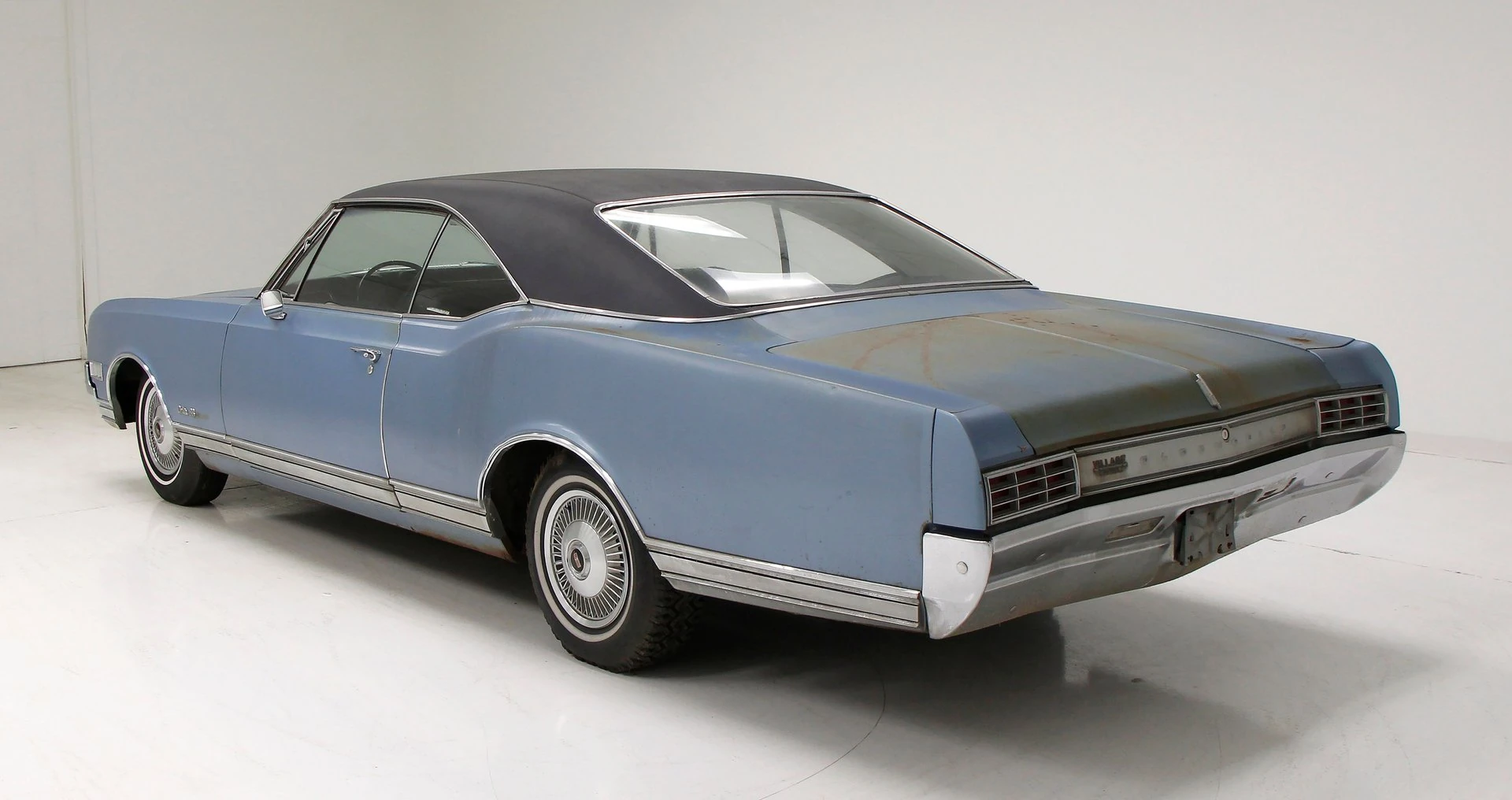
The paint on this particular Delta 88 is somewhat the worse for wear, but you can see how the semi-fastback roof helped to balance the length of the tail.
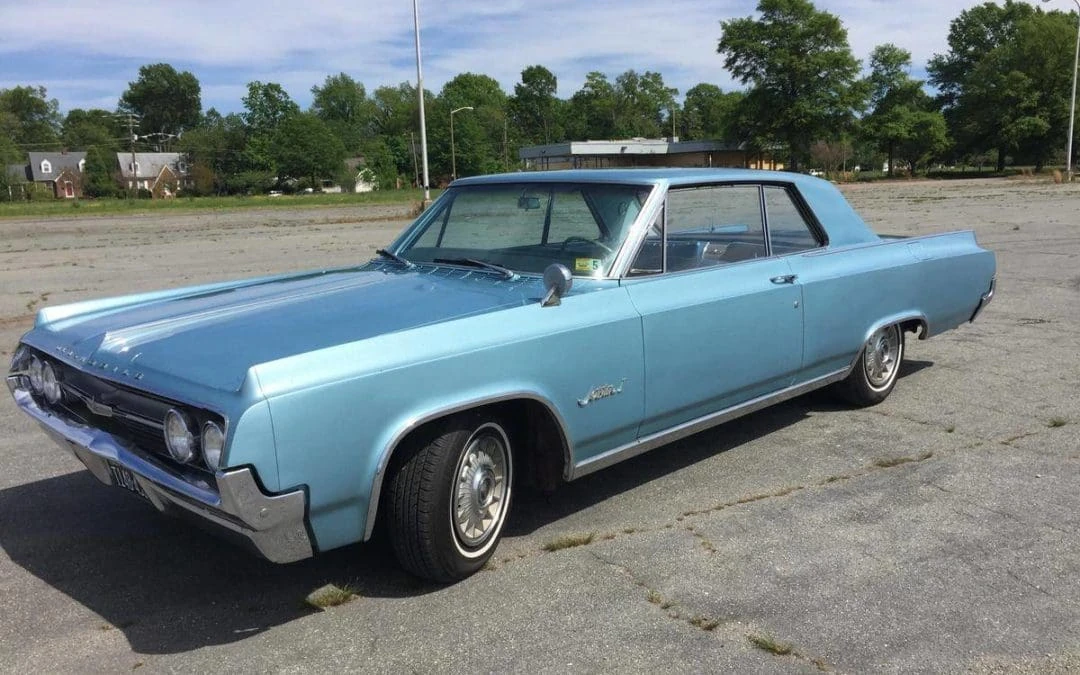
Early Starfires had been very well-equipped — especially the convertible, which came with most everything that was optional on other Oldsmobile models except air conditioning. When 1963 sales showed a substantial decline, Oldsmobile hedged, adding a cheaper version of the Starfire coupe called Jetstar I, which moved much of the Starfire’s standard equipment to the options list. This may have been appreciated by customers in states that base vehicle taxes on original base MSRP, but while the Jetstar I outsold the Starfire coupe for 1964, its moment in the sun was very brief. For 1965, Jetstar I production totaled only 6,552 cars, plus 13,024 Starfire coupes and 2,236 Starfire convertibles.
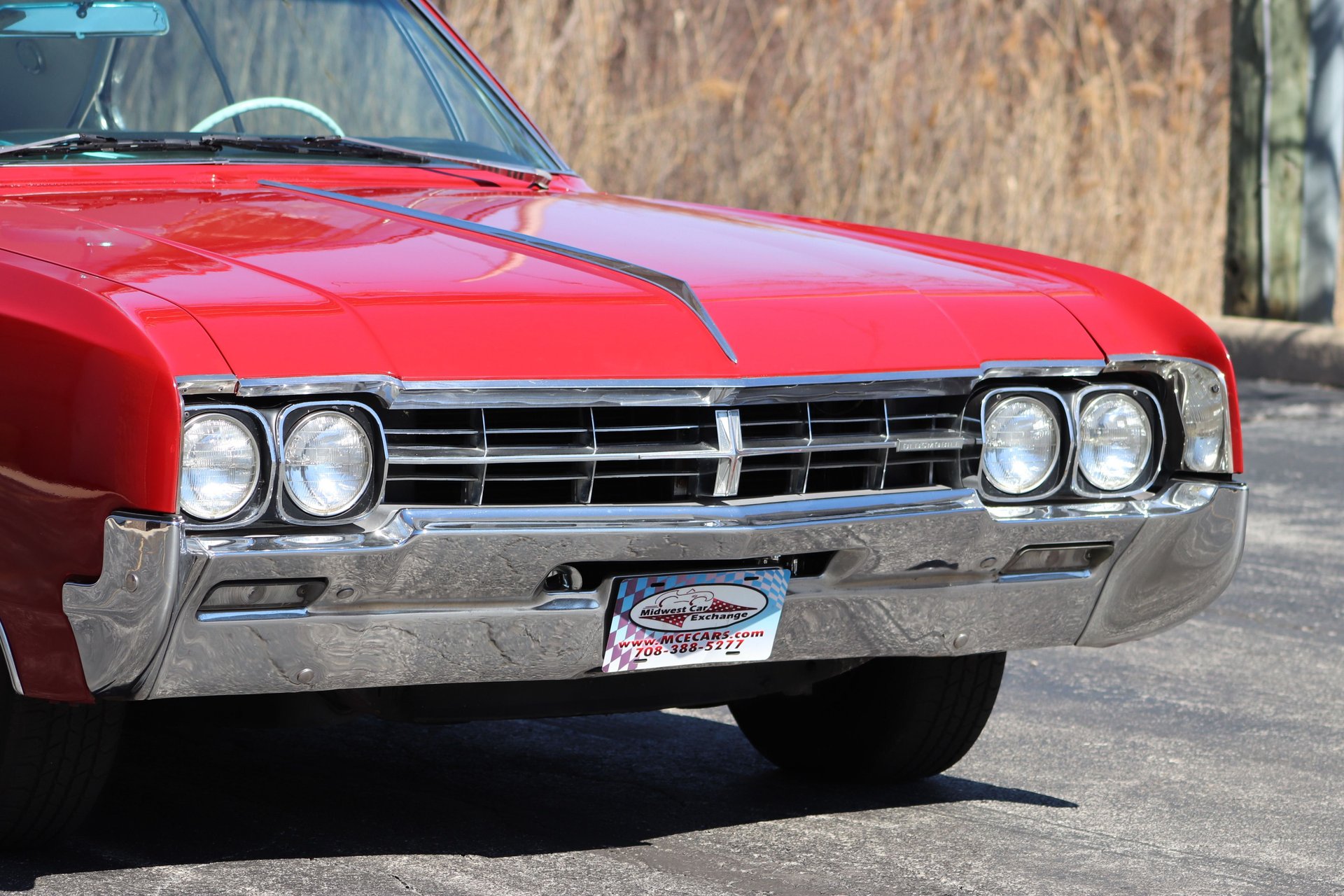
Somehow, what Oldsmobile product planners took from all that was that they should make the Starfire cheaper, which is what they did for 1966. Since the Toronado would never offer a factory convertible, retaining the ragtop Starfire might have made some sense, but its 1965 sales apparently didn’t justify that, so only the Starfire coupe made the cut. The Jetstar I was also dropped, but only because the Starfire was de-contented to about the same level. In fact, with a base price of $3,564, the 1966 Starfire was $38 cheaper than the 1965 Jetstar I, and $584 cheaper than the 1965 Starfire coupe.
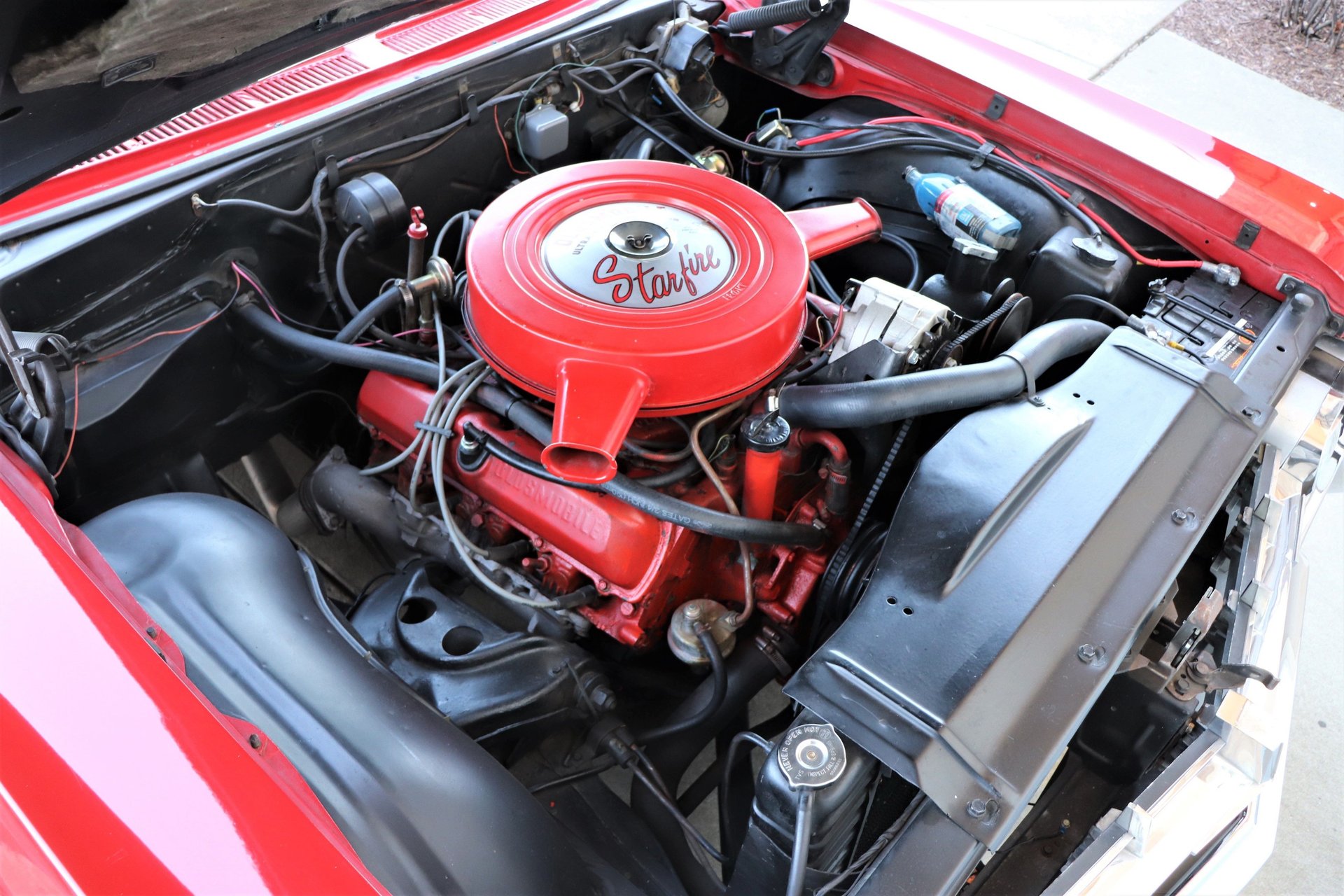
Dual exhausts, wheel covers, an electric clock, a glove box light, and windshield washers were still standard on the 1966 Starfire, as was the slightly more powerful L75 Starfire V-8, which had 10 gross hp more than the 425 cid Super Rocket V-8 in the Delta 88. The L75 was optional on the Delta 88 for an extra $100.05, which also included the Starfire’s dual exhausts. (This car now sports a modern HEI system, although an original distributor was included in the trunk when it was sold.)
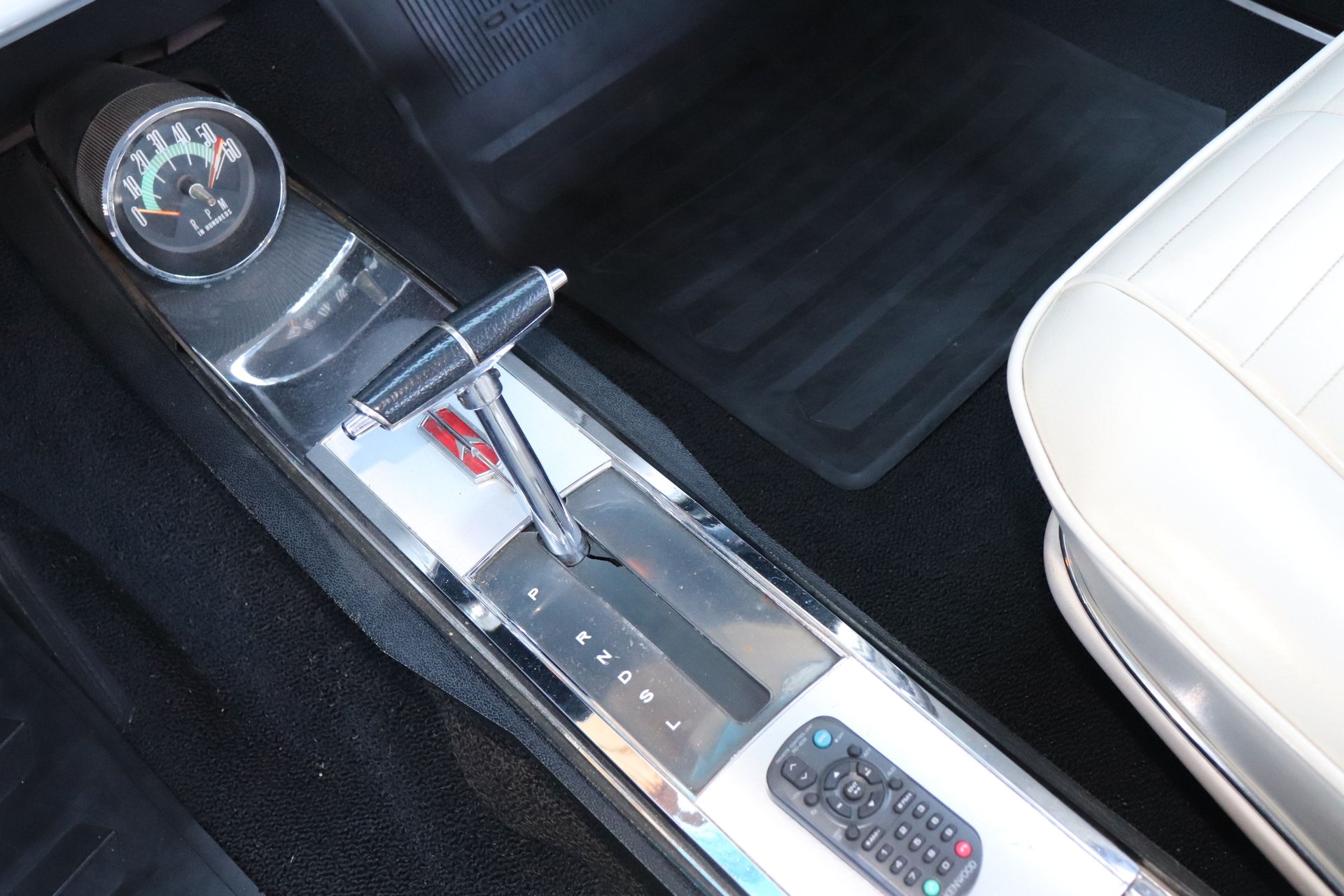
Although the tachometer was included on all console-equipped Starfires, the shift lever in that console now controlled an all-synchro 3-speed manual transmission unless you ordered the optional 4-speed ($226.44) or Turbo Hydra-Matic ($236.97). Nearly all of these cars got Turbo Hydra-Matic; I found conflicting figures for 4-speed Starfire production, but it was fewer than 200 cars. Interestingly, you could also order the 4-speed on a Dynamic 88 or Delta 88 this year, although few people did so — Oldsmobile reported that only 0.1 percent of its full-size cars had the M20 4-speed option.
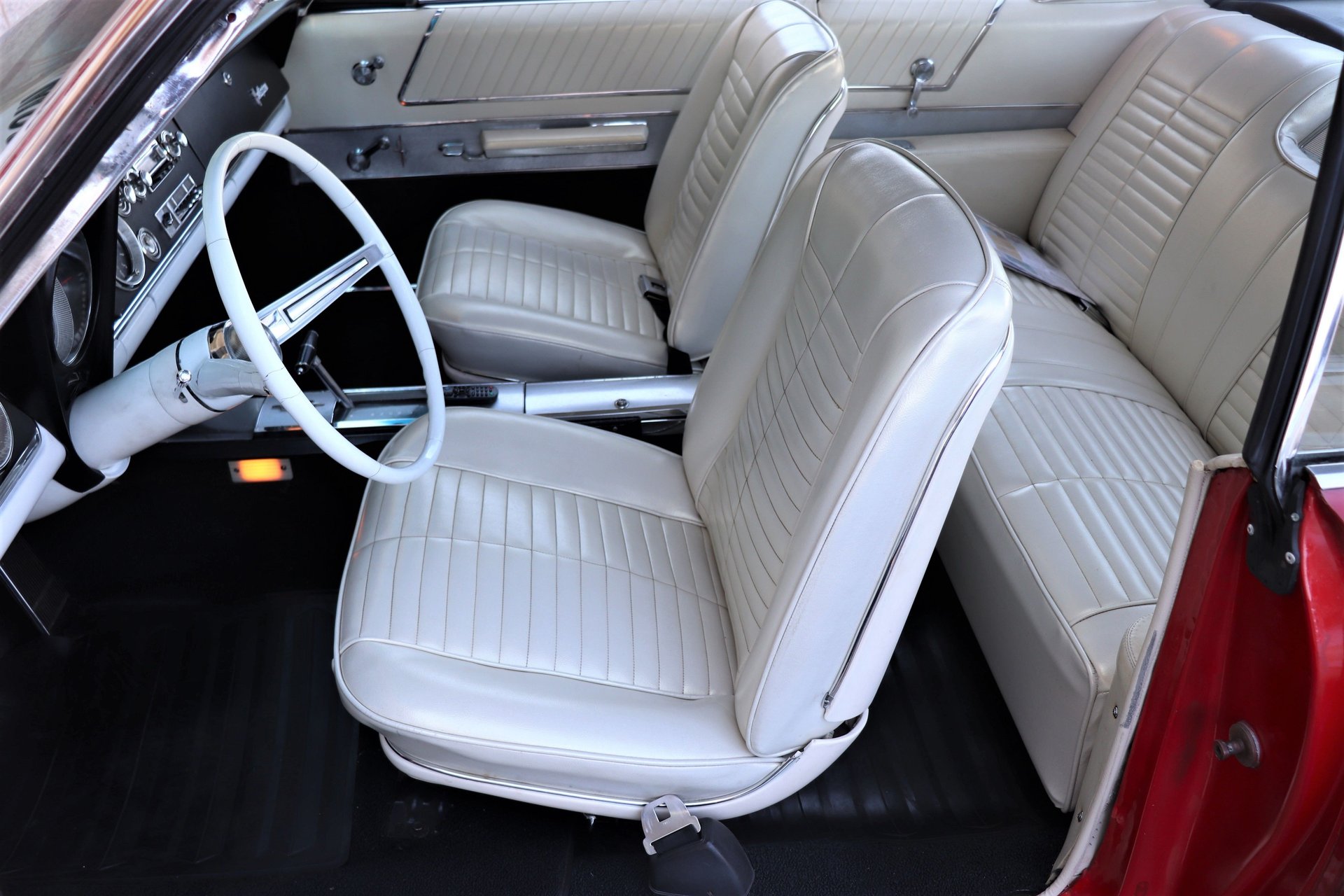
Strato Bucket seats were still standard on the Starfire, although they were only available with vinyl upholstery — the leather seating surfaces of the early Starfires were long gone, dropped after 1964.
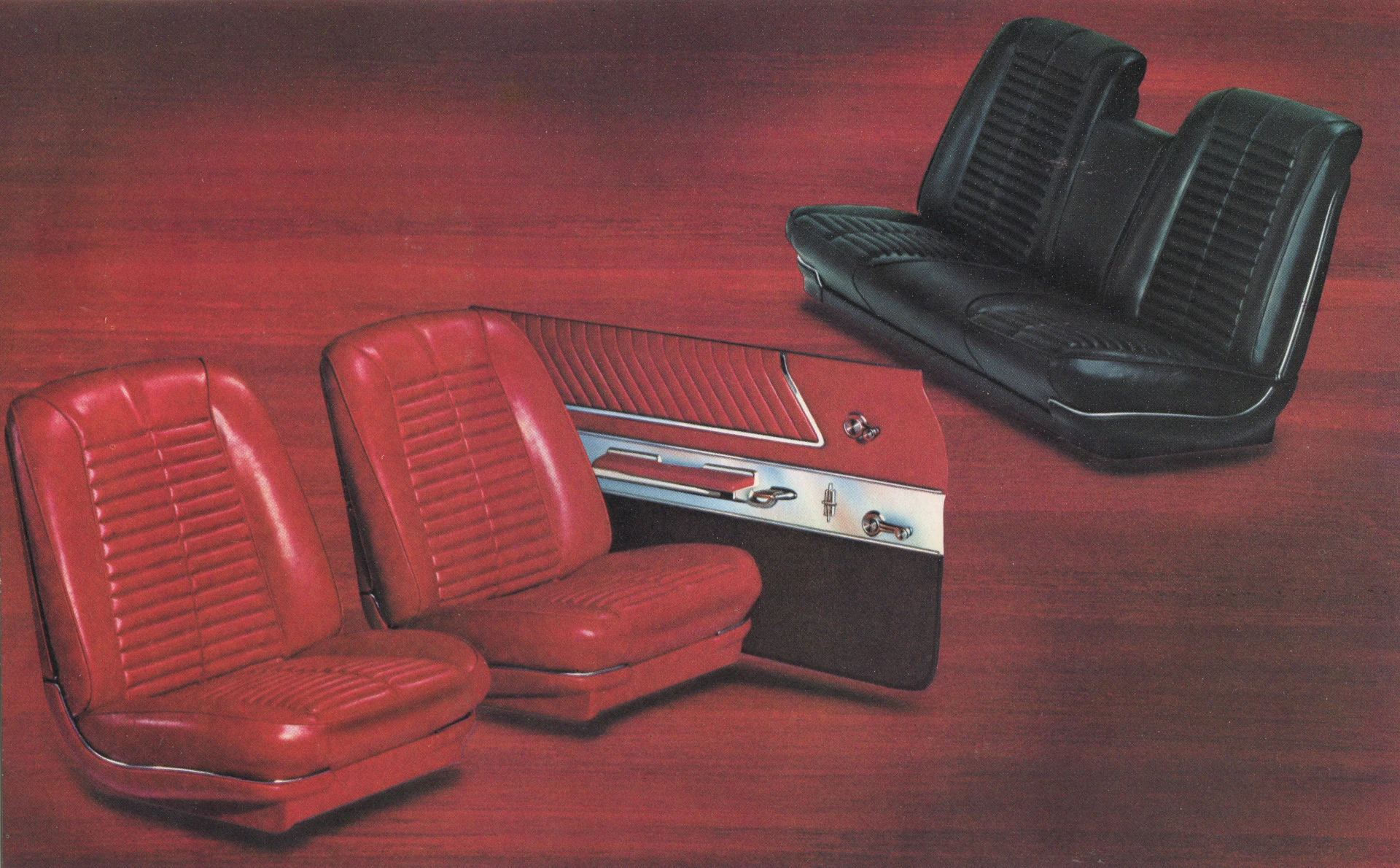
Bizarrely, you could now order the Starfire with an all-vinyl Strato Bench seat rather than buckets. This was a no-cost option, although it really should have been a credit, since it required you to sacrifice the sports console, floor shifter, and tachometer as well as the buckets. For cars this size, the buckets-and-console fad had largely run its course, but if you really wanted a bench seat with column shift, you could save yourself over $200 by just buying a Delta 88 instead.
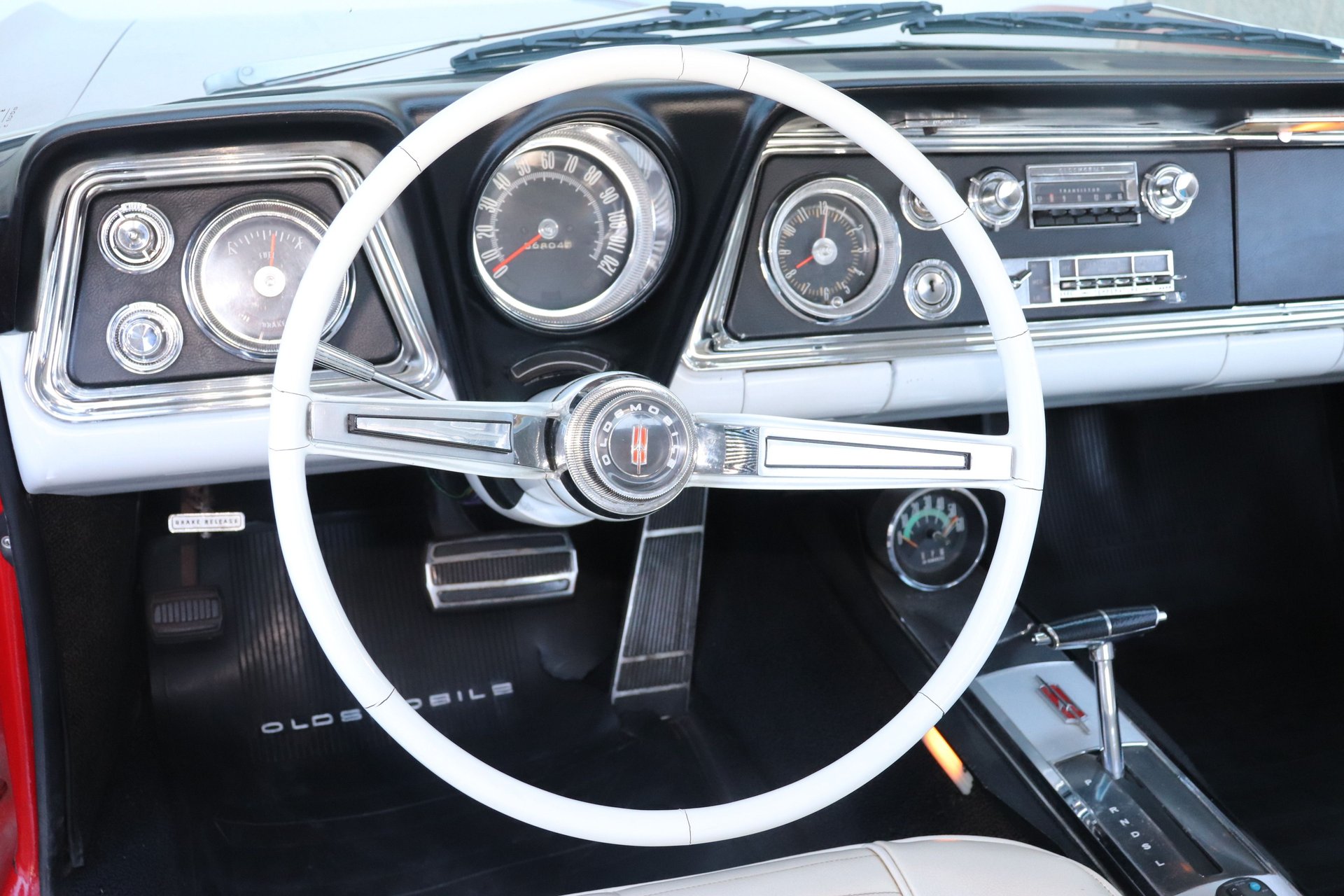
As was customary for these Detroit sporty cars, the Starfire had the usual Oldsmobile instrument panel, mounting the speedometer in the center of a V-shaped surround with the fuel gauge and clock mounted symmetrically on either side. Except the tachometer, which was too low and too far forward to easily see, there were no other instruments.
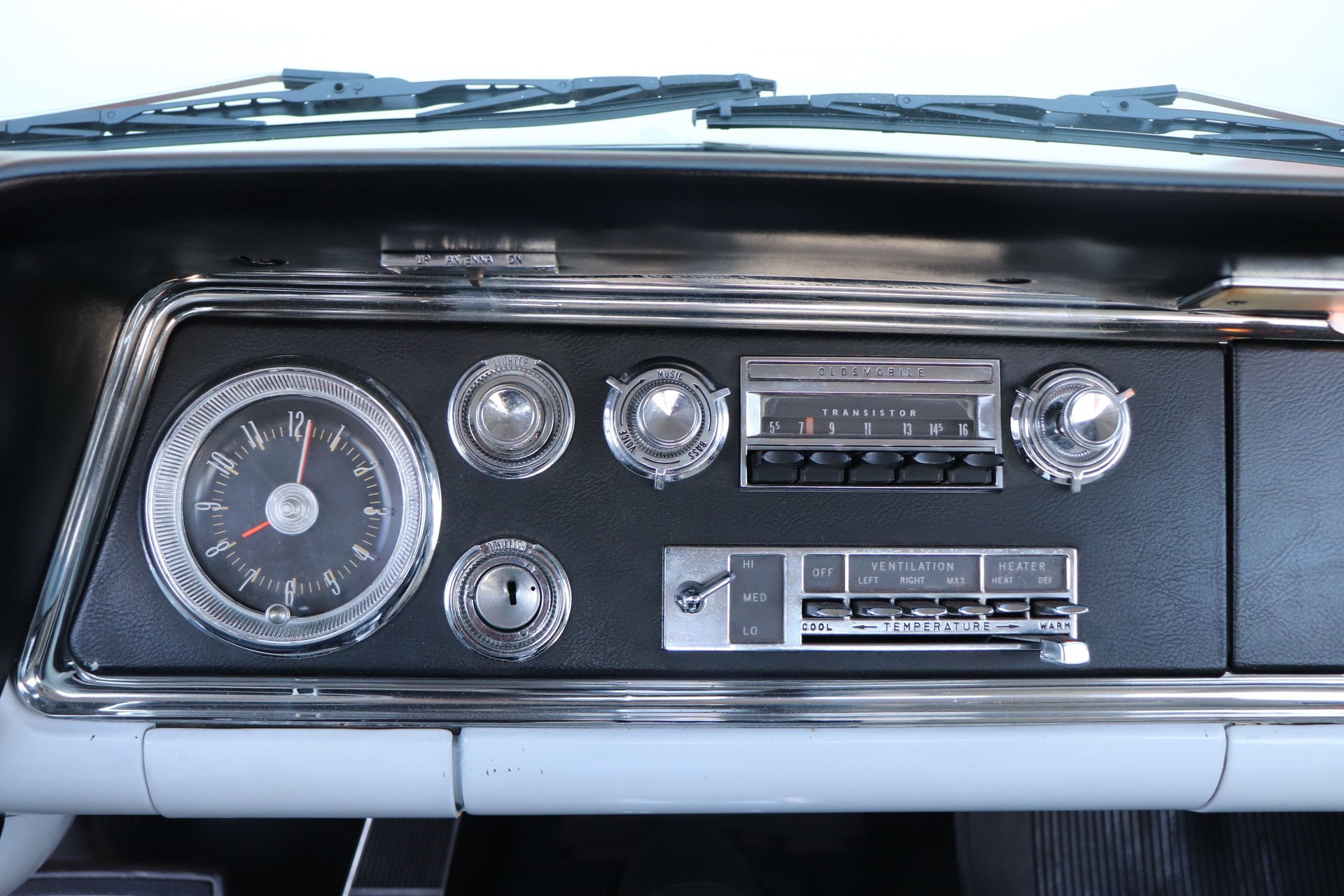
There’s a signal-seeking AM radio with a power antenna (plus a modern radio-CD system hidden in the glove box), but no air conditioning.
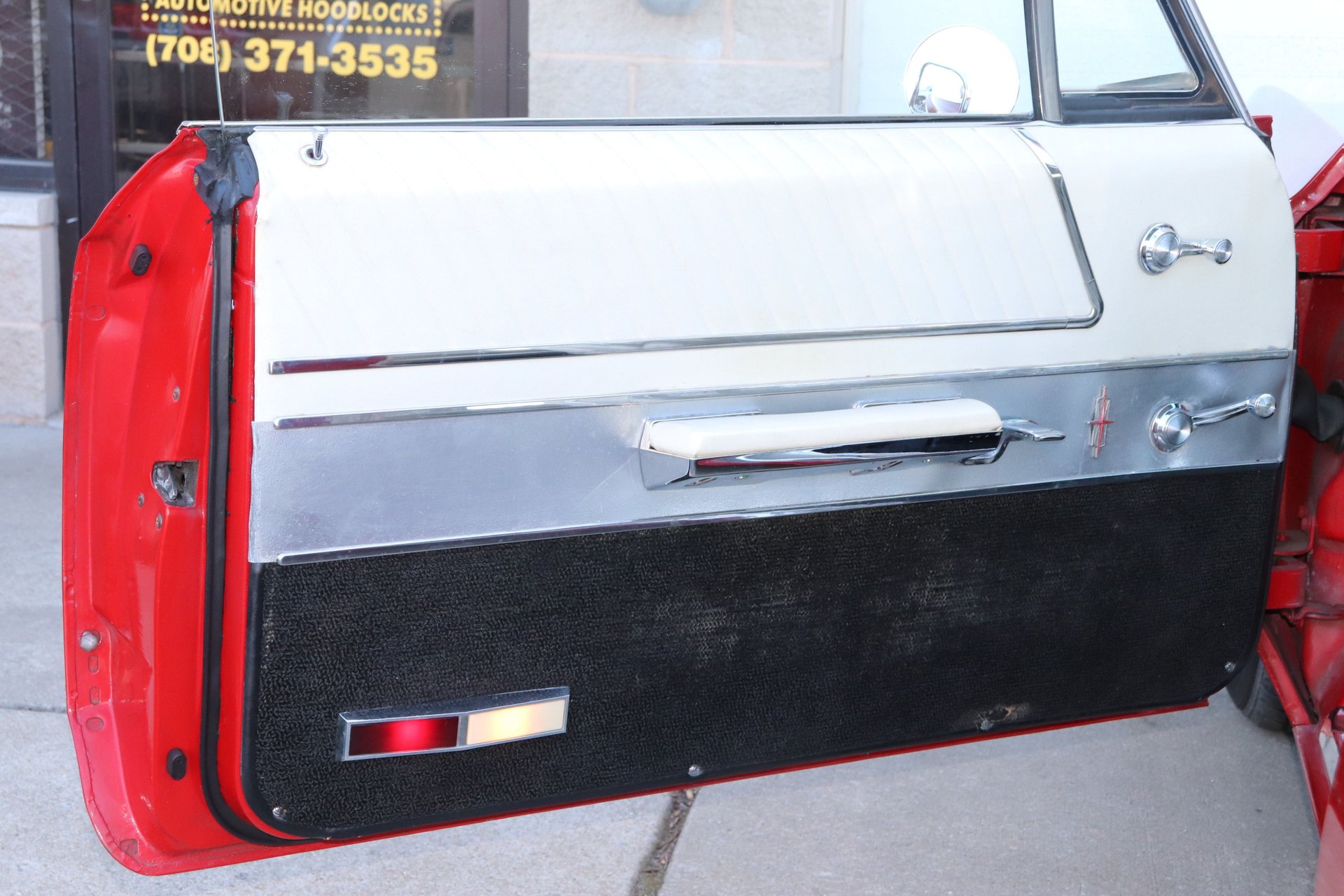
It also lacks the optional power windows. Note that unlike the Toronado, the Olds B-body cars retained their front vent windows in 1966; this was probably for the best, since GM’s early attempts at flow-through ventilation left a lot to be desired.
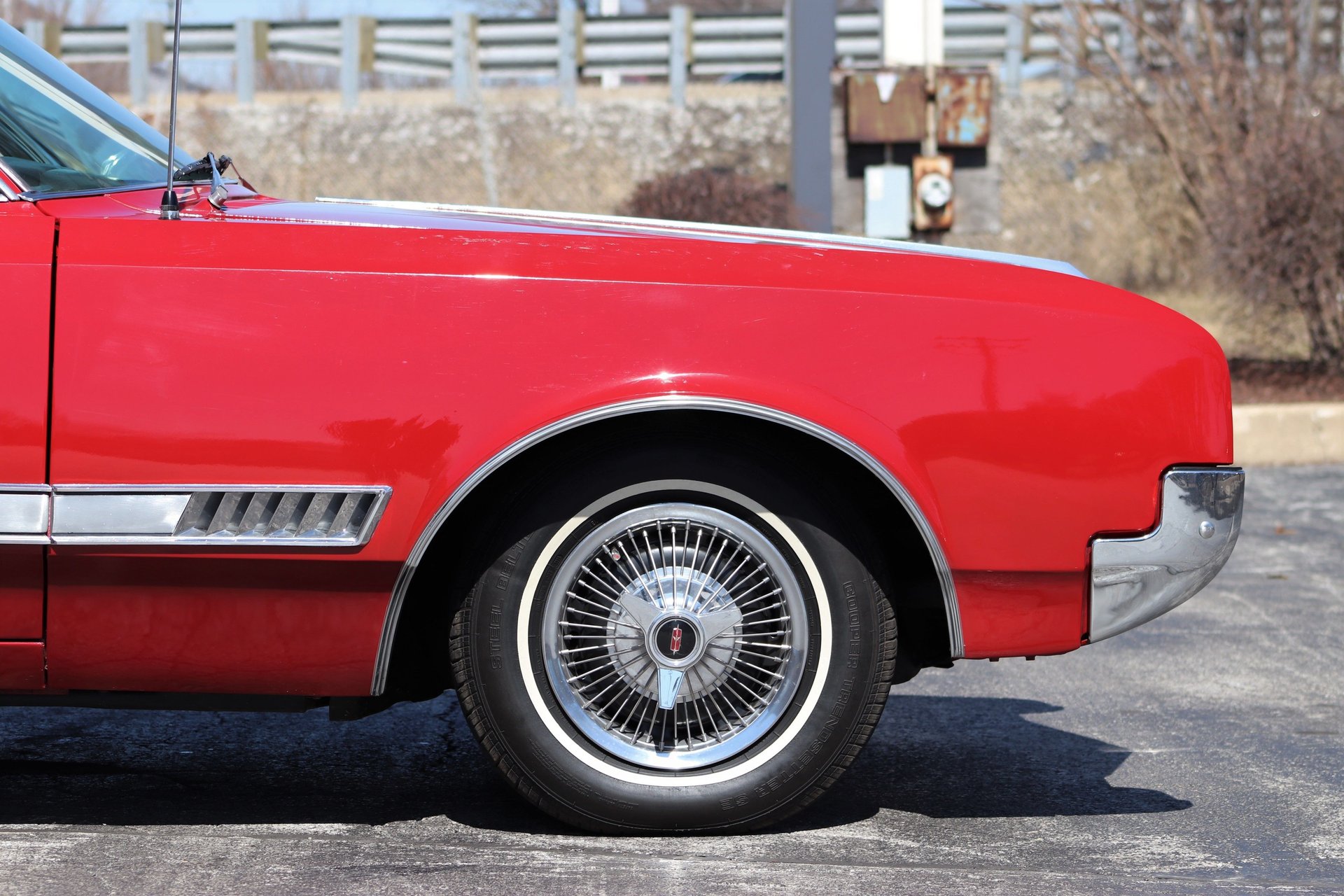
Although the Starfire normally came with its own wheel discs, the simulated wire wheels were a $52.66 option; whitewalls added a further $39.92. (This car of course now wears modern radials rather than the original 8.25-14 bias-ply tires.)
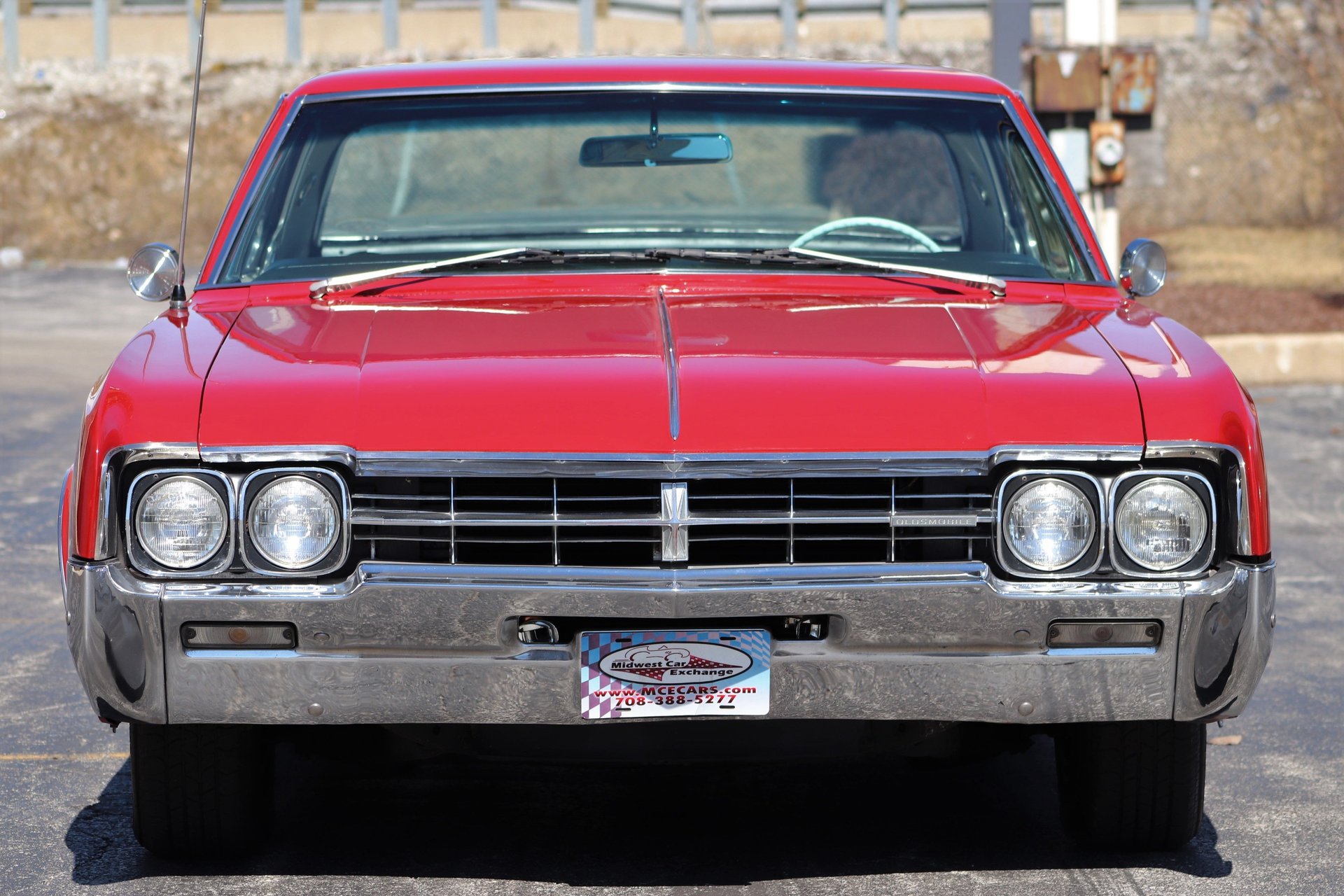
I’ve never seen a contemporary road test of the final Starfire. The Toronado was a much bigger engineering story, and the enthusiast magazines were also interested in the new L69 Tri-Carb engine optional in the 4-4-2, so there wasn’t much journalistic interest in an underwhelming B-body hardtop that had “lame duck” written all over it. With 65 more gross horsepower than a Dynamic 88, plus the benefits of dual exhausts, the Starfire didn’t lack for straight-line performance, though — I would expect 0 to 60 mph in around 8 seconds with the 3.08 axle (standard with Turbo Hydra-Matic), a bit quicker with the optional 3.42 performance axle.
Nevertheless, I find it hard to get very excited about this Starfire. One of the factors that tends to drag down the later installments of long-running movie franchises is that their budgets get slashed to maintain some profit margin with diminishing box office. Even with buckets, the 1966 Starfire was so de-contented that it was practically direct-to-video, with little of the shiny Space Age glamour of its predecessors. It seems like a token effort, executed without much enthusiasm.
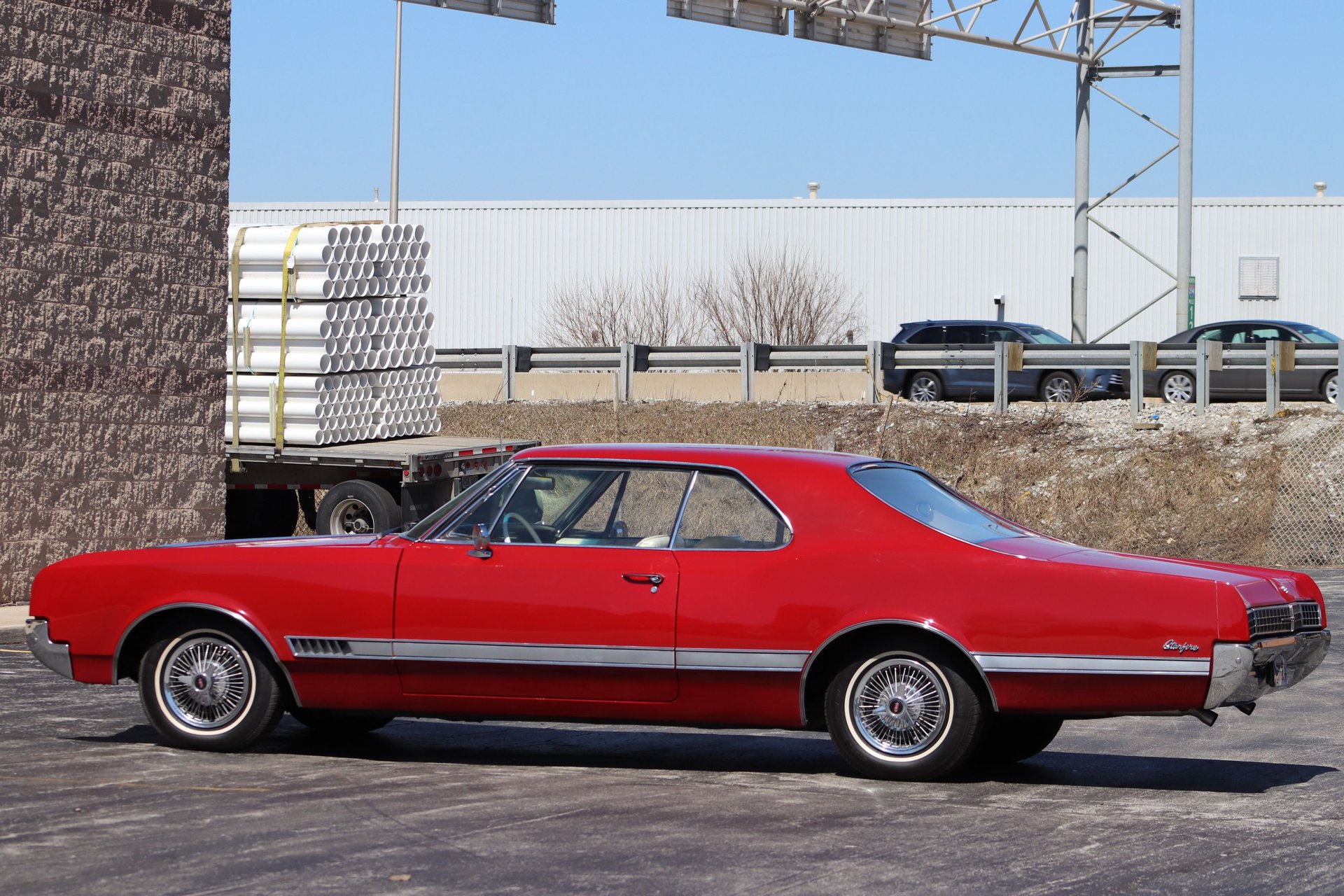
Other than the exterior styling touches, the only things the last Starfire offered that you couldn’t get on a Delta 88 were the buckets and console, which just weren’t enough. Oldsmobile built 13,019 of these cars for 1966, so the last Starfire wasn’t a complete sales disaster, but as I look at it now, the thought that keeps recurring is, “Why didn’t Oldsmobile just make buckets optional on the Delta 88?”
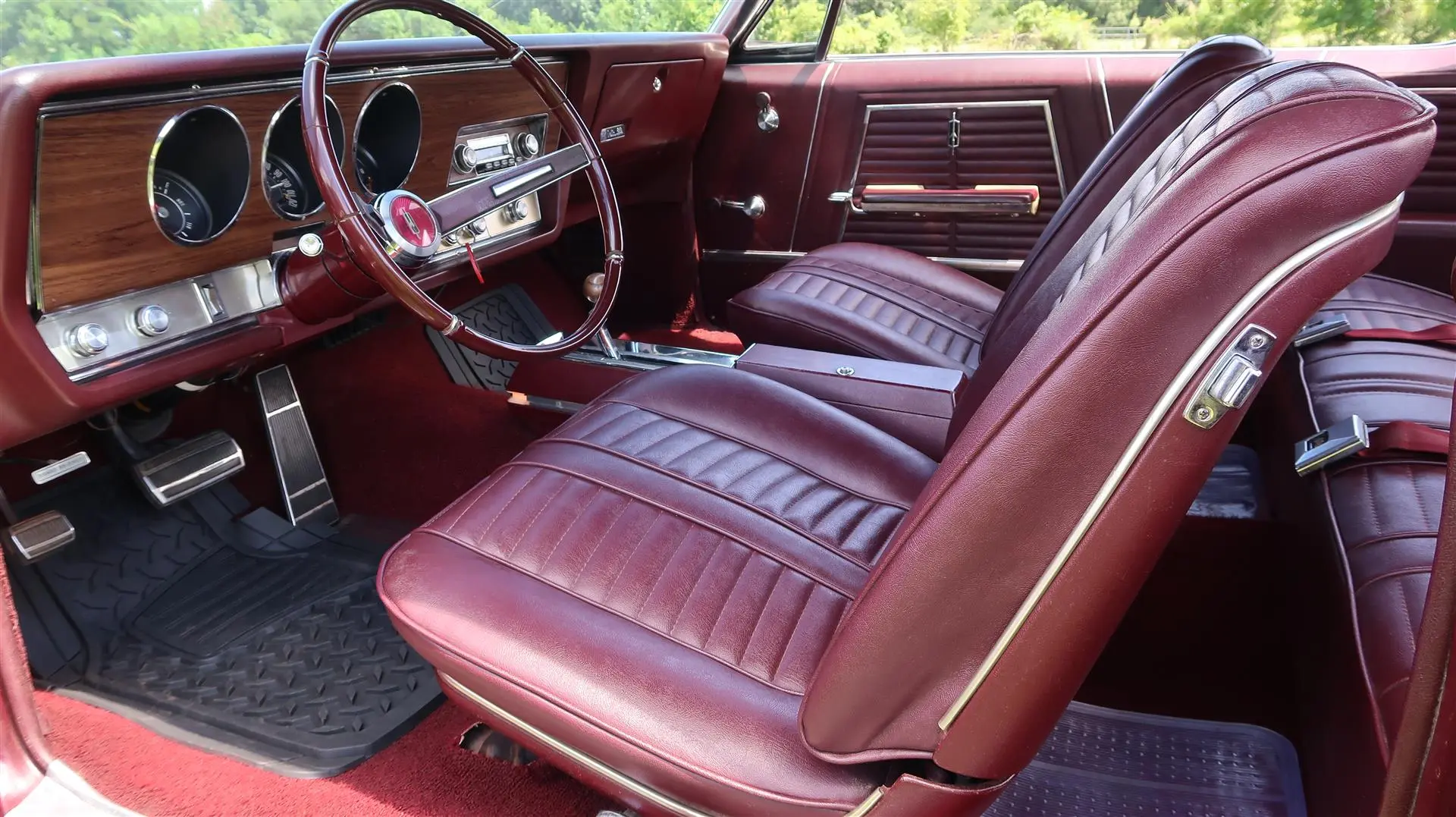
Olds product planners had clearly thought the same thing: For 1967, the Starfire was finally dropped, and its Strato Buckets and sports console became a no-cost option for the Delta 88 Custom Holiday Coupe. The L75 Starfire engine and dual exhausts were not included, but they were still available for $100.05 extra.
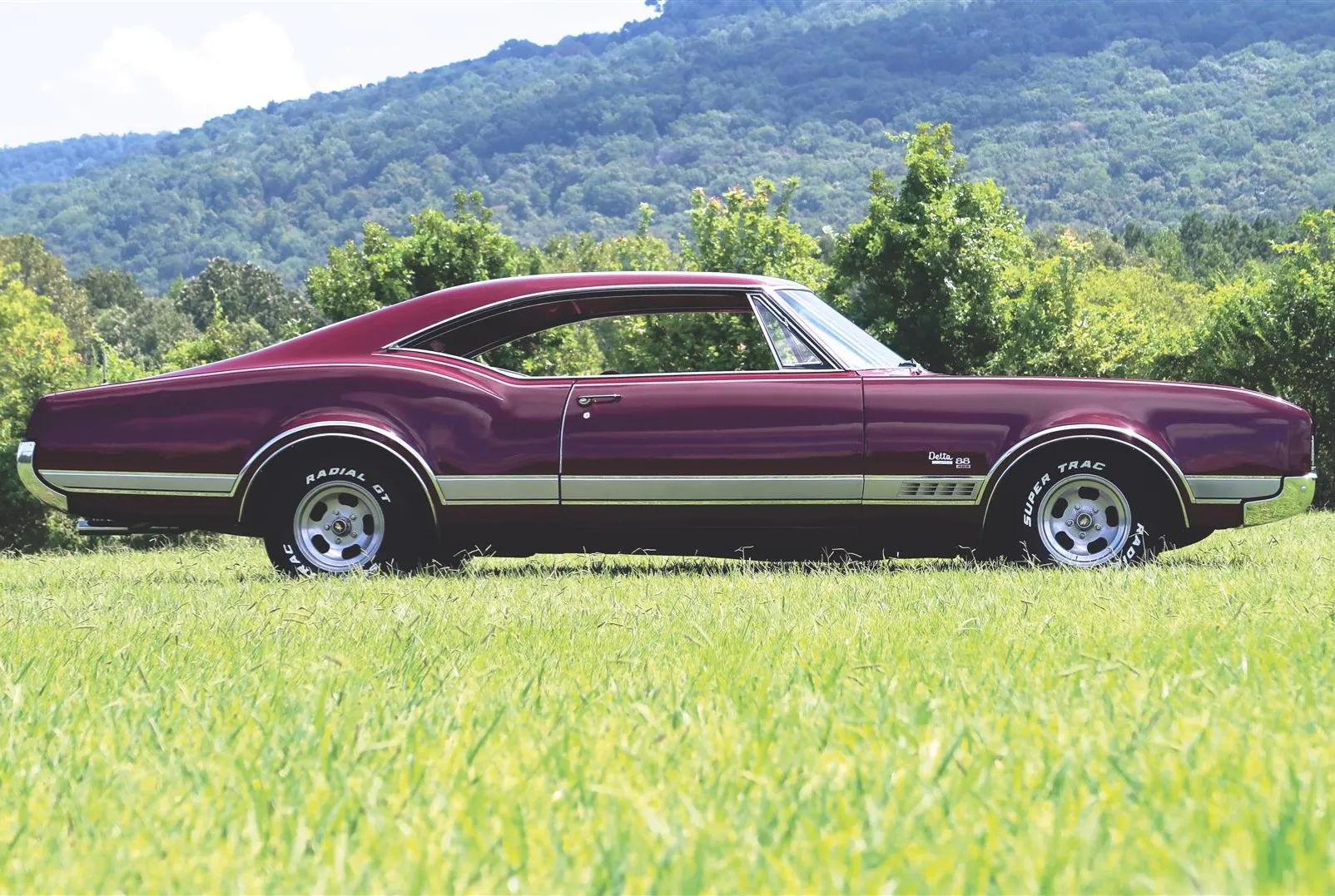
The Delta 88 Custom two-door hardtop even got Starfire-like metal side trim with simulated front fender vents, so if you checked the right boxes on the order form, it was essentially a Starfire in all but name. Its sales were no better — 1967 production totaled 12,192 cars — but since it shared the same hardtop body as the cheaper Delmont 88 and “plain” Delta 88, it cost less to offer.

Like so many older properties, the Starfire later got a dubious reboot: In the mid-1970s, Oldsmobile applied the name to its H-body coupe. It wasn’t a big success either, but it lasted through 1980. Had Oldsmobile survived longer, the Starfire name would probably have gotten yet another go-around, although the thought of seeing that admittedly cool-sounding nameplate on the side of a crossover or SUV makes me feel kinder towards the 1966 car, even if it didn’t live up to the standard of its predecessors.
Related Reading
Vintage Car Life Road Test: 1964 Oldsmobile Jetstar I – A Loaded Stripper (by Paul N)
Cohort Classic: 1964 Oldsmobile Starfire – Mission Aborted (by Paul N)
1964 Oldsmobile Starfire Convertible: Tempted By A Forgotten Rocket (by Aaron65)
Car Show Classic: 1965 Oldsmobile Starfire Convertible – New Engine, New Body, Old Idea (by Aaron65)
Our 1965 Oldsmobile Starfire 425 – Rocket Action (by DougD)
Curbside Classic: 1966 Oldsmobile Toronado – Personal Luxury, Oldsmobile Style (by J P Cavanaugh)























Nice looking car and the rear window appeals to me. The thing that bothers me the most are the 14 inch tires.
Every time I see a 1966 Toronado I’m reminded what a beautiful car it was. Not a bad line on it. Then, for the sake of stupid yearly model differentiation, it was slowly ruined, year by year. Bill Mitchell should have threatened to break the fingers of any designer who wanted to “improve” on the perfect 1966.
The back window looks like the same piece of glass that was used in the Pontiac Grand Prix.
I think it is. If I’m reading the Hollander manual correctly, the GP and Starfire back glass is interchangeable.
That’s a long rear overhang, from the photo angle.
yes, the 1966 Starfire is one of the most beautiful cars of all time.
That red Olds is one ugly car. For me, Olds either hit it out of the park or they took a dump. This one is a dump.
Oldsmobile and Pontiac suffered from a short attention span in the 1960s. There were always at least five mutations of the B-body (Dynamic 88, Jetstar, Starfire, Delmont 88, Delta 88) with nary a difference to slip a piece of paper between them. Although the brushed chrome trim was tasteful, I was always jazzed by the special taillights and exhaust exits through the rear fenders.
This is a cool car, but the rear treatment is totally out of place. It kind of reminds me of a huge duck bill. I assume Oldsmobile wanted a unique look for the Starfire. They sure got it!